The NCAA volleyball championship represents the pinnacle of college volleyball excellence, crowning national champions across three competitive divisions while showcasing the athleticism, skill, and dedication that define elite collegiate athletics. From the intense championship matches that captivate millions of fans to the remarkable athletes who earn All-American honors, NCAA volleyball creates championship moments and individual achievements that programs should celebrate permanently and comprehensively.
As women’s volleyball continues to grow in popularity—with championship matches drawing record attendance and viewership—schools face an important challenge: how to appropriately recognize championship victories, All-American selections, conference titles, and the exceptional athletes who build program tradition. Traditional trophy cases quickly fill as programs accumulate achievements, forcing difficult decisions about which accomplishments receive prominent recognition and which fade from view.
Modern digital recognition technology offers transformative solutions for celebrating volleyball excellence, providing unlimited capacity, rich multimedia storytelling, and interactive experiences that traditional approaches simply cannot match. This comprehensive guide explores NCAA volleyball championships, the sport’s growth trajectory, and how digital recognition displays enable programs to honor volleyball achievement comprehensively while inspiring current and future generations of student-athletes.
Solutions like Rocket Alumni Solutions provide purpose-built platforms specifically designed for athletic recognition, enabling volleyball programs to showcase unlimited achievements through photos, videos, statistics, and compelling narratives that traditional displays cannot accommodate. When programs implement comprehensive digital recognition systems, they create dynamic celebration experiences that honor past excellence while motivating current athletes to pursue their own championship legacies.
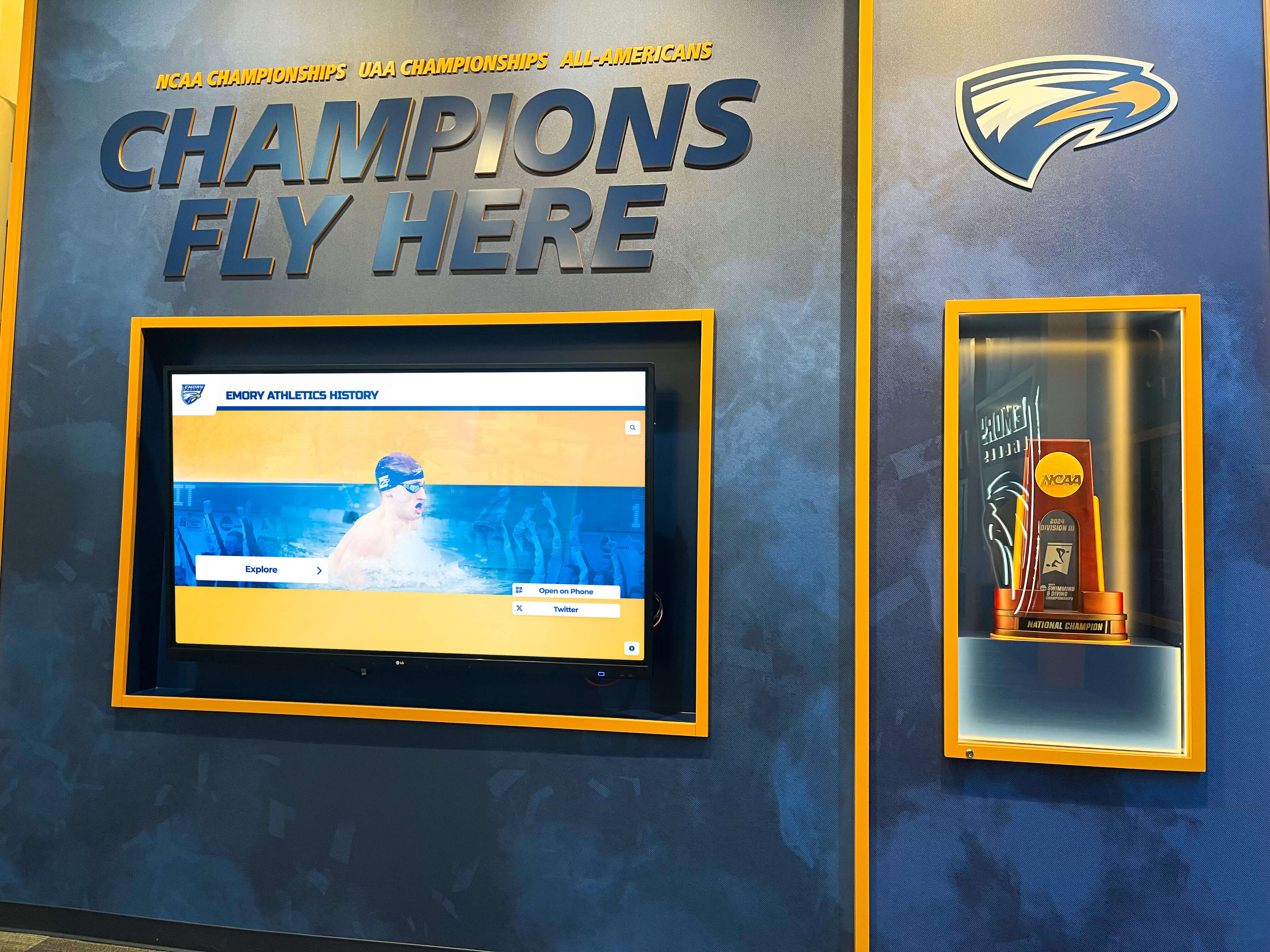
Understanding NCAA Volleyball Championship Structure
The NCAA volleyball championship system creates competitive opportunities across three divisions, ensuring programs at institutions of all sizes can compete for national titles while celebrating excellence at their appropriate competitive level.
Division I NCAA Volleyball Championship
Division I represents the highest level of NCAA volleyball competition, featuring the nation’s most prominent programs, elite athletes who often represent national teams internationally, and championship matches broadcast to millions of viewers nationwide.
Championship Format and Competition:
The Division I women’s volleyball championship involves 64 teams competing in a single-elimination tournament determining the national champion. Teams earn tournament berths through automatic qualification by winning their conference championships or at-large selection based on season performance and RPI rankings. The tournament structure includes first and second rounds hosted at campus sites by higher-seeded teams, regional semifinals and finals at predetermined sites, and the NCAA championship semifinals and final at a designated host city.
Recent championship matches have drawn record-breaking attendance, with the 2023 championship at Amalie Arena in Tampa setting records for championship weekend attendance. This growing popularity reflects volleyball’s expanding fan base and cultural significance within college athletics, creating unprecedented visibility for programs, coaches, and athletes who achieve championship success.
Notable Division I Programs and Traditions:
Certain programs have established legendary volleyball traditions through sustained excellence and multiple championships. Stanford University has claimed nine NCAA volleyball championships, establishing itself as one of the sport’s most successful programs. Penn State has won seven national titles, building a volleyball dynasty that defined Big Ten excellence. Nebraska has captured five championships while consistently ranking among national attendance leaders, demonstrating passionate fan support. Texas, Wisconsin, Southern California, and UCLA have all claimed multiple championships, contributing to volleyball’s rich competitive history.
These programs demonstrate how championship culture develops through sustained institutional commitment, quality coaching, elite recruitment, and comprehensive athlete development that extends beyond technical volleyball skills to encompass leadership, mental toughness, and competitive excellence.
Division II and III Volleyball Championships
While Division I receives the most media attention, Division II and Division III provide equally meaningful competitive opportunities for thousands of student-athletes at institutions emphasizing different balances between athletics and academics.
Division II Competition:
Division II volleyball includes 297 member institutions competing across 24 conferences. The championship format follows a similar tournament structure with 64 teams, but with different selection criteria reflecting the division’s regional emphasis and more balanced athletic-academic requirements. Division II volleyball emphasizes competitive excellence while maintaining stronger academic standards and more traditional collegiate experiences compared to Division I’s near-professional athletic demands.
Programs like Concordia-St. Paul, Tampa, and Cal State San Bernardino have built impressive Division II volleyball dynasties, demonstrating that championship excellence exists across all competitive levels. Recognition displays at Division II institutions celebrate national championships, All-American selections, and conference titles that represent genuine athletic achievement deserving permanent celebration.
Division III Philosophy:
Division III volleyball features 444 member institutions where student-athletes compete without athletic scholarships, emphasizing athletics as part of comprehensive educational experiences rather than pre-professional training. This philosophy creates unique competitive dynamics where academic commitments genuinely balance athletic demands, producing well-rounded student-athletes who embody traditional collegiate ideals.
Despite operating without scholarships, Division III volleyball maintains high competitive standards with programs like Emory, Claremont-Mudd-Scripps, Johns Hopkins, and Williams College building championship traditions rivaling higher divisions in intensity and commitment. Digital recognition displays enable Division III programs to celebrate volleyball achievements with the same comprehensiveness that major Division I programs employ.
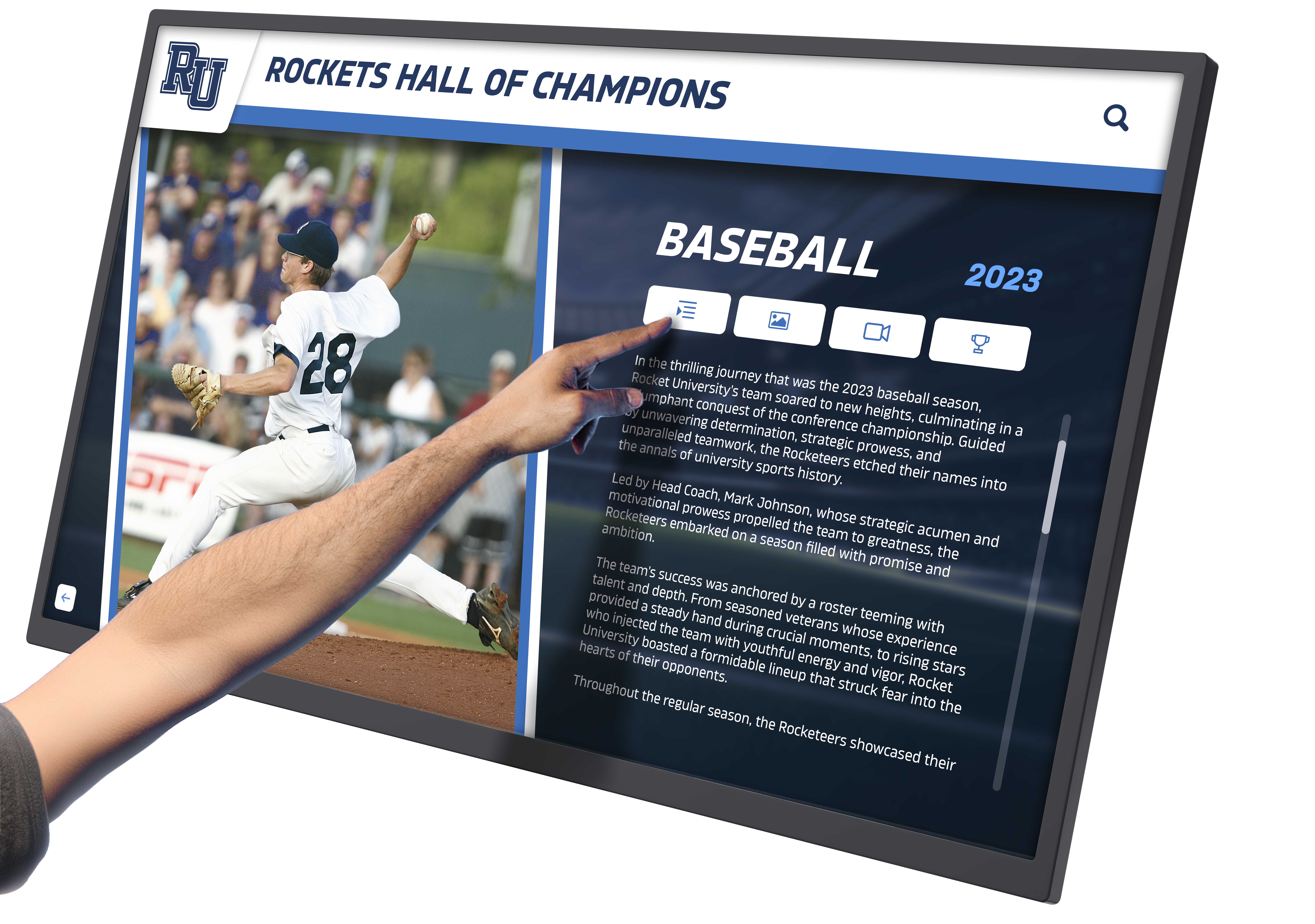
The Growth and Popularity of College Volleyball
Understanding volleyball’s expanding popularity and cultural significance provides essential context for why comprehensive recognition has become increasingly important for programs committed to celebrating excellence appropriately.
Rising Attendance and Viewership
College volleyball has experienced remarkable growth in fan engagement, media coverage, and cultural visibility over the past decade, transforming from a niche sport to mainstream entertainment that attracts diverse audiences.
Record-Breaking Attendance:
Nebraska volleyball exemplifies the sport’s growing popularity, consistently drawing 8,000+ fans to regular season matches at the Devaney Center and setting attendance records when playing in larger venues. In 2023, Nebraska hosted a volleyball match at Memorial Stadium that drew 92,003 fans—setting a world record for volleyball attendance at any level. This unprecedented turnout demonstrated volleyball’s capacity to generate mainstream sporting event excitement comparable to football and basketball.
Other programs have reported significant attendance growth as well. Wisconsin regularly sells out the 7,000-seat UW Field House for marquee matches. Penn State draws capacity crowds to Rec Hall for important conference competitions. Texas, Stanford, and other traditional powers report consistent attendance increases reflecting volleyball’s expanding fan base beyond students and families to include general sporting enthusiasts.
Television and Streaming Viewership:
Media coverage has expanded dramatically with championship matches now broadcast on major networks like ESPN and ABC, drawing millions of viewers. Conference matches receive regular coverage through conference television networks and streaming services. Individual programs increasingly produce their own streaming coverage, building direct connections with geographically dispersed fans and alumni.
This media expansion creates unprecedented visibility for volleyball programs, coaches, and athletes—increasing recognition value for those who achieve All-American status or championship success. Programs implementing comprehensive digital recognition systems leverage this visibility by celebrating achievements that broader audiences now recognize and appreciate.
Increasing Participation Rates
Volleyball’s growth extends beyond spectator interest to include dramatic participation increases at youth, high school, and collegiate levels—creating deeper talent pools and more competitive environments where achievements hold greater significance.
Youth and High School Development:
Youth volleyball participation has grown steadily for two decades, with club volleyball programs proliferating nationwide and international development pathways expanding globally. High school volleyball now ranks among the most popular girls’ sports across most states, often trailing only track and field, basketball, and soccer in participation numbers.
This participation growth creates more competitive talent funnels feeding collegiate programs. When more athletes compete for limited roster spots, those who earn scholarships and compete collegiately represent increasingly elite selections. Recognition of collegiate achievement therefore acknowledges success within more competitive contexts compared to earlier eras when fewer athletes competed for roster positions.
Expanding Collegiate Opportunities:
Beyond increasing competition quality, volleyball opportunities have expanded across all divisions with more institutions adding volleyball programs, existing programs expanding roster sizes, and competitive depth improving throughout divisions. This expansion means more student-athletes experience college volleyball at various competitive levels, creating larger alumni populations who maintain emotional connections to volleyball programs throughout their lives.
Schools implementing comprehensive volleyball recognition often report enhanced alumni engagement as former players return to campus or access digital displays remotely, reconnecting with programs that honor their contributions permanently. Resources on alumni event planning demonstrate how athletic recognition supports broader institutional connection strategies.
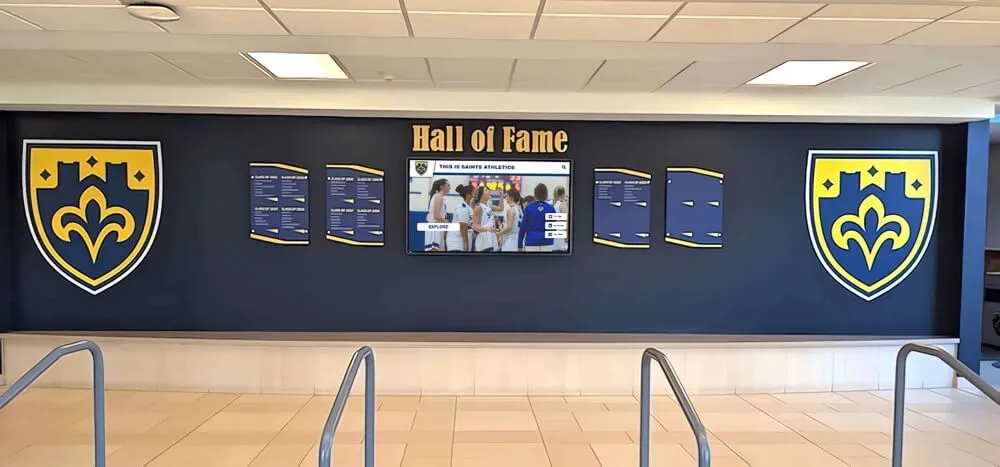
Achievements Worthy of Permanent Recognition
Effective volleyball recognition celebrates diverse achievement types—from team championships to individual honors—ensuring comprehensive celebration of excellence across all program aspects.
National Championships and Tournament Success
NCAA volleyball championships represent pinnacle team achievements deserving the most prominent and comprehensive recognition programs can provide.
Championship Season Documentation:
Championship victories deserve detailed documentation capturing complete team excellence beyond simple trophy acknowledgment. Effective championship recognition includes pre-season expectations and championship pursuit goals, regular season highlights and key victories, conference tournament progression and seeding, NCAA tournament path with opponent information for each round, championship match details including statistics and defining moments, complete roster documentation crediting all contributors, coaching staff and support personnel recognition, and season statistics and program records set during championship campaigns.
Season narratives might describe unexpected championship runs exceeding predictions, sustained excellence through multiple consecutive titles, or breakthrough championships representing first-time program success. This contextual storytelling transforms simple dates and scores into compelling narratives that inspire current athletes while honoring past excellence appropriately.
Final Four Appearances:
Even programs that don’t claim championships often achieve remarkable success worthy of permanent recognition. Final Four appearances represent exceptional seasons where teams rank among the nation’s four best programs—accomplishments that deserve comprehensive documentation including tournament bracket progression showing defeated opponents, regional championship victories earning Final Four berths, national semifinal match details even when teams lose, complete season summaries contextualizing Final Four achievement, and player and coach perspectives on reaching volleyball’s highest competitive level.
Programs with multiple Final Four appearances without championships should celebrate this sustained excellence prominently rather than allowing recognition to focus exclusively on national title winners. Comprehensive athletic recognition programs acknowledge various achievement levels appropriately.
Conference Championships and Regular Season Excellence
While national championships garner most attention, conference championships and regular season excellence represent important achievements deserving substantial recognition.
Conference Tournament Championships:
Conference tournament championships require teams to defeat conference opponents over consecutive days, testing depth, resilience, and ability to perform under pressure. These victories often determine NCAA tournament seeding and demonstrate team quality against familiar opponents who understand tendencies and strategies. Recognition should document tournament bracket structure and victories, championship match details and statistics, tournament MVP and all-tournament team selections, and conference championship celebration and trophy presentation moments.
For programs competing in highly competitive conferences where multiple teams regularly compete for national titles, conference championships represent remarkable achievements equivalent to NCAA tournament success for programs from less competitive leagues.
Regular Season Conference Titles:
Regular season conference championships demonstrate sustained excellence over months of competition rather than single-elimination tournament performance. Teams earn regular season titles through consistent execution, managing injuries and roster changes, and maintaining focus across demanding competitive schedules. These championships deserve recognition acknowledging final conference records and standings, season sweep accomplishments against conference opponents, individual statistical leaders and all-conference selections, and season highlights showcasing program excellence.
Combined with conference tournament success, regular season titles provide comprehensive documentation of program dominance within conference contexts. Digital displays enable programs to present both achievement types coherently while contextualizing significance within program history.
Individual Player Recognition and Awards
While team achievements rightfully receive prominent celebration, individual athlete excellence deserves recognition honoring personal accomplishments and development journeys.
All-American Selections:
All-American recognition represents volleyball’s highest individual honor, acknowledging athletes who performed at elite national levels. The American Volleyball Coaches Association (AVCA) annually selects All-American teams across all divisions, with first team, second team, and honorable mention categories recognizing the nation’s top performers.
All-American recognition displays should include high-quality action photos showing athletes competing, complete statistical achievements from All-American seasons, position played and specific contributions, academic achievements and honors for student-athletes, post-graduation updates about professional careers or life success, and personal reflections on what All-American recognition meant.
Programs that have produced multiple All-Americans demonstrate sustained ability to recruit, develop, and showcase elite talent—achievements that enhance recruiting while building program reputation. Tracking academic and athletic honors together provides comprehensive athlete documentation.
Statistical Record Holders:
Volleyball statistics document performance across diverse categories reflecting the sport’s multifaceted nature. Comprehensive recognition celebrates statistical excellence including career kill leaders across player careers, total attack attempts and hitting percentages, career dig totals reflecting defensive excellence, assist records demonstrating setter effectiveness, block totals showing net dominance, service ace leaders, single-season records in all categories, single-match exceptional performances, and position-specific statistical achievements.
Maintain separate recognition for different statistical categories ensuring setters, liberos, and middle blockers receive appropriate celebration for contributions that differ from outside hitters’ typical statistical profiles. This balanced approach prevents perception that programs only value offensive statistics while ignoring complete play that championship teams require.
Conference Player of the Year Awards:
Conference player of the year selections recognize season-long excellence within competitive contexts. These awards often consider multiple factors including statistical performance, impact on team success, leadership and character, and consistency throughout demanding schedules. Recognition should document award criteria and selection process, season statistics supporting selection, team success during player-of-the-year season, and comparison to program history of conference award winners.
For programs in highly competitive conferences, conference player of the year recognition may represent achievement equivalent to All-American status in less competitive leagues, deserving prominent celebration within program recognition systems.
Modern Digital Recognition Solutions for Volleyball Programs
Traditional volleyball recognition relied on physical trophies, plaques, and banners that face inherent limitations including finite space, high ongoing costs, minimal information beyond basic facts, difficult corrections when errors occur, and static presentations offering no interactivity. Digital recognition technology addresses every limitation while providing transformative capabilities.
Unlimited Recognition Capacity
The most transformative advantage digital displays provide is unlimited capacity for recognizing championships and achievements without physical space constraints that force difficult prioritization decisions.
Eliminating Trophy Case Limitations:
Traditional trophy cases typically accommodate 20-40 trophies depending on size and arrangement. Championship banners require dedicated wall or ceiling space that quickly fills as programs accumulate success. Static record boards display limited categories determined by physical dimensions rather than comprehensive achievement documentation.
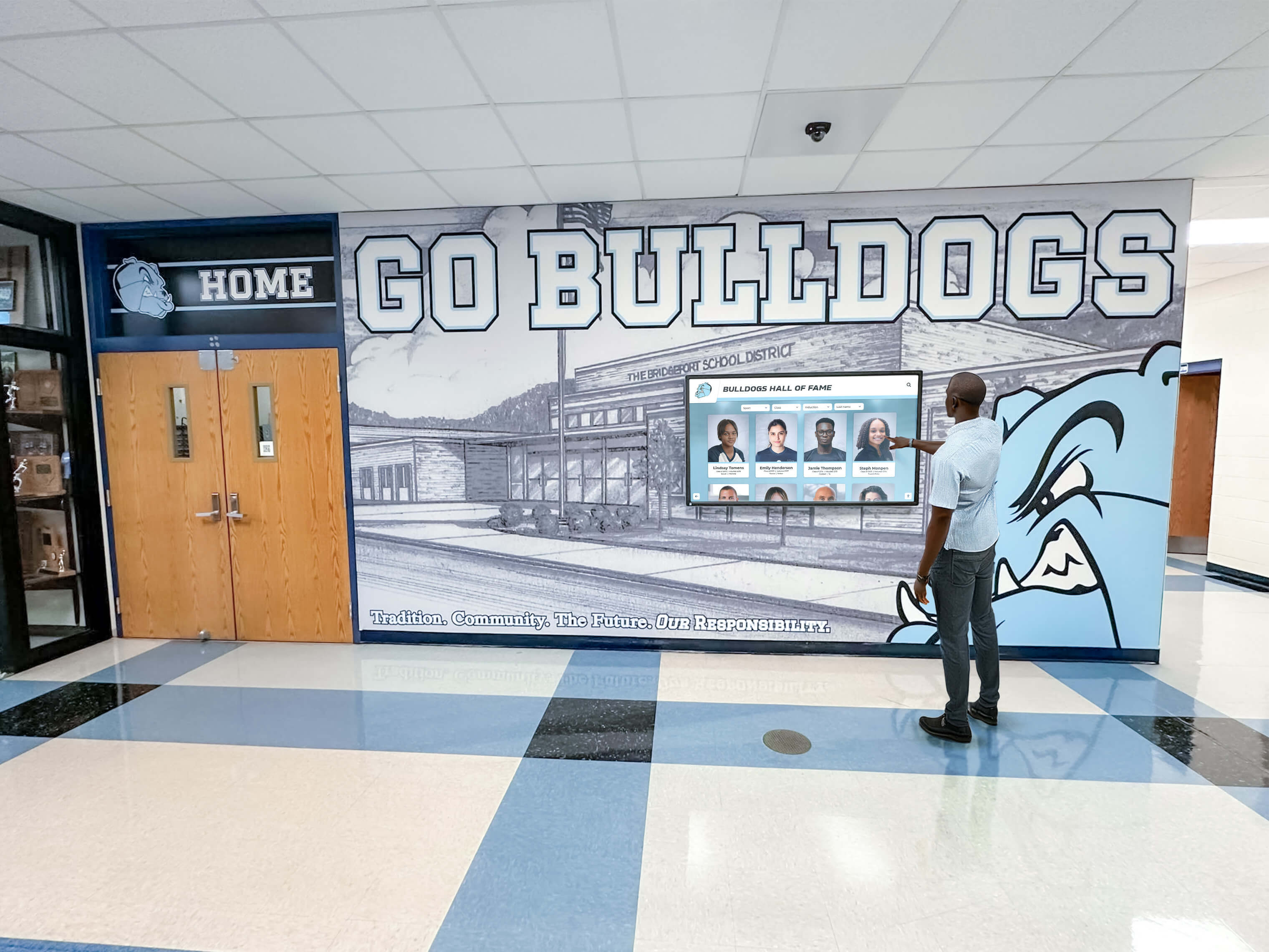
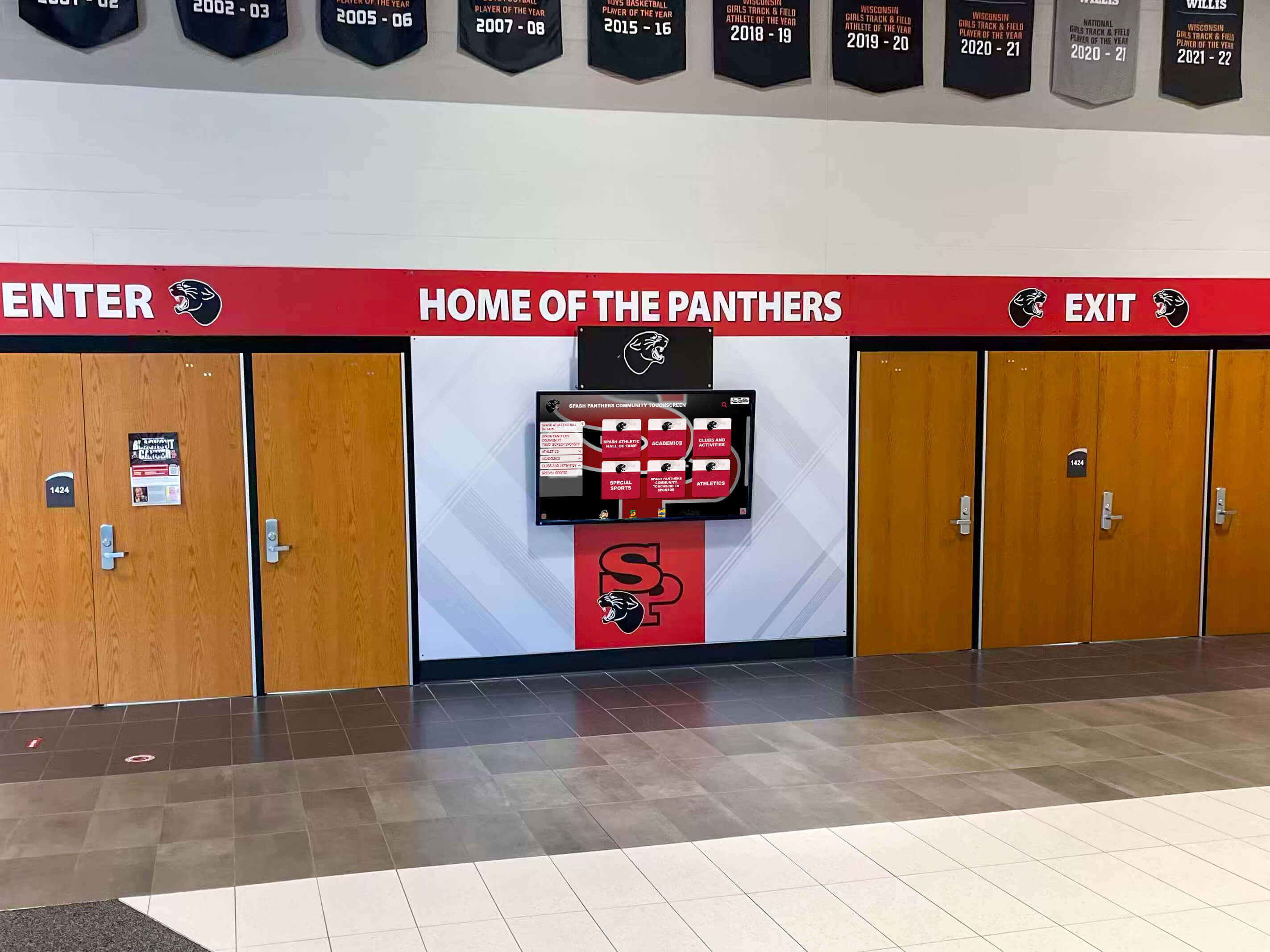
A single 55-inch touchscreen can showcase detailed profiles for hundreds of championships, thousands of athlete profiles, and unlimited record categories—comprehensive content requiring 15-20 traditional glass cases to display physically. This unlimited capacity means schools can recognize every conference championship, NCAA tournament appearance, and individual achievement throughout program history without forced prioritization based on available wall space.
Multi-Sport Integration:
Digital platforms enable integrated recognition across multiple athletic programs, creating cohesive celebrations of institutional athletic excellence. Programs can maintain dedicated volleyball content while connecting to broader athletics recognition including basketball, soccer, softball, and other sports. This integrated approach demonstrates institutional commitment to comprehensive athletics rather than isolated program support.
Schools implementing comprehensive digital trophy case solutions report significant space savings while dramatically increasing recognition breadth compared to traditional trophy case limitations.
Rich Multimedia Storytelling Capabilities
Digital platforms enable championship recognition far exceeding what physical trophies can communicate, creating emotional connections that inspire and engage diverse audiences.
Video Highlights and Match Footage:
Championship victories deserve celebration through actual match footage capturing defining moments. Digital displays can feature championship match highlights showing crucial rallies and momentum-shifting plays, season recap videos documenting complete championship journeys, individual player highlight reels demonstrating skill excellence, post-match celebrations capturing team emotion and championship joy, and coach and player interviews providing personal perspectives on championship significance.
These video elements create emotional engagement that static trophies cannot generate. Visitors spend significantly more time exploring digital displays featuring video content compared to traditional text-only recognition. Engagement analytics from schools using digital storytelling for athletic programs show average session durations of 5-8 minutes versus 30-second glances at physical trophy cases.
Comprehensive Statistical Integration:
Volleyball statistics tell important stories about team and individual excellence. Digital platforms accommodate comprehensive statistical presentation including career kill, dig, assist, and block records, hitting percentages and efficiency ratings, single-season records across all categories, championship season team statistics, historical comparisons contextualizing current achievements, and position-specific statistical achievements ensuring balanced recognition.
This statistical depth provides recognition nuance impossible through simple trophy displays. Athletes who excel defensively or as setters receive appropriate celebration rather than recognition limited to outside hitters whose kill statistics naturally draw attention.
Complete Player Profiles:
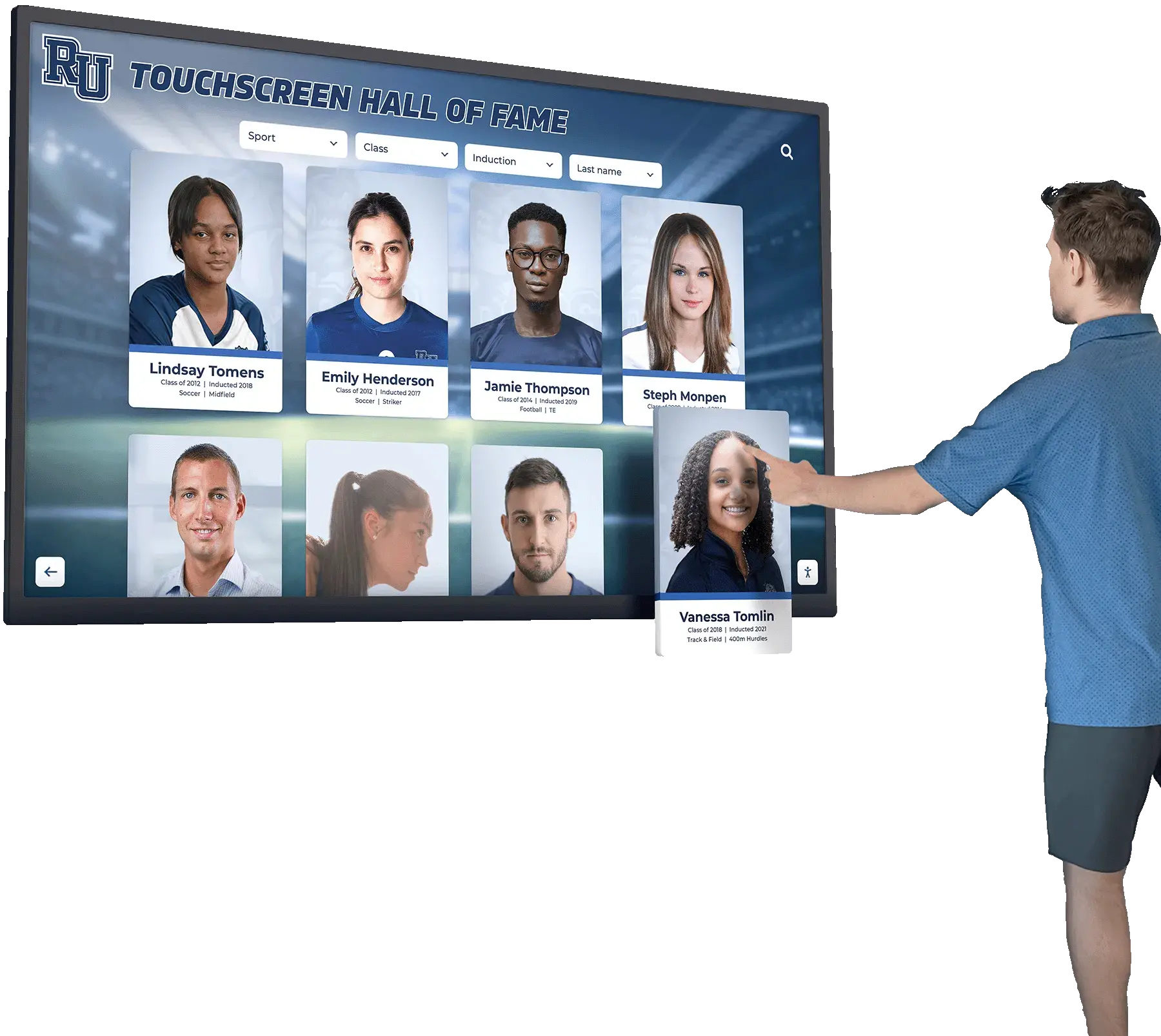
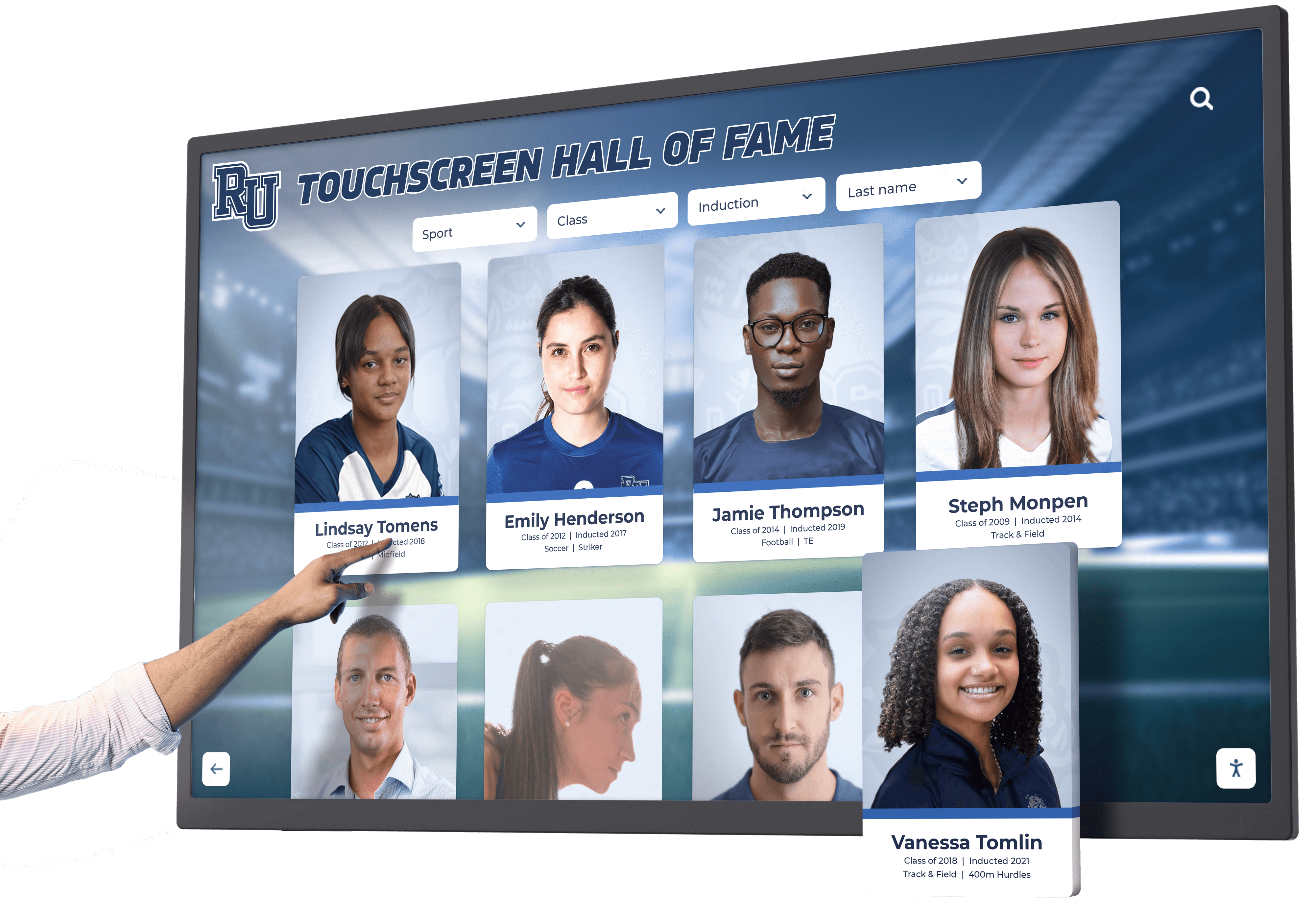
Digital profiles transform recognition from simple name listings into comprehensive celebration of individual journeys including multiple action photographs from playing careers, complete biographical information and backgrounds, career statistics across all categories, academic achievements including academic All-American selections, post-graduation updates about professional careers, and personal narratives describing volleyball experiences and program impact.
These holistic profiles demonstrate that volleyball programs develop complete individuals rather than just skilled competitors, resonating powerfully with families evaluating schools based on values extending beyond winning percentages. Understanding how digital displays document athletic programs provides additional implementation guidance.
Interactive Engagement and Exploration
Digital displays transform recognition from passive viewing into active exploration where visitors engage meaningfully with championship history and athlete stories.
Intuitive Touchscreen Navigation:
Modern touchscreen interfaces enable intuitive content exploration that feels natural to audiences accustomed to smartphones and tablets. Visitors can browse championships chronologically by season, filter achievements by specific categories like national versus conference titles, search for individual athletes by name instantly, explore team rosters and complete squad information, and discover related content through intelligent recommendations.
This interactivity dramatically increases engagement while making championship history accessible in ways physical displays cannot match. Alumni visiting campus years after graduation can find their own championships, view teammates and coaches, and relive championship memories through preserved photos and videos.
Remote Web Access:
Modern recognition platforms extend beyond physical displays through responsive web interfaces accessible worldwide. Alumni living anywhere can explore program history, families share their student-athlete’s profiles across social networks, prospective recruits research program tradition during recruitment, and community members engage with volleyball excellence without visiting campus.
This remote accessibility transforms recognition from location-specific displays into omnipresent celebration accessible to global audiences. Programs implementing comprehensive digital signage systems report enhanced alumni engagement and improved recruiting outcomes.
Searchable Achievement Database:
Digital platforms provide searchable databases impossible with physical displays. Finding specific individuals requires simple name searches rather than scanning dozens of trophy plaques hoping names appear. This searchability proves especially valuable during events when alumni return seeking recognition of their achievements, or when current players research program legends they’ve heard coaches reference.
Advanced platforms enable sophisticated filtering and searching including find all players from specific graduation years, locate athletes who achieved specific honors like All-American status, identify championship teams from particular eras, compare statistical leaders across different positions, and discover connections between current players and historical program figures.
Creating Compelling Volleyball Recognition Content
Technology provides the platform, but compelling content drives engagement and creates meaningful recognition that honors volleyball excellence appropriately while inspiring current and future athletes.
Championship Team Documentation
Effective championship recognition moves beyond trophy photos to craft engaging narratives that capture complete team excellence and championship journey context.
Season Narrative Development:
Championship stories should contextualize victories within broader program narratives including pre-season expectations and goals, key regular season victories and development moments, conference tournament performance and seeding, NCAA tournament bracket and opponent quality, championship match drama and defining moments, individual performances that shaped championship success, coaching decisions and strategic excellence, and post-championship impact on program culture.
Well-crafted narratives might describe unexpected championship runs that defied predictions, sustained excellence through multiple consecutive titles, breakthrough championships after years of near-misses, or dynasty periods where programs dominated their sport. These stories create emotional connections while documenting program history accurately.
Complete Roster Recognition:
Championship teams succeed through contributions from entire rosters, not just starting six players. Comprehensive recognition documents complete squad composition including starters and regular rotation players, specialists who contributed in specific situations, reserve players who pushed starters during practice, student assistants and practice players, coaching staff at all levels, athletic trainers and support personnel, and season statistics for all players regardless of court time.
This inclusive approach ensures all team members receive appropriate recognition for championship contributions. Role players understand their efforts mattered, specialists gain acknowledgment matching statistical leaders, and complete rosters preserve accurate historical records documenting who actually contributed to championships.
Individual Athlete Profile Development
Complete athlete profiles require collecting diverse information types that together tell comprehensive stories about individual volleyball journeys and program experiences.
Essential Profile Elements:
Comprehensive player profiles should include biographical information about backgrounds and athletic journeys, complete career statistics across all categories, season-by-season statistical progression showing development, championship participation and team success, individual honors including All-American and all-conference selections, academic achievements and honors, position played and specific role descriptions, memorable performances and signature moments, coach testimonials explaining what made players special, and post-graduation updates about continued athletics or career success.
Profiles typically require 500-800 words plus statistics, multiple photos, and ideally video content creating rich recognition worthy of permanent celebration. The investment in comprehensive profile development pays dividends through enhanced engagement and meaningful athlete celebration.
Content Collection Strategies:
Direct Athlete Outreach: Contact recognized athletes requesting biographical information, statistical documentation, personal photos from playing careers, video footage if available, and reflections on volleyball experiences and program impact. Most athletes willingly contribute content ensuring accurate representation of their achievements.
Historical Research: For athletes unable to personally contribute or from earlier eras, conduct thorough research through program media guides containing statistics and photos, newspaper archives documenting matches and achievements, coaching records and scorebooks, yearbooks and historical documents, and interviews with coaches or teammates providing perspectives.
Athletic Department Resources: Partner with athletics communications staff who maintain comprehensive photo libraries, video archives from broadcasts and productions, statistical databases and records, and historical program information.

Historical Program Timeline Development
Comprehensive recognition extends beyond individual seasons to document program evolution over decades, creating context that helps current participants understand they contribute to stories spanning generations.
Program Milestones and Development:
Historical timelines should document program founding and early development years, first championship victories establishing winning traditions, coaching eras and philosophical evolution, facility improvements and resource development, competitive level advancement over decades, notable alumni who achieved post-program success, conference affiliation changes and competitive context, and participation growth and roster expansion.
Timelines help current participants understand they contribute to stories spanning generations rather than existing isolated from historical context. This long-term perspective builds deeper program connection while demonstrating sustained institutional commitment to volleyball excellence.
Coaching Legacy Recognition:
Coaches who build championship programs deserve recognition acknowledging their contributions including career victory totals and winning percentages, championship victories across various competitions, player development and professional placement success, program culture development and values establishment, lasting impact extending beyond coaching tenure, and philosophy evolution and strategic innovations.
Coach profiles might include video interviews explaining coaching philosophy, testimonials from former players describing coaching impact, and documented program transformation showing competitive success evolution under coaching leadership. Understanding how recognition systems honor coaches provides additional implementation guidance.
Implementing Digital Volleyball Recognition Systems
Successful implementation requires strategic planning, stakeholder engagement, technology selection, and content development—comprehensive processes that determine whether recognition systems achieve their full potential or fall short.
Planning and Stakeholder Alignment
Volleyball recognition projects succeed when stakeholders align around shared goals, clear expectations, and defined responsibilities before implementation begins.
Defining Recognition Scope:
Early planning should clarify exactly what achievements programs will recognize including which championships qualify for recognition, individual honor criteria and thresholds, historical depth and retrospective recognition, statistical categories and record types, non-athlete recognition including coaches and contributors, and update frequency and maintenance responsibilities.
Clear scope definition prevents scope creep while ensuring comprehensive coverage of achievements that matter most to programs, athletes, and communities. Document decisions formally so future administrators understand recognition policies and maintain consistency.
Budget and Funding:
Comprehensive budgeting accounts for both initial and ongoing costs including hardware costs for displays and mounting, software licensing and platform access, installation labor and technical configuration, initial content development and digitization, training for staff who will manage systems, annual maintenance and support costs, and ongoing content development as achievements accumulate.
Many programs pursue funding through athletic department budgets, booster club contributions, alumni donations, naming rights and sponsor partnerships, or capital campaign inclusion. Clearly communicating recognition value helps secure necessary funding by demonstrating impact on recruitment, alumni engagement, and program culture.
Technology Selection and Vendor Evaluation
Not all digital recognition platforms provide equivalent capabilities. Careful vendor evaluation ensures programs select systems meeting both current needs and future requirements.
Essential Platform Capabilities:
Effective volleyball recognition systems must provide unlimited content capacity accommodating decades of achievements, intuitive content management enabling non-technical staff updates, multimedia support for photos, videos, and diverse content, mobile and web accessibility extending reach beyond physical displays, engagement analytics demonstrating usage and value, reliable technical infrastructure minimizing downtime, responsive customer support addressing issues quickly, and regular platform updates and improvements.
Programs should request demonstrations from multiple vendors, speak with reference clients about actual experiences, test content management interfaces directly, review analytics capabilities and reporting, and understand total cost of ownership including ongoing fees.
Hardware Considerations:
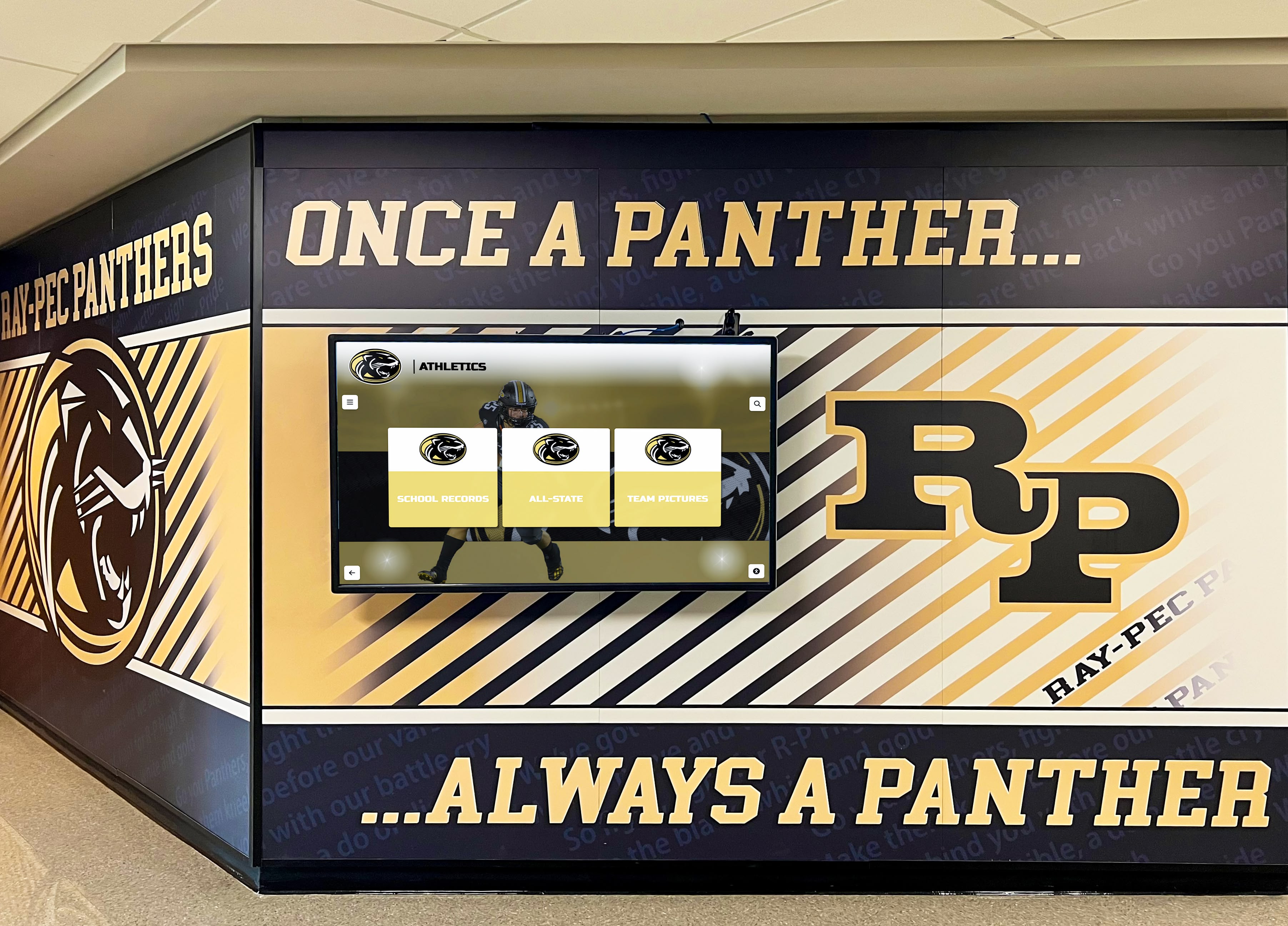
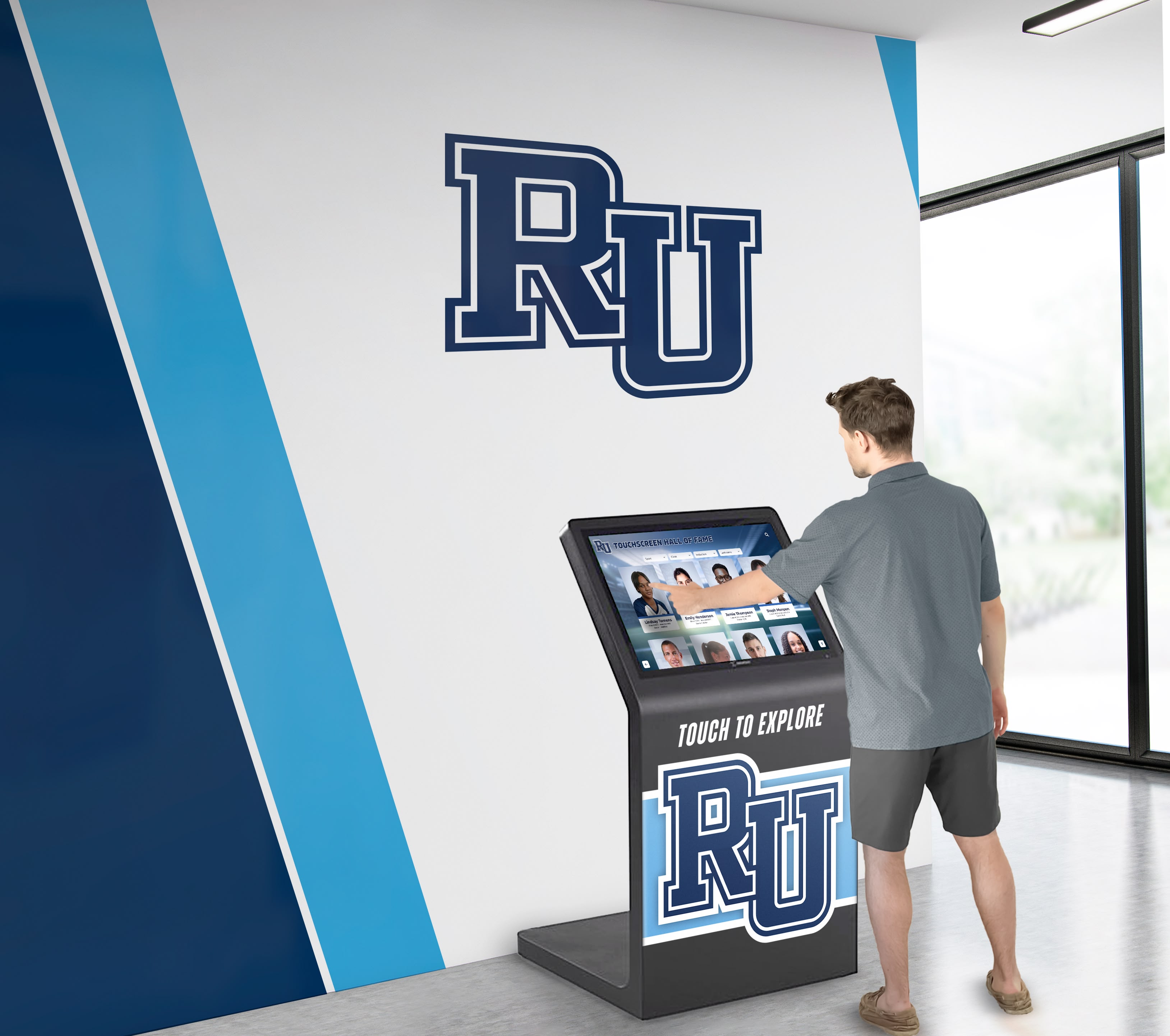
Physical display hardware requires careful specification including commercial-grade displays rated for continuous operation, appropriate screen sizes for viewing distances and locations, touchscreen responsiveness and durability, mounting options and flexibility, network connectivity requirements, and aesthetic integration with facility design.
Quality hardware matters enormously for long-term satisfaction. Consumer-grade displays fail quickly under continuous use, while commercial displays operate reliably for years. Investing appropriately in hardware prevents frustration and replacement costs. Resources examining digital signage technology selection provide additional technical guidance.
Launch and Ongoing Management
Successful implementation extends beyond installation to include effective launch strategy and sustainable ongoing management ensuring systems remain current and valuable.
Launch Strategy:
Maximize recognition impact through strategic launch planning including unveiling timing around major events like championships or reunions, ceremony elements honoring inaugural recognition class, media coverage through athletics communications, social media promotion highlighting features and content, alumni outreach encouraging exploration, and initial feedback collection for improvements.
Well-executed launches create momentum and excitement while demonstrating institutional commitment to volleyball recognition. First impressions matter significantly for stakeholder perceptions and adoption.
Sustainable Content Management:
Long-term success requires establishing sustainable processes for content maintenance including annual review cycles after seasons conclude, clear responsibilities for content updates and additions, standardized templates ensuring consistent quality, quality control procedures preventing errors, archive protocols preserving older content, and staff training for continuity during transitions.
Programs that establish clear processes maintain current, accurate recognition systems. Those that rely on individual knowledge without documented procedures struggle when personnel change. Planning for sustainability from the beginning prevents future challenges.
The Rocket Alumni Solutions Advantage for Volleyball Recognition
Schools and athletic departments implementing volleyball recognition need reliable technology partners providing comprehensive solutions specifically designed for athletic recognition rather than generic digital signage.
Purpose-Built Athletic Recognition Platform
Rocket Alumni Solutions offers platforms specifically designed for athletic recognition rather than adapted from commercial digital signage, providing critical advantages for volleyball programs.
Sport-Specific Templates:
Rather than generic layouts requiring custom design work, Rocket provides sport-specific templates for player profiles showcasing volleyball statistics and achievements, team season pages documenting championships and rosters, coaching career summaries honoring program leadership, statistical record board formats highlighting program records, and historical timelines presenting decades of volleyball tradition.
Templates ensure professional presentation while saving significant content development time, enabling programs to launch comprehensive recognition quickly rather than spending months on custom design.
Intuitive Content Management:
Non-technical athletic administrators and coaches can easily manage volleyball recognition through simple web-based interfaces requiring no coding or technical skills, drag-and-drop photo uploads and organization, pre-formatted entry fields for statistics and information, bulk import capabilities for historical data, scheduled publishing for automatic content updates, and mobile access enabling updates from smartphones at matches.
Systems designed for educational users reduce IT department burden while empowering athletic staff to maintain current recognition without technical assistance.
Comprehensive Support and Training:
Rocket Alumni Solutions provides complete implementation support including professional installation and hardware setup, comprehensive staff training on content management, responsive technical support addressing issues quickly, ongoing platform improvements and updates, and best practice guidance based on extensive experience.
Schools benefit from partner expertise rather than pioneering implementation challenges independently. With over 1,000 installations nationwide, Rocket brings proven approaches that maximize recognition effectiveness while minimizing implementation friction.
Proven Success Across Athletic Programs
Extensive experience implementing athletic recognition across high schools, colleges, and universities provides Rocket Alumni Solutions with unique insights into what works effectively for volleyball programs.
Multi-Sport Excellence:
While specializing in athletic recognition, platforms accommodate comprehensive multi-sport celebration ensuring volleyball receives appropriate recognition within broader athletic excellence context. Programs can maintain dedicated volleyball sections while integrating with basketball, soccer, softball, and other sports creating cohesive institutional athletic recognition.
This integrated approach demonstrates balanced athletic program values while enabling efficient content management across multiple sports through unified platforms. Understanding how recognition systems support multiple sports provides additional implementation context.
Analytics and Engagement Insights:
Built-in analytics reveal how visitors interact with volleyball displays through daily interaction counts and trends, most-viewed players and content, search query patterns revealing visitor interests, peak usage times indicating optimal update scheduling, and visitor navigation paths showing content discovery patterns.
Data helps optimize content while demonstrating program value through concrete usage metrics that justify continued investment and support for comprehensive recognition systems.
Best Practices for Volleyball Recognition Programs
Long-term success requires thoughtful approaches ensuring programs remain vibrant, relevant, and equitable across years and leadership transitions.
Maintaining Comprehensive Coverage
Effective volleyball recognition celebrates diverse excellence ensuring balanced, inclusive celebration rather than narrow focus on specific achievement types.
Equitable Recognition Standards:
Monitor recognition distribution ensuring balance across achievement types including championship teams versus individual honors, offensive versus defensive statistical achievements, starting players versus role contributors, recent versus historical achievements, and male versus female programs at co-educational institutions.
Transparent, consistently applied criteria prevent perceptions of favoritism while helping current athletes understand recognition pathways based on genuine achievement rather than subjective preferences.
Integration with Broader Recognition
Connect volleyball recognition to comprehensive institutional recognition programs demonstrating balanced values that celebrate diverse achievement types including academic excellence alongside athletic success, other athletic programs receiving equivalent recognition, fine arts and performing arts achievement, community service and leadership development, and academic honor roll recognition.
Balanced recognition demonstrates that institutions value diverse forms of student excellence rather than exclusively emphasizing athletics, resonating with families evaluating schools based on comprehensive values.
Building Championship Culture Through Recognition
Strategic recognition actively builds championship culture rather than simply documenting past success, creating virtuous cycles where recognition inspires achievement that generates new recognition.
Inspiring Current Athletes:
Effective recognition constantly reminds current athletes that championship excellence represents realistic, achievable goals rather than distant impossibilities. When players train in facilities surrounded by championship displays celebrating past team successes and individual achievements, they develop immediate understanding that championships represent realistic goals.
Coaches can reference recognition displays during recruiting, motivation sessions, and team building activities, using past excellence as tangible evidence supporting championship possibility. This environmental reinforcement complements coaching messages while providing visual proof that “people like you, from this program, have achieved volleyball excellence before.”
Alumni Connection and Giving:
Comprehensive recognition strengthens alumni connections to programs that honor their contributions permanently, often translating into enhanced giving and program support. Former athletes who see themselves recognized prominently maintain emotional connections throughout their lives, becoming program ambassadors who promote institutions within professional and social networks.
Many programs report that recognition investments pay dividends through enhanced alumni engagement including increased giving to athletic programs, stronger volunteer support and mentorship, improved event attendance and participation, and valuable professional networking connections. Understanding how recognition inspires alumni engagement provides additional strategic context.
Measuring Recognition Program Success
Effective programs track both quantitative metrics and qualitative impacts demonstrating value while identifying improvement opportunities that enhance recognition effectiveness.
Engagement and Usage Metrics
Digital platforms provide concrete data revealing how audiences interact with volleyball recognition including daily interaction counts and trends over time, average session duration showing depth of engagement, most-viewed athletes and content revealing audience interests, search query patterns indicating what visitors seek, and peak usage times revealing optimal scheduling for content updates.
These metrics demonstrate actual usage justifying program investment while revealing optimization opportunities. For example, if analytics show visitors frequently search for specific content types, programs can prioritize similar content development. If engagement peaks during specific times, updates can target those windows for maximum visibility.
Qualitative Impact Assessment
Beyond numbers, evaluate broader influence through student-athlete feedback about motivation and inspiration, alumni satisfaction with recognition of their contributions, coach observations about program culture effects, prospective recruit responses during campus visits, community members’ perceptions of program excellence, and parent feedback about comprehensive athlete recognition.
Qualitative feedback reveals whether recognition achieves intended cultural and motivational impacts that quantitative metrics alone cannot capture. Regular feedback collection through surveys, focus groups, and informal conversations ensures programs understand recognition effectiveness comprehensively.
Return on Investment Documentation
Document program value across multiple dimensions including staff time savings compared to traditional trophy maintenance, eliminated costs for ongoing plaque and banner production, enhanced recruitment support through visible tradition and excellence, strengthened alumni engagement and giving patterns, improved institutional reputation through celebration of excellence, and increased community engagement with volleyball programs.
Comprehensive ROI analysis demonstrates that digital recognition represents sound investment beyond initial costs, often achieving cost parity with traditional approaches within 3-5 years while providing dramatically superior recognition capabilities. Programs can use ROI documentation when seeking continued funding or justifying program expansion.
Conclusion: Honoring Volleyball Excellence for Generations
The NCAA volleyball championship represents the pinnacle of college volleyball excellence, creating championship moments, individual achievements, and program traditions that deserve permanent, comprehensive celebration. From Division I programs that draw national media attention to Division III institutions emphasizing student-athlete balance, volleyball programs across all competitive levels achieve remarkable success worthy of recognition that honors athletes appropriately while inspiring current and future generations.
Modern digital recognition technology has transformed what’s possible in celebrating volleyball achievement, providing unlimited capacity for comprehensive recognition, rich multimedia content bringing volleyball careers to life, instant updates celebrating achievements in real-time, web accessibility extending recognition worldwide, and engaging experiences that captivate visitors for extended periods.
Whether honoring national championship teams, All-American selections, conference titles, or record-setting individual performances, effective recognition maintains clear selection standards ensuring fairness, comprehensive documentation preserving complete stories, engaging presentation formats maximizing impact, and sustained commitment maintaining programs across years and leadership changes.
Schools and athletic departments implementing volleyball recognition benefit from partnerships with experienced providers offering proven technology, sport-specific features and templates, intuitive management systems empowering non-technical staff, responsive support addressing challenges quickly, and continuous innovation through regular platform improvements.
Celebrate Your Volleyball Excellence with Modern Recognition
Rocket Alumni Solutions provides comprehensive volleyball recognition solutions designed specifically for athletic programs committed to honoring championship teams, All-American athletes, and program traditions. Our platform addresses every recognition challenge—from unlimited content capacity to rich multimedia storytelling to intuitive content management.
We offer turnkey implementation including professional hardware installation, comprehensive staff training, volleyball-specific content templates, and ongoing technical support ensuring your recognition system remains current and impactful. Whether you're celebrating decades of volleyball tradition or launching new recognition programs, we'll help you implement systems that honor your athletes' achievements while inspiring future champions.
Volleyball achievement deserves recognition that matches its significance—celebration that’s comprehensive, engaging, permanent, and accessible to global audiences. The question isn’t whether volleyball recognition matters, but whether your program will embrace modern recognition technology that honors excellence comprehensively or continue managing the limitations of traditional trophy cases and static plaques.
Ready to honor your volleyball legacy? Discover how modern recognition platforms can transform how you celebrate the athletes, coaches, and championship teams that built your volleyball tradition while inspiring those who will carry excellence forward into future seasons and generations.































