Athletic directors planning end-of-season recognition understand that offensive excellence drives fan excitement, creates memorable moments, and often determines competitive outcomes. Yet many programs struggle to define what “offensive player of the year” truly means across different sports—should it recognize pure scoring volume, efficiency metrics, playmaking ability, or complete offensive contributions including assists, field position, and situational performance?
The challenge intensifies when comparing athletes across different positions with vastly different statistical profiles. How do you fairly evaluate a quarterback’s passing yards against a running back’s rushing touchdowns? A basketball point guard’s assists versus a shooting guard’s scoring? A soccer midfielder’s goal creation against a striker’s finishing? Programs lacking clear, comprehensive criteria for offensive recognition risk selections that appear arbitrary, undermining award credibility and motivational impact.
Effective offensive player of the year awards celebrate the athletes who most significantly elevated team scoring and competitive advantage through offensive contributions. These awards recognize not only statistical production but also efficiency, situational performance, consistency, and the complete offensive value athletes provide throughout seasons.
This comprehensive guide examines offensive player of the year awards across sports, providing selection criteria, evaluation frameworks, presentation approaches, and recognition systems that honor offensive excellence while maintaining fairness and credibility. Whether you manage youth recreational programs, high school athletics, competitive club teams, or college sports, you’ll discover approaches for recognizing offensive achievement that motivate athletes while reinforcing program standards and competitive values.
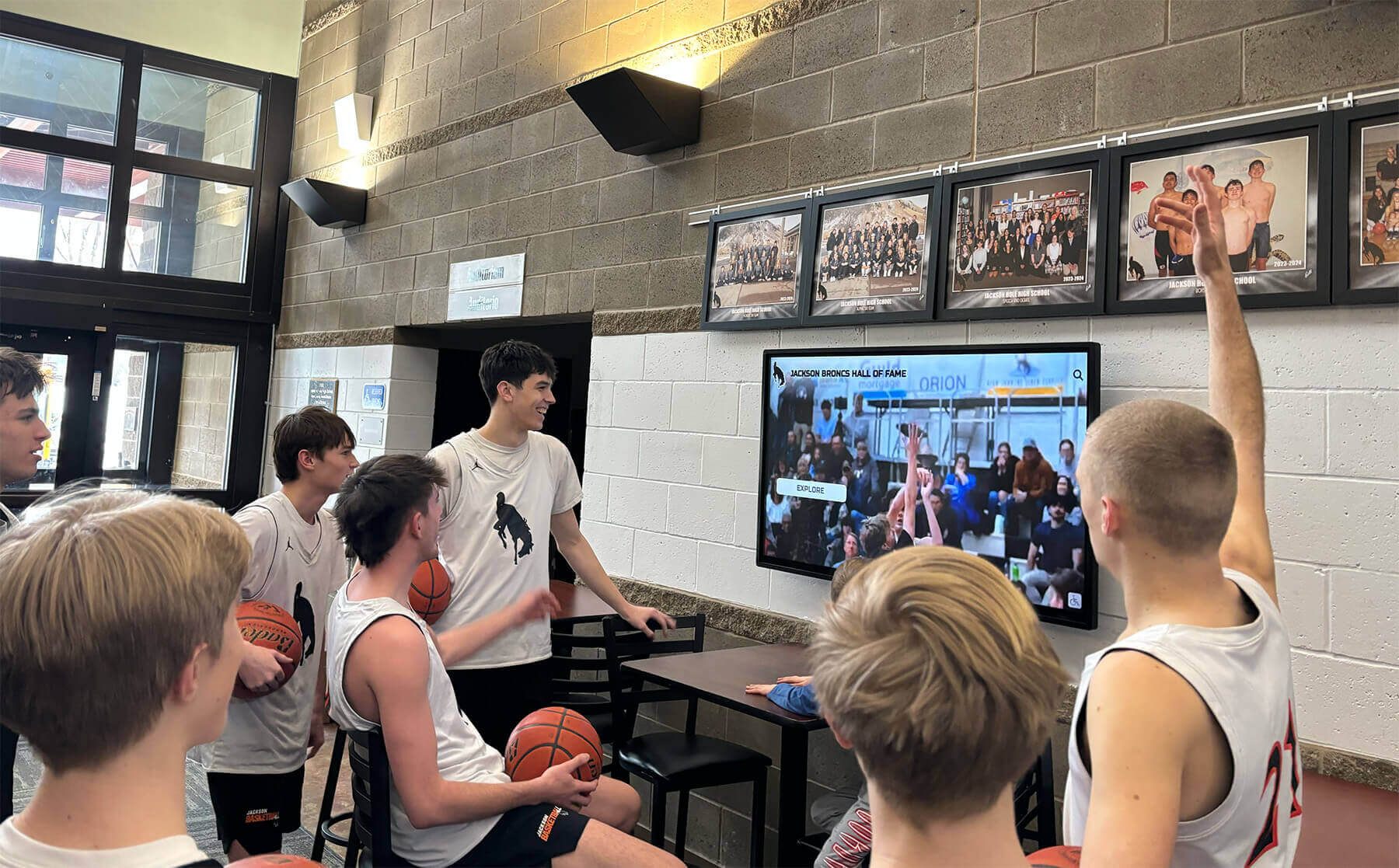
Recognition displays showcasing offensive achievements create engaging experiences that celebrate scoring excellence
Understanding Offensive Player of the Year Awards
Offensive player awards exist across virtually all competitive sports, recognizing athletes who most significantly contribute to team scoring and offensive success. Understanding what these awards represent—and how they differ from most valuable player honors—helps programs create meaningful recognition that athletes, families, and communities value.
Defining Offensive Excellence
Offensive player of the year recognition specifically celebrates contributions to team scoring, offensive production, and attacking effectiveness. Unlike MVP awards that consider complete game contributions including defense and leadership, offensive player awards focus exclusively on attacking dimensions:
Scoring Production: Points, goals, runs, or sport-specific scoring contributions directly generating team offense.
Offensive Efficiency: Productivity relative to opportunities measuring quality rather than only quantity of offensive attempts.
Playmaking Contributions: Assists, setup plays, and offensive creation enabling teammates’ scoring opportunities.
Situational Performance: Critical offensive production in high-pressure moments, close games, or championship competitions.
Consistency and Reliability: Sustained offensive contributions across complete seasons rather than sporadic excellence.
Complete Offensive Impact: Total offensive value considering all dimensions—scoring, efficiency, creation, and situational excellence—rather than single statistics.
Programs defining these dimensions clearly before seasons begin create transparent evaluation standards that athletes understand and families trust.

Professional athletic recognition displays provide space for detailed offensive statistics and achievement documentation
How Offensive Awards Differ From MVP Recognition
Many programs present both MVP and offensive player awards, recognizing that complete value and offensive production don’t always align in the same athlete:
MVP Awards recognize complete contributions across offense, defense, leadership, and intangible impact. The most valuable player might excel defensively while contributing moderately offensively, or provide critical leadership offsetting lesser statistical production.
Offensive Player Awards isolate attacking contributions regardless of defensive performance or leadership qualities. An athlete might win offensive player honors despite defensive limitations or minimal leadership presence based exclusively on scoring excellence.
This distinction allows programs to honor both the complete player who impacts all game dimensions and the offensive specialist who excels primarily through scoring and attacking contributions. Defensive specialists who anchor championships while scoring minimally remain eligible for MVP consideration even when offensive player awards recognize different athletes.
Sport-Specific Offensive Recognition
Offensive excellence manifests differently across sports, requiring sport-specific evaluation approaches that account for positional requirements and strategic contexts:
Team Sports with Shared Offensive Responsibility: Basketball, soccer, hockey, lacrosse, and similar sports where multiple positions contribute to scoring require evaluating both direct scoring and offensive creation through assists and setup plays.
Position-Specific Offensive Roles: Football offense involves specialized positions—quarterbacks, running backs, receivers—with dramatically different statistical profiles requiring position-aware evaluation or position-specific offensive awards.
Individual Offensive Contributions in Team Contexts: Baseball and softball feature individual offensive performance (batting) that directly contributes to team scoring, enabling straightforward statistical comparison across positions.
Track and Field Point Scoring: Individual event victories and placements contribute to team scoring, creating offensive value through individual excellence in specific events.
Programs should adapt offensive recognition criteria to sport-specific contexts ensuring evaluations reflect how offense actually functions within their competitive environment rather than applying generic criteria across disparate sports.
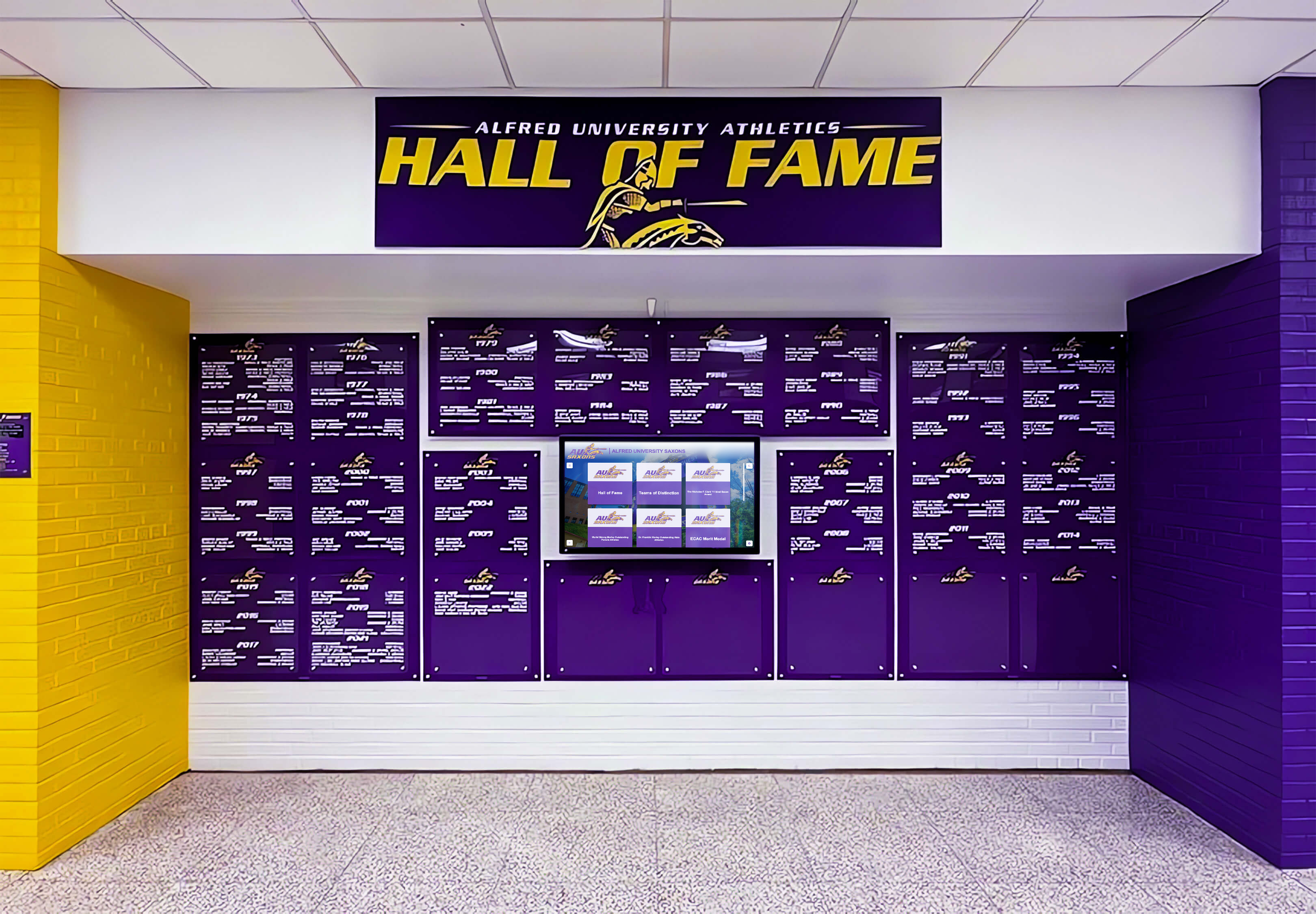
Comprehensive recognition walls celebrate diverse achievements including offensive excellence across multiple sports
Selection Criteria for Offensive Player Awards
Fair, credible offensive player selection requires clear criteria balancing objective statistics with contextual factors that pure numbers miss. Effective evaluation frameworks consider multiple dimensions creating comprehensive offensive value assessment.
Primary Statistical Metrics
Statistical production provides the foundation for offensive evaluation, offering objective, measurable comparison across athletes:
Volume Statistics:
- Total points, goals, runs, or sport-specific scoring output
- Cumulative offensive production across complete seasons
- Career milestones and program records in offensive categories
- Ranking among team and conference offensive leaders
Efficiency Metrics:
- Points per game, scoring average, or production rate
- Shooting percentages, completion rates, batting averages measuring offensive quality
- Points per possession, offensive rating, or advanced analytics
- Turnover rates and negative plays reducing offensive value
Playmaking Statistics:
- Assists creating scoring opportunities for teammates
- Secondary assists and hockey assists tracking offensive involvement
- Key passes, chances created, or sport-specific creation metrics
- Offensive rebounds, steals leading to transition offense, or possession-gaining plays
Situational Performance:
- Clutch scoring in close games or final minutes
- Playoff and tournament offensive production
- Performance against top-ranked opponents
- Scoring consistency across all competition levels
Programs should publish which statistics receive consideration and how they’re weighted in offensive evaluation, creating transparency that enhances award credibility.
Contextual Evaluation Factors
Pure statistics miss important context affecting offensive value. Comprehensive evaluation considers circumstances influencing statistical production:
Offensive Role and Opportunity:
- Playing time and offensive touches affecting volume statistics
- Position requirements and role expectations within offensive systems
- Green light to shoot versus selective shooting approaches
- Primary option status versus complementary role
Team Offensive Context:
- Team pace and style affecting total possessions and scoring opportunities
- Supporting cast quality enabling or limiting individual production
- Offensive system and coaching philosophy maximizing specific skills
- Competitive level and opponent quality faced throughout season
Individual Circumstances:
- Injury recovery or playing through physical limitations
- Position transitions or role changes during season
- First-year adjustment to competition level
- Leadership responsibilities affecting offensive focus
Impact Beyond Statistics:
- Drawing defensive attention creating space for teammates
- Floor spacing, off-ball movement, or offensive system facilitation
- Transition offense initiation and pace-pushing impact
- Offensive rebounding creating second-chance opportunities
Balanced evaluation weighing statistical excellence against contextual factors creates fairer recognition than purely statistical approaches while maintaining objective foundations preventing arbitrary selection.
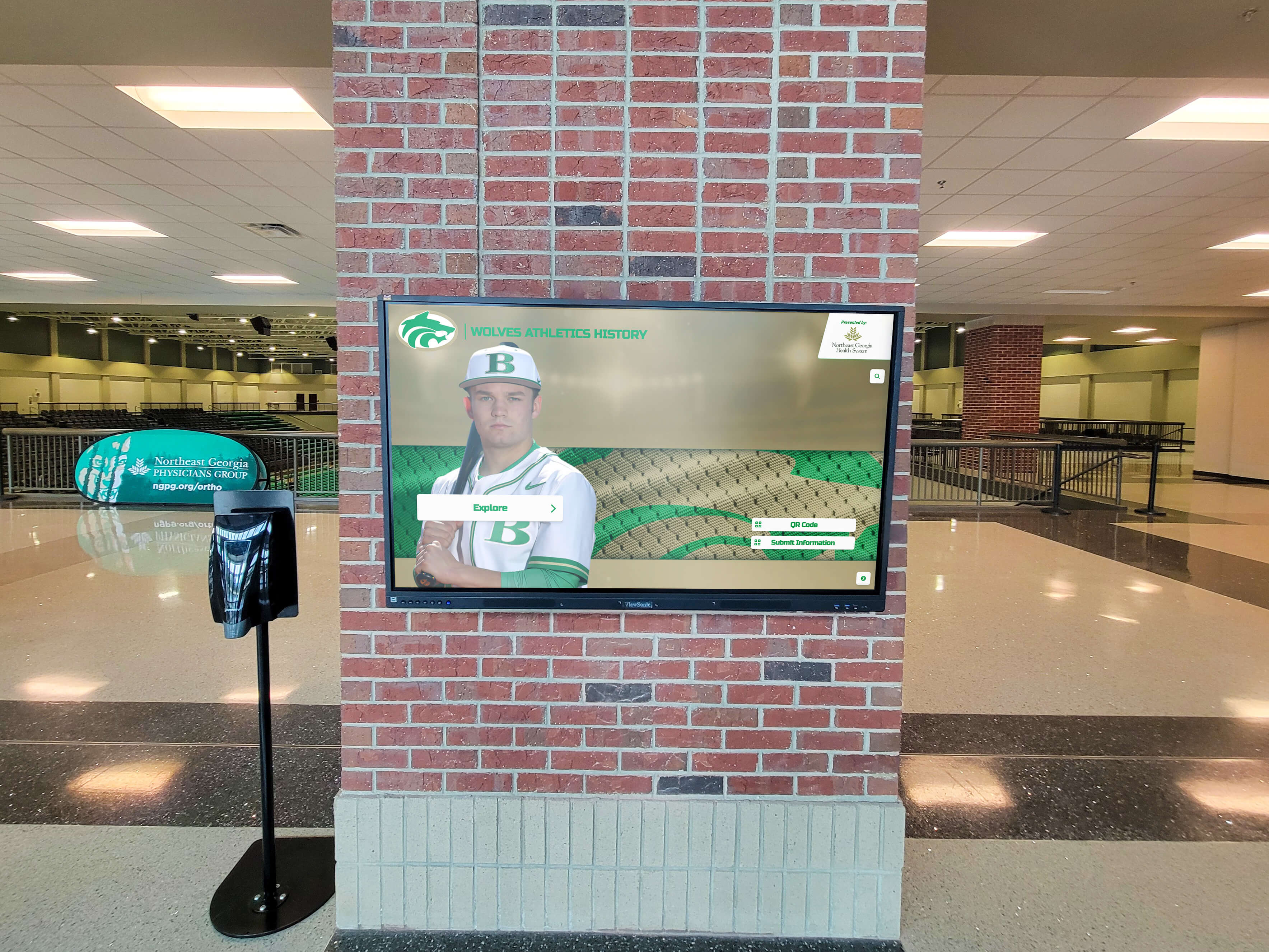
Strategic placement of recognition displays showcasing offensive stars creates natural engagement opportunities
Position-Specific Considerations
Different positions contribute offensively through different mechanisms requiring position-aware evaluation or position-specific offensive awards:
Basketball:
- Point guards evaluated on assists, assist-to-turnover ratio, and offensive facilitation alongside scoring
- Shooting guards and wings judged primarily on scoring volume and efficiency
- Post players assessed on interior scoring, offensive rebounding, and high-percentage shot conversion
- Consider position-specific offensive player awards recognizing best offensive guard and best offensive post player separately
Football:
- Offensive player awards often split between skill positions (quarterback, running back, receiver) due to incomparable statistics
- Quarterback evaluation emphasizes passing yards, touchdowns, completion percentage, and offensive efficiency
- Running back assessment focuses on rushing yards, yards per carry, touchdowns, and big plays
- Receiver recognition based on receptions, receiving yards, touchdowns, and yards per catch
Soccer:
- Forwards judged primarily on goals and shooting efficiency
- Midfielders evaluated on combined goals and assists reflecting dual offensive-playmaking roles
- Attacking players assessed on chance creation, key passes, and offensive involvement beyond final statistics
- Consider separate recognition for top scorer and top playmaker when positions have distinct offensive roles
Baseball/Softball:
- Traditional statistics like batting average, home runs, and RBI provide foundation
- Advanced metrics including on-base percentage, slugging percentage, OPS add efficiency dimension
- Position-agnostic evaluation possible since all positions bat, though designated hitters focus exclusively on offense
Position-specific criteria or separate position-based offensive awards ensure fair evaluation across athletes with fundamentally different offensive responsibilities and statistical profiles.
Sport-Specific Offensive Award Approaches
Different sports require customized offensive recognition approaches accounting for sport-specific scoring mechanisms, position structures, and offensive philosophies. These frameworks provide starting points for developing selection criteria appropriate to specific competitive contexts.

Interactive recognition systems allow detailed exploration of offensive statistics and achievement progression
Basketball Offensive Player Recognition
Basketball’s high-scoring, fast-paced nature creates abundant offensive statistics enabling detailed evaluation across multiple dimensions:
Evaluation Framework:
- Scoring Volume: Total points and scoring average provide baseline offensive contribution measurement
- Shooting Efficiency: Field goal percentage, three-point percentage, and free throw percentage indicate offensive quality
- Shot Selection: Shot attempts in relation to conversion rate revealing offensive role and efficiency balance
- Playmaking: Assists and assist-to-turnover ratio measuring offensive creation for teammates
- Complete Offensive Impact: Advanced metrics like offensive rating, true shooting percentage, or offensive win shares capturing total value
Position Considerations:
- Point guards may lead in assists while scoring less than shooting guards
- Post players typically shoot higher percentages from shorter range than perimeter players
- Consider separate offensive guard and offensive post player awards recognizing different offensive roles
Situational Factors:
- Fourth quarter and overtime scoring in close games demonstrating clutch offensive performance
- Playoff offensive production showing elevated performance under pressure
- Scoring consistency across all competition levels versus stat-padding against weak opponents
Basketball programs often designate offensive player awards as “Leading Scorer” for simplicity or implement comprehensive evaluation considering scoring, efficiency, and playmaking for more complete offensive value assessment.
Football Offensive Player Recognition
Football’s position specialization requires either position-specific offensive awards or careful evaluation frameworks comparing incomparable statistics:
Position-Specific Approach:
- Offensive Player of the Year: Overall offensive excellence across all positions using relative value assessment
- Offensive Back of the Year: Top running back combining rushing yards, yards per carry, touchdowns, and receiving contributions
- Offensive Lineman of the Year: Blocking excellence enabling offensive success through pancake blocks, sacks allowed, and line play
- Receiver of the Year: Top pass-catcher combining receptions, yards, touchdowns, and yards per catch
Quarterback Evaluation:
- Passing yards and touchdowns provide volume measurement
- Completion percentage and interception rate indicate efficiency and decision-making
- Passer rating or QBR offering composite offensive effectiveness metrics
- Rushing contributions from dual-threat quarterbacks add dimension beyond passing statistics
- Fourth quarter comebacks and game-winning drives demonstrate clutch offensive performance
Running Back Assessment:
- Rushing yards and yards per carry measuring ground game production and efficiency
- Rushing touchdowns indicating scoring impact
- Receiving yards and receptions as pass-catching contributions
- Big plays and explosive runs creating game-changing offensive moments
Receiver Recognition:
- Receptions, receiving yards, and receiving touchdowns provide statistical foundation
- Yards per catch indicating big-play ability and downfield threat
- Catch rate measuring reliability and hands quality
- Third-down conversions and red zone production showing situational value
Football’s complexity benefits from position-specific offensive awards ensuring specialized excellence receives appropriate recognition rather than forcing artificial comparison between quarterbacks’ passing yards and receivers’ reception totals.

Permanent recognition boards in athletic facilities honor offensive excellence while building program traditions
Soccer Offensive Player Recognition
Soccer’s low-scoring nature places enormous value on limited goal-scoring opportunities while recognizing offensive creation beyond final statistics:
Evaluation Framework:
- Goals Scored: Direct offensive production providing clear measurement of finishing ability
- Assists: Setup contributions creating scoring opportunities measuring offensive creation beyond personal scoring
- Combined Goals and Assists: Total goal involvement capturing complete attacking contributions
- Chances Created: Key passes and offensive opportunities generated showing attacking influence beyond statistics
- Shot Volume and Accuracy: Total shots and shots on target indicating offensive aggression and efficiency
- Big Game Performance: Scoring in rivalry matches, playoff games, and championship competitions demonstrating clutch offensive value
Position Considerations:
- Forwards judged primarily on goal-scoring output and finishing efficiency
- Attacking midfielders evaluated on combined goals and assists reflecting dual playmaking-scoring roles
- Wide players assessed on goal contributions plus crossing, cut-backs, and attacking width creation
- Deep midfielders rarely lead offensive awards despite controlling possession and initiating attacks
Situational Factors:
- Game-winning goals and game-tying goals in crucial moments
- Goals per 90 minutes played accounting for substitution patterns and playing time differences
- Performance against top-tier defensive opponents versus weaker competition
- Playoff and tournament offensive production exceeding regular season standards
Soccer programs might implement separate “Golden Boot” (top scorer) and “Playmaker Award” (most assists) recognition when attacking roles divide distinctly, or combine metrics in single offensive player award recognizing complete attacking value.
Baseball and Softball Offensive Recognition
Baseball and softball provide abundant individual offensive statistics enabling detailed statistical comparison across positions since all athletes participate offensively through batting:
Traditional Statistical Metrics:
- Batting Average: Hit rate measuring contact quality and consistency
- Home Runs: Power production and run-scoring impact
- Runs Batted In (RBI): Situational hitting driving in runs
- Runs Scored: Offensive involvement creating scoring opportunities
- Stolen Bases: Speed-based offensive contributions and pressure creation
Advanced Offensive Metrics:
- On-Base Percentage (OBP): Complete reaching base ability through hits and walks
- Slugging Percentage (SLG): Extra-base hit power and total bases production
- On-Base Plus Slugging (OPS): Composite offensive value metric combining getting on base and hitting for power
- Weighted On-Base Average (wOBA): Advanced metric weighting offensive events by actual run value
- Offensive Win Shares or WAR: Total offensive value contributions accounting for context and replacement value
Evaluation Approach:
- Programs might recognize traditional “Triple Crown” statistics (average, home runs, RBI) for historic significance
- Modern evaluation increasingly emphasizes OBP and OPS as superior offensive value indicators
- Consider minimum plate appearance thresholds ensuring statistical qualification
- Pitchers often excluded from offensive consideration unless operating as two-way players or designated hitters
Baseball and softball’s individual offensive statistics enable objective, transparent recognition with clear statistical leaders, though programs should decide whether using traditional or advanced metrics for evaluation and communicate criteria clearly before seasons begin.
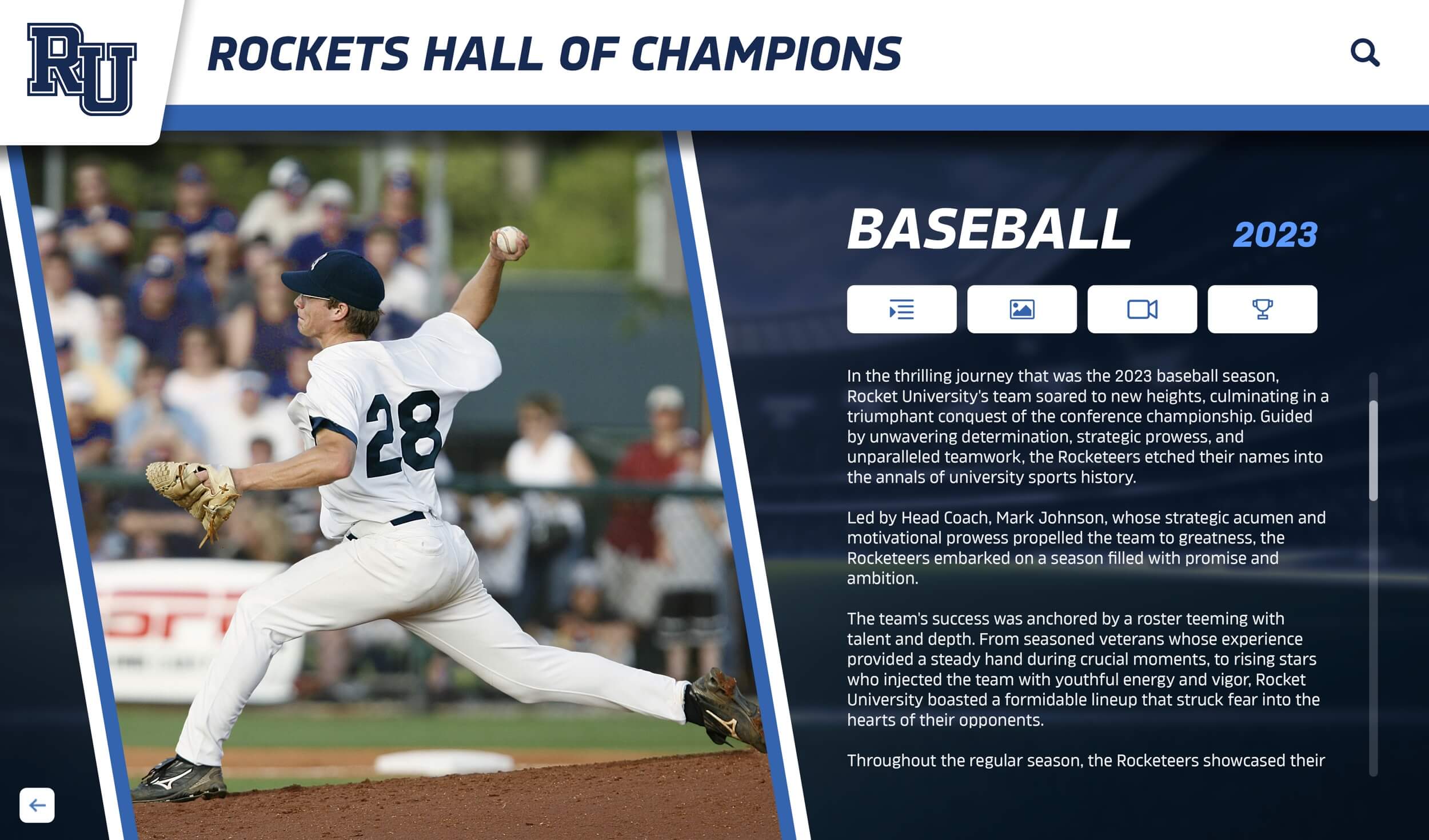
Digital recognition displays showcase baseball offensive achievements with rich statistical detail traditional plaques cannot accommodate
Hockey Offensive Player Recognition
Hockey offensive evaluation considers scoring, playmaking, and complete offensive zone contributions across different forward positions:
Evaluation Framework:
- Goals Scored: Pure finishing ability and net-front presence value
- Assists: Playmaking contributions creating scoring opportunities for linemates
- Total Points: Combined goals and assists measuring complete offensive production
- Points Per Game: Production rate accounting for games played and injury absence
- Power Play Production: Special teams offensive contributions in man-advantage situations
- Game-Winning Goals: Clutch offensive performance in decisive moments
Position Considerations:
- Centers often lead in faceoff wins and two-way play beyond pure offensive statistics
- Wingers typically focus more exclusively on scoring and shooting volume
- Offensive defensemen contribute from blue line but rarely compete with forwards for offensive player recognition
Additional Factors:
- Plus-minus rating indicating offensive production exceeding defensive liability
- Shot volume and shooting percentage measuring offensive aggression and efficiency
- Playoff point production demonstrating elevated performance in elimination games
- Performance against top-ranked opponents versus statistical production against weak teams
Hockey programs often present offensive player awards alongside leading scorer recognition when separating pure goal-scoring from complete offensive contributions including playmaking, or recognize forward and defenseman separately when elite offensive defensemen merit recognition.
Track and Field Offensive Recognition
Track and field’s individual event structure requires defining “offensive” contributions as individual performances generating team points in scored competitions:
Point-Scoring Framework:
- Individual event victories providing maximum point contributions
- Multiple event participation and scoring across diverse events
- Relay contributions adding team points beyond individual events
- Conference, regional, and national championship point production
Performance Excellence:
- Personal records and performance improvement throughout seasons
- School records and program milestones in specific events
- All-conference, all-region, and all-American honors
- National rankings and comparative performance against elite competition
Track and field offensive recognition might honor the athlete contributing most team points across the season or recognize exceptional individual performance regardless of team scoring impact, depending on program values and competitive emphasis.
Similar sport-specific frameworks apply across all athletics—volleyball offensive recognition emphasizes kills and attack efficiency, lacrosse evaluation mirrors soccer with goals and assists, wrestling focuses on pins and technical falls as offensive completion. Programs should develop evaluation criteria reflecting how offense actually functions within their specific sport rather than forcing generic criteria across different competitive structures.
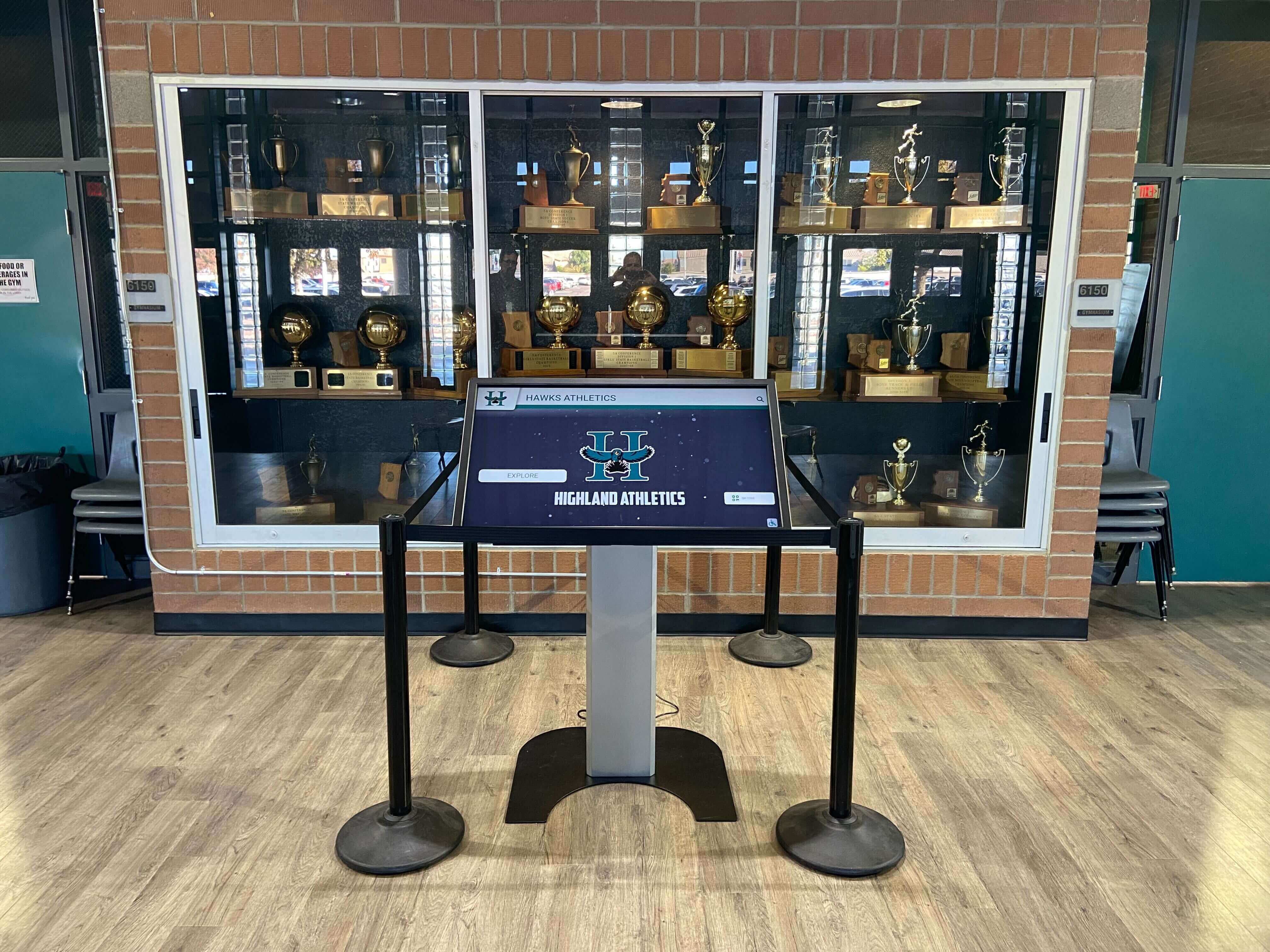
Digital kiosks complement traditional trophy cases while providing expanded capacity for offensive achievement recognition
Presentation and Ceremony Best Practices
How offensive player awards are presented significantly affects their perceived value and motivational impact. Thoughtful presentation transforms simple acknowledgment into meaningful recognition that athletes remember throughout their lives.
Award Ceremony Planning
End-of-season award ceremonies create formal recognition opportunities when planned thoughtfully:
Ceremony Elements:
- Timing: Schedule ceremonies soon after season conclusion while energy and interest remain high, allowing sufficient time for thoughtful award determination without excessive delay
- Location: Choose venues appropriate for attendance size and program resources—gymnasiums, banquet halls, team facilities, or outdoor settings work depending on scale and formality
- Attendance: Decide whether ceremonies include only athletes and coaches creating intimate team events, or extend to families and supporters celebrating with broader athletic community
- Format Structure: Balance formal award presentations with entertainment elements like highlight videos, coach speeches, and athlete recognition speeches creating engaging ceremony flow
- Award Categories: Present offensive player awards alongside complementary recognition like defensive player, MVP, most improved, and character awards demonstrating program values beyond offense alone
Presentation Quality:
- Context and Explanation: Presenters should articulate what offensive player awards recognize, why offensive excellence matters to program success, and the specific criteria used for evaluation
- Statistical Recognition: Share impressive statistics and achievement highlights demonstrating why winners earned recognition with concrete evidence
- Specific Examples: Reference memorable offensive performances—game-winning goals, record-breaking games, clutch performances—illustrating award-worthy contributions
- Comparative Context: Position winner’s achievements within program history, conference rankings, or state/national recognition providing perspective on accomplishment significance
- Winner Response: Allow recipients brief opportunity to respond, thank coaches and teammates, and share reflections on their offensive contributions
Effective presentations transform awards from simple name announcements into meaningful celebrations that recognize achievement context while honoring athletes’ significant contributions to program offensive success.
Physical Award Options
Physical awards create tangible recognition and lasting reminders of achievement:
Traditional Physical Formats:
- Trophies: Classic recognition appropriate for major awards with engraved plates documenting achievement details
- Plaques: Wall-mountable recognition featuring photos, achievement descriptions, and statistical highlights
- Medals: Wearable recognition appropriate for broader award categories or youth programs
- Certificates: Cost-effective recognition suitable for all award types providing formal documentation
- Custom Apparel: Embroidered warmups, jackets, or apparel items athletes can wear displaying recognition
Enhanced Recognition Formats:
- Photo Plaques: Combining action photography with achievement text creating personalized recognition
- Statistical Displays: Including detailed statistics, achievement timelines, or season highlights beyond simple award acknowledgment
- Replica Equipment: Sport-specific items like autographed balls, jerseys, or equipment commemorating achievement
- Crystal or Glass Awards: Premium recognition for major honors demonstrating achievement significance
Physical award selection should match program resources while ensuring recognition feels meaningful to recipients. Athletes often value presentation ceremony recognition and peer acknowledgment as much as physical award quality, though tangible recognition creates lasting memories beyond ceremony moments.
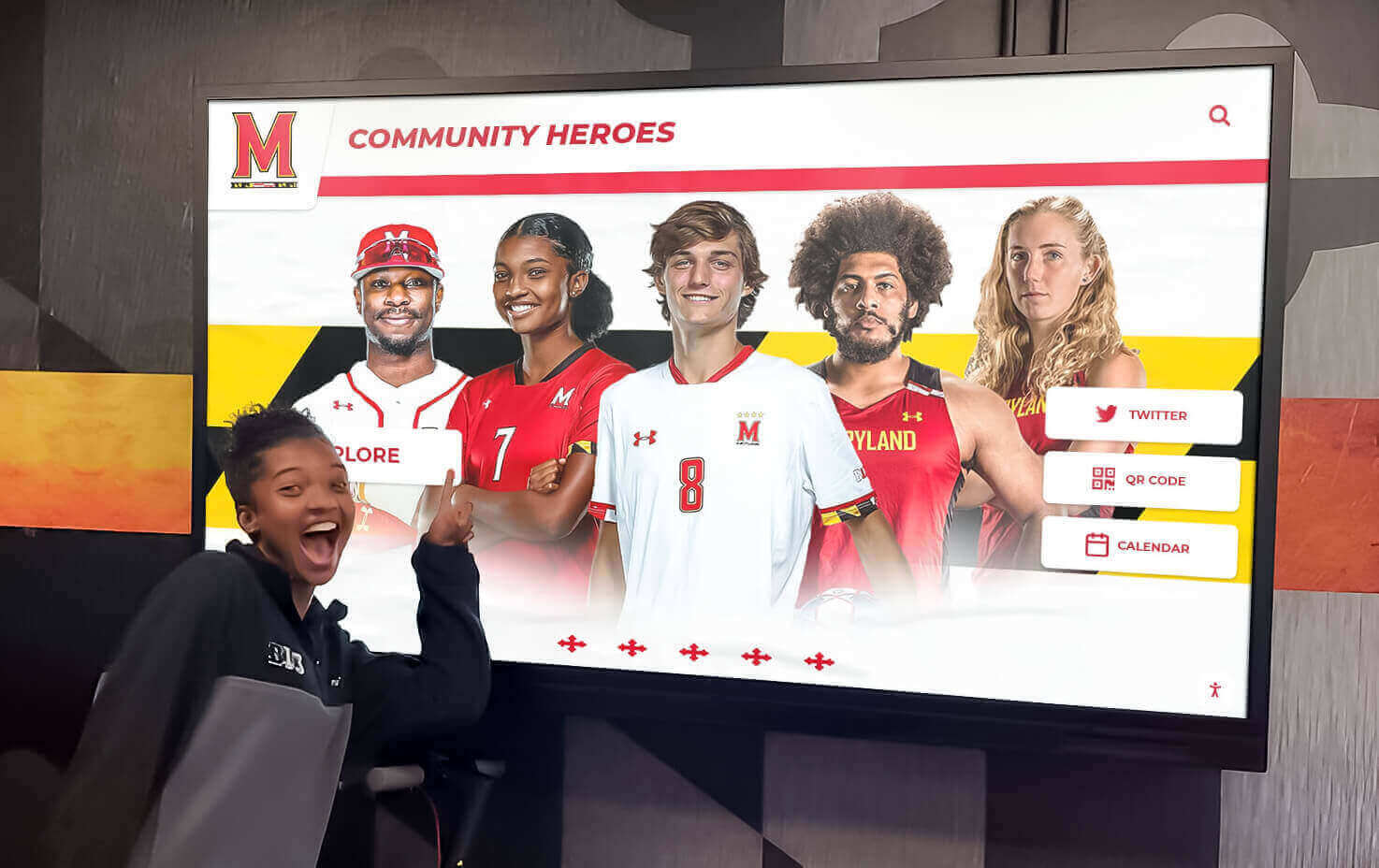
Recognition displays celebrating offensive heroes build community pride and program visibility
Digital Recognition Integration
Modern recognition extends beyond single ceremonies through digital platforms providing year-round visibility and expanded reach to alumni, families, and broader communities:
Digital Platform Advantages:
- Unlimited Capacity: Accommodate complete award history across decades without physical space constraints limiting traditional trophy case recognition
- Rich Multimedia: Integrate photos, highlight videos, detailed statistics, season recaps, and biographical information impossible in physical plaques
- Remote Accessibility: Reach families unable to attend facilities, alumni maintaining long-distance connections, and prospective recruits researching programs
- Searchable Databases: Enable instant access to specific athletes, seasons, or achievement types through powerful search functionality
- Social Sharing: Allow athletes and families to share recognition across social media extending visibility beyond physical facility visitors
- Permanent Preservation: Protect against physical deterioration, loss, or disposal ensuring achievements remain documented indefinitely
- Cost-Effective Expansion: Add unlimited content without per-item manufacturing expenses enabling comprehensive recognition regardless of budget constraints
Implementation Approaches:
- Interactive Touchscreen Displays: Facility installations providing engaging exploration of program history and achievements creating destination attractions in athletic facilities
- Web-Accessible Databases: Online platforms reaching dispersed audiences including alumni, families, and community supporters unable to visit facilities regularly
- Mobile Applications: Smartphone and tablet apps enabling recognition access from anywhere maintaining program connection beyond physical facility visits
- Social Media Integration: Automated content distribution amplifying recognition across platforms where athletes and families already engage
Solutions like Rocket Alumni Solutions specialize in athletic recognition, providing intuitive systems for documenting achievements while creating engaging displays that motivate current athletes and maintain alumni connections. These platforms accommodate unlimited offensive player awards across program history while providing comprehensive sports recognition displays honoring diverse achievement categories beyond offense alone.
Programs implementing digital recognition consistently report dramatic increases in family engagement, alumni connection, and program pride compared to traditional static displays alone, demonstrating that technology enhances rather than replaces traditional recognition when implemented thoughtfully.
Integrating Multiple Award Types
Offensive player recognition works most effectively when presented alongside complementary awards demonstrating program values beyond scoring:
Balanced Recognition Programs:
- Performance Awards: Offensive player, defensive player, and MVP recognition honoring different excellence dimensions
- Character Recognition: Sportsmanship, dedication, and leadership awards reinforcing values beyond competitive statistics
- Development Recognition: Most improved and emerging leader awards celebrating growth trajectories
- Contribution Awards: Unsung hero and team-first recognition validating athletes whose impact transcends statistics
Balanced award programs ensure athletes understand that programs value complete development, character qualities, and diverse contributions equally with offensive excellence, creating inclusive environments where all athletes find recognition pathways while maintaining appropriate emphasis on competitive achievement that offensive awards represent.
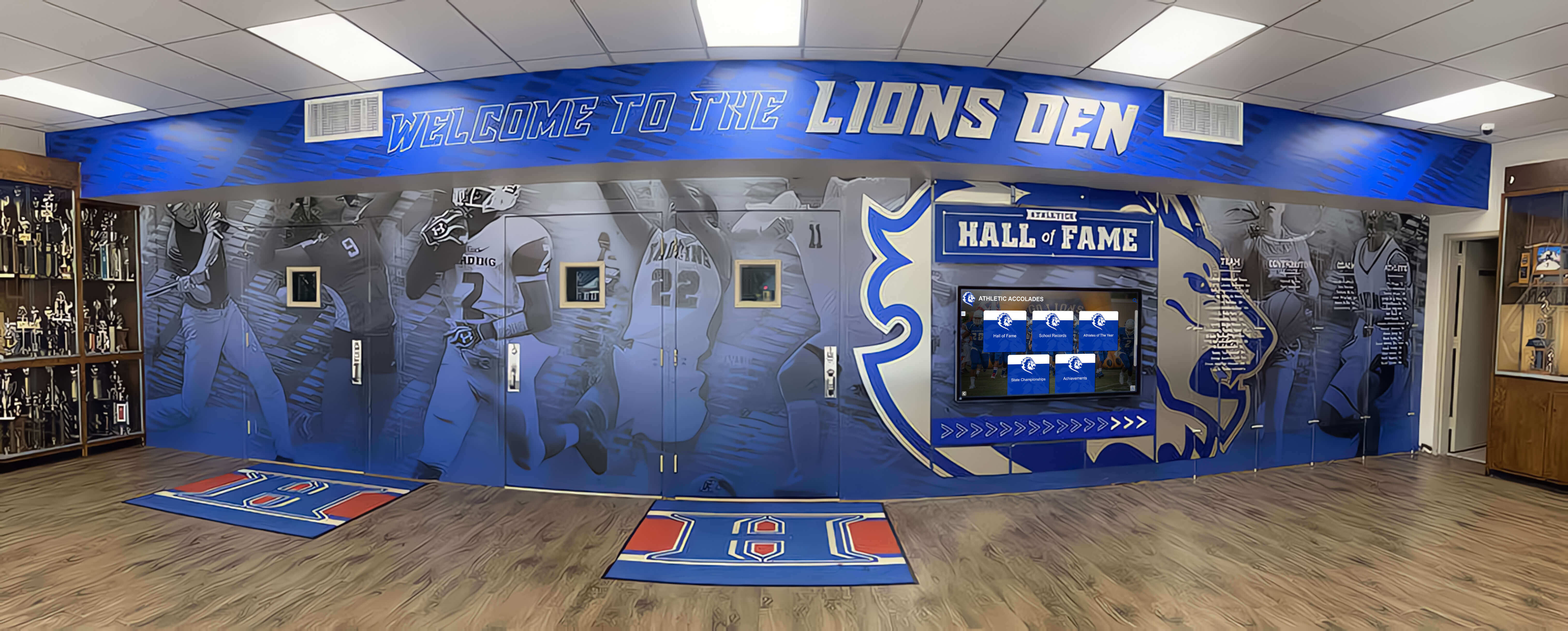
Comprehensive recognition combines traditional trophy displays with modern digital enhancement for optimal impact
Common Selection Mistakes to Avoid
Understanding common offensive player award mistakes helps programs implement more effective recognition that maintains credibility and achieves motivational objectives:
Mistake: Focusing Exclusively on Volume Statistics
Many programs default to recognizing the highest scorer without considering efficiency, situational performance, or complete offensive value. This volume-only approach may reward players whose statistical production comes through inefficient high-volume shooting or scoring disproportionately against weak opponents while excelling moderately against quality competition.
Solution: Incorporate efficiency metrics, situational performance, and contextual factors alongside volume statistics. An athlete scoring 18 points per game on 52% shooting while performing consistently against all opponents provides greater offensive value than a teammate averaging 20 points on 38% shooting concentrated against weak competition.
Mistake: Ignoring Position-Specific Offensive Roles
Comparing a point guard’s 8 assists per game directly against a shooting guard’s 20 points per game without recognizing their fundamentally different offensive responsibilities creates unfair evaluation undermining award credibility.
Solution: Implement position-specific offensive awards recognizing guards, forwards, and posts separately in basketball; skill position categories in football; or position-appropriate evaluation criteria accounting for different offensive roles when presenting single offensive player awards.
Mistake: Overlooking Offensive Creation Beyond Scoring
Focusing exclusively on goals or points while ignoring assists, offensive rebounds, secondary assists, or offensive system facilitation undervalues playmakers whose offensive impact manifests through teammate production rather than personal statistics.
Solution: Evaluate complete offensive contributions including direct scoring, playmaking statistics, and less visible offensive system facilitation. Consider combined goals-plus-assists metrics, hockey-style point systems, or qualitative assessment of offensive creation impact beyond final statistics.
Mistake: Predetermined or Seniority-Based Selection
Recognition loses motivational power when winners seem predetermined regardless of actual performance, or when programs automatically honor seniors despite younger athletes providing superior offensive contributions.
Solution: Implement legitimate evaluation processes applying consistent criteria fairly across all candidates regardless of age, seniority, or profile. Document specific evidence supporting selections providing transparent rationale that athletes, families, and communities trust.
Mistake: Inadequate Selection Criteria Documentation
Awards lacking clear, published criteria create perceptions that selections are arbitrary or politically motivated, undermining recognition credibility and program trust.
Solution: Document and publish offensive player evaluation criteria before seasons begin. Explain which statistics receive consideration, how efficiency and situational performance factor into evaluation, and what contextual factors merit recognition. Transparency enhances credibility while enabling athletes to understand recognition standards throughout seasons rather than learning criteria only at award presentation.
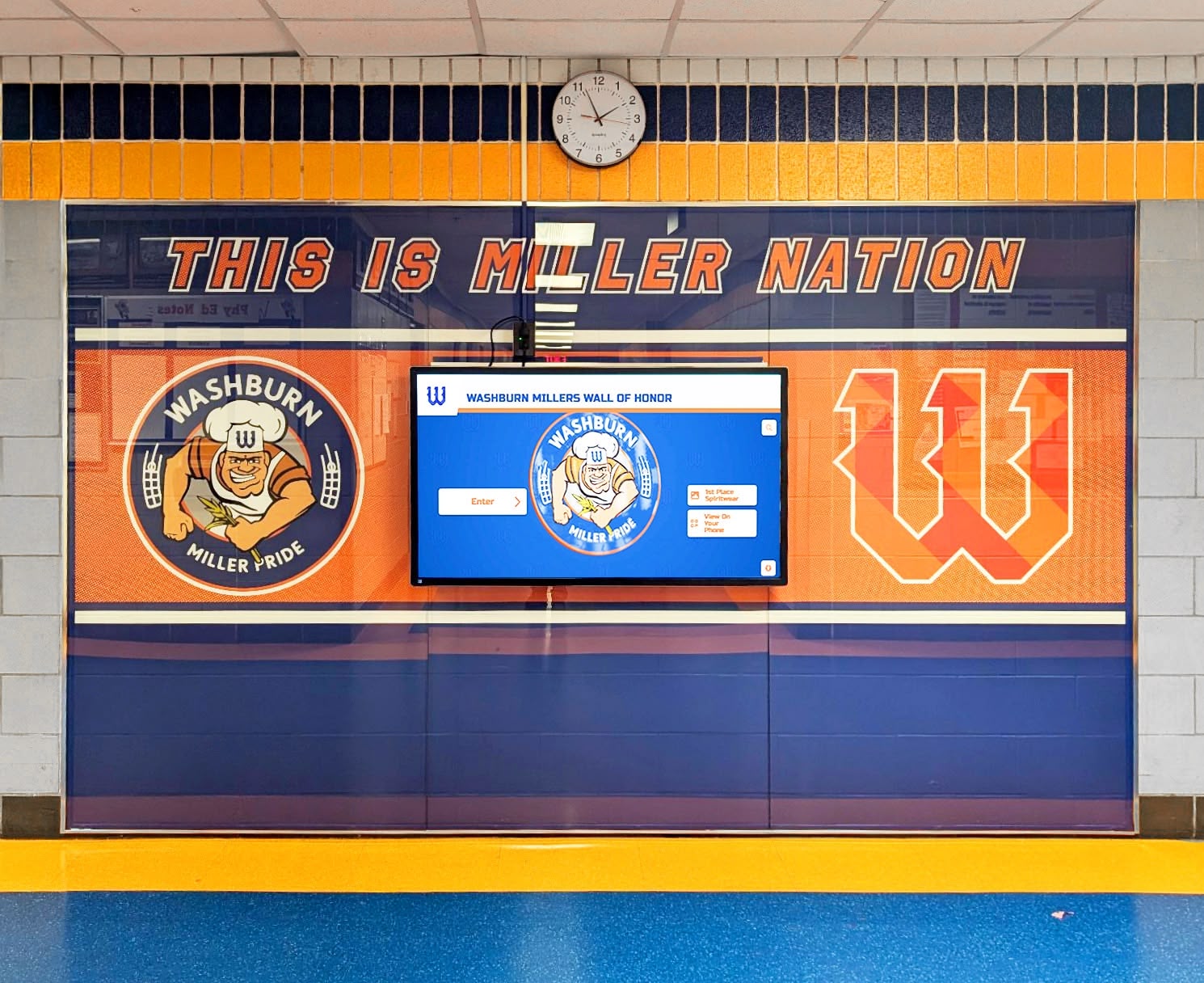
Digital recognition displays in school hallways create daily engagement opportunities with offensive excellence documentation
Age-Appropriate Recognition Across Competition Levels
Offensive player recognition should match developmental stages, competitive levels, and program missions. What works for elite high school programs differs from youth recreational leagues or college athletics.
Youth Sports Offensive Recognition (Ages 7-12)
Youth programs emphasize skill development, participation, fun, and positive experiences. Offensive recognition should celebrate emerging achievement while maintaining inclusive approaches:
Recognition Approaches:
- Focus on effort, improvement, and offensive skill development alongside emerging statistical production
- Ensure broad recognition preventing concentration among small groups while celebrating genuine achievement
- Use age-appropriate metrics and simplified statistics young athletes understand
- Consider game MVP recognition providing frequent offensive acknowledgment throughout seasons
- Keep ceremonies fun, engaging, and appropriate for young attention spans
- Physical awards like trophies and medals carry particular significance for young athletes
Evaluation Priorities:
- Most offensive improvement showing development in scoring, playmaking, or offensive skills
- Offensive effort and hustle demonstrating maximum attacking intensity
- Team offensive leadership through encouragement and positive attitude
- Coachability and responsiveness to offensive skill instruction
Youth offensive recognition should motivate continued participation and skill development rather than exclusively rewarding advanced athletes, though genuine achievement deserves appropriate celebration creating aspirational standards.
Middle School Offensive Recognition (Ages 13-14)
Middle school programs introduce increased competitive emphasis while maintaining developmental focus. Offensive recognition balances statistical achievement with continued character and improvement emphasis:
Recognition Approaches:
- Expand statistical recognition honoring leading scorers and offensive producers
- Maintain strong offensive improvement recognition celebrating development
- Include efficiency and quality metrics beyond pure volume statistics
- Consider position-specific offensive recognition when appropriate
- Implement limited peer voting for offensive recognition categories
- Add ceremony sophistication through highlight videos and statistical presentations
Evaluation Balance:
- Statistical production receives increased weight while maintaining development recognition
- Offensive efficiency and shot selection become evaluation factors
- Big game performance and clutch offensive plays merit specific acknowledgment
- Offensive leadership and playmaking receive recognition beyond personal scoring
Middle school offensive awards begin transitioning toward high school sophistication while maintaining inclusive developmental approaches appropriate for early adolescent athletes.
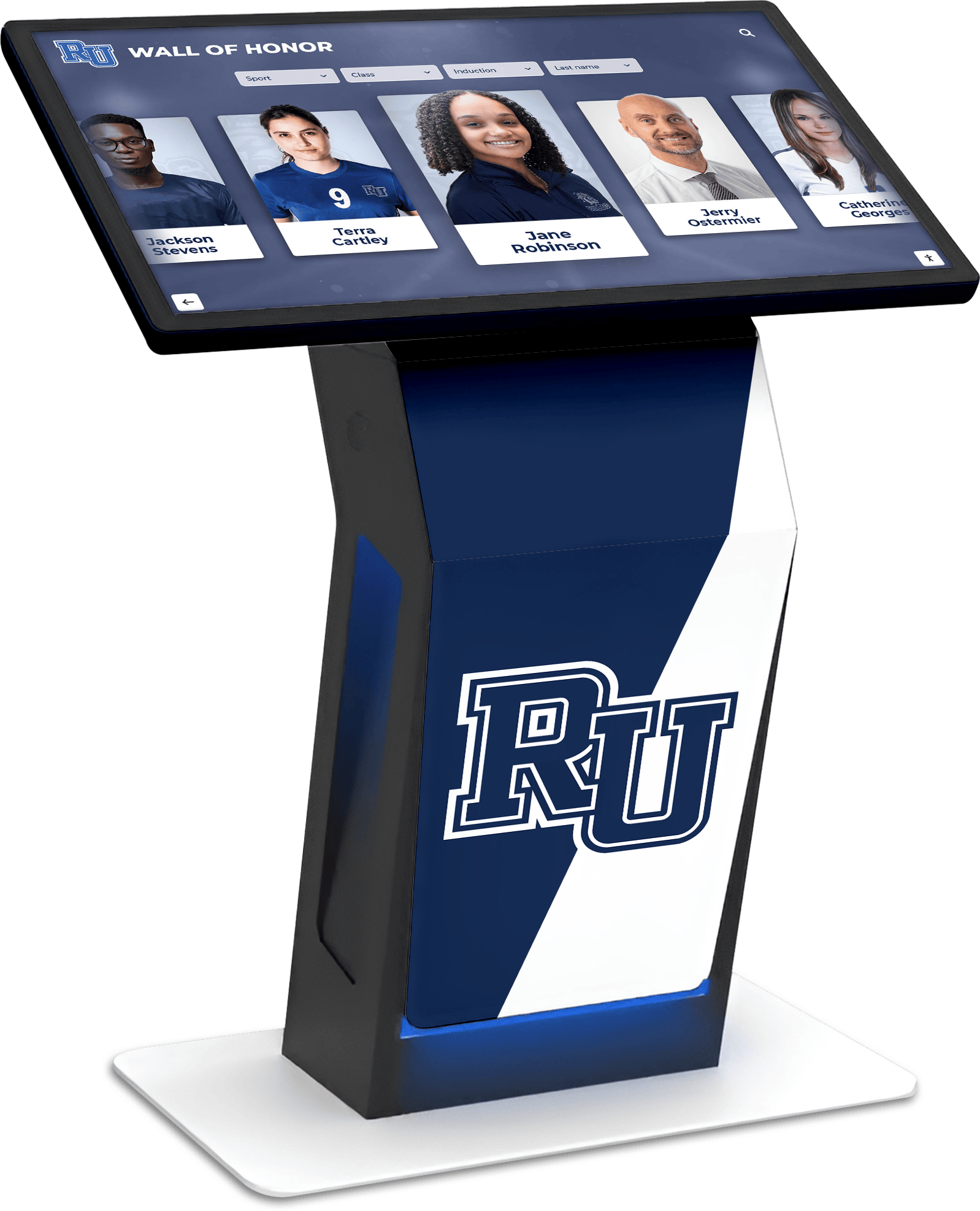
Interactive kiosks provide engaging exploration of offensive achievements across different competition levels
High School Offensive Recognition (Ages 15-18)
High school programs emphasize competitive success while maintaining educational mission and complete student-athlete development. Offensive recognition becomes sophisticated matching college-level approaches:
Recognition Approaches:
- Implement comprehensive statistical evaluation using advanced metrics beyond traditional statistics
- Use combination determination balancing objective statistics with coaching evaluation
- Create varsity and junior varsity offensive recognition ensuring all program levels receive celebration
- Coordinate with senior athlete celebrations honoring complete careers
- Document recognition through digital platforms creating permanent records athletes access throughout lives
- Integrate with conference honors, all-state selections, and external recognition
Evaluation Sophistication:
- Advanced statistics and efficiency metrics provide evaluation foundation
- Situational performance and clutch offensive production receive significant weight
- Competitive level and opponent quality contextualize statistical achievements
- Multi-year offensive excellence and program record-setting merit special recognition
High school offensive player awards should reflect competitive significance while maintaining educational context that distinguishes scholastic athletics from professional sports.
College and Elite Club Offensive Recognition
College and competitive club programs focus primarily on competitive excellence while developing complete athletes. Offensive recognition acknowledges elite performance standards:
Recognition Approaches:
- Sophisticated performance-based evaluation reflecting high competitive expectations
- Integration with conference honors, all-region selections, national recognition
- Data analytics and advanced metrics providing detailed offensive value assessment
- Documentation supporting athlete promotion to next competitive levels or professional opportunities
- Recognition of offensive records and milestone achievements within program history
Evaluation Priorities:
- Elite statistical production benchmarked against conference and national leaders
- Championship performance and postseason offensive excellence
- Consistency against quality opponents demonstrating performance sustainability
- Complete offensive value considering all dimensions beyond simplistic scoring totals
College offensive recognition reflects elite competitive standards while acknowledging that small percentages of student-athletes continue athletics beyond collegiate level, making recognition of college achievement particularly meaningful as capstone accomplishment.
Building Multi-Year Offensive Recognition Traditions
Offensive player awards create greater impact when designed as ongoing program traditions rather than single-season implementation. Consider sustainability factors ensuring programs continue effectively across multiple years:
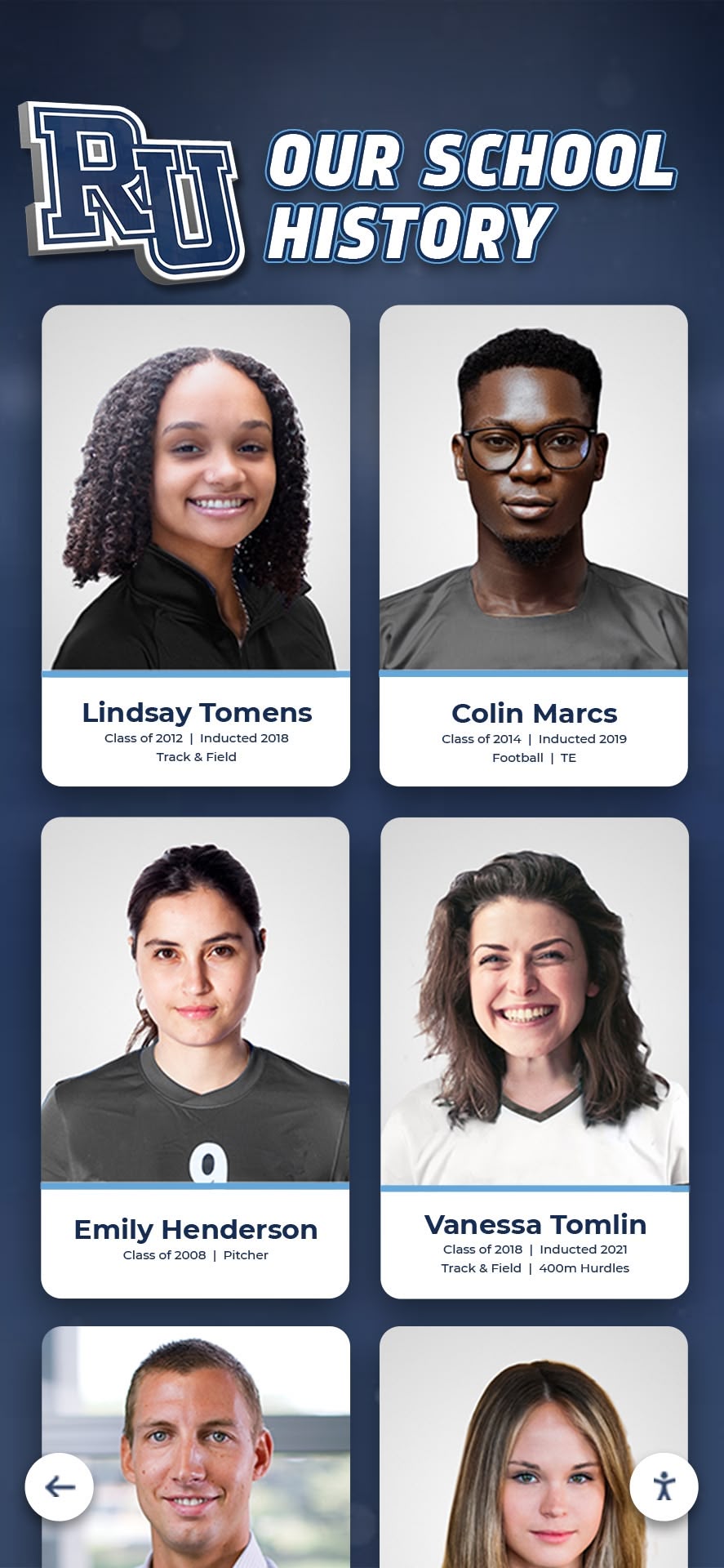
Professional imagery combined with recognition creates compelling displays documenting offensive excellence across generations
Creating Award Traditions and Naming Opportunities
Establish consistent annual offensive player awards that become program traditions athletes aspire to win:
Tradition Development:
- Maintain consistent offensive award categories across multiple seasons creating historical continuity
- Document all offensive player winners annually building historical records showing program evolution
- Name major offensive awards after program legends, influential coaches, or significant contributors deepening meaning and connection to program history
- Create trophy or plaque formats that add new winner plates annually building visible multi-year traditions
- Reference past offensive player winners during ceremonies connecting current athletes to program legacy
Example Approaches:
- “[Coach Smith] Offensive Player of the Year Award” honoring influential coach while creating named recognition tradition
- “Golden Boot Award” for leading soccer scorer creating branded recognition athletes specifically pursue
- “100-Point Club” recognition for basketball players reaching scoring milestone creating aspirational achievement category
- Maintained trophy passed annually to current winner creating physical symbol connecting offensive excellence across generations
Named awards and consistent traditions gain prestige over time as athletes see multiple years of past winners documented in trophy cases or digital recognition displays, creating aspirational recognition that motivates beyond single-season acknowledgment.
Documenting Multi-Year Offensive Excellence
Track and recognize sustained offensive excellence across multiple seasons celebrating consistency beyond single-year achievement:
Multi-Season Recognition:
- Career offensive records and cumulative statistics showing sustained production
- Multiple offensive player awards won by same athlete across different seasons
- Offensive milestone achievements like 1,000 career points, 100 career goals, or sport-specific benchmarks
- All-time program leaders in offensive categories creating historical offensive excellence records
Progressive Recognition:
- Freshman offensive excellence awards recognizing first-year impact
- Emerging offensive talent recognition for younger athletes showing development
- Senior offensive leadership acknowledging complete career contributions
- Alumni offensive legend recognition connecting historic offensive stars to current programs
Digital platforms excel at presenting longitudinal views showing offensive achievement progression across complete careers while connecting current athletes to historic offensive performers, creating comprehensive offensive excellence documentation that traditional single-season awards cannot capture alone.
Programs coordinating offensive recognition with comprehensive athletic recognition systems demonstrate commitment to honoring complete achievement across all program dimensions while maintaining appropriate emphasis on competitive offensive excellence.
Alumni Offensive Excellence Recognition
Historical offensive stars represent valuable program resources serving as mentors, role models, and program ambassadors. Recognition systems including alumni achievements maintain these connections:
Alumni Integration:
- Hall of fame recognition for career offensive excellence and program records
- All-time offensive leaders displays documenting historic offensive performances
- Alumni offensive player award presentations involving past winners connecting generations
- Career retrospective recognition honoring offensive contributions years after graduation
- Post-graduation achievement recognition celebrating professional, college, or life success following athletic careers
Current athletes seeing where offensive excellence can lead—college opportunities, professional careers, life success—through alumni recognition creates aspirational motivation while maintaining valuable program connections across generations.
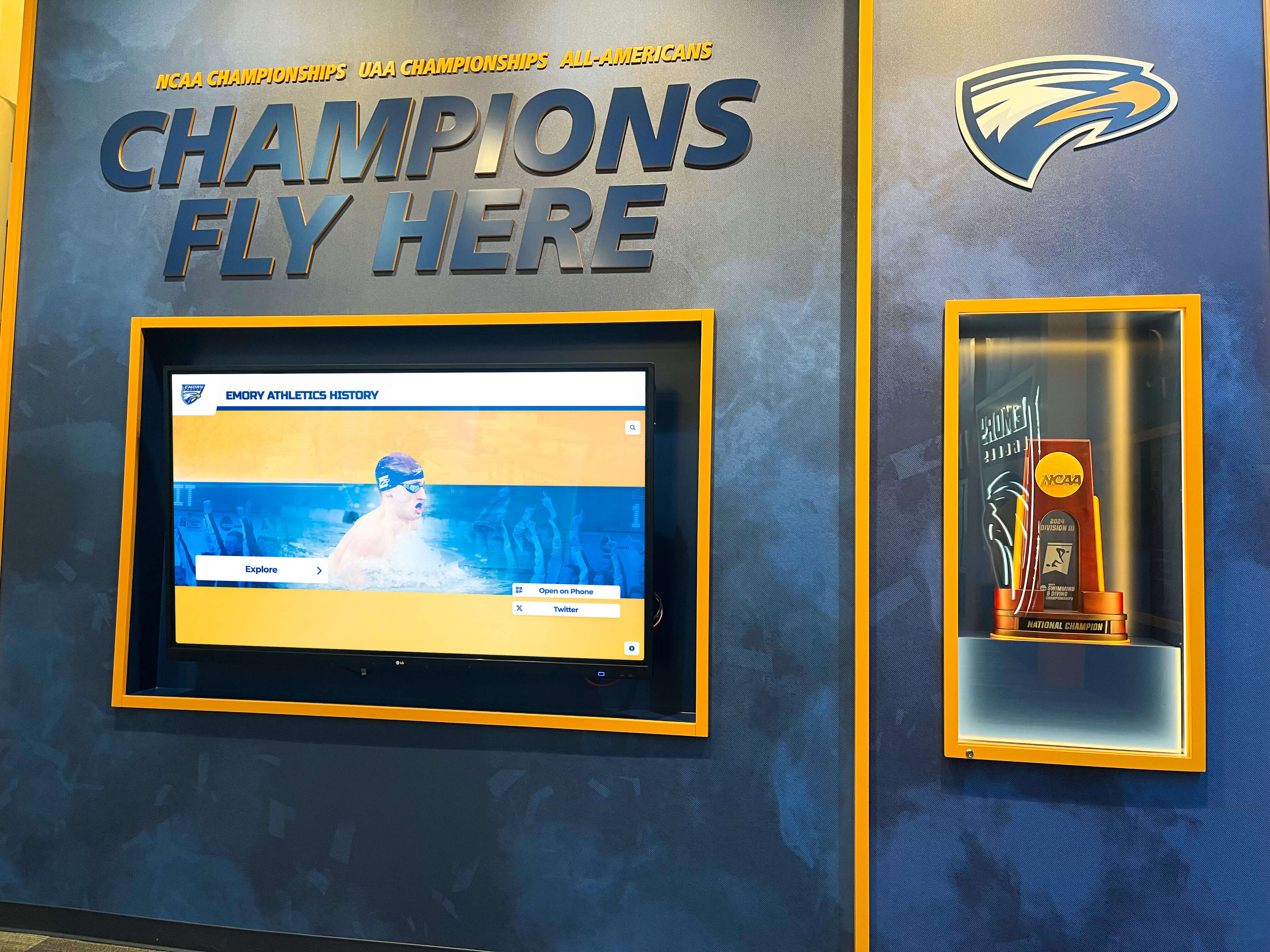
Championship recognition displays document offensive excellence contributing to program success while inspiring future achievement
Technology Solutions for Offensive Recognition
Modern digital platforms transform how programs document, present, and celebrate offensive excellence while overcoming physical space limitations that constrain traditional recognition:
Interactive Display Systems
Touchscreen displays in athletic facilities create engaging exploration of offensive achievement history:
Display Capabilities:
- Browse complete offensive player award history across decades
- Explore detailed offensive statistics, season recaps, and highlight videos
- Search by athlete name, season, sport, or achievement type
- View career offensive statistics and multi-year achievement progression
- Compare offensive leaders across different eras and competitive levels
- Access biographical information, post-graduation updates, and career retrospectives
Implementation Benefits:
- Install in prominent athletic facility locations creating destination attractions
- Accommodate unlimited offensive recognition without space constraints limiting physical trophy cases
- Update remotely through cloud-based management requiring no technical expertise
- Integrate with existing facility displays and recognition systems
- Provide accessible navigation appropriate for all ages and technical comfort levels
Interactive displays transform passive recognition into active exploration, with visitors spending significantly more time engaging with digital recognition than traditional plaques while sharing experiences through photography and social media amplifying program visibility.
Web-Accessible Recognition Databases
Online platforms extend offensive recognition beyond physical facility visitors reaching dispersed audiences:
Platform Features:
- Searchable databases of all offensive award winners across program history
- Individual athlete profiles with complete offensive statistics and achievements
- Season-by-season offensive leader boards and statistical rankings
- Historical comparison tools showing offensive excellence across different eras
- Mobile-responsive design ensuring accessibility across all devices
- Social sharing functionality enabling athletes and families to distribute recognition
Audience Reach:
- Alumni maintaining long-distance program connections decades after graduation
- Families unable to regularly visit facilities experiencing recognition remotely
- Prospective athletes and families researching program history and competitive tradition
- Community members and supporters engaging with program achievements
- Media and journalists accessing historical information for features and coverage
Web platforms extend recognition impact exponentially beyond physical display limitations while maintaining permanent accessible archives ensuring offensive achievement remains documented indefinitely regardless of facility changes or physical space constraints.
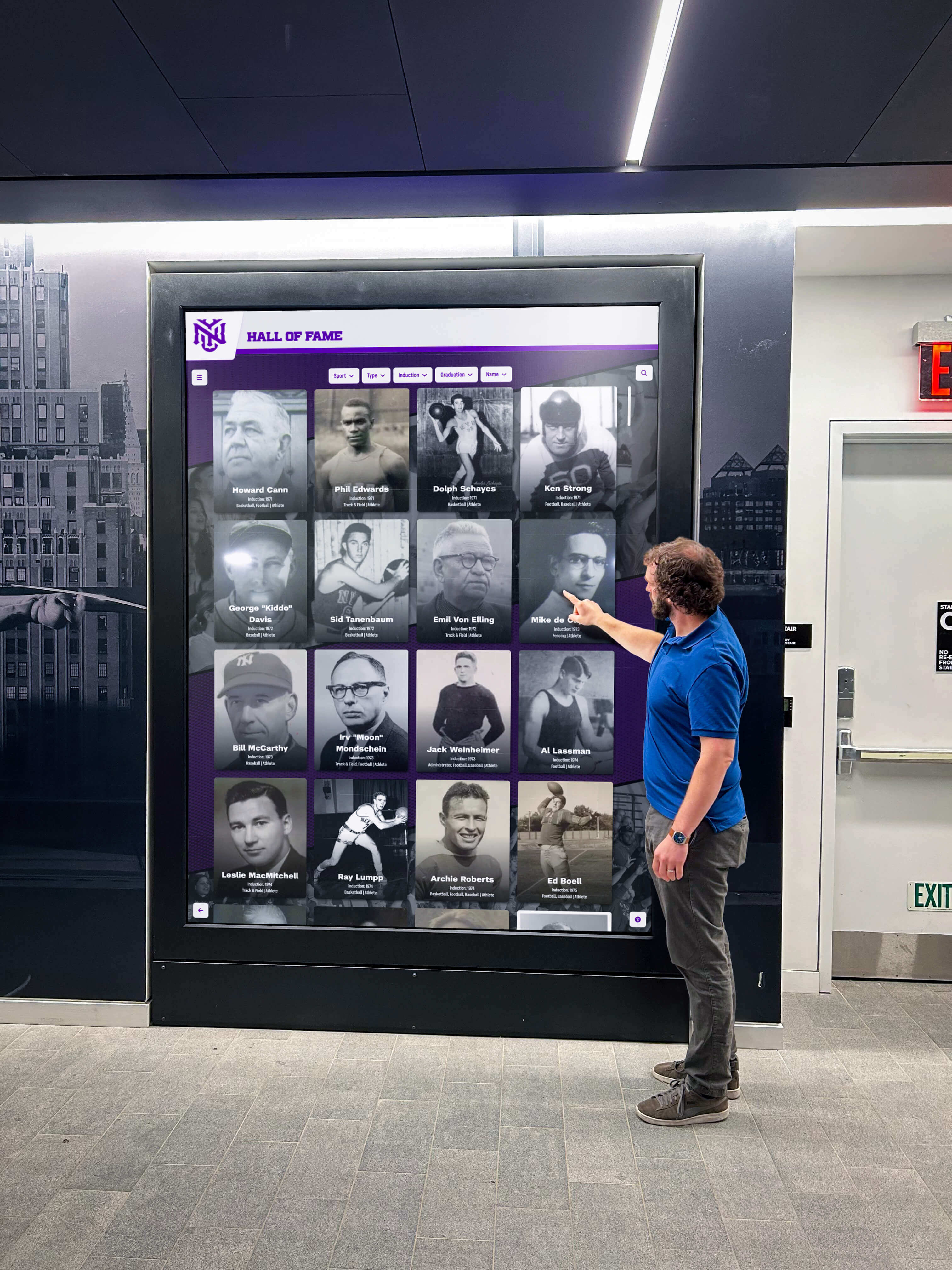
Modern recognition technology creates engaging experiences transforming how communities celebrate offensive excellence
Content Management Systems
Cloud-based management simplifies offensive recognition administration while enabling regular updates maintaining current relevance:
Management Features:
- Intuitive interfaces requiring no technical expertise for content creation and updates
- Template-based award documentation ensuring consistent presentation quality
- Media libraries organizing photos, videos, and documents centrally
- Role-based permissions controlling access appropriately across coaches and administrators
- Mobile optimization allowing management from any internet-connected device
- Automated backup protecting against data loss ensuring achievement preservation
Operational Advantages:
- Update offensive recognition immediately after award determination
- Correct errors or add information without physical plaque replacement costs
- Expand recognition categories without manufacturing or installation expenses
- Maintain current season content alongside complete historical archives
- Transition smoothly across coaching changes and administrative turnover
Content management systems eliminate traditional barriers to comprehensive recognition—physical space constraints, update costs, technical complexity—enabling programs of all sizes to implement sophisticated offensive recognition systems previously requiring substantial resources and technical expertise.
Measuring Recognition Program Impact
Effective offensive player recognition demonstrates measurable benefits justifying time and resource investment. Track both quantitative and qualitative indicators assessing recognition program effectiveness:
Quantitative Success Indicators
Monitor measurable outcomes revealing recognition impact:
Participation Metrics:
- Athlete retention rates comparing return participation across seasons
- Tryout participation and roster application trends
- Attendance patterns at practices and competitions
- Award ceremony attendance and family engagement
Performance Indicators:
- Offensive statistical trends showing production improvement across seasons
- Championship success and competitive achievement progression
- Individual athlete development and skill advancement
- Program reputation and competitive ranking changes
Engagement Measures:
- Social media sharing and recognition content distribution
- Digital recognition platform usage analytics and visitor engagement
- Family satisfaction surveys including recognition program assessment
- Alumni connection maintenance and ongoing involvement
Programs systematically recognizing offensive excellence typically show improved offensive performance, enhanced program pride, increased family engagement, and stronger alumni connections compared to programs providing minimal or inconsistent recognition.
Qualitative Impact Assessment
Observe qualitative indicators revealing recognition influence beyond measurable metrics:
Cultural Indicators:
- Program pride and identity strength among athletes and community
- Competitive confidence and offensive aggressiveness during games
- Athlete goal-setting behavior and offensive achievement focus
- Family testimonials about program experience and recognition impact
Reputation Factors:
- Community perception of program quality and competitive standards
- Media coverage and public awareness of program achievements
- Recruiting conversations and family decision-making factors
- Alumni advocacy and program promotion activities
Motivational Evidence:
- Athlete effort and intensity in practice and competition
- Offensive skill development dedication and extra training
- Team chemistry and supportive culture around teammates’ offensive success
- Post-season reflection on meaningful recognition experiences
The most meaningful recognition impact often manifests through stories rather than statistics—athletes pushing offensive limits because recognition demonstrated program values scoring excellence, families maintaining lifelong program connections because recognition made them feel valued, or alumni returning to present awards because their own recognition created lasting program attachment.
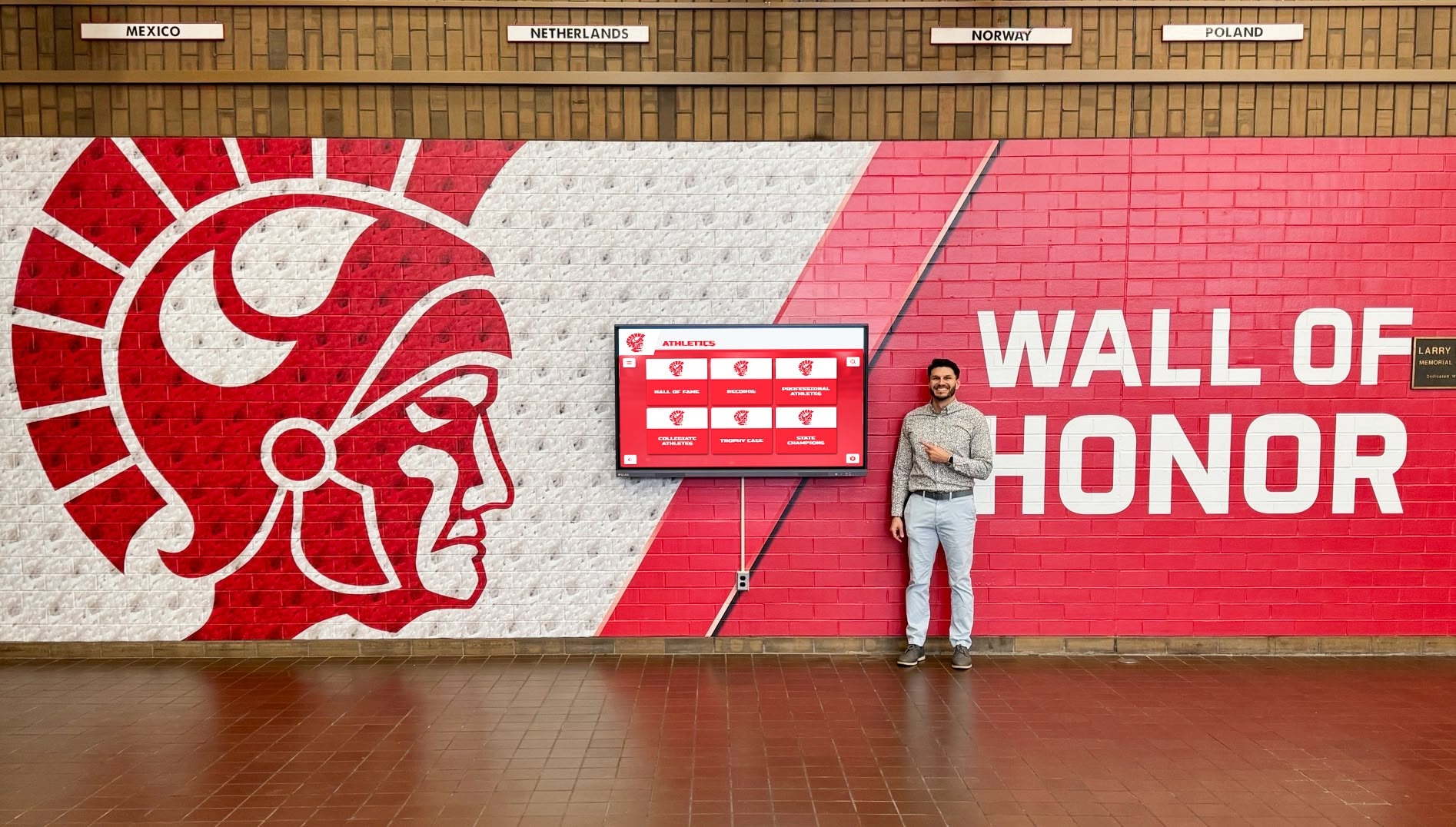
Permanent recognition walls create daily reminder of offensive excellence while building lasting program pride
Conclusion: Honoring Offensive Excellence That Motivates
Effective offensive player of the year awards celebrate the athletes who most significantly elevated team scoring and competitive advantage through offensive contributions. These awards recognize statistical production, offensive efficiency, playmaking ability, situational excellence, and complete offensive value—honoring attack-minded excellence while maintaining fair evaluation across different positions and competitive contexts.
The comprehensive frameworks, selection criteria, presentation approaches, and recognition systems presented throughout this guide provide foundations for implementing offensive player awards appropriate to your program’s sport, competitive level, and values. Establish clear evaluation criteria that athletes understand before seasons begin. Balance statistical excellence with contextual factors and efficiency metrics. Create presentation formats making recognition feel meaningful and memorable. Document offensive achievements permanently through systems honoring contributions indefinitely.
Whether you implement traditional award ceremonies with physical trophies, modern digital recognition platforms providing year-round visibility, or hybrid approaches combining both, the commitment to recognizing offensive excellence creates motivational environments where athletes pursue scoring excellence while understanding that programs value and celebrate offensive contributions meaningfully.
Strong offensive recognition demonstrates that programs appreciate the attacking mentality, scoring creativity, and competitive aggression that offensive excellence requires. It validates the pure scorer’s finishing ability, the playmaker’s creation skills, the efficient shooter’s shot selection, and the clutch performer’s pressure performance equally—celebrating diverse offensive contribution types while maintaining appropriate emphasis on statistical production that objective evaluation requires.
Solutions like Rocket Alumni Solutions help athletic programs implement comprehensive recognition systems combining sophisticated technology with intuitive management. Interactive touchscreen displays, web-accessible databases, and cloud-based content management create engaging platforms that honor offensive excellence while serving multiple stakeholders—inspiring current athletes pursuing offensive milestones, connecting alumni remembering their own offensive achievements, engaging families celebrating their athletes’ scoring success, and building program pride throughout communities.
Your athletic program’s offensive achievements, scoring records, and attacking excellence deserve recognition approaches equal to their significance. Thoughtful offensive player awards celebrating diverse contributions ensure that every athlete who elevates team offense through scoring, playmaking, efficiency, or clutch performance receives meaningful acknowledgment while building lasting traditions that define program identity and competitive standards across generations.
Transform Your Athletic Recognition Program
Discover how digital recognition systems can help your program celebrate offensive excellence, document achievement history, and create engaging displays that inspire athletes while honoring scoring contributions across all sports and competition levels.































