The Olympic Games represent the pinnacle of athletic achievement, where the world’s greatest athletes compete on the ultimate stage. Olympic athlete digital halls of fame serve as permanent tributes to these extraordinary individuals who dedicated their lives to excellence, broke records, inspired nations, and embodied the Olympic spirit of perseverance, sportsmanship, and human potential. From the U.S. Olympic & Paralympic Museum in Colorado Springs to international Olympic committees, sports clubs, and educational institutions celebrating alumni Olympians, these digital recognition programs ensure that Olympic excellence is honored, preserved, and celebrated for generations.
This comprehensive guide explores the significance of Olympic athlete recognition, the evolution from traditional displays to modern digital solutions, best practices for honoring Olympic champions, and how interactive recognition technology enables organizations to celebrate Olympic excellence in engaging, accessible ways that inspire future athletes while preserving legendary achievements.
Olympic athletes represent the absolute peak of human athletic achievement. They train for years—often decades—to compete at the highest level, making sacrifices that most people cannot fathom. These athletes deserve recognition that matches the magnitude of their accomplishments. Digital halls of fame provide comprehensive, engaging, and enduring tributes worthy of Olympic legends.
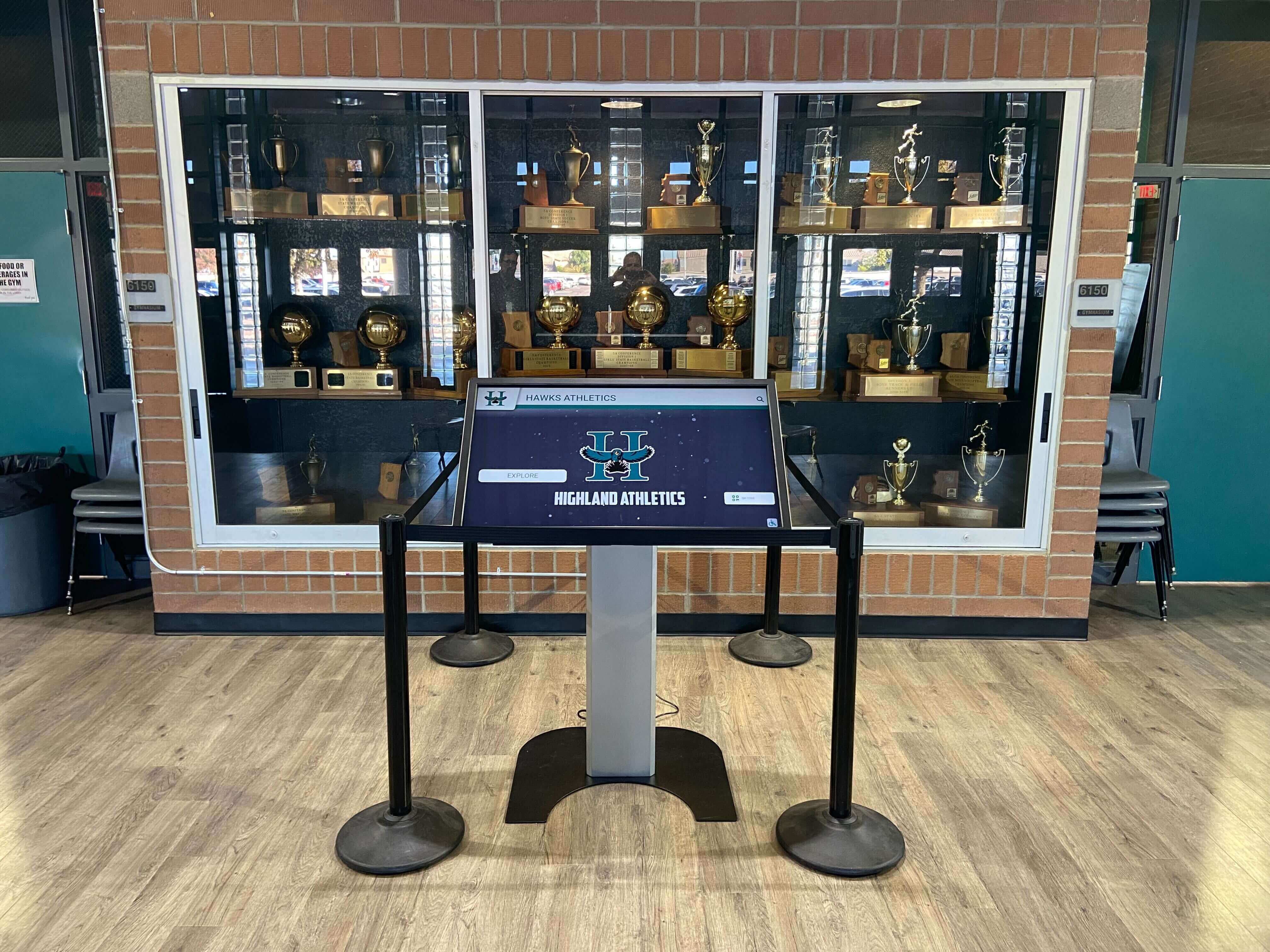
Modern interactive displays celebrate Olympic athletes with comprehensive profiles, multimedia content, and searchable databases
The U.S. Olympic & Paralympic Hall of Fame: Setting the Standard
The U.S. Olympic & Paralympic Hall of Fame, headquartered at the U.S. Olympic & Paralympic Museum in Colorado Springs, Colorado, represents the premier Olympic recognition institution in the United States, honoring the nation’s greatest Olympic and Paralympic athletes, coaches, and contributors.
History and Mission
Opening in April 2020, the U.S. Olympic & Paralympic Museum immediately established itself as a world-class facility celebrating Team USA’s Olympic and Paralympic excellence. The museum’s Hall of Fame gallery features interactive digital pylons where visitors can engage virtually with Olympic and Paralympic Hall of Famers, search by athlete name, year, or sport to view highlights and achievements, and experience comprehensive tributes to America’s Olympic legends.
The Hall of Fame serves multiple essential purposes for Olympic sports in America. It preserves Olympic history through comprehensive documentation of achievements spanning over a century of competition. It establishes standards of excellence that define what Olympic greatness means across different sports and eras. It educates visitors about Olympic values, the evolution of sports, and the dedication required to compete at the highest level. And it inspires future generations by demonstrating what’s possible through commitment, perseverance, and the pursuit of excellence.
The museum’s 40-foot LED video sail provides stunning visual displays showcasing Olympic moments, while the comprehensive interactive exhibits create immersive experiences that bring Olympic history to life in ways traditional static displays never could.
Selection Process and Induction
The U.S. Olympic & Paralympic Hall of Fame selection process follows rigorous protocols ensuring that only the most deserving athletes, coaches, and contributors receive this ultimate honor. The two-stage selection process begins with a nominating committee consisting of athletes, current Hall of Fame members, historians, and U.S. Olympic & Paralympic Committee representatives reviewing eligible candidates.
National Governing Bodies, Olympic alumni, current athletes, and members of the Olympic and Paralympic community may nominate eligible candidates. The nominating committee then selects fifteen finalists who advance to public voting. Inductees are selected based on online voting at TeamUSA.com, with requirements to select five individual athletes, one team, one Paralympian, and one coach. Additional categories include veteran athletes and special contributors.
Selection criteria emphasize extraordinary competitive accomplishments including medal counts and world records, lasting impact on their sports and American Olympic movement, representation of Olympic values through sportsmanship and character, inspiration provided to future athletes and broader communities, and contributions extending beyond competitive achievement.
This comprehensive evaluation acknowledges that Olympic greatness encompasses more than just medals—it includes the influence athletes have on their sports, the barriers they break, the adversity they overcome, and the inspiration they provide to millions.
Recognition ceremonies create memorable celebrations connecting Olympic legends with present athletic culture
International Olympic Recognition Programs
Beyond the United States, Olympic committees and sports organizations worldwide maintain halls of fame celebrating their nations’ Olympic heroes and preserving Olympic heritage for future generations.
National Olympic Committees and Recognition
Many countries have established Olympic halls of fame celebrating their national heroes. Canada’s Sports Hall of Fame includes extensive Olympic athlete recognition. Australia’s Sport Australia Hall of Fame honors Olympic and Paralympic champions who represented the nation with distinction. The UK’s Sports Hall of Fame celebrates British Olympic excellence across generations.
These national recognition programs serve purposes beyond simple commemoration. They strengthen national identity by celebrating shared athletic achievements that unite citizens across regional, political, and social divides. They provide role models demonstrating that dedication and excellence can elevate individuals from any background to international prominence. And they preserve sporting heritage ensuring that future generations understand the athletes who represented their nations on the world’s greatest stage.
International recognition programs increasingly adopt digital technologies to create accessible, engaging experiences. Interactive displays allow visitors to explore Olympic history through intuitive interfaces, watch video highlights, read comprehensive athlete biographies, and understand the context surrounding historic Olympic moments.
Sport-Specific International Recognition
Many international sports federations maintain their own halls of fame recognizing Olympic excellence within specific disciplines. The International Swimming Hall of Fame, International Gymnastics Hall of Fame, and World Rugby Hall of Fame all prominently feature Olympic achievements as central components of their recognition programs.
Sport-specific recognition enables deeper exploration of athletic excellence within disciplines. These programs can provide technical analysis of performances, document the evolution of training methods and competition formats, celebrate innovations that changed sports, and honor contributors including coaches, officials, and administrators who enabled Olympic success.
For Olympic sports enthusiasts, these specialized halls of fame provide rich contexts that general Olympic recognition cannot match, creating comprehensive resources for understanding how specific sports developed and who defined excellence within them across different eras.
Educational Institutions Celebrating Olympic Alumni
Schools, colleges, and universities take immense pride in alumni who reached the Olympic Games, creating recognition opportunities that inspire current students while celebrating alumni achievements that bring honor to institutions.
Universities with Olympic Traditions
Major universities with strong athletic programs often develop multiple Olympic athletes across generations. Stanford University, UCLA, USC, the University of Texas, and many others have produced dozens or even hundreds of Olympians representing various nations across numerous sports.
These institutions create comprehensive Olympic recognition programs integrated within broader athletic facilities. Dedicated Olympic alumni sections showcase athletes organized by sport, Olympic year, or competitive achievement. Interactive digital displays enable easy exploration of complete Olympic rosters. Timeline exhibits document institutional Olympic history spanning decades of participation. And integration with general athletic halls of fame celebrates both collegiate and Olympic achievements within unified recognition programs.
For universities, Olympic alumni recognition serves multiple strategic purposes. It provides recruiting advantages by demonstrating elite athlete development capabilities to prospective student-athletes considering where to compete collegiately. It strengthens alumni relations by honoring graduates’ career achievements beyond their collegiate accomplishments. And it supports fundraising and advancement efforts as Olympic alumni often become engaged supporters and generous donors to programs that launched their careers.
Digital recognition platforms like those offered by Rocket Alumni Solutions prove particularly valuable for universities because they accommodate easy updates as alumni careers progress. A display celebrating a former student-athlete’s Olympic qualification can be enhanced with medal achievements, subsequent Olympic appearances, and post-competitive career accomplishments as they accumulate over years and decades.
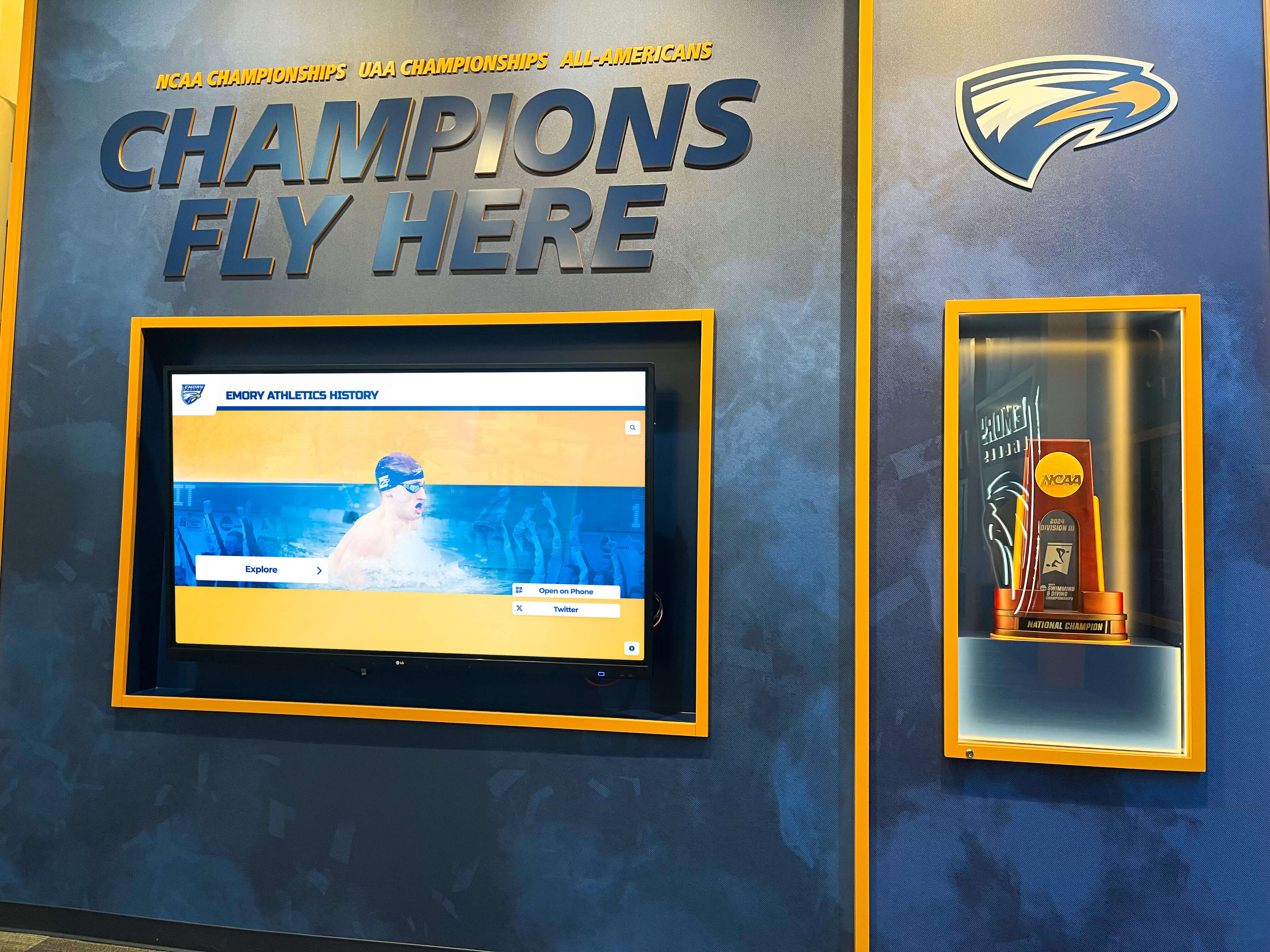
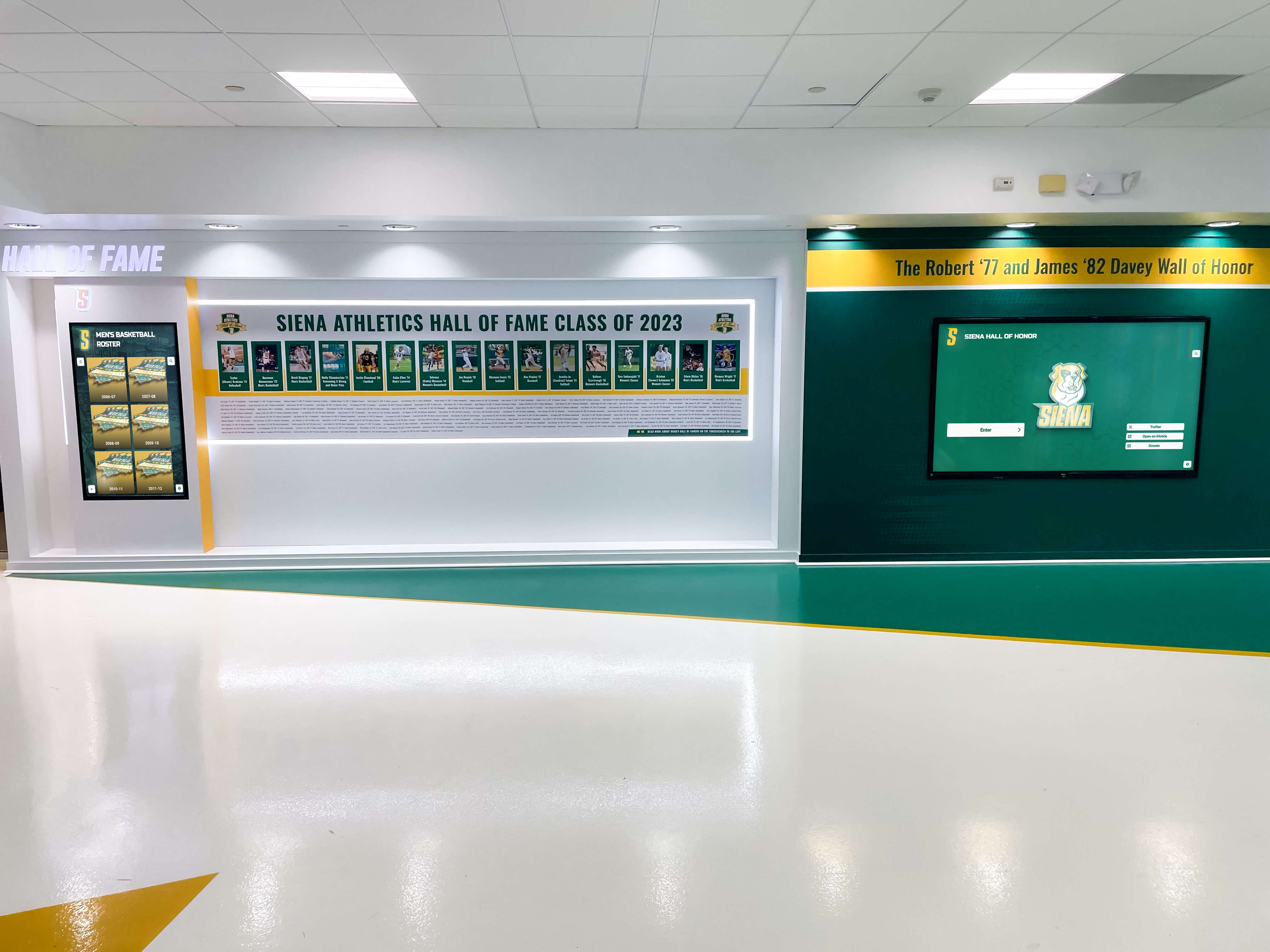
Universities celebrate Olympic alumni within comprehensive athletic recognition programs
High Schools Producing Olympic Athletes
While less common than at the university level, high schools occasionally develop Olympic athletes, creating extraordinary pride within communities. When a hometown athlete reaches the Olympic Games, it represents a community achievement demonstrating the quality of local programs, coaching, and the supportive environment that helped launch an Olympic career.
High school Olympic recognition typically appears in prominent locations including gymnasium entrances showcasing school pride, trophy case sections dedicated to elite achievers, dedicated displays celebrating Olympic alumni, and integration within comprehensive athletic recognition programs honoring various achievement levels.
For smaller communities, having a native son or daughter compete in the Olympics creates lasting pride and ongoing connections. Many Olympic athletes maintain strong ties to their high school communities, returning for visits, supporting youth programs, mentoring young athletes, and giving back to schools that provided foundations for their extraordinary journeys.
Digital displays offer particular advantages for high schools because they provide professional-quality recognition without requiring facility investments that larger institutions might afford. Cloud-based platforms enable easy updates from any internet-connected device, meaning that athletics departments with limited technical staff can maintain comprehensive, current recognition showcasing their Olympic heritage.
Essential Content Elements for Olympic Athlete Recognition
Comprehensive Olympic recognition programs include diverse content types that collectively tell complete stories about athletes, their journeys, their achievements, and their lasting impact.
Individual Athlete Profiles and Olympic Careers
Athlete profiles form the foundation of Olympic recognition displays. Effective profiles include essential biographical information such as full name and hometown, sports and events competed in, Olympic appearances including years and host cities, educational background and collegiate career, and post-competitive career paths.
Complete Olympic achievement documentation proves essential including medals won with specific events and years, Olympic records set or personal bests achieved, competition placement for non-medal performances, team roles for athletes competing in team sports, and qualifying journeys documenting paths to Olympic selection.
Beyond competitive statistics, comprehensive recognition includes narrative elements revealing character and journey including early athletic development and how they discovered their sport, obstacles overcome during careers such as injuries or setbacks, training regimens and the dedication required, memorable competitive moments that defined careers, impact on their sports and contributions to development, and inspiration provided to others including young athletes who looked up to them.
The most compelling profiles also incorporate multimedia content including competitive video highlights showing Olympic performances, interview footage where athletes reflect on experiences, photographic documentation from various career stages, audio recordings of commentary during historic moments, and interactive timeline elements tracing career progression.
Solutions like digital hall of fame touchscreen displays enable unlimited profile depth that traditional plaques and trophy cases simply cannot accommodate, ensuring every Olympic athlete receives recognition worthy of their extraordinary achievement.
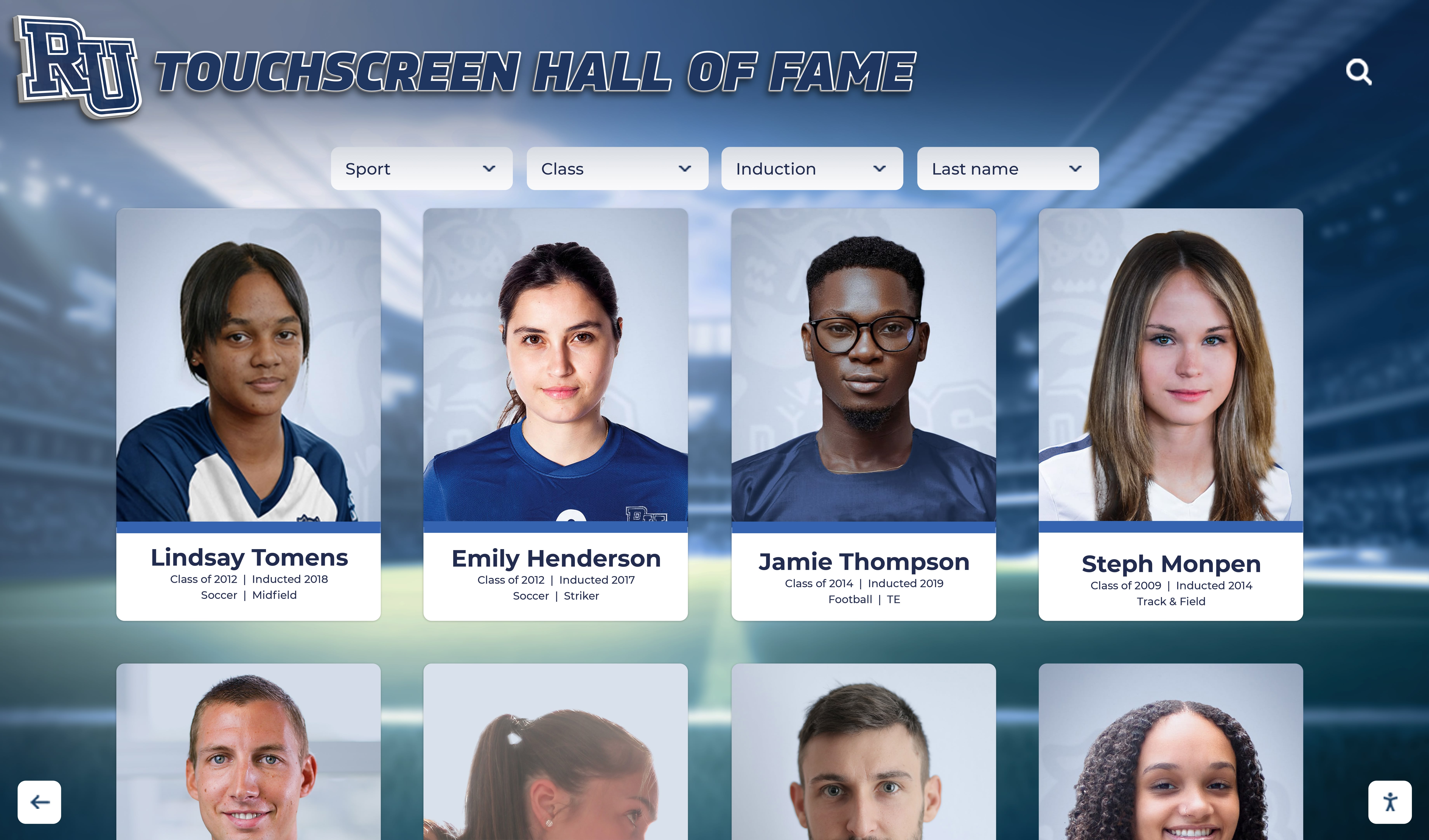
Comprehensive athlete profiles document complete Olympic careers with achievements, statistics, and personal stories
Team Achievements and Historic Olympic Moments
Many Olympic athletes compete as part of teams—basketball, soccer, hockey, relays, and numerous other sports require collective excellence. Recognition of Olympic teams should include complete rosters listing every athlete who contributed, coaching staff who prepared and led teams, competitive results with game-by-game or round-by-round progression, memorable moments and defining plays, and contextual information about competition circumstances.
Historic Olympic moments deserve special recognition whether they involve individual athletes or teams. These might include world records broken on Olympic stages, upset victories that captured international attention, dramatic comebacks from adversity, breakthrough achievements for nations or demographic groups, and defining moments that changed sports or Olympic history.
Creating dedicated sections for these historic moments allows visitors to explore Olympic heritage beyond individual athlete profiles, understanding how these competitions captivated audiences and why they remain significant decades or even generations later.
Coaching Excellence and Support Contributors
Olympic success depends heavily on coaching expertise, sports medicine support, technical innovation, and organizational leadership. Comprehensive recognition honors coaches who developed Olympic athletes through career coaching records, multiple Olympians developed, innovative training methods introduced, and lasting impact on sports development.
Recognition should also extend to support contributors who enabled Olympic success including sports medicine professionals who kept athletes healthy, technical staff who optimized equipment and performance, administrators who managed programs enabling development, and financial supporters whose philanthropy funded training and competition opportunities.
Many organizations overlook these contributors when planning recognition programs, focusing exclusively on competing athletes. However, Olympic success requires entire support systems, and comprehensive recognition acknowledges everyone whose contributions enabled excellence. Digital recognition displays provide the unlimited capacity needed to honor diverse contributors without space constraints forcing difficult decisions about who deserves acknowledgment.
The Evolution from Traditional to Digital Olympic Recognition
Olympic athlete recognition has evolved significantly as technology has transformed what’s possible in honoring achievement and creating engaging visitor experiences.
Traditional Olympic Recognition Approaches
For generations, Olympic athlete recognition relied primarily on physical displays including trophy cases showcasing Olympic medals and memorabilia, bronze or brass plaques mounted on walls listing Olympian names and basic achievements, photographic exhibits featuring competition images, framed certificates and credentials from Olympic participation, and physical Olympic torches, uniforms, equipment, and other artifacts.
These traditional approaches offer tangible, permanent recognition that conveys prestige and creates visual impact in facilities. However, they face inherent limitations including severe space constraints forcing difficult decisions about what to display, inability to include detailed information beyond basic facts, static content requiring expensive physical renovation to update, limited accessibility for people who cannot visit facilities in person, and ongoing maintenance challenges as materials deteriorate, photographs fade, and displays become dated.
As Olympic sports have grown more sophisticated in fan engagement and digital communication, recognition displays have evolved to leverage technology capabilities that traditional installations simply cannot match.
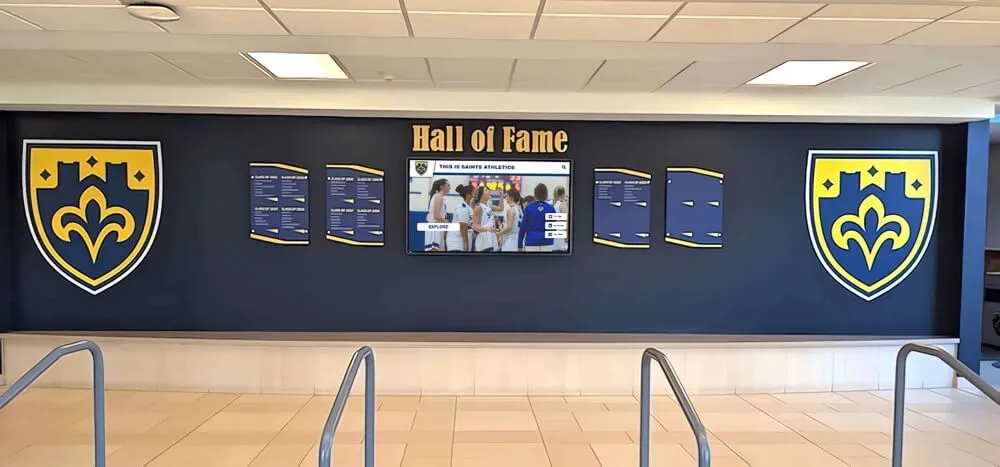
Traditional displays create visual impact but face space constraints and limited information capacity
Modern Digital Olympic Recognition Solutions
Digital recognition technology has fundamentally transformed how organizations honor Olympic athletes and engage audiences. Interactive touchscreen displays provide comprehensive solutions that overcome traditional limitations through commercial-grade displays with crystal-clear 4K resolution, intuitive touch interfaces enabling easy navigation, powerful search and filtering by sport, Olympic year, nation, or achievement type, cloud-based content management allowing instant updates from anywhere, and extensive multimedia integration including photos, videos, audio, and interactive elements.
These digital systems offer unlimited recognition capacity—a single display can showcase hundreds of Olympic athletes with complete profiles including competition results, biographical information, multimedia highlights, and comprehensive achievement documentation. Organizations no longer face impossible decisions about which Olympians to feature or which recognition must be removed to accommodate new Olympic athletes. Everyone who competed at the Olympic level can receive comprehensive celebration.
The ability to update content instantly proves particularly valuable for Olympic recognition. When athletes qualify for upcoming Olympics, achieve new personal bests, or reach career milestones, digital displays reflect these accomplishments immediately rather than waiting months for plaque production and physical installation.
Web accessibility extends recognition reach far beyond physical locations. Olympic athletes competing around the world can view their profiles from anywhere with internet access. Families, friends, coaches, and communities can explore complete Olympic histories without traveling to specific facilities. Social media integration enables sharing achievements that create viral engagement far exceeding traditional display reach.
Platforms providing interactive recognition displays for athletic programs offer features specifically designed for Olympic applications including sport-specific templates optimized for various Olympic events, integration with official Olympic results databases, comparative tools enabling exploration of performances across different Olympics and eras, and sophisticated analytics revealing which athletes and achievements generate most visitor engagement.
Best Practices for Olympic Digital Hall of Fame Implementation
Whether implementing new Olympic recognition programs or enhancing existing systems, following best practices ensures maximum impact and long-term success in honoring Olympic excellence.
Strategic Content Planning and Organization
Effective Olympic recognition requires thoughtful content organization that enables intuitive exploration while accommodating diverse visitor interests. Consider organizing content through multiple navigation pathways including chronological organization by Olympic years, sport-based organization grouping athletes by disciplines, achievement-based organization featuring medal winners prominently, and geographic organization when recognizing international Olympic participants.
Providing multiple navigation options accommodates different visitor approaches—some want to explore specific Olympic years they remember, others want to see all gymnasts or swimmers regardless of era, and some search for specific athletes they know personally or followed competitively.
Content planning should also consider storytelling priorities beyond simple achievement documentation. Include contextual information about Olympic eras and how competition evolved over time. Document Olympic qualification processes that many people don’t understand. Explain rule changes that affect how performances are judged or recorded across different eras. And provide comparative contexts enabling visitors to understand what achievements meant relative to competition standards of their times.
Comprehensive planning during initial implementation prevents later challenges when expanding recognition programs. Establishing consistent content structures, metadata standards, and information templates enables efficient scaling as Olympic alumni rosters grow with each Olympic cycle.
Technical Implementation and Display Placement
Location significantly impacts Olympic recognition effectiveness in serving both honoring purposes and visitor engagement. Ideal placements provide high visibility in areas with consistent foot traffic, appropriate space for comfortable viewing and interaction, symbolic significance within facilities, adequate infrastructure including reliable power and network connectivity, and protection from environmental factors like direct sunlight or extreme temperatures that could damage displays.
For sports facilities and Olympic training centers, successful locations often include main entrance lobbies creating immediate impressions for visitors, athlete dining or common areas where current athletes encounter Olympic heritage daily, museum or visitor center spaces designed for immersive experiences, and dedicated Olympic galleries providing comprehensive exploration opportunities.
Technical considerations include selecting appropriate display sizes based on viewing distances and content density, choosing between wall-mounted, freestanding kiosk, or custom-integrated installations, ensuring reliable high-speed network connectivity for content updates and web-based features, and planning for accessibility compliance including appropriate mounting heights and ADA considerations.
Professional implementation by experienced installers ensures polished results matching the prestige of Olympic achievement. Working with providers who understand sports recognition displays creates cohesive installations effectively communicating excellence while providing intuitive user experiences.
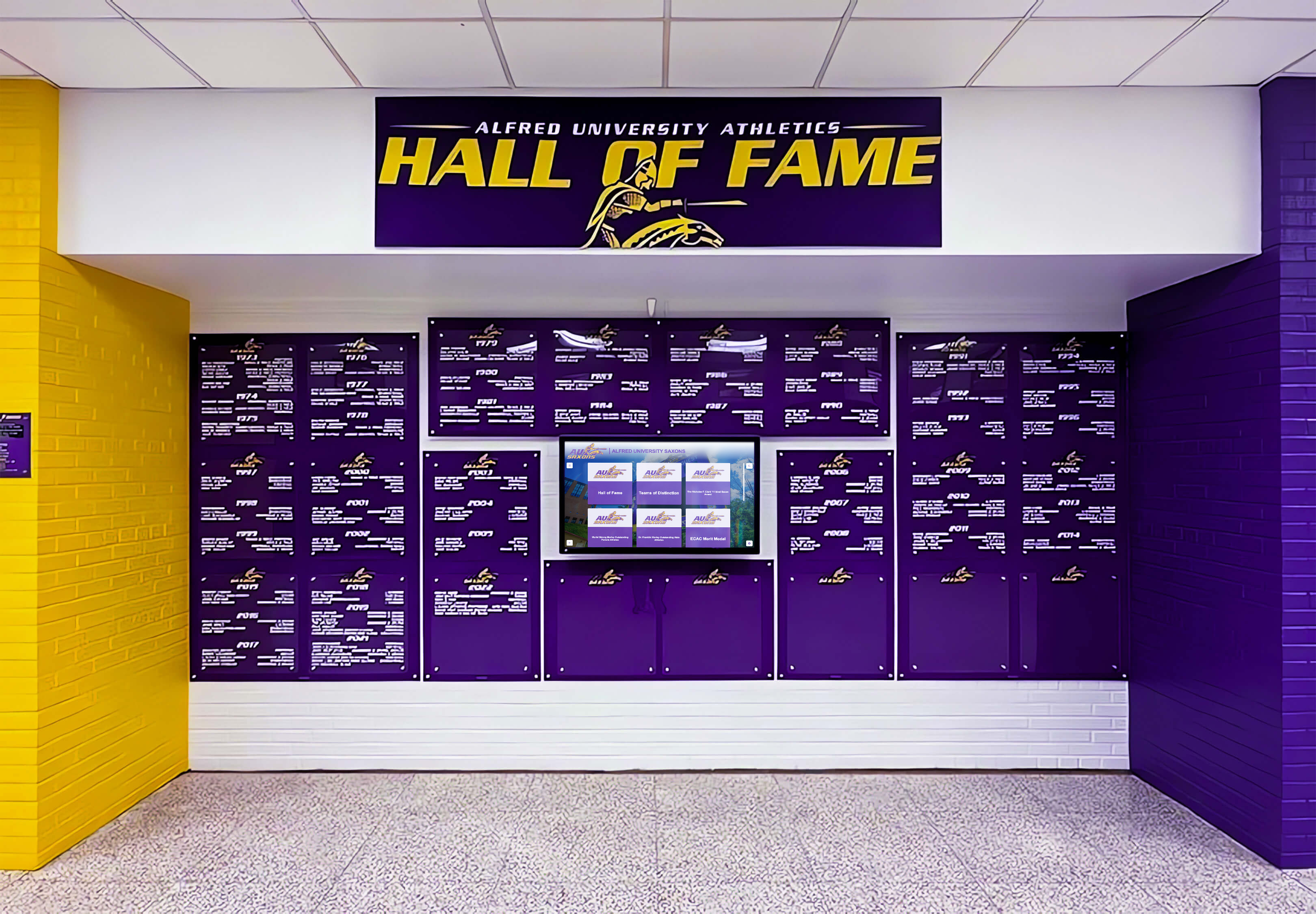
Strategic placement in high-visibility locations maximizes Olympic recognition impact and visitor engagement
Ongoing Content Development and Maintenance
Creating compelling Olympic recognition content requires significant investment that organizations often underestimate during planning. Initial content development demands extensive research including verification of Olympic results from official databases, biographical information gathering through athlete outreach or archival research, photographic content acquisition and rights management, competitive video highlight compilation from Olympic broadcasts, and narrative writing that tells engaging stories beyond statistics.
For historical Olympians whose careers occurred decades ago, content development proves particularly challenging as memories fade, documentation becomes scarce, and multimedia assets may not exist or require extensive restoration. Investing in thorough historical documentation ensures that recognition remains comprehensive across all eras rather than favoring recent Olympians simply because their content is more readily available.
Many organizations engage professional content creators including videographers producing documentary-style athlete profiles, photographers capturing high-quality portraits and event images, copywriters crafting compelling narratives, and researchers verifying facts and gathering comprehensive information.
Successful programs establish sustainable content processes including production schedules for new Olympic athletes after each Olympic cycle, systematic capture of content for current Olympic hopefuls while they’re actively training, regular updates enhancing existing profiles as athletes achieve post-competitive success, and periodic comprehensive audits ensuring accuracy and currency across all content.
Resources on managing digital recognition content provide frameworks for maintaining Olympic halls of fame that remain current, accurate, and engaging across years and decades.
Leveraging Olympic Recognition for Inspiration and Engagement
Olympic halls of fame serve purposes beyond simply honoring past achievement—they create valuable opportunities for inspiring future athletes and engaging diverse communities.
Inspiring Current and Future Athletes
Perhaps the most important function of Olympic recognition is inspiring young athletes to pursue excellence. When aspiring competitors encounter Olympic athlete displays, they see that reaching the world’s greatest stage is possible—people from their school, their town, their region achieved Olympic dreams, proving that extraordinary accomplishment emerges from ordinary communities when individuals commit to excellence.
Effective Olympic recognition communicates not just achievement but journey—the dedication required, the obstacles overcome, the years of training, the setbacks navigated, and the support systems that enabled success. These complete stories provide roadmaps for young athletes beginning their own journeys toward competitive excellence.
Many organizations integrate Olympic recognition with youth development programs including athlete appearances and speaking engagements where Olympians share experiences with young competitors, mentorship programs connecting youth athletes with Olympic alumni, educational content about Olympic qualification paths and training requirements, and scholarship programs funded by Olympic alumni supporting next-generation athlete development.
Creating these connections between Olympic recognition and youth programming transforms halls of fame from passive historical displays into active components of comprehensive athlete development ecosystems that inspire and support future Olympic hopefuls.
Educational Programming and Community Engagement
Olympic halls of fame provide exceptional educational opportunities extending beyond athletic inspiration. They teach Olympic values including excellence, respect, friendship, and fair play. They provide global cultural education as Olympics involve nations worldwide competing peacefully. They illustrate scientific principles of biomechanics, physiology, nutrition, and sports psychology. And they demonstrate history through how Olympic sports evolved across different eras and geopolitical contexts.
Many Olympic recognition programs develop educational components including school field trip programs with guided tours and learning activities, curriculum materials for teachers incorporating Olympic content into lessons, interactive challenges where visitors attempt Olympic sports or skills, and speaker series featuring Olympic athletes discussing experiences and lessons learned.
Community engagement programming might include Olympic heritage celebrations during Olympic years, viewing parties for Olympic competitions featuring athletes with institutional connections, fundraising events supporting youth sports programs, and recognition ceremonies inducting new Olympic athletes when they return from competition.
These programming elements transform Olympic halls of fame from static displays into dynamic community resources that engage diverse audiences while celebrating Olympic excellence and supporting athletic development across all levels.
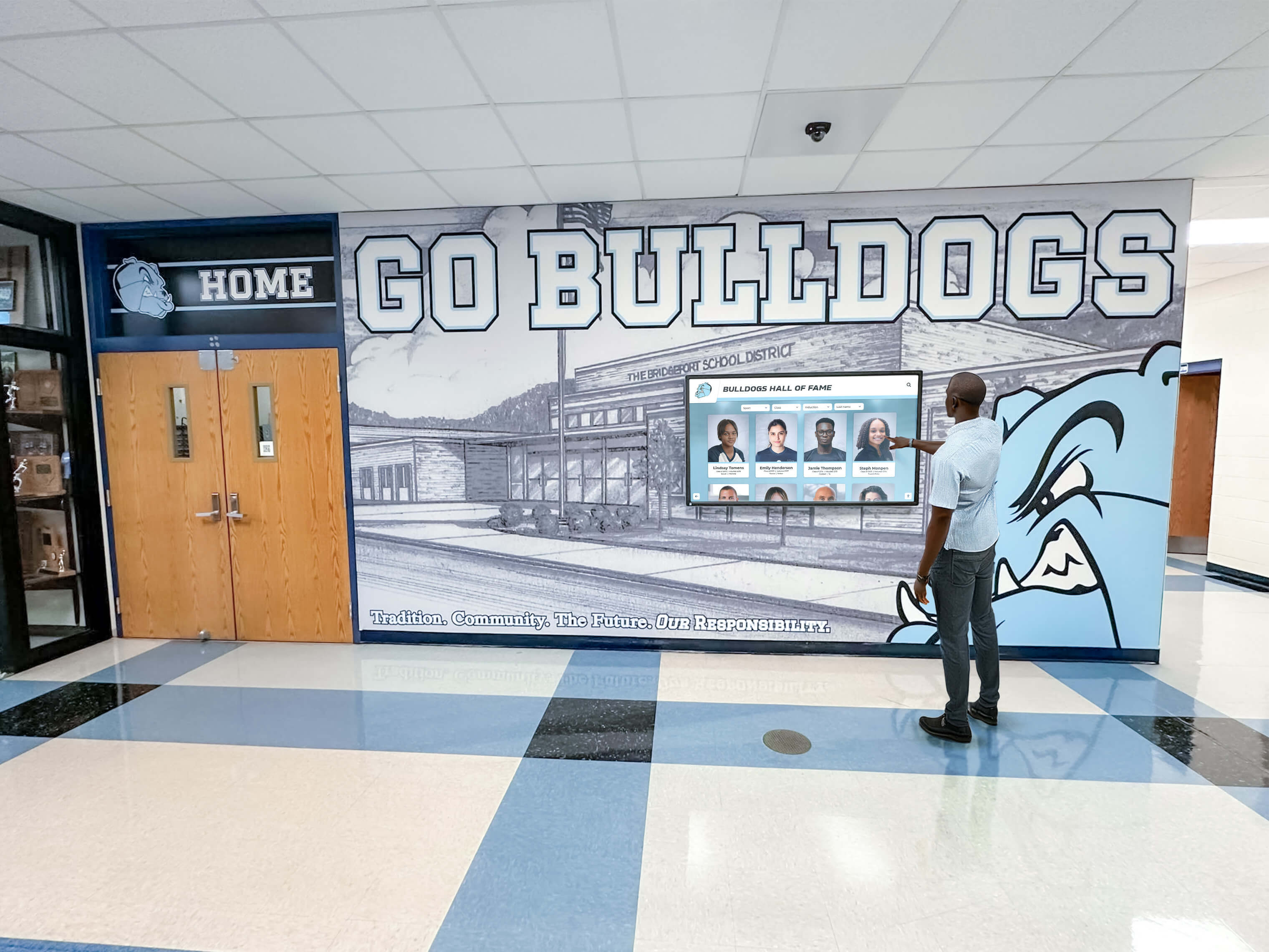
Interactive displays create engagement opportunities for visitors of all ages exploring Olympic history
The Future of Olympic Digital Recognition
Emerging technologies and evolving visitor expectations continue shaping how organizations honor Olympic excellence and create engaging recognition experiences.
Enhanced Multimedia and Immersive Technologies
Future Olympic recognition systems will likely incorporate increasingly sophisticated technologies creating more immersive storytelling experiences. Virtual reality environments could recreate Olympic competition venues allowing visitors to experience competing in iconic stadiums like Maracanã or Olympic Stadium Tokyo. Augmented reality features could enable visitors viewing physical displays to access additional content layers through smartphones. Three-dimensional holographic displays could present athlete representations creating striking visual presentations. And AI-enhanced video restoration could bring historical Olympic footage to modern quality standards.
These technologies will enable storytelling that transports visitors into Olympic moments rather than simply describing them, creating emotional connections stronger than current capabilities allow. Imagine putting on VR goggles and experiencing the starting block perspective during an Olympic 100-meter final, or using AR to see medal ceremony reconstructions overlaid on current facilities.
Advanced Analytics and Personalization
Modern analytics capabilities will enable increasingly personalized recognition experiences including content recommendations based on visitor preferences and viewing patterns, customized tours highlighting content most relevant to specific visitors, dynamic displays adapting to trending topics during Olympic years, and predictive features suggesting related content visitors might find interesting.
These personalized approaches will increase engagement by surfacing most relevant content rather than requiring manual discovery through comprehensive catalogs. Youth athletes might receive different recommended content than Olympic historians, casual visitors might see highlights while dedicated fans access comprehensive statistics, ensuring that everyone finds their preferred depth and focus.
Social Integration and Community Storytelling
Olympic recognition will increasingly extend beyond physical displays to social and community platforms including seamless social media integration enabling easy sharing and commenting, crowdsourced content where communities contribute memories and materials, interactive features allowing fan voting on greatest Olympic moments or athletes, and collaborative storytelling where people share personal connections to Olympic athletes.
This participatory approach transforms recognition from one-directional tribute into community conversation strengthening connections across generations and creating engagement opportunities extending far beyond physical facility visits.

Emerging interactive technologies continue transforming how organizations celebrate Olympic legends and engage visitors
Global Inspirations: Olympic Recognition Around the World
Olympic athlete recognition takes many forms across different cultures, nations, and sporting contexts, each offering valuable lessons for organizations developing recognition programs.
International Olympic Museums and Heritage Centers
Many nations have established Olympic museums preserving and celebrating national Olympic heritage. Switzerland’s Olympic Museum in Lausanne houses the International Olympic Committee headquarters and showcases Olympic history from ancient Greek origins through modern Games. Japan’s Japan Olympic Museum celebrates the nation’s Olympic participation and hosted Games. Greece’s multiple Olympic museums honor the ancient Olympic traditions that inspired modern competition.
These international institutions demonstrate different approaches to Olympic storytelling including comprehensive historical documentation spanning entire Olympic movements, thematic exhibitions exploring specific Olympic eras or issues, sport-specific galleries providing deep dives into particular disciplines, and interactive experiences enabling hands-on Olympic sport experimentation.
Organizations developing Olympic recognition programs can draw inspiration from these international examples, adapting approaches that resonate with local contexts and audiences while learning from institutions that have refined Olympic storytelling over decades.
Sport-Specific Olympic Recognition Excellence
Individual sports often create specialized Olympic recognition within broader athletic facilities. Swimming programs prominently feature Olympic trials qualifiers and competitors. Track and field programs celebrate Olympic standard achievers even when they didn’t ultimately compete in Games. Team sports showcase Olympic rosters and competition results.
These sport-specific approaches enable deeper technical recognition that general Olympic displays cannot match, creating resources that athletes, coaches, and dedicated fans particularly value for understanding excellence within specific disciplines.
Implementation Roadmap: Creating an Olympic Digital Hall of Fame
Developing a comprehensive Olympic recognition program involves strategic planning, content development, technical implementation, and ongoing maintenance creating lasting tributes worthy of Olympic achievement.
Phase 1: Planning and Content Strategy
Begin by defining recognition scope and criteria including which levels of Olympic achievement merit inclusion (competitors, qualifiers, Olympic trials participants), whether to include coaching and support staff, how to handle athletes representing multiple nations or institutions, and whether to integrate Olympic recognition within broader athletic halls of fame or create dedicated Olympic sections.
Conduct content inventory and assessment documenting current Olympic alumni across all relevant years, evaluating existing content assets available for digital display, identifying gaps requiring new content development, and planning content creation priorities and timelines.
Establish organizational structures including content governance processes, selection criteria for future Olympic athlete additions, update protocols for keeping content current, and assignment of administrative responsibilities for long-term maintenance.
Phase 2: Technical Planning and Design
Select appropriate display solutions based on facility characteristics, visitor traffic patterns, content volume, and budget parameters. Consider whether single comprehensive displays suffice or whether distributed displays across multiple locations better serve recognition goals.
Plan technical infrastructure requirements including network connectivity for content updates and web features, electrical service for displays and supporting equipment, physical mounting considerations and structural requirements, and accessibility compliance ensuring all visitors can engage with recognition.
Develop design concepts that integrate with facility aesthetics, reflect institutional branding and identity, create intuitive navigation supporting diverse exploration approaches, and establish visual hierarchies guiding visitor attention effectively.
Phase 3: Content Development and System Configuration
Execute comprehensive content development including biographical research for all Olympic athletes, statistical compilation from official Olympic databases, photographic content acquisition and preparation, video highlight production or compilation, and narrative writing creating engaging athlete profiles.
Configure content management systems including organizational structures and navigation frameworks, metadata standards enabling effective search and filtering, administrator access and permission structures, and automated content features like dynamic content rotation.
Test all systems comprehensively ensuring intuitive user experiences, verifying content accuracy and completeness, confirming technical reliability, and gathering feedback from test users before public launch.
Phase 4: Launch and Promotion
Create launch events celebrating Olympic heritage including invitations to Olympic alumni for dedication ceremonies, community events introducing recognition programs, media engagement generating awareness, and programming that drives initial traffic and engagement.
Develop promotional strategies including integration with institutional communications, social media campaigns featuring highlighted content, outreach to Olympic athlete networks, and ongoing content marketing maintaining engagement beyond initial launch enthusiasm.
Phase 5: Ongoing Maintenance and Enhancement
Establish sustainable processes for maintaining Olympic recognition programs including regular content updates adding new Olympic athletes, enhancement of existing profiles as alumni achieve new milestones, periodic comprehensive audits ensuring continued accuracy, and technical maintenance keeping systems secure and functional.
Plan enhancement cycles incorporating visitor feedback into improvements, adopting new technology capabilities as they emerge, expanding content depth based on engagement analytics, and evolving recognition programs as institutional Olympic traditions grow.
Conclusion: Honoring Olympic Excellence Through Thoughtful Recognition
Olympic athletes represent the pinnacle of human athletic achievement—individuals who dedicated themselves completely to pursuing excellence on the world’s greatest stage. These extraordinary athletes deserve recognition matching the magnitude of their accomplishments and the inspiration they provide to communities, nations, and aspiring athletes worldwide.
Digital halls of fame provide unprecedented opportunities for comprehensive, engaging, and enduring Olympic recognition. Unlike traditional trophy cases and plaques limited by space and static content, digital systems can showcase unlimited Olympic alumni with complete profiles, multimedia highlights, and rich storytelling that conveys not just achievements but the journeys, dedication, and character that defined Olympic careers.
Whether implemented by Olympic committees, sports organizations, universities, high schools, or community facilities, effective Olympic recognition programs share common characteristics. They honor Olympic athletes comprehensively rather than selectively. They tell compelling stories that inspire and educate. They remain current through regular updates and additions. They create accessible experiences for diverse audiences including those who cannot visit physical facilities. And they demonstrate sustained commitment to celebrating Olympic excellence across generations.
The evolution from space-constrained physical displays to unlimited-capacity digital platforms has fundamentally transformed what’s possible in Olympic recognition. Organizations no longer face impossible decisions about which Olympians merit inclusion or which recognition must be removed to accommodate new Olympic athletes. Modern solutions enable comprehensive celebration of entire Olympic histories while creating engaging experiences that connect past achievement with present inspiration and future athletic development.
For organizations seeking to honor Olympic excellence while inspiring current and future athletes, digital hall of fame recognition represents an investment delivering returns across multiple dimensions—preserved heritage, inspired youth, strengthened community pride, and recognized achievement worthy of Olympic legends.
Transform Your Olympic Recognition Program
Discover how modern digital recognition solutions can help your organization honor Olympic athletes, inspire future champions, and preserve Olympic heritage for generations to come.
Schedule Your ConsultationReady to celebrate your Olympic legacy? Explore comprehensive recognition solutions designed specifically for honoring Olympic athletes, or learn more about athletic hall of fame systems and championship recognition displays that preserve excellence while creating engaging experiences for current and future generations of athletes, communities, and Olympic enthusiasts worldwide.































