Professional sports franchises face a unique challenge: how to honor decades of championship history, legendary players, and unforgettable moments in ways that engage modern fans accustomed to interactive digital experiences. The New England Patriots—with six Super Bowl championships, countless Pro Bowl selections, and a storied franchise history—exemplify organizations that need sophisticated recognition solutions capable of celebrating their rich heritage while creating immersive fan experiences that resonate with today’s technology-savvy audiences.
Interactive touchscreen displays transform how professional sports organizations like the Patriots showcase team history, honor legendary players, and engage fans through dynamic digital experiences. These advanced recognition systems combine cutting-edge hardware, intuitive software, and multimedia content to create hall of fame displays that go far beyond traditional trophy cases and static plaques. Whether installed at Gillette Stadium, the Patriots Hall of Fame at Patriot Place, practice facilities, or team headquarters, modern touchscreen recognition technology allows franchises to tell complete stories about championships, document player achievements with rich media, and provide interactive experiences that keep fans engaged for extended periods.
The evolution from physical trophy cases to interactive digital displays represents more than technological advancement—it fundamentally changes how franchises preserve legacy, engage fans, and create memorable experiences that strengthen connections between teams and their communities. This comprehensive guide explores how professional sports organizations can implement touchscreen recognition displays that celebrate achievement, enhance fan experience, and position franchises as innovative leaders in sports entertainment.
Why Professional Sports Franchises Need Interactive Recognition Displays
Traditional recognition approaches in professional sports—championship banners hanging from rafters, trophy cases in stadium concourses, plaques mounted on walls—served important purposes for generations. However, these static displays face inherent limitations that interactive touchscreen technology addresses comprehensively.
The Limitations of Traditional Sports Recognition
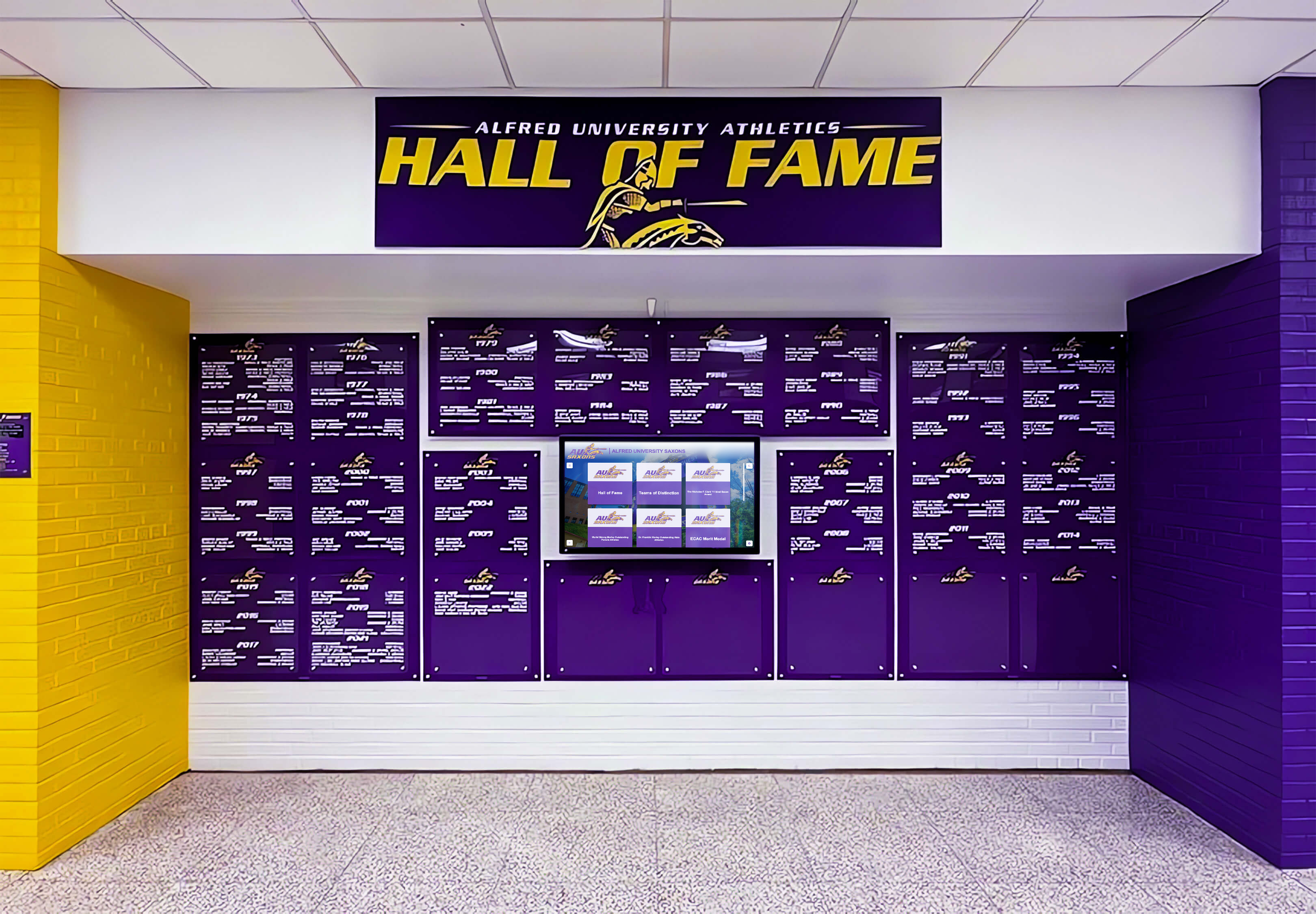
Physical displays in professional sports venues encounter multiple constraints that diminish their effectiveness in modern fan engagement contexts. Championship trophies occupy significant space, yet display only basic information—year won, opponent defeated, final score. Fans viewing these trophies learn minimal context about the championship journey, key players who contributed, or memorable moments from the season.
Player recognition through jerseys, plaques, or photographs provides limited biographical information. A retired jersey hanging in the rafters honors the player but tells no story about their career achievements, memorable performances, or impact on franchise history. Younger fans unfamiliar with players from earlier eras gain little understanding of why specific athletes earned such distinction.
Space constraints force difficult choices about what achievements receive recognition. Franchise with extensive histories face impossible decisions about which championships, players, or moments earn limited display space. Less prominent achievements—division championships, individual records, memorable games—often receive no recognition simply because physical space is unavailable.
Information remains static and unchangeable once installed. When players achieve new milestones after retirement or additional context emerges about historical achievements, physical displays cannot easily incorporate these updates. The recognition installed years ago becomes frozen in time despite evolving franchise narratives.
How Interactive Touchscreen Displays Transform Sports Recognition
Modern digital recognition displays overcome traditional limitations while introducing capabilities impossible with physical installations. These systems create experiences that engage fans, honor achievements comprehensively, and adapt to evolving franchise stories.
Unlimited Recognition Capacity: Digital platforms accommodate comprehensive franchise history without space constraints. Every championship, every Pro Bowl selection, every franchise record, every memorable moment can receive appropriate recognition. Teams no longer choose between honoring the 1985 team or the 2001 team—digital systems celebrate both with equal prominence plus every achievement in between.
Rich Multimedia Storytelling: Beyond names and statistics, digital displays incorporate championship game highlights, player interview footage, historical photographs, contemporaneous news coverage, statistical visualizations, and interactive timelines. Fans discover complete stories rather than isolated facts, creating emotional connections that static displays cannot generate.
Dynamic Content Updates: When players earn Hall of Fame selection, achieve new records, or when franchise milestones occur, content updates happen instantly without physical renovations. Living recognition systems evolve with franchise history rather than becoming outdated monuments to past glory.
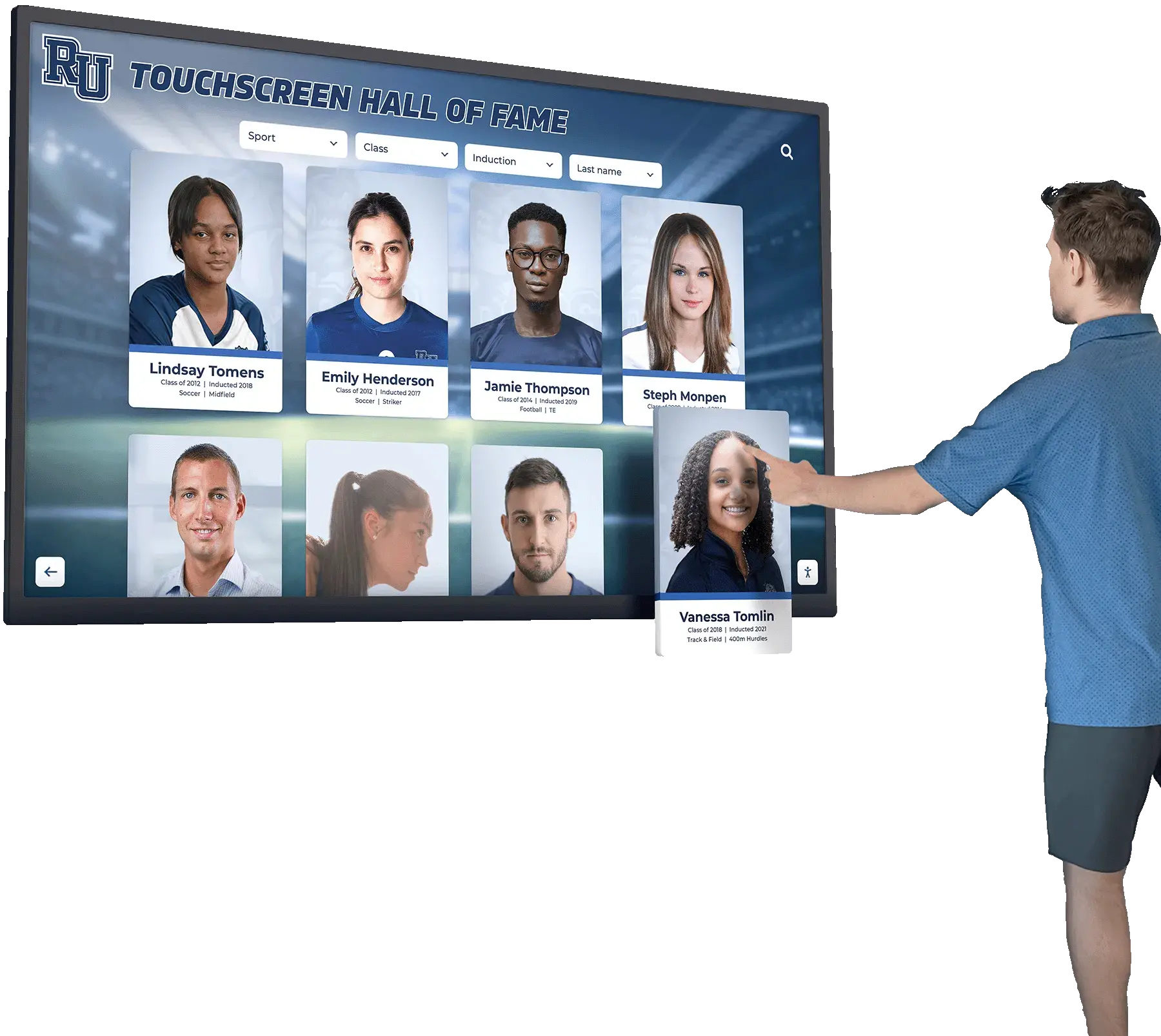
Interactive Fan Engagement: Touchscreen interfaces invite active participation. Fans search for favorite players, explore specific championship seasons, compare statistical achievements across eras, and discover unexpected connections between players and moments. This participatory experience creates engagement measured in minutes rather than seconds spent at traditional displays.
Analytics and Insights: Digital systems provide data about which content fans explore most frequently, popular search terms revealing fan interests, peak usage times indicating optimal content promotion opportunities, and engagement patterns informing continuous improvement. Franchises gain valuable insights about fan preferences and behavior patterns.
Solutions like Rocket Alumni Solutions specialize in creating intuitive interactive recognition displays that professional organizations can implement to honor achievement while engaging modern audiences through technology they encounter daily in consumer experiences.
Understanding Interactive Touchscreen Technology for Sports Franchises
Effective recognition displays combine commercial-grade hardware, purpose-built software, engaging content, and strategic placement to create experiences that serve both recognition and fan engagement objectives simultaneously.
Hardware Requirements for Professional Installations
Professional sports venues require robust display technology designed for high-traffic public spaces with continuous operation demands that consumer-grade equipment cannot withstand.
Commercial Display Specifications: Professional installations utilize 55-75 inch touchscreen displays with 4K resolution ensuring visual clarity from various viewing distances common in stadium concourses and venue entrances. Commercial-grade panels designed for 24/7 operation withstand the environmental conditions and usage intensity that stadium installations encounter daily.
Projected capacitive touch technology provides responsive multi-touch interaction supporting gestures fans expect from smartphone and tablet experiences. Screens maintain sensitivity through high-traffic use and resist interference from ambient light conditions in naturally lit stadium environments.
Brightness ratings of 500-700 nits ensure visibility in stadium concourses with significant natural light from exterior windows and doors. Anti-glare coatings reduce reflections that might interfere with viewing during peak daylight hours when stadium tours and events occur.
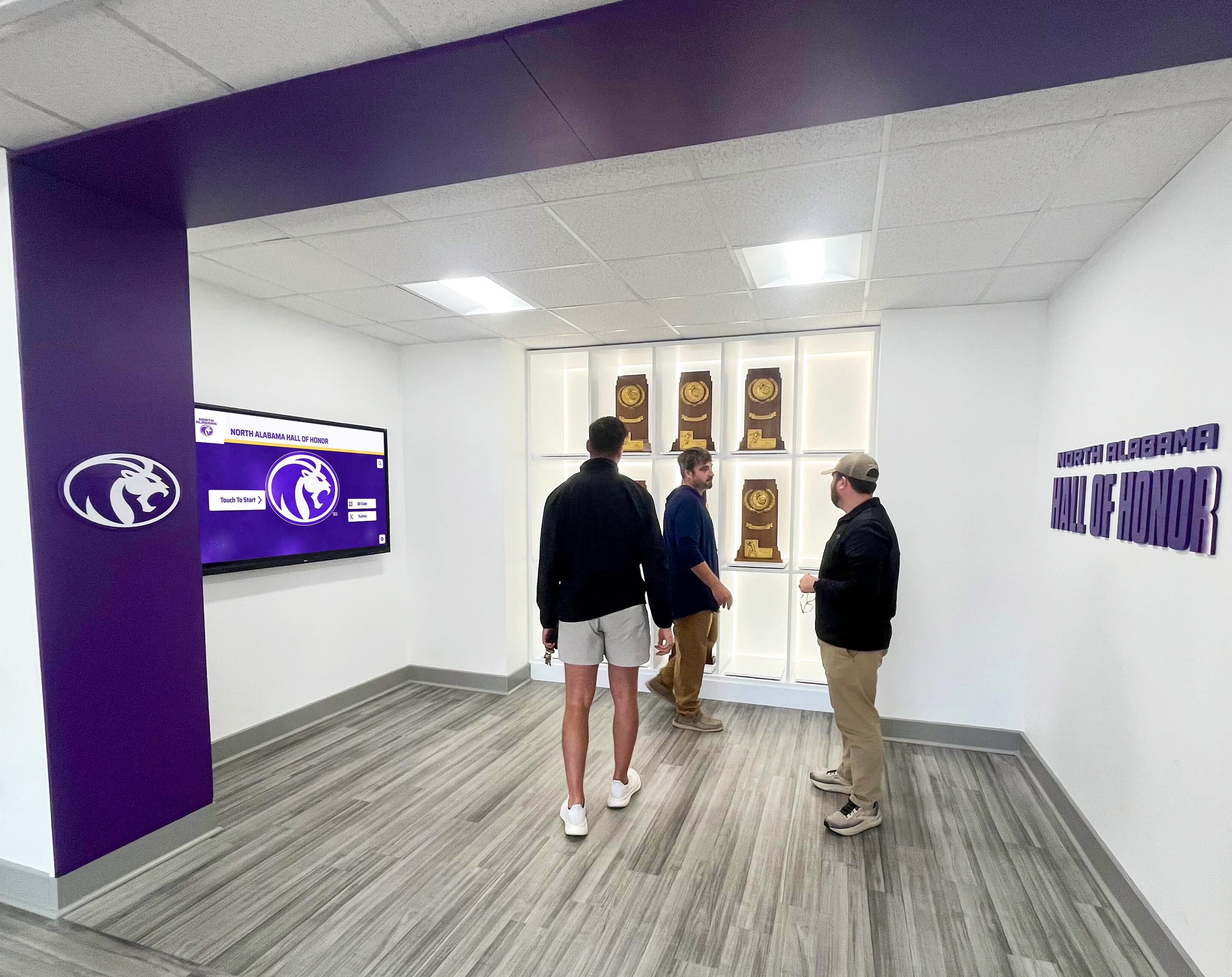
Enclosure and Mounting Solutions: Professional installations require secure mounting systems that protect expensive equipment while allowing accessibility for maintenance and updates. Options include wall-mounted displays with tamper-resistant enclosures for corridor installations, freestanding kiosks providing stability in open concourse areas without wall support, custom-designed enclosures matching venue aesthetics and architectural themes, and integrated installations that become permanent architectural features within renovated spaces.
All mounting must consider Americans with Disabilities Act accessibility requirements ensuring displays remain usable for fans in wheelchairs, with appropriate approach clearances and screen height positioning that accommodates diverse user needs.
Computing and Connectivity Infrastructure: Displays require computing power sufficient for smooth video playback, responsive touch interaction, and complex data visualization. Commercial media players with adequate processing capabilities, solid-state storage for reliable performance and fast content loading, wired ethernet connectivity providing stable network connections preferred over WiFi in high-traffic venues, and remote management capabilities allowing IT staff to monitor system health and deploy updates without physical access to each display.
Stadium environments present unique infrastructure challenges including network security requirements protecting against potential cyber threats, power management systems providing uninterrupted operation during events, environmental considerations addressing temperature fluctuations and humidity, and integration with existing building management systems coordinating with overall venue operations.

Software Platforms for Sports Recognition
Purpose-built recognition software designed specifically for sports applications delivers superior experiences compared to generic content management systems adapted for recognition purposes.
Essential Software Capabilities: Effective platforms provide intuitive content management requiring no technical expertise for routine updates, allowing communications staff to add new achievements, update player information, and publish content changes independently without IT assistance for every modification.
Powerful search and filtering functionality enables fans to locate specific players by name, number, or position, explore particular championship seasons with complete context, filter achievements by category such as Super Bowls versus division titles, and discover statistical leaders across franchise history in various performance categories.
Interactive timeline visualizations present franchise history chronologically, allowing fans to explore different eras, understand evolution of team identity and success, and discover connections between different periods of franchise achievement that illuminate longer-term organizational narratives.
Multimedia integration supporting high-resolution images, full HD video clips, audio recordings, interactive graphics, and external content links creates rich experiences that traditional displays cannot approach. Fans explore championships through multiple content types, accommodating different learning and engagement preferences.
User Experience Design Principles: Professional installations prioritize intuitive navigation that requires no instructions or signage explaining how to use displays. Home screens present clear options for common tasks—finding players, exploring championships, viewing records—with visual design that guides natural exploration without creating confusion.
Touch targets sized appropriately for finger interaction prevent frustration from imprecise selections. Responsive feedback confirms every touch instantly, eliminating the uncertainty that causes repeated tapping and user frustration common in poorly designed interfaces.
Content hierarchy reveals information progressively, presenting overview information initially with clear pathways to detailed content for fans wanting comprehensive exploration. This approach prevents overwhelming initial impressions while accommodating diverse fan interests and knowledge levels.
Accessibility features including high-contrast viewing modes, adjustable text sizing, screen reader compatibility, and alternative navigation methods ensure all fans can engage with recognition content regardless of physical abilities or visual limitations.
Applications for NFL Franchises: The Patriots Example
Professional football organizations like the New England Patriots can implement interactive recognition displays across multiple locations, each serving distinct purposes while contributing to comprehensive franchise storytelling and fan engagement strategies.
Stadium and Arena Installations
Gillette Stadium installations serve fans attending games, participating in stadium tours, and visiting venue amenities on non-game days. Strategic placement creates touchpoints where fans naturally congregate and seek engagement opportunities.
Main Concourse Recognition Displays: High-traffic concourse areas accommodate large-format displays (65-75 inches) where multiple fans can interact simultaneously during pre-game periods when concourses reach maximum density. These locations provide natural engagement opportunities while fans await kickoff or during halftime breaks when returning to concessions.
Content focus should emphasize championship history with complete Super Bowl coverage including game highlights, MVP performances, and championship team rosters; individual player achievements featuring Pro Bowl selections, All-Pro honors, and franchise statistical leaders; memorable moments from regular season and playoff games that defined eras or seasons; and historical context explaining franchise evolution from original team through dynasty periods that shaped modern identity.
Interactive elements might include championship comparison tools allowing fans to explore different Super Bowl teams side by side, player career timelines showing progression from rookie seasons through retirement, statistical leaderboards comparing achievements across franchise history, and multimedia galleries with curated photo and video collections from specific seasons or eras.
Club and Premium Area Installations: Exclusive spaces for season ticket holders and premium seat purchasers warrant specialized recognition content that rewards loyalty and creates differentiated experiences justifying premium investment. These installations might feature exclusive content not available in general concourse displays including behind-scenes footage from championship seasons, extended player interviews discussing memorable moments and career experiences, detailed tactical analysis of historic games showing strategic decisions that determined outcomes, and alumni reunion footage connecting past legends with current franchise.
Premium installations often incorporate live data feeds showing real-time statistics during games, integration with mobile applications allowing fans to save content for later viewing, personalized content recommendations based on viewing history and preferences, and exclusive access to content before general release dates.
Patriots Hall of Fame at Patriot Place
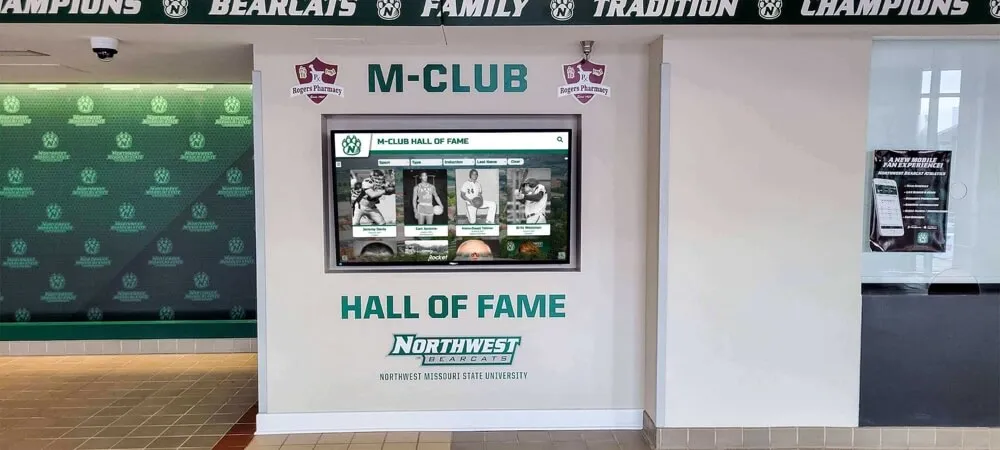
The Patriots Hall of Fame represents the ultimate franchise recognition destination, requiring the most comprehensive and sophisticated interactive installations that serve both casual visitors and dedicated fans seeking deep historical exploration.
Comprehensive Player Databases: Hall of Fame installations should provide searchable databases of every player in franchise history, not just Hall of Fame inductees. Complete rosters from every season, searchable by name, number, position, or year, enable fans to discover obscure players who contributed to franchise history alongside legendary names familiar to all.
Individual player profiles might include complete career statistics in Patriots uniform, draft information and how they joined franchise, notable games and performances with video highlights when available, career timeline showing progression from rookie to veteran seasons, post-NFL career information for players who remained connected to franchise or community, and personal reflections from players about their time with organization.
Interactive Championship Experiences: Each Super Bowl victory deserves dedicated interactive experiences that go far beyond trophy displays. Championship season reconstructions might feature game-by-game recaps with scores, statistics, and brief highlights, playoff journey documentation showing path from wild card to championship, championship game deep dives with extended highlights and post-game celebration footage, and opponent profiles providing context about teams defeated along championship journey.
Interactive elements allow fans to explore roster composition seeing every player who contributed during championship seasons, statistical leaders showing who excelled in key categories, injury reports and adversity overcome adding dramatic context to championship achievement, and comparison tools examining differences between various championship teams across franchise history.
Historical Evolution Exhibits: Long-term franchise histories benefit from timeline presentations showing organizational evolution from founding through present day. Interactive timelines might highlight coaching changes and their impact on franchise direction, ownership transitions and how leadership influenced team identity, uniform and logo evolution reflecting brand development over decades, and stadium history from original venues through modern facility.
Contextual elements place franchise history within broader NFL history and evolution, showing how Patriots experienced and influenced league-wide changes in rules, strategies, business models, and competitive landscape across different eras.
Practice Facility and Team Headquarters Displays
Installations at team facilities serve different audiences—players, coaches, staff, visiting media, and occasional tours—requiring content that inspires current team members while preserving institutional memory and celebrating legacy for visitors.
Current Player Motivation: Practice facility displays inspire current roster members by showcasing franchise excellence and setting performance standards. Content might emphasize franchise records in various statistical categories showing current players what thresholds they’re pursuing, playoff performance standards illustrating expectations for championship-caliber play, individual achievement milestones highlighting honors current players might earn through sustained excellence, and legendary performances from franchise icons demonstrating what defines greatness in organization.
Interactive elements could allow players to see where they rank in current season statistics compared to franchise record holders, view highlights from players who previously wore their jersey numbers, and explore career trajectories of players who played their position to understand typical development patterns and peak performance periods.
Institutional Memory for Staff: Team operations benefit when staff understand franchise history and traditions that define organizational culture. Displays might document front office leadership throughout franchise history showing general managers, coaches, and key executives, business evolution illustrating how organization grew from startup to modern entertainment enterprise, community involvement showcasing franchise commitment to New England region, and facilities development documenting investment in infrastructure supporting competitive excellence.
This content helps newer staff members understand organizational values, decision-making philosophies, and commitment to excellence that extends beyond win-loss records to encompass comprehensive approach to professional sports franchise management.
Content Strategy for Professional Sports Recognition Displays
Effective recognition displays require strategic content planning that balances comprehensive historical documentation with engaging presentation that maintains fan interest across multiple interaction sessions.
Player Recognition and Profiles
Individual athlete profiles form the foundation of most sports recognition displays, requiring careful attention to information architecture that accommodates both casual fans seeking basic information and dedicated enthusiasts wanting comprehensive career documentation.
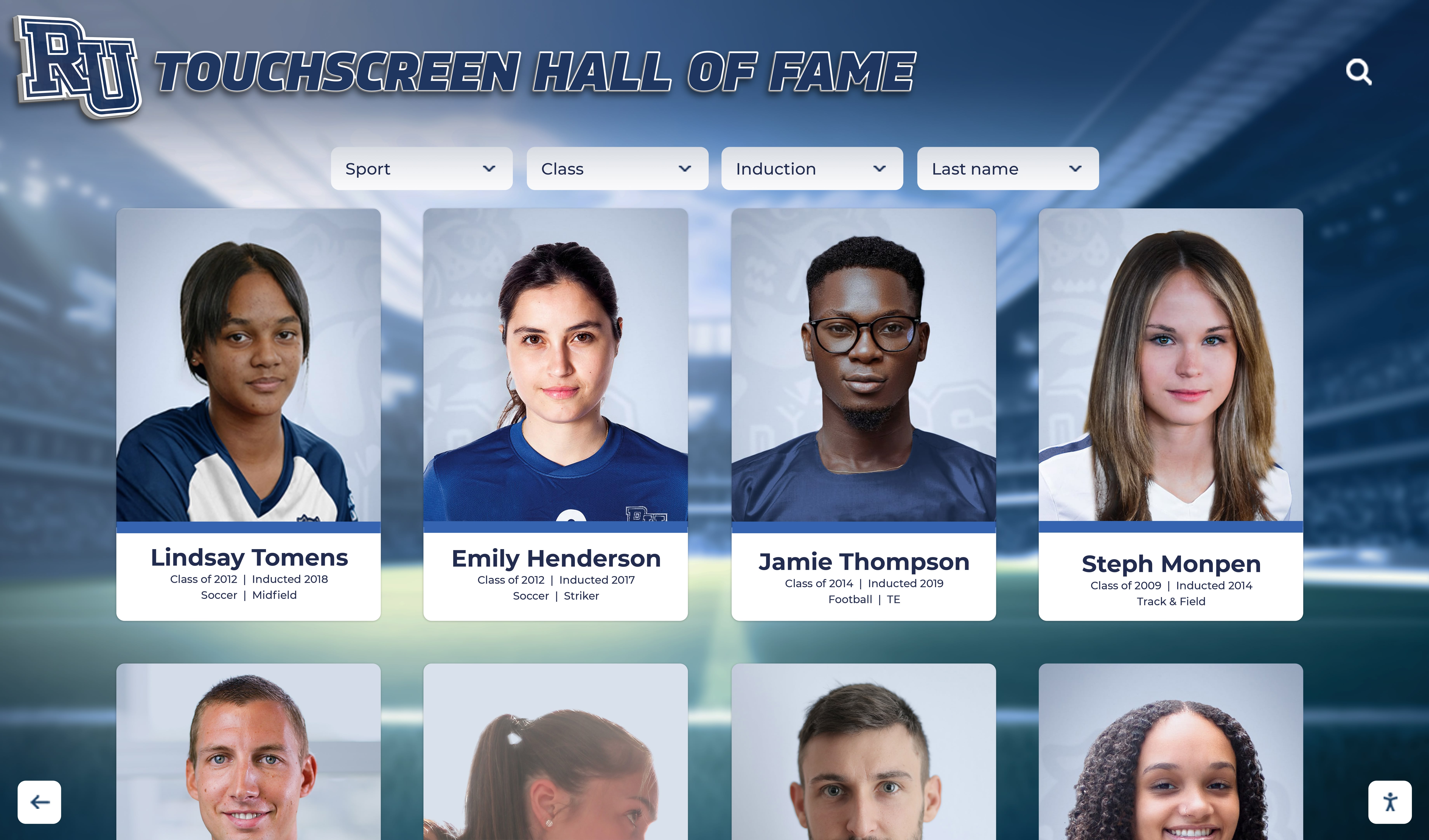
Essential Profile Components: Complete player profiles should include biographical information with birthplace, college, draft position, and years with franchise; career statistics in comprehensive tables showing season-by-season performance data; major achievements listing Pro Bowl selections, All-Pro honors, team awards, and statistical championships; memorable moments highlighting signature performances that defined careers or franchise history; and multimedia elements with action photographs, video highlights, audio clips, and archived media coverage.
For legendary players like Tom Brady, Rob Gronkowski, or Tedy Bruschi, profiles warrant extensive content including championship contributions with specific roles in each Super Bowl victory, career evolution showing development from early seasons through peak performance and eventual decline or retirement, playing style analysis explaining what made their approach distinctive and effective, teammate and coach perspectives from interviews discussing their impact, and legacy assessment contextualizing their place in franchise and NFL history.
Lesser-known contributors deserve recognition proportional to their impact. Role players, special teams contributors, and one-season wonders who made specific memorable contributions all merit inclusion, creating comprehensive franchise documentation rather than simply highlighting superstars everyone already knows.
Statistical Presentations: Raw statistics alone rarely engage casual fans, but interactive visualizations transform numbers into compelling stories. Career progression charts showing statistical trajectories across seasons illustrate development, peak performance, and decline patterns that add narrative dimension to numerical data.
Comparative visualizations allow fans to compare players across eras—seeing how modern passing statistics compare to those from 1970s or 1980s when different rules and playing styles produced different statistical norms. Context helps fans understand that 3,000 passing yards in 1978 represented extraordinary achievement compared to 4,000 yards in 2024 when rules favor offensive production.
Record progressions show how franchise marks evolved as different players pushed performance boundaries. Interactive timelines displaying rushing record holders chronologically, with brief profiles of each record holder and how long their mark stood, create engaging historical narratives from statistical data.
Championship and Season Documentation
Team achievements—Super Bowl victories, conference championships, playoff runs, and memorable regular seasons—deserve comprehensive documentation that honors collective accomplishment while recognizing individual contributions.
Super Bowl Victory Deep Dives: Each championship warrants dedicated content modules providing complete season context. Regular season recap showing record, key victories, and obstacles overcome on path to playoffs; playoff journey documentation detailing each postseason game with highlights and turning points; championship game comprehensive coverage including pre-game analysis, extended highlights, post-game celebrations, and historical significance; and roster recognition celebrating every player who contributed to championship season.
Interactive elements might include play-by-play recreations of championship games allowing fans to relive critical moments, matchup analysis explaining game plans and tactical decisions, statistical breakdowns showing who excelled in championship performances, and comparison tools examining different championship teams across franchise history.
Season Highlight Collections: Beyond championship years, memorable seasons deserve recognition even when they ended short of ultimate goal. Breakthrough seasons where young teams exceeded expectations, playoff appearances ending in heartbreaking defeats that nevertheless represented important progress, individual record-breaking seasons within otherwise disappointing team years, and historic win streaks or dominant stretches during longer seasons all contribute to franchise narrative.
Context explaining what made specific seasons meaningful helps younger fans appreciate achievements they didn’t witness. Describing the significance of the 2007 16-0 regular season—even though that team didn’t win the Super Bowl—requires explaining historical rarity of undefeated seasons and how that team dominated opponents in unprecedented ways that made them special despite ultimate disappointment.
Facilities, Traditions, and Culture
Comprehensive franchise recognition extends beyond player statistics and championship trophies to celebrate traditions, facilities, and cultural elements that define organizational identity.
Stadium and Facility History: For franchises like the Patriots who evolved from small-market operation playing in multipurpose stadiums to modern entertainment destination at Gillette Stadium, facility evolution tells important organizational story. Documentation might include stadium timeline showing every venue franchise called home, capacity and amenity evolution illustrating infrastructure investment over decades, memorable games at different venues highlighting historic moments tied to specific locations, and architectural features explaining design choices that reflect franchise values.
Interactive comparisons showing how game day experience evolved from drafty old stadiums to climate-controlled modern palaces with luxury amenities help fans appreciate organizational progress and commitment to fan experience improvement over time.
Traditions and Rituals: Elements that make franchises distinctive beyond wins and losses deserve prominent recognition. Content might document fight songs and team traditions explaining origins and significance, mascot history showing evolution of team symbols and personalities, fan rituals and superstitions that became part of organizational lore, and community connections illustrating franchise relationship with regional identity.
These softer elements humanize franchises, creating emotional connections beyond cold competitive achievement. Fans develop loyalty through shared traditions and cultural identity as much as through winning games, making this content valuable for franchise relationship building.
Implementation Considerations for Professional Sports Organizations
Successfully deploying interactive recognition displays in professional sports environments requires careful planning addressing technical, operational, content, and financial considerations unique to large-scale venue installations.
Planning and Design Process
Effective implementations begin with comprehensive discovery examining organizational objectives, venue constraints, audience characteristics, and success metrics that will determine whether installations achieve intended goals.
Stakeholder Identification: Multiple organizational departments have interests in recognition display implementations. Marketing and fan engagement teams focus on visitor experience and brand presentation, IT departments manage technical infrastructure and cybersecurity, facilities management handles physical installation and ongoing maintenance, content and communications teams produce ongoing updates and multimedia assets, and executive leadership sets strategic direction and budget parameters.
Coordinating these stakeholders requires clear project governance identifying decision makers, establishing communication protocols, defining roles and responsibilities, and creating accountability for deliverables across implementation timeline.
Venue Assessment: Physical environment evaluation identifies optimal locations, infrastructure requirements, and constraints affecting hardware selection and installation approaches. Assessment should examine traffic flow patterns during games, events, and non-event periods, ambient light conditions affecting display visibility, network connectivity availability and capacity, power infrastructure supporting continuous display operation, physical space availability and competing demands for prime locations, and accessibility compliance ensuring installations meet ADA requirements.
Professional venue assessments often reveal that locations initially appearing ideal face challenges—inadequate network infrastructure, insufficient power capacity, or sightline obstructions—requiring alternative approaches or infrastructure investment before installation proceeds.
Content Strategy Development: Recognition displays require extensive content libraries before launch, necessitating realistic planning for content creation scope, required resources, development timelines, and ongoing update commitments. Planning should address content inventory cataloging all championships, notable players, memorable moments deserving recognition, digitization requirements for archival photos and video footage, rights clearance ensuring franchise owns or licenses all media used, production workflows for creating new video content and graphics, editorial guidelines maintaining consistent tone and factual accuracy, and update protocols defining who creates content, approval processes, and publication schedules.
Organizations underestimate content development efforts frequently, resulting in delayed launches or incomplete installations missing key players or championships because content wasn’t ready when hardware deployed.
Budget and Investment Analysis
Interactive recognition display investments span hardware acquisition, software licensing, content development, installation labor, and ongoing operational costs that require comprehensive budgeting and return-on-investment analysis.
Hardware Investment: Display hardware represents the largest single cost category for most implementations. Commercial 55-inch touchscreen displays typically cost $4,000-$8,000 per unit, larger 65-75 inch displays range $8,000-$15,000, custom enclosures or kiosks add $2,000-$6,000 per installation, computing modules cost $500-$2,000, and installation labor runs $1,000-$3,000 per location depending on infrastructure complexity.
Professional venue installations typically deploy 5-15 displays strategically located throughout stadiums and facilities, resulting in hardware budgets ranging from $75,000 to $300,000 for comprehensive implementations.
Software and Services: Purpose-built touchscreen software platforms designed for sports recognition typically involve annual licensing fees of $2,000-$5,000 per display, content management platforms with $10,000-$30,000 annual fees for enterprise deployments, integration services connecting displays with existing ticketing or analytics systems at $20,000-$50,000, initial content development creating launch library at $30,000-$100,000 depending on franchise history depth, and ongoing support and maintenance at 15-20% of initial software costs annually.
Total Investment Ranges: Comprehensive professional installations across stadium and facilities might total $200,000-$500,000 for initial deployment including hardware, software, content, and installation, with ongoing annual costs of $40,000-$100,000 covering software licensing, content updates, technical support, and system maintenance.
These investments should be evaluated against alternative spending on traditional recognition approaches that require ongoing costs for physical trophy cases, plaque manufacturing and installation, printed signage requiring frequent replacement, and staff time managing static displays that interactive systems reduce substantially.
Measuring Success and Return on Investment
Effective implementations include measurement frameworks demonstrating value and informing continuous improvement decisions that enhance both recognition effectiveness and fan engagement outcomes.
Engagement Metrics: Digital displays provide detailed usage analytics unavailable from traditional recognition approaches. Metrics might include total interactions measured by display activations, average engagement duration showing how long fans explore content, content popularity revealing which players, championships, or eras fans explore most frequently, search patterns indicating what information fans seek actively, and peak usage times identifying when displays receive greatest attention.
These analytics inform content strategy decisions—if fans consistently explore specific championship seasons, creating additional content about those teams enhances display value. If certain players receive disproportionate attention, expanding their profiles with additional multimedia content responds to demonstrated fan interest.
Fan Experience Impact: While harder to quantify precisely, surveys and observational studies can measure how recognition displays affect overall venue experience. Research might examine whether fans report recognition displays as meaningful components of venue visits, how displays compare to other stadium amenities in satisfaction ratings, whether displays influence perceptions of franchise commitment to history and tradition, and if displays create social sharing opportunities as fans photograph and share content.
Many franchises discover that recognition displays become destination attractions in their own right, appearing prominently in fan photos shared on social media and functioning as gathering points where groups congregate during pre-game periods, providing value beyond pure information dissemination.
Operational Efficiency: Displays that answer common fan questions about franchise history reduce demands on guest services staff who can redirect attention to other visitor needs. Quantifying staff time savings from not answering repetitive historical questions provides concrete operational ROI measurement.
Similarly, displays that reduce dependence on printed materials, eliminate physical signage requiring periodic replacement, and consolidate recognition into manageable digital systems create operational efficiencies with quantifiable cost savings compared to traditional recognition infrastructure.
Future Trends in Sports Recognition Technology
Interactive recognition technology continues evolving, with emerging capabilities promising enhanced experiences that further differentiate forward-thinking franchises from competitors relying on traditional recognition approaches.
Mobile Integration and Personal Devices
Future recognition experiences will extend beyond fixed displays to personal mobile devices that fans carry, creating seamless transitions between stadium displays, mobile applications, and home viewing experiences.
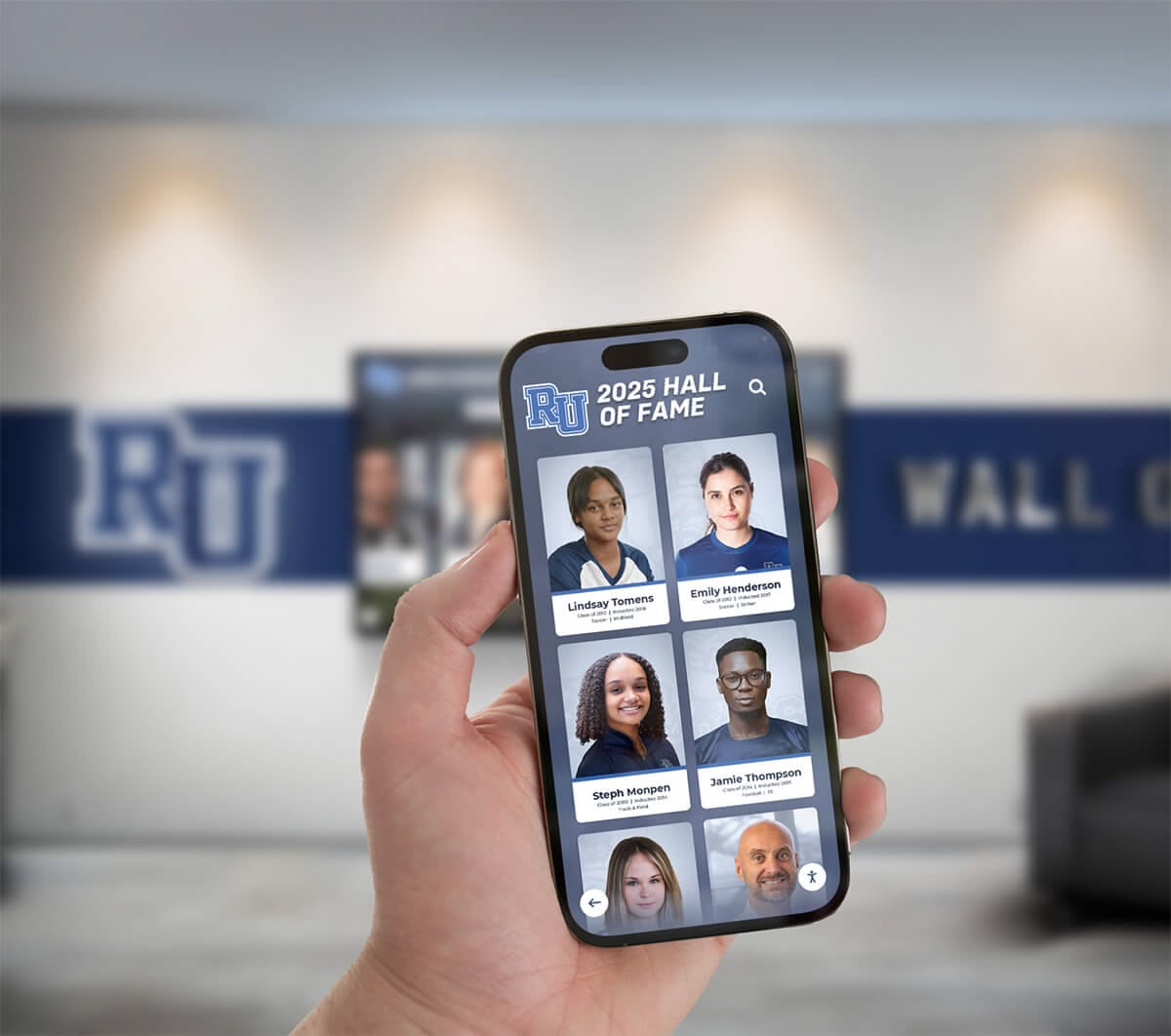
Smartphone Applications: Companion apps allow fans to continue exploring franchise history after leaving stadium, creating extended engagement opportunities that maintain connections between venue visits. Mobile platforms might provide complete franchise databases accessible anywhere, social sharing features encouraging fans to distribute content to personal networks, personalized collections allowing fans to save favorite players or seasons for easy access, and push notifications alerting fans when new content about favorite players or eras becomes available.
Integration between stadium displays and mobile applications creates continuity—fans who discover interesting content at physical displays can transfer it to personal devices for later review, sharing with friends, or continued exploration during commutes home from games.
Augmented Reality Experiences: AR technology overlays digital content onto physical environments through smartphone cameras. Future implementations might enable fans to point cameras at stadium locations where memorable moments occurred and see reconstructed plays or celebrations superimposed on current field conditions, view player statistics and achievements by scanning jersey numbers, or discover hidden content and easter eggs throughout stadium triggered by AR markers that rewards exploration.
These technologies transform passive venues into interactive playgrounds rewarding curiosity and exploration while deepening fan connections with franchise history embedded throughout physical spaces.
Artificial Intelligence and Personalization
AI technologies will enable recognition displays to adapt dynamically to individual fan interests, creating personalized experiences that feel uniquely relevant rather than generic presentations identical for all visitors.
Intelligent Recommendations: Machine learning algorithms analyzing fan interaction patterns can suggest related content matching demonstrated interests. Fans who explore defensive players might receive recommendations for other notable defenders across franchise history, those interested in specific eras see suggestions for related content from same periods, and patterns revealing interest in particular position groups receive curated content spotlighting achievement in those areas.
This personalization creates discovery experiences helping fans explore franchise history comprehensively rather than focusing only on superstar players and championship seasons that receive disproportionate attention in traditional recognition approaches.
Natural Language Interaction: Voice-enabled displays accepting conversational queries—“Show me the 2004 Super Bowl highlights” or “Who holds the franchise rushing record?"—eliminate typing barriers and make displays accessible to fans reluctant to type on public touchscreens. Natural language understanding technologies reaching maturity enable these interactions to feel conversational rather than requiring precise keyword matching that frustrates users.
Predictive Content: AI systems monitoring game schedules, upcoming anniversaries, and current events can proactively feature relevant historical content. The week of a Super Bowl rematch against an opponent previously defeated in championship games, displays might automatically feature content from that previous Super Bowl. On anniversaries of memorable moments, displays highlight those achievements creating timely connections between past and present.
Enhanced Multimedia and Immersive Content
Future recognition displays will incorporate increasingly sophisticated multimedia capabilities creating immersive experiences that blur boundaries between recognition displays and full entertainment attractions.
360-Degree Video: Immersive video placing fans at field level during historic championship moments or inside locker rooms during victory celebrations creates visceral experiences impossible with traditional television footage. These perspectives help younger fans who never witnessed historic moments develop emotional connections with franchise history through feeling present at legendary games.
Interactive Video Analysis: Rather than simply showing game highlights, future displays might allow fans to control camera angles during plays, view strategic analysis overlays explaining tactical decisions, compare plays to similar situations in other games, and explore statistical breakdowns showing why specific moments became pivotal in game outcomes.
Holographic Display Technology: While still emerging, holographic projection technology might eventually enable three-dimensional player recreations appearing to stand beside fans, trophy displays that appear suspended in mid-air without physical enclosures, and interactive environments that transport fans visually to historic stadiums or moments in franchise history.
Partner with Recognition Technology Leaders
Professional sports franchises seeking to implement interactive recognition displays benefit from partnering with experienced providers who understand both the technical requirements of commercial venue installations and the unique content needs of sports organizations celebrating competitive achievement.
Solutions like Rocket Alumni Solutions offer comprehensive platforms combining robust hardware, intuitive software, and professional services that guide organizations from initial planning through ongoing content management. Purpose-built digital recognition displays create engaging experiences that honor franchise history while providing analytical insights about fan engagement and content performance that inform continuous improvement.
Successful implementations require vendors who understand that recognition displays serve dual purposes—honoring past achievement while creating present engagement opportunities that strengthen fan relationships and build franchise brand value that extends far beyond wins and losses on fields of competition.
Conclusion: Honoring Legacy Through Innovation
Interactive touchscreen displays represent the future of sports franchise recognition, combining respect for history with technological innovation that creates engaging experiences for modern fans. Organizations like the New England Patriots—with rich competitive histories worthy of comprehensive celebration—exemplify franchises that benefit from recognition approaches equal to their achievement levels.
These systems transform recognition from static monuments to past glory into living celebrations that evolve with franchises, engage fans actively rather than passively, extend reach beyond physical venues through digital platforms, and provide analytical insights informing ongoing improvements. The investment in comprehensive interactive recognition pays dividends through enhanced fan experiences, differentiated venue amenities, efficient operations, and brand positioning as forward-thinking organizations that honor tradition while embracing innovation.
For professional sports franchises ready to implement modern recognition technology worthy of their competitive achievements and fan dedication, comprehensive touchscreen display systems create lasting infrastructure supporting franchise storytelling, fan engagement, and legacy preservation for generations of supporters who share passion for team success and historical excellence.
The future of sports recognition is interactive, engaging, and dynamic—just like the championship organizations these systems celebrate. Whether implementing comprehensive stadium networks or starting with focused installations at key locations, franchises that adopt interactive recognition technology position themselves as leaders in fan experience innovation while ensuring their remarkable competitive achievements receive recognition worthy of the effort, dedication, and excellence they represent.































