Perfect ACT scores represent one of the most prestigious academic achievements high school students can earn—a composite score of 36 that places them in the top 0.2% of all test takers nationwide. For the exceptionally small number of students who achieve this distinction, earning a perfect score demonstrates mastery across English, mathematics, reading, and science reasoning that few ever attain.
Yet many schools struggle to appropriately celebrate these exceptional achievements in ways that honor individual excellence while inspiring broader academic culture. Traditional plaques and static displays offer limited space and quickly become dated. Meanwhile, the remarkable stories behind these achievements—the dedication, study strategies, and academic journeys that led to perfection—often go untold beyond brief announcements.
This comprehensive guide explores the history of perfect ACT scores, examines how schools can effectively celebrate these elite achievements, and provides practical strategies for creating recognition systems that honor exceptional performance while motivating students at all achievement levels.
The ACT has been measuring college readiness since 1959, but the path to earning a perfect 36 has dramatically evolved over the decades. Understanding this history and implementing modern recognition approaches helps schools celebrate academic excellence in meaningful, inspiring ways that resonate with today’s students.
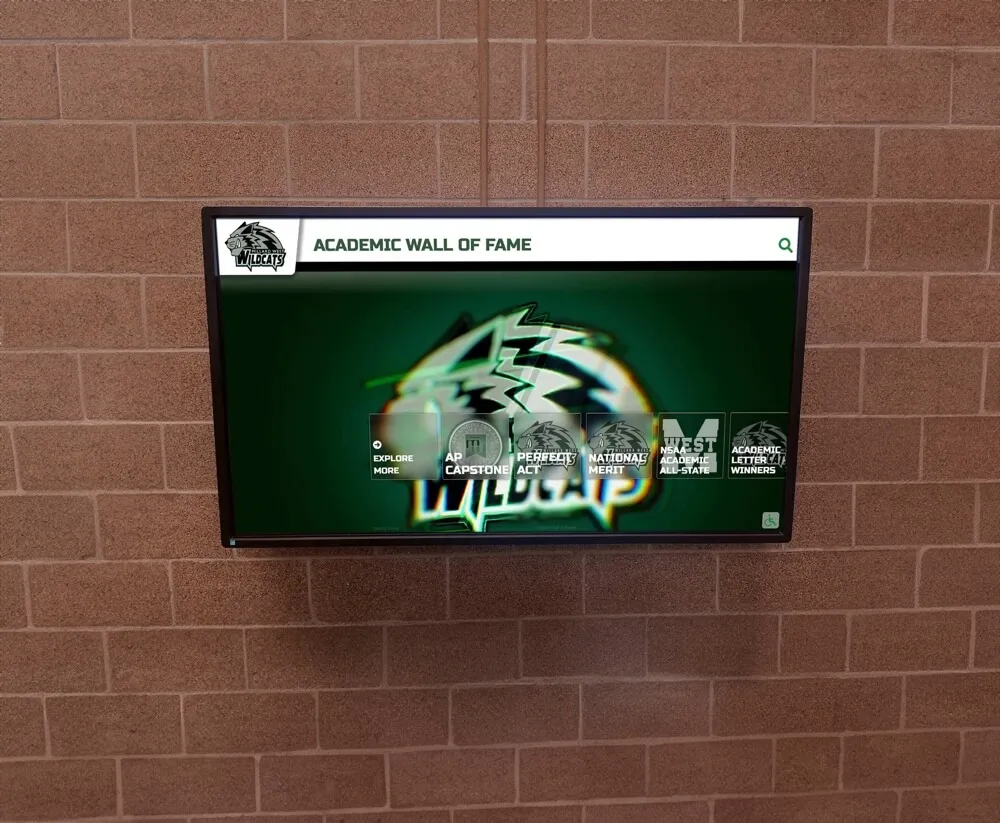
Modern digital recognition displays transform how schools celebrate exceptional academic achievements like perfect ACT scores
The Evolution and History of Perfect ACT Scores
Understanding the context of perfect ACT achievement helps schools appropriately recognize these exceptional accomplishments while appreciating how rare they truly are.
The ACT’s Origins and Testing Philosophy
The ACT was first introduced in November 1959 by University of Iowa professor Everett Franklin Lindquist as an alternative to the SAT. Unlike the SAT’s focus on cognitive reasoning, the ACT was designed as an achievement test measuring content learned in school, according to testing history research.
The original ACT featured four sections—English, Mathematics, Social Studies, and Natural Sciences—each assessed on the 36-point scale still used today. This continuity means that a perfect score in 1959 represents achievement on the same fundamental scale as a perfect score today, though content and format have evolved substantially over the decades.
The ACT’s achievement-oriented philosophy distinguished it from competitors and contributed to its growing popularity, particularly in the Midwest and South where it became the dominant college admissions test. By 2012, the ACT surpassed the SAT in total number of test takers, cementing its position as one of the two primary college entrance examinations nationwide.
The Remarkable Scarcity of Perfect Scores
For most of the ACT’s history, achieving a perfect composite score of 36 has been extraordinarily rare. In 1997, just 0.008% of test takers earned perfect scores—approximately one student in 12,987. Through the late 1990s and early 2000s, perfect scores remained vanishingly uncommon, with fewer than 100 students nationwide achieving 36 composite scores annually.
However, the 21st century has witnessed a dramatic increase in perfect score frequency. According to PrepScholar’s analysis of ACT data, the number of students earning perfect scores has grown substantially:
- 2001: 89 students earned perfect scores nationwide
- 2013: 1,162 students achieved 36 composites
- 2017: 2,760 perfect scores
- 2018: 3,741 perfect scores
- 2020: 5,579 students out of over 1.6 million test takers (approximately 0.33%)
As of the class of 2024, approximately 0.22% of all ACT test takers earn perfect scores—still representing less than one-quarter of one percent of the testing population.
Understanding the Increase in Perfect Scores
Multiple factors contribute to the rising frequency of perfect ACT scores despite the achievement’s continued rarity:
Enhanced Test Preparation Resources
- Proliferation of comprehensive ACT prep courses and tutoring
- Detailed online resources providing section-specific strategies
- Practice tests with accurate score predictions
- Adaptive learning technologies targeting individual weaknesses
Improved Academic Preparation
- Increased rigor in K-12 curriculum, particularly in STEM
- Greater access to Advanced Placement and honors coursework
- Rising academic standards nationwide
- Better alignment between school curricula and tested content
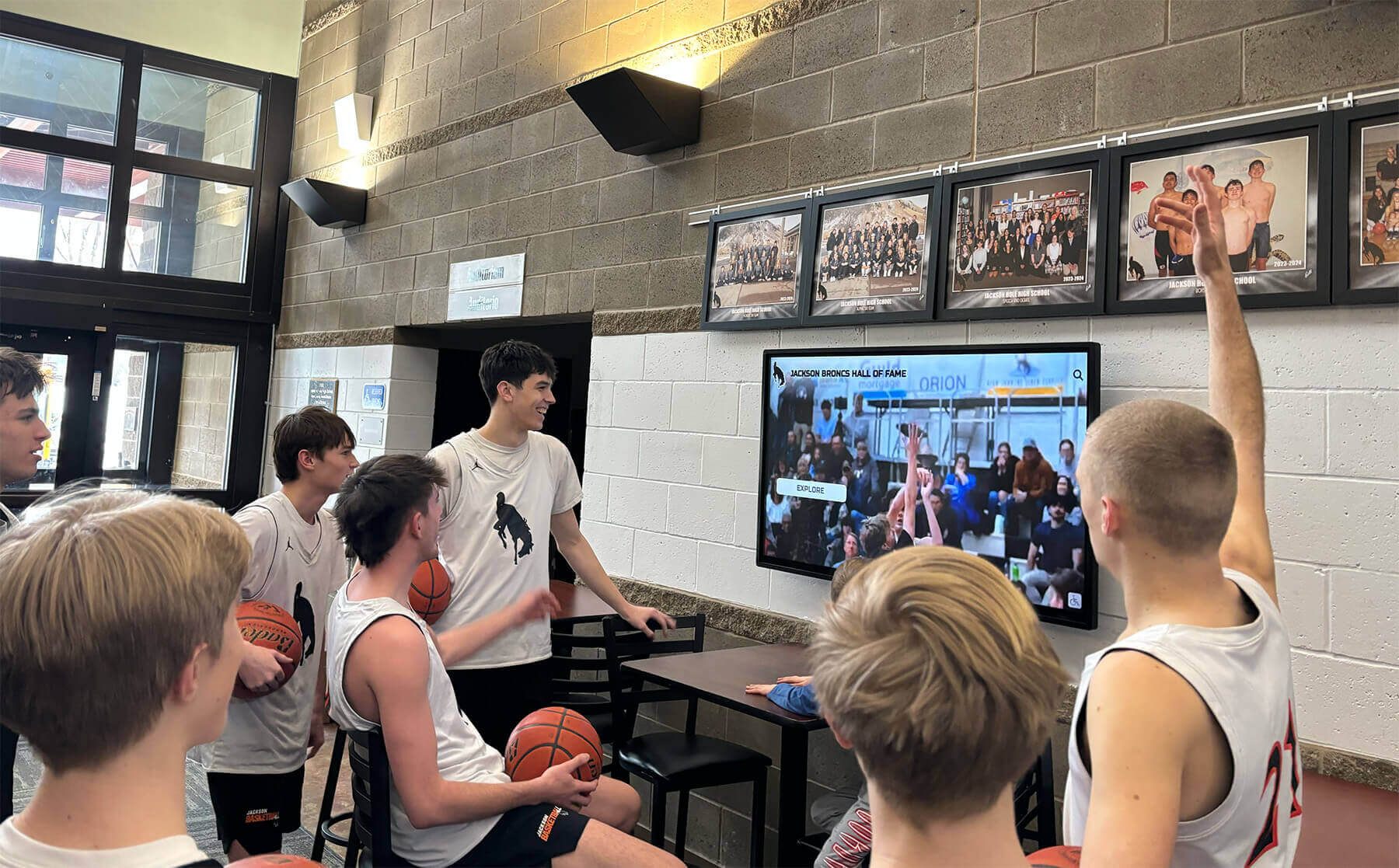
Interactive displays create opportunities for students to explore academic excellence and connect with achievement culture
Multiple Testing Opportunities
- Most colleges accept superscoring (combining best section scores across multiple tests)
- Students increasingly take the ACT multiple times to optimize results
- Earlier testing beginning in sophomore or junior year allows additional attempts
- Test scheduling flexibility providing more sitting opportunities
Strategic Testing Approaches
- Greater awareness that perfect scores are achievable with preparation
- Refined understanding of test format and content expectations
- Data-driven study strategies targeting specific improvement areas
Despite these increases, perfect ACT scores remain exceptional achievements earned by an extraordinarily small percentage of students. Schools celebrating these accomplishments recognize truly elite academic performance.
Creating Meaningful Recognition for Perfect ACT Achievements
Perfect ACT scores deserve celebration that honors the remarkable nature of this achievement while integrating meaningfully into broader academic recognition culture.
Why Perfect Score Recognition Matters
Celebrating perfect ACT achievements serves multiple purposes beyond honoring individual students:
Demonstrating School Excellence Public recognition of perfect scores signals institutional academic quality to prospective families, community members, and educational stakeholders. Schools that produce perfect scorers demonstrate that their academic programs prepare students for the highest levels of achievement.
Creating Aspirational Culture When current students see peers celebrated for perfect ACT scores, it establishes concrete achievement targets and demonstrates that elite performance is possible. This visibility helps normalize academic excellence as something worth pursuing rather than something to downplay.
Validating Academic Values Schools emphasizing academics should celebrate intellectual achievement as prominently as athletic success. Perfect ACT score recognition demonstrates institutional commitment to honoring scholarly excellence, reinforcing that academic accomplishment receives recognition, respect, and celebration.

Touchscreen interfaces make exploring academic achievements engaging and accessible
Recognition Timing and Context
Perfect ACT score recognition should occur promptly after achievement while providing context that helps audiences appreciate the accomplishment’s significance:
Immediate Acknowledgment As soon as students report perfect scores, schools should provide initial recognition through morning announcements, social media posts, email communications to families, and personal congratulations from school leadership. This immediate response demonstrates that the achievement is valued and creates momentum for more formal recognition.
Formal Recognition Events Many schools integrate perfect score recognition into established academic ceremonies including honor roll recognition events, academic awards nights, senior recognition programs, and scholarship celebrations. These formal settings provide appropriate gravitas while connecting perfect scores to broader academic excellence.
Permanent Recognition Through Digital Displays Traditional plaques recognizing perfect scorers quickly fill available space as multiple years accumulate. Digital recognition displays solve this limitation by accommodating unlimited students across all achievement categories without space constraints.
Contextualizing Perfect Score Achievement
Help audiences understand what perfect scores represent by providing context alongside recognition:
Statistical Rarity Explain that perfect scores place students in approximately the top 0.2% of the 1.4+ million annual test takers nationwide. This context helps students, families, and communities appreciate just how exceptional the achievement is.
Section Score Breakdown Perfect composite scores require either 36s in all four sections or very specific combinations of section scores that average to exactly 36.0. Highlighting this helps audiences understand the comprehensive mastery required—students must excel across all academic domains rather than compensating for weaknesses with extreme strengths.
Preparation and Dedication Whenever possible, include information about the work behind perfect scores—study strategies employed, preparation time invested, or obstacles overcome. This framing reinforces growth mindset principles, demonstrating that exceptional achievement results from dedication and effective approaches rather than solely innate ability.
Implementing Interactive Digital Recognition for Academic Excellence
Modern schools increasingly leverage interactive displays to celebrate academic achievements including perfect ACT scores in ways that overcome traditional recognition limitations.
The Digital Recognition Advantage
Interactive touchscreen displays transform how schools recognize academic achievement by eliminating constraints that limit traditional methods:
Unlimited Recognition Capacity Physical plaques and bulletin boards force schools to choose whose achievements receive visibility due to space limitations. Digital recognition displays accommodate unlimited honorees without space constraints, allowing schools to celebrate every perfect scorer across decades alongside honor roll students, competition winners, and other academic achievers.
Engaging Interactive Exploration Touchscreen interfaces invite active engagement rather than passive viewing. Students can search for specific individuals, filter by achievement type or graduation year, explore detailed profiles with photos and accomplishment descriptions, and discover connections between students and achievements. This interactivity transforms recognition from something glanced at while passing to something explored during lunch, free periods, and between classes.
Rich Multimedia Storytelling Digital systems combine photos, videos, and text to tell achievement stories in compelling ways. Perfect score profiles might include student photos from testing day or award ceremonies, video interviews discussing preparation strategies, quotes about the significance of their achievement, timelines showing their academic journey, and links to related accomplishments like National Merit recognition or college admissions success.
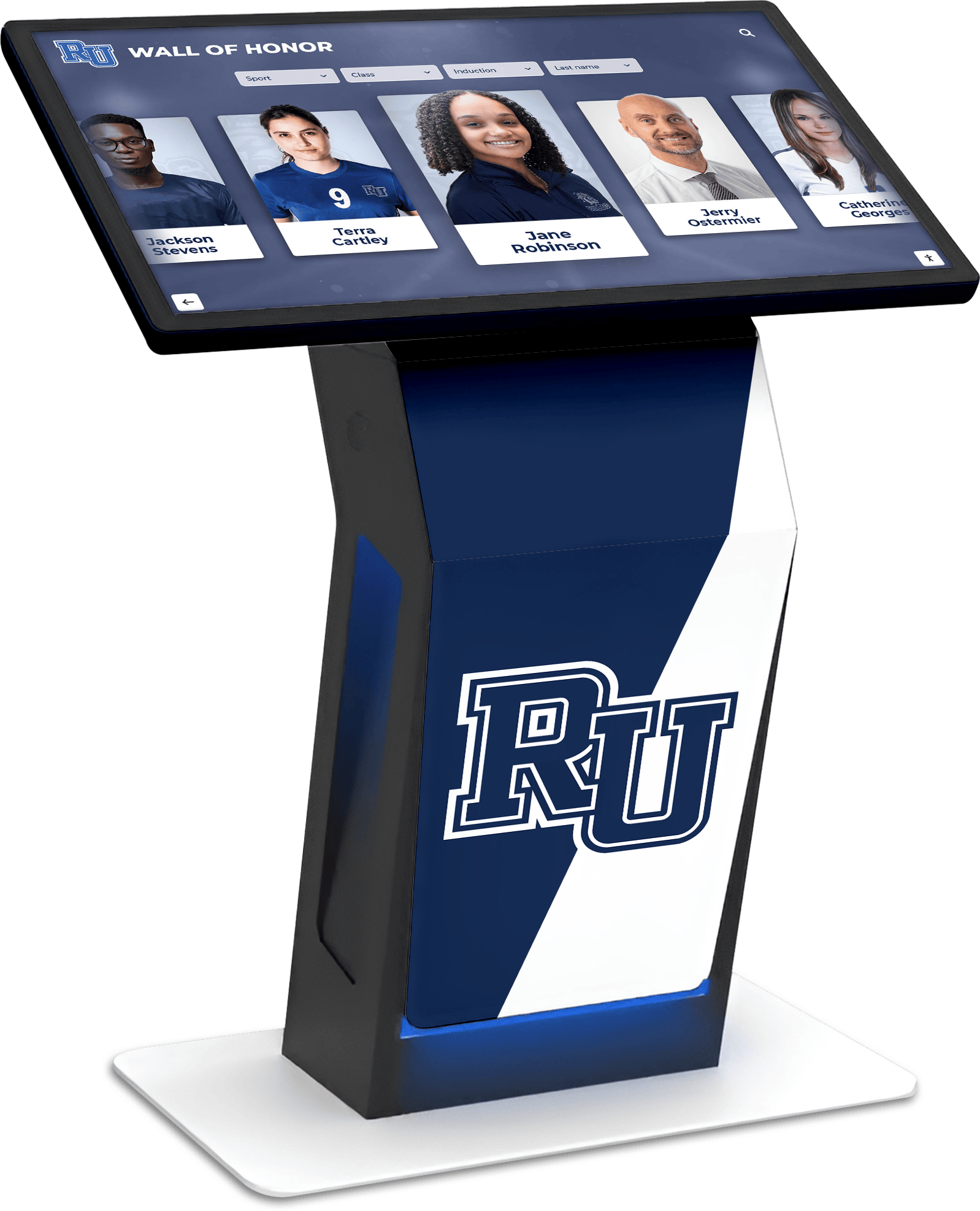
Modern recognition systems integrate touchscreen displays with cloud-based management platforms for comprehensive achievement celebration
Simple Content Management Cloud-based management systems allow administrators to update recognition displays in minutes from any internet-connected device without technical expertise. Adding new perfect scorers requires uploading photos and information, publishing updates, and scheduling when content appears—all accomplished through intuitive interfaces requiring no specialized training.
Schools report 80-90% reduction in administrative time spent maintaining recognition after implementing digital systems compared to traditional plaque ordering, bulletin board updating, and physical display management.
Strategic Implementation for Maximum Impact
Successful digital recognition implementation requires thoughtful planning and execution:
Optimal Placement Locations Position displays in high-traffic areas where students naturally congregate:
- Main hallways and building entrances for universal daily exposure
- Cafeterias and common areas where students have dwell time to explore
- Library and media centers providing discovery opportunities during study time
- Guidance offices reminding students of achievement possibilities as they plan futures
- Athletic facilities demonstrating that academic excellence complements athletic success
Strategic placement ensures recognition reaches the broadest audience while creating multiple touchpoints throughout students’ daily routines.
Comprehensive Achievement Categories Perfect ACT scores should appear within broader academic recognition programs celebrating diverse achievements:
- Standardized testing excellence (ACT, SAT, AP exams, subject tests)
- Competition achievements (Science Olympiad, Math Olympiad, Debate, Quiz Bowl)
- Honor society inductions (National Honor Society, subject-specific honor societies)
- GPA milestones and honor roll achievement across all levels
- Subject-specific recognition for departmental excellence
- Academic improvement and growth regardless of absolute achievement level
This comprehensive approach ensures every student sees recognition opportunities while maintaining distinction for elite accomplishments like perfect scores.
Searchable Database Features Interactive systems should enable multiple exploration pathways:
- Name search allowing students to find themselves and classmates
- Filtering by achievement type, graduation year, or academic category
- Featured content highlighting recent additions or currently relevant achievements
- Random discovery modes showcasing diverse accomplishments
- Related content connections linking similar achievements
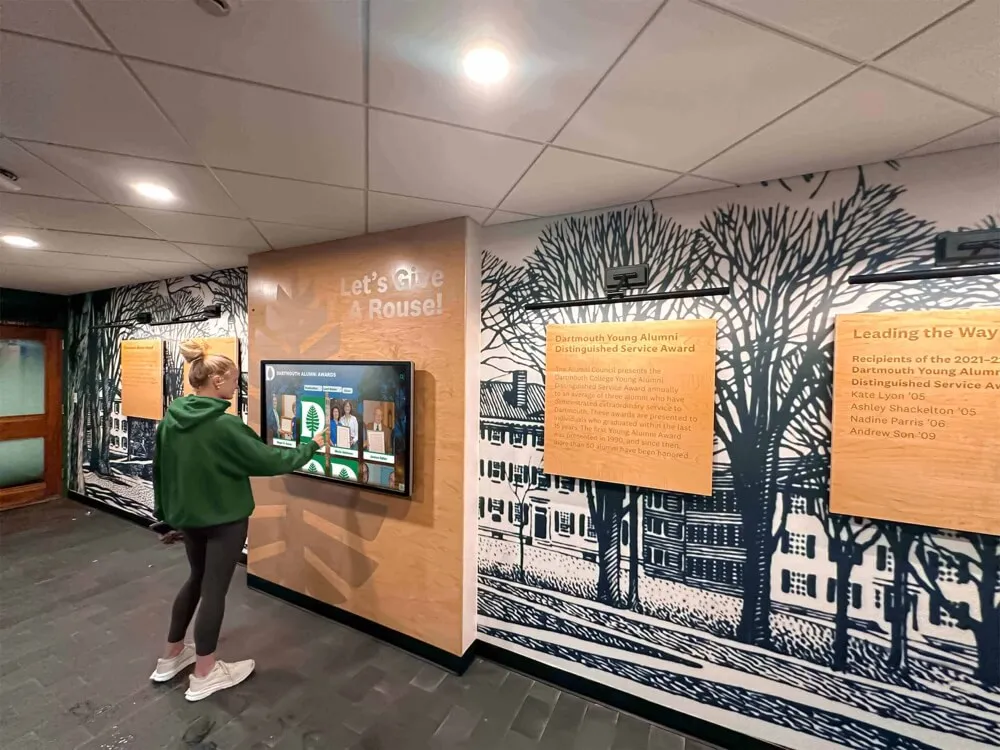
Strategic placement in high-traffic areas maximizes visibility and engagement with recognition displays
Rocket Alumni Solutions for Academic Recognition
Solutions like Rocket Alumni Solutions provide purpose-built platforms designed specifically for educational achievement recognition. Unlike generic digital signage adapted for schools, these specialized systems offer:
Education-Specific Content Management Interfaces designed around how schools organize recognition—by graduation class, achievement category, academic year, and other education-relevant criteria rather than generic date ranges or tags.
Student Profile Architecture Comprehensive profile capabilities designed to showcase academic journeys including biographical information and academic interests, complete achievement histories across multiple categories, photos showing students in various academic settings, embedded video content with interviews and competition highlights, and connections to related students, programs, and accomplishments.
Web-Based Extension Recognition extends beyond physical displays through online platforms enabling alumni worldwide to explore current achievements, families to share student success on social media, prospective students to understand school culture, and community members to engage with institutional excellence.
Learn more about comprehensive approaches through digital recognition planning guides that help schools implement effective systems within budget constraints.
Building Inclusive Recognition Cultures That Celebrate All Achievement
While perfect ACT scores deserve celebration, the most effective recognition programs ensure diverse students at all performance levels see realistic pathways to acknowledgment.
Multiple Recognition Tiers and Pathways
Comprehensive recognition systems honor various achievement types and levels:
Elite Achievement Recognition
- Perfect and near-perfect standardized test scores
- National Merit Scholar designations
- Perfect or near-perfect GPA maintenance across multiple years
- National academic competition championships
- State and regional competition excellence
These pinnacle achievements receive prominent celebration through formal ceremonies, permanent display features, and school-wide recognition.
Regular Recognition Programs
- Honor roll at multiple GPA thresholds (high honor roll, honor roll, honorable mention)
- Subject-specific achievement awards from individual departments
- Participation and placement in academic competitions
- Honor society inductions and leadership
- Academic scholarship recipients

Individual recognition profiles celebrate specific achievements across diverse academic areas
Growth and Improvement Recognition
- Most improved GPA between marking periods or school years
- Subject-specific improvement awards in individual classes
- Progress toward individualized learning goals
- Academic growth measured against personal baselines rather than peer comparison
Engagement and Character Recognition
- Consistent academic effort and homework completion
- Active class participation and contribution to learning community
- Academic persistence through challenging coursework
- Attendance and punctuality demonstrating commitment
This multi-tiered approach maintains meaningful standards for top recognition while creating achievement opportunities for students across different starting points, abilities, and circumstances. Learn about comprehensive student engagement approaches that motivate achievement at all levels.
Avoiding Recognition Pitfalls
Common mistakes can undermine recognition program effectiveness:
Exclusive Focus on Elite Achievers When recognition exclusively celebrates the highest performers, it can discourage students who work hard but lack the background or natural aptitude for elite achievement. Balance celebration of exceptional accomplishment with acknowledgment of solid performance and meaningful growth.
Delayed Recognition Recognition loses motivational power when delayed. Perfect scorers should receive acknowledgment within days, not months. Digital systems enable prompt updates that maintain recognition’s reinforcing effect.
Lack of Context Simply listing names without explanation fails to inspire. Provide context about what achievements represent, the work behind them, and why they matter. Storytelling transforms lists into celebrations that motivate.
Inadequate Visibility Recognition hidden away in rarely-visited locations or quickly outdated displays suggests achievement isn’t truly valued. Strategic placement and regular updates demonstrate genuine institutional commitment.
Connecting ACT Recognition to Broader Academic Culture
Perfect ACT score celebration should integrate into comprehensive approaches that elevate intellectual achievement throughout school culture.
Celebrating the Full Academic Excellence Spectrum
Position perfect ACT scores within broader academic recognition ecosystems:
College Board Recognition Programs The College Board offers several prestigious designations schools should celebrate alongside ACT achievements including National Recognition Program awards (School Recognition, First-Generation Recognition, Rural and Small-Town Recognition), AP Scholar awards at various levels, and PSAT/National Merit recognition. These programs provide additional recognition opportunities for high-achieving students and should receive equal prominence with ACT accomplishments.
State and Regional Academic Honors Many states offer academic recognition programs including State Scholar designations, Governor’s Scholar programs, all-state academic teams, and state competition recognitions. Learn about comprehensive recognition approaches for state-level academic achievements.
Subject-Specific Excellence Departmental awards recognize excellence in individual academic areas including mathematics and science competitions (MATHCOUNTS, Science Olympiad, USABO), English and language arts achievements (writing contests, speech and debate), social studies competitions (History Day, Model UN, Geography Bee), and world language proficiency certifications.

Comprehensive recognition systems document achievement journeys across academic careers and multiple domains
Creating Academic Recognition Events
Formal ceremonies provide important acknowledgment opportunities:
Annual Academic Excellence Celebrations Many schools host year-end academic recognition events celebrating the year’s achievements including department-specific awards presentations, honor roll and GPA milestone recognition, perfect score and elite achievement celebration, scholarship announcement and college acceptance acknowledgment, and senior academic legacy recognition.
These events demonstrate that academic achievement warrants celebration equal to athletic banquets and artistic showcases.
Integration with Existing Ceremonies Schools can incorporate academic recognition into established events including honors nights featuring top achievers, senior recognition programs celebrating accumulated achievement, homecoming celebrations highlighting current academic excellence, and graduation ceremonies acknowledging valedictorians and top scholars.
Strategic integration ensures academic recognition reaches broad audiences without requiring additional event coordination.
Communication Strategies That Amplify Recognition
Recognition impact depends on systematic multi-channel communication:
Internal Communication Approaches
- Morning announcements highlighting recent achievements
- Digital signage rotation featuring recognized students throughout the day
- Email updates to families about student recognition
- Social media posts celebrating academic excellence
- School website features showcasing current achievers
- Classroom acknowledgment and teacher congratulations
External Community Engagement
- Local newspaper recognition announcements and features
- Community media academic excellence stories
- Chamber of commerce and service organization updates
- Alumni connection programs linking past and present achievement
- Recognition of accomplished alumni reinforcing lifelong learning values
This multi-channel approach ensures recognition reaches all stakeholders through their preferred information sources while maximizing visibility for student accomplishments.
Practical Implementation: From Planning to Celebration
Schools ready to enhance academic recognition should follow structured approaches that ensure successful implementation.
Assessment and Planning Phase
Evaluate Current Recognition Practices
- What academic achievements currently receive recognition?
- Which significant accomplishments are overlooked?
- How visible are current recognition displays to students and visitors?
- What feedback have students provided about recognition preferences?
- How much staff time does current recognition require?
Define Recognition Philosophy Establish clear principles guiding your approach:
- Will you prioritize absolute achievement, growth, or balanced recognition of both?
- How will elite accomplishments like perfect ACT scores be distinguished while ensuring inclusive recognition?
- What values and achievements should recognition programs reinforce?
- How does recognition support broader school culture and academic goals?
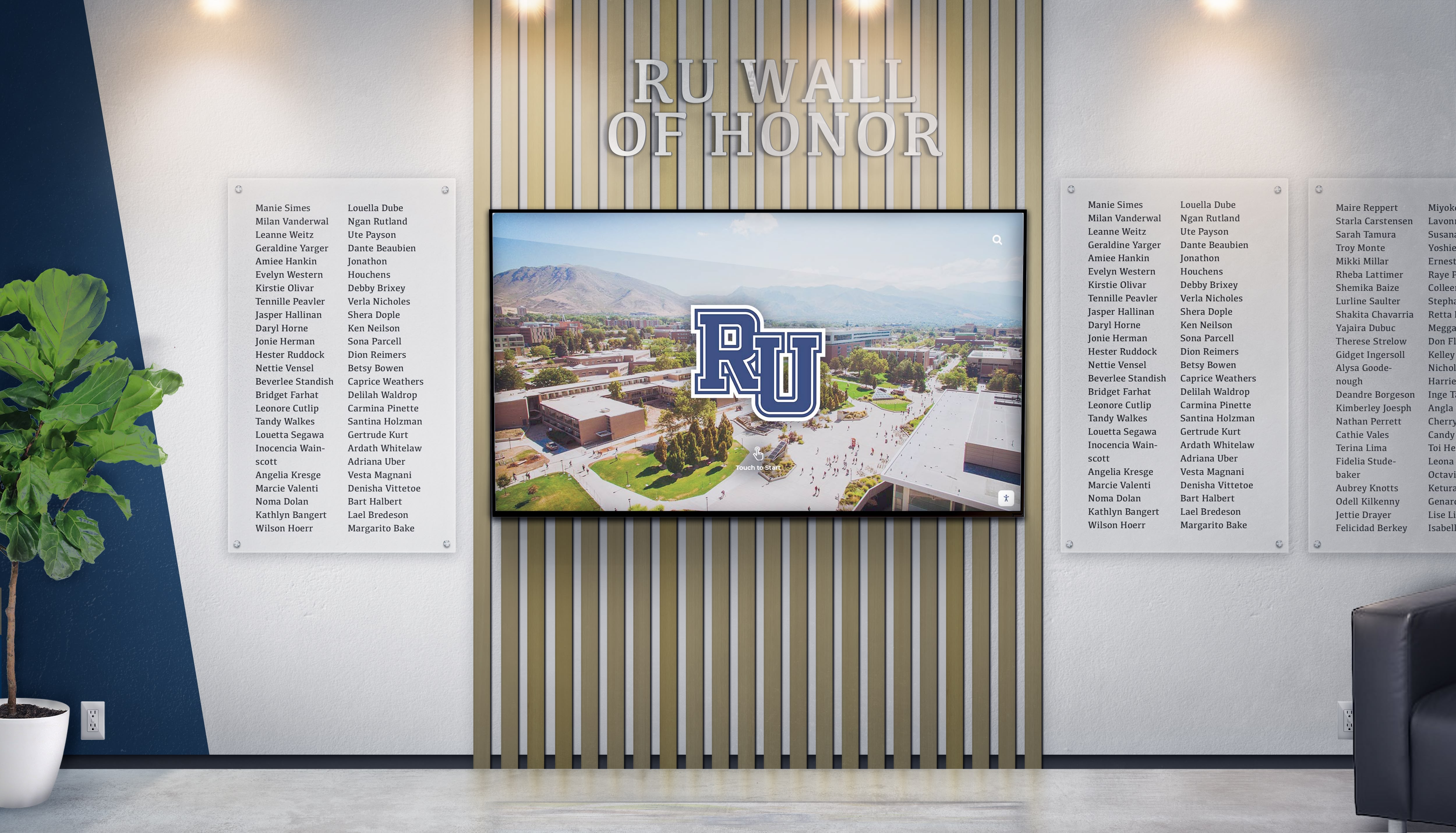
Integrated recognition systems can combine digital displays with traditional elements for comprehensive celebration
Engage Stakeholders Gather input from administrators, teachers, students, and families about recognition priorities and approaches. This collaborative process builds buy-in while generating ideas and identifying potential concerns early when they’re easier to address.
Technology Selection and Implementation
Evaluate Digital Recognition Solutions When considering interactive displays, assess:
- Ease of content management for non-technical administrators
- Ability to accommodate unlimited achievements without space constraints
- Search, filter, and discovery features enabling student exploration
- Integration capabilities with student information systems
- Web-based extension providing access beyond physical displays
- Total cost of ownership including hardware, software, installation, and ongoing support
Solutions like Rocket Alumni Solutions provide purpose-built platforms specifically designed for educational recognition with features addressing common school needs and constraints.
Plan Strategic Placement Identify high-traffic locations offering maximum visibility while considering sightlines, mounting requirements, power and network access, viewing distances and angles, and accessibility for all students and visitors.
Develop Content Strategy Before launch, plan:
- Which achievement categories will be featured
- How content will be organized and structured
- Update frequency for different achievement types
- Visual design standards maintaining school branding
- Photo and information collection processes
Launch and Ongoing Management
Build Initial Content Libraries Gather historical achievement data, photos of recognized students, descriptions of various recognition categories, and video content where available. This initial library provides substance from day one rather than launching with sparse content.
Train Administrative Staff Ensure multiple staff members can manage content through comprehensive training on the content management system, best practices for engaging content creation, regular update workflows and schedules, and troubleshooting common issues.
Promote and Celebrate Launch Create excitement through formal unveiling events or ceremonies, communications to students, families, and community, social media campaign showcasing the new recognition system, and opportunities for students to explore and interact with displays.
Establish Sustainable Management Assign clear responsibilities for ongoing content updates, create regular update schedules tied to grading periods and achievement announcements, develop efficient workflows for adding new recognitions, and regularly assess engagement and refine approaches based on feedback.
Sustainable systems ensure recognition remains current, relevant, and impactful year after year rather than diminishing as initial enthusiasm wanes.
Measuring Recognition Program Success
Regular assessment ensures recognition programs achieve intended goals and justify resource investment.
Quantitative Success Metrics
Participation and Coverage
- Percentage of students receiving some form of academic recognition
- Distribution across grade levels and demographic groups
- Breadth of achievement categories being celebrated
- Year-over-year trend analysis
Academic Outcomes
- Honor roll percentage trends over time
- Average GPA and grade distribution changes
- Standardized test score patterns
- Rigorous course enrollment rates
- Academic competition participation levels
Engagement Indicators
- Digital display interaction rates and session duration
- Web-based recognition platform usage statistics
- Social media engagement with academic recognition content
- Recognition event attendance rates
Qualitative Assessment
Stakeholder Feedback
- Student surveys about recognition program awareness and impact
- Family perception of recognition program fairness and effectiveness
- Teacher assessment of recognition program influence on classroom culture
- Alumni reflection on how academic recognition influenced their experience
Cultural Indicators
- Observed changes in academic culture and peer attitudes
- Student motivation and achievement orientation
- Behavioral data relating to academic focus
- School climate survey results regarding belonging and achievement values
Regular assessment enables continuous improvement, ensuring recognition programs remain meaningful and aligned with institutional goals while documenting impact for stakeholders and decision-makers.
Perfect ACT Score Recognition: Success Stories and Best Practices
Schools across the nation have developed effective approaches to celebrating perfect ACT achievements within broader academic recognition cultures.
Creating Traditions Around Academic Excellence
Many schools establish traditions that make academic recognition feel special and anticipated:
Academic Excellence Wall of Fame Dedicated spaces (physical or digital) celebrating the school’s academic highest achievers across history including perfect ACT/SAT scorers, valedictorians across decades, National Merit Scholars, and state/national competition champions.
These permanent displays create institutional memory demonstrating consistent academic excellence while providing historical context for current achievements.
Scholar Recognition Ceremonies Annual or semester events specifically celebrating academic achievement with formality matching athletic banquets including formal invitations to recognized students and families, principal and superintendent recognition speeches, individual acknowledgment of significant achievements, opportunities for perfect scorers to share their experiences, and celebration of the dedication behind academic success.
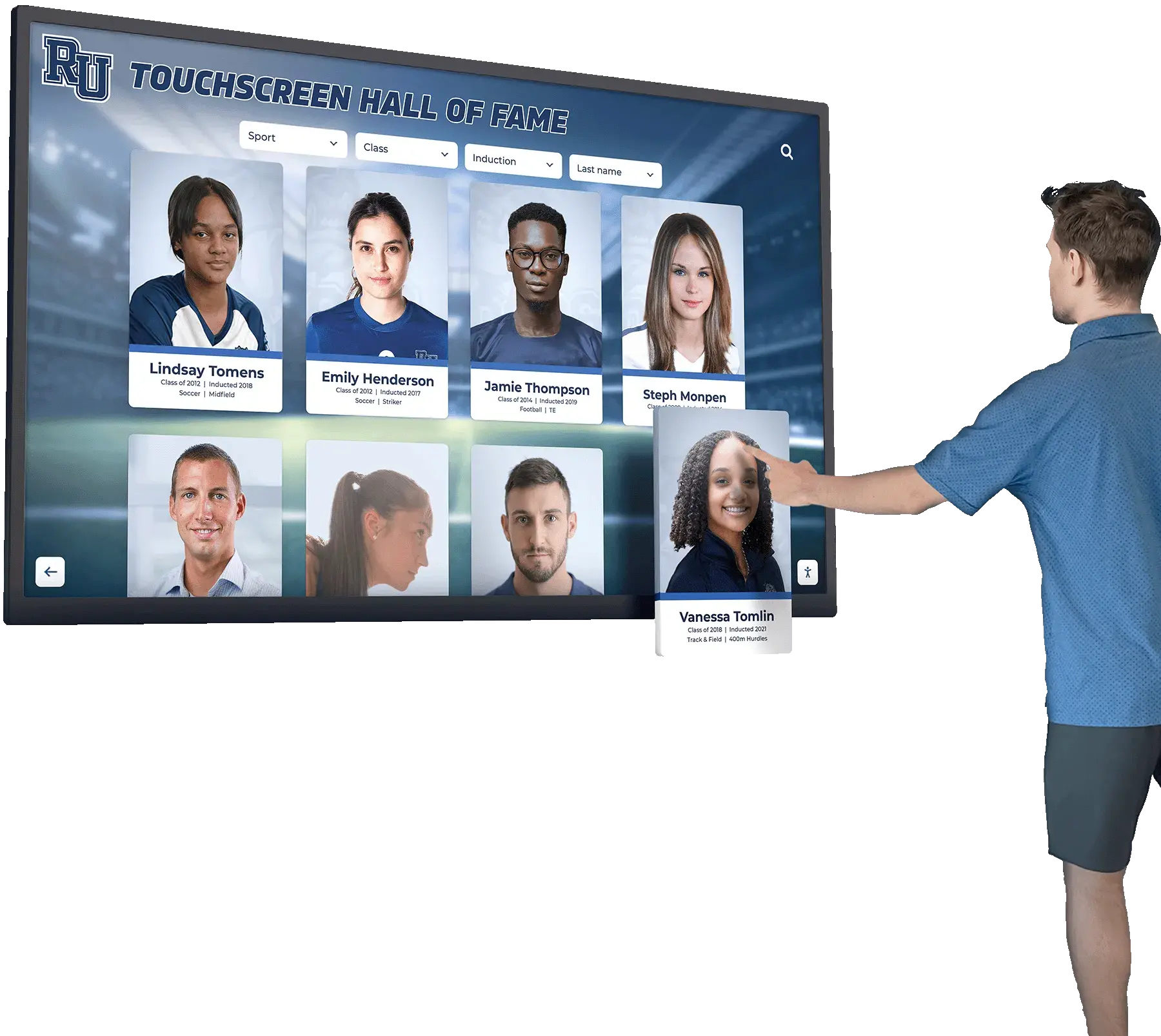
Interactive displays transform academic recognition from static lists to engaging exploration opportunities
Perfect Score Recognition Traditions Some schools create special recognitions specifically for perfect standardized test scores including permanent engraving or digital profile addition, special cord or medallion worn at graduation, invitation to speak at academic events, featured profile in school publications, and personalized recognition letter from superintendent or principal.
These distinct recognitions honor the exceptional rarity of perfect scores while integrating them into broader academic celebration.
Balancing Elite and Inclusive Recognition
The most successful schools maintain appropriate distinction for exceptional achievement while ensuring recognition opportunities exist across performance levels:
Clear Recognition Tiers Establish and communicate distinct recognition levels including pinnacle achievements (perfect scores, valedictorian, national recognition), high achievement (honor roll, competition excellence, subject awards), solid performance (honorable mention, participation recognition), and improvement and growth (most improved, goal achievement, effort recognition).
This structure maintains meaning for top achievements while creating multiple pathways to recognition.
Proportional Visibility While perfect scorers deserve special recognition, they should appear within systems celebrating diverse achievements rather than receiving disproportionate attention that suggests other accomplishments lack value. Balance ensures all recognized students feel their achievements matter.
Growth Mindset Framing When celebrating perfect scores, include context about preparation, strategy, and dedication rather than framing achievement as natural talent. This messaging helps other students see elite achievement as attainable through commitment rather than reserved for the naturally gifted.
Conclusion: Building Cultures of Excellence Through Comprehensive Recognition
Perfect ACT scores represent remarkable achievements worthy of genuine celebration—composite 36s place students in the top 0.2% of all test takers nationwide, demonstrating comprehensive academic mastery few attain. Schools that appropriately recognize these accomplishments honor individual excellence while reinforcing institutional commitment to academic achievement.
Yet the most effective recognition programs position perfect scores within comprehensive systems celebrating diverse achievements across all performance levels. When schools systematically recognize intellectual excellence—from perfect standardized test scores to honor roll achievement, from academic competition success to improvement and growth—they create cultures where academic success becomes aspirational, celebrated, and central to student identity.
Transform Your Academic Recognition Program
Discover how interactive digital recognition solutions help you celebrate every achievement from perfect ACT scores to honor roll excellence while building a thriving culture of intellectual achievement.
Explore Recognition SolutionsThe strategies explored in this guide provide frameworks for celebrating perfect ACT achievements appropriately while building sustainable, equitable recognition systems that inspire students across all achievement levels. From interactive displays that eliminate space constraints to multi-tiered programs ensuring recognition opportunities for diverse learners, these approaches transform academic acknowledgment from occasional token gestures to systematic celebration woven throughout school culture.
Modern tools like digital recognition displays make comprehensive recognition achievable by accommodating unlimited students and achievement categories, providing engaging interactive exploration that students naturally gravitate toward, enabling simple content management requiring minutes rather than hours, and extending recognition through web access reaching families and alumni worldwide.
Start by celebrating the achievements your students are already earning—perfect ACT scores, honor roll, competition success, and meaningful improvement. Implement systems that make recognition visible, current, and engaging. Build traditions that make academic excellence feel special and celebrated. With thoughtful planning, appropriate technology, and consistent implementation, you can create recognition programs that honor every achievement while building the positive, motivating academic culture where all students thrive.
Your students’ academic accomplishments—whether perfect scores or personal growth—deserve celebration equal to any other achievement. Ready to begin? Explore comprehensive approaches to student recognition or discover how digital school tours can showcase your recognition programs to prospective families.































