Achieving a perfect SAT score of 1600 represents one of the rarest and most impressive academic accomplishments in American education. With fewer than 500 students out of nearly 2 million test-takers reaching this pinnacle each year—representing just 0.03% of all test-takers—schools face a unique opportunity and responsibility to recognize these exceptional achievements in ways that inspire future students while honoring current accomplishments.
Yet many schools struggle to create meaningful, lasting recognition for perfect SAT scores that matches the significance of this achievement. Recognition often defaults to brief announcements that quickly fade, certificates filed away in desk drawers, or names added to overcrowded bulletin boards where they disappear among hundreds of other notices. Meanwhile, the motivational potential of showcasing these rare accomplishments remains largely untapped.
This comprehensive guide explores evidence-based strategies for creating impactful perfect SAT score recognition programs through modern display solutions that celebrate exceptional achievement, inspire academic excellence, and create lasting institutional traditions around intellectual accomplishment.
Perfect SAT score achievement deserves recognition as prominent and permanent as championship trophies or athletic records. When schools systematically celebrate intellectual milestones with the same visibility given to sports achievements, they create educational environments where academic excellence becomes equally aspirational and celebrated.
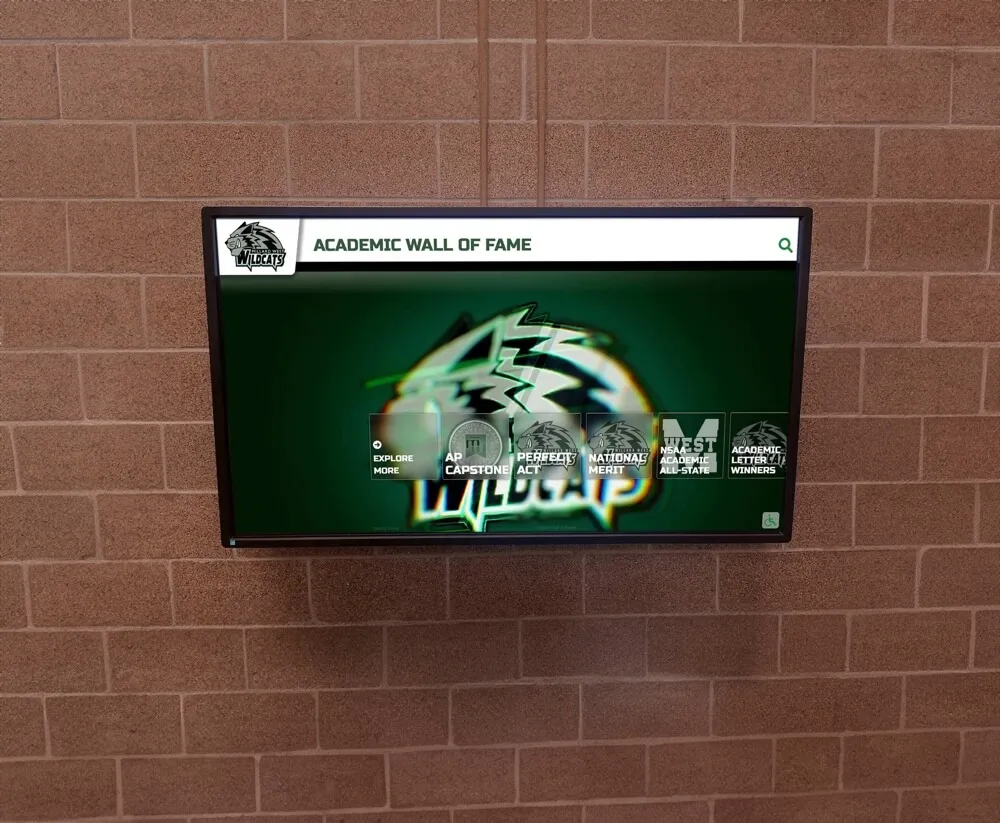
Modern digital displays provide the perfect platform for honoring perfect SAT achievers with the prominence this rare accomplishment deserves
Understanding Perfect SAT Score Achievement
Before designing recognition programs, schools should understand the significance and rarity of perfect SAT scores in context.
The Rarity of Perfection
According to College Board data, approximately 1.7 million students take the SAT annually. Among these test-takers, only 300-500 students achieve a perfect 1600 score each year, making this accomplishment extraordinarily rare:
Statistical Context
- Only 0.03% of test-takers achieve a perfect score
- Fewer than one in 3,000 students reach this milestone
- Perfect scores place students in the 99th percentile nationally
- The achievement requires mastery across both Evidence-Based Reading/Writing and Math sections
- Students must answer nearly every question correctly given the scaled scoring system
This extreme rarity makes perfect SAT scores worthy of special recognition beyond general honor roll or academic achievement acknowledgments.
What Perfect Scores Represent
Beyond the numerical achievement, perfect SAT scores demonstrate multiple dimensions of academic excellence:
Comprehensive Academic Mastery
- Deep understanding across mathematics, reading comprehension, and written analysis
- Ability to apply knowledge under timed test conditions
- Exceptional problem-solving and critical thinking capabilities
- Strong test-taking strategies and mental stamina
- Consistent academic preparation and dedication
Competitive College Positioning
- Automatic consideration at most selective universities
- Significant scholarship opportunities at many institutions
- Competitive advantage in admissions at top-tier programs
- Enhanced application profiles for specialized programs
- Recognition from national scholarship organizations
Learn more about comprehensive approaches to academic recognition programs that honor diverse achievements.

Individual recognition profiles allow schools to tell complete stories behind perfect score achievements
The Motivational Impact of Recognition
Research demonstrates that visible academic recognition creates powerful motivational effects throughout school communities:
Peer Influence
- Public recognition normalizes academic excellence as desirable
- Visible achievement creates positive peer pressure for academic performance
- Recognition demonstrates that exceptional accomplishment receives institutional celebration
- Students see concrete examples of achievable excellence
- Academic role models become visible within school culture
Cultural Transformation Schools that prominently display academic achievements report:
- Increased student engagement with test preparation resources
- Higher enrollment in academically challenging courses
- Improved overall academic climate and achievement orientation
- Reduced stigmatization of academic excellence
- Enhanced family engagement with educational priorities
This cultural impact extends far beyond individual recognition recipients, influencing entire student populations and creating environments where intellectual achievement becomes aspirational.
Designing Effective Perfect SAT Score Recognition Programs
Creating meaningful recognition requires systematic approaches that balance prominence, permanence, and inspiration.
Recognition Criteria and Standards
Schools should establish clear guidelines for perfect SAT score recognition:
Official Score Verification
- Require official College Board score reports
- Verify student enrollment at time of achievement
- Document test date and score details
- Maintain confidential records of achievements
- Establish submission deadlines for recognition consideration
Recognition Eligibility Schools should determine specific policies including:
- Whether to recognize single-sitting scores only or superscores
- Time period during high school career when achievement counts
- Requirements for school enrollment duration
- Policies for students who transfer mid-year
- Retroactive recognition for historical achievers
Multiple Attempt Recognition Clarify whether recognition acknowledges:
- First-time perfect scores only
- Any perfect score regardless of previous attempts
- Highest cumulative superscore
- Multiple perfect scores by same student
Explore related approaches in perfect ACT score recognition programs for comprehensive standardized test achievement celebration.
Recognition Timing and Announcement
Strategic timing maximizes recognition impact:
Immediate Acknowledgement
- Morning announcements on the day scores release
- Personal congratulations from administrators
- Social media posts celebrating achievement
- Email notifications to school community
- Local media notifications for community recognition
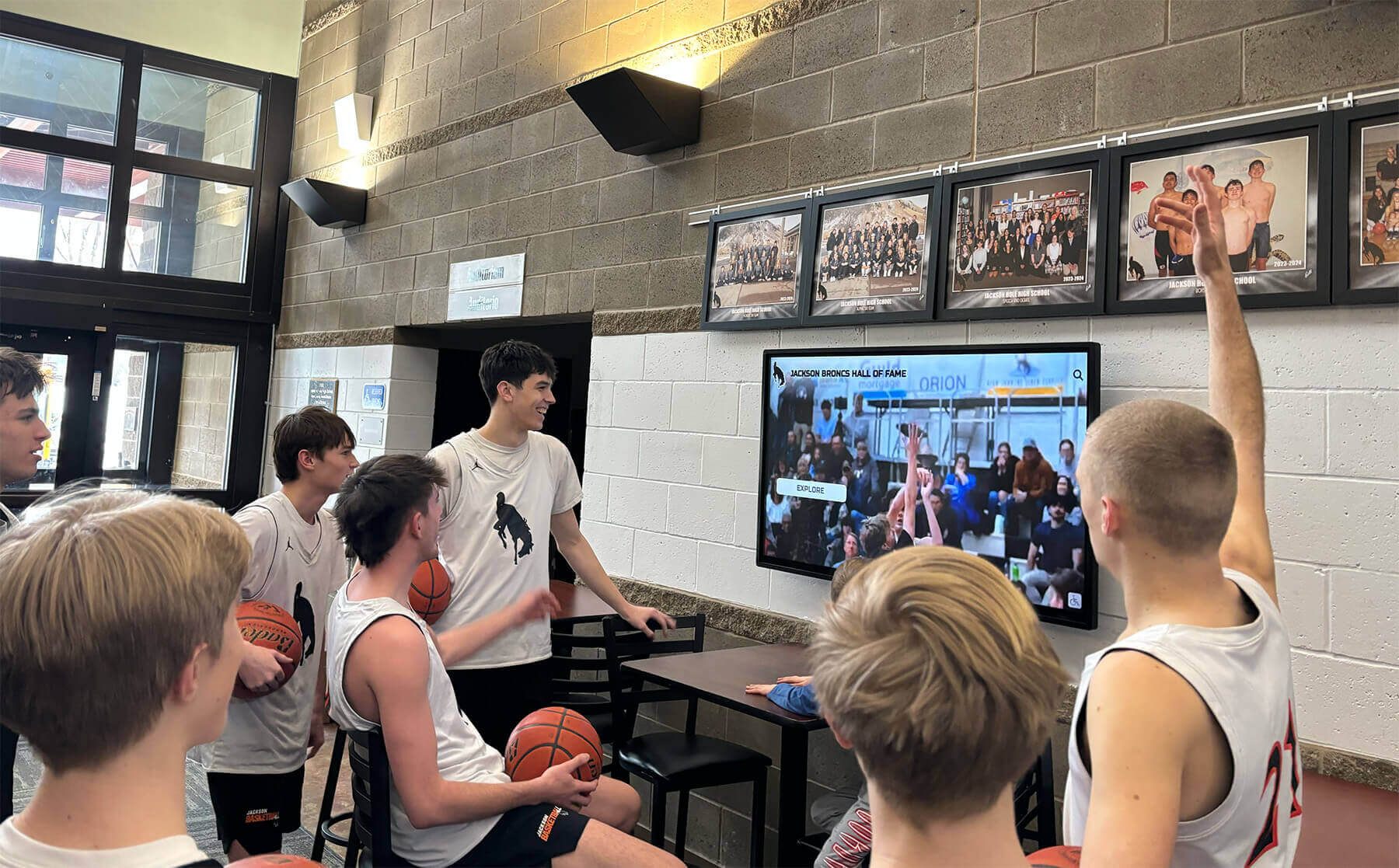
Interactive displays create opportunities for students to explore academic achievements and connect with excellence culture
Formal Recognition Events
- Recognition at quarterly academic award ceremonies
- Special acknowledgment at honors assemblies
- Inclusion in senior award night programs
- Feature in graduation ceremony recognition
- Invitation to school board meetings for formal recognition
Permanent Display Addition The most lasting recognition comes through permanent display systems that showcase perfect SAT achievers alongside other exceptional academic accomplishments.
Traditional vs. Modern Recognition Display Solutions
Schools face choices between traditional physical displays and modern digital recognition systems.
Traditional Recognition Approaches
Conventional methods include several options with varying degrees of permanence:
Physical Plaques and Trophy Cases Traditional recognition typically features:
- Engraved name plaques mounted on recognition boards
- Individual achievement certificates displayed in frames
- Addition to existing academic achievement trophy cases
- Wall-mounted recognition boards in hallways or offices
- Perpetual plaque systems with annual name additions
Limitations of Traditional Systems Physical displays face inherent constraints:
- Limited space requiring removal of older recognition
- High ongoing costs for professional engraving and mounting
- Static information with minimal context or details
- Difficulty updating or correcting errors
- Maintenance challenges including cleaning and repair
- Visibility limitations in specific physical locations
- No interactivity or ability to explore achievement details
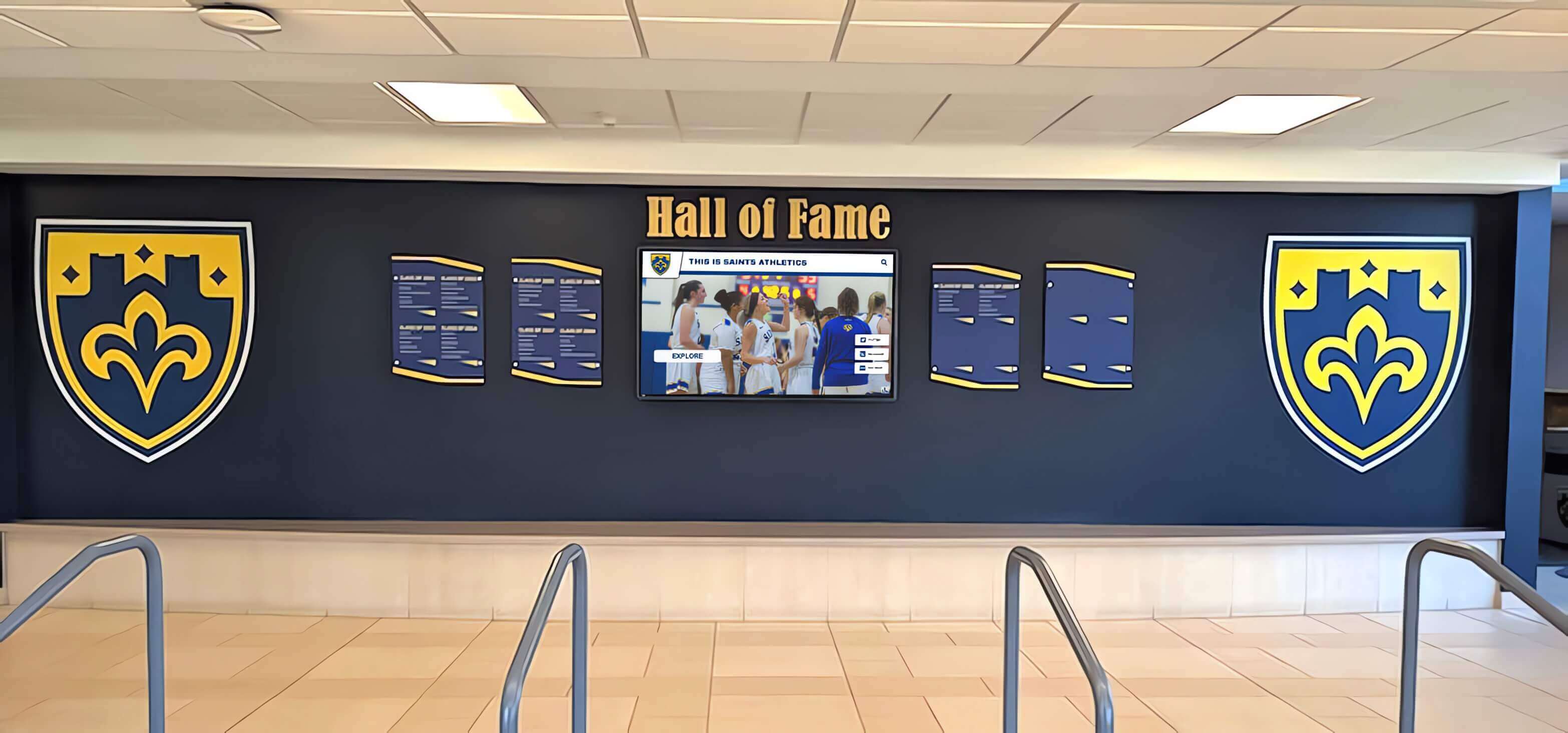
Many schools are blending traditional physical elements with digital displays for comprehensive recognition
Modern Digital Recognition Solutions
Digital display systems offer transformative advantages for perfect SAT score recognition:
Interactive Touchscreen Displays Solutions like Rocket Alumni Solutions provide:
- Unlimited recognition capacity without space constraints
- Rich multimedia profiles including photos, achievement details, and personal stories
- Interactive exploration enabling students to discover inspirational examples
- Search and filter functionality making specific achievers easily discoverable
- Dynamic updates without physical modification costs
- Integration with other academic achievement recognition
- Web accessibility extending reach beyond physical campus
Content Management Simplicity Modern platforms eliminate traditional update barriers:
- Cloud-based management from any internet-connected device
- Simple form-based interfaces requiring no technical expertise
- Batch import capabilities for historical achievements
- Scheduled publishing for automatic recognition updates
- Version control and error correction capabilities
- Multiple administrator access with role-based permissions
Learn about comprehensive digital approaches in digital recognition display solutions that transform academic acknowledgment.

Touchscreen interfaces make exploring academic achievements engaging and intuitive for students
Creating Compelling Perfect SAT Score Profiles
The depth and quality of recognition content significantly impacts motivational effectiveness.
Essential Profile Elements
Comprehensive recognition profiles should include:
Basic Achievement Information
- Student name and graduation year
- Perfect SAT score (1600) with test date
- Section scores (800 Evidence-Based Reading/Writing, 800 Math)
- Number of attempts or single-sitting achievement
- School enrollment period during achievement
Personal Context Rich profiles provide inspirational details:
- Current photo of the student
- Academic interests and strongest subjects
- Extracurricular activities and leadership roles
- Career aspirations and intended college major
- Colleges ultimately attended (for historical recognition)
- Current career accomplishments (for alumni achievers)
Achievement Context Help students understand the path to success:
- Preparation strategies and study approaches used
- Courses taken that supported preparation
- Challenges overcome during preparation
- Time invested in preparation process
- Advice for students pursuing similar goals
- Teachers or mentors who provided important support
Explore related academic achievement recognition in honor roll digital recognition programs for comprehensive approaches.
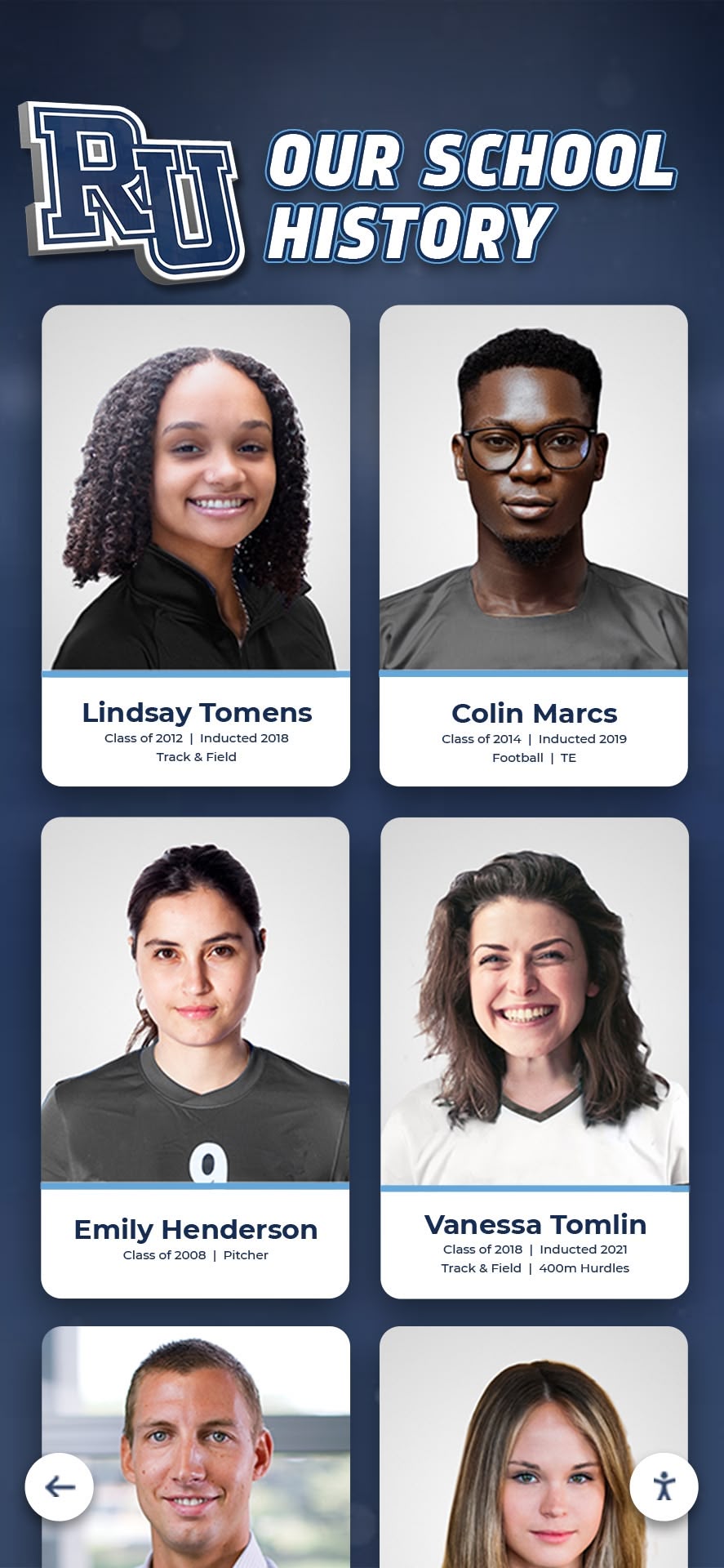
Comprehensive recognition systems document achievement journeys and provide context that inspires future students
Storytelling Elements That Inspire
The most impactful recognition goes beyond basic facts to tell meaningful stories:
Journey Narratives Profiles should capture:
- Initial diagnostic test scores showing growth achieved
- Specific study habits and preparation routines
- Moments of breakthrough understanding
- How students balanced test prep with other commitments
- Impact of achievement on college admissions and scholarship outcomes
Video Testimonials Digital platforms enable rich multimedia content:
- Short video interviews with perfect score achievers
- Advice directly to current students pursuing excellence
- Reflections on what the achievement meant personally
- Discussion of how accomplishment affected educational trajectory
- Updates from college showing continued academic success
Teacher Perspectives Include recognition of educators who supported achievement:
- Quotes from teachers about student’s academic journey
- Recognition of specific instructional support provided
- Acknowledgment of courses that built essential skills
- Celebration of teacher-student partnerships in achievement
This comprehensive storytelling transforms recognition from static acknowledgment to inspirational educational resource.
Integrating Perfect SAT Recognition Into Broader Academic Programs
Perfect SAT scores should fit within comprehensive academic recognition frameworks.
Multi-Tiered Academic Recognition Systems
Create recognition hierarchies that honor diverse achievements:
Pinnacle Academic Recognition Reserve highest prominence for rarest achievements:
- Perfect SAT scores (1600)
- Perfect ACT scores (36)
- National Merit Scholars
- Presidential Scholar Program recipients
- Perfect GPA maintenance across high school career
- International academic olympiad medalists
These achievements receive dedicated display space, special ceremony recognition, and permanent institutional commemoration.
Exceptional Academic Achievement Second-tier recognition for outstanding accomplishments:
- SAT scores of 1500-1590
- ACT scores of 34-35
- National Merit Finalist designation
- AP Scholar with Distinction awards
- State-level academic competition championships
- Cumulative GPA above 4.0 weighted
Learn about comprehensive approaches in AP Scholar awards recognition programs that celebrate advanced academic achievement.
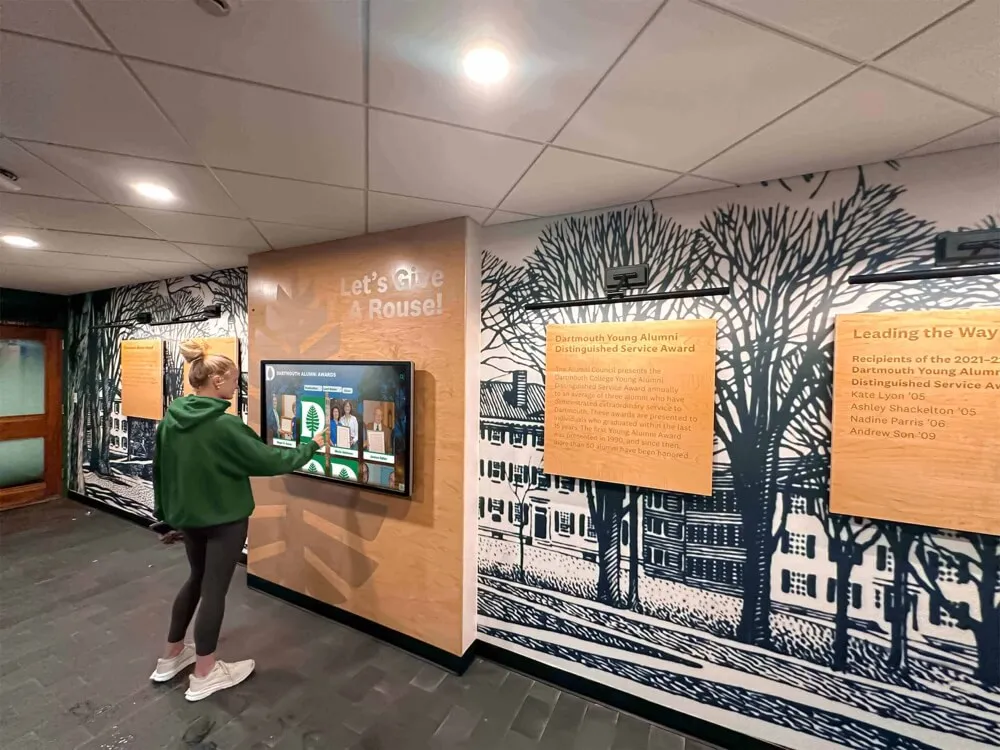
Strategic placement of recognition displays in high-traffic areas maximizes visibility and engagement
Strong Academic Performance Broader recognition ensuring multiple achievement opportunities:
- Honor roll qualification (various GPA thresholds)
- Subject-specific achievement awards
- Academic improvement recognition
- Standardized test score milestones
- Course-specific excellence acknowledgments
This tiered approach maintains special significance for perfect scores while ensuring recognition opportunities exist for students across achievement levels.
Connecting Recognition to School Culture
Perfect SAT score recognition should reinforce broader academic values:
Academic Excellence Traditions Build institutional culture through:
- Annual academic awards ceremonies highlighting perfect scores
- Permanent recognition galleries in prominent locations
- Yearbook sections dedicated to academic achievement
- Senior recognition nights celebrating intellectual accomplishments
- Alumni networking connecting current students with successful graduates
Mentorship Opportunities Leverage perfect score achievers as resources:
- Peer tutoring programs led by high achievers
- Test preparation workshops featuring successful students
- Study group facilitation by students with proven results
- Admissions guidance sharing application experiences
- Alumni connections for current students pursuing similar paths
Explore related engagement approaches in academic excellence programs that build achievement-oriented school cultures.
Implementation Strategies for Perfect SAT Recognition Displays
Successfully launching recognition programs requires careful planning and execution.
Digital Display Selection and Placement
Strategic decisions maximize recognition visibility and impact:
Display Hardware Considerations
- Screen size appropriate for viewing distance (typically 43"-55")
- Commercial-grade displays rated for continuous operation
- Touchscreen capabilities enabling interactive exploration
- Mounting options (wall-mounted, freestanding kiosk, recessed)
- Resolution supporting high-quality images and video content
Optimal Placement Locations Position displays in high-traffic areas ensuring maximum visibility:
- Main entrance lobbies and reception areas
- Guidance and college counseling office areas
- Library and media center locations
- Academic hallways near main classrooms
- Auditorium and assembly spaces
- Areas where prospective students and families visit
Visibility and Accessibility Ensure displays meet functional requirements:
- Appropriate viewing height for standing interaction
- ADA-compliant approach space and mounting
- Adequate lighting without screen glare
- Clear sightlines from multiple approach angles
- Proximity to electrical and network connections
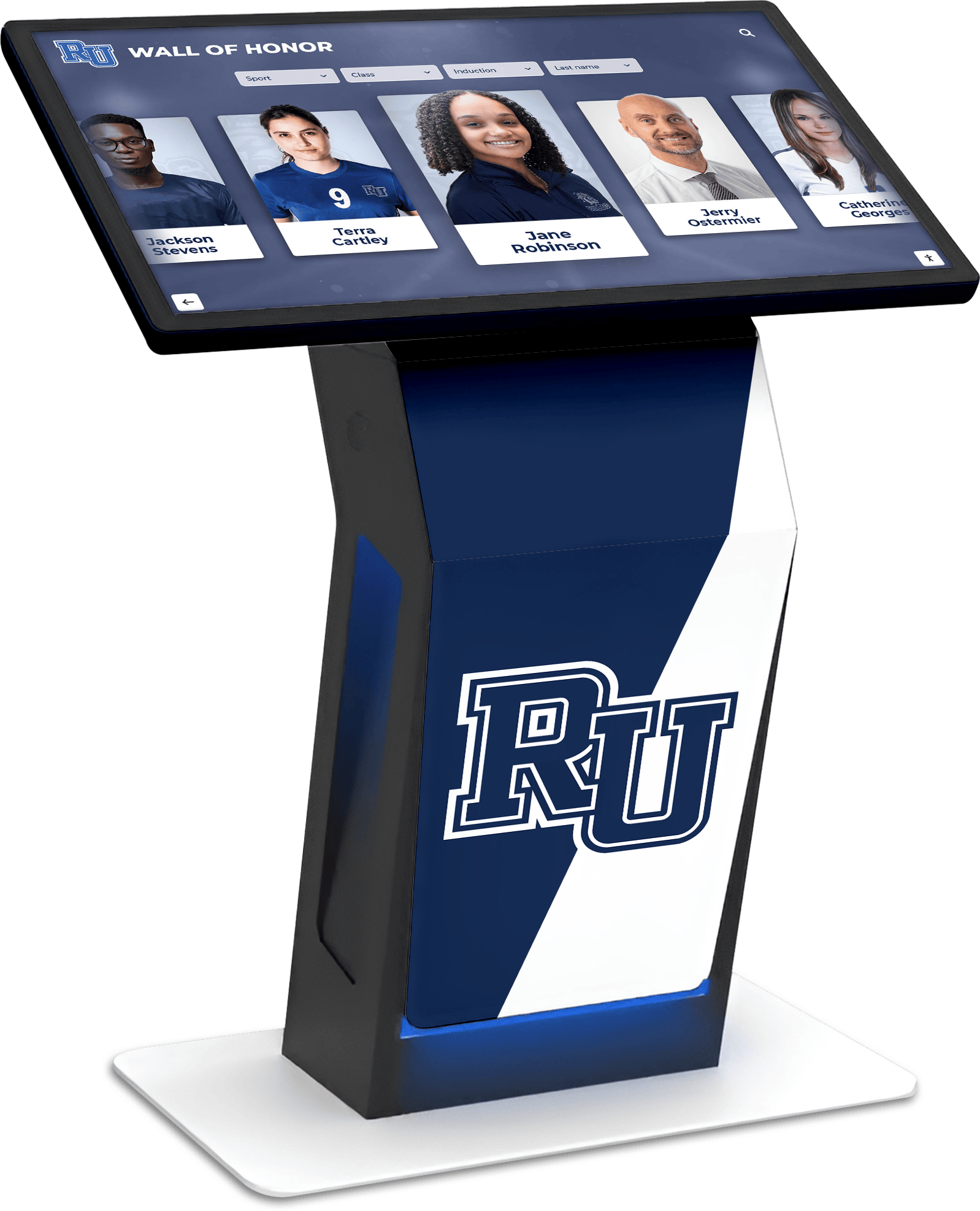
Freestanding kiosks provide flexible placement options and prominent visibility for academic recognition
Content Development and Organization
Thoughtful content structure creates effective recognition experiences:
Recognition Category Organization Organize content for intuitive navigation:
- Dedicated perfect SAT score section within academic recognition
- Chronological organization by graduation year
- Alphabetical sorting options
- Search functionality by student name
- Filter capabilities by achievement year or other criteria
Historical Achievement Integration Build comprehensive recognition including:
- Retroactive recognition of historical perfect scores
- Alumni achievement updates showing post-graduation success
- Decade-by-decade achievement highlights
- Statistical trends showing institutional academic growth
- Connections between perfect scorers across graduating classes
Complementary Achievement Categories Include related recognition creating comprehensive academic display:
- Perfect ACT score achievers (36)
- National Merit Scholars and Finalists
- AP Scholar award recipients
- Subject-specific academic competition champions
- Valedictorians and salutatorians
- Academic scholarship recipients
Learn about effective content planning in digital hall of fame content strategies for engaging recognition programs.
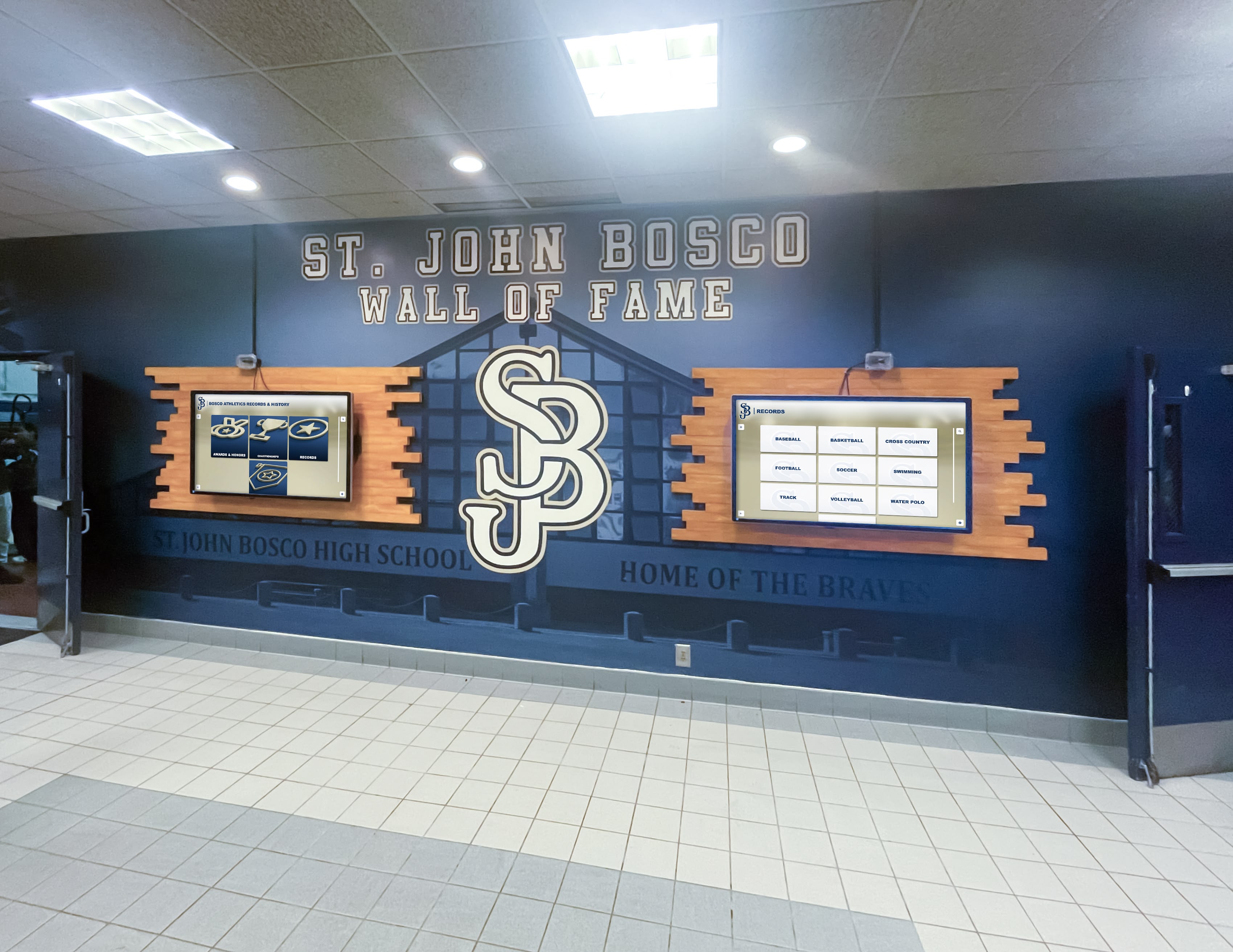
Multiple displays can separate athletic and academic recognition while maintaining integrated systems
Launch and Promotion Strategies
Maximize recognition program impact through strategic launch:
Launch Event Planning
- Ceremonial unveiling ceremony for new display
- Invitation to all historical perfect score achievers
- Media coverage of recognition initiative
- School board and administration participation
- Student and family celebration opportunities
Ongoing Communication Sustain awareness through multiple channels:
- Morning announcements highlighting recent additions
- Social media posts featuring recognition profiles
- Newsletter articles celebrating perfect score achievements
- Website integration providing online access
- Email notifications to families when new recognition appears
Annual Recognition Traditions Create sustainable celebration patterns:
- Annual academic awards ceremony highlighting new perfect scores
- Recognition assembly celebrating all academic achievements
- Senior awards night dedicating time to standardized test excellence
- Alumni events reconnecting historical achievers with school
- Community recognition through local media partnerships
Cost Considerations and Return on Investment
Schools should understand financial implications and value of recognition investments.
Implementation Investment
Initial System Costs Digital recognition display investments typically include:
- Display hardware (commercial touchscreen): $3,000-$8,000
- Content management software licensing: $1,500-$3,500 annually
- Professional installation and mounting: $500-$2,000
- Initial content development and migration: $1,000-$3,000
- Network infrastructure if needed: $500-$1,500
- Training and implementation support: $500-$1,000
Total initial investment typically ranges from $7,000-$19,000 depending on display size, features, and installation complexity.
Ongoing Operational Costs
- Annual software licensing and support: $1,500-$3,500
- Content updates and maintenance: minimal with cloud-based systems
- Occasional hardware maintenance: $200-$500 annually
- Electricity costs: approximately $50-$100 annually
- Content photography and media production: variable
Compare this to traditional recognition approaches requiring $200-$500 per engraved plaque, ongoing mounting costs, and physical space renovation expenses.
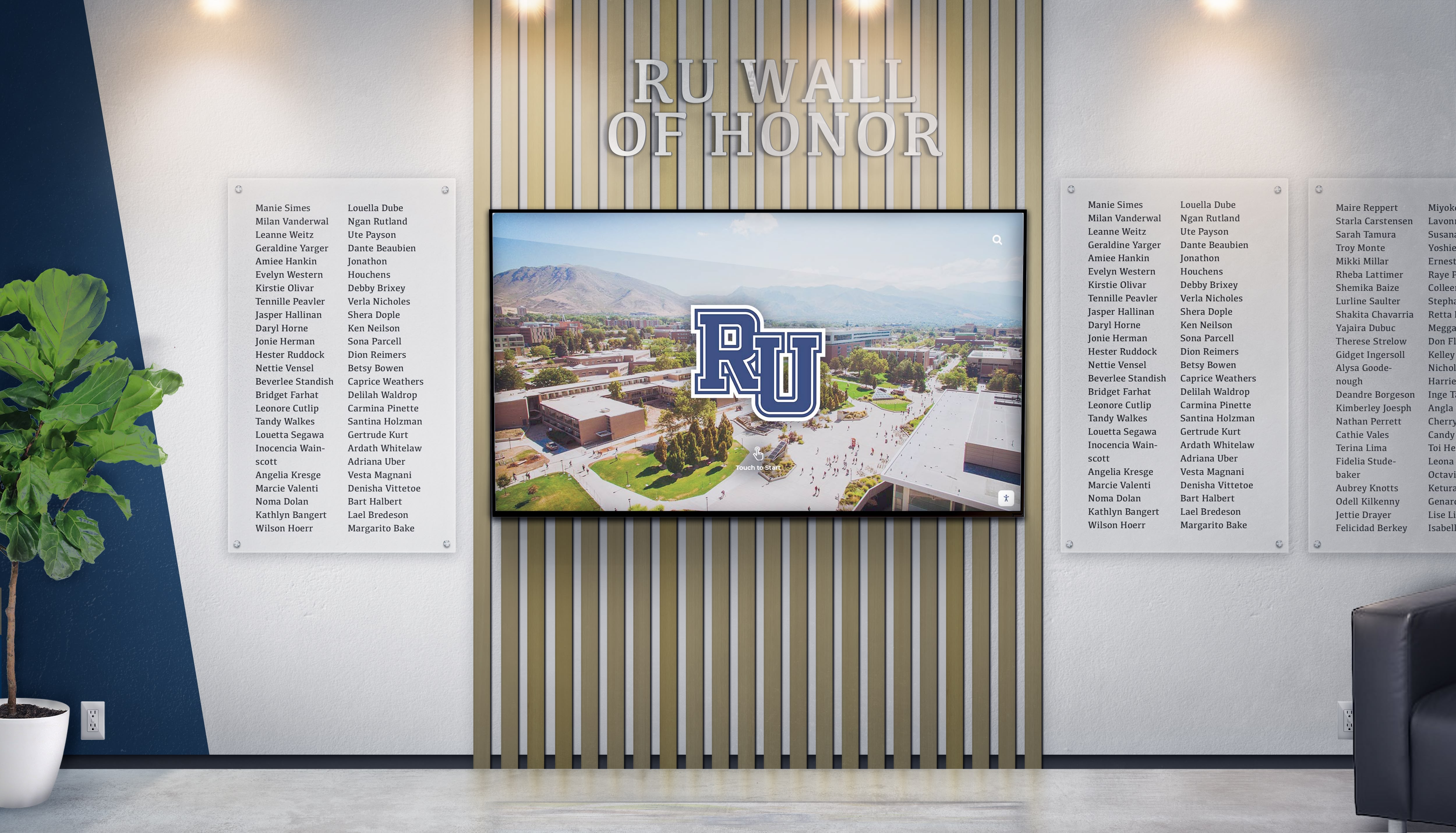
Integrated systems combine digital displays with traditional physical elements for comprehensive recognition
Return on Investment
Digital recognition systems deliver value across multiple dimensions:
Intangible Benefits
- Enhanced school culture emphasizing academic excellence
- Increased student motivation toward achievement
- Improved family perception of academic priorities
- Alumni engagement through historical recognition
- Community reputation as achievement-oriented institution
Measurable Outcomes Schools implementing prominent academic recognition report:
- Increased enrollment in advanced coursework
- Higher participation in test preparation programs
- Improved overall SAT/ACT score averages
- Enhanced college admissions outcomes
- Greater scholarship award totals
Administrative Efficiency Digital systems save significant staff time:
- 85% reduction in recognition update time versus traditional methods
- Elimination of physical plaque ordering and installation coordination
- Simplified error correction and information updates
- Reduced physical space management requirements
- Streamlined recognition program administration
Explore comprehensive digital solutions in digital recognition board platforms that maximize recognition program efficiency.
Perfect SAT Recognition Best Practices
Successful programs share common characteristics that maximize impact.
Recognition Program Guidelines
Timing Considerations
- Recognize achievements within 2-4 weeks of score release
- Coordinate recognition announcements with academic calendar
- Plan formal recognition for established ceremony dates
- Update displays promptly ensuring current achievement visibility
- Schedule annual review of historical recognition accuracy
Privacy and Consent Respect student preferences regarding public recognition:
- Obtain signed consent before displaying student information
- Provide opt-out options for students preferring privacy
- Offer anonymous recognition alternatives if requested
- Clearly communicate what information will be displayed publicly
- Respect family photography preferences
Accuracy Verification Maintain recognition program credibility through:
- Official score report verification before recognition
- Careful proofreading of all displayed information
- Regular audits of historical achievement accuracy
- Prompt correction processes for any errors
- Documentation systems tracking verification dates
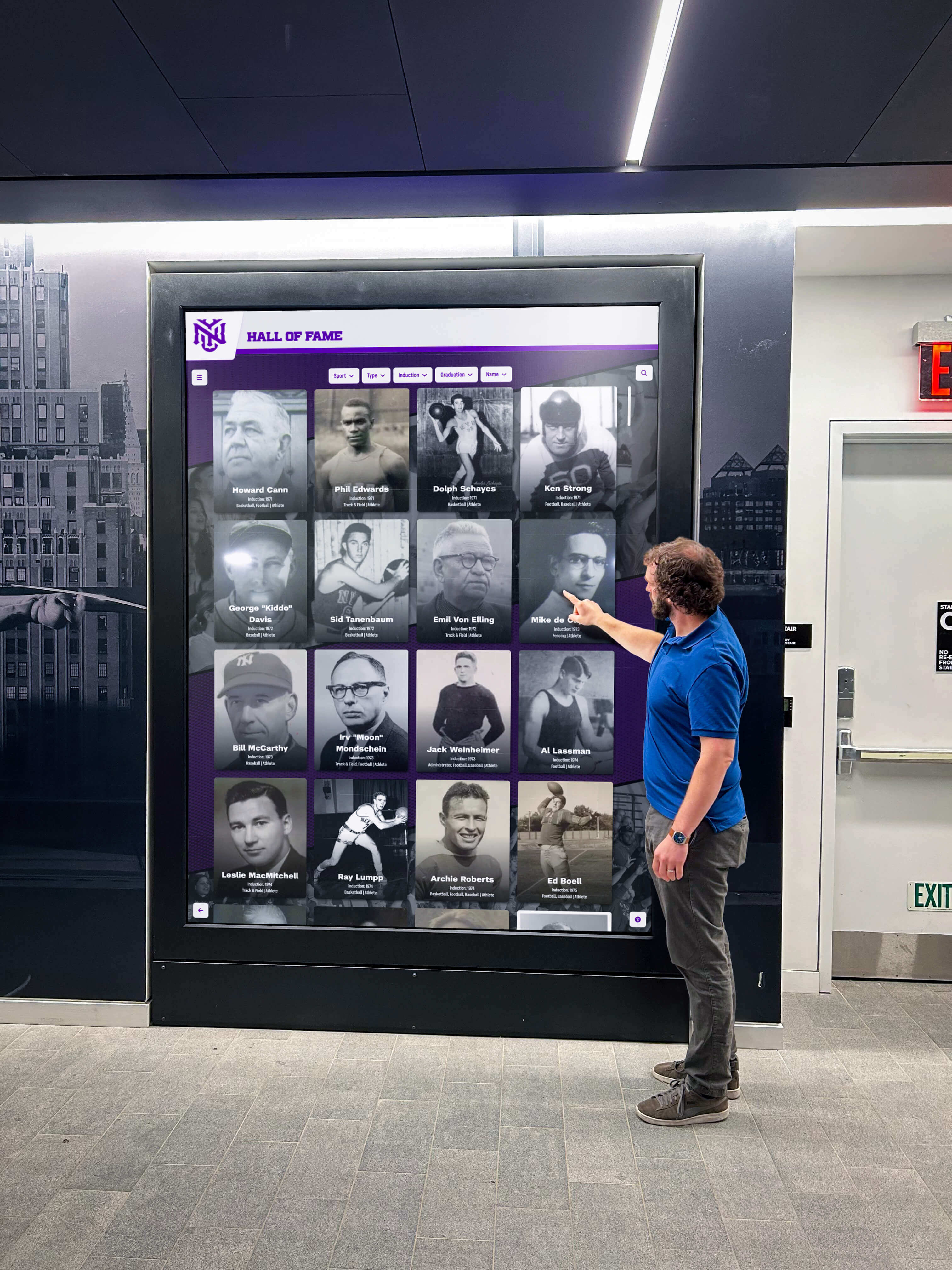
Interactive displays enable families and community members to explore and celebrate academic excellence
Equitable Recognition Approaches
Ensure recognition programs support all students:
Multiple Achievement Pathways Perfect SAT recognition should exist within frameworks acknowledging:
- Diverse academic strengths beyond standardized testing
- Growth and improvement from various starting points
- Subject-specific excellence in individual disciplines
- Career and technical education achievements
- Arts, music, and performance accomplishments
Learn about comprehensive recognition in academic recognition programs that honor diverse student achievements.
Accessibility Considerations Recognition displays should incorporate:
- Physical accessibility meeting ADA requirements
- Screen reader compatibility for visual accessibility
- Multilingual content options for diverse communities
- Mobile access for remote viewing
- High-contrast viewing modes for visual clarity
Test-Optional Context As more colleges adopt test-optional policies, schools should:
- Recognize that perfect scores remain impressive achievements worthy of celebration
- Acknowledge that standardized test achievement represents one dimension of academic excellence
- Maintain balanced recognition honoring diverse student accomplishments
- Avoid creating perception that test scores are only valued achievement
- Celebrate students who excel through alternative assessment methods
Extending Recognition Beyond Campus
Modern recognition extends impact beyond physical campus boundaries.
Web-Based Recognition Platforms
Digital recognition should integrate online accessibility:
Website Integration Connect recognition displays with school websites:
- Embedded web versions of physical displays
- Mobile-responsive design ensuring accessibility across devices
- Search engine optimization making achievements discoverable
- Social sharing capabilities enabling students to celebrate accomplishments
- Alumni directories connecting historical achievers with current students
Social Media Amplification Maximize recognition visibility through:
- Dedicated posts celebrating each perfect score achievement
- Instagram and Facebook features with student photos and stories
- Twitter announcements reaching broader communities
- LinkedIn recognition supporting professional networking
- YouTube testimonials and advice videos from achievers
Explore comprehensive online approaches in digital recognition platforms that extend campus recognition globally.

Web accessibility ensures recognition reaches alumni, families, and community members worldwide
Alumni Engagement Opportunities
Perfect SAT score recognition creates powerful alumni connection opportunities:
Historical Achievement Updates Maintain ongoing relationships with achievers:
- Request periodic updates on college and career accomplishments
- Feature “where are they now” profiles of historical perfect scorers
- Create networking connections between current students and accomplished alumni
- Invite alumni achievers to speak at recognition ceremonies
- Document how perfect scores influenced educational and career trajectories
Mentorship Programs Leverage successful alumni as resources:
- One-on-one mentoring pairing current students with alumni achievers
- Virtual advising sessions on test preparation strategies
- College selection guidance from alumni who navigated similar decisions
- Career pathway insights from professionally successful alumni
- Alumni panels at academic excellence events
Giving Circles Perfect score alumni represent potential philanthropic partners:
- Scholarship endowments supporting academically talented students
- Test preparation resource donations
- Funding for academic recognition displays and programs
- Support for academic competition participation costs
- Equipment donations for STEM and academic programs
Learn about comprehensive alumni strategies in alumni engagement programs that leverage recognition for lasting connections.
Combining Perfect SAT Recognition With Other Academic Honors
The most effective recognition systems celebrate comprehensive academic excellence.
Integrated Academic Achievement Displays
Create unified recognition platforms featuring:
Standardized Test Excellence
- Perfect SAT scores (1600)
- Perfect ACT scores (36)
- SAT Subject Test perfect scores
- AP exam perfect scores (5)
- State assessment proficiency achievements
National Recognition Programs
- National Merit Scholars and Finalists
- Presidential Scholars
- College Board National Recognition Programs
- USA Academic Team members
- Academic All-Americans
Competition Achievements
- Science Olympiad medals and championships
- Math competition success (AMC, AIME, USAMO)
- Academic Decathlon achievements
- National History Day awards
- Speech and Debate national qualifications
Academic Society Memberships
- National Honor Society
- Subject-specific honor societies
- State scholar programs
- Governor’s scholar designations
- University scholar program participants
Explore comprehensive recognition in student achievement showcases that honor diverse accomplishments.
Unified recognition systems celebrate diverse academic achievements while maintaining special prominence for rarest accomplishments
Balancing Athletic and Academic Recognition
Schools should ensure intellectual achievement receives visibility comparable to athletic success:
Physical Space Allocation
- Dedicate equivalent or greater hallway space to academic recognition
- Position academic displays in equally prominent locations
- Ensure academic achievements receive main entrance visibility
- Create academic recognition areas matching athletic trophy room prominence
- Allocate resources proportionally to athletic recognition investments
Ceremony Equivalency
- Establish academic awards ceremonies matching athletic banquet prominence
- Dedicate assembly time to academic achievement celebration
- Create traditions around academic excellence comparable to pep rallies
- Invite families to academic recognition events
- Provide similar refreshments, decorations, and ceremony formality
Administrative Priority
- Assign staff responsibility for academic recognition equivalent to athletic recognition
- Budget for academic recognition programs matching athletic recognition
- Market academic achievements through channels equivalent to athletic promotion
- Train staff on academic recognition importance and implementation
- Evaluate administrators on academic culture development
This balanced approach ensures schools genuinely value academic and athletic achievement equally rather than providing token acknowledgment of intellectual accomplishment.
Conclusion: Building Achievement-Oriented Culture Through Recognition
Perfect SAT score recognition represents more than acknowledging individual accomplishment—it creates powerful opportunities to build achievement-oriented school cultures where intellectual excellence receives the visibility, celebration, and aspiration it deserves. When schools systematically honor the rarest academic achievements through prominent, permanent, and inspirational displays, they send clear messages about institutional values while creating motivational examples that influence entire student populations.
The strategies explored in this guide provide comprehensive frameworks for creating recognition programs that honor perfect SAT achievers while connecting these exceptional accomplishments to broader academic excellence initiatives. From digital recognition displays that eliminate space constraints to integrated systems celebrating diverse achievements, these approaches transform academic recognition from occasional ceremonial gestures to systematic celebration woven throughout institutional culture.
Transform Your Academic Recognition Program
Discover how modern digital recognition solutions can help you celebrate perfect SAT scores and all forms of academic achievement while building a thriving culture of intellectual excellence.
Explore Recognition SolutionsModern recognition technology makes comprehensive academic celebration achievable without the space constraints, update burdens, and visibility limitations of traditional displays. Solutions like Rocket Alumni Solutions provide schools with platforms that honor unlimited achievements through interactive touchscreen displays, cloud-based management systems requiring no technical expertise, and web accessibility extending recognition beyond physical campus to engage families and alumni worldwide.
Start by recognizing your current and historical perfect SAT achievers through whatever means are immediately available, then systematically develop recognition programs that match the rarity and significance of this exceptional accomplishment. Consider how permanent recognition displays can showcase not just names and scores but complete achievement stories that inspire current students while honoring individual excellence.
Perfect SAT scores represent the pinnacle of standardized test achievement—recognition programs should reflect this significance through prominence, permanence, and inspiration that motivates future students while celebrating current accomplishment. With thoughtful planning, appropriate technology, and sustained commitment, schools can create recognition traditions that honor intellectual excellence while building achievement-oriented cultures where academic success becomes genuinely celebrated.
Ready to begin? Explore academic honor roll recognition approaches or learn more about senior composite displays that can incorporate perfect score achievement alongside other academic honors.































