Pickleball has exploded from niche recreational activity to America’s fastest-growing sport, with participation increasing across every age group from middle school physical education programs to competitive adult leagues. This rapid growth creates both opportunity and challenge for coaches, program directors, and players themselves—how do you structure effective practice when skill levels range from absolute beginners to tournament-ready competitors?
Effective pickleball drills build fundamental skills systematically while maintaining the engaging, social character that makes the sport so appealing. Whether you’re coaching a high school pickleball club just getting started, running community recreation programs, or training competitive players for tournament play, progressive drill structures create clear pathways from basic competency through advanced techniques.
This comprehensive guide presents pickleball drills organized by skill level, from foundational techniques for complete beginners through sophisticated strategies for tournament preparation. Each drill includes setup instructions, execution details, progression options, and coaching points that help players develop capabilities efficiently while tracking measurable improvement along the way.
The beauty of pickleball lies in its accessibility—beginners can enjoy recreational play almost immediately—while offering substantial skill ceiling for competitive athletes seeking constant improvement. This combination creates unique coaching challenges requiring drill frameworks that engage absolute beginners without boring experienced players practicing alongside them.
Schools and clubs implementing pickleball programs increasingly recognize the importance of tracking player development, from initial skill acquisition through competitive achievements. Many programs now use digital recognition systems to showcase ladder standings, tournament results, and skill progression milestones that motivate continued improvement.
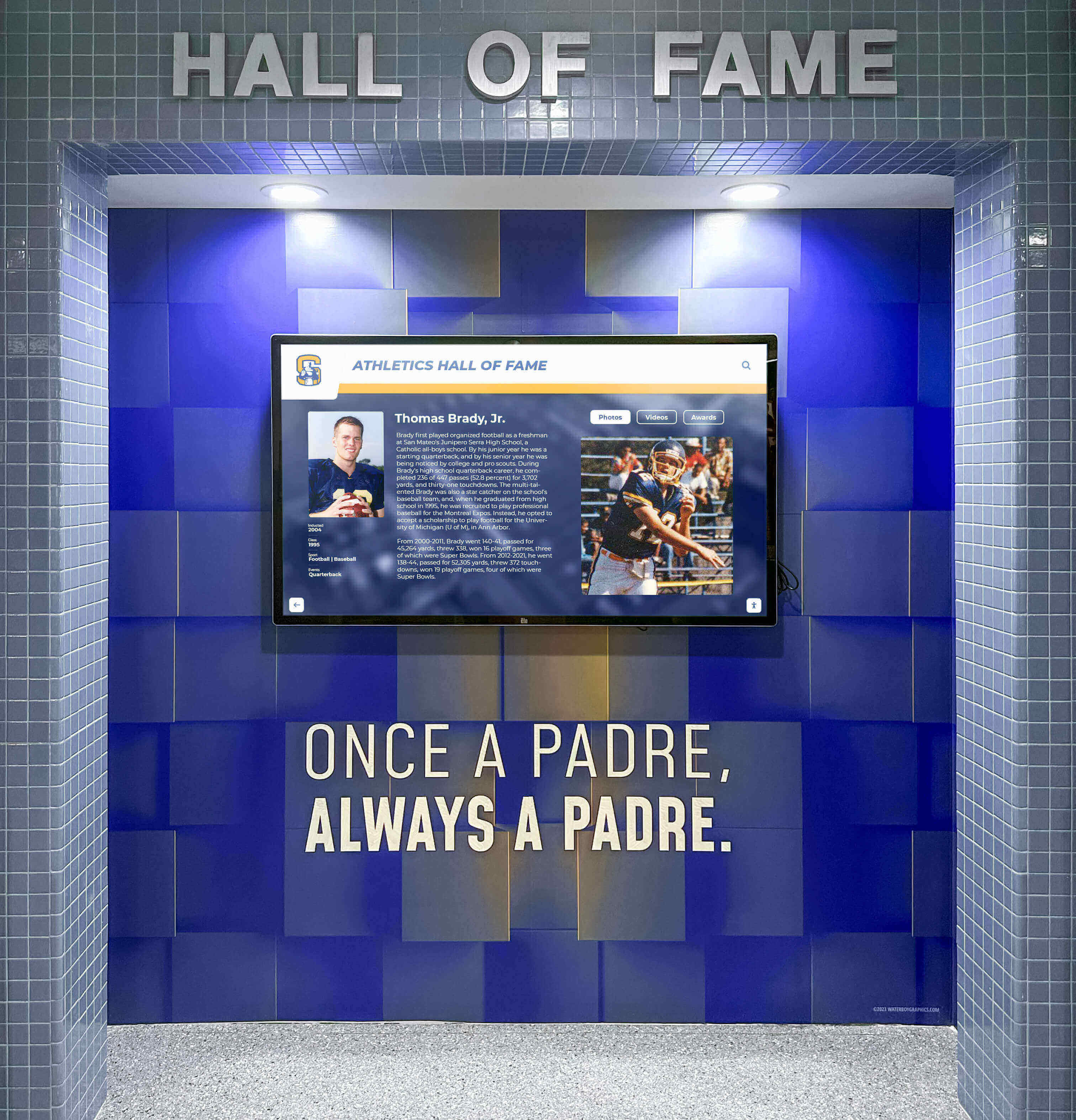
Modern athletic programs use digital displays to track player rankings, tournament results, and skill development across all sports including emerging programs like pickleball
Essential Pickleball Drills for Beginners
Beginning pickleball players need drills that establish fundamental techniques while building confidence through achievable success. These foundational drills create competency in basic shots and court positioning before introducing complex strategies.
Dink Shot Fundamentals
Controlled Dinking Drill:
The dink shot—a soft, controlled shot landing in the opponent’s non-volley zone (kitchen)—represents one of pickleball’s most essential skills. Beginners often hit dinks too hard or with improper technique, creating pop-ups opponents exploit easily.
Setup: Partners position at kitchen lines facing each other across the net (approximately 7 feet from net on each side). Each player starts with paddle at chest height, weight balanced on balls of feet, knees slightly bent.
Execution: Partners rally dinks cross-court, focusing on technique rather than competition. Contact ball at knee-to-waist height with short, compact paddle motion. Use continental grip (paddle face perpendicular to ground). Follow through toward target with minimal backswing.
Progression: After establishing rhythm with 10+ consecutive dinks, progress to straight-ahead dinking. Advance to alternating cross-court and straight-ahead targets. Introduce movement by requiring players to dink then touch sideline before returning to position for next shot.
Coaching Points: Emphasize soft hands and controlled pace—beginners often hit too aggressively. Watch for excessive backswing which reduces control. Teach players to “lift” the ball over net using slight upward paddle angle rather than hitting flat or downward. Proper dinking requires patience and touch that develop through high-repetition practice.
Serve Consistency Development
Target Serving Drill:
Consistent, accurate serving provides foundation for effective pickleball. Beginning players struggle with serve placement, often hitting too hard at expense of accuracy and consistency.
Setup: Mark target zones in diagonal service boxes using cones or court markers. Create three zones: deep (near baseline), mid-depth (middle of service box), and short (near kitchen line). Assign point values to zones (deep = 3 points, mid = 2 points, short = 1 point).
Execution: Players serve 10 consecutive serves from same position, attempting to land balls in designated target zones. Track successful serves and point totals. Serves must clear kitchen and land in diagonal service box to count.
Progression: Reduce target zone size as accuracy improves. Add consequence for missed serves (subtract points or perform conditioning exercise). Progress to serving from both right and left sides. Introduce serve variety including lob serves and drive serves once consistency develops.
Coaching Points: Teach drop-serve as starting point for beginners—ball must bounce before contact, eliminating timing complexity of traditional volley serve. Focus on smooth, controlled motion rather than power. Emphasize follow-through toward target. Common errors include insufficient backswing (reducing power), releasing ball too high or low (affecting contact point), and opening shoulders toward net prematurely (pulling serve wide).
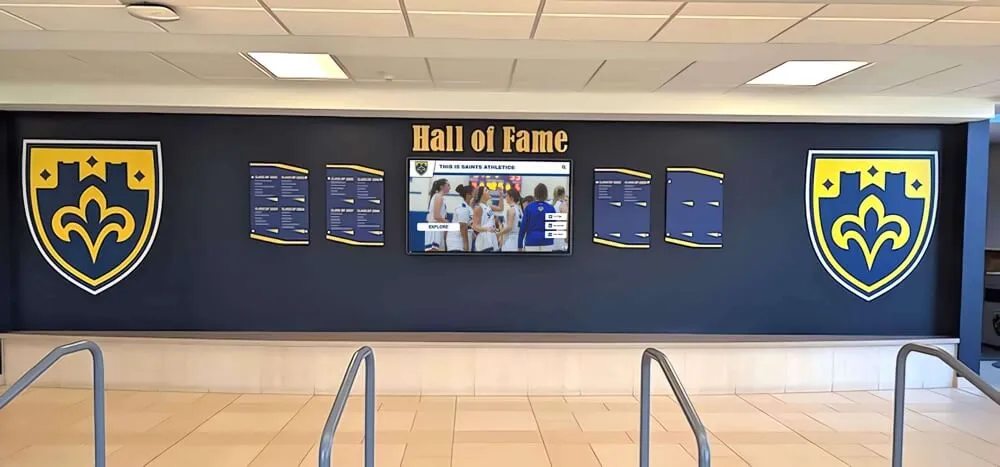
Programs tracking pickleball achievements use recognition displays to showcase ladder leaders, tournament champions, and skill progression milestones
Return of Serve Fundamentals
Deep Return Practice:
Effective service returns create defensive positioning while limiting opponents’ offensive opportunities. Beginning players often return serves short, allowing opponents to attack aggressively.
Setup: One player serves from baseline while partner positions in return stance (feet shoulder-width apart, paddle up, weight forward on balls of feet) in diagonal receiving position. Place target zone extending from baseline to 5 feet inside baseline in server’s court.
Execution: Server delivers medium-pace serves to return player’s service box. Return player focuses on deep, controlled returns landing in target zone. Goal: return ball deep enough that server must hit from baseline or deeper, preventing aggressive third-shot attack.
Progression: Start with consistent, moderate-pace serves. Progress to varying serve speeds and placements. Add scoring system where deep returns earn points while short returns (landing in front of target zone) cost points. Eventually practice returning to specific targets (cross-court deep, straight-ahead deep).
Coaching Points: Emphasize contact point—meeting ball early with slightly open paddle face produces controlled depth. Teach “big target, small swing” concept where players aim deep with compact paddle motion. Common errors include taking too large backswing (reducing control), hitting flat or downward (netting returns), and contacting ball too far back in stance (producing weak, short returns).
Intermediate Pickleball Drills for Skill Development
Once players establish basic shot mechanics and court positioning, intermediate drills develop consistency, shot variety, and strategic decision-making that elevate competitive capability.
Third Shot Drop Mastery
Drop Shot Repetition Drill:
The third shot drop—a soft shot landing in opponent’s kitchen after returning serve—represents pickleball’s signature strategic element. Executing consistent third shot drops separates recreational from competitive players.
Setup: One player positions at baseline (serving team position after serve return). Partner positions at kitchen line (receiving team advantage position). Feeder at kitchen line feeds balls to baseline player simulating return-of-serve scenarios.
Execution: Baseline player executes third shot drops attempting to land ball softly in opponent’s kitchen area. Kitchen player catches or allows successful drops to bounce, returns poorly executed drops (balls landing too high or deep). Baseline player completes 10 consecutive attempts, tracking successful drops landing in kitchen.
Progression: Advance from stationary feeds to moving feeds requiring baseline player to adjust positioning. Progress to live rallies where kitchen player attempts to attack drops landing high while continuing rally on successful low drops. Introduce scoring games (3 points for perfect drop landing low in kitchen, 1 point for marginal drop, -1 point for attackable ball).
Coaching Points: Focus on preparation—getting to ball quickly with paddle back early allows controlled execution. Teach proper contact point at knee-to-waist height with slightly open paddle face. Emphasize smooth acceleration through contact rather than jabbing motion. Common errors include hitting drop too hard (producing attackable ball bouncing high), insufficient arc over net (netting ball), and poor weight transfer (reducing control).
Many competitive pickleball programs track player progress through ladder systems and tournament results, celebrating advancement through skill levels. Schools implementing pickleball recognize these achievements using digital athletic displays that showcase current rankings and tournament performances alongside traditional sports.
Volley Transition Practice
Kitchen Line Volley Drill:
Effective volleying from kitchen line creates offensive pressure and defensive consistency. Players must develop quick hands, proper positioning, and shot placement variety.
Setup: Two players position at kitchen line facing each other. Third player or coach feeds balls from sideline, varying pace, height, and placement.
Execution: Players execute volleys maintaining kitchen line position. Focus on blocking hard shots with firm paddle and minimal backswing, punching volleys downward when opponents create high balls, resetting soft when under pressure. Rally continues until error.
Progression: Start with moderate-pace feeds from predictable locations. Progress to rapid-fire feeds requiring quick reflexes. Add movement requirement where players must touch sideline between volleys. Advance to live rallies where both players work cooperatively to maintain long rally, then competitively trying to force errors.
Coaching Points: Emphasize ready position with paddle up at chest height, weight on balls of feet, knees slightly bent. Teach “punch and block” technique where players use compact paddle motion without excessive backswing. For balls below net height, players should block defensively; for balls above net height, players should punch downward aggressively. Watch for common errors including dropping paddle between shots (eliminating readiness), stepping into kitchen (foot fault), and using excessive motion on volleys (reducing control and quickness).
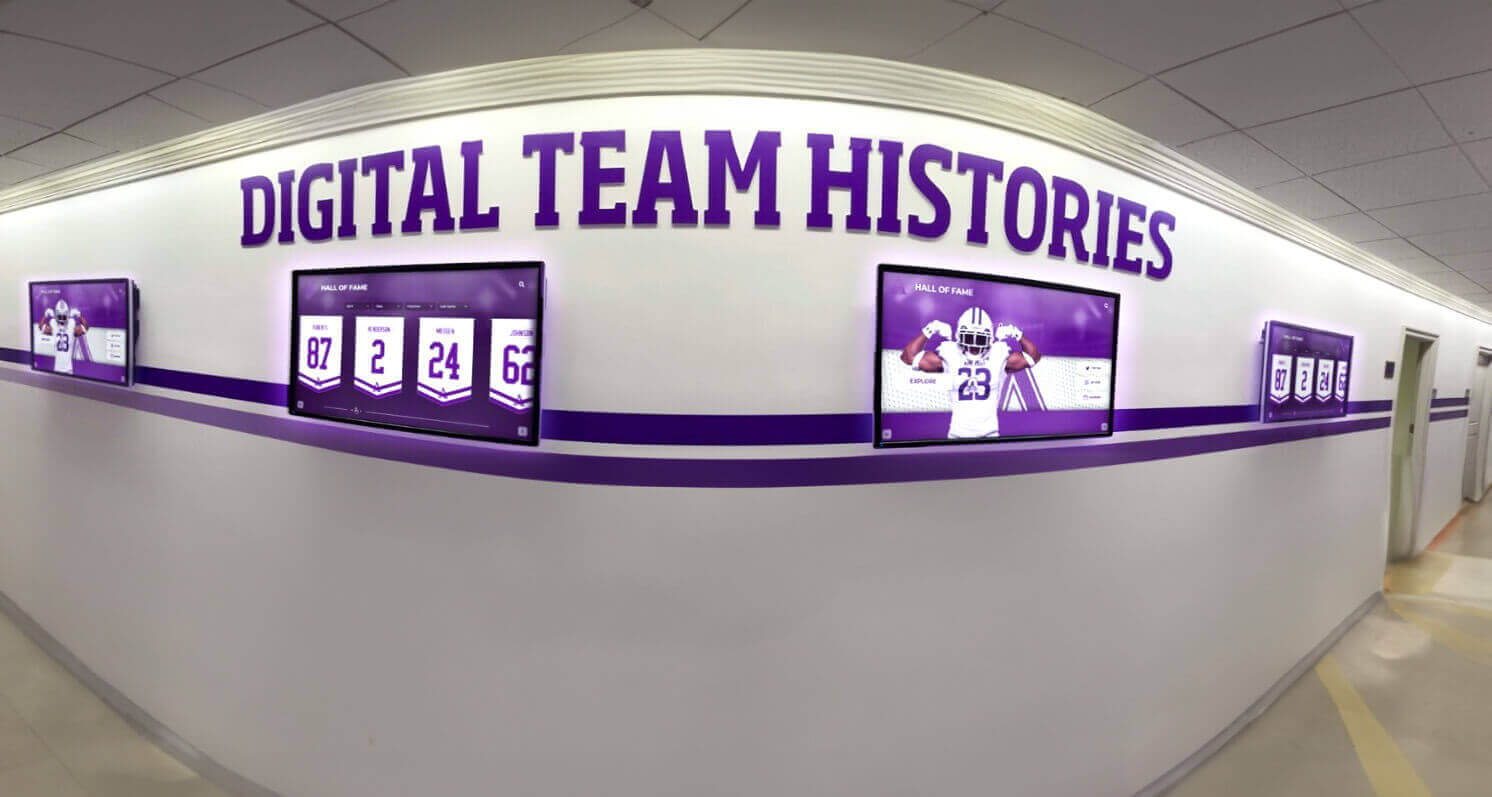
Recognition systems help programs showcase team accomplishments and individual player milestones across all athletic activities
Lateral Movement and Court Coverage
Sideline-to-Sideline Drill:
Effective court coverage requires efficient lateral movement and quick recovery to ready position. Many players develop adequate straight-ahead movement while neglecting side-to-side footwork essential for competitive play.
Setup: Player positions at center of baseline or kitchen line. Partner or coach feeds balls alternating to player’s forehand and backhand sides, progressively wider with each feed.
Execution: Player uses shuffle steps (never crossing feet) to move laterally to ball, executes shot (drop, dink, or drive depending on position), recovers immediately to center position using shuffle steps. Complete 10 consecutive shots, tracking successful returns and proper recovery.
Progression: Increase feed speed requiring faster movement. Add randomization where feeder varies timing and doesn’t necessarily alternate sides. Progress to live rallies where player covers full court width while partner attempts to move player side-to-side. Introduce conditioning element with time limits (complete 20 successful sequences within 3 minutes).
Coaching Points: Teach proper shuffle technique: push off outside foot, slide inside foot toward target, maintain athletic stance throughout movement (avoid standing upright while moving), keep paddle up in ready position during movement. Emphasize recovery to center position after every shot—many players make good initial movement but fail to reset, creating vulnerability on next shot. Common errors include crossing feet (slowing movement and creating balance problems), straightening legs while moving (losing athletic position), and drifting toward sideline after shot rather than recovering to center.
Advanced Tournament-Ready Pickleball Drills
Competitive tournament play requires advanced skills including sophisticated shot selection, strategic positioning, partner communication, and mental toughness under pressure. These drills develop capabilities that separate recreational from competitive tournament players.
Erne and ATP Practice
Advanced Offensive Shots:
The Erne (running around kitchen to volley ball in mid-air from outside court) and ATP (around-the-post shots hit from wide positions) represent advanced offensive weapons that create surprise and angles impossible with conventional shots.
Setup: Practice Erne positioning by having partner hit diagonal dink from kitchen line. Attacking player reads shot direction early and runs around kitchen (stepping outside court boundaries legal as long as not touching kitchen) to cut off ball with aggressive volley before ball bounces.
Execution (Erne): Player anticipates opponent’s cross-court dink, releases from kitchen line while ball travels, runs around kitchen establishing position outside court, times jump to contact ball in mid-air with aggressive volley downward into opponent’s court. Key: must exit kitchen without stepping in it, contact ball before it bounces, land outside court boundaries.
Execution (ATP): When pulled extremely wide by opponent’s angled shot, player sprints to ball and hits around net post (ball does not need to travel over net if contacted from outside court width). Aim for sharp angle or opponent’s feet. Requires exceptional court awareness and quick decision-making.
Progression: Begin with choreographed sequences where practice partner feeds predictable shots. Progress to reading shots during live rallies. Add conditioning element requiring multiple Erne attempts in succession. Film attempts to analyze timing and footwork.
Coaching Points: Both shots require split-second decision-making and excellent anticipation. Teach players to read opponent’s paddle angle and body position indicating shot direction. Emphasize safety—Erne requires spatial awareness to avoid collisions with partner and net post. For ATP, players must recognize when angle opportunity exists versus forcing low-percentage shot.
High school and club programs offering competitive pickleball often track tournament results and player rankings through digital leaderboards and recognition displays that create visibility for program success and motivate player development.
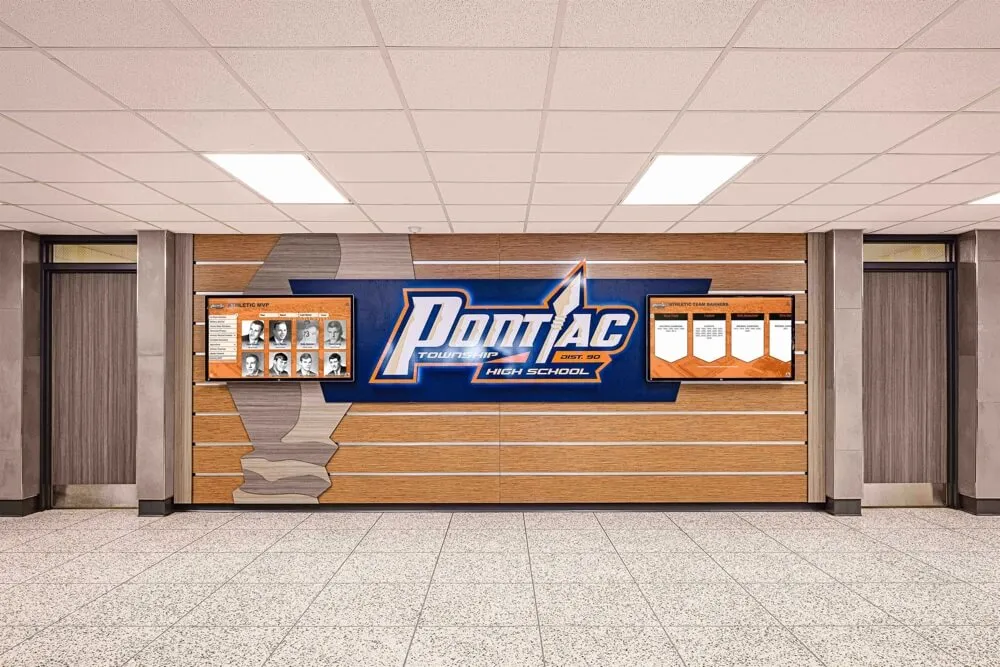
Schools recognize athletic achievements across all programs including emerging sports, building culture that celebrates diverse athletic excellence
Stack and Switch Strategy Execution
Advanced Doubles Positioning:
Stacking (both players starting on same side of court before serve) and switching (partners exchanging court positions during rally) represent advanced doubles strategies that optimize player strengths and create favorable matchups.
Setup: Doubles team practices stacking by positioning both players on same side of court at serve. After serve or return, players execute coordinated switch to reach target positions based on strategy (strong player protecting middle, left-handed player covering left side, etc.).
Execution: Serving team stacks (both on same side), server delivers serve, both players immediately move to target positions after serve. Receiving team can also stack, executing switch after return of serve. Requires precise communication, understanding of who covers middle initially, and smooth transitions without confusion.
Progression: Practice all four stacking scenarios (serving team stacking right, serving team stacking left, receiving team stacking right, receiving team stacking left). Add live rally continuation requiring players to maintain strategic positioning throughout point. Introduce game situations where teams stack specifically to exploit opponent weaknesses or protect partner vulnerabilities.
Coaching Points: Emphasize communication before point begins—both partners must clearly understand positioning plan. Teach non-hitting partner to clear quickly out of serving partner’s way after serve (common collision point). Address confusion around middle balls—establish clear protocol for who covers middle during transition. Stack strategies work best when practiced extensively so movement becomes automatic under match pressure.
Tournament-Pressure Simulation
Competitive Scenario Drill:
Tournament performance requires executing skills under pressure while managing mental challenges including crucial point situations, momentum swings, and opponent strategies specifically targeting weaknesses.
Setup: Create tournament-simulation games with competitive scoring, consequences for errors, and pressure situations that mirror actual tournament conditions. Examples: play games starting at 8-8 (simulating close games), play with “freeze” rule where specific player errors end entire team’s rally, play with “sudden death” points at specific scores.
Execution: Teams compete in games to 11 (win by 2) with strategic timeouts, position rotations, and all tournament rules enforced strictly. Coach calls specific situations periodically (“you’re down 9-6, serve,” or “side-out, 10-9 in your favor”). Players must execute under these pressure conditions.
Progression: Add environmental stressors including loud music, vocal spectators, or timed warm-up restrictions mimicking tournament conditions. Require players to call own lines (as in tournaments) rather than coach making calls. Video record games for review of technical execution and decision-making under pressure.
Coaching Points: Emphasize consistent execution regardless of score or pressure. Teach players to develop pre-serve routines that create mental reset between points. Address negative body language and partner communication during adversity. Practice tournament protocols including switching sides at 6 points, medical timeout rules, and equipment-problem procedures.
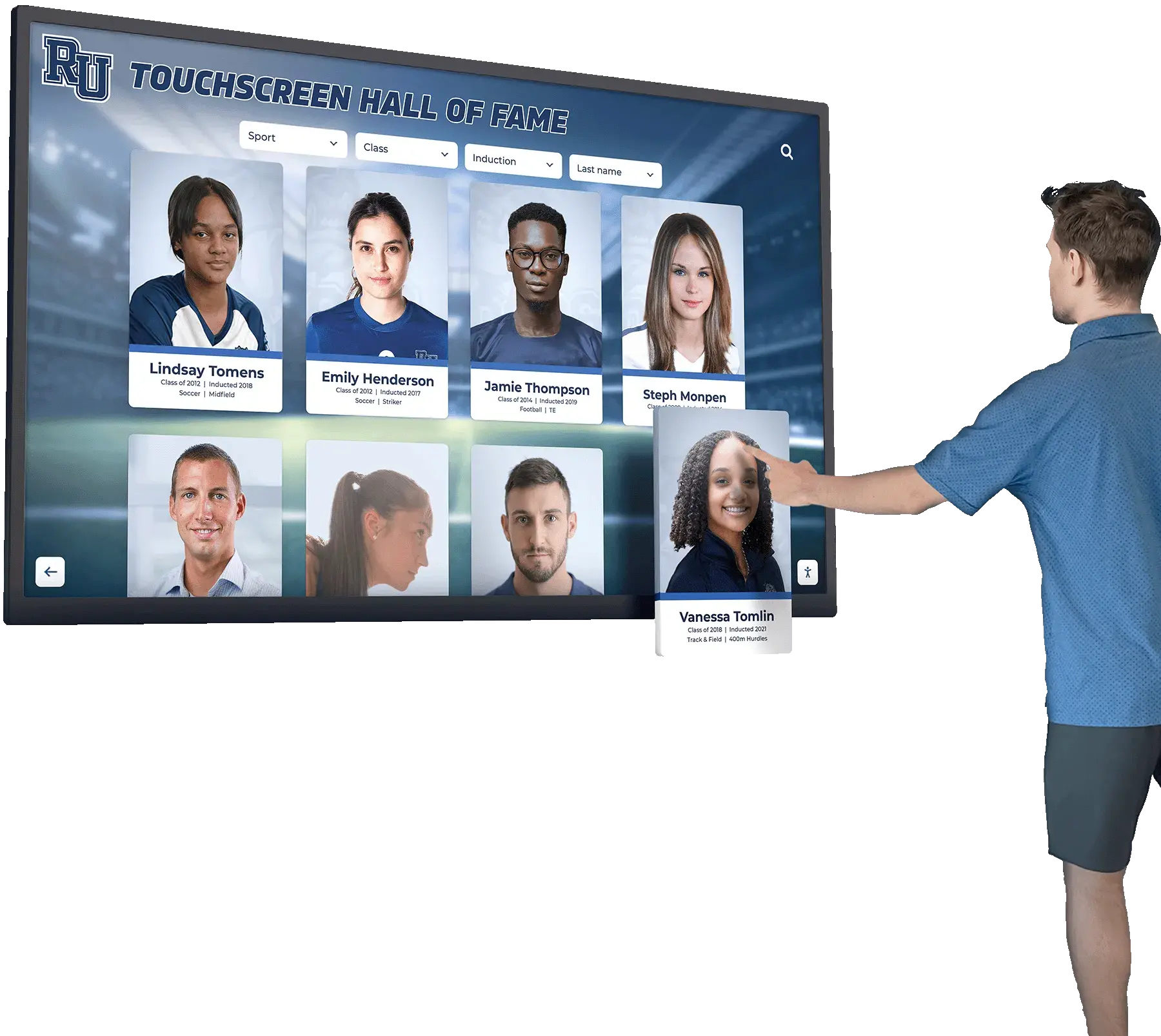
Interactive recognition systems allow programs to showcase player statistics, tournament history, and achievement milestones in engaging, accessible formats
Partner Communication and Strategy Drills
Doubles pickleball success depends heavily on partner coordination, communication, and strategic unity. These drills develop the collaborative elements that transform two individual players into effective doubles team.
Middle Coverage Protocol
Who Takes the Middle Drill:
The majority of doubles confusion and errors occur on balls hit down the middle between partners. Establishing clear middle coverage protocols eliminates hesitation and poaching.
Setup: Coach or feeder positions across net from doubles team. Feed balls directly down middle between partners at various heights, speeds, and depths.
Execution: Partners establish clear protocol for middle balls (common systems: player on right takes middle, stronger player takes middle, player who last hit takes middle, forehand takes middle). Execute protocol on every middle feed without hesitation or confusion. Verbal communication required—player taking shot calls “mine” loudly and early.
Progression: Start with slow, predictable feeds directly at middle. Progress to faster, more challenging balls. Add unpredictability by occasionally feeding to sides mixed with middle balls. Advance to live rallies where opponents intentionally exploit middle.
Coaching Points: Emphasize that any system works as long as both partners commit to same system. Teach decisive communication—tentative “I got it” creates confusion while loud, early “MINE” eliminates doubt. Address body language and partner support when confusion does occur. Remind players that middle balls create vulnerability specifically because of potential confusion, requiring extra clarity.
Poaching and Covering Practice
Aggressive Net Play Coordination:
Effective poaching (crossing center to intercept opponent’s shot intended for partner) creates offensive opportunities while requiring sophisticated partner coordination and court coverage.
Setup: Doubles team at kitchen line faces opponents (or coach/feeder). Opponents hit balls toward one partner. Opposite partner reads shot and decides whether to poach (cross middle to intercept) or hold position.
Execution: When poaching player crosses middle to attack ball, non-poaching partner immediately slides behind to cover abandoned court area. Poaching player aggressively volleys ball downward or at angle. After poach, partners reset to standard positions or maintain switched positions depending on strategy.
Progression: Start with telegraphed poaches where partners verbally communicate poach intention before ball arrives. Progress to reading opportunities and poaching without pre-communication (surprising opponents). Add live rallies where opponents try to pass poaching team. Introduce strategic discussions about when poaching creates advantages versus when holding position works better.
Coaching Points: Teach poaching players to read opponent’s shot direction early from paddle angle and body position. Emphasize quick, decisive movement—tentative poaching attempt creates vulnerability without offensive benefit. Remind covering partner to watch for poach and react immediately rather than standing static. Discuss trust elements—poaching requires partner confidence that coverage will occur.
Competitive pickleball programs increasingly use ladder systems and challenge matches to create internal competition and track player development. Many programs display current ladder standings and tournament results using digital recognition platforms that showcase competitive achievements and motivate continued improvement across all skill levels.
Conditioning and Agility Development
Tournament-level pickleball demands sustained physical performance including quick bursts of movement, rapid direction changes, and endurance across multiple games played in compressed timeframes. These conditioning drills develop physical capabilities required for competitive success.
Court Sprint Sequences
Anaerobic Conditioning:
Pickleball points involve short, intense movement bursts followed by brief recovery periods. Training must develop capacity for repeated explosive efforts without significant endurance decline.
Setup: Position markers at baseline, kitchen line, and net on court. Player starts at baseline.
Execution: Player sprints baseline to kitchen line, shuffle steps laterally to doubles sideline, backpedals to baseline, shuffle steps across court to opposite sideline, sprints forward to net, recovers to baseline. Complete sequence as quickly as possible maintaining proper movement technique. Rest 30-60 seconds. Repeat 5-10 times.
Progression: Reduce rest intervals as conditioning improves. Add paddle carrying requirement to simulate match conditions. Introduce ball-striking elements where player must execute specific shot at each position marker before advancing. Time sequences and track improvement weekly.
Coaching Points: Emphasize maintaining proper athletic position throughout conditioning work—degrading to poor form under fatigue creates bad movement habits that transfer to match play. Teach controlled breathing during rest intervals. Remind players that match conditioning differs from general cardiovascular fitness, requiring sport-specific burst-and-recover patterns.
Reaction Time Development
Reflex Enhancement Drills:
Kitchen line exchanges require lightning-quick reactions to balls hit directly at players. Developing quick hands and rapid visual processing improves defensive capability and creates offensive opportunities.
Setup: Player positions at kitchen line. Partner or coach with multiple balls positioned close range (10-15 feet) across net.
Execution: Feeder rapidly fires balls at player (chest level, varying slightly left and right of center) requiring quick blocking volleys. Player executes 20 consecutive blocks with minimal backswing using quick paddle movements. Focus on soft hands absorbing pace and directing blocks downward.
Progression: Increase feeding pace requiring faster reactions. Add height variation (mix chest-level shots with low shots requiring different response). Progress to two-ball sequences where feeder immediately fires second ball after first block. Introduce three-player drill where two feeders alternate firing balls requiring player to react to unpredictable sequences.
Coaching Points: Teach “paddle up” ready position with paddle at chest height minimizing distance to contact point. Emphasize soft grip tension that allows quick paddle movements. Remind players to watch ball closely and track ball visually all the way to paddle contact. Discuss breathing—many players hold breath during intense exchanges, reducing oxygen and causing quicker fatigue.
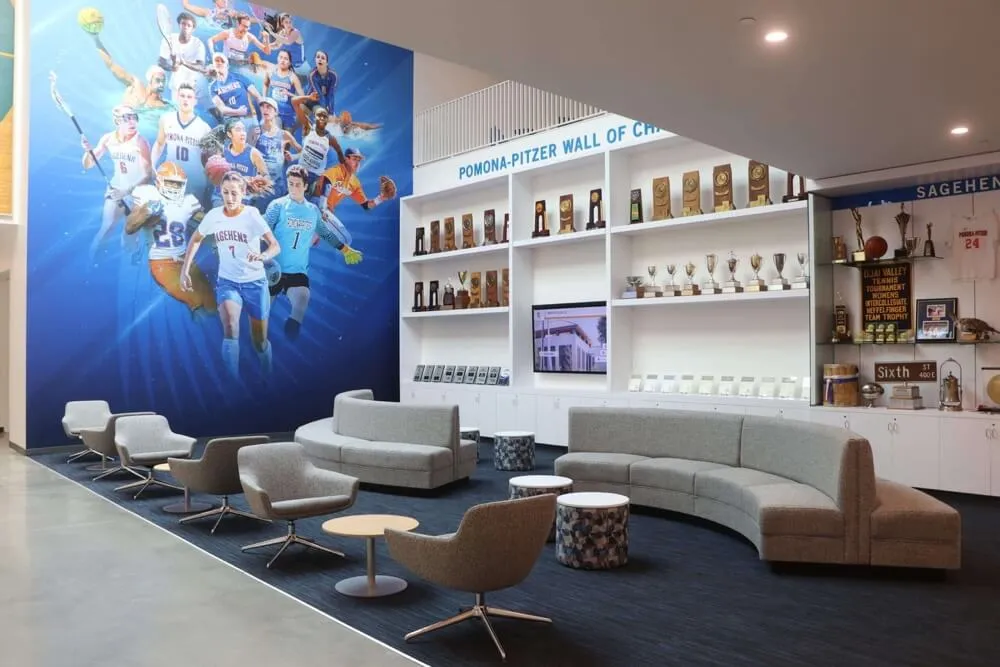
Programs create dedicated spaces celebrating athletic achievement across all sports, fostering culture that values diverse competitive excellence
Mental Game and Strategy Development
Physical skills and strategic knowledge alone don’t guarantee tournament success. Mental toughness, strategic adaptation, and competitive mindset separate good tournament players from champions.
Pattern Recognition Practice
Reading Opponent Tendencies:
High-level pickleball involves recognizing opponent patterns and tendencies quickly then exploiting predictable behaviors. Developing pattern recognition accelerates in-match adjustments.
Setup: During practice games or drills, assign players specific observation tasks. Examples: track which side opponent prefers for forehand, note whether opponent tends to dink cross-court or straight, observe whether opponent moves well forward versus laterally.
Execution: Player competes in normal practice game while consciously observing assigned opponent characteristics. After game (or during timeouts), player reports observations and proposes strategic adjustments based on discovered patterns. Implement adjustments in subsequent games, evaluating effectiveness.
Progression: Advance from observing single obvious pattern to identifying multiple subtle tendencies. Practice recognizing patterns quickly (within first few points) rather than requiring full game. Develop systematic observation approach covering serve patterns, return tendencies, dinking preferences, volley capabilities, and movement limitations.
Coaching Points: Teach players to observe without judgment—goal is data collection about opponent behavior, not emotional reaction. Emphasize adjusting strategy based on observations rather than stubbornly maintaining approach regardless of effectiveness. Discuss difference between true patterns versus small sample size—two forehand errors doesn’t necessarily indicate forehand weakness requiring exploitation.
Pressure Point Management
Critical Situation Decision-Making:
Tournament matches often hinge on execution during crucial points—game point, 9-9 situations, or momentum-shifting moments. Training decision-making under pressure improves performance when stakes are highest.
Setup: During practice games, designate specific points as “pressure points” carrying extra consequences (losing pressure point costs 2-3 points instead of 1, or requires team to perform conditioning exercise). Create artificial pressure mimicking tournament stress.
Execution: When pressure point occurs, both teams must execute with awareness that error carries amplified consequences. Coach observes shot selection, communication, and execution quality compared to normal points. After pressure points, debrief decision-making process and discuss whether pressure influenced choices appropriately or created poor decisions.
Progression: Increase pressure magnitude and frequency. Video record pressure points for detailed review of body language, communication, and execution. Require players to verbalize strategy before pressure points (“We’ll serve deep, attack weak return, look for middle ball to poach”). Practice pressure points from both leading and trailing positions—mental approach differs significantly.
Coaching Points: Teach players that pressure points reward conservative, high-percentage play rather than hero shots attempting to win point outright. Emphasize trusting fundamental skills developed through drill work rather than abandoning technique under pressure. Discuss breathing and tension management—players often tighten grip and hold breath during pressure, degrading performance.
Building Effective Practice Sessions
Individual drills develop specific skills, but effective practice sessions combine drills strategically, balance work with recovery, and create engaging environments that sustain motivation through repetitive skill development.
Practice Structure Framework
Session Organization:
Effective practices follow logical progression addressing multiple skill areas while maintaining energy and engagement throughout session.
Warm-Up (10-15 minutes): Dynamic stretching, light rallying focusing on consistency rather than intensity, mobility exercises specific to pickleball movements (hip rotation, shoulder circles, lateral shuffles).
Skill Development (30-40 minutes): Focused drill work on 2-3 specific skills from current development priority. Examples: first 15 minutes on third-shot drops, next 15 minutes on kitchen line volleys, final 10 minutes on serve placement. Use progressive difficulty within each drill.
Competitive Application (20-30 minutes): Games applying skills developed earlier in practice. Structure games to emphasize session focus (if practicing drops, play games where successful drops earn bonus points). Rotate partners ensuring varied competition.
Conditioning (10-15 minutes): Sport-specific conditioning work developing movement patterns and anaerobic capacity required for tournament play.
Cool-Down (5-10 minutes): Static stretching, partner feedback discussions, brief review of practice objectives and progress.
Tracking Progress and Setting Goals
Systematic progress tracking creates motivation while identifying skill areas requiring additional attention. Many competitive pickleball players maintain practice journals documenting drill performance, match results, and skill development priorities.
Schools and clubs implementing structured pickleball programs often track player advancement through skill levels, ladder positions, and tournament performances. Progressive programs use digital platforms showcasing player achievements and program growth, creating visibility that attracts new participants while motivating current players to advance.
Individual Skill Tracking: Record quantifiable drill performance metrics (successful third-shot drops out of 10 attempts, consecutive dinks without error, serve accuracy by target zone). Track weekly improvement in key metrics. Set specific, measurable goals for each skill area (achieve 7 out of 10 successful drops, maintain 30+ consecutive dink rally, land 8 out of 10 serves in deep target zone).
Match Performance Analysis: Review tournament and practice match results identifying patterns. Track win percentages, point winning/losing patterns (serve effectiveness, return success rate, third shot execution, kitchen line exchanges). Note recurring errors and situations creating difficulty. Develop practice priorities based on match performance data.
Video Analysis: Record practice sessions and matches for detailed technique review. Compare current form against instructional videos or elite player examples. Identify technical flaws invisible during play but clear on video (improper weight transfer, excessive backswing, poor ready position recovery).
Creating Practice Partnerships and Training Groups
Consistent improvement requires regular practice with partners matched appropriately by skill level while occasionally playing stronger competition that exposes areas needing development.
Partner Selection Strategies
Ideal practice partners share similar commitment levels and complementary skill strengths. Practice regularly with partners at your current level to build consistency and confidence. Periodically practice against stronger players to identify skill gaps and raise performance ceiling. Occasionally play with less experienced players to reinforce fundamentals and develop teaching perspective that deepens understanding.
Drilling Group Organization
Organized drilling groups create structured practice environments with assigned roles, rotation schedules, and accountability systems that sustain long-term participation. Successful groups establish consistent practice schedules (same days/times weekly), rotate drilling responsibilities so different members lead specific drills, balance skill development work with competitive play, and track member progress creating visible improvement motivation.
Many community recreation departments, country clubs, and schools now offer structured pickleball instruction and ladder systems. Programs celebrating player advancement and competitive success through recognition displays and leaderboards create engagement that grows participation and sustains player commitment to improvement.
Equipment and Facility Considerations
While pickleball requires minimal equipment compared to many sports, selecting appropriate paddles, balls, and court surfaces impacts practice quality and skill development.
Paddle Selection by Skill Level
Beginner Players: Choose paddles emphasizing control and large sweet spots over power. Heavier paddles (7.8-8.5 oz) provide stability and reduce vibration. Wider-body paddles increase hitting surface. Composite faces offer good touch for developing dink skills. Price range: $40-80.
Intermediate Players: Transition to paddles balancing power and control based on playing style. Players emphasizing finesse prefer lighter paddles (7.3-7.8 oz) with textured surfaces enhancing spin. Power players select slightly heavier options with larger cores. Price range: $80-150.
Advanced Players: Choose specialized paddles matching specific playing style and strategic approach. Tournament players often own multiple paddles for different conditions. Carbon fiber faces provide power, elongated shapes extend reach, edge guard designs reduce frame weight. Price range: $120-250+.
Practice Ball Considerations
Indoor balls feature larger holes and softer plastic suited for controlled environments without wind. Outdoor balls use smaller holes and harder plastic providing durability and consistent flight in wind. Practice with ball type used in target competition environment—indoor tournament preparation requires indoor ball practice.
Court Surface Impact
Pickleball plays differently on various surfaces affecting ball bounce, pace, and player movement. Hard courts (concrete, asphalt) provide true bounce and faster pace. Cushioned courts reduce joint impact while slightly slowing play. Temporary indoor courts may use gym floors creating different bounce characteristics. When possible, practice on surface matching primary competition venue.
Addressing Common Skill Development Plateaus
All players encounter periods where improvement stalls despite consistent practice. Recognizing common plateau causes and implementing appropriate adjustments restores progress.
Technical Plateaus
When specific shot consistency stops improving despite practice, issues often stem from subtle technique flaws becoming ingrained. Solutions: video record technique comparing against instructional resources, seek coaching evaluation identifying technical errors, temporarily reduce shot pace focusing purely on form, practice exaggerated correct form to override muscle memory.
Strategic Plateaus
Players sometimes develop consistent shot-making ability but struggle advancing competitively due to strategic limitations. Indicators include losing to less-skilled players who execute superior strategy, struggling against specific playing styles or formations, or winning practice but losing tournament matches. Solutions: study high-level matches analyzing strategic patterns, work with coach developing game plans for various opponent types, practice specific scenarios repeatedly (playing against bangers, facing stacking teams, handling lob serves).
Mental Plateaus
Physical and technical skills exist but mental factors limit competitive performance. Common manifestations include practice performance exceeding tournament results, difficulty closing out games when leading, or performance declining under pressure. Solutions: practice pressure-point drills extensively, develop pre-point routines creating mental reset, work with sports psychology resources addressing competitive mindset, maintain performance journals tracking mental state correlation with results.
High school and club programs recognize player growth across multiple dimensions including skill advancement, competitive results, leadership development, and practice commitment. Programs using comprehensive recognition approaches celebrate diverse achievements creating inclusive cultures that value improvement regardless of initial skill level.
Integrating Pickleball into School Athletic Programs
Schools nationwide add pickleball programs recognizing the sport’s accessibility, low facility requirements, and appeal across diverse student populations. Successful school programs combine instruction, practice structure, competitive opportunities, and recognition systems that sustain long-term participation.
Program Development Considerations
Facility Requirements: Pickleball requires minimal facility infrastructure—gymnasiums convert easily using temporary nets and court markings. Outdoor tennis courts accommodate multiple pickleball courts (one tennis court fits 4 pickleball courts). Schools without dedicated facilities can implement programs using multi-purpose gymnasium space during non-prime hours.
Equipment Investment: Initial program equipment costs remain modest compared to most sports. Starter program needs: portable nets ($150-400 per court), paddles for 20-30 students ($1,200-2,400), practice balls ($50-100), court marking tape or paint ($100-300). Total startup: approximately $1,500-3,200 depending on program size.
Instruction Models: Schools implement pickleball through various models including physical education units exposing all students, club sport offerings for interested students, intramural leagues creating recreational competition, and competitive teams participating in regional tournaments. Successful programs often begin with PE introduction before adding competitive options.
Competitive Opportunities: Interscholastic pickleball competition grows rapidly with state athletic associations adding pickleball to sponsored sports lists. Schools participate through informal tournaments, league structures with neighboring schools, regional club competitions, and increasingly, state championship events.
Recognition and Program Visibility
Successful athletic programs create cultures celebrating achievement across diverse sports, not exclusively traditional high-profile activities. Schools adding pickleball benefit from recognition systems that showcase:
- Ladder rankings displaying current standings across skill divisions
- Tournament results highlighting individual and team competitive success
- Skill progression recognizing players advancing through rating levels
- Program milestones celebrating participation growth and facility improvements
- Student-athlete features profiling dedicated players and their development stories
Many schools implementing emerging sport programs use digital recognition platforms providing flexible display options that showcase pickleball alongside traditional sports, creating visibility that legitimizes newer programs while attracting student participation.
From Practice to Competition: Tournament Preparation
Translating practice performance to tournament success requires specific preparation addressing competition logistics, mental readiness, strategic planning, and performance routines.
Pre-Tournament Preparation
Physical Preparation (Week Before): Reduce practice intensity while maintaining frequency. Focus on game-situation play rather than drilling. Ensure adequate sleep and nutrition. Address any minor injuries or discomfort before tournament. Practice on similar court surface if possible.
Strategic Preparation: Review opponent information if available (previous match results, playing style notes, tendencies from past competition). Develop general game plan for various opponent types (bangers, dinkers, stackers). Identify own strategic strengths to emphasize and weaknesses to protect.
Mental Preparation: Visualize successful performance in tournament environment. Review past successful performances recalling feelings and mindset. Establish process goals (execute fundamentals, communicate effectively, maintain positive body language) rather than purely outcome goals. Prepare response strategies for adversity (falling behind, bad line calls, opponent momentum runs).
Logistical Preparation: Confirm tournament details (location, check-in time, format, rules). Pack equipment with backups (extra paddle, multiple ball types, towel, water bottle, healthy snacks, basic first aid). Arrange transportation with time buffer for unexpected delays.
Tournament Day Execution
Pre-Match Routine: Arrive early allowing unhurried check-in and orientation to facility. Complete consistent warm-up routine covering all shot types (serves, returns, dinks, volleys, groundstrokes). Pace warm-up to peak physically and mentally at match start without exhausting energy. Review strategic priorities briefly without over-analyzing.
During Match: Execute game plan while remaining flexible based on opponent tendencies and match flow. Maintain consistent energy and communication regardless of score. Use timeouts strategically to disrupt opponent momentum, address tactical adjustments, or reset mentally after errors. Focus on point-to-point execution rather than score or outcome.
Between Matches: Refuel with easily digestible nutrition and adequate hydration. Perform light movement maintaining warmth without depleting energy. Review previous match performance briefly noting effective patterns to continue and adjustments needed. Prepare mentally for next match with fresh focus—previous results don’t predict upcoming performance.
Post-Tournament: Regardless of results, reflect on performance identifying successful execution and areas needing additional practice attention. Celebrate positive elements and specific improvements. Avoid dwelling on errors—note them for practice priorities then move forward. Rehydrate and refuel properly supporting recovery. Rest adequately before resuming practice.
Programs supporting players through competitive progression recognize both results and growth-focused achievements. Celebrating tournament participation, personal-best performances, skill rating advancement, and competitive improvement creates culture supporting long-term athletic development regardless of immediate competitive outcomes.
Continuing the Development Journey
Pickleball skill development represents continuous journey rather than fixed destination. Players committed to improvement find endless opportunities for technical refinement, strategic sophistication, and competitive advancement regardless of current level.
The drills presented throughout this guide create structured pathways from absolute beginner through tournament-ready competitor. However, effective practice requires more than executing drills mechanically—it demands consistent effort, honest self-assessment, willingness to work on weaknesses rather than exclusively practicing strengths, and patience accepting that meaningful improvement accumulates gradually through sustained dedication.
Schools, clubs, and recreation programs implementing pickleball create opportunities for diverse populations to discover athletic engagement and competitive achievement. Effective programs combine quality instruction, appropriate facility access, progressive skill development, competitive opportunities matched to participant readiness, and recognition systems celebrating improvement across all levels.
Whether you’re coaching a high school pickleball club, running community recreation programs, training competitive players, or developing your own skills, systematic drill practice using progressive frameworks accelerates development while maintaining the enjoyment that attracted participants to pickleball initially. The sport’s rapid growth creates expanding opportunities for players committed to skill development—from local club ladder competition through regional tournaments to national championship events.
Pickleball’s combination of accessibility and skill depth ensures that players at every level find appropriate challenges, competitive peers, and clear pathways for continued improvement. The drills, training frameworks, and development strategies outlined here provide foundation for advancement from beginner through accomplished tournament competitor.
Showcase Your Pickleball Program’s Success
As schools and organizations implement pickleball programs and watch participation grow, creating visibility for player achievements, competitive results, and program milestones becomes increasingly important. Recognition systems that showcase ladder standings, tournament champions, skill progression, and program growth build pride while attracting new participants.
Modern digital recognition displays offer flexible platforms perfect for emerging sports programs like pickleball. Unlike traditional static plaques limited to historical achievements, digital systems provide dynamic updates showcasing current ladder leaders, recent tournament results, player profiles, and program statistics that engage participants and visitors alike.
If you’re building a pickleball program and want to create professional recognition that celebrates your athletes’ development from beginner through tournament competitor, Rocket Alumni Solutions provides digital display platforms designed specifically for schools and athletic organizations. Our systems make it simple to showcase player achievements, track competitive results, and build program visibility that demonstrates pickleball’s growing role in your athletic offerings.































