Madison Square Garden stands as one of the most iconic sports and entertainment venues in the world. From championship basketball games and hockey matches to legendary concerts and historic sporting events, The Garden has hosted countless memorable moments since its original opening in 1879. Today, modern technology continues to enhance how these venues celebrate athletic excellence and engage visitors through interactive digital displays.
As major sports arenas integrate advanced recognition technology to honor athletes, commemorate achievements, and engage fans, the question facing organizations at every level becomes clear: How can we create recognition experiences worthy of the achievements we’re celebrating? The answer increasingly involves interactive touchscreen displays that transform static commemorations into dynamic, engaging experiences.
This comprehensive guide explores how digital recognition technology—including solutions like Rocket Alumni Solutions—is reshaping sports venues from professional arenas like Madison Square Garden to college athletic facilities and high school gymnasiums across the country.
The Evolution of Recognition Displays in Professional Sports Venues
Professional sports venues have long served as gathering places where communities celebrate athletic excellence. From championship banners hanging from rafters to halls of fame honoring legendary athletes, these spaces tell the story of sporting achievement and organizational pride.
Traditional Recognition Approaches in Major Arenas
Historically, venues like Madison Square Garden relied on traditional recognition methods:
Physical Banners and Signage: Championship banners, retired jerseys, and commemorative signage occupy prominent positions throughout arenas, serving as constant reminders of past excellence.
Wall-Mounted Plaques: Bronze or metal plaques listing names, dates, and achievements provide permanent recognition but offer limited information due to space constraints.
Display Cases: Glass-enclosed cases showcase jerseys, trophies, equipment, and memorabilia from significant moments in venue history.
Printed Programs and Media Guides: Historical information distributed through printed materials allows fans to learn about organizational heritage, though these resources often remain tucked away rather than prominently displayed.
While these traditional approaches preserve important history, they face inherent limitations in engagement, information depth, and flexibility for updates. A static plaque can list only basic facts, while championship banners acknowledge team achievements without celebrating individual contributions or telling complete stories.
The Shift Toward Interactive Digital Recognition
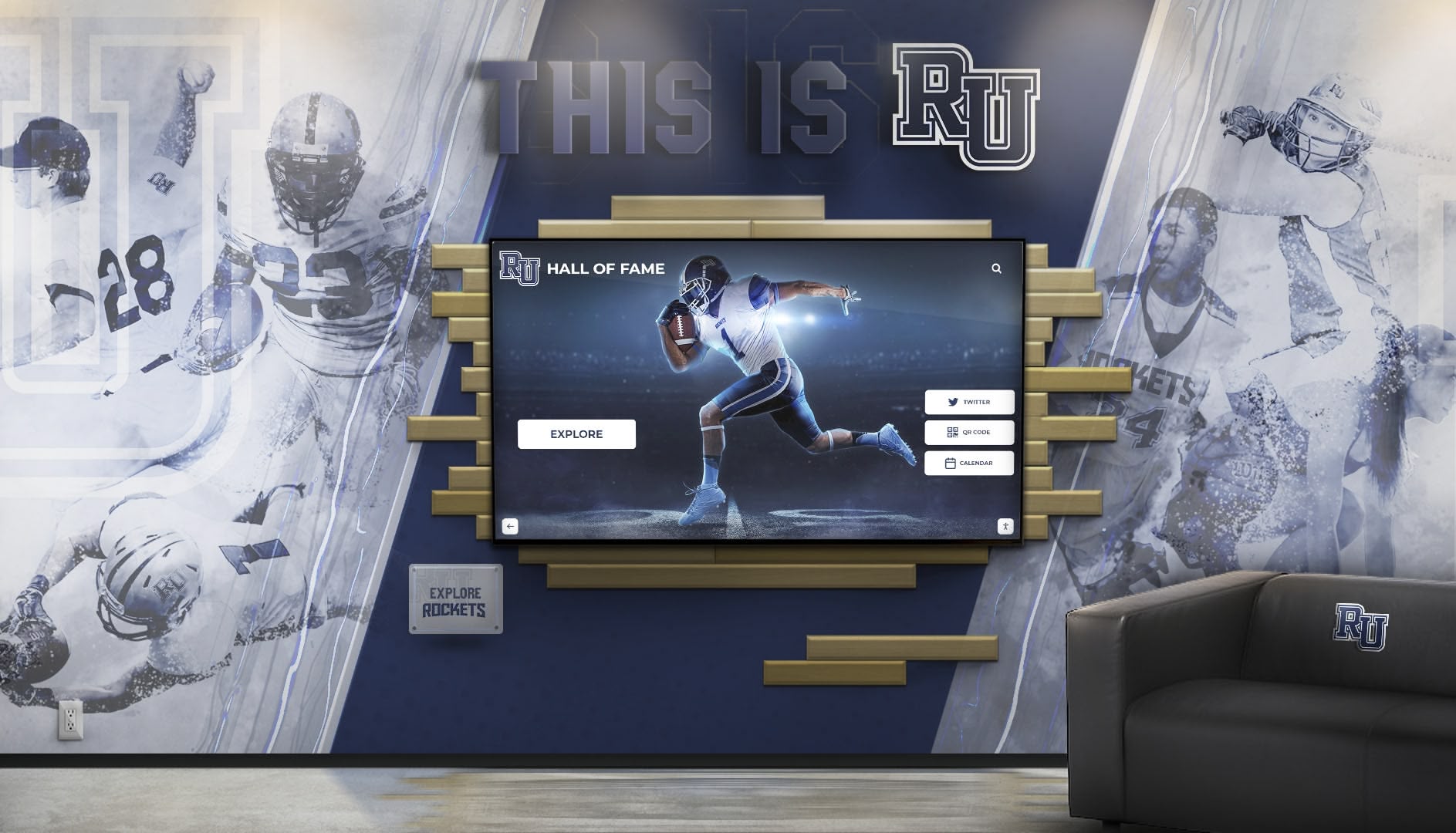
The evolution of display technology has fundamentally transformed what’s possible in sports recognition. Modern venues increasingly incorporate interactive touchscreen displays that address the limitations of traditional approaches:
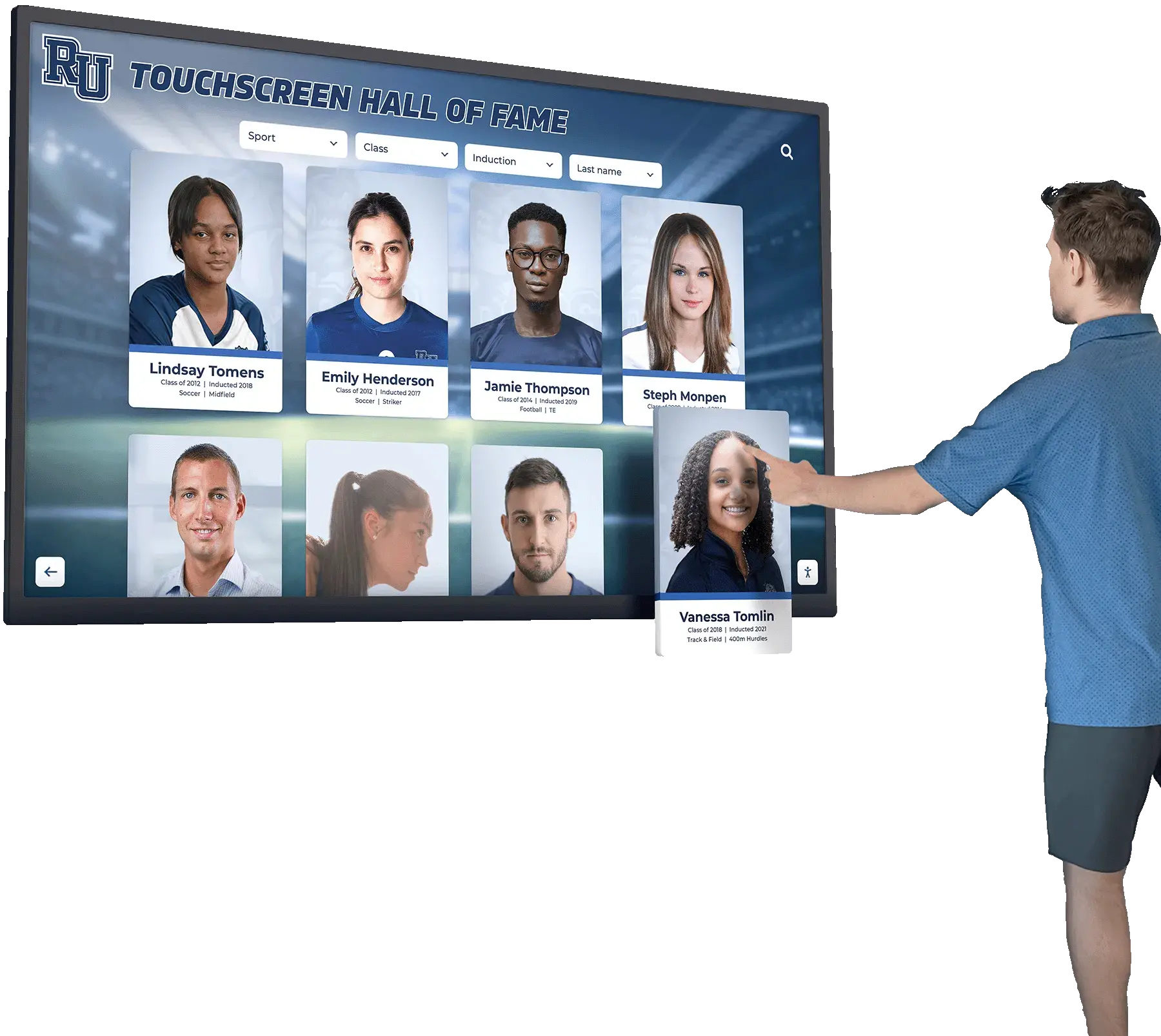
Unlimited Information Capacity: Digital displays can house comprehensive databases with thousands of athlete profiles, statistics, photos, and videos without physical space constraints.
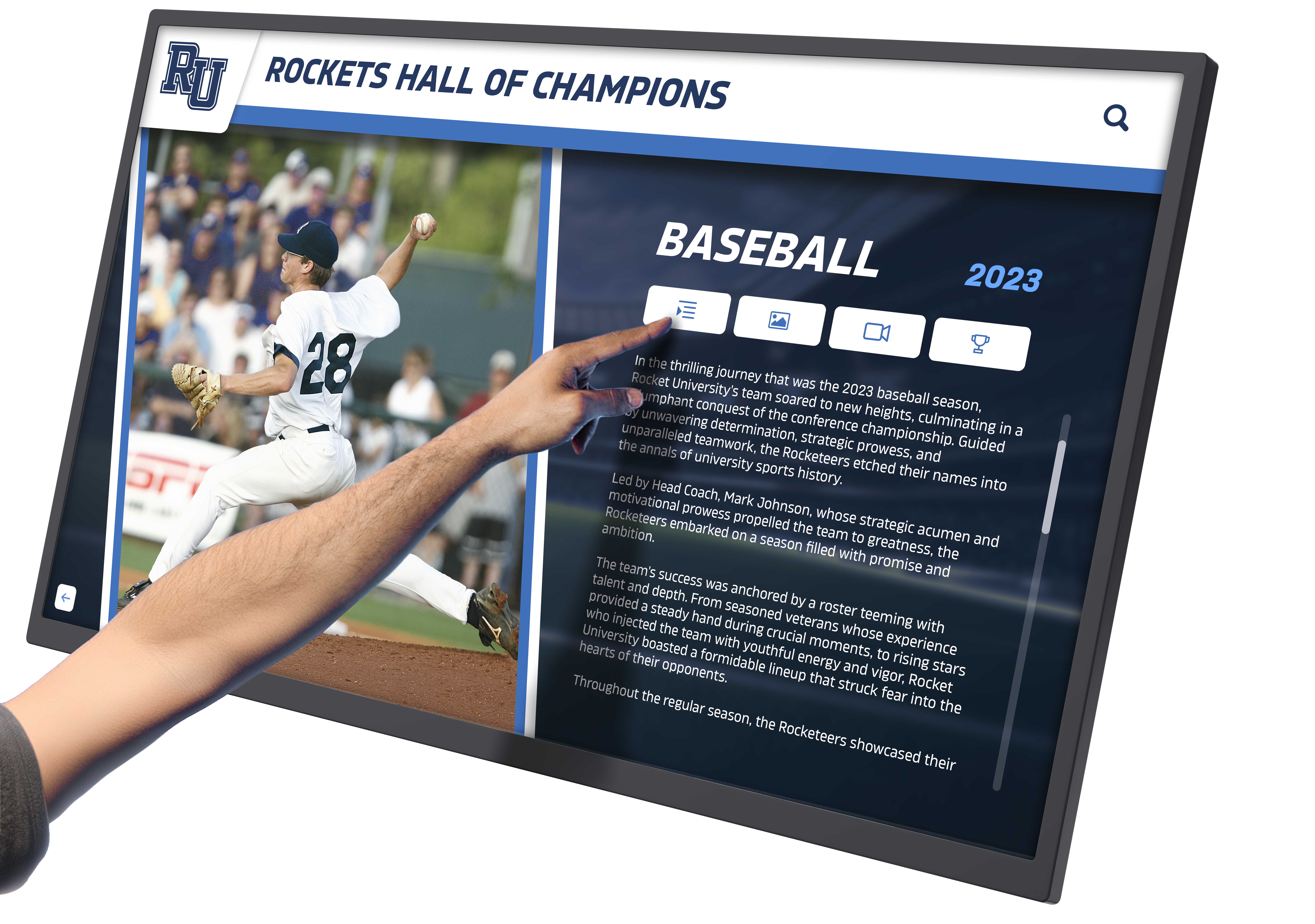
Multimedia Integration: High-resolution photographs, video highlights, interviews, and documentary content create rich storytelling experiences impossible with static displays.
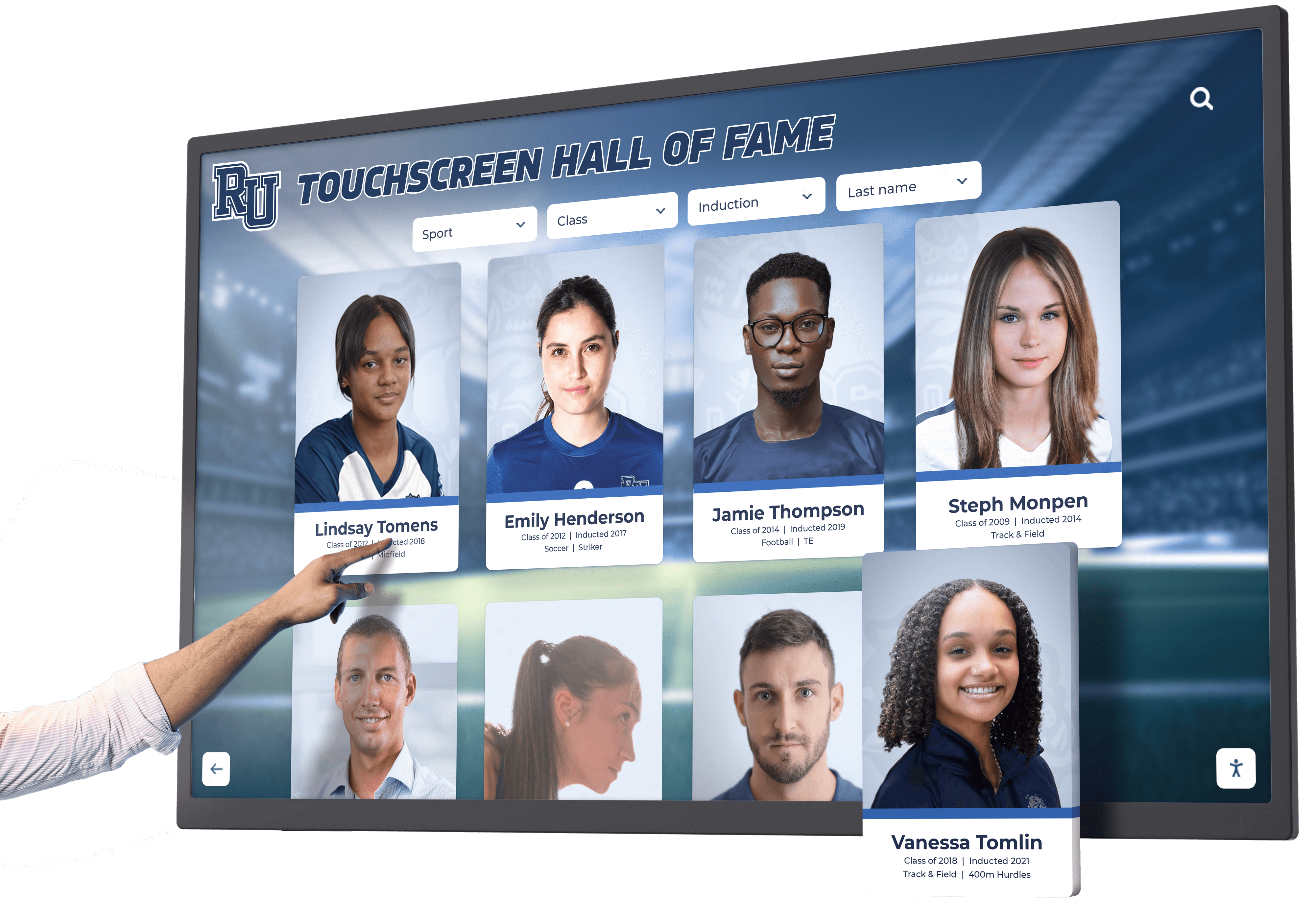
Intuitive Discovery: Search and filter functionality allows visitors to find specific athletes, explore particular eras, or browse by achievement category based on personal interests.
Regular Updates: Cloud-based content management enables easy additions of new honorees and achievements without requiring physical installation work.
Accessibility: Web-based platforms extend recognition beyond physical locations, allowing fans worldwide to explore venue history from any device.
According to industry reports on digital signage growth, the global digital display market has experienced significant expansion as organizations recognize the enhanced engagement these solutions provide. For sports venues, this technology creates opportunities to celebrate heritage more comprehensively while delivering experiences that resonate with modern audiences accustomed to interactive digital content.
Madison Square Garden’s Approach to Technology and Fan Experience
Madison Square Garden has consistently embraced technology to enhance the fan experience, from advanced LED display systems to innovative hospitality features. Understanding these implementations provides context for how major venues approach recognition and engagement.
GardenVision Display System
Madison Square Garden’s GardenVision represents one of the most advanced center-hung display systems in professional sports. The system consists of 24 individual high-definition LED displays curved to mirror the circular design of the arena, providing maximum visibility to all seating positions.
Technical Specifications:
- High-definition LED technology delivering crystal-clear imagery
- Curved display configuration optimizing viewing angles
- Integrated audio systems coordinating with visual content
- Real-time statistics and instant replay capabilities
The GardenVision system demonstrates how major venues invest in display technology to enhance the in-arena experience, creating opportunities for both live event enhancement and recognition content delivery.
Interactive Technology in Premium Spaces
Beyond the central scoreboard, Madison Square Garden incorporates interactive technology throughout the facility, particularly in premium hospitality areas. The Lexus Lounge exemplifies this approach with interactive video walls and touch screen kiosks that create immersive brand environments.
Lexus Lounge Features:
- Touch screen kiosks controlling wall-mounted displays
- Interactive content allowing guest participation
- Sophisticated backend architecture enabling real-time control
- Integration of premium hospitality with technology engagement
These implementations demonstrate how interactive touchscreens can transform passive viewing into active participation, a principle equally applicable to recognition displays celebrating athletic achievement.
How Digital Recognition Displays Transform Sports Venues
While Madison Square Garden incorporates advanced display technology for live events and hospitality, similar interactive touchscreen technology is revolutionizing how venues at all levels celebrate athletic achievement and organizational history.
Creating Comprehensive Athletic Halls of Fame
Traditional halls of fame face difficult choices about who receives recognition due to physical space limitations. A wall can only accommodate so many plaques before becoming overcrowded and difficult to navigate. Digital recognition displays eliminate this constraint.
Unlimited Recognition Capacity: Modern digital platforms can accommodate thousands of athlete profiles without space limitations. Every deserving individual can receive appropriate recognition regardless of physical display constraints.
Comprehensive Individual Profiles: Rather than limited text on bronze plaques, digital profiles can include extensive biographies, complete statistics, multiple photographs spanning careers, video highlights, interviews, and personal stories that capture achievement depth.
Multiple Organization Methods: Content can be organized simultaneously by sport, era, achievement type, or any other relevant category, allowing visitors to explore in ways that match their interests.
Historical Depth: Digital archives can extend recognition back decades or centuries, preserving institutional memory that might otherwise be lost as physical records deteriorate.
Solutions like Rocket Alumni Solutions provide purpose-built platforms designed specifically for athletic recognition, offering sport-specific templates that understand the unique statistics, positions, and achievement types relevant to different athletic programs.
Engaging Modern Audiences Through Interactive Exploration
Today’s visitors—whether attending professional games at Madison Square Garden or high school events at local gymnasiums—expect interactive digital experiences. Passive observation no longer suffices when daily life involves smartphones, tablets, and constant digital interaction.
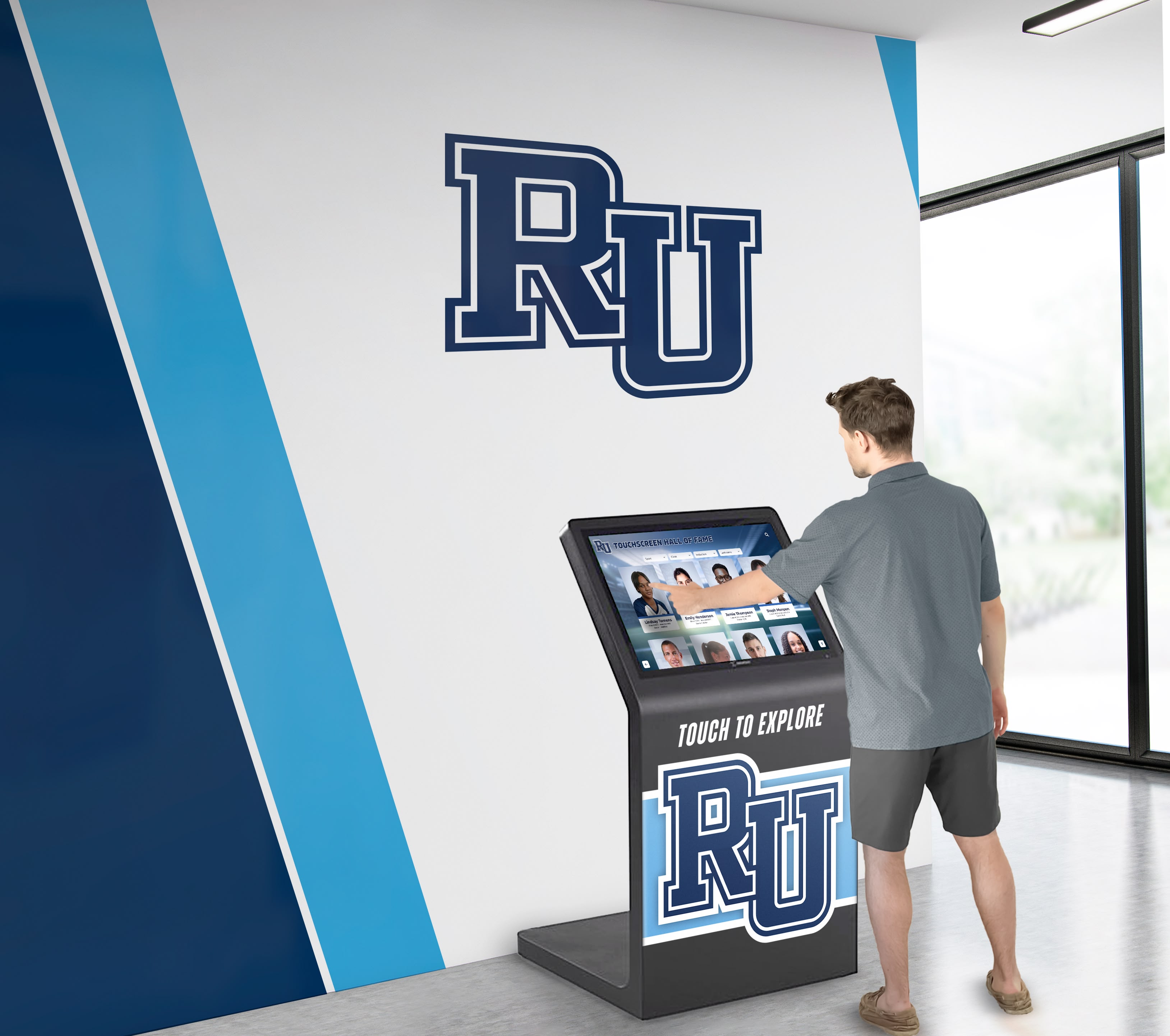
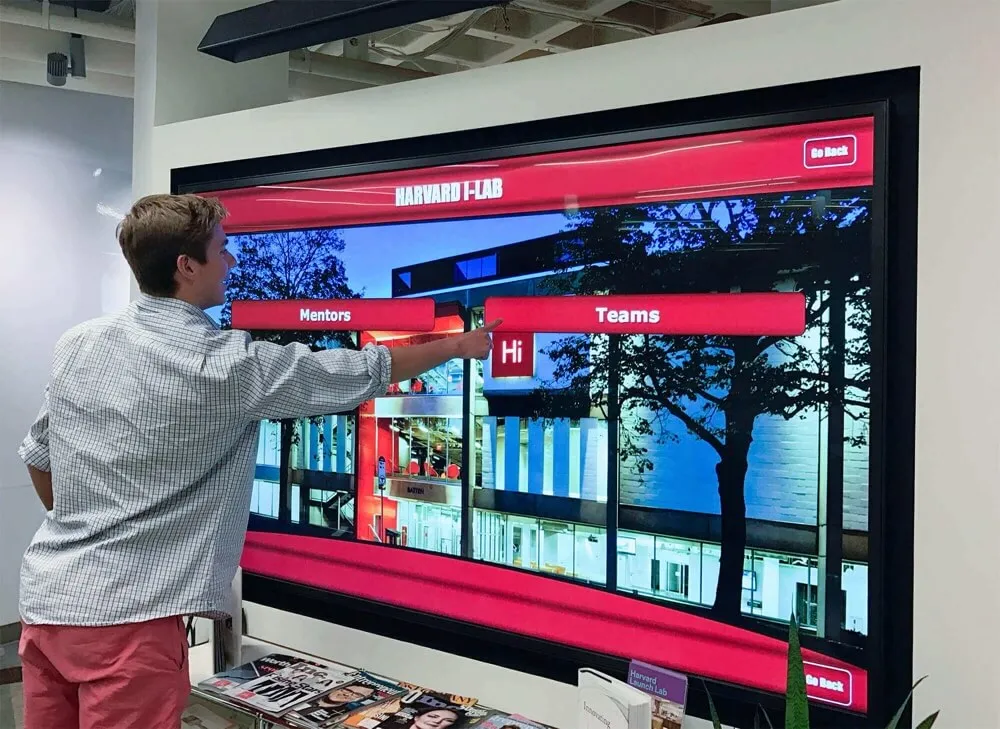
Intuitive Touch Interfaces: Modern touchscreen displays use the same capacitive technology as smartphones, creating familiar interaction patterns that require no instruction. Visitors naturally understand how to tap, swipe, and explore content.
Personalized Discovery: Rather than following predetermined narratives, visitors can pursue their own interests—searching for specific athletes, comparing statistics across eras, or exploring particular championship seasons that hold personal significance.
Visual Engagement: High-resolution displays showcase photographs and videos with clarity that draws attention and invites interaction, transforming recognition displays into destination features rather than afterthought additions.
Multi-Generational Appeal: Interactive displays engage diverse age groups from young athletes envisioning future achievement to alumni reconnecting with their playing days to longtime fans exploring organizational history.
Supporting Multiple Organizational Objectives
Digital recognition displays serve purposes beyond simple commemoration, supporting various institutional goals simultaneously:
Alumni Engagement: Former athletes discovering their recognition often reconnect with institutions after years of limited contact, creating opportunities for continued involvement, mentorship, and support.
Recruitment Advantage: Prospective athletes visiting facilities see comprehensive documentation of those who competed before them, understanding program quality and tradition while envisioning their potential place in that legacy.
Fundraising Support: Recognition displays provide meaningful stewardship for athletic donors while demonstrating that contributions support lasting preservation of excellence, encouraging continued philanthropic engagement.
Institutional Pride: Impressive recognition installations signal organizational commitment to honoring achievement, creating positive perceptions among all stakeholders from current participants to community members.
Historical Preservation: Digital archives preserve institutional memory across generations, capturing who contributed, what they accomplished, and why their achievements matter for current and future community members.
Implementing Digital Recognition Technology: From Professional Venues to Local Facilities
While Madison Square Garden operates with substantial resources, the underlying interactive touchscreen technology has become increasingly accessible for organizations at all levels seeking to create impressive recognition programs.
Technology Components and Requirements
Understanding the technology powering digital recognition displays helps organizations make informed implementation decisions:
Commercial-Grade Touchscreen Displays: Unlike consumer televisions, commercial displays are rated for continuous operation in public installations. Sizes typically range from 43" to 86" depending on viewing distance, space constraints, and content requirements.
Projected Capacitive Touch Technology: Modern touchscreens use the same responsive multi-touch technology as smartphones and tablets, providing intuitive interfaces that feel familiar to users.
Integrated Computing Systems: Displays include embedded computers running interactive software—either Android systems for straightforward applications or Windows-based computers for more complex functionality.
Network Infrastructure: Reliable connectivity enables cloud-based content management, remote updates, and real-time information integration.
Professional Mounting and Installation: Proper hardware mounting, cable management, power planning, and environmental considerations ensure reliable long-term operation.
Content Management Software: The software platform determines functionality, ease of use, and long-term maintainability—critical considerations often more important than hardware specifications.
Planning Your Recognition Display Implementation
Organizations inspired by professional venue technology and considering their own interactive recognition installations should follow systematic planning processes:
Phase 1: Strategic Planning and Needs Assessment
Define Recognition Scope: Determine who receives recognition—all varsity athletes, distinguished performers only, record holders, or specific achievement categories. Clear criteria ensure consistent, defensible selection decisions.
Assess Available Content: Inventory existing photographs, statistics, historical documents, and other materials. Identify content gaps requiring research, digitization, or acquisition.
Budget Development: Understand total project costs including hardware, software, content development, installation, training, and ongoing operation. Realistic budgets prevent underinvestment that undermines impact.
Space and Location Selection: Identify optimal display locations considering foot traffic, viewing angles, lighting conditions, and integration with existing spaces. Prime placement maximizes visibility and engagement.
Stakeholder Input: Gather requirements from coaches, athletic directors, alumni, development staff, and other stakeholders to ensure the system serves diverse organizational needs.
Phase 2: Content Development
Content quality determines recognition impact and visitor engagement:
Athlete Profile Creation: Write engaging biographical narratives balancing factual achievement documentation with personal stories revealing character, challenges overcome, and journeys to excellence.
Statistical Compilation: Gather complete career statistics from scorebooks, media guides, online databases, and archival research. Verify accuracy through multiple sources.
Media Collection and Processing: Locate historical photographs, digitize at high resolution, scan newspaper clippings and documents, identify or create video highlights, and optimize all media for display specifications.
Data Entry and Organization: Input information into management systems using consistent formatting, apply appropriate tags and categories enabling discovery, and establish quality assurance procedures ensuring accuracy.
This content development often represents the most time-intensive project phase but creates the foundation determining long-term recognition program success.
Phase 3: Implementation and Launch
Technology Installation: Professional mounting of displays, configuration of network connectivity, installation of content management software, and comprehensive testing of all functionality.
Content Loading: Import developed content into the system, configure navigation structures and search functionality, establish update procedures and permissions, and verify all content displays correctly.
Administrator Training: Educate staff on content management tools, establish protocols for regular updates, create documentation for common tasks, and identify ongoing support resources.
Public Launch Event: Coordinate unveiling with significant occasions like homecoming, alumni weekend, or season openers. Launch events generate media coverage and community excitement while demonstrating organizational commitment.
Phase 4: Ongoing Management
Successful recognition programs require sustained attention:
Regular Content Updates: Add new inductees or achievements, update alumni career information, incorporate newly discovered historical content, and maintain current statistics.
Usage Analytics Review: Monitor which content receives most attention, identify popular search patterns, track engagement metrics over time, and adjust content priorities based on visitor behavior.
Technology Maintenance: Perform routine display cleaning, apply software updates and security patches, monitor system performance, and address technical issues promptly.
Continuous Enhancement: Expand content depth based on new research, add features responding to user needs, improve navigation based on analytics insights, and refresh design elements periodically.
Lessons from Professional Sports Recognition
Examining how professional sports organizations implement recognition technology provides valuable insights applicable to organizations at all levels.
Fenway Park’s Integrated Approach
The historic home of the Boston Red Sox demonstrates how recognition technology can enhance existing spaces without requiring dedicated museum buildings. Fenway Park’s interactive displays allow visitors to explore Red Sox history throughout the ballpark during games, tours, and year-round.
This integrated approach offers an appealing model for schools and colleges with limited space—rather than building separate halls of fame, recognition displays can be incorporated into existing high-traffic areas like main lobbies, athletic facilities, or entrance corridors where they receive maximum visibility.
San Jose Sharks’ Comprehensive Hockey Recognition
The SAP Center in San Jose features an extensive interactive touchscreen hall of fame celebrating Sharks hockey excellence. While focused on a different sport than Madison Square Garden’s basketball and hockey programs, the principles remain consistent: comprehensive player profiles, searchable databases, multimedia integration, and user-friendly interfaces encouraging exploration.
The Sharks’ installation demonstrates that interactive recognition technology works across all sports, with content management systems flexible enough to accommodate sport-specific statistics, achievements, and recognition structures.
Multi-Sport Applications and Versatility
Many professional venues house multiple sports teams, requiring recognition systems that accommodate different sports within unified interfaces. This challenge mirrors what high schools and colleges face when creating comprehensive athletic halls of fame covering baseball, basketball, football, soccer, and other sports.
Modern digital hall of fame systems address this through flexible data structures and templates that maintain consistent navigation across sports while allowing sport-specific customization for statistics, positions, and achievements unique to each activity.
Beyond Professional Venues: Bringing Advanced Recognition to All Organizations
While venues like Madison Square Garden and Fenway Park operate with substantial budgets, the underlying interactive touchscreen technology has become increasingly accessible for educational institutions and community organizations seeking to create impressive recognition programs.
High School Athletic Recognition
High schools with strong athletic traditions can implement recognition systems that rival professional installations at appropriate scales:
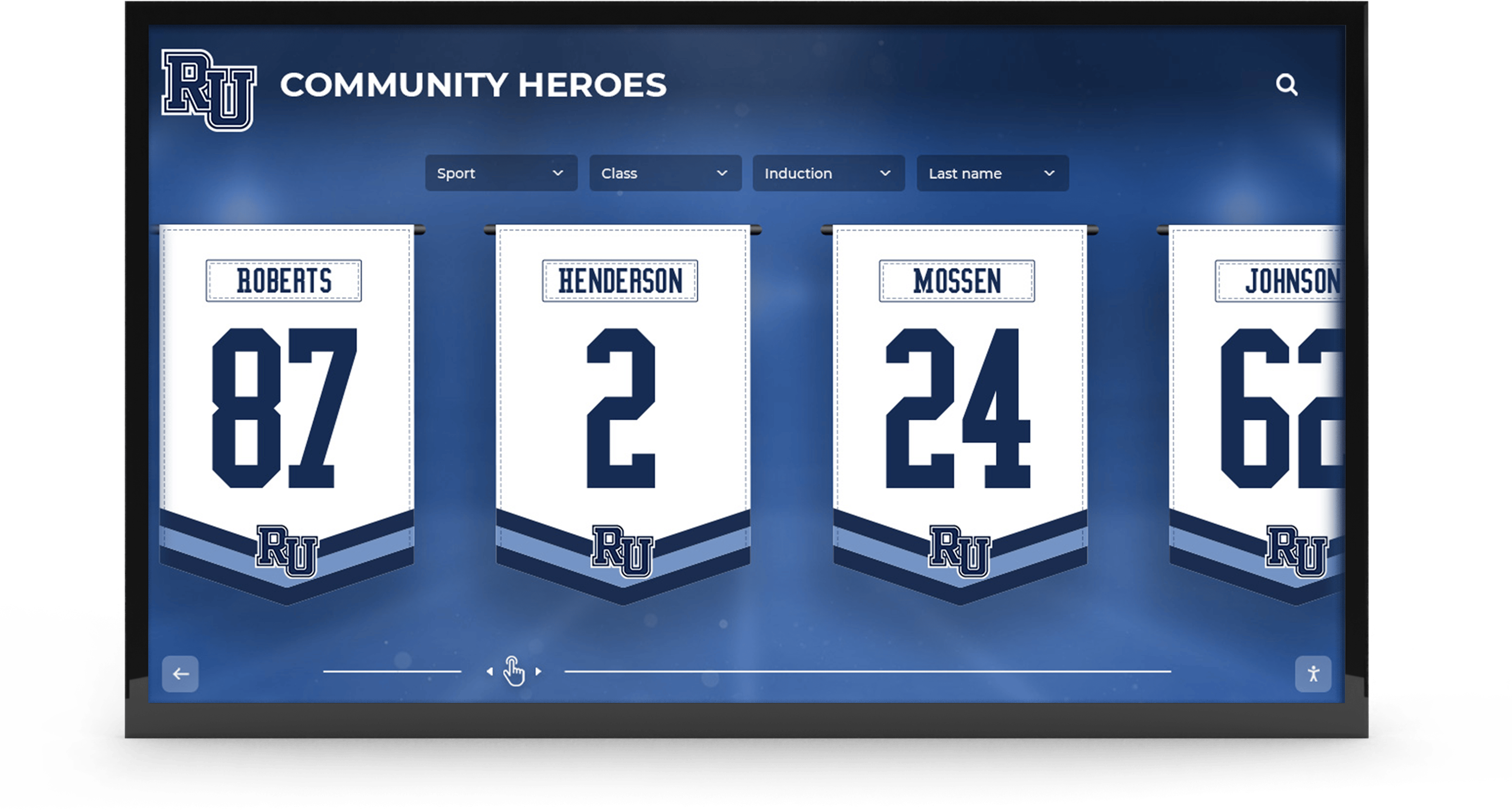
All-Sport Coverage: Comprehensive recognition across all varsity programs—football, basketball, baseball, softball, soccer, track and field, swimming, wrestling, and more—ensuring equitable celebration.
Multiple Recognition Categories: State championship displays, individual record holder boards, college signing recognition, and all-conference honors providing diverse ways to acknowledge achievement.
Alumni Engagement: Former athletes discovering their recognition often reconnect with schools after years, creating opportunities for mentorship programs, career networking, and continued support.
Recruitment Advantage: Prospective athletes and families visiting schools see comprehensive documentation of athletic excellence, understanding program quality and tradition while envisioning potential futures.

College and University Athletic Facilities
Colleges and universities benefit from recognition systems serving both athletic and institutional advancement objectives:
Comprehensive Athletic History: Documentation of teams, seasons, championships, and individual achievements spanning decades or centuries of competitive excellence.
Distinguished Alumni Recognition: Alumni spotlight programs highlighting former athletes who achieved professional success, demonstrating the quality of institutional athletic programs.
Donor Recognition Integration: Athletic donors receiving appropriate acknowledgment through donor recognition walls integrated with broader athletic recognition displays.
Academic Excellence Balance: Academic honor recognition displayed alongside athletic achievement, communicating that institutions value intellectual excellence equally with competitive success.
Community Sports Organizations and Clubs
Youth leagues, club teams, and community sports organizations also benefit from recognition technology:
Travel Team Documentation: Club programs documenting team achievements, tournament successes, and player development creates valuable organizational memory.
Alumni Networks: Former participants discovering their recognition often remain engaged as volunteers, coaches, and supporters of programs that shaped their development.
Sponsorship Appeal: Impressive recognition installations signal organizational professionalism, attracting business sponsors seeking association with quality programs.
Choosing the Right Recognition Display Solution
Organizations planning digital recognition implementations face numerous technology choices. Understanding key evaluation criteria ensures decisions that deliver lasting satisfaction.
Platform Evaluation Criteria
Ease of Content Management: Can non-technical staff easily update content without IT department involvement? Intuitive interfaces reduce ongoing administrative burden.
Sport-Specific Features: Does the platform understand athletic recognition with appropriate templates for statistics, positions, and achievements? Purpose-built solutions require less customization than generic digital signage software.
Unlimited Recognition Capacity: Can the system accommodate growth without additional costs as your organization adds new honorees over years and decades?
Multimedia Support: Does the platform handle photographs, videos, documents, and varied content types with appropriate organization and playback functionality?
Search and Filtering: Can visitors easily find specific individuals or explore by sport, era, achievement type, or other relevant categories?
Mobile and Web Access: Can community members view content from anywhere through responsive web interfaces, extending recognition beyond physical display locations?
Analytics and Reporting: Does the system provide insights about which content receives most attention, informing ongoing content development priorities?
Customer Support: What ongoing assistance does the provider offer? Responsive support prevents small issues from becoming major frustrations.
Reliability and Uptime: What performance guarantees ensure consistent availability? Recognition displays serve no purpose if they’re frequently offline.
Rocket Alumni Solutions: Purpose-Built Recognition Technology
Solutions like Rocket Alumni Solutions specialize in athletic and academic recognition, offering purpose-built platforms designed for non-technical administrators while delivering engaging experiences for visitors.
Intuitive Content Management: Web-based administrative interfaces allow authorized users to add athletes, upload photos and videos, update statistics, and modify content without technical expertise or physical access to display hardware.
Sport-Specific Templates: Pre-built structures for football, basketball, baseball, soccer, and other sports eliminate the need to create database schemas or design layouts from scratch.
Unlimited Recognition Capacity: Cloud-based platforms accommodate unlimited athlete profiles without additional costs as organizations grow recognition programs over time.
White-Glove Customer Service: Dedicated support throughout implementation and ongoing use ensures communities successfully deploy and maintain showcase initiatives without technical expertise.
Proven Track Record: Hundreds of institutions from major universities to small community organizations trust Rocket Alumni Solutions for athletic and academic recognition needs.
Budget Considerations and Funding Strategies
While professional installations at venues like Madison Square Garden involve substantial investments, organizations can implement meaningful recognition programs at various budget levels.
Scaled Implementation Approaches
Starter Systems: Single-display installations with 50-100 profiles demonstrate value and establish foundations for expansion. Initial investments typically range from $8,000-$15,000 including hardware, software, basic content development, and installation.
Mid-Range Programs: Multiple displays covering different sports or recognition categories with 200-500 profiles provide comprehensive coverage. Investments generally range from $20,000-$40,000.
Comprehensive Installations: Extensive multi-display systems with 1,000+ profiles, advanced features, and custom development approach professional-quality installations. These projects typically range from $50,000-$150,000 depending on scope and customization.
Alternative Funding Sources
Recognition programs competing with numerous institutional priorities for finite budgets can explore creative funding:
Alumni Donations: Former athletes often contribute specifically to programs honoring athletic achievement, seeing clear value in preserving their playing eras for current and future generations.
Corporate Sponsorships: Local businesses may sponsor recognition programs in exchange for appropriate acknowledgment, particularly when installations occupy visible public spaces.
Capital Campaign Integration: Recognition components can be included in broader facility fundraising campaigns, positioning them as essential elements of modern athletic facilities.
Naming Opportunities: Specific recognition categories, displays, or entire programs can be named in honor of major donors, creating meaningful recognition at multiple levels.
Phased Implementation: Rather than comprehensive systems immediately, organizations can start with core functionality and expand annually as budgets allow and outcomes demonstrate value.
The Future of Sports Venue Recognition Technology
Emerging technologies will further enhance interactive sports recognition in coming years, building on foundations established by current installations.
Augmented Reality Integration
AR applications may soon allow visitors to point smartphones at displays to access additional content layers, see historical moments overlaid on current facility spaces through location-based AR, interact with 3D models of equipment or trophies, and trigger video playback by scanning player photos.
Artificial Intelligence and Personalization
AI-powered systems might recommend content based on viewing history and expressed interests, generate natural language summaries of careers or championship seasons, enable conversational interfaces where visitors ask questions in natural language, and adapt complexity levels based on user technical proficiency or age.
Enhanced Analytics and Insights
Advanced tracking could reveal detailed visitor behavior patterns, identify popular content informing future development priorities, measure engagement duration demonstrating return on investment, and provide demographic insights about who uses recognition displays most frequently.
Social Integration Features
Enhanced social connectivity might enable visitors to share favorite profiles directly to social platforms from displays, aggregate social media content related to recognized individuals, allow alumni to submit content for consideration and approval, and facilitate connections between visitors who share interests in specific athletes or eras.
Key Considerations for Successful Implementation
Organizations planning recognition display projects should consider these critical success factors:
Content Quality Over Technology Flash
The most impressive hardware cannot compensate for poor content. Compelling stories, comprehensive information, and high-quality media matter more than display size or technical specifications. Invest appropriate time and resources in content development rather than focusing exclusively on technology.
Strategic Placement for Maximum Impact
Recognition displays deliver greatest value when positioned where maximum community members encounter them regularly. Main lobbies, entrance corridors, athletic facility common areas, and other high-traffic locations ensure visibility and engagement.
Administrator Training and Support
Even the most intuitive content management systems require proper training. Ensure multiple staff members understand update procedures, preventing single points of failure when personnel changes occur.
Regular Content Updates
Static displays lose relevance quickly. Commit to regular update cycles adding new achievements, honoring recent graduates, and refreshing featured content to maintain community interest and engagement.
Integration with Broader Communication
Recognition displays function most effectively when integrated with broader institutional communication strategies. Share recognition content through newsletters, social media, and websites, creating multiple touchpoints that reinforce messages and maximize visibility.
Long-Term Commitment
The difference between successful recognition programs and abandoned projects lies primarily in sustained organizational commitment. Treat recognition as an ongoing program rather than a one-time initiative, allocating appropriate resources and attention across years and decades.
Measuring Recognition Display Success
Organizations should establish clear metrics for evaluating recognition program effectiveness:
Quantitative Metrics
Interaction Frequency: Modern displays can track how often visitors engage with content, revealing usage patterns and popular features.
Session Duration: Average time visitors spend exploring content indicates engagement depth and interest level.
Search Patterns: Most-searched athletes or categories inform content development priorities and reveal visitor interests.
Web Traffic: If recognition extends online, track visits to web-based recognition platforms measuring reach beyond physical locations.
Alumni Response: Monitor how many recognized individuals reconnect following discovery of their inclusion, indicating effectiveness at engagement.
Qualitative Indicators
Stakeholder Feedback: Gather input from athletes, coaches, administrators, alumni, and community members about their perceptions and satisfaction.
Media Coverage: Press attention following launches or significant updates demonstrates community interest and recognition value.
Recruitment Impact: Assess whether prospective athletes and families reference recognition displays during recruitment processes.
Fundraising Correlation: Track whether recognition programs correlate with increased athletic giving or alumni engagement.
Community Pride: Observe whether recognition becomes a point of institutional pride referenced in broader communications and marketing.
Bringing Professional-Quality Recognition to Your Organization
Madison Square Garden and other iconic sports venues demonstrate how technology enhances recognition and celebration of athletic excellence. While these professional installations operate with substantial budgets, the underlying interactive touchscreen technology has become increasingly accessible for organizations at all levels.
From high schools honoring state championship teams to colleges documenting century-long athletic traditions to community organizations celebrating youth sports achievements, digital recognition displays provide tools for celebrating excellence at scales and depths that traditional approaches simply cannot match.
The question facing organizations isn’t whether interactive recognition delivers value—professional venues from Madison Square Garden to Fenway Park have proven that engaged visitors, increased facility traffic, enhanced recruitment, and strengthened alumni connections justify investment. Rather, the question is whether your organization will embrace these tools to honor achievement appropriately for modern audiences who expect interactive, multimedia, accessible experiences.
Whether celebrating basketball and hockey legends at Madison Square Garden, high school athletes who achieved state championships, or college competitors who represented institutions with distinction, the mission remains constant: recognizing excellence in ways that inspire current participants, engage alumni, and preserve heritage for future generations.
Ready to Transform Your Sports Recognition?
Rocket Alumni Solutions helps sports organizations create engaging recognition displays celebrating athletic excellence through proven technology and comprehensive support.
Our specialized platform provides sport-specific templates, intuitive content management, unlimited recognition capacity, and extensive multimedia capabilities enabling you to honor your program's legends with professional recognition systems designed specifically for athletic achievement.
Schedule a ConsultationInteractive touchscreen technology transforms how we celebrate athletic achievement, from iconic professional venues to local facilities where communities gather. Solutions like Rocket Alumni Solutions make this professional-quality recognition accessible for programs at every level, delivering comprehensive athlete profiles, unlimited content capacity, engaging multimedia integration, powerful search and discovery tools, and accessible web platforms extending recognition globally.
Your athletic program’s history deserves recognition worthy of the athletes who created it. Interactive technology provides the tools to deliver that recognition at a scale, depth, and engagement level that traditional approaches simply cannot match—whether you’re honoring legends at Madison Square Garden or celebrating state champions in your hometown gymnasium.































