Universities nationwide face a persistent challenge: how to comprehensively celebrate alumni achievements while inspiring current students, engaging donors, and strengthening institutional identity. Traditional recognition methods—static plaques occupying limited wall space, outdated trophy cases, and disconnected honor rolls—can only showcase a fraction of distinguished graduates whose accomplishments deserve visibility.
The University of Rhode Island, like many comprehensive research universities with rich histories spanning over a century, has produced thousands of distinguished alumni across diverse fields. From groundbreaking scientists and innovative business leaders to dedicated educators and accomplished athletes, URI graduates demonstrate the transformative power of higher education. Yet conventional recognition approaches struggle to honor this breadth of achievement while serving multiple institutional constituencies effectively.
Interactive touchscreen technology represents a fundamental shift in how universities can celebrate their alumni legacy. Solutions like Rocket Alumni Solutions enable institutions to showcase unlimited graduates through engaging multimedia displays that current students actively explore, prospective families research when evaluating colleges, and alumni proudly share with their networks—creating recognition experiences that traditional static approaches simply cannot match.
This comprehensive guide explores how universities implement interactive touchscreen recognition systems, examining the technology’s capabilities, strategic benefits across multiple institutional priorities, implementation considerations, and the measurable impact on student engagement, alumni relations, and institutional pride that make these investments valuable for universities committed to comprehensive community celebration.
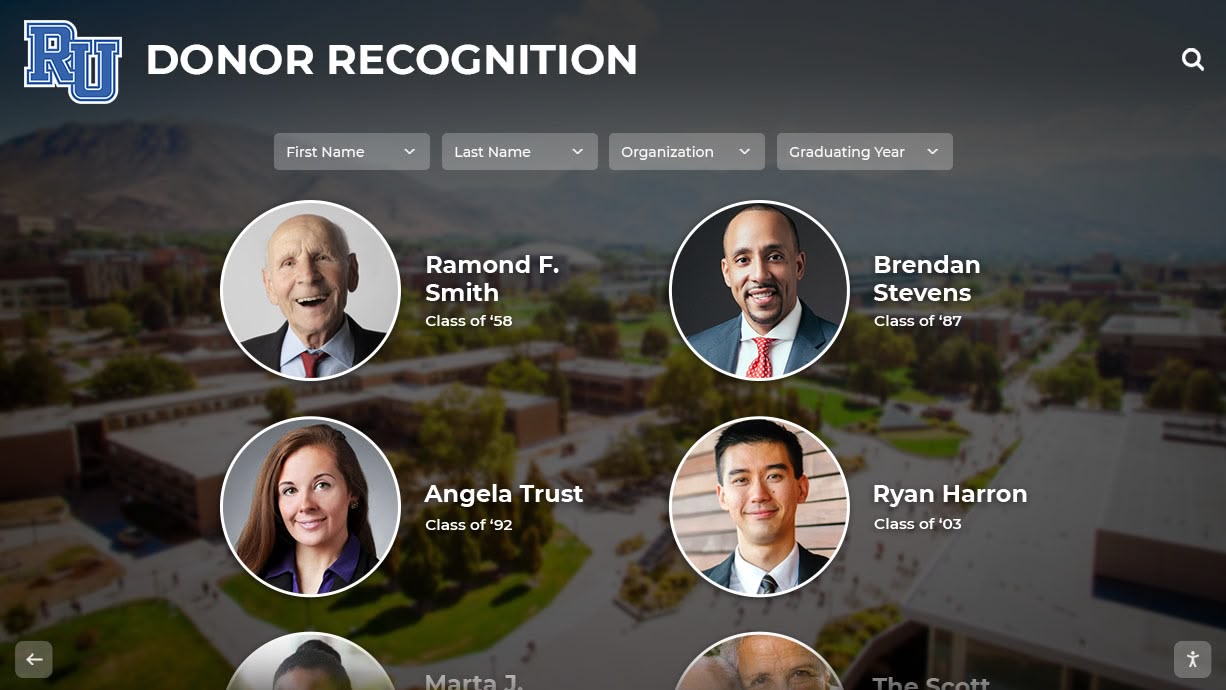
Modern interactive displays transform how universities celebrate alumni achievements through engaging touchscreen experiences accessible both on campus and online
The Evolution of University Alumni Recognition
Understanding why institutions are shifting from traditional recognition methods to interactive digital systems reveals fundamental limitations that have constrained university alumni relations for generations.
Traditional Recognition Constraints
Physical recognition displays have served universities for decades but face inherent limitations that increasingly conflict with contemporary institutional needs and expectations.
Space Limitations and Difficult Choices
Traditional donor walls, alumni halls of fame, and athletic recognition displays occupy fixed physical space. A dedicated wall might accommodate 75-150 names when appropriately spaced for visual impact. Yet comprehensive universities with 50,000+ living alumni across multiple decades face impossible mathematics—thousands of accomplished graduates deserve recognition, but physical space permits celebrating only a tiny fraction.
This capacity constraint forces difficult curation decisions. Do you honor only the most elite accomplishments? Focus on recent graduates while historical achievement fades from visibility? Rotate recognition periodically, removing some honorees to accommodate new ones? Each approach creates its own problems, potentially disappointing accomplished alumni who don’t receive limited available space or feel their recognition becomes temporary rather than permanent.
Update Challenges and Administrative Burden
Adding new recognition to traditional physical displays requires significant time and expense. Manufacturing new plaques costs $150-300 per inductee. Physical installation requires coordinating with facilities staff, accessing display locations, potentially disrupting campus operations, and managing multi-week timelines from approval through completion.
These logistical challenges often result in recognition updates occurring annually or less frequently rather than honoring achievements promptly when accomplishments occur and timing maximizes engagement value. The administrative burden also discourages comprehensive recognition—if each addition requires expensive, time-consuming processes, institutions naturally limit honorees to only the most elite accomplishments rather than celebrating achievement broadly.
Limited Storytelling Capabilities
Physical plaques typically display names, graduation years, and brief accomplishment summaries—perhaps 50-100 words maximum given space constraints and legibility requirements. This limited format cannot convey rich biographical narratives, career journeys, personal motivations, or detailed achievement context that creates emotional connections and provides practical value to current students researching career pathways.
Photos provide some additional context, but static displays cannot accommodate video interviews, research presentations, athletic highlights, or other multimedia content that brings accomplishments to life. The storytelling limitations mean recognition remains superficial rather than creating the deep engagement that strengthens alumni connections and inspires student aspiration.
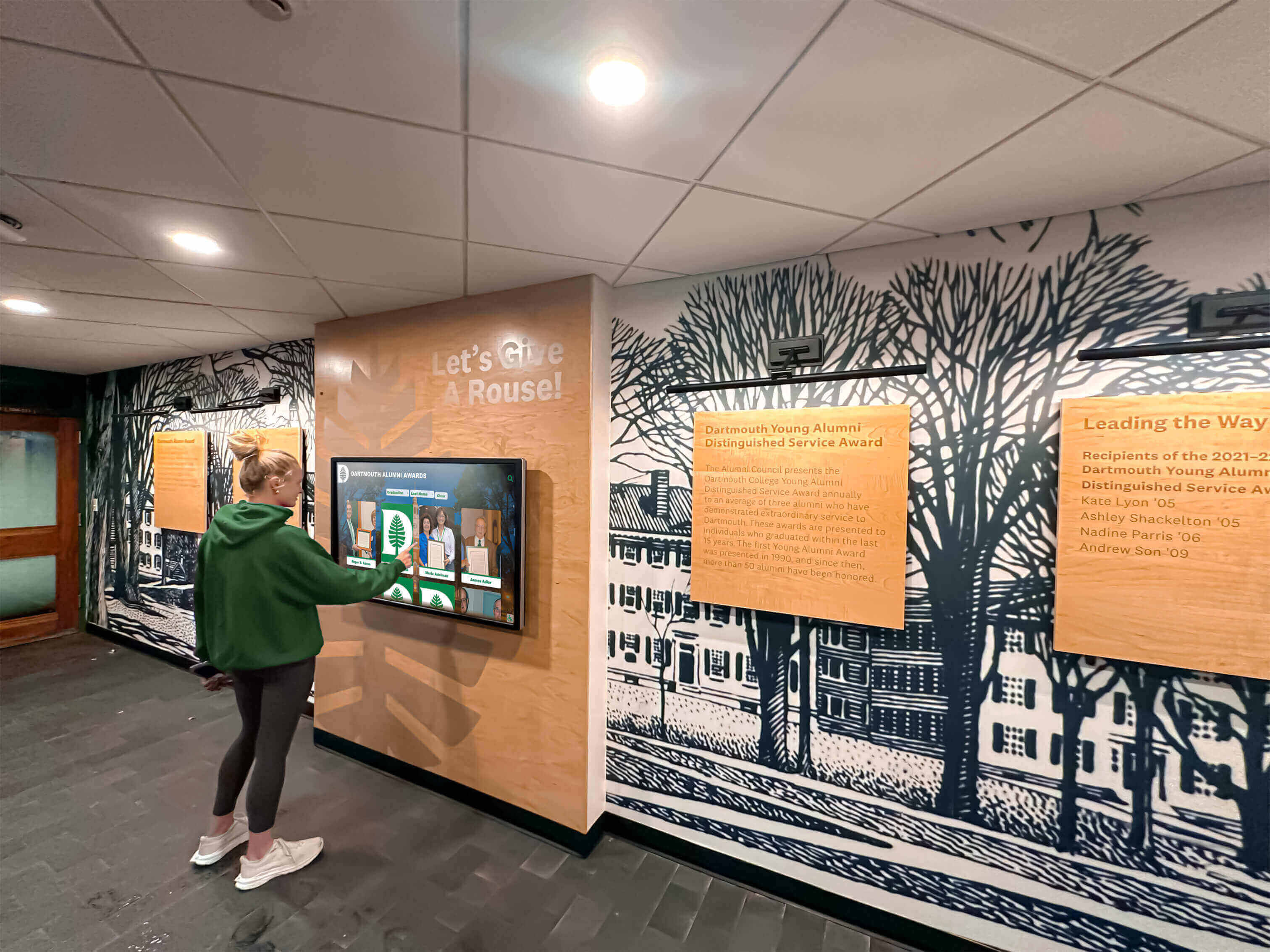
Interactive displays invite exploration where students discover alumni stories relevant to their own interests and career aspirations
The Digital Recognition Revolution
Interactive touchscreen platforms systematically address each traditional limitation while creating entirely new capabilities that serve diverse institutional priorities simultaneously.
Unlimited Recognition Capacity
Digital displays eliminate physical space constraints entirely. A single large-format touchscreen—typically 55 to 75 inches—can showcase unlimited alumni profiles with complete biographical information, multimedia content, and searchable databases. The same physical footprint that might accommodate 75 traditional plaques can present comprehensive recognition for thousands of distinguished graduates across all colleges, decades, and achievement categories.
This unlimited capacity transforms recognition philosophy from exclusive approaches focusing only on elite accomplishment to inclusive celebration honoring everyone whose achievements warrant acknowledgment. Universities can recognize outstanding educators serving local communities alongside Nobel laureates, accomplished small business owners alongside Fortune 500 executives, and dedicated public servants alongside nationally prominent leaders—demonstrating that institutional pride encompasses all forms of excellence and success.
Instant Updates and Remote Management
Cloud-based content management systems enable staff to add new recognition or update existing profiles remotely from any location within minutes. Changes appear immediately on physical displays and web-accessible versions without requiring physical access, facilities coordination, or manufacturing expenses.
This administrative efficiency encourages timely recognition when achievements occur rather than waiting for periodic update cycles. An alumnus receives a prestigious award in March—recognition can appear within days rather than waiting until next year’s annual update. This responsiveness maximizes engagement value by honoring accomplishments when alumni, their networks, and institutional communities are most aware of achievements and most likely to notice and appreciate recognition.
Rich Multimedia Storytelling
Digital platforms integrate high-resolution photography, video interviews, career journey narratives, achievement documentation, and personal reflections that static displays cannot accommodate. Profiles can include:
- Professional photos showing graduates in career environments
- Video testimonials sharing personal perspectives and advice
- Detailed biographical narratives explaining career progression
- Documentation of specific achievements and honors received
- Personal statements about how education prepared them for success
- Links to professional profiles, publications, or creative works
This multimedia depth transforms simple name recognition into compelling storytelling that creates emotional connections, provides practical career guidance for students, and honors accomplishments with appropriate detail and context. According to engagement research from studies on touchscreen software effectiveness, visitors spend 7-10 minutes exploring interactive recognition compared to 30-60 seconds viewing traditional static displays—demonstrating dramatically increased engagement value.
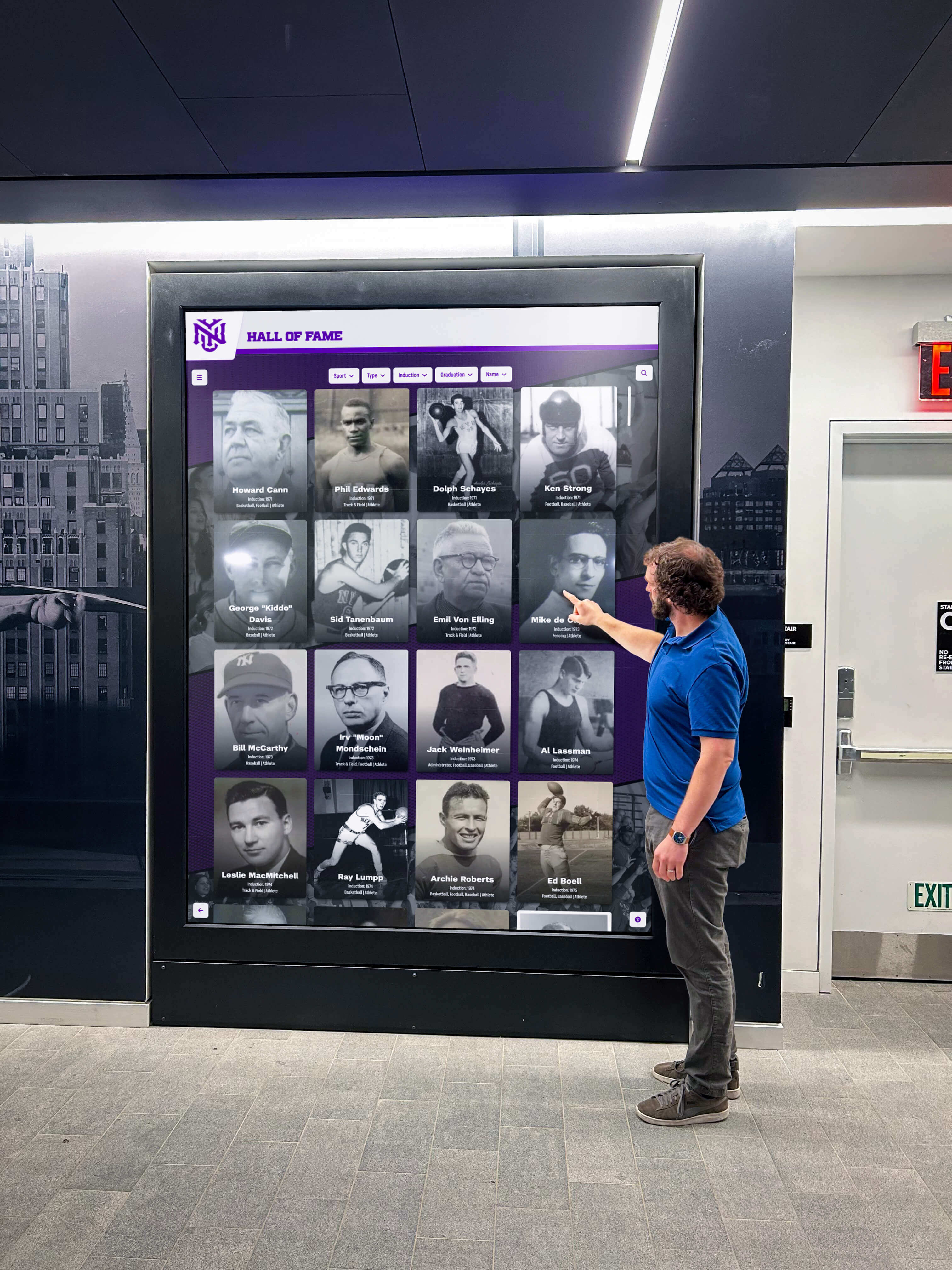
Intuitive touchscreen interfaces enable visitors to search for specific alumni, browse by category, and discover inspiring achievement stories
Comprehensive Benefits Across Institutional Priorities
Interactive recognition systems deliver measurable value across multiple university constituencies and strategic goals simultaneously—justifying investment through diverse returns that compound over time.
Current Student Engagement and Career Development
Students represent the population gaining perhaps the greatest practical benefit from enhanced alumni recognition when implemented thoughtfully with student needs central to design decisions.
Role Model Discovery and Career Exploration
Comprehensive searchable alumni databases enable students to discover graduates whose career paths align with their own interests and aspirations. A marine biology major can search URI oceanography alumni, discovering graduates working in research institutions, conservation organizations, maritime industries, and academic settings—gaining concrete examples of what career success looks like within their chosen field while understanding diverse employment opportunities their education prepares them to pursue.
These discovery capabilities prove particularly valuable for students from underrepresented backgrounds. First-generation college students benefit from discovering alumni from similar circumstances who have achieved remarkable success. Seeing graduates who share hometown origins, family backgrounds, or demographic characteristics achieving distinction communicates powerfully that they too can accomplish extraordinary things—combating imposter syndrome and strengthening persistence when academic challenges feel overwhelming.
Networking Foundations and Mentorship Connections
Interactive systems provide students valuable networking preparation before attending career fairs, alumni events, or professional conferences. Students can research alumni working in target companies or industries, arriving prepared with informed questions and genuine enthusiasm about potential employer connections to their university community.
Advanced implementations can facilitate direct alumni-student connections. Some platforms enable students to request informational interviews, submit questions to featured alumni, or signal interest in specific career guidance—transforming passive inspiration into actionable networking that directly supports professional preparation and career development. Learn more about how to connect with alumni digitally for networking and mentorship opportunities.
According to student engagement research, institutions implementing comprehensive interactive recognition report that students discover alumni connections they subsequently leverage for internships, job opportunities, and career guidance—demonstrating measurable practical benefit beyond simple inspiration.
Academic Program Marketing and Enrollment
Prospective students and families increasingly seek authentic evidence of educational quality and career outcomes beyond institutional marketing claims when evaluating college options. Comprehensive alumni recognition provides this evidence through hundreds of real examples demonstrating what graduates accomplish across diverse fields.
Research consistently shows prospective students rank “graduate success” among their top institutional selection criteria. Yet most universities struggle to make this abstract concept concrete and credible through selective examples in recruitment materials. Interactive recognition delivers compelling, searchable evidence that prospective families can explore independently, discovering alumni relevant to their specific interests and career goals rather than relying solely on curated examples institutions cherry-pick for marketing purposes.
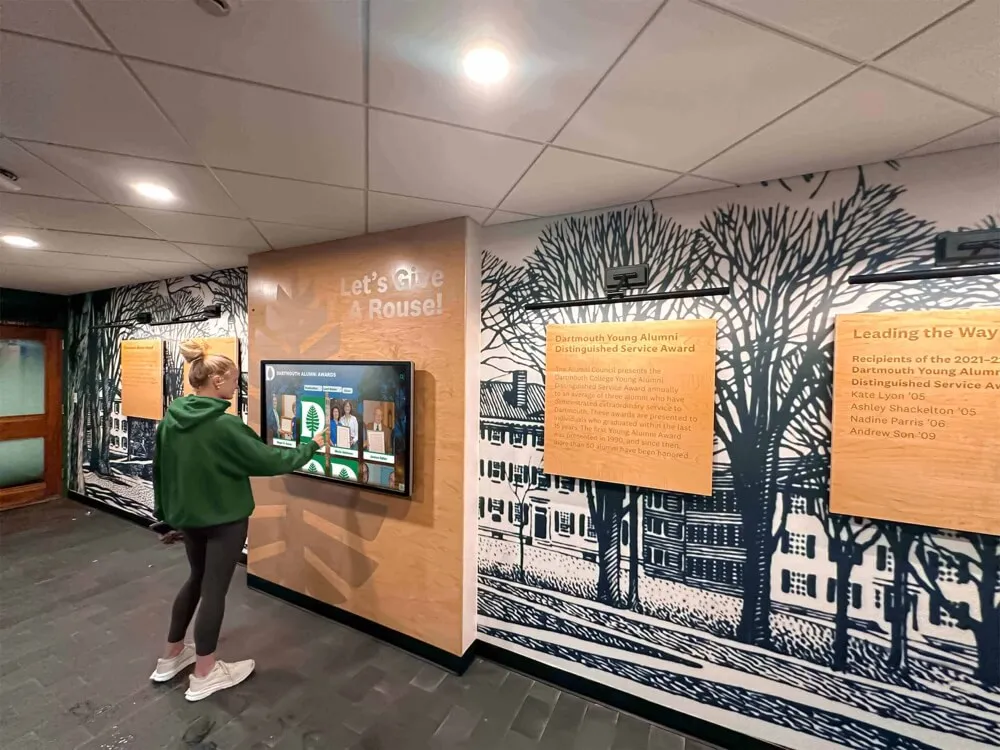
Strategic placement in high-traffic campus corridors ensures maximum visibility while creating welcoming spaces that celebrate institutional identity
Alumni Engagement and Relationship Strengthening
While student benefits provide immediate justification, comprehensive recognition equally serves alumni populations by strengthening emotional bonds and practical connections that sustain lifelong institutional relationships.
Validation and Continued Connection
Recognition matters to alumni because it signals that their alma mater continues to value their connection and celebrate their achievements long after graduation. Distinguished graduates who receive appropriate acknowledgment feel that their institution pays attention to their careers and takes pride in their accomplishments—validation that strengthens emotional attachment and motivates continued engagement.
This psychological benefit proves particularly significant for alumni whose achievements might not generate widespread public visibility despite representing genuine excellence. The dedicated educator shaping young lives in local schools, the committed social worker serving vulnerable populations, the innovative small business owner creating local employment—these graduates make meaningful contributions that deserve celebration even though they don’t generate national headlines.
Social Sharing and Network Amplification
Digital platforms enable alumni to share recognition directly with personal and professional networks through social media integration. Honored graduates can celebrate their institutional acknowledgment with friends, family, and colleagues who may never visit campus but can view detailed profiles through shared links.
Research shows that recognized alumni who can easily share acknowledgment with personal networks demonstrate significantly higher satisfaction and engagement levels compared to those whose recognition remains accessible only through rare campus visits. Social integration capabilities directly support the relationship strengthening that recognition intends to facilitate.
Reunion Programming and Event Integration
Interactive recognition provides natural focal points for reunion activities and alumni programming. Milestone reunion classes can explore their cohort’s collective achievements, discovering what classmates have accomplished since graduation while reminiscing about shared experiences. Alumni association events can feature recognition exploration combined with informal gathering and networking.
Many institutions implementing alumni recognition programs report that touchscreen displays become popular destinations during campus visits, with returning graduates spending significant time discovering former classmates’ accomplishments and sharing memories about their student experiences. This aligns with broader trends in how to recognize alumni digitally that strengthen institutional connections.
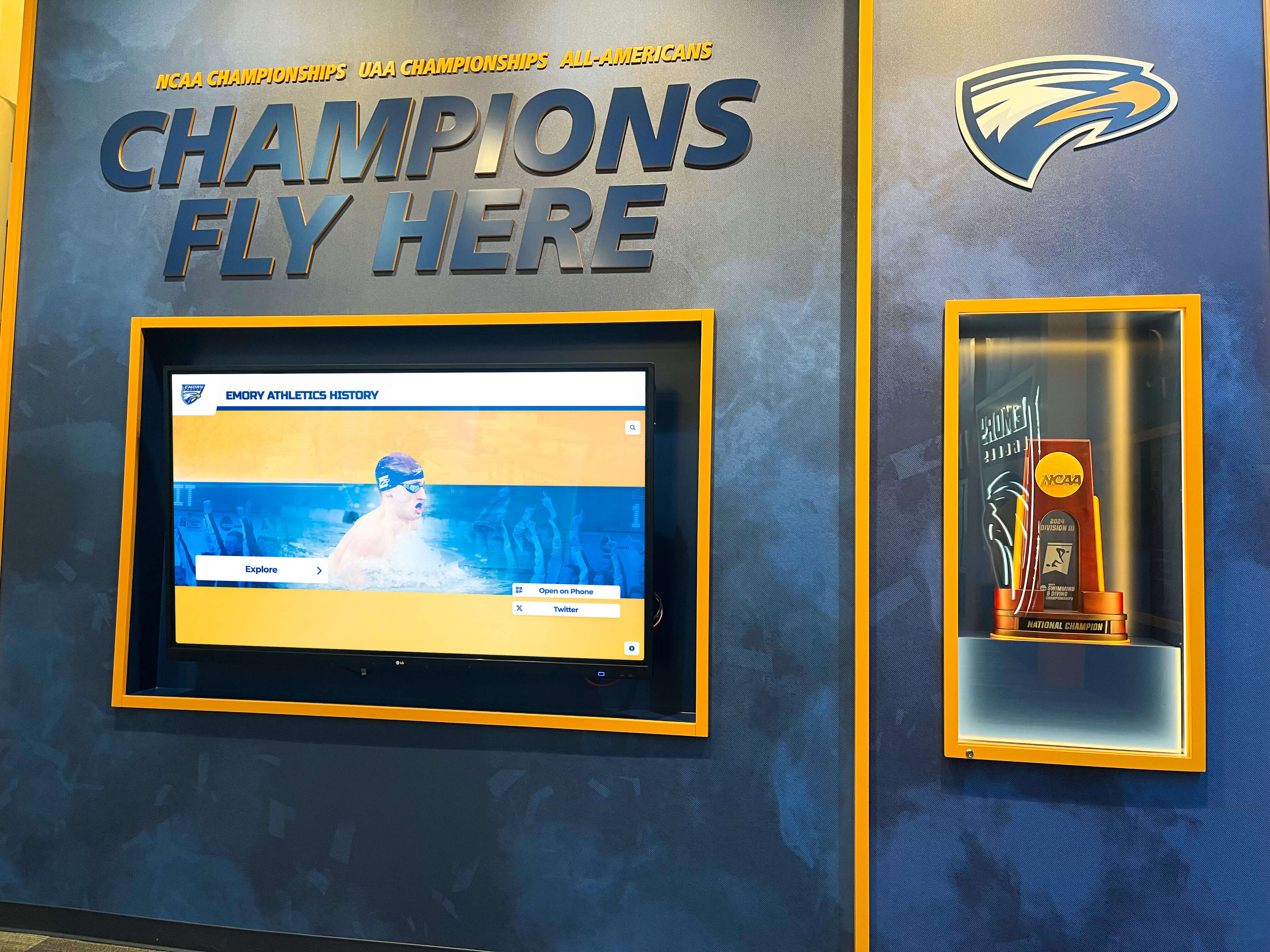
Athletic facilities benefit from comprehensive recognition celebrating both competitive championships and distinguished athlete alumni achievements
Development and Fundraising Infrastructure
Advancement professionals recognize that comprehensive recognition extends beyond courtesy acknowledgment—it represents strategic infrastructure influencing cultivation effectiveness, donor retention, and philanthropic culture throughout communities.
Stewardship Demonstration and Donor Confidence
Alumni considering major philanthropic investments naturally evaluate whether institutions demonstrate appropriate stewardship of generous support. Prominent, professionally executed recognition visible to broad audiences provides tangible evidence that universities appropriately acknowledge and appreciate significant contributions—building confidence that future gifts will receive similar respect and visibility.
Interactive systems enable nuanced recognition coordinating alumni achievement celebration with appropriate donor acknowledgment where relevant. Profiles can note that distinguished alumni also serve as benefactors supporting programs, scholarships, or facilities, connecting professional accomplishments to philanthropic leadership in ways that honor both dimensions of their institutional contribution.
Cultivation Environment and Prospect Engagement
Development officers conducting facility tours with major gift prospects inevitably highlight impressive spaces demonstrating institutional quality and donor impact. Interactive recognition displays serve this cultivation purpose by showcasing vibrant, engaged alumni communities while demonstrating that institutions maintain cutting-edge infrastructure reflecting contemporary expectations and technological sophistication.
Prospects touring campus encounter comprehensive alumni celebration signaling that universities value relationships, maintain strong networks, and sustain connections with distinguished graduates who remain invested in institutional success—all factors influencing philanthropic decision-making for donors evaluating whether their potential support will join vibrant giving communities or represent isolated contributions to institutions lacking robust development cultures.
According to advancement research, educational institutions implementing interactive recognition report 18-24% increases in first-year donor participation rates, with sustained growth reaching 30-40% above baseline within three years. These measurable impacts demonstrate that recognition investment generates significant fundraising returns beyond intangible relationship benefits. For universities planning campaigns, explore capital campaign donor recognition strategies that integrate physical and digital approaches.
Class Giving and Participation Motivation
Recognition systems can specifically acknowledge reunion class giving and collective philanthropic achievements, creating positive peer influence encouraging participation. When reunion cohorts see previous classes celebrated for fundraising success or participation rates, it creates motivation to achieve similar recognition through their own reunion giving campaigns.
This collective focus proves particularly effective because it emphasizes community participation rather than individual wealth, enabling all alumni to contribute meaningfully to goals their class can achieve together regardless of individual capacity limitations that might discourage participation in traditionally individually focused campaigns. Universities can also implement alumni of the month programs to maintain year-round engagement momentum.
University Implementation: Strategic Considerations
Successfully implementing interactive recognition requires thoughtful planning addressing location strategy, content development, sustainable management, and integration with broader institutional systems and goals.
Optimal Campus Placement Strategy
Strategic display positioning significantly impacts recognition effectiveness and community engagement. Universities should consider multiple high-visibility locations reaching diverse audiences throughout typical campus operations.
Student Union and Commons Areas
Student unions and campus commons represent natural recognition locations where students naturally gather between classes, during meals, and for organization activities. Prominently positioned interactive touchscreens in main lobbies ensure maximum student exposure to alumni recognition while creating engaging focal points in heavily trafficked student spaces.
Central placement particularly benefits current student inspiration—the primary audience needing regular exposure to alumni success for career guidance and motivational benefit. Students passing through unions multiple times weekly encounter changing featured content, seasonal highlights, and topical recognition aligned with campus events and academic calendars.
Alumni Center Dedicated Recognition
Institutions maintaining dedicated alumni centers should implement interactive recognition complementing environments where returning graduates specifically gather for reunion events, networking programs, and association activities. Alumni center placement ensures populations most likely to explore content extensively have comfortable access in environments designed for extended engagement and reflection.
These locations particularly support development and fundraising objectives by creating impressive recognition environments where donor cultivation occurs. Prospective major benefactors touring facilities with advancement staff encounter systematic alumni celebration demonstrating institutional commitment to relationship stewardship—tangible evidence that generous support receives lasting acknowledgment and appropriate gratitude.
College-Specific Installations
Individual colleges can implement focused displays celebrating graduates from their specific programs while maintaining connection to comprehensive university-wide systems. The College of Engineering might feature engineering alumni prominently while enabling discovery of graduates from all colleges. The School of Business could spotlight business achievement while connecting students to broader institutional networks.
Distributed approaches maximize recognition visibility across campus while respecting college identities and enabling targeted content curation matching specific academic community interests. Students encounter recognition in their primary academic buildings where they spend most time, increasing likelihood of regular engagement compared to exclusively centralized approaches.
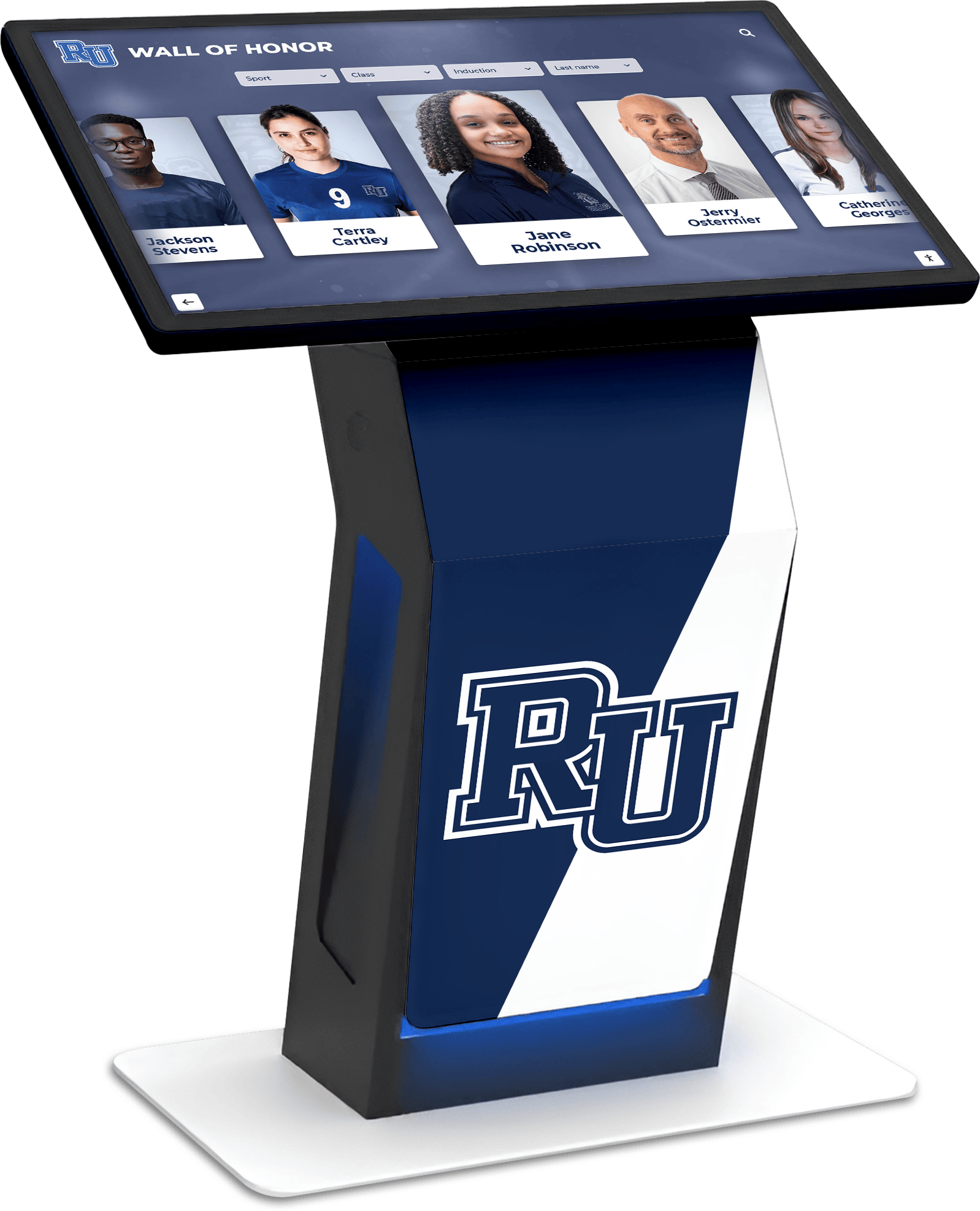
Freestanding kiosk configurations provide flexible placement options while creating prominent recognition centerpieces in campus gathering spaces
Athletic Facilities and Competition Venues
For athletic recognition, competition venues and training facilities provide natural placement connecting distinguished athlete alumni to current student-athletes and fans. Interactive displays showcasing athletic hall of fame achievements create inspiring environments celebrating competitive excellence while demonstrating to recruits and prospective students institutional commitment to honoring athletic accomplishment comprehensively.
Athletic facility placement also captures high visitor traffic during games and events when alumni, families, and community members fill venues—extending recognition reach beyond student and faculty populations to broader constituencies who support university athletics and take pride in competitive success. For Division I programs specifically, explore Division I athletics digital recognition systems tailored to large-scale athletic programs.
Content Development and Quality Standards
Comprehensive recognition requires systematic content development ensuring quality, completeness, and ongoing currency that maintains engagement value over time.
Phased Profile Development
Rather than waiting to achieve complete comprehensive recognition before launching, universities should implement phased development starting with manageable initial content while systematically expanding coverage.
Phase 1 Foundation (Months 1-3): Develop 150-200 exemplar profiles spanning all university colleges, multiple decades, and diverse achievement categories. This initial content demonstrates system scope and capabilities while providing sufficient depth for meaningful exploration, creating positive first impressions that encourage adoption. Consider approaches similar to implementing digital walls of fame for systematic rollout success.
Phase 2 Historical Expansion (Months 3-12): Systematically add distinguished alumni from historical eras, working backward through decades to preserve institutional memory before it fades. Engage alumni association leadership, college advancement staff, and long-tenured faculty in identifying notable graduates and gathering biographical information, photos, and accomplishment documentation.
Phase 3 Contemporary Achievement (Ongoing): Establish processes adding recent distinguished alumni as achievements emerge—new awards and honors, significant career milestones, notable publications or creative works, leadership appointments, and major philanthropic contributions. Regular additions maintain content currency and give alumni reasons to return exploring what’s new since their last visit.
Quality and Consistency Standards
Professional recognition requires consistent quality across all content regardless of when added or who manages development.
Writing Guidelines: Establish tone, voice, and style standards ensuring all biographical content maintains consistent professionalism while remaining engaging and accessible rather than stiffly formal. Profiles should celebrate accomplishments enthusiastically without hyperbole, provide sufficient context for readers unfamiliar with specialized fields, and include specific details rather than generic descriptions.
Photography Requirements: Set minimum resolution standards (1920x1080 for featured images), composition guidelines ensuring subjects appear professional and approachable, and appropriate contextualization showing graduates in career environments or institutional settings. Coordinate professional photography sessions for featured alumni when possible while accepting quality historical photos preserving visual documentation across eras. For display design best practices, explore how to design stunning digital hall of fame layouts.
Accuracy Verification: Implement review processes ensuring factual accuracy before publication. Cross-reference biographical details with multiple sources, confirm achievement claims through official records or credible documentation, and enable alumni to review and approve their own profiles when feasible. Building reputation for recognition accuracy encourages participation and strengthens credibility.
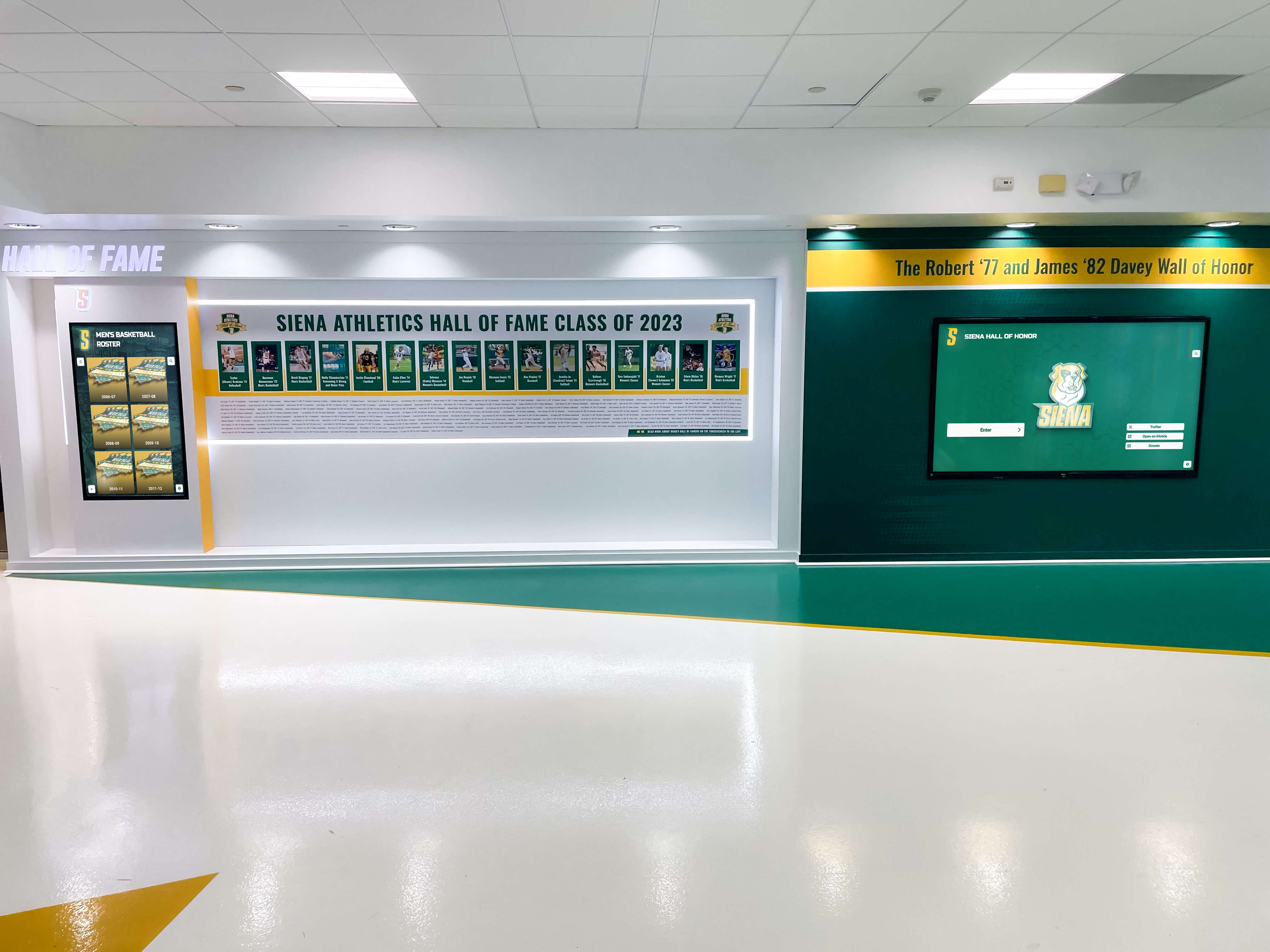
Professional recognition installations demonstrate institutional commitment to excellence while building pride throughout campus communities
Technology Platform Selection
Choosing appropriate technology partners significantly impacts implementation success and long-term satisfaction. Purpose-built recognition platforms provide critical advantages over attempting to adapt generic digital signage systems for complex recognition purposes.
Recognition-Specific Features
Specialized platforms like Rocket Alumni Solutions offer pre-built functionality addressing unique alumni recognition needs including comprehensive profile management, achievement categorization, multimedia organization, robust search and filtering, analytics tracking, and web accessibility extensions that generic digital signage solutions lack.
Educational Sector Experience
Vendors specializing in educational recognition understand university goals, student engagement patterns, alumni relations priorities, and development integration requirements that general technology companies lack. This educational focus ensures platforms address institution-specific needs rather than requiring extensive customization to adapt generic business or retail-focused software.
Implementation Support and Training
Purpose-built recognition providers typically offer white-glove setup assistance ensuring successful launches rather than leaving institutions to figure out complex technical and content workflows independently. Comprehensive training helps staff leverage platform capabilities fully while adapting to personnel transitions that inevitably occur.
Platform Evolution and Enhancement
Specialized vendors regularly enhance capabilities driven by education sector feedback, ensuring platforms advance with changing expectations and emerging technologies. This continuous improvement means institutions benefit from ongoing innovation without requiring expensive custom development or system replacement.
According to implementation research, universities working with dedicated recognition platforms like Rocket Alumni Solutions report significantly higher satisfaction and adoption rates compared to institutions attempting to build custom solutions or adapt generic digital signage systems—justifying investment in specialized platforms despite potentially higher initial costs.
Measuring Recognition Impact and Return on Investment
Systematic assessment ensures recognition programs achieve intended goals while demonstrating value that justifies resource investment.
Engagement Analytics and Usage Metrics
Modern platforms track comprehensive engagement data revealing how communities interact with recognition:
Interaction Metrics
- Number of unique visitors and total sessions
- Average interaction duration (typically 7-10 minutes for touchscreen displays)
- Most-viewed alumni profiles and content categories
- Search terms revealing visitor interests and discovery patterns
- Peak usage times informing content strategy and feature placement
- Geographic distribution of web-accessible recognition viewers
These metrics demonstrate recognition reach while identifying optimization opportunities ensuring content remains relevant and engaging.
Discovery Patterns and Search Behavior
Analytics reveal how students, alumni, and visitors search for and discover recognition content:
- Alumni name searches indicating specific interest
- College or major filtering showing academic program research
- Career field exploration revealing professional interest patterns
- Geographic searches suggesting relocation or networking intentions
- Graduation year browsing indicating reunion interest or nostalgia
Understanding these patterns enables content enhancement ensuring recognition serves diverse user needs effectively while supporting various institutional priorities from student career development through alumni engagement and donor cultivation.
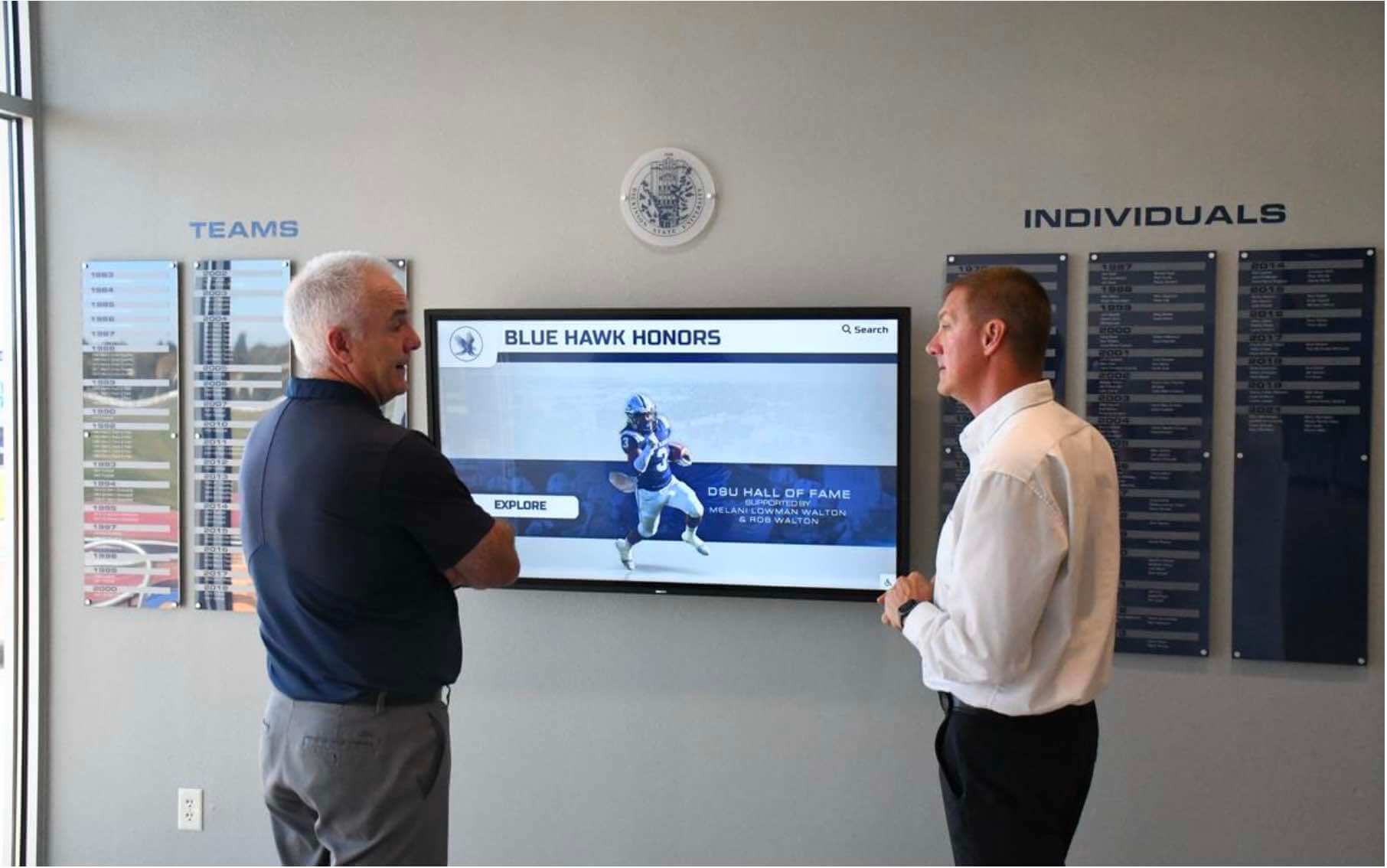
Successful recognition programs create shared experiences where alumni, students, and visitors explore institutional legacy together
Fundraising and Advancement Metrics
Beyond engagement measures, advancement-focused metrics demonstrate recognition’s development impact:
Donor Retention and Giving Growth
- Retention rate comparisons between recognized and unrecognized alumni
- Gift size increases among recognition program participants
- Multi-year giving patterns showing sustained engagement
- Major gift inquiry volume from recognized donor populations
- Planned giving commitment rates among honored alumni
Educational institutions implementing comprehensive interactive recognition consistently report that recognized alumni demonstrate 40-60% higher retention rates and 25-35% larger average gifts compared to similar unrecognized populations—generating measurable fundraising returns that compound over time as recognition programs mature.
Program ROI Calculation
Universities can quantify recognition investment returns by comparing:
- Retention Value: Additional gifts received due to improved recognized donor retention
- Upgrade Value: Incremental gift growth among recognized alumni populations
- Cost Savings: Eliminated traditional plaque manufacturing and installation expenses
- Administrative Efficiency: Staff time savings through remote digital content management
- Cultivation Effectiveness: Enhanced major gift prospect engagement during campus visits
Most institutions implementing digital recognition report achieving positive ROI within 18-24 months, with substantial ongoing returns as alumni populations grow, content expands, and engagement deepens over multi-year timeframes.
Student Career Outcomes and Institutional Reputation
While harder to measure precisely, recognition systems contribute to student success and institutional reputation enhancement:
Career Development Indicators
- Student-alumni networking connections facilitated through recognition discovery
- Internship and employment placements resulting from alumni connections
- Informational interview requests and mentorship relationship formation
- Career fair attendance and employer engagement showing preparation
- Alumni network appreciation among graduating seniors
Enrollment and Reputation Impact
- Prospective student campus visit feedback regarding alumni success evidence
- Admission yield rates among accepted students researching career outcomes
- Parent confidence in institutional quality and graduate placement
- External media coverage highlighting distinguished alumni achievements
- Peer institution recognition of comprehensive alumni celebration approaches
These broader impacts prove harder to attribute definitively to recognition systems but contribute to overall institutional positioning and competitive advantage in increasingly challenging higher education enrollment and reputation environments.
Future Trends in University Recognition Technology
The evolution of interactive recognition continues, with emerging capabilities enhancing institutional effectiveness and community engagement.
Artificial Intelligence and Personalization
Advanced platforms increasingly incorporate AI capabilities enabling more sophisticated experiences:
Personalized Content Recommendations
- Customized alumni suggestions based on visitor interests and search patterns
- Career field connections matching student major and professional aspirations
- Geographic alumni recommendations for students researching specific regions
- Achievement category exploration guided by demonstrated interests
- Related alumni suggestions encouraging extended discovery
Intelligent Search and Discovery
- Natural language search understanding conversational queries
- Semantic search connecting related concepts and achievements
- Voice-activated exploration for accessibility and convenience
- Predictive suggestions as visitors type searches or browse categories
- Automated profile enhancements drawing from multiple data sources
Extended Reality and Immersive Experiences
Emerging technologies enable new recognition experiences beyond traditional touchscreen interfaces:
Augmented Reality Integration
- Smartphone apps enabling AR experiences when pointed at recognition displays
- Virtual “layering” of historical recognition with current honorees
- 3D visualizations of facilities or programs alumni supported
- Interactive timelines showing institutional evolution alumni influenced
- Gamification elements encouraging exploration and discovery
Virtual Recognition Environments
- 3D virtual spaces enabling global alumni to explore recognition remotely
- Immersive experiences showcasing program impact and achievement
- Virtual reality donor appreciation events and recognition ceremonies
- Remote ceremony attendance for geographically dispersed alumni
- Hybrid physical-virtual recognition accessible across multiple platforms
Comprehensive Integration with Institutional Systems
Future platforms will feature deeper integration with university enterprise systems:
Database Connectivity and Automation
- Real-time synchronization with alumni information systems
- Automated profile updates as advancement databases change
- Integrated giving history from development systems
- Connected engagement tracking across multiple university touchpoints
- Unified alumni view combining recognition with other relationship data
Omnichannel Engagement
- Consistent recognition experiences across physical displays, websites, mobile apps, and social media
- Coordinated communication triggered by recognition milestones
- Integrated event management connecting recognition to programming
- Social networking features enabling alumni connections
- Complete digital ecosystem serving diverse stakeholder needs
These emerging capabilities will further enhance recognition effectiveness while reducing administrative burden and enabling more sophisticated approaches to alumni relationship development and institutional community building.
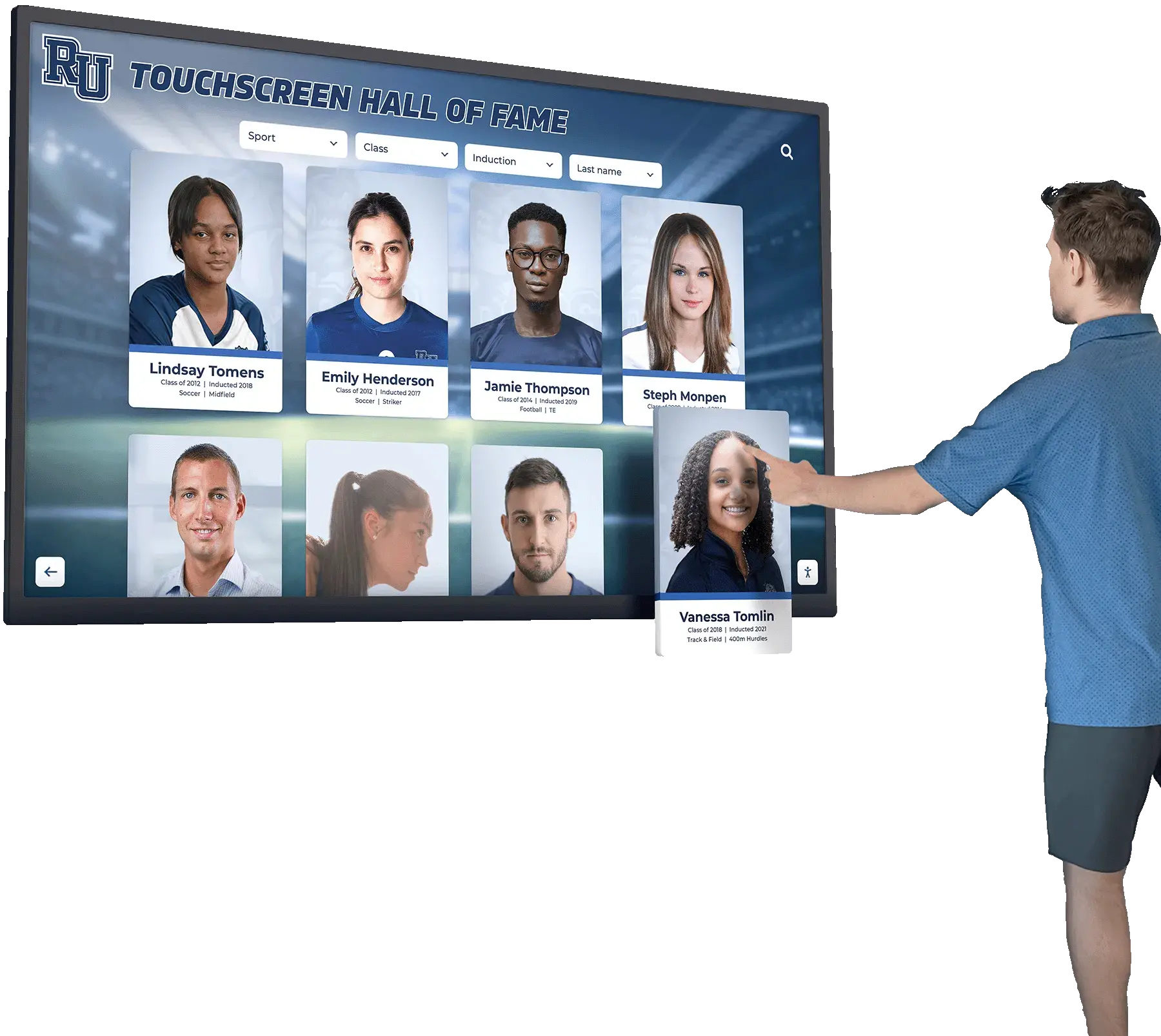
Intuitive interfaces make exploring achievement content accessible for visitors of all ages and technical comfort levels
Conclusion: Transforming University Recognition for Modern Institutions
Interactive touchscreen recognition technology represents a fundamental evolution in how universities celebrate alumni achievements, strengthen institutional identity, and serve diverse community constituencies. Solutions like Rocket Alumni Solutions enable comprehensive approaches that traditional physical displays simply cannot match—unlimited recognition capacity, rich multimedia storytelling, instant remote updates, global web accessibility, and measurable engagement analytics.
The strategic benefits extend across multiple institutional priorities simultaneously. Current students discover career inspiration and networking opportunities supporting professional development. Alumni experience validation and continued connection strengthening lifelong engagement. Development professionals gain cultivation infrastructure and stewardship tools enhancing fundraising effectiveness. Prospective students and families access authentic outcome evidence informing enrollment decisions. And broader university communities celebrate collective achievements that build pride and reinforce institutional identity.
Implementation requires thoughtful planning addressing location strategy, content development workflows, quality standards, sustainable management processes, and technology platform selection. Yet universities nationwide have successfully navigated these considerations, leveraging specialized recognition platforms and vendor support ensuring effective outcomes that deliver measurable returns across student engagement, alumni relations, and advancement priorities.
Transform Your University Alumni Recognition
Discover how Rocket Alumni Solutions can help your institution create comprehensive interactive recognition systems that celebrate every distinguished graduate while inspiring students, strengthening alumni engagement, and advancing institutional goals.
Schedule Your Free ConsultationUniversities investing in modern recognition technology invest in student success infrastructure, alumni relationship development, advancement capability enhancement, and institutional reputation building—returns that far exceed initial technology costs while delivering compounding value as recognition grows more comprehensive and community connections deepen through systematic celebration of the remarkable individuals who define institutional excellence across generations.
Whether implementing focused athletic recognition, comprehensive alumni celebration, donor stewardship enhancement, or integrated approaches serving multiple priorities, interactive touchscreen platforms provide the flexible, scalable infrastructure enabling universities to honor achievement appropriately while strengthening the relationships and community bonds that sustain institutional missions across decades. Explore how digital recognition displays can transform your university’s alumni relations program and strengthen connections with the distinguished graduates who define your institutional legacy.































