Walk through most school buildings and you’ll find them—long stretches of empty hallway walls punctuated only by lockers, bulletin boards cluttered with outdated notices, and the occasional faded poster. These corridors represent thousands of square feet of prime real estate that students, staff, and visitors traverse daily, yet they remain among the most underutilized spaces in educational facilities. School hallway remodeling ideas that transform these transitional spaces into engaging recognition environments are revolutionizing how schools celebrate achievement, build community pride, and maximize facility value without expanding building footprints.
School hallways serve critical functions beyond simply connecting classrooms. These high-traffic corridors shape first impressions for visiting families evaluating schools, create daily touchpoints with students during passing periods, and offer continuous opportunities to reinforce institutional values, celebrate accomplishments, and inspire excellence. When thoughtfully designed, hallway spaces become powerful communication tools that strengthen school culture and community connection.
Modern hallway remodeling approaches recognize these corridors as valuable engagement opportunities rather than neglected afterthoughts. By integrating recognition displays, interactive technology, strategic design elements, and purposeful content, schools create hallway environments that educate, inspire, and celebrate while visitors move between destinations. These transformations deliver multiple benefits—enhanced aesthetics, improved school pride, increased alumni engagement, and better facility utilization—all from reimagining existing spaces rather than costly building additions.
This comprehensive guide explores practical school hallway remodeling ideas spanning budget considerations, design strategies, technology integration, recognition display implementation, and real-world approaches that transform empty corridors into dynamic spaces serving educational missions and community-building goals.
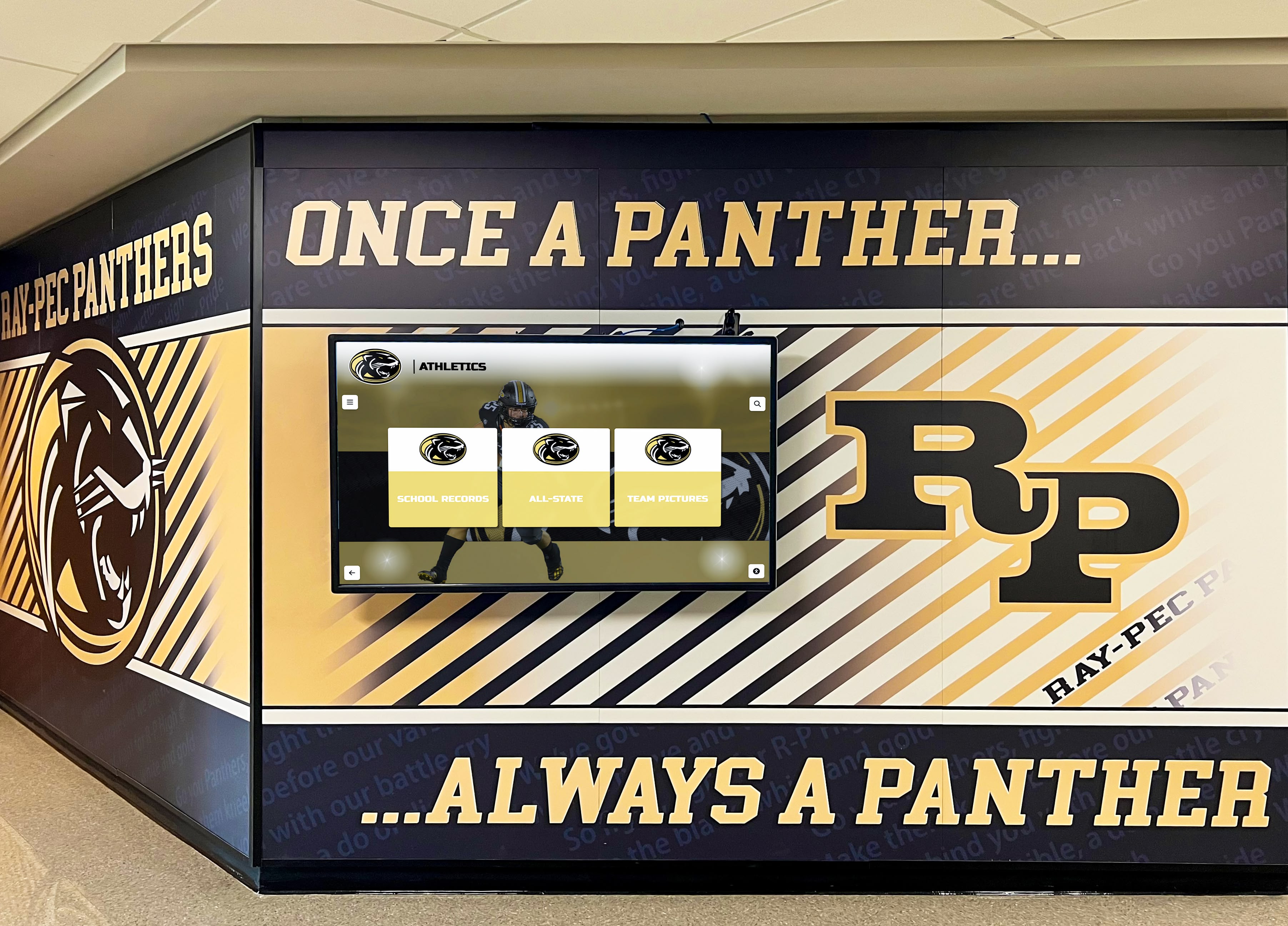
Modern hallway designs integrate recognition displays seamlessly into architectural environments
Understanding Hallway Remodeling Opportunities in Educational Facilities
Before implementing specific remodeling ideas, understanding the unique opportunities and constraints of school hallway environments provides essential context for successful transformations.
The Strategic Value of Hallway Spaces
School hallways possess several characteristics making them ideal recognition and engagement locations:
Guaranteed High Traffic
Unlike specialty spaces that only certain populations visit, hallways serve every student, staff member, and visitor multiple times daily. This consistent traffic creates thousands of impression opportunities weekly. A well-designed hallway display reaches more people more frequently than most other institutional communication channels—more than newsletters, more than website visits, more than social media posts.
For recognition purposes, this visibility matters tremendously. Athletes, scholars, artists, and community members honored in hallway displays receive acknowledgment from broad school populations rather than limited audiences visiting specific departments or facilities. This comprehensive visibility strengthens recognition impact and communicates institutional values celebrating diverse achievements.
Extended Viewing Duration
While people pass through hallways in transit, typical passage times of 30-90 seconds provide meaningful engagement windows, particularly when combined with multiple daily exposures. Students encountering the same hallway displays repeatedly over weeks and months absorb content through accumulated exposure even during brief individual passages.
This differs fundamentally from single-view communication requiring immediate attention capture. Hallway content can tell deeper stories knowing audiences will encounter displays repeatedly, building understanding progressively rather than demanding instant comprehension during single viewings.
Flexible Physical Characteristics
Most school hallways offer considerable design flexibility:
- Long uninterrupted wall surfaces accommodating large-scale displays
- Ceiling heights supporting vertical design elements
- Electrical and network infrastructure for technology integration
- Lighting systems controllable for optimal display visibility
- Durable flooring suitable for seating or interactive features
- Width accommodating recognition elements without impeding traffic flow
These characteristics enable creative remodeling approaches ranging from simple wall-mounted displays to comprehensive environmental transformations incorporating multiple recognition modalities.
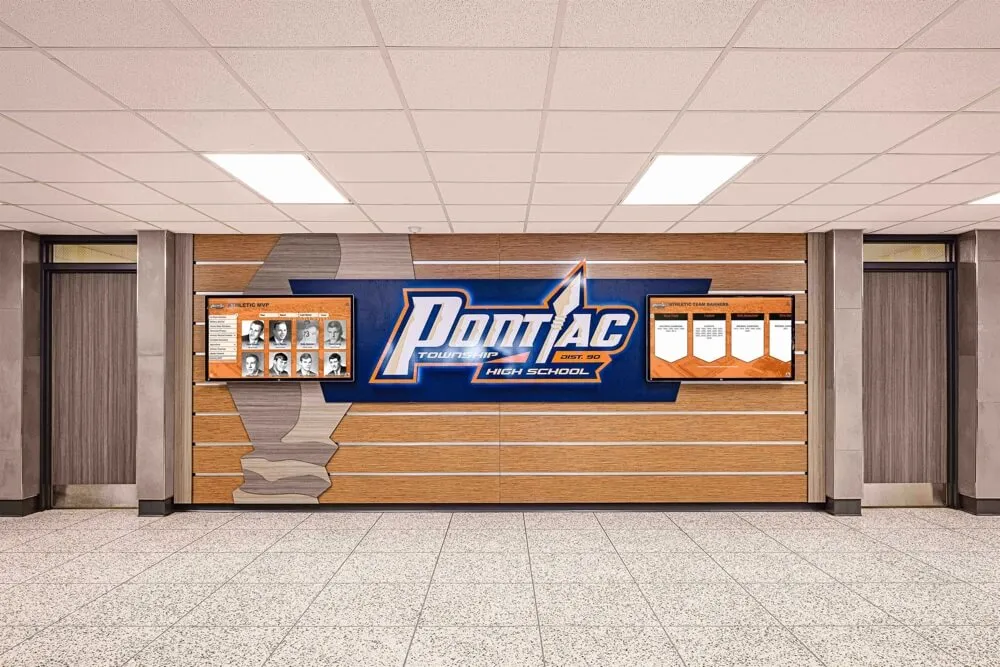
Strategic hallway designs leverage architectural features for maximum impact
Institutional Neutrality
Unlike spaces “belonging” to specific departments or populations, hallways serve entire school communities. Recognition displays in hallways communicate that celebrated achievements matter to complete institutions rather than narrow constituencies. An athletic hall of fame in a gymnasium primarily reaches sports participants; the same display in a main hallway reaches all students, reinforcing that athletic excellence reflects positively on entire school communities.
This institutional neutrality proves particularly valuable for comprehensive recognition programs celebrating diverse achievement types—academics, arts, athletics, service, and leadership—within shared spaces demonstrating equal institutional valuation.
Common Hallway Remodeling Challenges
Understanding typical obstacles enables proactive planning addressing potential complications:
Budget Constraints and Funding
Most schools operate with limited discretionary facilities budgets, making major remodeling projects challenging to fund through normal operational allocations. Hallway improvements often compete with numerous other pressing needs—classroom technology, safety upgrades, deferred maintenance—for finite resources.
Successful hallway remodeling typically requires creative funding approaches combining multiple sources:
- Capital campaign integration during comprehensive fundraising efforts
- Dedicated recognition program funding from booster clubs or alumni associations
- Memorial gift opportunities honoring deceased community members
- Multi-year phased implementation spreading costs across budget cycles
- Partnership with local businesses providing materials or services
- Grant funding from educational foundations supporting facility improvements
Clear budget planning early in remodeling processes prevents mid-project funding gaps compromising implementation quality or leaving projects incomplete.
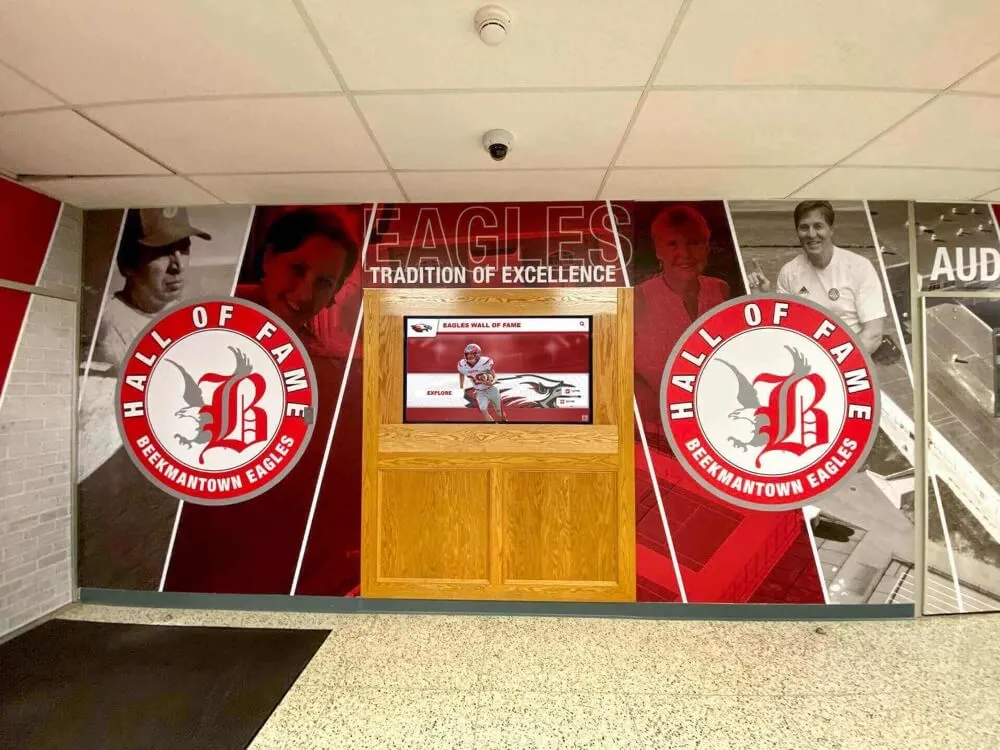
Thoughtful planning transforms ordinary hallways into extraordinary recognition spaces
Maintenance and Sustainability Concerns
Facilities directors rightly worry about creating recognition displays requiring extensive ongoing maintenance. Traditional bulletin board approaches—with staff regularly updating paper materials, replacing faded content, repairing damaged elements—consume significant time while often appearing dated and cluttered within weeks of installation.
Sustainable hallway remodeling emphasizes permanent, professional installations requiring minimal ongoing maintenance:
- Durable materials withstanding high-traffic public environments
- Digital systems with cloud-based content management enabling remote updates
- Professional-quality construction eliminating frequent repairs
- Timeless design aesthetics remaining visually appropriate across years
- Self-cleaning surfaces or finishes minimizing maintenance requirements
These approaches reduce long-term operational costs while ensuring hallway improvements maintain professional appearance and functional effectiveness years after installation.
Coordination with Academic Schedules
Physical hallway remodeling disrupts normal operations, requiring careful timing minimizing impact on instruction. Installation work involving construction, electrical modifications, network upgrades, or major mounting procedures typically occurs during summer breaks, holiday periods, or targeted weekend installations.
Project planning must account for compressed installation timelines and coordinate with facilities staff managing multiple simultaneous summer projects. Early planning—beginning 9-12 months before desired completion—enables proper scheduling, permitting, contractor coordination, and content preparation without last-minute rushes compromising quality.
Diverse Stakeholder Expectations
Hallway remodeling projects often involve multiple departments with varying priorities: athletic departments emphasizing sports recognition, advancement offices prioritizing donor acknowledgment, academic departments seeking scholarly celebration, activities directors highlighting arts and clubs. Balancing these diverse interests requires inclusive planning processes establishing clear priorities and equitable recognition approaches.
Successful projects typically create comprehensive frameworks celebrating multiple achievement categories within cohesive design systems rather than attempting to please every constituency with equal space allocation. Clear communication about recognition criteria, content priorities, and phased implementation plans manages expectations and builds broad support.
Strategic Planning for Hallway Remodeling Projects
Thoughtful planning differentiates transformative hallway renovations from disappointing installations that never achieve intended impact.
Defining Clear Objectives and Success Metrics
Begin remodeling projects by establishing specific goals and measurable outcomes:
Recognition Program Objectives
What should hallway renovations accomplish?
- Celebrate specific achievement types (athletics, academics, arts, service, leadership)
- Strengthen school pride and institutional culture
- Improve alumni engagement and connection
- Enhance donor recognition and fundraising effectiveness
- Preserve institutional history and traditions
- Create first impression impact during campus visits
- Inspire current students through visible excellence examples
Different objectives suggest different design approaches, content emphases, and implementation priorities. Schools primarily seeking improved alumni engagement might emphasize searchable databases and social sharing features through digital displays. Institutions focused on school pride might prioritize large-scale visual impact and comprehensive achievement documentation. Clear objective definition informs subsequent planning decisions.
Measurable Success Indicators
How will you assess whether hallway renovations succeed?
- Visitor engagement metrics (for digital displays: session duration, interaction frequency)
- Stakeholder feedback through surveys of students, staff, alumni, visitors
- Alumni engagement changes (event attendance, website traffic, giving participation)
- Recruitment impact through prospective family feedback
- Media coverage and community awareness
- Content contribution rates from various constituencies
- Maintenance requirements compared to previous displays
- Facility utilization during events and campus visits
Establishing these metrics during planning enables post-implementation assessment demonstrating project value and informing future improvements.
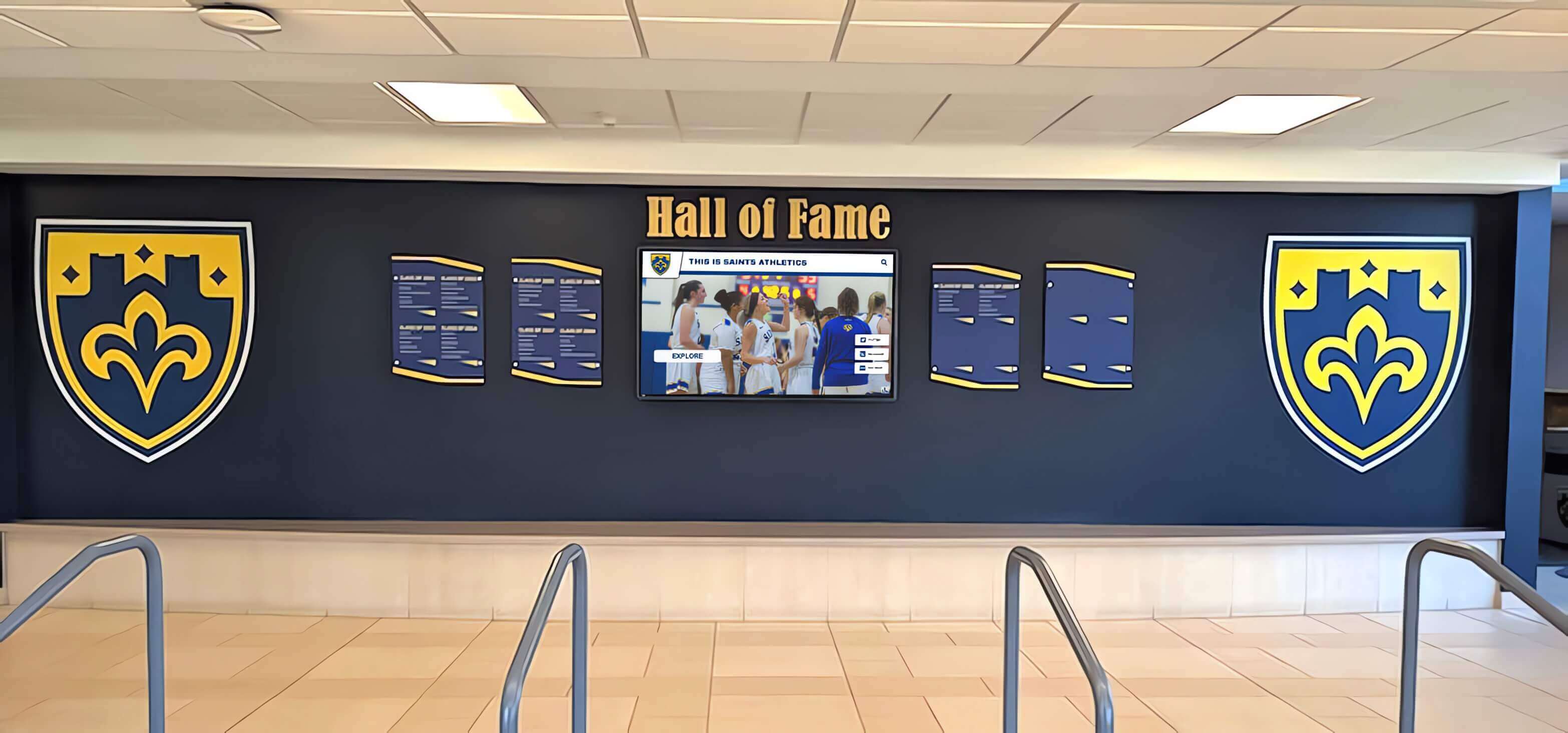
Successful projects begin with comprehensive planning and clear objectives
Comprehensive Space Assessment and Site Selection
Evaluate hallway locations systematically to identify optimal renovation sites:
Traffic Pattern Analysis
Different hallways serve different purposes and populations:
- Main entrances: Maximum visibility for visitors, families, and community members; ideal for comprehensive institutional recognition and first impression impact
- Athletic facility corridors: High athlete and sports family traffic; natural locations for athletic recognition displays and championship documentation
- Academic wings: Student and faculty traffic during school days; appropriate for scholarly achievement recognition and subject-specific content
- Administrative areas: Parent and community visitor traffic; suitable for donor recognition and institutional history
- Specialized facilities: Theater lobbies, fine arts corridors, STEM buildings serving specific program populations
Match recognition content to hallway traffic patterns ensuring displays reach intended audiences effectively. Athletic recognition in isolated fine arts wings receives limited athlete viewing; placement in athletic facility corridors or main hallways maximizes intended audience exposure.
Physical Characteristics Evaluation
Assess practical considerations affecting implementation:
- Wall surface area: Square footage available for displays and mounting surfaces
- Ceiling height: Vertical space for tall displays or overhead elements
- Width and clearance: Available space without impeding traffic flow (typically minimum 8-10 feet wide for comfortable passage with wall displays)
- Lighting conditions: Natural and artificial light affecting display visibility
- Electrical access: Available power for digital displays and lighting
- Network connectivity: WiFi or hardwired network for digital systems
- Structural capacity: Wall construction suitable for heavy display mounting
- Environmental factors: Temperature, humidity, sun exposure affecting materials
These practical factors significantly influence design possibilities and cost requirements. Locations lacking electrical access require additional wiring; areas with excessive sun exposure need displays resistant to fading or glare.
Long-Term Flexibility Considerations
Evaluate how hallway usage might evolve:
- Potential building expansions or renovations affecting corridors
- Enrollment changes impacting traffic patterns
- Program developments creating new recognition categories
- Technology evolution requiring system updates or replacements
Design hallway renovations with reasonable flexibility accommodating foreseeable changes without complete reconstruction. Modular systems allowing content addition or category expansion provide greater long-term value than rigidly fixed installations.
Budget Development and Resource Allocation
Develop realistic budgets accounting for all project components:
Comprehensive Cost Categories
Complete hallway remodeling budgets include:
Design and Planning Services ($2,000-$8,000)
- Professional design consultation
- Architectural integration planning
- Content strategy development
- Project management coordination
Physical Materials and Construction ($8,000-$50,000+)
- Wall treatments, painting, finishing
- Display mounting systems and hardware
- Lighting installation or upgrades
- Electrical work for digital displays
- Network infrastructure improvements
- Protective barriers or cases if needed
Digital Technology Systems ($6,000-$30,000 per display)
- Commercial-grade touchscreen displays
- Media players and control systems
- Software platforms and licensing
- Professional installation and configuration
Content Development ($3,000-$15,000)
- Historical research and documentation
- Photo digitization and organization
- Graphic design and templates
- Copywriting and editing
- Video production if applicable
Installation Labor ($2,000-$10,000)
- Professional mounting and electrical work
- Network configuration
- Testing and quality assurance
Ongoing Operational Costs ($500-$3,000 annually)
- Software subscriptions and support
- Content updates and maintenance
- Cleaning and physical maintenance
- Technology refresh planning
Total projects typically range from $15,000-$100,000+ depending on scope, with phased implementations enabling cost distribution across multiple budget years.
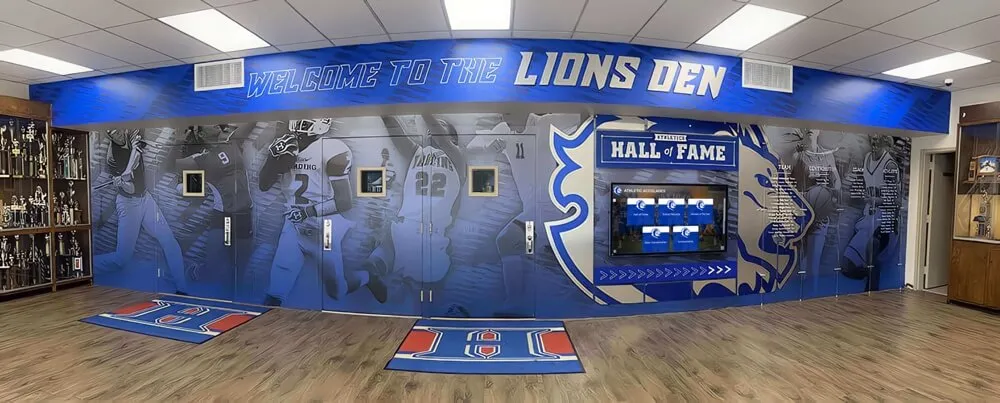
Professional installations deliver long-term value justifying thoughtful investment
Cost-Benefit Analysis
Compare hallway remodeling investments against traditional recognition approaches:
Traditional recognition systems (trophy cases, bulletin boards, static plaques) appear less expensive initially but accumulate significant ongoing costs:
- Annual plaque and printing expenses ($1,500-$4,000)
- Regular maintenance and updates (50-100 staff hours annually)
- Periodic replacement as materials age or space fills
- Limited capacity requiring difficult selection decisions
- Minimal engagement measurement capability
Modern recognition systems require higher initial investment but deliver superior long-term value:
- Unlimited recognition capacity accommodating program growth
- Minimal ongoing maintenance requirements
- Remote content management saving staff time
- Rich multimedia storytelling impossible with static displays
- Engagement analytics demonstrating impact
- Professional appearance lasting 10-15+ years
When calculating total cost of ownership across typical 10-year periods, comprehensive digital recognition systems frequently cost less than accumulated traditional approach expenses while delivering substantially greater impact, flexibility, and sustainability. Solutions like Rocket Alumni Solutions provide purpose-built platforms designed specifically for educational recognition needs with predictable pricing and comprehensive support.
Effective Hallway Remodeling Design Strategies
Successful hallway transformations integrate multiple design elements creating cohesive, engaging environments rather than simply mounting isolated displays on empty walls.
Creating Visual Impact Through Integrated Design
Transform hallways from utilitarian corridors into compelling spaces through thoughtful design integration:
Branded Environmental Design
Extend institutional branding throughout hallway environments:
- Color schemes reflecting school identity: Paint walls, accent features, and design elements using school colors creating immediate visual connection to institutional identity
- Logo and mascot integration: Incorporate school symbols, mascots, and marks throughout hallway design establishing clear institutional ownership
- Typography consistency: Use institutional fonts and typographic standards maintaining visual connection with other school communications
- Architectural coordination: Align hallway design with broader facility aesthetics ensuring cohesive appearance
This integrated branding transforms generic corridors into distinctly identifiable spaces reinforcing institutional pride and creating memorable visitor experiences. Prospective families touring campuses develop stronger impressions from visually cohesive, professionally designed environments compared to hodgepodge bulletin board collections.
Layered Recognition Modalities
Combine multiple recognition formats within hallway spaces creating diverse engagement opportunities:
- Large-scale murals or graphics providing atmospheric visual impact and wayfinding
- Interactive digital displays enabling detailed exploration and searchable databases
- Traditional plaques or honor boards maintaining connection to established recognition traditions
- Display cases showcasing artifacts presenting trophies, uniforms, memorabilia with physical presence
- QR codes linking physical and digital connecting traditional elements to expanded online content
This multi-modal approach accommodates different learning styles and preferences—some visitors engage best with visual design impact, others prefer interactive exploration, some appreciate physical artifacts, others value detailed text narratives.
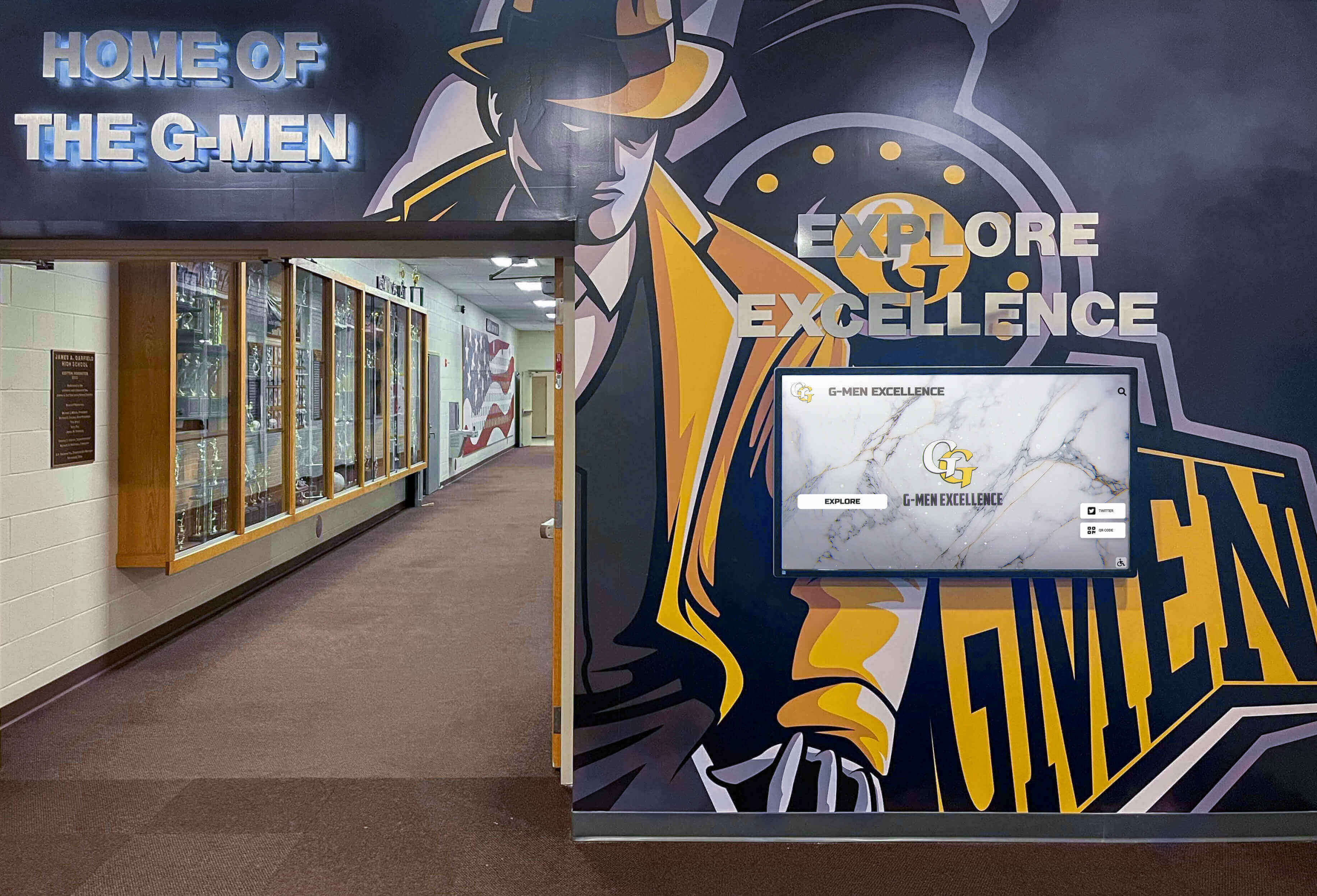
Successful designs layer multiple recognition modalities for comprehensive impact
Strategic Lighting Design
Appropriate lighting dramatically enhances recognition display effectiveness:
- Accent lighting highlighting key displays: Directed illumination drawing attention to primary recognition elements
- Ambient lighting creating appropriate atmosphere: Overall hallway illumination supporting comfortable viewing
- Display backlighting for visual drama: LED backlighting creating depth and professional appearance
- Adjustable lighting accommodating different uses: Dimming capability for special events or presentations
- Energy-efficient LED systems: Modern lighting technology minimizing operational costs
Professional lighting design transforms hallway recognition from basic wall-mounted displays into museum-quality installations commanding attention and respect. Many schools discover that appropriate lighting significantly improves existing recognition displays without replacing content—simple lighting upgrades create dramatic impact at modest cost.
Wayfinding Integration
Coordinate recognition displays with campus navigation:
- Hallway naming and identification: “Athletic Hall of Champions,” “Academic Excellence Corridor,” “Alumni Legacy Hallway” creating distinct identity
- Directional signage coordinating with recognition themes: Navigation elements visually consistent with recognition displays
- Zone designation for different recognition categories: Clearly identified areas for specific achievement types
- Interactive directories: Digital displays serving dual purposes for recognition and campus navigation
This integration serves practical wayfinding needs while enhancing recognition program visibility and coherence.
Balancing Permanence with Flexibility
Design hallway renovations providing stability while accommodating future evolution:
Permanent Architectural Framework
Establish durable foundational elements lasting decades:
- High-quality paint or wall finishes in timeless colors
- Professional-grade mounting systems and infrastructure
- Robust electrical and network systems with extra capacity
- Permanent lighting installations
- Branded environmental graphics with enduring design
These permanent elements create cohesive hallway environments while providing stable platforms for recognition content that may evolve over time.
Flexible Content Systems
Within permanent frameworks, implement adaptable recognition systems:
- Digital displays with cloud-based content management enabling instant updates without physical changes
- Modular display systems allowing category addition or reorganization
- Interchangeable graphic panels accommodating content evolution
- Expandable recognition platforms accommodating program growth
This combination—permanent architectural quality with flexible content capability—delivers both professional stability and practical adaptability. Schools avoid appearing outdated as programs evolve while maintaining cohesive visual environments.
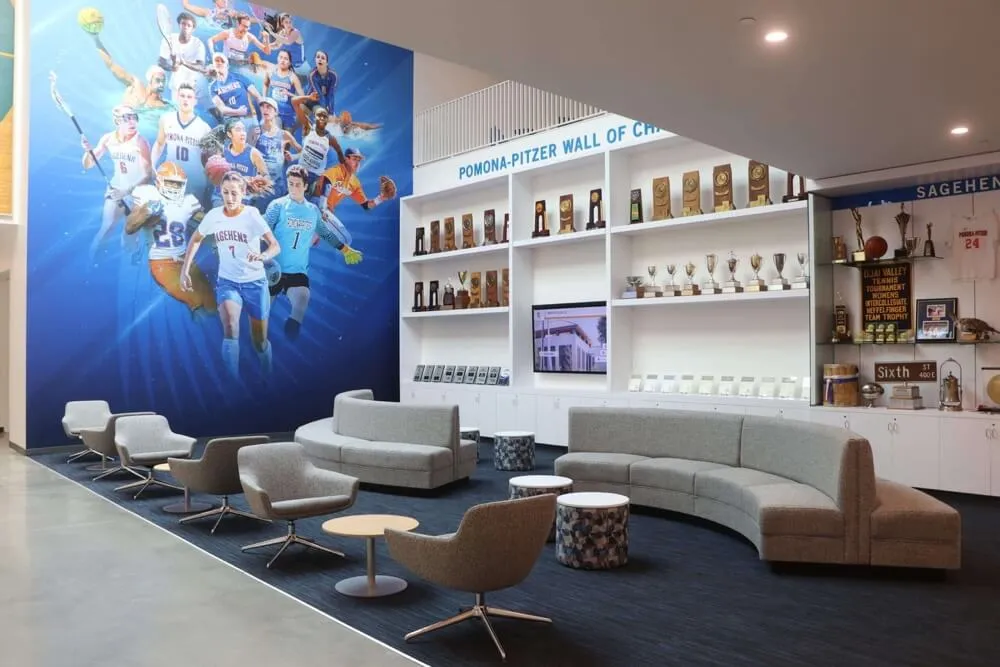
Thoughtful designs balance permanent architectural elements with flexible content systems
Phased Implementation Planning
Design comprehensive hallway visions implemented progressively:
- Phase One: Core recognition displays in highest-traffic primary locations
- Phase Two: Secondary locations or additional recognition categories
- Phase Three: Enhanced features like seating areas, interactive elements, expanded content
- Phase Four: Integration with building-wide recognition systems
Phased approaches enable ambitious visions within realistic budget constraints while creating visible progress building stakeholder enthusiasm supporting subsequent phases. Each phase delivers complete, functional improvements rather than partial installations awaiting future completion.
Digital Recognition Displays in Hallway Remodeling
Modern hallway transformations increasingly incorporate interactive digital recognition technology addressing traditional display limitations while introducing powerful new capabilities.
Understanding Digital Recognition Display Technology
Digital recognition systems designed specifically for schools offer purpose-built features addressing educational needs:
Commercial-Grade Hardware
Educational facilities require displays engineered for continuous public operation:
- Touchscreen displays: Commercial-grade screens designed for 16+ hours daily operation, significantly more robust than consumer televisions
- Screen sizes appropriate for hallways: Typically 55-75 inches for comfortable viewing from 10-15 feet typical in corridors
- High brightness for well-lit environments: 500+ nits ensuring visibility in bright hallway lighting conditions
- Durable construction: Hardened glass and robust enclosures withstanding occasional impact in high-traffic areas
- Extended warranties: 3-5 year commercial warranties protecting institutional investments
These specifications ensure reliable long-term operation in demanding public school environments where displays operate continuously and endure higher traffic volumes than typical commercial installations.

Interactive touchscreens invite hands-on exploration creating engaging experiences
Purpose-Built Recognition Software
Specialized platforms designed for educational recognition provide critical capabilities:
- Intuitive content management systems: Non-technical administrators easily create and update recognition profiles
- Recognition-specific templates: Pre-designed layouts optimized for alumni, athletics, academics, donors, and historical content
- Powerful search and filtering: Visitors quickly find specific individuals, years, achievements, or categories
- Multimedia integration: Seamlessly incorporate photos, videos, statistics, narratives, and documents
- Web accessibility: Recognition content accessible online extending reach beyond physical displays
- Analytics and reporting: Usage data demonstrating engagement patterns and display effectiveness
- Automatic backups and security: Cloud-based systems preventing content loss
- Role-based permissions: Multiple administrators with appropriate access levels
Generic digital signage platforms lack these specialized features, requiring extensive custom development or settling for limited functionality. Purpose-built recognition platforms like Rocket Alumni Solutions deliver comprehensive capabilities specifically engineered for school recognition needs, reducing implementation complexity while ensuring powerful, sustainable functionality.
Installation and Infrastructure Requirements
Digital recognition displays require appropriate supporting infrastructure:
- Electrical power: Dedicated circuits at display locations (displays typically draw 200-400 watts)
- Network connectivity: Reliable WiFi or hardwired Ethernet enabling content synchronization
- Professional mounting: Secure wall mounting or freestanding kiosks rated for display weight
- Cable management: Concealed wiring maintaining professional appearance
- Environmental considerations: Climate-controlled indoor locations protecting electronics
Most school hallways already possess required infrastructure, though installation planning should verify adequate network coverage and electrical capacity at proposed display locations.
Implementing Interactive Recognition Displays in Hallways
Successful digital display integration requires thoughtful planning addressing practical and strategic considerations:
Strategic Placement Decisions
Position digital displays maximizing visibility and engagement:
- Main entrance hallways: Primary locations for comprehensive institutional recognition reaching all visitors
- Athletic facility corridors: Natural placement for sports recognition and championship displays
- Near gathering spaces: Locations where people naturally pause rather than rapid transit zones
- At decision points: Hallway intersections or waiting areas where viewers have time for exploration
- Multiple distributed locations: Several smaller displays reaching diverse populations across campus rather than single large installation
Consider sight lines, viewing distances, ambient lighting, and traffic flow when identifying specific mounting locations. Displays positioned at comfortable viewing heights (center screen at 48-60 inches from floor) with adequate approach space (6-8 feet clear distance) deliver optimal accessibility and engagement.
Content Strategy Development
Plan recognition content maximizing digital platform capabilities:
Comprehensive Individual Profiles
Digital systems enable detailed recognition impossible with traditional plaques:
- Complete biographical information and achievements
- Multiple high-quality photos showing honorees across different periods
- Video messages or performance footage
- Career accomplishments and life updates
- Personal reflections on institutional experiences
- Social media links and contact information (where appropriate)
- Family connections highlighting legacy relationships
This depth transforms recognition from basic name-and-year acknowledgment into engaging stories helping viewers understand complete journeys and human dimensions behind accomplishments.
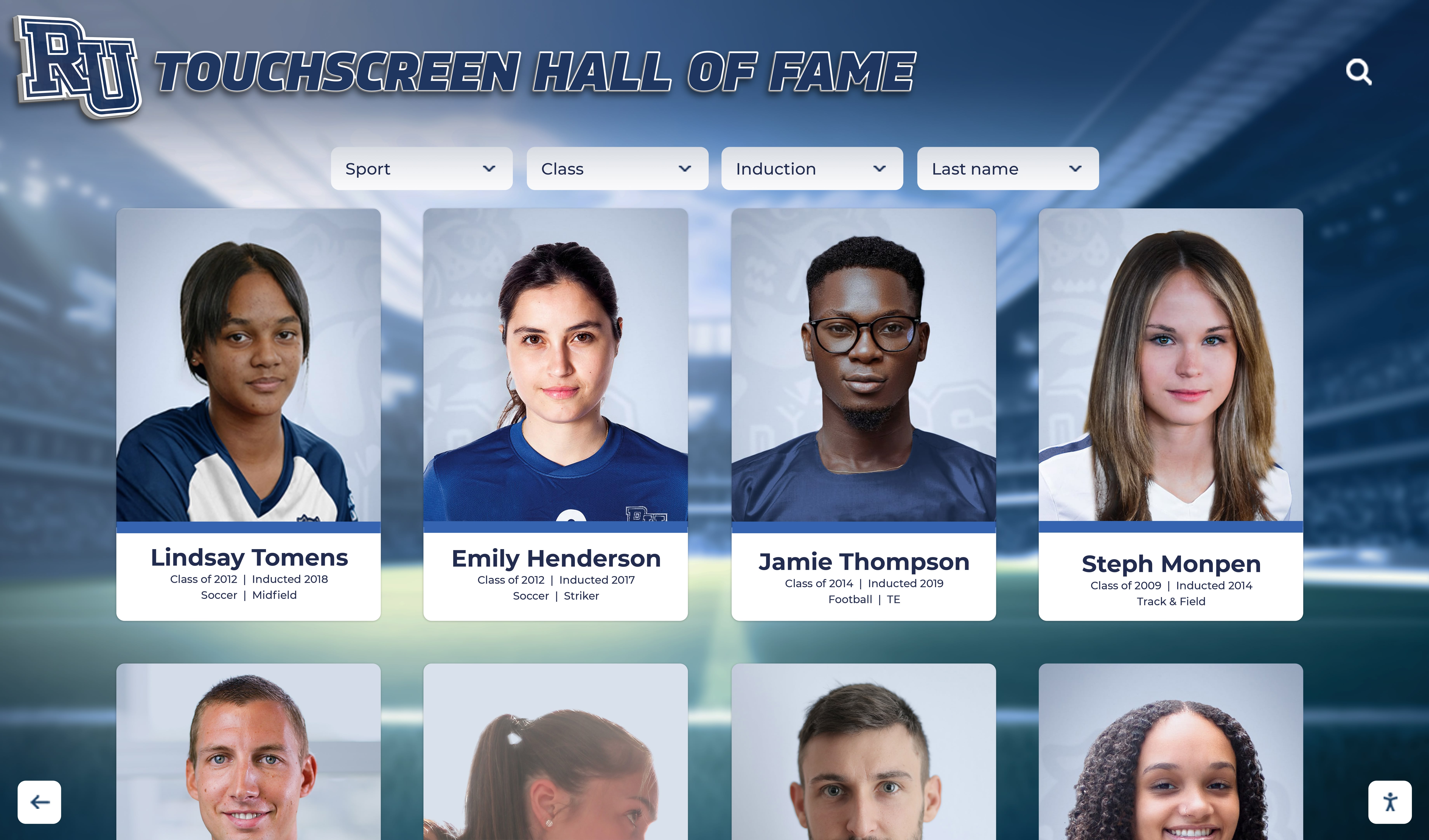
Digital platforms enable comprehensive profiles celebrating complete stories
Searchable Historical Archives
Create explorable databases documenting institutional history:
- Decade-by-decade achievement documentation
- Searchable by name, year, achievement type, or keyword
- Historical photos and documentation
- Timeline presentations showing program evolution
- Statistical records and milestone documentation
- Cross-referenced connections between related honorees
These archives preserve institutional memory while creating discovery experiences encouraging extended exploration. Alumni visiting campuses search for classmates, families explore relatives’ achievements across generations, and current students investigate institutional traditions.
Dynamic Content Rotation
Program displays to maintain freshness and relevance:
- Feature recent achievements prominently during appropriate seasons
- Rotate highlighted profiles ensuring diverse representation
- Schedule content around events (homecoming, reunions, signing days)
- Celebrate anniversaries of historical achievements
- Integrate current news and accomplishments
- Vary content between different viewing times creating repeat visit value
This dynamic capability—impossible with static displays—maintains ongoing interest and accommodates timely recognition without physical reinstallation.
Social Sharing Integration
Enable visitors to extend recognition reach:
- One-click sharing of profiles to social media platforms
- QR codes linking to expanded online content
- Email submission for profile updates from alumni
- Digital business cards for networking connections
Social integration amplifies recognition impact exponentially as each share reaches hundreds of additional people beyond physical visitors, strengthening alumni networks and institutional visibility.
Managing and Maintaining Digital Hallway Displays
Successful long-term operation requires appropriate management and support:
Content Management Workflows
Establish sustainable processes for ongoing content development:
- Responsibility assignment: Clear designation of staff managing content updates
- Update schedules: Regular timelines for adding new recognitions and refreshing featured content
- Quality standards: Consistent formatting, photography requirements, writing guidelines
- Review processes: Approval workflows ensuring accuracy and appropriateness
- Historical research: Dedicated efforts documenting and digitizing historical achievements
- Community engagement: Systems enabling alumni submissions and updates
Many schools find success assigning content management to multiple contributors—activities directors for student achievements, alumni coordinators for graduate updates, media specialists for technical management—rather than overwhelming single staff members with complete responsibility.
Technical Maintenance and Support
Digital systems require minimal but important ongoing maintenance:
- Software updates: Automatic platform updates ensuring current features and security
- Display cleaning: Regular screen cleaning using appropriate electronics-safe products
- Network monitoring: Ensuring consistent connectivity and content synchronization
- Hardware monitoring: Watching for display issues requiring service attention
- User support: Assistance for administrators encountering content management questions
Purpose-built recognition platforms typically include professional support services providing technical assistance, proactive monitoring, and responsive troubleshooting when issues arise. This support proves essential for schools lacking dedicated IT resources for specialized recognition systems.
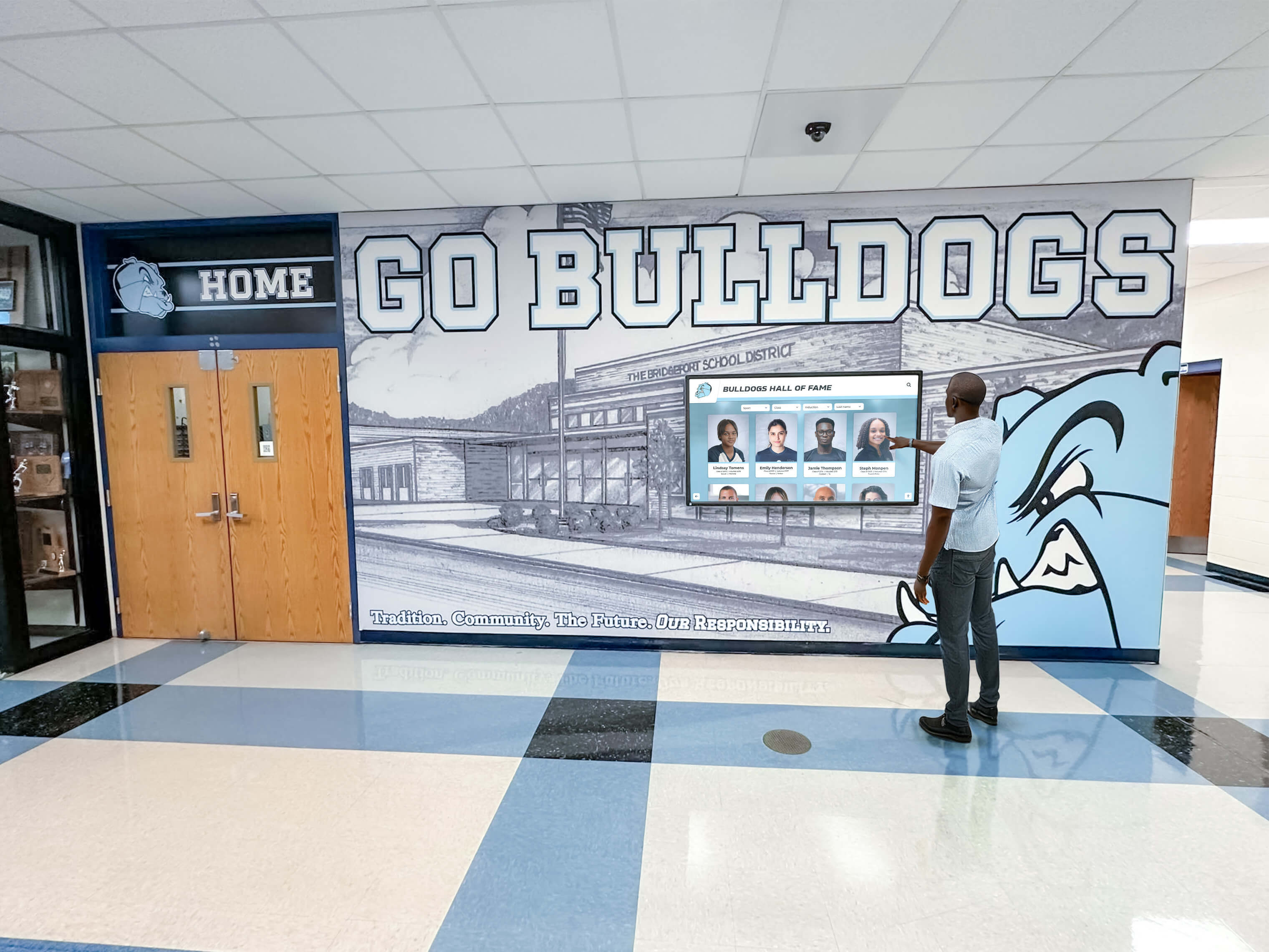
Cloud-based management systems enable easy updates maintaining current, relevant content
Performance Measurement and Optimization
Monitor display effectiveness informing ongoing improvements:
- Usage analytics: Session counts, average engagement duration, peak usage times
- Popular content identification: Most-viewed profiles and categories revealing audience interests
- Search patterns: Common queries showing what information visitors seek
- Geographic distribution: Web access locations demonstrating reach beyond campus
- Stakeholder feedback: Surveys assessing satisfaction and gathering improvement suggestions
- Comparative metrics: Tracking changes over time showing program growth
This data-driven approach demonstrates recognition program value while identifying opportunities enhancing effectiveness—adjusting content organization based on search patterns, emphasizing categories attracting strongest engagement, or timing content updates around demonstrated peak usage periods.
Traditional Recognition Elements in Modern Hallway Design
While digital technology offers powerful capabilities, traditional recognition elements maintain important roles in comprehensive hallway remodeling:
Integrating Physical Displays and Traditional Recognition
Many successful hallway renovations thoughtfully blend traditional and modern approaches:
Trophy Cases and Memorabilia Displays
Physical artifacts provide tangible connections to achievements:
- Championship trophies, medals, and awards providing dimensional presence
- Historic uniforms, equipment, or competition materials
- Signed memorabilia from notable graduates or visitors
- Historic documents, programs, and publications
- Three-dimensional art or sculptural elements
Well-designed display cases protect valuable items while presenting them attractively. Modern cases often include integrated lighting, adjustable shelving, and security features protecting collections. Digital displays can complement cases by providing detailed context about displayed items—championship game descriptions, artifact histories, related photos and videos. Many schools implement digital trophy displays that showcase items stored for decades due to limited physical display space.
Honor Boards and Plaque Displays
Traditional recognition formats retain value when thoughtfully implemented:
- Permanent honor boards for recurring recognitions (scholar athletes, National Merit scholars)
- Commemorative plaques for specific achievements or donations
- Class composite photos maintaining yearbook traditions
- Senior recognition displays celebrating graduating classes
These traditional elements work effectively for recognitions benefiting from permanence and formality. The key difference from problematic traditional approaches involves professional design quality, durable materials, and integration within comprehensive recognition systems rather than hodgepodge bulletin board collections.
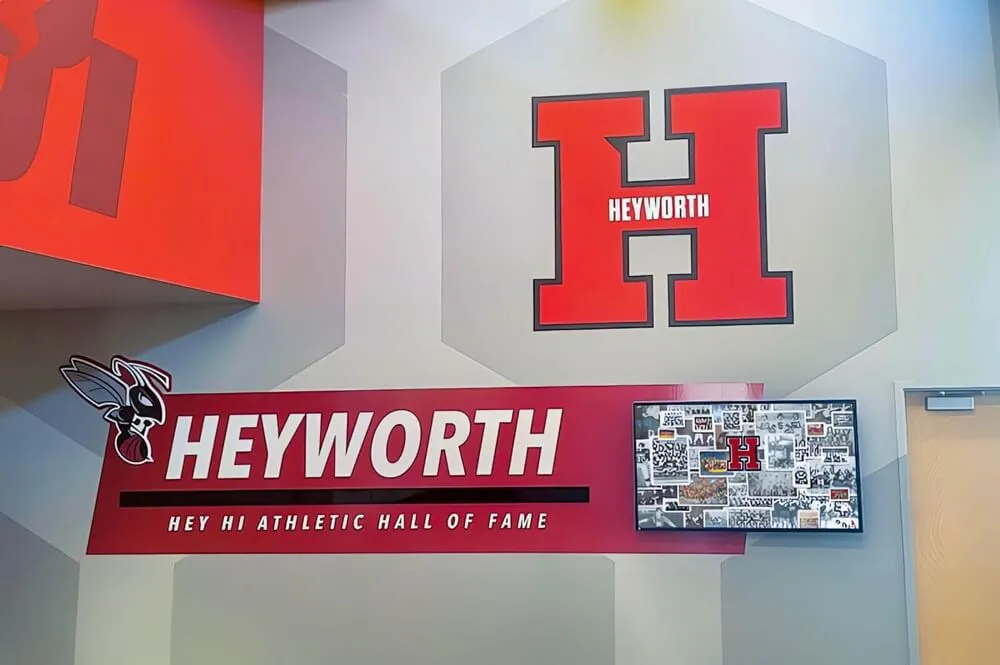
Successful designs integrate traditional and digital recognition within cohesive environments
Murals and Environmental Graphics
Large-scale artistic elements create atmospheric impact:
- School history timeline murals documenting institutional evolution
- Achievement celebration graphics highlighting program milestones
- Inspirational quotes from notable alumni or leaders
- Mascot and branding imagery reinforcing institutional identity
- Subject-specific artistic elements in academic wing hallways
Professional murals and graphics establish visual frameworks within which other recognition elements integrate. These permanent installations provide lasting aesthetic value while creating distinctive hallway identities. Combining murals with digital displays enables atmospheric visual impact from graphics complementing detailed content exploration through interactive technology.
Bridging Physical and Digital Recognition
Create seamless connections between traditional and modern elements:
QR Code Integration
Link physical displays to expanded digital content:
- QR codes near trophy cases connecting to championship game videos and documentation
- Codes on plaques linking to complete honoree profiles with photos and narratives
- Links from composite photos to searchable class directories with current information
- Connections from historic photos to context, identification, and related content
This hybrid approach preserves traditional recognition aesthetics while leveraging digital technology telling complete stories impossible within physical space constraints. Visitors encounter traditional displays triggering emotional connections, then access comprehensive information through personal devices or nearby digital displays.
Consistent Design Language
Maintain visual coherence across physical and digital elements:
- Color schemes, typography, and branding consistent across all recognition modalities
- Similar organizational frameworks for different recognition formats
- Coordinated content strategies ensuring comprehensive coverage without redundancy
- Professional design quality standards applied universally
This consistency creates unified recognition programs rather than disconnected collections of displays implemented at different times without coordination.
Specialized Hallway Recognition Applications
Different school areas benefit from tailored recognition approaches addressing specific purposes and populations:
Athletic Facility Hallway Recognition
Corridors in gymnasiums, field houses, and athletic facilities deserve specialized approaches:
Championship and Team Recognition
Athletic hallways naturally emphasize competitive achievement:
- State championship documentation: Comprehensive celebration of title seasons with team photos, rosters, statistics, and game highlights
- Conference and district championships: Recognition of regular season excellence and tournament achievements
- Record boards: Display of program records in various statistical categories
- Team history timelines: Season-by-season documentation showing program evolution
- Rivalry histories: Documentation of traditional competitions and significant victories
Digital displays prove particularly effective for athletic recognition given extensive statistical content, video integration opportunities, and regular content additions as new seasons create achievements. Many schools implement comprehensive athletic recognition displays that document complete program histories impossible with traditional banner approaches limited by ceiling space.
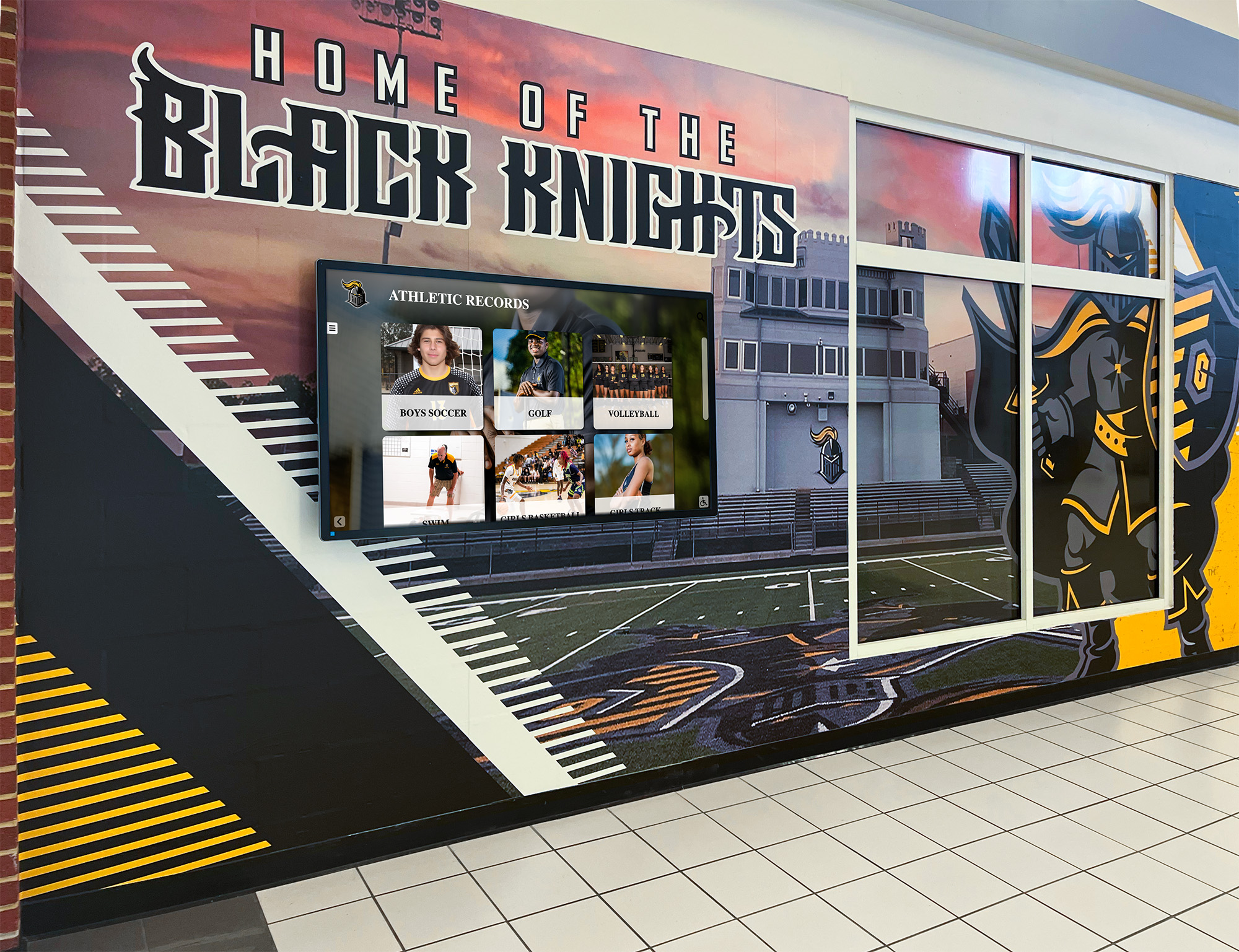
Athletic corridors celebrate competitive excellence inspiring current athletes
Individual Athlete Recognition
Honor outstanding individual achievements within team contexts:
- Hall of fame inductees celebrating career excellence across multiple sports
- All-state and all-conference recognitions documenting external accolades
- Record holders highlighting exceptional individual performances
- College athletic destinations showing where graduates continued playing
- Professional athlete recognition for those reaching highest competitive levels
Comprehensive individual recognition demonstrates that athletic excellence requires exceptional personal commitment and achievement, not just team success. This balanced approach celebrates both team accomplishments and individual excellence within team contexts.
Coaching Recognition and History
Honor coaches shaping athletic programs:
- Career achievement summaries documenting coaching tenures
- Championship teams and significant season achievements
- Overall win-loss records and milestone victories
- Coaching philosophy and program values
- Retired coach tributes celebrating career contributions
- Current coaching staff profiles building credibility during recruitment
Appropriate coaching recognition demonstrates institutional appreciation for dedication required building excellent athletic programs while providing recruiting tools highlighting program stability and quality leadership.
Academic Wing Hallway Recognition
Corridors in academic buildings benefit from scholarly achievement celebration:
Academic Excellence Recognition
Celebrate intellectual achievement with similar visibility as athletic success:
- National Merit scholars and academic competition qualifiers
- Valedictorians, salutatorians, and top scholars across graduating classes
- Subject-specific achievement recognition (math competitions, science fairs, writing contests)
- Advanced Placement and International Baccalaureate scholars
- Academic scholarship recipients with college destinations
- Research accomplishments and publications
Academic recognition in prominent hallways communicates that intellectual excellence receives equal institutional celebration as athletic achievement, supporting balanced recognition programs celebrating diverse talents and accomplishments.
College and Career Success
Document post-graduation achievement patterns:
- College acceptance profiles showing destination diversity and selectivity
- Distinguished graduate accomplishments in various professional fields
- Alumni speakers and mentors maintaining school connections
- Career pathway documentation helping current students envision futures
- Professional networking opportunities connecting current students with graduate mentors
This future-focused recognition helps current students understand educational trajectories leading to various careers while maintaining alumni engagement through ongoing recognition of professional accomplishments.
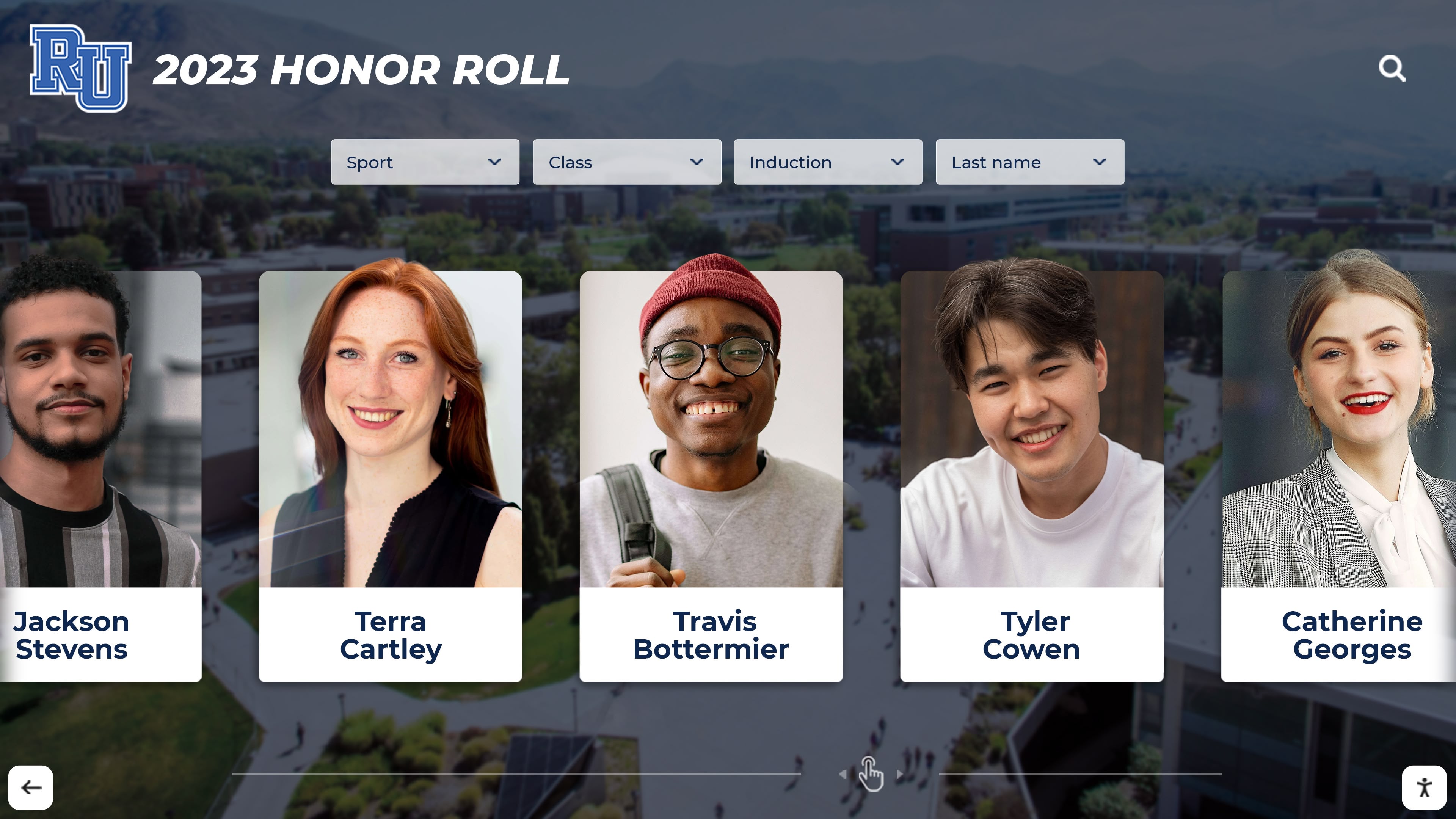
Academic hallway recognition celebrates scholarly excellence inspiring student achievement
Main Entrance and Administrative Hallway Recognition
High-visibility entrance corridors serve multiple strategic purposes:
Comprehensive Institutional Recognition
Main hallways accommodate broad recognition programs:
- Multi-category recognition celebrating diverse excellence (athletics, academics, arts, service, leadership)
- Historical timeline displays documenting institutional evolution
- Distinguished alumni recognition highlighting notable graduates across generations
- School values and mission statements reinforcing institutional identity
- Community partnership recognition acknowledging local supporters
These comprehensive displays in highest-traffic locations communicate complete institutional values rather than privileging specific achievement types, demonstrating balanced recognition approaches celebrating multiple paths to excellence.
Donor Recognition Programs
Main hallways provide appropriate visibility for philanthropic acknowledgment:
- Capital campaign recognition documenting major gifts supporting facilities and programs
- Annual giving recognition encouraging sustained philanthropic support
- Named space recognition honoring major donations
- Legacy giving documentation showing endowment support
- Volunteer recognition celebrating non-financial contributions
Thoughtful donor recognition balances appropriate acknowledgment with educational recognition ensuring fundraising doesn’t overwhelm broader institutional celebration. Many schools integrate donor recognition within comprehensive displays including alumni achievement, historical documentation, and institutional values creating cohesive narratives connecting philanthropic support with resulting institutional excellence.
Practical Implementation Steps for Hallway Remodeling
Transform hallway remodeling visions into completed reality through systematic implementation:
Project Planning and Development Phase
Stakeholder Engagement and Needs Assessment
Begin with inclusive planning engaging key constituencies:
- Form planning committee: Include representatives from athletics, academics, activities, advancement, facilities, administration
- Conduct needs assessment: Survey stakeholders about recognition priorities and hallway improvement goals
- Review existing recognition: Assess current displays identifying strengths to preserve and weaknesses to address
- Define project scope: Establish clear boundaries for initial implementation and future phases
- Develop success criteria: Determine how project effectiveness will be assessed
This inclusive approach builds broad support, surfaces potential concerns early, and creates stakeholders invested in project success.
Design Development and Professional Services
Engage appropriate expertise ensuring quality outcomes:
- Architectural consultation: Professional design services integrating recognition with facility aesthetics
- Technology selection: Expert guidance choosing appropriate digital platforms and hardware
- Content strategy development: Planning recognition categories, organization, and presentation approaches
- Graphic design services: Professional visual design ensuring cohesive, attractive presentation
- Project management coordination: Overall timeline management, vendor coordination, quality control
While professional services add project costs, expertise ensures efficient implementation avoiding expensive mistakes, prevents buyer’s remorse from inappropriate technology selections, and delivers professional-quality results justifying institutional investments.

Professional implementation delivers quality results serving institutions for decades
Budget Finalization and Funding Confirmation
Secure necessary resources before beginning implementation:
- Obtain detailed cost estimates: Comprehensive quotes from vendors covering all project components
- Confirm funding sources: Written commitments from all funding sources (operating budget, fundraising, donations)
- Establish contingency reserves: Budget buffer (typically 10-15%) for unexpected expenses
- Approve expenditure authority: Necessary administrative approvals for project spending
- Define payment schedules: Terms coordinating payment with project milestones
Confirmed funding prevents mid-project stops due to resource shortfalls that delay completion, compromise quality, or leave installations incomplete.
Installation and Implementation Phase
Physical Preparation and Construction
Prepare hallway spaces for recognition installations:
- Wall preparation: Painting, surface repair, or finishing establishing clean installation surfaces
- Electrical work: New circuits, outlet installation, or infrastructure upgrades for digital displays
- Network infrastructure: WiFi enhancement or hardwired network connections ensuring reliable connectivity
- Lighting installation: Accent lighting, display illumination, or ambient lighting improvements
- Structural modifications: Any necessary wall reinforcement, ceiling changes, or architectural adjustments
Schedule construction during breaks or summer minimizing instructional disruption. Coordinate with facilities staff managing multiple concurrent projects competing for limited installation windows.
Technology Installation and Configuration
Install and configure digital recognition systems:
- Display mounting: Professional installation of touchscreens or video walls using appropriate commercial mounts
- Hardware configuration: Media player setup, network connectivity, peripheral connections
- Software implementation: Platform installation, account setup, administrative access configuration
- Content management training: Staff education on content creation, editing, publishing, and system management
- System testing: Comprehensive testing ensuring reliable operation before official launch
Professional installation ensures secure mounting supporting display weight, proper cable management maintaining clean appearance, and correct configuration maximizing system reliability and longevity.
Content Development and Loading
Populate recognition systems with initial content:
- Historical research: Document past achievements, gather photos, verify information accuracy
- Photo digitization: Scan or photograph historical materials creating digital assets
- Content creation: Write profiles, organize information, create engaging presentations
- Quality review: Fact-check content, ensure consistent formatting, verify appropriate tone
- System loading: Upload content to recognition platforms, organize categories, configure navigation
- Preview and refinement: Test user experience, adjust organization, refine presentation
Initial content development represents substantial effort but creates foundation enabling efficient ongoing additions. Many schools implement phased content approaches—comprehensive recent content at launch with historical materials added progressively—delivering immediate value while building toward complete archives.
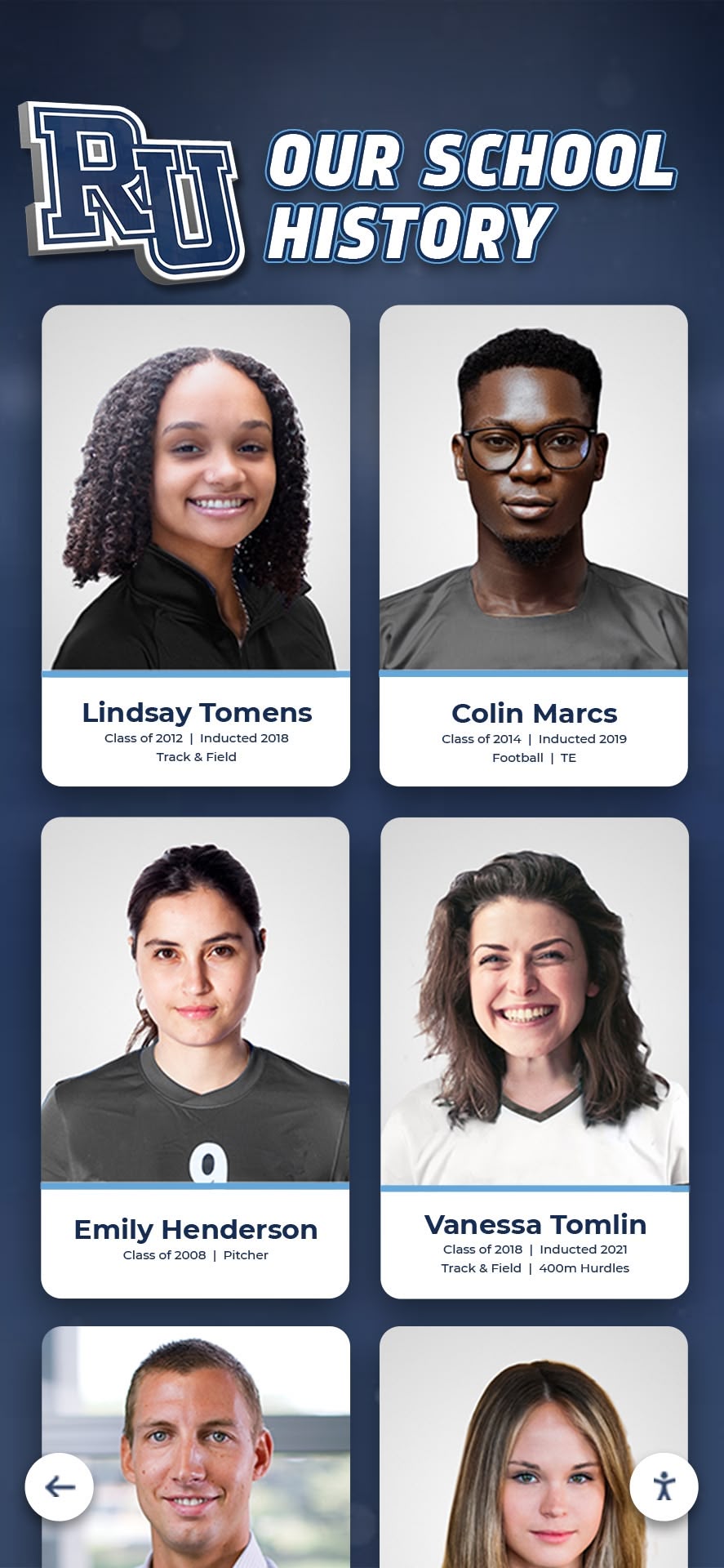
Systematic content development creates comprehensive recognition archives
Launch and Ongoing Management Phase
Official Launch and Promotion
Create awareness and enthusiasm for completed renovations:
- Launch ceremony: Ribbon-cutting or dedication event unveiling improvements
- Communication campaign: Announcements through newsletters, social media, school communications
- Campus tours integration: Incorporate displays into standard campus visit routes
- Alumni outreach: Special communications inviting graduates to explore their recognition
- Media coverage: Local news coverage sharing improvements with broader community
Thoughtful launch activities generate excitement, demonstrate institutional pride, and ensure stakeholders discover and utilize completed renovations rather than overlooking new features without appropriate introduction.
Sustainable Content Management
Establish ongoing workflows maintaining current, relevant recognition:
- Regular update schedules: Quarterly or seasonal content addition periods
- Responsibility assignment: Clear designation of staff managing various content categories
- Submission systems: Processes enabling stakeholders to contribute updates, corrections, or new content
- Quality standards enforcement: Consistent review ensuring ongoing additions maintain quality benchmarks
- Historical content expansion: Ongoing research adding depth to existing recognition archives
- Performance monitoring: Regular assessment of engagement metrics and stakeholder feedback
Sustainable management ensures hallway renovations remain vibrant, current recognition resources rather than becoming static installations receiving initial effort but no ongoing maintenance leading to declining relevance and effectiveness.
Continuous Improvement and Evolution
Treat hallway recognition as evolving programs rather than completed projects:
- Review engagement analytics identifying popular content and usage patterns
- Gather regular stakeholder feedback through surveys and informal input
- Implement incremental improvements addressing identified opportunities
- Expand recognition categories as new needs emerge
- Refresh visual design periodically maintaining contemporary aesthetics
- Upgrade technology as capabilities evolve ensuring continued effectiveness
This continuous improvement mindset maintains recognition program relevance and effectiveness across decades, adapting to changing populations, evolving expectations, and emerging opportunities while preserving core recognition purposes and institutional values.
Conclusion: Transforming Hallways into Recognition Destinations
School hallways represent valuable institutional assets—thousands of square feet of high-traffic space traversed daily by every student, staff member, and visitor. Yet these corridors frequently remain afterthoughts in facility planning, receiving minimal attention beyond basic maintenance and occasional bulletin board updates. This represents missed opportunities for recognition, engagement, community building, and institutional pride development.
Thoughtful hallway remodeling transforms these underutilized transitional spaces into recognition destinations that celebrate achievement, preserve institutional history, inspire excellence, and strengthen community connection. Whether through comprehensive renovations integrating multiple recognition modalities or focused improvements centered on digital recognition displays, hallway transformations deliver multiple benefits extending far beyond aesthetic improvements.
Modern recognition technology, particularly interactive digital displays with purpose-built software platforms, addresses fundamental limitations plaguing traditional recognition approaches. These systems eliminate space constraints preventing comprehensive recognition, enable rich multimedia storytelling impossible with static plaques, create engaging interactive experiences appealing to digital-native students, extend recognition reach globally through web accessibility, and provide sustainable management significantly reducing ongoing maintenance burdens. Solutions like Rocket Alumni Solutions deliver specialized capabilities designed specifically for educational recognition needs, ensuring successful implementations serving institutions effectively for decades.
Ready to Transform Your School Hallways?
Discover how Rocket Alumni Solutions can help you reimagine your school corridors with modern recognition displays that celebrate achievement, preserve history, and inspire excellence. Our purpose-built platform provides everything you need for successful hallway transformation.
Schedule Your Free ConsultationSuccessful hallway remodeling requires thoughtful planning addressing practical considerations—budget development and funding, space assessment and site selection, stakeholder engagement and buy-in, phased implementation strategies, and sustainable management workflows. Projects incorporating these planning elements deliver transformative results serving institutional needs effectively while avoiding common pitfalls undermining many well-intentioned but poorly planned recognition initiatives.
The hallways in your school buildings serve every member of your community multiple times daily. These spaces shape first impressions for visiting families, provide continuous touchpoints with current students, and offer opportunities connecting alumni with institutional traditions and contemporary excellence. Thoughtfully transformed hallways don’t just improve aesthetics—they strengthen school culture, enhance community pride, increase alumni engagement, preserve institutional memory, and inspire current students pursuing their own paths to excellence worthy of future recognition.
Whether you’re planning comprehensive facility renovations or considering focused improvements to specific corridors, hallway remodeling represents high-value opportunities maximizing existing spaces rather than costly building expansions. The journeys your students, athletes, scholars, artists, and leaders achieve through dedication and excellence deserve recognition matching their significance—comprehensive celebration showcased throughout spaces your entire community experiences daily.
Ready to explore how digital recognition displays can transform your school hallways? Contact Rocket Alumni Solutions to discover purpose-built platforms designed specifically for educational recognition needs, or learn more about implementing interactive hall of fame displays and comprehensive recognition programs that celebrate your unique institutional achievements and community excellence.































