Your school lobby serves as the first impression for visitors, prospective families, and returning students each day. This critical space sets the tone for your entire institution, communicating values, celebrating achievements, and establishing the culture visitors will encounter throughout their time on campus. Yet many school lobbies fail to capitalize on this opportunity, settling for generic furniture arrangements, outdated bulletin boards, and underutilized wall space that fails to inspire or inform.
Transforming your school lobby from functional waiting area into dynamic celebration of institutional identity requires intentional design decisions that balance aesthetics with purpose. The most effective lobby designs showcase student achievement, honor tradition, build community connection, and create welcoming environments that make visitors feel immediately engaged with your school’s story.
This comprehensive guide presents 25 school lobby decorating ideas organized into strategic categories: recognition and achievement displays, tradition and heritage elements, interactive and digital installations, student work showcases, and community connection features. You’ll discover practical approaches that work across budget levels, architectural constraints, and institutional priorities while creating lobbies that genuinely reflect your school’s unique character and values.
Recognition and Achievement Displays
School lobbies provide ideal locations for celebrating student, faculty, and alumni accomplishments. These recognition elements transform lobbies from passive waiting areas into active testimony of institutional excellence.
1. Digital Recognition Wall
Modern digital recognition walls replace static plaques with dynamic, searchable displays showcasing achievements across academics, athletics, arts, and community service. These touchscreen display systems allow visitors to explore recognition categories, search specific students or years, and discover comprehensive achievement histories impossible to display on traditional walls.
Digital walls accommodate growing recognition needs without physical space constraints, update instantly when new achievements occur, and present information through engaging multimedia including photos, videos, and detailed achievement descriptions. Schools implementing digital recognition eliminate the common problem of running out of wall space for new plaques while ensuring all achievements receive equal visibility regardless of when they occurred.
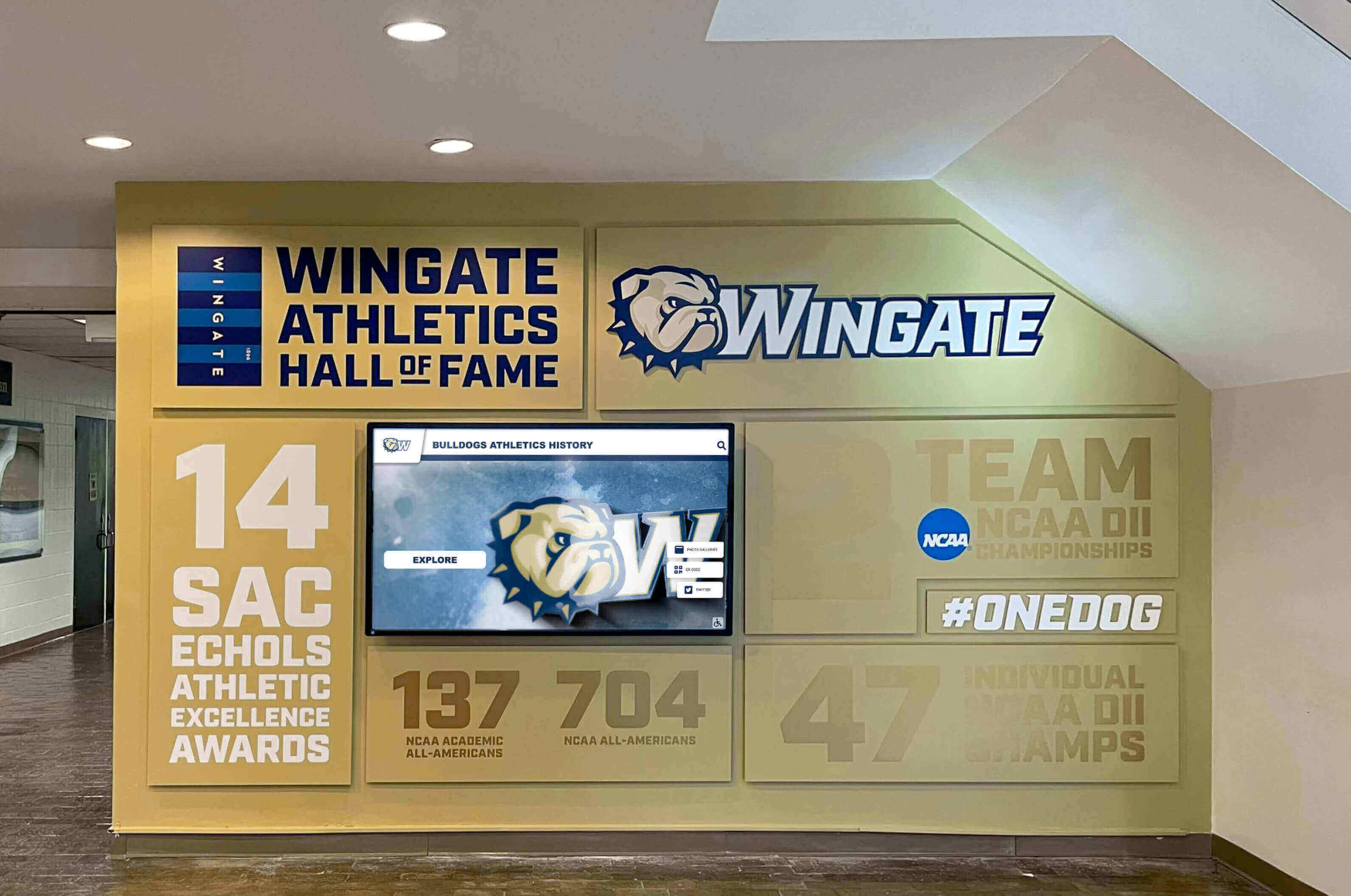
Digital recognition displays in lobbies provide searchable access to comprehensive achievement histories while maintaining visual impact
2. Hall of Fame Wall
Dedicated hall of fame installations honor individuals who achieved exceptional distinction in athletics, academics, arts, or service. Traditional approaches feature engraved plaques arranged in chronological or categorical order, while modern interpretations incorporate digital elements allowing extended biographies, career highlights, and multimedia tributes.
Effective hall of fame walls establish clear selection criteria ensuring honorees represent genuine excellence, update regularly to include worthy recent graduates, and provide context explaining what makes inductees exceptional. Schools should consider professional athletes who attended their institution as natural hall of fame candidates.
3. National Merit Scholars Display
Academic excellence deserves prominent lobby recognition. Creating a dedicated National Merit Scholars wall celebrates students achieving this prestigious distinction while communicating institutional commitment to academic rigor.
Display options range from traditional name plates updated annually to digital leaderboards tracking scholars across decades. Including photos and college destinations provides additional context while inspiring current students to pursue similar recognition.
4. Honor Roll Recognition
While full honor roll lists may overwhelm lobby spaces, creative approaches celebrate academic achievement without cluttering walls. Consider rotating displays featuring current semester honorees, digital screens cycling through honor roll students, or artistic installations where honor students’ names become design elements within larger murals or sculptures.
Honor roll recognition systems using touchscreen technology allow comprehensive lists without consuming entire walls, enabling visitors to search specific students or timeframes while maintaining clean visual aesthetics.
5. Athletic Championship Banners
Championship banners hanging from lobby ceilings create immediate visual impact while showcasing athletic program excellence. Arrange banners chronologically, by sport, or by achievement level (state, regional, national), ensuring consistent design across all banners for cohesive appearance.
For schools with extensive championship histories, consider rotating displays that change seasonally or digitally catalog historical banners while displaying only recent achievements physically. This approach prevents overcrowding while preserving complete records.
6. College Signing Day Wall
Celebrating students’ athletic commitments creates excitement around college signing day while demonstrating your program’s success in preparing student-athletes for collegiate competition. Display committed athletes’ photos, chosen universities, and sports through dedicated wall sections updated annually.
Include information about National Letter of Intent Day to educate families about this important athletic milestone and your school’s role in supporting student-athletes through the college recruitment process.
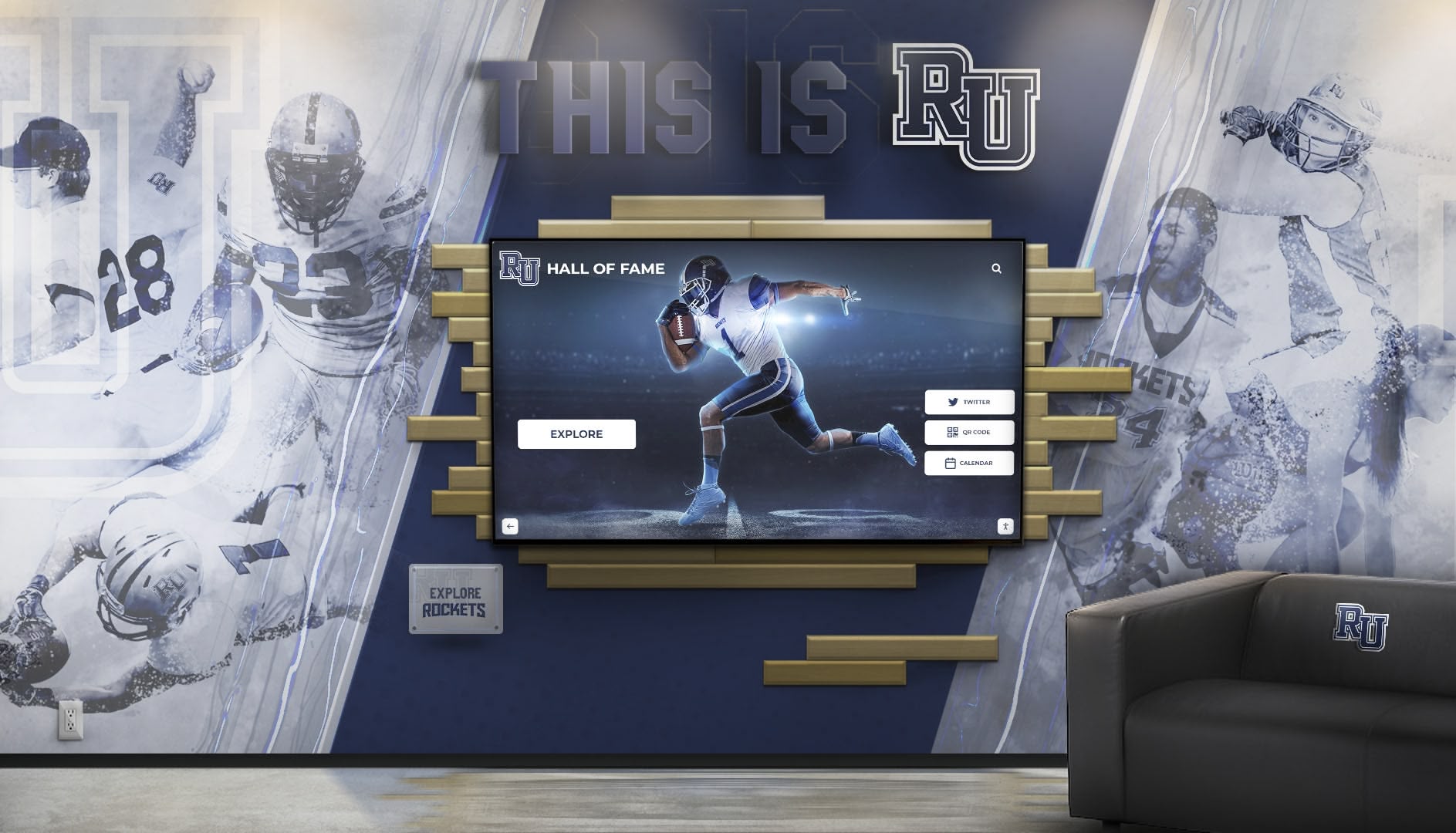
Athletic murals combined with digital displays create dynamic lobby environments celebrating sports excellence
7. Recognition Awards Display Cases
Traditional trophy cases remain lobby staples, but thoughtful design elevates them beyond dusty shelves. Organize trophies and awards by category rather than random placement, incorporate dramatic lighting highlighting key pieces, include explanatory plaques providing context for significant awards, and rotate featured items periodically to maintain visual interest.
Consider whether your school needs examples of meaningful recognition awards that extend beyond athletics to celebrate diverse student achievements.
Tradition and Heritage Elements
School traditions create institutional identity and connect current students with generations of predecessors. Lobby designs that honor heritage build pride while educating newcomers about what makes your school distinctive.
8. School History Timeline
Visual timelines tracing institutional history from founding to present help visitors understand your school’s evolution and significance. Effective timelines highlight founding stories and early leadership, significant architectural changes or campus expansions, notable alumni achievements, educational program milestones, and community impact moments.
Timeline presentations range from wall-mounted graphics to floor installations visitors walk along to digital history archives offering deep exploration of institutional memory.
9. Mascot Feature Wall
Your school mascot represents institutional identity and deserves prominent lobby placement. Creative mascot integrations include large-scale murals featuring mascot artwork, three-dimensional sculptures in school colors, historical evolution displays showing how mascot representation changed over decades, and interactive elements where visitors pose for photos with mascot imagery.
Ensure mascot designs align with current branding while honoring traditional representations that resonate with alumni visitors.
10. Alumni Achievement Showcase
Celebrating distinguished alumni demonstrates your institution’s long-term impact while creating role models for current students. Feature alumni who achieved recognition in diverse fields—business, arts, science, public service, athletics—ensuring representation across graduation decades and career paths.
Consider student mentorship programs that connect current students with accomplished alumni, using lobby displays to showcase these mentoring relationships.
11. School Colors Throughout
Strategic use of school colors creates cohesive visual environments reinforcing institutional identity. Apply colors through wall paint in accent sections, furniture selections (seating, tables), flooring patterns or carpets, artwork and photography matting, and decorative elements like pillows or planters.
Avoid overwhelming spaces with color by balancing school colors with neutral backgrounds, allowing strategic color placement to create visual interest without sensory overload.
12. Tradition Plaques and Commemorative Markers
Permanent plaques commemorating significant institutional moments create tangible connections to heritage. Consider marking building dedications, major gift acknowledgments, championship seasons, program anniversaries, and leadership tenures.
Recognition plaques require consistent design and placement standards ensuring they contribute to cohesive lobby aesthetics rather than appearing random or cluttered.
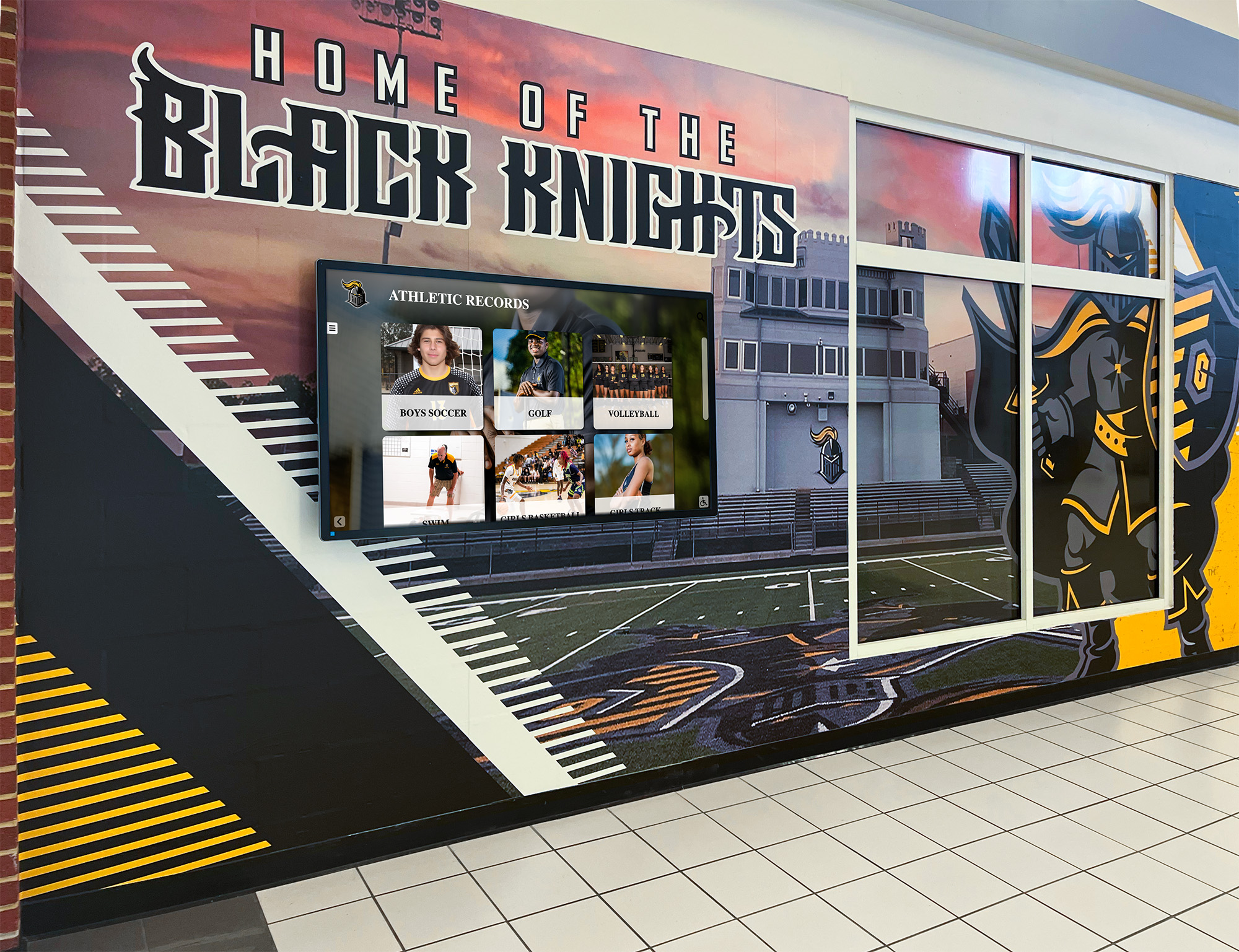
Murals celebrating school mascots and traditions create immersive environments that reinforce institutional identity
Interactive and Digital Installations
Technology transforms lobbies from static display spaces into dynamic, engaging environments where visitors actively explore rather than passively observe.
13. Touchscreen Information Kiosks
Interactive kiosks provide self-service access to campus maps, event calendars, staff directories, program information, and achievement databases. Well-designed kiosks reduce front office traffic by answering common visitor questions while offering engagement opportunities beyond printed materials.
Implement kiosks with intuitive interfaces requiring no instruction, content updated regularly reflecting current information, accessibility features supporting diverse user needs, and durable hardware withstanding heavy use in high-traffic environments.
14. Digital Donor Recognition Wall
Schools conducting capital campaigns or major fundraising initiatives benefit from digital donor walls that honor contributors while encouraging additional philanthropy.
Digital donor recognition offers advantages over traditional engraved walls by accommodating unlimited donor names without physical space constraints, updating instantly when new gifts occur, organizing donors by giving levels or campaign categories, and sharing impact stories demonstrating how donations benefit students.
These creative donor wall designs maintain fundraising momentum by keeping philanthropy visible and celebrated.
15. Live Social Media Feeds
Displaying curated social media feeds in lobbies keeps content fresh while showcasing current student activities, athletic results, academic achievements, and campus events. Social walls aggregate content from multiple platforms, filter inappropriate posts, and rotate through recent highlights.
Balance live feeds with other lobby elements to prevent them from dominating spaces or creating visual distraction. Consider displaying social content on dedicated screens rather than primary recognition displays.
16. Virtual Campus Tours
Interactive screens offering self-guided virtual tours help prospective families explore campus when formal tours aren’t available. Virtual tours can highlight academic facilities, athletic venues, arts spaces, student life areas, and unique program features while allowing visitors to explore at their own pace.
Include accessibility information, program details, and contact information for admissions or advancement offices, transforming lobby visits into recruitment opportunities.
17. Student Achievement Leaderboards
Digital leaderboards tracking various achievement metrics create friendly competition while celebrating excellence. Consider leaderboards for academic performance (GPA, test scores, merit scholars), athletic records (individual and team), arts accomplishments (competition placements, scholarships), service hours, and attendance or participation records.
Ensure leaderboards celebrate diverse achievement types so students with different strengths all see pathways to recognition.
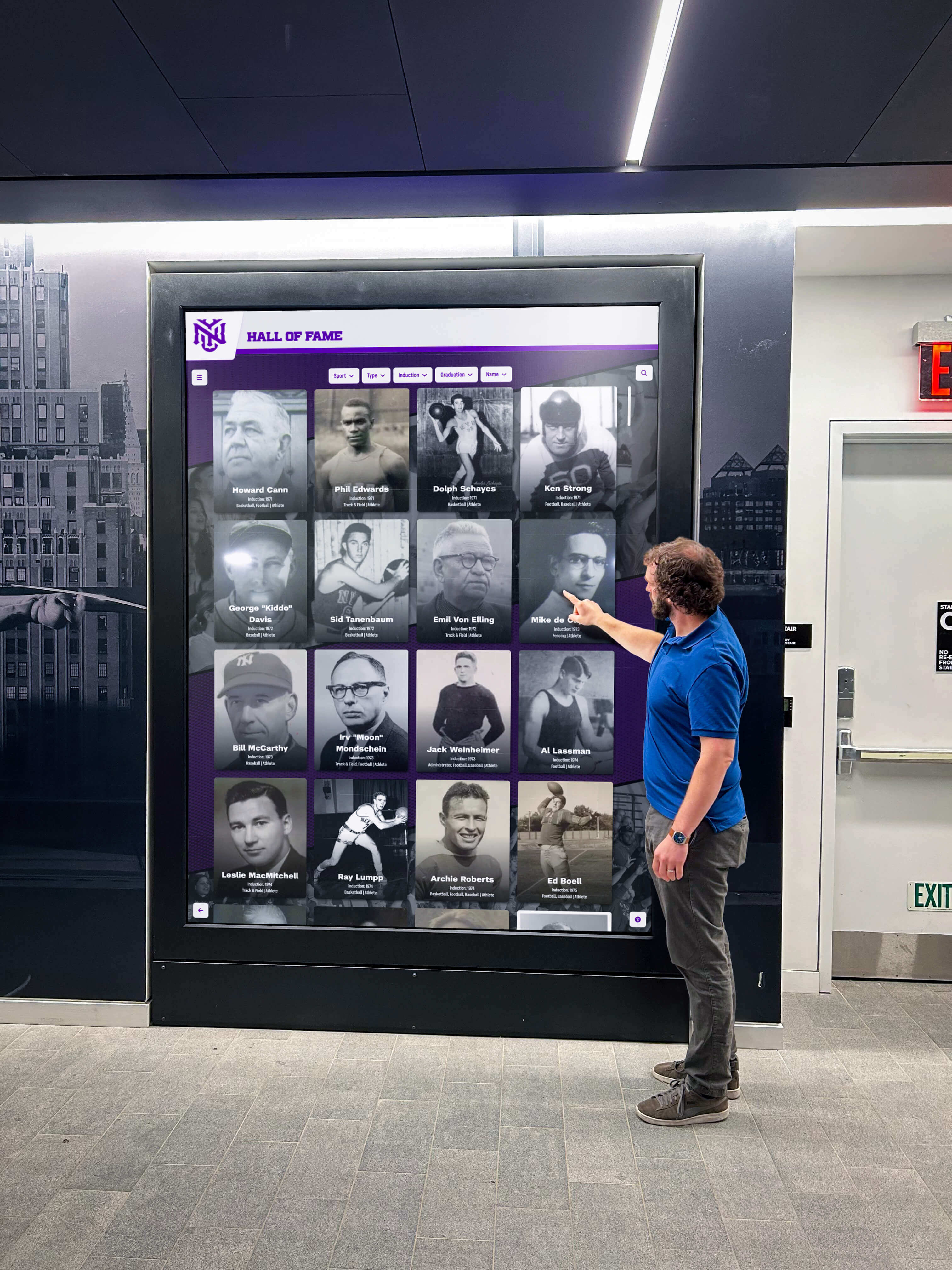
Interactive touchscreen displays invite exploration while providing searchable access to comprehensive achievement and institutional history
Student Work Showcases
Celebrating current student creativity and achievement demonstrates that schools value diverse talents while giving students authentic audiences for their work.
18. Rotating Art Gallery
Designating lobby wall space for rotating student artwork exhibitions creates ongoing visual interest while honoring artistic achievement. Establish regular rotation schedules (monthly, quarterly), feature different grade levels or artistic media, include artist statements and creative process descriptions, and host opening receptions celebrating featured artists.
Consider digital art galleries for schools with more student artwork than physical wall space, allowing extensive collections to rotate through digital displays.
19. Academic Project Displays
Showcasing exceptional student academic work demonstrates educational rigor while celebrating intellectual achievement. Display science fair projects, research papers, historical analyses, mathematical proofs, or engineering designs through professional presentation boards, digital screens, or interactive stations.
Rotate displays regularly ensuring diverse subjects and grade levels receive recognition while keeping lobby content fresh and engaging.
20. Literary Magazine Feature
Schools publishing literary magazines benefit from lobby displays featuring student writing, poetry, and creative work. Consider framing individual pieces, creating dedicated reading areas with current and archived magazines, or displaying excerpts on digital screens cycling through student writing.
This recognition validates student authors while promoting literary culture throughout your school community.
21. Music and Performance Highlights
Celebrating performing arts achievements through lobby displays honors students whose work often occurs in specialized venues. Feature concert posters and programs, marching band recognition for competition achievements, theater production photos and reviews, or video screens displaying performance excerpts.
Include information about how performing arts connect to broader educational outcomes and student development.
Community Connection Features
School lobbies that acknowledge community relationships, partnerships, and shared identity create welcoming environments for all stakeholders.
22. Community Partners Recognition
Acknowledging businesses, organizations, and community members who support your school through dedicated lobby recognition builds relationships while demonstrating appreciation. Feature logos or names of major partners, describe partnership benefits and impact, highlight collaborative programs or initiatives, and update regularly as partnerships evolve.
This recognition reinforces that schools operate as community institutions rather than isolated entities.
23. Staff Spotlights
Celebrating faculty and staff achievements, milestones, and contributions personalizes your institution while demonstrating that you value employees. Feature teacher appreciation through rotating spotlights, honor years of service milestones, highlight professional achievements or advanced degrees, and showcase innovative teaching practices or program developments.
Staff recognition demonstrates to students that adults in their building deserve celebration, modeling appreciation culture.
24. Welcome Messages in Multiple Languages
Schools serving diverse communities can acknowledge this richness through multilingual welcome messages prominently displayed in lobbies. Including greetings in languages spoken by student families demonstrates cultural respect, creates inclusive environments, and helps non-English speaking visitors feel welcomed.
Consider consulting with families and community cultural organizations to ensure accurate, appropriate translations and representations.
25. School Mission and Values Display
Prominently featuring your school’s mission statement, core values, or educational philosophy ensures visitors immediately understand institutional priorities and culture. Present mission elements through large-scale graphics, artistic interpretations, or digital animations that bring abstract concepts to life through concrete examples and student stories.
Effective mission displays translate aspirational language into observable actions, helping visitors see how stated values manifest in daily school operations.
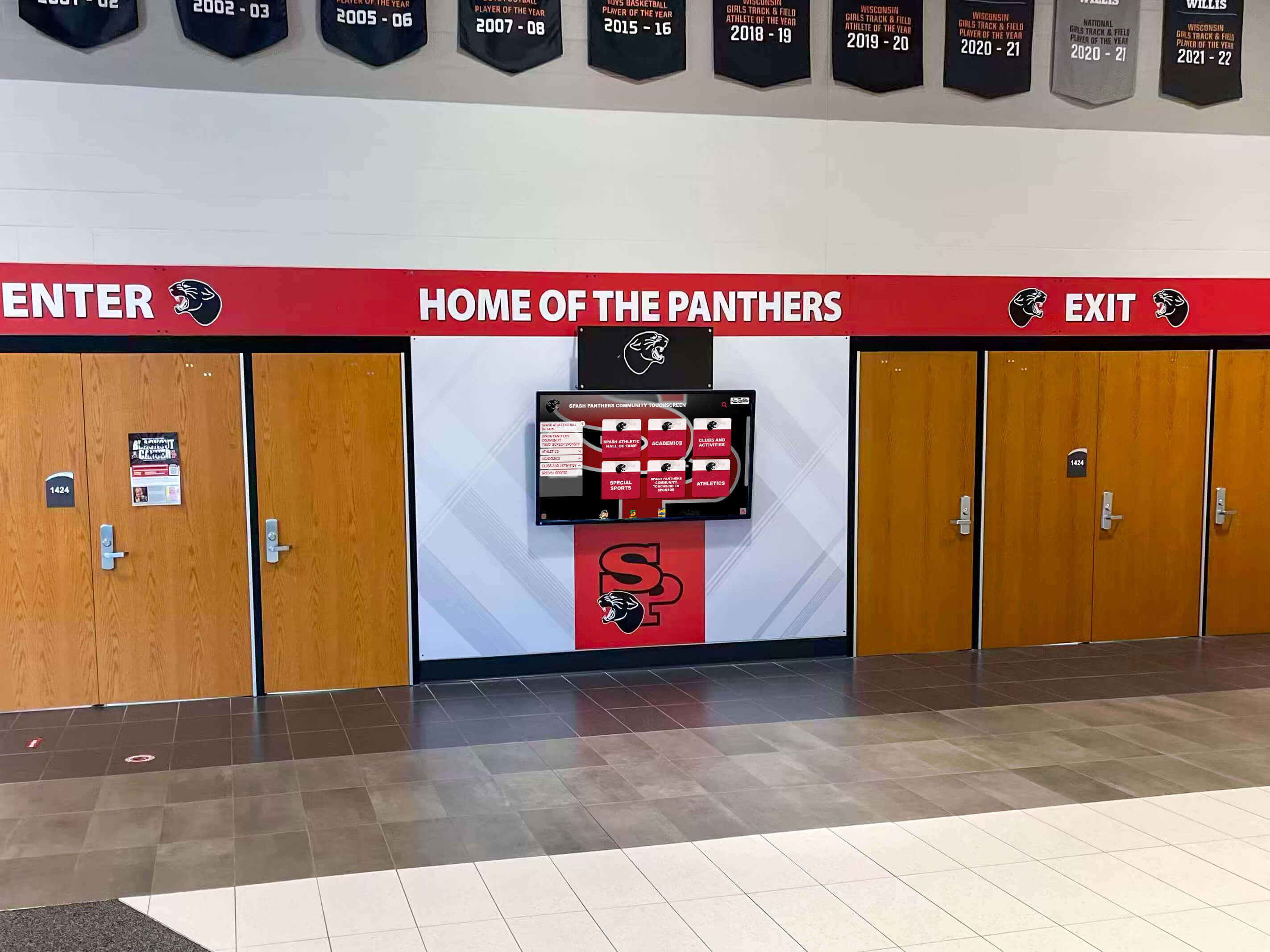
Branded entrance displays immediately establish school identity while directing traffic and welcoming visitors
Strategic Planning for Lobby Renovations
Implementing these decorating ideas requires strategic planning that balances aspirations with budgets, timelines, and stakeholder input.
Assessing Your Current Lobby
Begin by evaluating your existing lobby’s strengths and limitations. Consider traffic flow and visitor experience, available wall space and architectural features, lighting quality and electrical access, current recognition systems and their effectiveness, and community feedback about first impressions.
Documentation through photos and measurements creates baseline information for planning discussions.
Establishing Priorities and Budget
Most schools can’t implement all 25 ideas simultaneously. Prioritize based on institutional goals (recruitment, fundraising, community engagement), available budget and funding sources, physical space constraints and architectural realities, maintenance capacity for interactive or digital elements, and stakeholder input from students, staff, families, and community members.
Consider phased implementation allowing you to complete projects over multiple years as funding becomes available.
Integrating Campus Signage Strategy
Lobby design should align with broader campus signage best practices ensuring consistent branding, clear wayfinding, and cohesive visual identity throughout your facility.
Coordination between lobby elements and campus-wide signage creates professional, polished environments rather than disconnected design decisions.
Selecting Vendors and Solutions
Schools implementing digital or interactive lobby elements should carefully evaluate vendors based on product quality and longevity, technical support and maintenance services, content management system ease of use, customization options matching your needs, accessibility compliance features, and long-term costs beyond initial installation.
Rocket Alumni Solutions specializes in digital recognition displays, touchscreen walls of fame, and interactive achievement showcases designed specifically for educational institutions. Their solutions provide schools with professional-grade recognition systems that celebrate achievement while enhancing lobby environments through modern, engaging technology.
Maintaining Lobby Impact Over Time
Even beautifully designed lobbies lose impact without ongoing attention and content updates.
Content Update Schedules
Establish clear protocols for updating lobby displays regularly. Assign responsibility for seasonal changes, monthly achievement updates, annual recognition additions, and event-driven content modifications. Digital systems simplify updates but still require someone managing content and ensuring accuracy.
Cleaning and Maintenance
Lobby elements require regular care maintaining professional appearance. Develop schedules for dusting displays and cases, cleaning digital screens and interactive surfaces, replacing damaged or outdated materials, repairing lighting or electrical issues, and refreshing worn furniture or carpeting.
Budget for ongoing maintenance preventing gradual decline in lobby appearance and functionality.
Measuring Effectiveness
Track whether lobby renovations achieve intended goals through visitor feedback and surveys, prospective family comments during tours, alumni reactions during return visits, staff and student satisfaction measures, and achievement in recruitment or fundraising objectives.
Data about lobby effectiveness informs future design decisions and justifies continued investment in these important spaces.
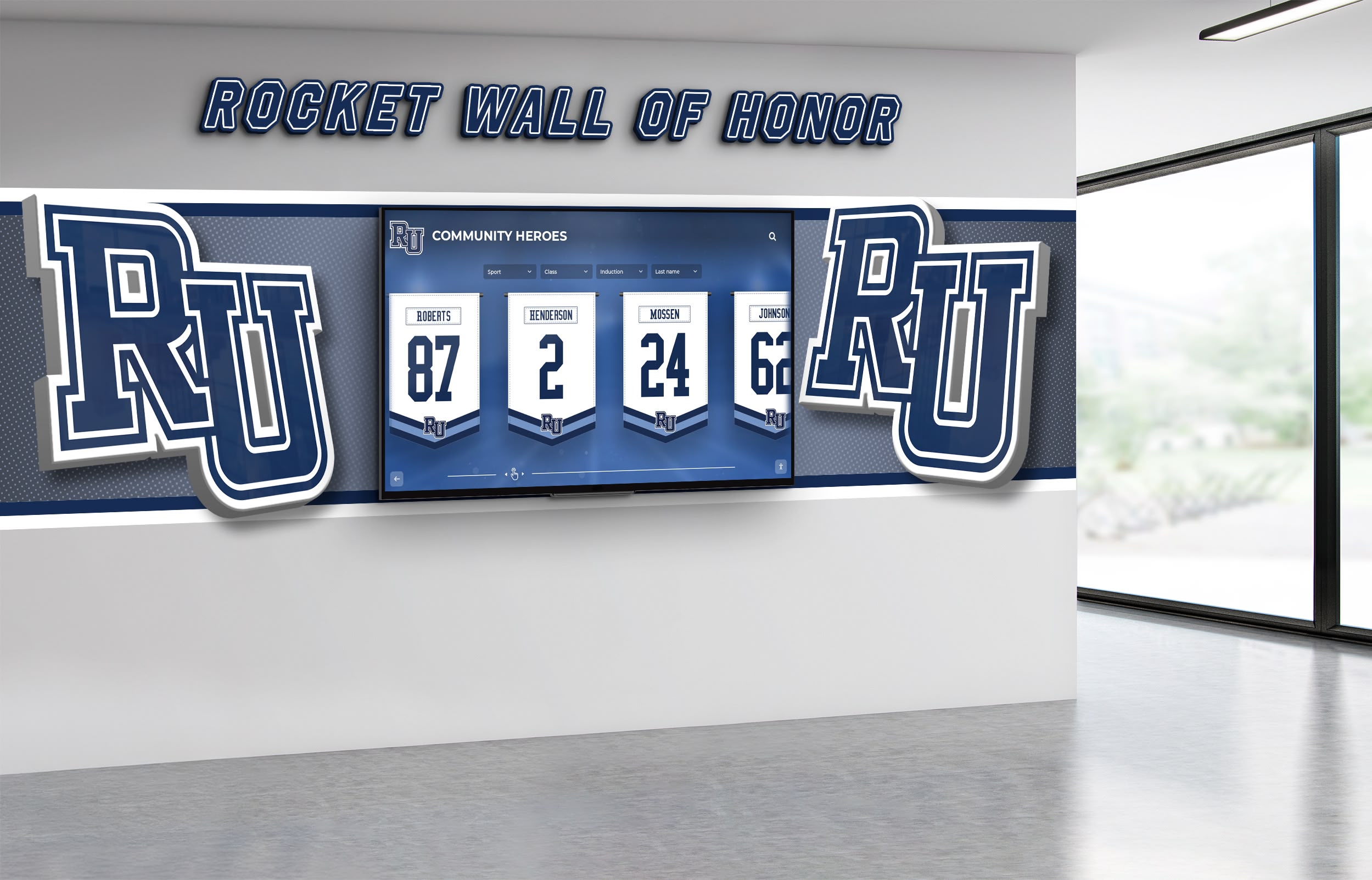
Professional digital displays in lobbies provide flexible, long-term recognition solutions that grow with your institution
Creating Lobbies That Tell Your School’s Story
The most effective school lobby decorating ideas share common characteristics: they celebrate authentic achievements rather than generic aspirations, they connect visitors to institutional history and tradition, they engage diverse stakeholders from students to alumni, they balance timeless elements with current flexibility, and they reflect genuine school culture rather than borrowed designs.
Your lobby should tell your school’s unique story in ways that generic furniture arrangements and bulletin boards simply cannot. Whether you implement traditional recognition walls, cutting-edge digital displays, or creative combinations of both, ensure every design decision serves strategic purposes aligned with institutional values and goals.
Schools investing in thoughtful lobby design create environments that inspire current students, impress prospective families, honor achievement, preserve tradition, and build community pride. These spaces become more than waiting areas—they become active testimony to what makes your institution exceptional, communicating your story to everyone who walks through your doors.
Ready to transform your school lobby into a dynamic celebration of achievement and tradition? Rocket Alumni Solutions offers digital recognition displays, interactive walls of fame, and customized solutions designed specifically for educational institutions. Contact their team to explore how modern technology can enhance your lobby while creating lasting recognition for generations of student achievement.































