High school theatre programs create transformative experiences through months of rehearsals, technical preparation, and collaborative artistry. Yet when the final curtain closes, physical playbills often become the only lasting record of these remarkable productions—documents that quickly fade in program files or disappear in forgotten boxes. Students who dedicated countless hours to perfecting performances, designing intricate sets, or mastering complex lighting cues deserve recognition that extends beyond opening night applause and a brief yearbook mention.
School playbill displays provide modern solutions for celebrating and preserving theatrical excellence permanently. Rather than limiting recognition to temporary paper programs distributed during performances, digital playbill display systems showcase complete production histories, honor every cast and crew member, and create searchable archives that keep theatrical traditions alive for current students, alumni, and the broader school community.
This comprehensive guide explores how schools can implement digital playbill displays that transform ephemeral theatre programs into permanent celebrations of dramatic achievement, technical excellence, and collaborative artistry that define exceptional school theatre programs.
Theatre programs represent significant investments of time, resources, and creative energy. Multiple productions annually involve hundreds of students across performing, technical, and support roles. Despite this substantial commitment, most schools struggle to adequately preserve production history or provide ongoing visibility for theatrical achievements comparable to athletic trophy cases or academic honor walls.
Digital playbill displays solve these fundamental challenges while creating new opportunities for recognition, engagement, and program advocacy that traditional paper programs and static displays cannot match.
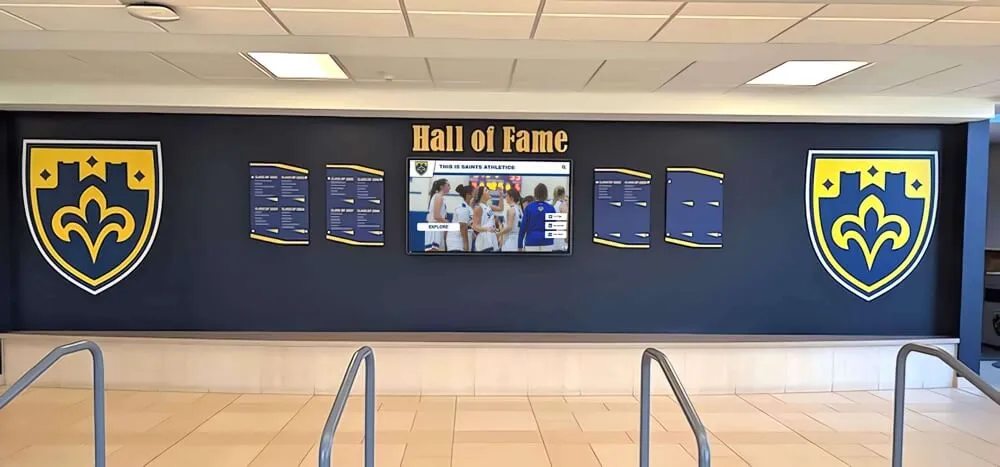
Modern digital displays transform traditional recognition into engaging, comprehensive theatre program showcases
Understanding School Playbill Programs and Recognition Needs
Before implementing digital display solutions, understanding what makes theatre recognition distinctly challenging helps schools design approaches that authentically honor dramatic arts excellence.
The Traditional Role of School Playbills
Physical playbills have served as primary theatre documentation for generations, providing audiences with essential production information while creating keepsakes that commemorate student performances.
Traditional Playbill Components
School playbills typically include production title and performance dates, complete cast list with character assignments, crew roster acknowledging technical contributions, director and production team credits, show synopsis and setting information, musical numbers list for musical theatre productions, acknowledgments for donors and supporters, and student biographies and fun facts.
According to Playbill.com, services like PLAYBILLder now allow schools nationwide to create professional Broadway-quality programs that recognize all contributing members of theatre organizations. These programs demonstrate to communities that theatre programs represent valued activities worthy of support and investment.
Limitations of Paper-Only Recognition
While traditional playbills serve important functions during productions, they face significant constraints as long-term recognition tools including limited distribution to only audience members attending specific performances, short lifespan before programs get discarded or stored away, no systematic archiving creating accessible production history, inability to update or correct information after printing, restricted space forcing difficult decisions about content inclusion, and no searchability preventing easy discovery of specific student contributions across multiple shows.
These limitations leave schools seeking complementary solutions that preserve playbill content while extending recognition reach, longevity, and accessibility far beyond what paper programs alone can achieve.
The Recognition Gap in Theatre Programs
Theatre students commonly experience significant disparities between their dedication and the recognition they receive compared to other achievement domains.
Visibility Challenges
Drama achievements frequently suffer from limited visibility including productions remembered primarily by attendees rather than broader communities, technical theatre contributions remaining largely invisible to non-theatre audiences, brief recognition periods confined to show weekends, documentation scattered across individual collections rather than institutional archives, and theatre accomplishments receiving less prominent display space than athletic trophies.
Schools implementing theatre interactive display boards report significant improvements in program visibility, student recruitment, and community awareness of theatrical excellence.
The Ephemeral Nature of Performance
Unlike athletic games that generate permanent statistics or academic work that creates lasting artifacts, theatrical performances exist primarily as temporary live experiences. This ephemeral quality makes systematic recognition particularly crucial for preserving what would otherwise vanish completely after final performances.
Without deliberate documentation and ongoing recognition systems, even extraordinary productions fade from institutional memory within just a few years as students graduate and faculty transitions occur. Digital playbill displays ensure production legacies endure permanently rather than disappearing with each graduating class.
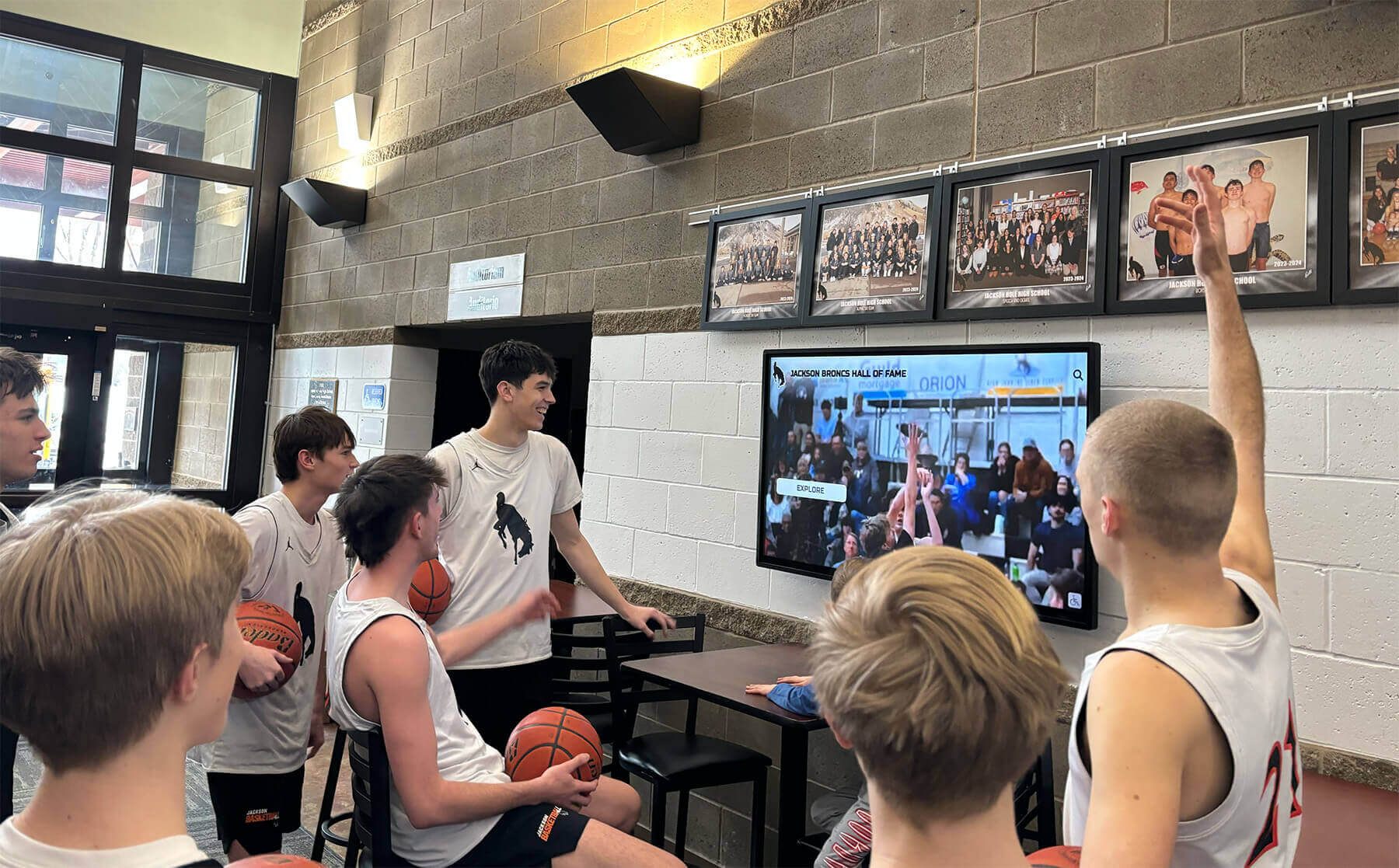
Interactive displays invite students to explore theatrical history and discover production achievements
Benefits of Digital Playbill Display Systems
Modern digital solutions address traditional limitations while creating new recognition capabilities impossible with paper programs alone.
Comprehensive Production Documentation
Digital systems provide unlimited capacity for production archiving including complete cast and crew rosters for every production in school history, high-resolution photo galleries capturing performances and technical achievements, video highlights preserving actual performance moments, detailed production information and historical context, behind-the-scenes documentation showing creative processes, and systematic organization enabling easy discovery across decades of productions.
Enhanced Student Recognition
Individual students benefit from comprehensive digital profiles including complete production history showing all shows they participated in throughout their school careers, role progression demonstrating growth from ensemble to featured positions, technical specialization documentation for lighting, sound, set, and costume work, awards and special recognition received, and post-graduation updates connecting theatrical experience to future achievements.
Solutions like digital arts and music showcases demonstrate how comprehensive recognition inspires continued participation while validating arts programs as worthy of institutional resources and support.
Program Advocacy and Recruitment
Impressive digital displays serve multiple strategic purposes beyond simple recognition including demonstrating program quality to prospective students and families during campus tours, providing concrete evidence of program success when seeking budget support, engaging alumni by preserving their theatrical experiences accessibly, showcasing program tradition and excellence to broader communities, and attracting students to participate by highlighting diverse contribution opportunities beyond performing roles.
Simplified Management and Sustainability
Cloud-based digital systems dramatically reduce administrative burden compared to maintaining physical displays including remote content updates from any internet-connected device, no physical materials requiring printing, framing, or mounting, unlimited storage capacity eliminating difficult archival decisions, multiple administrators capable of contributing content collaboratively, and automatic backup systems preventing loss of irreplaceable documentation.
Essential Content for Digital Playbill Displays
Effective digital playbill systems showcase diverse achievements across all aspects of theatrical production while preserving complete institutional history.
Production Archive Documentation
Comprehensive production documentation forms the foundation of meaningful theatre recognition systems.
Core Production Information
Each production entry should include show title and playwright or composer credits, performance dates and venue information, director, musical director, and choreographer acknowledgment, production team credits for designers and technical directors, number of performances and audience attendance figures when available, and special recognition including awards, competition participation, or notable achievements.
Complete Cast Recognition
Systematic cast documentation ensures every performer receives appropriate acknowledgment including principal role performers with character names, supporting cast members and their roles, ensemble and chorus participants, understudies and alternates who prepared for potential performance, student directors and assistant directors, and special performer recognition for vocal soloists or featured dancers.
Technical Theatre and Crew Acknowledgment
Behind-the-scenes contributors deserve recognition equal to performers including lighting design and operation teams, sound engineering and audio management, stage crew executing scene changes and managing props, fly system operators handling curtains and hanging scenery, costume construction and wardrobe management, set design, construction, and painting teams, makeup and hair styling artists, properties masters sourcing and creating essential items, and stage managers coordinating all production elements.
Understanding comprehensive student achievement recognition approaches helps schools design systems that value all theatrical contributions appropriately.
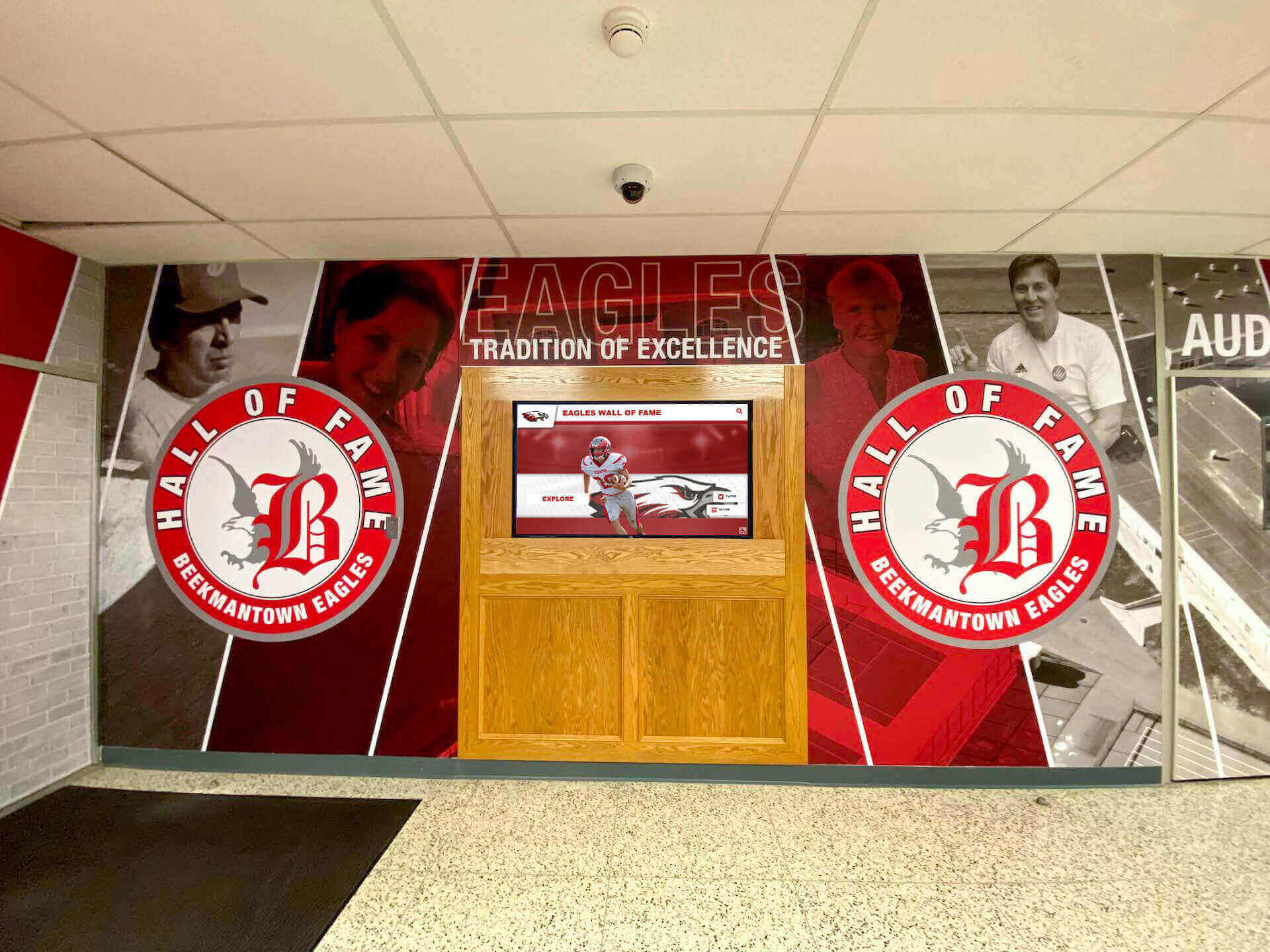
Integrated recognition systems combine digital technology with traditional design elements
Visual and Multimedia Documentation
Rich multimedia content brings theatrical productions to life far more effectively than text descriptions alone.
Photography Best Practices
Systematic photo documentation should include professional performance photography capturing key scenes and emotional moments, behind-the-scenes rehearsal photos showing creative development, technical theatre work-in-progress documentation, cast and crew group photos preserving ensemble memories, opening night and closing performance images, and candid moments capturing the joy and camaraderie of theatrical collaboration.
Video Content Integration
When copyright permissions allow, video content provides powerful documentation including performance highlight reels showcasing production quality, student testimonials sharing personal reflections on their theatrical experiences, time-lapse videos documenting set construction from concept to completion, technical theatre demonstrations explaining complex lighting or sound designs, and director commentary providing artistic context and vision.
Historical Material Digitization
Preserving older productions requires systematic gathering and digitization of existing materials including physical playbills and programs from past productions, yearbook pages documenting theatrical seasons, newspaper reviews and media coverage from archives, award certificates and competition results, video recordings from personal collections when permissions allow, and photo prints from school files and alumni contributions.
Many schools find that alumni outreach campaigns generate significant historical materials as graduates eagerly contribute documentation from their own theatrical experiences to ensure their productions receive permanent recognition.
Individual Student Achievement Profiles
Comprehensive student profiles transform simple name listings into inspiring achievement narratives that resonate emotionally while educating viewers about theatrical excellence.
Essential Profile Components
Well-designed student profiles include professional or high-quality headshot photography, complete production history listing all shows across their school career, roles performed with detailed character descriptions, technical specializations and skills developed, leadership positions held within drama programs, International Thespian Society honors and point accumulation, awards and special recognition received, graduation year and class affiliation, and optional alumni updates about college theatre programs or professional pursuits.
Achievement Storytelling Elements
Moving beyond basic biographical information, effective profiles incorporate student quotes reflecting on theatrical experiences and personal growth, teacher testimonials explaining the significance of achievements, descriptions of challenges overcome during particularly demanding productions, skill development narratives showing progression over multiple years, and connections between theatrical participation and other achievement domains including academics and leadership.
This comprehensive storytelling approach creates deeper appreciation for theatrical achievement while inspiring younger students by demonstrating attainable pathways to excellence rather than presenting success as requiring exceptional natural talent alone.
Schools implementing academic recognition programs alongside theatre displays report stronger cultures of comprehensive excellence celebrating achievement across all domains.
Implementing Digital Playbill Display Systems
Successful implementation requires strategic planning that addresses technology selection, content development, and sustainable management approaches.
Planning and Needs Assessment
Thorough preparation establishes the foundation for effective long-term recognition programs.
Current State Evaluation
Begin by documenting existing recognition approaches including what theatre recognition currently exists and where it’s located, how complete production documentation has been historically, what materials exist that could be digitized for historical archives, how theatre recognition compares to athletic and academic recognition visibility, and what stakeholders identify as highest recognition priorities.
This assessment reveals specific gaps that digital playbill displays should address while identifying effective existing approaches worth maintaining or enhancing.
Goal Setting and Success Criteria
Clear objectives guide implementation decisions and provide assessment frameworks including inspiring younger students toward theatrical participation, preserving institutional theatre history for future generations, demonstrating program excellence to administrators and community supporters, supporting college applications with comprehensive achievement documentation, creating recognition equity between theatre, athletics, and academics, and engaging alumni through accessible connections to their theatrical experiences.
Budget Development and Funding Strategies
Digital recognition requires investment in hardware, software, and content development. Schools should consider display hardware costs including screens, mounting systems, and computing modules, software platform fees often structured as annual subscriptions, professional photography and videography for content creation, installation services for physical displays when needed, and ongoing content management time allocation.
Many schools find success with phased implementation beginning with current productions while gradually expanding historical coverage, multiple funding sources including booster club support, memorial donations, grants, and general operating budgets, and shared costs when displays serve multiple programs including music, visual arts, and other recognition needs.
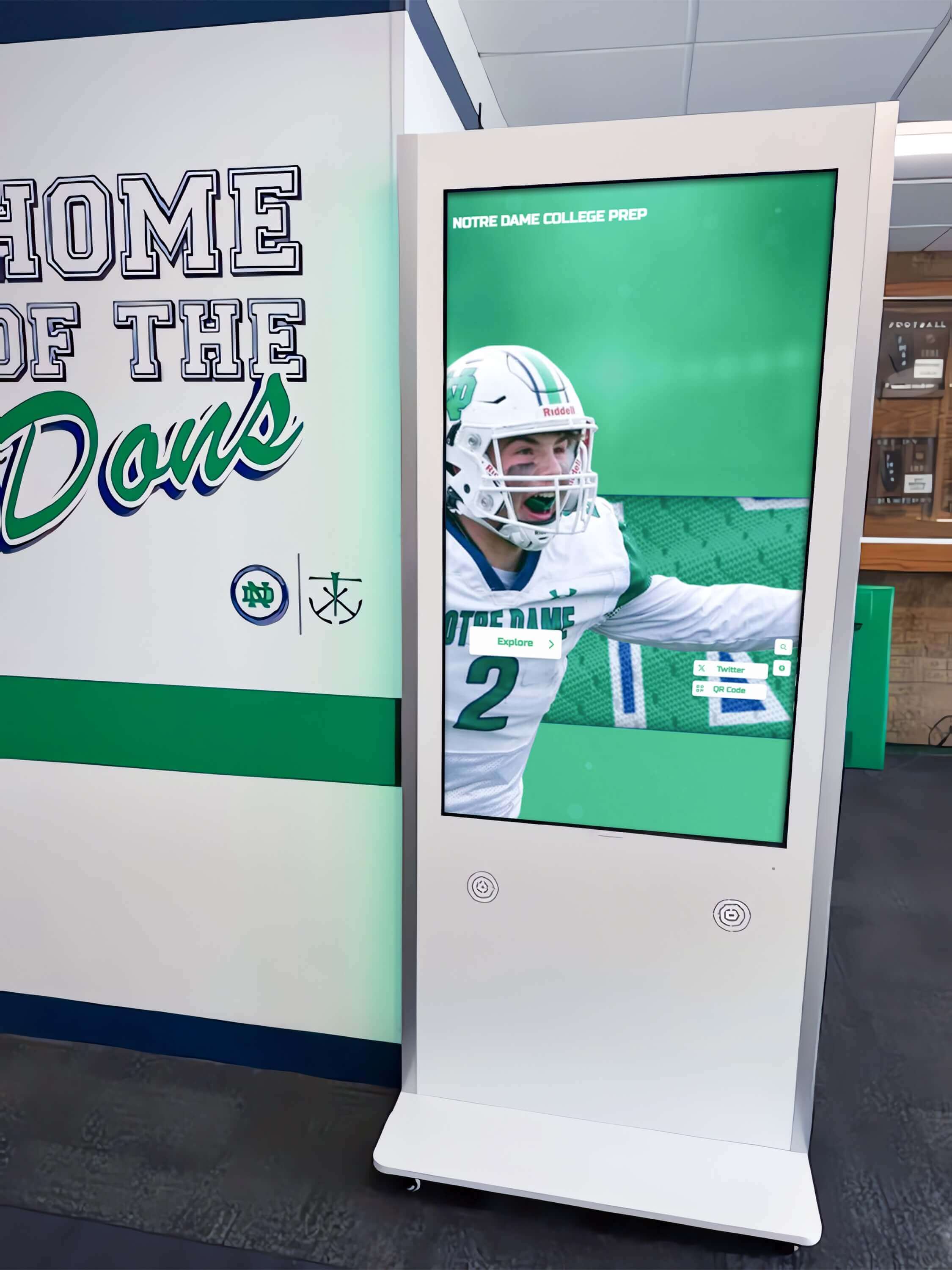
Flexible kiosk configurations allow strategic placement in various high-traffic school locations
Technology Platform Selection
Choosing appropriate platforms determines long-term success, sustainability, and user experience quality.
Hardware Considerations
Physical installation options include wall-mounted displays providing clean appearance and space efficiency in performing arts lobbies, freestanding kiosks offering placement flexibility in general school areas, display size selection based on viewing distance and space characteristics typically ranging from 43 inches to 75 inches or larger, touchscreen versus non-interactive displays depending on desired engagement levels, and commercial-grade equipment designed for continuous operation rather than residential displays.
Software Platform Requirements
Purpose-built recognition platforms offer significant advantages over generic digital signage solutions including organizational structures optimized for theatre rosters and production documentation, multimedia support specifically designed for performance video and audio, search and filter capabilities relevant to drama programs, intuitive content management requiring no technical expertise, and dedicated support from staff understanding educational recognition needs.
Solutions like Rocket Alumni Solutions provide comprehensive platforms combining interactive touchscreen displays with web-accessible content, cloud-based management enabling remote updates, unlimited capacity for productions and student profiles, and proven reliability supporting sustainable long-term programs.
Web Integration and Extended Access
Modern systems extend recognition beyond physical displays through responsive web portals accessible on all devices, social sharing capabilities enabling students to celebrate recognition across personal networks, mobile applications providing 24/7 access, QR code generation linking printed materials to digital profiles, and email notification systems alerting students when they receive new recognition.
This multi-platform approach ensures theatre achievements reach audiences far beyond those who visit physical displays in person.
Strategic Display Placement
Location decisions significantly impact recognition visibility, engagement, and cultural influence.
Primary Location Options
High-impact placement positions include performing arts center lobbies welcoming audiences arriving for shows, main school entrances communicating institutional commitment to arts excellence, hallways connecting performance spaces where theatre students pass daily, cafeteria or commons areas reaching diverse student populations, and library entrances connecting artistic achievement with broader learning.
Schools with multiple buildings or campuses may install displays in several strategic locations ensuring comprehensive coverage rather than confining theatre recognition to fine arts areas where primarily drama students encounter it.
Installation Considerations
Professional installation addresses viewing height positioning screens for comfortable interaction, lighting conditions avoiding glare from windows or overhead fixtures, power and network infrastructure ensuring reliable operation, ADA accessibility compliance for universal access, security measures protecting expensive equipment, and aesthetic integration with existing architectural features and school branding.
Exploring displaying school history approaches provides additional insights into creating comprehensive recognition environments that honor institutional traditions across multiple achievement domains.
Content Development Strategies and Workflows
Building comprehensive content libraries requires systematic approaches that make workload manageable while ensuring high-quality, complete documentation.
Systematic Documentation Protocols
Establishing consistent documentation procedures ensures complete capture of current productions while systematically building historical archives.
Current Production Documentation
Develop systematic protocols for documenting ongoing productions including pre-production photography of all cast and crew members, rehearsal process documentation showing creative development, dress rehearsal professional photography capturing full scenes with technical elements, opening night videography when copyright permissions allow, behind-the-scenes technical theatre documentation, and closing night group photos and reflection opportunities.
Assign specific responsibility whether to theatre students gaining practical experience, parent volunteers with photography skills, professional photographers for major productions, or student media organizations as part of their curriculum.
Historical Archive Development
Most programs cannot digitize decades of history immediately. Prioritize systematically including recent productions from past 5-10 years where materials are readily available, landmark productions that shaped program identity regardless of age, productions featuring students who achieved notable theatre careers, shows receiving significant awards or special recognition, and alumni favorite productions generating particular nostalgia and engagement.
Gather materials through drama teacher personal collections, school yearbook archives, alumni outreach campaigns requesting contributions, local newspaper archives containing reviews and photos, and community member donations from longtime program supporters.
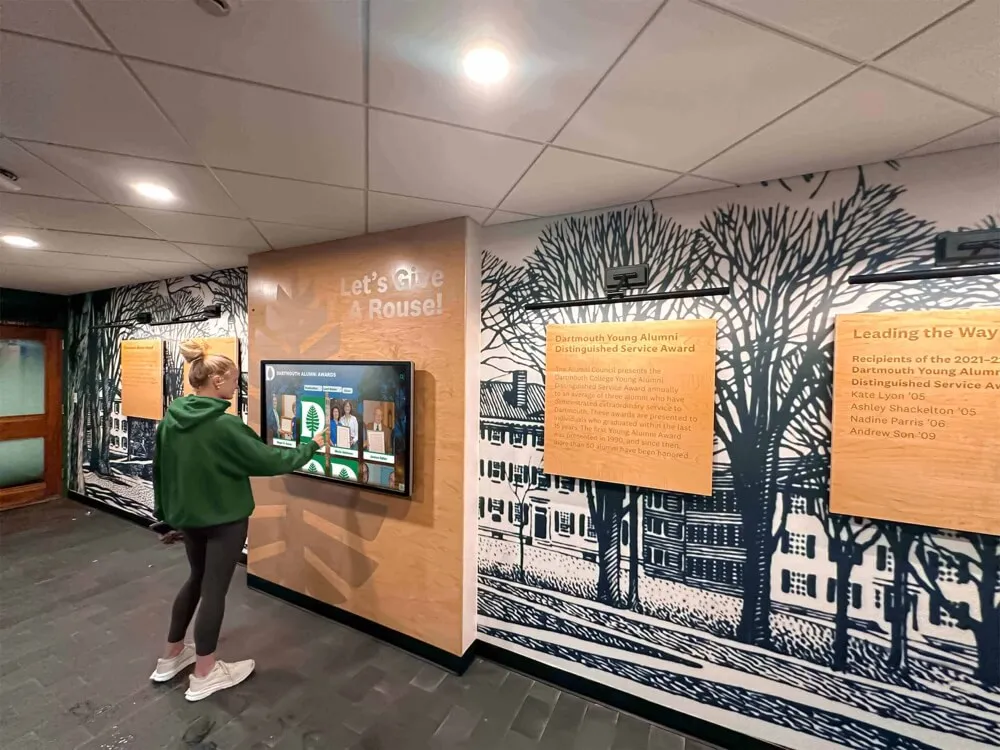
Cloud-based management systems enable straightforward content updates from any location
Content Organization and Searchability
Intuitive organization ensures visitors find relevant content quickly while discovering related achievements that maintain engagement.
Organizational Frameworks
Effective structures enable multiple exploration pathways including chronological browsing by production year or decade, genre-based filtering for musicals, dramas, comedies, and one-acts, alphabetical show title listings, student name search with autocomplete functionality, role type filters showing all lighting designers or all lead performers, and thespian honor level displays highlighting highest achievers.
This multi-dimensional organization accommodates different visitor interests whether families seeking their student, alumni rediscovering their own productions, or prospective students researching program quality.
Metadata and Tagging Strategies
Comprehensive tagging supports powerful search and discovery including consistent naming conventions for productions and students, genre classifications enabling filtering, technical discipline tags for crew specializations, year and decade markers for chronological browsing, and achievement level indicators for special recognition.
Systematic metadata ensures content remains discoverable years after initial publication rather than becoming buried in expanding archives.
Balancing Performer and Technical Recognition
Comprehensive theatre recognition requires deliberate strategies ensuring technical theatre students receive acknowledgment equal to performers.
Technical Theatre Showcase Development
Create specialized content highlighting behind-the-scenes excellence including lighting design portfolios with photos showing dramatic effects, sound engineering documentation with equipment photos and show management examples, set design concept sketches paired with construction and final product photos, costume design processes from initial drawings through finished garments, stage management documentation showing the complexity of coordinating productions, and technical achievement spotlights with prominence equal to performer features.
Many schools find that technical students feel significantly more valued when recognition systems showcase their specific contributions comprehensively rather than relegating them to simple name listings in crew rosters.
Understanding arts and music showcase strategies provides frameworks for balanced recognition celebrating diverse creative contributions appropriately.
Launch, Promotion, and Community Engagement
Strategic launch maximizes adoption and establishes usage patterns supporting sustained engagement and program impact.
Launch Event Planning
Ceremonial unveilings generate excitement and community awareness establishing recognition displays as valued institutional resources.
Pre-Launch Anticipation Building
Generate interest before official launch through newsletter announcements describing upcoming displays, social media previews showing content development in progress, student involvement in content creation building peer investment, parent and booster communications encouraging attendance, and media outreach securing coverage of launch events.
Unveiling Event Design
Schedule launches during well-attended occasions including concert intermission demonstrations with family audiences present, school assembly reveals reaching entire student bodies, open house events when prospective families visit campuses, drama awards banquets where theatre community gathers, and board meetings demonstrating program value to leadership.
Feature speakers including program alumni discussing how theatre shaped their lives, current student demonstrations exploring their own profiles, presentations highlighting key system features, and recognition of contributors supporting implementation.
Post-Launch Promotion Strategies
Sustained visibility requires ongoing reinforcement including regular social media features highlighting specific productions or students, morning announcement reminders encouraging display exploration, new content notifications when productions or students are added, classroom integration where teachers reference displays, and tour guide training ensuring campus visitors see recognition prominently.
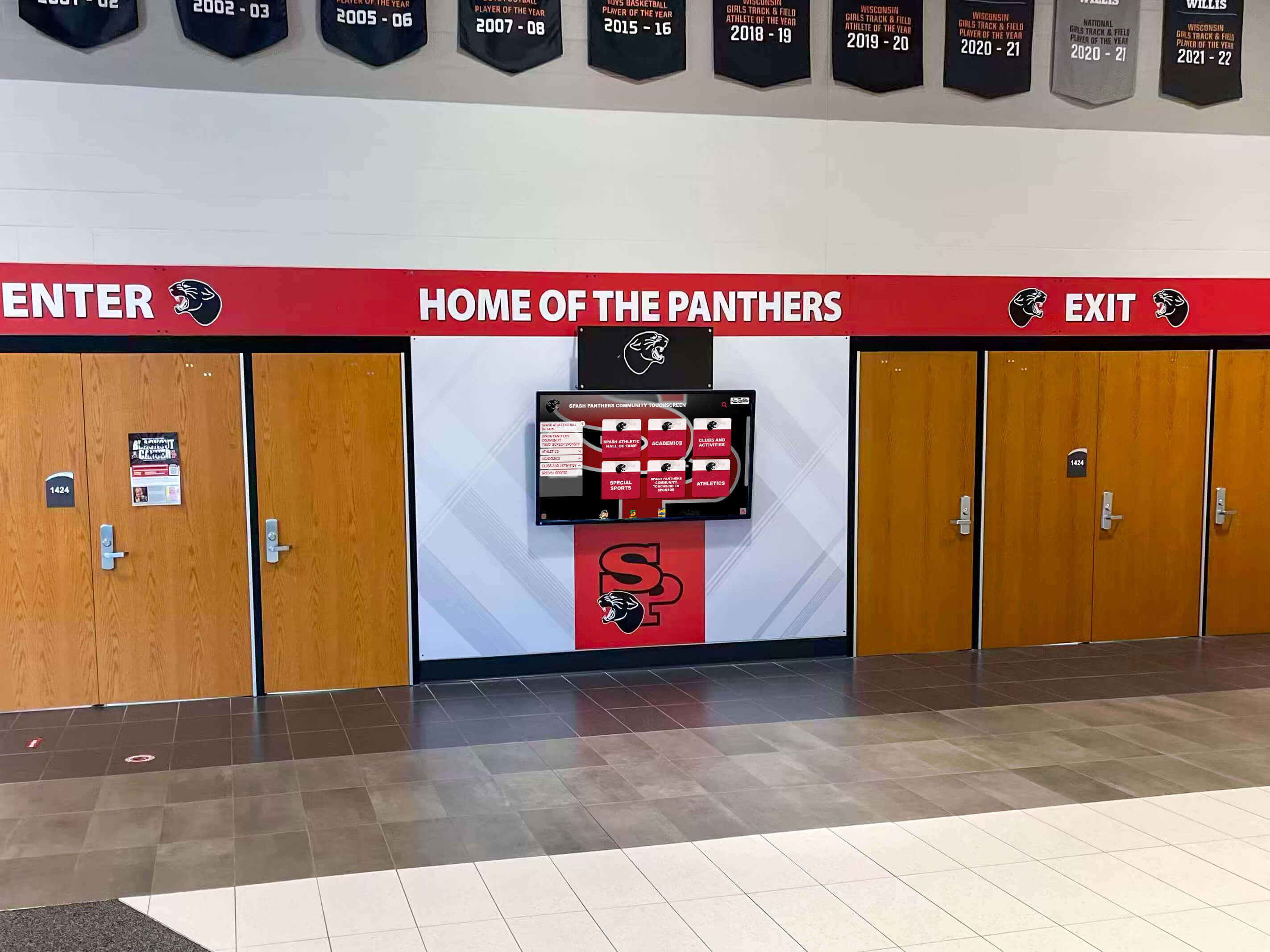
Strategic entrance placement showcases theatre excellence to entire school communities
Ongoing Engagement Strategies
Recognition delivers maximum value when communities actively explore content rather than passively acknowledging displays exist.
Student Engagement Activities
Encourage interaction through theatre class activities researching historical productions, younger student mentorship from accomplished theatre students, student ambassador programs demonstrating displays during events, student-created content like production video interviews, and scavenger hunts encouraging exploration of historical productions.
Family Connection Approaches
Build family engagement through email notifications when students appear in new recognition content, social sharing features enabling celebration across personal networks, parent volunteer opportunities documenting performances, family testimonials about recognition program value, and reunion events helping alumni reconnect with their theatrical experiences.
Alumni Networking Opportunities
Leverage recognition for alumni engagement including alumni profile updates soliciting current career information, mentorship programs pairing current students with relevant alumni, guest artist performances featuring alumni returning to campus, career panel discussions with alumni in theatre-related fields, and fundraising campaigns supported by comprehensive program excellence documentation.
These multi-layered engagement strategies transform displays from passive information sources to active community connection points supporting program goals far beyond simple achievement acknowledgment.
Overcoming Common Implementation Challenges
Understanding predictable obstacles helps schools navigate them successfully while maintaining program momentum.
Limited Historical Documentation
Many programs lack comprehensive historical records due to material loss, staff turnover, or previous minimal documentation practices.
Practical Solutions
Address documentation gaps by accepting imperfect historical coverage initially, launching with well-documented recent productions, building historical depth gradually as materials surface, engaging alumni through social media campaigns requesting contributions, partnering with local historical societies or newspaper archives, and featuring existing content rather than delaying launch while attempting impossible complete reconstruction.
Start where you are with recognition programs you can implement immediately, then systematically expand rather than postponing indefinitely while pursuing unattainable comprehensiveness.
Content Creation Workload
Drama teachers already juggle directing productions, teaching classes, and countless other responsibilities. Adding content management can feel overwhelming without systematic approaches.
Workload Management Strategies
Distribute responsibility across multiple contributors including student theatre leaders documenting current productions, parent volunteers scanning historical materials, work-study students entering data and organizing files, journalism or media students creating content as curriculum integration, and booster club members supporting digitization projects.
Template-based systems dramatically reduce creation time compared to custom approaches. Cloud platforms enabling collaborative content development allow multiple people to contribute according to their availability and expertise.
Plan content development during natural downtimes in theatre calendars including summer months, post-production periods between shows, or winter breaks when production demands decrease temporarily.
Budget Constraints and Funding
Quality interactive displays require investment that may challenge drama program budgets, especially programs without substantial booster support.
Creative Funding Approaches
Address budget limitations through phased implementation starting with single primary displays before expanding, multiple funding sources including booster fundraising, memorial donations, arts education grants, and capital improvement budgets, cost sharing when displays serve multiple programs across arts departments, and comprehensive ROI presentations demonstrating recruitment, advocacy, and alumni engagement benefits extending far beyond simple recognition.
Frame recognition as long-term infrastructure investment with one-time hardware costs supporting decades of ongoing use and minimal recurring fees rather than annual expenses requiring repeated justification.
Schools implementing digital recognition displays report that initial investment concerns diminish quickly once stakeholders experience engagement levels and program benefits that physical displays cannot match.
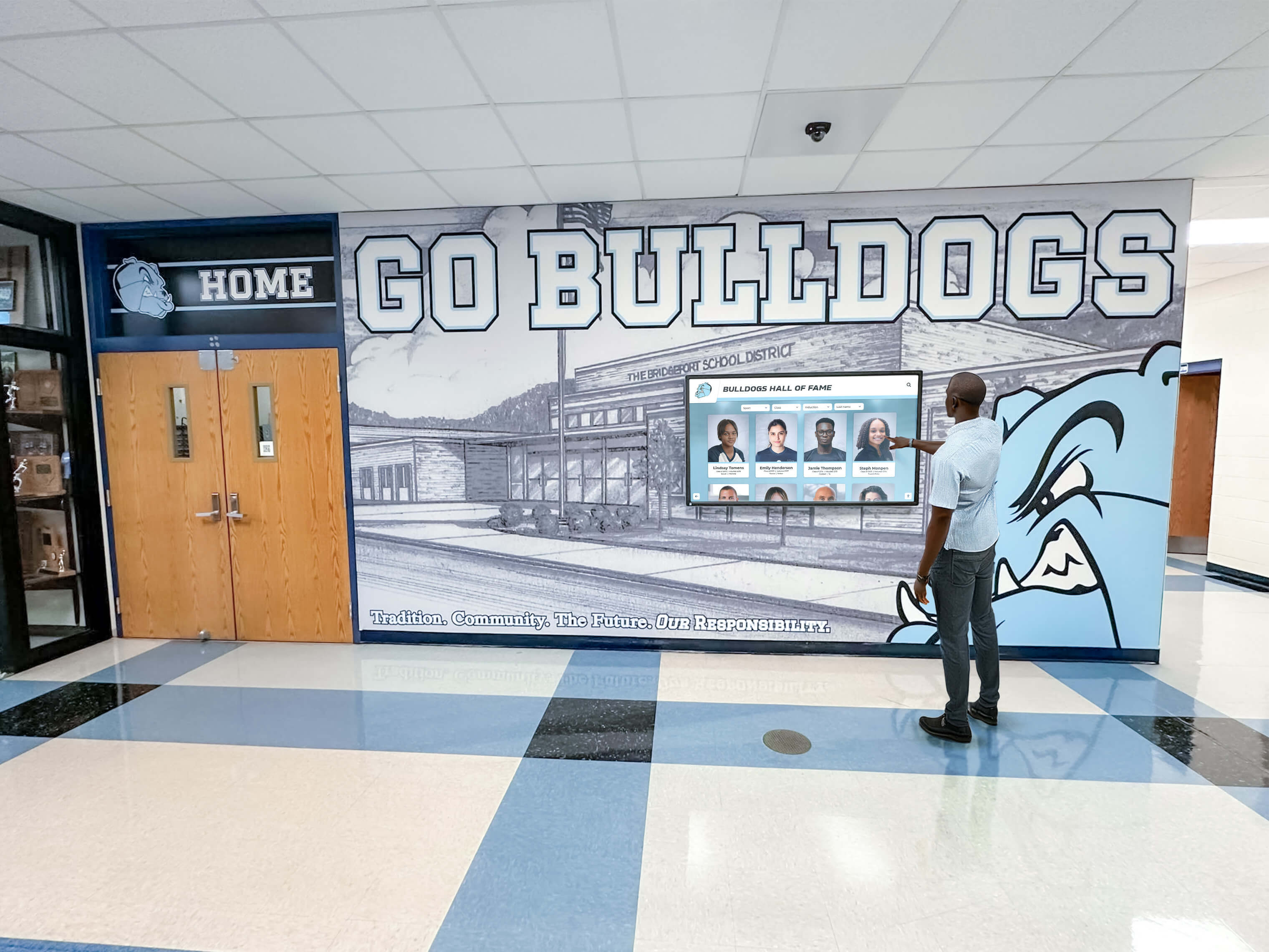
High engagement demonstrates display effectiveness in capturing attention and encouraging exploration
Measuring Success and Demonstrating Value
Regular assessment ensures theatre recognition delivers measurable benefits while supporting continuous improvement and sustained investment justification.
Quantitative Success Metrics
Track objective indicators demonstrating program impact and utilization.
Display Engagement Analytics
Modern systems provide detailed usage data including total interactions per week and month, average session duration showing engagement depth, most frequently searched content revealing popular interests, peak usage times informing content scheduling decisions, and repeat visitor patterns demonstrating sustained interest versus one-time exploration.
Program Participation Indicators
Monitor metrics connecting recognition to program health including theatre program enrollment trends following implementation, audition participation rates for productions, technical theatre specialization recruitment, International Thespian Society membership growth, and competition involvement and achievement levels.
Web Platform Metrics
Online recognition extensions provide additional measurement including unique visitors to theatre recognition portal, geographic distribution showing alumni access from locations nationwide, page views revealing most popular productions or students, social media sharing frequency and reach, and alumni profile update submission rates indicating ongoing engagement.
Qualitative Impact Assessment
Gather stakeholder perspectives complementing quantitative data.
Student and Family Feedback
Collect perceptions through student surveys about recognition awareness and motivational impact, family testimonials regarding program value and communication effectiveness, graduating senior exit interviews discussing program experiences, prospective student tour questions about recognition, and cast and crew reflections on feeling valued.
Cultural Change Indicators
Observe less measurable but equally important shifts including increased pride among drama students visible in behavior and attitudes, greater respect for theatre programs from non-participant students, enhanced recruitment of diverse students into technical and performing roles, improved retention across multiple years of participation, and strengthened collaboration between drama and other school programs.
Alumni Engagement Evidence
Recognition impacts graduate relationships through alumni profile update submissions, reunion attendance and engagement during events, networking and mentorship participation with current students, testimonials about reconnecting through recognition platforms, and philanthropic support for current program needs.
Regular measurement enables continuous improvement ensuring displays deliver maximum value to drama programs, students, and school communities.
Advanced Recognition Features and Future Possibilities
Leading programs go beyond basic documentation to create exceptional experiences maximizing cultural impact and inspiration.
Progression Storytelling and Student Journeys
Rather than presenting productions as isolated events, showcase multi-year student development demonstrating how sustained commitment leads to excellence.
Developmental Content Types
Create compelling narratives including timeline visualizations showing student theatrical growth from freshmen to seniors, role progression documentation demonstrating advancement from ensemble to featured positions, skill development narratives explaining specific techniques mastered, teacher commentary on pivotal moments in student journeys, and reflections on how theatrical participation influenced broader life trajectories.
This developmental perspective helps younger students understand that theatrical achievement results from sustained effort and commitment rather than requiring exceptional innate talent alone.
Cross-Disciplinary Achievement Integration
Many theatre students also excel in other domains. Comprehensive recognition can highlight these multi-dimensional accomplishments appropriately.
Multi-Domain Recognition Approaches
Connect theatrical achievement to broader excellence through profile sections noting academic honors and athletic achievements, special designations for students achieving All State in theatre and other disciplines, connections to comprehensive student recognition systems celebrating scholarly and athletic excellence, “Scholar-Artist-Athlete” acknowledgments honoring well-rounded achievement, and feature stories on students balancing multiple high-level commitments successfully.
This integration reinforces that excellence in one domain often correlates with excellence in others while celebrating students who contribute to school communities across multiple dimensions.
Alumni Career Tracking and Networking
Comprehensive recognition creates opportunities for connecting current students with accomplished alumni who provide mentorship, career guidance, and ongoing inspiration.
Alumni Network Development
Build connections through directories of theatre alumni with current contact information, alumni profile updates showing career trajectories and professional achievements, mentorship programs pairing current students with relevant alumni, virtual or in-person networking events connecting theatrical generations, guest artist performances featuring alumni returning to campus, and career panel discussions with alumni pursuing diverse theatre-related and transferable skill careers.
These connections demonstrate that theatre recognition marks the beginning rather than culmination of lifelong creative engagement while providing current students with concrete examples of how theatrical skills create opportunities throughout life.
Conclusion: Preserving Theatrical Legacy Through Digital Playbill Displays
School playbill displays represent fundamental advancement in how educational institutions celebrate theatrical achievement and preserve dramatic traditions. By transforming ephemeral paper programs into permanent, searchable, multimedia-rich recognition systems, digital displays ensure theatrical accomplishments receive visibility and preservation matching their significance to student development and school culture.
Effective playbill display systems combine thoughtful content strategy with appropriate technology platforms and systematic implementation creating recognition experiences that honor all theatrical contributors—from starring performers to technical crews, from current productions to decades of historical traditions. From interactive touchscreen displays enabling campus exploration to web platforms connecting global audiences, digital recognition transforms temporary paper programs into lasting institutional legacies.
Transform Your Theatre Recognition Program
Discover how Rocket Alumni Solutions can help you create comprehensive digital playbill displays celebrating your drama program's achievements and preserving theatrical legacy for generations.
Explore Theatre Display SolutionsThe most successful playbill display systems share common characteristics: they celebrate comprehensive contributions across all theatrical roles, they preserve complete program histories while remaining current with new productions, they engage multiple audiences through physical and digital access, and they integrate seamlessly with broader school recognition efforts ensuring theatre receives visibility equal to other achievement domains.
Whether beginning with simple production archives from recent seasons or implementing comprehensive multimedia platforms documenting decades of theatrical tradition, digital playbill displays ensure your theatre students’ remarkable accomplishments receive recognition and preservation they truly deserve. These systems honor the dedication required to master complex performances, create stunning technical effects, and collaborate effectively in pursuit of theatrical excellence.
Start where you are with resources available today, build systematically toward comprehensive recognition, and create lasting celebrations ensuring your theatre program’s legacy inspires current students while remaining accessible to alumni decades after their final curtain calls.
Ready to begin transforming your theatre recognition? Explore comprehensive arts recognition approaches or discover best practices for highlighting student accomplishments across all achievement domains including performing arts.































