School pride is far more than wearing school colors or cheering at sporting events—it’s the invisible force that transforms an educational institution from a collection of classrooms and hallways into a vibrant, supportive community where students thrive academically, socially, and emotionally. When genuine school pride takes root, it creates an environment where students want to excel, teachers feel valued and energized, alumni maintain lifelong connections, and the entire community rallies around shared success.
This comprehensive guide explores what school pride truly means, why it matters more than ever in today’s educational landscape, and how schools can cultivate authentic pride that strengthens culture, improves outcomes, and creates lasting impact that extends far beyond graduation day.
School pride isn’t manufactured through slogans or purchased through merchandise—it emerges organically when schools create environments where every member feels valued, recognized for their contributions, connected to something larger than themselves, and invested in collective success. Understanding this foundation is essential for any school seeking to build or strengthen its community culture.
Authentic school pride creates visible enthusiasm and deep community connection throughout campus
What Is School Pride? Understanding the Foundation
Before exploring how to build school pride, we must understand what it truly encompasses.
Defining Authentic School Pride
School pride operates on multiple interconnected levels:
Individual Identity Connection
At the most personal level, school pride means students identify with their school as part of who they are. They take ownership of their institution’s reputation, feeling personal satisfaction in its successes and motivation to contribute positively. This identification creates internal motivation that external incentives cannot match.
Collective Community Belonging
School pride creates a sense of belonging to something larger than oneself. Students, staff, and community members feel they’re part of a meaningful community with shared values, traditions, and goals. This belonging satisfies fundamental human needs for connection and purpose.
Emotional Investment and Loyalty
True school pride involves emotional attachment that extends beyond rational calculation. People care deeply about their school—celebrating its victories, supporting it during challenges, and maintaining connection long after their formal involvement ends.
Behavioral Demonstration
Pride manifests in concrete actions including active participation in school activities and events, positive representation of the school in the community, defense of the school’s reputation when challenged, voluntary contributions of time, talent, or resources, and ongoing engagement that persists across years and decades.

School pride manifests through visible celebration of achievements and community traditions
What School Pride Is NOT
Clarifying misconceptions helps schools focus on authentic pride:
Not Superiority or Arrogance
Healthy school pride celebrates one’s own institution without requiring comparison to or denigration of others. Pride based on perceived superiority creates toxic culture rather than genuine community.
Not Superficial Displays Without Substance
Wearing school colors or displaying logos represents pride only when connected to deeper emotional investment and understanding. Without authentic connection, superficial displays ring hollow.
Not Exclusionary or Elitist
Genuine school pride is inclusive, creating belonging for all community members regardless of achievement level, background, or involvement type. Pride that benefits only select groups undermines broader community culture.
Not Blind Loyalty That Ignores Problems
Authentic pride includes honest assessment and commitment to improvement. Communities that cannot acknowledge and address challenges demonstrate defensiveness rather than true pride.
Why School Pride Matters: The Research and Reality
School pride isn’t just “nice to have”—it creates measurable benefits across multiple dimensions of educational excellence and community wellbeing.
Academic Performance and Achievement
Research consistently demonstrates correlations between strong school culture (including pride) and academic outcomes:
Student Achievement Indicators
Schools with high reported pride levels show improved attendance rates, with students missing fewer days. Grade point averages trend higher when students feel connected to their schools. Standardized test performance improves in schools with strong positive culture. Graduation rates increase when students identify with their schools and see value in completing their education.
Learning Environment Quality
School pride contributes to more effective learning environments through increased student engagement and participation in class, reduced disciplinary issues and behavioral problems, more positive student-teacher relationships, enhanced focus and attention during instruction, and greater willingness to seek help and persist through challenges.
These academic benefits emerge because students who feel proud of their schools develop internal motivation to represent their institution well through their performance.

Celebrating academic achievements through [recognition displays](https://halloffamewall.com/blog/academic-excellence-board/) strengthens school pride and motivates excellence
Social and Emotional Development
School pride supports student wellbeing beyond academics:
Mental Health and Wellbeing
Students reporting strong school pride demonstrate lower rates of anxiety and depression, reduced feelings of isolation and loneliness, greater overall life satisfaction and happiness, improved self-esteem and sense of worth, and better stress management and resilience.
Belonging to valued communities provides protective factors against mental health challenges increasingly affecting young people.
Social Skills and Relationships
Pride-rich school environments facilitate stronger peer relationships and friendships, improved communication and conflict resolution skills, greater empathy and perspective-taking abilities, enhanced teamwork and collaboration capabilities, and development of leadership skills through involvement.
These social benefits extend far beyond school years, shaping interpersonal effectiveness throughout life.
Character and Values Development
Schools with strong pride cultures more effectively instill shared values and ethical frameworks, encourage responsibility and accountability, promote service orientation and concern for others, develop citizenship and civic engagement, and foster appreciation for diversity and inclusion.
Character development happens most effectively in communities where individuals feel invested and accountable to shared standards.
Staff Satisfaction and Retention
School pride doesn’t only benefit students—it transforms experiences for educators and staff:
Teacher Wellbeing
Educators in schools with strong pride culture report higher job satisfaction and morale, reduced burnout and stress levels, greater sense of professional efficacy and impact, improved relationships with colleagues and administration, and stronger connection to institutional mission and purpose.
These factors directly affect teaching quality and, consequently, student outcomes.
Retention and Stability
Schools with positive culture experience lower teacher turnover rates, reduced administrative staff changes, easier recruitment of quality candidates, smoother leadership transitions, and sustained institutional knowledge and expertise.
Stability benefits students by providing consistency and preventing the disruption that accompanies constant staff changes.

Honoring educators through [teacher appreciation programs](https://halloffamewall.com/blog/teacher-appreciation-hall-of-fame/) strengthens school pride and staff retention
Community Support and Engagement
School pride extends beyond campus to affect broader community relationships:
Parental Involvement
Schools with strong pride see greater parental participation in activities and events, increased volunteer contributions of time and talent, more active PTA/PTO organizations, stronger attendance at conferences and school functions, and enhanced home support for learning and behavior.
Parental engagement significantly impacts student success, and pride culture encourages this involvement.
Alumni Connections
Pride creates lifelong relationships between graduates and their alma maters through active participation in reunion and homecoming events, financial contributions supporting school programs, mentorship of current students, positive word-of-mouth promotion, and professional networking opportunities among alumni.
These connections provide invaluable resources supporting institutional advancement and student opportunities.
Broader Community Support
Local communities surrounding schools with strong pride demonstrate increased support for school funding initiatives and levies, business partnerships and sponsorship relationships, volunteer engagement from community members, positive perception of the school’s value, and advocacy during challenges or controversies.
This community support provides resources and stability that benefit educational programs and student experiences.
The Elements That Create School Pride
Understanding what generates authentic pride helps schools cultivate it intentionally.
Recognition and Celebration of Achievements
Recognition forms the foundation of school pride—people develop pride in institutions that notice and celebrate their contributions and achievements.
Comprehensive Recognition Programs
Effective recognition extends across multiple categories including academic achievements and intellectual accomplishments, athletic successes and competitive victories, artistic and creative expressions, service contributions and community impact, character demonstrations and personal growth, and leadership development and initiative-taking.
When schools recognize diverse excellence, more community members see their contributions valued, strengthening their pride and connection.

Celebrating [diverse achievements](https://touchhalloffame.us/blog/best-way-to-highlight-student-accomplishments/) creates inclusive school pride
Modern Recognition Solutions
Traditional trophy cases and bulletin boards face limitations in capacity, flexibility, and engagement. Solutions like Rocket Alumni Solutions provide digital recognition platforms that enable unlimited recognition capacity without space constraints, multimedia storytelling through photos, videos, and detailed profiles, remote accessibility allowing families and alumni worldwide to view achievements, easy updates keeping recognition current without physical labor, and comprehensive archiving preserving institutional history.
These modern approaches ensure every deserving achievement receives appropriate celebration, strengthening the sense that the school values all forms of excellence.
Meaningful Traditions and Shared Experiences
Traditions create continuity, shared identity, and anticipated experiences that define school culture.
Annual Events and Celebrations
Consistent annual events become touchstones that students anticipate and remember throughout their lives. Schools build traditions around homecoming celebrations bringing together students, alumni, and community; pep rallies and spirit weeks generating excitement; academic awards ceremonies honoring achievement; seasonal performances and exhibitions; service days connecting schools to communities; and graduation traditions marking important transitions.
These recurring events provide rhythm to the school year while creating shared memories that bind community members across time.
Daily and Weekly Rituals
Pride also builds through smaller regular rituals including morning announcements celebrating recent accomplishments, weekly recognition of students, staff, or programs, lunch or assembly traditions creating community gathering, sports or activities sending-off rituals before competitions, and class or grade-level traditions creating cohort identity.
These frequent touchpoints continuously reinforce community connection and shared identity.

Meaningful traditions create anticipated experiences that define school culture and strengthen community bonds
Visual Identity and Symbolic Representation
Visible symbols of school identity reinforce pride and create immediate recognition.
Colors, Mascots, and Logos
Strong visual identity includes consistent application of school colors across facilities, materials, and communications; prominent mascot representation creating tangible identity symbol; professional quality logos and branded materials; student access to school merchandise and spirit wear; and facility design incorporating school branding and colors.
These visual elements provide daily reminders of community membership and shared identity.
Campus Environment and Aesthetics
Physical environment communicates institutional values and affects community members’ feelings about their school through well-maintained, clean facilities demonstrating pride; attractive common spaces inviting gathering and interaction; recognition displays showcasing achievements prominently; historic elements honoring institutional heritage; and student work displays celebrating creativity and learning.
Investment in physical environment signals that the school values itself and its community, encouraging reciprocal pride from community members.
Inclusive Culture and Belonging
Pride flourishes when all community members feel valued and included.
Diversity, Equity, and Inclusion
Schools build broad-based pride through celebration of diverse cultural backgrounds and perspectives, multiple pathways to achievement and recognition, accessible participation in activities regardless of economic circumstances, intentional welcome for students of all abilities, and recognition programs honoring various contributions rather than only traditional categories.
When all community members see themselves reflected and valued, they develop deeper pride and connection.
Anti-Bullying and Safety
Pride cannot coexist with hostile or unsafe environments. Schools must maintain clear behavioral expectations with consistent enforcement, effective intervention addressing bullying and harassment, restorative practices that repair harm and relationships, adult supervision and presence throughout campus, and student voice in establishing and maintaining culture.
Safety and belonging form essential foundations upon which pride can develop.

Inclusive school culture ensures all community members develop genuine pride and belonging
Student Voice and Empowerment
Pride strengthens when students have genuine influence over their school experience.
Leadership Opportunities
Effective student leadership programs provide meaningful authority over budgets and decision-making, authentic representation to administration, leadership of school events and initiatives, diverse pathways including student government, clubs, and committees, and mentorship preparing younger students for leadership roles.
When students help shape their schools, they develop stronger ownership and pride in outcomes.
Student-Initiated Improvements
Pride increases when schools support student-driven initiatives including school culture and tradition development, community service project leadership, environmental sustainability programs, peer support and tutoring initiatives, and social event planning and execution.
Supporting student initiatives demonstrates that their ideas matter, strengthening investment in institutional success.
Connection to History and Alumni Legacy
Connecting current students to institutional legacy builds appreciation for tradition while inspiring future achievement.
Historical Preservation and Accessibility
Schools strengthen pride through digitization of historical materials including yearbooks and photographs, interactive digital displays documenting school evolution, oral history projects capturing memories from long-time community members, facility naming and displays honoring significant contributors, and anniversary celebrations marking institutional milestones.
Understanding history helps community members see themselves as part of continuing story larger than their individual experience.
Alumni Recognition and Engagement
Celebrating successful alumni demonstrates long-term institutional value through distinguished alumni halls of fame honoring notable careers, career panels and mentorship programs connecting alumni with students, reunion facilitation maintaining lifelong connections, multi-generational family recognition honoring family legacies, and alumni achievement features in school communications.
These connections show current students the enduring value of their school experience while keeping alumni engaged.

Honoring [alumni achievements](https://touchhalloffame.us/blog/alumni-spotlight-displays/) inspires current students while strengthening lifelong community connections
Building School Pride: Practical Implementation Strategies
Understanding what creates pride is only the beginning—schools must implement intentional strategies to cultivate it.
Assessing Current School Pride Levels
Before implementing initiatives, schools should assess their starting point:
Assessment Methods
Gather baseline data through anonymous surveys of students, staff, parents, and alumni measuring pride indicators; focus groups providing qualitative insights and specific feedback; observation of attendance at voluntary events and activities; analysis of participation rates in clubs, sports, and programs; review of disciplinary data and student-reported safety/belonging; and examination of staff retention and satisfaction metrics.
Honest assessment identifies both strengths to build upon and gaps requiring attention.
Key Pride Indicators
Monitor percentage of students reporting strong sense of belonging and school pride, voluntary participation rates in extracurricular activities, attendance at school events like sporting events and performances, alumni engagement including reunion attendance and giving, staff retention rates and reported satisfaction, parental involvement in school activities and governance, and community perception through surveys and enrollment trends.
These indicators provide measurable targets for improvement efforts.
Creating Comprehensive Recognition Programs
Recognition drives pride more effectively than any other single factor.
Multi-Category Recognition Systems
Implement comprehensive programs honoring academics through honor roll, subject awards, and academic improvement; athletics via team championships, individual records, and all-state recognition; arts through performances, competitions, and creative exhibitions; service via volunteer hours and community impact; character through citizenship, kindness, and leadership; and special achievements like college commitments and career milestones.
Broad recognition ensures diverse student populations see their contributions valued.
Recognition Platform Selection
Modern schools benefit from digital recognition solutions that overcome traditional limitations. Digital platforms from providers like Rocket Alumni Solutions enable unlimited recognition without space constraints, multimedia content bringing achievements to life, web accessibility extending reach globally, easy administration with cloud-based management, and comprehensive archiving preserving institutional history.
These capabilities ensure recognition programs remain sustainable and engaging rather than creating administrative burden.

Modern [digital recognition platforms](https://halloffamewall.com/blog/digital-hall-of-fame/) enable comprehensive celebration of diverse achievements
Establishing Meaningful Traditions
Traditions provide continuity and anticipated shared experiences that define community culture.
Tradition Development Process
Create lasting traditions by identifying potential traditions aligned with school values and identity, piloting new traditions on small scale before full implementation, gathering feedback and adjusting based on community response, documenting traditions through photos, videos, and written descriptions, and designating clear leadership for tradition continuation.
Successful traditions feel authentic to school culture rather than artificially imposed.
Tradition Categories
Build traditions around welcome events orienting new students and setting positive tone; spirit events like spirit weeks and pep rallies; competitive traditions including class competitions and field days; recognition ceremonies honoring achievements formally; and community gatherings connecting school with broader community.
Varied traditions throughout the year create multiple touchpoints maintaining engagement.
Improving Physical Environment
Campus environment communicates institutional values and affects daily experiences.
Strategic Improvement Priorities
Focus limited resources on main entrance and administrative areas making first impressions; common areas where students spend unstructured time; athletic facilities visible to entire community; performing arts spaces hosting public events; and strategic recognition display locations in high-traffic areas.
These visible improvements create maximum impact on community perception and pride.
Recognition Display Integration
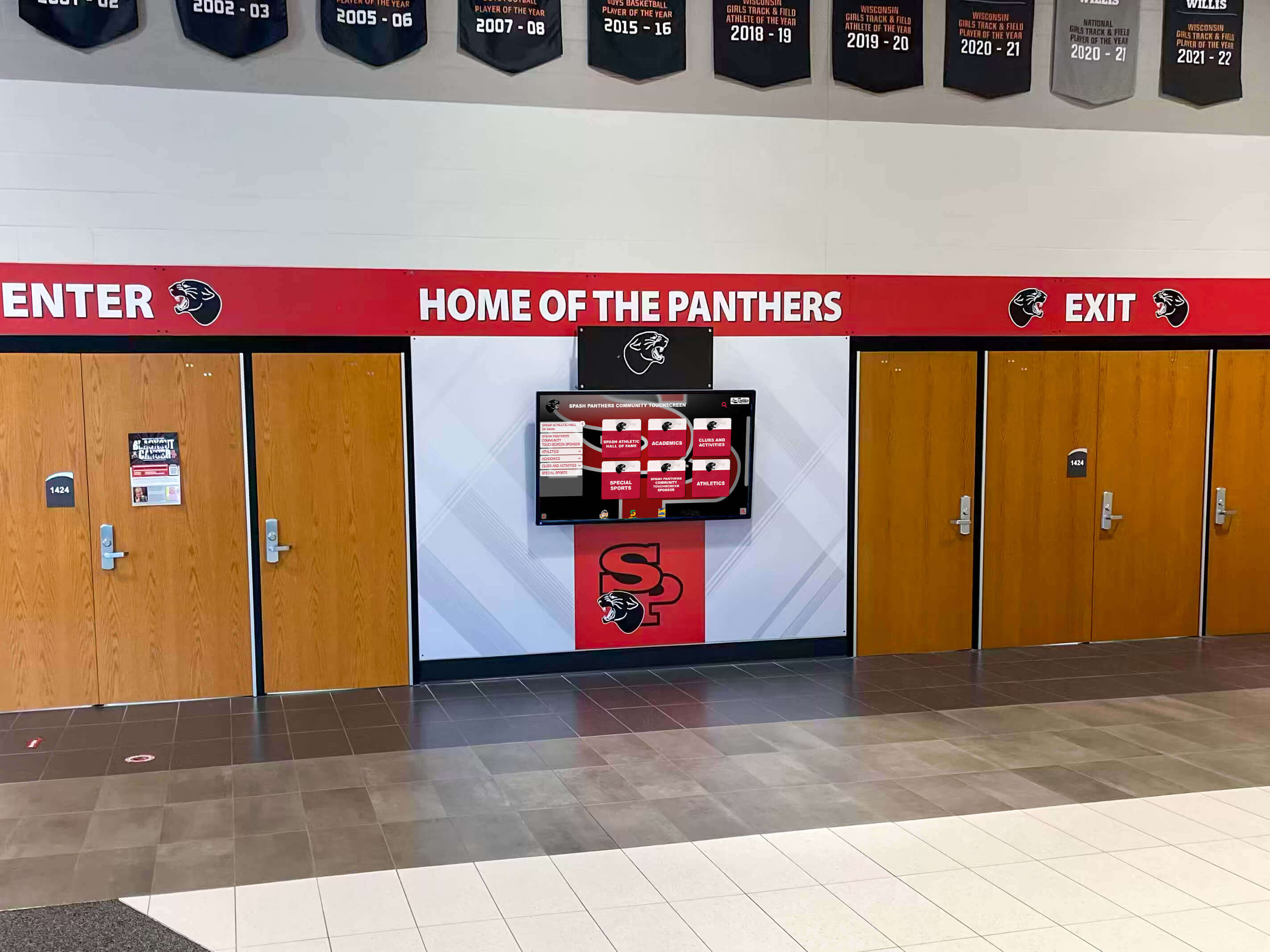
Strategic placement of interactive recognition displays in entrance lobbies, main hallways, athletic facilities, performing arts venues, and alumni gathering spaces transforms these installations into conversation starters and community anchors.
Well-placed recognition both honors achievements and enhances the physical environment, serving dual purposes that justify investment.

Strategic placement of recognition displays in high-traffic areas maximizes community engagement and pride impact
Engaging Multiple Stakeholder Groups
School pride requires engagement across all community segments.
Student Engagement Strategies
Engage students through diverse leadership opportunities, student voice in school decisions, comprehensive recognition programs, active clubs and extracurriculars, school spirit campaigns and competitions, and student-of-the-month programs celebrating consistent positive contribution.
Students are the heart of school community—their engagement is essential for authentic pride culture.
Staff and Faculty Engagement
Support educators through teacher appreciation initiatives and recognition, professional development opportunities, involvement in school decision-making, adequate resources and support for instruction, and celebration of teaching milestones and career achievements.
Staff who feel valued create better environments for student learning and pride development.
Parent and Family Engagement
Involve families through regular communication about school events and achievements, volunteer opportunities matching varied skills and schedules, family-friendly events welcoming all ages, parent education programs, and recognition of parent contributions to school community.
Parental support amplifies school pride initiatives and extends their impact into homes.
Alumni Engagement
Maintain connections with graduates through reunion facilitation and homecoming events, alumni mentorship and career programs, distinguished alumni recognition, volunteer and giving opportunities, and digital platforms enabling ongoing connection to school community.
Engaged alumni provide resources, mentorship, and living proof of institutional impact that strengthens pride among current community members.
Leveraging Technology and Digital Platforms
Modern technology creates new possibilities for building and expressing school pride.
Digital Recognition Platforms
Comprehensive digital solutions combine physical touchscreen displays for on-campus engagement with web-accessible platforms extending reach globally, enabling mobile-optimized viewing on smartphones and tablets, facilitating social sharing amplifying recognition reach, and providing administrative tools for easy content management.
Platforms like Rocket Alumni Solutions specialize in educational recognition technology that strengthens school pride through engaging celebration of achievements.
Social Media and Online Community
Build digital community through consistent social media presence celebrating achievements, online discussion platforms for community connection, live streaming of events for remote viewing, digital archives of school history, and virtual participation options for alumni and distant families.
Digital engagement complements physical community rather than replacing it, extending reach and maintaining connections across distance and time.

Digital platforms extend school pride beyond physical campus, maintaining community connections across distances
Sustaining School Pride Over Time
Building initial pride is only the beginning—sustainability requires ongoing commitment and attention.
Leadership and Governance
Sustainable pride initiatives need dedicated leadership including clear administrative responsibility and accountability, student leadership roles in pride initiatives, staff committee oversight of programs, parent volunteer coordination, and alumni advisory board input.
Distributed leadership prevents dependence on single individuals while ensuring continuity during transitions.
Resource Allocation and Investment
Pride initiatives require appropriate resources including annual budget allocation for recognition programs, facility improvement funds for physical environment, technology investment in digital platforms, staff time for program administration, and professional development for school culture building.
Budget allocation demonstrates institutional priorities and commitment to sustaining pride culture.
Continuous Assessment and Improvement
Maintain effectiveness through regular measurement of pride indicators and outcomes, community feedback through surveys and discussions, program assessment identifying what works and what doesn’t, willingness to modify approaches based on evidence, and celebration of improvements and milestones reached.
Continuous improvement ensures pride initiatives remain relevant and effective as community needs and contexts evolve.
Celebrating Progress and Success
Maintain momentum by publicly sharing progress on pride indicators, recognizing individuals and groups driving improvement, documenting transformation through photos and stories, sharing success stories with broader community, and maintaining visible progress tracking toward goals.
Celebrating progress reinforces that pride-building efforts matter and are achieving results, encouraging continued community investment and participation.
Common Challenges in Building School Pride
Understanding potential obstacles helps schools address them proactively.
Overcoming Apathy and Disconnection
Some students, staff, or community members may initially lack connection or interest:
Addressing Apathy
Combat disconnection through multiple entry points for involvement at varied commitment levels, recognition of small contributions alongside major achievements, authentic listening to understand barriers to engagement, addressing legitimate concerns about inclusivity or access, and patience recognizing that culture change takes time.
Apathy often reflects barriers to participation rather than genuine disinterest—identifying and addressing these barriers is essential.
Balancing Excellence With Inclusivity
Schools must honor high achievement without creating exclusive hierarchies:
Inclusive Excellence
Maintain balance through multiple recognition categories honoring varied excellence, celebration of improvement and effort alongside ultimate achievement, creation of participation opportunities accessible to all, emphasis on school’s collective success rather than only individual standouts, and regular evaluation ensuring recognition reaches all community segments.
Pride that benefits only select students fails to build broad community culture.

Inclusive recognition programs honor diverse contributions while maintaining high standards of excellence
Managing Resource Constraints
Limited budgets require strategic prioritization:
Maximizing Impact With Limited Resources
Stretch resources through phased implementation starting with high-impact initiatives, leveraging technology to reduce ongoing costs of recognition programs, utilizing volunteers for appropriate roles, seeking grants and community partnerships, and focusing on low-cost high-impact strategies like improved communication and recognition.
Many pride-building initiatives require more intention and creativity than money—resource constraints need not prevent meaningful progress.
Maintaining Authenticity
Forced or inauthentic initiatives undermine rather than build pride:
Ensuring Authentic Development
Maintain authenticity through student voice in initiative design and implementation, bottom-up input rather than only top-down mandates, alignment with genuine school values and identity, willingness to let unsuccessful initiatives fade naturally, and regular feedback ensuring programs serve community needs.
Authentic pride emerges from genuine community culture, not manufactured campaigns that community members see through and reject.
Conclusion: The Transformative Power of School Pride
School pride represents one of the most powerful forces in education—when present, it transforms collections of individuals into vibrant communities where students thrive academically and socially, educators feel energized and valued, alumni maintain lifelong connections, and the entire community rallies around shared success.
Building authentic school pride requires more than slogans or spirit campaigns. It emerges from intentional creation of environments where every community member feels valued, recognized for their contributions, connected to something larger than themselves, and invested in collective success. This foundation requires comprehensive recognition programs celebrating diverse excellence, meaningful traditions creating shared experiences, inclusive culture ensuring broad belonging, student empowerment providing genuine voice, and connections to history and legacy.
Transform Your School Pride With Modern Recognition Solutions
Discover how digital recognition platforms can help you celebrate achievements, honor diverse contributions, and strengthen school pride throughout your community with interactive displays and web-accessible platforms.
Explore Recognition SolutionsModern schools benefit from technology that overcomes traditional recognition limitations. Digital platforms enable unlimited recognition capacity, multimedia storytelling, global accessibility, easy administration, and comprehensive archiving—capabilities that ensure recognition programs remain sustainable and engaging rather than creating administrative burden.
The investment in school pride pays dividends far exceeding resources required. Students who feel proud of their schools become engaged learners, positive community members, and eventually supportive alumni maintaining lifelong connections. Staff members in schools with strong pride report higher satisfaction and remain in positions longer, creating stability that benefits everyone. Communities rally around schools they’re proud of, providing resources and support that enhance educational programs.
Start where you are with resources you have. Even small steps—recognizing an overlooked achievement, starting a new tradition, improving a visible space, implementing modern recognition technology—create momentum that builds over time. Involve students, staff, families, and community members in the journey, ensuring pride initiatives reflect authentic values rather than imposed mandates.
Your school’s unique culture, history, and community provide the foundation. The strategies explored in this guide offer roadmap for building on that foundation to create school pride that transforms daily experiences and lasts for generations. School pride isn’t a luxury or nice-to-have—it’s a fundamental element of educational excellence that every institution should cultivate intentionally.
Ready to begin? Explore how digital recognition displays can anchor your pride initiatives, learn about comprehensive recognition solutions that celebrate your entire school community, or discover innovative ways to build community through modern recognition approaches.


























