School rivalries represent the heartbeat of athletic programs across America—those Friday night football battles, court clashes, and championship showdowns that entire communities rally around year after year. These traditions connect generations of students, alumni, and fans through shared passion, memorable victories, and even legendary defeats. A school rivalry history digital timeline transforms how institutions preserve and celebrate these athletic legacies, moving beyond dusty trophy cases and fading photographs to create interactive experiences that engage current students while honoring the competitors who came before them.
Whether you’re an athletic director seeking to modernize recognition programs, a school administrator planning heritage preservation initiatives, or a coach passionate about maintaining competitive traditions, this comprehensive guide explores how digital timeline technology brings school rivalry history to life through engaging displays that inspire pride, strengthen community bonds, and preserve athletic heritage for generations to come.
From the intense Friday night lights of Texas high school football to the basketball rivalries that pack gymnasiums across Indiana, school athletic competitions create community experiences unlike any other. These rivalries aren’t merely games—they’re cultural touchstones that define institutional identity, unite diverse community members in common cause, and create memories that former athletes treasure decades after their final whistle blows. Yet traditional methods of celebrating these rich histories—static plaques listing past champions, aging photographs tucked away in forgotten hallways, or championship banners hidden in storage—fail to capture the intensity, emotion, and significance of the rivalries that have shaped your athletic programs.
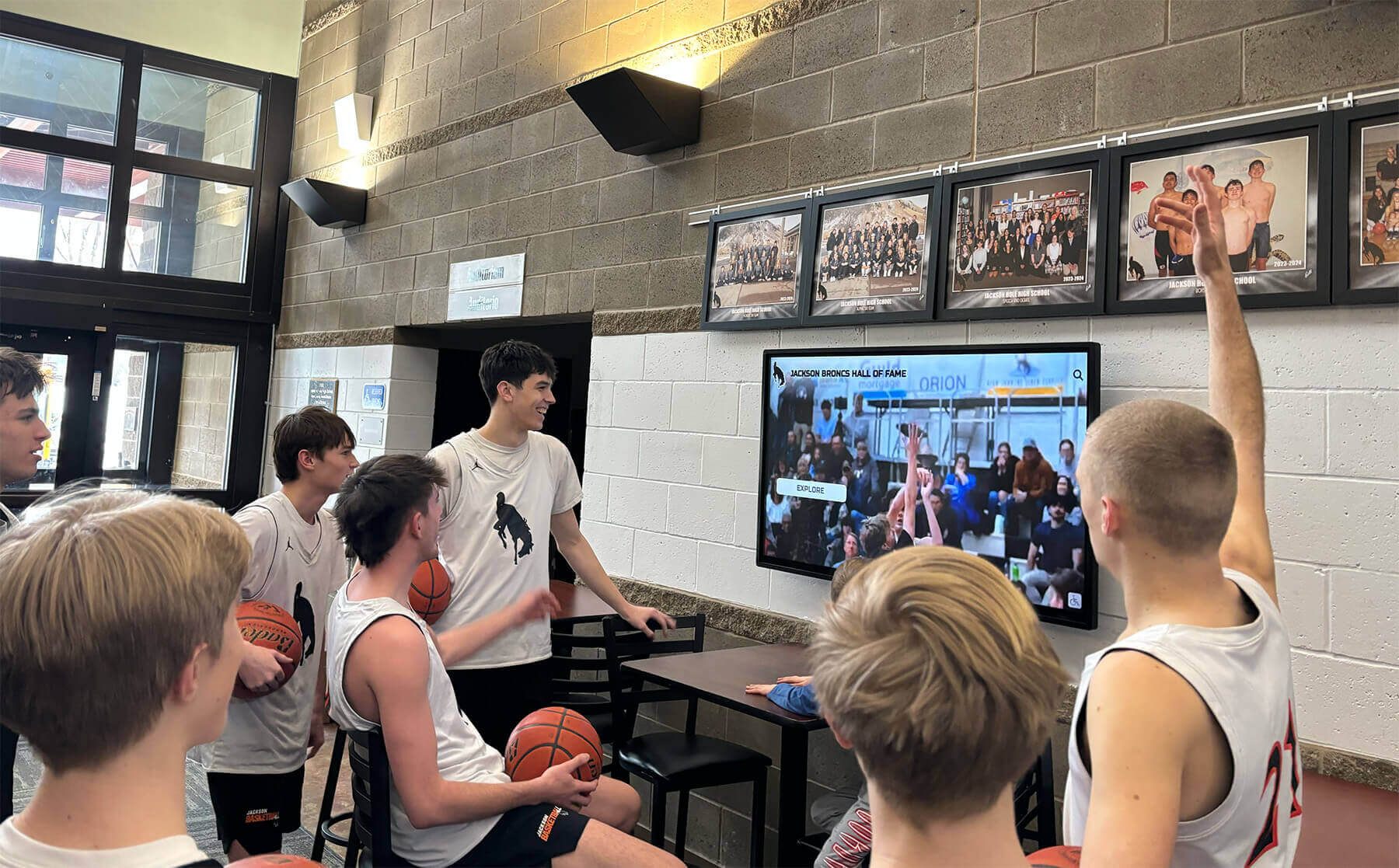
Interactive displays transform how schools preserve and share rivalry history with current and future athletes
Understanding School Rivalry Significance
Before exploring how technology enhances rivalry preservation, understanding what makes these athletic competitions so meaningful provides essential context for creating effective recognition programs.
The Cultural Impact of Athletic Rivalries
School athletic rivalries transcend sports to become defining elements of community identity and institutional culture. When towns divide into opposing camps on game nights, when alumni travel hundreds of miles to watch annual matchups, and when victories are celebrated decades after they occurred, these competitions have evolved far beyond mere athletic contests.
Community Unity and Pride: Rivalries create shared experiences that unite diverse community members who might otherwise have little in common. Socioeconomic differences, political divides, and generational gaps temporarily disappear when entire towns rally behind their teams in longstanding competitions against traditional opponents.
These shared experiences generate collective pride in ways few other community activities can match. Research in community psychology demonstrates that shared rituals and traditions—like annual rivalry games—strengthen social cohesion and create the bonds that transform groups of individuals into unified communities.
Intergenerational Connection: Parents who competed in rivalry games decades ago now watch their children face the same opponents in the same venues, creating powerful intergenerational connections. Grandparents share stories about legendary games from their era, alumni return for homecoming matchups, and families develop traditions around annual rivalry competitions.
This continuity across generations creates living history where past and present merge. Current athletes understand they’re not just playing for themselves or even their current teammates—they’re representing everyone who wore their school’s colors before them and maintaining traditions that will continue long after graduation.
Character Development and Life Lessons: Beyond wins and losses, rivalry competitions teach valuable lessons about preparation, resilience, sportsmanship, and handling pressure. Athletes learn to compete intensely while maintaining respect for opponents, to handle disappointment with grace, and to celebrate victory without arrogance.
These lessons, learned in the crucible of competitive rivalry situations, often prove more valuable than any specific game outcome. Decades later, former athletes recall not just whether they won, but how they handled themselves in high-pressure situations and what they learned about character through competition.
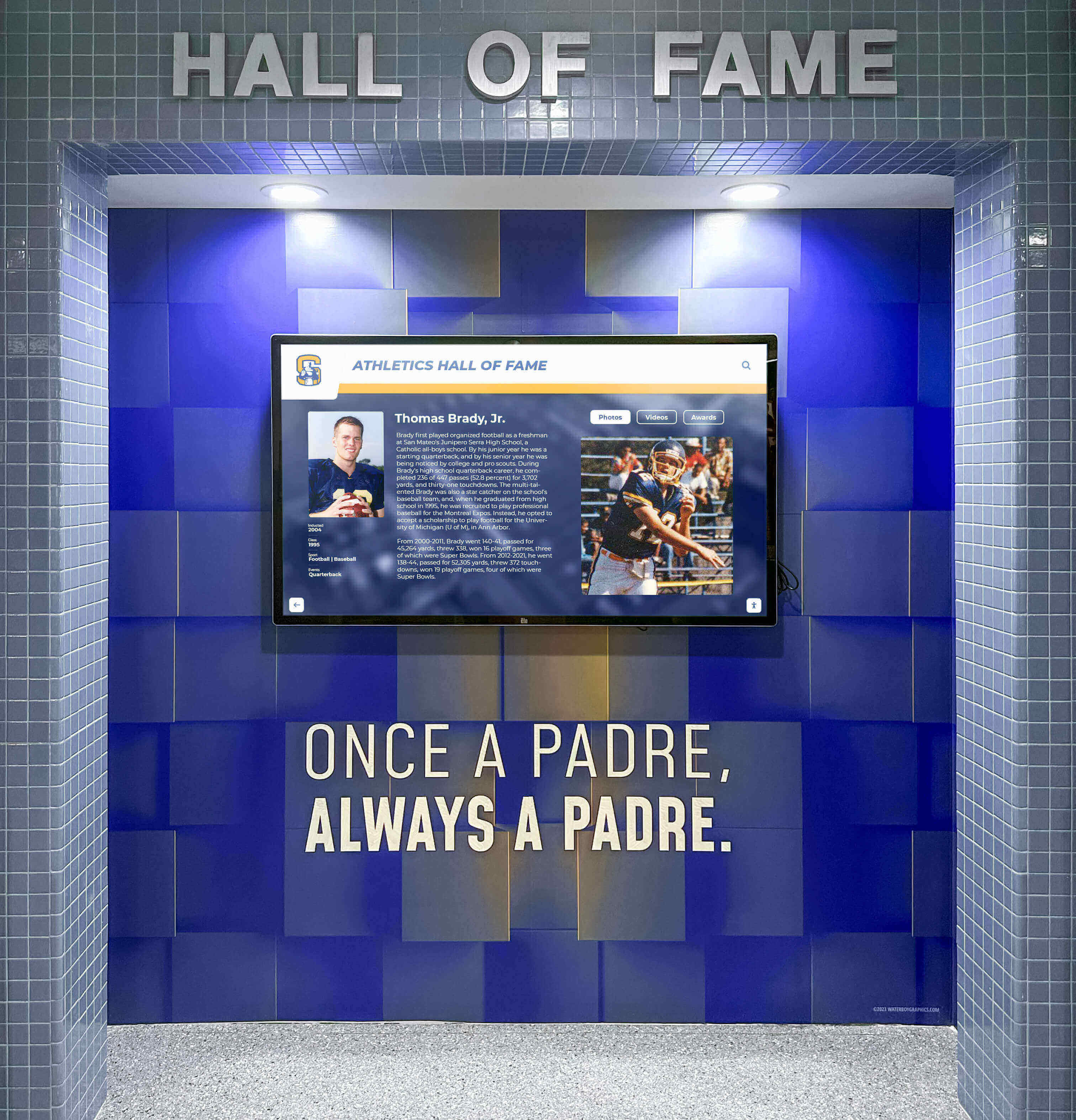
Professional recognition displays celebrate competitive excellence while preserving institutional athletic heritage
Common Elements of Historic School Rivalries
While every rivalry has unique characteristics, certain patterns emerge across successful longstanding athletic competitions:
Geographic Proximity: The most intense rivalries typically involve schools located relatively close to one another. Geographic proximity means athletes, families, and community members frequently interact outside athletics, work in the same businesses, and share community resources. This familiarity intensifies competition as games aren’t just abstract contests but personal challenges against people athletes know.
Competitive Balance: Rivalries thrive when both schools regularly field competitive teams, creating genuine uncertainty about outcomes. When one program consistently dominates another, the competitive edge that makes rivalries special gradually erodes.
Tradition and History: The best rivalries have histories spanning decades or generations, with legendary past games, memorable individual performances, and championship implications that add layers of significance to current competitions. Each new game becomes another chapter in an ongoing story rather than an isolated event.
Ceremonial Elements: Meaningful rivalries develop unique traditions surrounding competition—trophy exchanges, pregame rituals, special uniforms or equipment, ceremonial events, or community celebrations. These ceremonial elements transform athletic contests into cultural events that entire communities embrace.
Mutual Respect: Interestingly, the most enduring rivalries combine intense competition with genuine mutual respect. Athletes, coaches, and communities recognize that meaningful competition requires worthy opponents, and this respect prevents rivalries from devolving into mere animosity.
For schools seeking to document these complex dynamics, digital storytelling for athletic programs provides frameworks for capturing both statistical histories and emotional significance.
The Limitations of Traditional Rivalry History Preservation
Before digital solutions emerged, schools relied on traditional methods for preserving rivalry history—approaches with significant limitations that prevented comprehensive celebration of athletic heritage.
Physical Space Constraints
Traditional trophy cases, plaques, and display boards face fundamental space limitations that force difficult decisions about what to showcase and what to store away unseen.
Limited Display Capacity: A single trophy case might accommodate 20-30 items, forcing athletic departments to choose which championships, records, or achievements deserve visible recognition. Inevitably, significant accomplishments end up in storage not because they lack importance but simply because physical space ran out.
For rivalry histories spanning decades or generations, this constraint becomes particularly problematic. A comprehensive rivalry timeline might include hundreds of memorable games, outstanding individual performances, championship implications, and memorable moments—far more content than any reasonable physical display can accommodate.
Aging and Deterioration: Physical photographs fade, newspaper clippings yellow and become brittle, championship pennants accumulate dust and deteriorate, and even metal plaques corrode or tarnish. Preserving physical artifacts requires careful environmental controls—temperature regulation, humidity management, protection from direct sunlight—that exceed the capabilities of typical school athletic facilities.
Accessibility Limitations: Traditional displays occupy specific physical locations that visitors must travel to see. Alumni who moved to other states, prospective families researching schools before campus visits, and community members with mobility limitations cannot access trophy cases or hallway plaques showing rivalry history.
This geographic limitation dramatically reduces who can engage with your rivalry heritage, limiting its impact to those with regular physical access to specific campus locations.
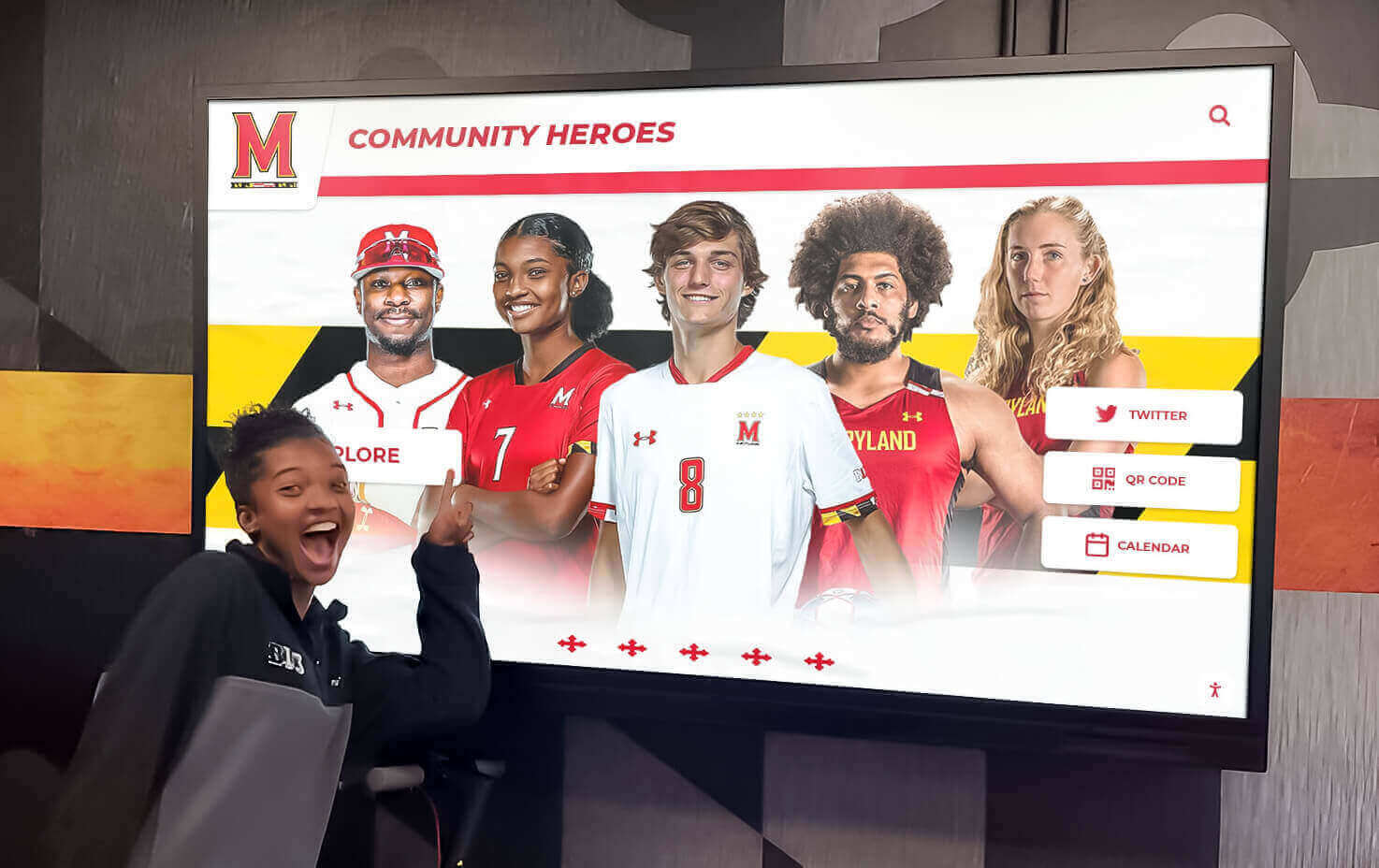
Accessible displays ensure rivalry history inspires current student-athletes throughout their daily campus experiences
Maintenance and Update Challenges
Beyond space constraints, traditional rivalry displays face significant ongoing maintenance challenges:
Expensive Updates: Adding new content to traditional displays requires physical renovation—ordering new plaques, printing and framing photographs, adjusting existing displays to accommodate additions. Each update incurs substantial costs for materials and professional installation, often resulting in displays updated infrequently or not at all.
Inconsistent Information: Traditional displays often present information inconsistently as different eras received different treatment. Championship teams from the 1960s might be represented by simple plaques listing names, while more recent teams have professional photographs and detailed descriptions. This inconsistency creates impression that some eras matter more than others, even when all achievements deserve equal recognition.
Static Presentation: Once installed, traditional displays remain unchanged until someone invests time and resources in physical renovation. This static nature means displays cannot accommodate different interests—basketball enthusiasts cannot filter to see only basketball rivalry history, alumni from specific eras cannot locate content from their competitive years, and researchers cannot search for specific opponents or game results.
Difficult Corrections: When errors are discovered in traditional displays—misspelled names, incorrect dates, or factually wrong information—corrections require removing and replacing physical elements, an expensive and time-consuming process that often results in known errors remaining uncorrected indefinitely.
Digital Timeline Technology for Rivalry History
Modern digital technology addresses every limitation of traditional rivalry preservation while creating entirely new possibilities for comprehensive, engaging historical celebration.
Core Components of Digital Timeline Systems
Effective digital rivalry timelines combine multiple technological elements working together to create compelling experiences:
Commercial-Grade Touchscreen Displays: Professional displays (typically 43"-98" depending on viewing distance and location) rated for continuous operation in high-traffic athletic facilities. Unlike consumer televisions, commercial displays are designed for 24/7 operation with expected lifespans of 7-10 years under intensive use conditions.
Strategic placement in athletic facility lobbies, gymnasium concourses, training room areas, or main school entrances ensures rivalry history remains visible to athletes, students, families, and visitors. Multiple displays throughout campus can show different content—one highlighting football rivalries, another showcasing basketball history, and a third celebrating all sports chronologically.
Cloud-Based Content Management: Intuitive platforms enabling non-technical athletic staff to add, edit, or remove rivalry content without IT department involvement. The best systems feature simple interfaces with drag-and-drop media upload, pre-formatted templates ensuring visual consistency, scheduled publishing allowing content to appear automatically on specific dates, and remote access from any internet-connected device.
This ease of use ensures rivalry timelines remain current with new game results, updated records, and additional historical content as it’s discovered, without requiring expensive professional services for every update.
Multimedia Integration: Digital timelines incorporate diverse content types that bring rivalry history to life—high-resolution photographs showing athletes, memorable game moments, and championship celebrations, video highlights capturing buzzer-beating shots, record-breaking performances, and victory celebrations, audio interviews featuring former athletes and coaches reflecting on memorable games, and scanned historical documents including newspaper coverage, game programs, and statistical records.
This multimedia approach creates emotional engagement that static photographs or text alone cannot achieve. Seeing video of the game-winning touchdown from the 1985 rivalry game creates visceral connection to history impossible through written description.
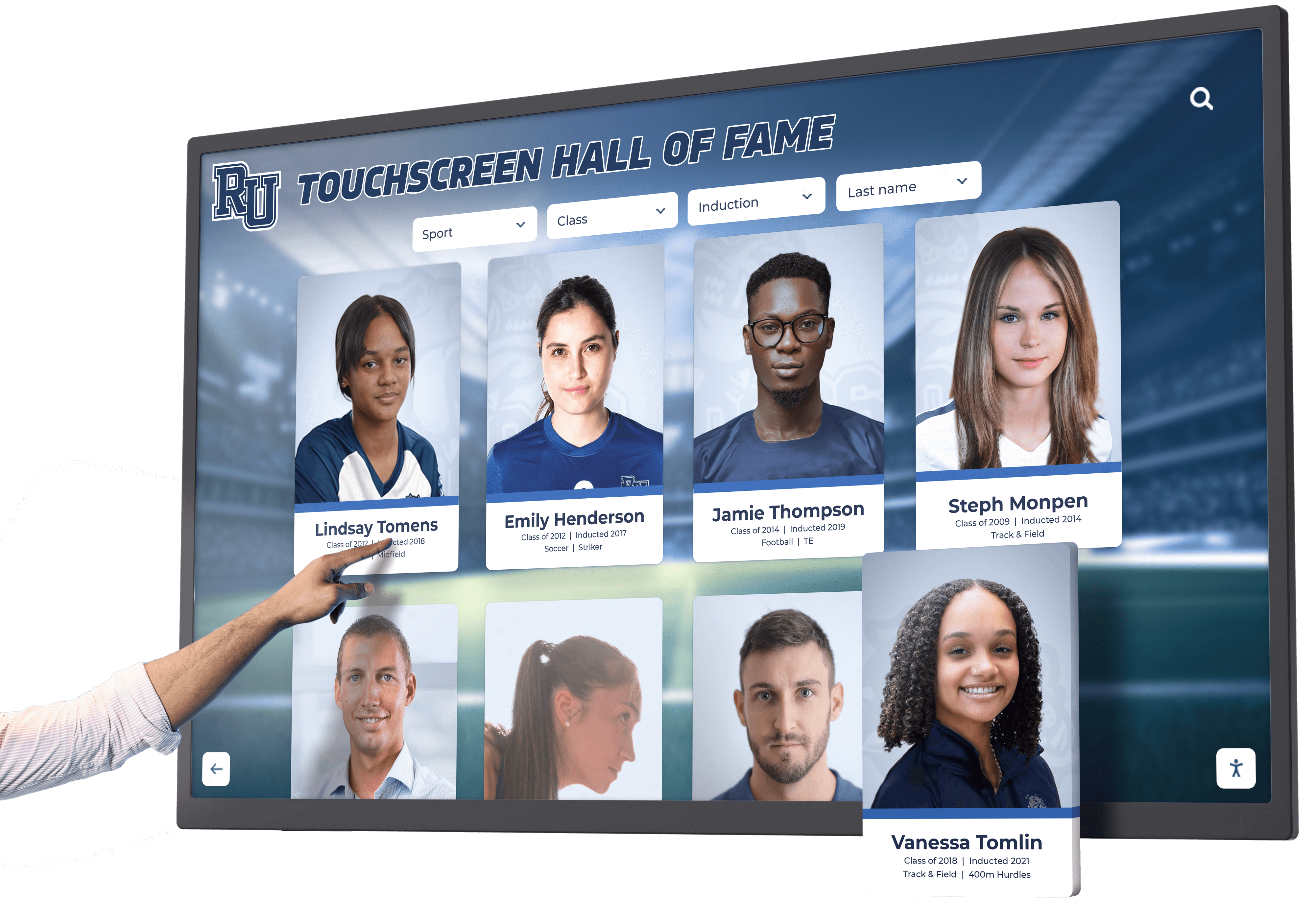
Touchscreen technology enables intuitive exploration of rivalry history through multimedia content
Search and Discovery Tools: Powerful features enabling visitors to quickly find specific information:
- Text search by opponent name, athlete, year, coach, or achievement
- Filter by sport, season, decade, or championship significance
- Timeline visualization showing rivalry progression across decades
- Related content suggestions connecting different aspects of rivalry history
- Featured content spotlights highlighting particularly significant moments
These discovery tools transform passive viewing into active exploration, dramatically increasing engagement time and creating personalized experiences based on individual interests.
Web Accessibility: While physical touchscreen displays serve on-campus audiences, web-based access extends rivalry history globally. Alumni anywhere in the world can explore competition histories from their smartphone or computer, sharing discoveries with friends and family through social media.
This extended reach amplifies rivalry celebration far beyond physical campus boundaries, enabling alumni who haven’t visited campus in decades to reconnect with athletic traditions that shaped their school experiences.
Solutions like Rocket Alumni Solutions provide comprehensive platforms integrating all these elements in systems specifically designed for athletic department needs, combining powerful technology with intuitive management that non-technical staff can operate confidently.
Essential Content for Rivalry Timeline Displays
Creating compelling rivalry timelines requires systematic content development addressing multiple dimensions:
Game-by-Game History: Comprehensive rivalry documentation includes results for every game, match, or meet dating back as far as records exist, scores and key statistics, game locations and dates, championship or playoff implications, individual standout performances, and memorable plays or moments that defined outcomes.
This complete historical record ensures current athletes and fans can explore rivalry history thoroughly, discovering games they may never have heard about and understanding how current competitions fit within decades-long traditions.
Series Records and Streaks: Document the overall rivalry standing including all-time series records (wins, losses, ties), current winning or losing streaks, historical streaks and their significance, records by decade or era, and home versus away performance differences.
This statistical overview provides context for current competitions, helping athletes and fans understand whether their school typically dominates this rivalry, faces closely matched competition, or battles as underdogs.
Championship Connections: Many rivalry games carry playoff or championship implications that elevate their significance beyond regular season contests. Timeline content should highlight conference championship games between rivals, state/regional championship matchups, district or sectional implications of rivalry results, and national ranking impacts of rivalry outcomes.
These connections demonstrate why certain rivalry games are remembered more intensely than others and help current athletes appreciate the potential significance of their competitions.
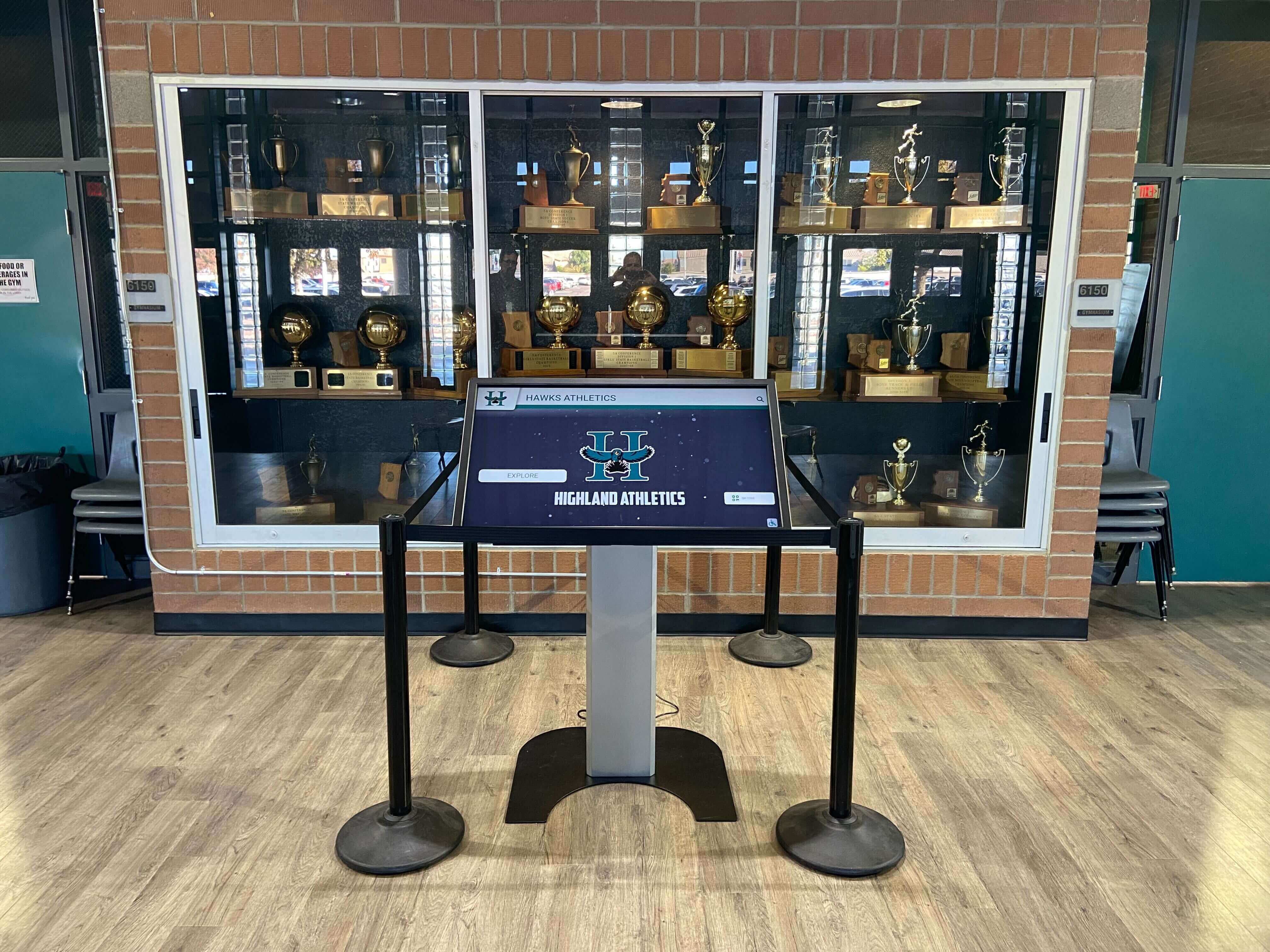
Integrated displays combine traditional trophy recognition with interactive digital rivalry history
Legendary Performances: Every longtime rivalry includes individual performances that transcend normal excellence to become legendary—athletes who single-handedly changed rivalry fortunes, record-breaking performances during rivalry games, clutch performances in pressure situations, and underdog performances that defied expectations.
Comprehensive athlete profiles should include career statistics against the rival, memorable game performances, quotes about rivalry significance, and post-graduation achievements. This individual recognition demonstrates that rivalry excellence is remembered and celebrated long after athletes graduate.
Coach Histories: Athletic leaders shape rivalry traditions and culture through their competitive approaches, rivalry game records, memorable quotes about the opponent, and strategic innovations employed in rivalry competitions. Recognizing successful coaches while documenting their contributions preserves institutional knowledge about what approaches proved effective.
Memorable Moments: Beyond statistics and outcomes, rivalry timelines should capture the moments that fans and athletes remember decades later—game-winning plays as time expired, weather conditions that created memorable challenges, controversial calls or unusual circumstances, unexpected heroes who rose to occasions, and displays of exceptional sportsmanship or rivalry respect.
These stories make rivalry history come alive, transforming statistical records into human narratives that create emotional connections.
For schools documenting comprehensive athletic heritage including rivalries, finding and preserving school sports records provides systematic approaches to research and data gathering.
Implementing Your School Rivalry Timeline
Successfully creating digital rivalry history displays requires systematic planning addressing technology selection, content development, and ongoing management.
Strategic Planning Phase
Define Scope and Objectives: Before beginning implementation, clarify exactly what your rivalry timeline should accomplish:
- Which rivalries deserve inclusion? (Major sports only, all athletic programs, specific historic opponents)
- What time period will coverage span? (Complete history, recent decades, specific eras)
- Who are primary audiences? (Current athletes, alumni, prospective families, general community)
- What outcomes should timeline achieve? (Athlete inspiration, alumni engagement, recruitment support, historical preservation)
Clear objectives guide all subsequent decisions about content priorities, technology selection, and resource allocation.
Assemble Implementation Team: Effective timeline projects require diverse expertise including athletic department leadership providing oversight and resource access, coaching staff offering sport-specific knowledge and historical context, alumni and former athletes contributing memories and historical materials, technical staff managing platform selection and implementation, content developers researching and writing historical narrative, and design professionals ensuring visual appeal and consistency.
Clearly defined roles and decision-making authority prevent confusion and delays as projects progress through development phases.
Establish Budget and Timeline: Realistic planning requires understanding both financial requirements and time commitments. Budget considerations include hardware costs (touchscreen displays, mounting, installation), software platform licenses and implementation, content development (research, writing, media processing), ongoing management and hosting fees, and maintenance and support arrangements.
Timeline expectations should account for research and content gathering (2-4 months for comprehensive projects), platform selection and configuration (1-2 months), content development and entry (2-3 months), testing and refinement (2-4 weeks), and launch planning and promotion (2-4 weeks).
Phased implementation—starting with recent decades or primary rivalries and expanding over time—makes projects more manageable while delivering value quickly.
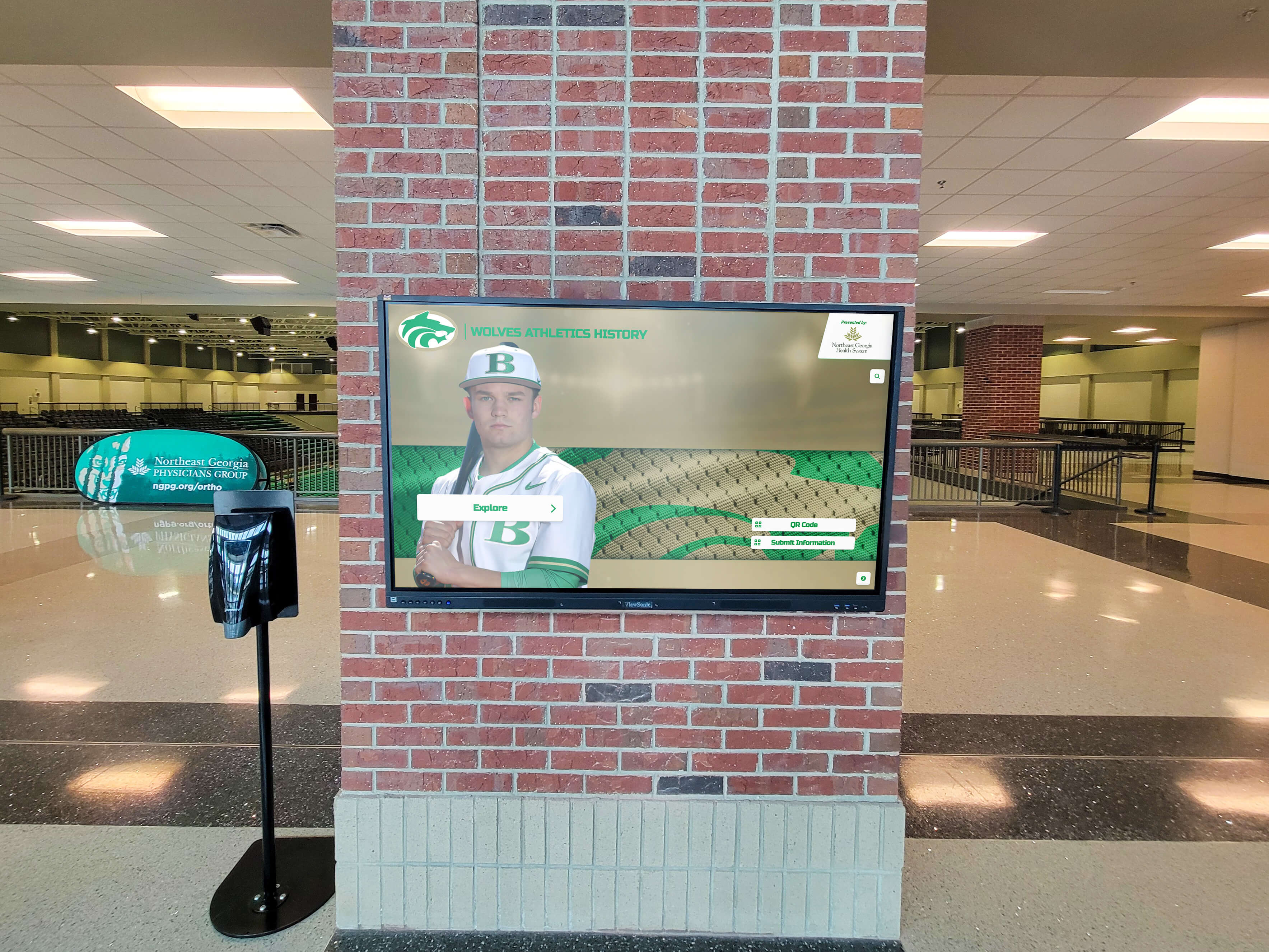
Strategic placement in high-traffic areas ensures maximum visibility for rivalry history displays
Content Development Process
Historical Research: Comprehensive rivalry timelines require systematic research across multiple sources:
Athletic Department Archives: Review game programs and statistics books, media guides from previous seasons, championship records and documentation, coaching records and team materials, and photographic archives of games and athletes.
School Historical Collections: Explore yearbooks documenting athletic seasons, school newspapers covering rivalry games, administrative records about athletic programs, and any historical collections or museum materials.
External Resources: Research local newspaper archives (many now digitized), state athletic association records, opponent school archives and publications, and oral history interviews with former athletes, coaches, and community members.
For schools digitizing substantial historical materials, professional services specializing in digitizing athletic records and achievements ensure high-quality preservation while creating usable digital assets.
Content Organization: Structure rivalry content to enable multiple exploration approaches:
Chronological Organization: Present rivalry history in temporal order, enabling visitors to see how competition evolved across decades. This approach works well for showing rivalry development, identifying era-specific trends, and allowing alumni to locate games from their student years.
Opponent-Based Organization: Group content by rival school, showing complete history of specific matchups. This structure works well for schools with multiple significant rivals, enabling focused exploration of specific competitive relationships.
Achievement-Based Organization: Highlight rivalry games with particular significance—championship implications, record-breaking performances, or legendary moments. This approach emphasizes most memorable rivalry elements, appealing to visitors seeking dramatic highlights rather than comprehensive historical documentation.
Sport-Specific Views: For multi-sport rivalry timelines, enable filtering by specific sports so basketball enthusiasts can focus on court competitions while football fans explore gridiron battles.
Effective platforms support multiple organizational approaches simultaneously, allowing different visitors to explore rivalry history according to their specific interests.
Media Preparation: High-quality multimedia content elevates timeline effectiveness:
Photography Processing: Digitize historical prints and negatives at high resolution, scan newspaper photographs and yearbook images, edit for optimal display quality (color correction, contrast adjustment), crop and frame for consistent presentation, and provide appropriate attribution and dating.
Video Content: Digitize historical game footage when available, create highlight compilations of memorable moments, record oral history interviews with former athletes and coaches, develop contextual videos explaining rivalry significance, and optimize all video for web and display streaming.
Text Development: Write engaging descriptions that bring history to life, maintain consistent voice and style across all content, verify factual accuracy through multiple sources, and provide appropriate context for understanding significance.
Technology Platform Selection
Choosing the right digital platform fundamentally impacts long-term timeline success. Key evaluation criteria include:
Athletic-Specific Features: Platforms designed for sports heritage include sport-appropriate statistics and record structures, opponent tracking and series record calculation, game-by-game documentation systems, season and championship organization, and athlete profile integration linking individuals to rivalry performances.
Generic timeline platforms lacking sport-specific features require extensive customization that increases costs and complexity.
Ease of Use: Non-technical athletic staff require intuitive administrative interfaces, simple content update processes, pre-formatted templates ensuring consistency, drag-and-drop media management, and minimal training for system operation.
Scalability and Performance: Growing rivalry collections need platforms supporting unlimited content addition without performance degradation, multiple concurrent users without slowdowns, high-resolution media without storage limitations, and multiple display installations across campus.
Analytics and Insights: Data-driven programs benefit from engagement tracking showing usage patterns, content performance revealing popular material, search query analysis indicating visitor interests, and peak usage timing for optimal content updates.
Support and Training: Long-term success requires comprehensive initial training programs, responsive ongoing technical support, regular software updates and improvements, knowledge base and documentation resources, and dedicated account management.
Rocket Alumni Solutions provides purpose-built platforms addressing all these requirements specifically for athletic recognition applications, combining powerful technology with intuitive management that ensures sustainable long-term operation.
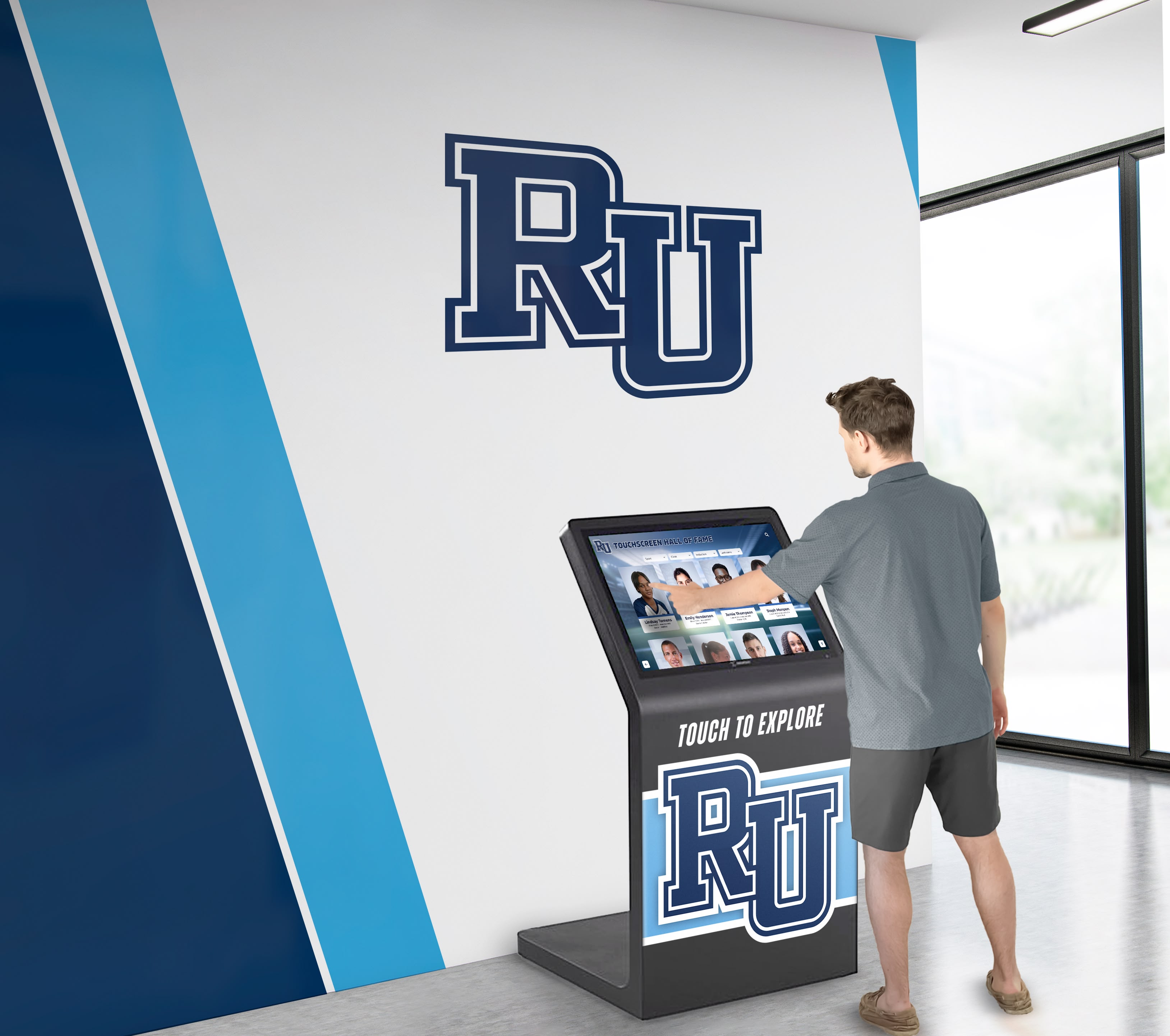
User-friendly interfaces encourage extended exploration of rivalry history by diverse audiences
Strategic Benefits of Digital Rivalry Timelines
Beyond preserving history, digital rivalry timelines deliver measurable benefits across multiple institutional priorities.
Enhancing Current Athlete Motivation
Connection to Tradition: Current athletes who understand they’re part of longstanding traditions often feel additional motivation to uphold competitive standards. Seeing that their school has battled a rival for 75 years, or discovering legendary performances by athletes who wore the same uniform decades earlier, creates sense of responsibility to honor those who came before.
Digital timelines make these connections vivid and accessible. Rather than hearing abstract statements about “tradition,” athletes explore specific games, learn about individual predecessors, and understand exactly what competitive excellence looks like in their school’s context.
Setting Performance Standards: Rivalry timelines showcase record performances and exceptional achievements, creating tangible targets for current athletes to pursue. When runners see the fastest times ever recorded against the rival school, or when basketball players learn about scoring records in rivalry games, these benchmarks provide concrete goals beyond simply winning individual games.
Building Competitive Intelligence: Historical rivalry data provides strategic insights—this opponent typically excels in specific game situations, certain tactical approaches proved particularly effective over time, or rivalry games historically feature close finishes requiring mental toughness. Coaches and athletes gain strategic advantages by learning from decades of competitive history.
For schools developing comprehensive athlete recognition that includes rivalry context, digital storytelling for athletic programs demonstrates effective integration approaches.
Strengthening Alumni Engagement
Nostalgia and Reconnection: Alumni maintain strong emotional connections to their competitive experiences, particularly rivalry games that carried special significance. Digital timelines enable graduates to revisit their athletic years, locate specific games they competed in, and share memories with former teammates.
This emotional reconnection translates to measurable benefits—alumni who engage with athletic heritage content show significantly higher rates of reunion attendance, volunteer involvement, and philanthropic support compared to those without these touchpoints.
Social Sharing and Community Building: Web-accessible rivalry timelines enable alumni to share discoveries through social media, creating organic promotion while facilitating reconnection between former teammates or classmates. When an alumnus posts about finding their championship game from 30 years ago in their school’s digital timeline, this sharing reaches their entire network, extending your school’s visibility far beyond traditional communication channels.
Inter-Generational Conversations: Digital rivalry timelines facilitate conversations between alumni from different eras. A graduate from the 1970s can compare their rivalry experiences with someone who competed in the 2000s, discovering common traditions alongside evolutionary changes. These cross-generational connections strengthen overall alumni community while creating networks of support spanning decades.
Supporting Recruitment and Admissions
Demonstrating Program Quality: Prospective student-athletes and their families evaluate programs based on multiple factors including competitive tradition, consistent excellence, development track record, and cultural environment. Comprehensive rivalry timelines provide tangible evidence of all these qualities.
When recruits see that your school has maintained competitive excellence against respected opponents across decades, this history demonstrates program stability and quality that no amount of verbal assurance can match.
Showcasing Competitive Environment: Athletes seeking challenge want programs where they’ll be pushed to excel. Well-documented rivalry histories demonstrate that your program competes against worthy opponents in meaningful games that will test and develop competitive abilities.
Family Appeal: Parents often care as much about tradition, values, and supportive environments as purely athletic considerations. Rivalry timelines that showcase sportsmanship, respect for opponents, and balanced perspective on competition appeal to families seeking positive developmental experiences beyond just winning.
For athletic departments integrating rivalry history with broader recruitment strategies, high school admissions tour digital displays demonstrate effective presentation approaches.
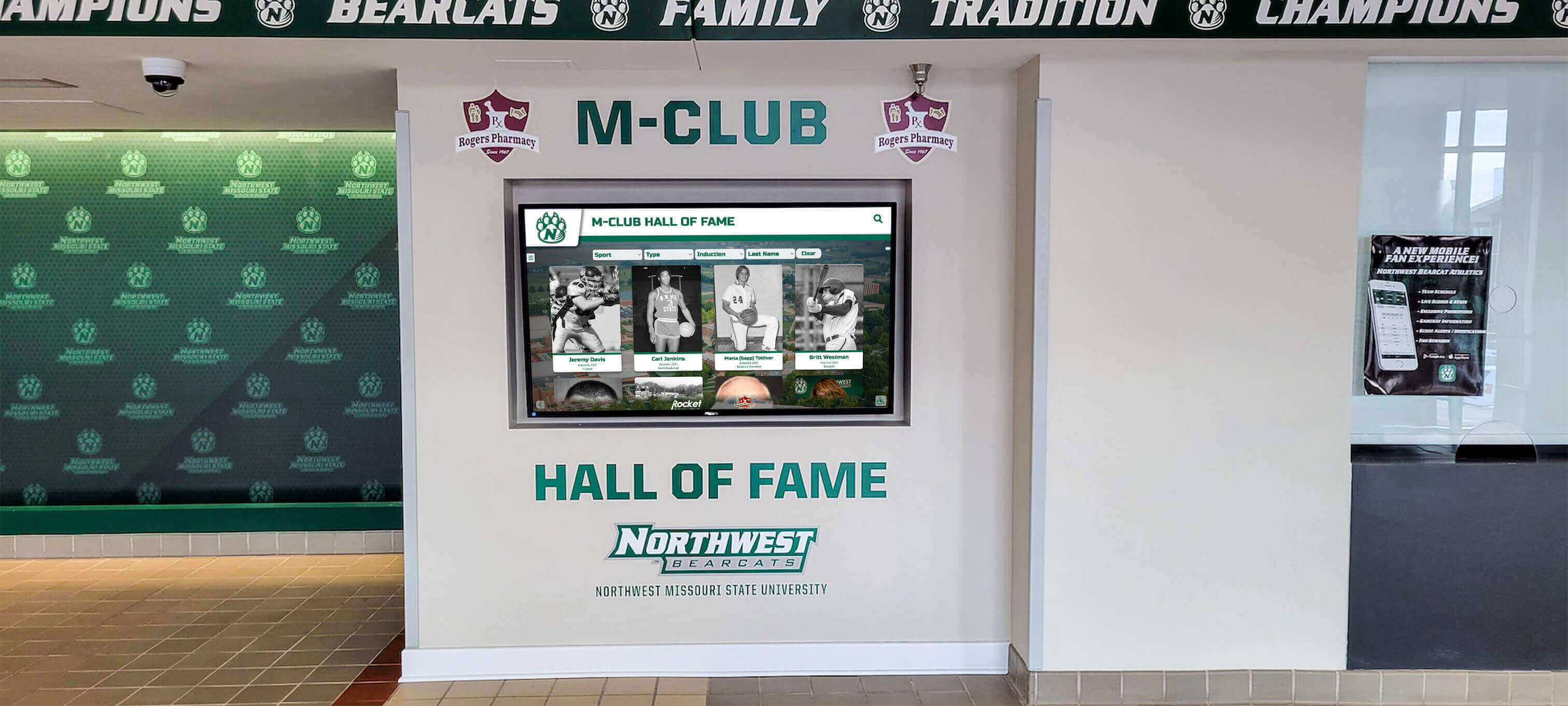
Comprehensive displays integrate rivalry history with broader athletic recognition programs
Building Community Pride and Identity
Shared Community Experience: Athletic rivalries unite communities across demographic and social divisions. Digital timelines celebrate these shared experiences, validating the emotional investment community members make in school athletics.
When community members see their personal memories—games they attended, athletes they watched compete, or eras they lived through—preserved and celebrated in professional displays, this recognition demonstrates that their passion and support matter to the institution.
Historical Preservation: Many rivalry traditions span generations, with stories and memories that risk being lost as community members age and move away. Digital timelines preserve this heritage permanently, ensuring that today’s community experiences remain accessible to future generations who will inherit rivalry traditions.
Civic Pride: Successful athletic programs contribute significantly to broader community identity and regional reputation. Communities take pride in schools with rich competitive traditions, and rivalry timelines provide tangible evidence supporting this community pride.
Advanced Features and Future Enhancements
As digital timeline technology continues evolving, emerging capabilities create additional opportunities for rivalry history celebration:
Artificial Intelligence and Automation
Automated Content Generation: AI-powered systems can process game statistics and automatically generate draft summaries of rivalry games, suggest relevant historical connections based on current games, identify record-breaking performances requiring recognition, and recommend featured content based on upcoming rivalry competitions.
These automated capabilities reduce administrative burden while ensuring rivalry timelines remain current and relevant.
Intelligent Search and Discovery: Advanced AI enables natural language queries (“Show me the closest rivalry games in the last 20 years”), predictive suggestions based on viewing behavior, automated content tagging and categorization, and personalized content recommendations for returning visitors.
Pattern Recognition: Machine learning can analyze decades of rivalry data to identify competitive patterns, strategic trends across eras, factors correlating with rivalry success, and historical parallels to current situations.
These insights provide strategic value beyond simple historical documentation.
Enhanced Multimedia Integration
360-Degree Photography: Immersive photography enables viewers to explore rivalry venues from athlete perspectives, examine trophy collections from all angles, and experience crowd atmospheres through panoramic imagery.
Augmented Reality Features: Mobile apps could overlay historical content on current physical locations—holding a smartphone up to a rivalry trophy case might display video highlights from championship games, or AR could show historical photographs overlaid on current athletic facilities.
Virtual Reality Experiences: VR technology could enable immersive experiences like “attending” legendary rivalry games from decades past, exploring historical athletic facilities no longer standing, or experiencing rivalry traditions from athlete perspectives.
While still emerging, these technologies will become increasingly accessible and practical for educational athletic programs.
Social and Interactive Features
Crowd-Sourced Content: Enable alumni and community members to contribute their own rivalry photographs and memories, suggest corrections or additions to existing content, share personal stories connected to rivalry games, and tag individuals in historical photographs.
This community participation continuously enriches timeline content beyond what any institution could research independently.
Gamification Elements: Interactive challenges like rivalry history trivia competitions with leaderboards, achievement badges for exploring specific rivalry eras or sports, and scavenger hunts requiring discovery of specific historical information create engaging reasons for repeated timeline interaction, particularly for current students.
Live Integration: Display real-time rivalry game results and statistics alongside historical context, automatically update rivalry records as current games conclude, highlight relevant historical parallels during ongoing seasons, and celebrate achievement milestones when records are broken.
This integration connects past heritage with present competition, demonstrating that rivalry traditions continue evolving.
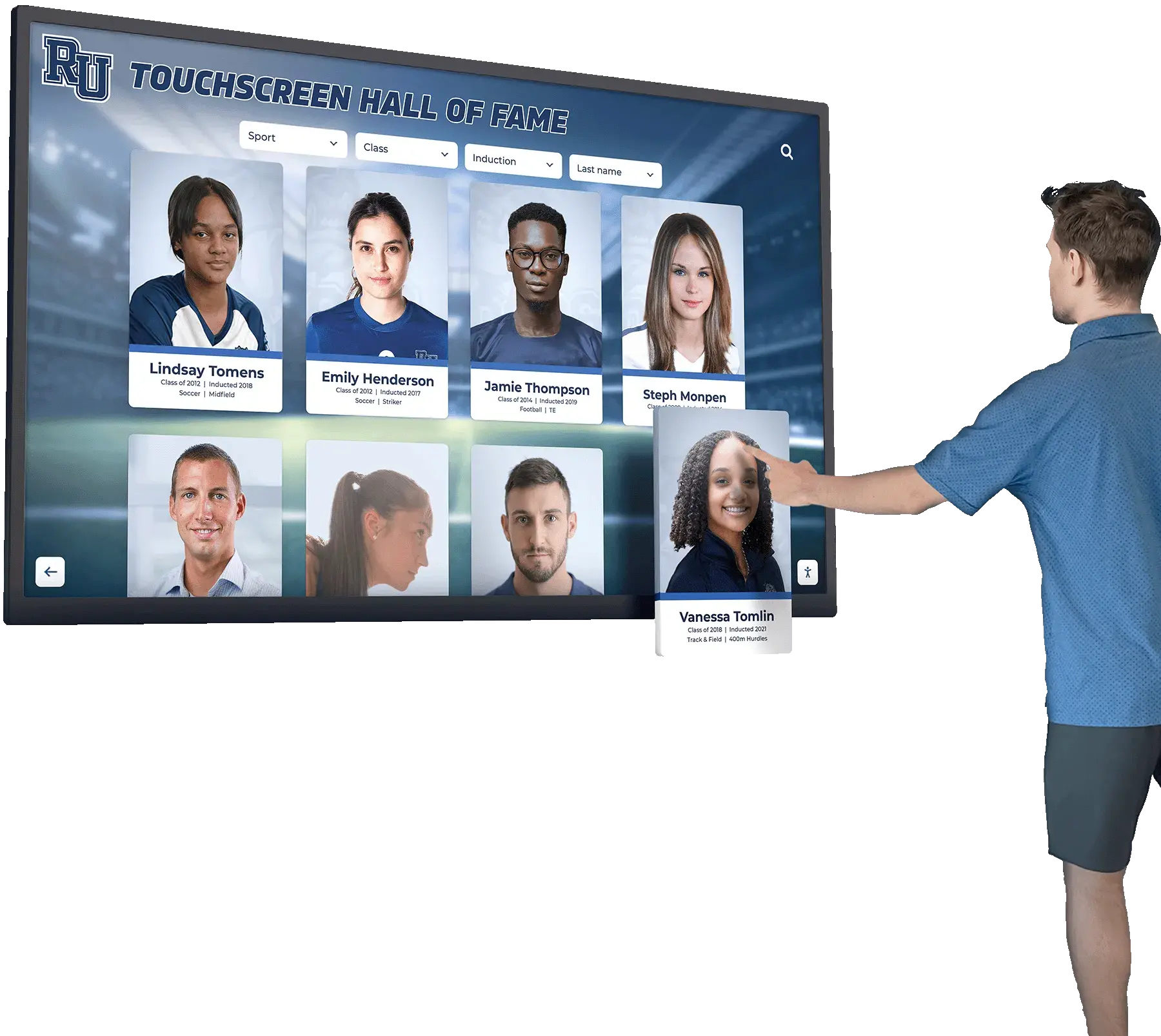
Modern interfaces combine comprehensive information with intuitive navigation and multimedia engagement
Best Practices for Rivalry Timeline Success
Schools implementing digital rivalry timelines maximize impact by following proven best practices:
Content Quality Standards
Accuracy Above All: Rivalry histories contain emotionally charged content where memories may differ from documented facts. Commit to factual accuracy based on verifiable sources, clearly distinguish between confirmed facts and anecdotal memories, correct errors promptly when discovered, and provide source attribution for significant historical claims.
Comprehensive Coverage: Avoid recency bias where recent decades receive disproportionate attention because documentation is more readily available. Commit to balanced coverage across your rivalry’s complete history, systematic research into earlier eras, and equivalent treatment of all competitive decades.
Respect and Sportsmanship: Rivalry content should celebrate your school’s achievements while maintaining respect for opponents. Avoid characterizing rivals negatively or celebrating rival misfortune, emphasize competitive respect and sportsmanship, acknowledge worthy opponent achievements, and focus on your school’s excellence rather than opponent failings.
Ongoing Management
Establish Update Schedules: Rivalry timelines remain relevant only through consistent updates. Establish regular schedules for adding current season results, updating career records and statistics, incorporating newly discovered historical content, and refreshing featured content to maintain visitor interest.
Assign Clear Responsibility: Without designated owners, timeline maintenance becomes everyone’s responsibility and therefore no one’s priority. Assign specific staff members to timeline management, provide adequate time within their work responsibilities, and establish accountability measures ensuring timelines receive necessary attention.
Monitor Engagement Analytics: Track how audiences interact with rivalry content—which rivalries generate most interest, what time periods receive most attention, what content formats prove most engaging, and how usage patterns change across seasons.
Use this data to inform content priorities and optimization decisions.
Integration with Broader Programs
Connect to Overall Athletic Recognition: Rivalry timelines function best when integrated with comprehensive athletic heritage programs including athletic halls of fame honoring individual excellence, record boards documenting achievement progression, and comprehensive historical archives preserving institutional memory.
Link to Current Athletics: Ensure rivalry history connects meaningfully to current athletic programs by displaying historical context before rivalry games, recognizing when current athletes break historical records, and celebrating when current teams achieve rivalry success.
Support Advancement Goals: Connect rivalry heritage to fundraising and development initiatives—facility naming opportunities related to rivalry tradition, scholarship funds honoring legendary rivalry competitors, and major gift recognition integrated with rivalry displays.
For athletic departments developing comprehensive recognition strategies, developing college athletic recognition programs provides strategic planning frameworks.
Measuring Timeline Impact and ROI
Demonstrate rivalry timeline value through systematic assessment:
Quantitative Metrics
Usage Analytics: Track total interactions and session duration, most viewed rivalry content, popular search terms and filters, peak usage times and patterns, and returning visitor rates indicating sustained interest.
Engagement Increases: Measure alumni event attendance changes, social media engagement with athletic content, athletic program giving trends, and recruit interest and commitment patterns.
Operational Efficiencies: Document time savings in updating displays compared to traditional methods, reduced costs for physical display maintenance, and administrative efficiency improvements in content management.
Qualitative Feedback
Stakeholder Testimonials: Gather perspectives from current athletes about inspiration and motivation, alumni about emotional connection and nostalgia, coaches about program tradition reinforcement, and recruits and families about program quality impressions.
Observational Assessment: Note how visitors interact with displays, conversation patterns around timeline content, spontaneous sharing and photography of content, and integration into campus tours and recruitment activities.
Long-Term Value
Beyond immediate metrics, consider long-term institutional value including permanent preservation of rivalry heritage, sustainable platform requiring minimal ongoing cost, continuously growing content becoming more valuable over time, and foundation for expanded athletic heritage initiatives.
These long-term benefits often exceed immediate measurable impacts, making rivalry timelines strategic investments in institutional culture and community connection.
Conclusion: Preserving Competitive Heritage for Future Generations
School athletic rivalries represent living traditions that connect generations through shared competitive passion. These rivalries aren’t just about wins and losses—they’re about community identity, character development, tradition maintenance, and the bonds forged through intense yet respectful competition. A comprehensive school rivalry history digital timeline ensures these traditions receive recognition worthy of their significance, creating experiences that inspire current athletes while honoring everyone who contributed to your competitive legacy.
Traditional preservation methods—trophy cases, plaques, and aging photographs—no longer adequately serve institutions serious about rivalry heritage. Digital timeline technology addresses every limitation of traditional approaches while creating entirely new possibilities for comprehensive celebration, global accessibility, and engaging multimedia storytelling.
Whether documenting a century-old football rivalry that packs stadiums every autumn, basketball competitions that have defined local pride for decades, or emerging athletic traditions building toward future legacy, interactive digital displays provide platforms that grow with your programs. Current athletes discover inspiration by exploring legendary predecessors, alumni reconnect with memories from their competitive years, prospective families see evidence of program quality and tradition, and entire communities celebrate shared experiences that define local identity.
Solutions like Rocket Alumni Solutions provide proven platforms specifically designed for athletic heritage preservation, combining powerful technology with intuitive management ensuring long-term success. From initial concept through years of sustained engagement, the right technology partner ensures rivalry timelines create experiences that truly honor competitive excellence while strengthening the communities that rally around school athletics.
Ready to Preserve Your School's Rivalry Heritage?
Discover how Rocket Alumni Solutions can help your athletic program create an interactive rivalry timeline celebrating your competitive traditions, engaging your community, and inspiring future champions.
Schedule Your ConsultationAthletic rivalries create the memories that former competitors treasure for lifetimes—the Friday nights under the lights, the packed gymnasiums echoing with crowd noise, the championships decided by final seconds, and the character forged through intense competition. These experiences deserve recognition matching their significance—comprehensive, engaging, and inspiring celebrations that honor the past while building the future.
The question isn’t whether to implement digital rivalry timeline displays, but how soon your program will begin creating recognition that truly resonates with your athletic traditions. Every season that passes without proper preservation represents lost opportunities to celebrate achievements, inspire current athletes, and strengthen community connections through shared competitive heritage.
Start celebrating your rivalry excellence today—your athletic traditions deserve recognition worthy of the competitors who built them and the communities that cherish them.































