Senior class awards displays represent the culmination of high school achievement—celebrating four years of academic excellence, athletic accomplishments, leadership service, artistic contributions, and personal growth. These displays honor graduating students who have earned distinction across diverse categories, from valedictorian recognition to citizenship awards, athletic championships to performing arts excellence, career and technical certifications to community service achievements.
When high schools systematically recognize senior award recipients through comprehensive displays that document their accomplishments, celebrate their contributions, and preserve their legacy, they create powerful motivation for underclassmen while demonstrating that achievement matters and excellence receives lasting acknowledgment. Recognition systems showing that senior awards represent genuine institutional honor inspire students throughout their high school journey to pursue excellence worthy of similar celebration.
This comprehensive guide explores effective strategies for implementing senior class awards displays—recognition solutions that celebrate graduating students, preserve achievement history, and build cultures where pursuing distinction receives acknowledgment equal to earning it.
Senior award recognition extends beyond individual honor—it validates years of effort, celebrates diverse achievement pathways, creates aspirational models for current students, and documents institutional excellence standards. Digital recognition displays transform this acknowledgment from temporary bulletin boards and yearbook pages into permanent, engaging tributes that inspire ongoing pursuit of distinction.
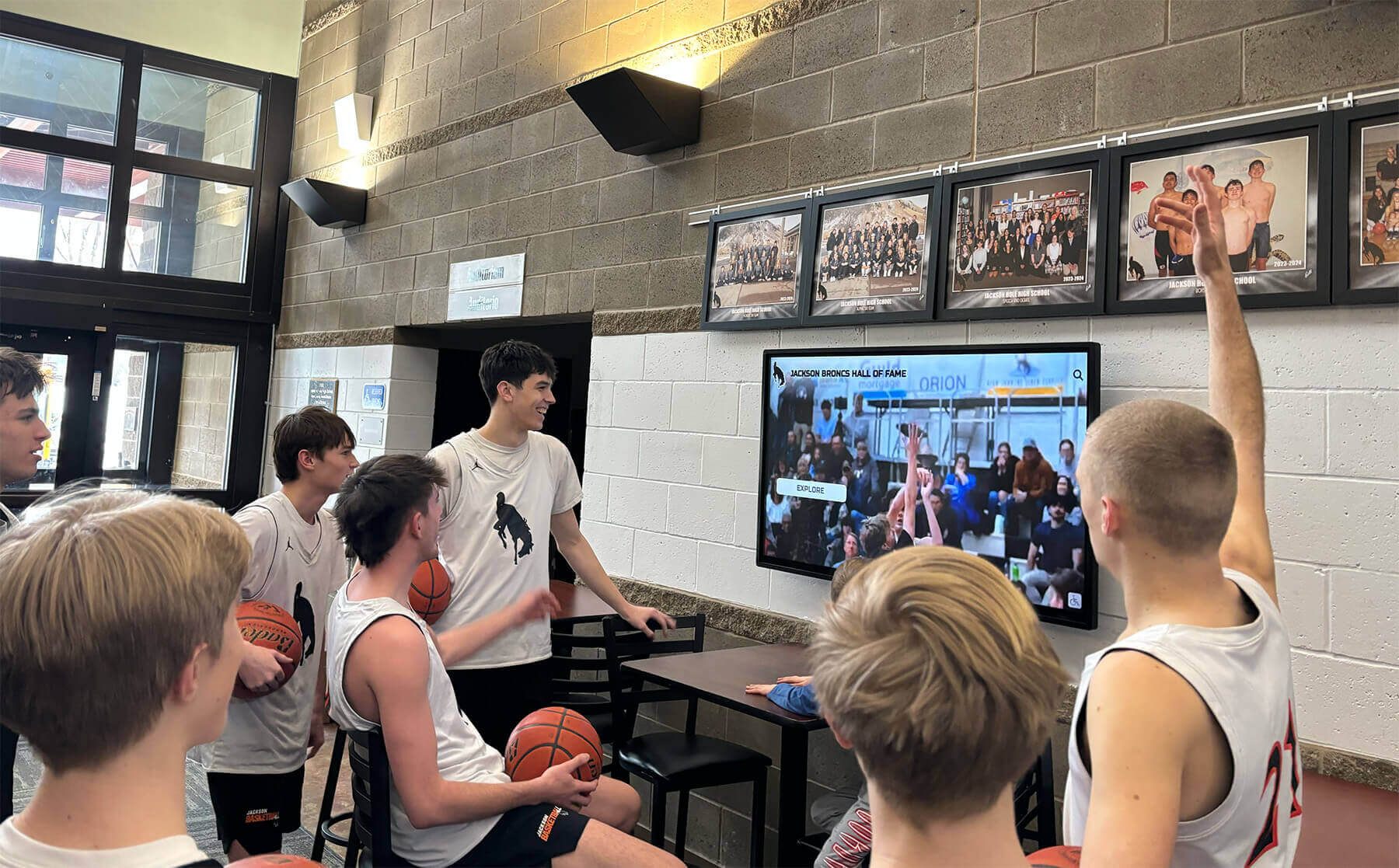
Interactive displays create opportunities for students to explore senior achievements and understand pathways to distinction
Understanding Senior Class Awards Categories and Recognition Types
Effective senior award displays begin with comprehensive understanding of the diverse recognition categories high schools present at graduation.
Academic Excellence Awards
Academic awards recognize intellectual achievement across multiple dimensions:
Pinnacle Academic Recognition
- Valedictorian and salutatorian honors for highest grade point averages
- Top percentage rankings (top 5%, top 10% of graduating class)
- National Merit Scholar designations and College Board National Recognition Programs
- Advanced Placement Scholar awards and International Baccalaureate distinctions
- Perfect GPA maintenance across multiple years
- State scholar program designations
According to the College Board, students earning National Recognition Awards demonstrate academic excellence through cumulative GPA of 3.3 or higher combined with exceptional standardized test performance or early AP exam success, providing prestigious distinctions that enhance college applications.
Subject-Specific Academic Awards
- Department awards recognizing excellence in specific disciplines (English, mathematics, science, social studies)
- World language proficiency and achievement recognition
- Career and Technical Education (CTE) Scholar awards
- Fine arts excellence in visual art, music, theater, or dance
- STEM competition achievements and research recognition
- Academic competition success (Quiz Bowl, Science Olympiad, Math League)
Academic Improvement and Growth Recognition
- Most improved GPA from freshman to senior year
- Academic comeback stories overcoming early struggles
- Learning difference success and perseverance recognition
- Growth mindset exemplification awards
- Subject-specific improvement acknowledgment
- College readiness achievement for non-traditional students
Learn more about comprehensive approaches in academic recognition programs.
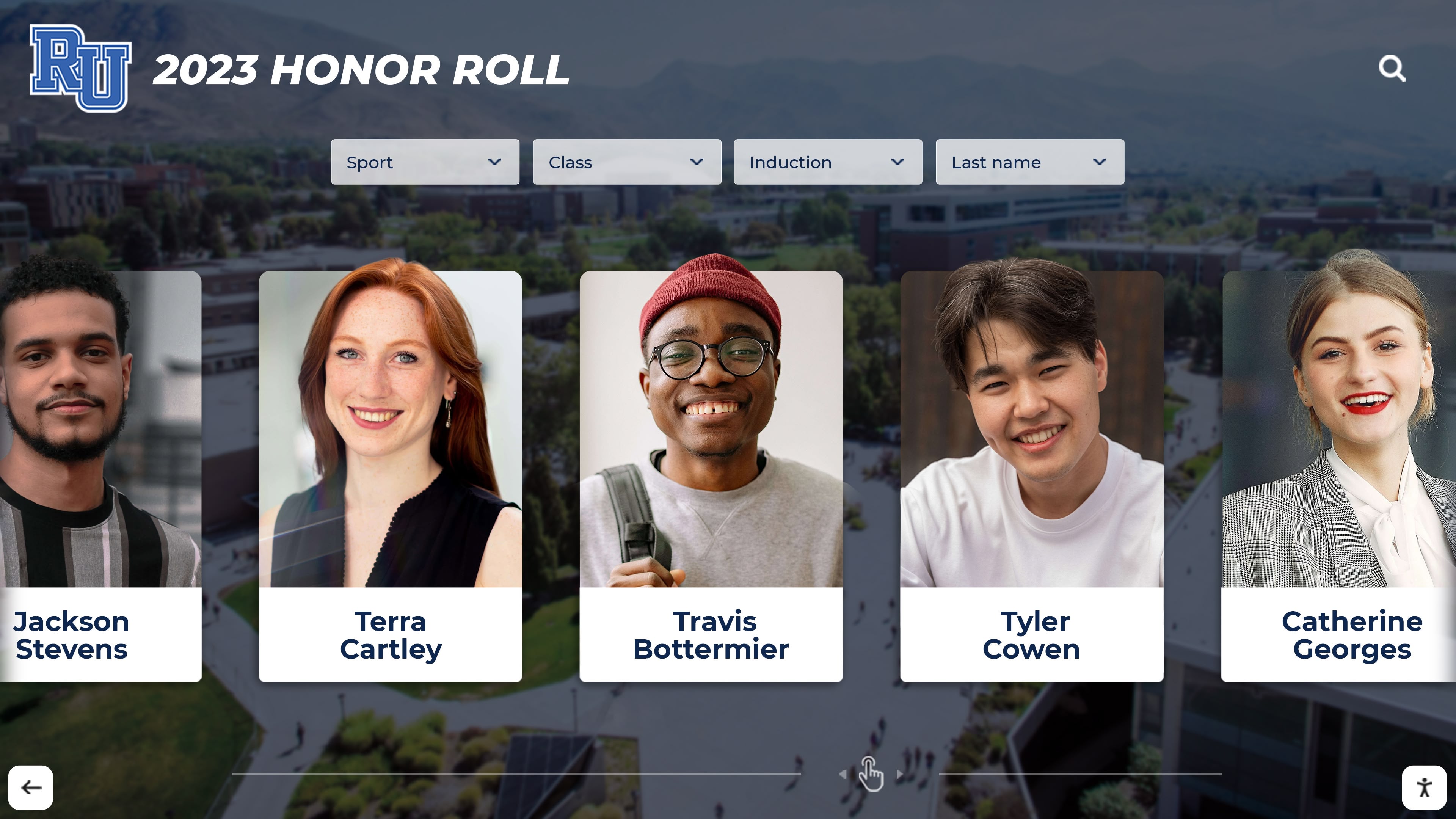
Detailed recognition profiles celebrate specific achievements and academic journeys
Athletic and Activities Achievement Awards
Recognition extending beyond academics celebrates diverse contributions:
Athletic Excellence Recognition
- All-State and All-Conference athlete selections
- State championship team members and individual champions
- School record holders and career statistical leaders
- Conference Player of the Year designations
- Recruiting recognition for collegiate athletic commitments
- Multi-sport athlete acknowledgment
- Team captain and leadership recognition
- Sportsmanship and character awards
Performing Arts Distinction
- All-State music ensemble selections
- Theater recognition for lead roles and technical excellence
- Visual arts awards and competition recognition
- Dance achievement and choreography distinction
- Music scholarship recipients
- Arts leadership and mentorship recognition
- Creative expression innovation awards
Co-Curricular Leadership and Service
- Student government officers and class presidents
- National Honor Society and honor society officers
- Club presidents and organization founders
- Volunteer service hour milestones
- Community service project leadership
- Peer tutoring and mentorship recognition
- School spirit and pride exemplification
Explore additional recognition categories in student achievement celebration approaches.
Character, Citizenship, and Special Recognition Awards
Awards acknowledging personal qualities and unique contributions:
Character-Based Recognition
- Citizenship awards recognizing positive school contribution
- Integrity and ethical leadership recognition
- Perseverance and resilience awards
- Kindness and compassion acknowledgment
- Role model designation for younger students
- Positive attitude and optimism recognition
- Growth through adversity honors
Special Circumstance Recognition
- First-generation college student acknowledgment
- Overcoming significant personal challenges
- Balancing extraordinary family responsibilities with academic success
- Non-traditional student pathway completion
- Adult learner achievement
- English language learner excellence
- Special education success stories
School-Specific Traditions
- Faculty-nominated senior awards unique to institution
- Principal’s award for overall excellence
- Alumni association awards connecting past and present
- Historical awards named for distinguished graduates or faculty
- Community partner awards
- School motto or values embodiment recognition
- Legacy family achievement (following siblings or parents)
Scholarship and Financial Recognition
Celebrating post-secondary opportunity earned:
Scholarship Achievement Documentation
- Merit scholarship recipients by institution
- Full-ride scholarship recognition
- Academic scholarship totals by student
- Athletic scholarship signings
- Need-based scholarship achievements
- Local community scholarship recipients
- Cumulative class scholarship earnings
According to Springfield High School’s 2025 awards ceremony, their graduating class earned over $2.92 million in scholarship funds, demonstrating the significant financial achievement many senior classes accomplish through academic excellence and extracurricular involvement.
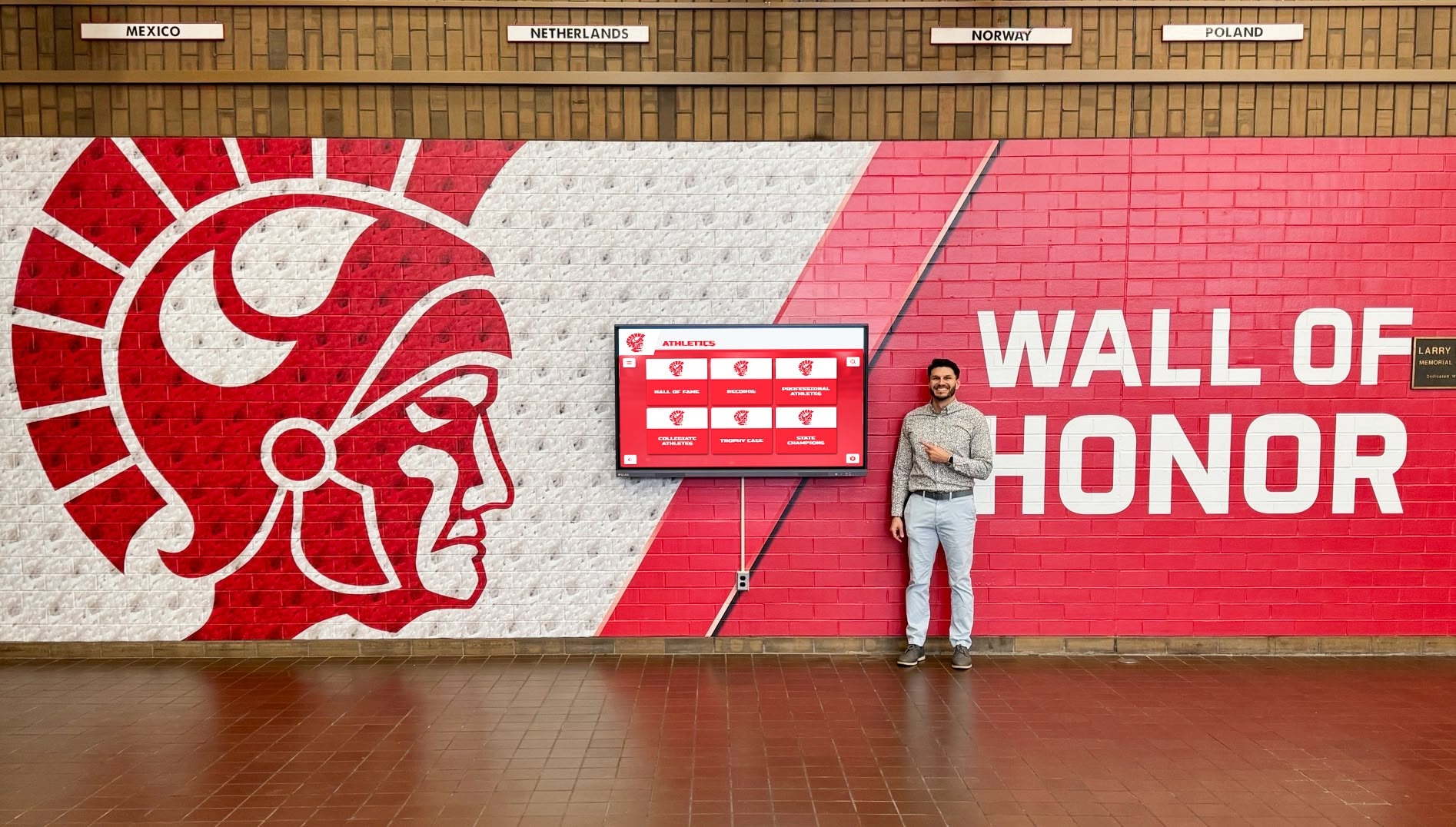
Digital displays enable comprehensive documentation of diverse achievement categories
College Acceptance Recognition
- Ivy League and highly selective institution acceptances
- Military academy appointments
- Specialized program admissions (honors colleges, competitive majors)
- Geographic diversity in college destinations
- Career program acceptance and employment offers
- Gap year fellowship and opportunity recognition
- Post-secondary pathway diversity celebration
Traditional Senior Awards Display Approaches
Physical recognition methods create tangible celebration of graduating class achievements.
Senior Awards Night Ceremonies
Formal events provide public celebration platforms:
Ceremony Structure and Format Senior Awards Night typically occurs in late spring, bringing together graduating students, families, faculty, and community members for formal recognition. Schools commonly organize these events by award category, with department chairs, coaches, activity advisors, and administrators presenting recognition in their respective areas.
Recognition Elements
- Individual student recognition on stage with certificate or plaque presentation
- Brief achievement description explaining award significance
- Photo opportunities for families to capture memories
- Reception following ceremony for celebration and congratulations
- Program booklets documenting all award recipients
- Video montages highlighting senior year accomplishments
Participation and Reach Many high schools recognize substantial portions of their graduating class—some schools honor over 100 seniors across diverse categories, ensuring multiple pathways to recognition exist. The ceremonial approach creates memorable experiences but provides only temporary visibility for achievements.
Learn about event-based recognition in semester highlights celebration.
Trophy Cases and Physical Display Boards
Permanent campus installations provide ongoing visibility:
Trophy Case Senior Sections Dedicated display areas in school entrance halls or main corridors:
- Senior award plaques listing recipients by year
- Trophy displays for team championships
- Academic award recognition boards
- Scholarship recipient documentation
- Photo displays of distinguished graduates
- Perpetual plaques allowing annual additions
Hallway Recognition Walls Corridor displays celebrating graduating classes:
- Year-specific senior class composite photos
- Achievement highlight boards updated annually
- Scholarship totals and college acceptance displays
- Senior superlatives and voted recognitions
- Legacy recognition connecting family members
- Historical timelines showing recognition evolution
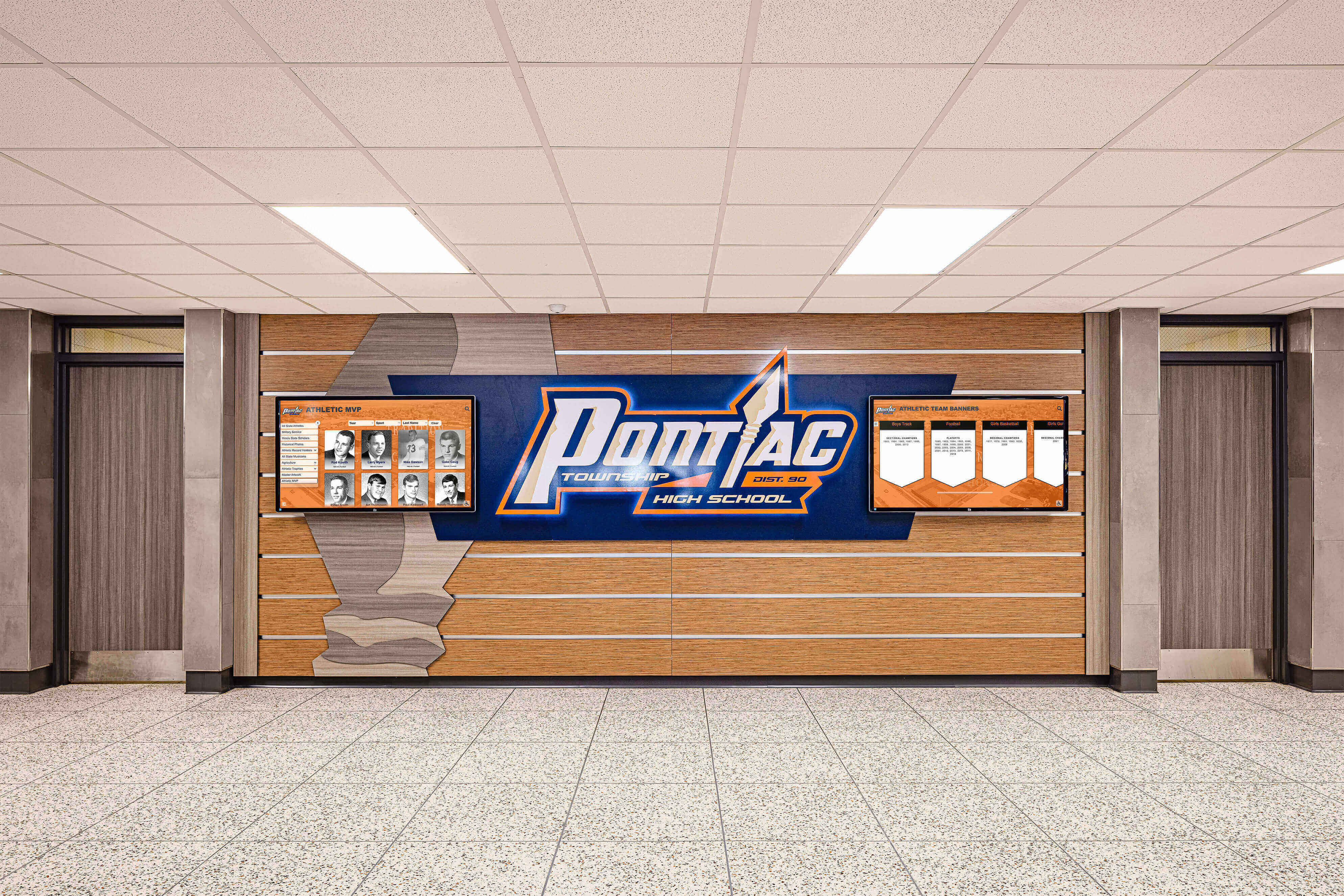
Traditional hallway displays provide permanent recognition of student achievements
Limitations of Traditional Approaches While important, physical displays face inherent constraints:
- Limited space forcing difficult choices about whose awards receive display
- Static information that cannot easily update or expand
- Capacity restrictions as recognition accumulates across years
- Maintenance challenges keeping displays current and attractive
- Visibility limitations in single physical locations
- Inability to tell complete achievement stories with context
- Damage risk from aging, vandalism, or environmental factors
Yearbook Senior Awards Documentation
Printed records preserve annual recognition:
Yearbook Senior Section Content
- Senior awards ceremony photos capturing key moments
- Lists of award recipients organized by category
- Valedictorian and salutatorian profiles and speeches
- Senior superlatives voted by classmates
- College destination maps showing post-graduation paths
- Scholarship recipient recognition
- Final messages from graduating class officers
Publication Benefits and Limitations Yearbooks provide important documentation but face accessibility challenges:
- Single print run limiting distribution
- Archives stored rather than actively displayed
- Cost barriers for some families
- Space constraints limiting detail and comprehensiveness
- Passive consumption rather than interactive exploration
- Difficulty updating or correcting information
- Limited ability to search or filter content
Digital Display Solutions for Senior Awards Recognition
Solutions like Rocket Alumni Solutions transform senior award displays through interactive systems overcoming traditional limitations.
Unlimited Recognition Capacity
Digital platforms eliminate space constraints restricting traditional displays:
Comprehensive Award Documentation Digital recognition displays showcase unlimited senior award recipients:
- Every award presented across all categories receives equal display space
- No need to choose whose accomplishments merit limited physical space
- Complete historical archives preserving decades of senior awards
- Multiple awards per student documented without redundancy
- Detailed achievement context explaining significance
- Related content connecting awards to broader student stories
Multi-Dimensional Organization Digital systems enable diverse navigation approaches:
- Browse by award category (academic, athletic, leadership, etc.)
- Search by student name for specific recipient lookup
- Filter by graduation year showing class-specific recognition
- View by department or program area
- Sort by achievement type or recognition level
- Explore related achievements and connections
This unlimited capacity fundamentally changes recognition philosophy—schools honor every deserving senior equally rather than facing space-driven decisions about whose awards receive visibility.
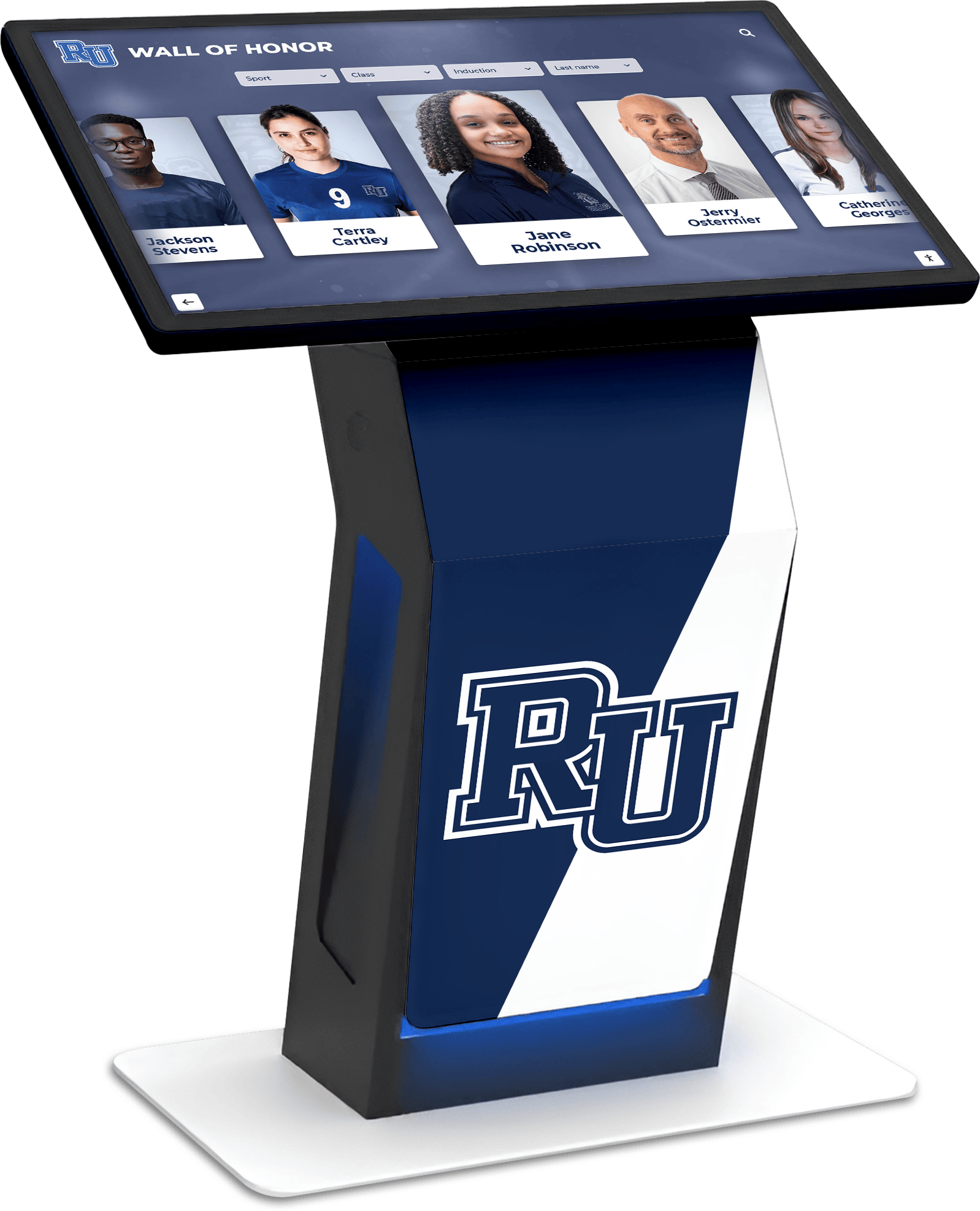
Modern recognition systems integrate touchscreen displays with comprehensive management platforms
Rich Multimedia Senior Profiles
Digital displays transform recognition from name listings into engaging stories:
Comprehensive Achievement Profiles Detailed information honoring seniors comprehensively:
- Professional-quality graduation photos and candid images
- Complete award listings with descriptions and context
- Four-year journey documentation showing progression
- Post-graduation pathways and college destinations
- Scholarship earnings and recognition totals
- Reflections or quotes about high school experiences
- Contact information enabling alumni connections
- Future updates documenting career and life achievements
Achievement Context and Storytelling Digital platforms enable rich narrative development:
- Photo galleries from award ceremonies and celebrations
- Video messages from award recipients
- Achievement metrics demonstrating impact and excellence
- Testimonials from teachers, coaches, or mentors
- Historical context about award significance and past recipients
- Connections between awards and specific accomplishments
- Documentation of challenges overcome on path to recognition
Interactive Timeline Features Chronological views showing achievement evolution:
- Four-year high school journey timelines
- Year-by-year achievement accumulation
- Milestone moments and breakthrough accomplishments
- Growth narratives showing development over time
- Connections between early achievements and senior recognition
- Visual representations of academic or athletic progression
Learn about comprehensive digital approaches in high school graduate displays.
Simple Cloud-Based Content Management
Modern systems eliminate administrative burden:
Intuitive Management Interfaces Purpose-built platforms designed for schools:
- No technical expertise required for updates and maintenance
- Template systems ensuring consistent formatting across profiles
- Bulk upload capabilities for adding entire graduating classes
- Automated import from student information systems
- Scheduled publishing for Awards Night coordination
- Role-based permissions for faculty, administrators, and staff
- Media libraries storing photos and videos centrally
Integration with Existing Systems Connections streamlining recognition workflows:
- Yearbook photo integration eliminating duplicate photography
- Student information system data import
- Digital signage network integration for extended reach
- Social media connections enabling sharing
- Mobile apps providing smartphone access
- Web portals making recognition accessible remotely
- Analytics tracking engagement and popular content
Schools report 80-90% reduction in time spent maintaining senior recognition after implementing digital platforms, with award documentation happening consistently even during end-of-year busy periods.
Extended Recognition Through Web Access
Digital platforms amplify impact beyond physical displays:
Online Recognition Portals Web-accessible content reaching global audiences:
- Alumni worldwide explore their senior awards remotely
- Prospective students research achievement culture during admissions
- Current underclassmen discover pathways to recognition
- Family members celebrate senior achievements from distance
- Community members understand institutional excellence standards
- Recruiters and employers verify graduate accomplishments
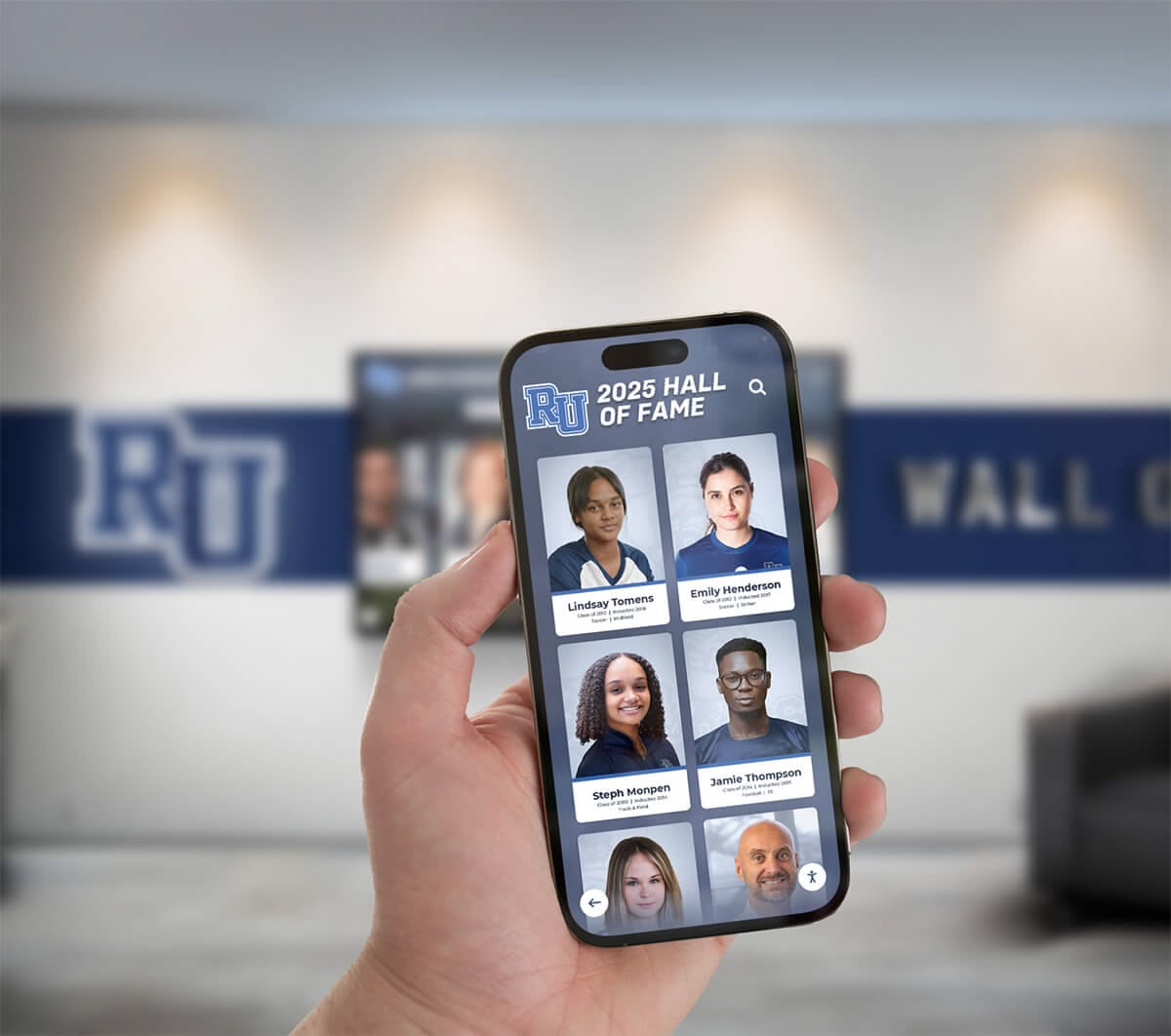
Mobile-optimized platforms enable recognition access anytime, anywhere
Social Media Integration Extending recognition through digital channels:
- Automated social media posts celebrating award recipients
- Shareable profiles enabling digital distribution
- Award announcement campaigns building excitement
- Virtual celebrations connecting distant family members
- Alumni network engagement through nostalgia
- College admissions support through verifiable achievement documentation
Discover extended recognition strategies in perfect attendance displays.
Creating Effective Senior Awards Recognition Programs
Comprehensive recognition requires systematic planning beyond display selection.
Award Category Development and Selection
Thoughtful award structure ensures comprehensive, equitable recognition:
Balancing Traditional and Innovative Awards Effective programs combine established recognition with contemporary categories:
- Maintain prestigious historical awards (valedictorian, citizenship, etc.)
- Add categories reflecting current student achievements and interests
- Create awards honoring non-traditional pathways and accomplishments
- Recognize diverse intelligence types and contribution forms
- Balance academic, athletic, arts, and character-based recognition
- Ensure awards exist for students across different achievement starting points
Establishing Clear, Transparent Criteria Award credibility requires well-defined standards:
- Objective qualification criteria where possible (GPA, test scores, statistics)
- Transparent selection processes for subjective awards
- Faculty committees providing multiple perspectives on recognition
- Student input on peer-nominated or voted awards
- Historical consistency maintaining award prestige over time
- Regular review ensuring criteria remain relevant and appropriate
Ensuring Equitable Recognition Opportunities Comprehensive programs provide multiple pathways to honor:
- Recognition categories spanning all departments and programs
- Awards acknowledging different starting points and growth trajectories
- Balance between achievement-based and effort-based recognition
- Opportunities for students with varied strengths and interests
- Cultural competence ensuring diverse students find recognition pathways
- Awareness of socioeconomic factors avoiding financial barriers to recognition
Learn about inclusive approaches in elementary school recognition boards.
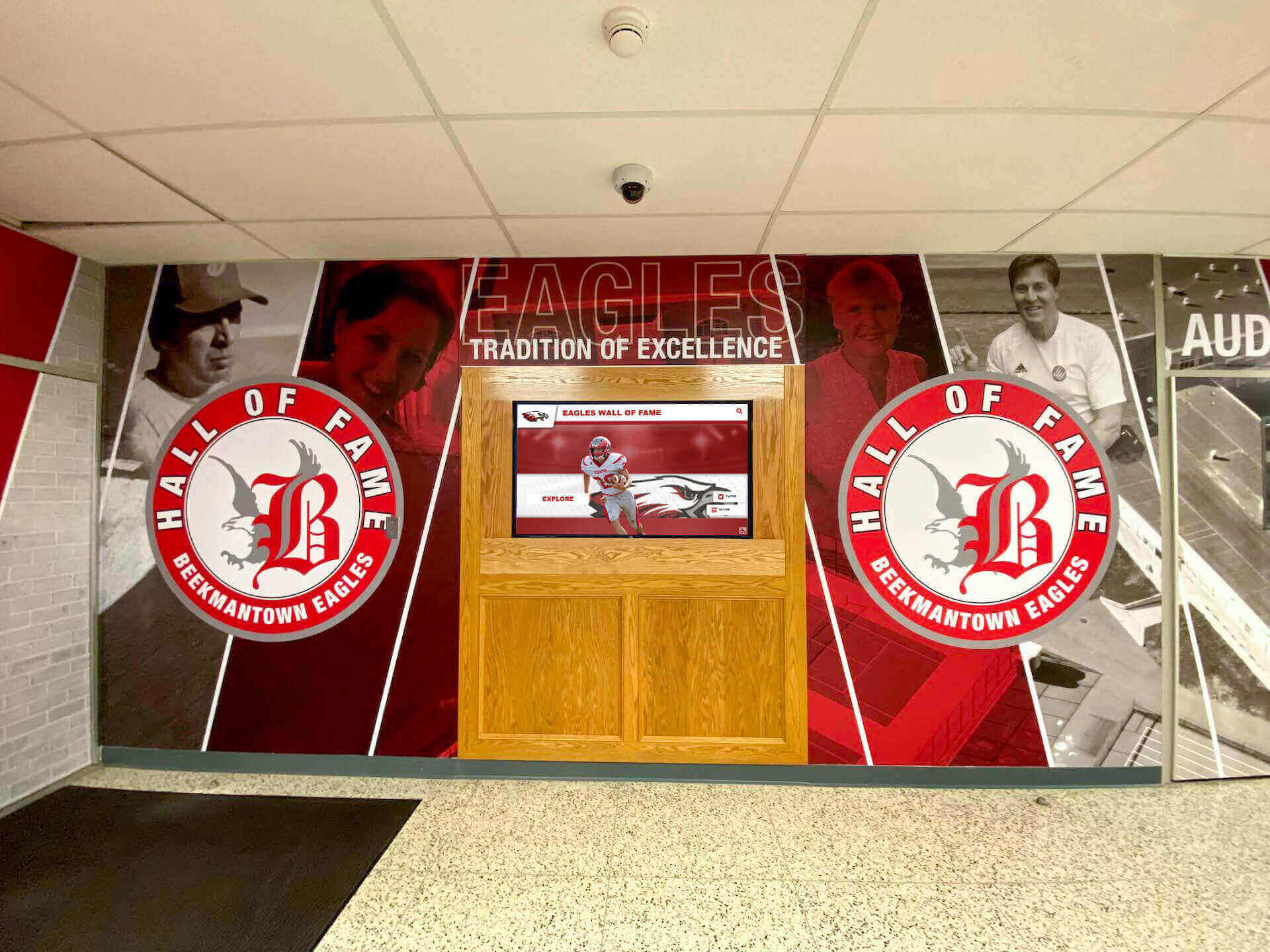
Strategic recognition placement in high-traffic areas maximizes visibility and inspiration
Nomination and Selection Process Design
Systematic processes ensure fairness and comprehensiveness:
Faculty Nomination Systems Teacher and coach identification of deserving students:
- Department-based nomination processes for subject awards
- Coach nominations for athletic recognition
- Activity advisor recommendations for co-curricular honors
- Cross-departmental nominations for holistic awards
- Staff input on citizenship and character recognition
- Support staff awareness of often-overlooked contributions
Committee-Based Selection Collaborative evaluation ensuring multiple perspectives:
- Faculty selection committees reviewing nominations
- Administrator participation providing institutional perspective
- Counselor input on student challenges and growth
- Alumni committee involvement for legacy awards
- Community partner participation for service recognition
- Documentation requirements ensuring evidence-based decisions
Student Input Mechanisms Peer perspective on recognition:
- Senior class voting on superlatives and peer awards
- Student government participation in selection processes
- Anonymous nomination opportunities for character awards
- Survey input on deserving classmates
- Senior reflections identifying underrecognized peers
Timeline and Communication Clear processes ensuring transparency:
- Published calendar with nomination deadlines
- Regular communication about award opportunities
- Notification timelines for recipients enabling ceremony planning
- Appeals or question processes for selection concerns
- Historical records documenting past recipients and criteria
Senior Awards Night Planning and Execution
Ceremony design creates memorable recognition experiences:
Event Structure and Flow Thoughtful organization ensuring smooth celebration:
- Logical award sequencing (academic, athletic, special recognition)
- Appropriate time allocation preventing excessive length
- Student recognition moments on stage with brief descriptions
- Photo opportunities for families capturing memories
- Musical or performance interludes providing variety
- Senior speeches or reflections creating emotional connection
- Faculty or administrator messages celebrating class achievements
Venue and Logistics Practical considerations ensuring successful events:
- Auditorium or gymnasium space accommodating families
- Stage setup enabling dignified presentation
- Audio-visual systems for names, photos, and videos
- Photography and videography documenting ceremony
- Reception space for post-ceremony celebration
- Parking and accessibility accommodations
- Program booklets documenting all awards
Family and Community Engagement Inclusive approaches maximizing participation:
- Multiple notification methods ensuring family awareness
- Streaming options for distant family members
- Translation services for multilingual families
- Sibling-friendly approaches recognizing attention limitations
- Alumni invitations connecting past and present
- Community partner participation celebrating local support
- Press coverage extending recognition beyond school community
Explore event approaches in high school graduation displays.
Implementing Senior Awards Display Systems
Strategic planning ensures sustainable recognition programs.
Planning Phase Requirements
Needs Assessment and Goal Setting Begin with clear understanding:
- Evaluate current senior awards recognition practices and gaps
- Survey stakeholders about recognition priorities and preferences
- Analyze award distribution ensuring equitable opportunities
- Review budget availability and resource allocation
- Identify appropriate physical spaces for recognition displays
- Establish measurable goals for recognition program impact
Historical Data Compilation Gather comprehensive award information:
- Research senior award recipients from past years
- Compile award categories and criteria evolution
- Collect ceremony programs and documentation
- Gather photographs of past recipients when available
- Interview long-time faculty about recognition traditions
- Verify accuracy of historical records through multiple sources
Technology and Format Selection Choose approaches matching institutional needs:
- Decide between traditional, digital, or hybrid recognition
- Evaluate display placement options and visibility
- Consider solutions like Rocket Alumni Solutions for comprehensive digital platforms
- Plan content management responsibilities and training
- Budget for initial implementation and ongoing maintenance
- Ensure accessibility for all community members
Learn about planning approaches in digital recognition implementation.
Content Development and Launch
Profile and Content Creation Develop comprehensive recognition materials:
- Gather senior photos from yearbook or photography sessions
- Write detailed achievement descriptions for each award
- Document award criteria and selection processes
- Collect recipient reflections or quotes when possible
- Develop consistent formatting and presentation standards
- Create templates for efficient annual additions
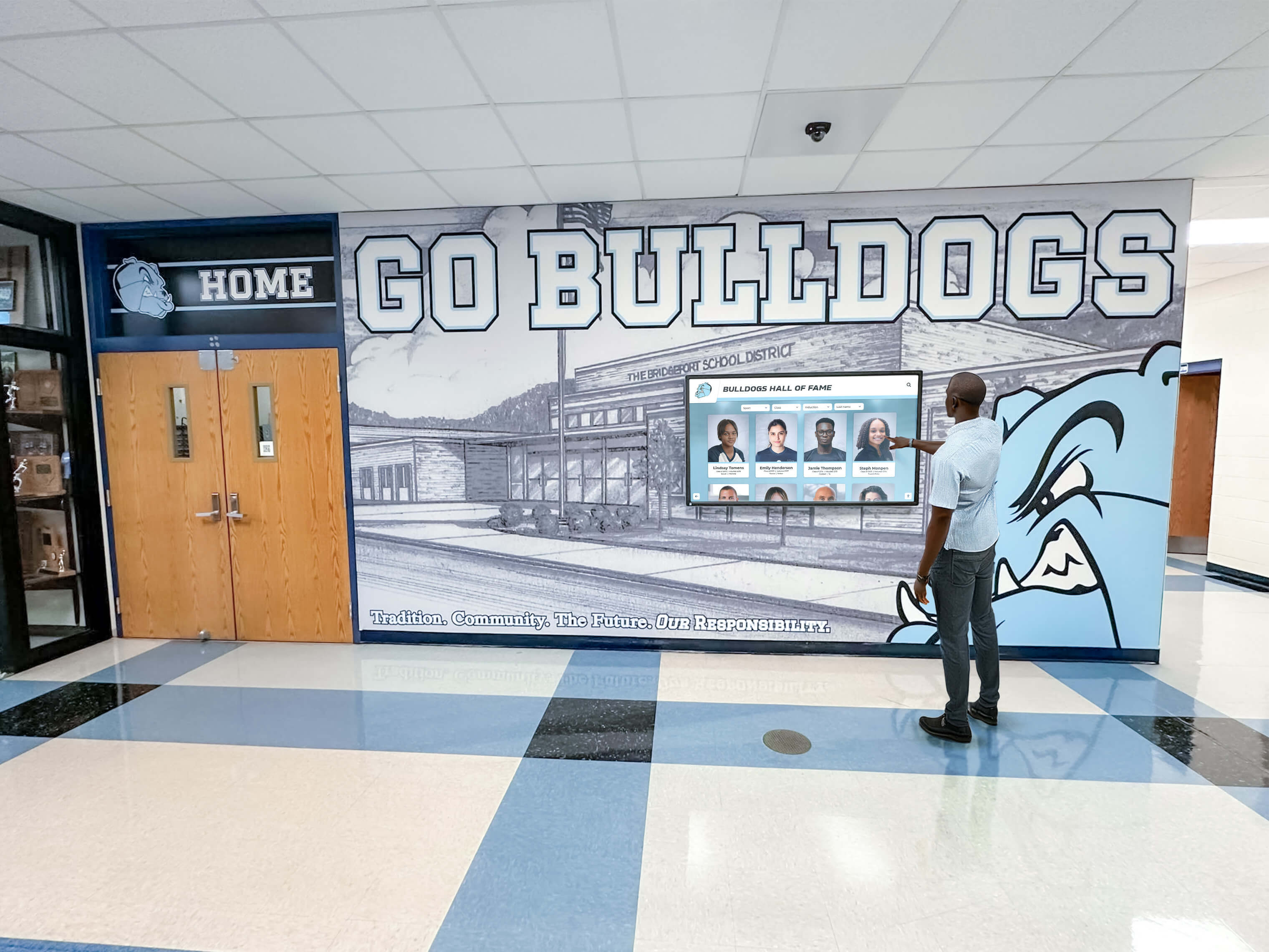
User-friendly interfaces encourage exploration and engagement with achievement stories
Launch Strategy and Promotion Generate excitement around recognition:
- Coordinate unveiling with Senior Awards Night or graduation
- Invite alumni award recipients for launch celebration
- Generate publicity through school communications channels
- Create orientation sessions teaching navigation and exploration
- Collect feedback from initial user experiences
- Celebrate implementation team and contributors
Integration with School Culture Connect recognition to institutional mission:
- Link displays to college and career readiness programming
- Incorporate recognition exploration into underclassmen orientation
- Use displays in guidance counseling for goal-setting
- Feature recognition in admissions tours for prospective families
- Create research assignments exploring achievement histories
- Build recognition awareness throughout school year
Maintaining Senior Awards Recognition Programs
Sustainable recognition requires ongoing management and continuous improvement.
Annual Update Protocols
End-of-Year Documentation Systematic processes capturing current year:
- Document all senior award recipients immediately after Awards Night
- Gather high-quality photos of recipients
- Collect achievement descriptions and accomplishments
- Archive ceremony programs and materials
- Update any criteria or selection process changes
- Preserve ceremony recordings or photography
Summer Preparation Ready displays for returning students:
- Update digital or physical displays with current year recipients
- Review entire recognition system for accuracy and completeness
- Plan publicity for recognition program at year start
- Train new staff members on content management
- Budget for upcoming year’s recognition needs
- Refresh displays ensuring attractive presentation
Discover maintenance approaches in digital trophy case management.
Multi-Year Sustainability Strategies
Responsibility Assignment Clear accountability ensuring continuity:
- Designate administrators or counselors overseeing recognition program
- Establish faculty committee supporting annual awards process
- Create succession documentation for staff transitions
- Develop backup systems ensuring continuity during absences
- Include recognition responsibilities in position descriptions
- Budget annually for recognition program maintenance
Assessment and Continuous Improvement Regular evaluation driving enhancement:
- Gather feedback from students about recognition effectiveness
- Track engagement with digital displays through analytics
- Monitor award distribution ensuring equity across student populations
- Evaluate recognition impact on underclassmen motivation
- Survey families about ceremony and display satisfaction
- Adjust approaches based on assessment findings
Alumni Connection Through Recognition Recognition systems create ongoing engagement opportunities:
- Alumni profile updates documenting post-graduation achievements
- Reunion events featuring historical award displays
- Mentorship programs connecting past and present achievers
- Career panels featuring distinguished award recipients
- Fundraising initiatives supporting award endowments
- Alumni networking through searchable databases
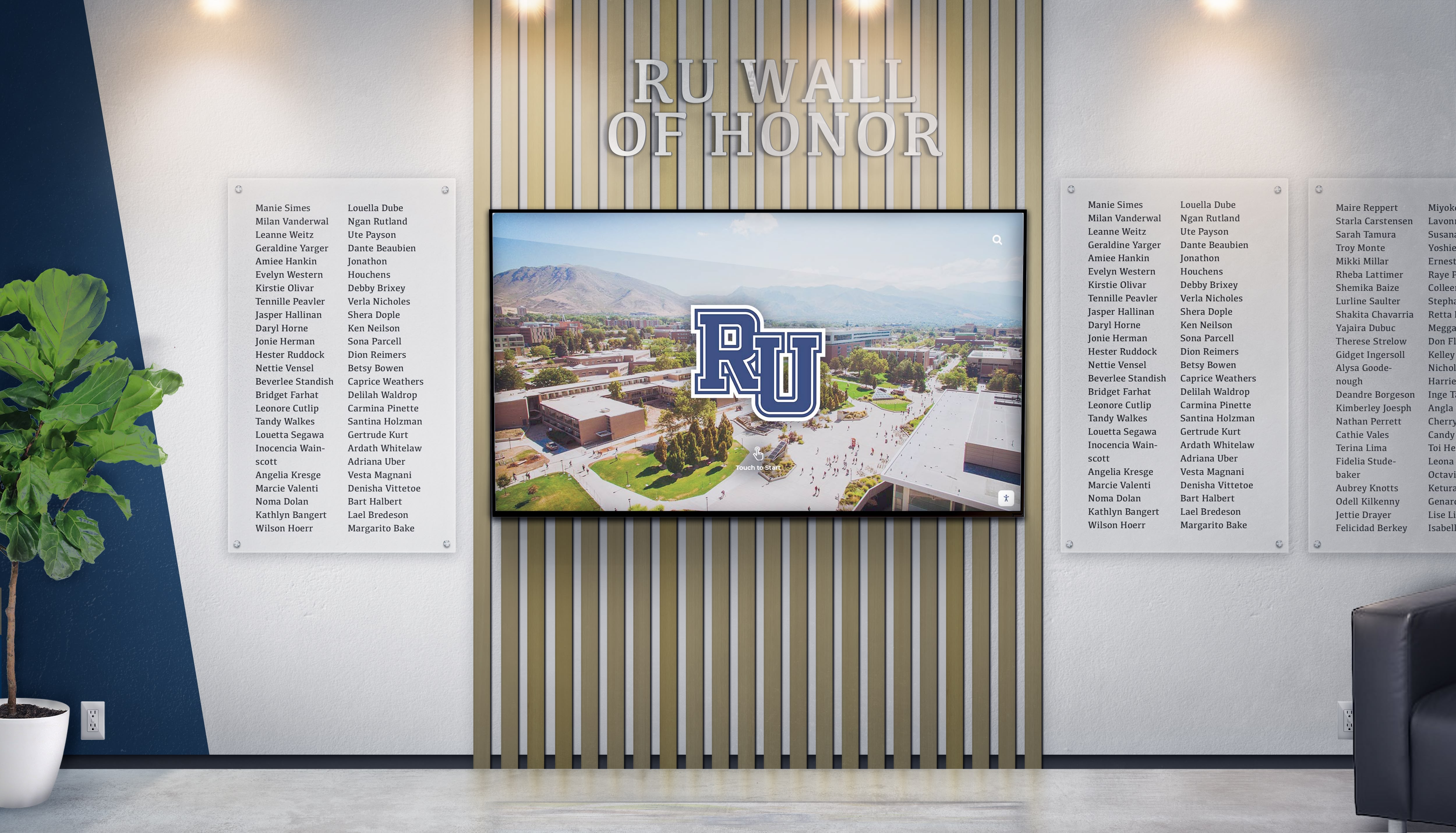
Integrated recognition systems combine digital displays with traditional elements for comprehensive celebration
Connecting Senior Awards to Underclassmen Motivation
Effective recognition inspires younger students toward similar achievement.
Creating Aspirational Recognition
Visibility and Accessibility Recognition must be seen to inspire:
- Strategic placement in high-traffic areas (main entrance, cafeteria, library)
- Digital displays in locations students pass daily
- Web access enabling home exploration
- Mobile apps for convenient viewing
- Social media presence building awareness
- Orientation sessions introducing recognition to new students
Pathway Clarity Students need understanding of how to achieve recognition:
- Clear criteria documentation for all awards
- Multi-year planning guides showing achievement pathways
- Academic recognition programs identifying qualification requirements
- Faculty advisor guidance on pursuit strategies
- Peer mentorship from past recipients
- Grade-specific goal-setting using senior awards as targets
Diverse Representation Recognition showcasing varied achievement pathways:
- Awards spanning all student interest and talent areas
- Recognition of different starting points and growth trajectories
- Celebration of unique contributions and specialized achievements
- Balance ensuring all students see potential pathways
- Cultural diversity representation demonstrating inclusive excellence
- Non-traditional achievement validation
Using Recognition in Goal-Setting and Planning
Freshman Orientation Integration Early exposure building awareness:
- Senior awards display tours during orientation
- Achievement pathway planning sessions
- Four-year academic planning incorporating recognition goals
- Activity fair connections to future recognition opportunities
- Mentorship programs linking freshmen with senior award recipients
Annual Goal-Setting Incorporation Recognition as planning framework:
- Counseling sessions identifying relevant awards and pathways
- Parent conferences discussing recognition opportunities
- Student portfolio development tracking progress
- Grade-level assemblies celebrating recent recipients
- Recognition ceremonies inviting underclassmen as inspiration
Success Story Sharing Humanizing achievement through narratives:
- Senior recipient presentations to underclassmen
- Video profiles showing achievement journeys
- Podcast or interview series with award recipients
- Writing assignments exploring paths to recognition
- Social media campaigns featuring recipient stories
Learn about motivational recognition in student recognition increasing future success.
Special Considerations for Senior Awards Displays
Unique factors require particular attention in senior recognition design.
Balancing Prestige and Inclusivity
Maintaining Award Significance Recognition must remain meaningful:
- Clear distinction between different award levels
- Criteria preventing recognition inflation
- Historical consistency preserving award prestige
- Selective recognition maintaining aspiration value
- Balance between achievability and distinction
Ensuring Comprehensive Opportunity Multiple pathways to recognition:
- Sufficient award categories providing diverse pathways
- Recognition of varied starting points and growth
- Awards honoring different achievement types equally
- Opportunities spanning all grade levels of achievement
- Elimination of financial barriers to recognition eligibility
Creating Tiered Recognition Multiple levels ensuring appropriate acknowledgment:
- Pinnacle awards for extraordinary achievement
- Departmental or area-specific recognition
- Improvement and growth acknowledgment
- Participation and effort recognition
- Special circumstance or unique contribution awards
Privacy and Consent Considerations
Photo and Information Permission Appropriate consent processes:
- Parent permission for minor student information display
- Senior consent for photo and achievement publication
- Privacy protections for sensitive information
- Opt-out mechanisms for students or families declining recognition
- FERPA compliance in information display
- Ongoing permission for long-term display and web access
Sensitive Achievement Context Thoughtful handling of personal information:
- Avoid detailed disclosure of personal challenges
- Respect privacy around family circumstances
- Obtain permission before sharing personal narratives
- Balance recognition with dignity and discretion
- Consider future implications of shared information
Historical Accuracy and Record-Keeping
Verification and Documentation Ensuring recognition accuracy:
- Multiple source verification for historical information
- Documentation of award criteria and recipients
- Archive preservation of ceremony programs and records
- Correction processes for identified errors
- Staff continuity supporting institutional memory
- Digital backups of all recognition information
Managing Legacy and Tradition Honoring history while allowing evolution:
- Respect for long-standing award traditions
- Thoughtful approach to retiring or modifying awards
- Documentation of award history and significance
- Balance between tradition and contemporary relevance
- Alumni consultation on historical award changes
Explore historical preservation in school history recognition.
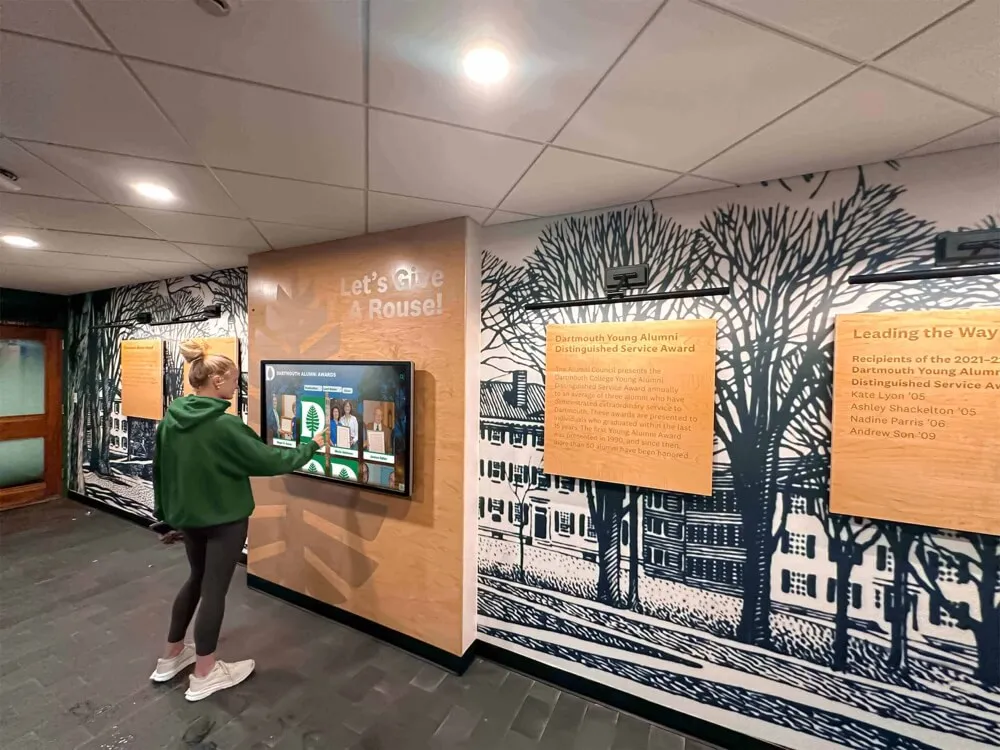
Engaging recognition experiences create lasting impressions and motivate excellence pursuit
Conclusion: Celebrating Senior Achievement and Inspiring Future Excellence
Senior class awards displays represent culminating celebrations honoring graduating students who have distinguished themselves through academic excellence, athletic achievement, artistic expression, leadership service, and character demonstration. These recognition systems do far more than acknowledge individual accomplishment—they validate years of effort, celebrate diverse pathways to distinction, inspire underclassmen toward similar excellence, and document institutional achievement standards.
The strategies explored in this guide provide comprehensive frameworks for building senior award recognition systems that honor deserving students while remaining sustainable, equitable, and aligned with educational goals. From traditional trophy cases and yearbook pages to modern digital platforms like Rocket Alumni Solutions offering unlimited capacity and interactive exploration, multiple options exist matching different resources and institutional priorities.
Transform Your Senior Awards Recognition Program
Discover how modern digital recognition solutions can help you celebrate every senior achievement, preserve graduating class legacies, and inspire underclassmen toward excellence through engaging displays.
Explore Recognition SolutionsBuilding effective senior awards recognition requires moving beyond limiting space constraints and accessibility barriers inherent in traditional approaches. Digital platforms make comprehensive recognition achievable across unlimited students and award categories, while web access extends celebration beyond physical campus to families and communities worldwide. Systematic annual processes ensure consistent documentation even during end-of-year chaos, while intuitive content management eliminates technical barriers to maintenance.
Start where you are with recognition approaches you can implement immediately—perhaps enhancing your Awards Night ceremony or dedicating display space to senior achievements. Then systematically expand toward comprehensive digital systems ensuring every deserving senior receives lasting acknowledgment while inspiring underclassmen throughout their high school journey.
Your graduating seniors’ achievements deserve celebration equal to the effort invested earning distinction. With thoughtful planning, appropriate technology like digital recognition displays, and consistent implementation, you can create recognition systems that honor every award recipient while building motivating culture where pursuing excellence receives acknowledgment worthy of the journey.
Ready to begin? Explore comprehensive recognition approaches in National Honor Society displays or learn more about creating cultures celebrating diverse achievement through systematic programs honoring all dimensions of student excellence—including the extraordinary accomplishments your graduating seniors demonstrate each year.































