Championship seasons represent the pinnacle of athletic achievement—the culmination of countless hours of practice, unwavering dedication, strategic coaching, and exceptional teamwork. When teams win conference titles, state championships, or national tournaments, they create moments that define school pride and inspire future generations of athletes. Yet all too often, these remarkable achievements fade from institutional memory within years, relegated to dusty trophy cases or forgotten in storage rooms.
Showcasing championship teams effectively requires more than simply displaying trophies or hanging banners. Modern recognition solutions enable schools and athletic programs to preserve complete championship stories—documenting not just the victories, but the players who achieved them, the coaches who guided them, the memorable moments that defined seasons, and the lasting impact these teams created. This comprehensive guide explores how institutions can celebrate championship excellence while building athletic legacies that inspire for generations to come.
Championship teams deserve recognition that matches the significance of their achievements. Whether celebrating state football champions, conference-winning basketball teams, national championship soccer squads, or any other athletic triumph, the way schools honor these accomplishments shapes program culture, influences recruit attraction, and determines whether championship memories endure or disappear.

Effective championship recognition preserves team achievements while inspiring current and future athletes
Why Properly Showcasing Championship Teams Matters
Championship recognition serves purposes far beyond simply honoring past achievements. Well-designed displays create tangible benefits across multiple dimensions that strengthen athletic programs and school communities.
Inspiring Current and Future Athletes
When young athletes see comprehensive displays documenting championship teams from their school, abstract goals become concrete possibilities. A freshman basketball player viewing detailed information about the 2015 state champion team—complete with player profiles, season statistics, memorable game highlights, and championship journey documentation—understands that winning at the highest level represents an achievable goal rather than an impossible dream.
Championship displays provide motivation during difficult practices and challenging seasons. Athletes facing adversity can draw inspiration from learning how previous championship teams overcame obstacles, rallied from deficits, or persevered through injuries to achieve ultimate success. These stories of resilience become powerful teaching tools that coaches reference when building mental toughness and team culture.
Solutions like digital record boards enable schools to showcase not just championship seasons, but the statistical progressions and individual performances that contributed to team success, providing specific benchmarks for aspiring athletes.
Strengthening School Pride and Community Identity
Championship teams create shared experiences that unite entire school communities. Decades after victories, alumni gather to reminisce about championship seasons they witnessed or participated in. These shared memories strengthen bonds between individuals who might otherwise have little in common beyond their institutional affiliation.
Visible championship recognition reinforces community identity and collective pride. When visitors enter athletic facilities and immediately encounter displays celebrating program excellence, they understand they’re stepping into a place where winning matters and excellence has been achieved. This tangible evidence of success shapes perception and enhances reputation far more effectively than abstract claims about program quality.
For communities where school athletics serve as primary social focal points, championship recognition takes on additional significance. Local businesses display team colors, residents attend games in large numbers, and championship success becomes a source of town-wide pride that strengthens social cohesion and community identity.

Championship teams create lasting memories that strengthen community bonds and school pride
Supporting Athletic Recruiting and Program Development
Prospective athletes and their families evaluate programs based on multiple factors—coaching quality, facility standards, competitive level, and demonstrated success. Comprehensive championship displays provide tangible evidence that programs develop winning teams, creating powerful recruiting advantages over competitors lacking similar recognition.
During campus tours and recruiting visits, championship displays become silent salespeople showcasing program excellence. Recruits can explore specific championship teams, review rosters to see players from similar positions or backgrounds, and visualize themselves contributing to future championship runs. This concrete evidence supports recruiting pitches far more effectively than coaches’ promises about program potential.
Athletic recruiting recognition displays serve dual purposes—honoring past achievements while demonstrating to prospective athletes that joining the program offers realistic championship opportunities backed by historical precedent rather than empty promises.
Honoring Coaches and Building Coaching Legacy
Championship teams succeed through exceptional coaching—strategic game planning, effective practice organization, talent development, and team culture building. Comprehensive championship recognition appropriately acknowledges coaching contributions alongside player achievements, creating coaching legacies that extend beyond career records.
When coaches retire or move to other positions, championship displays ensure their contributions receive permanent recognition. Future generations understand that sustained program success builds upon foundations established by previous coaching staffs who developed winning traditions and championship cultures.

Comprehensive recognition preserves coaching legacies alongside player achievements
Preserving Institutional History and Athletic Heritage
Championship teams represent defining moments in institutional history. Decades from now, historians, alumni, and community members will seek information about these significant achievements. Proper documentation and display ensure accurate historical records survive for future generations.
Athletic traditions build cumulatively over time. Current championship teams add to legacies established by previous champions, creating narrative threads connecting past excellence to present success. Comprehensive recognition displays make these historical connections visible, helping athletes understand their place within broader program histories.
Traditional Championship Recognition: Benefits and Limitations
Understanding conventional approaches to showcasing championship teams helps institutions appreciate both their enduring value and inherent constraints.
Time-Honored Recognition Methods
Traditional championship recognition typically includes several familiar elements:
Championship Banners:
Hanging fabric banners displaying sport, year, and achievement type (conference champions, district champions, state champions) represent the most common recognition form. Banners provide immediate visual impact in gymnasiums and athletic facilities, clearly communicating program success to visitors.
However, banners offer minimal information beyond basic facts. Viewers learn that a championship occurred but discover nothing about the team members, season highlights, statistical achievements, or memorable moments that defined the championship run. This limited storytelling capacity restricts engagement and historical documentation.
Trophy Cases:
Glass display cases showcasing physical trophies, plaques, and awards provide tangible evidence of championship success. Trophy cases create focal points in athletic facilities while preserving physical artifacts from championship seasons.
Space limitations severely constrain trophy case capacity. As programs accumulate championships across multiple sports and seasons, decisions about which trophies to display become increasingly difficult. Older championships often get removed to accommodate recent achievements, effectively erasing historical accomplishments from visible institutional memory. Additionally, trophy cases provide minimal context about the teams that won these awards.
Team Photos:
Championship team photographs hung on walls document who participated in successful seasons. These images provide visual records preserving faces that might otherwise be forgotten over time.
Similar to banners, photos offer limited information. Visitors see team members but learn nothing about individual contributions, season narratives, standout performances, or defining moments. Without accompanying documentation, photos become anonymous faces rather than meaningful tributes to specific achievements and individual athletes.

Traditional recognition methods provide limited information and struggle with capacity constraints
Record Boards:
Wall-mounted boards listing team records and individual statistical achievements provide objective performance documentation. Record boards create competitive motivation by establishing clear benchmarks for future athletes to pursue.
Static record boards require physical modification for updates, creating delays when records fall and often resulting in outdated information displayed for extended periods. Manual updating processes prove labor-intensive, and space limitations restrict how many records can be documented.
The Space and Capacity Challenge
Perhaps the most significant limitation affecting traditional championship recognition involves finite physical space. Every school has limited wall space, restricted trophy case capacity, and finite ceiling height for hanging banners. As athletic programs continue achieving championships across multiple sports and seasons, difficult decisions about what to display versus what to remove become inevitable.
This zero-sum dynamic forces institutions to effectively erase older championships from public view to accommodate recent achievements. A state championship from 1985 may deserve equal recognition to one from 2022, but space constraints often dictate that older accomplishments disappear from displays despite their historical significance and meaning to alumni who participated.
Modern Digital Recognition: Transforming Championship Displays
Digital technology has revolutionized how schools can showcase championship teams, addressing traditional limitations while creating enhanced engagement opportunities impossible with conventional approaches.
Unlimited Recognition Capacity
Digital trophy displays eliminate space constraints entirely. A single touchscreen can showcase every championship in program history across all sports—from the founding season through the present—without requiring difficult decisions about what to display versus what to remove.
This unlimited capacity ensures comprehensive institutional memory. Every championship team receives appropriate recognition regardless of when achievements occurred. Alumni visiting decades after graduation discover their championship seasons documented with the same prominence as recent teams, validating their contributions and maintaining historical connections.
The absence of per-championship costs makes comprehensive recognition financially sustainable. Traditional approaches incur expenses for each banner hung, trophy case expanded, or plaque fabricated. Digital systems accommodate unlimited championships without additional hardware costs, making complete historical documentation economically feasible.
Rich Multimedia Storytelling
Digital platforms enable compelling championship narratives incorporating multiple content types:
Video Highlights:
Game footage brings championship moments to life in ways static images cannot match. Viewers experience buzzer-beating shots, game-winning touchdowns, championship-clinching plays, and emotional celebrations that defined championship runs. Video transforms abstract championship achievements into visceral experiences that generate emotional connections and enhance engagement.
Player Profiles:
Comprehensive individual profiles document each team member’s contributions—statistical achievements, memorable performances, leadership roles, personal backgrounds, and post-championship careers. These detailed profiles ensure every player receives appropriate recognition rather than limiting acknowledgment to team captains or standout stars.
Season Narratives:
Complete season documentation provides context explaining how championships were achieved. Viewers explore game-by-game results, playoff progressions, key turning points, obstacle overcome, coaching strategies employed, and defining moments that shaped championship journeys. This narrative depth transforms championship recognition from simple fact statements into compelling stories that engage audiences.

Digital displays enable rich multimedia storytelling impossible with traditional recognition
Photo Galleries:
Multiple images from championship seasons—action shots, celebration photos, practice images, team gatherings—create visual narratives documenting entire championship experiences rather than relying on single team photos.
Statistical Depth:
Detailed statistics provide objective performance documentation. Viewers explore team and individual statistics, compare championship team performance across different eras, and understand the specific achievements that enabled championship success.
Interactive Exploration and Discovery
Modern touchscreen interfaces transform passive viewing into active exploration:
Powerful Search Capabilities:
Visitors instantly locate specific teams, players, years, or sports through intuitive search functions. Alumni can quickly find their championship teams without scanning through decades of information. Students researching program history efficiently access relevant content without manually browsing extensive archives.
Advanced Filtering:
Users filter championships by sport, year range, achievement level (conference, district, regional, state, national), or other criteria to focus on personally relevant content. This personalization capability ensures diverse audiences find meaningful information regardless of specific interests.
Cross-Referencing and Connections:
Digital systems can link related content—connecting players who participated in multiple championship teams, showing coaches who guided different championship squads, highlighting family legacies of championship participation, or displaying statistical comparisons across championship eras. These connections create rich discovery experiences encouraging extended engagement.
Solutions like interactive halls of fame provide intuitive interfaces that make complex information archives easily navigable for all ages and technical skill levels.
Real-Time Updates and Living History
Cloud-based content management enables immediate recognition updates:
Schools can add championship teams to displays within days of victories while excitement remains high. Season statistics, roster information, championship game highlights, and celebration photos integrate seamlessly without requiring vendor involvement or physical modifications.
Championship displays become living histories rather than static snapshots. As alumni achieve post-athletic career success, championships win additional accolades, or historical research uncovers previously unknown information, displays can be updated to reflect new knowledge—ensuring championship recognition remains current and accurate over time.
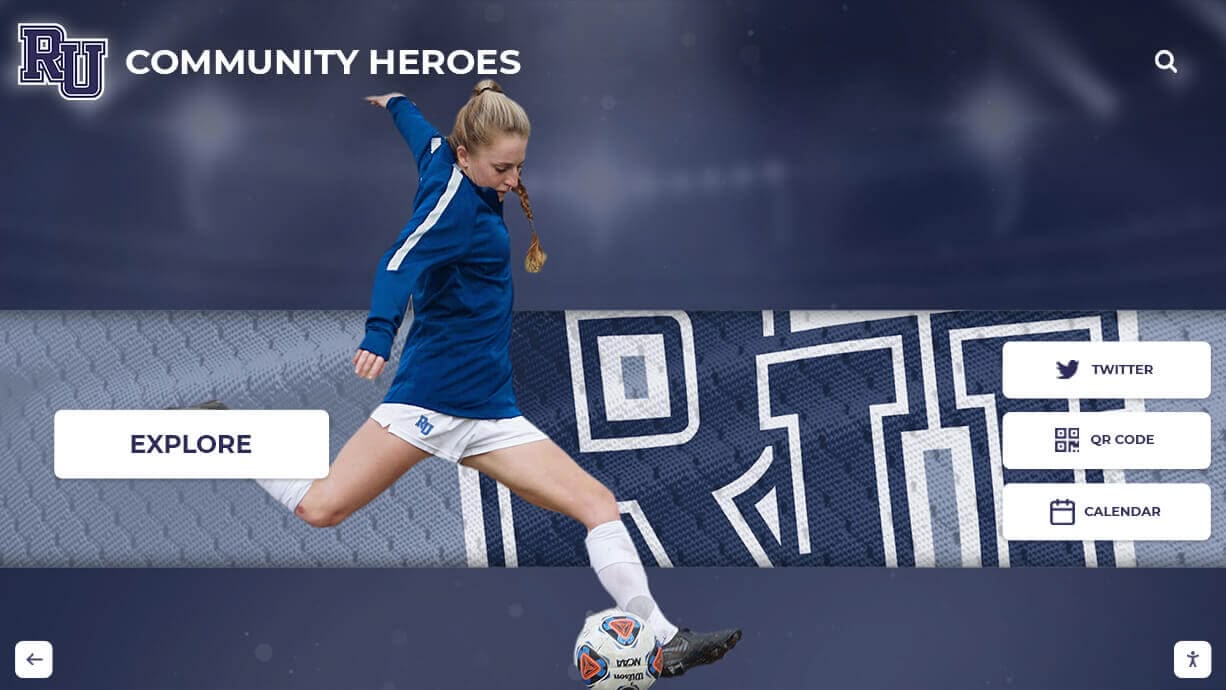
Intuitive content management systems enable staff to update championship recognition independently
Web Accessibility and Expanded Reach
Digital championship recognition extends far beyond physical campus boundaries through web accessibility. Alumni living anywhere in the world can explore championship displays through online platforms, maintaining connections to athletic achievements and reliving memories of championship participation.
This global accessibility proves particularly valuable during reunions and milestone anniversaries. Alumni planning reunion attendance can research their championship seasons online before arriving, stimulating memories and creating conversation topics. Social sharing capabilities enable alumni to share championship content with family members, teammates, and friends who may not have easy campus access.
Online halls of fame create year-round engagement opportunities rather than limiting championship recognition to those physically visiting athletic facilities.
Essential Content for Championship Team Displays
Effective championship recognition requires systematic content development across multiple categories ensuring comprehensive documentation.
Team-Level Championship Information
Core team documentation provides foundational championship details:
Basic Championship Facts:
- Sport and specific division/classification
- Year and season dates
- Championship type and level (conference, district, regional, state, national)
- Final record and tournament results
- Head coach and assistant coaching staff
- School administrators and athletic directors
Season Overview:
- Complete game schedule and results
- Playoff bracket progression and scores
- Regular season highlights and turning points
- Team statistics and performance metrics
- Rankings throughout season
- Notable achievements and milestones
Championship Game/Tournament Documentation:
- Opponent information and scouting reports
- Game statistics and standout performances
- Play-by-play highlights of crucial moments
- Post-game reactions and celebrations
- Media coverage and external recognition
- Championship ceremony and trophy presentation
Individual Player Recognition
Comprehensive player documentation ensures every team member receives appropriate acknowledgment:
Player Profile Elements:
- Full name and jersey number
- Position(s) and physical details
- Class year and academic information
- Individual season and career statistics
- Memorable performances and achievements
- Awards and honors received
- Contributions to championship success
- Personal quotes or reflections
- Action photos and portraits
- Post-championship career updates

Detailed player profiles honor every team member's contributions to championship success
Including every player—starters and reserves, stars and role players, seniors and underclassmen—creates inclusive recognition demonstrating that championships require complete team efforts. Role players and bench contributors deserve acknowledgment for their practice effort, scout team work, and support that enabled championship success even if they didn’t receive extensive playing time.
Coaching and Staff Recognition
Championship teams succeed through exceptional leadership and support:
Coaching Documentation:
- Head coach biographical information and coaching philosophy
- Career record and championship history
- Assistant coaches and specialized staff (strength coaches, athletic trainers)
- Coaching strategies and system employed
- Player development approaches
- Quotes about championship season
- Photos of coaching staff
- Post-championship career trajectories
Support Staff Acknowledgment:
- Athletic administrators enabling program success
- Athletic trainers ensuring player health
- Equipment managers supporting team preparation
- Volunteer coaches and assistants
- Booster club leadership and contributors
- Academic support staff
- Any individuals contributing to championship achievement
Comprehensive recognition demonstrates appreciation for everyone contributing to championship success beyond just players who competed.
Contextual and Historical Information
Championship achievements gain additional meaning through appropriate context:
Historical Significance:
- Program championship history and frequency
- Comparison to previous championship teams
- Records set or milestones achieved
- Place within school athletic history
- Notable alumni or coaching connections
- Rivalry context and significance
- Community impact and celebration
Era Documentation:
- Athletic facility and equipment used
- Team traditions and culture
- School enrollment and demographics
- Competitive landscape and opponents
- Rule differences from current standards
- Media coverage and documentation available
- Cultural and social context
This contextual information helps future generations understand not just that championships occurred, but what they meant within specific historical moments and how programs evolved over time.
Strategic Placement and Display Design
Where and how championship recognition appears significantly affects visibility, engagement, and impact.
Optimal Location Selection
Primary Athletic Facilities:
Championship displays belong in main gymnasiums, field houses, or athletic centers where athletes train, compete, and congregate. These high-traffic locations ensure maximum visibility among target audiences—current athletes who need inspiration, prospective recruits evaluating programs, alumni attending events, and community members supporting teams.
Consider placing displays in specific locations within athletic facilities:
- Main entrance areas capturing immediate attention upon arrival
- Lobby spaces where people gather before and after events
- Team areas where athletes pass daily during practice and competitions
- Hallways connecting different facility sections
- Weight rooms and training facilities where athletes spend significant time
School-Wide Visibility:
Beyond athletic facilities, championship recognition in main school entrances or administration areas demonstrates that athletic excellence represents institutional priorities and sources of community pride. This prominent placement communicates to all students—not just athletes—that their school values and celebrates championship achievement.
Strategic Multi-Location Display:
Larger schools may benefit from distributed championship recognition—sport-specific displays in relevant facilities (football championships in stadium, basketball in gymnasium) combined with comprehensive multi-sport displays in central locations. This distributed approach provides both specialized recognition for specific programs and holistic celebration of overall athletic excellence.

Strategic placement in high-traffic locations maximizes championship recognition visibility and impact
Design Principles for Maximum Impact
Effective championship displays balance comprehensive information with engaging presentation:
Visual Hierarchy:
Organize content to guide viewer attention logically:
- Prominent championship identification (sport, year, level)
- Team photos providing immediate visual connection
- Statistical highlights and key achievements
- Detailed information accessible through interaction
- Supporting context and historical information
Intuitive Navigation:
Digital displays should feature straightforward navigation enabling visitors of all ages and technical abilities to explore content easily. Clear categorization by sport, decade, or championship level helps users find relevant information quickly. Browse-by-year timelines provide chronological exploration, while search functionality enables specific team or player discovery.
Engaging Multimedia Integration:
Balance different content types preventing text-heavy presentations:
- Action photography capturing athletic competition
- Video highlights showcasing memorable moments
- Statistical graphics visualizing performance data
- Interview clips featuring coach and player perspectives
- Historical documents and news coverage
Consistent Branding:
Championship displays should incorporate school colors, logos, and visual identity creating cohesive institutional brand experiences. Custom design templates ensure consistent presentation across different championship teams while allowing appropriate flexibility for sport-specific customization.
Resources about sports hall of fame design provide additional guidance on creating visually compelling championship recognition.
Implementation Strategies and Best Practices
Successfully showcasing championship teams requires systematic approaches addressing content development, technology selection, and ongoing maintenance.
Comprehensive Content Development
Historical Research:
Building complete championship archives demands dedicated research effort:
- Review yearbooks, media guides, and program records
- Search local newspaper archives for game coverage
- Interview coaches, players, and administrators with institutional memory
- Contact alumni associations for historical information
- Digitize historical photos, documents, and artifacts
- Verify statistics and factual accuracy through multiple sources
For schools with long athletic traditions, comprehensive historical documentation may span decades of championship teams. Digitizing yearbooks and historical records preserves institutional memory while providing raw materials for championship recognition content.
Systematic Current Documentation:
Establish processes ensuring future championships receive complete documentation from the start:
- Assign staff responsibility for championship documentation
- Create standard information collection forms for coaches
- Implement photography and videography workflows
- Archive game statistics and performance data
- Collect player biographical information and quotes
- Document season narratives and defining moments
- Gather media coverage and external recognition
Proactive documentation proves far more efficient than attempting to reconstruct championship details years later when memories fade and materials disappear.
Phased Implementation:
Rather than attempting to document every championship across all sports and decades simultaneously, phase implementation strategically:
- Phase One: Most recent championships (past 5-10 years) with readily available information
- Phase Two: Historically significant championships (state/national titles, undefeated seasons, record-breaking teams)
- Phase Three: Remaining modern-era championships (past 20-30 years)
- Phase Four: Historical championships requiring extensive research
- Phase Five: Ongoing additions as new championships occur
This phased approach delivers immediate value while building toward comprehensive archives over time without overwhelming available resources.

Systematic content development transforms scattered historical records into comprehensive championship archives
Technology Platform Selection
Choosing appropriate technology platforms significantly impacts long-term success and sustainability:
Hardware Considerations:
- Display size: 55-75 inch screens typical for most applications, with larger screens for more distant viewing
- Touchscreen capability: Interactive features versus passive digital signage
- Commercial-grade quality: Consumer displays inadequate for continuous operation in high-traffic environments
- Mounting options: Wall-mounted versus freestanding kiosk configurations
- Durability: Vandal-resistant and impact-resistant in unsupervised locations
Software Platform Requirements:
Essential capabilities for championship recognition:
- Intuitive content management requiring no technical expertise
- Robust search and filtering functionality
- Multimedia support (photos, videos, PDFs, audio)
- Flexible categorization and organizational structures
- Responsive design working on touchscreens and web browsers
- Analytics tracking engagement and usage patterns
- Security and access controls
- Automatic backups and version history
- Mobile device compatibility
Purpose-built platforms like Rocket Alumni Solutions provide specialized features designed specifically for school recognition needs that generic content management systems cannot efficiently replicate.
For detailed technology guidance, explore resources on touchscreen software selection designed for educational environments.
Budget Planning and Funding
Investment Considerations:
Championship recognition display costs vary significantly based on scope and technology:
- Basic digital single-display system: $8,000-15,000 (hardware, software, installation, training)
- Comprehensive multi-sport displays: $15,000-35,000 (multiple screens, custom design, extensive content development)
- Annual software maintenance: $0-1,500 (cloud-based platforms, support, updates)
- Ongoing content development: Staff time primary cost (minimal materials expense for digital systems)
Funding Strategies:
Schools successfully fund championship recognition through diverse sources:
- Athletic booster club fundraising and contributions
- Alumni association support and donations
- Memorial naming opportunities for major donors
- Capital campaign inclusion in facility projects
- Grant applications for educational technology
- Sponsorship opportunities with appropriate recognition
- Phased implementation spreading costs over multiple years
- Reallocation of traditional trophy and banner budgets
Many programs discover that eliminating ongoing per-championship costs for physical plaques, banners, and trophies generates savings that partially offset digital system investments within several years.
Integrating Championship Recognition With Broader Athletic Programs
Maximum value comes from connecting championship displays with comprehensive recognition strategies and program development initiatives.
Comprehensive Athletic Recognition Systems
Rather than isolating championship team recognition, integrate it within broader systems celebrating all forms of athletic excellence:
Multi-Category Recognition:
- Championship teams and competitive success
- Individual records and statistical achievements
- All-conference and all-state honors
- Athletic scholarships and college commitments
- Academic all-conference scholars
- Sportsmanship and citizenship awards
- Coaching excellence and longevity
- Athletic hall of fame inductees
Comprehensive recognition demonstrates institutional appreciation for diverse forms of achievement beyond simply winning championships, creating inclusive cultures valuing multiple contribution types.
Cross-Sport Integration:
Unified recognition systems spanning all sports rather than sport-specific disconnected displays create cohesive athletic department identities. Digital platforms easily accommodate this cross-sport integration while enabling users to filter by specific sports when interested in particular programs.
Supporting Recruitment and Program Development
Championship displays become powerful recruiting tools when strategically leveraged:
Recruiting Visit Integration:
- Feature displays prominently during campus tours
- Allow recruits to explore positions and player development
- Demonstrate consistent championship achievement
- Showcase alumni success after high school
- Highlight coaching stability and system effectiveness
Displays documenting multiple championships over time provide compelling evidence that program excellence represents sustainable culture rather than isolated flukes, reassuring recruits and families about development opportunity and competitive experience.
Cultural Development:
Championship recognition reinforces program culture and expectations:
- Establishes clear standards of excellence
- Creates aspirational goals for current athletes
- Documents successful approaches and strategies
- Preserves winning traditions and rituals
- Connects current teams to program legacy
Coaches reference championship displays during team talks, explaining how previous teams achieved success and identifying transferable lessons applicable to current situations.
Resources about high school football season recognition demonstrate how championship displays integrate with broader seasonal traditions and program culture development.
Alumni Engagement and Development
Championship recognition creates natural touchpoints for ongoing alumni engagement:
Reunion Programming:
Feature specific championship teams during milestone reunions (25th, 50th anniversaries). Display technology enables easy highlight of specific years, facilitating reminiscing and reconnection among teammates.
Fundraising Connections:
Championship recognition demonstrates institutional appreciation for excellence while creating donor recognition opportunities. Alumni who contributed financially to facilities, equipment, or programs receive appropriate acknowledgment within championship displays.
Update Submissions:
Enable former championship athletes to submit career updates, professional accomplishments, and life milestones that displays can incorporate. This ongoing connection maintains relationships while providing interesting “where are they now” content that current students find motivating.

Championship recognition creates lasting alumni connections through meaningful acknowledgment of shared experiences
Measuring Success and Demonstrating Impact
Effective championship recognition programs assess impact through multiple metrics demonstrating value and informing continuous improvement.
Engagement Analytics
Digital recognition platforms provide detailed usage data impossible with traditional displays:
Quantitative Metrics:
- Total interactions and viewing sessions
- Average engagement duration per session
- Most-viewed championship teams and content
- Search queries revealing user interests
- Peak usage times and seasonal patterns
- Return visitor rates showing sustained interest
- Geographic distribution of web platform users
These analytics demonstrate actual usage validating investment while revealing which content resonates most strongly with audiences.
Qualitative Impact Assessment
Beyond usage numbers, assess broader influence through stakeholder feedback:
Athlete Perspectives:
- Survey current athletes about awareness of championship history
- Assess whether displays motivate training effort and goal-setting
- Gather feedback about how recognition affects program perception
- Evaluate understanding of program traditions and culture
Recruit and Family Feedback:
- Monitor reactions during campus visits and tours
- Track mentions in commitment decision factors
- Compare recruiting success before and after implementation
- Assess perceived program prestige and competitive positioning
Alumni Responses:
- Measure alumni satisfaction with championship recognition
- Track engagement through reunion attendance and communications
- Monitor social media sharing and online platform usage
- Assess giving patterns among recognized championship participants
Community Perception:
- Evaluate local media coverage and community conversation
- Monitor school pride indicators and athletic event attendance
- Assess competitive positioning versus rival schools
- Track facility visitor feedback and commentary
Return on Investment
Calculate comprehensive ROI encompassing both tangible and intangible benefits:
Financial Considerations:
- Compare investment versus traditional recognition approaches over time
- Assess fundraising success attributable to enhanced recognition
- Evaluate recruiting advantages and competitive positioning
- Consider eliminated ongoing costs from traditional recognition
Strategic Value:
- Enhanced institutional reputation and brand
- Improved alumni engagement and connection
- Strengthened school pride and community identity
- Preserved institutional history and memory
- Competitive advantage in athlete recruitment
Most institutions discover that thoughtfully implemented championship recognition delivers returns far exceeding initial investment when accounting for comprehensive benefits across engagement, recruitment, fundraising, and cultural impact.
Common Challenges and Solutions
Schools implementing championship recognition encounter predictable obstacles requiring proactive strategies:
Incomplete Historical Records
Challenge: Many schools lack comprehensive records for older championships—missing rosters, incomplete statistics, few photographs, uncertain details about seasons and achievements.
Solutions:
- Prioritize championships with available documentation
- Conduct systematic research through multiple sources
- Engage alumni in supplying missing information
- Acknowledge information gaps honestly rather than guessing
- Build archives incrementally as information surfaces
- Focus on recent championships with complete records initially
Digital platforms make updating easy as historical research uncovers previously unknown information, unlike physical displays requiring reconstruction to incorporate new details.
Resource Constraints for Content Development
Challenge: Creating comprehensive championship content demands significant time investment for research, writing, photograph collection, and display design.
Solutions:
- Phase implementation over multiple years
- Engage student volunteers through classes or clubs
- Partner with journalism, photography, or technology programs
- Assign specific sports to different staff members
- Create content templates standardizing processes
- Leverage existing materials from yearbooks and media guides
Start with several flagship championships featuring complete documentation and expand systematically rather than attempting comprehensive coverage immediately.
Maintaining Current Information
Challenge: Keeping championship displays updated with new achievements, correcting errors, and incorporating alumni updates requires ongoing attention that competing priorities may displace.
Solutions:
- Assign clear responsibility for content maintenance
- Integrate updates into existing workflows (end-of-season reports)
- Establish annual review cycles ensuring currency
- Create submission portals where alumni provide updates
- Use cloud-based management enabling remote updates
- Train multiple administrators preventing single-point failure
Content management systems designed for educational environments simplify updates, requiring minimal time and no technical expertise.
Balancing Breadth Versus Depth
Challenge: Schools must decide whether to provide basic information about many championships or detailed content about fewer teams within available resources.
Solutions:
- Create tiered information architecture with essential facts immediately visible and detailed content accessible through interaction
- Start with breadth covering all championships, then systematically add depth
- Prioritize depth for most significant championships (state/national titles, undefeated seasons)
- Enable phased content enhancement as resources permit
- Accept that some championships may initially receive basic recognition pending detailed development
Digital platforms accommodate this tiered approach elegantly through progressive disclosure—core information visible initially with additional details available through continued exploration.

Systematic workflows and clear responsibilities enable sustainable championship recognition programs
Future Trends in Championship Recognition
Technology evolution continues creating new possibilities for celebrating and preserving championship achievements:
Enhanced Multimedia Integration
Emerging capabilities include:
- Virtual reality experiences recreating championship games
- 360-degree photography placing viewers in championship moments
- Interactive statistics visualizations comparing teams across eras
- Augmented reality overlaying historical championships on current facilities
- Live streaming integration connecting current seasons to historical context
Artificial Intelligence Applications
AI technologies may soon enable:
- Automatic highlight generation from game footage
- Natural language search allowing conversational queries
- Personalized content recommendations based on viewing patterns
- Automated content generation from structured data
- Historical photo organization and player identification
Social Integration and Community Contribution
Deepening connections with digital platforms:
- Direct social media posting celebrating championships
- Community-contributed content from fans and alumni
- Collaborative storytelling about championship seasons
- Alumni networking around shared championship experiences
- Crowdsourced historical information collection
Mobile-First Experiences
Recognition increasingly optimized for smartphones:
- Native mobile apps for exploring championships
- Push notifications for championship anniversaries
- Location-based content showing nearby championship history
- Mobile capture tools for submitting photos and memories
- QR codes connecting physical spaces to digital content
Transform Your Championship Team Recognition
Discover how Rocket Alumni Solutions can help you create comprehensive championship displays that honor every winning team, inspire current athletes, and build lasting athletic legacies through modern digital recognition designed specifically for schools and athletic programs.
Schedule Your Free ConsultationConclusion: Building Championship Legacies That Inspire Generations
Championship teams represent pinnacles of athletic achievement—defining moments when exceptional talent, dedicated preparation, strategic coaching, and team chemistry converge to produce excellence. These special seasons create memories that athletes cherish throughout their lives while establishing standards inspiring future generations to pursue similar greatness.
Schools that effectively showcase championship teams accomplish multiple strategic objectives: they honor athletes and coaches who achieved excellence, inspire current athletes by demonstrating that championships represent achievable goals within their programs, strengthen school pride and community identity through shared celebration of collective achievement, support athletic recruiting by providing tangible evidence of program quality, and preserve institutional history documenting who achieved what and when.
The choice between traditional physical recognition and modern digital solutions significantly impacts long-term value, ongoing costs, and community engagement. While banners, trophies, and plaques provide familiar tangibility, digital platforms offer unlimited capacity ensuring every championship receives appropriate recognition, rich multimedia storytelling bringing championship seasons to life through video, photos, and detailed narratives, interactive exploration enabling personalized discovery based on individual interests, efficient content management simplifying updates without vendor dependency, web accessibility extending recognition beyond physical campus boundaries, and analytics demonstrating impact through measurable engagement metrics.
Successful championship recognition requires systematic implementation addressing content development through historical research and current documentation, technology selection choosing appropriate hardware and software platforms, budget planning identifying funding sources and calculating comprehensive ROI, integration connecting championship displays with broader recognition programs and institutional goals, and ongoing maintenance ensuring displays remain current and accurate over time.
Championship teams deserve recognition matching the significance of their achievements. Thoughtfully designed displays transform individual championship memories into institutional legacies that strengthen athletic programs, inspire current athletes, engage alumni, and build school pride spanning generations. The stories of championship teams—their challenges overcome, memorable moments experienced, and excellence achieved—become permanent parts of institutional identity when properly documented and displayed.
Ready to showcase your championship teams and create recognition that inspires athletic excellence? Contact Rocket Alumni Solutions to explore comprehensive championship recognition systems, or discover more about digital trophy displays and athletic recognition solutions that celebrate your unique championship traditions and program culture.





















