Behind every successful school, nonprofit organization, community center, and civic institution stands a network of dedicated partners and sponsors whose support makes programs possible. From local businesses providing financial backing to community organizations offering volunteer support, these partnerships form the foundation for sustainable community institutions. Yet many organizations struggle to recognize sponsors effectively—resulting in missed opportunities to strengthen relationships, attract new support, and demonstrate the community collaboration that makes their work possible.
Showcasing community partnerships and local sponsors isn’t simply about listing names or meeting contractual obligations. It’s about creating meaningful recognition that honors contributions, strengthens relationships, inspires continued support, and demonstrates to your broader community the collaborative spirit that drives local success. Modern recognition strategies transform sponsor acknowledgment from obligatory listings into engaging experiences that deliver value for both organizations and their supporters.
Whether you represent a school district seeking to honor business partners, a nonprofit organization recognizing community sponsors, a youth sports league acknowledging local supporters, or any institution dependent on community backing—this comprehensive guide explores proven strategies for showcasing partnerships in ways that build stronger connections while inspiring continued collaboration.
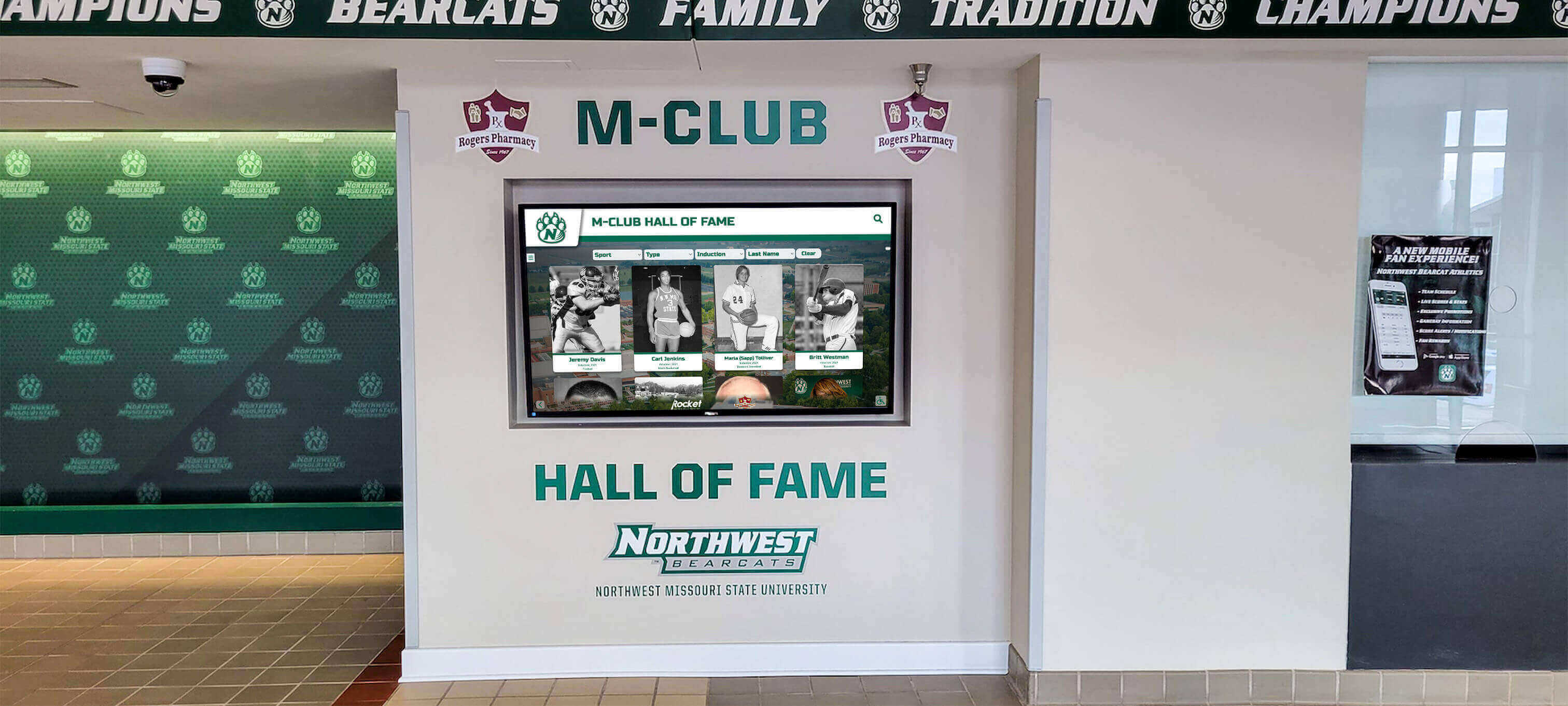
Effective partnership recognition strengthens relationships while demonstrating community collaboration
Why Community Partnership Recognition Matters
Before exploring specific recognition strategies, understanding why partnership acknowledgment deserves strategic attention and resources clarifies the value proposition supporting investment in quality recognition programs.
Strengthening Sponsor Relationships Through Visibility
Local businesses and community organizations support institutions for diverse reasons—philanthropic mission alignment, community goodwill building, marketing exposure, employee engagement, or personal connections to causes. Regardless of specific motivations, all sponsors share a common desire to see their contributions acknowledged and valued.
Effective recognition strengthens sponsor relationships by demonstrating genuine appreciation beyond transactional thank-yous, providing visibility that delivers marketing value justifying financial investment, creating opportunities for sponsors to showcase community commitment to their stakeholders, and building emotional connections to organizations they support through meaningful acknowledgment.
When sponsors feel genuinely valued and see tangible recognition for their support, retention rates increase dramatically. Organizations implementing comprehensive recognition programs commonly report 30-45% higher sponsor renewal rates compared to those providing minimal acknowledgment.
Attracting New Community Partners
Recognition programs serve double duty—honoring existing sponsors while simultaneously attracting new ones. Prospective partners evaluating potential community investments assess how organizations acknowledge current supporters. Visible, professional recognition signals that contributions are valued and appreciated, that partnerships receive sustained visibility beyond initial announcements, that organizations invest in quality relationships with supporters, and that community collaboration represents core organizational values.
Conversely, organizations providing minimal or poorly executed recognition inadvertently communicate that sponsor contributions aren’t priorities—deterring potential partners who want assurance their investments will be acknowledged appropriately.
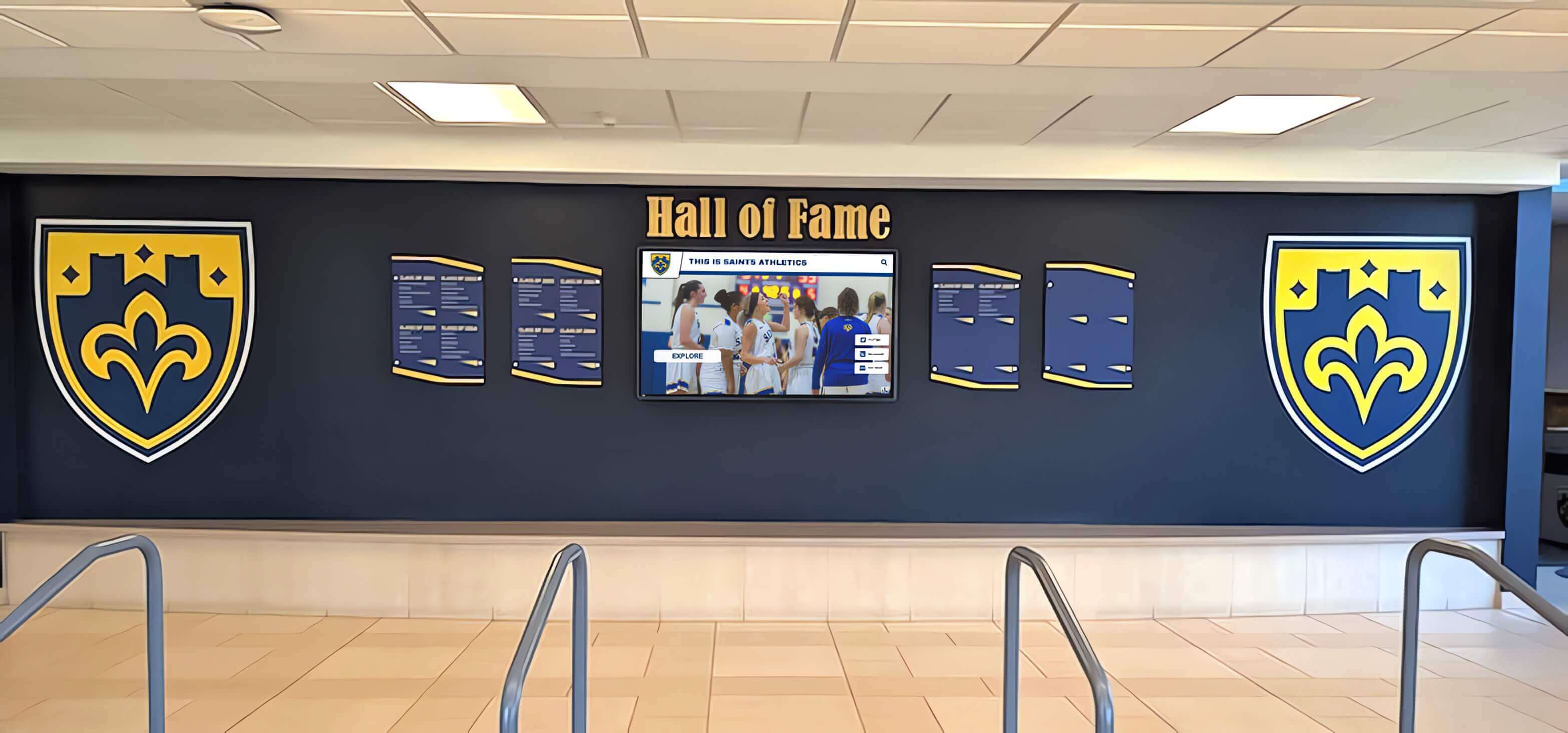
Professional recognition demonstrates organizational commitment to valuing partnerships
Demonstrating Community Impact and Collaboration
Partnership recognition serves audiences beyond sponsors themselves. Comprehensive recognition demonstrates to broader communities the collaborative nature of local success, the diverse supporters contributing to institutional missions, the interconnected relationships strengthening communities, and the business community’s commitment to local institutions.
This broader visibility strengthens overall community bonds while positioning organizations as relationship-focused entities valuing collaboration. Engaging with your local community becomes more effective when recognition programs showcase the partnerships making community programs possible.
Building Sustainable Funding Models
Financial sustainability for schools, nonprofits, and community organizations increasingly depends on diversified support including local business sponsorships, individual donors, grant funding, government support, and earned revenue. Strong partnership recognition programs support sustainable funding by increasing sponsor retention reducing acquisition costs, attracting new community investors, encouraging sponsorship level increases, and generating positive word-of-mouth referrals.
The return on investment from quality recognition programs far exceeds implementation costs when measured through increased sponsor retention and acquisition over multi-year periods.
Traditional Partnership Recognition Approaches and Their Limitations
Understanding conventional recognition methods and their constraints reveals why many organizations seek more effective approaches to showcasing community partnerships.
Static Sponsor Boards and Wall Plaques
Traditional recognition typically involves physical sponsor boards displaying business names, company logos, and sponsorship levels. These static displays may include engraved plaques on walls, printed banner displays in facilities, vinyl decals on windows or walls, or framed certificates in hallways or offices.
While these traditional approaches provide some acknowledgment, they face inevitable limitations including limited physical space constraining the number of sponsors recognized, production lag time between sponsorship commitment and actual recognition, high ongoing costs for adding new sponsors or updating information, static presentation offering minimal engagement beyond passive viewing, and difficulty accommodating mid-year sponsorship additions or changes.
Perhaps most significantly, traditional recognition typically provides identical acknowledgment regardless of sponsorship level—a modest donor receives the same name-on-wall treatment as major sponsors, providing limited differentiation or tiered recognition options.
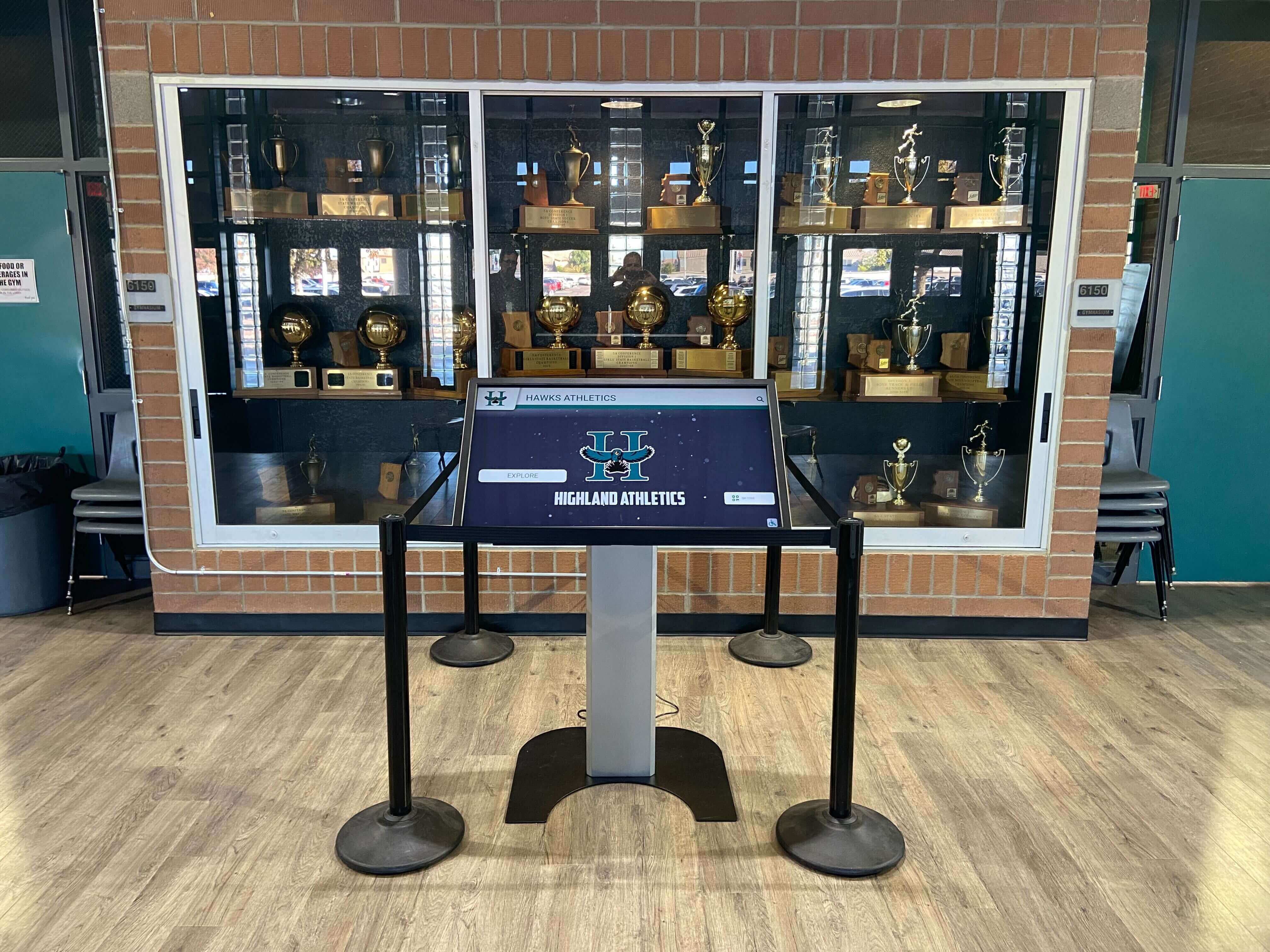
Physical sponsor boards eventually fill completely, limiting recognition capacity
Program Book and Printed Material Acknowledgment
Many organizations recognize sponsors through printed programs for events, annual reports, newsletters, or fundraising publications. These materials offer flexibility for varied recognition levels through different ad sizes or placement prominence.
However, printed recognition also presents challenges including limited lifespan as materials become outdated quickly, narrow distribution reaching only audiences who receive specific publications, high production costs particularly for full-color professional printing, inflexibility requiring advance planning with limited accommodation for last-minute sponsors, and limited engagement as printed lists provide minimal information beyond names and logos.
Additionally, printed recognition offers no measurable analytics about who views acknowledgments or how audiences engage with sponsor information—making it difficult to demonstrate value to partners.
Website and Digital Communication Recognition
Organizations increasingly acknowledge sponsors through website pages, email newsletters, and social media posts. Digital channels offer advantages including lower production costs compared to physical displays, easy updates accommodating new sponsors or information changes, broader potential reach beyond physical facility visitors, and ability to link to sponsor websites or social profiles.
Despite these benefits, digital-only recognition faces limitations including passive presentation requiring audiences to actively seek sponsor information, limited visibility as website sponsor pages receive minimal traffic, temporary nature particularly for social media posts that quickly disappear in feeds, and difficulty creating differentiated recognition for various sponsorship tiers within standard website formats.
Most fundamentally, digital-only recognition lacks the physical presence and continuous visibility that sponsors value—particularly local businesses seeking community recognition within facilities their support makes possible.
Modern Approaches to Partnership and Sponsor Recognition
Contemporary recognition strategies address traditional method limitations while leveraging technology to create engaging, flexible acknowledgment that delivers greater value for both organizations and their sponsors.
Interactive Digital Recognition Displays
Interactive recognition displays represent the most significant advancement in partnership acknowledgment—combining physical presence sponsors value with digital flexibility organizations need. These touchscreen systems installed in high-traffic areas provide engaging recognition experiences while addressing every major limitation of traditional approaches.
Unlimited Recognition Capacity
Digital systems accommodate unlimited sponsors without physical space constraints. Whether recognizing 10 community partners or 200 local businesses, displays present every sponsor professionally without crowding, size limitations, or forced removal of existing recognition to accommodate new supporters.
This capacity proves particularly valuable for organizations experiencing growth in community support or those wanting to recognize varied partnership types including financial sponsors, in-kind donors, volunteer organizations, collaborative partners, and historical supporters who established foundations for current success.
Flexible Tiered Recognition
Digital platforms enable sophisticated recognition tiers reflecting different sponsorship levels through presentation priority on home screens, varied amounts of screen real estate dedicated to different sponsors, multimedia content richness differing by tier, and feature prominence for higher-level sponsors.
This flexibility allows organizations to create recognition hierarchies that fairly acknowledge all sponsors while providing additional value justifying premium sponsorship levels.

Interactive displays provide flexible recognition accommodating all partnership levels
Rich Multimedia Storytelling
Beyond simple names and logos, digital recognition incorporates high-resolution company logos and branding, detailed descriptions of partnerships and contributions, photos showing sponsors’ involvement in supported programs, video testimonials from organizational leaders or beneficiaries, and links to sponsor websites and social media for interested viewers.
This rich content transforms recognition from simple acknowledgment to compelling storytelling that communicates the depth and meaning of partnerships.
Instant Updates and Additions
Cloud-based management systems enable instant recognition updates when new sponsors come aboard, partnership information changes, sponsorship levels increase, or seasonal recognition rotation occurs. Updates require minutes through intuitive interfaces rather than weeks waiting for new physical displays to be produced and installed.
This responsiveness allows organizations to recognize sponsors immediately following commitment—providing timely acknowledgment sponsors appreciate while demonstrating organizational responsiveness.
Measurable Engagement Analytics
Digital systems track which sponsor profiles receive views, how long visitors engage with sponsor content, search patterns revealing information visitors seek, and time-of-day and seasonal engagement patterns. These analytics demonstrate recognition value to sponsors while informing program improvements.
Solutions like Rocket Alumni Solutions provide comprehensive analytics dashboards enabling organizations to share specific engagement data with sponsors—quantifying recognition value in ways impossible with traditional static displays.
Strategic Recognition Display Placement
Even the most sophisticated recognition content delivers limited value if displays occupy low-traffic locations where few people encounter acknowledgment. Strategic placement maximizes sponsor visibility and engagement.
High-Traffic Location Identification
Optimal display placement typically includes main building entrances where visitors and community members enter facilities, lobbies and waiting areas where people naturally pause, common areas like cafeterias or student unions with high daily traffic, athletic facility entrances capturing game-day audiences, and administrative areas where sponsors and community partners frequently visit.
Organizations considering recognition displays should conduct traffic analysis identifying locations that combine high volume, natural pausing opportunities allowing engagement time, appropriate viewing angles and heights, and power and network connectivity supporting display operation.

Main entrance locations provide continuous exposure to diverse audiences
Multiple Display Strategies
Larger organizations or those with multiple facilities often benefit from distributed recognition using primary comprehensive displays showcasing all sponsors at main locations, secondary focused displays highlighting specific program sponsors in relevant areas, and mobile or rotating displays bringing recognition to special events or different facilities.
This distributed approach ensures recognition reaches varied audiences while providing flexibility to emphasize relevant partnerships in appropriate contexts.
Comprehensive Multi-Channel Recognition Ecosystems
While digital displays provide powerful recognition foundations, the most effective strategies combine multiple acknowledgment channels creating comprehensive recognition ecosystems that maximize sponsor visibility and value.
Physical and Digital Integration
Leading recognition programs integrate touchscreen displays in facilities, companion websites extending recognition beyond physical locations, mobile-responsive designs ensuring recognition accessibility on smartphones, and QR codes on traditional materials linking to rich digital content.
This integration ensures sponsors receive continuous visibility across multiple touchpoints while accommodating different audience preferences for information access.
Event-Based Recognition Amplification
Special events present opportunities to amplify sponsor recognition through live acknowledgment during programs, projected sponsor displays visible to audiences, printed programs highlighting event-specific sponsors, social media coverage tagging sponsors and sharing appreciation, and post-event recap communications featuring sponsor involvement.
Event recognition provides concentrated visibility complementing year-round digital acknowledgment while creating memorable appreciation moments sponsors value.
Storytelling and Impact Communication
Rather than simple sponsor listings, sophisticated recognition programs tell partnership stories through impact narratives explaining how support enables specific programs or outcomes, testimonials from beneficiaries whose experiences sponsors made possible, behind-the-scenes content showing programs in action, and milestone celebrations acknowledging multi-year partnerships or significant contributions.
This storytelling approach transforms recognition from transactional acknowledgment to emotional connection demonstrating genuine partnership impact. Community hall of fame recognition principles apply equally to partnership acknowledgment—rich storytelling creates meaning beyond simple name display.
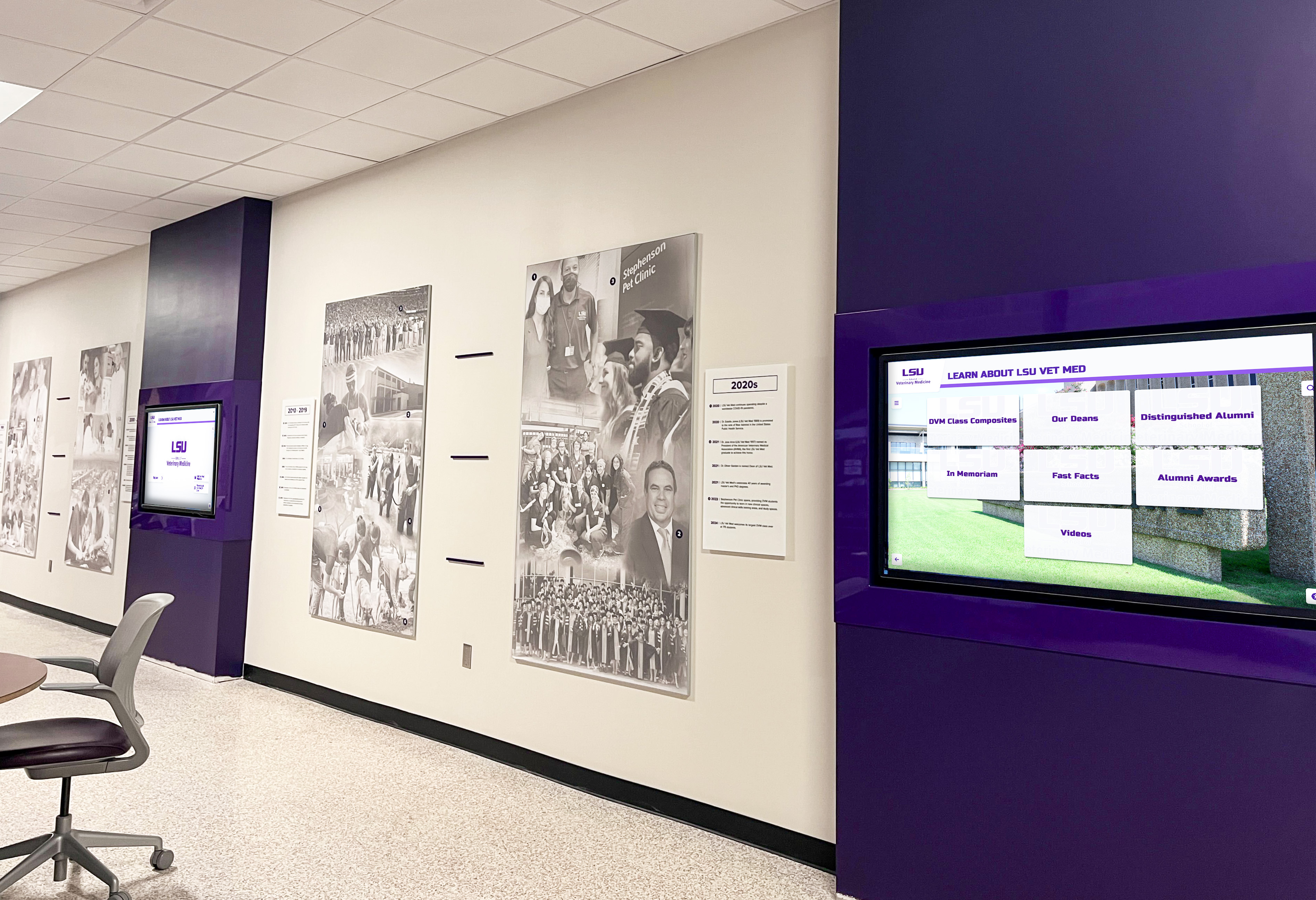
Impact stories communicate how sponsor support enables community programs
Building Effective Partnership Recognition Programs
Implementing recognition that delivers value for sponsors while supporting organizational goals requires systematic approaches addressing sponsor relationships, content development, and ongoing program management.
Developing Recognition Tier Structures
Clear sponsorship tiers provide structure for partnership programs while creating recognition differentiation reflecting varied contribution levels.
Defining Tier Levels and Benefits
Effective tier structures typically include 3-5 levels offering meaningful differentiation including entry-level sponsorships providing basic recognition for modest contributions, mid-tier partnerships offering enhanced visibility for moderate support, major sponsor levels delivering premium recognition for significant investment, and legacy or founding partner tiers honoring transformational or sustained long-term support.
Each tier should clearly specify recognition benefits including display prominence and screen time allocation, amount of profile content and multimedia elements, additional acknowledgment through other channels, complementary event tickets or hospitality, and exclusive access or engagement opportunities.
Transparent tier structures help prospective sponsors understand value propositions while ensuring consistent recognition standards.
Balancing Inclusivity and Differentiation
Recognition programs must balance acknowledging all supporters regardless of contribution size with providing meaningful differentiation justifying higher sponsorship levels. This balance typically involves universal baseline recognition ensuring every partner receives professional acknowledgment, clear incremental benefits at each tier providing incentive for increased investment, and premium experiences at top levels offering exclusive recognition justifying major commitments.
Organizations sometimes create separate recognition categories for different partnership types—financial sponsors, in-kind contributors, volunteer organizations, collaborative partners—each with appropriate tier structures reflecting their unique value.
Creating Compelling Sponsor Content and Profiles
Recognition effectiveness depends heavily on content quality and presentation. Investing in professional sponsor profiles delivers substantially greater value than minimal name-and-logo listings.
Essential Profile Elements
Comprehensive sponsor profiles typically include sponsor name and branding with high-quality logo reproduction, compelling description of the business or organization including unique value propositions, detailed acknowledgment of specific contributions and partnership areas, photos showing sponsor involvement or business operations, quotes from sponsor representatives explaining their motivation for support, and clear calls-to-action with website links or contact information.
For higher-tier sponsors, organizations might develop video content featuring sponsor representatives, detailed partnership timelines showing multi-year support evolution, impact metrics quantifying outcomes their support enables, and interactive elements like photo galleries or documents.
Maintaining Content Currency
Recognition content requires periodic updates ensuring accuracy and freshness including annual profile reviews updating business information and imagery, prompt updates when partnership details change, seasonal content rotation featuring different partnership aspects, and regular addition of new testimonials or impact stories.
Cloud-based digital recognition systems make content maintenance straightforward through intuitive management interfaces enabling quick updates without technical expertise or lengthy production processes.

Rich sponsor profiles communicate partnership depth and value
Implementing Sponsor Recognition Best Practices
Beyond technical implementation, recognition program success depends on relationship management and communication strategies.
Proactive Sponsor Communication
Effective programs maintain regular communication with sponsors through welcome packages when partnerships begin detailing recognition benefits, preview access to recognition content before public launch, periodic engagement reports sharing recognition analytics and visibility metrics, advance notification about recognition enhancements or special features, and anniversary acknowledgments celebrating multi-year partnerships.
This communication demonstrates organizational commitment to partnership value while building relationships extending beyond financial transactions.
Recognition Launch and Promotion
When implementing new recognition displays or significantly enhanced programs, strategic launch maximizes visibility and impact through sponsor preview events providing first looks before public unveiling, press releases and media coverage highlighting community partnership commitment, social media campaigns celebrating sponsor recognition, and facility signage directing traffic to recognition displays.
Launch promotion benefits both organizations and sponsors—organizations demonstrate their commitment to acknowledging support while sponsors receive concentrated visibility during launch periods.
Soliciting Sponsor Feedback
Regular feedback collection ensures recognition programs deliver value sponsors appreciate while identifying improvement opportunities through annual sponsor surveys assessing recognition satisfaction, informal check-ins during sponsor meetings or events, suggestion mechanisms for recognition enhancements, and responsiveness to individual sponsor requests within program parameters.
Organizations treating sponsor input seriously and making visible improvements based on feedback demonstrate partnership-focused cultures that strengthen sponsor loyalty.
Addressing Common Partnership Recognition Challenges
Even well-designed recognition programs encounter obstacles requiring strategic responses.
Challenge: Limited Recognition Budgets
Many organizations struggle with funding recognition programs amid competing priorities and resource constraints.
Strategic Solutions:
Implement phased approaches starting with core recognition displays and expanding capabilities over time as budgets allow. Many organizations find that improved sponsor retention and acquisition enabled by quality recognition quickly generates return on investment justifying additional program enhancements.
Explore partnership opportunities where technology providers offer favorable terms for organizations demonstrating community impact. Some vendors provide discounted solutions or flexible payment arrangements for educational institutions and nonprofits.
Involve sponsors directly in recognition program funding by positioning enhanced recognition as sponsorship benefit tier rather than separate organizational expense. Premium sponsors funding advanced recognition features then receive enhanced acknowledgment their investment enables.
Challenge: Sponsor Expectation Management
Sponsors sometimes have unrealistic expectations about recognition scope, prominence, or exclusivity requiring careful management.
Strategic Solutions:
Establish clear written agreements detailing specific recognition benefits associated with each sponsorship level including display prominence and duration, content parameters and approval processes, and additional acknowledgment through supplementary channels.
Provide recognition previews allowing sponsors to see planned acknowledgment before public launch, offering opportunity for feedback within defined parameters and setting realistic expectations about recognition appearance and context.
Maintain consistent policies applied equitably across sponsors at similar support levels, avoiding special treatment creating precedents or fairness concerns while demonstrating professional program management building sponsor confidence.
Challenge: Recognition Content Development Capacity
Creating quality content for multiple sponsors requires significant time investment that smaller organizations sometimes struggle to sustain.
Strategic Solutions:
Develop streamlined content templates providing professional frameworks requiring minimal customization for each sponsor. Templates ensure consistent quality while reducing per-sponsor production time.
Solicit content contributions directly from sponsors by requesting pre-approved logos, business descriptions, photos, and testimonials they provide. Many sponsors appreciate control over their representation and gladly supply content reducing organizational workload.
Partner with volunteers or students who can assist with content development, photography, and multimedia production under staff supervision. These partnerships often provide learning opportunities for volunteers while building organizational capacity.
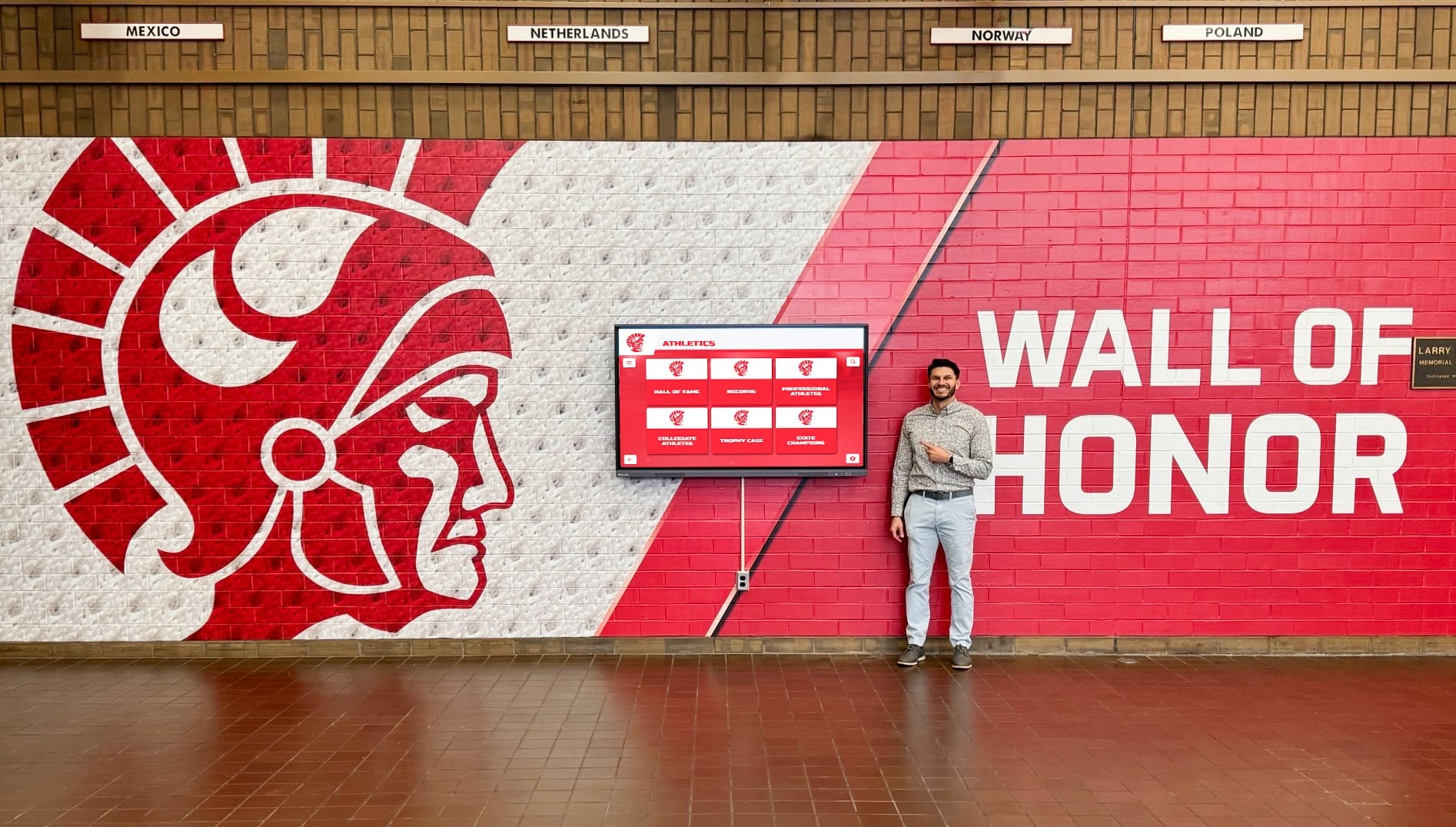
Volunteer partnerships support sustainable content development processes
Challenge: Balancing Sponsorship and Mission Focus
Organizations sometimes worry that prominent sponsor recognition detracts from core mission focus or creates overly commercial environments.
Strategic Solutions:
Design recognition displays that complement rather than dominate facility aesthetics through professional design aligned with organizational branding, appropriate scale relative to display locations, and balanced placement ensuring sponsor acknowledgment doesn’t overwhelm mission-focused content.
Integrate sponsor recognition within broader recognition programs that also celebrate student achievement, alumni accomplishments, and organizational milestones. Comprehensive recognition frameworks position sponsors as partners enabling rather than displacing mission work.
Establish clear criteria for partnership acceptance ensuring sponsors align with organizational values and avoiding partnerships that could compromise mission integrity regardless of financial benefit.
Measuring Partnership Recognition Program Success
Assessment ensures recognition programs deliver intended value while identifying improvement opportunities and justifying continued investment.
Sponsor Satisfaction and Retention Metrics
Primary indicators of recognition effectiveness come directly from sponsor experiences and behaviors including sponsor renewal rates at each tier level, upgrade rates showing sponsors increasing support levels, new sponsor acquisition rates and sources, sponsor satisfaction survey results, and unsolicited positive feedback or testimonials.
Dramatic improvements in these metrics following recognition program implementation provide compelling evidence of program value and return on investment.
Engagement Analytics and Visibility Data
Digital recognition systems provide quantitative engagement data impossible with traditional static displays including total sponsor profile views and view trends, average viewing duration indicating content engagement depth, search patterns revealing how visitors discover sponsors, and time-of-day and seasonal engagement patterns informing content strategy.
These analytics enable organizations to demonstrate concrete recognition value to sponsors through specific visibility metrics that traditional acknowledgment cannot provide.
Community Awareness and Partnership Visibility
Broader indicators suggest recognition program impact on community understanding and support including community survey responses about partnership awareness, media coverage mentioning organizational partnerships, social media engagement with sponsor-related content, and anecdotal community feedback about sponsor recognition visibility.
These qualitative measures complement quantitative metrics by revealing recognition’s role in strengthening overall community relationships and collaborative culture.

Detailed engagement data quantifies sponsor recognition visibility and effectiveness
Future Trends in Partnership Recognition
Partnership recognition continues evolving alongside technology capabilities and sponsor expectations. Understanding emerging trends helps organizations plan for future recognition program enhancements.
Personalized and Dynamic Recognition
Advanced systems increasingly enable personalized recognition experiences where displays automatically adjust content based on time, season, or audience including highlighting different sponsors for various facility uses, featuring relevant partners during specific events or seasons, emphasizing local business sponsors when community groups visit, and rotating featured sponsors ensuring equitable visibility.
This dynamic recognition maximizes relevance while ensuring sponsors receive optimal visibility during periods most aligned with their business interests.
Enhanced Interactivity and Engagement
Next-generation recognition displays move beyond passive viewing to active engagement through searchable sponsor databases enabling visitors to find specific businesses, integrated mapping showing sponsor locations in communities, promotional offers or discount information benefiting facility users, and direct business contact or inquiry capabilities.
These interactive features provide tangible benefits for facility users while delivering measurable value for sponsors beyond simple brand visibility.
Integration With Broader Recognition Ecosystems
Partnership recognition increasingly integrates with comprehensive organizational recognition programs creating unified experiences celebrating sponsors alongside donor recognition, alumni achievements, student accomplishments, and community contributions. This integration positions sponsors within broader collaborative contexts demonstrating interconnected support networks enabling organizational success.
Mobile and Remote Access Expansion
Recognition programs increasingly extend beyond physical displays through mobile apps providing sponsor directory access, virtual tour integration showcasing facilities and partnerships, online recognition portals accessible to remote community members, and social media integration amplifying recognition reach.
These multi-platform approaches ensure recognition reaches diverse audiences while accommodating changing patterns of how people consume information and engage with organizations.
Implementing Your Partnership Recognition Program
Organizations ready to enhance partnership recognition can follow systematic implementation approaches ensuring successful program launch and sustainable operation.
Step 1: Assessment and Planning
Begin by evaluating current recognition practices and identifying improvement opportunities including inventory of existing sponsors and partnership types, analysis of current recognition methods and their limitations, sponsor feedback about existing acknowledgment, and definition of recognition program goals and success metrics.
This assessment creates foundations for strategic planning addressing recognition program scope and approach, tier structure and benefit definition, budget allocation and funding sources, technology and platform selection, and implementation timeline and milestones.
Step 2: Technology Selection and Customization
For organizations choosing digital recognition displays, platform selection represents critical decisions affecting long-term success. Evaluation criteria should include unlimited recognition capacity accommodating growth, intuitive content management enabling non-technical updates, sophisticated tier differentiation supporting varied sponsorship levels, comprehensive analytics demonstrating recognition value, professional design capabilities reflecting organizational branding, and reliable vendor support ensuring operational continuity.
Solutions like Rocket Alumni Solutions provide purpose-built platforms specifically designed for community recognition with features generic digital signage systems lack.
Step 3: Content Development and Migration
Content creation for existing sponsors forms the bulk of implementation work including gathering sponsor information, logos, and imagery, writing compelling business descriptions and partnership narratives, creating tiered content reflecting sponsorship levels, developing multimedia elements like photos or videos, and establishing content templates for future sponsor additions.
Organizations should develop content production workflows supporting sustainable ongoing content management beyond initial implementation.
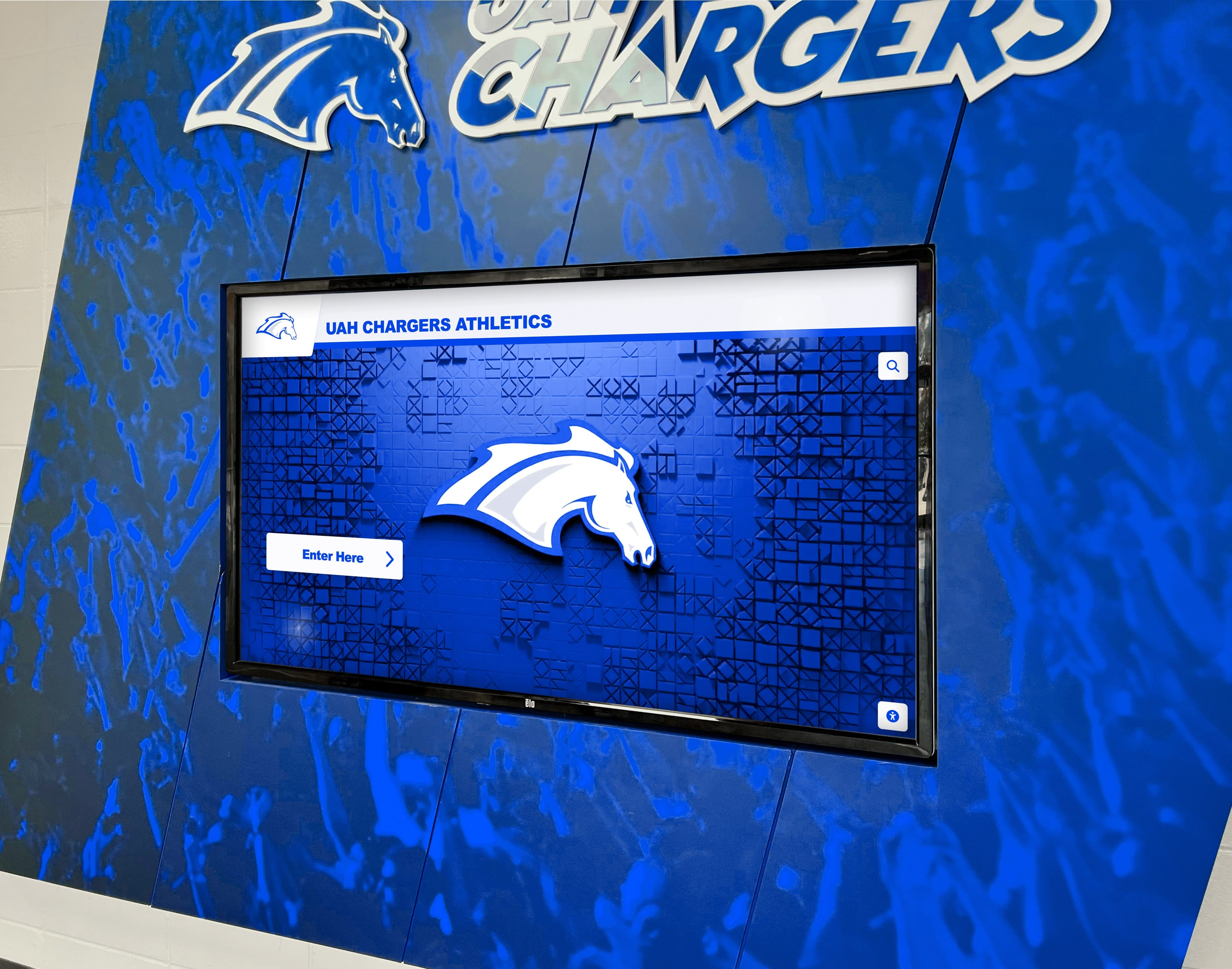
Comprehensive content development provides meaningful sponsor acknowledgment
Step 4: Launch and Promotion
Strategic program launch maximizes visibility and impact through sponsor preview events before public unveiling, facility signage directing traffic to recognition displays, media outreach highlighting partnership recognition commitment, social media campaigns celebrating sponsors and acknowledgment, and direct sponsor communication sharing recognition details and appreciation.
Successful launches generate excitement benefiting both organizations and recognized sponsors through concentrated attention and community awareness.
Step 5: Ongoing Program Management
Sustained recognition program success requires ongoing attention including regular sponsor content updates and additions, periodic tier structure review and refinement, analytics review informing program improvements, sponsor feedback collection and responsiveness, and recognition program promotion maintaining visibility.
Organizations should assign clear responsibility for recognition program coordination preventing programs from becoming neglected when initial enthusiasm fades or key personnel change.
Conclusion: Building Stronger Communities Through Partnership Recognition
Showcasing community partnerships and local sponsors represents far more than contractual obligation or perfunctory acknowledgment. Strategic recognition strengthens relationships supporting organizational missions, demonstrates community collaboration enabling local success, attracts new partners seeing existing sponsors valued appropriately, and builds sustainable funding models diversifying support.
Modern recognition approaches—particularly interactive digital displays combined with multi-channel acknowledgment strategies—transform partnership recognition from static listings to engaging experiences delivering measurable value for sponsors and organizations alike. These contemporary methods address every major limitation of traditional recognition while providing flexibility, capacity, and analytics supporting program improvement and sponsor relationship management.
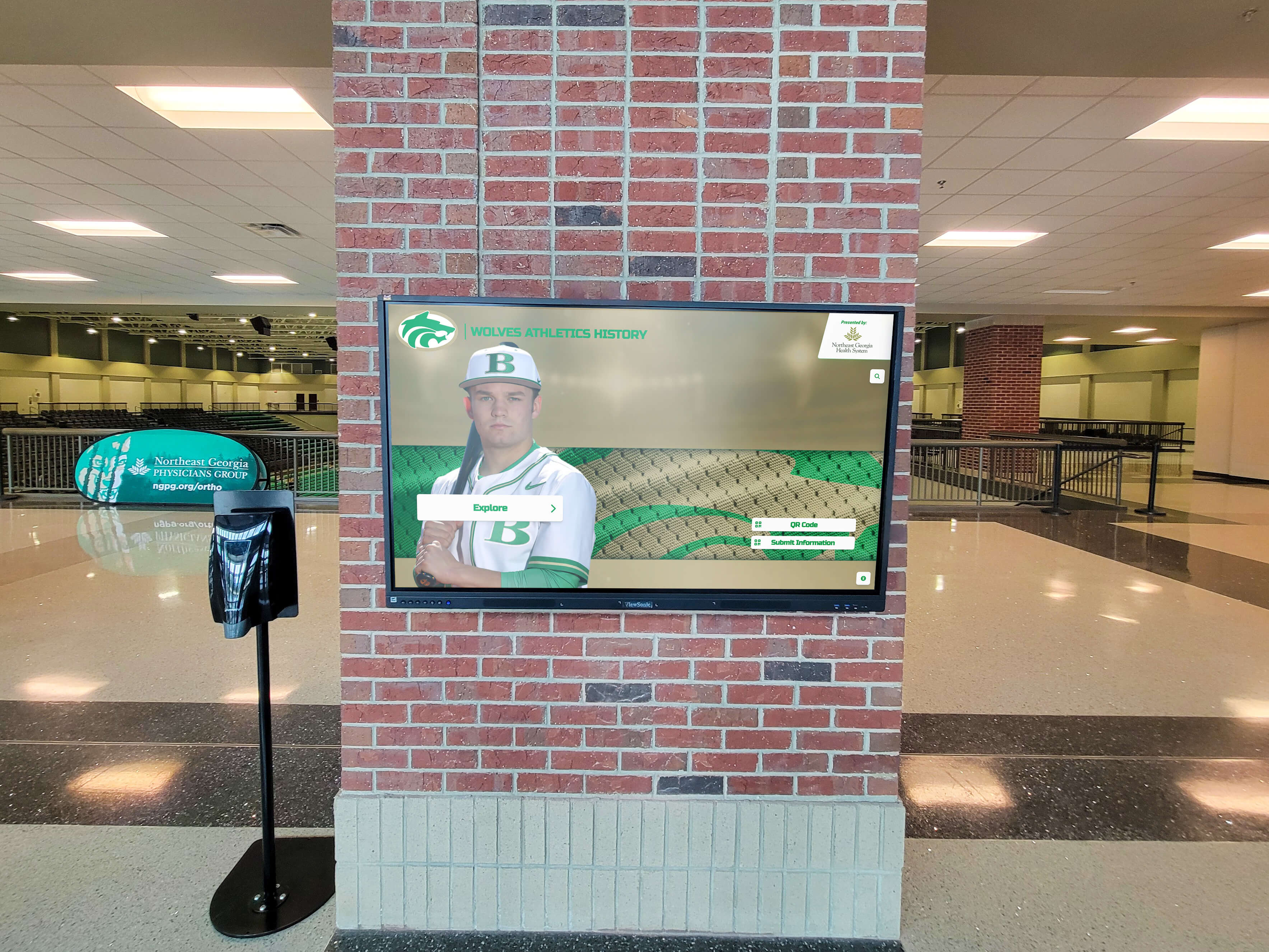
Professional recognition demonstrates organizational commitment to valuing community support
Organizations investing in quality partnership recognition find that improved sponsor retention and new partnership attraction quickly justify implementation costs through sustained support enabling programs serving communities. Beyond financial returns, effective recognition strengthens community bonds by publicly celebrating the collaborative relationships making local institutions successful.
Whether you’re just beginning to formalize partnership recognition or seeking to enhance existing programs, the strategies and approaches outlined here provide frameworks for creating acknowledgment that genuinely honors support while building relationships extending far beyond individual transactions. Start by assessing current recognition, understanding sponsor perspectives, and exploring modern recognition technologies enabling the meaningful acknowledgment community partners deserve.
Ready to transform your partnership recognition program? Discover how Rocket Alumni Solutions helps organizations create comprehensive recognition experiences that honor sponsors, strengthen relationships, and demonstrate the power of community collaboration.



























