Soccer’s all-time leading scorers represent the pinnacle of goal-scoring excellence—athletes who combined technical brilliance, tactical intelligence, physical prowess, and unwavering dedication to achieve scoring records that define careers and inspire generations. From Cristiano Ronaldo’s unprecedented 900+ goals to the debated historical records of Pele and Josef Bican, understanding who holds soccer’s most prolific scoring records requires examining both modern documented statistics and historical achievements recorded under different verification standards.
Whether you’re researching soccer history, tracking current record progressions, or considering how to honor goal-scoring excellence in your school or club program, this comprehensive guide explores the greatest goal scorers across international, club, and domestic levels while examining how modern digital recognition systems celebrate soccer achievement and inspire future generations of players.
The question of who scores the most goals in soccer history remains complex and fascinating—complicated by incomplete historical documentation, varying standards for which competitions count, and the evolution of the sport across different eras. Modern players compete in more formalized competitions with comprehensive statistics, while historical legends played in eras where records were less systematically maintained, creating ongoing debates about all-time scoring supremacy.

The Modern Era: Cristiano Ronaldo and Lionel Messi Lead All-Time Scoring
Among contemporary players whose careers are comprehensively documented, two names dominate discussion of soccer’s greatest scorers—Cristiano Ronaldo and Lionel Messi—whose goal-scoring achievements have redefined what’s possible in the modern game.
Cristiano Ronaldo: 900+ Goals and Counting
According to the International Federation of Football History & Statistics (IFFHS), Portuguese superstar Cristiano Ronaldo recently became the first player in history to reach 900 officially recognized top-level goals, with his current total standing at approximately 902 goals as of October 2024. This unprecedented achievement spans multiple competitions and decades at the highest level of professional soccer.
Career Goal Distribution:
Ronaldo’s scoring excellence occurred across elite clubs and international competition including Manchester United (first stint and return), Real Madrid (club record 450+ goals), Juventus, Al Nassr, and Portugal national team (all-time men’s international record with 130+ goals).
His scoring versatility proves equally remarkable—clinical finishing with both feet, dominant aerial ability on headers, long-range power shooting, precise placement finishing, and conversion of penalty kicks and free kicks at elite rates.
What distinguishes Ronaldo’s scoring record from historical comparisons is the comprehensive verification of every goal—scored in top-tier professional competitions against elite opposition with video documentation confirming each achievement. This modern verification standard provides certainty about goal totals that historical records cannot match.
Lionel Messi: 820+ Goals of Argentine Brilliance
Argentine maestro Lionel Messi ranks second among modern players with approximately 821 career goals across club and international competitions. Like Ronaldo, Messi’s achievements are completely documented through modern record-keeping systems providing reliable verification.
Career Achievement Highlights:
Messi’s goal-scoring excellence developed primarily at Barcelona (672 goals over two decades), continued at Paris Saint-Germain, and now continues at Inter Miami, while representing Argentina in international competition (including 2022 World Cup triumph).
His goal-scoring approach differs from Ronaldo’s power and athleticism, emphasizing technical brilliance and creativity including dribbling past multiple defenders before finishing, precision placement in tight spaces, free kick mastery with curved trajectory, playmaking vision creating goals for teammates, and consistent scoring across all competition levels.
The Ronaldo-Messi rivalry defined two decades of soccer excellence, pushing both players to unprecedented goal-scoring heights while inspiring debates about all-time greatness that will continue long after their careers conclude.
Historical Scoring Records: Pele, Bican, and Verification Challenges
While modern statistics provide clear documentation of contemporary scoring records, historical claims require more careful examination due to varying documentation standards and debate about which goals should count in all-time tallies.
Josef Bican: FIFA-Recognized Historical Record
In 2020, FIFA officially recognized Austrian-Czech striker Josef Bican as the all-time record scorer with an estimated 805 goals scored between the 1930s and 1950s. This recognition represents FIFA’s attempt to settle historical debates using available documentation from Bican’s era.
However, this recognition includes important caveats. Multiple sources including CNN, BBC, France 24, and Portuguese publication O Jogo acknowledge that Bican’s tally includes goals scored for reserve teams and in unofficial international matches—competitions that wouldn’t be counted in modern record verification. This inclusion of non-first-team and unofficial matches complicates direct comparison with modern players whose totals reflect only top-level competition.
Despite these verification challenges, Bican’s scoring rate remains extraordinary—averaging over 1.5 goals per game across his documented career and dominating Central European football during his playing years.
Pele: Brazilian Legend and 1,000+ Goal Debate
Brazilian icon Pele holds perhaps soccer’s most famous goal-scoring claim—1,279 career goals according to Guinness World Records. This figure has anchored Pele’s legacy as arguably the sport’s greatest player for decades.
However, this total includes significant controversy regarding which goals should count. The 1,279 figure incorporates goals scored in friendly matches, exhibition games, and unofficial competitions beyond competitive league and international fixtures. When analyzing only goals in competitive, officially sanctioned matches, Pele’s total decreases substantially—though still representing remarkable achievement.
Fellow Brazilian striker Romário publicly claimed his 1,000th career goal in 2007 but later acknowledged his tally included friendly matches, highlighting how Brazilian soccer culture historically counted all goals regardless of competition formality.
The Pele debate illustrates fundamental questions about historical soccer records: Should exhibition goals count equally to competitive matches? How do we compare eras with different competitive structures? What verification standards should apply to historical claims?
Other Historical Scoring Legends
Beyond Bican and Pele, several other historical players achieved extraordinary goal-scoring records including Gerd Müller (German striker, 735 documented goals), Ferenc Puskás (Hungarian legend, 700+ goals), Eusébio (Portuguese icon, 600+ goals), and Romário (Brazilian striker, 772 goals in all competitions).
Each historical claim faces similar verification challenges—incomplete documentation, inclusion of varying competition types, and different era standards for record-keeping that complicate direct comparison with modern statistics.
Champions League: Europe’s Elite Competition Records
The UEFA Champions League represents European club soccer’s premier competition, providing a consistent high-level standard for evaluating scoring excellence across different eras and nationalities.
Cristiano Ronaldo: Untouchable Champions League Record
Cristiano Ronaldo dominates Champions League scoring with 140 goals in the competition—a record that seems nearly untouchable given his significant margin over other players. His Champions League excellence includes five tournament victories, record appearances in finals, countless memorable goals in crucial matches, and sustained scoring across multiple clubs (Manchester United, Real Madrid, Juventus).
Other Champions League Scoring Leaders
Behind Ronaldo, other elite scorers include Lionel Messi (129 goals), Robert Lewandowski (94 goals as of recent data), Karim Benzema (90 goals before retirement from European competition), and Raúl González (71 goals across his career).
The Champions League provides perhaps the fairest historical comparison for evaluating goal-scoring greatness—consistent competition level, reliable modern statistics, head-to-head competition among elite players, and clear verification standards ensuring accuracy.
For schools and clubs implementing soccer recognition programs, Champions League records provide excellent benchmarks demonstrating what elite goal-scoring achievement looks like at soccer’s highest competitive level.
International Soccer: National Team Scoring Records
International competition provides another crucial context for evaluating all-time scoring excellence, with players representing their nations in World Cups, continental championships, and qualifying competitions.
Men’s International Scoring Leaders
Cristiano Ronaldo leads all-time men’s international scoring with 130+ goals for Portugal—a record that continues growing as he extends his international career. His total surpasses previous record holder Ali Daei of Iran (109 goals) and current active scorers pursuing the record.
Other prolific international scorers include Lionel Messi (Argentina, 100+ goals), Mokhtar Dahari (Malaysia, 89 goals in limited FIFA-recognized matches), Ali Mabkhout (United Arab Emirates, 80+ goals), and Sunil Chhetri (India, 90+ goals).
International goal totals require context about opponent quality, competition format (friendly vs. competitive), and number of matches played—factors affecting how impressive raw totals appear.
Women’s International Soccer Records
Women’s international soccer features its own remarkable scoring records. Christine Sinclair of Canada holds the all-time international record across both men’s and women’s soccer with 190 goals—a total surpassing Ronaldo’s men’s record by substantial margin.
Other women’s international scoring leaders include Abby Wambach (United States, 184 goals), Mia Hamm (United States, 158 goals), Marta (Brazil, 115+ goals), and Birgit Prinz (Germany, 128 goals).
Women’s soccer has grown tremendously in popularity and competition level over recent decades, with modern players competing in increasingly professionalized environments that enhance the significance of contemporary records.

What Makes a Great Goal Scorer: Skills and Attributes
Understanding all-time scoring records becomes more meaningful when examining what attributes enable sustained goal-scoring excellence across elite careers spanning decades.
Technical Skills
Elite scorers master fundamental technical abilities including finishing technique (ability to strike balls cleanly with proper technique regardless of situation or pressure), first touch control (receiving passes perfectly positioned for immediate shooting opportunities), weak foot ability (scoring equally well with both feet rather than predictably favoring one), and heading accuracy (attacking crosses and set pieces effectively with head).
Tactical Intelligence
Goal-scoring excellence requires sophisticated understanding of tactics including positioning awareness (constantly finding dangerous spaces defenders struggle to cover), timing of runs (breaking defensive lines at precise moments to receive passes in scoring positions), off-ball movement (creating separation from defenders without the ball), and game reading ability (anticipating where opportunities will emerge before they develop).
Physical Attributes
While technical skill matters most, physical qualities enhance scoring ability including acceleration and pace (creating separation for shooting space or beating defenders to through balls), strength and balance (holding off defenders while shooting or winning aerial duels), jumping ability (attacking crosses and reaching high balls), and stamina and durability (maintaining peak performance across 90 minutes and lengthy seasons).
Mental Characteristics
Perhaps most importantly, sustained scoring excellence requires extraordinary mental attributes including confidence and self-belief (maintaining conviction in shooting ability despite missed opportunities), concentration (staying mentally engaged waiting for limited chances), composure under pressure (executing technique in crucial moments despite stress), and resilience (overcoming scoring droughts without losing confidence or work rate).
Schools implementing recognition programs benefit from highlighting these complete attributes beyond just goal totals, demonstrating that scoring excellence requires developing multiple dimensions of player capability.
High School and Youth Soccer: Recognizing Goal-Scoring Excellence
While international stars capture headlines, high school and youth soccer programs face important questions about how to appropriately recognize goal-scoring achievement and inspire young players pursuing their own excellence.
Establishing Meaningful Scoring Records
High school programs should track and recognize various scoring achievements including single-season goal records (most goals in one campaign), career goal totals (accumulation across multiple years), single-game records (dominant individual performances), assist records (recognizing playmaking alongside goal-scoring), and team scoring records (collective achievement).
Clear documentation standards ensure records remain accurate and comparable across seasons and eras. Solutions like digital record boards for high schools provide platforms specifically designed to track, display, and update athletic records systematically.
Balancing Individual and Team Recognition
Soccer’s team-oriented nature requires careful balance between celebrating individual goal-scoring achievement and emphasizing collective team success. Recognition programs should highlight individual excellence within team context (acknowledging that goal-scorers depend on teammate service), team championship success (prioritizing team trophies over individual statistics), assist and playmaking records (honoring players who create goals for others), and defensive and goalkeeping achievement (ensuring non-scoring positions receive equivalent recognition).
This balanced approach honors goal-scorers appropriately while maintaining team-first culture essential for soccer success.

Creating Goal-Scorer Recognition Programs
Schools can implement specific programs celebrating scoring excellence including Golden Boot awards (season’s leading scorer receives special recognition), milestone achievement recognition (celebrating career goal totals at 25, 50, 75, 100 goals), record board displays (prominently showing single-season and career records), all-time scoring list maintenance (comprehensive ranking of program’s top scorers), and comparative historical context (showing how current performances compare to program history).
For programs implementing comprehensive recognition systems, resources on best ways to showcase student achievement provide frameworks applicable to soccer-specific recognition that honors athletic excellence while supporting positive program culture.
Modern Digital Recognition for Soccer Achievement
Traditional soccer recognition relied on physical trophies, plaques on gymnasium walls, and painted record boards requiring costly updates when athletes broke records or achieved new milestones. Modern digital recognition systems have transformed what’s possible in celebrating soccer achievement.
Interactive Touchscreen Displays
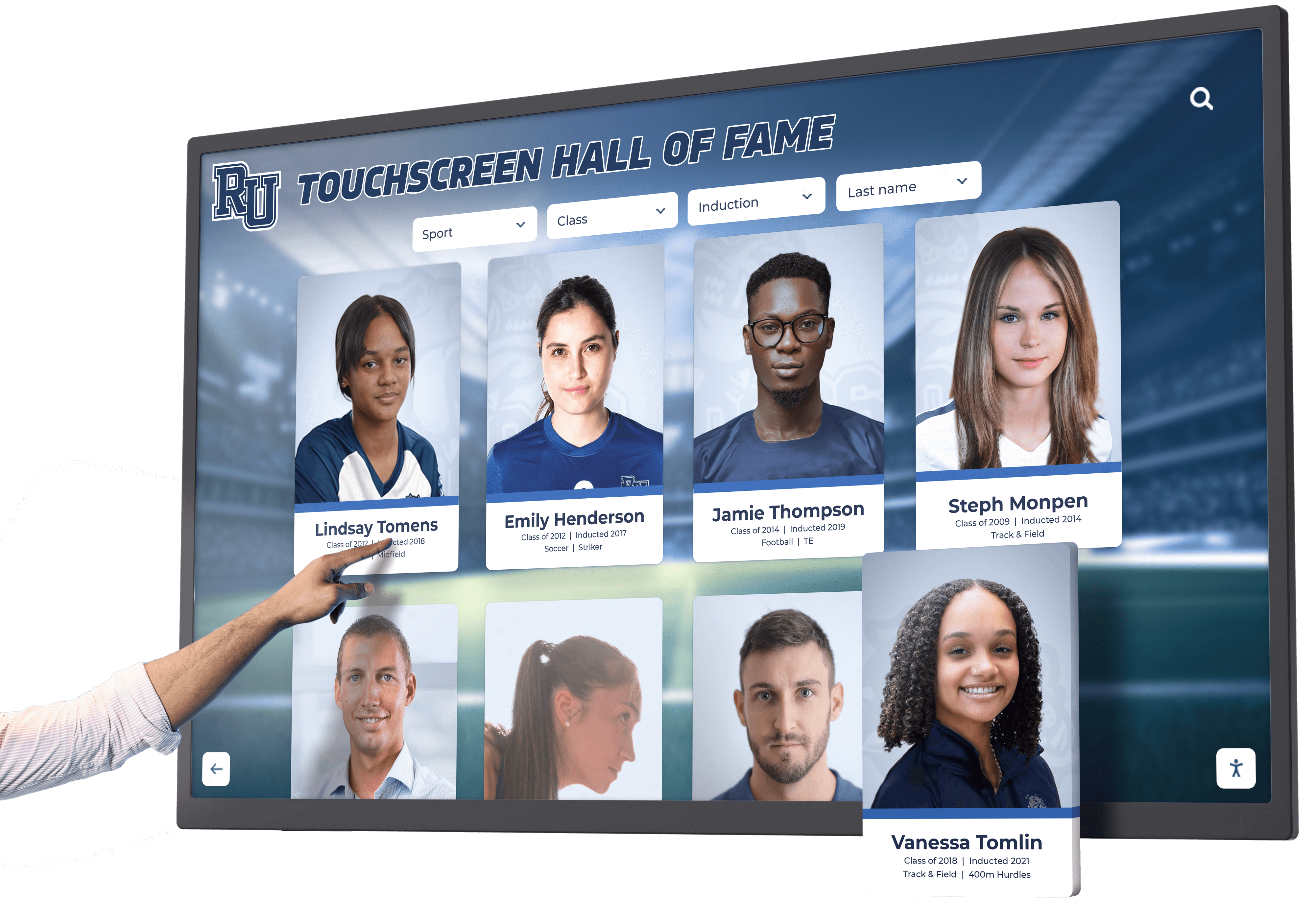
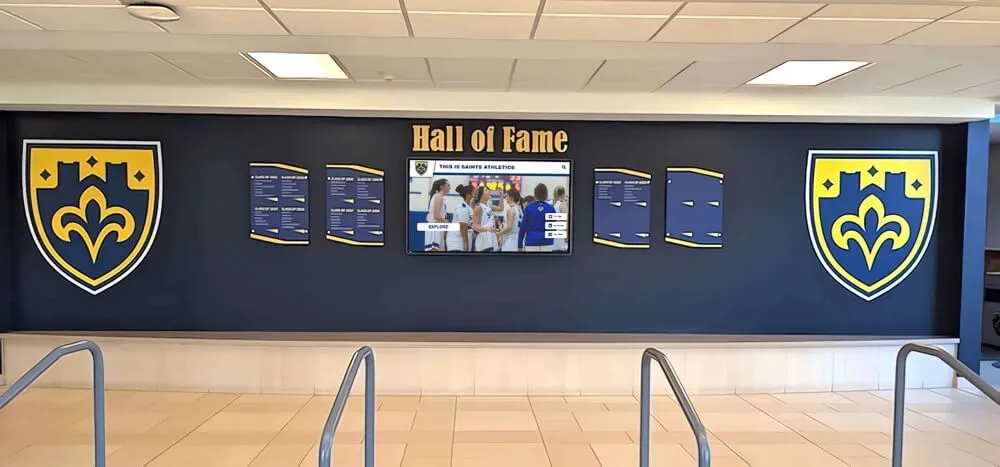
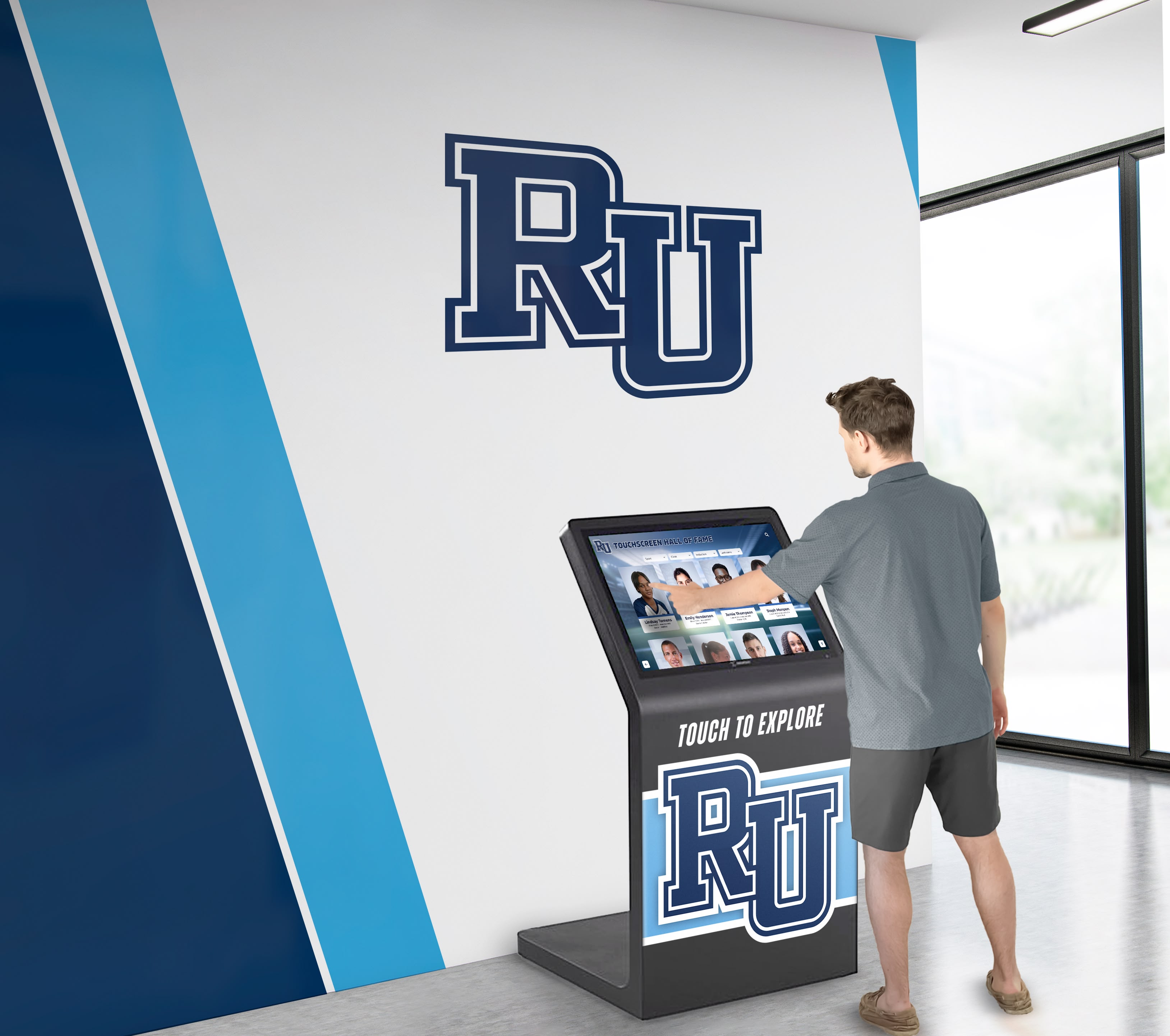
Digital recognition displays enable schools and clubs to create comprehensive soccer recognition including unlimited player profiles (detailed records for every significant contributor without space constraints), multimedia content (action photos, video highlights, statistics, biographical information), searchable databases (finding specific players, years, or achievement types instantly), automatic updates (adding new records or achievements without physical renovations), and comparative analytics (showing how current players compare to historical program leaders).
These capabilities transform static recognition into engaging interactive experiences that inspire current players while honoring past achievement comprehensively.
Web-Based Virtual Recognition
Beyond physical displays, web-based recognition platforms extend soccer achievement celebration worldwide through remote accessibility (alumni access recognition from anywhere globally), social sharing (families and players share achievements across networks), recruiting visibility (prospective players research program tradition), mobile optimization (perfect display on all device types), and integration with existing websites (seamless connection to school athletic sites).
This extended reach amplifies recognition impact far beyond physical facility visitors, creating engagement opportunities supporting alumni connection strategies.
Benefits of Digital Soccer Recognition
Schools and clubs implementing digital recognition systems experience multiple benefits including cost-effective long-term operation (eliminating recurring plaque and update costs), instant record updates (reflecting new achievements within minutes rather than weeks), enhanced player motivation (visible recognition inspiring pursuit of records), comprehensive historical preservation (complete program documentation for future generations), and measurable engagement analytics (understanding how recognition creates community connection).
For programs evaluating recognition options, guidance on athletic recognition systems explores implementation considerations applicable to soccer-specific needs.
The Evolution of Goal-Scoring: How the Game Has Changed
Understanding all-time scoring records requires appreciating how soccer has evolved across different eras, affecting the context in which historical and modern goal totals accumulated.
Tactical Evolution
Soccer tactics have transformed dramatically since the sport’s early decades including defensive sophistication (modern defensive systems making scoring more difficult), possession-based play (reducing transition opportunities favoring quick strikers), pressing intensity (limiting time and space for attackers), specialized positions (evolution from general forwards to specialized striker roles), and team shape compactness (reducing spaces between defensive lines).
These tactical developments mean that modern goal-scoring achievement occurs against more organized opposition than historical eras when defensive systems were less sophisticated and structured.
Physical and Athletic Development
Modern professional soccer features substantially enhanced physical preparation including year-round conditioning (eliminating off-season deconditioning), nutrition science (optimizing body composition and recovery), injury prevention (reducing career-limiting injuries), sport science (data-driven performance optimization), and career longevity (elite players maintaining peak performance into mid-30s).
These advances enable modern players like Ronaldo and Messi to sustain elite goal-scoring across two decades—longevity difficult to match in earlier eras when players typically declined in their late 20s.
Match Frequency and Competition Structure
Modern players compete in more matches annually than historical counterparts including congested calendars (top players featuring in 50-60+ matches per season), increased competition intensity (every match featuring quality opposition), international travel demands (global club competitions requiring extensive travel), and year-round seasons (minimal off-season recovery periods).
This increased match load both provides more goal-scoring opportunities and creates physical demands potentially limiting peak performance in individual matches.
Documentation and Verification Standards
Perhaps the biggest difference between eras involves record-keeping and verification including comprehensive modern statistics (every goal documented with video evidence), historical record gaps (incomplete documentation from earlier eras), standardized competition formats (clear distinction between competitive and friendly matches), and universal record-keeping (global databases tracking all competitions systematically).
Modern players benefit from certain goal-scoring environment advantages but face more rigorous verification standards ensuring their totals include only goals scored in officially sanctioned competitive matches against quality opposition.
Teaching Goal-Scoring: Youth Development Principles
For youth coaches and programs developing future goal scorers, understanding principles that create consistent scoring ability helps players maximize their attacking potential.
Technical Foundations
Youth players should master fundamental skills including shooting technique (proper striking mechanics with both feet), first touch development (receiving balls in positions enabling immediate shooting), finishing under pressure (maintaining technique despite defensive pressure and time constraints), heading technique (proper approach, timing, and contact for aerial goals), and weak foot training (deliberate practice ensuring comfort finishing with both feet).
Creating Scoring Opportunities
Beyond finishing, players must learn to generate chances including off-ball movement (finding spaces defenders struggle to cover), timing of runs (breaking lines at precise moments), attacking third positioning (understanding dangerous areas), combination play (quick exchanges creating shooting space), and transition attack (exploiting defensive disorganization during turnovers).
Mental Development
Goal-scoring excellence requires mental skills including confidence building (maintaining self-belief despite missed chances), visualization practice (mentally rehearsing successful finishing), pressure management (thriving in high-stakes scoring situations), resilience development (overcoming scoring droughts constructively), and game intelligence (reading defensive patterns and exploiting weaknesses).
For schools implementing comprehensive athletic development programs, resources on school pride and culture building explore how recognition systems support positive development environments where athletes pursue excellence.

Comparing Eras: Can We Definitively Rank All-Time Scorers?
The question driving this exploration—who are soccer’s all-time leading scorers—resists definitive answers due to fundamental challenges comparing across eras with vastly different contexts.
Arguments for Modern Players
Contemporary stars like Ronaldo and Messi have strongest claims to all-time supremacy based on comprehensive documentation (every goal verified with video evidence), consistent competition level (scoring against elite opposition in top leagues), tactical sophistication (succeeding against advanced defensive systems), professional environments (full-time training and preparation maximizing performance), and head-to-head competition (directly competing against each other and other elite contemporaries).
Arguments for Historical Legends
Historical players like Pele, Bican, and others deserve recognition for pioneering excellence (defining what elite goal-scoring looked like in earlier eras), cultural impact (inspiring generations and globalizing soccer), dominance within their eras (achieving unprecedented records given contemporary standards), innovation (developing techniques and approaches later players built upon), and less specialized opposition (perhaps, though this cuts both ways—less defensive sophistication but also less offensive support).
The Impossibility of Definitive Rankings
Ultimately, comparing across eras requires acknowledging different competitive structures (varying league qualities, match frequencies, tournament formats), inconsistent documentation (modern comprehensive statistics vs. historical estimates), tactical evolution (fundamentally different playing styles and systems), physical preparation advances (modern sport science vs. historical training methods), and subjective evaluation needs (statistics tell incomplete stories requiring contextual judgment).
Perhaps the most intellectually honest conclusion recognizes multiple players as “greatest of their era” rather than forcing definitive rankings across incomparable contexts. Ronaldo dominates modern documented records; Pele symbolizes historical excellence and global impact; Messi represents technical brilliance and sustained excellence; historical figures like Bican achieved extraordinary records given their era’s standards.
Conclusion: Celebrating Soccer’s Goal-Scoring Excellence
Soccer’s all-time leading scorers—whether Cristiano Ronaldo’s documented 900+ goals, Lionel Messi’s 820+ achievements, Pele’s legendary status, or Josef Bican’s FIFA-recognized historical record—represent the sport’s ultimate attacking excellence. These players combined technical mastery, tactical intelligence, physical capability, and mental strength to achieve goal-scoring records that define careers and inspire generations of players pursuing their own excellence.
Understanding these records requires appreciating both raw numbers and broader context including verification standards and documentation quality, competitive level and opposition quality, era-specific tactical and physical environments, career longevity and consistency across seasons, and impact beyond statistics on soccer culture and history.
For schools and clubs honoring their own goal-scorers—from high school players breaking program records to club legends defining organizational history—modern digital recognition systems provide powerful platforms for celebrating achievement comprehensively. Interactive displays enable unlimited recognition capacity, rich multimedia content, instant updates, engaging exploration, and worldwide accessibility that transforms how organizations honor soccer excellence.
Celebrate Your Soccer Excellence
Discover how Rocket Alumni Solutions can help you create a comprehensive soccer recognition program that honors goal-scoring legends while inspiring future generations.
Schedule Your Free DemoWhether following Ronaldo’s pursuit of 1,000 career goals, tracking young players chasing high school records, or researching soccer history’s greatest goal-scorers, understanding all-time scoring achievement enriches appreciation for soccer’s most celebrated skill—putting the ball in the net. As the game continues evolving and new generations of players emerge, goal-scoring records will continue being broken, debated, and celebrated as soccer’s most visible measure of attacking excellence.
Ready to honor your program’s goal-scoring tradition? Explore how modern recognition platforms can transform how you celebrate the athletes, records, and moments that define your soccer program’s attacking legacy.































