Every day, schools invest thousands of dollars in digital recognition displays that beautifully showcase student achievements, athletic records, alumni success stories, and institutional history. These displays engage visitors on campus, celebrate excellence, and build community pride. Yet most schools miss a critical opportunity: these recognition displays represent an untapped goldmine of authentic, high-quality social media content that could multiply their reach exponentially beyond campus walls.
While your digital display reaches hundreds of on-campus visitors weekly, the same content strategically shared on social media can engage thousands—or tens of thousands—of students, parents, alumni, prospective families, and community members. In an era where younger generations spend significant time on social platforms and prefer social media for content consumption, schools that fail to leverage recognition content for social media engagement leave enormous value on the table.
This comprehensive guide reveals how forward-thinking institutions transform their digital recognition displays into social media content engines that drive engagement, showcase excellence, strengthen community connections, and amplify institutional brand—all while requiring minimal additional effort beyond your existing recognition programs.
The disconnect between impressive campus displays and lackluster social media presence plagues countless schools. Athletic directors meticulously maintain record boards and hall of fame displays, yet their Instagram accounts post sporadically with low-quality phone photos. Alumni relations teams invest in sophisticated digital alumni recognition platforms that highlight distinguished graduates on campus, while their LinkedIn presence languishes with minimal engagement. Recognition coordinators spend hours perfecting touchscreen content that on-campus visitors explore, but equivalent content never reaches the broader online community that could benefit from and share these stories.
This comprehensive strategy addresses exactly how to bridge this gap—transforming recognition displays from campus-only assets into multi-channel content ecosystems that serve both physical and digital audiences simultaneously.
Why Recognition Content Dominates Social Media Engagement
Before exploring implementation strategies, understanding why recognition content performs exceptionally well on social platforms proves essential for gaining stakeholder buy-in and prioritizing this approach.
Recognition Content Aligns Perfectly with High-Engagement Post Types
Research consistently demonstrates that three content categories generate highest engagement rates across school social media accounts: posts with candid photos, posts about people, and posts about accomplishments. Recognition content naturally incorporates all three elements simultaneously, creating perfect alignment with what audiences most want to see and share.
Educational institutions consistently find that people-focused and achievement-focused content significantly outperforms generic institutional updates across social platforms. Recognition stories inherently focus on individual people and their accomplishments, making them ideal for the storytelling formats that drive social media success.
Authentic Stories Trump Polished Marketing Messages
Modern audiences, particularly younger demographics, demonstrate strong preference for authentic, genuine content over highly produced marketing materials. Younger audiences increasingly prefer authentic behind-the-scenes content when engaging with educational institutions online, while overly promotional content generates significantly lower trust and engagement.
Recognition content possesses built-in authenticity. Stories about actual students achieving real accomplishments, alumni making tangible community impact, or teachers receiving well-deserved appreciation carry inherent credibility that manufactured marketing messages cannot replicate. When you share an athlete’s record-breaking performance or a distinguished alumni inductee’s inspiring journey, audiences engage because the stories are real, relatable, and meaningful—not because a marketing team crafted them to sound impressive.
Recognition Creates Emotional Resonance and Sharing Motivation
Social media engagement fundamentally depends on emotional connection. Content that makes people feel proud, inspired, nostalgic, or connected to something larger than themselves generates sharing behavior far exceeding informational posts.
Recognition content triggers powerful emotional responses. Current students feel inspired by peer accomplishments that demonstrate achievable excellence. Parents experience pride seeing their children’s achievements celebrated publicly. Alumni feel nostalgic reconnecting with their era’s inductees or athletic records. Prospective families envision their future students joining this community of excellence. Each of these emotional responses creates sharing motivation—the critical behavior that exponentially amplifies reach beyond your follower base.
When someone shares recognition content, they’re not just promoting your institution; they’re celebrating people they care about, expressing pride in community membership, or showcasing their own connection to excellence. This personal investment makes recognition content inherently more shareable than generic school updates.
People Tag, Comment, and Engage with Personal Recognition
The algorithmic reality of modern social media platforms rewards engagement. Posts generating high rates of likes, comments, shares, and tags receive dramatically increased visibility through platform algorithms that prioritize “engaging” content in followers’ feeds.
Recognition content naturally generates engagement behaviors that please algorithms. Students featured in posts tag themselves and friends, generating multiple interactions. Parents comment with congratulatory messages and share to their networks. Alumni tagged in historical throwback content re-engage with institutions after years of dormancy, commenting on memories and tagging classmates. Each interaction signals to platform algorithms that this content matters to users, resulting in expanded distribution to broader audiences.
Recognition Content Performance Advantages
Educational institutions consistently observe that recognition-focused posts featuring student and alumni achievements significantly outperform generic institutional updates across key metrics:
Recognition-Focused Posts tend to generate:
- Higher engagement rates through likes, comments, and shares
- More profile tags as featured individuals and families engage
- Greater reach beyond existing follower bases through organic sharing
- Increased comments from community members celebrating achievements
- Extended visibility through platform algorithms that reward engagement
Generic Institutional Updates typically show:
- Lower overall engagement rates
- Minimal sharing beyond immediate followers
- Fewer comments and interactions
- Limited algorithmic amplification
The performance difference stems from recognition content’s inherent emotional resonance, authentic storytelling, and personal connection that motivates community members to engage, share, and celebrate—behaviors that generic announcements rarely inspire.
Strategic Framework: From Display to Distribution
Effectively transforming recognition displays into social media content requires strategic frameworks rather than random posting. Successful schools implement systematic approaches that ensure consistent, high-quality content distribution across appropriate platforms.
Content Inventory and Categorization
Begin by auditing all recognition content currently featured on your digital displays or planned for future inclusion. Comprehensive inventory prevents duplication, identifies gaps, and enables strategic scheduling across extended timeframes.
Content Categories to Inventory:
Athletic Recognition:
- Individual athlete achievements and records
- Team championship seasons
- Coaching milestones and honors
- Historic athletic moments and traditions
- Student-athlete academic excellence
Academic Achievement:
- Valedictorians and academic award recipients
- Scholarship winners and merit recognition
- Competition success (Science Olympiad, Quiz Bowl, Debate, etc.)
- Research accomplishments and presentations
- Academic program milestones
Alumni Excellence:
- Distinguished alumni career achievements
- Hall of fame inductees and honorees
- Alumni giving back through mentoring or support
- Multi-generational family traditions
- Notable alumni in the news
Arts and Performance:
- Theater, music, and dance accomplishments
- Art exhibition participants and award winners
- Performance competition successes
- Creative works and student showcases
Community and Service:
- Volunteer service recognition and hours
- Community impact initiatives
- Student leadership positions and activities
- Citizenship awards and character recognition
Historical and Traditional:
- Institutional milestones and anniversaries
- Throwback photos and historical moments
- Evolution of programs, facilities, and traditions
- Archived yearbook content and memorabilia
For each content item, document available media assets (photos, videos, graphics), associated stories or biographical information, relevant dates or milestones, people who should be tagged or mentioned, and appropriate hashtags. This inventory becomes your content library enabling strategic planning and efficient execution.
Platform-Specific Content Adaptation
Different social platforms serve distinct audiences with unique content preferences and optimal formats. Rather than posting identical content across all channels, strategic adaptation maximizes engagement on each platform.
Instagram Strategy:
Instagram dominates visual storytelling among younger audiences and consistently shows strong engagement rates for educational institutions. Optimize recognition content for Instagram through:
- Carousel posts showcasing multiple angles or historical progression of achievements
- Reels featuring 15-60 second video highlights of performances, games, or recognition ceremonies
- Stories providing behind-the-scenes looks at induction events or athlete interviews
- Profile highlights organizing recognition by category (Athletics, Academics, Alumni) for permanent accessibility
- Square or vertical orientation optimized for mobile viewing
- Consistent visual branding using school colors, fonts, and graphic templates
Instagram’s algorithm heavily favors video content, particularly Reels. Schools incorporating video elements from digital recognition displays into social media consistently see higher engagement than static photo posts alone.
Facebook Community Building:
Facebook remains dominant for parent engagement and alumni connection, making it ideal for longer-form recognition stories and community celebration:
- Detailed captions providing fuller context and biographical information
- Photo albums featuring multiple images from induction ceremonies or recognition events
- Facebook Live streaming recognition ceremonies for families unable to attend
- Event pages promoting upcoming recognition ceremonies with integrated registration
- Group posting in alumni class groups or booster club communities
- Milestone celebrations leveraging Facebook’s memory features for throwback recognition
Facebook users engage more deeply with emotional, story-driven content that provides connection to people and community rather than quick visual consumption.
LinkedIn Professional Network:
LinkedIn serves alumni professional networking and institutional reputation building among career-focused audiences:
- Alumni career achievement spotlights showcasing professional success
- Academic program outcomes highlighting student career placement and success
- Distinguished inductee announcements with professional accomplishment focus
- Thought leadership content from honored alumni or faculty
- Institutional milestone celebrations positioning your school’s broader impact
- Professional networking facilitation connecting alumni in similar industries
LinkedIn content should emphasize professional angles, career outcomes, and leadership development—positioning recognition within broader narratives about preparing students for career success.
Twitter/X Real-Time Engagement:
Twitter excels at timely updates, live event coverage, and conversational engagement:
- Real-time recognition announcements during games, ceremonies, or competitions
- Quick statistical highlights celebrating record-breaking performances
- Live-tweeting from induction ceremonies or recognition events
- Threaded storytelling breaking longer recognition stories into tweet threads
- Hashtag campaigns creating discoverable collections around specific recognition categories
- Engagement with mentions responding when honored individuals share or comment
Twitter’s fast-paced, conversational nature rewards frequent posting, timely updates, and active community engagement rather than highly produced content.
TikTok Youth Appeal:
For schools targeting prospective students and engaging current youth audiences, TikTok’s short-form video format offers unique opportunities:
- Quick-cut achievement highlights featuring dynamic editing and trending audio
- Student-filmed content showing authentic peer perspectives on recognition culture
- Transformation stories using before/after formats to show athlete or student progression
- Participation in trending challenges adapted to showcase your recognition culture
- Behind-the-scenes moments from recognition ceremonies or display installations
TikTok requires authentic, fun, creative approaches rather than polished, formal content. Students often serve as ideal content creators for this platform, bringing appropriate tone and understanding of platform culture.
YouTube Permanent Library:
YouTube functions as permanent video archive and search-friendly repository for long-form recognition content:
- Full induction ceremony recordings providing families permanent access to special moments
- Documentary-style profiles featuring extended interviews with distinguished honorees
- Historical compilations creating video narratives about program evolution and traditions
- Panel discussions or interviews with multiple honorees discussing common themes
- Virtual hall of fame tours allowing remote audiences to explore displays comprehensively
YouTube content serves different purpose than other platforms—creating permanent, searchable, long-form video library rather than driving immediate engagement. This complements the ephemeral nature of other platforms.
Content Creation Workflows That Scale
Creating consistent social media content from recognition displays requires efficient workflows that integrate seamlessly into existing responsibilities without overwhelming staff.
Systematic Content Capture Process
The most effective approach builds content capture directly into recognition display development workflows, ensuring social media assets are created simultaneously with display content rather than as separate, additional work.
During Initial Content Development:
When creating new inductee profiles, athletic records, or recognition categories for your digital display platform, simultaneously capture social media assets:
- Photograph subjects with multiple framing options: tight headshot, medium waist-up, full-body, and action shots if applicable
- Record short video clips (15-30 seconds) of subject discussing their achievement, thanking supporters, or sharing advice
- Capture b-roll footage of relevant locations, activities, or memorabilia
- Photograph any physical awards, trophies, or recognition materials
- Document quotes and biographical information in formats easily adapted for various platforms
This integrated approach requires minimal additional time during content creation while building comprehensive asset libraries supporting months of future social media posting.
During Recognition Events and Ceremonies:
Induction ceremonies, award presentations, and recognition unveilings provide rich content opportunities requiring dedicated capture:
- Assign designated photographer or videographer rather than relying on random phone photos
- Capture key moments: arrival, honoree interactions, presentation moments, emotional reactions, group photos
- Record short video interviews with inductees, families, or fellow honorees
- Photograph the physical display or recognition elements being unveiled
- Document audience reactions and community celebration
- Collect consent and contact information for tagging purposes
Professional-quality event documentation enables weeks or months of social media content from single events while preserving memories for honorees and their families.
Leveraging Student Content Creators:
Many schools successfully engage students as content creators, particularly for platforms like TikTok and Instagram where peer-created content often outperforms institutional messaging:
- Media classes or clubs creating content as curriculum-aligned projects
- Student ambassadors providing authentic peer perspectives on recognition culture
- Athlete or student influencers with existing follower bases amplifying reach
- Internship programs offering real-world marketing experience to aspiring communications professionals
Student creators bring authentic voice, platform expertise, and built-in audiences that professional marketing teams often lack, particularly for younger demographic targeting.
Content Calendar and Scheduling Strategy
Consistent posting requires systematic planning preventing last-minute scrambling or inconsistent presence:
Annual Planning Framework:
Build annual content calendars around predictable recognition milestones:
- Athletic season recognition (fall, winter, spring sports cycles)
- Academic year milestones (honor roll releases, scholarship announcements, graduation)
- Alumni events (homecoming, reunions, giving campaigns)
- Historical anniversaries (program milestones, facility dedications, institutional founding dates)
- National awareness days or months relevant to recognition categories
This framework provides structure while allowing flexibility for unexpected recognition opportunities or timely content.
Batching and Scheduling:
Rather than creating content daily, efficient workflows batch creation during dedicated sessions and use scheduling tools for consistent distribution:
- Dedicate 2-4 hours monthly to creating next month’s recognition content
- Use scheduling platforms (Later, Hootsuite, Buffer, Meta Business Suite) to queue posts
- Maintain 2-3 week buffer of scheduled content preventing gaps during busy periods
- Reserve capacity for timely, reactive posts about current events or breaking achievements
Batching dramatically improves efficiency while ensuring consistent presence even during resource-constrained periods.
Optimal Posting Frequency by Platform:
Research reveals platform-specific posting frequencies that balance visibility with audience fatigue:
- Instagram: 4-7 posts per week plus daily stories
- Facebook: 3-5 posts per week
- Twitter/X: 1-3 posts daily
- LinkedIn: 2-3 posts per week
- TikTok: 3-5 videos per week
- YouTube: 1-2 videos per month minimum
These frequencies serve as guidelines; actual optimal frequency varies by audience size, engagement rates, and content quality. Monitoring analytics reveals ideal cadence for your specific community.
Template and Branding Systems
Consistent visual identity strengthens brand recognition while dramatically accelerating content creation through pre-designed templates:
Graphic Design Templates:
Create Canva, Adobe, or Photoshop templates for common recognition post types:
- Athlete spotlight cards with photo, stats, and achievement text
- Alumni feature templates highlighting career accomplishments
- Record-breaking announcement graphics with dynamic visual emphasis
- Quote graphics featuring inspirational messages from honorees
- Countdown graphics building anticipation for upcoming induction ceremonies
Templates enable non-designers to create professional, branded content in minutes rather than starting from scratch for each post. Maintain template libraries organized by category and platform for efficient access.
Hashtag Strategies:
Develop tiered hashtag systems combining:
- Branded school hashtags unique to your institution (#SchoolName, #SchoolMascotNation, #SchoolNamePride)
- Recognition-specific hashtags for specific programs (#SchoolNameHOF, #MascotExcellence, #SchoolNameAthletics)
- Broad discovery hashtags reaching beyond existing followers (#StudentAthlete, #AlumniSuccess, #EducationExcellence)
- Location-based hashtags connecting with local community (#CityName, #CountySchools, #StateName)
- Trending or timely hashtags when relevant (#ThrowbackThursday, #MotivationMonday, #NationalSchoolPride)
Strategic hashtag use expands discoverability, organizes content into searchable collections, and facilitates user-generated content aggregation when community members post with your branded tags.
Caption Frameworks:
Develop structured caption approaches ensuring consistent quality and comprehensive information:
Opening hook (first sentence) captures attention and entices continued reading Achievement summary clearly states what is being recognized and why it matters Personal story elements add human interest and emotional connection Institutional connection links individual achievement to broader school excellence Call to action encourages engagement (tag someone inspired, share your memories, congratulate in comments) Hashtags and tags expand reach and notify relevant individuals or accounts
Caption templates guide consistent storytelling while allowing customization for individual subjects.
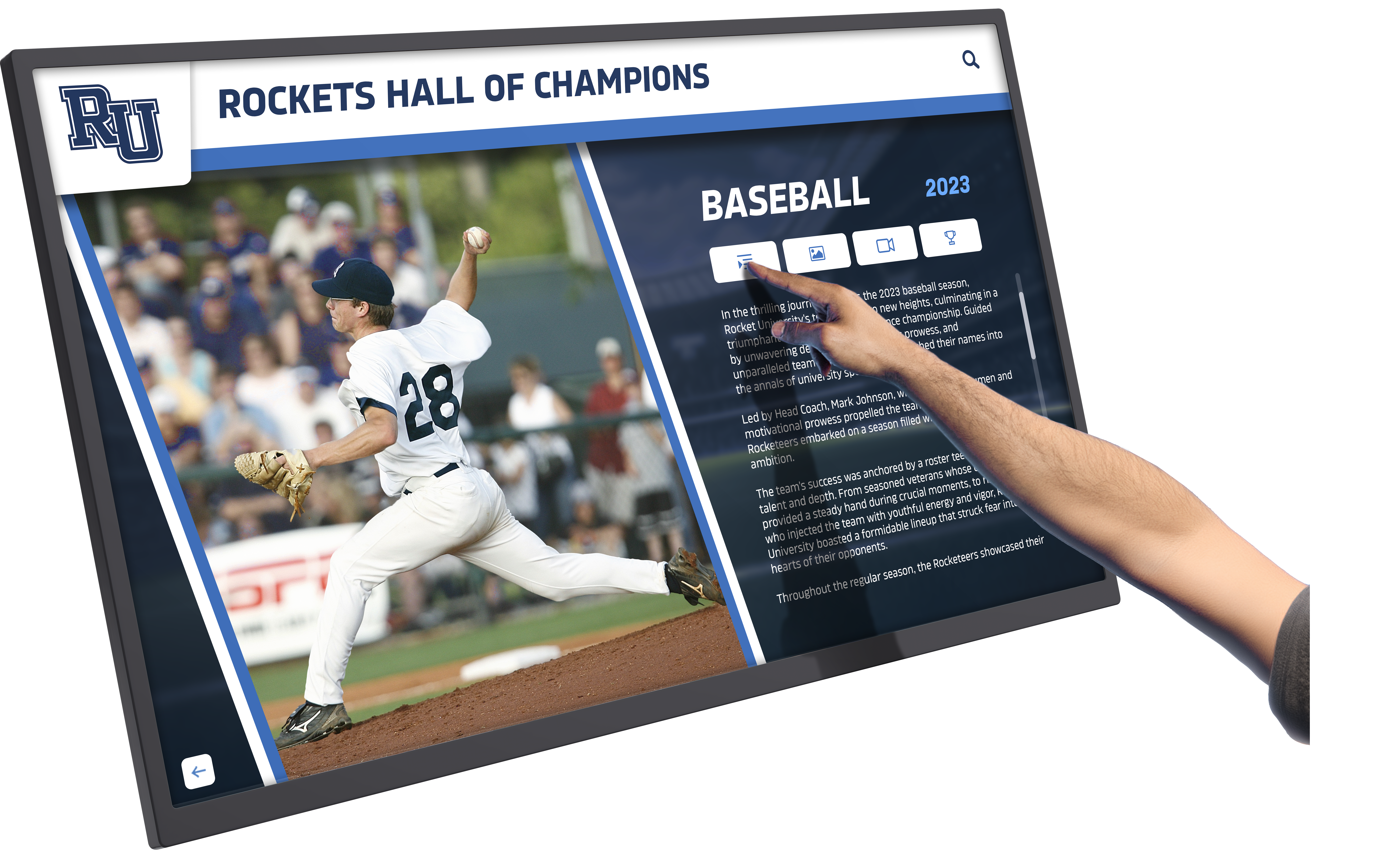
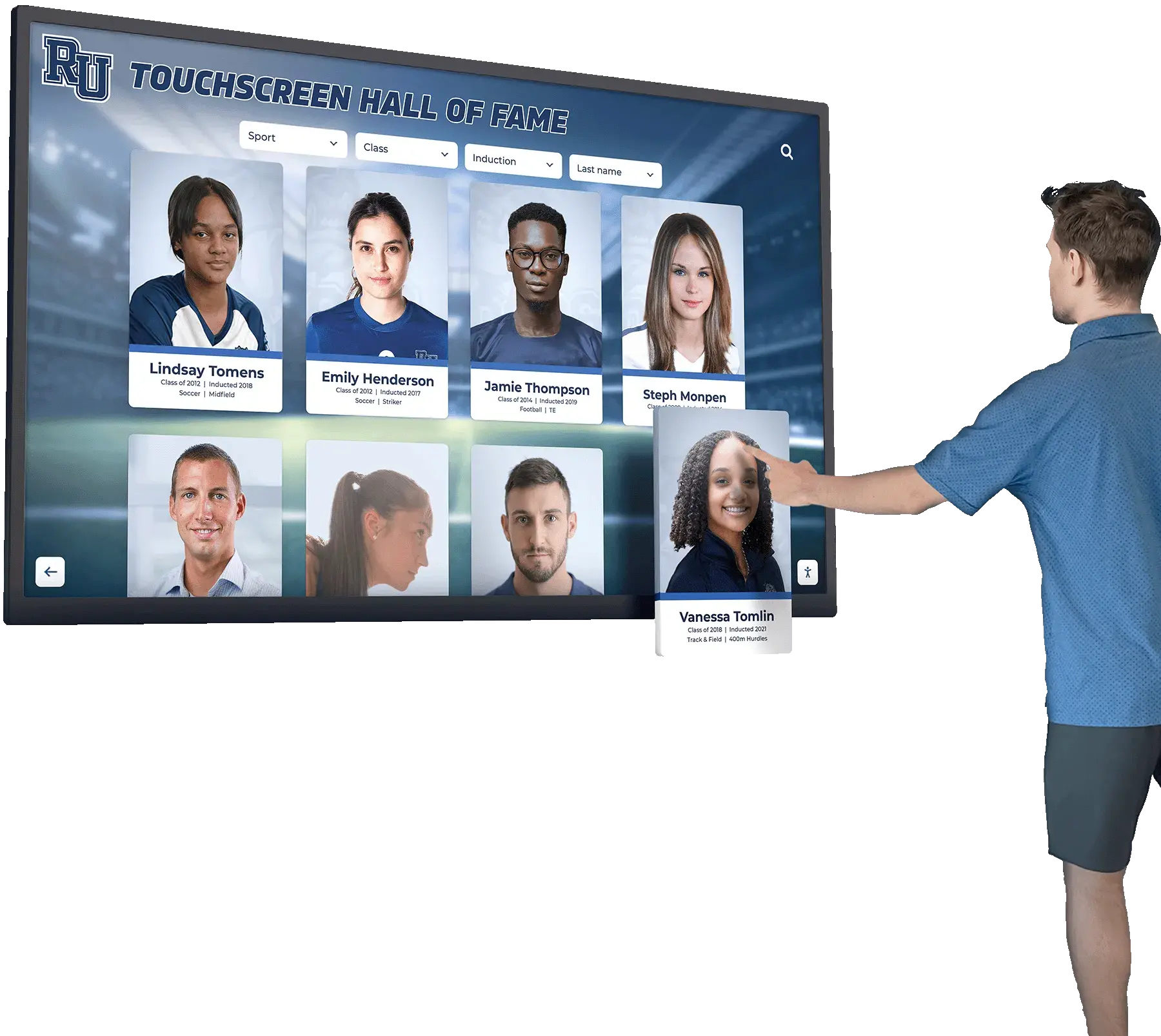
Rich display content provides abundant material for engaging social media posts
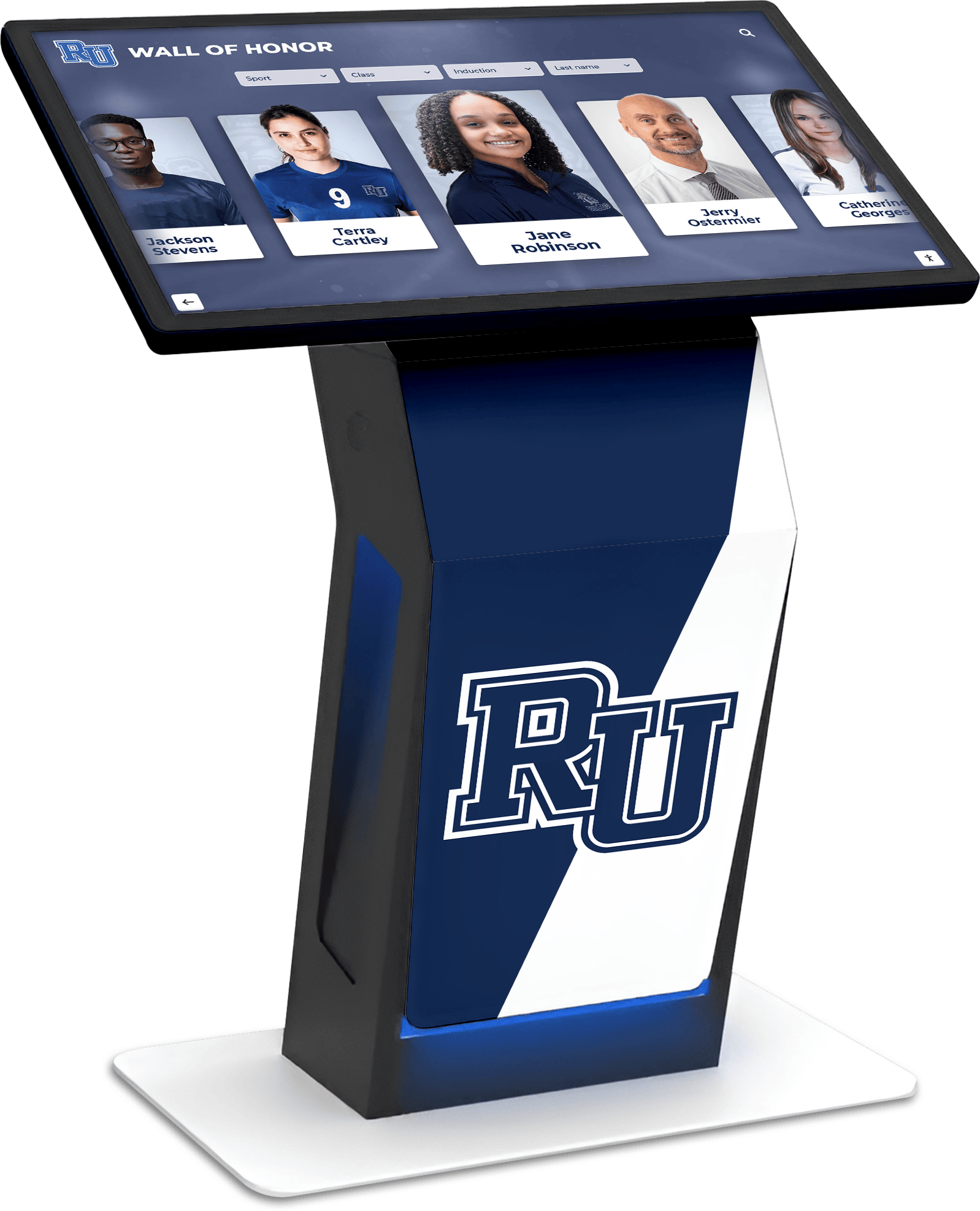
High-quality display installations photograph beautifully for social sharing
Advanced Strategies for Maximum Impact
Beyond foundational approaches, advanced tactics multiply recognition content effectiveness across social platforms.
User-Generated Content Integration
The most powerful social media content often comes from your community rather than institutional accounts. Strategic approaches facilitate and amplify user-generated recognition content:
Hashtag Campaigns Encouraging Participation:
Create specific hashtags for recognition events or categories, then actively encourage community members to post their own content using these tags:
- #SchoolNameHOF2025 for annual induction events
- #MascotLegacy for alumni sharing their school memories
- #ProudParentOf[SchoolName] for families celebrating student achievements
- #SchoolNameMVP for athletic highlight sharing
Promote these hashtags at physical events, on recognition displays, in email communications, and across official social accounts. Monitor and engage with posts using your hashtags, share exceptional examples to your official accounts, and consider featuring top contributors in recognition programs.
Display Integration with Social Features:
Modern digital recognition platforms can integrate social media feeds directly into displays, creating feedback loops between physical and digital engagement:
- Display live social media feeds showing posts with your branded hashtags
- Feature QR codes on displays enabling visitors to instantly share content to their social accounts
- Include social media handles prominently on displays encouraging follows and tags
- Showcase top social media posts about recognition on displays themselves, validating participation
This integration motivates visitors to create and share social content while simultaneously providing fresh, authentic material for displays.
Contests and Challenges:
Structured campaigns encourage specific types of user-generated recognition content:
- “Favorite school memory” photo contests during reunion or homecoming weeks
- “Tag your favorite teacher” appreciation campaigns during teacher recognition periods
- “Throwback Thursday” challenges encouraging alumni to share old school photos
- “Future hall of famer” nomination campaigns where community members submit recognition candidates
Contests generate engagement spikes, build excitement around recognition programs, surface compelling stories for official content, and expand reach as participants share their submissions and tag friends.
Live and Real-Time Content
The immediacy of live content creates unique engagement opportunities around recognition events:
Live Streaming Ceremonies:
Broadcasting induction ceremonies, awards presentations, or recognition unveilings via Facebook Live, Instagram Live, or YouTube Live extends attendance beyond physical capacity:
- Enables families unable to travel to participate remotely
- Creates permanent video records families treasure and share
- Generates real-time comments and reactions building community excitement
- Positions recognition as priority worthy of live coverage
Successful live streams require reliable internet connectivity, quality audio capture (invest in external microphones), adequate lighting, steady camera positioning or operators, and promotion in advance so community knows when and where to watch.
Real-Time Social Coverage:
For events not suitable for full live streaming, real-time social media updates create similar engagement:
- Tweet or Instagram Story key moments as they happen
- Post photos immediately after significant presentations
- Share honoree quotes or emotional moments in real-time
- Use live social features (Instagram/Facebook Live Stories) for short segments
Real-time coverage creates “you are here with us” feelings for remote audiences while demonstrating that recognition events merit immediate attention and sharing.
Countdown and Anticipation Building:
Leading up to major recognition announcements or events, systematic countdown content builds anticipation:
- “One week until HOF induction ceremony” posts with preview content
- Daily inductee spotlights in the week preceding ceremonies
- “Guess who’s being inducted” teaser campaigns revealing clues gradually
- Historical throwback posts connecting past and present honorees
Anticipation campaigns extend single-event impact across multiple weeks while keeping recognition programs consistently visible in social feeds.
Cross-Promotion and Partnership Amplification
Extending reach beyond your institutional accounts requires strategic partnerships and cross-promotion:
Honoree and Family Amplification:
When sharing recognition content featuring specific individuals, tag them directly (with permission) and provide them easy-to-share versions optimized for their personal accounts:
- Create shareable graphics they can post to their accounts
- Suggest caption language they can adapt for personal posting
- Provide high-resolution photos for their personal use
- Ask them to share institutional posts to their networks
Honored individuals and their families become powerful amplifiers, sharing content to networks completely separate from your follower base. An inductee with 2,000 Facebook friends sharing recognition instantly expands reach to audiences you couldn’t otherwise access.
Local Media Relationships:
Recognition stories often interest local media outlets seeking positive community news:
- Provide press releases about distinguished honorees or notable achievements
- Invite media to attend and cover major recognition ceremonies
- Offer high-quality photos and video b-roll for media use
- Develop relationships with local sports reporters covering your athletic recognition
Media coverage provides third-party validation while reaching community members who may not follow your social accounts, driving new follower acquisition.
Partner Organization Collaboration:
Many honored individuals connect to external organizations willing to amplify recognition:
- Alumni employers highlighting their team members’ recognition
- Community organizations featuring members receiving service awards
- Professional associations sharing member accomplishments
- Feeder schools celebrating graduates’ continued success
- Industry publications featuring distinguished alumni
Identify these natural partnership opportunities and proactively provide content and context enabling partners to easily share and celebrate recognition connecting to their communities.
Analytics and Optimization
Data-driven optimization ensures recognition content delivers maximum return on investment:
Key Metrics to Monitor:
- Engagement rate: Likes, comments, shares, and saves as percentage of reach
- Reach: Total unique accounts seeing content
- Impressions: Total views including multiple views by same accounts
- Profile visits: How many viewers clicked through to learn more about your school
- Website clicks: Traffic driven from social posts to your institutional website
- Follower growth: New followers acquired during recognition content campaigns
- Tagged mentions: How frequently community members tag your account in their content
- Saves: Users bookmarking content for future reference (strong interest signal)
A/B Testing Approaches:
Systematically test variables to identify what resonates most with your specific audience:
- Post timing (different days of week, times of day)
- Caption length (brief vs. detailed storytelling)
- Visual formats (photos vs. videos vs. carousels)
- Hashtag quantities (focused few vs. comprehensive lists)
- Call-to-action types (comment vs. share vs. tag vs. visit link)
Test one variable at a time with otherwise similar posts to isolate what actually drives performance differences.
Continuous Improvement:
Monthly or quarterly analytics reviews identify trends warranting strategic adjustments:
- Which recognition categories generate highest engagement?
- What content formats (video, carousel, single image) perform best?
- Which posting times and days show optimal reach?
- What caption approaches drive most comments and shares?
- Which hashtags expand reach versus just categorizing for existing followers?
Use these insights to refine content strategy, double down on high-performing approaches, and adjust or eliminate consistently underperforming tactics.
Overcoming Common Implementation Challenges
Even with clear strategies, schools encounter predictable obstacles when transforming recognition into social content. Proactive approaches address these challenges effectively.
Limited Staff and Time Constraints
Small communications teams juggling multiple responsibilities struggle to add consistent social media content creation without overwhelming existing capacity:
Solution: Integration Not Addition
Rather than treating social media as separate responsibility, integrate content capture into existing recognition workflows. When creating display content, simultaneously capture social assets. When hosting recognition events, assign photography responsibilities to existing event staff or volunteers. When students or faculty create recognition materials for other purposes, request social media versions concurrently.
Solution: Student and Volunteer Engagement
Many schools successfully leverage student media programs, marketing classes, journalism clubs, or alumni volunteers to create recognition content under staff supervision. This approach builds student skills, creates authentic peer voice, and extends capacity without budget increases. Comprehensive guides about training staff on digital recognition displays provide frameworks adaptable for student content creators.
Solution: Technology and Automation
Scheduling tools, template systems, and content libraries dramatically reduce time required for consistent posting. Invest initial time creating templates and establishing workflows, then reap ongoing efficiency gains as these systems accelerate subsequent content creation.
Maintaining Privacy and Gaining Permissions
Recognition content features real people, requiring attention to privacy, permissions, and appropriateness:
Solution: Comprehensive Permission Systems
Implement systematic permission collection during enrollment or recognition nomination processes:
- Include social media usage permissions in general photo/media release forms
- Specifically request permission to tag individuals in social media posts
- Clarify that recognition may be shared across multiple platforms
- Provide options for individuals who consent to recognition displays but not social media
Store permissions systematically in your CRM or database, enabling quick verification before posting content featuring specific individuals.
Solution: Minor Protection Protocols
For content featuring students under 18, implement additional safeguards:
- Never tag minor students’ personal social media accounts
- Limit personally identifying information in captions
- Obtain parent/guardian permission specifically for social media sharing
- Consider face-obscuring in wider shots where individuals aren’t central subjects
- Review institutional policies with legal counsel ensuring compliance
These protocols protect students while still enabling recognition content creation.
Solution: Opt-Out Mechanisms
Provide clear, accessible processes for individuals who wish recognition to remain campus-only without social media distribution. Respect these preferences consistently to maintain trust and institutional integrity.
Ensuring Consistency and Quality
Inconsistent posting schedules or varying quality undermines social media effectiveness:
Solution: Content Calendar Discipline
Treat social media scheduling as non-negotiable commitment similar to other institutional communications. Maintain minimum 2-3 week content buffer preventing gaps during busy periods. Block dedicated calendar time monthly for content creation ensuring it happens rather than becoming perpetually deprioritized.
Solution: Quality Baselines
Establish minimum quality standards ensuring content consistently reflects institutional brand:
- Photo resolution and lighting requirements
- Caption grammar and style guidelines
- Brand color and font usage standards
- Approval workflows for sensitive content
Quality baselines prevent problematic posts while ensuring everything published meets appropriate standards.
Solution: Platform-Specific Best Practices
Invest in understanding each platform’s optimal practices rather than identical cross-posting:
- Instagram requires high-quality visuals with mobile-first orientation
- Facebook enables longer captions with more context
- Twitter demands brevity and real-time relevance
- LinkedIn expects professional tone and career focus
Platform-appropriate optimization dramatically improves performance over generic, universal content.
Measuring and Demonstrating Value
Administrators increasingly demand evidence that social media efforts deliver tangible institutional benefits:
Solution: Comprehensive Metrics Tracking
Implement consistent analytics monitoring and regular reporting:
- Monthly dashboards summarizing key metrics across platforms
- Year-over-year growth tracking showing trajectory
- Engagement rate comparisons between recognition and other content types
- Reach expansion demonstrating audience growth
- Website traffic attribution from social referrals
Data-driven reporting demonstrates value while identifying optimization opportunities.
Solution: Qualitative Success Stories
Complement quantitative metrics with compelling anecdotes:
- Prospective families mentioning social media content during tours
- Alumni re-engaging with institution after seeing recognition posts
- Local media coverage resulting from social media awareness
- Community members expressing pride and sharing broadly
These stories illustrate impact that numbers alone cannot fully capture.
Solution: Peer Benchmarking
Compare your performance against similar institutions to provide context:
- Engagement rates relative to peer schools
- Follower growth compared to comparable programs
- Best practice adoption from high-performing peer accounts
Benchmarking reveals whether your performance reflects good execution or identifies improvement opportunities.
Implementation Roadmap: Getting Started
Ready to transform your recognition displays into social media content engines? This practical roadmap provides step-by-step guidance:
Phase 1: Foundation Building (Month 1)
Audit Existing Recognition Content:
- Inventory all current display content across categories
- Identify available assets (photos, videos, biographical information)
- Document permission status for each individual featured
- Assess content gaps requiring additional development
Establish Social Media Strategy:
- Define primary goals (engagement, reach, enrollment support, alumni connection)
- Identify priority platforms based on target audiences
- Set baseline metrics for future comparison
- Allocate responsibilities among team members
Create Template and Brand Systems:
- Develop graphic templates for common post types
- Establish hashtag strategies and standard sets
- Define caption frameworks and guidelines
- Set quality standards and approval processes
Phase 2: Content Development (Month 2)
Develop Initial Content Library:
- Create 20-30 posts from existing recognition content
- Produce platform-specific variations of strongest content
- Write captions following established frameworks
- Organize content by category and platform in content management system
Establish Workflows:
- Document content capture processes during recognition development
- Assign event photography responsibilities for upcoming ceremonies
- Create scheduling routines using chosen platform
- Implement review and approval procedures
Begin Consistent Posting:
- Schedule initial content across 2-3 weeks
- Start with 2-3 platforms rather than attempting all simultaneously
- Monitor early performance to identify what resonates
- Engage actively with comments and shares
Phase 3: Optimization and Expansion (Month 3-6)
Analyze Performance:
- Review monthly analytics identifying high-performers
- Identify underperforming content for improvement or elimination
- Test variables systematically (timing, formats, caption approaches)
- Gather community feedback about preferences and interests
Expand Coverage:
- Add additional platforms once initial channels run smoothly
- Increase posting frequency as workflows become efficient
- Experiment with advanced tactics (live content, user-generated campaigns)
- Develop partnerships with honorees, media, and organizations for amplification
Refine Approaches:
- Double down on high-performing content types and categories
- Adjust timing and frequency based on engagement patterns
- Enhance visual quality and storytelling based on feedback
- Streamline workflows eliminating inefficient processes
Phase 4: Sustained Excellence (Month 6+)
Maintain Consistency:
- Sustain regular posting schedules across all active platforms
- Continue content library development ensuring perpetual 2-3 week buffer
- Monitor analytics monthly adjusting strategies based on performance
- Maintain quality standards through consistent review processes
Build on Success:
- Launch user-generated content campaigns as follower base grows
- Implement live streaming for major recognition events
- Develop advanced content series highlighting specific themes
- Expand cross-promotion partnerships multiplying reach
Demonstrate Value:
- Create quarterly reports showcasing growth and impact
- Share success stories with institutional leadership
- Benchmark against peers demonstrating competitive performance
- Connect social media metrics to institutional priorities (enrollment, giving, alumni engagement)
This phased approach prevents overwhelming staff while building sustainable, effective recognition-to-social-media ecosystems that deliver long-term value.
Conclusion: Recognition Beyond Campus Walls
Your institution invests significantly in recognizing excellence—celebrating student achievements, honoring alumni success, acknowledging faculty contributions, and preserving institutional history through sophisticated digital recognition displays. These investments serve your on-campus community beautifully, creating engaging experiences for students, visitors, and families who physically walk your halls.
Yet when recognition remains confined to campus, you miss exponential opportunities to amplify these stories to thousands or tens of thousands of community members who never visit campus but who care deeply about your institution’s success, mission, and people. In an era where social media dominates communication and shapes perceptions, schools that fail to strategically leverage recognition content for digital distribution leave enormous value unrealized.
The path forward is clear: transform recognition displays from isolated campus assets into multi-channel content ecosystems serving both physical visitors and digital communities simultaneously. Implement systematic content capture workflows integrating social asset creation into existing recognition processes. Develop platform-specific distribution strategies that adapt content appropriately for Instagram, Facebook, LinkedIn, Twitter, TikTok, and YouTube audiences. Create template and branding systems enabling efficient, consistent content creation at scale. Launch user-generated campaigns that turn community members into amplifiers multiplying reach far beyond institutional accounts.
This transformation requires neither massive budgets nor extensive staffing increases. Success comes from strategic planning, efficient workflows, consistent execution, and data-driven optimization. Schools that commit to these approaches discover that their existing recognition investments—displays, ceremonies, and programs already in place—become powerful engagement engines driving social media performance that elevates institutional brand, strengthens community connections, attracts prospective students, and re-engages disconnected alumni.
Modern educational institutions operate in attention economies where visibility, engagement, and authentic storytelling determine success in enrollment, advancement, and community relations. Recognition content offers unmatched advantages in these areas: authenticity that resonates, emotional connections that motivate sharing, people-focused stories that algorithms reward, and community engagement that expands reach exponentially.
Ready to Amplify Your Recognition Program?
Rocket Alumni Solutions specializes in digital recognition platforms designed for multi-channel engagement. Our systems integrate campus displays, web accessibility, social sharing features, and content management tools that make transforming recognition into social media content seamless and efficient. Discover how our solutions help schools maximize recognition impact both on campus and across social platforms.
Explore Recognition SolutionsThe question is not whether your recognition content could drive social media success—research and experience conclusively demonstrate it can. The question is whether you’ll implement strategic approaches that unlock this potential, or whether you’ll continue limiting powerful recognition investments to campus-only impact when broader community engagement awaits just beyond your institutional walls.
Your students’ achievements deserve celebration that extends beyond physical trophies. Your alumni’s success stories warrant sharing that reaches more than campus visitors. Your institution’s excellence merits recognition that amplifies through social networks, shaping perceptions and strengthening connections across broader communities than ever before possible.
The tools, strategies, and frameworks exist. The content already resides in your recognition displays and programs. The audience waits across social platforms, eager to engage with authentic stories about people achieving excellence. Transform recognition into reach. Convert display content into digital engagement. Build social media presence that reflects the authentic excellence your institution celebrates daily. The opportunity is clear; execution determines whether you seize it.































