Speech & Debate team championships represent some of the most intellectually demanding competitive achievements in education, yet they often receive far less recognition than athletic victories. When students dedicate hundreds of hours to perfecting arguments, researching complex policy issues, crafting compelling oratory, and mastering the art of persuasive communication, their tournament victories and championship performances deserve celebration that matches the rigor and excellence these accomplishments represent.
Earning success in speech and debate competitions—whether at local tournaments, state championships, or national invitational events—requires exceptional critical thinking, extensive research skills, rhetorical mastery, and the ability to perform under intense pressure. These students compete in one of the most challenging academic activities available, developing skills directly applicable to leadership, law, politics, business, and countless other fields requiring effective communication and analytical thinking.
This comprehensive guide explores proven strategies for recognizing Speech & Debate team championships and individual tournament success, creating visibility for forensics excellence, and building programs where communication achievement receives the prominence it deserves alongside other forms of student accomplishment.
Effective recognition for speech and debate success creates cultures where intellectual competition and communication excellence receive institutional celebration, inspiring younger students to join these demanding programs while demonstrating to communities the remarkable achievements these teams accomplish.
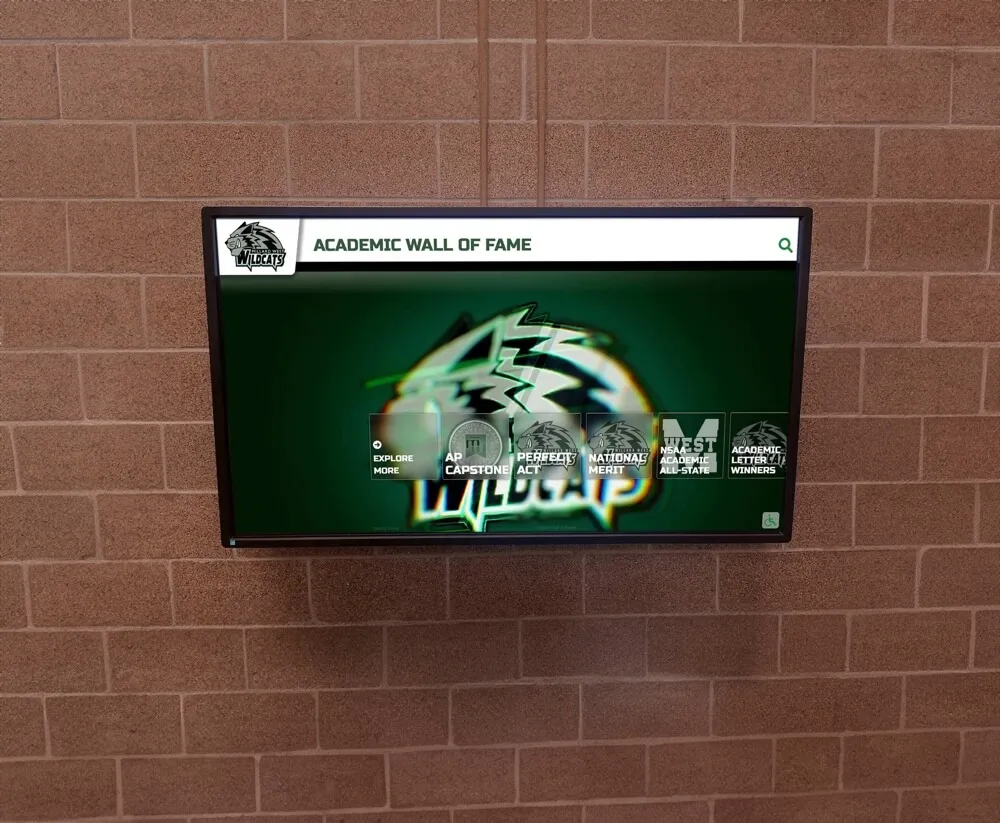
Modern recognition displays showcase speech and debate achievements alongside other forms of academic excellence
Understanding Speech & Debate Competitions and Championships
Before implementing recognition strategies, understanding the competitive landscape helps schools celebrate achievements appropriately and educate communities about the significance of forensics success.
The National Speech & Debate Structure
Speech and Debate competitions operate through several major organizational structures, each offering distinct championship opportunities at various competitive levels.
National Speech & Debate Association (NSDA)
The NSDA represents the largest interscholastic speech and debate organization, serving over 140,000 students annually. According to the National Speech & Debate Association, the organization oversees competitive events in multiple categories including policy debate, Lincoln-Douglas debate, public forum debate, congressional debate, and numerous speech events.
The NSDA competitive structure includes district tournaments qualifying students for the National Tournament, state championships recognizing top performers at the state level, and the prestigious National Tournament held each June showcasing the nation’s top competitors. Students earn points throughout their competitive careers, with recognition tiers including degrees of merit, degrees of honor, degrees of excellence, and degrees of special distinction.
National Catholic Forensic League (NCFL)
The NCFL provides competitive opportunities specifically for Catholic schools, operating parallel structures including diocesan tournaments, regional championships, and the annual Grand National Tournament. Many Catholic school competitors participate in both NSDA and NCFL circuits, earning recognition through both organizations.
Tournament of Champions Circuit
Elite competitors pursue “bids” to the Tournament of Champions, earned by reaching elimination rounds at designated prestigious invitational tournaments throughout the season. TOC qualification represents the highest achievement level in high school debate, with only the most successful debaters nationwide earning sufficient bids to compete.
Competitive Event Categories
Speech and debate encompasses diverse event types, each requiring distinct skill sets and preparation approaches:
Debate Events
- Policy Debate: Year-long topic with extensive research and evidence
- Lincoln-Douglas Debate: Philosophical value debate format
- Public Forum Debate: Current events topics changing monthly
- Congressional Debate: Legislative simulation format
- World Schools Debate: International format with prepared and impromptu motions
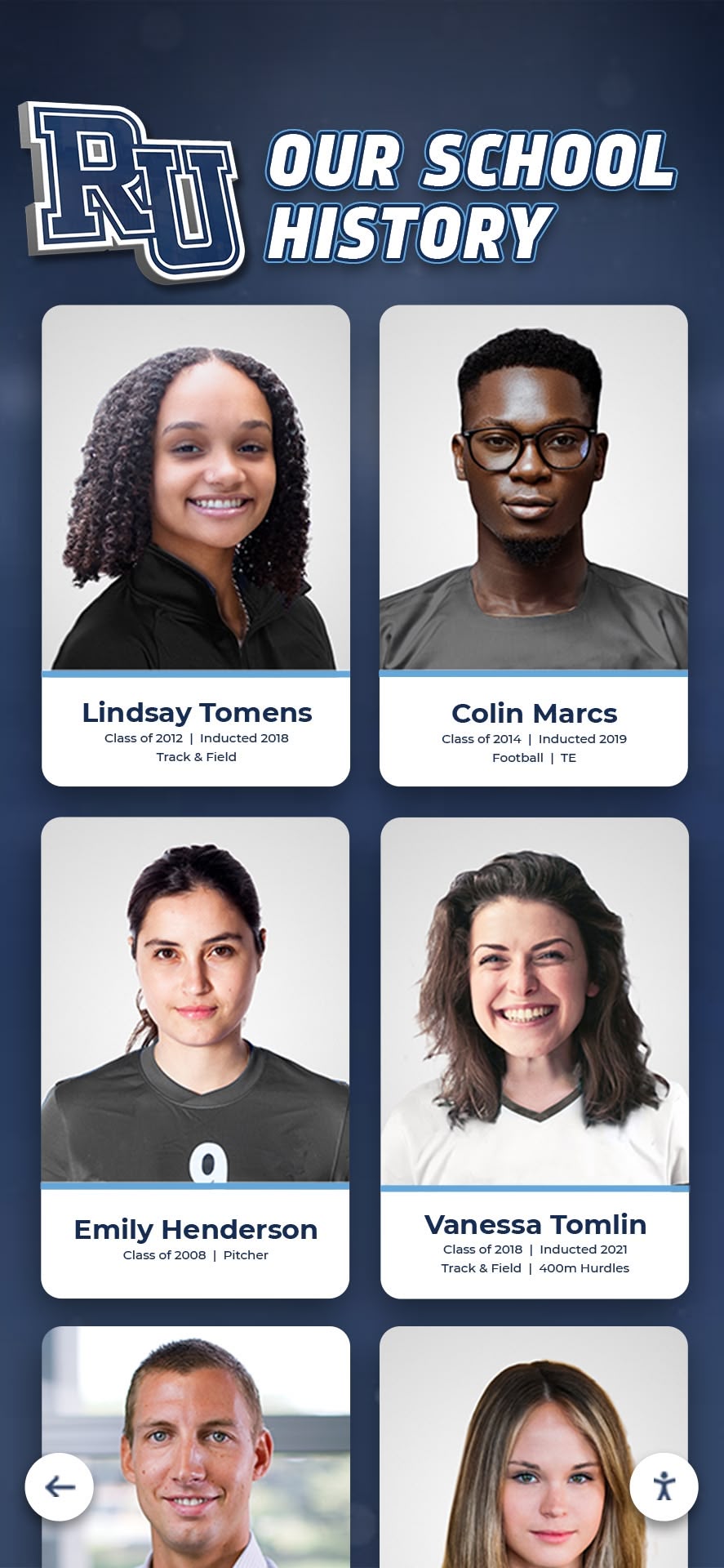
Comprehensive recognition systems document individual achievements across competitive careers
Speech Events
- Original Oratory: Student-written persuasive speeches
- Dramatic Interpretation: Memorized performance of published dramatic literature
- Humorous Interpretation: Comedic performance showcasing theatrical skills
- Duo Interpretation: Two-person performance without props or physical contact
- Expository Speaking: Informative presentation with visual aid
- Informative Speaking: Educational speech on significant topic
- Impromptu Speaking: Speeches prepared with minimal preparation time
- Extemporaneous Speaking: Current events speeches prepared from recent news
Understanding this diversity helps schools develop recognition systems celebrating accomplishments across all competitive categories rather than privileging certain event types over others.
Championship Levels and Achievement Hierarchy
Speech and debate recognition should acknowledge success at multiple competitive levels, as championship designations vary significantly in selectivity and prestige.
National Championship Recognition
- NSDA National Tournament elimination rounds and finals
- Tournament of Champions qualification and participation
- National Catholic Forensic League Grand National Tournament success
- National Individual Events Tournament of Champions (NIETOC) achievement
- Columbia/Harvard/Stanford invitational tournament championships
State-Level Championships
- State speech and debate association championships
- NSDA District tournament victories and qualification
- State forensics league championships
- All-state team recognition
Regional and Invitational Success
- Prestigious invitational tournament victories (Yale, Glenbrooks, Emory, etc.)
- Regional championship tournaments
- League and conference championships
- Tournament bid accumulation for TOC qualification
Team Success Metrics
- Cumulative team sweepstakes awards
- Team debate wins and winning percentages
- Program depth with multiple qualifiers to championships
- Consistent multi-year tournament success
Schools implementing comprehensive recognition should celebrate achievements across these levels, ensuring that state championships receive appropriate acknowledgment even while national success receives highlighted prominence.
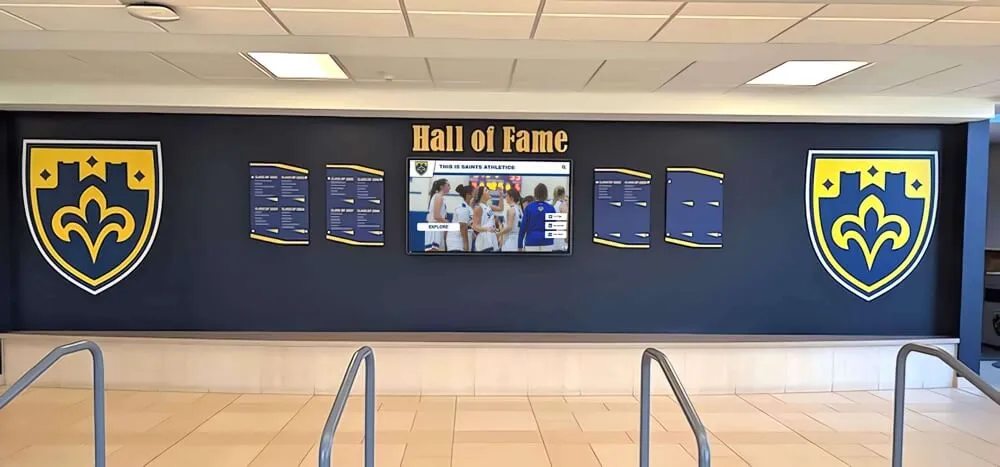
Integrated displays can showcase team championships alongside individual achievements
Why Speech & Debate Championship Recognition Matters
Systematic recognition of forensics excellence delivers benefits extending throughout speech and debate programs, academic cultures, and broader school communities.
Validating Intellectual Competition
Unlike athletic competitions that receive extensive institutional recognition through pep rallies, trophy cases, and championship banners, speech and debate success often receives minimal acknowledgment beyond team celebrations and brief announcements. This disparity sends implicit messages about which achievements institutions truly value.
Comprehensive speech and debate recognition corrects this imbalance by:
- Demonstrating institutional commitment to intellectual competition equal to athletic competition
- Validating the hundreds of hours students invest in research, preparation, and competition
- Signaling to prospective students and families that communication excellence receives serious recognition
- Countering cultural tendencies to undervalue academic and communication achievements
- Building program prestige that attracts talented students and competitive opportunities
When tournament victories and championship qualifications receive visibility comparable to athletic championships, school cultures shift toward celebrating comprehensive excellence across diverse domains rather than privileged hierarchies favoring certain achievement types.
Developing Essential Life Skills Through Recognition
Speech and debate develops transferable skills with exceptional value throughout education and career pathways. Recognition that makes these accomplishments visible helps students, families, and communities understand the practical value of forensics participation.
Critical Competencies Developed:
- Advanced research and information literacy
- Analytical thinking and argumentation construction
- Persuasive communication and rhetorical skill
- Extemporaneous speaking and thinking under pressure
- Evidence evaluation and logical reasoning
- Confidence in public presentation
- Adaptability and quick strategic thinking
According to educational research, students who participate in speech and debate demonstrate significantly higher rates of college completion, graduate school attendance, and career advancement in fields requiring communication and analytical skills. Schools can explore comprehensive academic recognition programs that celebrate these intellectually demanding achievements.
Visible recognition reinforces the message that these skills matter professionally and personally, encouraging broader student participation beyond those already committed to forensics.
Motivating Program Growth and Excellence
Prominent recognition of championship success creates powerful motivation for current and prospective speech and debate team members.
Motivational Impact:
- Creates aspirational goals for younger team members
- Establishes clear achievement standards defining program excellence
- Demonstrates that tournament success receives lasting recognition
- Builds competitive culture encouraging sustained effort and preparation
- Attracts new students intrigued by visible program accomplishments
- Strengthens team cohesion around shared achievement history
Coaches consistently report that recognition displays become integral to team culture, with returning members explaining program traditions to new competitors and setting goals around earning their own recognition through tournament success.
Supporting College Applications and Scholarships
Tournament success and championship achievements strengthen college applications significantly, particularly when applying to highly selective institutions valuing intellectual engagement and communication skills.
Application Enhancement:
- Demonstrates sustained commitment to intellectually demanding activity
- Provides concrete evidence of communication and analytical abilities
- Shows competitive success against peers from strong programs nationwide
- Qualifies for specialized forensics scholarships at many universities
- Creates compelling personal statement topics
- Generates strong recommendation letter content from coaches
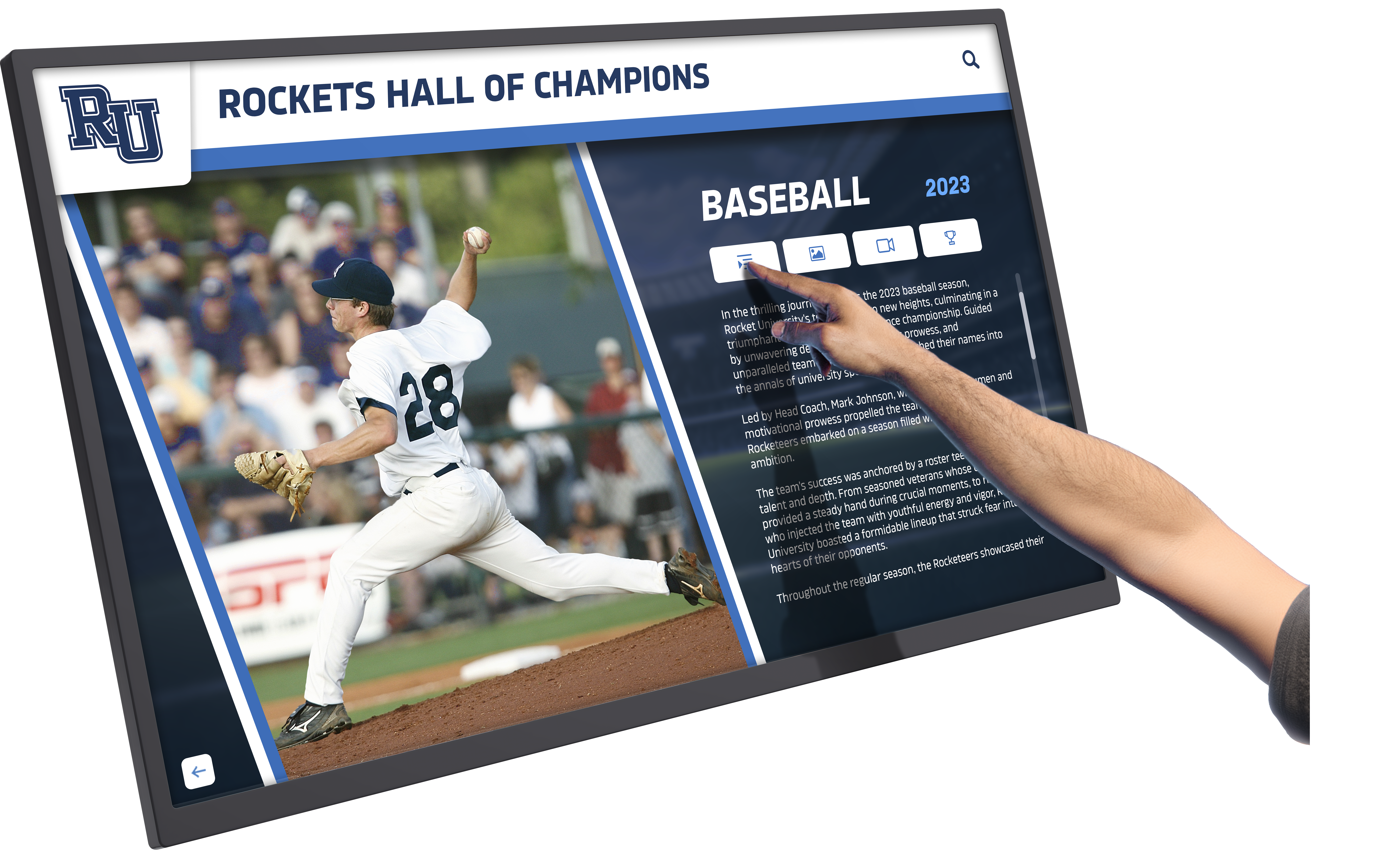
Digital displays enable exploration of detailed achievement stories and career pathways
Schools that document speech and debate accomplishments comprehensively—including tournament placements, bid accumulation, topic areas researched, and competitive records—provide students with detailed documentation supporting applications more effectively than simple credential listings.
Many universities offer substantial forensics scholarships, with programs actively recruiting successful high school debaters and speakers. Comprehensive recognition demonstrates to college recruiters that your program develops competitive talent worth recruiting.
Traditional Speech & Debate Recognition Approaches
Understanding established recognition methods provides foundation for comprehensive programs incorporating both time-tested and innovative strategies.
Team Trophies and Trophy Cases
Most speech and debate programs accumulate tournament trophies representing team sweepstakes, individual event victories, and championship placements. Traditional trophy cases provide physical visibility for these achievements.
Trophy Display Benefits:
- Physical trophies convey tangible achievement
- Accumulated trophies demonstrate program longevity and success
- Trophy cases require minimal technology or ongoing content management
- Traditional approach familiar to school communities
Trophy Display Limitations:
- Physical space constraints limit what can be displayed
- Trophies provide minimal context beyond engraved basics
- Older trophies deteriorate and require maintenance
- Organization and searchability prove challenging
- No capacity for detailed achievement stories or multimedia
- Campus-only visibility prevents remote access
Many programs find that trophy cases complement but don’t replace more comprehensive recognition systems providing richer context and unlimited capacity.
Championship Banners and Wall Displays
Some programs create championship banners similar to athletic banners, hanging them in gymnasiums, cafeterias, or dedicated speech and debate spaces.
Effective Banner Recognition:
- Tournament name and year
- Championship category (sweepstakes, debate, speech, etc.)
- Major individual achievements from that tournament
- School colors and professional design maintaining visibility
Banners work well for highlighting major championships—state titles, national tournament success, prestigious invitational victories—while complementary systems handle comprehensive season-by-season achievement documentation.
Recognition Boards and Plaques
Traditional plaques listing national qualifiers, state champions, or all-conference honorees provide permanent recognition for specific achievement categories.
Common Plaque Formats:
- Annual National Tournament qualifiers by year
- State championship winners by event and year
- Tournament of Champions qualifiers
- Degree of Special Distinction recipients
- Team captains and leadership recognition
Physical plaques face space limitations that become problematic as achievement accumulates over decades, eventually requiring difficult decisions about what to continue displaying versus archiving.
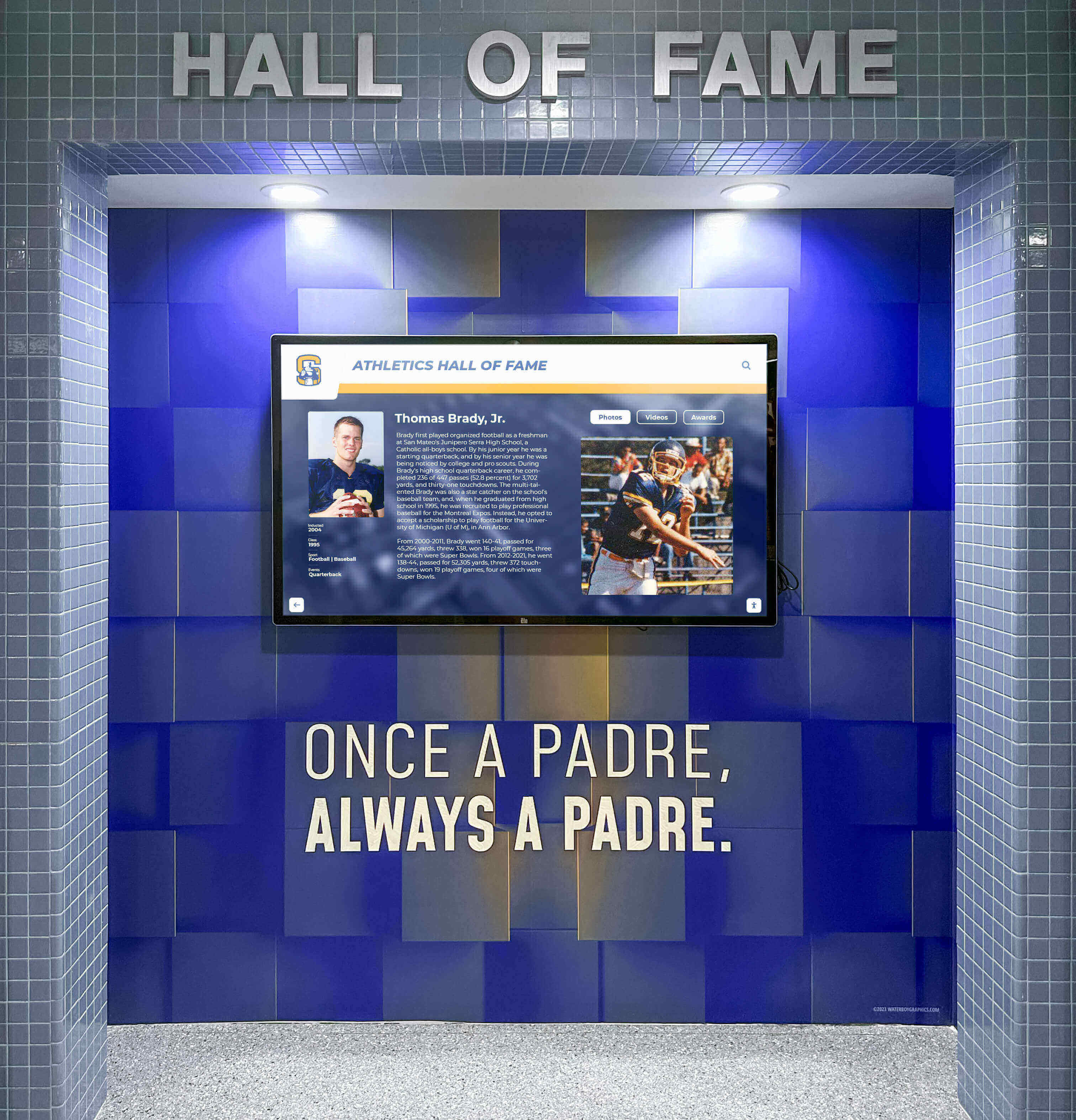
Strategic placement ensures maximum visibility for recognition displays
Modern Digital Recognition for Speech & Debate Championships
Digital recognition platforms transform how speech and debate achievements can be preserved, presented, and accessed, solving limitations of traditional approaches while creating engaging experiences impossible with static displays.
Interactive Touchscreen Recognition Systems
Digital displays create dynamic showcases offering capabilities far beyond what traditional recognition methods can achieve.
Digital Platform Capabilities for Forensics Recognition:
Unlimited Achievement Capacity Solutions like Rocket Alumni Solutions eliminate space constraints that force programs to choose what receives visibility:
- Single display showcases unlimited students across decades of competition
- Every tournament placement, qualification, and championship receives documentation
- Historical archives preserve complete program competitive history
- All event categories receive equal display capacity regardless of physical space
Rich Multimedia Integration Modern systems showcase speech and debate accomplishments through formats capturing performance excellence:
- Video clips from championship rounds and final performances
- Audio recordings of oratory and speech performances
- Tournament bracket progressions showing competitive paths
- Photos from nationals, state championships, and major invitationals
- Debate case briefs and research documentation
- Performance critiques and judge comments
Interactive Exploration Features Touchscreen interfaces create engagement impossible with static displays:
- Search functionality finding specific students, events, or tournaments instantly
- Filtering by event type, competitive year, achievement level, or tournament
- Detailed competitor profiles documenting entire competitive careers
- Team pages showcasing collective accomplishments and partnerships
- Timeline views presenting program history chronologically
- Comparison features showing season-to-season program growth
These capabilities transform recognition from basic name listings to comprehensive celebrations showcasing the full scope of forensics achievement and student dedication.
Cloud-Based Content Management
Digital recognition systems typically include web-based administrative platforms enabling non-technical staff to manage content efficiently.
Management System Benefits:
- Remote updates from any internet-connected device
- Bulk import tools for adding multiple tournament results efficiently
- Template-based profile creation ensuring consistency
- Scheduled publishing for automatic updates at season conclusion
- Role-based permissions allowing appropriate coach and administrator access
- Mobile-responsive management interfaces
- Automatic backups preventing data loss
Schools report 70-85% reduction in administrative time spent maintaining forensics recognition after implementing digital systems compared to manually updating physical displays each season.
Web Accessibility and Remote Engagement
Digital speech and debate recognition should extend beyond physical campus to engage families, alumni, and broader communities.
Online Platform Extensions:
- Web-accessible versions viewable from anywhere globally
- Alumni exploring their competitive achievements decades later
- Prospective students and families evaluating program quality
- Social sharing enabling students to celebrate recognition across networks
- Mobile-optimized displays supporting smartphone viewing
- Integration with school websites and forensics team pages
- Analytics tracking engagement and popular content
This dual presence—physical displays for on-campus visibility and web access for remote audiences—dramatically expands recognition reach and impact compared to campus-only traditional displays.
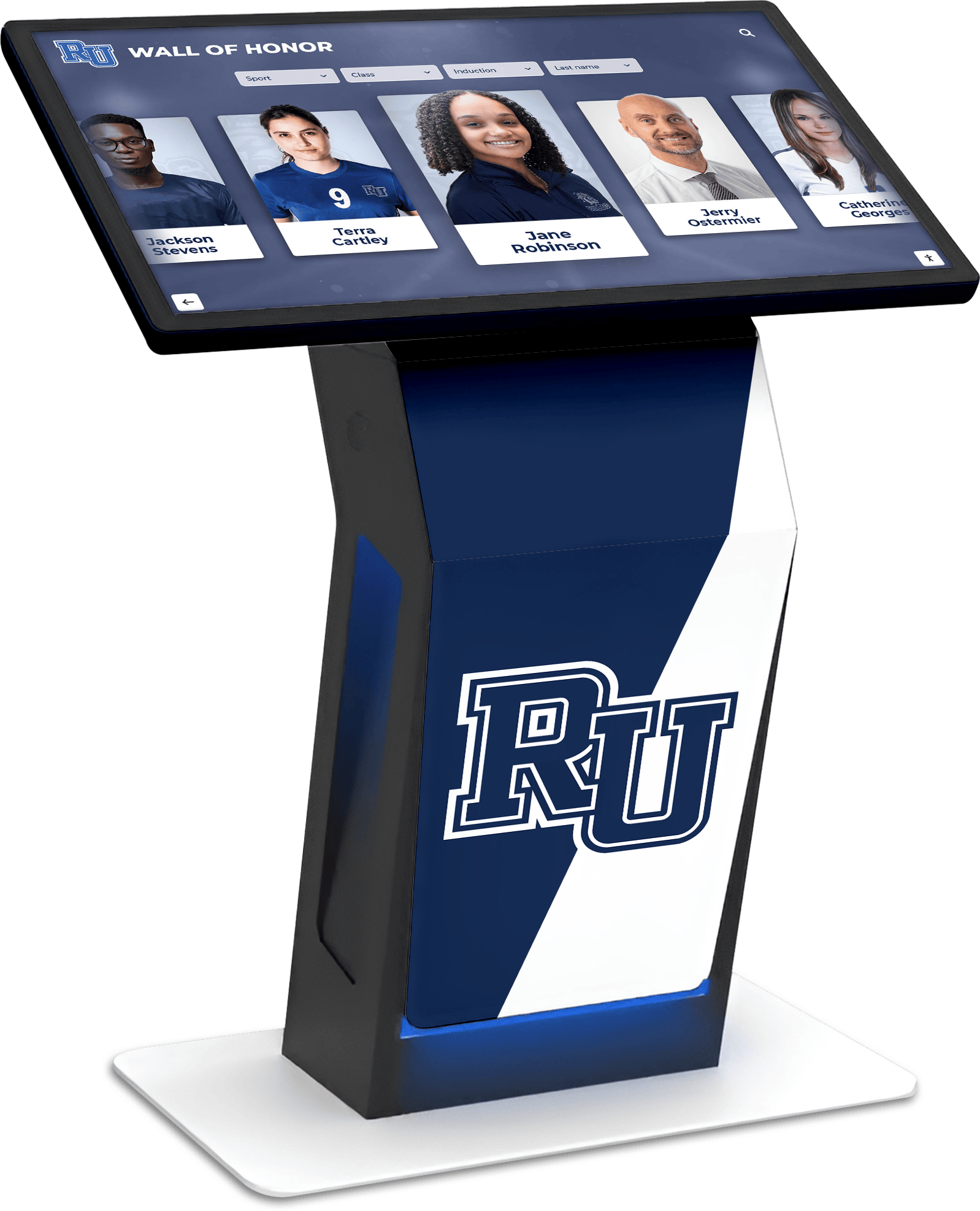
Comprehensive digital systems combine intuitive touchscreen displays with cloud-based management
Creating Comprehensive Speech & Debate Recognition Content
Recognition quality depends directly on content richness, organization, and presentation approaches that engage diverse audiences effectively.
Building Detailed Competitor Profiles
Comprehensive profiles transform credential listings into inspiring achievement stories that resonate emotionally while educating viewers about forensics excellence.
Essential Profile Components:
Basic Information and Credentials
- Student name and graduation year
- Primary event(s) and secondary events
- Years of program participation
- Career win-loss record (for debate events)
- Accumulated NSDA points and degree level
Tournament Success Documentation
- National Tournament qualifications and placements
- State championship results by year
- Tournament of Champions bid count and qualification
- Major invitational tournament victories and finals appearances
- Sweepstakes contributions to team success
- Career-best tournament performances
Achievement Context and Significance
- Competition field size and selectivity information
- Ranking among school’s all-time competitors
- Notable opponents defeated or competed against
- Breakthrough performances and milestone achievements
- Topic areas researched and case specializations
- Partnership information for debate teams
Personal Competitive Journey
- Student quote reflecting on competitive experience
- Coach reflections on student’s growth and impact
- Description of preparation approaches and work ethic
- Memorable rounds, performances, or tournament moments
- Post-graduation pathways showing forensics influence
- College forensics participation or related career pursuits
Multimedia Enrichment
- Professional headshot or action photo from tournaments
- Video excerpts from championship rounds or performances
- Audio clips of speech performances
- Photos from nationals, state championships, or team celebrations
- Scanned case briefs or research examples (when appropriate)
This comprehensive approach creates profiles inspiring younger competitors, educating non-forensics community members about achievement significance, and honoring students appropriately for their intellectual accomplishments.
Organizing Content for Maximum Engagement
Intuitive organization ensures visitors find relevant content quickly while discovering related achievements maintaining engagement.
Effective Organizational Structures:
By Competitive Year
- Current season featured with most recent tournament results
- Historical archive organized by decade or academic year
- “All-Time Greats” showcasing program legends
- Year-by-year team success summaries
By Event Category
- Policy debate competitors grouped together
- Lincoln-Douglas debate achievers
- Public Forum and Congressional debate teams
- Speech events by interpretation vs. speaking categories
- Allows filtering to specific competitive interests
By Achievement Level
- National Tournament qualifiers and finalists
- State championship winners
- Tournament of Champions competitors
- Degree of Special Distinction recipients
- Major invitational tournament champions
By Team vs. Individual Success
- Team sweepstakes championships
- Debate partnership achievements
- Individual speech event excellence
- Program milestone accomplishments
Digital platforms accommodate all organizational approaches simultaneously through filtering and search capabilities, while traditional displays must choose single fixed structures.
Connecting Individual Success to Program Culture
Comprehensive displays contextualize achievements within program cultures developing excellence systematically rather than celebrating isolated exceptional students.
Program-Level Content Integration:
- Coach profiles highlighting years of dedication to student development
- Program history showing competitive trajectory over decades
- Team traditions and preparation approaches
- Alumni network of former competitors
- Notable program alumni and career paths
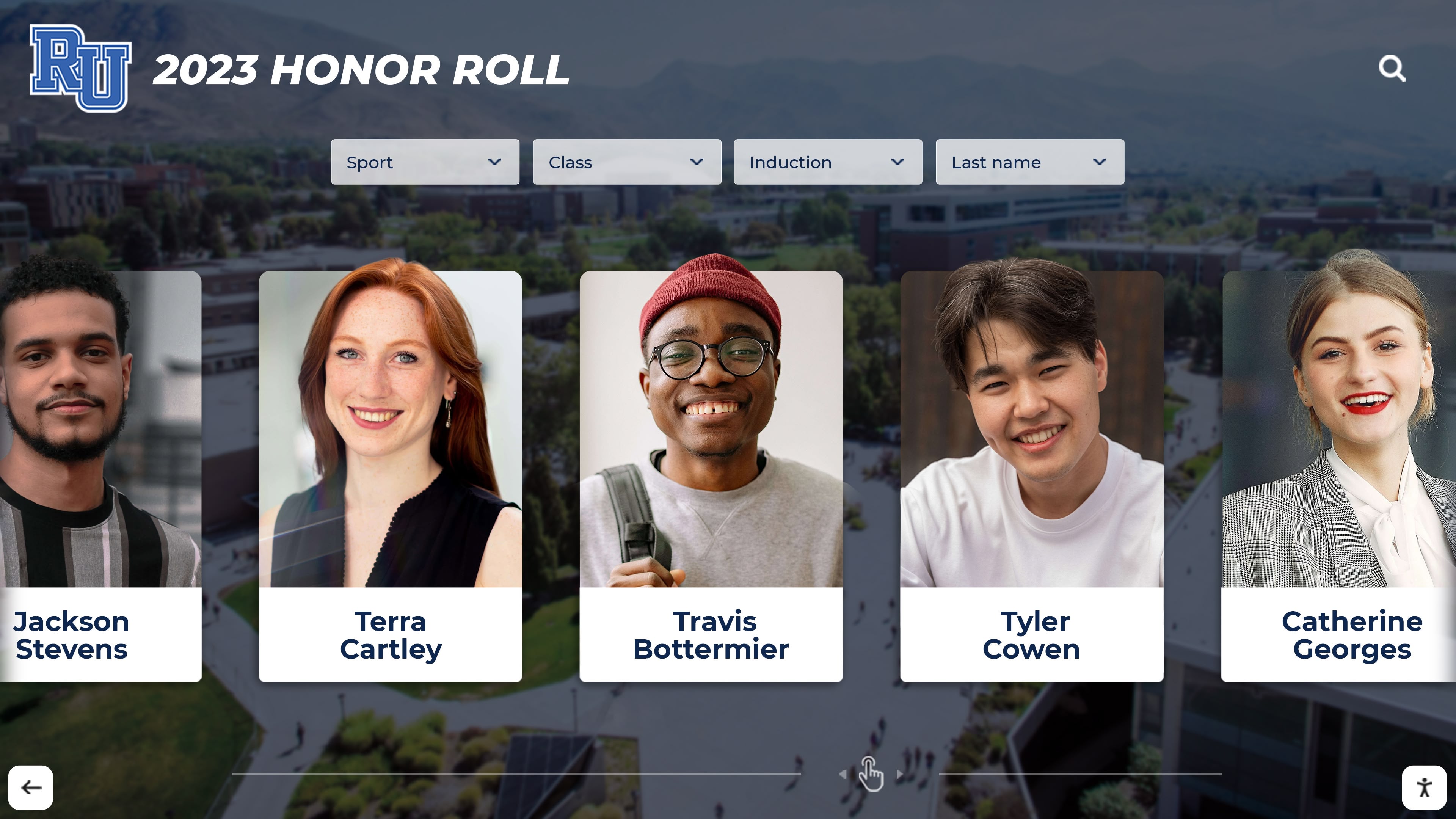
Individual achievement profiles combine to showcase comprehensive program excellence
This program-level perspective demonstrates that tournament success results from systematic coaching excellence, team culture, and institutional support rather than individual talent alone, building support for resources enabling continued achievement.
Integrating Speech & Debate Recognition with Comprehensive Student Celebration
The most effective programs place forensics recognition within broader systems celebrating diverse student excellence across academics, arts, and athletics.
Balanced Recognition Across Achievement Domains
Schools committed to celebrating comprehensive achievement ensure speech and debate success receives visibility equal to athletic championships and academic honors rather than secondary acknowledgment.
Achieving Recognition Equity:
Equivalent Display Prominence Physical and digital displays for forensics achievements should match athletic recognition in size, location quality, and visual prominence. When trophy cases and championship banners dominate main entrances while speech and debate recognition remains confined to single classrooms, schools communicate implicit priority hierarchies undermining stated commitments to comprehensive excellence.
Comparable Celebration Events If athletic teams receive championship banquets, parade celebrations, and extensive media coverage, speech and debate championships deserve equivalent recognition through banquets, assembly acknowledgments, and communications campaigns highlighting forensic success.
Integrated Multi-Domain Recognition Rather than segregating achievement types, feature comprehensive student recognition showcasing individual students’ accomplishments across academics, forensics, athletics, and arts simultaneously when applicable, celebrating well-rounded excellence. Programs can learn from student achievement recognition approaches demonstrating comprehensive celebration benefits.
This balanced approach creates cultures where students pursue excellence in areas matching their talents and interests rather than feeling implicit pressure toward overvalued achievement types at the expense of other pursuits.
Cross-Curricular Connections
Speech and debate success often correlates with academic excellence, with many competitors also achieving honors in history, English, social sciences, and other humanities subjects.
Multi-Dimensional Achievement Recognition:
- Profile sections noting academic honors and other distinctions
- Special designation for students achieving both forensics and academic all-state honors
- Connections to academic recognition programs celebrating scholarly excellence
- “Scholar-Forensics-Athlete” categories honoring comprehensive achievement
- Feature stories on students balancing multiple high-level commitments
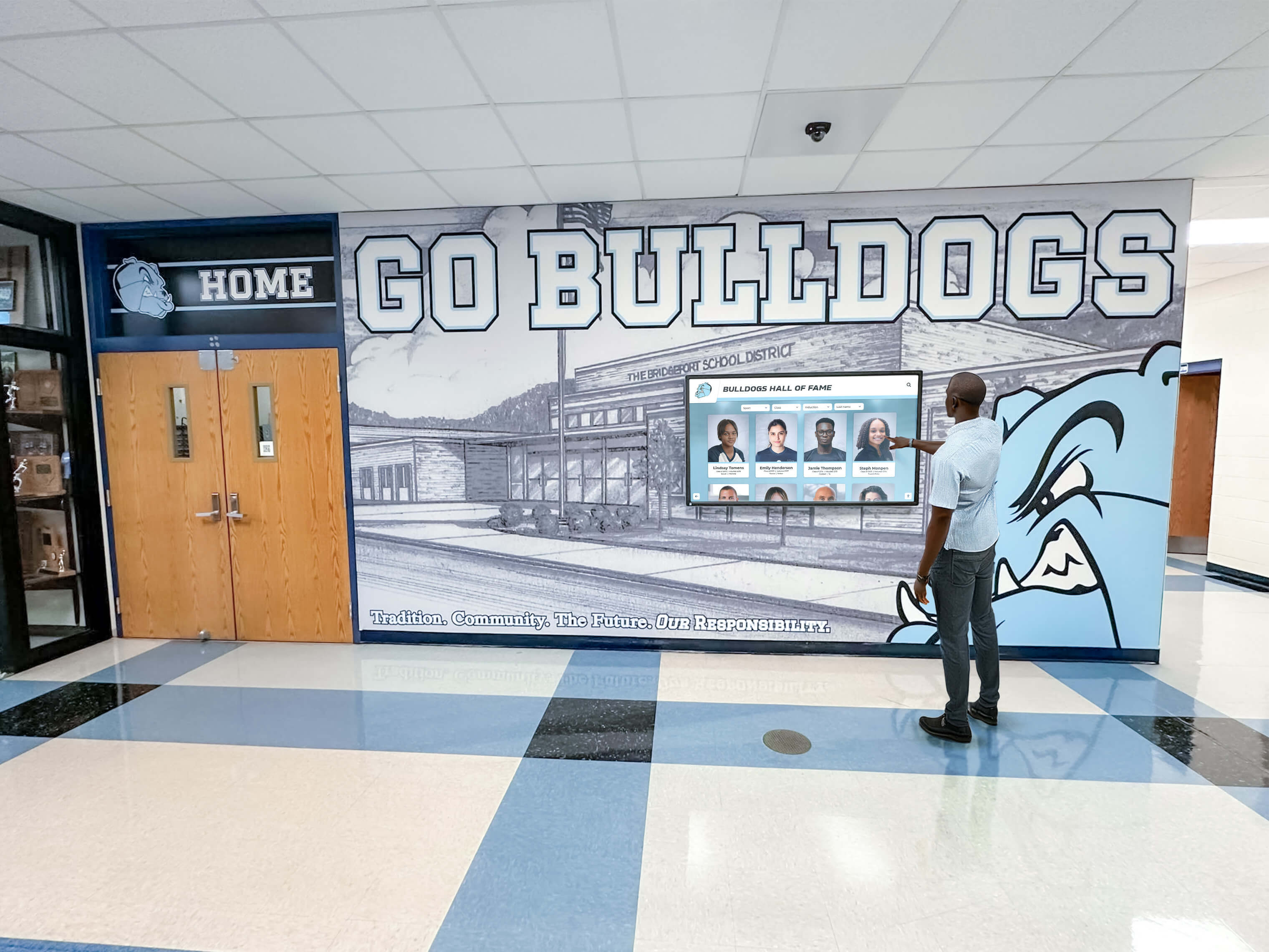
Integrated displays celebrating diverse achievements demonstrate commitment to comprehensive excellence
Implementation Strategies for Speech & Debate Recognition Programs
Successful programs require thoughtful planning, stakeholder engagement, and systematic approaches ensuring sustainable long-term operation.
Planning Phase: Building Program Foundations
Assessing Current Recognition and Identifying Gaps
Begin by documenting existing forensics recognition:
- What speech and debate recognition currently exists?
- Where are displays located and how frequently updated?
- How do families and students perceive current recognition adequacy?
- How does forensics recognition compare to athletic and academic visibility?
- What historical achievements remain undocumented or unrecognized?
This assessment identifies specific gaps comprehensive programs should address while preserving effective existing approaches worth maintaining.
Defining Recognition Program Goals
Clear objectives guide implementation decisions and provide assessment criteria:
- Inspire younger students toward forensics participation and tournament success
- Build community understanding of speech and debate achievement significance
- Demonstrate program excellence to administrators and prospective families
- Support student college applications with comprehensive documentation
- Create balanced recognition across academic, athletic, and forensics achievement
- Preserve institutional forensics history for future generations
Budget Planning and Resource Allocation
Recognition programs require investment in display technology, content development, and ongoing management. Consider:
- Digital display hardware costs (screens, mounts, computing modules)
- Software platform fees (typically annual subscriptions)
- Professional photography and videography for content creation
- Installation services for physical displays
- Ongoing content management time allocation
- Training for staff managing updates
Phased implementation—beginning with recent competitors and expanding historical content gradually—makes programs financially feasible while delivering immediate value.
Technology Platform Selection
Schools seeking digital solutions should evaluate platforms based on capabilities supporting forensics recognition needs effectively.
Essential Platform Requirements:
Multimedia Support
- High-quality video playback for speech and debate performances
- Audio streaming for speech event recordings
- High-resolution image display for tournament photos
- PDF embedding for tournament brackets and results
Intuitive Content Management
- Web-based administration requiring no technical expertise
- Bulk upload tools for tournament results
- Template-based profile creation ensuring consistency
- Role-based permissions for appropriate coach access
Flexible Organization and Navigation
- Multiple categorization options (year, event, achievement level)
- Powerful search finding specific students instantly
- Chronological browsing and timeline views
- Tournament-specific results pages
Solutions like those from Rocket Alumni Solutions provide purpose-built recognition platforms specifically designed for educational institutions, combining essential capabilities with proven reliability supporting speech and debate programs alongside other achievement recognition.
Content Development Workflow
Systematic content creation ensures comprehensive, high-quality profiles while making workload manageable.
Efficient Content Development:
Year One: Current Competitors Priority Focus initial content on current students creating immediate engagement:
- Provides immediate value justifying investment
- Creates momentum supporting expansion
- Enables process refinement before tackling historical content
- Produces templates applicable to archival material
Year Two and Beyond: Historical Expansion Systematically expand historical content working backward:
- Begin with recent graduates remaining accessible for information
- Progress to historical achievements where documentation exists
- Engage alumni in providing photos, memories, and tournament details
- Accept varying completeness based on available information
Ongoing: Regular Updates Establish annual rhythms incorporating new achievements:
- Add tournament results throughout competitive season
- Update profiles after state championships and nationals
- Incorporate graduation information and college enrollment
- Add alumni career updates showing long-term achievement trajectories
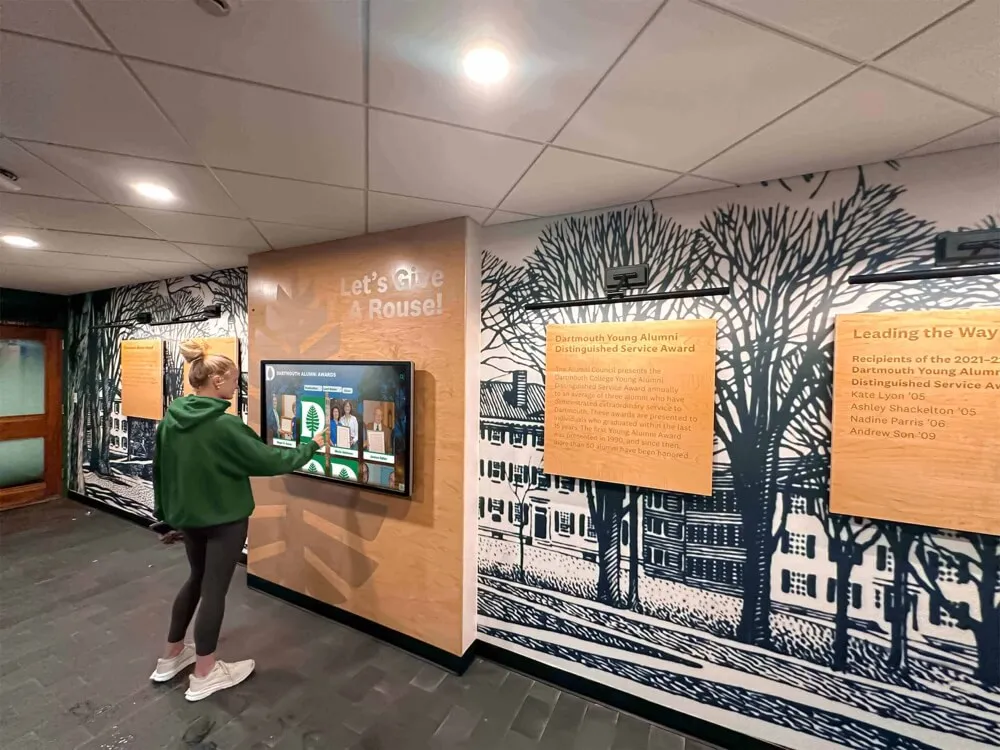
Intuitive interfaces encourage exploration while simplified management makes updates straightforward
Promoting Speech & Debate Recognition Programs
Implementation success depends on effective promotion generating awareness, encouraging usage, and building ongoing engagement.
Launch Strategy
Strategic launches create visibility establishing usage patterns continuing long-term.
Pre-Launch Anticipation:
- Announce upcoming recognition display through team communications
- Preview content development with behind-the-scenes updates
- Solicit current competitor participation in content creation
- Build excitement among team members about permanent recognition
- Engage parents and boosters in promoting forthcoming launch
High-Visibility Unveiling: Schedule launches during well-attended occasions:
- Awards banquet demonstrations with families present
- School assembly reveals reaching entire student body
- Open house events when prospective families visit
- Parent organization meetings where supporters gather
- Board presentations demonstrating program value to leadership
Sustained Post-Launch Promotion: Recognition awareness requires ongoing reinforcement:
- Social media features highlighting specific competitors
- Morning announcement reminders encouraging exploration
- New content notifications when students are added
- Classroom integration where teachers reference displays
- Tour guide training ensuring visitors see recognition
Measuring Recognition Program Success
Assessment demonstrates value while identifying improvement opportunities.
Quantitative Success Metrics:
- Display interaction frequency and session duration
- Web platform traffic and unique visitors
- Social media engagement with forensics recognition posts
- Number of competitors recognized annually
- Historical archive completeness percentages
Qualitative Impact Indicators:
- Student surveys about recognition awareness and inspiration
- Family feedback about program value
- Team membership trends following recognition implementation
- Coach observations about motivation changes
- Community comments demonstrating increased program appreciation
Regular assessment enables continuous improvement while providing evidence justifying continued investment.
Conclusion: Celebrating Intellectual Excellence Through Recognition
Comprehensive speech and debate championship recognition represents strategic investment in forensics program culture, student motivation, and institutional commitment to celebrating intellectual achievement. When schools systematically honor forensics excellence with visibility, permanence, and richness equal to athletic championships and academic honors, they create environments where communication achievement and intellectual competition receive the recognition these demanding accomplishments deserve.
Transform Your Speech & Debate Recognition Program
Discover how modern digital recognition solutions can help you celebrate every tournament victory, championship qualification, and competitive achievement while building a thriving forensics culture.
Explore Recognition SolutionsThe strategies explored in this guide provide comprehensive frameworks for building recognition systems honoring speech and debate achievements appropriately while remaining sustainable, equitable, and aligned with broader educational goals. From traditional trophy cases and championship banners to innovative digital platforms enabling unlimited multimedia recognition accessible globally, these methods transform forensics acknowledgment from brief moments to permanent celebrations woven throughout school culture.
Modern recognition solutions like those from Rocket Alumni Solutions provide schools with platforms specifically designed for comprehensive achievement celebration—combining intuitive content management, engaging interactive displays supporting rich multimedia content, and proven reliability enabling sustainable programs delivering lasting cultural impact. These systems solve traditional display limitations while creating recognition experiences inspiring younger competitors, educating broader communities about forensics achievement significance, and demonstrating institutional commitment to intellectual excellence.
Building effective speech and debate recognition requires moving beyond limiting assumptions about forensics representing peripheral activities deserving secondary acknowledgment compared to athletics and traditional academics. When tournament victories and championship qualifications receive celebration matching other achievement domains in visibility, prestige, and permanence, school cultures shift toward valuing comprehensive excellence honoring diverse talents and contributions rather than narrow achievement hierarchies.
Start building stronger forensics culture today through speech and debate recognition programs celebrating every competitor’s tournament success, inspiring younger students pursuing communication excellence, and establishing your institution’s commitment to honoring intellectual achievement across all domains where students compete and excel. Your speech and debate champions’ remarkable accomplishments—earned through countless hours of research, preparation, and competitive performance—deserve recognition matching the dedication, analytical skill, and rhetorical mastery required to earn tournament success and championship distinction.
Ready to begin? Explore school achievement recognition approaches and comprehensive student recognition programs that can support speech and debate celebration elevating your forensics program to new levels of excellence and community appreciation.































