Sports field lighting transforms athletic facilities from daylight-only venues into versatile spaces supporting evening practices, night games, extended training schedules, and community events that strengthen school spirit while maximizing facility investment. Quality lighting systems enable schools to accommodate working parents’ schedules, reduce conflicts with academic hours, generate revenue through facility rentals, and create memorable Friday night experiences that build lasting connections between teams, students, and communities.
Modern LED sports lighting technology delivers dramatically improved performance compared to older metal halide and high-pressure sodium systems—providing superior light quality for players and spectators, reducing energy costs by 50-75%, eliminating lengthy warm-up periods, and enabling precise control over illumination levels for different activities. Whether you’re planning your first field lighting installation or modernizing outdated systems, understanding current technology, regulatory requirements, cost factors, and implementation considerations ensures your investment delivers maximum value for decades.
This comprehensive guide covers everything athletic directors, facilities managers, and school administrators need to know about sports field lighting—from evaluating your facility’s specific needs and understanding illumination standards to navigating installation processes and budgeting for long-term operational costs.
Proper sports field lighting represents one of the most impactful infrastructure investments schools can make, enabling athletic programs to operate flexibly while creating the memorable game-day experiences that drive school pride and community engagement for generations.
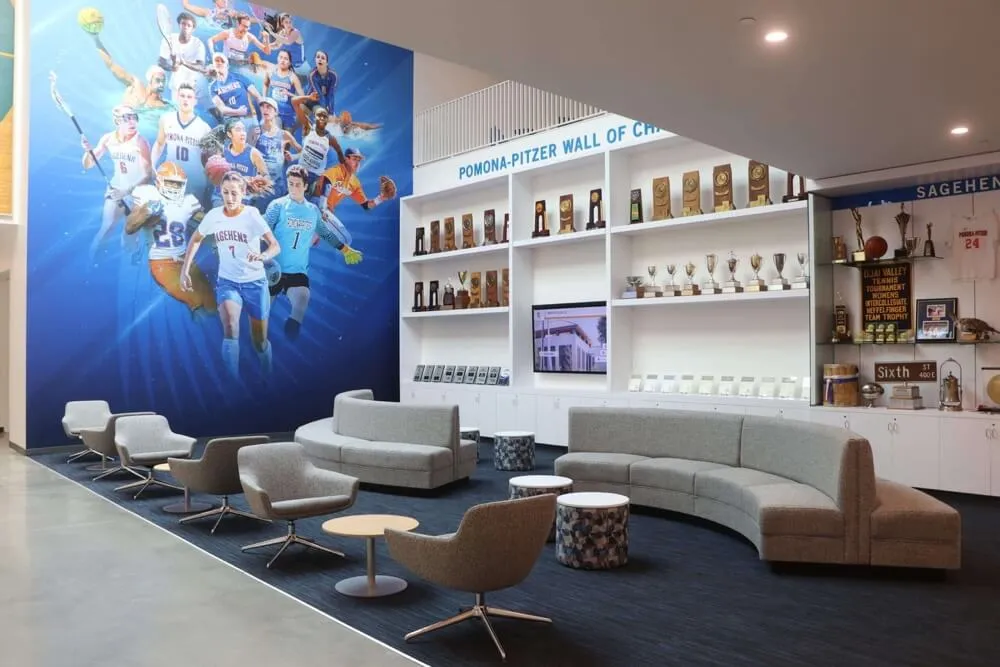
Modern athletic facilities combine functional infrastructure like quality lighting with recognition elements celebrating program excellence
Why Sports Field Lighting Matters for School Athletic Programs
Athletic directors and facilities managers increasingly recognize sports field lighting as essential infrastructure rather than optional luxury. The operational flexibility and program benefits justify investment across competitive levels.
Extending Practice and Competition Schedules
Daylight limitations severely constrain athletic programming during fall and winter seasons when sunset occurs during or before after-school hours. Teams competing for limited field space face compressed practice windows, forcing coaches to choose between inadequate preparation time or scheduling conflicts with academic requirements.
Quality field lighting extends usable hours by 3-4 hours daily during shorter-day seasons. Football teams can practice after school without rushing through condensed sessions. Soccer programs can schedule full training sessions rather than abbreviated field time. Multiple teams can rotate through facilities sequentially rather than competing for simultaneous access to limited space.
This scheduling flexibility proves particularly valuable for schools sharing facilities across multiple sports. A well-lit athletic complex can accommodate afternoon freshman practices, early evening junior varsity sessions, and nighttime varsity competitions—all on the same fields that would otherwise sit unused after 5 PM during winter months.
Accommodating Working Families
Traditional daytime and late afternoon athletic schedules create attendance challenges for working parents who cannot leave jobs early for 4:30 PM competitions. This limitation reduces family involvement in student athletics and diminishes the community-building aspect of scholastic sports.
Evening competitions under lights enable parents to attend after work hours, strengthening family engagement with athletic programs. The difference in spectator attendance between 4 PM Tuesday afternoon games and 7 PM Friday night contests under lights can exceed 500-1000% for schools with active community support.
Schools hosting evening competitions create signature experiences—Friday night football, Thursday evening soccer matches, Tuesday night baseball—that become community traditions building school spirit across generations. These memorable experiences generate the nostalgia and pride that keep alumni connected to their schools long after graduation, often leading to enhanced donor recognition opportunities as former athletes give back to programs that shaped their development.
Generating Revenue Through Facility Rentals
Schools investing in quality field lighting create revenue-generating assets through facility rentals to youth sports organizations, adult recreational leagues, club teams, and community groups seeking practice and competition venues.
Rental rates for lit athletic fields typically range from $75-200 per hour depending on market, facility quality, and amenity offerings. A school operating 15-20 rental hours weekly during peak seasons can generate $45,000-$150,000 annually—revenue that helps offset lighting installation and operational costs while maximizing taxpayer investment in public facilities.
Beyond direct rental income, schools with superior athletic facilities attract tournaments and showcase events that bring visiting teams, families, and spectators to communities. These events generate economic impact through local spending on accommodations, meals, and retail while elevating school visibility within competitive athletic circles.
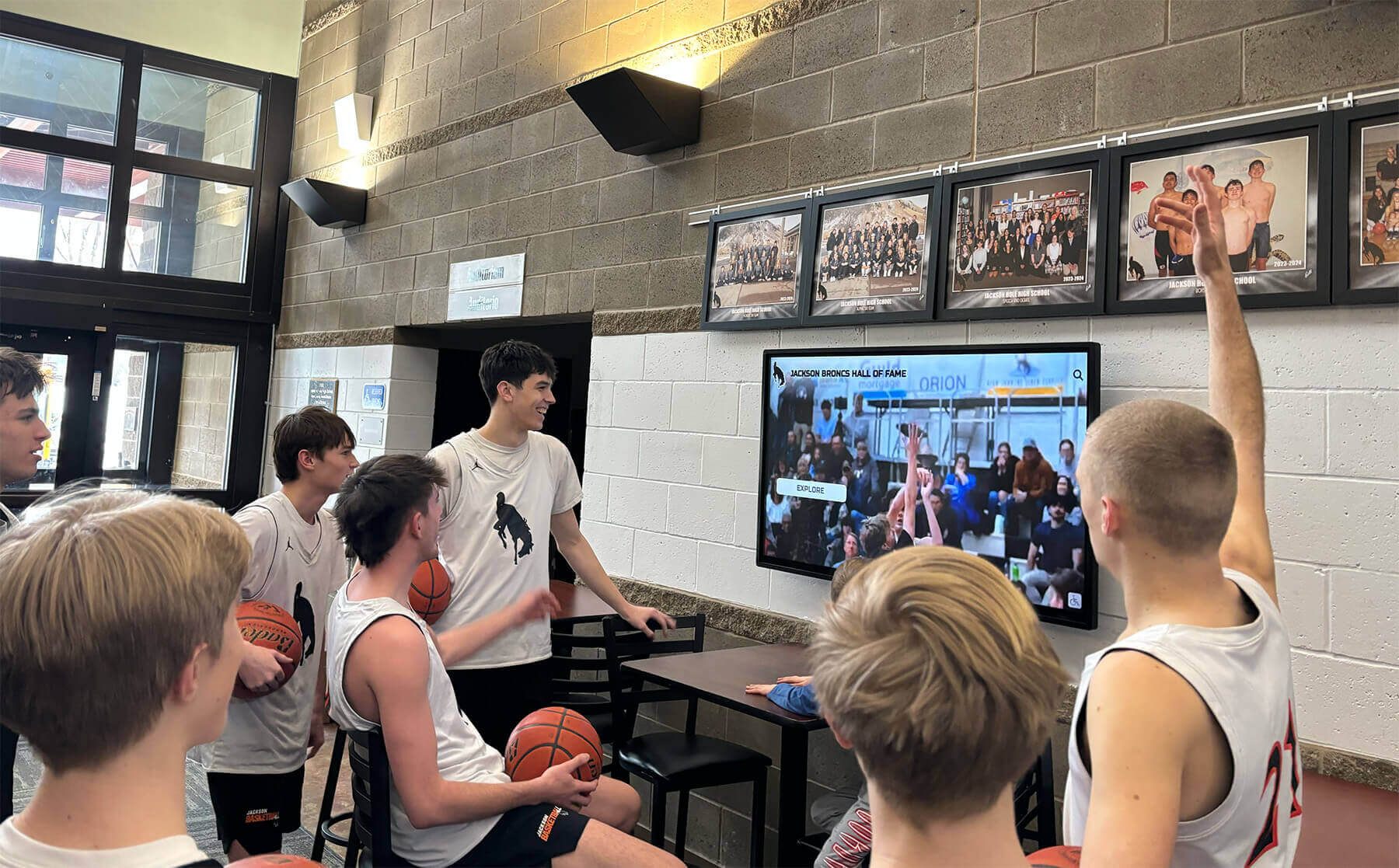
Modern athletic facilities integrate technology throughout—from field lighting enabling night competitions to digital displays celebrating program achievements
Understanding Sports Field Lighting Technology
Sports lighting technology has evolved dramatically over the past two decades. Understanding current systems versus legacy technologies informs upgrade decisions and performance expectations.
LED vs. Traditional Lighting Systems
The transition from traditional metal halide and high-pressure sodium systems to LED technology represents the most significant advancement in sports lighting in decades.
Metal Halide Limitations:
Traditional metal halide systems dominated sports lighting for 30+ years but suffer from significant operational limitations. These fixtures require 15-20 minute warm-up periods before reaching full brightness—meaning fields cannot be illuminated instantly when needed. Light quality degrades over fixture lifespan as lamps age, creating uneven illumination where newer fixtures produce brighter light than older units. Energy consumption remains high, with typical high school football field installations drawing 50-100 kilowatts continuously. Lamp replacement becomes necessary every 6,000-12,000 hours of operation, creating ongoing maintenance expenses and dark periods during burnout failures.
LED Technology Advantages:
Modern LED sports lighting systems eliminate virtually every limitation of traditional technology while delivering superior performance across all metrics:
- Instant on/off operation: LED fixtures reach full brightness immediately, enabling lights to activate precisely when needed rather than requiring lengthy pre-game warm-up periods
- Superior light quality: LED systems produce crisp, bright white light enhancing visibility for players tracking balls, officials making calls, spectators watching action, and broadcast cameras capturing events
- Dramatic energy savings: LED installations typically reduce energy consumption by 50-75% compared to metal halide systems with equivalent illumination levels—a high school football field might drop from 75kW to 20kW
- Extended lifespan: Quality LED fixtures operate 50,000-100,000 hours before requiring replacement—potentially 15-25 years under typical scholastic athletic usage patterns
- Maintained performance: LED output remains consistent throughout fixture lifespan rather than degrading like traditional lamps, ensuring uniform field illumination
- Precise control: LED technology enables dimming, zoning, and scheduling capabilities impossible with traditional systems—facilities can illuminate specific field areas or adjust brightness for different activities
The operational cost advantages of LED technology typically generate 3-7 year payback periods through energy savings alone, before considering reduced maintenance expenses and improved performance characteristics.
Illumination Standards and Requirements
Sports field lighting must meet specific illumination standards ensuring adequate visibility and safety for different activities and competitive levels.
Illumination Level Measurements:
Light intensity is measured in foot-candles (fc) or lux (10.76 lux = 1 fc). Different sports and competitive levels require specific maintained average illumination:
- Recreational practice: 20-30 fc provides adequate visibility for basic training and recreational play
- High school competition: 30-50 fc for most sports; 50-75 fc for football and premier programs
- Televised events: 75-125+ fc enables broadcast-quality video capture and enhanced spectator experience
- Professional standards: 125-200+ fc for top-tier competition and broadcast requirements
Illumination uniformity proves equally important as average levels. A field with 50 fc average but wide variations between brightest and darkest areas creates adaptation challenges as players move between zones. Industry standards specify maximum-to-minimum uniformity ratios—typically 2:1 or better for competition applications—ensuring reasonably consistent illumination across playing surfaces.
Sport-Specific Considerations:
Different sports present unique lighting challenges based on playing surface dimensions, ball flight characteristics, and safety requirements:
- Football and soccer: Large field areas require numerous fixtures providing uniform coverage; vertical illumination matters for tracking passes and long kicks
- Baseball and softball: Lighting must support tracking small, fast-moving balls against sky backgrounds; infield/outfield zones may use different illumination levels
- Tennis: Precise uniformity and glare control prove critical; lighting must avoid creating shadows in players’ sight lines
- Track and field: Extended linear layouts require careful fixture placement; different event areas may need independent control
Schools should consult sport-specific lighting standards published by governing bodies and work with experienced sports lighting designers ensuring installations meet both functional requirements and regulatory compliance.
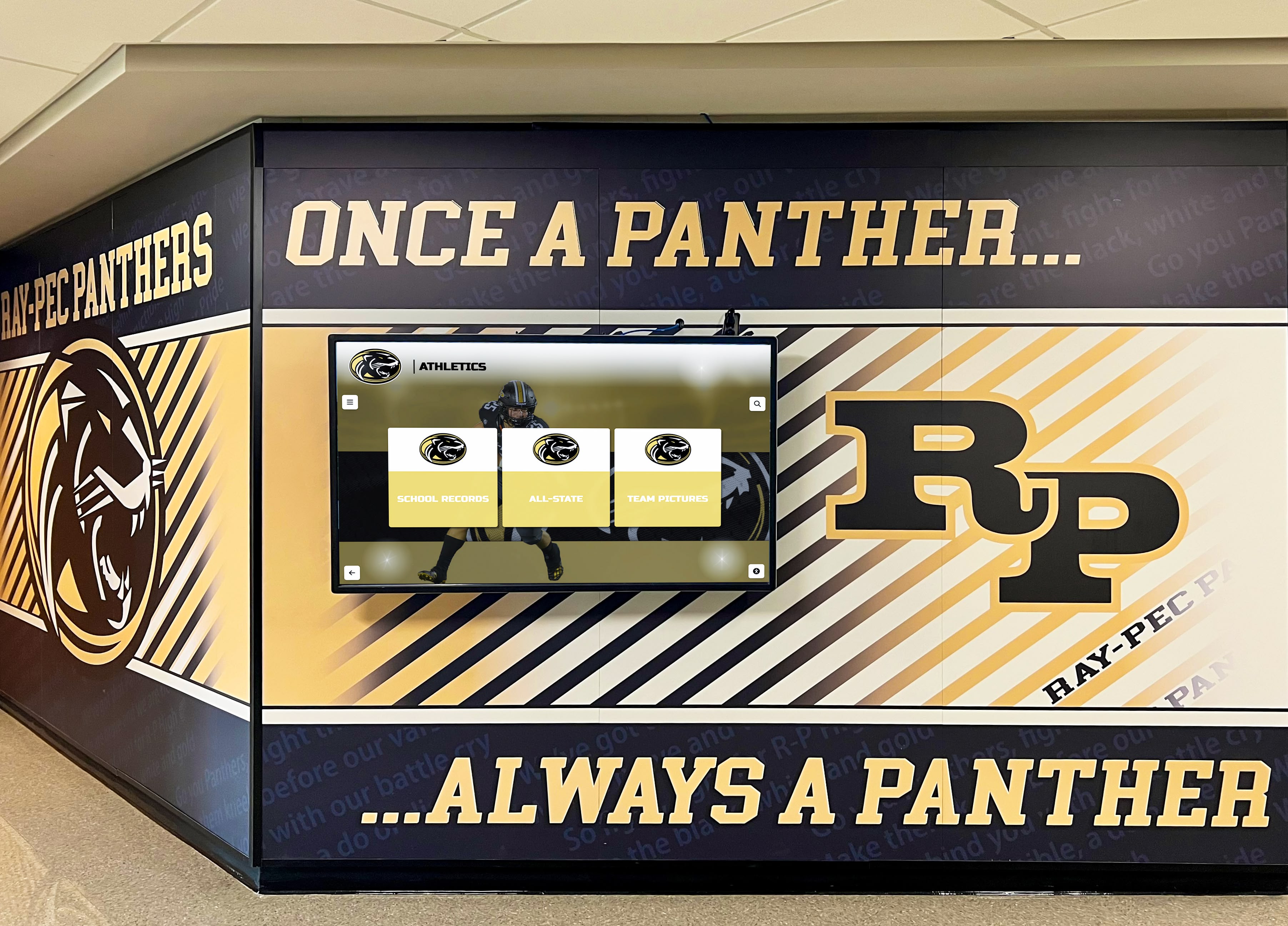
Comprehensive athletic facility improvements often include both functional infrastructure upgrades and enhanced recognition displays celebrating achievements
Planning Your Sports Field Lighting Installation
Successful lighting projects require careful planning addressing technical requirements, regulatory compliance, budget constraints, and community considerations.
Site Assessment and Design Considerations
Professional sports lighting design begins with comprehensive site evaluation identifying constraints and opportunities:
Field Layout and Dimensions: Precise measurements of playing surfaces, spectator areas, and adjacent spaces inform fixture placement and aiming. Irregularly shaped fields or multi-purpose surfaces require more complex design than standard rectangular layouts.
Pole Location Options: Fixture mounting locations dramatically impact design effectiveness and project costs. Four-pole configurations work well for rectangular fields with corner placement, six or eight-pole layouts provide more uniform coverage for large areas, and existing structures like press boxes or bleacher canopies might accommodate fixtures reducing new pole requirements.
Pole placement must consider setback distances ensuring fixtures don’t encroach on playing areas, access requirements for maintenance equipment, underground utility locations that constrain foundation placement, and sight lines ensuring fixtures don’t obstruct spectator views.
Electrical Infrastructure Assessment: Existing electrical service capacity determines whether current systems can support new lighting loads or if utility service upgrades become necessary—potentially adding $50,000-$200,000+ to project costs for transformer installations or service entrance upgrades.
The distance between main electrical service and field locations affects distribution costs. Facilities with electrical rooms adjacent to fields minimize trenching and cable expenses compared to installations requiring 500+ feet of underground service routing.
Surrounding Environment Factors: Adjacent residential neighborhoods require careful attention to light trespass and glare control preventing nuisance to neighbors. Trees, buildings, and terrain features may obstruct light distribution or create maintenance access challenges. Local ordinances often impose restrictions on lighting hours, maximum illumination levels at property boundaries, and fixture shielding requirements.
Professional lighting designers utilize computer modeling software simulating proposed installations and predicting illumination patterns before construction. These simulations identify potential problems early while demonstrating expected performance to decision-makers and stakeholders.
Regulatory Requirements and Approvals
Sports field lighting installations face multiple regulatory requirements varying by location but commonly including:
Zoning and Planning Approval: Municipal zoning codes frequently classify sports lighting as conditional uses requiring public hearings, neighbor notification, and planning commission or city council approval. The process can extend 3-12 months and may result in operating restrictions limiting lighting hours or requiring annual reviews.
Schools should engage with planning departments early, understanding specific requirements and potential opposition. Well-documented community benefit cases, neighbor impact mitigation plans, and professional lighting designs demonstrating compliance often facilitate smoother approval processes.
Environmental and Safety Standards: State and federal regulations may apply depending on project scope and funding sources:
- Federal Aviation Administration (FAA) review for installations near airports
- State environmental review for projects on public property or using state funding
- Americans with Disabilities Act (ADA) compliance for access paths to controls and maintenance areas
- Occupational Safety and Health Administration (OSHA) requirements for electrical installation and maintenance access
Utility Coordination: Projects requiring electrical service upgrades involve coordination with utility companies on timelines, costs, and technical requirements. Utility upgrade processes can extend 6-18 months from application to completion, making early coordination essential for project schedule development.
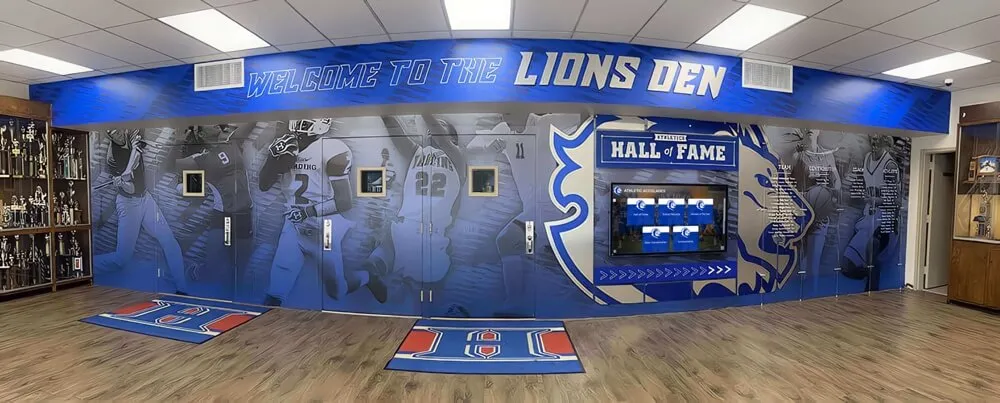
Athletic facilities serve as showcases for school pride—combining functional spaces like lit fields with recognition elements celebrating program traditions
Sports Field Lighting Costs and Budget Considerations
Understanding the full financial picture enables realistic budget planning and helps secure necessary funding for quality installations.
Installation Cost Factors
Sports field lighting project costs vary widely based on field size, system specifications, site conditions, and project scope. Typical investment ranges include:
High School Football Field Lighting: $200,000-$600,000+ for complete installations including:
- LED fixtures and mounting poles (4-8 poles at 60-90 feet height)
- Electrical service, distribution, and controls
- Site preparation and pole foundations
- Installation labor and project management
Budget-conscious programs might implement basic systems at the lower end providing adequate practice and recreational competition illumination. Premium installations with broadcast-quality lighting, advanced controls, and superior uniformity approach the upper range.
Soccer and Multi-Purpose Fields: $150,000-$400,000 depending on field dimensions, illumination levels, and pole configurations. Smaller youth fields require less investment while full-size competition fields with premier lighting approach costs similar to football installations.
Baseball and Softball Diamonds: $120,000-$350,000 based on field size and illumination requirements. Baseball generally costs more than softball due to larger field dimensions and greater vertical illumination needs for tracking fly balls.
Tennis Courts: $25,000-$75,000 per court for quality LED systems. Multi-court complexes benefit from economies of scale with shared electrical infrastructure.
Track and Field Complexes: $200,000-$500,000+ for comprehensive lighting covering running tracks, field event areas, and central competition spaces. The extended linear nature of tracks and distributed field event locations create complex design requirements.
Ongoing Operational Costs
Beyond initial installation investment, schools should budget for ongoing operational expenses:
Energy Costs: LED systems dramatically reduce energy consumption compared to traditional lighting. A typical high school football field operating 500 hours annually might consume 10,000-15,000 kWh with LED lighting versus 35,000-50,000 kWh with metal halide—annual savings of $2,500-$4,000 at $0.12/kWh electricity rates.
Actual costs vary based on local electricity rates, usage patterns, and system specifications. Schools should request energy consumption estimates from lighting designers and calculate operational costs using local utility rates.
Maintenance: LED technology reduces maintenance dramatically. Traditional metal halide systems require lamp replacement every 1-2 years at costs of $150-300 per fixture including labor. LED fixtures typically operate 15-20 years before requiring attention beyond basic cleaning.
Annual maintenance budgets for LED sports lighting systems typically run $1,000-$3,000 for inspections, cleaning, and minor repairs—versus $5,000-$15,000 annually for traditional systems requiring regular lamp replacement.
Control System Support: Advanced lighting control systems enabling scheduling, dimming, and remote operation may involve modest annual software licensing or cloud service fees—typically $500-$2,000 annually depending on system sophistication.
Funding Sources and Financing Options
Schools employ various strategies to fund sports field lighting projects:
Capital Improvement Bonds: Districts with active capital improvement programs can include athletic facility lighting in bond packages presented to voters. This approach spreads costs across 15-25 year bond terms while securing voter support through community engagement around athletic program benefits.
Booster Clubs and Fundraising: Many successful lighting projects result from parent booster club fundraising efforts. Campaigns might target naming opportunities—recognizing major donors on plaques near field entrances—or organize community fundraising events building grassroots support. Schools celebrating athletic excellence through modern digital recognition displays often find donors more willing to invest in comprehensive facility improvements that honor program traditions.
Grant Programs: Various grant programs support athletic facility improvements. State departments of education sometimes offer matching grants for infrastructure projects. National sporting goods manufacturers and athletic organizations periodically sponsor field improvement grants. Local foundations focused on youth development may fund projects demonstrating community benefit.
Energy Efficiency Incentives: Utility companies and state energy offices often provide rebates for LED lighting installations delivering significant energy savings. These incentives might cover 10-25% of LED fixture costs, meaningfully reducing project expenses while supporting energy conservation goals.
Performance Contracting: Some schools utilize energy service company (ESCO) performance contracts where lighting upgrades are financed through guaranteed energy savings. The ESCO guarantees specific savings levels and assumes risk if savings don’t materialize as projected.
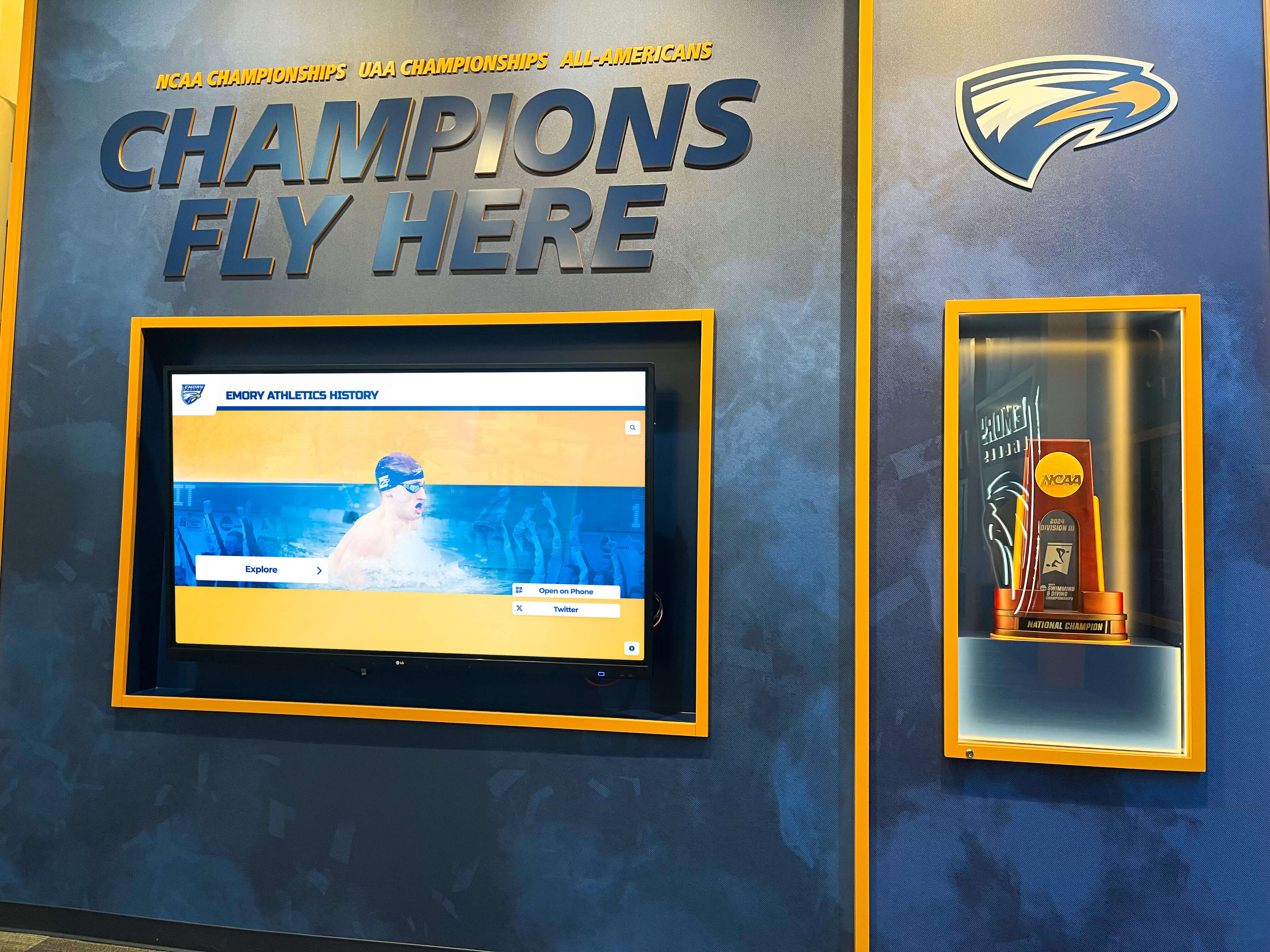
Championship traditions celebrated through permanent displays often inspire facility improvements creating environments worthy of program excellence
Safety, Glare Control, and Light Trespass Management
Responsible lighting installations balance athletic program needs with community impacts and environmental stewardship.
Glare Reduction Strategies
Glare—excessive brightness causing visual discomfort or visibility impairment—presents a primary concern for sports lighting installations. Effective glare management requires:
Proper Fixture Selection: Modern LED sports fixtures incorporate advanced optical systems with shields, louvers, and precise beam control limiting light emission above horizontal planes. Fixtures meeting Dark Sky compliance standards significantly reduce upward light and off-site glare compared to older open-reflector designs.
Optimized Aiming: Professional installation teams use fixture aiming charts ensuring each fixture points toward its intended field zone rather than overshooting into surrounding areas or spectator sight lines. Computer-controlled aiming systems available from premium manufacturers enable precise beam placement within 0.1-degree accuracy.
Pole Height Considerations: Taller poles with fixtures mounted higher reduce glare for spectators and nearby residents by increasing the angle between viewer sight lines and fixture faces. However, taller poles increase project costs and may face greater planning opposition in some communities. The optimal height balances performance, cost, and aesthetic considerations.
Managing Light Trespass to Neighboring Properties
Light trespass—unwanted illumination falling on adjacent properties—creates conflict between athletic facilities and neighboring residences. Effective management strategies include:
Fixture Shielding and Cutoff Angles: Full-cutoff fixtures emit no light above the horizontal plane and minimal light at high angles, dramatically reducing light trespass compared to traditional fixtures. These designs cost slightly more but prevent most neighbor conflicts while demonstrating environmental responsibility.
Setback Distances: Locating poles and fixtures as far from property boundaries as practical reduces light trespass through simple distance attenuation. When boundary setbacks prove impossible, enhanced shielding and aiming precision become essential.
Operational Scheduling Controls: Advanced control systems enable dimming or shutting off specific fixture zones when not required. Facilities might illuminate only the competition field during events while keeping practice field zones dark, or reduce overall illumination to 50% for practices versus full brightness for competitions.
Neighbor Engagement: Proactive communication with adjacent residents during planning stages—presenting professional lighting analyses demonstrating predicted property boundary illumination levels, discussing operational schedules and dimming strategies, and establishing feedback mechanisms for post-installation adjustments—often prevents conflicts and builds community support.
Many successful installations include written operational policies specifying maximum lighting hours, seasonal schedules, and neighbor notification procedures for special events requiring extended operation.
Dark Sky Compliance and Environmental Responsibility
The International Dark-Sky Association (IDA) and various state and local regulations establish standards limiting light pollution’s environmental and astronomical impacts:
IDA-Approved Fixtures: Sports lighting manufacturers now offer fixture lines certified by the International Dark-Sky Association as meeting stringent requirements for upward light limitation, glare control, and responsible illumination. Specifying IDA-approved fixtures demonstrates environmental stewardship while often satisfying local ordinance requirements.
Curfew Policies: Most schools implementing sports lighting adopt policies limiting operation hours—typically no later than 10 PM on weeknights and 11 PM on weekends. These policies balance athletic program needs with community disruption minimization and energy conservation.
Adaptive Lighting Controls: Some facilities install systems automatically reducing illumination levels during periods when full brightness proves unnecessary—perhaps 75% illumination for practices, 100% for competitions, or automatic dimming after specific hours. These approaches demonstrate operational responsibility while reducing energy consumption and environmental impact.
Maximizing Your Sports Field Lighting Investment
Beyond basic illumination, thoughtful planning extends value and creates memorable athletic environments.
Integrating Lighting with Comprehensive Facility Improvements
Sports field lighting often occurs as part of broader athletic facility modernization. Coordinating related improvements creates cohesive environments and maximizes construction efficiency:
Spectator Amenities: Projects might combine lighting installation with bleacher upgrades, concession stand construction, and restroom facility improvements creating complete game-day experiences. Coordinating construction timelines reduces disruption and often achieves cost savings through shared site mobilization.
Field Surface Improvements: Artificial turf installation, drainage system upgrades, or natural grass field renovation align logically with lighting projects since both involve significant site disruption. Combining projects eliminates duplicate mobilization costs and presents comprehensive facility transformation to fundraising supporters and bond voters.
Technology Integration: Modern athletic facilities increasingly incorporate digital recognition displays celebrating program achievements alongside functional infrastructure improvements. Schools installing field lighting might simultaneously implement touchscreen digital displays in stadium entryways or field houses, creating environments that both enable evening competitions through quality lighting and honor athletic traditions through permanent recognition. These complementary improvements demonstrate institutional commitment to athletic excellence while creating memorable experiences that build lasting school pride.
Creating Signature Game-Day Experiences
Quality field lighting enables schools to develop signature athletic events building community traditions and school identity:
Friday Night Football Culture: Premium lighting transforms ordinary football games into community gatherings that define fall Friday nights in countless American communities. The tradition of gathering under lights creates nostalgia and school connection lasting lifetimes—alumni return decades later specifically to experience Friday night games under lights they remember from their own student years.
Showcase Events and Tournaments: Facilities with quality lighting attract invitational tournaments, playoff hosting opportunities, and showcase events bringing regional recognition to programs. Schools known for superior facilities gain competitive recruiting advantages and community visibility extending beyond individual game results.
Multi-Sport Evening Events: Creative scheduling enables schools to host multi-sport evenings—perhaps soccer at 5:30, followed by football at 7:30—creating festival atmospheres where families attend multiple competitions and athletic programs support each other. These events build cross-program community and maximize lighting investment utilization.
Schools celebrating athletic achievements effectively often find field lighting enables the memorable moments that populate recognition displays for generations—the Friday night championship game under lights becomes the story celebrated digitally when players return as distinguished alumni.
Supporting Broader Community Access
Well-lit athletic facilities serve communities beyond school athletic programs:
Youth Sports Organization Partnerships: Schools can negotiate facility use agreements with youth soccer clubs, little league programs, and recreational sports organizations—generating rental revenue while providing community youth access to quality facilities. These partnerships strengthen school-community relationships and demonstrate responsible stewardship of public investments.
Adult Recreational Programming: Evening softball leagues, adult soccer competitions, and recreational sports programs represent revenue opportunities for schools with lit fields during seasons when school teams don’t need full facility access. These programs introduce community members to school campuses and create positive associations extending beyond parent involvement.
Special Events and Celebrations: Lit athletic facilities enable diverse community programming—high school graduation ceremonies on football fields, community movie nights under lights, charity walk/run events using tracks and fields, and cultural celebrations bringing diverse community groups to school campuses. These events demonstrate athletic facilities as community assets serving broad public purposes beyond competitive sports.
Schools maximizing community facility access often find enhanced public support for athletic funding requests and capital improvements. Taxpayers more readily approve facility investments benefiting broad community populations rather than exclusively serving student athletes.
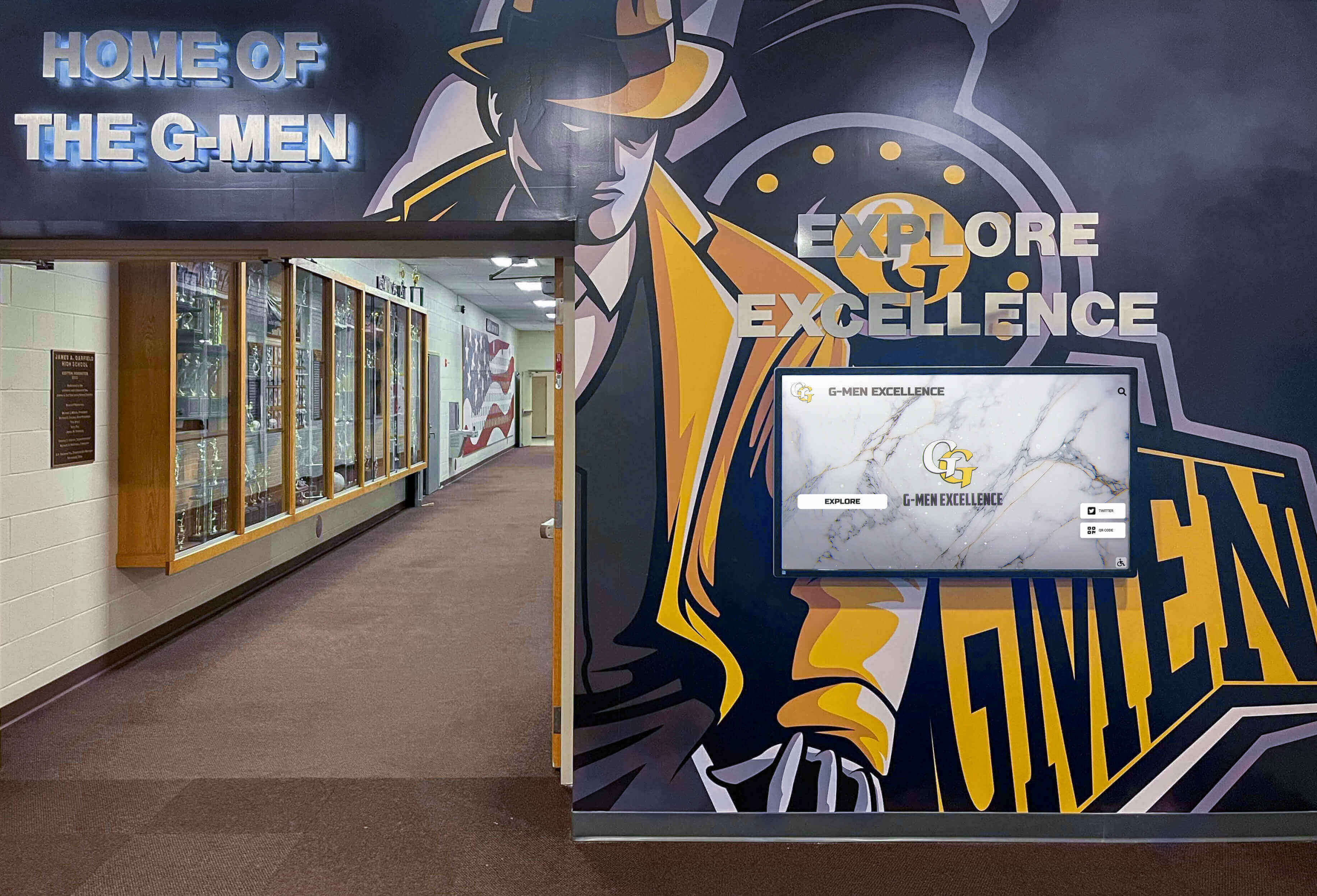
Comprehensive athletic facilities combine functional infrastructure with recognition elements creating environments celebrating program excellence
Implementation Timeline and Project Management
Understanding realistic project timelines helps schools plan installations minimizing disruption to athletic schedules.
Typical Project Phases
Planning and Design (3-6 months): Initial planning includes needs assessment, budget development, site evaluation, preliminary design concepts, and stakeholder engagement. Schools should involve athletic directors, facilities managers, coaches, and booster representatives ensuring designs meet program requirements.
Professional lighting design development requires 6-12 weeks once designers receive site information, usage requirements, and budget parameters. This phase produces detailed engineering drawings, illumination predictions, equipment specifications, and cost estimates.
Approvals and Funding (3-12 months): Regulatory approval timelines vary dramatically by jurisdiction. Straightforward projects in sports-friendly communities might secure zoning approval in 60-90 days while contentious installations in communities with active opposition can extend 6-12 months through planning commission and appeals processes.
Funding timelines depend on approach—board-approved capital expenditures might move quickly while bond elections follow fixed schedules and fundraising campaigns extend across multiple seasons.
Construction (2-4 months): Actual installation typically requires 8-16 weeks depending on project scale and complexity. Major phases include:
- Site preparation and foundations (2-3 weeks): Excavating pole foundation locations, pouring concrete bases, and backfilling
- Pole installation (1-2 weeks): Crane operations positioning poles on foundations and securing mounting hardware
- Electrical distribution (2-4 weeks): Trenching for underground cable runs, installing service equipment, and pulling wire
- Fixture installation and aiming (1-2 weeks): Mounting fixtures to poles and precisely aiming each unit
- Testing and commissioning (1 week): Verifying illumination levels, adjusting aiming as needed, and training operators
Weather delays, utility coordination challenges, and equipment delivery issues can extend schedules. Schools should avoid planning construction during active athletic seasons when field access interruptions disrupt team schedules.
Minimizing Disruption to Athletic Programs
Thoughtful scheduling minimizes project impact on athletic programs:
Off-Season Construction: Scheduling major work during summer break or off-seasons for primary field users prevents construction from disrupting practice and competition schedules. A football field lighting project ideally completes during late spring through early summer, allowing testing and adjustments before fall season kickoff.
Phased Implementation: Large facilities with multiple fields might phase construction across multiple years—perhaps implementing football field lighting year one, soccer field lighting year two, and baseball/softball lighting year three. This approach spreads costs while ensuring some athletic facilities remain operational throughout each construction phase.
Alternative Practice Arrangements: Schools might arrange temporary practice location sharing with neighboring districts or community facilities during construction periods when fields become unavailable. Early coordination prevents last-minute scrambling for practice space.
Maintaining Your Sports Field Lighting System
Proper maintenance ensures long-term performance and protects investment value.
LED System Maintenance Requirements
Modern LED sports lighting requires minimal maintenance compared to traditional systems but benefits from periodic attention:
Annual Inspections: Yearly professional inspections verify electrical connections remain secure, mounting hardware shows no deterioration, fixture optics remain clean and undamaged, and lighting performance meets original specifications. These inspections typically cost $1,000-$2,500 depending on system size.
Fixture Cleaning: Dust and environmental contaminants accumulating on fixture lenses gradually reduce light output. Periodic cleaning—perhaps every 2-3 years—maintains optimal performance. Some schools include cleaning during annual inspections while others coordinate with window washing or other exterior building maintenance.
Storm Damage Assessment: Following severe weather events, visual inspection ensures no fixtures sustained impact damage and mounting hardware remains secure. Catching small issues early prevents larger problems developing.
Control System Management
Advanced lighting control systems require occasional software updates and user training:
Software Updates: Some control systems receive periodic software updates adding features or addressing bugs. Schools should maintain awareness of available updates and schedule implementation during off-seasons.
User Training: As staff members change positions, ensuring new athletics directors and facilities managers understand control system operation prevents operational issues. Documenting control procedures and maintaining vendor contact information supports smooth transitions.
Scheduling Adjustments: Reviewing and updating automated lighting schedules as athletic seasons change, daylight saving time shifts occur, and program needs evolve ensures systems operate efficiently without unnecessary operation.
Celebrating Athletic Excellence Through Comprehensive Facility Investment
Schools investing in sports field lighting create environments enabling evening competitions, extending practice schedules, and generating memorable Friday night traditions that build lasting school pride. These functional infrastructure improvements work hand-in-hand with recognition elements celebrating the achievements enabled by quality facilities.
Modern athletic facilities increasingly combine practical systems like premium LED field lighting with digital recognition displays honoring program excellence. This comprehensive approach demonstrates institutional commitment to athletics while creating environments worthy of championship traditions.
Athletic directors planning facility improvements should consider how functional infrastructure and recognition elements work together creating cohesive environments. The Friday night championship game under quality lighting creates the memorable moment celebrated through digital displays for decades—lit fields enable the achievements, recognition systems preserve the memories, and together they build the school pride that defines successful athletic programs.
Whether you’re planning initial field lighting installation or modernizing legacy systems, thoughtful implementation addressing community needs, operational efficiency, and long-term value creates facilities serving athletic programs and communities for generations. Quality lighting represents foundational infrastructure enabling all other aspects of premier athletic programming—from end-of-season awards celebrations honoring individual excellence to championship competitions showcasing team achievement under lights.
Transform Your Athletic Facilities with Comprehensive Recognition Solutions
While quality field lighting enables memorable evening competitions, preserving those championship moments and honoring athletic excellence requires comprehensive recognition solutions. Rocket Alumni Solutions provides schools and athletic facilities with digital recognition displays and interactive touchscreen systems that celebrate program achievements, honor distinguished athletes, and build lasting school pride.
Our platform enables athletic directors to showcase unlimited athletes, teams, and milestones through engaging digital displays that complement your facility improvements—creating environments that both enable excellence through quality infrastructure and permanently celebrate the achievements that define your program. Contact us today to discover how digital recognition solutions can transform your athletic facilities into comprehensive showcases of school pride and competitive excellence.































