State championship victories represent the pinnacle of high school athletic achievement—years of dedication, countless hours of practice, and moments of extraordinary performance culminating in ultimate competitive success. How schools display these championship achievements communicates volumes about institutional values, program excellence, and commitment to honoring athletic accomplishment. From traditional championship banners suspended in gymnasium rafters to modern interactive digital displays, state championship recognition has evolved dramatically while maintaining its fundamental purpose: celebrating excellence and inspiring future generations of student-athletes to pursue their own championship dreams.
The trophy case dilemma facing athletic directors nationwide has intensified significantly in recent years. As successful programs accumulate state championships, conference titles, and tournament appearances across multiple sports, traditional recognition approaches strain against physical space limitations and budget constraints. A typical high school athletic program with 15-20 sports generates 40-80 new trophies annually, accumulating to 800-1,600 trophies over two decades. Displaying this volume of achievement in traditional trophy cases would require 16-32 large cases—an impossible space and financial commitment for most schools.
Yet every state championship, every tournament appearance, every conference title represents countless hours of athlete dedication and coach leadership that deserve proper recognition. The challenge isn’t whether to recognize achievement—it’s how to comprehensively honor excellence without overwhelming available space or exhausting limited budgets.
This comprehensive guide explores everything schools need to know about state championships display—from understanding traditional recognition methods and their limitations to implementing modern digital solutions that solve space constraints while enhancing community engagement and preserving program history for future generations.
Understanding the Significance of State Championship Recognition
State championships represent extraordinary accomplishments that distinguish programs and define athletic legacies. The journey to state championship victory requires exceptional talent, sustained effort, coaching excellence, and often significant institutional support—factors that warrant prominent, permanent recognition.
What State Championships Mean to Athletic Programs
State championship victories validate years of program development and strategic planning. Programs don’t accidentally win state championships—they build cultures of excellence, recruit and develop talented athletes, implement effective training systems, secure adequate resources and facilities, and maintain consistency across coaching transitions. When schools properly recognize state championships, they acknowledge all these contributing factors while celebrating the specific teams and athletes who achieved ultimate success.
For student-athletes, state championship recognition provides tangible validation of sacrifice and dedication. Championship athletes typically invest thousands of hours in their sports—early morning practices, weekend tournaments, summer training, strength and conditioning work, film study, and mental preparation. Permanent recognition demonstrates that schools value this commitment and consider athletic excellence worthy of lasting acknowledgment.
State championship displays also serve recruiting and program development purposes. Prospective athletes evaluating programs assess championship history as evidence of program quality and competitive opportunity. Visible championship recognition signals to talented incoming athletes that they’re joining programs with established excellence and realistic championship aspirations.
Historical Context: How Championship Recognition Has Evolved
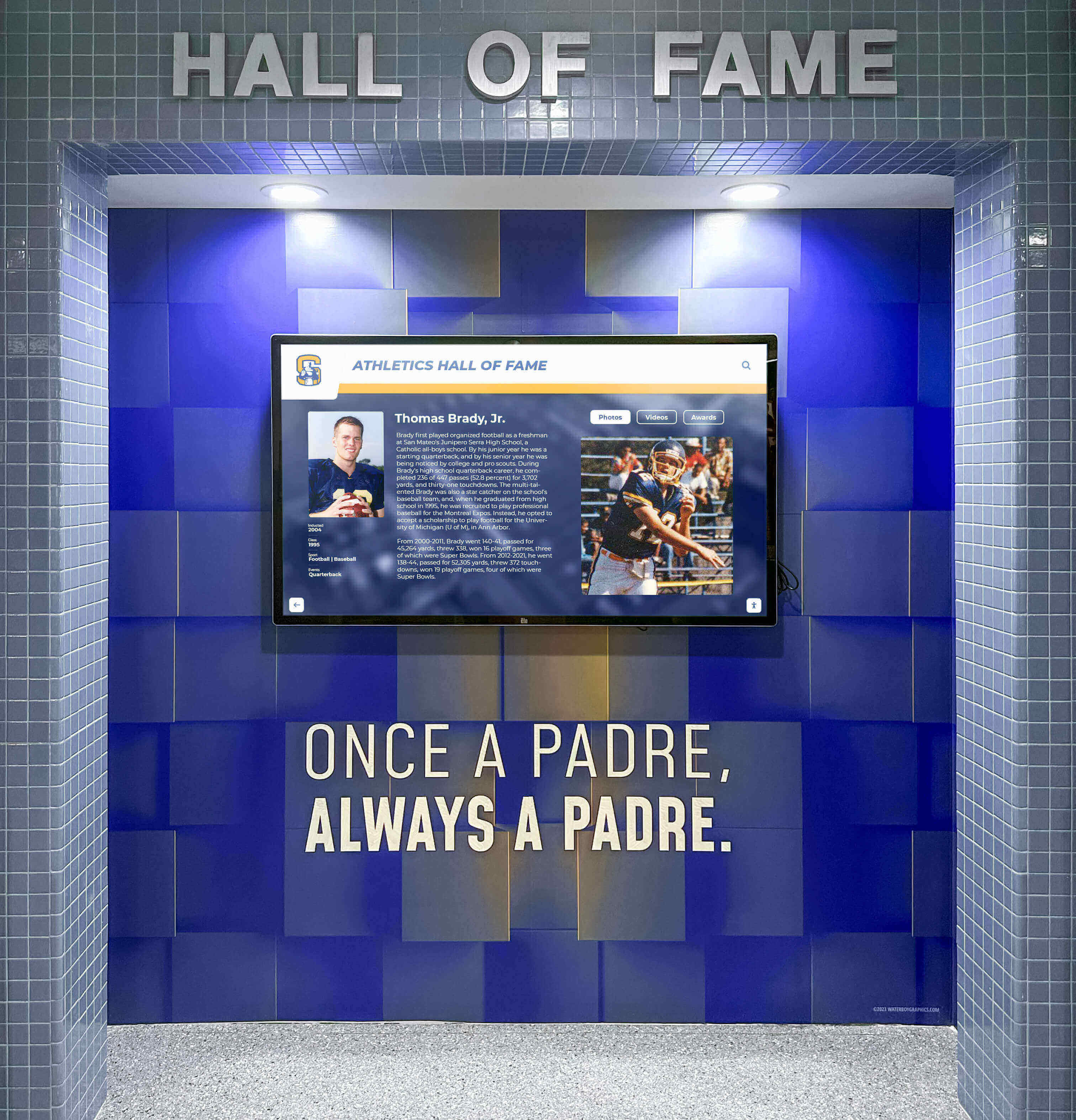
For most of the 20th century, schools displayed state championships through relatively simple methods—championship trophies in lobby display cases, team photos hung in gymnasium hallways, and perhaps championship banners suspended from gymnasium rafters. These approaches worked adequately when championship victories occurred infrequently and space constraints weren’t pressing concerns.
The explosion of competitive opportunities over recent decades fundamentally changed this landscape. Many states now conduct championships across multiple classifications or divisions within individual sports, dramatically increasing championship opportunities. Girls’ sports programs have achieved equity with boys’ programs, doubling the number of teams competing for championships. New sports have been added to state athletic association portfolios—competitive cheer, bass fishing, bowling, water polo—each with their own championship structures.
This proliferation of championship opportunities created recognition challenges. Schools with successful programs across multiple sports found themselves accumulating state championships faster than traditional display methods could accommodate. Trophy cases filled completely, gymnasium banner space reached capacity, and difficult decisions about which achievements warranted recognition became necessary.
Additionally, cultural expectations around recognition have evolved significantly. Previous generations accepted that only the most prestigious achievements would receive permanent recognition, but contemporary students, parents, and communities expect comprehensive documentation of all competitive success. This expectation shift demands recognition approaches with greater capacity and flexibility than traditional methods provide.
Traditional State Championship Display Methods
Understanding traditional recognition approaches—their strengths, limitations, and appropriate applications—helps schools make informed decisions about championship display investments. Many effective recognition programs combine traditional and modern methods, leveraging each approach’s unique advantages.
Championship Banners in Gymnasiums
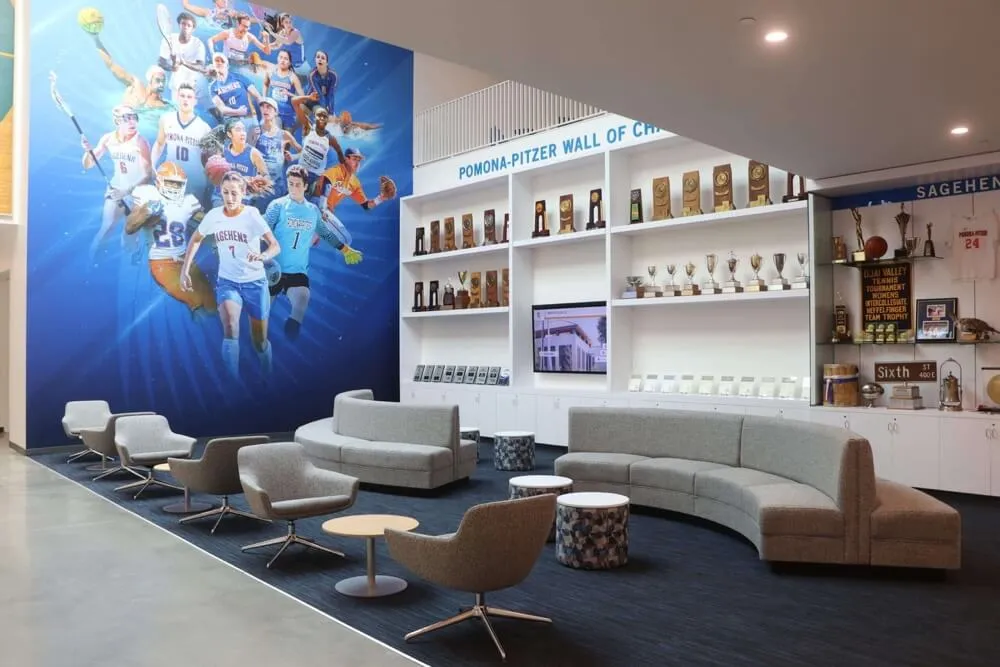
Championship banners suspended from gymnasium rafters or mounted on arena walls represent the most visible and traditional form of state championship recognition. These banners create immediate visual impact, especially when accumulated across years of competitive success.
Design Considerations for Championship Banners:
Traditional championship banners typically include sport identification (Basketball, Football, Soccer, etc.), championship year or season, school colors and branding elements, team mascot or logo, classification or division information, and sometimes key achievement details (conference record, tournament results). Banner dimensions typically range from 2’ x 4’ for basic designs to 4’ x 8’ or larger for prominent displays featuring team photos or extensive information.
Material Options:
Vinyl banners offer cost-effective solutions displaying photo-realistic images and detailed graphics at prices typically ranging from $150-$400 depending on size and complexity. However, vinyl can fade under continuous UV exposure from gymnasium windows and may show wear after 5-10 years of display.
Felt or nylon banners provide classic appearances with traditional aesthetics favored by many programs for their durability and resistance to fading. These premium materials typically cost $300-$800 per banner but maintain appearance quality for decades when properly maintained.
Tackle twill banners use sewn fabric lettering and graphics creating dimensional appearance and premium visual quality. As the most expensive option at $500-$1,200 per banner, tackle twill provides superior durability and maintains pristine appearance for 20+ years.
Advantages of Championship Banners:
Championship banners provide immediate visual impact visible from anywhere in gymnasiums, creating impressive displays especially when multiple banners represent years of success. They require no power, connectivity, or technical maintenance beyond occasional cleaning. Banners also create traditional aesthetics many communities associate with athletic excellence, and their high gymnasium visibility ensures recognition during games when audiences are largest.
Limitations of Banner Recognition:
Physical space constraints limit how many banners gymnasiums can accommodate. Most gymnasiums support 20-40 banners maximum before appearing cluttered or running out of mounting space. For programs winning multiple state championships annually across numerous sports, this capacity fills quickly.
Banner mounting height often places detailed information beyond comfortable viewing distance—text and graphics visible up close become difficult to read from gymnasium floors. Updating costs accumulate as new championships require new banners, with ordering, production, and installation typically costing $200-$500 per championship recognized.
Trophy Cases and Display Cabinets
Glass-fronted trophy cases displaying state championship trophies, medals, and awards provide traditional recognition methods still widely used in school lobbies, athletic facilities, and hallways connecting to gymnasiums.
Trophy Case Design Options:
Wall-mounted cases maximize space efficiency by using vertical wall space rather than consuming floor area. These cases typically measure 4-6 feet wide by 3-5 feet tall and cost $2,000-$5,000 installed. Wall cases work well in hallways and lobbies where floor space is limited.
Freestanding trophy cases offer greater display capacity with accessible viewing from multiple angles. Floor cases typically measure 6-8 feet wide, 3-4 feet deep, and 6-7 feet tall, costing $5,000-$12,000 installed. These substantial investments provide considerable display capacity but require significant floor space.
Custom-built trophy cases designed specifically for available spaces and recognition needs provide maximum flexibility but command premium prices—typically $8,000-$25,000 depending on size, materials, and features like integrated lighting, locking mechanisms, humidity control, and custom woodwork matching facility aesthetics.
Optimal Trophy Display Practices:
Effective trophy case displays implement organizational systems that enhance visitor comprehension. Common approaches include organizing by sport with designated sections, arranging chronologically showing program development over time, featuring premier achievements prominently at eye level, and providing clear labeling with sport, year, championship level, and team information.
Lighting significantly impacts display effectiveness. LED strip lighting or puck lights illuminate trophies dramatically while consuming minimal energy and generating little heat that could damage awards. Many modern trophy cases include integrated LED systems controllable via remote switches.
Trophy Case Limitations:
Space capacity remains the fundamental trophy case limitation. A large floor case costing $8,000-$10,000 typically accommodates 60-100 trophies maximum. Schools adding 40-80 trophies annually would require new cases every 1-2 years—an unsustainable financial and space commitment.
Trophy cases also require ongoing maintenance—dust accumulation necessitates regular cleaning, awards shift or fall requiring rearrangement, and overcrowding reduces visual impact as cases fill completely. Many schools face difficult decisions about removing older trophies to accommodate new achievements, effectively erasing program history due to space constraints.
Schools exploring traditional and digital trophy display solutions find that hybrid approaches often provide optimal balance between traditional aesthetics and comprehensive recognition capacity.
Recognition Walls and Plaque Displays
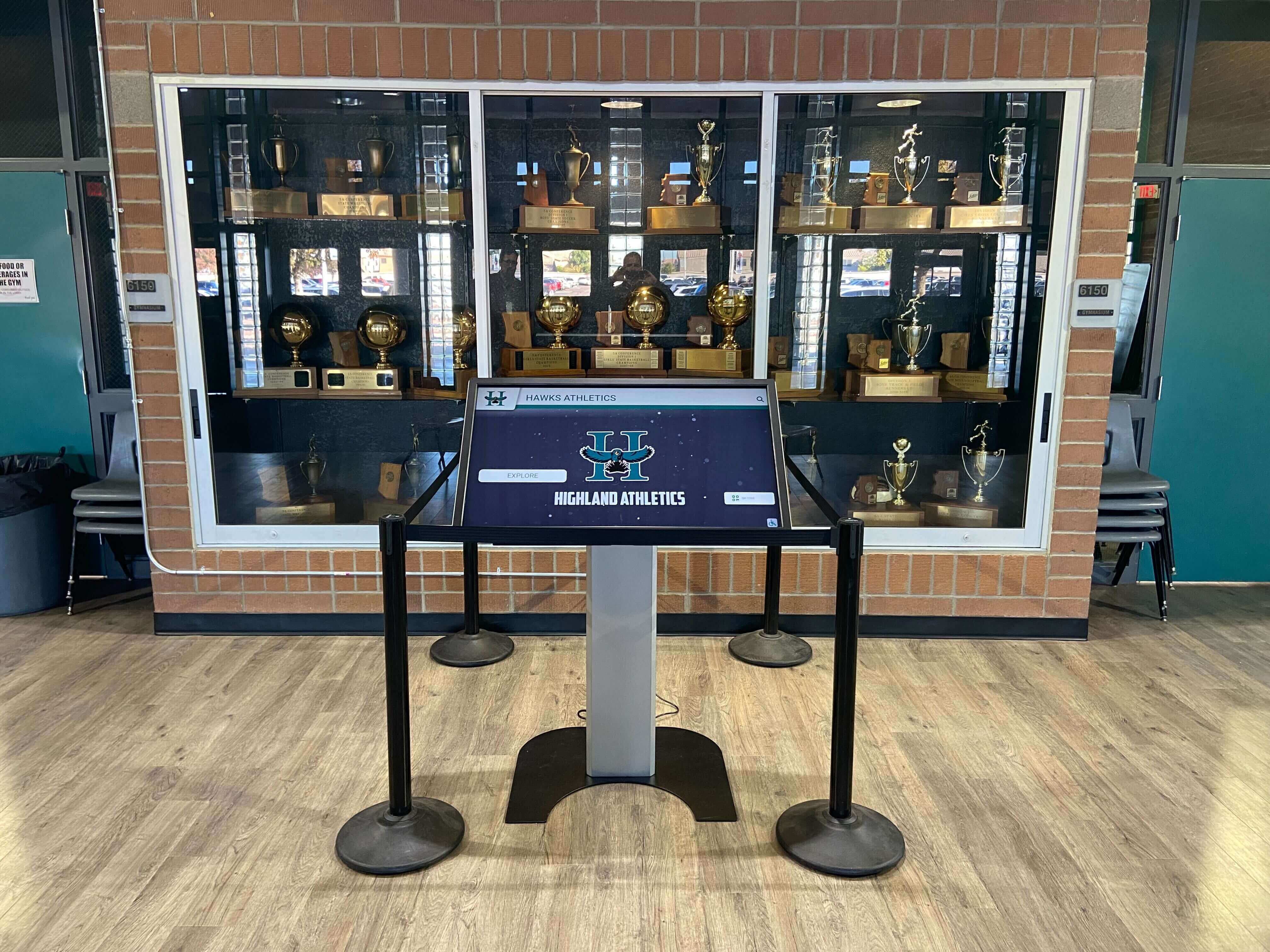
Dedicated recognition walls featuring engraved plaques, team photos, and achievement documentation provide comprehensive championship recognition beyond what trophy cases alone can accommodate.
Recognition Wall Components:
Engraved plaques typically measure 8" x 10" to 12" x 16" and include championship year, sport, team record, coaching staff, and sometimes key players or notable achievements. Individual plaques cost $75-$200 depending on size, material (brass, aluminum, wood), and engraving complexity.
Team photos professionally framed and mounted alongside plaques provide visual recognition of championship teams. Frame costs range from $50-$150 per photo depending on size and quality.
Dimensional lettering or vinyl graphics can create header sections identifying recognition categories—“State Championships,” “Conference Champions,” “Tournament Appearances”—helping organize wall displays coherently. Professional installation of dimensional graphics typically costs $500-$2,000 depending on design complexity.
Recognition Wall Advantages:
Recognition walls accommodate more achievements than trophy cases at lower per-item costs. A large wall display might recognize 50-100 championships for $5,000-$10,000 total investment—significantly less expensive per championship than trophy case space.
Walls also provide design flexibility allowing creative arrangements, custom graphics, and integration with facility branding and color schemes. Many schools create impressive recognition displays through thoughtful wall design incorporating school colors, mascot graphics, and professional layouts.
Recognition Wall Challenges:
Like all physical recognition methods, walls face space limitations. A typical 20-foot wall section accommodates approximately 50-80 plaques before appearing overcrowded. Growing programs exhaust available wall space necessitating difficult decisions about what to display.
Updating recognition walls requires ongoing investment—new plaques, professional engraving, installation—typically costing $150-$300 per championship recognized. Over decades, these recurring costs accumulate substantially.
Physical modification of recognition walls to add new achievements often requires professional services. Unlike digital systems where administrators add content independently, wall modifications typically need installers, contractors, or specialized vendors—increasing cost and complexity of keeping recognition current.
Modern Digital Championship Display Solutions
Digital recognition technology has fundamentally transformed how schools can display state championships, eliminating space constraints while introducing capabilities impossible with traditional physical displays. Understanding modern digital solutions helps schools evaluate whether these approaches align with recognition goals and budget realities.
Interactive Digital Trophy Cases
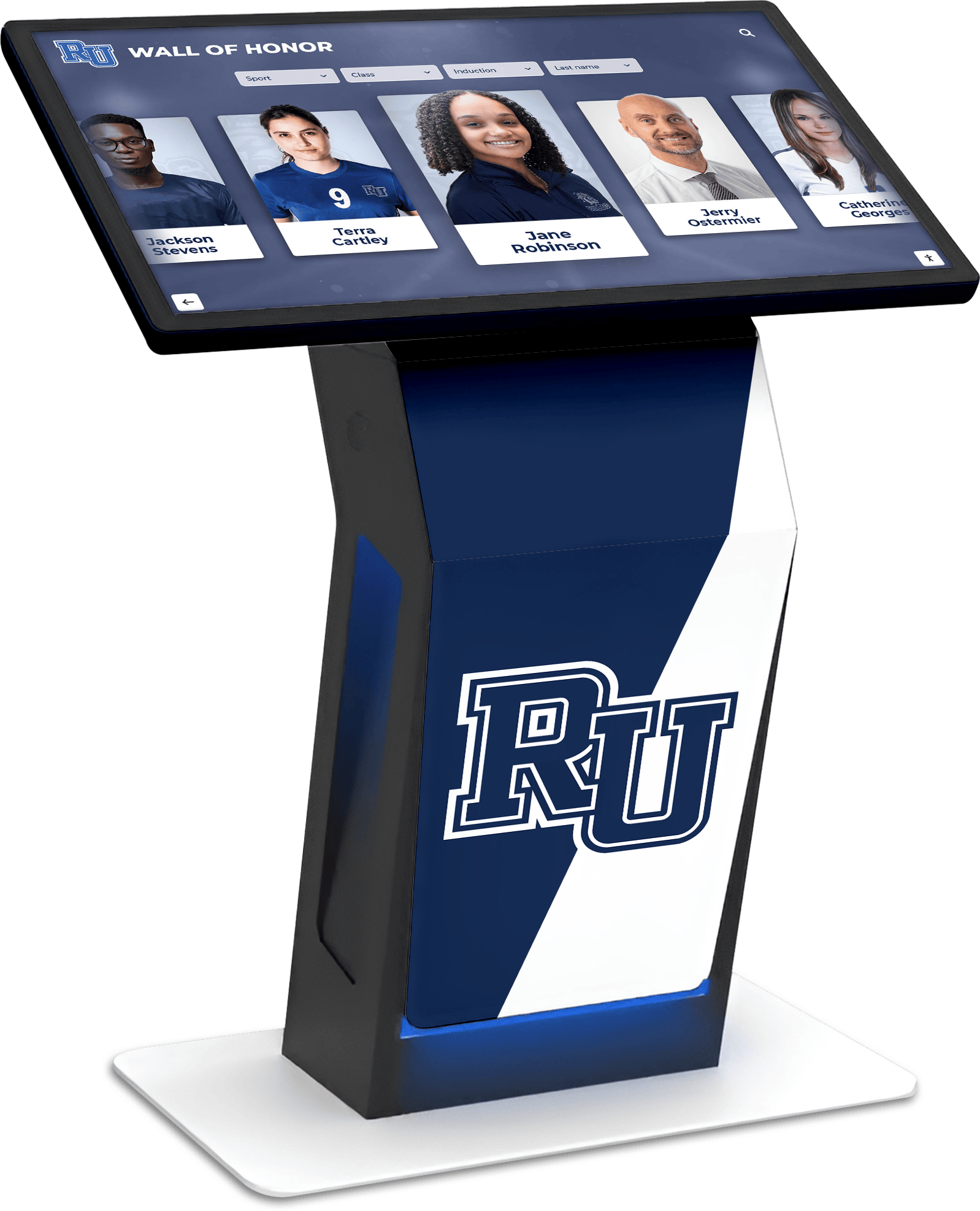
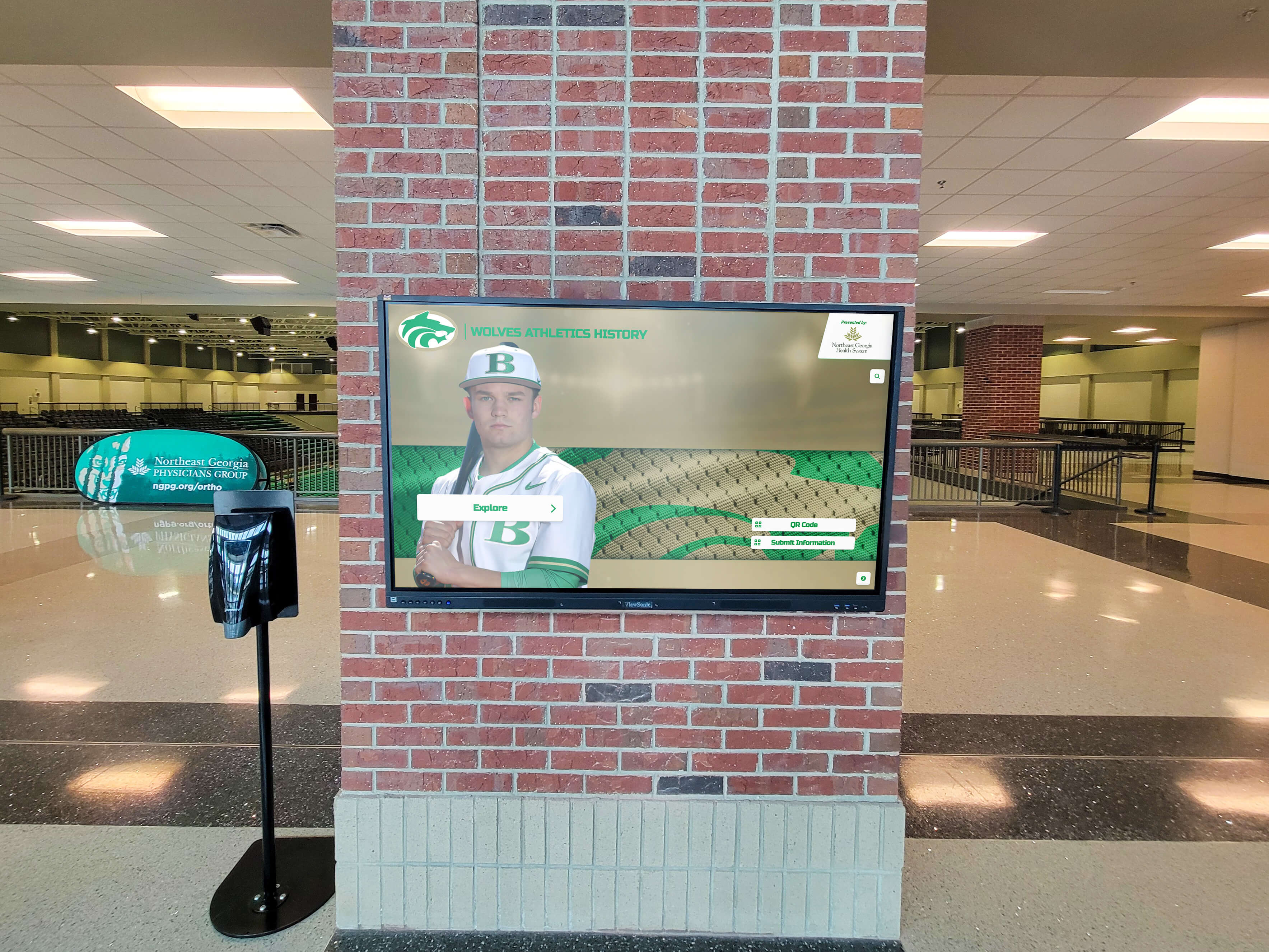
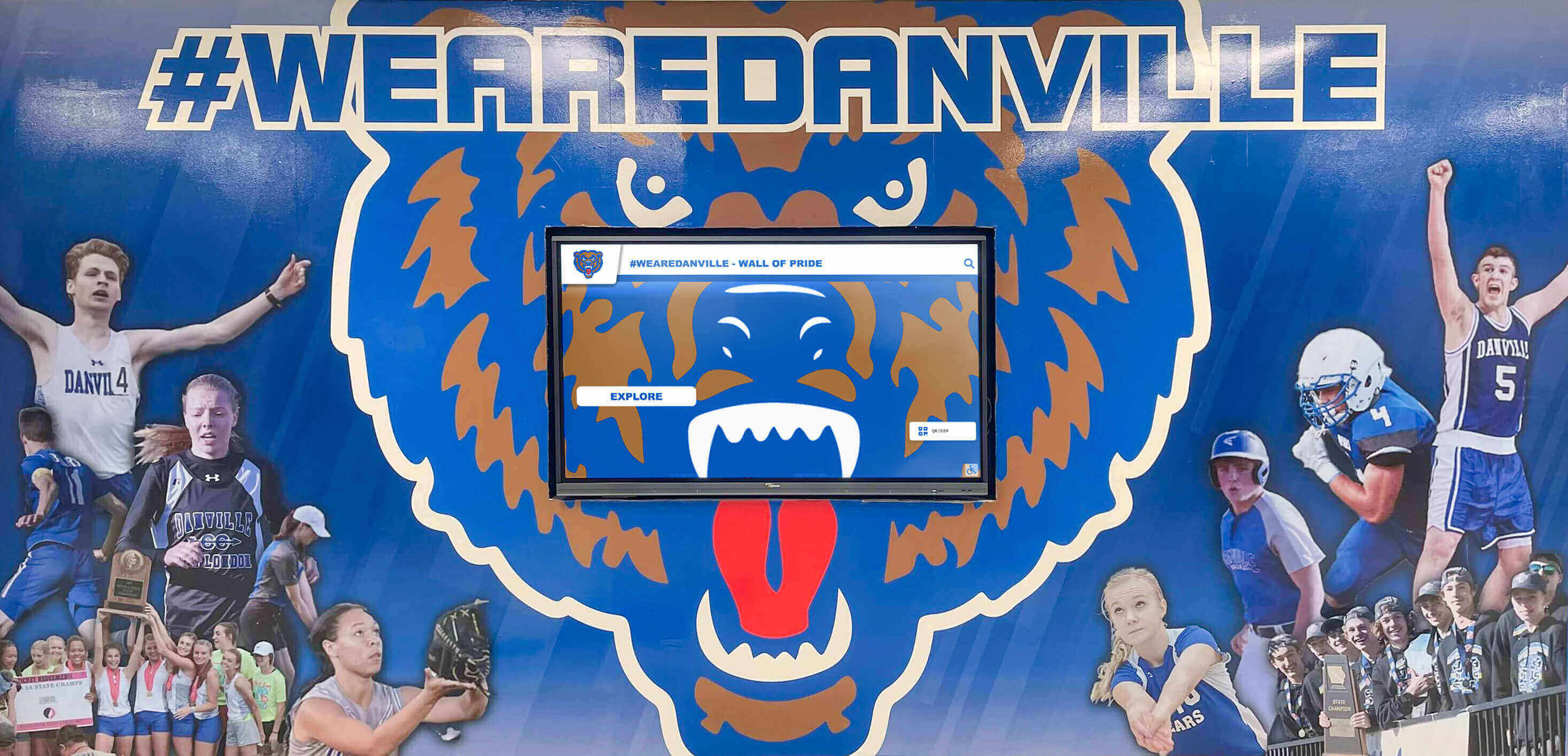
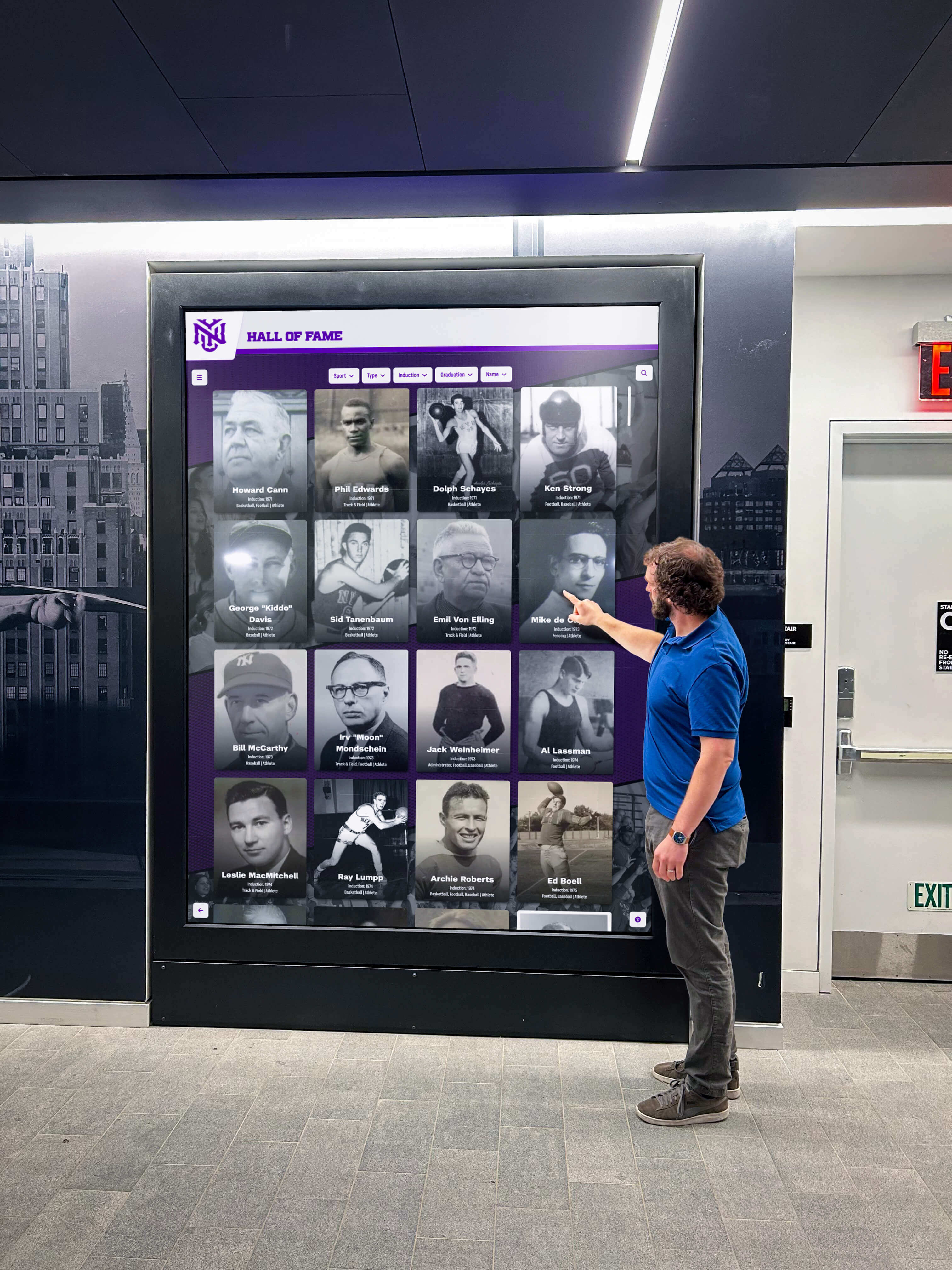
Digital trophy cases replace or supplement traditional glass cases with interactive touchscreen displays showcasing unlimited achievements through photographs, detailed information, and multimedia content. These systems typically consist of commercial-grade touchscreen displays (43"-55" most common), purpose-built recognition software, cloud-based content management systems, and secure mounting hardware.
How Digital Trophy Cases Function:
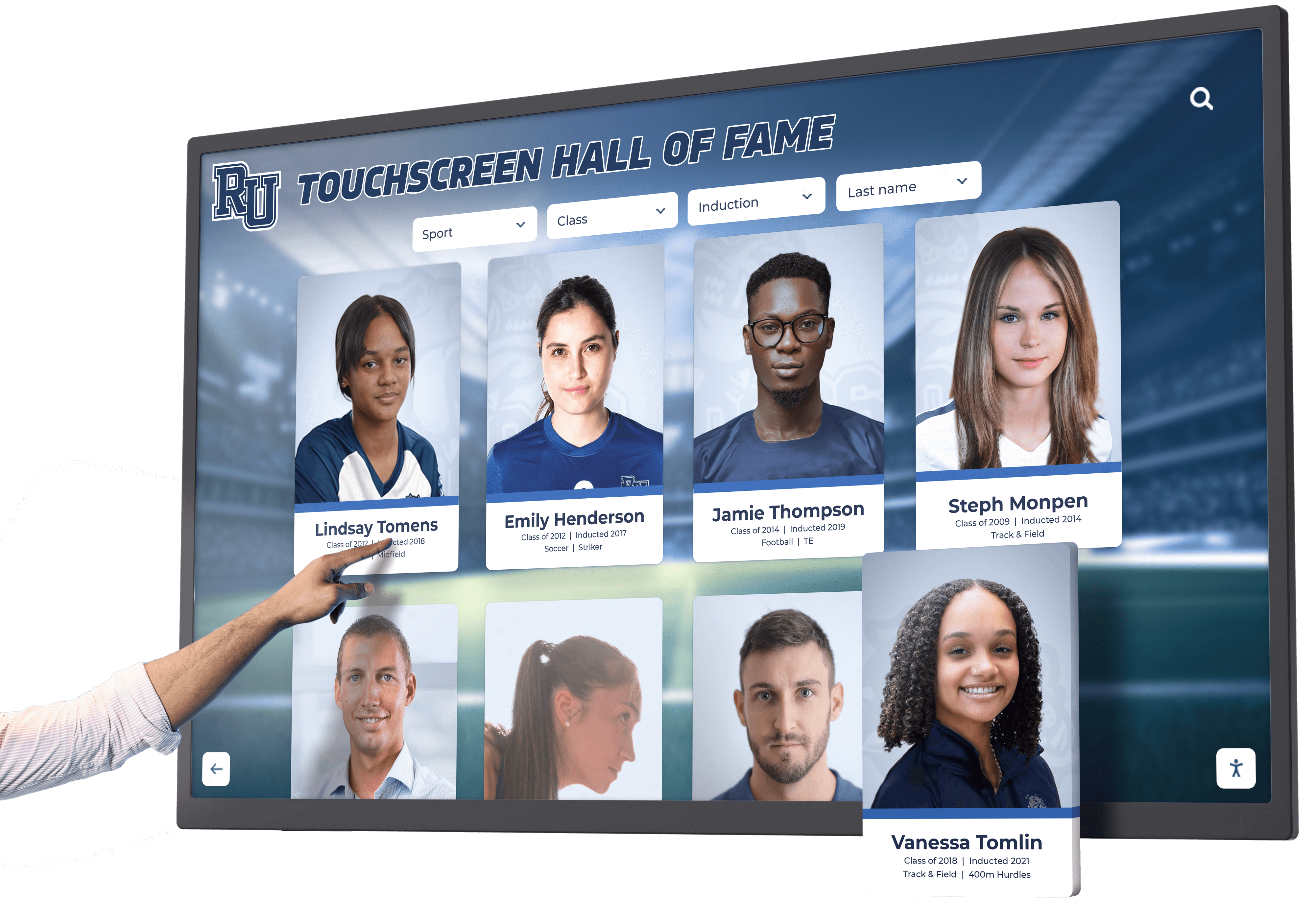
Interactive displays present visually engaging interfaces featuring trophy images, team photos, championship information, and navigation options allowing visitors to explore content by sport, year, achievement level, or athlete name. Touch-based interaction feels natural to contemporary users familiar with smartphones and tablets.
Cloud-based content management enables athletic directors or designated staff to add new championships remotely from any internet-connected device. Adding new state championship recognition typically requires 5-10 minutes—uploading trophy photos, entering championship information, and publishing updates that appear immediately on displays.
Digital Trophy Case Advantages:
Unlimited recognition capacity represents the most significant digital advantage. A single 55" display can showcase detailed information about thousands of trophies and championships—content requiring dozens of traditional trophy cases. Schools never face decisions about removing older achievements to accommodate new recognition.
Comprehensive information capacity enables digital profiles including high-resolution trophy photographs, championship game highlights video, complete team rosters with individual photos, statistical summaries and records set, coaching staff recognition, and newspaper articles or historical documentation. This detailed storytelling creates deeper appreciation for championship achievements than simple trophy displays provide.
Search and filter functionality transforms passive viewing into active exploration. Visitors can instantly locate specific championships by sport or year, filter by achievement level, discover related championships across program history, and explore individual athlete achievements across their careers.
Easy updates eliminate the recurring costs of physical recognition modification. When teams win new state championships, adding digital recognition costs nothing beyond the few minutes required for content entry—no plaques to order, no banners to produce, no installation costs to schedule.
Digital Trophy Case Considerations:
Initial investment for digital trophy case systems typically ranges from $8,000-$15,000 for single-display installations including hardware, software, installation, training, and initial content setup. While higher than single traditional trophy cases, digital systems provide recognition capacity equivalent to 10-20 traditional cases.
Technical requirements include electrical power at display locations and internet connectivity (WiFi or ethernet) enabling cloud-based content management. Most schools have adequate infrastructure in lobbies and athletic facilities, but some older buildings may require electrical upgrades.
Ongoing costs include electricity (typically $3-5 monthly per display), software subscriptions if applicable ($500-$1,500 annually depending on provider and features), and occasional technical support. Over 10-year timeframes, digital systems often prove cost-competitive with traditional approaches when accounting for traditional recognition’s recurring update costs.
Resources on digital trophy case implementation provide comprehensive information about system features, vendor selection, and implementation best practices for schools considering digital recognition investments.
Championship Banner Video Walls
Large-format LED video displays mounted in gymnasiums create dynamic championship recognition combining traditional banner visibility with digital flexibility and multimedia capabilities. These systems typically feature LED video walls ranging from 10-30 feet wide, specialized content management software, and integration with venue sound systems for multimedia presentations.
Video Wall Applications for Championship Recognition:
Video walls can display traditional banner-style championship recognition with enhanced flexibility—digital banners matching school’s exact colors and branding, easy updates when new championships are won without producing physical banners, animated content and motion graphics creating visual interest, and rotation between championship recognition and other content (game schedules, sponsor recognition, motivational messaging).
During games and events, video walls can feature championship highlight videos, recognize championship teams and athletes in attendance, integrate championship history into pre-game entertainment, and create emotional connection between current teams and program legacy.
Video Wall Investment Considerations:
LED video walls represent significant investments typically ranging from $50,000-$200,000 depending on size, resolution, features, and installation complexity. These costs generally exceed what schools can justify solely for championship recognition—video walls typically serve multiple purposes including game presentation, event hosting, sponsor recognition, and facility rental revenue generation.
Many schools implementing video walls for broader athletic facility enhancement subsequently discover championship recognition capabilities that supplement or replace traditional banners. The ability to feature championship content dynamically while preserving flexibility for other content needs provides value beyond static recognition methods.
Schools interested in comprehensive athletic facility enhancements should consider how championship recognition capabilities factor into broader facility improvement strategies and investment priorities.
Hybrid Recognition Approaches
Most schools find that combining traditional and digital recognition methods provides optimal balance between familiar aesthetics, comprehensive capacity, and practical budget management. Hybrid approaches leverage each method’s unique strengths while mitigating individual limitations.
Effective Hybrid Recognition Strategies:
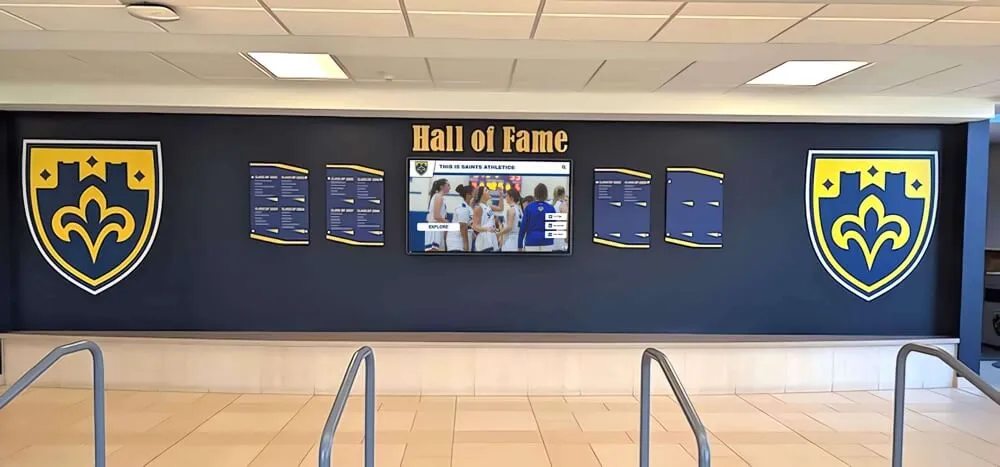
Showcase physical displays featuring most prestigious achievements—perhaps traditional trophy cases displaying only state championship trophies, or gymnasium banners recognizing championships exclusively while other achievements receive digital recognition. This approach ensures premier achievements maintain traditional recognition valued by many communities while preventing space constraints from limiting comprehensive recognition.
Digital supplementation provides complete documentation—every trophy, every championship, every tournament appearance, every all-conference recognition—organized and searchable in digital systems accessible in athletic facilities and online. Visitors wanting detailed information or comprehensive program history access digital displays, while casual observers appreciate prominent physical recognition of top achievements.
Location-based optimization places recognition methods where they’re most effective. Gymnasiums feature traditional championship banners visible during games, athletic facility lobbies include selective trophy cases showcasing premier awards, digital displays in hallways and commons areas provide comprehensive interactive recognition, and online access enables remote community engagement.
Hybrid Approach Benefits:
Hybrid approaches honor tradition while embracing innovation, addressing concerns from community members preferring traditional recognition methods while providing comprehensive capacity modern programs require. These combined approaches typically maximize return on recognition investments by ensuring all achievements receive appropriate acknowledgment within realistic budget constraints.
Schools implementing comprehensive student athlete recognition programs often find hybrid approaches allow recognition of both team championships and individual athlete achievements across multiple platforms and locations.
Planning Your State Championship Display System
Effective championship recognition requires systematic planning addressing multiple considerations before making investment decisions. Schools that plan comprehensively tend to implement recognition systems that remain effective across years while avoiding costly mistakes.
Assessment Phase: Understanding Current State
Begin by thoroughly evaluating existing recognition systems and identifying gaps, limitations, and opportunities. Key assessment questions include:
Current Recognition Inventory:
- What championships are currently displayed and through what methods?
- How much physical space is currently dedicated to championship recognition?
- What championships are stored rather than displayed due to space constraints?
- How consistently are recent championships being recognized?
- What recognition equity exists across sports, genders, and achievement levels?
Space and Location Analysis:
- What locations provide high-visibility opportunities for championship displays?
- What wall space, floor space, and mounting locations are available?
- What electrical and connectivity infrastructure exists at potential display locations?
- What architectural or structural factors affect recognition installation?
Stakeholder Input:
- What do coaches value most in championship recognition?
- How do athletes and families view current recognition approaches?
- What do administrators prioritize regarding championship displays?
- How do alumni and community members perceive recognition quality?
Systematic assessment typically reveals recognition gaps, inconsistencies, and opportunities that may not be obvious without deliberate evaluation. Many schools discover they’re recognizing championships inconsistently across sports or that significant achievements remain hidden in storage due to space limitations.
Establishing Recognition Criteria and Standards
Clear criteria ensure consistent, equitable championship recognition across all sports, achievement levels, and time periods. Documented standards prevent future confusion and facilitate long-term recognition program management.
Achievement Levels to Recognize:
Define which competitive achievements will receive recognition in your system. Most schools establish tiered recognition:
State championships typically receive the most prominent recognition through all available methods—trophies in showcase cases, gymnasium banners, detailed digital profiles, and website features. State runner-up or final four appearances often receive significant but slightly less prominent recognition. Regional championships or state tournament appearances may receive recognition in digital systems even if not warranted for physical displays. Conference championships might be included in comprehensive digital recognition while not necessarily receiving individual gymnasium banners.
Historical Coverage Decisions:
Will recognition systems include only recent championships or comprehensively document program history? Many schools discover significant value in historical research and documentation—interviewing longtime community members, reviewing yearbook archives, consulting newspaper records, and engaging alumni to reconstruct championship history from early program years.
Comprehensive historical recognition validates that current success builds on program tradition, honors alumni who might feel overlooked if only recent achievements receive acknowledgment, and creates complete institutional memory preserving program heritage.
Equity and Inclusion Standards:
Recognition systems should provide equitable treatment across gender lines, sport popularity, and achievement visibility. Audit questions include:
- Do boys’ and girls’ sports receive comparable recognition for equivalent achievements?
- Are non-revenue sports recognized equally to high-profile programs?
- Do individual sports receive recognition comparable to team sports?
- Are all championship classifications or divisions treated consistently?
Schools implementing athletic recognition programs should ensure recognition approaches align with institutional values around diversity, equity, and inclusion.
Budget Development and Financial Planning
Championship recognition investments range from modest to substantial depending on approaches selected, space availability, and program scope. Realistic budget planning considers both initial implementation costs and ongoing maintenance expenses.
Initial Investment Components:
Hardware costs for digital displays typically include commercial-grade touchscreen displays ($3,000-$6,000), mounting hardware and installation ($500-$2,000), and any required electrical or connectivity infrastructure upgrades ($500-$3,000 depending on facility conditions).
Software and content costs encompass recognition platform software (often included with hardware or $1,000-$3,000 separately), initial content development and digitization ($1,000-$5,000 for comprehensive historical documentation), and professional design services if desired ($500-$2,000).
Traditional recognition investments include championship banner production ($200-$800 per banner), trophy cases ($2,000-$12,000 per case), recognition wall development ($5,000-$15,000 for comprehensive wall installations), and engraved plaques ($75-$200 each).
Ongoing Operational Costs:
Digital system expenses typically include software subscriptions or support contracts ($500-$1,500 annually), electricity for displays ($35-$60 annually per display), and occasional content or technical support ($0-$1,000 annually depending on internal capacity).
Traditional recognition ongoing costs encompass new championship banners as achieved ($200-$800 per championship), additional plaques and engraving ($150-$300 per championship), periodic trophy case additions or replacements ($2,000-$10,000 every 3-5 years), and professional installation services ($500-$2,000 annually).
Funding Sources and Strategies:
Many schools fund championship recognition through multiple sources rather than relying exclusively on operating budgets. Common approaches include:
Booster club support through dedicated fundraising campaigns, athletic department operating budgets allocating recognition funds annually, capital campaign inclusion in broader facility improvement projects, corporate sponsorships where appropriate and permitted by district policies, memorial donations honoring deceased coaches or community members, and alumni giving campaigns targeted to graduated athletes valuing improved recognition.
Phased implementation allows schools to distribute costs across multiple years—perhaps implementing digital displays initially in main athletic facility locations, then expanding to additional buildings and eventually comprehensive historical documentation. This approach makes recognition improvements financially accessible while building toward comprehensive systems.
Content Development for Championship Displays
Effective championship recognition requires systematic content collection, organization, and presentation. The difference between basic name-and-year recognition and compelling storytelling often determines whether displays create meaningful engagement or simply occupy space.
Essential Content Elements
Comprehensive championship profiles should include multiple content types creating complete documentation:
Basic Championship Information:
- Sport and competitive level (Varsity, JV, etc.)
- Championship type (State, Regional, Conference)
- Year or season of achievement
- Final record or tournament results
- Classification or division competed in
- Head coach and assistant coaches
Visual Content:
- Championship trophy photograph
- Team photo with identified individuals
- Action photos from championship competition
- Individual athlete photos for key contributors
- Facility or venue photos providing context
- Newspaper clippings or programs
Detailed Documentation:
- Season recap narrative describing journey to championship
- Statistical highlights and records set
- Roster with athlete names and positions
- Key game or match summaries
- Opponent information and tournament brackets
- Post-season recognition (all-state selections, etc.)
Multimedia Elements:
- Championship game or match highlight video
- Celebration and trophy presentation footage
- Coach and athlete interview clips
- Contemporary news coverage if available
- Slideshow presentations combining multiple photos
The depth of content typically depends on recognition method—traditional banners and plaques accommodate only basic information, while digital displays support comprehensive multimedia documentation.
Historical Research and Documentation
Schools pursuing comprehensive historical recognition face content collection challenges for championships won years or decades ago. Systematic historical research approaches include:
Archive Research:
Yearbook review provides championship documentation, team photos, roster information, and contemporary descriptions of championship seasons. Most schools maintain complete yearbook collections in libraries or archives.
Newspaper archives accessible through local libraries, historical societies, or digital databases contain game coverage, championship summaries, and feature stories about championship teams. Many local newspapers have digitized decades of historical content searchable online.
School record books and media guides compiled by athletic departments often document championship history, coaching records, and statistical information even if detailed narratives aren’t available.
Community Engagement:
Alumni outreach through newsletters, social media, or direct contact with graduated championship team members can yield photos, memorabilia, personal memories, and historical information not available through official archives. Many alumni appreciate opportunities to contribute to program historical documentation.
Longtime coach and community member interviews provide context, stories, and perspectives about historical championships that written records don’t capture. Recording these oral histories preserves institutional memory before it’s lost.
Physical Artifact Documentation:
Photographing championship trophies preserves visual documentation even for championships with limited other available information. High-quality trophy photos provide tangible evidence of achievement suitable for digital displays.
Digitizing championship plaques, banners, jerseys, and other physical recognition creates content for digital systems while preserving deteriorating physical materials.
Schools implementing historical sports documentation projects often discover significant community interest and volunteer support when alumni understand the goal of preserving program heritage.
Organizing Content for Accessibility
How championship content is organized dramatically affects user engagement and recognition system effectiveness. Intuitive organization enables visitors to quickly find relevant content while discovering unexpected connections.
Common Organizational Approaches:
Sport-based organization groups championships by athletic program—all football championships together, all basketball championships together—allowing visitors interested in specific sports to explore complete program histories efficiently.
Chronological organization arranges championships by year or decade, enabling visitors to understand how programs developed over time and identify eras of particular success.
Achievement level organization separates state championships from conference titles from tournament appearances, allowing focus on most prestigious accomplishments while maintaining comprehensive documentation.
Coach-based organization recognizes coaching contributions by grouping championships by head coach, honoring individuals who built championship programs.
Most effective digital systems support multiple organizational approaches simultaneously—users can browse chronologically, filter by sport, search by coach name, or explore by achievement level depending on their interests and goals.
Implementation Process and Timeline
Successfully implementing championship recognition systems requires systematic project management addressing technical, content, and stakeholder engagement considerations. Well-planned implementations typically achieve better outcomes with fewer disruptions than rushed or ad-hoc approaches.
Project Planning Phase (Weeks 1-4)
Form Recognition Planning Committee:
Assemble stakeholders representing athletics administration, coaching staff, facilities management, technology services, advancement and alumni relations, and perhaps student-athlete representatives. Committee diversity ensures recognition planning addresses multiple perspectives and requirements.
Define Project Scope:
Document specific recognition goals, achievement levels to include, historical coverage plans, physical locations for displays, budget parameters, and timeline expectations. Clear scope definition prevents project creep and helps manage stakeholder expectations.
Vendor Research and Selection:
For digital recognition projects, research platform providers like Rocket Alumni Solutions who specialize in educational athletic recognition needs. Request demonstrations, check references with current clients, compare features and pricing, and evaluate ongoing support quality. Provider selection significantly impacts long-term satisfaction with recognition systems.
Facility Assessment:
Conduct thorough site analysis of proposed display locations assessing available space, sightlines and visibility, electrical infrastructure, network connectivity, mounting surfaces and structural considerations, and environmental factors like lighting, temperature, and traffic flow.
Content Development Phase (Weeks 5-12)
Historical Research:
Conduct systematic historical research as described earlier, prioritizing most recent championships while working backward through program history. Many schools complete comprehensive historical documentation over 6-12 months rather than delaying recognition system launches until all historical content is complete.
Contemporary Content Collection:
Gather championship information, photos, and supporting materials for recent championships. Establish systematic processes ensuring future championship content is collected immediately rather than requiring retroactive research.
Content Digitization:
Convert physical materials—photos, newspaper clippings, programs—to digital formats through scanning or professional digitization services. Ensure adequate resolution for large-format display presentation.
Content Organization:
Organize collected materials according to planned recognition structure. Create content standards specifying required information, preferred photo specifications, naming conventions, and quality criteria ensuring consistency across championships.
Installation and Configuration Phase (Weeks 13-16)
Physical Installation:
For digital displays, coordinate hardware installation including mounting displays securely, running necessary electrical and network connections, ensuring proper viewing angles and heights, and confirming all technical requirements are met.
For traditional recognition, arrange banner installation in gymnasiums, trophy case delivery and installation, and recognition wall development including plaque mounting.
Software Configuration:
Set up recognition platform software including administrator accounts and permissions, customizing visual designs and branding, importing initial content and testing display functionality, and configuring search and navigation features.
Quality Assurance Testing:
Thoroughly test all recognition system components before launch including verifying content accuracy and completeness, testing interactive features and navigation, confirming proper display on all intended devices, and reviewing with stakeholder committee for feedback.
Launch and Promotion Phase (Weeks 17-20)
Ceremonial Unveiling:
Create meaningful launch event celebrating new recognition system. Consider scheduling during prominent athletic event, hosting special ceremony with championship team alumni invited, engaging media for coverage of recognition improvements, and celebrating program history and traditions.
Community Communication:
Announce recognition system through multiple channels including school websites and social media, athletic department communications, alumni newsletters and mailings, local media outreach, and signage directing visitors to recognition displays.
Training and Documentation:
Ensure staff responsible for ongoing recognition maintenance understand content management systems, update procedures, troubleshooting resources, and support contacts. Create written documentation supporting future staff transitions.
Maintaining and Updating Championship Recognition
Recognition system value depends substantially on maintaining current, accurate content. Systems allowed to become outdated communicate that schools don’t value recognition enough to keep it relevant—undermining the recognition’s intended purpose.
Establishing Update Processes
Assign Clear Responsibility:
Designate specific individuals responsible for recognition updates—typically athletic directors, assistant athletic directors, or athletic secretaries. Clear ownership prevents situations where everyone assumes someone else is maintaining recognition while updates don’t occur.
Create Annual Calendars:
Develop recognition update schedules tied to athletic seasons. Schedule systematic reviews after each sport’s season concludes, ensuring new championships are added promptly, existing content is verified and updated, and any technical issues are identified and addressed.
Document Standard Procedures:
Create written procedures describing how to add new championships, required content elements, approval workflows, technical instructions for content management systems, and troubleshooting common issues. Documentation enables consistent recognition maintenance across staff transitions.
Build Stakeholder Communication:
Establish communication flows ensuring coaches provide championship information and materials promptly, athletes and families understand recognition processes and timelines, administrators stay informed about recognition program status, and alumni know how to contribute updates and historical information.
Quality Control and Content Standards
Maintain recognition quality through systematic verification ensuring championship information is accurate and sourced properly, photos are high resolution and properly cropped, video content is edited professionally and accessible, text is well-written and free of errors, and overall presentation remains consistent across championships.
Periodic comprehensive audits—perhaps annually or biannually—verify that all content remains current, technical systems function properly, physical displays are clean and well-maintained, and recognition approaches continue meeting program needs.
Measuring Recognition Impact and Value
Effective recognition programs track success through various metrics demonstrating value and informing continuous improvement. Recognition impact extends across multiple dimensions beyond simple visibility.
Community Engagement Metrics
Physical Display Interaction:
For digital recognition systems with analytics capabilities, track the number of display interactions and sessions, average session duration indicating engagement depth, search queries revealing what visitors seek, and content most frequently viewed indicating high-interest areas.
Online Recognition Access:
Monitor website traffic to online recognition pages, time spent viewing recognition content, return visitor rates showing sustained interest, and referral sources indicating how visitors discover recognition.
Social Media Performance:
Track shares and engagement when championship recognition content is posted, comment sentiment and nature, reach and impressions for recognition posts, and follower growth potentially attributable to recognition content.
Program Development Impact
Recruiting Value:
Survey prospective athletes about factors influencing school selection, including whether championship recognition affected program perception. Quality recognition can differentiate programs in competitive recruiting environments.
Alumni Engagement:
Measure alumni participation in recognition content updates, attendance at recognition-related events, recognition-related donations and support, and qualitative feedback about recognition’s impact on alumni connection to programs.
Student-Athlete Motivation:
Assess through surveys or focus groups whether visible championship recognition motivates current athletes, influences goal-setting and competitive aspirations, and creates sense of program tradition and excellence expectation.
Return on Investment Assessment
Calculate total recognition investment including initial implementation costs and ongoing annual expenses. Compare against quantifiable benefits where possible including facility rental revenue potentially enhanced by recognition, donor contributions potentially influenced by recognition, and cost avoidance from not pursuing alternative approaches.
Schools implementing athletic wall of honor programs often find that comprehensive recognition creates value across recruiting, alumni engagement, and community relations that significantly exceeds direct financial costs.
Best Practices for Championship Recognition Excellence
Programs achieving greatest success with state championship recognition follow practices that maximize impact while ensuring recognition remains meaningful and sustainable.
Balance Prominence with Inclusivity
Ensure most prestigious achievements receive appropriate prominence while maintaining comprehensive recognition of all competitive success. Tiered recognition approaches honor excellence appropriately without creating perception that only championship-winning athletes deserve acknowledgment.
Include individual athlete recognition alongside team championships—all-state selections, statistical record holders, all-conference honorees—demonstrating that programs value complete athlete development not just championship outcomes.
Maintain Long-Term Perspective
Design recognition systems anticipating decades of program success rather than only current needs. Systems reaching capacity within 5-10 years require expensive expansions or difficult decisions about removing older recognition. Digital platforms offering unlimited capacity prevent this challenge.
Consider how recognition will be maintained through staff transitions, coaching changes, and administrative reorganizations. Systems requiring specific technical knowledge or depending entirely on individual institutional memory become vulnerable during personnel changes.
Connect Past, Present, and Future
Effective recognition creates bridges across generations linking championship teams of past decades with current competitors and future program aspirations. Historical recognition honors tradition, current recognition celebrates present excellence, and comprehensive systems inspire future athletes to pursue their own championship dreams.
Feature championship alumni in contemporary program activities when possible—inviting championship teams back for anniversary recognitions, engaging graduated champions as mentors for current athletes, and highlighting career achievements of championship alumni demonstrating long-term impact of athletic participation.
Integrate Recognition Across Program Communications
Championship recognition shouldn’t exist only in isolated displays—integrate recognition across all program communications including recruitment materials showcasing championship tradition, game programs recognizing historical championships, social media featuring championship throwbacks and anniversaries, alumni communications maintaining champion engagement, and website content documenting complete program history.
This integrated approach maximizes recognition value while maintaining consistent messaging about program excellence and competitive tradition.
Selecting Recognition Technology Partners
Schools implementing digital championship recognition benefit from working with providers specializing in educational athletic recognition rather than general digital signage companies. Purpose-built recognition platforms offer features, support, and understanding of educational needs that general solutions typically lack.
Key Provider Evaluation Criteria
Educational Specialization:
Providers like Rocket Alumni Solutions who focus exclusively on educational recognition understand schools’ specific needs including content types schools want to display, privacy and security requirements for student information, budget constraints and funding cycles, integration needs with existing school systems, and support requirements given typical school technical capacity.
Intuitive Content Management:
Recognition platforms should enable non-technical athletic staff to easily add championships, upload and crop photos, edit existing content, organize and categorize information, and preview changes before publishing. Complex systems requiring IT department involvement for routine updates typically fall into disuse.
Comprehensive Feature Sets:
Evaluate recognition platforms based on search and filter capabilities enabling visitors to find content quickly, multimedia support for photos and video, responsive design working across displays and mobile devices, analytics providing engagement insights, and security and privacy controls protecting student information.
Reliable Support and Training:
Quality providers offer initial setup and configuration assistance, comprehensive administrator training, ongoing technical support, proactive system monitoring and maintenance, and regular platform updates and improvements. Recognition systems are long-term investments—provider support quality significantly impacts satisfaction.
Transparent Pricing:
Understand complete cost of ownership including initial hardware and software costs, installation and configuration expenses, annual software or support subscriptions, and any usage-based fees or content limits. Hidden costs or unexpected charges undermine budget planning and can make solutions unaffordable long-term.
Resources on digital recognition display selection help schools evaluate options systematically and make informed provider decisions.
Future Trends in Championship Recognition
Championship recognition continues evolving as technology advances and cultural expectations change. Forward-thinking programs should anticipate several emerging trends.
Enhanced Multimedia Integration
Video content will become increasingly central to championship recognition as technology makes capture, editing, and distribution easier and more affordable. Future recognition may feature extensive championship game footage, athlete and coach interviews, documentary-style championship season summaries, and 360-degree or virtual reality experiences placing viewers inside championship moments.
Artificial Intelligence Applications
AI technology may soon assist with automatic highlight generation from game footage, statistical analysis identifying notable achievements, content recommendations personalizing recognition experiences, and automated content creation from structured championship data.
Social Media Integration
Deeper connections between physical recognition displays and social platforms will enable automatic post generation when championships are added, visitor-generated content sharing from recognition displays, social media feeds integrated within recognition displays, and community-contributed photos and memories enhancing official recognition.
Augmented Reality Experiences
Emerging AR technology may enable enhanced recognition through pointing smartphones at physical displays to access additional content, virtual trophy case experiences, interactive historical timelines, and gamified exploration encouraging deeper engagement.
Schools making recognition technology investments should select flexible platforms capable of incorporating emerging technologies rather than locked into static approaches that will feel dated within years.
Taking Action on Championship Recognition
Schools ready to implement or enhance state championship recognition should follow systematic approaches ensuring successful outcomes and avoiding common pitfalls.
Championship Recognition Implementation Roadmap:
Assessment and Planning (Month 1): Inventory current recognition approaches and identify gaps, survey stakeholders about recognition priorities and needs, establish budget parameters and potential funding sources, and form recognition planning committee
Research and Design (Month 2-3): Research recognition technology and traditional options, request demonstrations and proposals from providers, develop recognition criteria and content standards, and create implementation timeline and responsibility assignments
Vendor Selection and Contracting (Month 4): Evaluate vendor proposals against selection criteria, check references and visit existing installations, finalize contracts and payment arrangements, and confirm project timeline and deliverables
Content Development (Months 5-7): Conduct historical research for retrospective recognition, collect information and assets for recent championships, digitize physical materials and organize content, and develop initial content in new recognition system
Installation and Configuration (Month 8): Install hardware and configure systems, import initial content and test functionality, conduct quality assurance review, and train staff on system management
Launch and Promotion (Month 9): Plan and execute ceremonial unveiling event, communicate recognition availability to all stakeholders, gather initial feedback and engagement metrics, and celebrate program achievements and traditions
Ongoing Management: Add new championships promptly as achieved, conduct regular content audits and updates, monitor engagement and measure impact, and continuously improve based on learning
Many schools benefit from engaging specialized providers like Rocket Alumni Solutions who provide comprehensive implementation support, staff training, content development assistance, and ongoing optimization ensuring recognition programs achieve intended goals and deliver lasting value.
Conclusion
State championships represent pinnacle achievements in high school athletics—years of preparation, sacrifice, and exceptional performance culminating in ultimate competitive success. These extraordinary accomplishments deserve recognition matching their significance, celebrating excellence while inspiring future generations to pursue their own championship aspirations.
Traditional recognition approaches—championship banners, trophy cases, recognition walls—have served schools effectively for generations and maintain value for their visibility, permanence, and traditional aesthetics many communities cherish. However, physical space constraints and limited information capacity increasingly challenge schools whose successful programs accumulate championships faster than traditional methods can accommodate.
Modern digital recognition platforms address these limitations while introducing capabilities impossible with physical displays. Unlimited recognition capacity ensures every championship receives appropriate acknowledgment regardless of space constraints. Comprehensive multimedia content creates engaging storytelling that brings championships to life. Interactive search and exploration transform passive viewing into active engagement. Easy content management enables prompt recognition of new championships without ongoing production costs.
Most schools find that hybrid approaches combining traditional and digital recognition provide optimal balance—premier achievements maintain traditional recognition in showcase trophy cases and gymnasium banners while comprehensive digital systems document complete program histories accessible in facilities and online. These combined approaches honor tradition while embracing innovation, maximizing recognition impact within realistic budget constraints.
Whether implementing first championship recognition systems, upgrading from traditional displays to digital platforms, or enhancing existing recognition with additional content and features, schools should approach championship recognition as strategic investment in program excellence rather than optional acknowledgment. State championships are earned through extraordinary dedication—they deserve celebration that properly honors achievement and inspires continued excellence for generations to come.
For schools ready to transform state championship recognition, exploring purpose-built solutions like Rocket Alumni Solutions provides access to platforms designed specifically for educational athletic recognition needs, combining intuitive management, comprehensive multimedia support, and reliable performance that properly honors championship excellence.































