Across America, high school gymnasiums display state championship banners hanging from rafters—proud testaments to seasons of dedication, moments of triumph, and athletic excellence that define school communities. Yet as programs accumulate success across multiple sports and decades, these traditional banner exhibits face inevitable challenges: ceiling space runs out, fabric fades over time, and the rich stories behind each championship remain largely untold beyond basic facts and years. State championships recognition banner exhibits are transforming how schools celebrate athletic excellence by combining the visual impact of traditional banners with interactive technology that tells complete championship stories, preserves every achievement, and eliminates space constraints entirely.
Championship banners represent more than decorated fabric hanging overhead—they embody countless practice hours, strategic coaching, athlete determination, and community support culminating in extraordinary achievement. When teams win state titles, these accomplishments deserve recognition matching their significance: comprehensive documentation that honors the journey, celebrates the team, and inspires future champions.
Modern digital recognition technology provides schools with compelling alternatives that enhance rather than replace banner traditions. Interactive exhibits showcase unlimited championships with rich multimedia content, searchable databases, and engaging storytelling that traditional fabric banners simply cannot provide. These systems ensure every state championship receives appropriate celebration while creating recognition experiences resonating with today’s digital-native students and extending reach to alumni and communities worldwide.
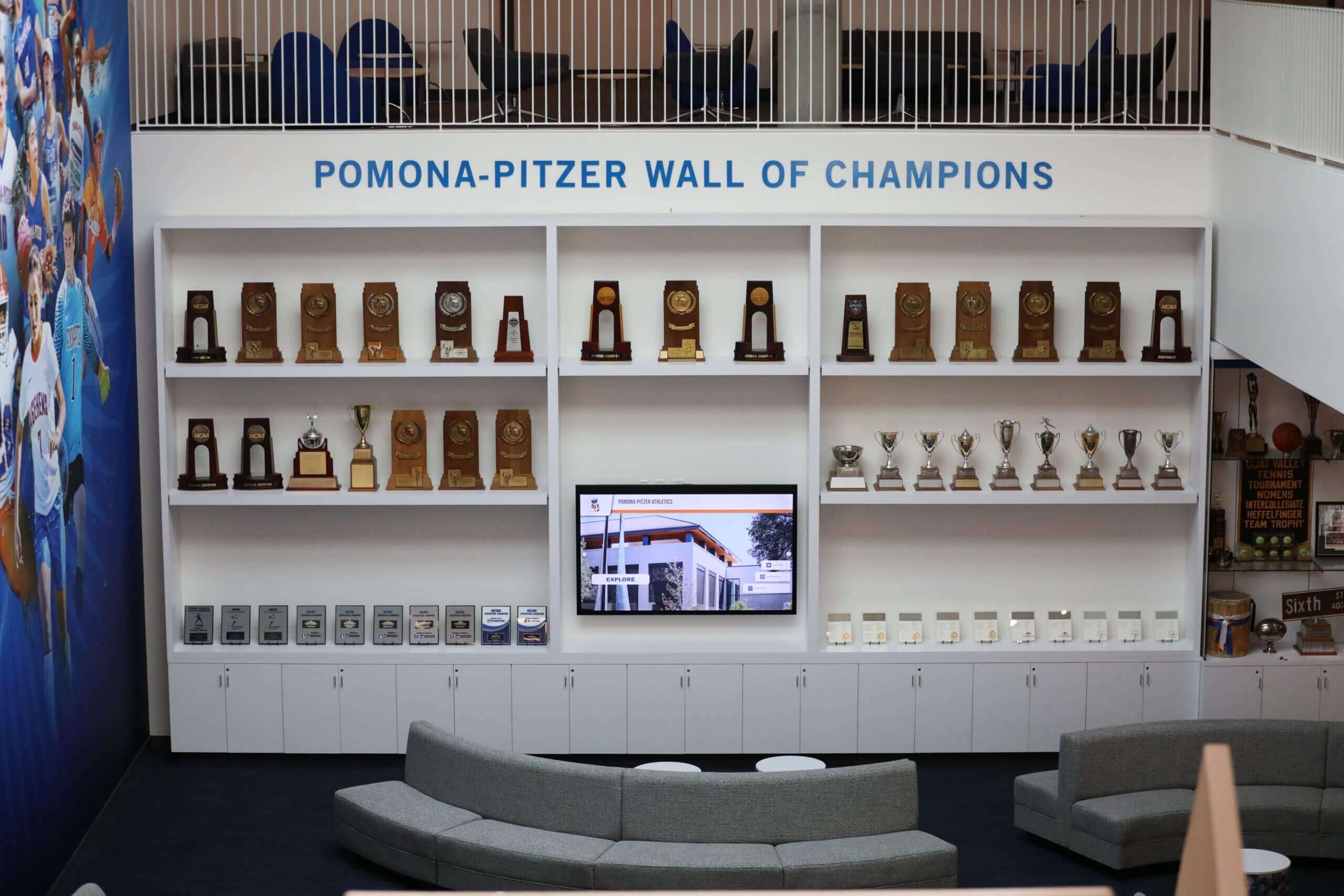
Modern championship recognition exhibits transform athletic lobbies into engaging celebration spaces
The Evolution of State Championship Banner Recognition
Traditional championship banners have served schools well for generations, providing visible evidence of athletic program excellence that creates pride, inspiration, and tradition. Understanding both their enduring value and inherent limitations provides essential context for why modern recognition exhibits matter.
The Significance of State Championship Banners
State championship banners fulfill multiple crucial functions within athletic programs and school communities:
Visible Testimony to Excellence
Championship banners hanging prominently in gymnasiums create immediate visual evidence of program success. Visitors—prospective student-athletes, opposing teams, community members—see championship years displayed overhead and instantly understand the program competes at high levels and achieves significant victories. This visible success communicates powerful messages about program quality, coaching effectiveness, and institutional commitment to athletic excellence.
During recruiting visits, banners provide objective evidence supporting coaching promises about program traditions and winning cultures. Rather than simply hearing about past success, prospects see tangible documentation of championships won across multiple seasons and sports.
Tradition and Institutional Memory
Banners create tangible connections between current teams and championship predecessors. Athletes look up at banners from seasons before they were born, understanding they’re part of ongoing legacies extending across generations. This historical perspective strengthens program culture by linking present efforts to past excellence.
Championship banners become reference points in coaching conversations—“The 2018 team that won state faced similar challenges”—providing concrete examples inspiring current athletes to maintain winning traditions. These visible reminders keep championship standards continuously present rather than abstract historical facts stored in record books.
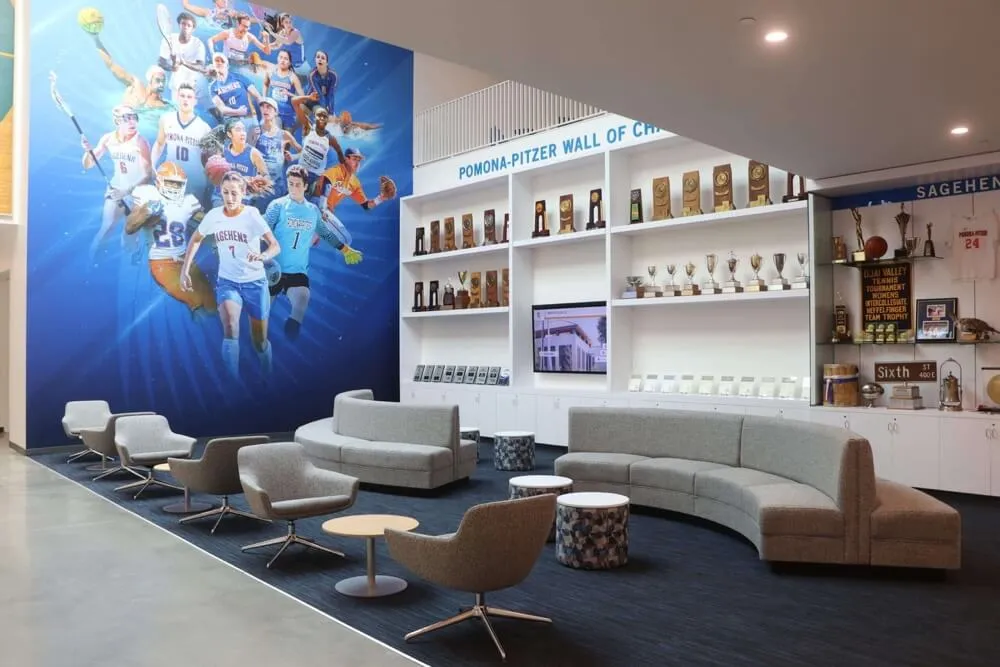
Traditional banners create powerful visual impact celebrating program success
Community Pride and Identity
In many communities, state championships represent collective achievements extending far beyond the athletes who competed. Local businesses display team colors, community members pack championship games, and banners become symbols of town pride strengthening social bonds and shared identity.
Alumni return decades after graduation to see their championship banners still displayed, reinforcing lifelong connections to schools and teams. These visual reminders matter profoundly for maintaining alumni engagement, encouraging financial support, and building sustained program excellence across generations.
Limitations Facing Traditional Banner Systems
Despite their significance, physical championship banners encounter multiple constraints limiting their effectiveness as programs mature:
Finite Space Creates Impossible Choices
Gymnasium ceilings provide limited space for banner display. As programs accumulate state championships across multiple sports, athletic directors face difficult decisions about which achievements deserve recognition and which must be removed or relegated to storage. Should older championships be retired to make room for recent victories? Do state titles receive priority over conference championships? Should successful programs in smaller sports receive equal recognition to major sports?
These space limitations often result in storage rooms filled with championship banners representing significant accomplishments receiving no public recognition simply because there’s nowhere to hang them. Programs with long, successful histories may have accumulated dozens of state championships—far more than reasonable ceiling space can accommodate.
Minimal Information Capacity
Traditional championship banners typically display basic information: sport, year, and championship level (“Boys Basketball State Champions 2023”). This minimal content provides no context about the team that won, the season journey, memorable games, individual standouts, records set, or what made that particular championship special.
Visitors see years and sports but learn nothing about the people, performances, and circumstances behind victories. The championship becomes an abstract fact rather than a compelling story that inspires emotional connection and deeper engagement with program history. A typical banner might list 15-20 player names at most, with no individual recognition of contributions, statistics, or achievements.
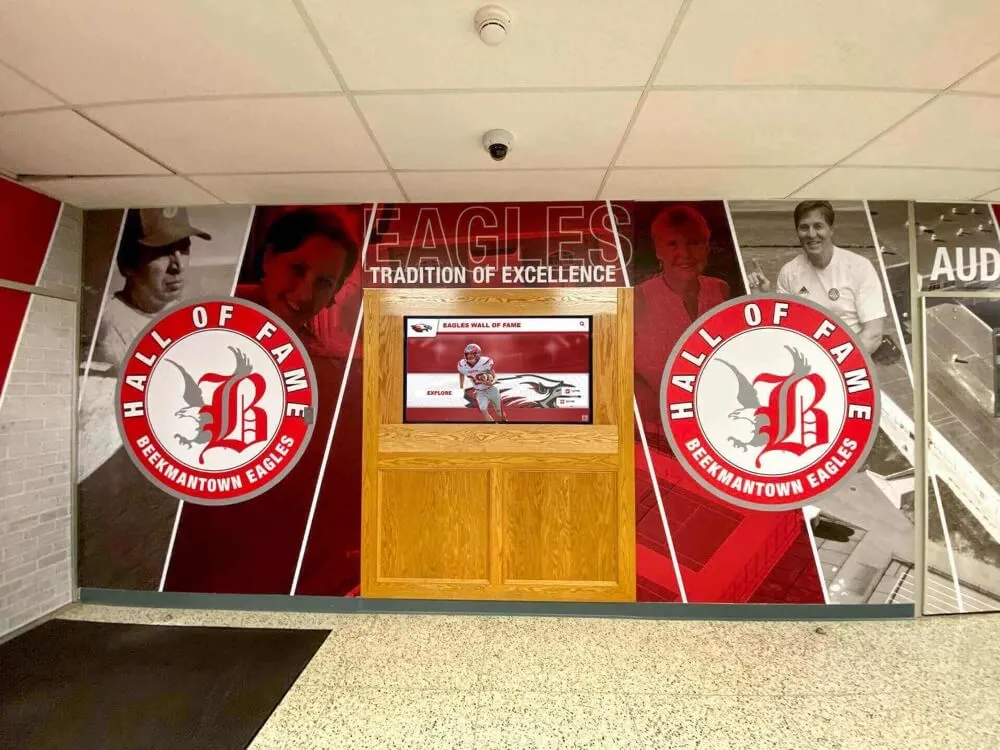
Physical banners face inevitable fading and deterioration over time
Physical Deterioration Over Time
Fabric banners fade as they age, particularly those exposed to natural light or environmental conditions. Colors become muted, text becomes harder to read, and overall visual impact diminishes significantly as materials deteriorate. Many schools face recurring expenses periodically reproducing faded banners to maintain acceptable appearance—costs that accumulate across dozens of championships over time.
Older championships often appear visually inferior to recent ones simply due to material age rather than achievement significance, creating unintended hierarchies where older accomplishments seem less important than recent victories.
Update Complexity and Expense
Adding new state championship banners requires ordering custom fabric production, coordinating professional installation with lifts and equipment, and paying per-banner costs typically ranging from $150-$500 depending on size and customization. This process creates delays between championship victories and banner recognition, diminishing immediate celebration that motivates athletes and engages communities.
The physical installation process—accessing high ceiling spaces, ensuring secure mounting, coordinating with facility schedules—adds logistical complexity that can postpone recognition for weeks or months after championship seasons conclude.
Static, Non-Interactive Presentation
Once installed, championship banners remain completely static. There’s no way to update information, add context, incorporate media, create interactive experiences, or adapt content as additional stories emerge. The banner displays identical information unchanged for years or decades regardless of what additional details might enrich understanding or engagement.
This static nature means banners cannot leverage modern technology familiar to current students—touchscreen interaction, video integration, searchable databases, social media sharing—that could dramatically increase engagement and extend recognition reach beyond physical gymnasiums.
Digital State Championships Recognition Banner Exhibits: Modern Solutions
Digital recognition technology addresses every limitation of traditional banner systems while introducing capabilities that create deeper engagement, more comprehensive recognition, and sustainable long-term value.
Unlimited Recognition Capacity Without Space Constraints
The most immediate advantage of digital championship displays involves eliminating space constraints entirely. A single interactive touchscreen can showcase hundreds or thousands of championships across all sports, all seasons, and all achievement levels without ever running out of capacity.
Schools no longer face impossible choices about which championships deserve recognition. Every state title, every runner-up finish, every significant tournament achievement receives comprehensive celebration regardless of when it occurred or which sport achieved it. Historical championships stored in closets for decades can be brought back into public recognition alongside current achievements, creating complete institutional athletic histories.
Recognition Capacity Comparison:
- Traditional Banners: Typical gymnasium ceiling accommodates 30-50 banners maximum, forcing difficult decisions about what to display and what to store
- Digital Exhibits: Single 55" display can showcase 500+ championships with detailed profiles; multi-screen installations handle unlimited achievements across complete program histories
This unlimited capacity proves particularly valuable for programs with long, successful traditions. Schools that have competed for 50+ years may have accumulated dozens of state championships across multiple sports—far more than any reasonable number of physical banners could accommodate. Digital systems showcase complete institutional histories rather than selective highlights determined by available space.

Interactive touchscreens enable exploration of unlimited championship content
Rich Multimedia Storytelling Brings Championships to Life
Digital recognition exhibits enable compelling championship narratives incorporating multiple content types that transform recognition from basic acknowledgment into engaging stories:
Championship Season Documentation
Rather than simply stating “2022 Football State Champions,” digital exhibits present comprehensive season profiles including:
- Complete team rosters with individual player profiles and statistics
- Season game-by-game results and progression
- Playoff bracket advancement with opponent context
- Key game highlights and championship-clinching moments
- Coaching staff information and strategic approaches
- Season statistics, records set, and milestone achievements
- Photos from throughout the championship season
- Video highlights of memorable plays and celebrations
- Post-season reflections from coaches and team captains
This depth transforms recognition from abstract facts into engaging stories helping viewers understand what made championship teams special and how success was achieved.
Individual Athlete Recognition Within Team Context
Championship banners traditionally list teams without adequately acknowledging individual contributions. Digital systems provide detailed athlete profiles celebrating each participant’s role in championship success—position played, statistics, memorable performances, leadership contributions, personal reflections, and college destinations.
This inclusive recognition demonstrates that championships require complete team efforts, ensuring every player receives appropriate acknowledgment rather than limiting recognition to stars who received most attention during competition. Athletes who provided crucial bench contributions, special teams excellence, or practice preparation all find their names and contributions properly documented.
Historical Context and Significance
Digital presentations include historical context explaining championship significance within broader program narratives:
- How championships fit within overall program history
- Comparison to other championship seasons from the program
- Records set or milestones achieved during championship runs
- Competitive landscape and opponent quality
- Community and cultural context of specific eras
- Long-term impact on program trajectory and future success
This context helps current students appreciate historical achievements even when they have no personal memory of events, connecting past excellence to present opportunities and future aspirations.
Interactive Exploration Creates Engaging Discovery Experiences
Modern touchscreen interfaces transform passive banner viewing into active exploration where visitors control their own journey through championship content:
Powerful Search Capabilities
Visitors instantly search for specific championships by sport, year, achievement level, athlete name, or coaching staff. Alumni returning years later quickly locate their championship teams without scanning dozens of overhead banners hoping to find relevant information. Parents find their children’s championships across multiple sports and seasons through simple name searches.
Advanced Filtering and Organization
Users filter championships by multiple criteria creating personalized viewing experiences:
- Sport or activity (football, basketball, soccer, track, etc.)
- Championship level (state, regional, conference)
- Year, decade, or historical era
- Undefeated seasons or specific records
- Coaching tenure showing all championships under specific coaches
- Multi-sport athlete participation
This flexible organization helps diverse audiences find personally relevant content regardless of specific interests, ensuring exhibits engage everyone from current athletes to multi-generational alumni families.
Cross-Referenced Connections
Digital systems link related content—connecting individual athletes who participated in multiple championship teams, showing coaching histories across different championship seasons, highlighting family legacies of championship participation, or displaying comparative statistics across championship eras.
These connections create rich discovery experiences encouraging extended engagement beyond initial search queries. Visitors exploring one championship discover related achievements, leading to deeper engagement with complete program histories. Approaches used in state championship journey maps demonstrate how interconnected recognition creates compelling exploration experiences.
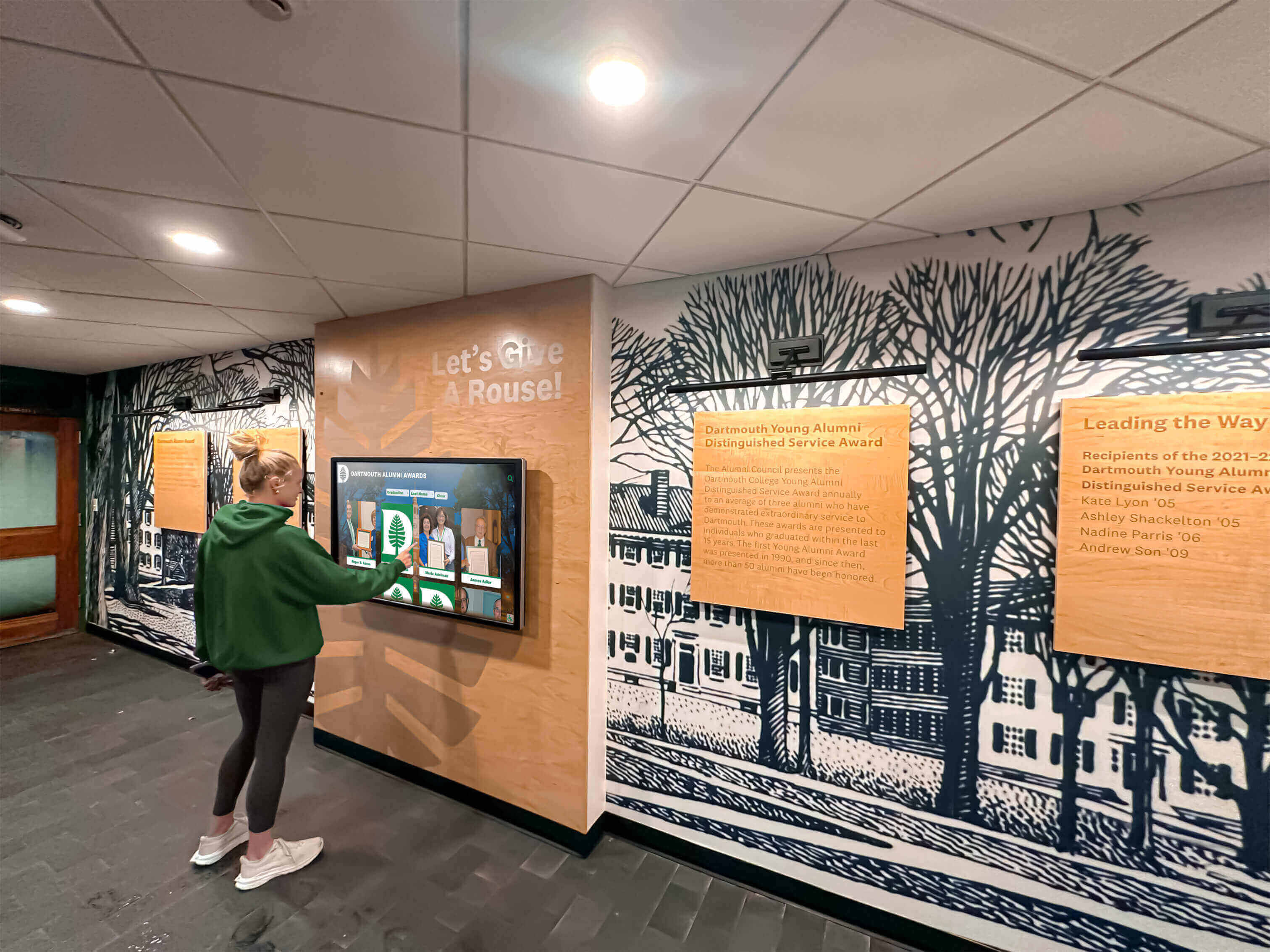
Interactive displays invite hands-on exploration appealing to all ages
Social Sharing Extends Recognition Reach
Built-in sharing capabilities enable visitors to share specific championship content through social media platforms, extending recognition reach far beyond physical gymnasium locations. When alumni share their championship profiles to Facebook, Instagram, or Twitter, hundreds of connections see those achievements—amplifying institutional visibility exponentially.
This social integration transforms championship recognition from private institutional celebration into public community pride that reaches global audiences, strengthens alumni networks, and attracts prospective families evaluating school quality and athletic program excellence.
Implementing State Championships Recognition Banner Exhibits
Schools considering digital alternatives to traditional championship banner exhibits benefit from systematic implementation approaches ensuring comprehensive coverage, sustainable operations, and maximum stakeholder engagement.
Planning and Strategic Development
Successful implementations begin with thorough planning defining scope, establishing priorities, and securing stakeholder support:
Championship Inventory and Assessment
Document all state championships across complete program history, identifying achievement levels, years, sports, teams, and existing documentation. This comprehensive inventory reveals the full scope of achievements deserving recognition and helps establish phased implementation priorities.
For each championship, assess available materials:
- Team photos and individual athlete images
- Game statistics and season records
- Video footage from championships or season highlights
- Newspaper coverage and media documentation
- Yearbook content and athletic program materials
- Coaching staff information and memories
Understanding what exists and what gaps need filling shapes content development strategy and resource requirements.
Budget Development and Funding Sources
Comprehensive budgets account for multiple implementation components:
- Hardware costs: Commercial-grade touchscreen displays, mounting equipment, media players
- Software licensing: Recognition platform subscription and ongoing support
- Installation services: Professional mounting, electrical, network configuration
- Initial content development: Photo digitization, video editing, narrative writing
- Training: Staff education on system management and content updates
- Ongoing maintenance: Software updates, content additions, technical support
Many schools find total first-year investments of $12,000-$30,000 deliver systems serving programs for decades, making annual costs quite reasonable when amortized across typical 10-15 year operational lifespans.
Funding strategies successful programs use:
- Athletic booster club fundraising specifically for recognition projects
- Alumni donation campaigns emphasizing championship preservation
- Memorial gifts honoring deceased coaches or notable alumni
- Capital campaign integration during facility renovations
- Phased implementation spreading costs across multiple budget years
Strategic placement in high-traffic areas maximizes visibility and engagement
Stakeholder Engagement and Buy-In
Involve key stakeholders in planning ensuring broad support:
- Athletic directors: Overall vision alignment with department goals
- Coaches: Sport-specific input on recognition priorities and content
- Current athletes: Student perspective on what matters to them
- Alumni representatives: Historical knowledge and documentation sources
- Administrative leadership: Budget approval and institutional priorities
- Facilities staff: Installation logistics and ongoing maintenance
Broad engagement builds ownership, identifies potential challenges early, and creates advocates who promote exhibits throughout school communities once implemented.
Technology Selection and Platform Considerations
Choosing appropriate technology ensures long-term success, user satisfaction, and manageable maintenance:
Display Hardware Requirements
Commercial-grade touchscreen displays designed for continuous public operation provide reliability consumer equipment cannot match:
- Screen size appropriate for location: 55-65 inches for lobbies and hallways with typical 10-20 foot viewing distances; 70-86 inches for large gymnasiums with greater distances
- High brightness for well-lit environments: Minimum 500 nits to ensure visibility in brightly lit athletic facilities
- Commercial warranty and support: 3-5 year warranties with service agreements protecting institutional investments
- Multi-touch capability: Intuitive gesture-based interaction matching smartphone experiences students expect
- Durable construction: Hardened glass and robust enclosures withstanding high-traffic public use
Wall-mounted installations save floor space and create clean aesthetic integration with facility design, while freestanding kiosks offer placement flexibility where wall mounting proves impractical or when exhibits need repositioning for special events.
Software Platform Capabilities
Purpose-built recognition software specifically designed for educational athletics provides critical capabilities generic digital signage cannot efficiently replicate:
- Intuitive content management systems enabling non-technical staff to create and update championship profiles
- Championship-specific templates and organizational structures optimized for athletic recognition
- Powerful search and filtering enabling visitors to find specific content easily
- Multimedia support accommodating photos, videos, statistics tables, and extended narratives
- Web accessibility extending recognition beyond physical displays to global audiences
- Analytics tracking engagement patterns informing content strategy
- Automatic backups and version history preventing content loss
- Role-based permissions allowing multiple administrators with appropriate access levels
Solutions like Rocket Alumni Solutions provide comprehensive platforms specifically engineered for school recognition needs, offering specialized features that ensure successful long-term implementations.
Network and Infrastructure Requirements
Digital exhibits require appropriate technical infrastructure:
- Reliable network connectivity (WiFi or hardwired Ethernet)
- Adequate electrical power at installation locations
- Content management access from administrative offices
- Mobile device compatibility for remote updates
- Integration capabilities with existing school systems when beneficial
Most schools find existing network infrastructure adequate, though installation planning should confirm connectivity quality at proposed display locations.
Content Development Strategy and Workflow
Creating engaging championship recognition requires systematic content development balancing comprehensiveness with manageable workload:
Phased Implementation Approach
Rather than attempting to document every championship simultaneously, implement in strategic phases:
- Phase One: Recent championships (past 5-10 years) with readily available information, photos, and participant memories
- Phase Two: Major historical championships (first state titles, undefeated seasons, particularly successful eras)
- Phase Three: Remaining championships from modern eras where most documentation exists
- Phase Four: Historical championships requiring extensive research, alumni outreach, and archive investigation
- Phase Five: Ongoing additions as new state championships occur
This approach delivers immediate value while building toward comprehensive archives over time without overwhelming available resources or creating unsustainable content development backlogs.
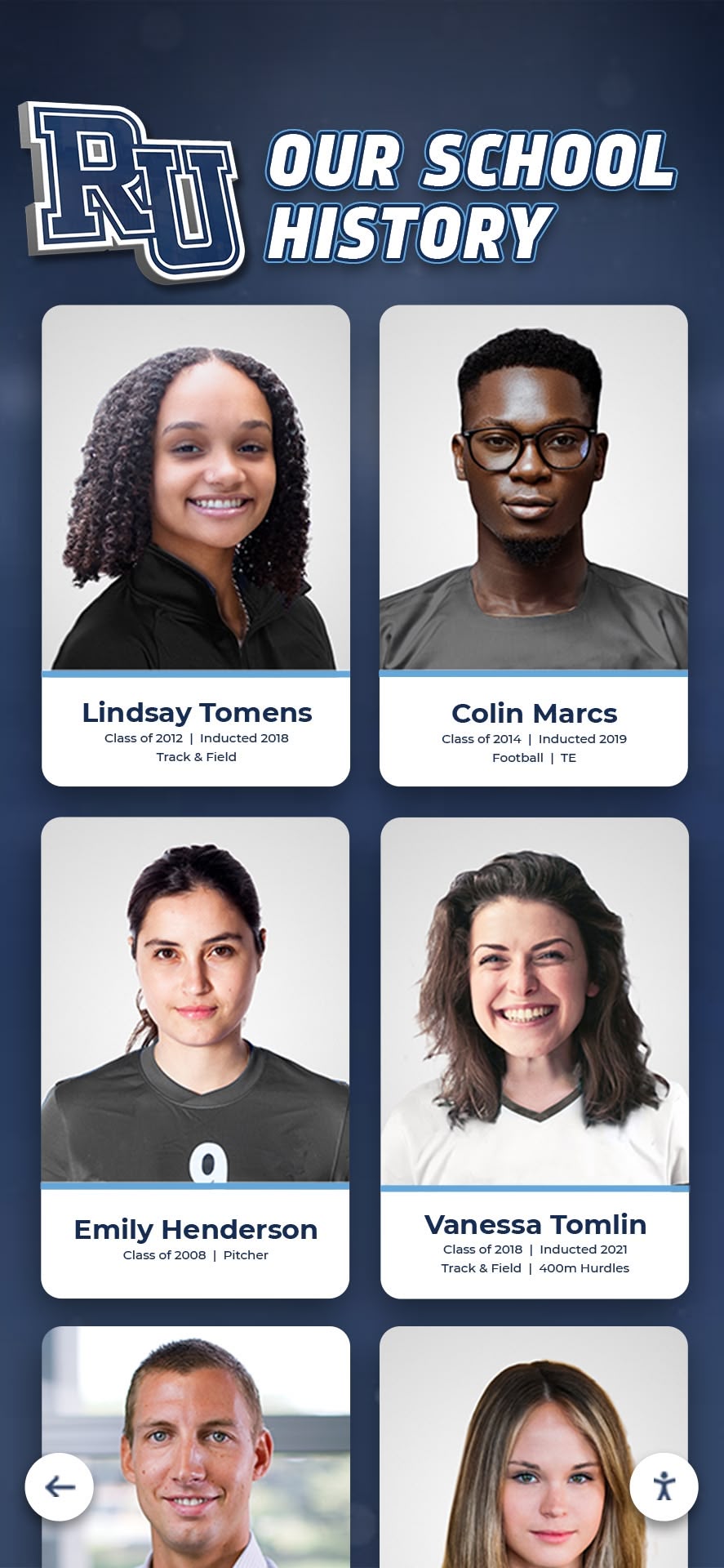
Systematic digitization transforms scattered records into comprehensive championship documentation
Quality Standards and Consistency
Maintain consistent excellence across all championship recognition preventing incremental degradation as multiple contributors add content:
- High-resolution photography standards (minimum 1920x1080 for featured images; 4K when available)
- Consistent formatting and presentation templates across different sports and eras
- Factually accurate information verified through multiple reliable sources
- Engaging narrative content providing context beyond raw statistics
- Appropriate tone balancing celebration with institutional professionalism
- Copyright compliance for all photos, videos, and quoted materials
Clear standards documented in style guides help multiple content creators maintain quality consistency across dozens or hundreds of championship profiles developed over months or years.
Historical Research Methodology
Building complete championship archives demands dedicated research effort:
- Review yearbooks, media guides, program records, and archived materials
- Search local newspaper archives for championship coverage and season documentation
- Interview retired coaches, longtime administrators, and community members with institutional memory
- Contact alumni associations for historical information, photos, and personal memories
- Digitize historical photos, documents, artifacts, and memorabilia
- Verify statistics and factual accuracy through multiple independent sources
- Document information sources enabling future verification if questions arise
Alumni often eagerly participate when invited to contribute photos and stories from their championship seasons, making outreach an effective research strategy that simultaneously builds engagement and gathers valuable content.
Creating Compelling Championship Recognition Content
The difference between adequate and exceptional championship exhibits lies primarily in content quality—how effectively materials engage viewers emotionally while communicating championship narratives compellingly.
Storytelling That Honors the Journey
Effective championship recognition structures content as dramatic narratives with clear beginning, development, climax, and resolution rather than simple fact listings:
Pre-Season Context and Expectations
Begin championship stories by establishing where teams started:
- Previous season results creating expectations or pressure
- Roster composition with returning veterans and newcomers
- Coaching continuity or changes affecting program direction
- Pre-season rankings or predictions from media
- Team goals and aspirations heading into seasons
This opening context helps viewers understand championship journeys began with raw materials that coaches and athletes molded into championship-caliber teams through seasonal development.
Season Progression and Development
Document how championship teams evolved across seasons:
- Early performances establishing baseline capabilities
- Key victories building confidence and championship belief
- Challenges encountered revealing areas requiring improvement
- Defining moments when championship potential became evident
- Leadership emergence from captains and unexpected sources
- Statistical improvements demonstrating development
Effective narratives emphasize progression and growth rather than presenting teams as dominant from season starts. Championship stories featuring struggles overcome inspire current athletes more effectively than tales of effortless dominance.
Playoff Drama and Championship Victory
Championship games and playoff progressions naturally provide dramatic tension:
- Increasing stakes and pressure with each advancing tournament round
- Closer competition against progressively stronger opponents
- Clutch performances when championships hung in balance
- Unexpected heroes contributing at crucial moments
- Championship-clinching plays, defensive stands, or performances
- Immediate celebration capturing pure championship joy
This climactic phase deserves expanded coverage relative to regular season, reflecting increased significance and emotional intensity of championship competitions.
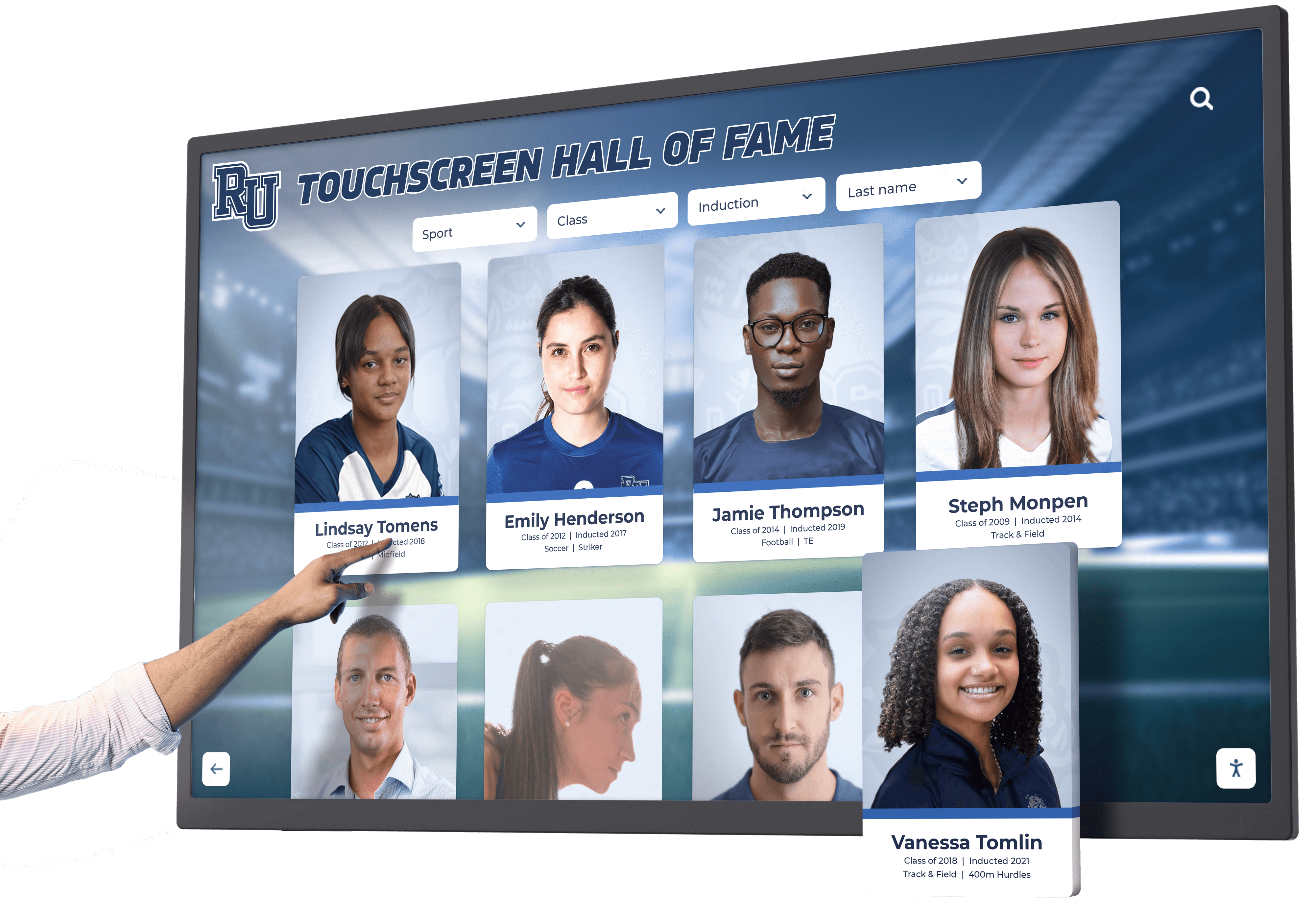
Capturing authentic moments creates emotional connections with championship stories
Legacy and Lasting Impact
Conclude championship narratives by connecting specific achievements to broader program legacies:
- Community celebration recognizing shared achievement
- Awards and recognition earned by team and individuals
- Reflections from participants about championship significance
- Statistical records or milestones achieved
- Impact on program culture and future team expectations
- Where championship athletes went after graduation
This resolution phase provides emotional closure while connecting specific championships to ongoing institutional narratives that continue inspiring future generations.
Balancing Statistical Documentation With Human Stories
Numbers and statistics support narratives when integrated thoughtfully rather than overwhelming qualitative storytelling:
Statistical Context That Informs Rather Than Overwhelms
Present statistics that illuminate championship significance:
- Season records showing dominance or competitive progression
- Scoring margins or defensive statistics demonstrating team strengths
- Records set during championship seasons
- Historical comparisons with previous program achievements
- Rankings showing competitive positioning
Statistical information works best when woven into narratives explaining what numbers meant—how scoring average improvements reflected offensive development, how defensive statistics demonstrated increasing competitiveness, how records represented breakthrough performances.
Individual Recognition Within Team Success
Highlight individual contributions while maintaining team-focused narrative:
- Season statistical leaders in scoring, assists, defense
- All-conference, all-state, or national recognition earned
- Clutch performances in crucial championship games
- Leadership contributions beyond statistics
- Multi-sport athlete achievements
Comprehensive individual recognition communicates that championships require complete team efforts while ensuring deserving athletes receive appropriate personal acknowledgment.
Visual Statistical Presentation
Charts, graphs, and visual representations make numbers more accessible:
- Season progression line graphs showing improvement over time
- Bar charts comparing team statistics with program records
- Tournament bracket visualizations showing championship path
- Comparison tables showing championship seasons versus program averages
Visual presentations engage viewers who might skim past traditional statistical tables while making data more memorable and impactful.
Integrating Physical and Digital Recognition
The most successful championship recognition programs thoughtfully blend traditional and modern approaches rather than viewing them as competing alternatives:
Complementary Display Strategies
Physical and digital recognition serve different functions that complement rather than duplicate:
Major Championship Physical Banners
Maintain traditional fabric banners for most significant championships:
- First state titles in program history
- Undefeated championship seasons
- National championships or extraordinary achievements
- Recent championships maintaining current visual presence
Physical banners provide atmospheric impact and traditional aesthetic that honors established recognition conventions while digital exhibits add depth, detail, and comprehensive historical coverage.
Digital Comprehensive Documentation
Use interactive exhibits for complete championship coverage:
- All state championships across all sports and eras
- Runner-up finishes and significant tournament achievements
- Conference, regional, and district championships
- Individual athlete achievements within championship contexts
- Complete season documentation and historical archives
This division allows physical displays to maintain traditional aesthetic and atmospheric impact while digital systems provide unlimited capacity ensuring no achievement goes unrecognized due to space constraints.
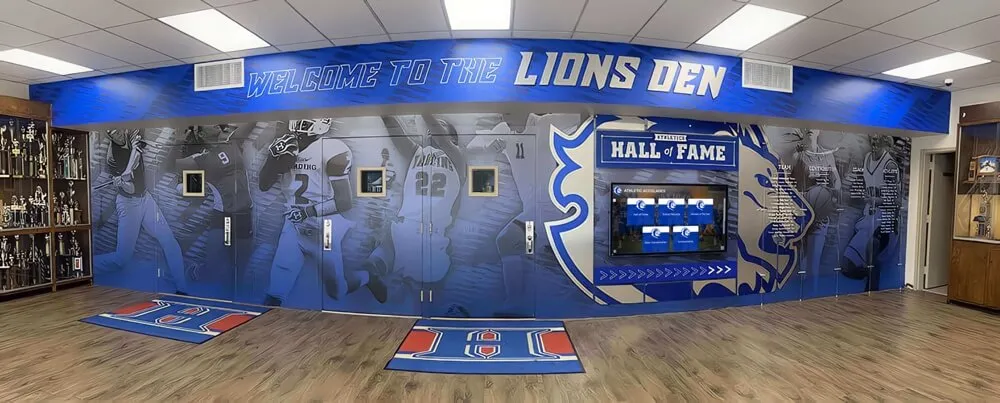
Successful programs integrate physical and digital recognition into cohesive environments
QR Code Bridges Between Formats
Link physical banners to expanded digital content through QR codes positioned near traditional displays. Visitors scan codes to access:
- Complete championship season documentation
- Video highlights and photo galleries
- Detailed roster information and athlete profiles
- Season statistics and game-by-game results
- Coach and athlete reflections on championship significance
This hybrid approach preserves physical banner traditions while leveraging digital technology to tell complete championship stories traditional fabric cannot accommodate.
Multi-Location Display Strategies
Maximize visibility by distributing championship recognition across multiple strategic locations:
Primary Athletic Facilities
- Main gymnasium lobbies where athletes, families, and visitors first arrive
- Athletic hallways connecting locker rooms to competition venues
- Training and weight room areas where athletes invest daily preparation hours
- Field house entrances serving multiple sports and teams
Primary facility placement ensures current athletes encounter championship recognition daily, keeping excellence standards continuously present during practices, preparation, and competition.
Whole-School Integration
- Main school building entrances reaching all students and visitors
- Libraries and commons areas where diverse populations congregate
- Administrative offices where families visit for meetings and enrollment
- Alumni centers connecting graduates with championship traditions
School-wide placement communicates that athletic excellence matters to entire communities, strengthens comprehensive school pride, and ensures recognition reaches audiences beyond core athletic participants. Many successful programs coordinate championship displays with broader athletic recognition programs creating cohesive celebration of diverse achievements.
Measuring Success and Demonstrating Value
Effective championship recognition programs assess impact through multiple metrics demonstrating return on investment:
Engagement Analytics and Usage Patterns
Digital platforms provide detailed usage data impossible with traditional banners:
Quantitative Engagement Metrics
- Total interactions and viewing sessions (daily, weekly, monthly patterns)
- Average engagement duration per session (target: 5-10 minutes for championship content)
- Most-viewed championships revealing which content resonates most strongly
- Search queries showing what information visitors seek
- Peak usage times identifying optimal update scheduling
- Return visitor rates demonstrating sustained interest
- Geographic distribution of web platform users showing reach beyond campus
These analytics demonstrate actual usage validating investment while revealing which championships and content types resonate most strongly with audiences, informing future content development priorities.
Stakeholder Feedback and Qualitative Impact
Beyond usage numbers, assess broader influence through structured feedback:
- Current athlete surveys: Awareness of championships, inspirational impact, goal-setting influence
- Coach observations: Cultural impact on team development and program excellence expectations
- Recruit and family feedback: Impressions during campus visits, influence on program selection decisions
- Alumni engagement: Interaction frequency, content contributions, social media sharing, giving patterns
- Community perception: Local pride, attendance trends, media coverage, social media mentions
Combined quantitative and qualitative assessment provides comprehensive understanding of championship recognition value across multiple institutional priorities.
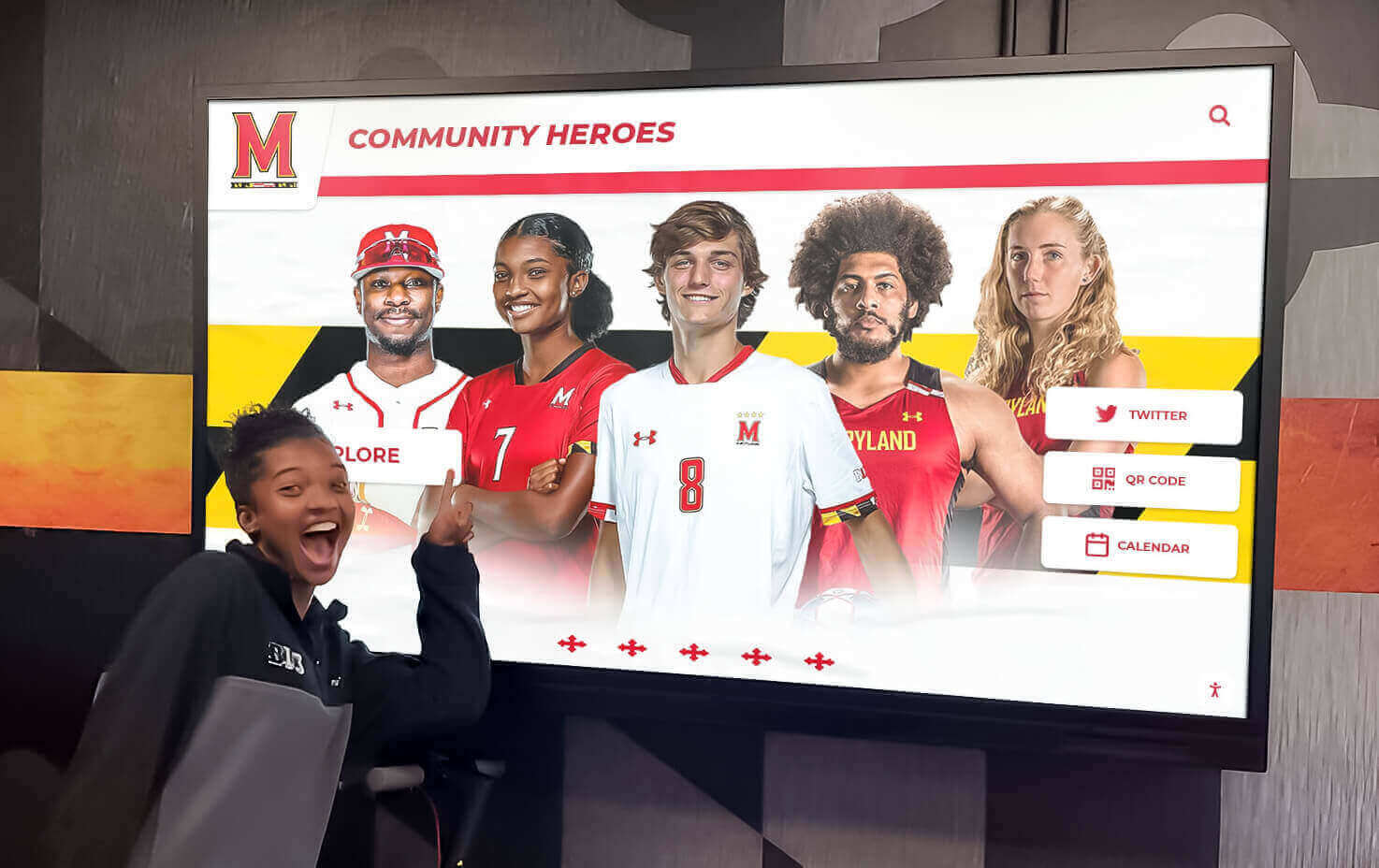
Engaged viewing demonstrates recognition effectiveness
Return on Investment Considerations
Calculate comprehensive ROI encompassing tangible and intangible benefits:
Financial Considerations
- Initial investment versus traditional banner approach costs over 10-15 years
- Eliminated recurring expenses from banner production, installation, replacement
- Staff time savings from simplified content updates versus physical banner management
- Fundraising success potentially attributable to enhanced recognition
Strategic Value Beyond Direct Costs
- Enhanced institutional reputation and athletic program prestige
- Improved alumni engagement strengthening lifelong connections
- Recruiting advantages from comprehensive championship documentation
- Preserved institutional history preventing memory loss across administrative transitions
- Community pride and engagement supporting broader institutional missions
Most schools discover thoughtfully implemented championship recognition delivers returns far exceeding initial investment when accounting for comprehensive benefits across engagement, recruitment, fundraising, cultural impact, and institutional memory preservation.
Best Practices for Excellence
Schools achieving greatest success with state championships recognition banner exhibits implement proven approaches maximizing impact:
Comprehensive, Equitable Recognition Across All Sports
Apply consistent recognition standards ensuring all state championships receive appropriate celebration:
- Equal content depth and quality for championships in all sports regardless of program size or community profile
- Consistent templates and presentation formats creating unified aesthetic
- Recognition of both team championships and individual state qualifiers
- Inclusion of runner-up finishes and significant tournament achievements
- Acknowledgment of coaching excellence alongside athlete performance
Comprehensive equity demonstrates institutional values celebrating all athletic excellence rather than privileging certain sports or eras, strengthening department-wide culture and athlete engagement across diverse programs.
Sustainable Content Development Workflows
Establish manageable processes ensuring exhibits remain current without overwhelming staff:
- Assign clear responsibility for championship content development and maintenance
- Create standardized templates reducing per-championship development time
- Implement during-season documentation capturing content as championships occur
- Schedule regular content addition periods during off-season months
- Engage student media classes or journalism programs as development resources
- Build documentation into existing athletic department workflows
Sustainability ensures exhibits remain vibrant, current, and comprehensive rather than becoming static installations receiving initial effort but no ongoing maintenance.
Active Promotion and Integration
Even excellent exhibits require promotion ensuring target audiences discover and engage with content:
- Announce new championship additions through school communications and social media
- Integrate exhibit exploration into athletic program orientations for incoming athletes
- Feature prominently during campus tours for prospective families
- Reference during coaching conversations about program standards and traditions
- Host unveiling ceremonies generating excitement and awareness
- Create printed materials promoting web access for remote viewing
Consistent promotion maintains awareness preventing exhibits from becoming hidden resources few people discover or utilize despite their significant value and institutional investment.
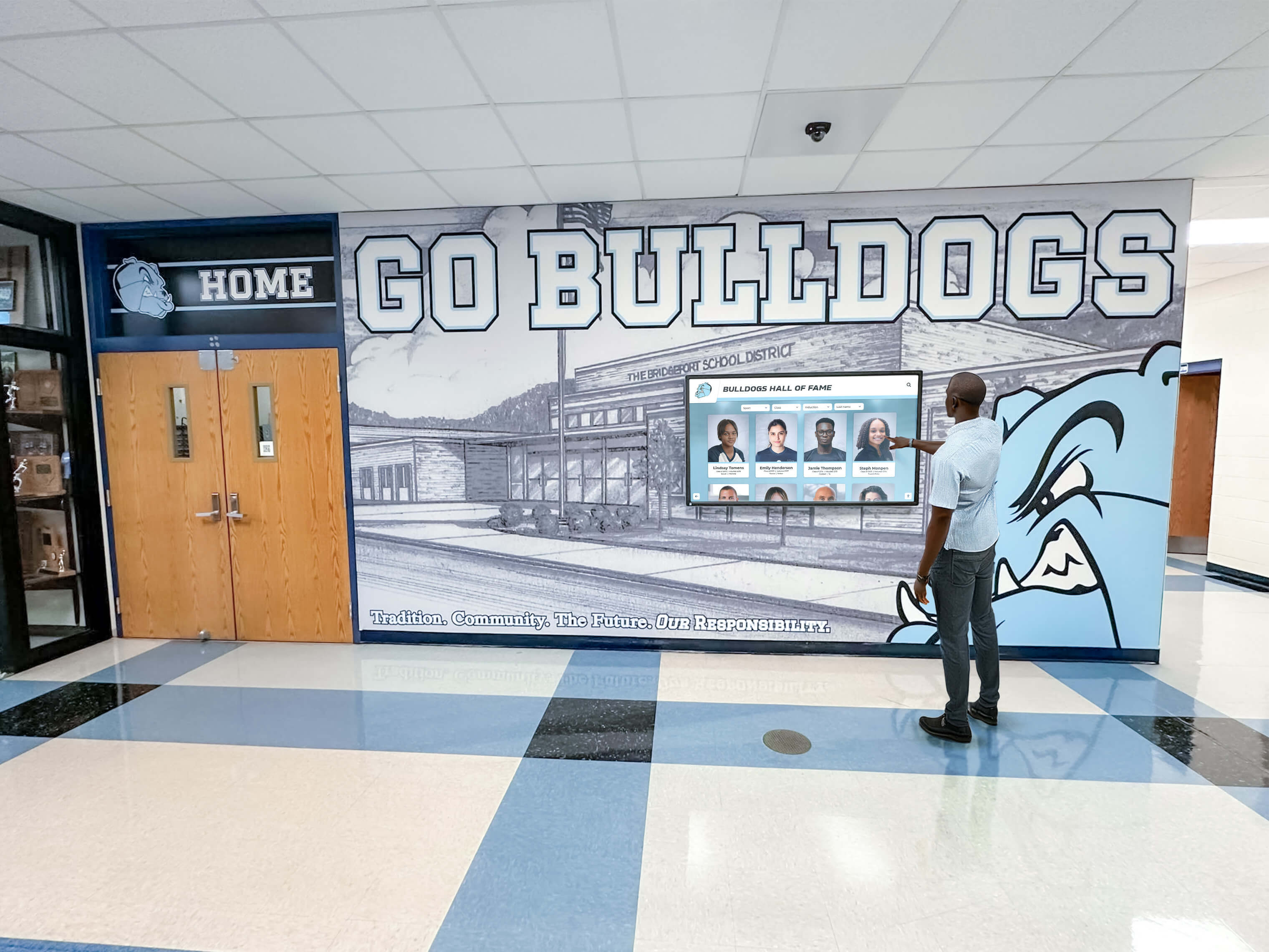
Well-promoted exhibits become central features of athletic program culture
Conclusion: Championship Recognition Worthy of Achievement
State championships represent pinnacle athletic accomplishments achieved through dedication, preparation, teamwork, and excellence. These extraordinary achievements deserve recognition matching their significance—comprehensive documentation that honors complete championship journeys, celebrates every contributor, preserves institutional memory, and inspires current athletes pursuing similar greatness.
Traditional championship banners have served schools well for generations, providing visible testament to program excellence that creates pride and tradition. Yet physical banners face inherent limitations—finite ceiling space, minimal information capacity, physical deterioration, update complexity, and static non-interactive presentation—that increasingly constrain their effectiveness as athletic programs mature and modern audiences expect more engaging experiences.
State championships recognition banner exhibits transform championship celebration by eliminating physical space constraints, enabling rich multimedia storytelling, creating interactive exploration opportunities, extending recognition beyond campus boundaries, and providing sustainable platforms growing alongside athletic program success. Digital technology doesn’t replace cherished banner traditions—it enhances and expands championship recognition ensuring every achievement receives comprehensive, engaging, accessible celebration.
Transform Your Championship Recognition
Discover how Rocket Alumni Solutions can help you create comprehensive state championships recognition banner exhibits that honor every achievement, preserve complete championship stories, and inspire every athlete through modern interactive displays designed specifically for schools.
Schedule Your Free ConsultationSuccessful championship recognition shares common characteristics: comprehensive coverage honoring all achievements rather than selective highlights, engaging narratives providing context beyond basic facts, accessible formats reaching diverse audiences, sustainable processes ensuring ongoing currency, and integration with broader recognition programs celebrating athletic excellence comprehensively.
The championships your athletes achieve through countless hours of preparation, moments of adversity overcome, and ultimate triumph deserve recognition worthy of their significance. Whether celebrating recent victories or preserving decades of championship excellence, state championships recognition banner exhibits ensure every achievement receives the comprehensive, engaging, inspiring celebration it deserves while inspiring countless future champions who will add their own accomplishments to your program’s growing legacy.
Ready to revolutionize your championship recognition? Contact Rocket Alumni Solutions to explore interactive platforms celebrating state championship excellence, or discover more about implementing digital trophy displays and comprehensive athletic recognition systems that honor your unique program traditions and competitive achievements.































