Student of the month recognition programs represent one of education’s most widely implemented yet often underutilized tools for building positive school culture. When thoughtfully designed and consistently executed, these programs do far more than simply acknowledge high achievers—they create cultures of excellence, communicate institutional values, motivate diverse student populations, strengthen school pride, and build the belonging that enables academic and social success.
Yet many schools struggle with student of the month programs that feel stale, predictable, or disconnected from what truly matters. The same handful of students receive recognition month after month. Selection processes lack transparency. Recognition ceremonies become routine obligations rather than genuine celebrations. Traditional bulletin boards and printed certificates fail to resonate with digitally native students.
This comprehensive guide explores how to transform student of the month programs from perfunctory acknowledgments into powerful cultural drivers that genuinely impact student motivation and school climate. From selection criteria and nomination processes to modern digital recognition platforms and measuring program effectiveness, discover how to create recognition systems that celebrate every student’s potential while maintaining meaningful standards.
Student recognition has never mattered more. In educational environments facing unprecedented challenges—from learning loss and attendance concerns to mental health struggles and declining engagement—creating cultures where students feel valued and celebrated proves essential. Student of the month programs, when implemented effectively, provide systematic structures for consistent recognition that keeps achievement and positive behavior at the forefront of school communities.

Why Student of the Month Programs Matter: The Evidence Base
Before diving into implementation strategies, understanding the research foundation supporting recognition programs helps ensure your approach aligns with evidence-based best practices.
Academic and Behavioral Impact
Well-designed recognition programs demonstrate measurable effects on key educational outcomes. Recognition directly influences student motivation, with acknowledged students showing increased intrinsic motivation to continue working toward goals, enhanced self-efficacy beliefs about their ability to succeed, greater willingness to tackle challenging tasks, improved academic performance in subsequent periods, and stronger connections between effort and outcomes in their mindsets.
Beyond academics, recognition shapes behavior and social-emotional development through reduced disciplinary incidents, increased prosocial behaviors, stronger sense of belonging, enhanced self-esteem, and improved student-educator relationships based on positive interactions.
School Culture and Climate Enhancement
Student of the month programs contribute to broader school culture when implemented thoughtfully. Recognition choices communicate what schools truly value—students pay close attention to who receives recognition and why, learning powerful lessons about institutional priorities far more effectively than mission statements alone.
Regular recognition creates shared positive experiences that strengthen community bonds. When students celebrate peers’ successes, when families gather for recognition ceremonies, and when staff collaborate on selection processes, these interactions build the social fabric connecting school communities.
Recognition programs shift attention toward positive behaviors and achievements, creating environments where success receives more attention than failure. This fundamental shift in focus transforms school climates in ways that discipline-centered approaches cannot achieve.

Designing Selection Criteria That Honor Diverse Excellence
The foundation of successful student of the month programs lies in thoughtful selection criteria that recognize multiple achievement dimensions while maintaining credibility and fairness.
Core Recognition Categories
Comprehensive programs celebrate various forms of excellence rather than focusing narrowly on academic grades alone.
Academic Achievement and Growth
Academic recognition should celebrate both absolute achievement and improvement. Consider recognition for traditional academic excellence (honor roll, grade point averages), significant academic improvement regardless of final achievement level, mastery of challenging concepts or skills, outstanding project work or creative assignments, academic perseverance through learning challenges, and participation in academic competitions and enrichment activities.
Many schools implement separate categories for academic achievement and academic growth, ensuring both high achievers and students demonstrating significant improvement receive acknowledgment. This dual approach prevents programs from recognizing only students who consistently maintain perfect grades while ignoring classmates working equally hard from different starting points.
Character and Citizenship
Character recognition honors the behaviors and qualities that create positive school communities. Celebrate demonstrated kindness, compassion, and empathy toward others; integrity and honesty in academic and social contexts; respect for peers, staff, and school environment; responsibility in completing obligations and commitments; perseverance in facing challenges and setbacks; and positive attitude and school spirit demonstration.

Leadership and Service
Leadership recognition extends beyond traditional student government to honor peer mentoring and tutoring assistance, club and organization leadership roles, initiative in addressing school or community needs, volunteer service to school and broader community, positive influence on peer behavior and culture, and advocacy for important causes or underrepresented voices. Effective community service recognition ensures students contributing time and energy receive appropriate acknowledgment.
Special Achievement Categories
Consider additional categories addressing specific contexts: most improved student awards recognizing dramatic growth, perfect attendance recognizing commitment and reliability, overcoming obstacles awards honoring resilience, department-specific recognition from individual subject areas, grade-level recognition ensuring representation across ages, and special programs recognition for arts, athletics, and vocational programs.
Creating Fair and Transparent Selection Processes
Fair, transparent selection processes maintain program credibility and community trust. Effective nomination systems should accept nominations from teachers and staff who know students well, support staff who observe students in different contexts, peers who can celebrate classmate accomplishments (with adult oversight), students themselves who can submit external accomplishments, and automated systems based on quantifiable criteria.
Diverse selection committees ensure balanced perspectives. Include administrator representation ensuring alignment with school priorities, teacher representation from multiple departments and grade levels, support staff bringing different student interaction perspectives, student representative input (especially for secondary schools), and rotating membership preventing entrenchment of particular viewpoints.
Standardized evaluation frameworks promote consistency through clear criteria definitions, point-based or rubric-based scoring systems, documentation requirements supporting nomination claims, balanced consideration of one-time achievements versus sustained patterns, and accommodation for different types of evidence depending on recognition category.

Ensuring Equity and Representation
Thoughtful program design prevents recognition from inadvertently favoring particular student groups. Implement systematic tracking of recognition patterns by monitoring recognition by gender, race, socioeconomic status, and other demographic factors; tracking recognition across grade levels; reviewing recognition across different programs (general education, special education, English learner); analyzing recognition by achievement type; and identifying students who have never received recognition for targeted outreach.
Don’t rely solely on nominations—actively seek deserving students by partnering with special education staff identifying often-overlooked achievements, consulting with English learner teachers about students making significant language progress, connecting with counselors about students overcoming significant obstacles, engaging community partners about student contributions outside school, and creating recognition categories specifically celebrating growth from different starting points.
This intentional approach to inclusive recognition ensures all students see themselves reflected in school recognition programs.
Implementation Roadmap: Launching Your Program Successfully
Strategic implementation ensures your student of the month program launches successfully and sustains long-term impact.
Phase 1: Planning and Design
Begin with stakeholder engagement by forming a planning committee with administrators, teachers, students, and parents. Define your program philosophy, values, and goals aligned with school mission. Identify recognition categories reflecting diverse achievements. Create nomination, selection, and announcement processes with clear timelines. Determine how recognition will be displayed and communicated. Allocate resources for certificates, digital displays, ceremonies, and ongoing management.
Phase 2: Technology and Display Selection
Modern student of the month programs benefit tremendously from digital recognition technology extending visibility and engagement beyond traditional bulletin boards.
Digital Recognition Systems
Digital recognition displays offer significant advantages including interactive touchscreen systems allowing exploration of student profiles, multimedia content with photos, videos, and detailed achievement descriptions, web-accessible platforms extending recognition beyond physical location, unlimited capacity for honoring students across multiple years, and regular content updates without physical replacement costs.
Solutions like Rocket Alumni Solutions provide schools with comprehensive digital recognition capabilities specifically designed for educational environments. These interactive touchscreen systems allow schools to showcase unlimited students with detailed profiles while maintaining professional presentation and easy content management.

Hybrid Approaches
Many schools implement combined strategies maximizing both traditional and digital recognition through physical displays in prominent locations with QR codes linking to detailed digital profiles, monthly bulletin boards featuring current recipients alongside permanent digital archives, traditional certificates complemented by web-accessible hall of fame displays, and school assemblies celebrating current honorees with ongoing digital recognition.
Phase 3: Content Development and Management
Compelling recognition requires thoughtful content creation. Comprehensive student profiles should include professional student photographs, detailed descriptions of specific achievements and contributions, teacher or nominator testimonials explaining impact, student reflections on their accomplishments (when appropriate), recognition of specific behaviors or growth areas, and context providing understanding of achievement significance.
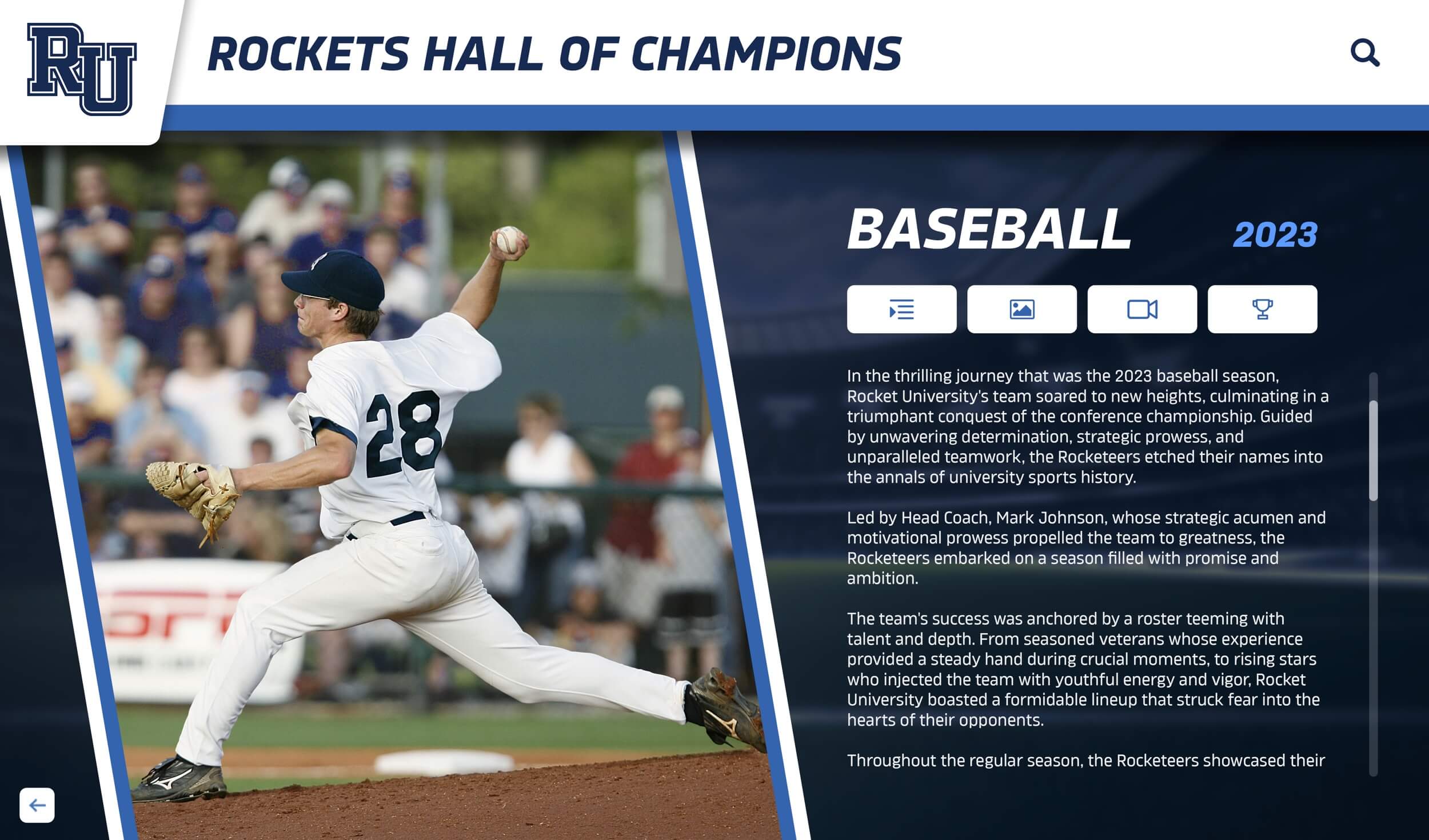
Sustainable programs require clear content management workflows with monthly nomination periods, selection committee review, winner notification, content creation (photography, interviews, profiles), approval processes, publication and announcement, ceremony or celebration, and ongoing visibility through displays and communications. Modern content management systems simplify these workflows with intuitive interfaces allowing non-technical staff to manage recognition displays effectively.
Phase 4: Launch and Promotion
Strategic launch creates momentum through school-wide communication introducing program goals, assembly or classroom presentations explaining recognition opportunities, staff training on nomination procedures, parent communication through newsletters and social media, and initial content preparation featuring diverse student representatives.
Launch events should include formal program unveiling with administrators and families, recognition of inaugural recipients, interactive demonstration of digital displays (if applicable), media coverage in school publications, and social media campaigns celebrating the new program.

Maximizing Program Impact Through Strategic Integration
Student of the month programs achieve maximum effectiveness when integrated throughout school operations and culture rather than existing as isolated initiatives.
Connecting to School-Wide Initiatives
Align recognition with broader educational priorities. Schools using Positive Behavioral Interventions and Supports seamlessly integrate monthly recognition through student categories aligned with PBIS behavioral expectations, recognition of students demonstrating targeted behaviors, integration with PBIS point systems, use as tier 2 or tier 3 recognition, and data tracking showing recognition impact on behavior patterns.
Connect recognition to school improvement priorities through recognition categories supporting reading, math, or literacy initiatives; student of the month aligned with school improvement goals; recognition of growth in priority academic areas; celebration of participation in targeted intervention programs; and academic milestone recognition supporting objectives.
Family Engagement Strategies
Digital recognition extends student of the month programs to families and broader community. Modern technology enables comprehensive family engagement through email notifications immediately informing families of recognition, text message alerts for time-sensitive announcements, web-accessible platforms allowing families to explore profiles remotely, social media sharing enabling families to celebrate publicly, and monthly recognition newsletters highlighting all honored students.
Family involvement opportunities include attendance at recognition ceremonies, family testimonial contributions to student profiles, parent volunteer participation in recognition events, family photo submissions for profiles, and recognition of family support contributing to student success.

Classroom Integration
Teachers leverage student of the month programs for instructional purposes through writing assignments composing nomination essays for peers, research projects exploring recognition history and patterns, character education lessons using student examples, goal-setting activities inspired by recognized achievements, and peer recognition exercises building classroom community.
Best Practices for Sustained Success
Long-term program effectiveness requires ongoing attention and strategic management.
Annual Program Review and Refinement
Regular assessment ensures continuous improvement through quantitative measures including total students recognized and percentage of student body honored, recognition distribution across demographics and grades, nomination participation rates from teachers and staff, family engagement with recognition communications, and correlation with attendance, behavior, and academic data.
Qualitative assessment should gather student survey feedback about recognition fairness and impact, staff input on program effectiveness and improvement opportunities, family perception through surveys and feedback, observed impact on school culture and climate, and success stories demonstrating recognition impact.
Based on evaluation data, implement refinements by modifying categories to better reflect student body and institutional priorities, adjusting selection processes to address equity concerns or participation gaps, enhancing communication strategies to increase awareness and engagement, improving ceremony formats based on student and family feedback, and updating digital displays or physical recognition formats for greater impact.
Maintaining Program Momentum
Prevent recognition programs from becoming stale through fresh content approaches by rotating recognition categories periodically, featuring student spotlights in varied formats (video interviews, written profiles), connecting monthly recognition to seasonal events or current school initiatives, highlighting alumni who were previously recognized, and creating special recognition for milestone months.
Ensure staff engagement through regular professional development on recognition best practices, appreciation for staff who actively participate in nominations, simplified nomination processes reducing administrative burden, recognition of effective nominators who consistently identify deserving students, and celebration of recognition program success in staff meetings.
For secondary schools, student involvement deepens engagement through student committee participation in selection processes, student-led promotion through announcements and social media, student photography or videography for recognition content, student-written profiles or interview articles about honored peers, and student presentation at recognition ceremonies.

Addressing Common Challenges
Anticipating obstacles enables proactive problem-solving ensuring program sustainability.
Overcoming Selection Bias Concerns
Perception of fairness critically affects program credibility through transparency measures including published selection criteria available to all stakeholders, clear nomination processes with published deadlines and procedures, diverse selection committees bringing multiple perspectives, documentation of selection rationale for audit or review, and regular equity analysis identifying and addressing imbalances.
Communication strategies should include proactive explanation of recognition philosophy emphasizing diverse achievement, clear messaging that multiple categories ensure varied recognition types, regular reminders that growth and character receive equal weight to achievement, celebration of previously unrecognized students in communications, and openness to feedback with demonstrated responsiveness to concerns.
Managing Time and Resource Constraints
Digital recognition technology dramatically reduces administrative burden through cloud-based content management systems enabling updates from anywhere, template-based profile creation standardizing content development, batch processing capabilities for multiple recognition additions, automated notification systems eliminating manual communication tasks, and digital asset management centralizing photos and content.
Efficient staffing approaches include designating specific positions responsible for recognition program management, building recognition responsibilities into job descriptions with allocated time, training multiple staff members ensuring continuity during absences, leveraging student assistance for appropriate tasks (photography, data entry), and establishing clear processes minimizing decisions required for routine tasks.
Sustaining Student and Family Interest
Recognition programs lose effectiveness if they become routine or overlooked. Maintain engagement through varying recognition ceremony formats, creating special events around milestone recognitions, integrating multimedia content making profiles dynamic and engaging, enabling social sharing extending recognition visibility, and connecting recognition to prizes, privileges, or special experiences.
Modern recognition technology maintains interest through enhanced capabilities including interactive displays inviting exploration and discovery, video content bringing achievements to life beyond static photos, search features allowing students to find themselves or friends, digital yearbook integration preserving recognition history, and mobile accessibility extending engagement beyond school hours.

Emerging Trends in Student Recognition
Student of the month programs continue evolving with emerging technologies and changing expectations.
Artificial Intelligence and Personalization
AI-powered systems will transform recognition capabilities through predictive recognition identifying students approaching milestones, behavioral pattern recognition identifying character development, alert systems notifying staff of students deserving consideration, automated nomination drafting based on documented achievements, and equity algorithms ensuring balanced representation across student demographics.
Technology will enable customized content based on viewer where students see their own recognition history and progress toward goals, families access personalized views of their children’s achievements, alumni explore recognition from their time as students, prospective families see recognition programs during recruitment, and community members discover student contributions to broader initiatives.
Enhanced Multimedia Integration
Recognition increasingly incorporates rich media beyond static photos including video interviews with recognized students sharing achievement reflections, time-lapse visualizations showing growth trajectories, interactive timelines connecting recognition to school history, student-created content showcasing achievements in authentic contexts, and virtual reality experiences exploring student projects and accomplishments.
Social-Emotional Learning Integration
Recognition programs increasingly align with SEL competencies. Modern recognition approaches explicitly connect to social-emotional learning frameworks through self-awareness recognition celebrating student understanding of strengths, self-management honors for organization and emotional regulation, social awareness recognition for empathy and perspective-taking, relationship skills celebration through collaboration and conflict resolution, and responsible decision-making acknowledgment for ethical choices and problem-solving.
This integration ensures recognition programs support holistic student development beyond traditional academic achievement alone.
Transform Your Student Recognition Program
Discover how modern digital recognition displays can help you create more engaging, equitable, and effective student of the month programs that truly impact school culture and student experience.
Explore Recognition SolutionsConclusion: Recognition That Transforms School Culture
Student of the month programs represent far more than administrative obligations or feel-good ceremonies—they embody schools’ commitment to seeing, valuing, and celebrating every student. When thoughtfully designed with comprehensive categories, transparent processes, and modern technology, these programs transform school culture by creating belonging where students who receive recognition feel valued and connected, communicating values through recognition patterns that teach powerful lessons about what schools genuinely prize, building motivation as visible celebration inspires students to set and pursue goals, strengthening community through shared recognition experiences, and promoting equity ensuring all students—regardless of background, ability, or circumstances—experience acknowledgment.
The most effective student of the month programs balance tradition with innovation, honor diverse achievements, maintain transparent selection processes, and integrate recognition throughout school operations. By implementing the strategies outlined in this guide, schools create sustainable recognition programs that authentically celebrate students while building the positive culture essential for learning and growth.
For schools seeking to enhance their recognition capabilities, digital platforms like those offered by Rocket Alumni Solutions provide comprehensive tools for creating engaging, accessible, and expandable student of the month programs. These modern recognition systems ensure your program can scale with your student body, evolve with your priorities, and continue making impact for years to come.
Whether launching a new student of the month program or revitalizing an existing one, remember that recognition’s power lies not in elaborate displays or expensive ceremonies, but in the consistent, authentic message that every student matters and deserves celebration. Start where you are, implement thoughtfully, and continuously refine based on feedback and outcomes. The investment in properly recognizing students yields immeasurable returns in achievement, culture, and community that define educational excellence.






















