Teacher recognition represents one of the most powerful investments schools can make in creating positive culture, retaining exceptional educators, and demonstrating appreciation for the professionals who shape student lives daily. Teacher of the Year award programs specifically provide systematic frameworks for celebrating outstanding teaching excellence while inspiring colleagues, honoring dedication, and showcasing the educational profession’s vital importance to students, families, and communities.
Yet many schools struggle to create teacher recognition programs that truly resonate. Awards often become routine administrative processes lacking genuine celebration, recognition displays fade into background decorations that nobody notices, and honored teachers receive brief acknowledgment without meaningful visibility or lasting commemoration. Meanwhile, exceptional educators working tirelessly beyond classroom walls may never receive the public appreciation their contributions deserve.
This comprehensive guide explores evidence-based strategies for designing and implementing Teacher of the Year award programs that meaningfully honor educational excellence while creating lasting recognition that strengthens entire school communities.
Effective teacher recognition extends beyond single ceremonies or plaques gathering dust in storage rooms—it creates systematic approaches celebrating teaching excellence through visible, engaging displays that inspire current students, recognize dedicated professionals, and demonstrate institutional commitment to educational quality. Schools excelling at teacher recognition create environments where educational excellence receives celebration comparable to any other achievement.

Strategic placement of recognition displays in high-traffic areas ensures teacher achievements receive the visibility they deserve
Understanding Teacher of the Year Programs: Purpose, Structure, and Impact
Teacher of the Year programs exist at national, state, district, and individual school levels, each serving important purposes while following similar recognition frameworks honoring outstanding educational professionals.
The National Teacher of the Year Program
The Council of Chief State School Officers (CCSSO) administers the National Teacher of the Year Program, America’s most prestigious teacher recognition initiative. According to the CCSSO National Teacher of the Year program, this program provides State Teachers of the Year with yearlong professional learning and development experiences while identifying one National Teacher of the Year representing the entire nation.
This national recognition creates opportunities extending far beyond individual honor—recipients become educational advocates, participate in policy discussions, deliver professional development, and represent the teaching profession at the highest levels. The visibility raises awareness about educational challenges and opportunities while showcasing teaching as a noble, complex profession requiring exceptional skill, dedication, and expertise.
State Teacher of the Year Programs
Each state administers Teacher of the Year programs identifying outstanding educators who represent teaching excellence throughout their states. These programs typically begin with school-level nominations that advance through district competitions before reaching state selection processes.
State programs vary in specific criteria and selection processes, but most evaluate candidates across multiple dimensions including:
Instructional Excellence: Demonstrated effectiveness in facilitating student learning, implementing research-based pedagogical practices, differentiating instruction meeting diverse needs, creating engaging learning environments that foster curiosity and growth, and achieving measurable student achievement gains across various assessment measures.
Professional Leadership: Serving as instructional leaders beyond individual classrooms, mentoring colleagues and contributing to professional learning communities, participating in school improvement initiatives and strategic planning, leading professional development or curriculum development efforts, and demonstrating commitment to continuous professional growth and educational innovation.
Community Engagement: Building strong relationships with students’ families and broader communities, communicating effectively with diverse stakeholders about educational matters, partnering with community organizations to enhance educational opportunities, representing education positively in public forums, and advocating for students and the teaching profession.
Innovation and Impact: Implementing innovative approaches addressing educational challenges creatively, demonstrating measurable positive impact on student outcomes and experiences, adapting instruction effectively to meet evolving student needs, incorporating technology and contemporary tools enhancing learning, and inspiring students to reach beyond what they previously thought possible.
State Teachers of the Year receive recognition at special ceremonies, participate in leadership opportunities throughout their designation year, and advance to national consideration representing their states in the National Teacher of the Year selection process.
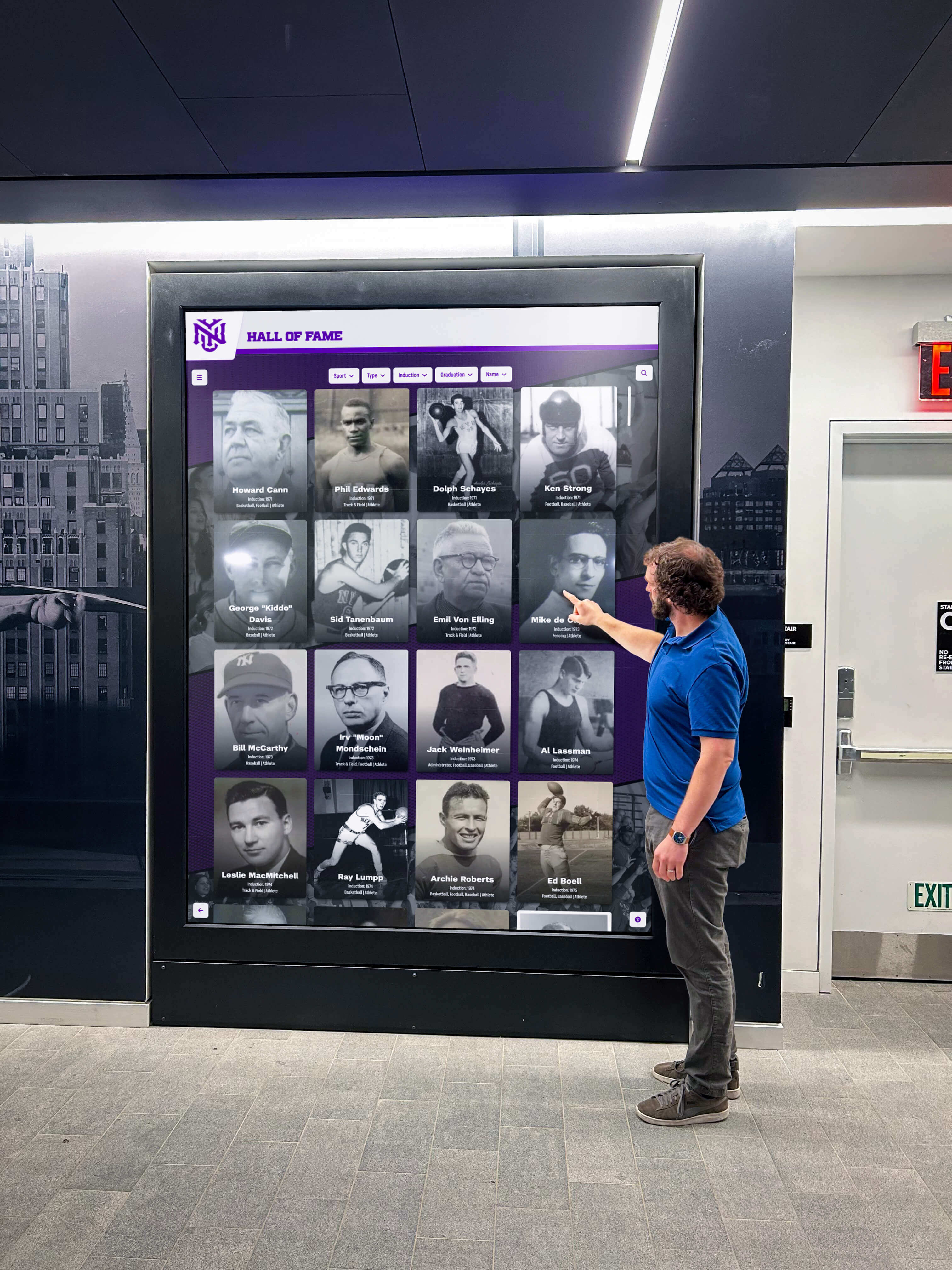
Interactive recognition displays enable families and colleagues to explore teacher achievements and educational contributions
District and School-Level Recognition Programs
While state and national programs honor select individuals, district and school-level Teacher of the Year programs provide broader recognition opportunities celebrating excellence within specific educational communities.
School-level programs prove particularly important because they:
Provide Recognition Opportunities for More Educators: Not every outstanding teacher will reach state or national recognition levels, but many exceptional educators deserve meaningful acknowledgment within their schools and districts.
Create Visible Appreciation Within Communities: Local recognition resonates powerfully with students, families, and community members who directly experience honored teachers’ impact.
Strengthen School Culture and Morale: Systematic teacher recognition demonstrates institutional appreciation while creating positive culture valuing educational excellence.
Inspire Colleagues Through Peer Recognition: When teachers see respected colleagues honored for exceptional work, it inspires reflection about teaching practices and professional growth opportunities.
Retain Excellent Educators: Recognition represents one factor influencing teacher retention. Educators feeling valued and appreciated remain in positions longer than those believing their contributions go unnoticed.
School and district programs should establish clear criteria, transparent selection processes, meaningful celebration, and lasting recognition ensuring honored teachers receive appreciation extending beyond single announcements.
Designing Effective Teacher of the Year Programs: Criteria and Selection
Creating teacher recognition programs that feel fair, meaningful, and aligned with institutional values requires thoughtful design addressing multiple considerations.
Establishing Clear Recognition Criteria
Teacher of the Year programs require explicit criteria enabling fair evaluation while communicating what the institution values in teaching excellence.
Classroom Effectiveness Measures
Instructional impact forms the foundation of teaching excellence recognition:
- Student academic growth and achievement across various assessment measures
- Classroom management creating positive, productive learning environments
- Instructional planning demonstrating curriculum knowledge and pedagogical expertise
- Differentiation meeting diverse learning needs within inclusive classrooms
- Assessment practices providing meaningful feedback guiding student improvement
- Student engagement levels and participation quality in learning activities
Rather than relying exclusively on standardized test scores—which measure only limited aspects of student learning while being influenced by factors beyond teacher control—comprehensive programs evaluate instructional effectiveness through multiple lenses including classroom observations, student growth measures, curriculum artifacts, and student feedback about learning experiences.
Professional Contributions Beyond Classroom
Outstanding teachers typically contribute significantly beyond their classroom responsibilities:
- Mentoring new teachers or supporting colleagues’ professional development
- Serving on school improvement teams or curriculum development committees
- Leading professional learning communities or department initiatives
- Participating in school governance through leadership councils or committees
- Contributing to positive school culture through extracurricular involvement
- Representing the school at district, state, or national professional conferences
Teacher and staff recognition programs should acknowledge these contributions essential to school success but often less visible than classroom instruction.
Innovation and Professional Growth
Exceptional educators continuously improve their practice through:
- Implementing innovative instructional strategies addressing educational challenges
- Pursuing ongoing professional development through courses, conferences, or study
- Incorporating educational technology enhancing student learning experiences
- Engaging in action research or reflective practice improving instruction
- Adapting teaching approaches based on assessment data and student feedback
- Collaborating with colleagues to develop and refine instructional practices
Recognition criteria emphasizing innovation and growth encourage all teachers to view their practice as continuously evolving rather than static.
Relationships and Community Engagement
The most impactful teachers build strong relationships extending beyond academic instruction:
- Developing positive, supportive relationships with all students
- Communicating effectively with families about student progress and needs
- Partnering with families to support student learning and development
- Connecting with community organizations providing resources or opportunities
- Serving as positive role models demonstrating professional excellence
- Creating inclusive classroom environments where all students feel valued
These relational dimensions of teaching excellence prove difficult to measure quantitatively but remain essential to comprehensive teacher recognition.

Recognition displays celebrating teacher excellence inspire students while honoring educational dedication
Creating Fair and Transparent Selection Processes
Selection methodology significantly impacts how Teacher of the Year programs are perceived within school communities. Transparent, fair processes build credibility while ensuring honored teachers receive recognition colleagues view as genuinely earned.
Nomination Procedures
Programs typically employ one of several nomination approaches:
Open Nomination: Any community member—colleagues, administrators, parents, students, or community partners—can nominate teachers they believe deserve recognition. This inclusive approach often identifies excellent teachers who might not self-promote or seek recognition actively.
Peer Nomination: Fellow teachers nominate colleagues, creating peer-recognition emphasis honoring teachers whom respected colleagues view as exceptional. This approach builds teacher buy-in and ensures recognized educators exemplify practices colleagues value.
Administrative Nomination: School leadership identifies candidates based on observations, performance evaluations, and comprehensive knowledge of teacher contributions. While more top-down, this approach ensures nominations consider formal evaluation data alongside informal impressions.
Self-Nomination with Application: Teachers interested in recognition complete application materials detailing their teaching philosophy, accomplishments, innovations, and impact. While requiring initiative from candidates, this approach enables thorough evaluation based on comprehensive information.
Many successful programs combine approaches—for example, accepting nominations from any source but requiring nominated teachers to complete applications providing detailed information for selection committee review.
Selection Committee Composition
Credible selection processes involve diverse perspectives through representative committees including:
- Building administrators with evaluation expertise and comprehensive school knowledge
- Teacher representatives from various grade levels or departments
- Support staff members with unique perspectives on teacher effectiveness
- Parent representatives understanding family perspectives on teaching excellence
- Student representatives (in secondary settings) providing learner perspectives
- Community members offering outside viewpoints on educational impact
Committee diversity ensures multiple perspectives inform selection while building broad stakeholder confidence in process fairness.
Evaluation Rubrics and Scoring
Rather than subjective impressions, effective programs employ structured evaluation rubrics with:
- Clearly defined criteria aligned with established program standards
- Multiple rating levels with descriptive indicators for each performance level
- Weighted categories reflecting relative importance of different criteria
- Evidence requirements supporting ratings with concrete examples
- Scoring procedures enabling fair comparison across candidates
- Consensus-building discussions before final selection
Rubric-based evaluation increases consistency, reduces bias, and creates documentation explaining selection rationales when questions arise.
Timeline and Communication
Clear timelines with regular communication throughout selection processes maintain transparency:
- Announcement of nomination period opening with clear submission deadline
- Regular reminders encouraging nominations from school community
- Notification to nominees about selection and application requirements
- Clear communication about selection timeline and decision announcement date
- Regular updates to nominees about process status
- Prompt notification of final selection with clear rationale communication
Transparent communication prevents confusion while demonstrating respect for all nominees investing time and effort in application processes.
Creating Meaningful Recognition Experiences: Ceremonies and Celebrations
How schools celebrate Teacher of the Year honorees significantly impacts recognition meaning and value. Thoughtful celebration creates memorable experiences for honored teachers while demonstrating institutional appreciation and inspiring school communities.
Planning Recognition Ceremonies
Formal recognition ceremonies provide focal points for teacher appreciation while engaging broader school communities in celebration.
Ceremony Timing and Context
Strategic scheduling maximizes attendance and impact:
School Assembly Recognition: Announcing Teacher of the Year during all-school assemblies ensures entire student body witnesses teacher appreciation while creating memorable celebration moments. Student presence proves particularly meaningful—being recognized before students reinforces teaching’s noble purpose while inspiring young people to appreciate educator dedication.
Staff Meeting Announcements: Revealing Teacher of the Year during faculty meetings creates colleague recognition moments while enabling peer celebration. This approach feels particularly appropriate when selection involved significant teacher input or peer nomination processes.
Community Evening Events: Hosting special recognition receptions or banquets involving families, community members, and school board representatives elevates celebration formality while engaging broader constituencies. Evening events enable more elaborate recognition without disrupting school schedules while providing opportunities for special speakers, video presentations, or extended celebration.
Board Meeting Recognition: Presenting Teacher of the Year awards during school board meetings provides official recognition while demonstrating board appreciation for teaching excellence. Public board recognition often accompanies formal resolutions or proclamations creating permanent record of achievement.
Many schools employ multiple recognition moments—for example, announcing Teacher of the Year at a staff meeting, formally presenting the award at a school assembly, and honoring the teacher at a subsequent board meeting or community reception.

Comprehensive recognition displays document achievement journeys while celebrating excellence across educational careers
Ceremony Program Elements
Meaningful recognition ceremonies typically include:
Context and Purpose Setting: Opening remarks explaining the Teacher of the Year program purpose, selection criteria, and recognition importance establish proper framing while educating attendees about teaching excellence dimensions.
Teacher Profile Presentations: Video montages, colleague testimonials, student statements, or biographical narratives tell honorees’ stories beyond simple achievement lists. These narrative elements create emotional connection while illustrating recognized teachers’ impact through concrete examples and personal testimonies.
Formal Award Presentation: The actual award presentation represents the ceremony centerpiece. Presenting authority figures—superintendents, principals, or board presidents—should speak personally about honorees’ contributions while explaining why they deserve recognition. Physical awards should be presented with appropriate ceremony and dignity.
Honoree Response Opportunities: Giving recognized teachers opportunities to address audiences allows personal expression of gratitude, reflection on teaching journeys, or sharing educational philosophies. These moments humanize honorees while providing inspiration through their perspectives on teaching.
Community Participation: Including students, families, or community members in recognition—through performances, letters, artwork, or testimonials—broadens participation while demonstrating honorees’ impact extending beyond individual classrooms.
Reception or Celebration: Following formal ceremonies with receptions featuring refreshments and socializing creates opportunities for personal congratulations, informal conversation, and extended celebration beyond structured program elements.
Physical Awards and Commemorative Items
Tangible recognition items provide lasting mementos while creating visible symbols of teaching excellence.
Traditional Award Options
Physical awards range from classic to contemporary:
- Engraved plaques featuring teacher names, recognition year, and achievement descriptions
- Crystal or glass trophies offering elegant recognition pieces teachers display prominently
- Framed certificates with formal language documenting recognition and achievement
- Custom sculpture or artistic pieces reflecting teaching profession or school identity
- Commemorative books featuring colleague letters, student reflections, and achievement documentation
Quality matters—recognition items should reflect achievement significance through substantial, well-crafted awards teachers feel proud displaying rather than inexpensive items suggesting perfunctory acknowledgment.
Functional Recognition Items
Some teachers appreciate practical recognition items serving dual purposes:
- Engraved desk accessories like pen sets or nameplates incorporating recognition
- Professional development funds enabling conference attendance or advanced training
- Technology equipment or supplies enhancing classroom instruction
- Classroom libraries or resource collections supporting teaching
- Reserved parking spaces or other tangible perks recognizing special status
Functional recognition demonstrates practical appreciation while providing ongoing benefit extending beyond ceremonial moments.
Symbolic Recognition Markers
Some schools create recognition symbols visible to entire communities:
- Teacher of the Year parking space designations near building entrances
- Nameplate additions to permanent Teacher of the Year display boards
- Academic robes, medallions, or sashes worn at graduation and special events
- Special name badge designations or door signs identifying Teacher of the Year status
- Garden stones, tree plantings, or other permanent campus additions
These visible markers ensure recognition extends throughout the year rather than being limited to announcement moments.
Showcasing Teacher Excellence: Recognition Displays and Ongoing Visibility
The most impactful teacher recognition extends far beyond single ceremonies through visible displays ensuring honored educators receive ongoing appreciation while inspiring students and colleagues long after initial celebration concludes.
Traditional Recognition Display Approaches
Schools have long maintained teacher recognition displays through various traditional methods:
Physical Plaque Walls
Many schools install permanent plaque walls or boards where Teacher of the Year recipients receive individual plaques added chronologically. These displays typically occupy prominent lobby areas, main office entrances, or other high-visibility locations ensuring regular viewing by students, staff, and visitors.
While traditional plaque walls provide lasting recognition, they face several limitations:
- Physical space constraints limit how many years of honorees can be displayed
- Static information restricts recognition to names and years without comprehensive achievement details
- Installation costs increase as new plaques are added annually
- Updating requires physical installation work rather than simple content changes
- Engagement remains passive with viewers simply reading names without deeper exploration
Bulletin Board Displays
Temporary bulletin board displays celebrating current Teacher of the Year recipients offer flexible recognition options requiring minimal investment. Schools create themed displays featuring teacher photographs, biographical information, achievement highlights, student testimonials, and professional accomplishments.
These displays work well for current year recognition but lack permanence—once dismantled, honored teachers lose visible commemoration unless recognition transfers to permanent displays.
Trophy Cases
Glass-enclosed trophy cases traditionally housing athletic awards can accommodate teacher recognition items alongside or instead of sports trophies. This placement symbolically equates teaching excellence with athletic achievement while ensuring secure, prominent display in protected environments.
However, trophy cases offer limited space for detailed information beyond physical awards, and recognition remains static without interactive or multimedia elements.
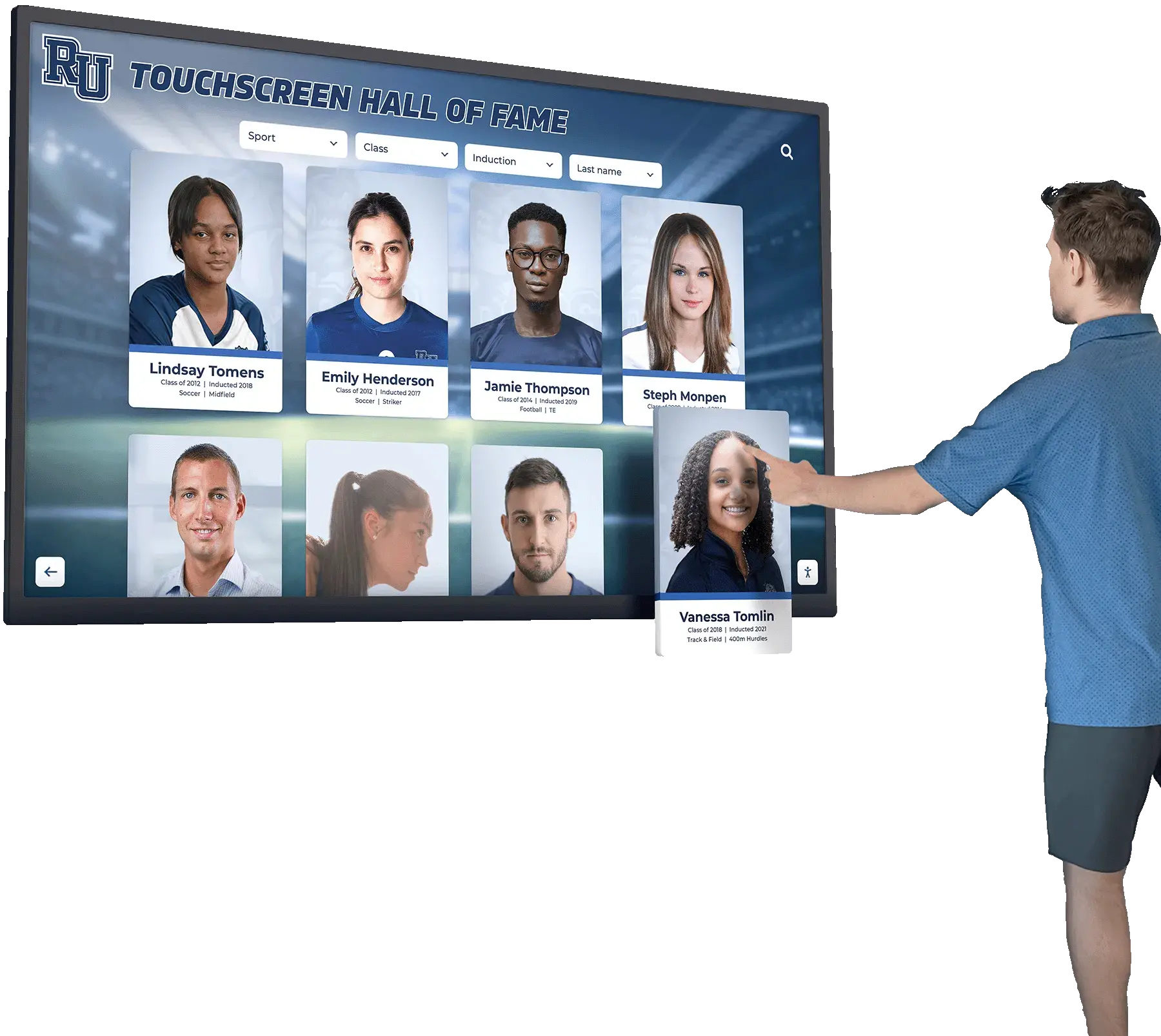
Modern touchscreen displays enable comprehensive exploration of teacher achievements, educational philosophies, and lasting impact
Modern Digital Recognition Solutions
Digital recognition displays overcome traditional limitations while creating engaging, comprehensive teacher celebration that remains easily updatable and infinitely expandable.
Interactive Touchscreen Displays
Solutions like Rocket Alumni Solutions provide purpose-built platforms for teacher recognition through interactive touchscreen displays installed in high-traffic school areas. These systems offer substantial advantages over traditional recognition approaches:
Unlimited Recognition Capacity: Digital platforms accommodate unlimited teacher profiles without physical space constraints. Schools can maintain complete historical records of every Teacher of the Year since program inception while adding new recipients annually without removal of past honorees.
Rich Multimedia Content: Unlike static plaques listing only names and years, digital profiles include:
- Professional photographs showcasing honored teachers
- Comprehensive biographical narratives detailing educational backgrounds and career journeys
- Teaching philosophy statements providing insight into educational approaches
- Specific accomplishment descriptions explaining recognition rationale
- Student testimonial videos or written reflections about teacher impact
- Classroom photos illustrating teaching environments and student engagement
- Award history documenting additional recognition beyond Teacher of the Year
- Career milestone timelines showing professional progression and achievements
This comprehensive content creates meaningful recognition communicating why teachers deserve honor rather than simply noting that recognition occurred.
Interactive Exploration Features: Touchscreen interfaces enable active engagement rather than passive viewing:
- Search functionality allowing students to find specific teachers or browse recognition
- Filtering by year, department, grade level, or other criteria
- Related content connections linking to school history or other achievements
- Social sharing capabilities enabling recognition promotion beyond physical displays
- Accessibility features including text-to-speech, adjustable text sizes, and high-contrast modes
Students exploring these displays actively engage with teacher achievements rather than passively glancing at static plaques, creating deeper appreciation and understanding.
Simple Content Management: Cloud-based content management systems enable recognition updates without technical expertise:
- Remote updates from any internet-connected device
- Intuitive drag-and-drop interfaces requiring no specialized training
- Scheduled publishing enabling advance preparation with automated release
- Multiple administrator accounts with role-based permissions
- Mobile-responsive design allowing management from smartphones or tablets
- Bulk import tools facilitating historical data entry
Schools report 85-90% reduction in time spent maintaining teacher recognition after implementing digital systems compared to traditional plaque-based approaches.
Strategic Placement Opportunities: Unlike bulky plaque walls requiring specific locations, digital displays work in various settings:
- Main lobby areas ensuring visibility to all building visitors
- Faculty lounge locations providing daily teacher viewing
- Media center or library installations reaching students during study periods
- Hallway locations outside administrative offices
- Multiple displays throughout large campuses ensuring comprehensive access
Some schools install multiple displays in different locations ensuring teacher recognition reaches diverse audiences rather than being limited to single-location viewing.
Web-Based Recognition Extensions
Teacher recognition should extend beyond physical campus to engage broader communities including families, alumni, and community members unable to visit schools regularly.
Online Recognition Platforms
Digital recognition displays with web access ensure Teacher of the Year recognition reaches unlimited audiences:
- Families can explore teacher achievements from home
- Alumni can discover which former teachers received recognition
- Community members can appreciate educational excellence without campus visits
- Teachers can share recognition links with family and friends nationwide
- Prospective families researching schools can see teaching quality evidence
Online platforms create permanent, accessible archives ensuring recognition remains available indefinitely rather than being limited to temporary physical displays or single ceremony moments.
Social Media Recognition Campaigns
Schools should leverage social media extending teacher recognition visibility:
- Announcement posts when Teacher of the Year recipients are selected
- Profile features highlighting recognized teachers’ accomplishments and impact
- Student testimonial videos or quotes celebrating honored educators
- Classroom activity photos showcasing teaching excellence in action
- Recognition ceremony photos capturing celebration moments
- Anniversary posts acknowledging past Teacher of the Year recipients
Strategic social media promotion ensures teaching excellence receives public celebration while raising community awareness about educator quality and dedication.
Newsletter and Communication Integration
Teacher recognition should feature prominently in regular school communications:
- Email newsletters profiling Teacher of the Year recipients
- Website homepage features celebrating recognized educators
- Community newspaper press releases announcing teacher recognition
- Parent organization publications highlighting teaching excellence
- Alumni communications connecting current recognition to historical programs
Systematic communication ensures teacher appreciation reaches all stakeholders rather than being limited to those attending recognition ceremonies.

Integrated recognition systems combining digital displays with traditional elements create comprehensive celebration spaces
Program Variations: Beyond Single Teacher of the Year Recognition
While individual Teacher of the Year programs provide important recognition, comprehensive teacher appreciation involves multiple programs acknowledging various forms of educational excellence.
Departmental or Grade-Level Teacher Recognition
Large schools might recognize outstanding teachers from each academic department or grade level rather than selecting single school-wide winners:
Department-Specific Recognition honors excellent teachers across all disciplines:
- English/Language Arts Teacher of the Year
- Mathematics Teacher of the Year
- Science Teacher of the Year
- Social Studies Teacher of the Year
- World Language Teacher of the Year
- Arts (Music, Visual Arts, Theater) Teacher of the Year
- Physical Education and Health Teacher of the Year
- Career and Technical Education Teacher of the Year
- Special Education Teacher of the Year
This approach ensures teaching excellence across all content areas receives recognition rather than potentially concentrating awards among traditional core subjects.
Grade-Level Recognition works well in elementary settings or large secondary schools:
- Early Elementary Teacher of the Year (K-2)
- Upper Elementary Teacher of the Year (3-5)
- Middle School Teacher of the Year (6-8)
- High School Teacher of the Year (9-12)
Grade-level recognition acknowledges the distinct challenges and teaching approaches required at different developmental levels.
Specialized Recognition Categories
Comprehensive teacher appreciation programs include specialized categories acknowledging diverse educational contributions:
New Teacher Excellence Awards recognize outstanding educators early in their careers who demonstrate exceptional promise, innovative approaches, rapid skill development, and positive impact despite limited experience. Academic recognition programs should celebrate emerging talent alongside veteran excellence.
Mentor Teacher Awards honor educators who excel at supporting colleagues through new teacher mentorship, instructional coaching, professional development leadership, and creating collaborative professional cultures.
Innovation in Education Awards celebrate teachers implementing creative instructional approaches, integrating technology effectively enhancing learning, developing original curriculum or assessment methods, and addressing educational challenges through novel solutions.
Community Partnership Awards recognize educators building exceptional family engagement programs, developing community partnerships providing student resources, connecting classroom learning to real-world applications through community involvement, and representing schools positively in broader communities.
Lifetime Achievement Recognition honors veteran educators approaching retirement who demonstrate sustained teaching excellence across long careers, significant positive impact on thousands of students, contributions to institutional tradition and culture, and exemplary professional dedication spanning decades.
Team and Collective Recognition
While individual recognition proves important, collaborative teaching excellence also deserves celebration:
Teaching Team of the Year honors groups collaborating exceptionally to serve students:
- Grade-level teaching teams in elementary settings
- Interdisciplinary teams in middle schools
- Department or professional learning communities in secondary schools
- Special education co-teaching partnerships
- Teacher-specialist teams integrating support services
Program Excellence Recognition celebrates comprehensive program success:
- Outstanding STEM program recognition
- Exemplary arts education program awards
- Exceptional career and technical education program honors
- Distinguished special education program recognition
- Outstanding English Language Learner program celebration
These collective recognition approaches acknowledge that educational excellence often results from collaborative efforts rather than individual achievement alone.

Recognition displays celebrating educational excellence inspire students while validating teacher dedication and impact
Best Practices for Sustainable Teacher Recognition Programs
Creating teacher recognition programs that remain meaningful, fair, and sustainable across years requires attention to several important practices:
Maintaining Selection Integrity
Recognition program credibility depends on stakeholder confidence in selection fairness and integrity:
Consistent Criteria Application: Selection committees must apply established criteria consistently across all nominees rather than allowing subjective impressions, personal relationships, or political considerations to influence decisions. Regular committee training on rubric application and bias awareness helps maintain consistency.
Rotation and Fresh Perspectives: Selection committee membership should rotate regularly ensuring fresh perspectives while preventing committee staleness or entrenched bias. Most programs rotate several committee members annually while retaining some continuing members maintaining institutional knowledge and continuity.
Documentation and Transparency: Programs should document selection rationales explaining why recipients were chosen based on established criteria. While individual nominee evaluation details remain confidential, general selection rationale communication helps others understand what teaching practices and contributions institutions value most.
Conflict of Interest Management: Clear policies should address conflict of interest when committee members have close relationships with nominees. Recusal procedures prevent inappropriate influence while maintaining selection integrity.
Addressing Non-Selection Sensitively: Programs should communicate thoughtfully with non-selected nominees who invested time and effort in applications. Brief feedback explaining selection committee perspectives helps nominees understand decisions while identifying growth areas for professional development.
Building Program Sustainability
Long-term program success requires systems ensuring recognition continues despite personnel changes or budget fluctuations:
Clear Program Documentation: Comprehensive program manuals documenting all procedures, criteria, timelines, and responsibilities ensure new administrators or committee members can maintain programs without reinventing processes annually. Documentation should include:
- Complete criteria and evaluation rubrics
- Nomination and selection process timelines
- Committee composition and recruitment procedures
- Communication templates and promotional materials
- Ceremony planning checklists and program templates
- Budget requirements and funding sources
- Historical program information and past recipient records
Designated Program Leadership: Assigning clear program coordination responsibility prevents important tasks from falling through cracks when everyone assumes someone else is handling details. Coordinators should receive appropriate time allocation recognizing that quality recognition programs require significant planning and management attention.
Adequate Budget Allocation: Recognition programs require funding for awards, ceremony expenses, promotional materials, and display maintenance. Programs should receive dedicated budget lines rather than depending on discretionary spending that might disappear during budget constraints.
Integration with School Calendar: Recognition programs work best when integrated systematically into annual school calendars rather than being planned ad hoc each year. Establishing consistent timing—for example, nominations in January, selection in February, and recognition during March or April—creates predictable routines ensuring adequate planning time.
Stakeholder Involvement: Broad stakeholder involvement through committee participation, nomination opportunities, and celebration attendance builds investment in program continuation. Programs enjoying wide support prove more sustainable than those perceived as administrative initiatives with limited broader engagement.
Continuous Program Improvement
Even successful recognition programs benefit from regular evaluation and refinement:
Participant Feedback: Schools should gather feedback from:
- Recognized teachers about their experience and program meaning
- All nominees regarding process fairness and communication quality
- Selection committee members about procedures and criteria effectiveness
- School community members about recognition visibility and celebration quality
This feedback identifies improvement opportunities while demonstrating commitment to program excellence.
Recognition Distribution Analysis: Programs should review recognition patterns over time examining whether certain departments, grade levels, demographic groups, or teacher types receive disproportionate recognition. While not every group should receive equal recognition regardless of merit, disproportionate patterns might indicate selection bias or criteria inadvertently favoring particular teaching contexts.
Comparison with Other Programs: Reviewing how other schools, districts, or states structure teacher recognition provides ideas for innovation and improvement. Professional conferences, educational publications, or staff recognition program resources offer inspiration for program enhancement.
Alignment with Educational Priorities: As educational priorities evolve, recognition criteria should align with current institutional values and strategic directions. For example, schools emphasizing culturally responsive teaching, social-emotional learning, or technology integration might add criteria recognizing excellence in these areas.
Creating Comprehensive Staff Recognition Cultures
While Teacher of the Year programs provide important recognition, comprehensive appreciation cultures extend beyond single annual awards to systematic appreciation of all educational professionals.
Multi-Faceted Recognition Approaches
Effective school cultures combine various recognition levels and types:
Frequent Informal Appreciation: Daily or weekly informal recognition through:
- Personal thank-you notes from administrators to staff members
- Shout-outs during staff meetings celebrating recent contributions
- Social media posts highlighting excellent teaching moments
- Student thank-you projects expressing appreciation to teachers
- Peer recognition programs enabling colleagues to acknowledge each other
Frequent informal recognition ensures appreciation remains constant rather than being limited to formal annual programs.
Monthly Recognition Programs: Regular monthly recognition provides consistent appreciation opportunities:
- Teacher of the Month rotating recognition programs
- Staff spotlight features in newsletters and communications
- Birthday or anniversary acknowledgments celebrating milestones
- Professional achievement recognition when teachers earn advanced degrees or certifications
- Community contribution acknowledgment when teachers participate in external service
Annual Recognition Programs: Year-end comprehensive recognition including:
- Teacher of the Year formal programs as described throughout this guide
- Years of service milestone recognition celebrating career longevity
- Retirement celebrations honoring career contributions
- Special achievement awards for particular accomplishments
- Team or department recognition for collective excellence
Comprehensive Support Staff Inclusion: Recognition cultures should extend beyond teachers to all educational professionals:
- Administrator of the Year recognition for school leaders
- Support Staff Excellence awards for office professionals, custodians, food service workers
- Paraprofessional awards honoring instructional assistants and support personnel
- Volunteer recognition celebrating community members supporting schools
- Partner organization appreciation acknowledging external support
Employee recognition programs celebrating all staff members create inclusive appreciation cultures valuing every role contributing to student success.
Integration with Professional Development
The most sophisticated recognition programs connect appreciation with professional growth:
Recognition-Based Learning Opportunities: Teacher of the Year recipients might receive:
- Conference attendance funding supporting continued professional development
- Leadership role opportunities mentoring colleagues or leading professional learning
- Reduced teaching loads enabling time for instructional innovation or research
- Participation in district or state leadership committees or task forces
- Sabbatical or externship opportunities for professional renewal
These opportunities demonstrate that recognition includes investment in honored teachers’ continued growth and development.
Showcasing Excellent Practice: Schools should leverage Teacher of the Year recognition for professional learning:
- Classroom observation opportunities where colleagues visit recognized teachers
- Demonstration lessons or professional development sessions led by honorees
- Video documentation of excellent instruction for professional learning resources
- Presentation opportunities at faculty meetings or professional development days
- Mentoring assignments pairing recognized teachers with colleagues seeking growth
This approach ensures recognition benefits extend beyond individual honorees to improve instruction throughout schools.
Recognition Pipeline Development: Programs should view recognition as one element in comprehensive professional development systems:
- New teacher support and mentoring preparing emerging educators
- Instructional coaching helping all teachers continuously improve
- Professional learning opportunities building skills across career stages
- Leadership development preparing teachers for formal and informal leadership
- Recognition celebrating achievement while inspiring continued excellence
This systematic approach creates cultures of continuous improvement where recognition celebrates achievement while inspiring ongoing professional growth.
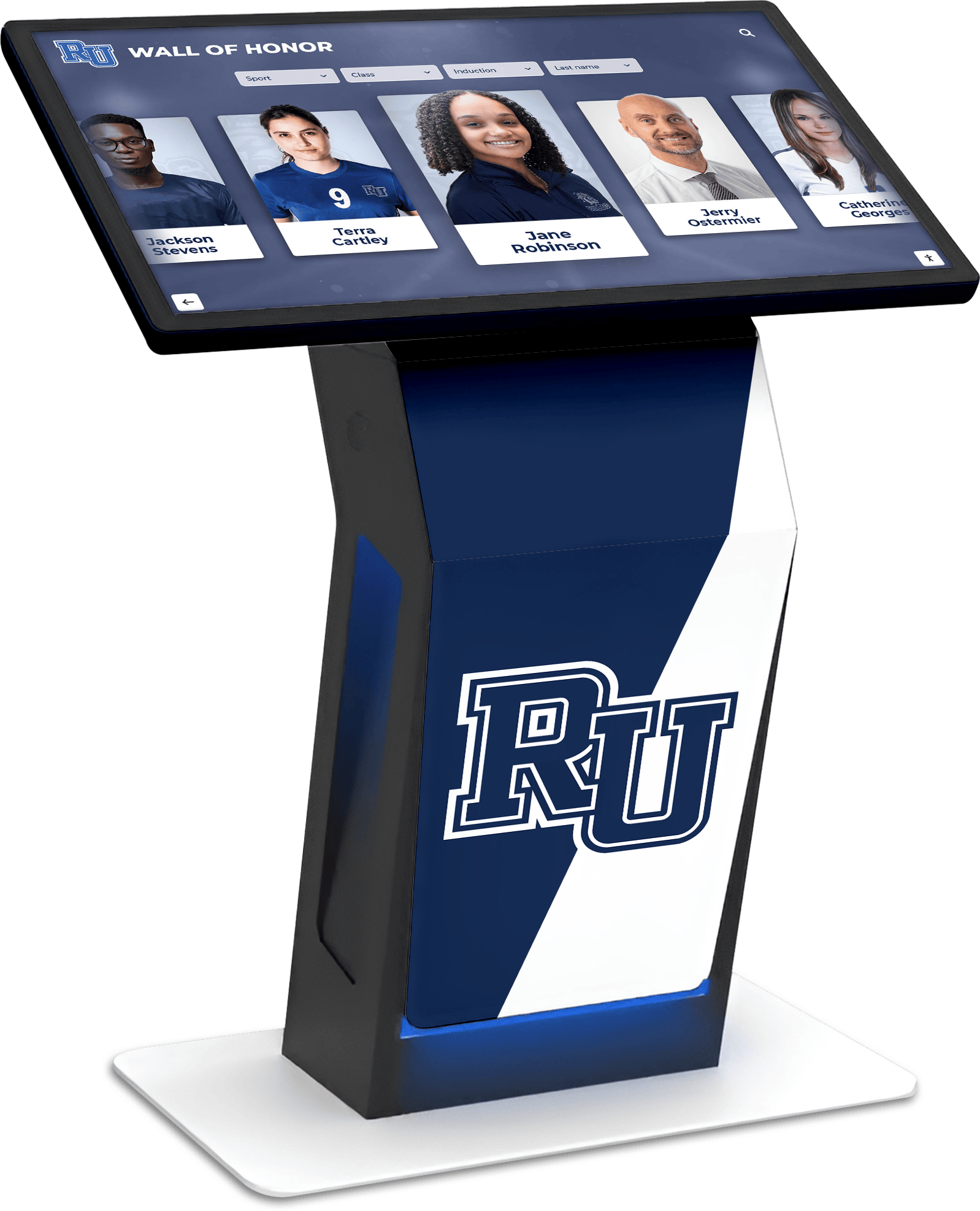
Modern recognition kiosks provide permanent, accessible celebration of teacher excellence while inspiring professional dedication
Measuring Teacher Recognition Program Impact
Systematic evaluation ensures recognition programs achieve intended purposes while justifying resource investment.
Quantitative Impact Indicators
Participation Metrics:
- Number of nominations received annually indicating program awareness
- Percentage of staff participating in nomination or selection processes
- Recognition ceremony attendance rates demonstrating community engagement
- Digital display interaction data showing recognition content engagement
- Web platform analytics measuring online recognition viewing
Retention and Recruitment Data:
- Teacher retention rates comparing recognized versus non-recognized educators
- Exit interview data identifying whether inadequate recognition influences departures
- Recruitment effectiveness measuring whether recognition programs help attract candidates
- Job satisfaction survey results correlating with recognition program quality
- Teacher referral data indicating whether staff recommend positions to colleagues
School Climate Measures:
- Staff morale indicators from climate surveys
- Professional culture measures assessing collaboration and mutual support
- Student perception data about teacher quality and engagement
- Family satisfaction levels with instructional quality and teacher dedication
- Community perception regarding educational excellence
Qualitative Impact Assessment
Stakeholder Perspectives:
- Recognized teacher testimonials about recognition meaning and impact
- Colleague reflections on how recognition programs influence professional culture
- Student statements about increased appreciation for teacher dedication
- Family feedback regarding program visibility and celebration quality
- Administrator observations about recognition program effectiveness
Cultural Indicators:
- Observable changes in staff professional behavior and engagement
- Increased participation in professional development or leadership opportunities
- Enhanced collaboration and professional community among faculty
- Greater willingness to innovate or take instructional risks
- Improved overall school climate and positive energy
Regular assessment enables data-informed program refinement ensuring teacher recognition remains meaningful, effective, and aligned with institutional goals.
Conclusion: Creating Lasting Appreciation for Teaching Excellence
Teacher of the Year award programs represent far more than ceremonial gestures—they create systematic frameworks for celebrating the educational excellence that transforms student lives while strengthening school communities. When designed thoughtfully and implemented consistently, these recognition programs validate teacher dedication, inspire professional excellence, demonstrate institutional appreciation, and build positive cultures where education receives the celebration it deserves.
The most successful programs combine clear selection criteria with transparent processes, meaningful celebration with lasting recognition, individual honor with systemic professional development, and traditional approaches with modern technology enabling comprehensive, engaging teacher appreciation that extends far beyond single ceremony moments.
Whether you’re launching your school’s first formal Teacher of the Year program, revitalizing recognition that’s lost meaning through routine implementation, or seeking to elevate already strong programs, the frameworks explored throughout this guide provide actionable strategies for creating teacher appreciation that truly honors educational excellence.
Modern digital recognition solutions enable schools to celebrate teacher achievement permanently through interactive displays that remain easily updatable, infinitely expandable, and deeply engaging. These platforms preserve institutional memory while honoring dedicated professionals who shape student futures and strengthen communities through their educational commitment.
Your teachers deserve recognition equal to their contributions. With thoughtful planning, genuine appreciation, and commitment to consistent implementation, you can create Teacher of the Year programs that honor educational excellence while building the positive, supportive professional culture where all educators thrive and students benefit from teaching quality that changes lives.
Ready to Elevate Your Teacher Recognition Programs?
Discover how Rocket Alumni Solutions can help you create engaging recognition displays that honor teaching excellence, celebrate educational dedication, and inspire pride throughout your school community year-round.
Schedule Your Free Consultation






























