Team GPA leaderboard digital displays represent a powerful intersection of athletic competition and academic excellence, creating visible recognition systems that celebrate the intellectual achievements of student-athletes. When athletic programs systematically showcase team academic performance alongside competitive accomplishments, they send clear messages that excellence extends beyond the playing field while providing motivation that drives both academic and athletic success.
Yet many athletic programs struggle to give academic achievement the same visibility as competitive victories. Academic accomplishments often receive minimal recognition—perhaps a mention in a newsletter, a brief announcement at a banquet, or static plaques that quickly become outdated. Meanwhile, game scores, championships, and individual athletic records dominate display spaces, unintentionally suggesting that academic performance holds secondary importance.
This comprehensive guide explores how team GPA leaderboard digital displays transform academic recognition within athletic programs, creating dynamic systems that motivate student-athletes, strengthen program cultures, and demonstrate the commitment to developing well-rounded individuals who excel both academically and competitively.
The most successful athletic programs recognize that academic and competitive excellence are complementary rather than competing priorities. Team GPA leaderboards make intellectual achievement visible, celebrated, and central to program identity—creating environments where student-athletes take pride in their classroom performance with the same intensity they bring to competition.
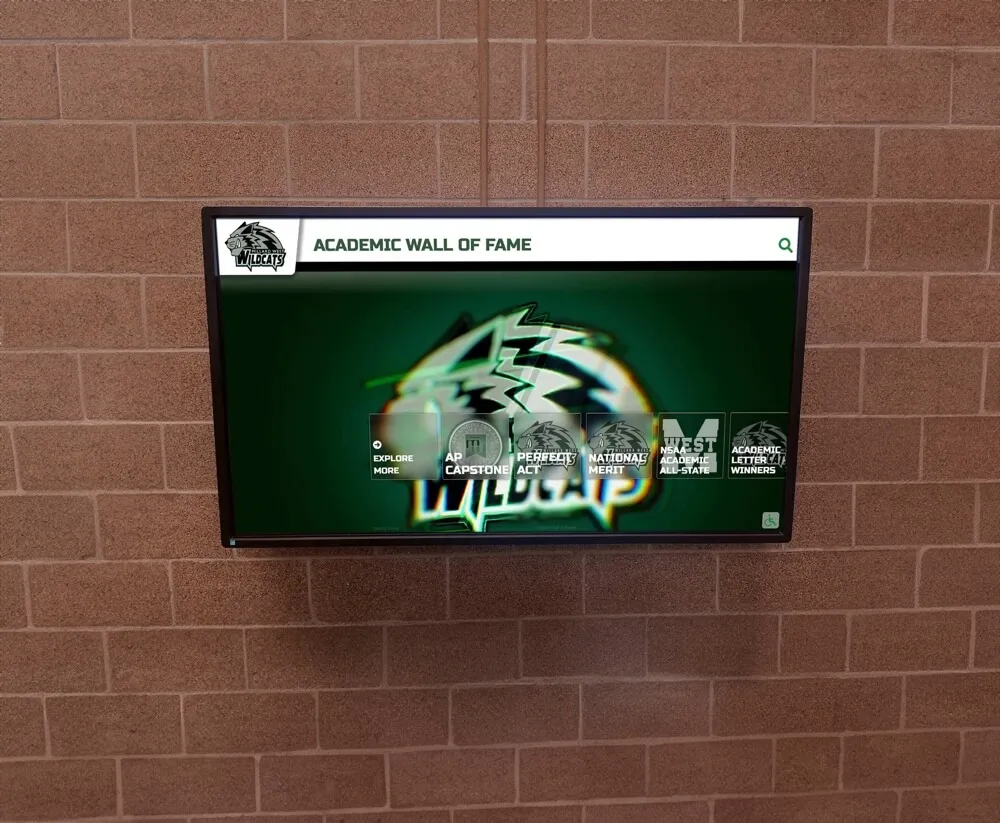
Modern digital displays make team academic achievements as visible and celebrated as competitive records
The Critical Importance of Academic Excellence in Athletic Programs
Understanding why academic performance matters for athletic programs helps institutions design recognition systems that create meaningful impact.
NCAA Academic Requirements and Eligibility Standards
Academic performance directly affects student-athletes’ ability to compete, making team GPA tracking essential for program success:
Initial Eligibility Requirements According to NCAA eligibility standards, high school student-athletes must meet specific academic thresholds to compete at the collegiate level:
- Division I requires a core course GPA of 2.3 or higher
- Division II requires a core course GPA of 2.2 or higher
- Students must complete 16 approved NCAA core courses during high school
- The 10/7 rule requires completion of 10 core courses before senior year, with seven in English, math, or science
Continuing Eligibility Standards Collegiate student-athletes must maintain ongoing academic performance:
- Division I requires 90% of minimum institutional GPA by year two, 95% by year three, and 100% (typically 2.0) by year four
- Division II requires 1.8 GPA after 24 hours, 1.9 after 48 hours, and 2.0 after 72 hours
- Student-athletes must complete 40% of degree requirements by end of year two, 60% by year three, and 80% by year four
These requirements make team academic performance not just an ideal, but a practical necessity for athletic program sustainability.
Academic Success as Competitive Advantage
Strong team academic performance provides athletic programs with multiple competitive benefits:
Recruitment Advantages
- Academic excellence reputation attracts high-performing student-athletes
- Strong academic programs appeal to families prioritizing education
- Academic recognition differentiates programs during recruitment
- College preparedness demonstrations support recruiting conversations
- Academic culture visibility influences prospect decision-making
Program Stability and Depth
- Higher team GPAs correlate with better retention rates
- Academic eligibility maintenance ensures roster stability
- Reduced academic issues minimize competitive disruptions
- Consistent eligibility enables long-term team development
- Academic success reduces administrative burden on coaching staff
Research consistently demonstrates that teams with higher collective GPAs experience fewer academic eligibility issues, lower attrition rates, and stronger program stability over time. Creating visible recognition of team academic performance reinforces the behaviors that generate these competitive advantages.
Building Positive Program Culture Through Academic Recognition
Team GPA leaderboards contribute to comprehensive program culture development:
Identity Formation
- Academic recognition shapes how student-athletes define success
- Visible academic achievement creates balanced program identity
- Intellectual excellence becomes integrated into team culture
- Academic pride develops alongside competitive pride
- Recognition demonstrates institutional values and priorities
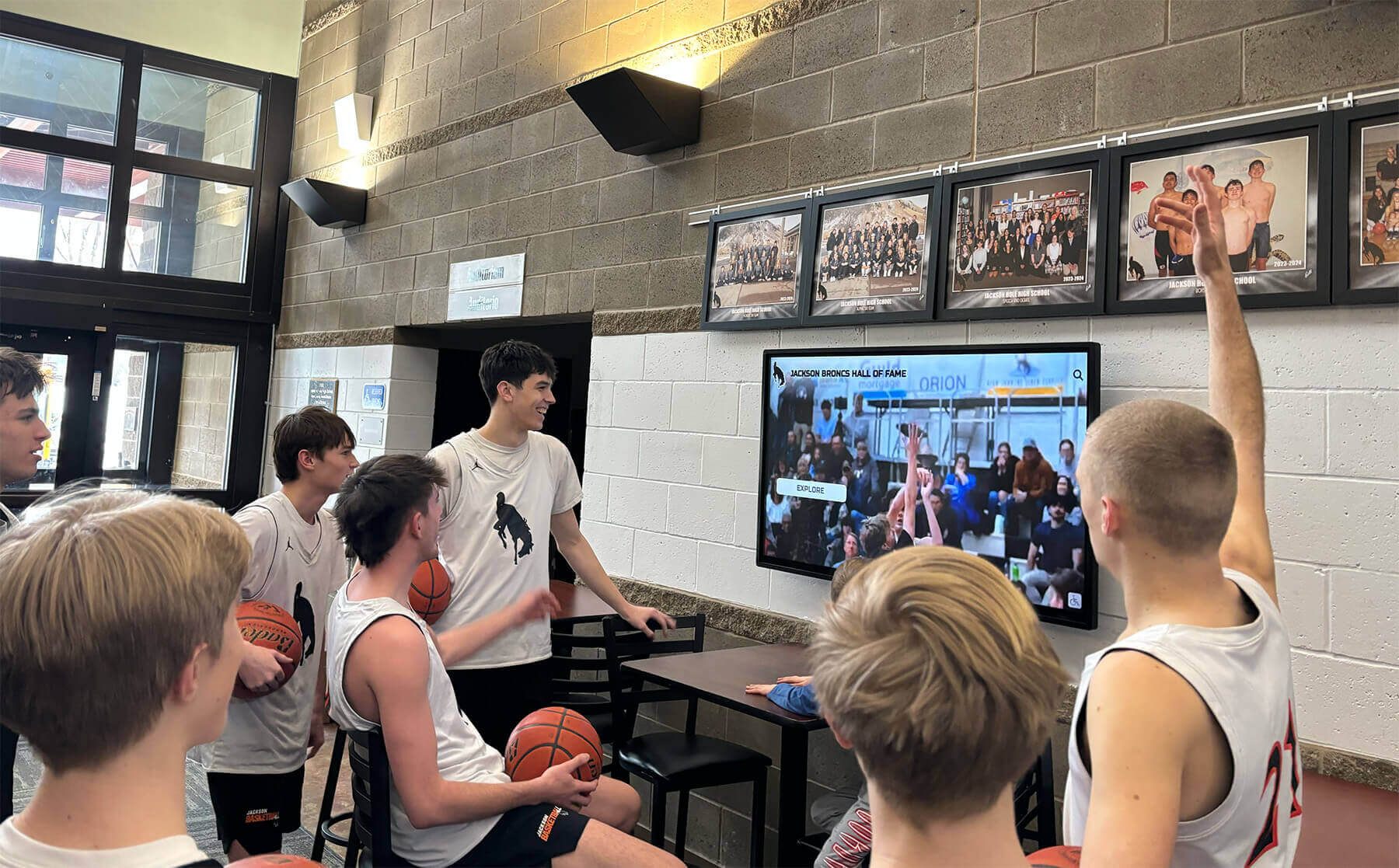
Interactive displays create opportunities for student-athletes to engage with both athletic and academic achievements
Peer Influence and Accountability
- Public recognition creates positive peer pressure toward academic excellence
- Team academic standings encourage collective responsibility
- Visible performance comparisons motivate improvement efforts
- Academic competition between teams drives achievement
- Recognition reinforces academic expectations as team norms
Athletic programs with prominent team GPA displays consistently report stronger academic cultures, with student-athletes describing academic performance as integral to team identity rather than separate obligation.
Designing Effective Team GPA Leaderboard Systems
Successful team GPA leaderboards require thoughtful design that maximizes motivation while maintaining appropriate privacy and inclusivity.
Recognition Categories and Metrics
Comprehensive team GPA systems recognize multiple dimensions of academic achievement:
Overall Team GPA Rankings The primary leaderboard displays cumulative team academic performance:
- Semester or term GPA for current academic performance
- Cumulative academic year GPA showing sustained achievement
- Multi-year GPA tracking demonstrating long-term excellence
- Sport-specific comparisons showing relative performance
- Gender-based categories (men’s and women’s teams)
This overall ranking creates clear visibility into which teams excel academically while providing motivation for all teams to improve their standing.
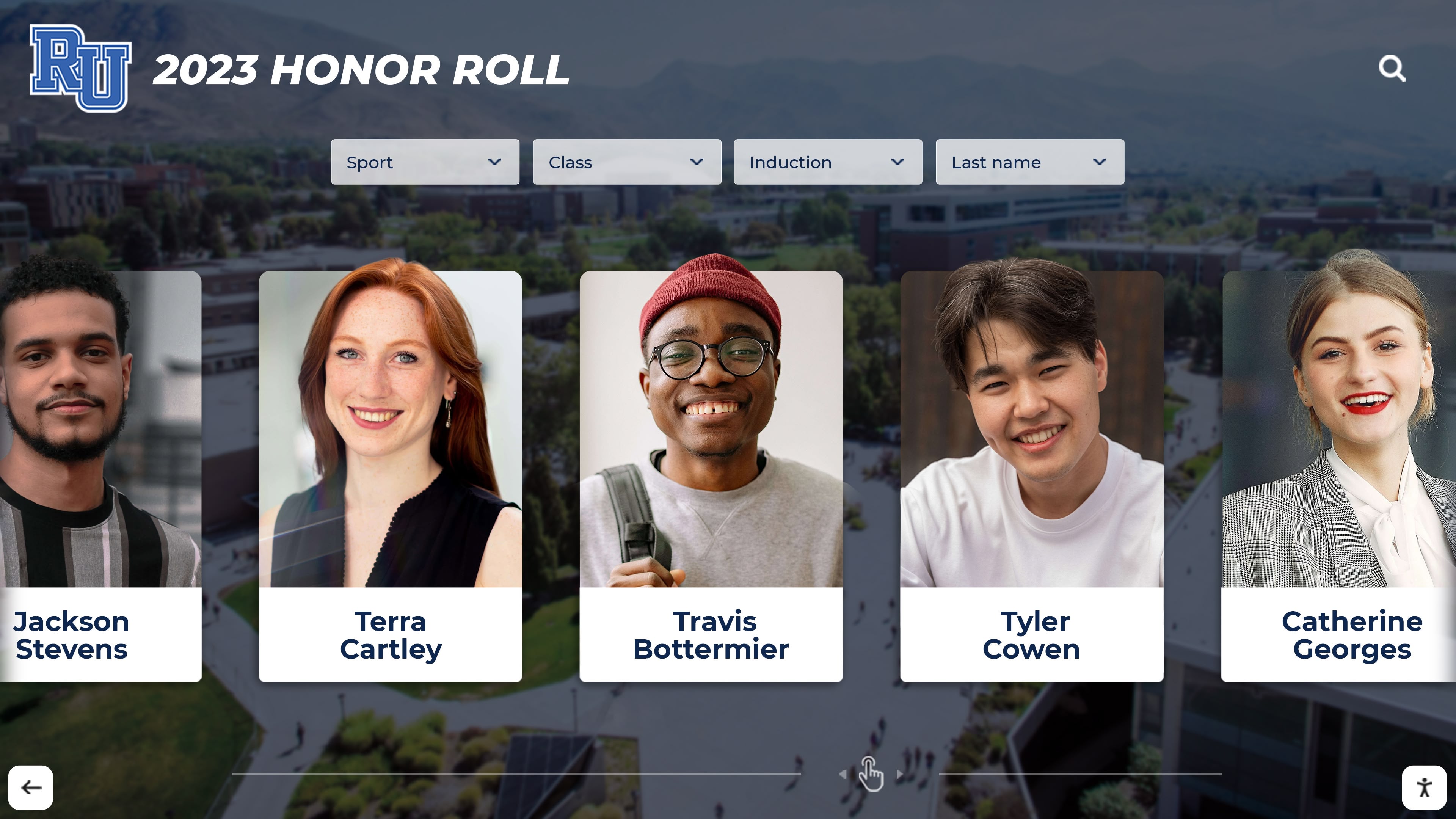
Digital systems can showcase both team performance and individual academic achievements
Academic Achievement Awards Beyond rankings, recognition programs should include achievement thresholds:
- Presidential Honor Teams: Teams achieving 3.5+ cumulative GPA
- Dean’s List Teams: Teams achieving 3.0-3.49 cumulative GPA
- Academic All-Conference: Teams meeting conference academic standards
- NCAA Academic Progress Rate (APR) milestone achievements
- 100% Team GPA Eligibility: All team members meeting minimum academic standards
These threshold recognitions ensure teams receive acknowledgment even when not atop the leaderboard, creating multiple achievement opportunities.
Improvement and Growth Recognition Celebrating academic progress motivates continued development:
- Most improved team GPA semester-over-semester
- Largest year-over-year GPA increase
- Individual student-athlete GPA improvement
- Team GPA milestone achievements (first time above 3.0, etc.)
- Sustained improvement over multiple terms
Growth recognition ensures teams starting from different academic baselines receive appropriate acknowledgment for progress.
Individual Academic Excellence Within Teams Team leaderboards should connect to individual achievement recognition:
- Individual academic all-conference selections
- Student-athletes achieving perfect 4.0 GPAs
- Dean’s list and president’s list individual recognition
- Academic All-American selections
- Departmental academic awards and honors
This individual recognition within team context demonstrates how individual excellence contributes to collective achievement.
Explore comprehensive approaches in academic recognition programs that integrate team and individual acknowledgment.
Privacy Considerations and Appropriate Display
While celebrating academic achievement, programs must balance recognition with privacy considerations:
Team-Level Data Primacy Display aggregate team performance rather than individual student grades:
- Team GPA averages without individual grade disclosure
- Percentage of team members achieving various honor levels
- Team academic achievement awards and certifications
- Collective academic milestones and accomplishments
- Team standings in various academic categories
This approach celebrates achievement while respecting individual privacy around specific academic performance.
Opt-In Individual Recognition For individual academic recognition, establish clear consent processes:
- Student-athlete agreement for public academic recognition
- Specific permission for GPA disclosure when required
- Control over which achievements receive public acknowledgment
- Family Educational Rights and Privacy Act (FERPA) compliance
- Clear policies documented and consistently applied
Most student-athletes enthusiastically agree to academic recognition, but establishing formal permission processes ensures compliance and respect.
Sensitive Performance Handling Design systems that motivate without shaming underperforming teams:
- Focus messaging on celebration rather than criticism
- Highlight improvement and growth alongside absolute performance
- Ensure all teams have recent achievements to celebrate
- Rotate featured content preventing prolonged focus on struggling teams
- Provide resources and support for academic improvement
The goal is creating motivation through positive recognition rather than punitive comparison.
Implementation: Creating Digital Team GPA Leaderboard Displays
Modern digital display technology makes comprehensive team academic recognition practical, visually compelling, and easily maintainable.
Display Technology and Placement Strategy
Effective implementation begins with appropriate hardware and strategic positioning:
Display Hardware Selection Choose technology appropriate for your athletic facilities:
- Commercial-Grade Displays: 55"-75" touchscreen displays for high-traffic areas
- Video Wall Configurations: Multi-screen installations for comprehensive data presentation
- Kiosk Systems: Freestanding interactive stations in athletic buildings
- Integrated Displays: Screens within existing trophy cases or recognition walls
- Mobile-Responsive Web Displays: Online access extending reach beyond physical campus
Solutions like Rocket Alumni Solutions provide purpose-built athletic recognition systems integrating academic and competitive achievements.
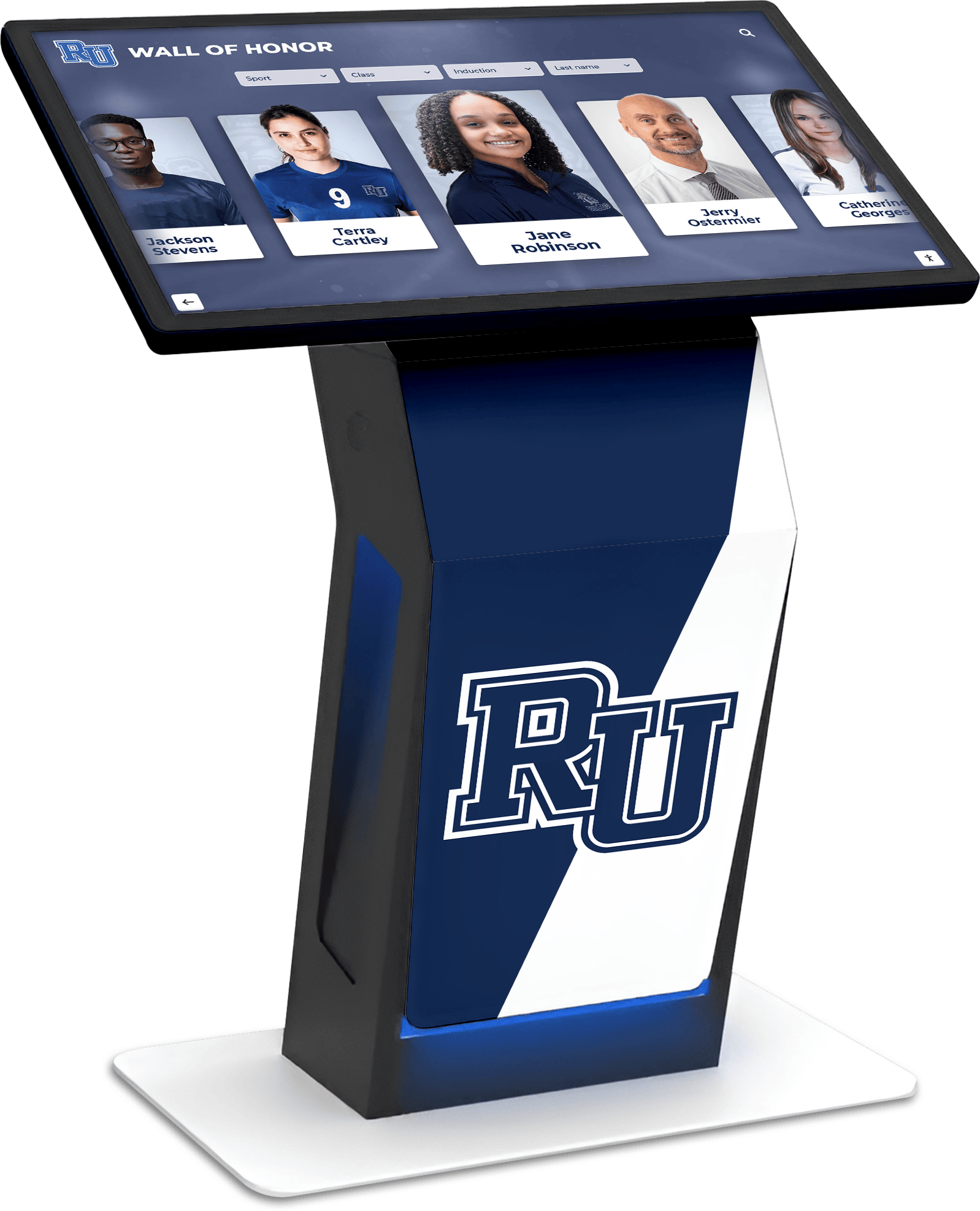
Interactive kiosks enable student-athletes to explore team academic achievements and individual recognition
Strategic Display Placement Location dramatically affects recognition program impact:
- Athletic Facility Entrances: First impression positioning emphasizing academic priorities
- Locker Room Areas: Daily visibility reinforcing academic importance
- Team Meeting Spaces: Integration into regular team gatherings
- Training and Weight Rooms: Constant exposure during athletic preparation
- Main Campus Corridors: Broader institutional visibility beyond athletic community
The most effective programs deploy multiple displays throughout athletic facilities, creating consistent reinforcement of academic excellence expectations.
Content Management and Update Systems
Sustainable recognition programs require efficient content management:
Cloud-Based Management Platforms Modern systems eliminate administrative burden through intuitive interfaces:
- Remote updates from any internet-connected device
- Scheduled publishing for automatic semester updates
- Bulk data import from student information systems
- Template-based content creation requiring no design skills
- Multi-user access with role-based permissions
Administrative staff report 85-90% reduction in time spent maintaining academic displays after implementing digital systems compared to traditional approaches.
Data Integration Capabilities The most efficient systems connect with existing institutional data:
- Integration with student information systems for GPA data
- Connection to athletic department management software
- Automated data synchronization reducing manual entry
- Compliance with privacy standards and access controls
- Audit trails tracking data access and updates
These integrations ensure accuracy while minimizing administrative workload.
Content Design and Visual Presentation Effective displays combine data with engaging visual design:
- Team logos and brand colors creating visual identity
- Dynamic rankings showing current standings
- Historical trend data demonstrating progress over time
- Featured team spotlights with detailed achievement descriptions
- Individual student-athlete highlights within team context
The visual presentation should match the quality and professionalism of competitive achievement displays, signaling equal importance.
Learn about comprehensive recognition display implementation in digital trophy wall guides.
Real-Time Updates and Dynamic Content
Digital displays enable current information impossible with traditional recognition:
Semester and Term Updates Configure systems for automatic refresh aligned with academic calendar:
- End-of-semester GPA updates posted automatically
- Mid-term academic standing refreshes
- Real-time individual achievement announcements
- Rolling historical data showing multi-year trends
- Scheduled content rotation highlighting different achievements
This currency ensures recognition remains relevant and engaging rather than becoming stale background noise.
Achievement Announcements Create excitement around academic milestones:
- Immediate recognition when teams achieve new GPA milestones
- Countdown displays building anticipation for semester results
- Celebration graphics when teams earn academic honors
- Feature spotlights on teams showing exceptional improvement
- Historical comparison showing current performance context
These dynamic updates create engagement similar to competitive achievement announcements.
Interactive Features Driving Engagement
Modern touchscreen systems transform passive displays into engaging experiences:
Exploration and Discovery Interactive features enable deeper engagement:
- Touch navigation through detailed team information
- Historical data exploration showing multi-year trends
- Individual student-athlete academic profiles
- Filtering and search capabilities
- Comparison tools analyzing team performance
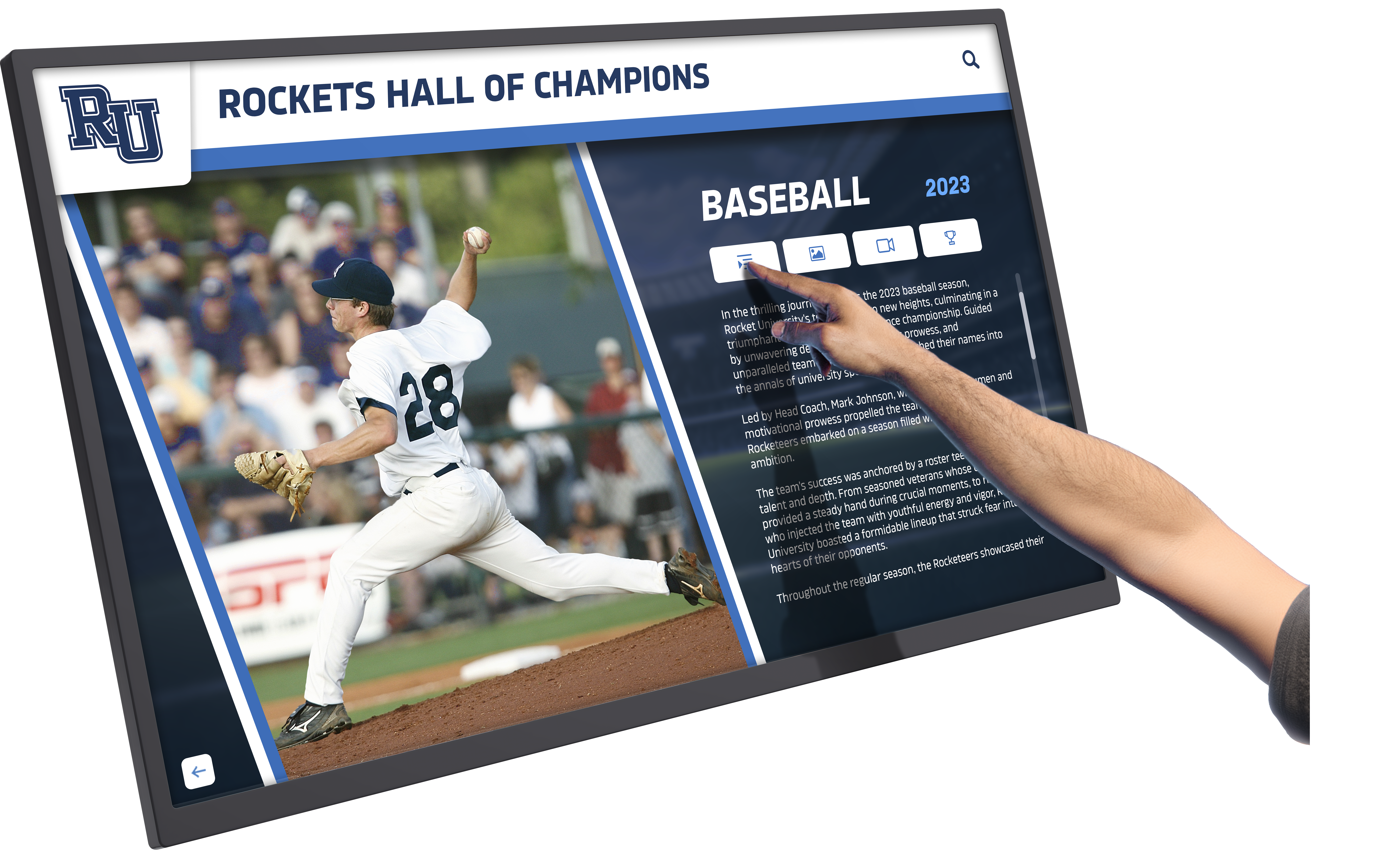
Touchscreen interfaces make exploring team academic and athletic achievements intuitive and engaging
Social Sharing Integration Enable student-athletes to celebrate achievements:
- One-click sharing of team academic honors to social media
- Individual academic achievement announcements
- Customizable graphics for social platforms
- Hashtag integration for broader visibility
- Mobile-optimized displays for smartphone access
Student-athletes report high engagement with shareable academic recognition content, particularly when visual presentation quality matches their expectations.
Motivational Strategies Through Team GPA Displays
Beyond simple data presentation, strategic design maximizes motivational impact.
Competitive Framing and Gamification
Leverage competitive drive to promote academic excellence:
Intra-Institutional Competition Create internal athletic department academic competitions:
- Athletic Director’s Cup: Year-long competition combining athletic and academic performance
- President’s Trophy: Awarded to team with highest semester GPA
- Academic All-Sports Championship: Points awarded for various academic achievements
- Rivalry Competitions: Head-to-head academic challenges between comparable sports
- Weekly Recognition: Rotating spotlight on current academic leaders
These competitions channel competitive energy toward academic excellence with same intensity student-athletes apply to sport.
Conference and Regional Comparisons When appropriate data is available, broader comparisons provide context:
- Conference academic standings and team comparisons
- Regional or state rankings among similar institutions
- National academic honor recognition (when achieved)
- Historical comparisons with program’s own records
- Aspirational benchmark comparisons with academic powerhouses
External comparisons help student-athletes understand their performance within broader competitive context.
Progress Tracking and Visualization Make improvement visible and celebrated:
- Semester-by-semester trend lines showing GPA trajectories
- Distance to next achievement threshold displays
- Improvement percentage calculations from previous terms
- Historical best performance comparisons
- Goal progress indicators for team academic targets
Visual progress representations create motivating feedback that reinforces positive behaviors.
Recognition Beyond the Display
Team GPA leaderboards should integrate with comprehensive recognition programs:
Ceremony and Event Recognition Incorporate academic achievement into athletic recognition events:
- Academic awards presented at athletic banquets
- Pre-game recognition of academic all-conference selections
- Facility naming or dedication honoring academic excellence
- Championship celebration inclusion of academic achievements
- Media day and promotional event academic highlights
This integration demonstrates that academic excellence is integral to athletic program identity.
Tangible Recognition Items Supplement digital displays with traditional recognition:
- Academic achievement patches for uniforms or gear
- Academic honor cords or stoles for senior recognition
- Team academic championship banners
- Individual plaques or certificates
- Academic achievement inclusion in media guides
The combination of digital visibility and traditional recognition creates comprehensive acknowledgment.
Explore balanced recognition approaches in honor roll recognition displays that integrate multiple formats.
Case Applications Across Educational Levels
Team GPA leaderboard strategies adapt to different institutional contexts and competitive levels.
High School Athletic Programs
Secondary school programs build college readiness through academic recognition:
Academic Eligibility Emphasis High school displays should highlight college preparation:
- NCAA eligibility GPA tracking and milestone achievement
- College core course GPA calculation and display
- Academic progress toward college eligibility standards
- Scholarship GPA requirement awareness
- College admission academic preparation
This forward-looking approach helps student-athletes understand academic performance consequences for future opportunities.
Multi-Sport Athlete Recognition High school programs should accommodate athletes competing in multiple sports:
- Individual cumulative GPA displayed across all sports participation
- Multi-sport academic achievement special recognition
- Seasonal sport academic performance tracking
- Year-round academic excellence acknowledgment
- Transition support between sport seasons
Comprehensive tracking ensures athletes receive appropriate recognition across their complete athletic participation.
Parent and Community Engagement High school displays should facilitate family involvement:
- Family-friendly viewing locations in accessible areas
- Parent night recognition events featuring displays
- Social media integration for family sharing
- National Honor Society integration showing broader academic achievement
- Community media partnership announcements
Family engagement strengthens academic support systems essential for student-athlete success.
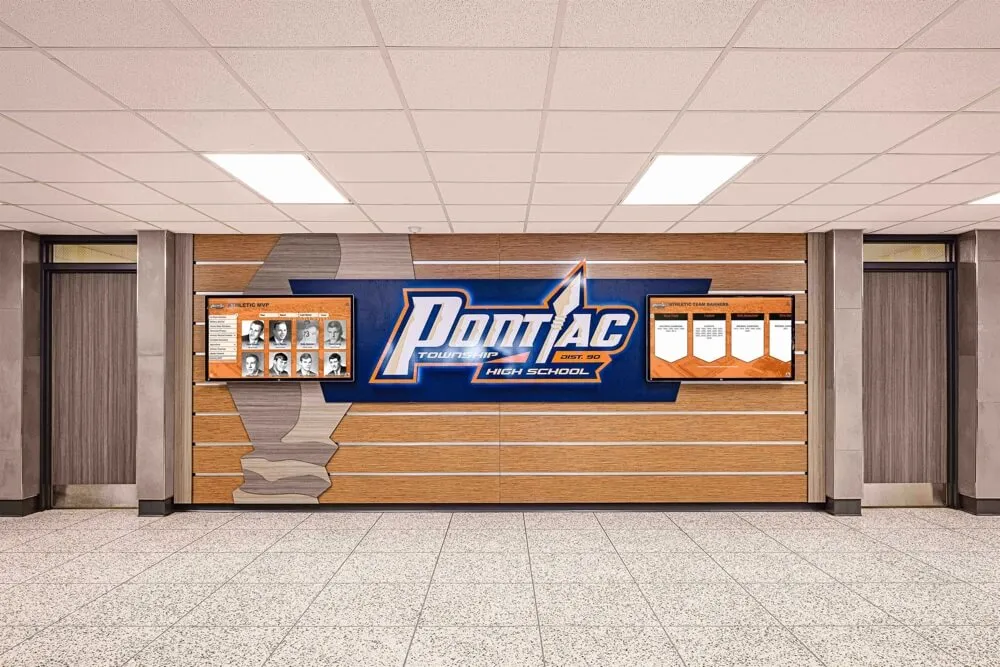
High school athletic programs integrate academic recognition into comprehensive honor walls celebrating all forms of achievement
Collegiate Athletic Programs
College and university programs demonstrate institutional academic commitment:
APR and Graduation Rate Display Division I and II programs should showcase NCAA Academic Progress Rate:
- Team APR scores and historical trends
- Departmental aggregate APR performance
- NCAA recognition and awards for academic excellence
- Graduation Success Rate (GSR) data
- Federal Graduation Rate (FGR) comparisons
These metrics demonstrate program commitment to student-athlete academic success and degree completion.
Academic Major Distribution Collegiate displays can showcase intellectual diversity:
- Team academic major representations
- Departmental distribution across athletic department
- Challenging major completion recognition
- Graduate degree pursuit acknowledgment
- Career preparation and professional school advancement
This content demonstrates the comprehensive educational experience provided to student-athletes.
Division-Specific Recognition Programs Align displays with division-specific academic programs:
- Division I Academic All-America recognition
- Division II Elite 90 Award recipients
- Division III academic honor societies
- Conference academic achievement awards
- National association academic recognitions
Understanding division-specific programs in contexts like Division I athletics or JUCO athletics helps programs design appropriate recognition.
Youth and Club Sports Programs
Non-scholastic programs can leverage academic recognition:
Academic Eligibility Requirements Many club programs establish academic performance standards:
- Minimum GPA requirements for team participation
- Report card review and academic standing verification
- Academic probation policies and support
- Recognition for academic excellence beyond minimums
- Academic improvement celebration and support
Team GPA displays reinforce that academic performance matters even in non-school sports contexts.
College Preparation Focus Elite club programs preparing athletes for college competition:
- College academic requirement education
- GPA tracking toward college eligibility standards
- College admission support and guidance
- Academic profile development for recruiting
- Scholarship academic requirement awareness
These programs position academic excellence as essential to college athletic opportunities.
Comprehensive Athletic Academic Excellence Programs
Team GPA leaderboards work best within holistic academic support systems.
Academic Support Services Integration
Displays should connect to resources helping student-athletes succeed:
Tutoring and Academic Assistance Recognition of academic support utilization:
- Acknowledgment of student-athletes actively using tutoring
- Academic support staff recognition
- Study hall participation tracking and recognition
- Peer tutoring program highlights
- Academic assistance resource information display
This integration normalizes academic support seeking as strength rather than weakness.
Mentorship and Advisory Programs Recognition of faculty and staff supporting student-athletes:
- Faculty mentor acknowledgment and appreciation
- Academic advisor recognition and partnership
- Career counselor contribution acknowledgment
- Alumni mentor program highlights
- Community academic supporter recognition
These recognitions demonstrate that academic success results from comprehensive support systems.
Learn about student mentorship programs that support academic excellence.
Time Management and Life Skills Development
Academic success requires skills beyond intelligence:
Life Skills Recognition Acknowledge development of success competencies:
- Time management excellence recognition
- Study skill development and application
- Goal-setting and achievement tracking
- Leadership in academic contexts
- Service learning and community engagement
Comprehensive recognition demonstrates that student-athlete development extends beyond sport and GPA.
Career Development Integration Connect academic achievement to future success:
- Internship and career experience recognition
- Professional certification achievement
- Graduate school acceptance and attendance
- Career placement and success stories
- Alumni career achievement highlights
This connection helps student-athletes understand academic performance as foundation for life success rather than short-term requirement.
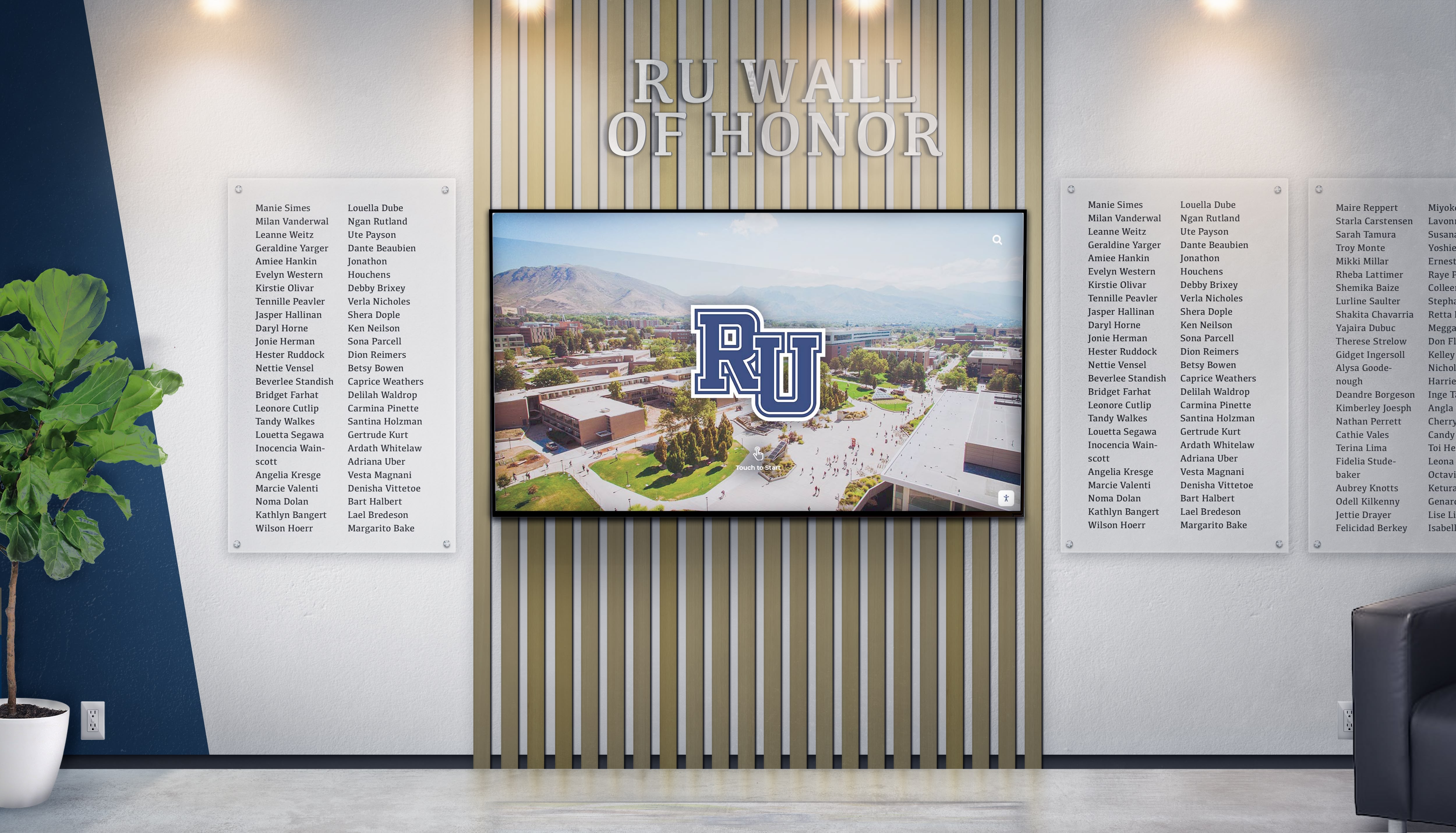
Comprehensive recognition systems integrate academic, athletic, and career achievements into unified displays
Measuring Impact and Program Effectiveness
Systematic assessment ensures team GPA displays achieve intended outcomes.
Quantitative Performance Metrics
Track measurable indicators of program success:
Academic Performance Trends Monitor actual GPA and academic achievement:
- Semester-by-semester team GPA trends across all sports
- Percentage of teams achieving various honor thresholds
- Individual student-athlete GPA distribution changes
- Academic eligibility rate tracking over time
- Academic probation and warning rate trends
Rising GPAs and improved academic standing distribution indicate successful recognition programs.
Engagement and Awareness Metrics Measure how student-athletes interact with displays:
- Digital display interaction frequency and duration
- Touch points and navigation patterns for interactive systems
- Web-based display access and page view statistics
- Social media sharing frequency and reach
- Survey responses measuring recognition program awareness
High engagement indicates displays successfully capture attention and create meaningful interaction.
Behavioral Outcome Indicators Track behaviors associated with academic focus:
- Study hall attendance and academic support utilization
- Tutoring service usage among athletes
- Academic advising appointment frequency
- Library and academic resource usage
- Class attendance rates for student-athletes
Improvements in these areas suggest recognition programs successfully motivate academic engagement.
Qualitative Assessment Approaches
Numeric data should supplement with contextual understanding:
Student-Athlete Feedback Gather direct input about recognition program impact:
- Surveys assessing motivation and academic focus influence
- Focus groups exploring recognition program perceptions
- Exit interviews with graduating student-athletes
- Anonymous feedback channels for honest assessment
- Suggestion mechanisms for program improvements
Student-athlete perspectives provide essential insights into what recognition elements create meaningful impact.
Coaching Staff Perspectives Coaches observe daily cultural impact:
- Assessment of team academic culture changes
- Observation of peer influence on academic performance
- Evaluation of recognition program management burden
- Feedback on recruitment impact and conversations
- Suggestions for recognition program enhancements
Coaching staff feedback ensures programs support rather than burden team operations.
Institutional and Community Response Broader stakeholder assessment provides additional perspective:
- Faculty perception of student-athlete academic commitment
- Administration assessment of athletic academic culture
- Alumni response to academic excellence emphasis
- Donor and supporter reactions to academic recognition
- Media coverage of academic achievements
Positive broader perception indicates recognition programs successfully communicate academic commitment beyond athletic community.
Explore comprehensive recognition program assessment in digital hall of fame implementation guides.
Budget Considerations and Funding Strategies
Team GPA leaderboard displays require investment, but multiple funding approaches make implementation accessible.
Display System Investment
Understanding cost components helps programs budget appropriately:
Hardware Costs Initial equipment investment typically includes:
- Commercial-grade touchscreen displays ($3,000-$8,000 per unit)
- Mounting hardware and installation ($500-$2,000)
- Network connectivity and infrastructure ($500-$1,500)
- Media players or computing hardware ($300-$1,000)
- Protective enclosures if needed ($500-$2,000)
Entry-level systems typically range $5,000-$12,000, while comprehensive multi-display installations may reach $20,000-$50,000.
Software and Content Management Ongoing platform costs support sustainable management:
- Content management system licensing ($1,200-$5,000 annually)
- Initial content development and design ($2,000-$10,000)
- Training and implementation support ($1,000-$3,000)
- Ongoing technical support and updates (included or $500-$1,500 annually)
- Hosting and data management (typically included)
Many providers like Rocket Alumni Solutions offer comprehensive packages bundling hardware, software, implementation, and support.
Funding Sources and Partnerships
Multiple funding approaches can support implementation:
Athletic Department Budget Programs may allocate recognition system costs from:
- Facility improvement and enhancement budgets
- Technology upgrade allocations
- Student-athlete success program funding
- Marketing and promotion budgets
- General athletic department operational funds
Presenting displays as recruitment and program culture investments helps justify allocation from various budget categories.
Fundraising and Donor Support Academic recognition appeals to specific donor interests:
- Alumni athlete donors valuing academic-athletic balance
- Academic-focused donors supporting student-athlete success
- Corporate sponsors emphasizing education values
- Foundation grants supporting educational technology
- Naming opportunities for major display installations
Comprehensive recognition systems that integrate athletic and academic achievement appeal to broad donor interests.
Booster Club and Support Organization Funding Athletic support organizations often prioritize projects benefiting student-athletes:
- Booster club major project initiatives
- Parent organization fundraising campaigns
- Alumni association partnership funding
- Community business sponsorship programs
- Service organization education support grants
Presenting team GPA displays as student-athlete academic support tools resonates with groups committed to comprehensive development.
Explore fundraising approaches in donor recognition wall strategies applicable to athletic program support.
Technical Considerations and Best Practices
Successful implementation requires attention to technical details ensuring reliable, sustainable operation.
Display Hardware Selection
Choose technology appropriate for athletic facility environments:
Environmental Considerations Athletic facilities present unique technical challenges:
- Temperature fluctuations in gyms and field houses
- Humidity concerns in pool and training facilities
- Physical impact risks in high-traffic athletic areas
- Dust and particulate in certain facility zones
- 24/7 operation requirements for consistent display
Commercial-grade displays designed for demanding environments ensure reliability and longevity.
Viewing Distance and Size Calculations Appropriate display sizing depends on viewing context:
- Corridor installations: 55"-65" displays for 6-10 foot viewing
- Large lobby areas: 75"-85" displays or video walls for 15+ foot viewing
- Kiosk applications: 43"-55" displays for direct interaction
- Outdoor covered areas: Bright displays (700+ nits) with weatherization
- Multiple display networks: Consistent sizing across location types
Proper sizing ensures content remains readable and engaging from typical viewing distances.
Network Infrastructure and Connectivity
Reliable operation requires appropriate network infrastructure:
Connectivity Requirements Digital displays need consistent network access:
- Wired ethernet providing most reliable connectivity (preferred)
- Wireless solutions appropriate for flexible installations
- Sufficient bandwidth for content updates and management
- Network security addressing display system access
- Remote management capability for off-hours updates
IT department partnership ensures network infrastructure adequately supports display systems.
Content Delivery and Updates Systems should support efficient content management:
- Cloud-based platforms enabling remote updates
- Scheduled content publishing for automatic refreshes
- Bulk update capabilities for semester transitions
- Caching ensuring display operation during network issues
- Multi-display management from single platform
Modern platforms make content updates simple enough for non-technical athletic staff.
Security and Privacy Compliance
Student academic data requires appropriate protection:
Data Security Measures Implement comprehensive security protocols:
- Secure authentication for content management access
- Role-based permissions limiting data access
- Encryption for data transmission and storage
- Audit logging tracking system access and changes
- Regular security updates and patch management
FERPA compliance requires systems protecting student educational records from unauthorized access.
Privacy Policy Alignment Ensure recognition programs comply with institutional policies:
- Written policies defining public display of academic information
- Student-athlete consent documentation for recognition
- Clear procedures for opt-out requests
- Compliance review by institutional privacy officers
- Regular policy review and staff training
Proactive privacy management prevents compliance issues while maintaining appropriate recognition.
Advanced Features and Future Enhancements
As programs mature, additional features enhance impact and engagement.
Predictive Analytics and Goal Setting
Advanced systems can provide forward-looking insights:
GPA Projection and Forecasting Help student-athletes understand trajectory:
- Current GPA impact on semester and cumulative calculations
- Grade scenarios showing path to various GPA thresholds
- NCAA eligibility projection based on current performance
- Graduation requirement progress tracking
- Academic improvement goal setting and tracking
These tools transform recognition systems from retrospective celebration to prospective planning support.
Team Performance Predictions Support team academic goal setting:
- Projected team GPA based on current individual performance
- Threshold achievement probability calculations
- Historical trend-based forecasting
- Academic competition standing predictions
- Resource allocation recommendations for academic support
Coaching staff can use projections to identify teams needing additional academic support intervention.
Integration With Athletic Performance Data
Create comprehensive student-athlete profiles:
Unified Achievement Displays Combine academic and athletic accomplishments:
- Side-by-side academic and competitive achievement display
- Correlation analysis between academic and athletic performance
- Comprehensive student-athlete profiles including all achievements
- Career tracking combining sport and academic progression
- Alumni success stories showcasing life after athletics
This integration demonstrates that academic and athletic excellence complement rather than compete.
Performance Correlation Analysis When appropriate, explore relationships between academic and competitive success:
- Team GPA correlation with competitive winning percentage
- Individual academic performance relationship with athletic metrics
- Time management skill indicators across both domains
- Leadership consistency between academic and athletic contexts
- Success pattern identification and sharing
While correlation doesn’t imply causation, patterns can provide interesting insights about excellence development.
Artificial Intelligence and Personalization
Emerging technologies will enable more sophisticated recognition:
Personalized Content Display AI-driven systems could customize recognition:
- Individual student-athlete recognition relevant to their achievements
- Team-specific content when team members approach display
- Adaptive content based on viewer interaction patterns
- Recommendation engines suggesting relevant achievement exploration
- Predictive content scheduling based on engagement analytics
These features remain emerging but represent future recognition system capabilities.
Natural Language Interaction Voice-enabled exploration could enhance accessibility:
- Voice command navigation through achievement content
- Audio description of visual recognition content
- Conversational queries about team academic performance
- Accessibility enhancement for visually impaired users
- Hands-free interaction in facility contexts
As voice interface technology matures, integration with recognition displays will enhance usability.
Conclusion: Creating Academic Excellence Culture Through Recognition
Team GPA leaderboard digital displays represent strategic investments in student-athlete development, program culture, and institutional mission fulfillment. When athletic programs systematically celebrate intellectual achievement with the same visibility and enthusiasm as competitive victories, they create environments where academic excellence becomes central to athletic identity rather than external obligation.
The strategies explored in this guide provide comprehensive frameworks for implementing recognition systems that motivate student-athletes, strengthen program cultures, and demonstrate commitment to developing well-rounded individuals. From digital display technology that overcomes space constraints to strategic design that leverages competitive drive for academic motivation, these approaches transform academic acknowledgment from occasional token gestures to systematic celebration woven throughout program culture.
Transform Your Athletic Program's Academic Recognition
Discover how digital team GPA leaderboards and comprehensive academic recognition systems can strengthen your program culture and celebrate the complete student-athlete experience.
Explore Recognition SolutionsBuilding effective team GPA recognition requires moving beyond limiting assumptions that academic and athletic excellence compete for limited attention. Digital platforms make comprehensive recognition achievable across unlimited teams and achievement categories, while strategic implementation ensures consistent visibility reinforcing institutional values.
Start where you are with recognition programs you can implement immediately, then systematically expand to create comprehensive approaches your student-athletes deserve. Every team whose academic achievement receives meaningful recognition develops stronger connection to intellectual excellence and greater motivation to continue growing academically.
Your student-athletes’ academic achievements deserve celebration equal to any competitive accomplishment. With thoughtful planning, appropriate technology, and consistent implementation, you can create recognition systems that honor every achievement while building the positive, motivating program culture where student-athletes thrive both academically and athletically.
Ready to begin? Explore comprehensive athletic recognition system approaches or learn more about best school history software that can support team academic tracking and recognition.































