The tennis volley separates good players from great ones. While baseline rallies demonstrate consistency and power, the ability to command the net with crisp, confident volleys dictates match outcomes at every competitive level. A well-executed volley ends points decisively, applies relentless pressure, and transforms defensive situations into offensive opportunities.
Yet many players avoid net approaches entirely, intimidated by the split-second reactions required or frustrated by inconsistent volley execution. Weak volleys that float back mid-court invite aggressive passing shots. Mistimed approaches that land in the net create unforced errors that swing momentum. Without solid volley fundamentals, players limit their tactical options and surrender critical points to opponents who own the forecourt.
This comprehensive guide breaks down proper tennis volley technique from the ground up—covering grip selection, stance mechanics, swing path fundamentals, positioning strategies, and the tactical differences between singles and doubles net play. Whether you’re developing your first volleys or refining advanced touch for competitive play, mastering these core principles transforms uncertain net exchanges into your strongest weapon.
The confidence to move forward and finish points at net changes everything about your tennis game. Players who master volley technique control match tempo, create shorter points that conserve energy, apply psychological pressure that forces errors, and develop the complete all-court games that win conference championships and earn recognition on school athletics achievement displays.

Championship-winning tennis programs combine technical skill development with recognition systems that celebrate net play excellence and match victories
Understanding the Tennis Volley: Fundamentals That Matter
The volley differs fundamentally from groundstrokes in mechanics, positioning, and tactical application. Understanding these core differences establishes the foundation for proper technique development.
What Makes Volleys Unique
Volleys require abbreviated stroke production with minimal backswing and compact follow-through, split-second reaction time with limited preparation windows, precise contact points in front of the body for optimal control, subtle touch adjustments for varying ball speeds and trajectories, and aggressive forward positioning that reduces reaction time while increasing angle opportunities.
Unlike groundstrokes where players have time to set up and generate power through full rotation, volleys demand efficiency. The abbreviated time window between recognizing ball direction and executing the shot eliminates unnecessary movements. Every element of volley technique prioritizes quickness and precision over power generation.
The Continental Grip Foundation
Proper volley execution begins with grip selection. The continental grip serves as the universal foundation for effective volleying across both forehand and backhand sides.
To establish continental grip, hold your racquet perpendicular to the ground as if shaking hands with the handle. The base knuckle of your index finger should rest on the top bevel of the handle, creating a “hammer grip” that positions the racquet face slightly open at contact. This grip enables quick transitions between forehand and backhand volleys without grip changes, promotes natural slice spin that keeps volleys low and controlled, creates proper racquet face angles for directing balls downward, and provides stability for absorbing pace on fast incoming shots.
Many developing players attempt volleys using eastern or semi-western grips familiar from groundstrokes. These grips force compensating wrist adjustments that reduce consistency and limit reaction speed. Committing to continental grip feels initially uncomfortable but proves essential for volley development, much like fundamental skill progressions in any sport.
Split Step Timing
The split step represents the single most important footwork element for effective volleying. This explosive preparation movement creates the athletic readiness necessary for quick directional changes.
Execute the split step by timing a small hop just as your opponent strikes the ball, landing in an athletic ready position with feet shoulder-width apart, weight distributed evenly on the balls of your feet, knees bent and ready to move explosively in any direction, and upper body balanced with racquet held in front at chest height.
The split step serves multiple critical functions: it stops forward momentum, allowing explosive movement in any direction rather than coasting forward; loads leg muscles like coiled springs ready to generate power for directional movement; heightens visual focus and concentration precisely when ball direction becomes clear; and establishes consistent timing that synchronizes body position with shot execution.
Players who skip or mistimenly time split steps find themselves caught moving in wrong directions, unable to recover quickly for proper positioning. The split-load-move sequence becomes automatic through repetition until it happens without conscious thought.

Tennis programs track individual and team achievements throughout seasons, recognizing the net play skills that define championship rosters
Forehand Volley Technique: Step-by-Step Execution
The forehand volley forms the foundation for aggressive net play, enabling players to intercept balls and finish points decisively on their dominant side.
Ready Position and Preparation
Effective forehand volleys begin before the ball arrives. Establish proper ready position by holding your racquet in front of your body at chest height with both hands supporting the racquet (non-dominant hand on the throat), maintaining an athletic stance with knees bent and weight forward, positioning yourself 8-12 feet from the net in standard volleying position, and keeping your eyes focused on your opponent and the incoming ball.
As you identify a ball coming to your forehand side, initiate minimal preparation: turn your shoulders slightly to the right (for right-handed players), move your non-dominant hand off the racquet to aid balance, keep the racquet head up above wrist level, and take a small unit turn but avoid large backswings.
The key principle for volley preparation: keep everything compact and efficient. Large backswings create timing inconsistencies and reduce reaction capacity for fast exchanges.
Contact Point and Swing Path
Proper contact point determines volley direction, depth, and consistency. For forehand volleys, contact the ball well in front of your body with the contact point positioned slightly to the right of your front shoulder, racquet face angled slightly open (tilted back 10-15 degrees), contact made at approximately chest to shoulder height when possible, and weight transferring forward through the shot.
The volley “swing” barely qualifies as a swing compared to groundstrokes. Execute the stroke through these movements: punch forward with a short, firm motion of 12-18 inches, lead with the racquet butt cap moving toward the target, maintain firm wrist throughout contact (no breaking or rolling), follow through naturally but compactly toward your target, and finish with racquet face still visible and pointing toward your target.
Think “punch” rather than “swing”—the motion resembles blocking a shot with your racquet rather than swinging at it. The ball’s pace provides most of the power; your role involves redirecting that energy precisely where you want it.
Footwork and Weight Transfer
Proper footwork transforms static volleys into dynamic, attacking shots. For forehand volleys, step forward with your opposite foot (left foot for right-handers) as you contact the ball. This forward step accomplishes multiple objectives: transfers weight into the shot for added pace and depth, moves your body closer to the net for improved angles, creates downward trajectory that keeps volleys low, and positions you for quick recovery to ready position.
Advanced players develop cross-over steps for volleys requiring more lateral movement, allowing them to maintain forward momentum while covering wider balls. The fundamental principle remains consistent: move forward through volleys rather than backing up or remaining static.
Backhand Volley Technique: Building Your Non-Dominant Side
Many players develop reliable forehand volleys while struggling with backhand volleys that float or lack conviction. The backhand volley uses identical principles with minor technical adjustments.
Grip and Preparation Adjustments
The continental grip that serves forehand volleys requires no change for backhand volleys—a major advantage of this grip selection. As balls approach your backhand side, turn your shoulders to the left (right-handers), bringing the racquet back across your body in a compact unit turn, support the racquet throat with your non-dominant hand during the turn, position the racquet head slightly above wrist level, and prepare to release your non-dominant hand just before contact.
The backhand volley feels more natural for many players than the backhand groundstroke because the compact preparation eliminates the complex rotation patterns that groundstrokes require. Some players actually develop more reliable backhand volleys than forehand volleys due to this simplified mechanical approach.
Contact Point and Execution
Backhand volley contact points mirror forehand principles with shoulder orientation reversed. Contact the ball in front of your body to the left of your lead shoulder, maintain slightly open racquet face for control, position contact at chest to shoulder height ideally, and transfer weight forward into the shot.
Execute the backhand volley punch with a firm wrist and compact forward motion, leading with the racquet butt cap toward your target, punching forward 12-18 inches without excessive follow-through, finishing with racquet face visible and pointing toward your destination, and recovering immediately to ready position for the next shot.
Common backhand volley errors include dropping the racquet head below wrist level, creating upward trajectory that floats the ball; taking too large a backswing, reducing reaction time and creating timing inconsistencies; and failing to transfer weight forward, resulting in weak volleys that sit up mid-court inviting passing shots.

Individual skill development in tennis and other sports earns championship recognition displayed throughout athletic facilities
Advanced Volley Techniques: Low Volleys, High Volleys, and Touch
Once you master basic volley mechanics, developing advanced techniques for challenging situations separates competent net players from dominant ones.
Low Volley Execution
Low volleys—balls arriving below net height—require technical adjustments to prevent hitting into the net. When facing low volleys, bend your knees deeply to get down to the ball’s level rather than simply dropping your racquet, maintain racquet head at or above wrist level even on low balls, open your racquet face more than on mid-height volleys to lift the ball safely over the net, and aim for greater depth rather than sharp angles to reduce net clearance risk.
The cardinal rule for low volleys: bend your legs, not your back. Players who simply drop their racquet head create awkward contact points that produce inconsistent results. Getting your entire body down to the ball’s level while maintaining proper form ensures solid contact and reliable execution.
High Volley Technique
High volleys arriving at head height or above create opportunities for aggressive putaways. Execute high volleys by preparing early with racquet head already elevated, contacting the ball out in front while it’s still above net height, driving downward through the shot with authority, aiming for sharp angles or opponent’s feet, and following the shot forward to cut off potential replies.
High volleys present your best finishing opportunities at net. The elevated contact point enables steep downward angles impossible from lower positions. Players who recognize and capitalize on high volley opportunities demonstrate the tactical awareness that distinguishes championship-level competitors.
Touch and Drop Volleys
Advanced players develop soft hands for delicate touch volleys that take pace off incoming shots. Touch volleys require loosening your grip slightly at contact, absorbing the ball’s energy rather than adding force, angling volleys sharply cross-court with extreme precision, dropping volleys just over the net when opponents position deep, and reading opponent positioning to identify touch opportunities.
The drop volley represents one of tennis’s most satisfying shots—redirecting a powerful drive into a soft, angled drop that dies just over the net. Developing reliable touch requires countless repetitions and the confidence to reduce grip pressure in the moment of contact, trusting technique rather than muscling the ball.
Singles Net Play Strategy: When and How to Approach
Effective net play in singles requires understanding not just volley technique but also when to approach, where to position, and how to finish points.
Approach Shot Selection
Successful net approaches begin with proper approach shots that allow safe forward movement. Approach the net following these situations: short balls that pull your opponent deep behind the baseline, forcing weak replies; approach shots hit deep to corners that create recovery time for forward movement; sliced approach shots that stay low and reduce passing shot angles; and situations where you’ve pushed your opponent wide off the court.
Avoid approaching behind weak, short approach shots that land mid-court, giving opponents easy passing opportunities; approaching when positioned too far from the net to establish volleying position before the next shot; and approaching when your opponent has established offensive positions with clear passing lanes.
The approach shot and volley function as a one-two combination. Neither works effectively without the other—solid approach shots create volley opportunities while reliable volleys justify aggressive approaches.
Net Positioning for Singles
Singles net positioning differs significantly from doubles coverage patterns. Position yourself roughly 8-10 feet from the net after approaching, bisecting the angle of your opponent’s possible returns. Adjust positioning based on approach shot quality: closer to the net following excellent approaches that leave opponents defensive, slightly farther back following neutral approaches that allow offensive replies, and favoring the side corresponding to your approach direction to cover down-the-line passing attempts.
Watch your opponent’s racquet preparation and body language for directional clues, maintain split-step timing as they make contact, stay balanced on the balls of your feet ready to move explosively in either direction, and close forward following weak replies to finish with decisive volleys.
Singles net play requires covering the entire court width yourself—a demanding task that rewards quick lateral movement and split-second anticipation. The players who develop these skills earn spots on championship rosters and competitive recognition.
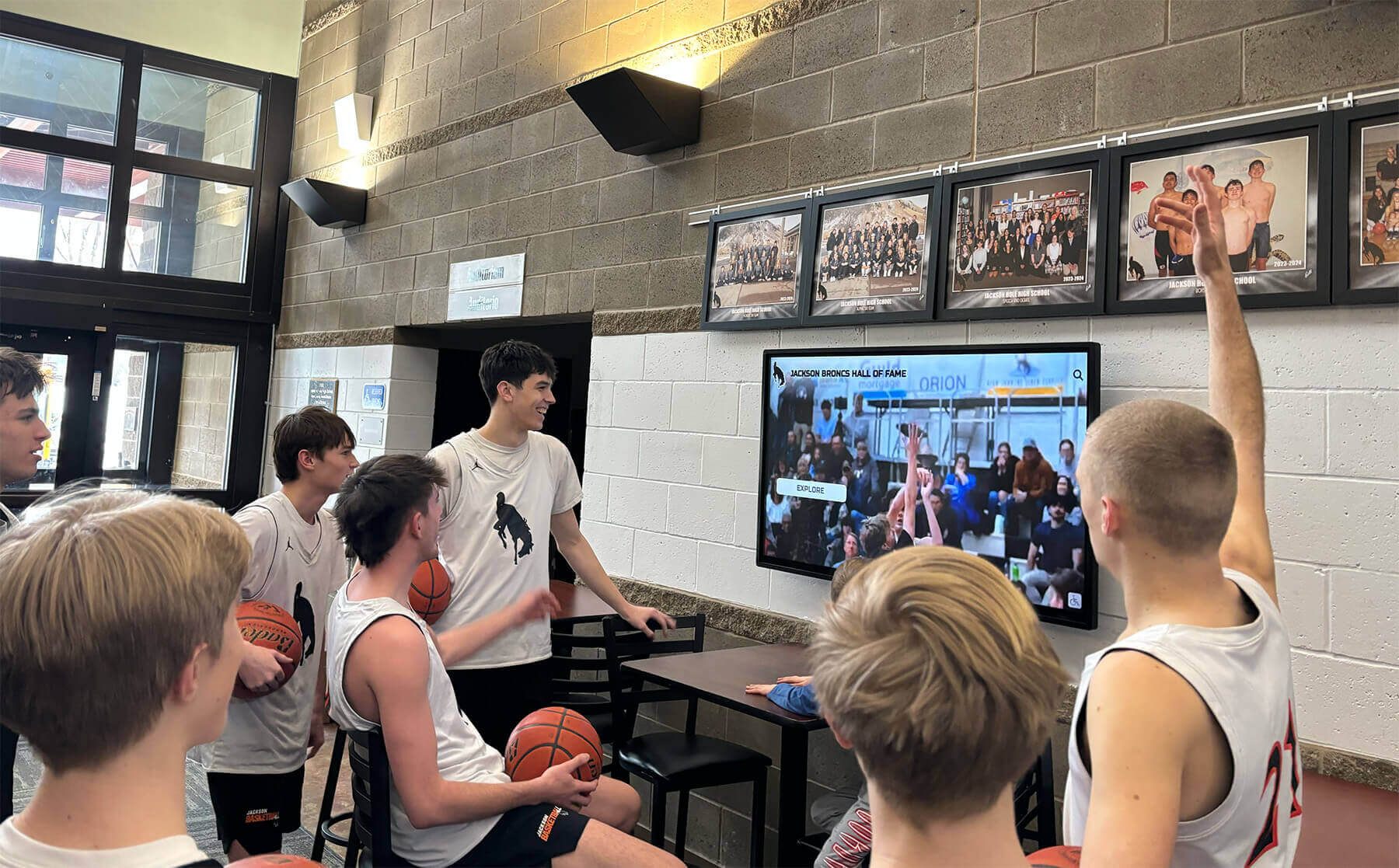
Championship seasons built on technical excellence in tennis and other sports deserve lasting recognition in school athletic facilities
Doubles Volley Strategy: Partnership and Positioning
Doubles tennis elevates net play from tactical option to fundamental requirement. Understanding specialized doubles positioning and teamwork principles maximizes volleying effectiveness.
Standard Doubles Formation
Traditional doubles formation places both players roughly 8-12 feet from the net in the “two-up” position. The server’s partner (the “net player” or “poacher”) positions at the net while the server remains at the baseline after serving. Following the return, the server moves forward to join their partner at net, establishing the dominant two-up formation.
This formation creates several strategic advantages: reduces court coverage area for each player, allowing them to cover their half effectively; creates downward volley angles impossible from the baseline; applies psychological pressure through aggressive net positioning; forces opponents to attempt difficult passing shots or risky lobs; and enables effective poaching where net players intercept balls hit to their partners.
Successful doubles teams develop synchronized movement patterns where both players advance together following strong shots, retreat together when forced defensive, and communicate constantly about positioning and responsibilities. This partnership approach mirrors the team coordination essential in all team sports.
The I-Formation and Australian Formation
Advanced doubles teams employ formation variations that disrupt opponents’ rhythm and create confusion. The I-formation positions both server and partner at the center of the court, with the net player crouching low at the center service line. As the server strikes the ball, both players break in predetermined directions (one covers deuce side, one covers ad side), creating uncertainty about coverage responsibilities and opening lanes for poaching.
The Australian formation places the server’s partner on the same side of the court as the server rather than the traditional opposite side. This unusual positioning discourages cross-court returns and forces returners to adjust their typical patterns, often creating uncomfortable down-the-line return attempts that become poaching opportunities.
These formation variations work best when teams practice specific plays and develop non-verbal communication signals to coordinate movements. The element of surprise and the visual disruption these formations create often prove as valuable as the actual positional advantages.
Poaching Technique and Communication
Poaching—cutting across to intercept balls hit toward your partner—represents one of doubles’ most effective aggressive tactics. Effective poaching requires timing your movement with your partner’s shot quality, reading the opponent’s body language and racquet preparation, committing fully to the poach rather than hesitating mid-court, finishing poaches with decisive volleys aimed at openings, and communicating with your partner about poaching intentions.
Teams develop verbal and non-verbal signals for poaching plans. A simple hand signal behind the back (showing open palm or closed fist) might indicate “I’m poaching” versus “I’m staying.” Clear communication prevents collisions and ensures your partner covers the court area you vacate.
The confidence to poach aggressively and the trust between partners that makes poaching effective distinguish championship-level doubles teams from recreational partnerships.
Common Volley Errors and Corrections
Understanding frequent volley mistakes and their solutions accelerates skill development and prevents ingrained poor habits.
Taking Too Large a Backswing
Many players revert to groundstroke mechanics when volleying, taking large backswings that create timing problems. This error results from groundstroke muscle memory overpowering volley fundamentals, insufficient practice repetitions to automate compact preparation, lack of confidence in the “punch” motion’s effectiveness, and attempting to generate power rather than redirecting existing pace.
Correction strategies include practicing shadow volleying with minimal backswing to groove proper preparation, performing wall volley drills that require quick reactions and reinforce compact strokes, asking practice partners to hit faster balls that eliminate time for large backswings, and visualizing the “catch and throw” motion that emphasizes brief contact rather than extended swing.
Late Contact Points
Contacting the ball behind or beside your body rather than out front causes directional errors and weak pace. Late contact results from inadequate preparation or recognition speed, poor split-step timing that delays movement initiation, insufficient forward movement through the shot, and lack of confidence that causes hesitation.
Improve contact point consistency by focusing intensely on opponent’s racquet and ball during split step for earlier recognition, exaggerating the “out front” contact point in practice until it becomes natural, practicing approach and volley combinations that force forward momentum, and using video analysis to see actual contact points versus perceived points.
Inconsistent Grip
Players who change grips between forehand and backhand volleys reduce reaction speed and create unnecessary variables. This error stems from unfamiliarity or discomfort with continental grip, attempting to use groundstroke grips for volleys, and lack of confidence in continental grip’s effectiveness across both sides.
Commit fully to continental grip through all volley situations by practicing volleys exclusively with continental grip until it feels natural, performing rapid alternating forehand-backhand volley drills that penalize grip changes, hitting serves and overheads with continental grip to develop comfort across multiple shots, and trusting that short-term discomfort leads to long-term improvement.

Athletic programs recognize individual technical excellence and team achievements through modern digital displays that celebrate defining moments
Progressive Volley Drills: From Beginner to Advanced
Systematic practice progressions build volley skills from foundational mechanics through advanced match situations.
Beginner Drill Progression
Start volley development with controlled situations that emphasize proper form over speed or complexity. Begin with stationary catch-and-throw drills where a feeder tosses balls underhand from 10 feet away and you “catch” on your racquet face and “throw” back using proper volley form, focusing purely on continental grip and contact point without worrying about ball control or power.
Progress to mini-court volleys where both players stand inside the service boxes and volley back and forth, emphasizing compact swings and consistent contact points. This reduced court size eliminates power requirements and creates more touches and repetitions.
Add wall volleys where you stand 8-10 feet from a wall and continuously volley against it, counting consecutive volleys to track improvement. Wall practice provides unlimited repetitions while forcing quick reactions and consistent technique.
Intermediate Drill Progression
Once basic mechanics become consistent, introduce movement, varied pace, and tactical elements. Practice alternating forehand-backhand volleys where a feeder directs balls randomly to forehand and backhand sides, requiring quick recognition and efficient preparation without grip changes.
Incorporate approach and volley combinations where you start at the baseline, hit an approach shot, and move forward to volley the reply. This drill integrates court movement, transition footwork, and split-step timing with actual volley execution.
Develop quick hands through rapid-fire volley drills where a feeder sends continuous balls from close range, forcing immediate reactions with minimal preparation time. These high-intensity drills build the reflexive responses essential for net exchanges.
Advanced Drill Progression
Advanced players practice match-realistic situations with competitive pressure. Set up passing shot versus volley drills where one player hits passing attempts while the other practices net positioning, reading, and decisive volleys under pressure.
Practice doubles poaching drills where the net player times movements and intercepts balls while the partner provides realistic feeds. This develops the anticipation and commitment that effective poaching requires.
Incorporate live point play starting at the net where points begin with both players already positioned at net volleying, simulating the exchanges that determine doubles points. Playing live points creates the decision-making pressure and varied situations that technical drills alone cannot replicate.
These progression patterns mirror the systematic skill development that produces athletes recognized on championship recognition displays throughout schools and universities.
Mental Approach: Building Net Play Confidence
Technical proficiency alone doesn’t guarantee effective net play. Mental confidence enables players to execute skills under match pressure.
Overcoming Net Anxiety
Many players experience anxiety about moving forward due to fears of being passed, looking foolish on missed volleys, or exposing perceived weaknesses. This anxiety becomes self-fulfilling—tentative approaches and hesitant volleys create the failures players fear.
Build net confidence through graduated exposure that starts with low-pressure practice situations and progressively adds competitive elements. Practice approach and volley combinations in non-competitive drills before attempting them in practice sets, before trying them in challenge matches, and before deploying them in tournaments.
Reframe perceived risks as calculated opportunities. Missing a few volleys while learning aggressive net play represents progress, not failure. The players who never attempt difficult shots never develop the skills that define championship tennis.
Developing Court Awareness
Effective net players develop heightened awareness of opponent positioning, court geometry, and situational context. This awareness comes from actively studying opponents during matches to identify passing shot patterns and preferences, recognizing situations that favor net approaches versus baseline play, understanding probability—most amateur players miss passing shots more often than they make them, and trusting preparation—thousands of practice repetitions create automatic responses that function under pressure.
The mental game of net play requires the same systematic development as technical skills. Players who cultivate confident, aggressive mindsets separate themselves from equally skilled but more tentative competitors.
Celebrating Excellence and Building Legacy
Championship-level tennis programs recognize that technical development and competitive success deserve celebration and documentation. The players who dedicate themselves to mastering volley technique, who transform from baseline-only competitors into complete all-court threats, who lead doubles teams to conference titles through aggressive net play—these achievements define program legacies and individual careers.
Modern recognition systems ensure these accomplishments remain visible long after seasons end. Schools increasingly install digital athletic recognition displays that showcase individual skill development, team championships, and the defining moments that characterize successful programs.

Championship achievements in tennis and other sports deserve permanent recognition that celebrates the technical excellence behind competitive success
Equipment Considerations for Effective Volleying
While technique matters most, appropriate equipment choices support volley development and execution.
Racquet Selection for Net Play
Certain racquet characteristics favor volleying effectiveness. Consider racquets with slightly head-light balance that promotes quick racquet head speed and maneuverability for fast exchanges, moderate weight (10-11 ounces) that provides stability for absorbing pace without creating sluggish handling, and sufficient stiffness to transfer energy efficiently on short, compact strokes.
Extremely light racquets that excel in baseline rallies may feel unstable on firm volleys against hard-hit balls. Conversely, very heavy racquets that provide excellent stability may prove sluggish for the quick reactions net play requires. Test various options to find the balance that suits your strength and playing style.
String Setup and Tension
String selection influences volley feel and control. Consider synthetic gut or multifilament strings that provide good feel and comfort for touch volleys, moderate tension (50-60 pounds depending on racquet) that balances control with power, and slightly lower tension than you’d use for groundstroke-dominant games to enhance feel on touch shots.
Some players string crosses looser than mains to enhance feel on volleys while maintaining control on groundstrokes. Experimentation helps identify the setup that optimizes your individual volley performance.
Grip Size and Overwraps
Proper grip size ensures comfortable racquet control and reduces injury risk. The standard test: when holding the racquet in continental grip, you should fit your opposite index finger in the space between your fingertips and palm base. Grips that are too small or too large create control problems and increase strain on forearm muscles.
Many players add overwraps to increase cushioning and absorb moisture during play. Consider tackier overwraps that enhance grip security during quick volley exchanges and slightly thicker wraps that provide more cushioning if you experience forearm or elbow discomfort.
From Technical Proficiency to Championship Recognition
Mastering tennis volley technique represents one element within the broader journey from beginner player to accomplished competitor. The hundreds of hours spent grooving continental grip, perfecting split-step timing, developing touch on drop volleys, building confidence through graduated exposure, and competing in pressure situations—this sustained commitment defines athletic excellence.
Schools recognize that these individual development journeys and team achievements deserve permanent celebration. Traditional trophy cases capture only a fraction of program stories. Modern athletic facilities increasingly feature comprehensive digital recognition systems that showcase individual skill milestones, seasonal team accomplishments, conference championships, and the defining moments that characterize program excellence.
These recognition platforms serve multiple purposes: they celebrate current athletes’ achievements, inspire developing players through visible examples of excellence, strengthen program culture and pride, connect alumni to current teams through shared traditions, and document program history for future generations. When tennis players earn conference recognition, qualify for state tournaments, or lead doubles teams to championship victories through mastered net play—these accomplishments deserve visibility that extends beyond brief mentions in announcements.
Athletic directors and coaches increasingly invest in recognition solutions that create lasting impact while supporting recruitment, fundraising, and community engagement.
Conclusion: Transforming Your Game Through Net Play Mastery
The journey from uncertain net play to confident, aggressive volleying transforms individual games and defines championship programs. Technical fundamentals—continental grip, compact preparation, forward contact points, split-step timing—create the foundation. Progressive practice develops the muscle memory and reflexive responses that function under match pressure. Mental confidence built through systematic exposure enables players to trust their skills in competitive moments.
Whether you’re developing your first volleys as a beginning player, refining advanced techniques for competitive singles, building doubles partnership skills, or coaching athletes toward championship-level net play, the principles outlined in this guide provide the roadmap. Consistent application of proper technique, commitment to systematic practice progressions, and cultivation of aggressive, confident mindsets separate players who merely understand volleys from those who dominate with them.
The players who master these skills—who move forward decisively, execute crisp volleys under pressure, finish points at net in both singles and doubles, and lead their teams to championships—deserve recognition that celebrates their technical excellence and competitive achievements.
Ready to create a recognition system that celebrates your tennis program’s achievements and inspires the next generation of champions? Discover how Rocket Alumni Solutions’ digital recognition platforms transform how schools showcase athletic excellence, from individual skill milestones to championship seasons that define program legacies.































