Texas high school basketball playoffs represent the culmination of months of hard work, showcasing the state's finest teams competing for championship glory. With the University Interscholastic League (UIL) orchestrating one of the nation's most comprehensive playoff systems across six classifications, Texas produces legendary basketball moments that resonate through communities for generations. Whether you're a coach preparing for tournament play, an athletic director managing logistics, or a fan following your local team's championship run, understanding the playoff structure and celebrating these achievements properly matters deeply to Texas basketball culture.
Texas takes high school sports seriously—and basketball occupies a special place in the state’s athletic tradition. While Friday night football dominates fall conversation, winter brings an equal intensity as basketball teams across the Lone Star State battle through district competition, regional tournaments, and ultimately the state championship rounds that determine Texas’s best.
The scale of Texas high school basketball is staggering. Hundreds of schools compete across six distinct UIL classifications, each conducting complete playoff brackets that culminate in state championship games held at premier venues. This comprehensive system ensures schools of all sizes—from the smallest rural communities to the largest urban districts—experience meaningful postseason competition against appropriately matched opponents.
Understanding the UIL Basketball Classification System
The University Interscholastic League structures Texas high school basketball competition through a classification system based on school enrollment, ensuring competitive balance while providing championship opportunities across all school sizes.
The Six UIL Basketball Classifications
Texas UIL basketball operates across six classifications, designated by enrollment ranges that group schools with similar student populations:
Class 6A: The largest Texas high schools with student enrollments typically exceeding 2,200 students. These schools often represent major metropolitan areas including Houston, Dallas-Fort Worth, San Antonio, and Austin. Class 6A basketball features the state’s deepest talent pools and most competitive programs, with many players continuing to college programs at Division I and professional levels.
Class 5A: Large high schools with enrollments generally ranging from 1,230 to 2,219 students. This classification includes significant suburban programs and mid-sized city schools throughout Texas. Class 5A competition remains intensely competitive with strong traditional programs and developing talent.
Class 4A: Mid-sized schools with typical enrollments between 505 and 1,229 students. Class 4A basketball bridges the gap between large suburban programs and smaller community schools, featuring competitive basketball across both urban and rural Texas communities.
Class 3A: Smaller schools with enrollments generally ranging from 225 to 504 students. These communities often demonstrate tremendous school spirit, with basketball programs serving as central community institutions. Class 3A playoff runs generate intense local interest and pride.
Class 2A: Small-town schools with enrollments typically between 105 and 224 students. Basketball in these communities often represents the primary winter sports focus, with entire towns following playoff runs. The talent level remains remarkably high despite smaller student populations.
Class 1A: Texas’s smallest schools with enrollments under 104.9 students. These rural schools often serve isolated communities where basketball provides essential competitive opportunities and community identity. Championship runs in Class 1A can transform entire communities.
The UIL realigns classifications every two years based on updated enrollment figures, ensuring competitive balance as school populations change and new schools open across Texas’s growing metropolitan regions.
Division Structure Within Classifications
Adding complexity to the playoff structure, the largest classifications (6A, 5A, and sometimes 4A) split into Division I and Division II brackets based on school enrollment within the classification. This division system creates more equitable competition:
Division I: Larger schools within a classification compete in Division I brackets. For example, in Class 6A, the largest schools within the 6A enrollment range compete exclusively against similarly sized 6A schools.
Division II: Smaller schools within a classification compete in Division II brackets. In Class 6A, schools at the lower end of 6A enrollment compete against each other rather than facing the classification’s largest schools.
This division system effectively creates twelve championship opportunities across Texas high school basketball—six classifications each split into boys’ and girls’ tournaments, with the largest classifications further divided into Division I and Division II brackets.
Schools implementing basketball recognition programs find that documenting which specific classification and division teams competed in provides essential context for understanding historical achievements.
Texas High School Basketball Playoff Structure
The Texas high school basketball playoffs follow a systematic progression from district competition through regional tournaments to state championship rounds, creating a tournament structure that spans several weeks and tests teams through increasingly difficult competition.
District Play and Playoff Qualification
The basketball season begins with district competition, where schools compete exclusively against other schools within their assigned district—a geographic grouping of schools within the same classification. District play typically runs from December through February, with teams playing home-and-away series against district opponents.
District Standings and Playoff Seeds: District competition determines playoff qualification and seeding. Depending on district size and classification, typically the top four teams from each district advance to the playoff bracket. Final district standings establish the seeds each team carries into postseason play.
Importance of District Success: Strong district finishes provide significant playoff advantages through favorable seeding, potential home-court advantage in early rounds, and avoiding the strongest teams from opposing districts until later tournament rounds.
District championships represent the first major achievement in Texas high school basketball seasons, earning recognition through school athletic displays that document program success across multiple seasons.
Bi-District and Area Playoff Rounds
Following district play, the Texas high school basketball playoffs begin with bi-district rounds, marking the start of single-elimination tournament competition where every game carries championship-or-elimination stakes.
Bi-District Round: The first playoff round pairs district champions and runners-up against qualifiers from adjacent districts. Seeding typically ensures that higher-seeded teams face lower-seeded opponents from neighboring districts. Games generally occur at neutral sites convenient to both participating schools.
Area Round: Winners advance to the area round, which further narrows the playoff field. By this stage, only the strongest teams from each region remain in championship contention. Area round games often generate significant community interest as championship aspirations become tangible.
These early playoff rounds establish whether teams possess the depth, coaching, and execution necessary to sustain championship runs through the grueling single-elimination format that defines Texas postseason basketball.
Regional Tournaments and the Final Four
As the playoff bracket narrows, competition intensifies through regional tournaments that determine which teams advance to state championship rounds.
Regional Quarterfinals: Also known as “Sweet Sixteen” in some classifications, these games narrow the field to the region’s elite eight teams. By this stage, every remaining team represents proven championship-caliber programs that dominated district and early playoff competition.
Regional Semifinals: Regional semifinal winners advance to regional championship games with state tournament berths on the line. These games typically occur at college or university facilities, providing student-athletes with experiences competing in premier basketball venues.
Regional Finals: Regional championship games determine state tournament qualifiers. Four regions across Texas each send their champion to the state tournament, creating the “Final Four” in each classification. Regional titles represent tremendous accomplishments worthy of permanent recognition through digital athletic recognition systems that preserve these milestone achievements.
Reaching regional finals means a team has won multiple playoff games against increasingly difficult competition, demonstrating sustained excellence throughout the postseason.
State Tournament and Championship Games
The Texas high school basketball state tournament represents the pinnacle of achievement, bringing together the final four teams in each classification for championship weekend competition at premier venues.
State Tournament Venues: State championship games occur at major facilities capable of accommodating large crowds and providing championship-caliber environments. The UIL has historically rotated state tournament sites among premier Texas basketball venues, with recent championships held at facilities including the Alamodome in San Antonio, various sites in Austin, and other major arenas across the state.
State Semifinal Games: The four regional champions in each classification compete in state semifinal games, with winners advancing to the championship final. State semifinal victories guarantee at minimum a runner-up finish in the state classification.
State Championship Finals: Championship games determine the UIL state champion in each classification and division. These games crown the absolute best team in Texas for that classification, an achievement that defines programs and creates legacy moments celebrated for decades.
State championship victories represent the ultimate achievement in Texas high school basketball, earning permanent recognition in school trophy cases, hall of fame displays, and community memory.
Boys’ and Girls’ Basketball Tournament Equality
Texas demonstrates strong commitment to gender equity in high school basketball, operating parallel tournament structures that provide equivalent competitive opportunities and recognition for both boys’ and girls’ programs.
Parallel Tournament Structures
The UIL conducts completely parallel playoff systems for boys’ and girls’ basketball:
- Identical classification structures across all six classifications
- Equal division systems in larger classifications
- Matching playoff bracket sizes and advancement requirements
- Equivalent state tournament formats and championship opportunities
- Shared or comparable championship venue facilities
- Similar scheduling and competitive timelines
This parallel structure ensures female student-athletes experience postseason competition opportunities equal to their male counterparts, reflecting Texas’s commitment to Title IX compliance and gender equity in scholastic athletics.
Historical Growth of Girls’ Basketball
Girls’ basketball in Texas has experienced tremendous growth since UIL began sponsoring girls’ basketball competition in 1920, making Texas one of the earliest states to formally recognize female basketball competition. The sport’s evolution reflects broader societal changes regarding women’s athletics.
Today, girls’ basketball programs across Texas feature comparable talent development, coaching quality, community support, and competitive intensity to boys’ programs. Many Texas communities demonstrate equal or greater enthusiasm for successful girls’ basketball programs, particularly in smaller classifications where female athletes often excel.
Schools implementing athletic recognition programs should ensure girls’ basketball achievements receive equivalent display space, digital presence, and celebration compared to boys’ programs.
Preparing Teams for Texas Playoff Basketball
Successful playoff runs require comprehensive preparation extending beyond basketball skills to encompass mental readiness, logistical planning, and strategic adjustments that distinguish championship teams from early-round exits.
Adjusting to Single-Elimination Pressure
District competition allows teams to recover from losses and adjust strategies over multiple games. Playoff basketball eliminates that margin for error—one loss ends the season immediately.
Mental Preparation: Coaches must prepare players psychologically for increased pressure including heightened crowd intensity, media attention, and community expectations. Players must execute under pressure while managing emotions that can overwhelm unprepared athletes.
Reducing Turnovers and Mental Errors: Playoff games often turn on possession-changing turnovers or mental breakdowns. Championship teams minimize unforced errors through disciplined execution and maintaining composure during critical moments.
Closing Games Successfully: Many playoff games remain close in final minutes. Teams must develop confidence and execution patterns for finishing tight games successfully, including free throw shooting, defensive stops, and clock management.
Strategic Scouting and Game Planning
While district competition involves familiar opponents faced multiple times, playoff brackets introduce unfamiliar opponents requiring detailed preparation.
Comprehensive Opponent Scouting: Successful playoff teams invest significant time studying opponents through video analysis identifying offensive sets and tendencies, defensive schemes and adjustments, key players and how opponents utilize their talents, out-of-bounds plays and special situations, and coaching tendencies regarding substitutions and timeouts.
Adjusting Team Strategy: Playoff competition may require strategic adjustments from regular season approaches, including adjusted defensive schemes targeting specific opponents, modified offensive sets exploiting opposing defensive weaknesses, specialized preparation for unusual playing styles, and deeper bench utilization managing foul trouble.
Managing Playoff Logistics
Athletic directors and coaching staffs face increased logistical complexity during playoff runs that schools must manage effectively.
Travel Coordination: Playoff games often occur at neutral sites requiring team travel arrangements including transportation logistics for teams and essential support staff, meal planning around game schedules, accommodation arrangements for distant games, and managing student absence from classes.
Community Support and Attendance: Successful playoff runs generate tremendous community interest. Schools should facilitate fan attendance through clear communication about game locations and schedules, assistance coordinating community travel to games, pep rallies and send-offs building school spirit, and social media updates engaging broader communities.
Media Relations: Playoff success attracts increased media attention. Schools benefit from designating media contacts, coordinating interview access appropriately, sharing game information and statistics, and managing social media presence professionally.
Historic Texas High School Basketball Traditions
Texas high school basketball history spans over a century, creating rich traditions and legendary programs that define the state’s basketball culture.
Legendary Basketball Programs
Certain Texas high schools have established basketball dynasties through sustained excellence spanning multiple decades and coaching eras.
These tradition-rich programs benefit from several reinforcing factors:
- Community basketball cultures that prioritize program development
- Youth basketball systems feeding talented players into high school programs
- Successful coaching legacies attracting strong candidates
- Facilities and resources reflecting community commitment
- Alumni networks supporting current programs through mentorship and resources
- Recognition systems celebrating historical excellence that inspires current players
Programs with multiple state championships or consistent deep playoff runs create self-perpetuating excellence where tradition attracts talent, and success breeds continued success.
Schools can strengthen tradition through comprehensive recognition displays documenting program history, championship teams, individual achievement, and coaching legacies across generations.
Championship Moments That Define Communities
Certain championship runs transcend sports, becoming defining moments in community identity. Small-town championship victories in particular create shared experiences that communities reference for decades.
These moments matter because they:
- Unite entire communities around shared achievement and pride
- Provide young people with tangible evidence that excellence is possible regardless of community size
- Create generational connections as parents share championship memories with children
- Demonstrate the value of dedication, teamwork, and perseverance
- Generate positive community identity and regional recognition
Preserving these championship memories through detailed documentation ensures future generations understand program history and tradition. Digital recognition systems excel at maintaining comprehensive historical records including championship team rosters and statistics, game-by-game tournament results, player profiles and individual achievements, coaching staff recognition, and multimedia content preserving championship moments.
Individual Achievement Recognition in Playoff Basketball
While team success drives playoff competition, individual excellence deserves appropriate recognition through awards and honors that acknowledge outstanding playoff performances.
All-Tournament Team Recognition
Many playoff tournaments designate all-tournament teams recognizing the event’s top performers. These honors acknowledge players who elevated their games during critical playoff competition.
Selection Criteria: All-tournament teams typically consider statistical performance across tournament games, impact plays in crucial moments, leadership demonstrated under pressure, consistency throughout the tournament, and contributions to team success.
Tournament MVP awards identify single players whose performances most significantly impacted tournament outcomes, representing the highest individual honor available during playoff competition.
Playoff Performance Records
Individual playoff performances occasionally reach historic levels deserving permanent documentation including single-game playoff scoring records, tournament scoring averages, crucial buzzer-beaters or game-winning shots, playoff rebounding or assists records, and defensive performances shutting down opposing stars.
Schools implementing athletic record displays should maintain separate playoff records alongside regular season achievements, recognizing that postseason excellence occurs under heightened pressure.
All-State and All-Region Recognition
Strong playoff performances often influence all-state and all-region team selections, which typically occur following playoff competition. Coaches and selection committees consider both regular season body-of-work and playoff performances when determining post-season honors.
Players who excel in playoff competition often distinguish themselves from statistically similar athletes whose performances decline under postseason pressure. This “rising to the occasion” quality influences recognition decisions and college recruitment evaluations.

Celebrating Playoff Success and Championship Achievement
Schools that advance deep into playoffs or capture championships should celebrate these accomplishments appropriately through recognition programs that honor team achievements while motivating future players.
Championship Recognition Programs
State championship and deep playoff runs deserve prominent, permanent recognition that preserves these achievements within school memory.
Physical Recognition Elements:
- Championship banners displayed prominently in gymnasiums
- Trophy case displays showcasing championship hardware
- Team photos and rosters documenting championship squads
- Individual recognition for coaching staff contributions
- Timeline displays showing championship game results
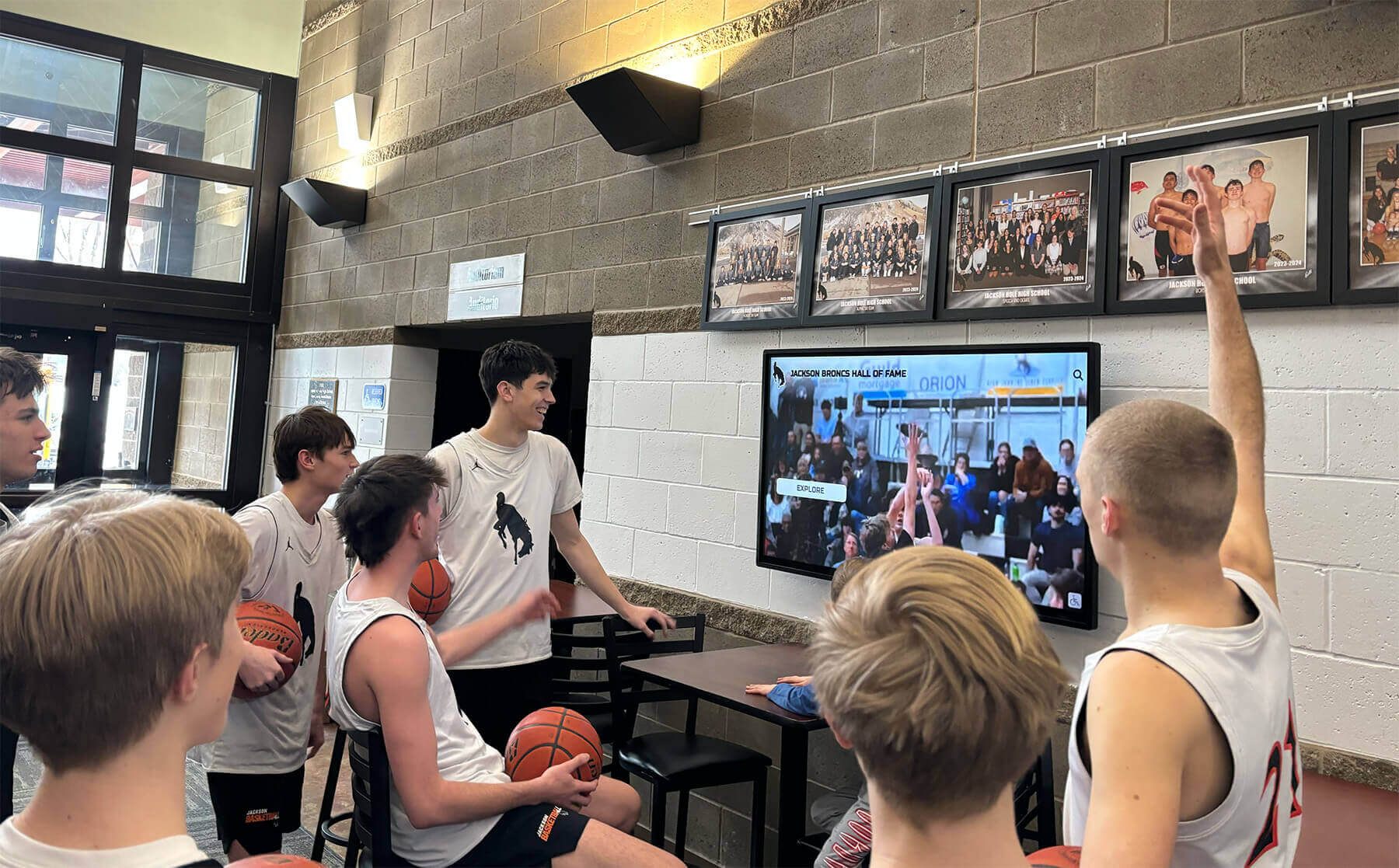
Digital Recognition Advantages: Modern digital recognition systems provide comprehensive advantages over traditional static displays through unlimited content capacity accommodating complete team documentation, rich multimedia including game highlights and celebration footage, detailed statistics and game-by-game results, player profiles celebrating individual contributions, and easy updates adding new championship achievements.
Creating Championship Traditions
Schools can build meaningful traditions around playoff and championship achievement that strengthen program culture including championship ring ceremonies honoring state champions, annual recognition banquets celebrating playoff teams, homecoming recognition of championship alumni, facility naming opportunities for legendary teams or coaches, and permanent digital archives preserving complete championship documentation.
These traditions demonstrate institutional commitment to celebrating excellence while creating aspirational targets motivating current players.
Engaging Alumni Through Championship Celebration
Playoff success and championships create natural opportunities for strengthening alumni engagement by inviting championship alumni to current playoff games, organizing reunion events around playoff runs, featuring alumni perspectives in game programs, collecting alumni championship memories for historical archives, and connecting current players with championship alumni for mentorship.
Championship achievement creates powerful bonds among team members that often last lifetimes. Schools can leverage these connections to build stronger alumni relationships supporting athletic programs and broader institutional goals.
Modern Recognition Solutions for Basketball Playoff Achievement
As Texas high school basketball grows increasingly competitive and communities seek meaningful ways to celebrate achievement, modern digital recognition platforms provide powerful solutions for honoring playoff success and championship tradition.
Limitations of Traditional Recognition Approaches
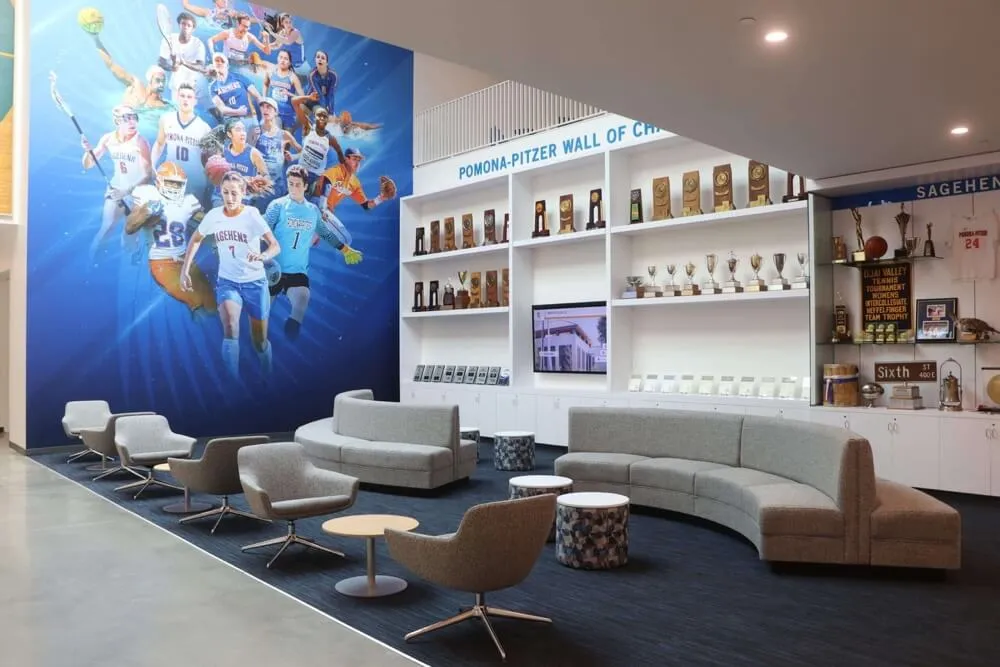
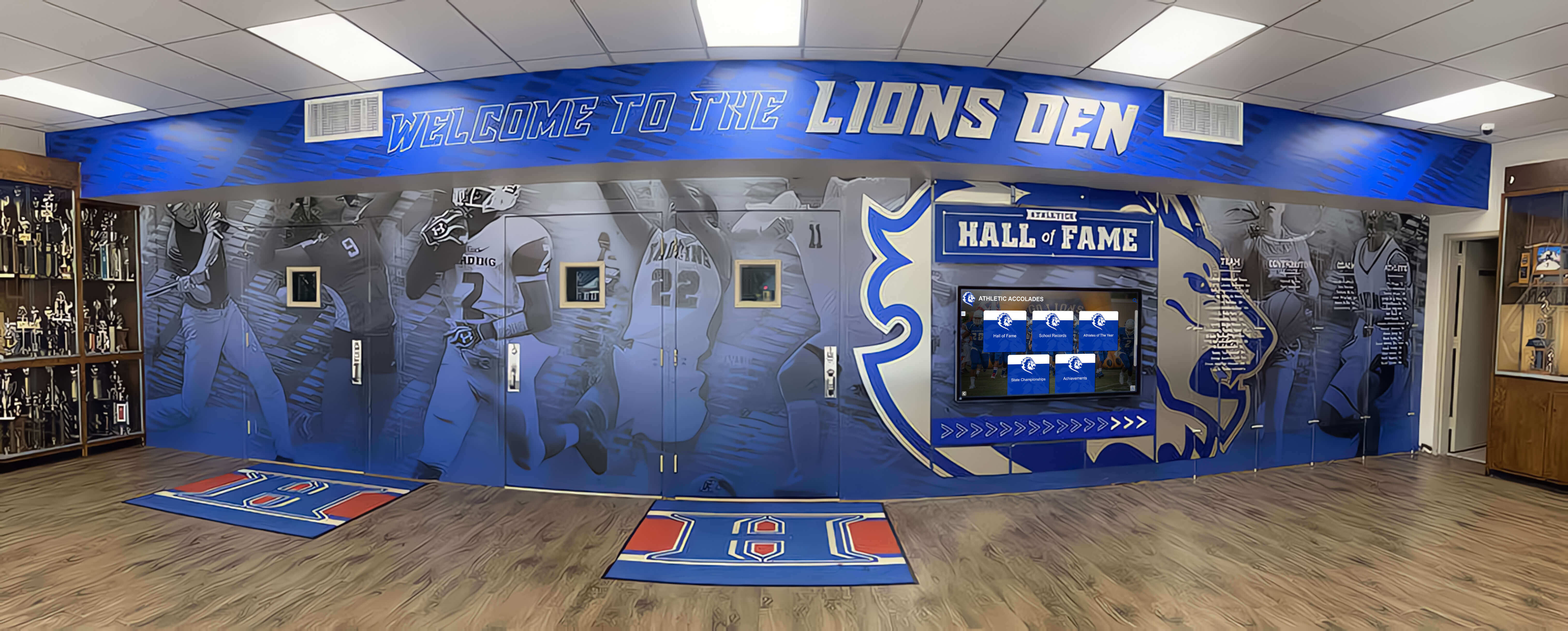
Traditional basketball recognition relied on physical displays including championship banners hung from gymnasium ceilings, trophy cases displaying hardware, photo plaques mounted on walls, and painted murals documenting achievements.
While these approaches remain visually impactful, they face inherent limitations:
Space Constraints: Physical displays consume limited wall and case space, forcing difficult decisions about what receives recognition and what gets removed to accommodate new achievements.
Static Content: Traditional displays provide minimal information beyond basic facts like championship year and team photo, missing opportunities for rich storytelling about championship runs.
Maintenance Challenges: Physical plaques fade, photos deteriorate, and painted murals become dated, requiring ongoing maintenance and periodic replacement costs.
Limited Accessibility: Physical displays exist only at school facilities, making them inaccessible to alumni, recruits, and community members who cannot visit campus regularly.
Update Complexity: Adding new achievements requires producing new plaques or banners, coordinating installation, and potentially removing existing recognition to create space.
Digital Recognition Platform Advantages
Digital recognition systems address every limitation of traditional approaches while providing enhanced capabilities specifically valuable for basketball program recognition.
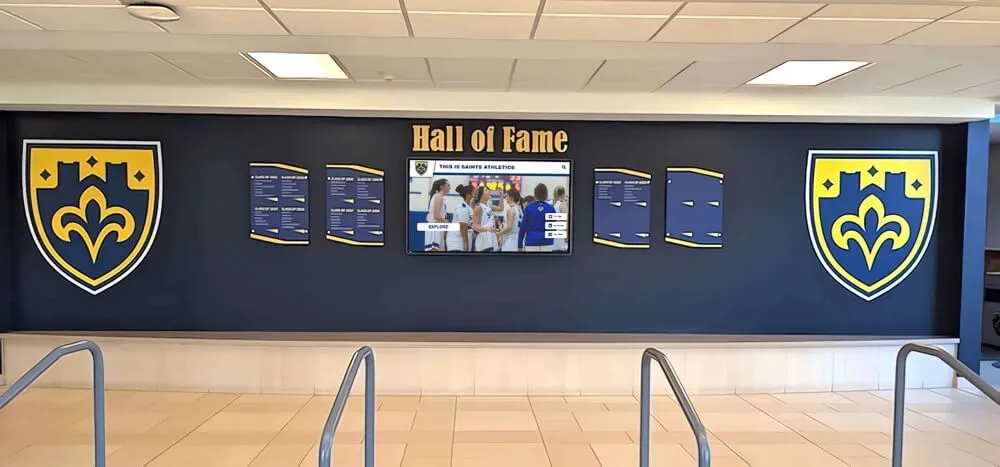
Unlimited Recognition Capacity: A single digital display can showcase unlimited content including every playoff team in program history, individual all-state and all-tournament honorees, comprehensive coaching career documentation, statistical leaders and record holders, and historical program milestones across decades.
Schools never face decisions about removing older recognition to accommodate new achievements—digital platforms scale infinitely.
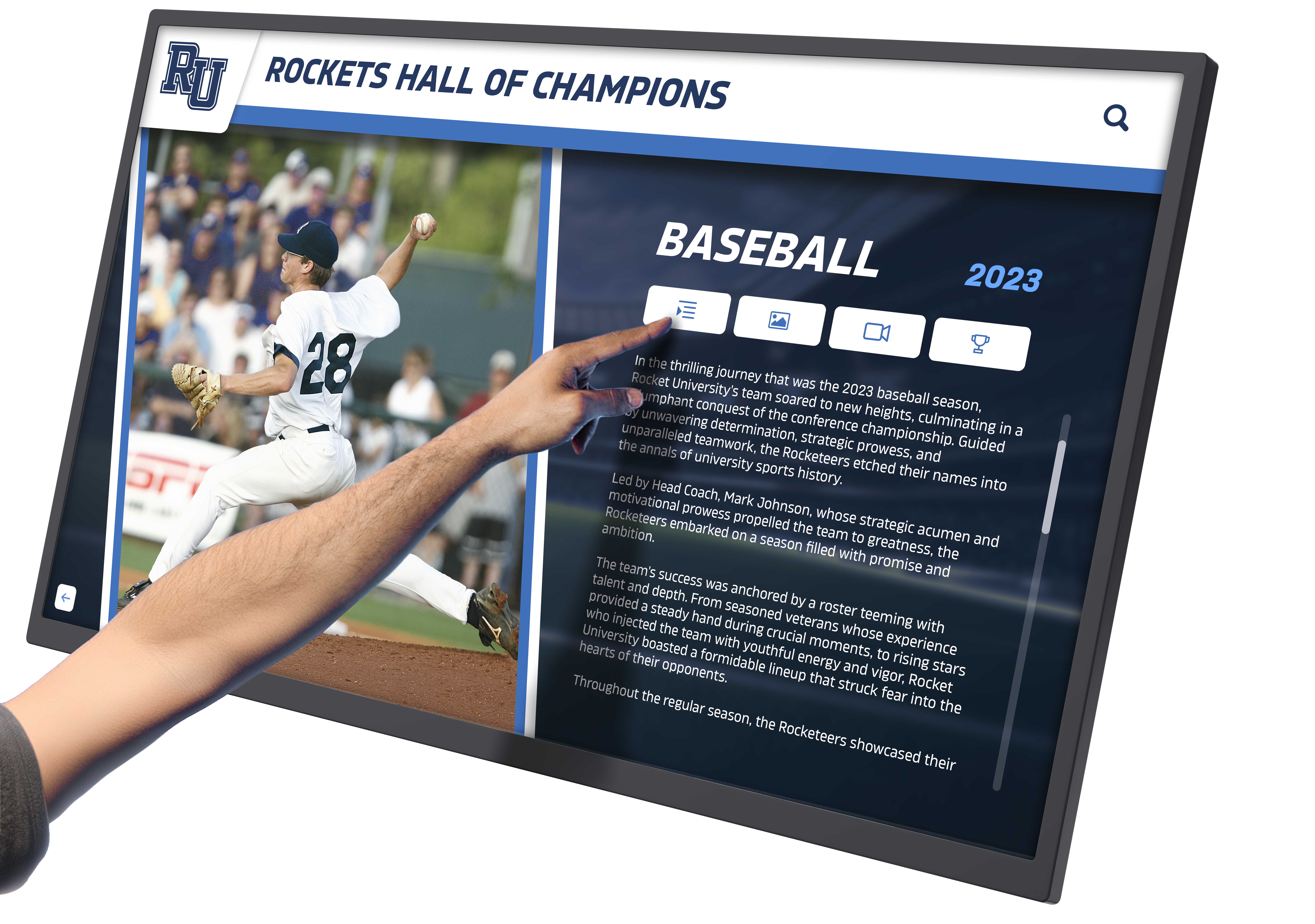
Rich Multimedia Storytelling: Unlike static plaques showing only names and dates, digital profiles incorporate high-resolution action photography showing athletes competing, complete season statistics and playoff results, video highlights from championship games, coach testimonials explaining what made teams special, player reflections on championship experiences, and historical context placing achievements within program timeline.
This multimedia approach transforms basic recognition into engaging storytelling that brings championship moments to life for current students who never witnessed historical achievements firsthand.
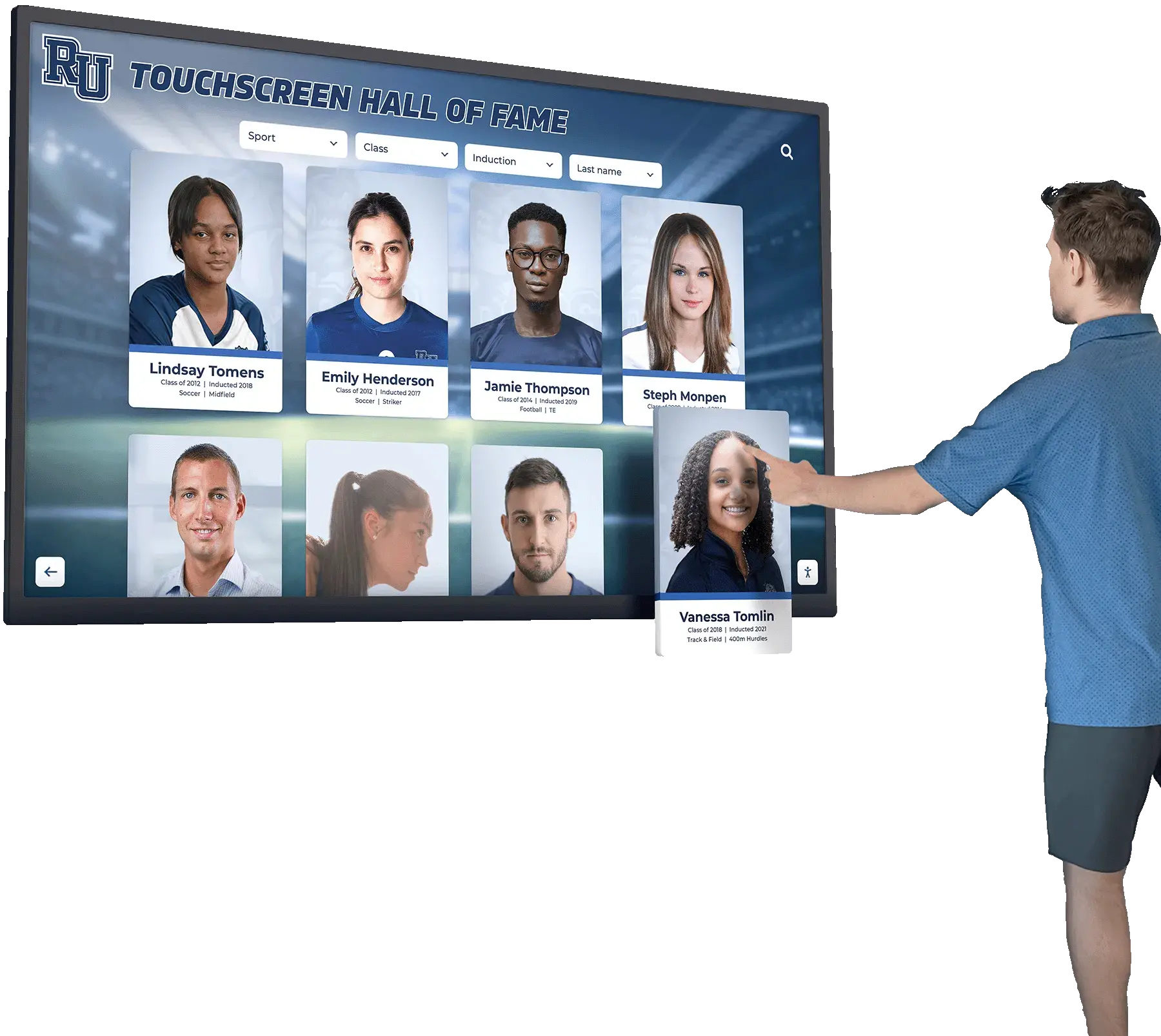
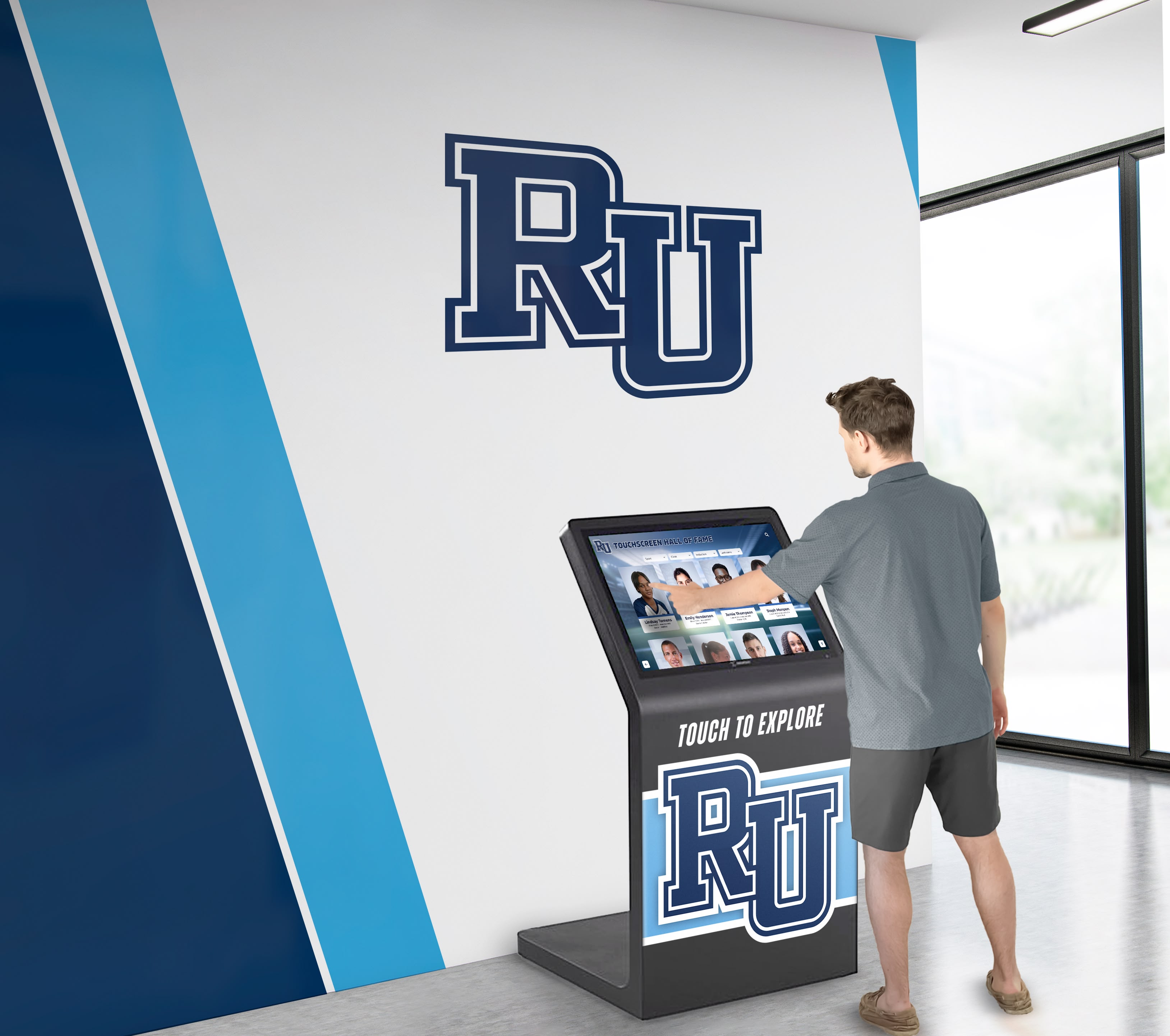
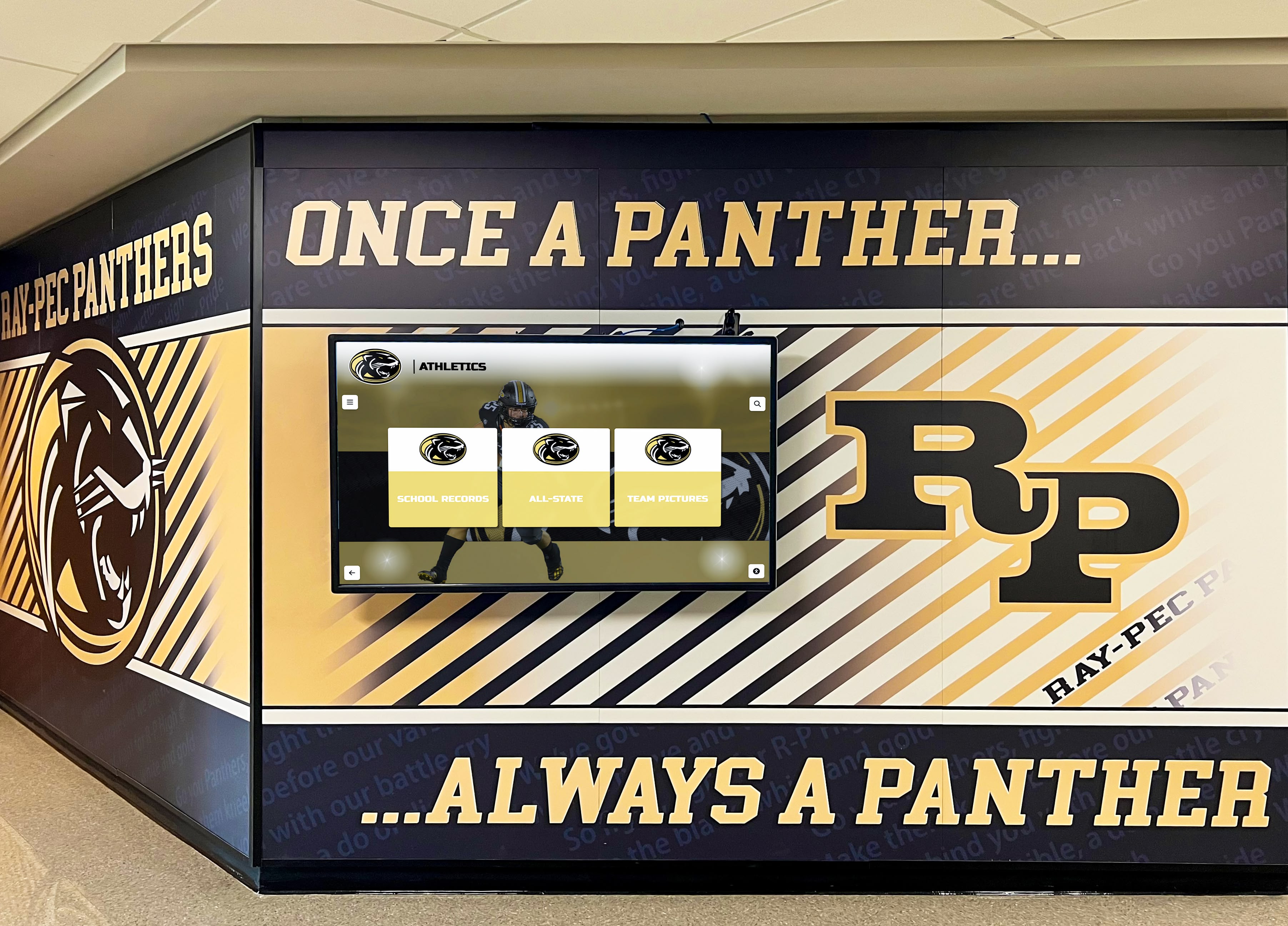
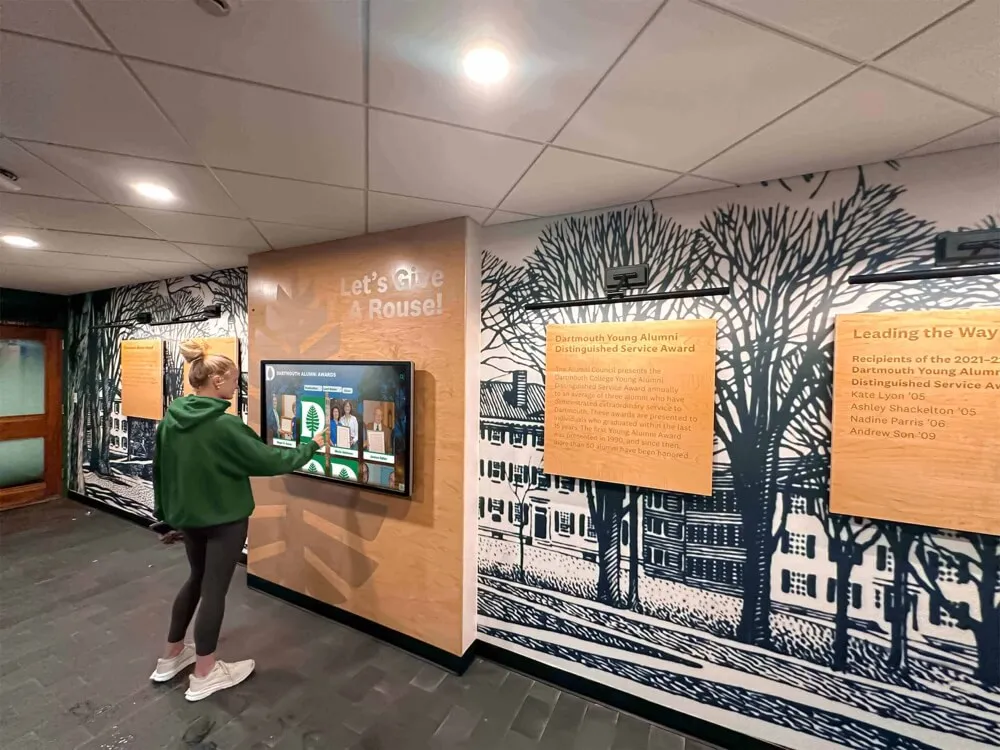
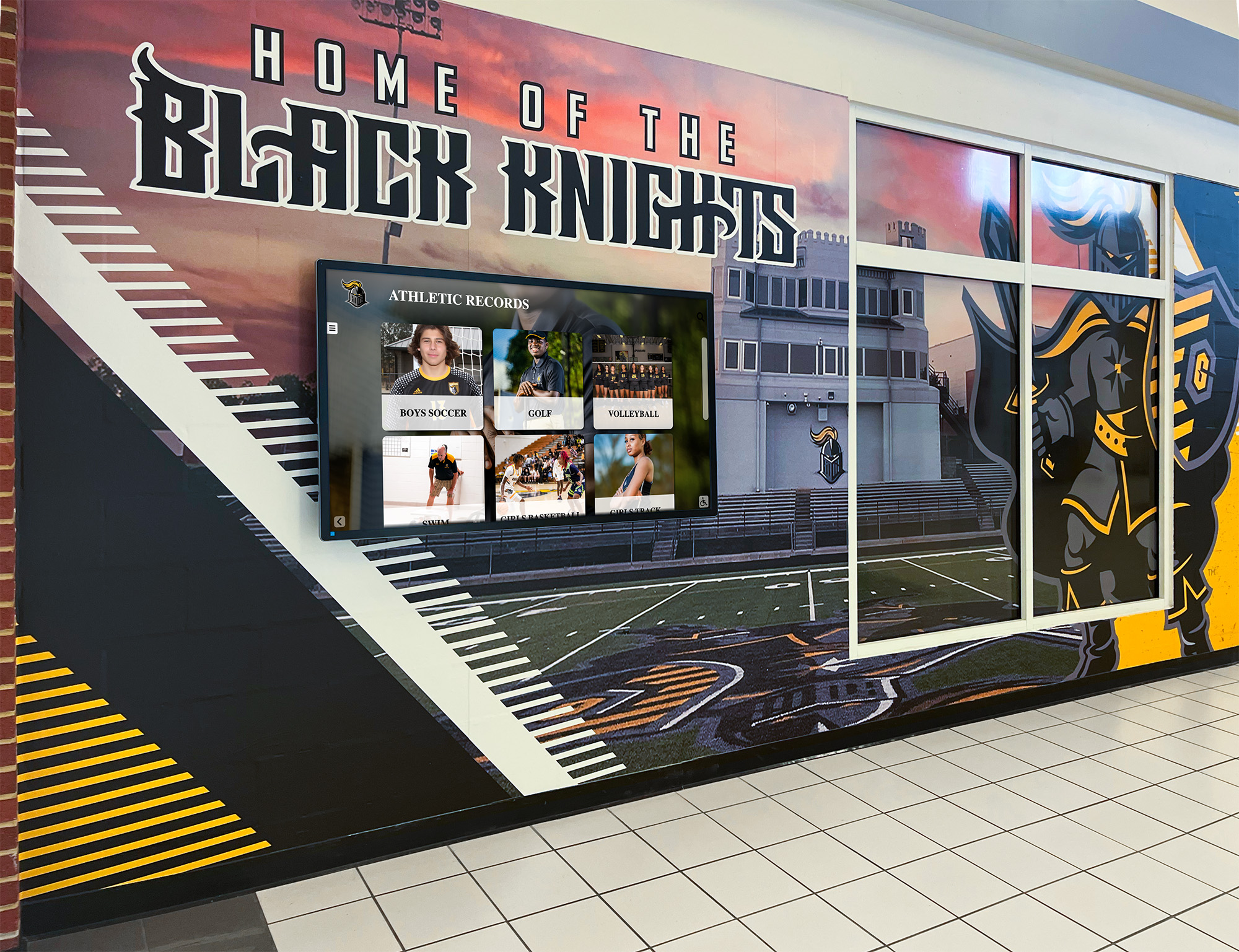
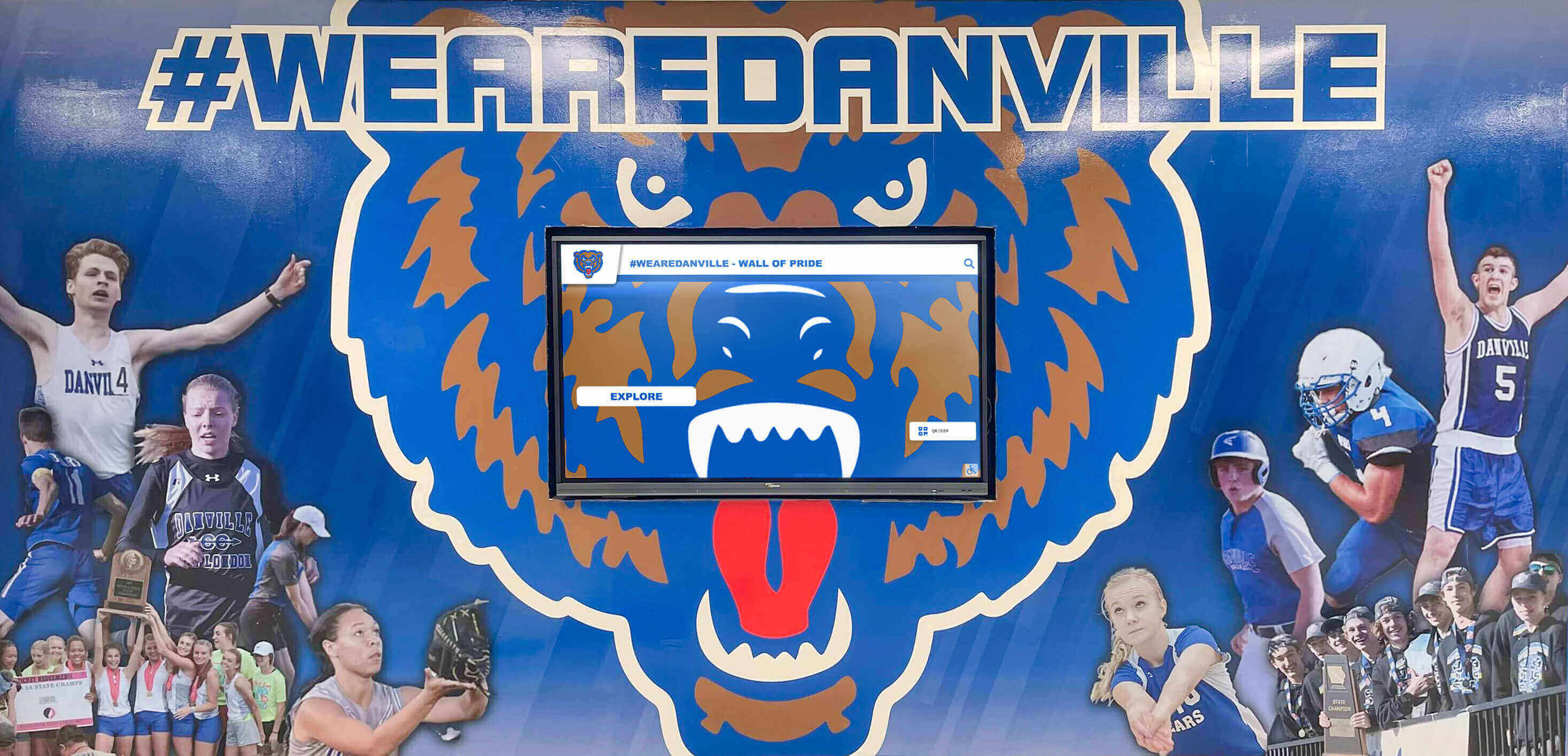
Interactive Exploration: Visitors interact with digital displays through intuitive touchscreen interfaces enabling powerful search by player name or graduation year, filtering by achievement type like state championships or all-state honors, browsing championship team rosters, comparing statistics across different eras, and discovering historical program content through random exploration features.
Interactive engagement transforms passive viewing into active discovery, with visitors spending significantly more time exploring digital displays compared to glancing at traditional static boards.
Real-Time Updates: Cloud-based content management enables athletic directors and coaches to update recognition displays instantly from any device. When teams win playoff games or championships, recognition updates within minutes rather than waiting weeks for physical plaque production.
Extended Digital Reach: Modern recognition platforms extend beyond physical displays through responsive web interfaces accessible worldwide enabling alumni to explore program achievements from anywhere, prospective athletes to research program tradition during recruitment, families to share student-athlete achievements across social networks, and community members to engage with basketball excellence without visiting campus.
Web accessibility transforms physical displays from location-dependent monuments into globally accessible archives celebrating program tradition.
Basketball-Specific Recognition Features
Purpose-built athletic recognition platforms include basketball-specific templates and features optimized for celebrating the sport.
Playoff Documentation Templates: Pre-designed formats for documenting playoff bracket progression, game-by-game results with scores, tournament all-star teams, championship game highlights, and season narrative summaries.
Statistical Integration: Comprehensive basketball statistics including season and career scoring averages, playoff performance statistics, shooting percentages and efficiency metrics, rebounding, assists, steals, and blocks, and historical comparisons across different eras.
Team Season Pages: Complete season documentation including full rosters with player positions, season records and final standings, playoff brackets and advancement, coaching staff recognition, and season highlight compilations.
Visual Timeline Formats: Chronological presentations showing decade-by-decade program evolution, championship timeline displays, coaching era comparisons, and historical connections across generations.
These sport-specific features ensure basketball achievements receive appropriate documentation without requiring custom development work.
The Rocket Alumni Solutions Platform
Schools implementing digital recognition for basketball playoff achievement benefit from platforms specifically designed for educational athletic recognition rather than generic digital signage systems.
Rocket Alumni Solutions provides purpose-built solutions combining powerful features with intuitive operation designed for non-technical athletic staff including commercial-grade touchscreen hardware designed for continuous operation, cloud-based content management requiring no local servers, professional installation and configuration, comprehensive staff training, ongoing technical support, and basketball-optimized templates ready for immediate use.
The platform serves over 1,000 schools, universities, and organizations nationwide, providing proven technology tested across diverse environments, responsive support familiar with educational contexts, continuous improvements based on user feedback, and best practices developed through extensive implementation experience.
Schools benefit from partnering with experienced providers who understand athletic department workflows, recognition priorities, and technical requirements specific to educational environments.
Supporting Student-Athletes Through Playoff Competition
Beyond logistics and recognition, schools serve essential roles supporting student-athletes emotionally and academically during the intense playoff period.
Academic Support During Playoff Runs
Deep playoff runs create academic challenges as teams travel to distant tournament sites, miss class time, and manage competition stress alongside academic responsibilities.
Proactive Academic Planning: Work with teachers to identify upcoming assignments and tests, arrange for assignment completion before extended travel, coordinate makeup work schedules, and ensure student-athletes maintain academic eligibility throughout playoffs.
Communication With Faculty: Keep teachers informed about tournament schedules, potential class absences, and student-athlete academic needs ensuring faculty support athletic participation while maintaining academic standards.
Study Time During Travel: Build academic work time into tournament travel schedules allowing student-athletes to complete assignments during bus travel or at hotels.
Mental Health and Emotional Support
Playoff basketball creates significant emotional stress that some student-athletes struggle managing effectively.
Pressure Management: Help athletes maintain perspective understanding that basketball represents one aspect of identity, championships don’t define personal worth, and effort matters more than outcomes beyond athlete control.
Handling Disappointment: Early playoff exits or championship game losses create profound disappointment. Provide appropriate support through individual check-ins with struggling athletes, team debriefing sessions processing emotions, emphasizing growth and learning from experience, and maintaining perspective on season accomplishments.
Celebrating Achievement Appropriately: Whether teams win championships or lose early playoff games, recognize effort, growth, and dedication throughout the season, acknowledging that playoff participation itself represents achievement.
Post-Season Transition Support
Playoff basketball ends abruptly for most teams—one loss terminates the season immediately. This sudden ending, particularly for seniors completing high school careers, requires thoughtful management.
Senior Recognition: Ensure graduating seniors receive appropriate recognition for careers including senior night celebrations, awards banquets honoring contributions, permanent recognition in digital displays documenting their achievements, and connection to alumni networks.
Off-Season Development Planning: Help underclassmen channel playoff disappointment into productive off-season development by identifying specific skill development goals, recommending training programs and camps, connecting athletes with development resources, and establishing expectations for improvement.

The Business of Texas High School Basketball
While primarily focused on education and student development, Texas high school basketball playoff runs generate significant economic and community impact worth understanding.
Economic Impact of Playoff Runs
Deep playoff runs create substantial economic activity through multiple channels:
Direct School Revenue: Playoff games generate revenue through ticket sales, concession operations, merchandise sales, and parking fees that help fund athletic departments and offset program costs.
Community Economic Impact: Playoff runs attract visitors to host communities creating revenue for restaurants and food establishments, hotels and accommodations, gas stations and convenience stores, and retail businesses.
Small communities hosting regional tournament games particularly benefit from visitor spending that provides meaningful economic impact.
Program Fundraising Opportunities: Playoff success creates optimal conditions for booster club fundraising, merchandise sales capitalizing on increased interest, championship memorabilia sales, and enhanced donor engagement and giving.
Recruiting and Enrollment Impact
Basketball success, particularly playoff and championship achievement, influences school enrollment and student recruitment in several ways:
Transfer Attractiveness: Successful basketball programs in districts allowing transfers may attract talented players from other schools seeking stronger competitive opportunities and better college recruitment exposure.
School Choice Decisions: In areas with multiple school options, athletic program quality influences family school selection decisions, particularly for families prioritizing athletics.
Open Enrollment Impact: Texas open enrollment policies allowing students to attend non-residential schools create competitive dynamics where athletic success influences enrollment patterns.
Private School Recruitment: Private schools particularly benefit from athletic success in recruitment efforts, using championship tradition and competitive opportunities as enrollment selling points.
College Recruitment and Player Development
Playoff exposure provides valuable visibility for players pursuing college opportunities through increased college coach attendance at playoff games, media coverage attracting recruiter attention, all-tournament recognition raising player profiles, and championship performances demonstrating ability to excel under pressure.
Schools can support college-aspiring athletes through maintaining updated athletic profiles, coordinating college coach communications, documenting achievements and statistics, and providing video highlights from playoff performances.

Technology and Modern Basketball Competition
Technology increasingly influences how Texas high school basketball operates, from game analytics to digital engagement and recognition platforms.
Game Analytics and Performance Tracking
Advanced analytics have filtered down from professional and college basketball to high school programs, with coaches increasingly using statistical analysis including shot chart analysis tracking shooting efficiency by location, plus-minus statistics measuring player impact, possession-based metrics evaluating offensive efficiency, defensive metrics tracking opponent scoring when specific players are on court, and lineup analysis identifying most effective player combinations.
Schools with analytics capabilities gain competitive advantages through data-driven decision-making about strategy, substitutions, and player development focus areas.
Video Analysis and Scouting
Video technology transforms how coaches prepare teams and develop players through game film review identifying strengths and weaknesses, opponent scouting analyzing upcoming playoff opponents, skill development using video to correct technique, recruitment video production creating highlight packages for college coaches, and building video archives documenting program history.
Digital Fan Engagement
Social media and digital platforms enable unprecedented fan engagement during playoff runs including live scoring and updates, video highlights shared across social platforms, player and coach interviews, behind-the-scenes content, and real-time interaction with fans.
Schools effectively leveraging digital engagement build larger, more connected communities supporting basketball programs.
Streaming and Broadcasting
Playoff games increasingly feature video streaming and broadcasting expanding access beyond physical attendance through free or subscription-based streaming platforms, social media live broadcasts, local media partnerships, and archived game footage.
Streaming particularly benefits alumni and family members unable to attend distant playoff games while creating historical archives preserving championship runs.
Building Sustainable Basketball Excellence
Programs seeking sustained playoff success and championship contention must build comprehensive development systems rather than relying on occasional talent influxes.
Youth Basketball Development Systems
Successful high school programs increasingly develop formal relationships with youth basketball organizations including youth league partnerships feeding players into high school programs, coaching clinics teaching consistent systems and fundamentals, summer camp programs building skills and program culture, and middle school development programs preparing athletes for high school competition.
These systematic approaches ensure consistent talent development rather than boom-and-bust cycles dependent on random talent availability.
Coaching Development and Retention
Program stability requires retaining quality coaching staff through competitive compensation and support, reasonable expectations and timelines, administrative support during challenges, professional development opportunities, and recognition programs honoring coaching contributions.
Coaching turnover disrupts program development and culture, making retention essential for sustained excellence.
Facility Investment
Quality facilities matter for player development, recruitment, and competitive advantage including modern gymnasiums with appropriate seating, strength and conditioning facilities, film rooms for video analysis, practice facilities allowing extended training, and locker rooms reflecting program professionalism.
While not every school can afford premium facilities, consistent facility investment demonstrates commitment to basketball excellence.
Creating a Culture of Excellence
Sustainable success requires cultural elements beyond talent and coaching including high expectations for effort and behavior, emphasis on academics alongside athletics, leadership development through athlete voice, connection to program tradition and history, and community engagement building program support.
Building school pride through visible celebration of achievement reinforces excellence cultures that perpetuate winning tradition.

Conclusion: Celebrating Texas Basketball Excellence
The Texas high school basketball playoffs represent months of preparation, sacrifice, and dedication culminating in championship competition that defines programs and creates lifelong memories. From the opening tip of bi-district games through the final buzzer of state championship finals, playoff basketball showcases Texas’s finest young athletes competing at the highest levels.
Understanding the UIL classification system, playoff structure, and tournament progression helps athletic directors, coaches, and communities prepare effectively for postseason competition while managing the logistics, pressure, and opportunities that playoff runs create.
Beyond the competition itself, how schools recognize and celebrate playoff achievement matters profoundly. Traditional recognition approaches served programs well for decades, but modern digital recognition technology transforms what’s possible in honoring basketball excellence through unlimited recognition capacity, rich multimedia storytelling, interactive exploration, instant updates, and extended digital reach.
Schools implementing comprehensive recognition programs through platforms like Rocket Alumni Solutions create permanent documentation of playoff achievements that inspires current players, engages alumni, strengthens community connections, and preserves program history for future generations.
Whether your team is preparing for its first playoff appearance or continuing a championship tradition spanning decades, the key principles remain constant: prepare athletes comprehensively for single-elimination competition, support student-athletes academically and emotionally, celebrate achievements appropriately, document program history systematically, and build sustainable excellence through youth development, coaching stability, and culture.
Texas high school basketball playoffs showcase the very best of competitive athletics—talented young people testing themselves against elite competition, communities rallying behind shared goals, coaches guiding athlete development, and schools providing opportunities that shape character and create lasting memories.
Celebrate Your Basketball Playoff Success
Discover how Rocket Alumni Solutions can help you preserve playoff memories, honor championship achievements, and inspire future champions through modern digital recognition displays that bring your basketball tradition to life.
Schedule Your Free ConsultationThe Texas high school basketball playoffs create moments that transcend sports—championship victories remembered for generations, individual performances that launch college careers, communities united through shared achievement, and young athletes learning lessons about teamwork, perseverance, and excellence that shape their lives long after final buzzers sound.
Ready to honor your basketball tradition? Explore how modern recognition platforms can transform how you celebrate the teams, players, coaches, and championship moments that built your program’s legacy and inspire those who will carry it forward.































