Is Your Traditional Hall of Fame Holding Back Your School's Recognition Program?
Walk through the hallways of most high schools, and you'll find traditional halls of fame showing signs of strain—crowded trophy cases with achievements squeezed together, plaques covering every inch of available wall space, dusty displays that haven't been updated in months or years, and storage rooms filled with trophies that don't fit anywhere. These challenges aren't failures of school spirit or administrative effort. They're natural consequences of traditional recognition systems built for a different era struggling to meet modern needs.
The athletic directors, administrators, and recognition committees managing these displays face increasingly difficult choices: Which achievements deserve display space? How do we honor new accomplishments without removing older recognition? Where do we find budget for expensive plaques and engraving? How can we engage alumni who live hundreds of miles away?
These questions signal a fundamental truth: it’s time to modernize your traditional high school hall of fame with digital recognition technology that eliminates space constraints, reduces costs, and creates engagement opportunities impossible with physical displays alone.
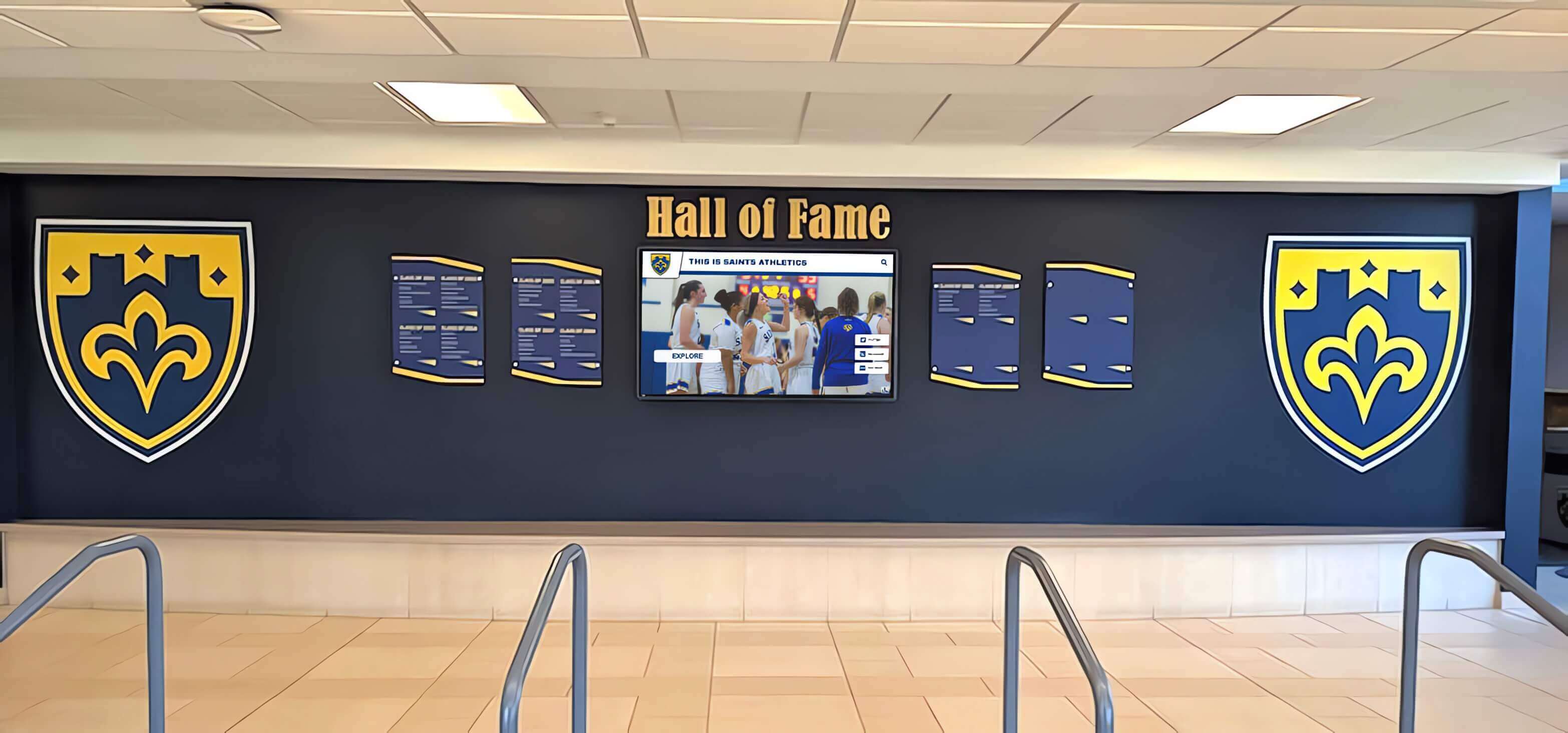
Traditional recognition displays face inevitable space and maintenance challenges as schools grow
Understanding the Traditional Hall of Fame Challenge
Before exploring modern solutions, it’s important to understand why traditional recognition systems struggle—not through lack of care, but through inherent structural limitations that become problems over time.
The Physical Space Equation That Doesn’t Balance
Traditional halls of fame operate within fixed physical constraints that create an unsustainable equation:
Limited Display Capacity + Continuous Achievement Growth = Inevitable Space Crisis
Consider the typical progression:
- A high school installs trophy cases and plaque walls with capacity for 100-150 items
- Athletic programs across 15-20 sports generate 20-30 new achievements annually
- Within 5 years, the school has 200+ total achievements but space for only 150
- After 10 years, 300+ achievements compete for those same 150 spaces
- After 20 years, 500+ accomplishments vastly exceed available display area
This mathematical reality forces difficult decisions that traditional systems have no good way to resolve. Schools must either stop adding new recognition, remove older achievements, or create increasingly crowded displays where individual accomplishments become difficult to distinguish and appreciate.
The Cost Reality of Traditional Recognition
Physical recognition carries substantial ongoing expenses that many schools don’t fully calculate when initially installing traditional displays:
Per-Achievement Fabrication Costs:
- Individual brass or bronze plaques: $75-$250 each
- Custom-engraved awards: $100-$400 each
- Professional framing for photos: $50-$150 each
- Trophy case glass etching: $200-$500 per update
- Banner printing and hanging: $150-$400 each
Installation and Maintenance Expenses:
- Professional installation labor: $200-$500 per session
- Case rearrangement and modification: $150-$300
- Lighting replacement and updates: $100-$250
- Glass cleaning and polish: $75-$150 quarterly
- Structural repairs and maintenance: $300-$800 annually
For schools adding 25 new plaques annually, traditional recognition costs $3,000-$7,500 per year in fabrication alone, not counting installation labor, maintenance, or the opportunity cost of administrator time spent managing physical displays.
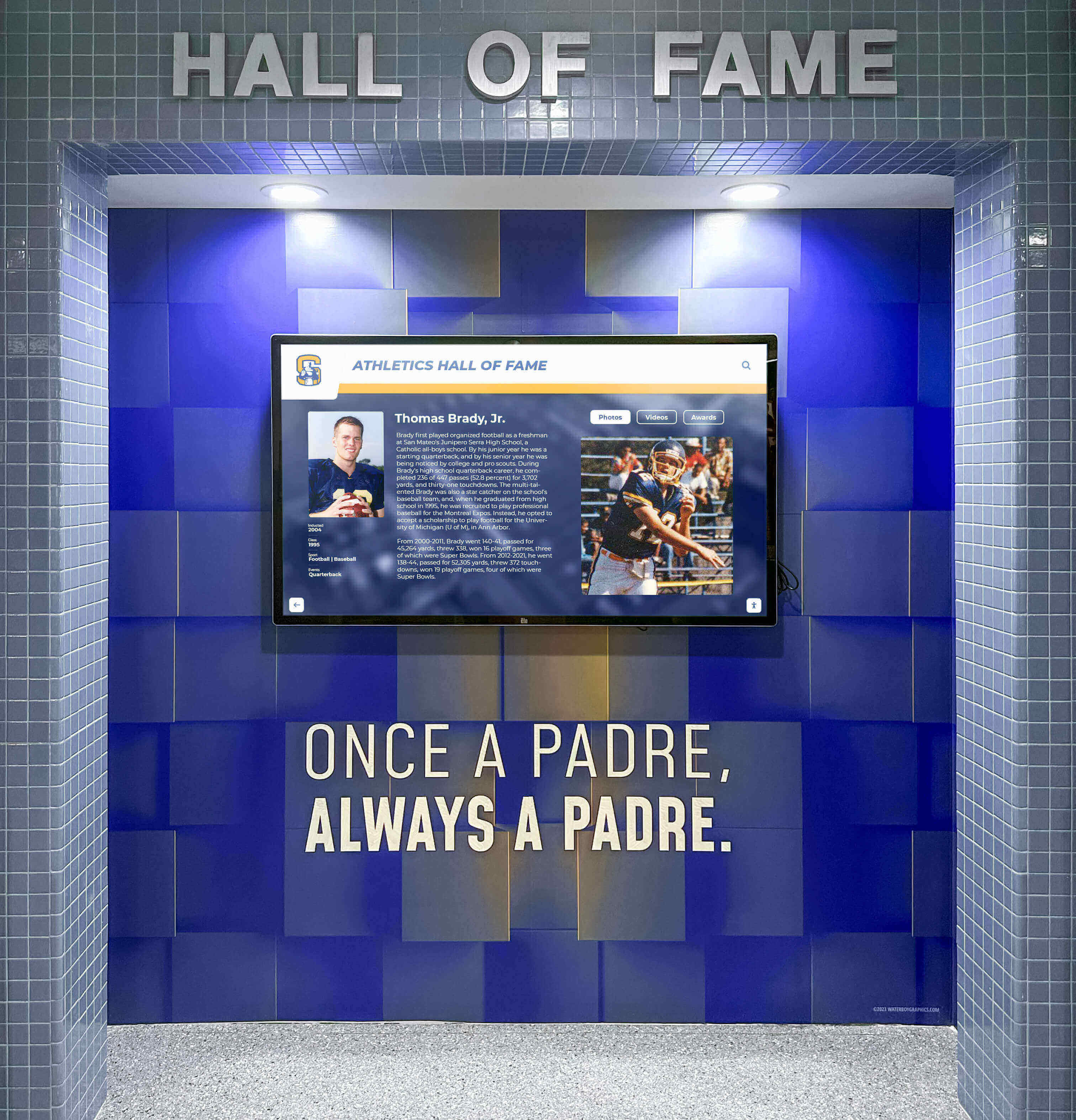
Modern digital solutions reduce ongoing costs while expanding recognition capacity
6 Critical Signs It’s Time to Modernize Your Hall of Fame
These warning signs indicate your traditional recognition system has reached the limits of effectiveness and efficiency:
1. Every Inch of Wall Space Is Already Claimed
When you scan your halls and realize there’s literally no available wall area for new plaques, you’ve hit the fundamental constraint of traditional recognition. This space exhaustion manifests in several ways:
Visual Overcrowding: Plaques mounted so closely together that individual achievements blend into an overwhelming wall of brass that visitors cannot meaningfully engage with or appreciate. The forest becomes invisible for the trees.
Awkward Placement: New recognition gets relegated to odd locations—narrow hallway corners, poorly-lit corridors, areas with limited foot traffic—simply because prominent spaces filled years ago. These suboptimal placements communicate that certain achievements matter less than others, regardless of their actual significance.
Vertical Extension Beyond Reach: Some schools resort to mounting plaques at heights where they become difficult to read. Recognition seven feet off the ground doesn’t honor achievement effectively—it just consumes available square footage without creating meaningful visibility.
Storage Accumulation: Perhaps most telling, many schools have closets or storage rooms filled with plaques, trophies, and recognition materials that have nowhere to go. These hidden achievements represent accomplishments that deserve honor but cannot be displayed due to spatial limitations.
According to research from the National Federation of State High School Associations, schools with athletic programs more than 15 years old typically have 60-70% of their total recognition materials in storage rather than on display, creating an invisible archive that serves no recognition purpose.
2. Recognition Updates Happen Slowly (If At All)
When adding new inductees or updating information requires weeks of planning, coordination with vendors, installation scheduling, and budget approval, recognition becomes reactive rather than timely. This delay problem creates multiple challenges:
Missed Celebration Moments: Athletic achievements deserve immediate recognition while excitement and community attention remain high. When new championship trophies sit in an athletic director’s office for months awaiting plaque fabrication and case reorganization, the moment of celebration passes before recognition appears.
Administrative Burden: The complexity of traditional updates discourages frequent maintenance. Athletic directors and administrators, already overwhelmed with responsibilities, postpone recognition updates because each one requires substantial time and effort. This creates backlogs where multiple seasons worth of achievements await recognition simultaneously.
Outdated Information: When correction or updates to existing plaques require complete refabrication at full cost, errors often remain uncorrected indefinitely. Alumni names get misspelled, dates show inaccuracies, and achievements lack important context because fixing mistakes proves prohibitively expensive and logistically complex.
Modern school communities expect real-time recognition comparable to the instant sharing they experience through social media and digital platforms. Traditional systems operating on quarterly or annual update cycles feel increasingly out of step with contemporary expectations.
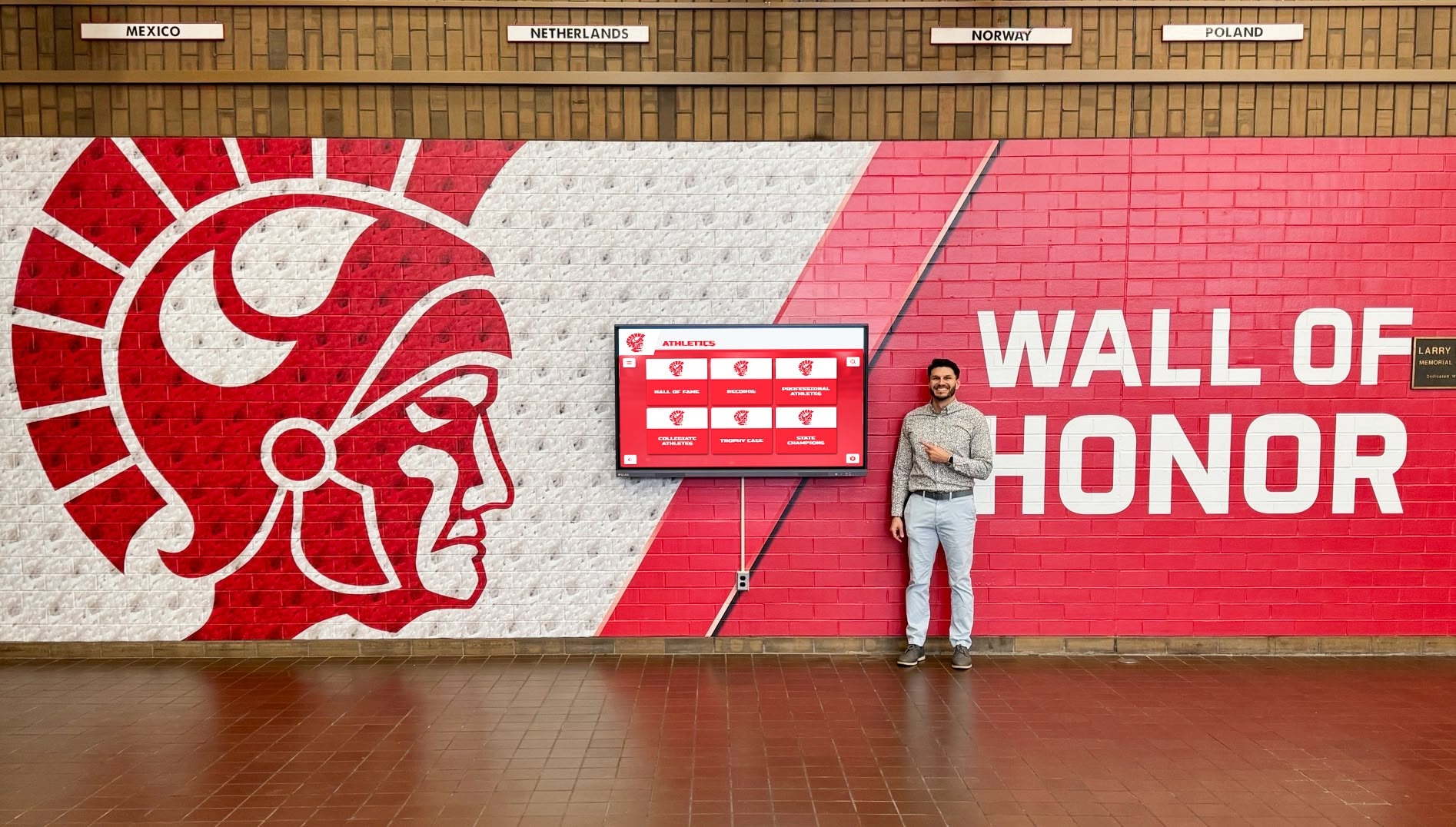
Digital platforms enable instant updates without fabrication delays or installation scheduling
3. Your Recognition Budget Keeps Growing
If your annual recognition expenses steadily increase while the results—number of honorees displayed, quality of presentation, community engagement—remain static or decline, you’re experiencing the unsustainable cost trajectory of traditional systems.
The Escalation Pattern:
- Year 1-3: Initial investment seems reasonable for quality recognition
- Year 4-7: Costs accumulate as achievement volume grows
- Year 8+: Annual recognition expenses become substantial budget line items with increasing pressure to reduce spending
- Year 15+: Schools face difficult choices between maintaining recognition programs and allocating funds to other priorities
This escalation happens because traditional recognition has no economies of scale. The 100th plaque costs the same as the first. The cost per inductee never decreases, and each new achievement requires the same investment regardless of how many previous recognitions exist.
Consider a school spending $5,000 annually on traditional recognition for 20 years. That’s $100,000 in fabrication costs alone—not counting installation, maintenance, or administrator time. Digital solutions like those from Rocket Alumni Solutions eliminate per-inductee costs entirely, with unlimited recognition capacity included in platform pricing.
4. Alumni Can’t Access Recognition Remotely
Traditional halls of fame serve only people physically present on campus. This geographic limitation means:
Alumni Exclusion: Graduates who’ve moved away—which describes the majority of alumni from most schools—have no way to view their recognition or explore their school’s achievement history unless they make special trips back to campus.
Family Celebration Barriers: When athletes earn recognition, their extended families want to celebrate. But grandparents in different states, relatives across the country, and friends who’ve relocated cannot participate in that celebration because recognition exists only in a specific hallway thousands of miles away.
Recruitment Limitations: Prospective students and families researching schools from distance cannot evaluate athletic program strength, academic achievement history, or school culture through recognition displays they cannot access. This invisibility represents missed recruitment and enrollment opportunities.
Donor Engagement Challenges: Alumni are most likely to support institutions where they feel continued connection. When recognition systems operate in geographic isolation, they cannot contribute to the donor cultivation and engagement that advancement teams need for fundraising success.
Solutions like digital halls of fame extend recognition beyond physical walls, enabling global access that multiplies engagement opportunities and strengthens alumni connections regardless of distance.
5. Your Displays Look Dated and Neglected
Physical recognition systems age in ways that undermine the honor they’re meant to convey:
Visual Deterioration: Plaques tarnish, frames fade, trophy polish dulls, photographs yellow, and cases accumulate dust and fingerprints. Even with regular maintenance, traditional materials show their age. Recognition intended to honor excellence begins looking neglected and unimportant.
Style Obsolescence: Recognition installed 10-20 years ago often reflects the design aesthetics of that era—fonts, layouts, materials, and presentation styles that no longer feel current or professional. This dated appearance can make achievements themselves seem less relevant or important than they actually are.
Maintenance Challenges: Glass cases require regular cleaning. Metal plaques need periodic polishing. Lighting burns out and needs replacement. Frames loosen from walls. This maintenance burden, while manageable initially, compounds over time as the recognition system ages and more elements need attention.
Presentation Inconsistency: As recognition gets added over multiple decades through different vendors and different administrators’ aesthetic choices, visual consistency disappears. The result: a patchwork appearance that lacks the cohesive professional presentation that honors achievement appropriately.
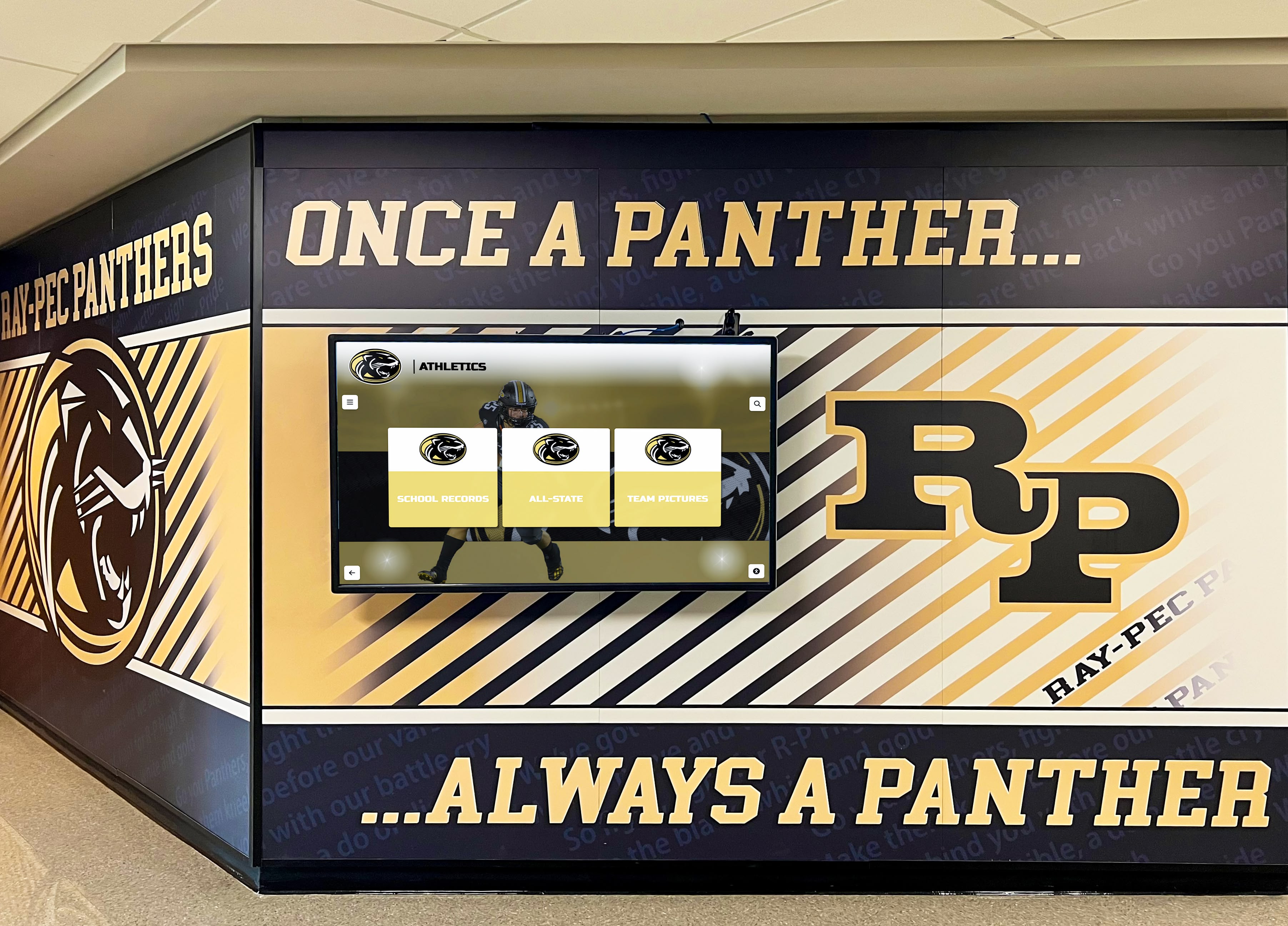
Modern digital displays maintain consistent, professional presentation that never shows physical wear
6. You Can’t Tell the Complete Story Behind Achievements
Traditional plaques convey minimal information by necessity—names, dates, perhaps a brief achievement description. This limitation means:
Context Loss: A championship trophy shows that a team won, but provides no insight into the season journey, key games, challenges overcome, or what made that achievement special. The story behind the success—often more meaningful than the trophy itself—remains untold.
Individual Recognition Gaps: Team plaques might list rosters, but provide no individual athlete profiles, personal achievements, or post-graduation updates that would create richer recognition and stronger personal connections.
Statistical Detail Absence: Record-breaking performances lack the statistical context that makes them meaningful. Visitors see that someone holds a school record but not how they achieved it, how it compares to previous records, or where it stands in conference or state competition.
Multimedia Impossibility: Traditional displays cannot incorporate video highlights, audio interviews, interactive statistics, or other rich media that brings achievements to life in ways static plaques never could.
Modern interactive athletic displays solve this storytelling limitation, enabling comprehensive recognition that honors both the achievement and the individuals who earned it through detailed profiles, multimedia content, and contextual information impossible with traditional formats.
How Modern Digital Halls of Fame Address Traditional Challenges
Understanding the problems traditional recognition creates provides context for why digital solutions generate such dramatically better outcomes across multiple dimensions:
Digital vs. Traditional Recognition: The Fundamental Differences
Traditional Physical Systems:
- Fixed capacity determined by wall space
- $75-$250 per new inductee/plaque
- 3-6 week turnaround for updates
- Geographic limitation to campus
- Minimal information per achievement
- Physical maintenance requirements
- Static presentation never evolving
- Difficult corrections when errors occur
Modern Digital Platforms:
- Unlimited capacity regardless of space
- $0 per additional inductee once installed
- Instant updates from any location
- Global web access for all stakeholders
- Rich multimedia storytelling capability
- Automatic software updates, no physical wear
- Continuous content evolution and enhancement
- Immediate corrections maintaining quality
Unlimited Recognition Capacity
Digital platforms like Rocket Alumni Solutions eliminate space constraints entirely. A single touchscreen display can showcase:
- Thousands of inductee profiles with detailed biographies
- Complete championship histories spanning decades
- Individual athlete achievements and statistics
- Team rosters with photos and accomplishments
- Video highlights and multimedia content
- Interactive timelines showing program evolution
- Searchable databases enabling instant discovery
This unlimited capacity means schools never face the impossible choice between honoring new achievements and preserving recognition for past accomplishments. Every inductee receives equal space and prominence regardless of when they achieved their accomplishments.
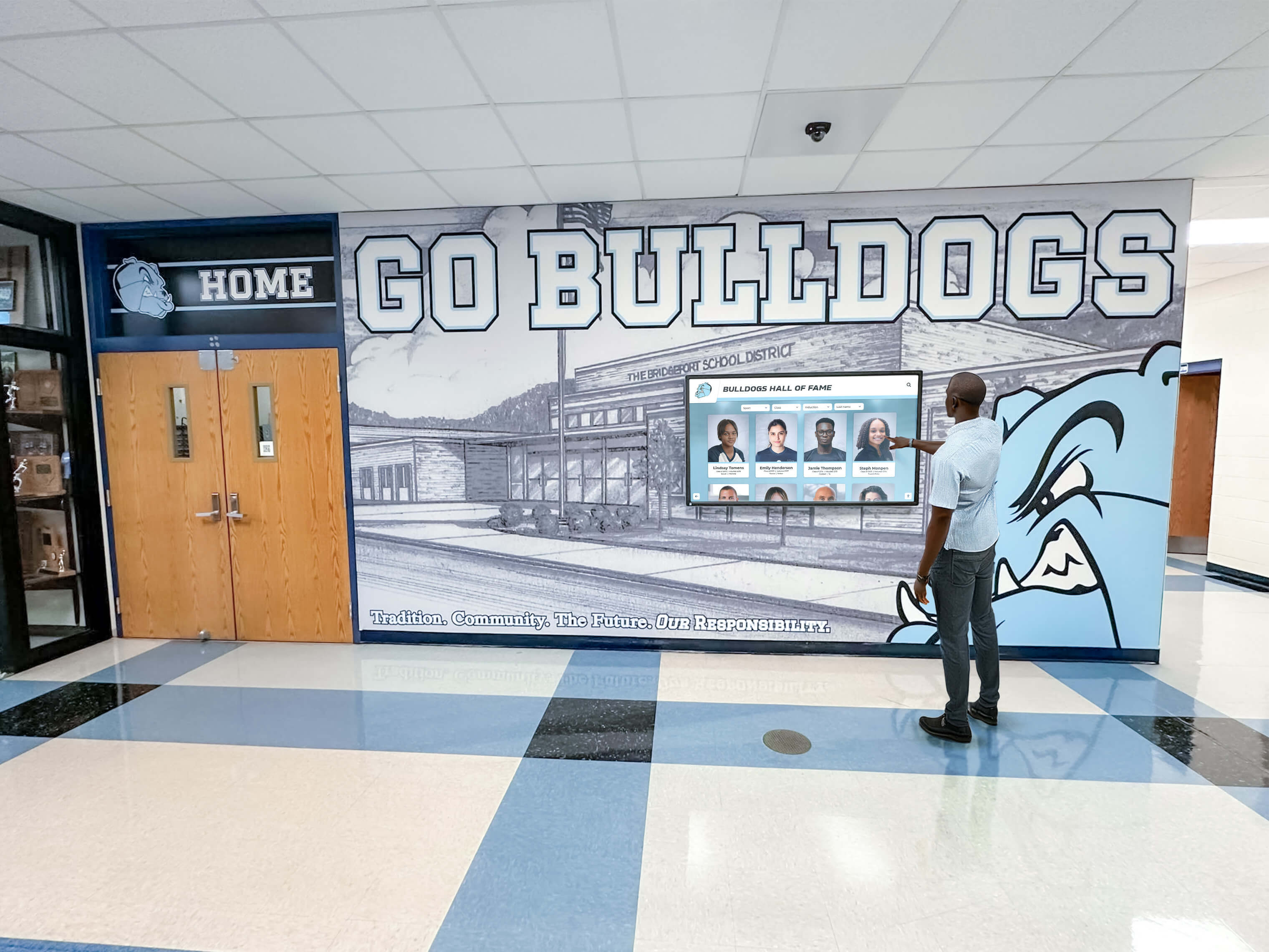
Single touchscreen installations provide unlimited recognition capacity that grows with your school
Dramatic Cost Reduction Over Time
While digital recognition requires higher initial investment than adding a single plaque, the cost equation reverses rapidly:
Traditional 10-Year Cost (25 Annual Inductees):
- Year 1 plaques: $3,750
- Years 2-10 plaques: $33,750
- Installation labor: $8,000
- Maintenance: $4,000
- Total: $49,500
Digital Platform 10-Year Cost:
- Initial hardware/software: $12,000-$18,000
- Annual platform fee (10 years): $12,000-$36,000
- Content management: $3,000-$6,000
- Total: $27,000-$60,000
- Per-inductee cost: $108-$240 vs. $198 traditional
The break-even point typically occurs within 3-5 years, after which digital recognition provides dramatically better value while offering capabilities traditional systems cannot match at any price point.
Remote Access Expanding Engagement
Web-accessible digital halls of fame transform recognition from campus-only experiences to global engagement opportunities. Alumni can:
- Explore their school’s complete achievement history from anywhere
- Search for their own recognition and teammates
- Share achievements via social media with extended networks
- Revisit memories and reconnect with school pride
- Access recognition on mobile devices during reunions or gatherings
This extended reach multiplies engagement compared to physical displays. Schools implementing web-accessible recognition systems report 10-20x more total viewership compared to estimated physical display traffic, with alumni engagement driving advancement and donor cultivation outcomes.
Rich Multimedia Storytelling
Digital platforms enable recognition depth impossible with traditional displays:
Comprehensive Inductee Profiles including biographical information, athletic or academic achievements, team and individual statistics, multiple photos from different periods, video interviews and highlights, post-graduation updates and careers, quotes and personal reflections, and connections to other inductees and achievements.
Interactive Features such as search and filtering by multiple criteria, timeline views showing historical progression, statistical comparisons and record tracking, related content recommendations, and social sharing capabilities for extended reach.
Living History that continuously evolves through regular content updates and enhancements, new media as it becomes available, alumni submissions and contributions, and milestone celebrations and commemorations.
This storytelling depth creates emotional connections and engagement that static plaques simply cannot generate, transforming recognition from passive viewing into active exploration and discovery.
Implementation: Modernizing Your Traditional Hall of Fame
Schools successfully modernizing their recognition programs follow systematic approaches that manage change while maximizing benefits:
Phase 1: Assessment and Planning (Months 1-2)
Stakeholder Engagement: Form committee representing athletics, administration, alumni, IT, and advancement to ensure broad perspective and buy-in.
Current State Analysis: Document existing recognition across all sports and programs, photograph all current displays and stored trophies, inventory available biographical and achievement information, and identify gaps where information requires research or collection.
Goals and Priorities: Define what success looks like for your modernized recognition, establish which sports or programs to digitize first, set budget parameters and funding strategies, and create timeline with realistic milestones.
Location Selection: Identify high-traffic areas for physical displays, assess technical requirements (power, network, security), and consider both initial installation and potential future expansion.
Phase 2: Content Development (Months 2-4)
Historical Research: Fill information gaps through record review, interviews with coaches and alumni, examination of yearbooks and newspaper archives, and collaborative fact-checking ensuring accuracy.
Photography and Digitization: Photograph existing trophies and displays comprehensively, collect or create athlete and team photos, develop video content where available, and organize digital assets with consistent naming and metadata.
Profile Creation: Write biographical content for inductees, compile achievement lists and statistics, create engaging narratives beyond dates and names, and implement quality control processes preventing errors.
Phase 3: Platform Selection and Installation (Months 3-5)
Vendor Evaluation: Compare capabilities of specialized platforms like Rocket Alumni Solutions versus generic digital signage, assess ease of content management for non-technical staff, evaluate support quality and responsiveness, and examine successful implementations at comparable schools.
Hardware Selection: Determine optimal display sizes for viewing distances and spaces, choose between wall-mounted, freestanding, or custom enclosure options, and specify commercial-grade components designed for continuous public use.
Installation and Configuration: Professional mounting ensuring security and accessibility, network setup for reliable connectivity, initial content population and testing, and staff training on content management platform.
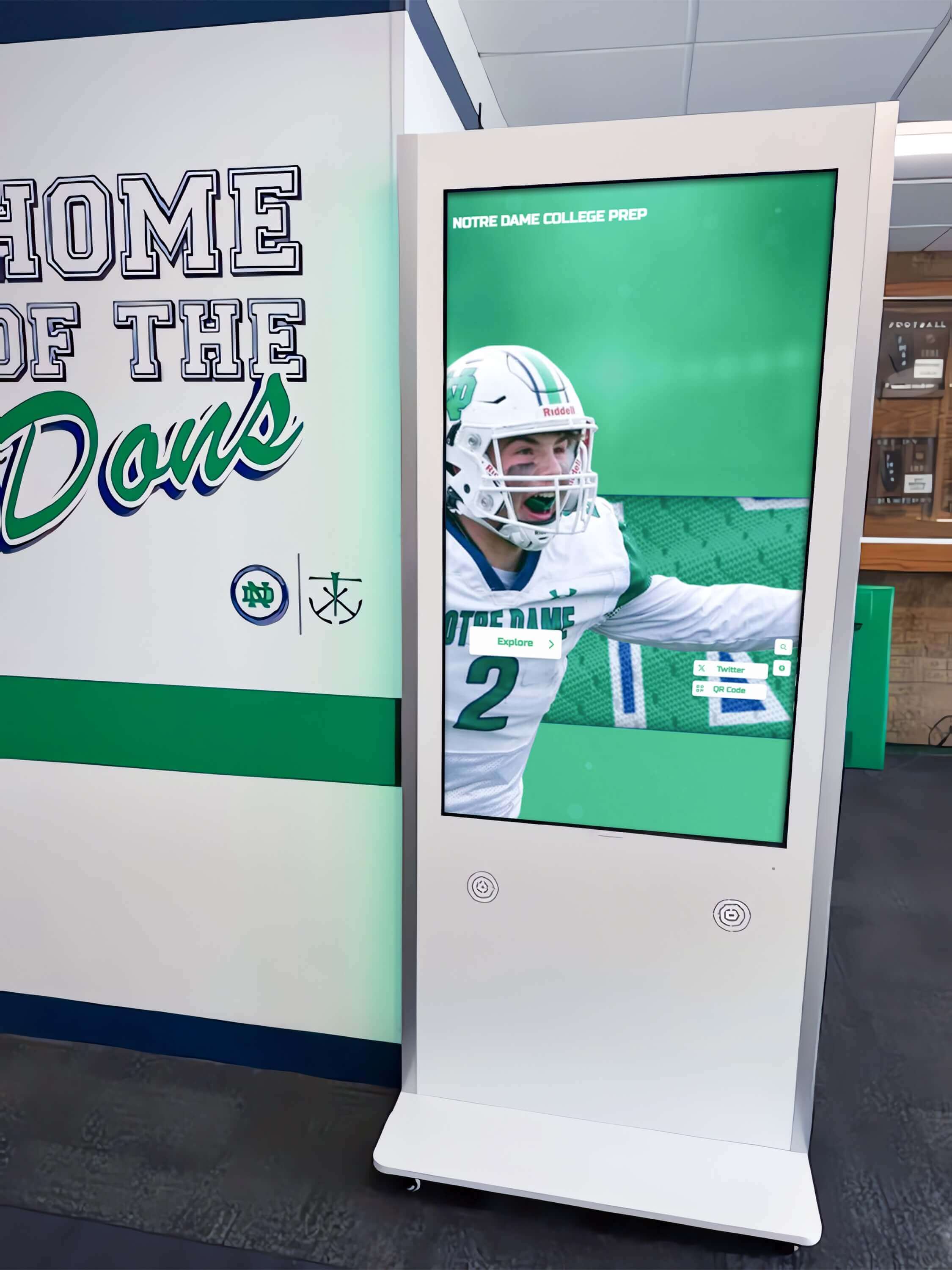
Professional installation ensures optimal placement and reliable long-term operation
Phase 4: Launch and Promotion (Month 6)
Soft Launch: Initial activation with core content, feedback gathering from early users, refinement based on initial response, and final quality assurance before public announcement.
Grand Opening: Formal unveiling during high-profile school event (homecoming, major game, awards ceremony), recognition of committee members and contributors, media coverage through local outlets and school communications, and alumni outreach highlighting new accessibility.
Ongoing Promotion: Regular highlights of featured content, social media campaigns encouraging exploration, integration into campus tours and recruitment activities, and periodic content spotlights maintaining awareness and engagement.
Phase 5: Continuous Enhancement (Ongoing)
Regular Content Updates: Add new inductees and achievements promptly, enhance existing profiles with additional media, correct any errors or inaccuracies immediately, and celebrate milestone additions (500th inductee, 10th championship, etc.).
Engagement Analysis: Track which content receives most views, identify popular search terms and navigation patterns, understand peak usage times and contexts, and use insights to guide content development priorities.
Evolution and Expansion: Add new features as platform capabilities evolve, expand to additional displays in other campus locations, develop complementary web presence extending reach, and explore advanced integrations with other school systems.
Investment and ROI: Understanding the Financial Equation
Modernizing recognition requires appropriate investment, but delivers substantial returns across multiple dimensions:
Total Cost of Ownership Analysis
| Expense Category | Traditional (5 Years) | Digital (5 Years) |
|---|---|---|
| Initial Setup | $8,000-$12,000 | $12,000-$25,000 |
| Annual New Inductees (25) | $18,750 | $0 |
| Installation/Updates | $4,000 | $0 |
| Maintenance | $2,000 | $1,000 |
| Platform/Software Fees | $0 | $6,000-$18,000 |
| Total 5-Year Cost | $32,750 | $19,000-$44,000 |
Beyond direct cost comparison, digital systems deliver value traditional recognition cannot:
- Unlimited capacity accommodating unlimited growth
- Instant updates without fabrication delays
- Global access enabling worldwide alumni engagement
- Rich storytelling impossible with physical plaques
- Lower labor burden freeing administrators for other priorities
- Enhanced recruitment appeal through modern, impressive displays
Funding Strategies for Modernization
Schools successfully funding digital recognition projects employ diverse approaches:
Capital Campaign Integration: Include hall of fame modernization in larger fundraising initiatives for facilities or program enhancements, positioning recognition technology as visible, tangible project that donors can easily understand and support.
Naming Opportunities: Offer naming rights for the digital recognition system itself ($25,000-$50,000 level), individual sport or program sections ($5,000-$15,000 level), or annual inductee classes ($2,500-$5,000 level).
Alumni Association Support: Partner with alumni organizations who have vested interest in recognition visibility and accessibility, presenting modernization as membership benefit that strengthens alumni engagement.
Booster Club Funding: Athletic boosters often prioritize projects that enhance program visibility and recruitment appeal, making digital recognition natural fit for their fundraising focus.
Phased Implementation: Start with single sport or program as proof of concept, demonstrate success and engagement before seeking funding for expansion, allowing manageable initial investment with clear path to comprehensive coverage.
Future Trends in Digital Recognition
Technology continues evolving, with emerging capabilities that will enhance digital recognition in coming years:
Artificial Intelligence Integration
AI-powered features already emerging in leading platforms include:
- Automated content enhancement generating descriptions from photos and achievements
- Intelligent search understanding natural language queries
- Personalized experiences adapting content based on user interests
- Predictive recommendations suggesting related content visitors will find valuable
Augmented Reality Experiences
AR capabilities enable:
- Virtual trophy viewing where visitors can examine 3D trophy models from all angles
- Historical overlays showing how spaces looked during specific championship eras
- Interactive timelines that visitors walk through physically while viewing digital content
- Mobile companion apps extending the physical display experience to personal devices
Enhanced Social Integration
Deeper social connectivity including:
- Alumni contribution platforms enabling crowd-sourced content enhancement
- Celebration automation instantly sharing new inductees across social networks
- Virtual gatherings around recognition milestones and anniversaries
- Legacy connections helping families discover multiple generations of achievement
Common Questions About Hall of Fame Modernization
“What happens to our physical trophies and plaques?”
Modernization doesn’t require discarding physical recognition. Most schools implement hybrid approaches:
- Maintain select showcase displays for most prestigious achievements
- Return individual trophies to recipients or their families
- Create smaller rotating physical displays complementing digital primary system
- Donate or recycle materials responsibly when appropriate
Digital recognition preserves achievement visibility while giving schools flexibility with physical materials.
“How difficult is content management after implementation?”
Modern platforms emphasize ease-of-use for non-technical staff. Adding new inductees typically requires:
- Photographing achievement or individual (5 minutes)
- Uploading photo and entering information via web form (10 minutes)
- Reviewing and publishing (2 minutes)
Total time: Under 20 minutes per inductee, accessible from any internet-connected device, with no vendor coordination or installation scheduling required.
“Will alumni accept digital recognition vs. physical plaques?”
Schools consistently report that alumni strongly prefer digital recognition because:
- They can access it anytime from anywhere
- It includes more information and multimedia than plaques ever could
- They can easily share achievements with family and friends
- The presentation feels more current and impressive
Initial skepticism from traditional-minded stakeholders typically converts to enthusiasm once they experience the enhanced engagement and visibility digital systems provide.
“What if we lose power or internet connectivity?”
Quality digital recognition platforms include:
- Offline content caching ensuring displays function during network interruptions
- Automatic synchronization when connectivity restores
- Backup power considerations through UPS systems if needed
- Cloud content backup preventing data loss
Well-implemented systems achieve 98%+ uptime, matching or exceeding the accessibility of physical displays that can also become inaccessible due to facilities issues.

Modern displays provide reliable, continuous operation with minimal maintenance requirements
Making the Modernization Decision
If your traditional hall of fame shows multiple warning signs—space exhaustion, delayed updates, rising costs, limited engagement, dated appearance, or storytelling limitations—modernization delivers substantial benefits justifying investment.
The question isn’t whether digital recognition is better. The evidence overwhelmingly demonstrates superior capacity, lower long-term costs, greater engagement, and richer storytelling compared to traditional approaches.
The real question is timing: Do you modernize now, implementing forward-looking recognition systems that will serve your school for decades, or continue investing in traditional approaches that become more problematic and expensive with each passing year?
Schools modernizing their halls of fame consistently report similar outcomes:
- Immediate space crisis resolution with unlimited recognition capacity
- Cost stabilization as per-inductee expenses drop to zero
- Enhanced alumni engagement through global web accessibility
- Improved recruitment appeal from modern, impressive recognition
- Administrative efficiency with instant updates vs. multi-week fabrication cycles
- Better storytelling that honors achievements through comprehensive profiles
Most importantly, modernization ensures every achievement receives the recognition it deserves, without impossible choices between honoring new accomplishments and preserving recognition for past success.
Your Next Steps: Getting Started with Modernization
Ready to transform your traditional hall of fame into a modern recognition platform that serves your school’s needs both today and decades into the future?
Start Your Digital Recognition Journey
Rocket Alumni Solutions specializes in helping schools modernize traditional halls of fame with comprehensive digital recognition platforms designed specifically for educational institutions. Our solutions combine unlimited capacity, intuitive content management, rich multimedia capabilities, and proven implementation support ensuring successful modernization.
Explore Modern Recognition SolutionsBegin with Assessment
Start by evaluating your current situation:
- Document all existing recognition across your campus
- Calculate current annual recognition spending
- Survey stakeholders about satisfaction with current systems
- Identify key frustrations and limitations you want to solve
Research and Compare
Explore different approaches:
- Visit schools that have modernized their recognition programs
- Request demonstrations from specialized platforms like Rocket Alumni Solutions
- Compare capabilities of recognition-specific vs. generic digital signage solutions
- Understand total cost of ownership including implementation, ongoing fees, and content management
Plan Implementation
Develop realistic roadmap:
- Form stakeholder committee ensuring broad representation
- Establish budget and identify funding sources
- Create phased approach if full implementation exceeds immediate resources
- Define success metrics for evaluating results
Execute with Support
Partner with experienced providers:
- Choose vendors with proven track records in educational institutions
- Ensure comprehensive training and ongoing support
- Plan launch events that maximize awareness and engagement
- Commit to continuous enhancement maintaining momentum
The traditional halls of fame serving schools for generations have reached the limits of their effectiveness. It’s time to modernize with recognition technology that eliminates constraints, reduces costs, expands engagement, and honors every achievement with the rich storytelling and accessibility today’s school communities expect and deserve.
Your athletes, scholars, and alumni have earned recognition. Digital halls of fame ensure they receive it—without space limitations, without geographic barriers, and without the compromises traditional systems force on schools that care deeply about honoring excellence.
For more information about comprehensive digital recognition solutions, explore additional resources on digital record boards, interactive hall of fame displays, and best practices for digital recognition implementation.































