Schools, universities, athletic programs, and organizations face a common challenge: how to celebrate achievements comprehensively while maintaining engaging, accessible recognition displays that inspire current members and honor past excellence. Traditional trophy cases and static plaque walls impose severe space limitations, require expensive ongoing maintenance, and fail to capture the attention of today’s digitally-connected audiences.
Digital hall of fame services have emerged as transformative solutions to these challenges, offering unlimited recognition capacity, interactive engagement features, and multimedia storytelling capabilities impossible with physical displays. But with numerous providers offering varying levels of service, features, and support, choosing the right partner requires careful evaluation of what truly matters for long-term success.
This comprehensive guide examines the top-rated digital hall of fame services available in 2025, analyzing key features, service quality, implementation approaches, and real-world performance to help organizations make informed decisions that deliver lasting value.
Understanding Digital Hall of Fame Services
Before evaluating specific providers, clarity about what digital hall of fame services encompass helps establish appropriate expectations and evaluation criteria.
What Digital Hall of Fame Services Include
Comprehensive digital recognition services extend far beyond simply providing software or hardware. Top-rated providers deliver integrated solutions addressing technology, content, implementation, and ongoing support:
Technology Infrastructure: Commercial-grade touchscreen displays designed for intensive public use, cloud-based content management systems accessible from any device, responsive web platforms enabling mobile and remote access, secure hosting and data protection meeting institutional requirements, and regular software updates delivering new features and security enhancements.
Implementation Services: Site assessment and placement recommendations ensuring optimal visibility and engagement, professional installation with appropriate mounting and cabling, content strategy consultation addressing what to feature and how to organize recognition, initial content migration and setup reducing institutional burden, and comprehensive staff training on content management and system administration.
Ongoing Support: Dedicated customer success management providing personalized guidance, responsive technical support addressing issues quickly, proactive system monitoring preventing problems before they affect operations, regular performance reviews identifying optimization opportunities, and continuous platform improvements adding capabilities over time.
Content Capabilities: Searchable databases organizing hundreds or thousands of achievements, multimedia integration supporting photos, videos, and documents, interactive navigation enabling visitors to explore content intuitively, social sharing features extending recognition reach beyond physical displays, and analytics dashboards tracking engagement and popular content.
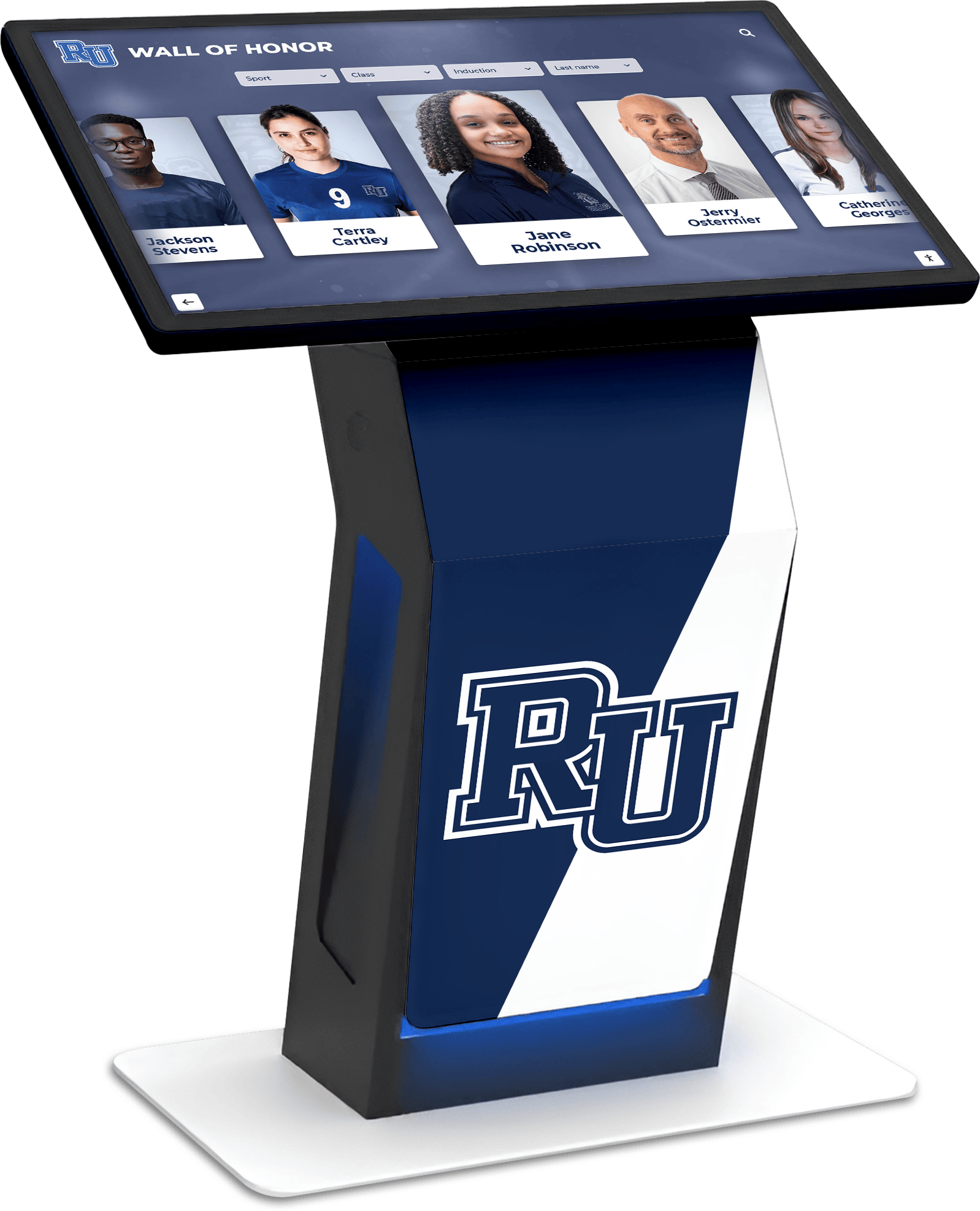
The distinction between basic digital signage platforms and purpose-built recognition services becomes apparent when examining comprehensiveness. Generic solutions may provide display technology but leave schools to figure out content strategy, manage technical implementation, and maintain systems independently—challenges that undermine success for institutions lacking specialized expertise.
Key Evaluation Criteria for Digital Hall of Fame Services
Organizations evaluating providers should assess multiple dimensions beyond simply comparing feature lists or pricing:
Service Quality and Support: How responsive is technical support when issues arise? Do you receive dedicated account management or navigate general support queues? What implementation assistance comes included versus costing extra? Does the provider offer ongoing training as staff changes and platforms evolve?
Recognition-Specific Features: Can the system handle complex achievement types including athletics, academics, arts, service, and donor recognition? Does search functionality enable visitors to quickly find specific individuals or accomplishment categories? How easily can non-technical staff update content without requiring IT intervention?
Scalability and Flexibility: Can the solution start small and expand as programs grow? Does it support multiple display locations with centralized management? Will current hardware support future software capabilities as technology evolves?
Content Management Simplicity: How intuitive is the content management interface for busy administrators? What bulk upload capabilities exist for migrating historical records? Can you schedule content to appear automatically on specific dates or during particular seasons?
Integration Capabilities: Does the platform connect with existing alumni databases, student information systems, or development platforms? Can it embed within institutional websites maintaining consistent branding? Are APIs available for custom integrations addressing unique requirements?
Vendor Stability and Track Record: How long has the provider served educational and organizational clients? What is their customer retention rate indicating satisfaction? Can they provide references from similar institutions? Do they demonstrate ongoing innovation and platform development?
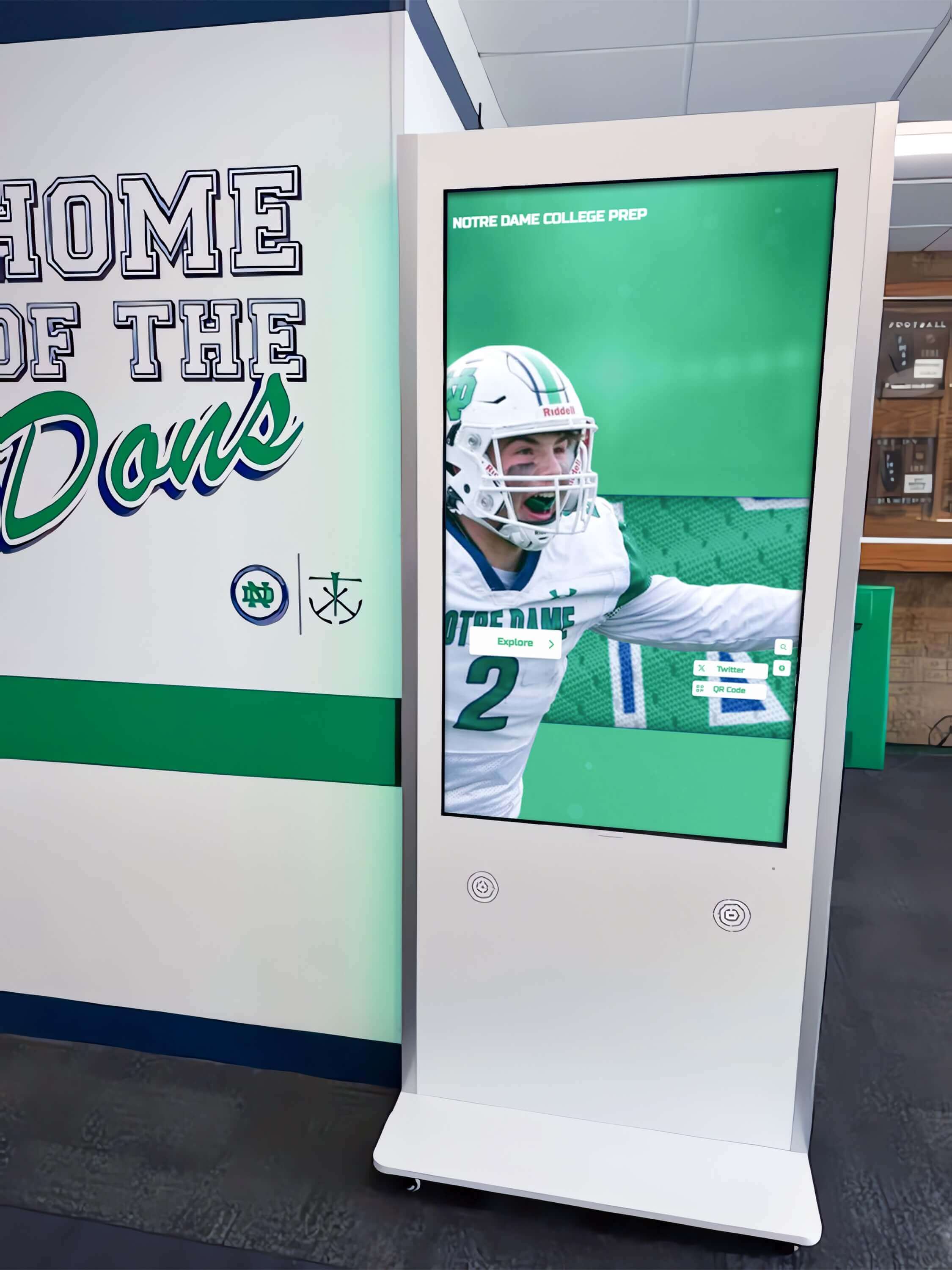
Organizations prioritizing these evaluation dimensions typically achieve better long-term outcomes than those focused narrowly on initial purchase price or superficial feature comparisons. The right partner delivers value extending far beyond technology provision alone.
Top-Rated Digital Hall of Fame Service Providers
Based on features, service quality, customer satisfaction, and proven track records, several providers stand out in the digital recognition space. Each offers distinct approaches and strengths worth understanding.
Rocket Alumni Solutions - Comprehensive Recognition Excellence
Rocket Alumni Solutions has established itself as the leading provider of comprehensive digital recognition solutions specifically designed for educational institutions, athletic programs, and community organizations. Unlike generic digital signage vendors, Rocket built its entire platform around recognition applications, creating purpose-built capabilities that generic solutions cannot match.
Distinctive Advantages
The Rocket approach delivers several fundamental benefits that separate it from alternatives:
White Glove Customer Success: Every client receives dedicated customer success management providing personalized support throughout implementation and beyond. This dedicated partnership model—detailed in guides about white glove support—ensures schools receive expert guidance navigating complex recognition program development rather than being left to figure things out independently.
Dual-Platform Strategy: Rocket offers both physical touchscreen installations and web-accessible virtual recognition, often seamlessly integrated so the same content appears on on-campus displays and online platforms. This dual approach maximizes reach while providing consistent experiences across channels.
Unlimited Recognition Capacity: Unlike physical displays constrained by wall space, Rocket’s digital systems honor unlimited achievements without forcing difficult decisions about what receives visibility. Schools can recognize every deserving individual across all accomplishment categories.
Intuitive Content Management: The cloud-based management system requires no technical expertise, enabling athletics directors, advancement staff, and administrators to update content quickly without IT involvement. Drag-and-drop interfaces, template-based layouts, and bulk upload capabilities make content management straightforward.
Multimedia Storytelling: Beyond basic names and dates, the platform supports rich content including photo galleries, video highlights, audio testimonials, interactive timelines, and document archives. This multimedia capability brings achievements to life through compelling narratives.
Proven Implementation Process: Drawing on experience across 1,000+ installations in 50 states, Rocket’s implementation methodology addresses common challenges while accelerating deployment. Most schools launch successful programs within 2-4 weeks from initial planning.
Typical Applications
Rocket serves diverse recognition needs including athletic halls of fame and record boards, alumni achievement recognition programs, academic excellence displays, donor recognition walls, community heroes and service recognition, historical archives and institutional timelines, and championship team celebrations.
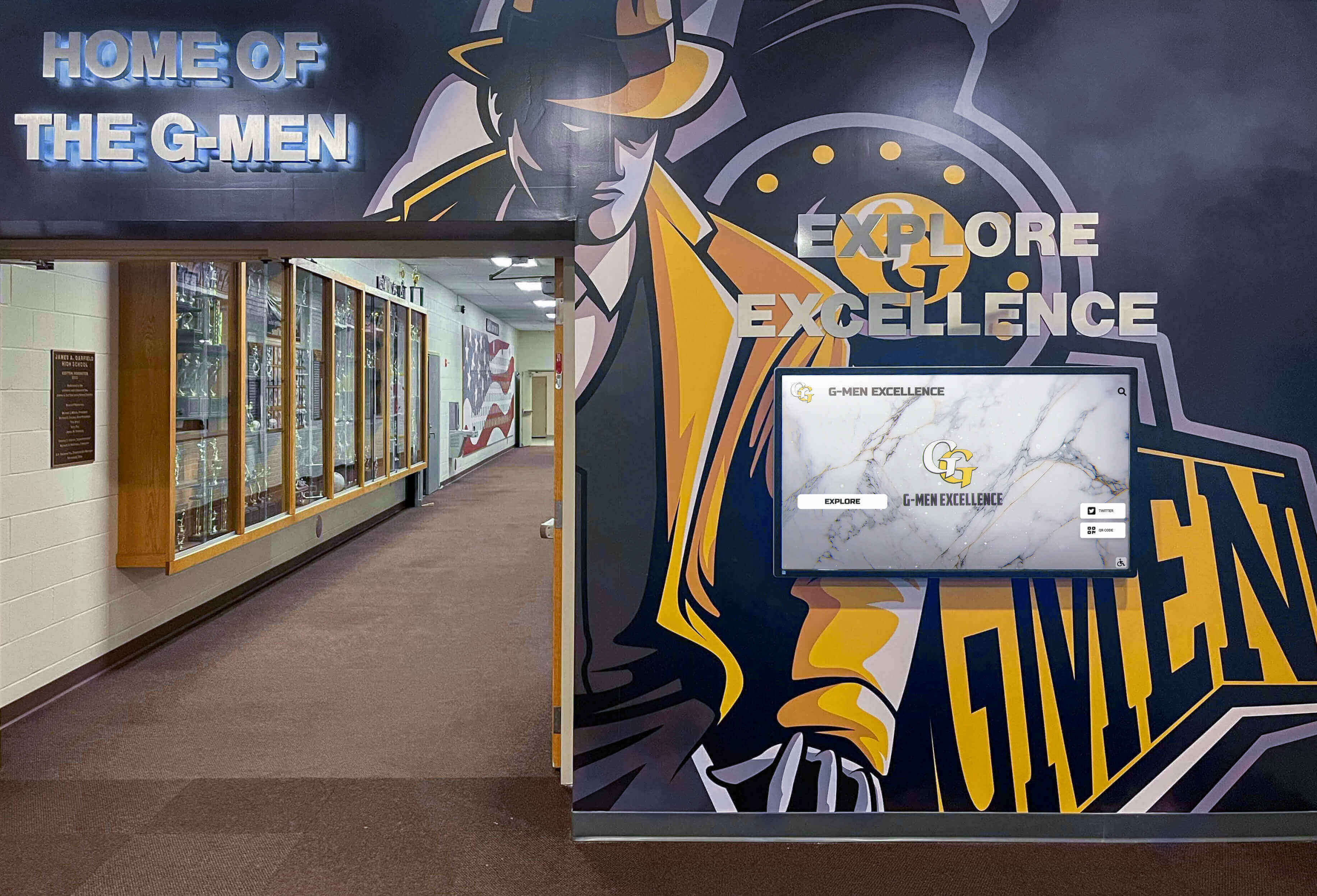
The platform’s flexibility enables institutions to start with focused applications—perhaps athletics recognition—and expand to additional categories as programs mature and content grows.
Pricing and Investment
Rocket provides custom quotes based on specific organizational needs, display configurations, content scope, and desired features. Most complete implementations including hardware, software, installation, content development, and ongoing support range from $10,000-$30,000 for single-display systems, with multi-display networks and campus-wide solutions scaled accordingly.
This investment delivers comprehensive solutions rather than technology alone, including dedicated customer success management, complete implementation services, ongoing training and support, regular platform updates and improvements, and analytics and optimization consultation.
Schools implementing hall of fame displays typically achieve ROI within 2-3 years when accounting for eliminated plaque production costs, reduced maintenance requirements, space optimization value, and enhanced engagement outcomes supporting institutional goals.
Best For: Schools, universities, athletic programs, corporate recognition, donor walls, community organizations, and any institution seeking comprehensive recognition excellence with dedicated partnership support.
Learn More: Rocket Alumni Solutions
Traditional Plaques and Physical Displays - Legacy Approaches
While not digital services, traditional recognition methods remain common and deserve understanding as points of comparison:
Characteristics: Engraved brass or acrylic plaques mounted on walls, trophy cases displaying physical awards, framed photos and certificates, and static donor walls with permanent nameplate mounting.
Advantages: Timeless, prestigious appearance with perceived permanence, no technology requirements or learning curves, one-time production costs without ongoing subscriptions, and tangible recognition that honorees can photograph.
Limitations: Severe space constraints eventually requiring difficult removal decisions, expensive ongoing costs for adding new plaques ($150-$500 each plus installation), minimal information capacity beyond names and basic text, inability to update or correct errors without replacement, regular maintenance required for cleaning and repair, and no engagement analytics or interaction tracking.
Most institutions implementing digital solutions maintain select traditional displays for their ceremonial gravitas while handling comprehensive recognition digitally where space limitations and update complexity would make traditional approaches impractical.
Generic Digital Signage Platforms
Several companies offer general-purpose digital signage that some organizations attempt to adapt for recognition purposes:
Common Providers: Rise Vision, ScreenCloud, Signagelive, and similar cloud-based digital signage platforms.
Advantages: Lower initial costs than purpose-built solutions, familiar to organizations already using digital signage for announcements, simple content publishing for basic text and images, and multi-location support for distributed display networks.
Limitations: Not designed specifically for recognition applications lacking searchability and achievement organization, minimal interactivity—typically static displays rather than touchscreen engagement, limited multimedia storytelling capabilities compared to recognition-specific platforms, no implementation services beyond basic technical setup, generic support not understanding recognition program needs, and no content strategy guidance or optimization consultation.
Schools attempting to use generic signage for recognition typically encounter frustration as they discover limitations that recognition-specific platforms address inherently. What seems like cost savings often leads to underutilized displays failing to achieve recognition goals.
Custom Development Solutions
Some institutions with substantial budgets and technical resources consider custom-developed recognition systems:
Characteristics: Custom software built by internal development teams or contracted agencies, integrated with institutional technology infrastructure, designed specifically for unique institutional requirements.
Advantages: Complete customization addressing specific needs and preferences, full ownership of source code and intellectual property, direct integration with existing systems and databases, and no ongoing vendor subscriptions or dependencies.
Limitations: Substantial initial development costs ($50,000-$250,000+), extended development timelines (6-18 months typical), ongoing maintenance burden requiring technical staff, responsibility for security updates and feature enhancements, no customer support from external vendors, and risk of losing institutional knowledge when developers leave.
The total cost of ownership for custom solutions typically exceeds purpose-built platforms significantly when accounting for development, maintenance, and opportunity costs of technology staff focused on recognition systems rather than core institutional priorities.
Only very large institutions with substantial IT resources should consider custom development, and even then, many find purpose-built platforms deliver better outcomes at lower total cost through shared development investment across broad customer bases.
Essential Features of Top-Rated Services
While specific implementations vary, the best digital hall of fame services share common characteristics that separate exceptional solutions from adequate ones:
Comprehensive Content Management
Intuitive Administration: Top platforms enable non-technical staff to manage content confidently through user-friendly interfaces with visual content editors, template-based layouts simplifying design consistency, drag-and-drop organization for easy content arrangement, preview capabilities showing how changes appear before publication, and scheduled publishing for timed content releases.
Flexible Content Structure: Recognition needs vary across institutions. Leading services support diverse content types including individual honoree profiles with photos and biographies, team rosters and championship celebrations, statistical records and achievement milestones, historical timelines and institutional narratives, video highlights and multimedia content, and document archives for certificates and clippings.
Bulk Operations: When migrating historical records or making widespread updates, bulk capabilities prove essential. Look for CSV/Excel import supporting mass content additions, batch editing for applying changes across multiple entries, category-based updates modifying entire achievement groups, and export functionality backing up content data.
Interactive User Experience
The visitor experience determines engagement success. Top-rated services create experiences that invite exploration:

Powerful Search: Visitors should find content easily through name-based search returning relevant results quickly, multi-field search across names, years, achievements, and descriptions, suggested search showing popular queries, filters narrowing results by category, year, or achievement type, and saved searches for frequently accessed content combinations.
Intuitive Navigation: Clear organizational structures help visitors explore content systematically through category browsing by achievement type or program, chronological navigation by year or decade, featured content highlighting notable honorees or recent additions, related content suggesting connections between achievements, and breadcrumb trails showing navigation paths.
Multimedia Integration: Beyond text and photos, compelling recognition includes video playback with smooth streaming, photo galleries with lightbox viewing, audio clips and oral histories, downloadable documents and certificates, and interactive data visualizations.
Social Sharing: Extending recognition reach requires easy sharing through one-click sharing to major social platforms, custom preview images for attractive social posts, shortened URLs for convenient sharing, email content delivery, and embed codes for institutional websites.
Analytics and Performance Tracking
Understanding engagement patterns enables continuous improvement. Leading platforms provide comprehensive analytics including visitor metrics tracking unique visitors, page views, and session duration, content performance revealing most-viewed profiles and popular categories, search analytics showing what visitors seek, device and location data indicating how audiences access content, time-series trends revealing seasonal patterns, and conversion tracking measuring desired actions.
These insights inform content strategy decisions about what to feature prominently, optimization opportunities improving user experience, and success metrics demonstrating program value to stakeholders.
Mobile and Web Accessibility
Physical displays reach only on-campus visitors. Top services extend recognition globally through responsive web design displaying perfectly on all devices, native mobile apps for iOS and Android when appropriate, offline capability for locations with limited connectivity, accessible design supporting screen readers and assistive technologies, and multi-language support for diverse audiences.
The best touchscreen displays integrate seamlessly with web and mobile platforms, creating consistent experiences across all channels while enabling both on-campus engagement and remote alumni connection.
Security and Reliability
Recognition systems contain sensitive information and serve mission-critical functions. Essential security features include enterprise-grade hosting with guaranteed uptime, regular automated backups preventing data loss, SSL encryption protecting data transmission, role-based permissions controlling content access, audit logs tracking all system changes, compliance with FERPA, GDPR, and similar regulations, and disaster recovery plans ensuring business continuity.
Implementation: What to Expect from Top Services
Service quality reveals itself most clearly during implementation, when organizations most need hands-on guidance. Top-rated providers deliver comprehensive implementation support addressing all dimensions of successful deployment:
Discovery and Planning Phase
Needs Assessment: Dedicated implementation specialists work with institutional teams to clarify recognition goals and priorities, inventory existing content requiring digitization, assess technical infrastructure and requirements, identify stakeholders needing engagement, and establish success metrics and measurement approaches.
Strategic Planning: Based on assessment findings, implementation partners develop content strategy defining what to recognize and how to organize, phased roadmaps for manageable deployment, stakeholder engagement plans building buy-in, budget and timeline estimates setting realistic expectations, and risk mitigation strategies addressing potential challenges.
This planning investment prevents common pitfalls like unrealistic timelines, undefined content strategies, insufficient stakeholder coordination, technical infrastructure gaps, and unclear success criteria that undermine implementations lacking proper planning.
Content Development Support
Many schools underestimate content development complexity. Top providers offer substantial assistance:
Content Strategy: Guidance on achievement categories and recognition criteria, storytelling approaches engaging audiences emotionally, information architecture organizing content intuitively, visual design and branding consistency, and multimedia integration strategies.
Content Collection: Templates and worksheets streamlining information gathering, photo and asset specifications ensuring quality, historical research approaches filling gaps in older records, and alumni engagement strategies soliciting profile updates.
Content Creation: Professional writing assistance for compelling narratives, photo editing and optimization services, video production guidance and support, and graphic design for special recognitions.
This comprehensive content support, as detailed in resources about measuring ROI, dramatically accelerates deployment while ensuring professional quality that honors achievements appropriately.
Technical Implementation Excellence
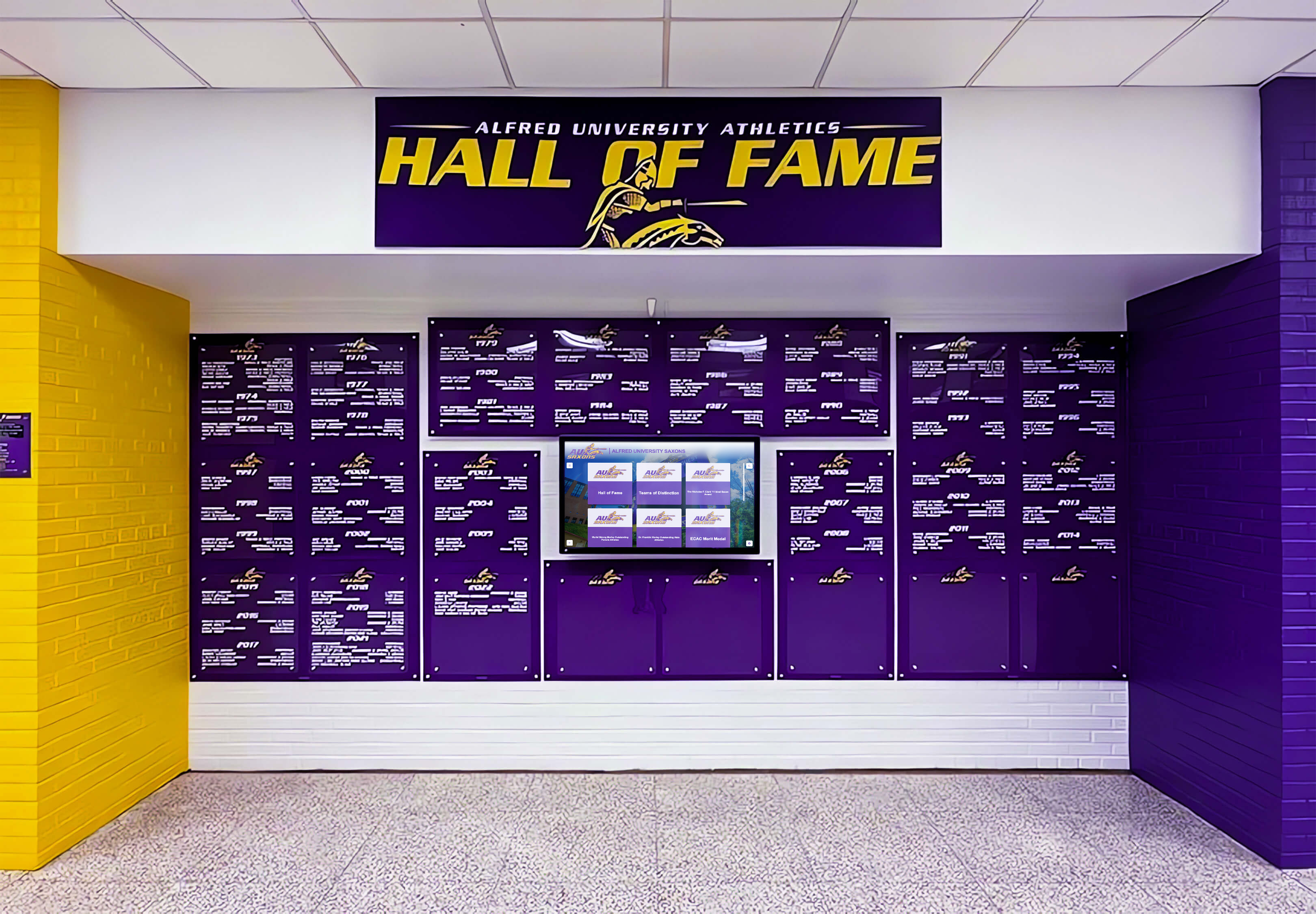
Hardware Installation: Top providers coordinate all technical aspects including site surveys ensuring optimal placement, professional mounting and cabling meeting code requirements, network connectivity configuration, display calibration and testing, and quality assurance before handoff.
Software Configuration: Platform setup includes institutional branding and design customization, user account creation with appropriate permissions, content management system configuration, integration with existing systems when needed, and mobile and web companion setup.
Training and Knowledge Transfer: Comprehensive education ensures successful ongoing management through administrator training on content management, advanced feature workshops as users gain proficiency, documentation customized to institutional workflows, video tutorials and reference materials, and ongoing education webinars introducing new capabilities.
Launch and Ongoing Partnership
Strategic Launch: Implementation partners help organizations maximize launch impact through stakeholder communication plans generating awareness, launch event coordination celebrating achievements, social media strategies extending reach, media relations securing coverage, and feedback collection measuring satisfaction.
Ongoing Support: After launch, top services provide continuous partnership including dedicated customer success management, regular performance reviews and optimization, technical support and troubleshooting, platform updates and new features, and community forums connecting peer institutions.
This comprehensive approach transforms technology procurement into genuine partnership supporting long-term recognition program success.
Making Your Decision: Selection Framework
With multiple options available, systematic evaluation helps organizations identify optimal partners:
Define Your Priorities
Start by clarifying what matters most: comprehensive recognition across categories or focused athletics/academics/alumni applications? On-campus engagement through touchscreens or web accessibility for distributed audiences? Simple self-service or comprehensive guided implementation? Budget optimization or feature richness? Long-term vendor relationship or simple technology acquisition?
Clear priorities enable weighted evaluation rather than checklists treating all factors equally.
Evaluate Total Cost of Ownership
Look beyond initial pricing to five-year total cost: hardware and software acquisition costs, implementation and professional services, ongoing subscriptions and support, content development and updates, training and change management, technical maintenance and IT burden, and opportunity costs of staff time.
Often, higher initial investments deliver lower total ownership costs through reduced ongoing burden and superior outcomes.
Assess Vendor Partnership Quality
Technology becomes obsolete; relationships endure. Evaluate vendors as partners through customer references from similar institutions, response quality during sales process indicating future support, implementation methodology and past success rates, financial stability and company longevity, product roadmap and innovation commitment, and cultural fit with your institutional values.
The right partner makes challenging implementations succeed while poor partners make even simple projects frustrating.
Pilot When Possible
If circumstances permit, pilot implementations reduce risk: start with single display or application before campus-wide deployment, test content management and workflow fit, evaluate support responsiveness and quality, measure engagement and stakeholder reactions, and validate ROI assumptions with real data.
Successful pilots build confidence and support for broader implementation.
Conclusion: Choosing Excellence in Digital Recognition
The digital hall of fame services landscape offers options ranging from basic digital signage adaptation to comprehensive recognition partnerships. Organizations seeking transformative engagement tools that honor achievements comprehensively while inspiring current members and strengthening community connections need partners demonstrating several essential characteristics:
Purpose-Built Recognition Focus: Platforms designed specifically for achievement recognition deliver capabilities that generic signage cannot, including sophisticated search and filtering, interactive multimedia storytelling, flexible achievement organization, and engagement analytics.
Comprehensive Service Model: Top providers deliver complete solutions addressing technology, content, implementation, training, and ongoing support rather than simply selling software requiring schools to figure everything else out independently.
Dedicated Partnership Approach: The best vendors assign dedicated customer success managers who learn institutional context, provide proactive guidance, celebrate successes alongside schools, and remain genuinely invested in helping achieve recognition goals.
Proven Track Record: Experience across hundreds of implementations provides invaluable perspective on what works, common challenges, and best practices that accelerate success while avoiding pitfalls.
Continuous Innovation: Recognition technology evolves rapidly. Partners committed to ongoing platform development ensure schools leverage emerging capabilities rather than being stuck with stagnating systems.
Based on these criteria, Rocket Alumni Solutions consistently stands out as the top-rated digital hall of fame service provider for schools, universities, athletic programs, and organizations seeking recognition excellence. The combination of purpose-built technology, white glove customer success, proven implementation methodology, comprehensive support, and genuine partnership commitment delivers outcomes that generic alternatives simply cannot match.
Whether implementing athletics recognition, alumni engagement displays, donor stewardship programs, or comprehensive multi-category halls of fame, the right service partner makes the difference between vision and reality. Organizations deserve partners who truly care about their success, provide comprehensive guidance at every step, and remain committed to helping them achieve recognition excellence that strengthens their communities and honors their achievements appropriately.
Explore how Rocket Alumni Solutions can transform your institution’s recognition programs through comprehensive digital solutions combining cutting-edge technology with dedicated partnership support. The investment in excellence delivers returns extending far beyond the recognition displays themselves, strengthening institutional culture, engaging stakeholders, and celebrating achievement in ways that inspire future generations.































