Intent: Transform Sales Recognition from Static to Strategic
In today’s competitive business environment, recognizing top sales performers isn’t just about appreciation—it’s a strategic imperative that directly impacts retention, motivation, and revenue growth. While traditional plaques and quarterly awards still have their place, forward-thinking organizations are discovering how digital recognition displays create continuous motivation, public visibility, and lasting impact that drives performance across entire sales teams.
This comprehensive guide explores how to implement effective sales performer recognition displays that celebrate achievement, inspire competition, and strengthen your sales culture. Whether you’re leading a small sales team or managing a national sales force, you’ll discover practical strategies for creating recognition programs that deliver measurable results.
The psychology behind sales recognition is straightforward: salespeople thrive on visibility, competition, and achievement validation. A recognition display specifically designed for sales teams creates permanent records of excellence that motivate current performers while inspiring the entire organization.
Understanding the Impact of Sales Recognition on Performance
Before exploring display solutions, it’s essential to understand why sales recognition matters so profoundly to team performance and organizational success.
The Business Case for Sales Recognition
Research consistently demonstrates that effective recognition programs deliver measurable business outcomes. According to Gallup’s workplace research, employees who receive regular recognition are more productive, engaged, and likely to stay with their organization. For sales teams specifically, this translates directly to quota attainment and revenue generation.
The financial impact is substantial:
- Organizations with recognition programs report 31% lower voluntary turnover rates
- Sales teams with consistent recognition show 14% higher productivity compared to those without formal programs
- Companies that invest in employee recognition are 12 times more likely to have strong business outcomes
For sales roles where turnover costs typically range from 50-200% of annual salary, the ROI on effective recognition becomes even more compelling. When you consider that replacing a top sales performer costs between $75,000-$300,000 in recruiting, training, and lost productivity, investing in recognition systems that retain talent makes clear business sense.
Performance-Based Recognition Drivers
Effective sales recognition addresses multiple performance dimensions:
- Revenue Achievement: Meeting or exceeding sales quotas
- New Business Development: Landing new accounts and expanding market share
- Deal Size Growth: Closing larger transactions and increasing average deal value
- Sales Cycle Efficiency: Reducing time-to-close and improving conversion rates
- Territory Growth: Expanding existing accounts and market penetration
- Product Mix Excellence: Selling across product lines and services
Behavioral Recognition Elements
Beyond pure numbers, recognition should also celebrate:
- Team Collaboration: Supporting colleagues and sharing best practices
- Client Relationships: Building long-term partnerships and customer loyalty
- Professional Development: Advancing skills and industry knowledge
- Values Alignment: Demonstrating company culture and integrity
- Innovation: Developing new approaches and strategies
- Mentorship: Guiding newer team members toward success
This balanced approach ensures recognition doesn’t create a cutthroat environment but instead reinforces the behaviors that drive sustainable success.
Traditional vs. Digital Sales Recognition Displays
The evolution from traditional to digital recognition represents a fundamental shift in how organizations celebrate and motivate sales teams.
Limitations of Traditional Recognition Methods
Traditional sales recognition typically involves:
Physical Plaques and Trophies
- Individual plaques cost $75-$300 per piece
- Require physical wall space that becomes constrained as programs grow
- Difficult to update or correct once engraved
- Limited to name and achievement date with no context or storytelling
- Often relegated to hallways or offices where visibility is limited
Printed Recognition Boards
- Static displays that require physical updates quarterly or annually
- Design and printing costs of $500-$2,000 per update cycle
- No ability to showcase dynamic performance metrics
- Cannot accommodate multimedia content or detailed achievement stories
Award Ceremonies
- High-impact but infrequent (typically quarterly or annually)
- Recognition impact fades quickly after the event
- Excludes remote team members who cannot attend
- Significant costs for venue, catering, and materials
While these traditional approaches have value, they lack the continuous visibility and dynamic engagement that modern sales teams expect and respond to.
The Digital Recognition Advantage
Digital recognition displays transform how organizations celebrate sales achievement by providing:
Real-Time Performance Visibility
Unlike static displays updated quarterly, digital recognition walls can reflect achievements as they happen. When a sales representative closes a major deal, their accomplishment can appear on the recognition display within hours or even minutes, creating immediate positive reinforcement.
Unlimited Recognition Capacity
Physical space constraints often force organizations to choose between recognizing current performers or preserving historical achievements. Digital displays eliminate this limitation entirely, allowing you to celebrate this quarter’s top performers while maintaining complete historical records of all previous achievements.
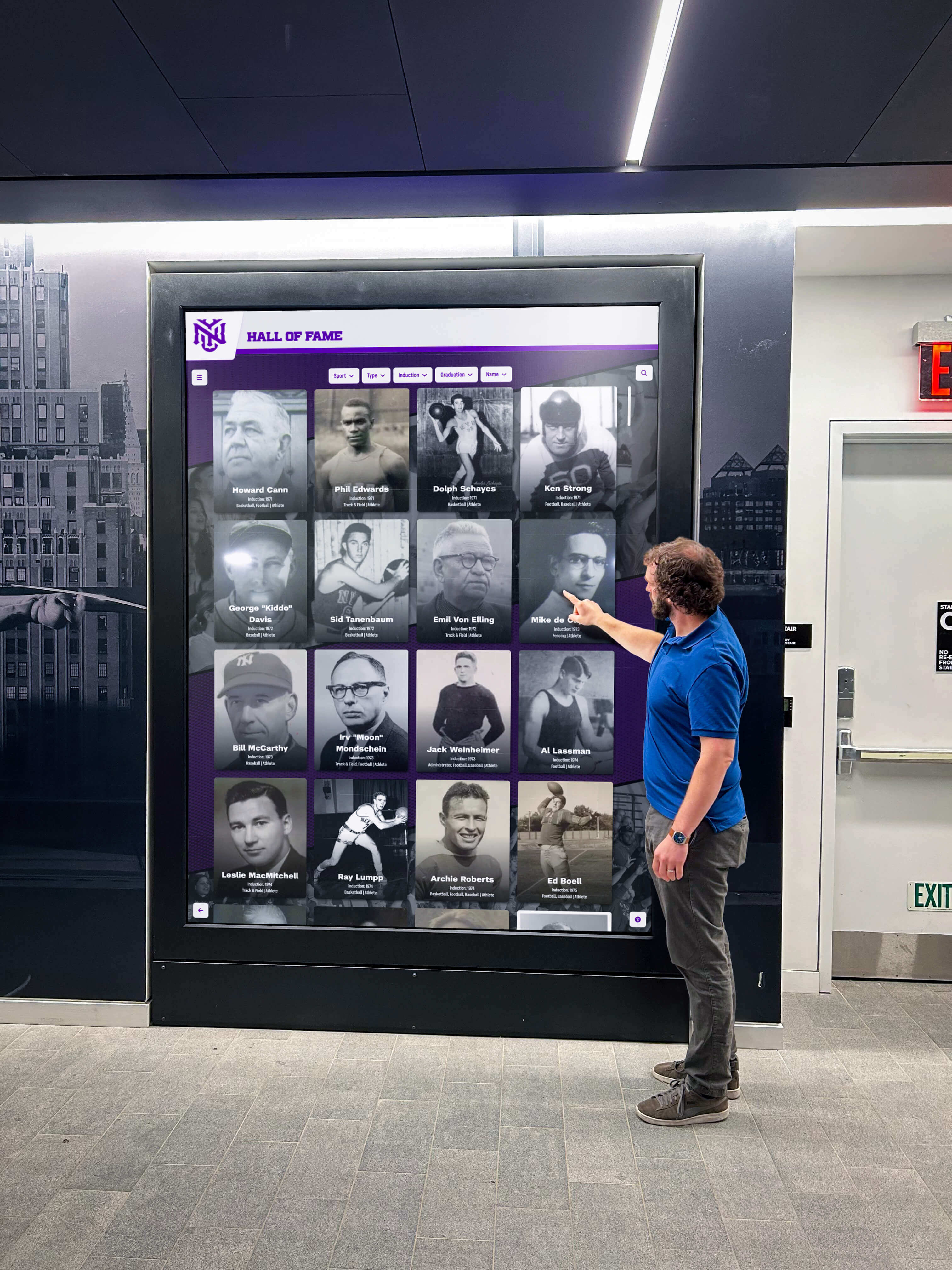
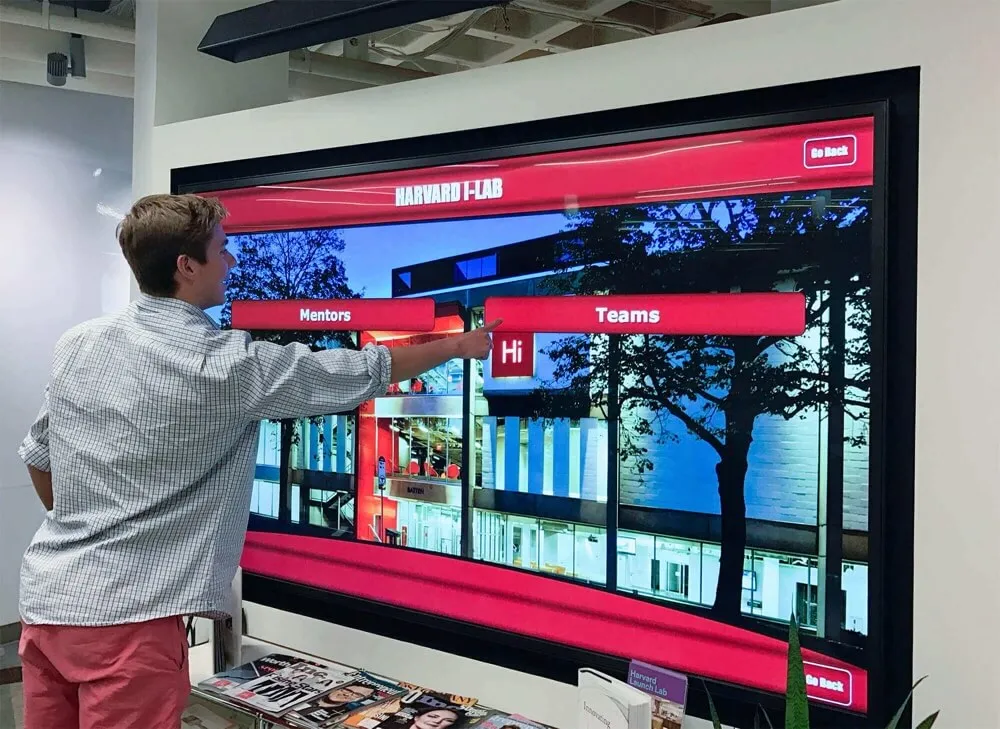
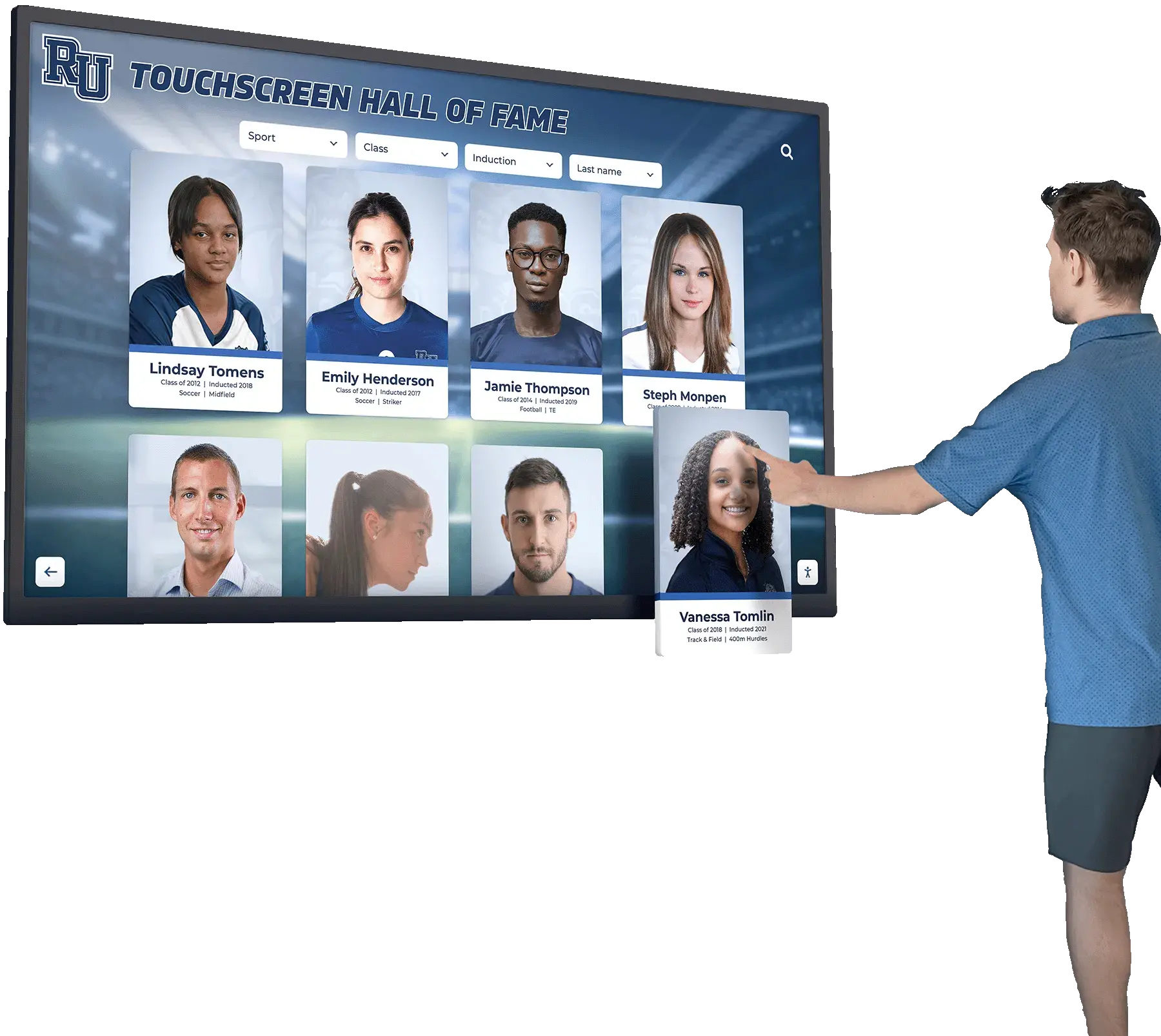
A single 55-inch touchscreen can showcase unlimited sales performers across multiple years, categories, and achievement types—all searchable and instantly accessible.
Enhanced Storytelling and Context
Beyond names and numbers, digital displays enable rich storytelling about achievement:
- Achievement Details: Specific deals, clients, products, and circumstances behind the success
- Performance Metrics: Revenue amounts, growth percentages, and comparative benchmarks
- Video Testimonials: Personal reflections from top performers sharing strategies and insights
- Team Recognition: Highlighting collaborative achievements and support roles
- Progress Tracking: Showing performance trends and improvement over time
- Photographic Content: Professional portraits and team celebration photos
This comprehensive approach transforms recognition from a simple acknowledgment to an inspirational narrative that motivates others.
Multi-Location Accessibility
For organizations with distributed sales teams, digital recognition solves a critical challenge: how do you create shared recognition experiences across multiple offices, remote workers, and field sales teams?
Digital recognition displays with web accessibility ensure that a top performer recognized at headquarters receives equal visibility with remote team members who can access the same content online. This creates organizational unity and ensures remote workers feel equally valued.
Designing Your Sales Recognition Display Strategy
Effective recognition displays require thoughtful planning that aligns with your sales organization’s structure, culture, and objectives.
Define Recognition Categories and Criteria
Start by establishing clear categories that reflect what your organization values and wants to encourage:
Achievement-Based Categories
- Top Revenue Producer (monthly, quarterly, annual)
- New Business Champion
- Highest Deal Value
- Most Improved Performance
- Consistent Excellence (multi-year achievement)
- President’s Club or Elite Performer Circle
Behavior-Based Categories
- Team Player Award
- Client Satisfaction Excellence
- Innovation in Sales Approach
- Mentorship and Leadership
- Professional Development Achievement
- Values Champion
Team Recognition Categories
- Top Performing Territory
- Best Collaborative Team
- Regional Excellence
- Product Line Leadership
- Service Excellence Team
Each category should have transparent, measurable criteria that salespeople understand and can work toward. Ambiguous recognition criteria create confusion and reduce motivation.
Establish Clear Qualification Standards
For each recognition category, document specific requirements:
Quantitative Standards
- Minimum revenue thresholds
- Quota attainment percentages
- Growth rates compared to prior periods
- Deal count or new account targets
- Product mix or service attachment requirements
Qualitative Standards
- Client satisfaction scores or testimonials
- Peer nominations or recommendations
- Manager assessments of behavioral excellence
- Compliance with company policies and ethics standards
- Participation in team development activities
Transparency in qualification criteria ensures recognition is perceived as fair and achievable, which maximizes motivational impact.
Determine Display Location and Format
Physical Display Placement
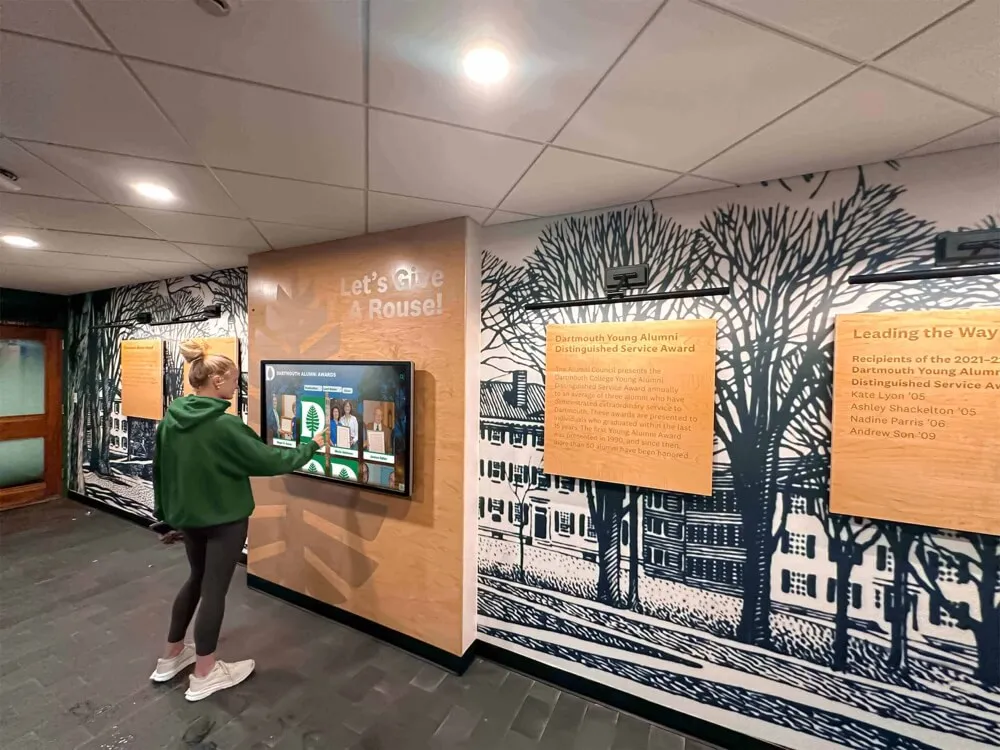
For organizations with office spaces, consider these high-visibility locations:
- Sales Floor: Central placement where the sales team works daily
- Main Lobby: Showcasing sales excellence to visitors, clients, and all employees
- Conference Rooms: Reinforcing achievement during client meetings and team sessions
- Break Rooms: Ensuring visibility during informal interactions
- Executive Areas: Demonstrating organizational commitment to sales recognition
The goal is maximum visibility to create continuous positive reinforcement and inspire ongoing excellence.
Display Configuration Options
Consider these format approaches:
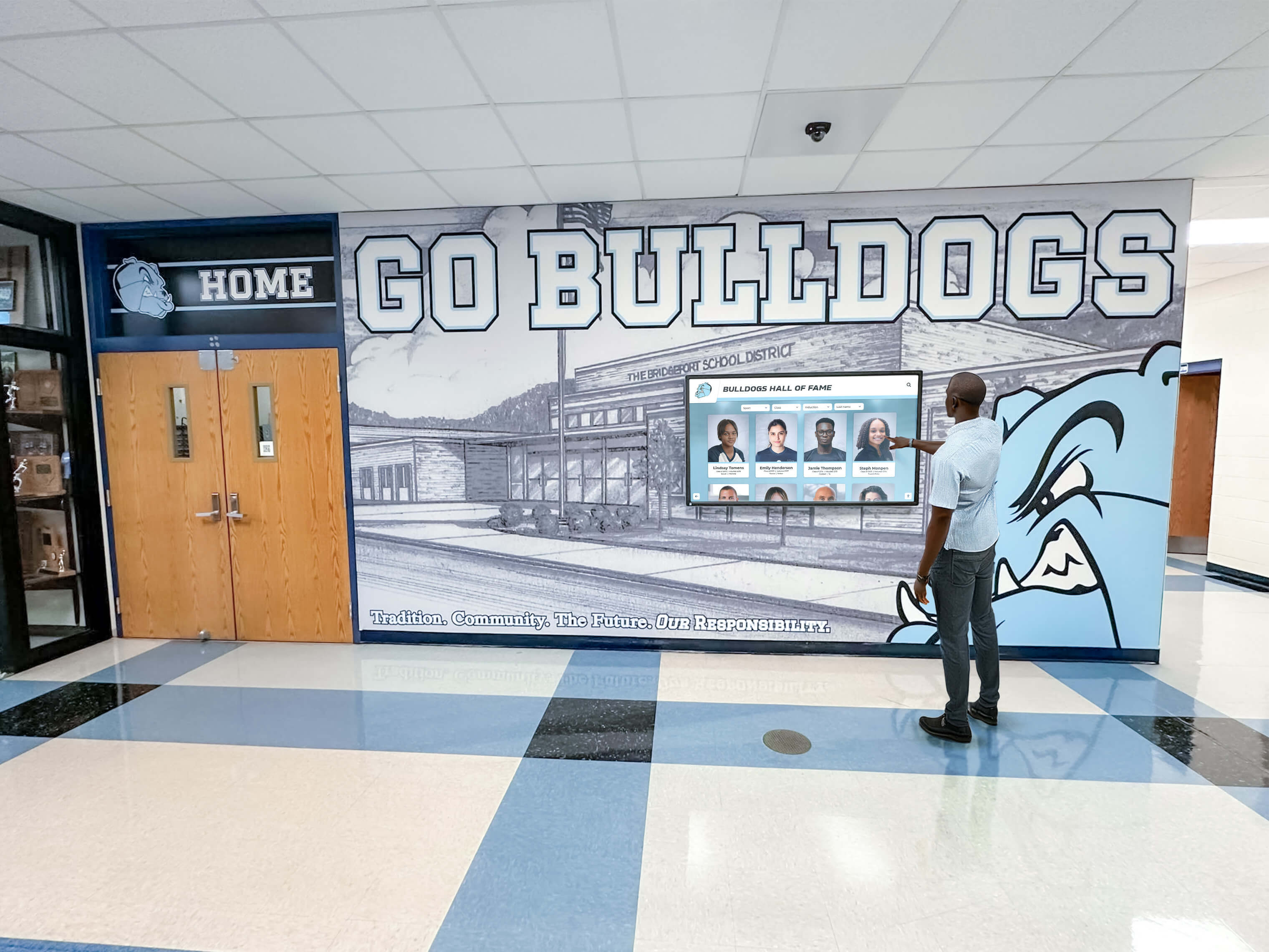
- Single Large Display: 55-75 inch touchscreen as a focal point for comprehensive recognition
- Multiple Coordinated Displays: Several screens showing different categories or time periods
- Video Wall Configuration: Creating impressive visual impact with connected displays
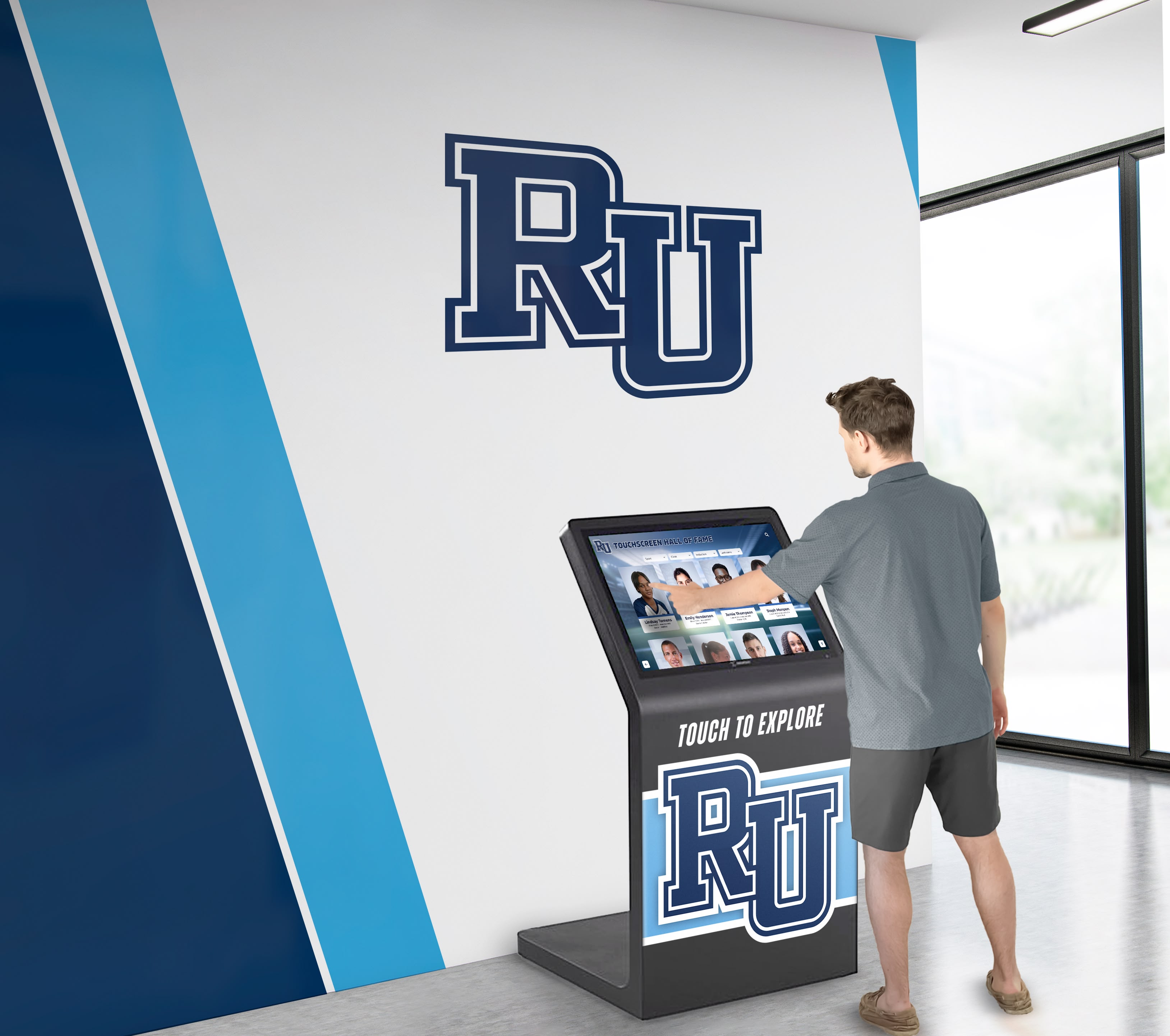
- Kiosk Format: Freestanding interactive stations with dedicated recognition focus
- Digital Signage Integration: Incorporating recognition into existing workplace screens
Your choice should balance budget, available space, and desired visual impact. Solutions like Rocket Alumni Solutions provide flexible hardware configurations that adapt to various office environments.
Web-Based Recognition Components
Complement physical displays with web accessibility:
- Recognition Portal: Dedicated website showcasing all achievements
- Mobile Responsive Design: Ensuring accessibility on smartphones and tablets
- Email Integration: Automated notifications when new recognitions are added
- Social Media Sharing: One-click sharing of achievements to LinkedIn and other platforms
- Intranet Integration: Embedding recognition within your company’s internal communications
This multi-channel approach ensures recognition reaches all team members regardless of location or work arrangements.
Content Strategy for Maximum Impact
The effectiveness of your recognition display depends as much on content quality as on technology selection.
Crafting Compelling Recognition Profiles
Each recognized sales performer deserves a comprehensive profile that tells their achievement story:
Essential Profile Elements
- Professional portrait photo
- Full name and title
- Achievement category and award name
- Specific accomplishments and metrics (revenue, growth %, deals closed)
- Recognition date or period
- Quote or personal reflection from the performer
- Team members or supporting roles who contributed
Enhanced Profile Content
- Career journey and tenure with the organization
- Previous achievements and recognition history
- Client testimonials or impact statements
- Video message sharing success strategies
- Advice for other sales team members
- Personal interests or volunteer activities
This comprehensive approach transforms simple recognition into inspirational content that engages viewers and provides genuine value beyond acknowledgment.
Balancing Individual and Team Recognition
Sales environments naturally foster individual competition, but sustainable success requires collaboration. Your recognition display should balance both:
Individual Achievement Celebration
- Highlighting personal excellence and extraordinary performance
- Creating role models and aspirational figures
- Providing specific examples of successful strategies
- Building individual legacy within the organization
Team Achievement Recognition
- Celebrating collaborative success and mutual support
- Recognizing support roles that enable sales success
- Highlighting cross-functional achievements
- Building collective culture and shared purpose
Consider dedicating approximately 70% of recognition space to individual achievement and 30% to team and collaborative success. This balance maintains healthy competition while reinforcing that organizational success requires teamwork.
Maintaining Fresh and Relevant Content
Static recognition loses impact over time. Keep your display dynamic and engaging:
Regular Update Schedules
- Real-time updates for major achievements as they occur
- Monthly recognition ceremonies and display updates
- Quarterly comprehensive reviews and featured performers
- Annual awards and lifetime achievement additions
Seasonal and Timely Content
- End-of-quarter achievement spotlights
- Year-end comprehensive recognition roundups
- Sales kickoff events and goal announcements
- Special campaigns and incentive program highlights
Historical Perspective
- “This Month in History” featuring past achievements
- Anniversary celebrations of significant accomplishments
- Career milestone recognition (5, 10, 15+ years)
- Evolution of sales success over time
This content strategy ensures the recognition display remains a living, engaging element of your sales culture rather than becoming background noise.
Technology Requirements and Implementation
Selecting the right technology foundation ensures your recognition display delivers reliability, flexibility, and ease of management.
Hardware Considerations
Display Technology Selection
For professional recognition displays, prioritize:
- Commercial-Grade Screens: Designed for continuous operation (24/7 capability)
- Touch-Enabled Displays: Interactive functionality for exploration and search
- High Resolution: Minimum 1080p (1920×1080), with 4K preferred for larger screens
- Anti-Glare Coating: Ensuring visibility in various lighting conditions
- Robust Construction: Built for public spaces with durability and reliability
- Appropriate Sizing: 42-55 inches for individual displays, larger for video walls
Avoid consumer-grade televisions, which lack the durability and operational design required for continuous business use. Commercial displays typically offer 6-8 year lifespans with warranties supporting business applications.
Mounting and Installation
Consider these installation approaches:
- Wall-Mounted Displays: Slim profile that maximizes space efficiency
- Freestanding Kiosks: Portable or permanent floor-mounted solutions
- Recessed Installation: Integrated into walls for premium appearance
- Ceiling-Mounted Options: For unconventional spaces or special requirements
Professional installation ensures proper power management, network connectivity, cable management, and secure mounting that meets safety standards.
Network and Connectivity Requirements
Your recognition display requires reliable network access:
- Ethernet Connection: Preferred for stability and security
- WiFi Capability: Backup or alternative for locations where wired connections are impractical
- Bandwidth Considerations: Sufficient for video content and real-time updates
- Security Protocols: Integration with corporate network security policies
- Remote Management: Ability to update and troubleshoot from IT systems
Plan installation locations with these connectivity requirements in mind to avoid complications during implementation.
Software and Content Management
The software platform determines how easily you can create, update, and manage recognition content.
Essential Software Features
Look for touchscreen software platforms that provide:
- Intuitive Content Management: Web-based dashboard requiring no coding knowledge
- Template Library: Pre-designed layouts for different recognition types
- Drag-and-Drop Interface: Simple content arrangement and organization
- Media Management: Centralized storage for photos, videos, and documents
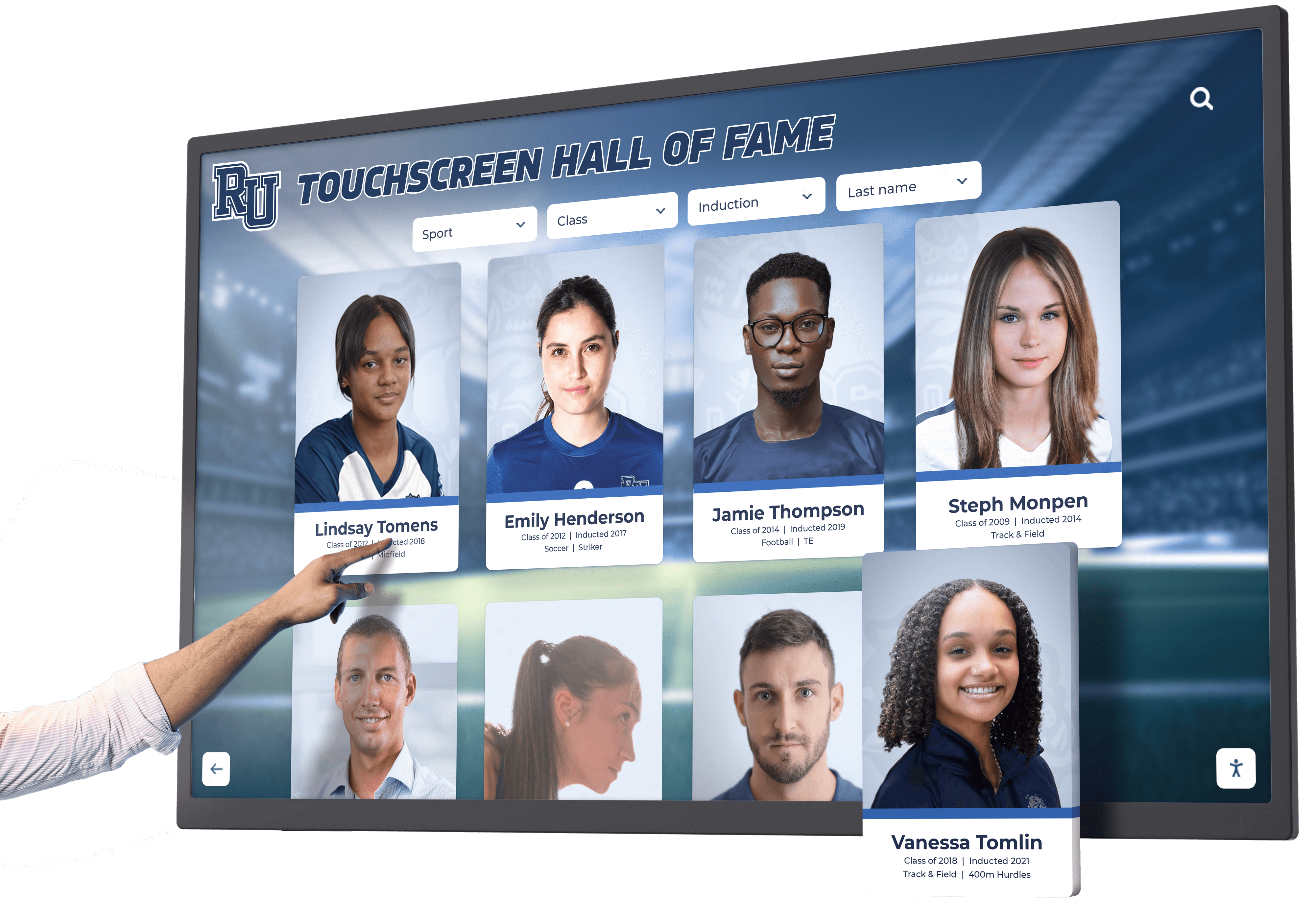

- Search and Filter Functions: Allowing visitors to find specific performers or categories
- Scheduled Publishing: Automatic content updates on specific dates
- Multi-User Access: Role-based permissions for different administrators
- Mobile Responsiveness: Automatic adaptation to different screen sizes
- Analytics and Reporting: Tracking engagement and interaction metrics
Integration Capabilities
For maximum efficiency, consider integration with existing business systems:
- CRM Integration: Automatic recognition triggers based on sales data
- HRIS Connection: Employee information synchronization
- Performance Management Systems: Direct feeds from sales tracking platforms
- Communication Platforms: Integration with Slack, Teams, or email systems
- Social Media APIs: Streamlined sharing to LinkedIn, Twitter, or internal networks
- Calendar Systems: Automated recognition announcements tied to achievements
These integrations eliminate manual data entry and ensure recognition remains current without administrative burden.
Cloud vs. On-Premises Solutions
Most modern recognition displays utilize cloud-based platforms that offer:
- Automatic Updates: Latest features and security patches without IT intervention
- Remote Management: Update content from anywhere with internet access
- Automatic Backups: Protection against data loss
- Scalability: Easy expansion to additional displays or locations
- Lower IT Burden: Reduced need for on-site server management
For organizations with specific security requirements or limited internet connectivity, on-premises solutions remain available, though they require more IT infrastructure and support.
Advanced Recognition Display Features
Once you’ve established basic recognition functionality, consider these advanced features that enhance impact and engagement.
Real-Time Performance Dashboards
Digital displays can incorporate live performance data that creates ongoing motivation:
Dynamic Leaderboards
- Current month/quarter rankings updated daily or weekly
- Progress toward quota displayed as percentages or visual indicators
- Comparison to previous periods showing improvement trends
- Team standings for regional or product-based competitions
Live Achievement Notifications
- Automatic displays when team members reach milestones
- Celebration animations for major deal closures
- Real-time quota attainment acknowledgments
- Immediate recognition of new records
Performance Trend Visualizations
- Historical performance graphs showing growth trajectories
- Comparative analytics showing individual vs. team averages
- Territory performance maps for geographic teams
- Product mix charts highlighting balanced selling
These dynamic elements create ongoing engagement beyond periodic recognition ceremonies.
Interactive Exploration Features
Transform passive viewing into active engagement through interactive functionality:
Advanced Search Capabilities
- Search by performer name, team, or achievement type
- Filter by time period, recognition category, or performance level
- Browse by product line, territory, or client type
- Sort by various metrics (revenue, growth, tenure)
Detailed Achievement Stories
- Click-through to comprehensive performer profiles
- Access to video content sharing success strategies
- View related achievements and career progression
- Read client testimonials and impact statements
Personal Goal Tracking
- Individual login capabilities for team members
- Personal dashboard showing progress toward recognition thresholds
- Comparison to recognition criteria with gap analysis
- Historical personal achievement archives
These features transform the recognition display from a passive announcement board to an engaging career development resource.
Gamification Elements
Thoughtfully implemented gamification can enhance motivation without creating unhealthy competition:
Achievement Badges and Levels
- Visual badges for different accomplishment types
- Progressive levels (Bronze, Silver, Gold, Platinum clubs)
- Specialty achievement categories beyond pure revenue
- Collection mechanisms that encourage diverse excellence
Milestone Celebrations
- Special recognition for career achievement thresholds
- Anniversary acknowledgments (1-year, 5-year, 10-year excellence)
- Cumulative achievement tracking over tenure
- Lifetime value contributions
Team Challenges
- Collaborative goals that require group effort
- Inter-team competitions with recognition for all participants
- Regional or product-line challenges with display tracking
- Time-limited campaigns with special recognition categories
The key is ensuring gamification enhances rather than undermines the intrinsic motivation that drives sales excellence.
Best Practices for Sales Recognition Programs
Technology enables recognition, but program design determines its effectiveness. These best practices maximize impact:
Make Recognition Timely
The motivational impact of recognition decreases rapidly over time. Implement systems that enable:
- Immediate Acknowledgment: Recognition within 24-48 hours of achievement
- Real-Time Updates: Display updates occurring automatically as achievements occur
- Automated Notifications: Email or system alerts when recognition is added
- Quick Approval Processes: Streamlined workflows that don’t delay recognition
According to research from the Incentive Research Foundation, recognition provided within a week of achievement is 3x more effective than recognition delayed by a month or more.
Ensure Recognition Transparency
Perceived fairness is critical to recognition program effectiveness:
Clear Criteria Communication
- Publish specific requirements for each recognition category
- Explain calculation methodologies for performance metrics
- Share qualification thresholds before performance periods begin
- Document decision processes for subjective awards
Accessible Performance Data
- Provide dashboards showing current standings
- Enable team members to track their own progress
- Display clear metrics showing distance from recognition thresholds
- Offer historical context for understanding achievement significance
Consistent Application
- Apply criteria uniformly across all team members
- Avoid special exceptions that undermine program integrity
- Address concerns about fairness quickly and transparently
- Regular program reviews ensuring criteria remain relevant
Balance Frequency and Significance
Too much recognition dilutes its impact, while too little fails to motivate:
High-Frequency Recognition (Weekly/Monthly)
- Smaller achievements and incremental progress
- Timely acknowledgment maintaining momentum
- Broader participation encouraging many performers
- Lower-key presentation suitable for regular occurrence
Moderate-Frequency Recognition (Quarterly)
- Significant achievement over sustained periods
- More substantial acknowledgment and celebration
- Selective participation recognizing true excellence
- Formal presentation with leadership involvement
Low-Frequency Recognition (Annual/Career)
- Extraordinary achievements and career excellence
- Major celebration with organization-wide visibility
- Highly selective participation for exceptional performers
- Formal ceremonies with lasting physical awards
A balanced program might recognize 30-40% of the team monthly, 10-15% quarterly, and 5-10% annually for top-tier awards.
Include Remote and Field Sales Teams
Distributed teams require special consideration:
Virtual Recognition Events
- Live-streamed recognition ceremonies with remote participation
- Video conferencing for award presentations
- Recorded celebrations accessible on-demand
- Digital delivery of recognition without geographic constraints
Equitable Visibility
- Web-based recognition accessible to all team members
- Email announcements ensuring remote workers receive updates
- Social sharing enabling recognition beyond physical displays
- Mobile-optimized content accessible anywhere
Inclusive Program Design
- Recognition criteria that don’t favor office-based workers
- Category structures accommodating different sales models
- Virtual team achievements receiving equal prominence
- Technology ensuring remote workers can engage with displays
Integrate Recognition with Development
The most effective recognition programs connect achievement with growth opportunities:
Learning from Excellence
- Feature top performers sharing strategies and approaches
- Video content explaining techniques and methodologies
- Case studies detailing successful deals and approaches
- Mentorship programs pairing recognized performers with developing reps
Career Progression Connection
- Recognition serving as criteria for advancement opportunities
- Achievement history informing promotion decisions
- Recognition programs aligned with career development frameworks
- Clear pathways from recognition to leadership roles
Skill Development Recognition
- Acknowledge learning achievements alongside sales results
- Recognize certification completion and skill advancement
- Celebrate innovation and new approach development
- Value continuous improvement efforts
This approach ensures recognition reinforces organizational development goals beyond immediate sales results.
Measuring Recognition Program Effectiveness
Like any business investment, sales recognition programs require measurement to ensure they deliver intended results.
Key Performance Indicators
Track these metrics to evaluate program impact:
Sales Performance Metrics
- Quota attainment rates before and after program implementation
- Average deal size changes correlating with recognition
- Sales cycle length improvements
- Revenue per salesperson trends
- Win rate improvements
Engagement Indicators
- Recognition display interaction frequency (for digital systems)
- Time spent exploring recognition content
- Social sharing rates of achievements
- Recognition submission rates (for peer nominations)
- Program awareness survey results
Retention and Culture Metrics
- Sales team turnover rates compared to pre-program baseline
- Exit interview feedback mentioning recognition
- Employee engagement survey scores
- Glassdoor or similar employer review ratings
- Internal mobility and promotion rates
Return on Investment Calculation
Calculate recognition program ROI using this framework:
Program Costs
- Technology investment (hardware, software, installation)
- Ongoing subscription or maintenance fees
- Administrative time for program management
- Physical awards or incentives provided
- Recognition event costs
Measurable Benefits
- Retained revenue from reduced turnover (calculate replacement costs avoided)
- Productivity improvements (additional revenue from performance gains)
- Recruitment cost reductions (employer brand strength)
- Engagement improvements (correlation to revenue performance)
For most organizations, a well-designed recognition program achieves ROI within 12-18 months when accounting for retention improvements alone.
Continuous Improvement Processes
Regular program evaluation ensures ongoing effectiveness:
Quarterly Program Reviews
- Analyze participation rates across recognition categories
- Review achievement distribution (is recognition too concentrated or too dispersed?)
- Assess recognition timeliness and administrative efficiency
- Gather qualitative feedback from sales team members
Annual Program Assessment
- Comprehensive evaluation of all metrics
- Comparison to program objectives and benchmarks
- Survey sales team for satisfaction and suggestions
- Competitive analysis of recognition approaches at other organizations
Iterative Enhancement
- Adjust recognition criteria based on business priority changes
- Add new categories reflecting emerging value areas
- Update technology features based on usage patterns
- Refresh content formats maintaining engagement
Programs that evolve with organizational needs maintain their motivational impact over time.
Implementation Roadmap: Launching Your Recognition Display
Successful implementation requires careful planning and phased rollout:
Phase 1: Planning and Design (Weeks 1-4)
Define Program Objectives
- Identify specific outcomes you want the recognition program to achieve
- Establish baseline metrics for future comparison
- Secure leadership buy-in and budget approval
- Form recognition program committee or leadership team
Develop Recognition Framework
- Create recognition categories aligned with business objectives
- Establish transparent qualification criteria
- Design visual identity and branding elements
- Develop content templates and standards
Select Technology Solution
Research and evaluate options like Rocket Alumni Solutions’ recognition platforms that provide:
- Appropriate hardware configuration for your space
- Intuitive content management capabilities
- Integration potential with existing systems
- Scalability for future expansion
- Support and training resources
Phase 2: Content Development (Weeks 5-8)
Gather Historical Recognition Data
- Identify past top performers deserving recognition
- Collect photos, performance data, and achievement details
- Interview recognized performers for testimonials
- Document criteria used for historical selections
Create Initial Content Library
- Develop profiles for existing recognized performers
- Produce video content if incorporating multimedia
- Design category pages and navigation structure
- Write program descriptions and criteria explanations
Establish Content Standards
- Create style guides for consistent presentation
- Develop templates for different recognition types
- Document photo requirements and specifications
- Establish approval workflows for new content
Phase 3: Installation and Configuration (Weeks 9-12)
Physical Installation
- Complete hardware installation at selected locations
- Ensure proper power and network connectivity
- Configure displays and test all functionality
- Address any installation challenges
System Configuration
- Set up content management system access
- Upload initial content library
- Configure search and navigation features
- Test integration with other business systems
Training Development
- Create administrator training materials
- Develop user guides and documentation
- Record training videos for future reference
- Plan training sessions for key stakeholders
Phase 4: Launch and Promotion (Weeks 13-16)
Soft Launch
- Activate displays with initial content
- Monitor system performance and address issues
- Gather early feedback from sales team
- Make adjustments based on initial response
Formal Launch Event
- Plan recognition ceremony unveiling the system
- Invite sales team, leadership, and key stakeholders
- Recognize inaugural honorees with special celebration
- Generate excitement and awareness organization-wide
Ongoing Promotion
- Regular email communications highlighting new recognitions
- Include recognition display updates in team meetings
- Encourage interaction and exploration
- Share achievement stories through multiple channels
Phase 5: Sustained Operation (Ongoing)
Regular Content Updates
- Maintain update schedule (weekly, monthly, quarterly)
- Ensure timely recognition of new achievements
- Refresh featured content maintaining engagement
- Archive and organize historical content
Program Management
- Monitor participation and engagement metrics
- Solicit feedback through surveys and conversations
- Address technical issues promptly
- Continuously refine criteria and categories
Evolution and Enhancement
- Add new features based on user feedback
- Expand to additional locations if successful
- Integrate additional data sources
- Explore emerging recognition technologies
Case Study: Digital Recognition Transformation
While respecting client confidentiality, we can examine how organizations typically transform sales recognition programs with digital displays:
The Traditional Recognition Challenge
Many sales organizations operate with recognition approaches that include:
- Quarterly email announcements of top performers
- Annual sales kickoff awards ceremony
- Physical plaques for President’s Club members
- Trophy displays in conference rooms
These traditional approaches face common challenges:
Limited Visibility: Plaques in executive offices have minimal impact on daily motivation Infrequent Recognition: Quarterly or annual recognition lacks ongoing reinforcement Remote Exclusion: Field sales teams and remote workers feel disconnected from recognition Static Content: No storytelling beyond names and achievement dates Space Constraints: Physical displays cannot accommodate comprehensive recognition history
The Digital Recognition Solution
Organizations implementing digital recognition displays typically achieve:
Increased Engagement: Sales teams interact with recognition displays an average of 3-4 times per week, compared to occasional viewing of traditional displays
Improved Retention: Companies report 15-25% reductions in sales turnover within the first year of implementing comprehensive digital recognition programs
Enhanced Culture: Employee engagement survey scores related to recognition and appreciation typically increase by 30-40 percentage points
Greater Inclusivity: Remote and field sales team engagement increases dramatically when recognition becomes accessible via web platforms
Administrative Efficiency: Time spent managing recognition programs decreases by 60-80% due to streamlined digital content management
Implementation Lessons
Successful digital recognition implementations share common elements:
Leadership Visibility: Executive team engagement with and promotion of the recognition display Clear Criteria: Transparent qualification standards that sales teams understand and trust Regular Updates: Consistent content additions maintaining freshness and relevance Balanced Recognition: Mixture of individual achievement and team collaboration Integration Strategy: Connection between recognition and career development opportunities
Budget Planning for Recognition Displays
Understanding investment requirements helps organizations plan effective recognition programs within budget constraints.
Investment Components
Initial Technology Investment
- Commercial display hardware: $2,500-$7,500 per display
- Interactive touchscreen capability: $500-$2,000 premium
- Mounting hardware and installation: $500-$1,500
- Content management software: $2,000-$8,000 initial setup
- Network configuration and integration: $1,000-$3,000
Total Initial Investment Range: $6,500-$22,000 for a single display installation
For larger implementations with multiple displays or video wall configurations, economies of scale typically reduce per-display costs.
Ongoing Operating Costs
- Software subscription fees: $100-$500 per month depending on features
- Content management time: 2-5 hours monthly (internal staff time)
- System maintenance and support: typically included in software subscription
- Content creation (photos, videos): $500-$2,000 annually if using external resources
Total Annual Operating Costs: $1,500-$8,000 depending on program scope
Cost-Benefit Analysis
Compare recognition display investment to traditional approaches:
Traditional Recognition Costs
- Individual plaques: $75-$300 each × number of recognized performers
- Quarterly design and printing: $500-$2,000 per update
- Annual awards ceremony: $5,000-$25,000 depending on scale
- Physical display maintenance: $1,000-$3,000 annually
Digital Recognition Advantages
- Unlimited recognition capacity without incremental costs
- Elimination of printing, engraving, and physical production expenses
- Reduced event costs through ongoing digital recognition
- Lower administrative time requirements
Return on Investment Drivers
The primary ROI comes from retention improvements. Consider this calculation:
If your organization has 20 sales representatives with an average salary of $100,000, and typical turnover is 20% annually (4 people), your annual turnover cost is approximately:
4 departures × $150,000 replacement cost = $600,000 annual turnover cost
If a comprehensive recognition program reduces turnover by just 25% (preventing one departure), you save $150,000 annually—far exceeding typical recognition display investments of $10,000-$15,000.
Financing Options
Many organizations utilize flexible financing approaches:
Capital Purchase: One-time investment with full system ownership Leasing Arrangements: Monthly payments distributed over 3-5 years Software-as-a-Service: Subscription model with minimal upfront investment Phased Implementation: Start with one display and expand based on results
Solutions like Rocket Alumni Solutions offer various financing structures that accommodate different organizational budget processes.
Future Trends in Sales Recognition Displays
As technology evolves, recognition displays continue to advance with new capabilities:
Artificial Intelligence Integration
Emerging AI capabilities will enhance recognition programs:
- Automated Recognition Recommendations: AI analysis of performance data suggesting recognition opportunities
- Personalized Content: Individual viewing experiences adapting to role and interests
- Predictive Analytics: Identifying performers on track for recognition and those needing support
- Natural Language Interaction: Voice-activated search and exploration capabilities
Augmented Reality Experiences
AR technology may transform how teams interact with recognition:
- Mobile AR Overlays: Smartphone apps adding digital information to physical spaces
- Virtual Recognition Spaces: 3D environments for remote recognition experiences
- Interactive Achievement Timelines: Immersive exploration of career progression
- Holographic Displays: Next-generation presentation technologies
Enhanced Social Integration
Recognition increasingly connects with professional networking:
- Automated LinkedIn Updates: Seamless sharing of achievements to professional networks
- Video Compilation Tools: Automated creation of recognition highlight reels
- Peer Recognition Mechanisms: Colleague-nominated achievements and appreciation
- Community Engagement: External visibility of organizational recognition culture
Data-Driven Recognition Optimization
Advanced analytics will refine recognition effectiveness:
- Engagement Heat Mapping: Understanding which content generates most interaction
- A/B Testing: Comparing different recognition formats and approaches
- Correlation Analysis: Connecting recognition activities to business outcomes
- Predictive Modeling: Forecasting recognition program impact on retention and performance
Conclusion: Transform Sales Recognition Into Strategic Advantage
Sales recognition displays represent far more than technology installations—they embody organizational commitment to celebrating excellence, motivating performance, and building winning cultures. While traditional plaques and annual awards still have their place, digital recognition displays provide the visibility, engagement, and continuous reinforcement that today’s sales teams expect and respond to.
The most successful sales organizations recognize that motivation comes not just from compensation but from acknowledgment, visibility, and appreciation. A well-designed recognition display creates ongoing motivation that extends far beyond quarterly bonuses or annual awards ceremonies.
By implementing a comprehensive digital recognition display:
- Top performers receive the visibility and acknowledgment they’ve earned
- Developing salespeople see clear examples of what excellence looks like
- Remote and field teams feel connected to organizational recognition
- Leadership demonstrates commitment to celebrating achievement
- Your sales culture becomes tangible and visible rather than abstract
Whether you’re starting with a single display in your sales office or implementing a comprehensive multi-location recognition program, the key is starting with clear objectives, transparent criteria, and genuine commitment to celebrating the achievements that drive your organization’s success.
Ready to Transform Your Sales Recognition?
Explore how Rocket Alumni Solutions’ interactive recognition displays can help you create a sales recognition program that motivates performance, strengthens culture, and delivers measurable business results.
For organizations seeking comprehensive guidance on implementing employee recognition programs, our corporate recognition solutions provide proven frameworks that adapt to sales environments. Digital recognition technology continues to evolve, offering increasingly powerful capabilities for celebrating achievement and driving performance.
Schedule a TouchWall build session to explore how digital recognition displays can transform your sales team’s culture and performance: https://www.rocketalumnisolutions.com/contact































