Earning All-Region recognition represents one of the most prestigious honors available to high school athletes—an achievement that identifies them as among the best players in their geographical area across all competing schools. These selections acknowledge exceptional skill, consistent performance, and competitive excellence that distinguishes outstanding athletes from their peers throughout an entire region. When student-athletes earn All-Region honors, they deserve recognition that reflects the significance of joining this elite group.
Yet many schools struggle to celebrate All-Region athletes effectively. Recognition often defaults to brief announcements that fade from memory within days, social media posts that disappear from feeds within hours, or overcrowded trophy cases that fail to tell complete athletic stories. Meanwhile, athletes who earned regional distinction through exceptional performance deserve comprehensive, lasting recognition that honors their achievement while inspiring younger athletes to pursue similar excellence.
This comprehensive guide explores how modern touch board technology transforms All-Region recognition through interactive displays, systematic celebration strategies, and digital solutions that ensure regional athletic excellence receives the visibility and lasting acknowledgment these accomplished student-athletes have earned.
All-Region recognition creates powerful opportunities to celebrate athletic excellence while building program culture, connecting with communities, and motivating future generations. When schools implement effective recognition systems using modern touch board displays, they transform momentary achievements into permanent institutional traditions that inspire sustained athletic excellence across entire programs.

Touch board technology enables comprehensive All-Region athlete recognition with interactive profiles accessible to entire school communities
Understanding All-Region Athletic Recognition
Before implementing recognition programs, schools must understand what All-Region honors represent, how athletes earn these distinctions, and why this achievement level deserves prominent celebration extending beyond brief acknowledgment.
What All-Region Recognition Means
All-Region teams identify the best athletes in designated geographical areas, typically determined by conference affiliation, state athletic association boundaries, or media coverage regions. Unlike All-Conference honors that recognize excellence within single athletic leagues, All-Region selections often span multiple conferences and competitive divisions, making the honor more prestigious and selective.
The selection process typically involves coaches nominating their top performers, with final teams chosen by coaching committees, media representatives, or athletic association personnel evaluating athletes across entire regions. Selection criteria commonly include statistical performance throughout seasons, impact on team success and competitive outcomes, demonstrated leadership and sportsmanship qualities, competition level and strength of regional opponents, and consistency across regular season and playoff competitions.
According to the National Fastpitch Coaches Association, All-Region teams represent “the highest level of players in their region with regard to the nominating criteria,” making these selections among the most prestigious honors available at the high school level.
The Prestige and Benefits of All-Region Selection
All-Region recognition carries significant weight extending well beyond high school careers. College recruiters actively monitor All-Region selections when identifying scholarship candidates, particularly in regions known for competitive athletics. These honors frequently appear prominently on college applications, athletic resumes, and scholarship applications, distinguishing student-athletes within highly competitive college admissions processes.
Competitive Significance
All-Region athletes have demonstrated ability to compete at high levels against diverse competition across multiple schools and communities. This proven performance against varied opponents provides stronger evidence of athletic ability than achievements within single conferences or against limited competition pools. College coaches value All-Region recognition because selections result from comparative evaluations spanning hundreds or thousands of athletes rather than smaller competitive groups.
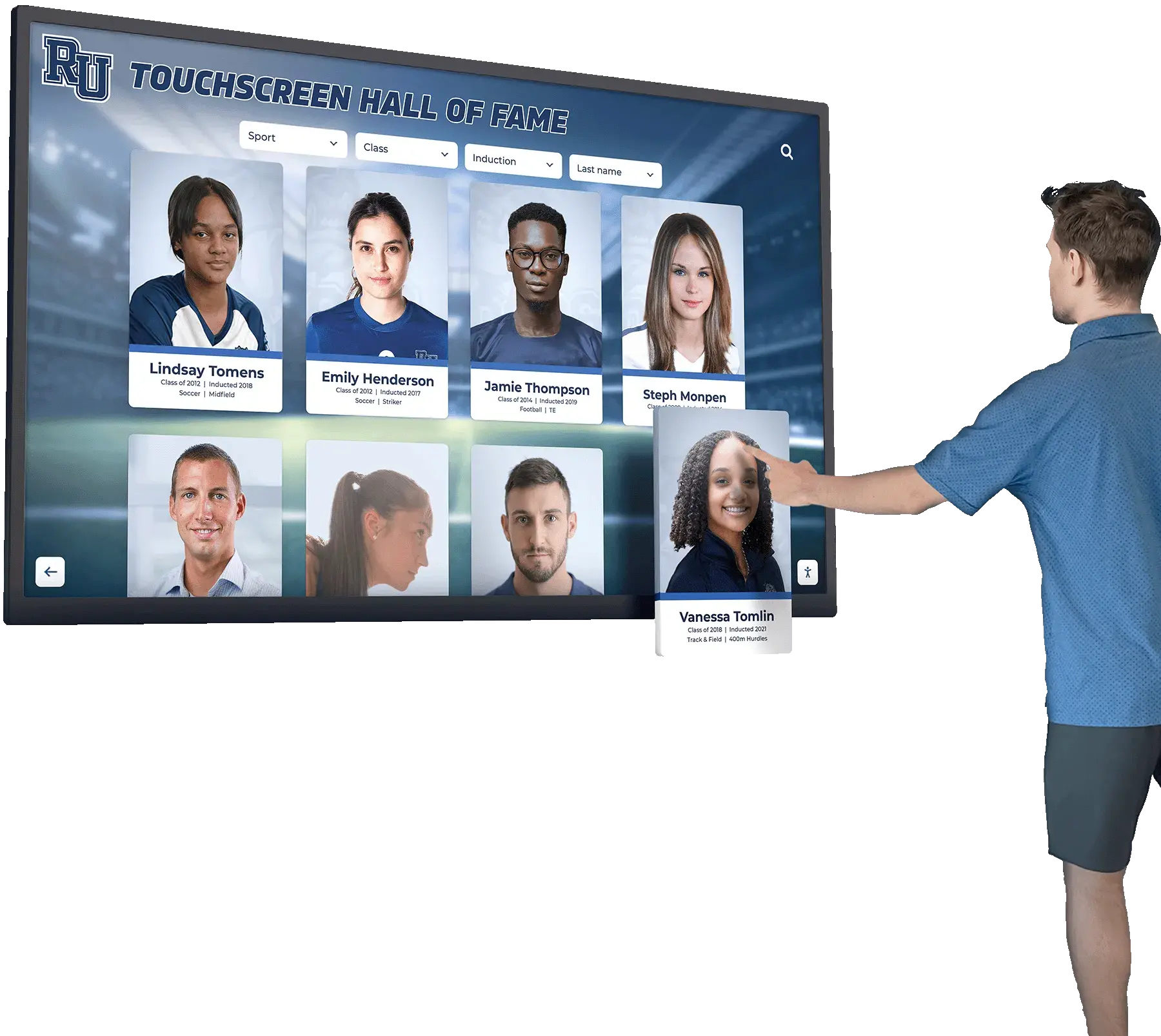
Interactive displays allow community members to explore complete athletic histories including All-Region achievements
Career and Community Impact
For many student-athletes, earning All-Region distinction represents the pinnacle of their competitive careers—validation that years of dedication, early morning practices, and competitive sacrifice resulted in measurable excellence recognized beyond their own schools. This recognition builds confidence and self-efficacy that extends into academic pursuits and future careers, creates lasting memories and accomplishments athletes cherish throughout lives, strengthens community connections as local athletes receive regional recognition, and provides tangible achievements families celebrate and share with extended networks.
Schools that properly recognize All-Region athletes honor individual accomplishments while reinforcing to entire student bodies that athletic excellence receives appropriate celebration comparable to academic and artistic achievements.
Sports That Award All-Region Recognition
While specific All-Region programs vary by state, athletic association, and region, most areas recognize top performers across comprehensive ranges of sports throughout fall, winter, and spring seasons.
Fall Sports All-Region Programs
Football All-Region Recognition
Football typically receives the most extensive All-Region coverage, with many regions selecting separate offensive and defensive teams and sometimes special teams honorees. Positions recognized commonly include quarterbacks, running backs, wide receivers, offensive linemen on offense, and defensive linemen, linebackers, defensive backs, and specialists on defense. Many regions further divide selections by competitive classification, ensuring athletes compete for recognition within appropriate peer groups based on school enrollment sizes.
Additional Fall Sports
Beyond football, fall All-Region programs frequently recognize excellence in cross country running with individual and team selections, volleyball athletes across all positions, soccer players on both boys’ and girls’ teams, competitive cheerleading and dance teams, and golf, tennis, and swimming where fall seasons occur. Schools can explore soccer all-time scorers recognition strategies that complement All-Region acknowledgment with career achievement celebrations.
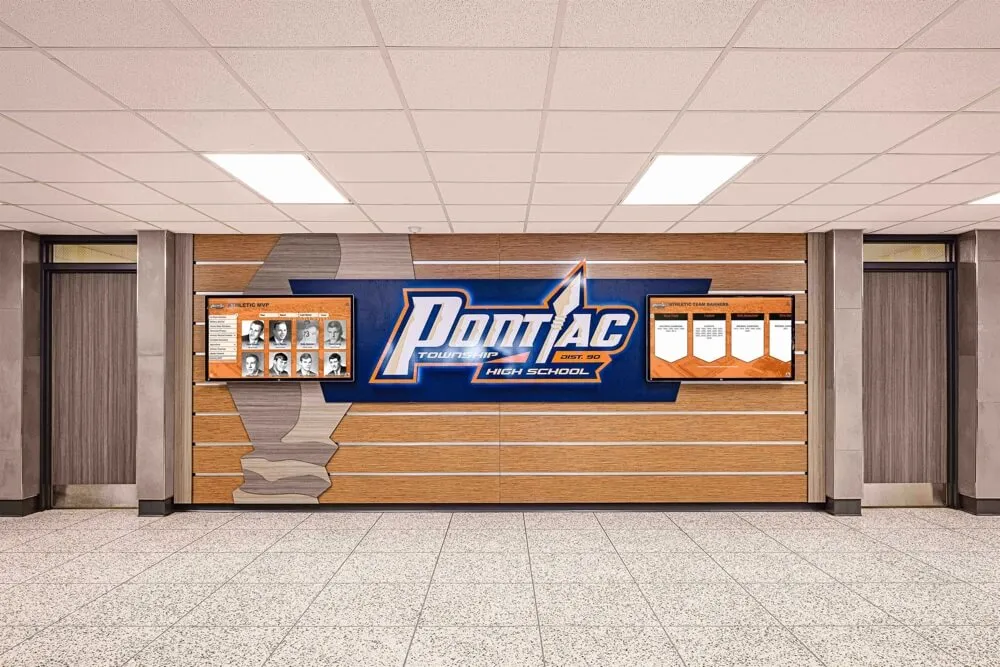
Strategic hallway placement ensures All-Region recognition reaches entire school communities daily
Winter Sports All-Region Programs
Basketball All-Region Teams
Basketball All-Region selections generate significant community interest and recognition across most regions. Boys’ and girls’ teams are selected separately, often with First Team, Second Team, and Honorable Mention designations creating multiple recognition tiers. Position-specific selections or simply the top overall performers vary by region, with some areas maintaining traditional position requirements while others select best overall players regardless of position.
Basketball All-Region honorees who also achieve scoring milestones deserve coordinated recognition. Schools can examine 1,000 points scorer recognition approaches that integrate with All-Region celebrations creating comprehensive acknowledgment of basketball excellence.
Additional Winter Sports
Winter All-Region programs typically include wrestling with weight class or overall tournament performance recognition, swimming and diving across individual events and relay teams, gymnastics individual apparatus and all-around competitions, ice hockey in regions where programs exist, indoor track and field recognizing event excellence, and competitive skiing and snowboarding in appropriate regions.
Spring Sports All-Region Programs
Baseball and Softball Recognition
Baseball and softball All-Region teams showcase diamond sport excellence across pitching, hitting, and defensive categories. According to the NFCA All-Region programs, softball recognition alone identified 192 student-athletes from 107 schools in their 2025 Spring High School teams, demonstrating the selectivity and prestige of regional recognition in these sports.
Position-specific selections commonly include pitchers, catchers, infielders by position, outfielders, designated hitters or utility players, and sometimes separate consideration for offensive versus defensive excellence.
Additional Spring Sports
Spring All-Region programs frequently recognize track and field athletes across individual events and relay competitions, lacrosse players on boys’ and girls’ teams, tennis individual and doubles competitors, golf tournament performers, soccer (in regions where it’s a spring sport), and rowing or crew in areas with active programs.
Regional Variation in All-Region Programs
Schools should familiarize themselves with specific All-Region programs available in their states and athletic associations. Selection processes, timing, and criteria vary significantly by region and sport, making local research essential for understanding exactly which recognition opportunities exist for your student-athletes.
Traditional All-Region Recognition Methods and Limitations
Understanding conventional approaches to All-Region recognition reveals both their value and their constraints, helping schools identify opportunities where modern touch board technology provides transformative improvements.
Announcement-Based Recognition
Many schools rely primarily on announcements when athletes earn All-Region honors through morning announcement mentions during school assemblies, social media posts celebrating selections, local newspaper recognition in community sports sections, and website news items documenting achievements.
The Fleeting Nature of Announcements
While announcements provide immediate acknowledgment, their impact proves inherently temporary. Morning announcements reach only students present that specific day and fade immediately as daily routines continue. Social media posts disappear from feeds within hours as new content pushes them lower in algorithms. Newspaper articles have brief relevance before becoming archived content rarely revisited. Website news items quickly move to secondary pages as newer content takes prominence.
This ephemeral recognition fails to create lasting visibility proportional to All-Region achievement significance, leaving no permanent record accessible to future students, prospective families, or community members discovering athletic program excellence.
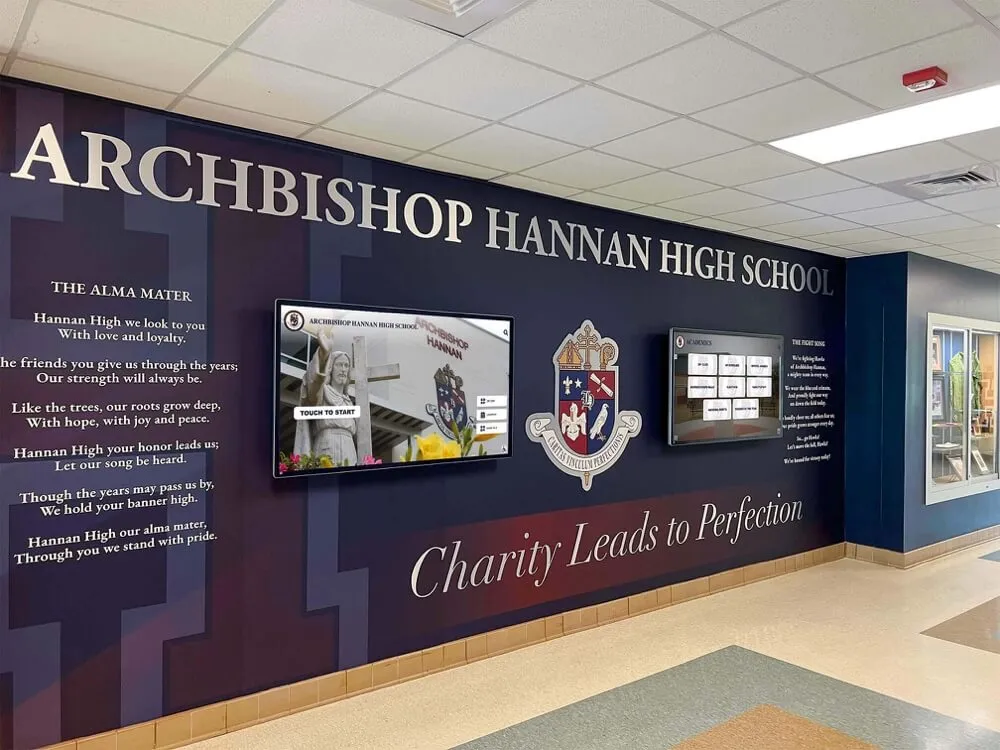
Modern recognition systems integrate seamlessly with school branding while providing permanent All-Region athlete visibility
Physical Trophy Cases and Recognition Boards
Traditional physical recognition attempts to create more lasting acknowledgment through trophy case displays, recognition boards listing All-Region athletes, framed certificates or photos in hallways, and dedicated All-Region sections within gymnasium displays.
Space Constraints and Static Limitations
Physical recognition faces fundamental constraints that limit effectiveness over time. Trophy cases have finite capacity that fills gradually as athletic achievements accumulate across years and decades. Adding new All-Region athletes to existing boards eventually requires expansion, font reduction, or difficult decisions about which historical achievements to remove. Physical displays provide minimal context beyond names, sports, and years—no photos, career statistics, or achievement narratives enriching recognition. Updates require professional installation creating delays between achievement and recognition visibility.
Perhaps most significantly, static displays cannot accommodate the interactive exploration that engages modern students and community members, creating “look but don’t touch” experiences that limit engagement compared to digital alternatives.
Award Ceremony Recognition
Many schools host athletic awards ceremonies or banquets where All-Region athletes receive special recognition through certificate or plaque presentations, verbal acknowledgment describing achievements, special seating or recognition categories, and photo opportunities with coaches and administrators.
Ceremony Advantages and Constraints
Award ceremonies create meaningful recognition moments athletes and families appreciate, providing formal acknowledgment in settings emphasizing athletic achievement importance. However, ceremonies reach only attendees present for specific events, with recognition invisible to broader school communities. Ceremony moments pass quickly, leaving no ongoing visibility for athletes who were not present or community members learning about program excellence later. Physical awards athletes receive provide personal keepsakes but offer no systematic program-level recognition accessible to all stakeholders.
Schools seeking to supplement ceremony recognition can explore teacher appreciation recognition strategies applicable to creating comprehensive athletic acknowledgment beyond single-event celebrations.
Touch Board Technology Transforming All-Region Recognition
Modern interactive touch board displays fundamentally enhance how schools recognize All-Region athletes through capabilities traditional approaches cannot match, creating engaging experiences that honor achievement while preserving accomplishments permanently within institutional memory.
Unlimited Recognition Capacity
Perhaps the most transformative advantage: touch boards eliminate space constraints that force difficult decisions about which athletes receive prominent recognition versus relegated to secondary displays or removed entirely as new achievements accumulate.
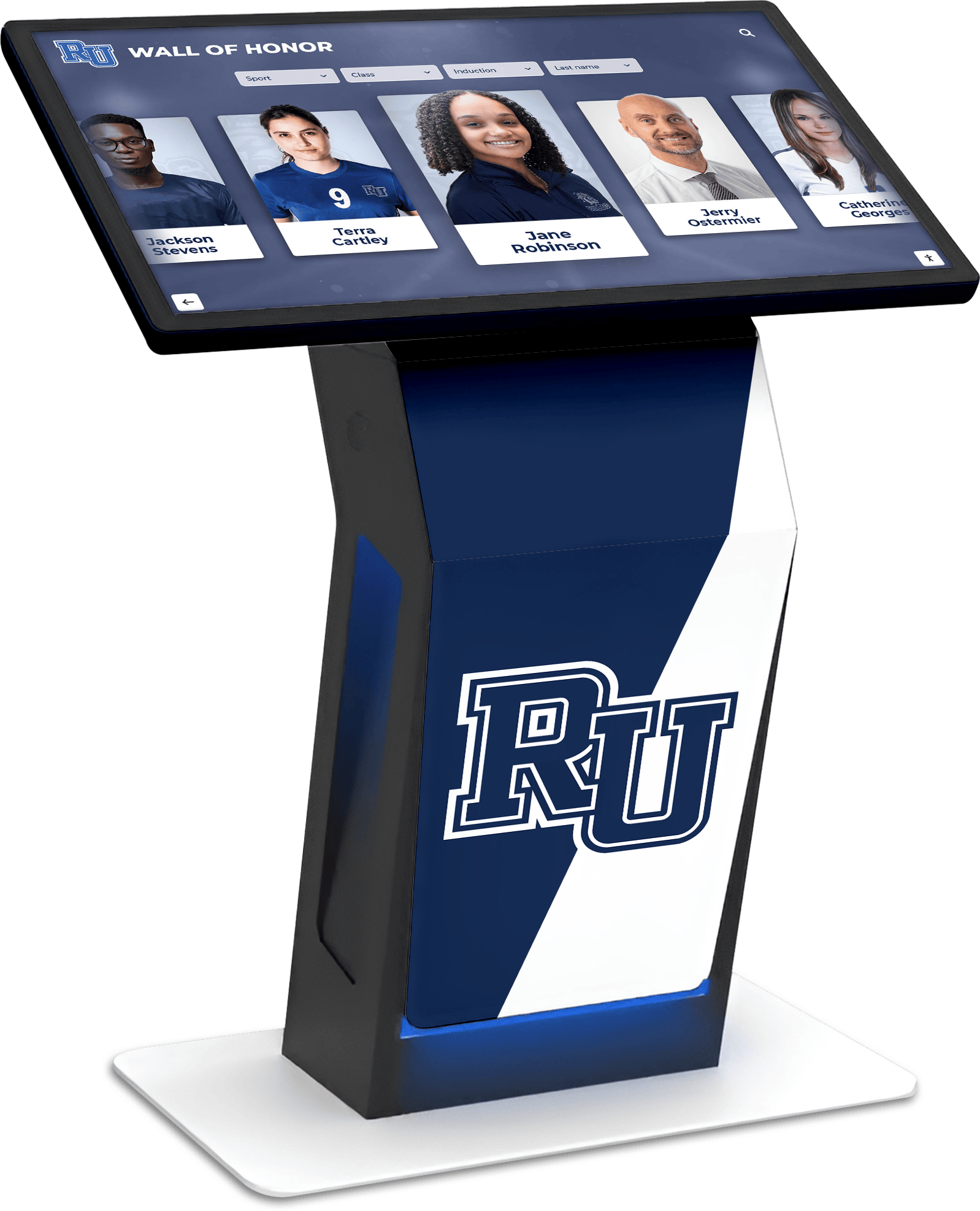
Touch board systems provide unlimited capacity for recognizing All-Region athletes across all sports and years
Comprehensive Documentation Without Compromise
Digital recognition platforms enable schools to acknowledge every All-Region athlete throughout program history with equal prominence, maintain complete archives documenting all regional selections from program founding forward, add new All-Region honorees instantly as selections occur without physical display modification, and preserve comprehensive athlete profiles including photos, statistics, achievement contexts, and career narratives.
This unlimited capacity ensures schools never face situations where space constraints prevent proper recognition of significant athletic achievements. Every All-Region athlete, regardless of when they competed or what other honors they received, maintains permanent visibility within comprehensive program archives accessible through intuitive touch board interfaces.
Solutions like Rocket Alumni Solutions specifically designed for educational institutions provide the reliable, intuitive platforms schools need for creating these comprehensive recognition systems without requiring technical expertise or ongoing IT support.
Rich Multimedia Athlete Profiles
Touch boards transform recognition from simple name listings into compelling stories honoring All-Region athletes comprehensively while providing inspirational examples for younger students pursuing similar excellence.
Enhanced Profile Content
Rather than seeing “Marcus Johnson - 2024 All-Region Football (Defense),” visitors encounter comprehensive profiles including professional-quality photographs in uniform or action shots, complete All-Region selection details including First Team, Second Team, or Honorable Mention designations, position-specific information and statistical achievements, team accomplishments during their careers contextualizing individual success, personal statements or quotes about what All-Region recognition means, post-graduation updates about college athletics or other achievements, and connections to other honors including All-Conference, All-State, or hall of fame recognition.
This multimedia richness creates emotional connections simple lists cannot generate, helping visitors understand dedication required to achieve All-Region distinction while celebrating athletes as complete individuals beyond single honors. Programs can explore high school wrestling tournament recognition approaches demonstrating comprehensive digital storytelling applicable to All-Region acknowledgment across sports.
Interactive Exploration and Search Functionality
Touch board systems enable visitors to actively engage with All-Region content through search, filtering, and exploration features transforming passive viewing into participatory experiences that increase engagement and deepen appreciation for program excellence.
Engagement Capabilities
Digital systems provide search functionality enabling instant lookup of specific athletes by name or graduation year, filters allowing visitors to view only specific sports or All-Region designation levels, sorting options organizing athletes chronologically, by sport, or alphabetically for easy navigation, comparison tools showing All-Region achievements across different competitive eras, timeline views displaying program evolution and achievement frequency over decades, and related content connections linking All-Region athletes to championship teams, record boards, or alumni success stories.
This interactivity dramatically increases engagement time—visitors typically spend 5-10 minutes exploring comprehensive touch board displays compared to brief glances at traditional static recognition. Extended engagement creates deeper appreciation for program tradition while inspiring students to pursue their own athletic excellence.
Schools can examine athletic recruiting recognition display strategies that leverage touch board engagement capabilities to support college recruiting efforts while honoring All-Region achievements.
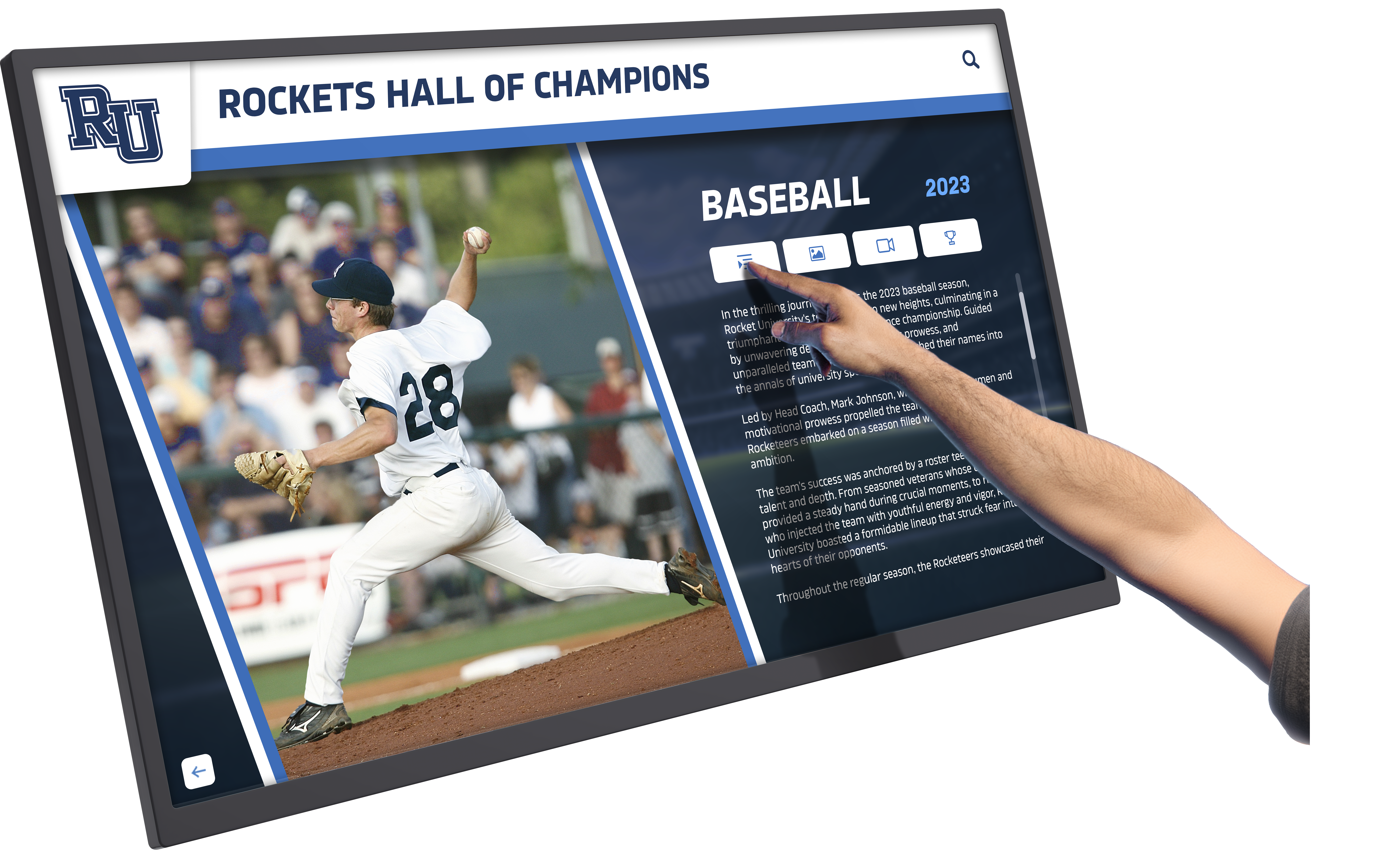
Intuitive touchscreen interfaces make exploring All-Region achievements engaging and accessible for all visitors
Real-Time Updates and Cloud Management
Cloud-based content management systems enable athletic directors or designated staff to update All-Region recognition immediately when selections occur, without requiring physical display access, professional installation, or technical expertise.
Instant Recognition Publication
When athletes earn All-Region honors, schools can add recognition profiles that same day or following morning through simple web interfaces accessible from any internet-connected device, upload photos and enter achievement details through intuitive forms requiring no coding knowledge, schedule recognition for automatic publication if timing coordination matters, publish updates simultaneously across multiple display locations throughout facilities, and manage content remotely without visiting physical installation sites or requiring IT department involvement.
This simplicity ensures timely recognition while athletes and communities maintain excitement about regional selections rather than waiting weeks or months for physical display updates requiring professional installation or volunteer coordination. Schools report that ease of digital updates encourages more comprehensive recognition since adding content involves minimal effort compared to traditional approaches requiring physical modification.
Web Integration and Extended Reach
Modern touch board systems don’t exist only as physical hallway displays—they extend recognition online through integrated websites and mobile-responsive interfaces, dramatically expanding who can access and celebrate All-Region achievements.
Beyond Physical Campus
Comprehensive recognition platforms automatically distribute content across touchscreen displays in athletic facilities and common areas, website recognition pages maintaining searchable athlete databases accessible to anyone online, social media integration enabling easy sharing of individual athlete profiles, mobile-optimized access allowing smartphone exploration from anywhere, and permanent archives preserving all recognition indefinitely regardless of physical space constraints.
This multi-channel approach ensures All-Region achievements receive visibility comparable to other celebrated accomplishments while creating opportunities for families to share recognition with extended networks, alumni to reconnect with program traditions, and prospective families to discover athletic program excellence when researching schools.
Programs can explore digital hall of fame approaches that extend beyond physical displays to create comprehensive online recognition accessible to global communities.
Implementing Comprehensive All-Region Touch Board Recognition
Creating effective All-Region recognition requires systematic planning addressing athlete identification, content development, display placement, and integration with broader athletic recognition programs.
Establishing Clear Recognition Criteria
Defining What Receives Recognition
Schools must establish transparent criteria determining which All-Region selections receive recognition through touch board displays. Most programs recognize all official All-Region selections including First Team, Second Team, Third Team (where applicable), and Honorable Mention designations. Some schools limit recognition to First and Second Team selections, particularly in regions with very extensive All-Region programs.
Selection Verification
Clear processes should verify All-Region selections through official sources including state athletic association announcements, coaching association releases, recognized media organization selections, and conference or league official communications. Documentation prevents confusion about which honors qualify as legitimate All-Region recognition versus informal or unverified selections.
Communication ensures students and families understand exactly which All-Region honors receive touch board recognition through published criteria on athletic department websites, season-start communications explaining recognition programs, and consistent application across all sports and competitive levels.
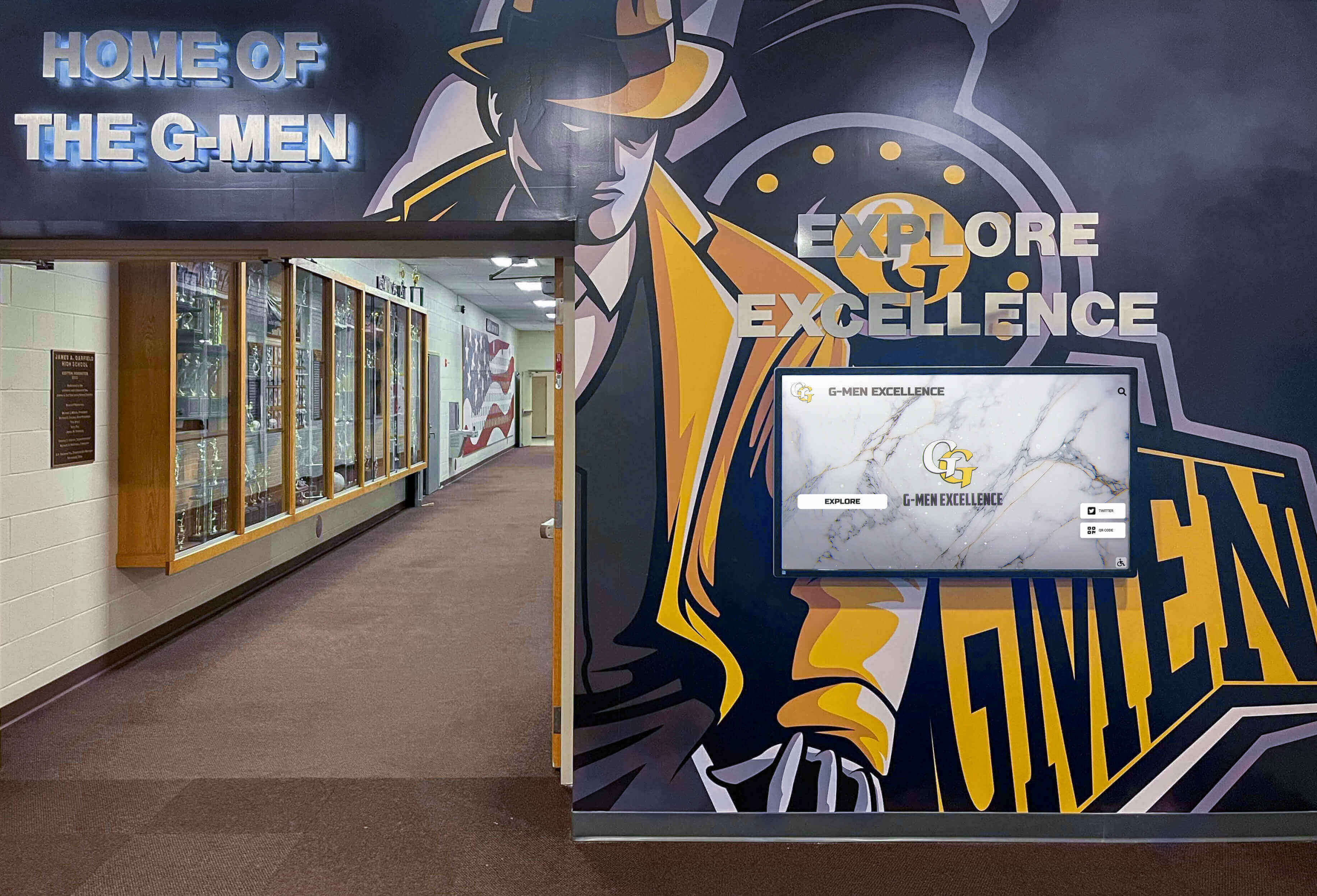
Touch boards integrate seamlessly with traditional trophy cases creating comprehensive recognition environments
Content Development for Touch Board Profiles
Essential Profile Information
Compelling All-Region recognition includes fundamental athlete information like full name, graduation year, and All-Region sport, specific selection level (First Team, Second Team, Honorable Mention, etc.), position or event category where applicable, season and year when recognition was earned, team record and accomplishments that season providing context, and high-quality photographs showing athletes in uniform or action shots.
Expanded Profile Content
Touch boards accommodate enriched content transforming basic listings into comprehensive celebrations through career statistics and athletic achievements beyond single All-Region seasons, quotes from athletes about what regional recognition means personally, post-graduation updates about college athletics or professional accomplishments, connections to other honors including All-Conference, All-State, or championship achievements, video highlights from games or competitions where available, and family or community connections honoring local athletic traditions.
This comprehensive documentation transforms simple acknowledgment into complete narratives honoring athletes while preserving program history thoroughly. Schools can examine 1,000 points scorer storytelling approaches demonstrating effective digital athletic narratives applicable to All-Region recognition across sports.
Strategic Display Placement and Visibility
High-Traffic Location Selection
Touch board effectiveness depends significantly on placement in locations where students, staff, visitors, and community members regularly encounter them. Optimal locations include main athletic facility entrances creating immediate visibility, gymnasium lobbies where game attendees gather before competitions, high-traffic hallways connecting athletic areas to main school buildings, commons or cafeteria areas with sustained daily foot traffic, and prominent lobby locations where prospective families tour facilities.
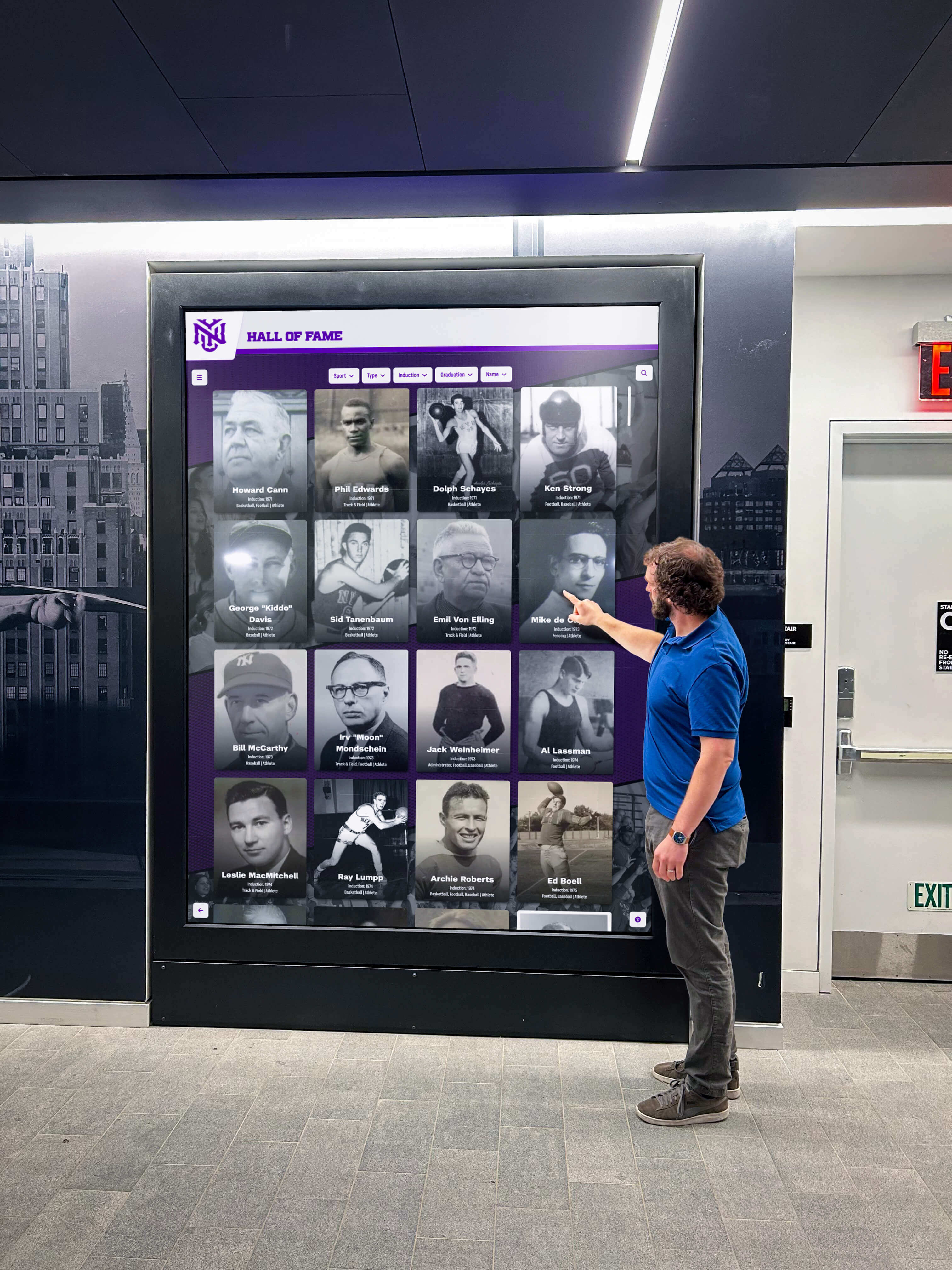
Strategic lobby placement creates gathering points where communities celebrate athletic achievements including All-Region honors
Multiple Touchpoint Strategies
Some schools create multiple recognition locations with primary comprehensive displays in main athletic areas showcasing all All-Region athletes across sports, sport-specific displays in relevant facilities highlighting basketball All-Region honorees in gyms or baseball selections near fields, and smaller supplementary displays or rotating digital screens in various school locations extending visibility beyond athletic facilities.
This distributed approach maximizes recognition visibility while allowing different locations to highlight specific programs or emphasize recent versus historical achievements based on audience and context.
Integration With Broader Recognition Programs
Connecting to Athletic Hall of Fame
Many schools maintain athletic halls of fame recognizing diverse excellence including championship teams, record holders, and individual achievers. All-Region recognition represents natural hall of fame consideration, though programs should determine whether regional selection alone guarantees induction or serves as strong qualification considered alongside other criteria.
Integration approaches include automatic hall of fame induction for multiple All-Region selections, All-Region achievement as primary but not sole qualification, expedited consideration where All-Region athletes receive priority review, and tiered recognition where hall of fame represents highest honor with All-Region recognition as separate prestigious distinction.
Schools can explore hall of fame wall strategies that coordinate All-Region recognition with broader athletic achievement celebration ensuring comprehensive acknowledgment of excellence across multiple dimensions.
Coordinating With Other Athletic Achievements
Effective programs celebrate multiple achievement types through coordinated recognition ensuring all excellence receives appropriate acknowledgment. Beyond All-Region athletes, recognition might include All-Conference selections, team championship members, individual record holders and milestone achievers, All-State honorees building upon regional recognition, and athletes continuing sports at collegiate levels.
Coordinated touch board recognition ensures comprehensive program documentation while preventing All-Region achievements from overshadowing other significant accomplishments or creating perception that regional selection represents the only athletic achievement worth celebrating.
Creating Multi-Sport All-Region Recognition Systems
Comprehensive touch board programs should acknowledge regional excellence across all sports rather than focusing on high-profile programs while underrecognizing athletes in less visible sports.
Ensuring Equitable Recognition Across Sports
Equal Visibility Standards
Touch board systems excel at providing equal recognition to All-Region athletes regardless of sport popularity or competitive visibility through consistent profile formats across all sports, equal detail and multimedia content regardless of program size, alphabetical or chronological sorting preventing hierarchical sport ordering, sport-specific filtering allowing focused exploration without implying importance rankings, and balanced historical documentation preserving achievements from all programs equally.
This equity demonstrates institutional commitment to honoring all athletic excellence equally regardless of community attention, media coverage, or spectator attendance certain sports receive.
Recognition Equity Best Practices
- Consistent Criteria: Apply same All-Region recognition standards across all sports
- Equal Profile Development: Invest comparable effort in content creation regardless of sport
- Balanced Communication: Announce All-Region selections with equal enthusiasm across programs
- Proportional Celebration: Ensure ceremony or acknowledgment approaches don't favor specific sports
- Historical Balance: Research and document All-Region achievements across all sports equally
Gender Equity in All-Region Recognition
Equal Celebration Standards
Programs must ensure boys’ and girls’ All-Region athletes receive equal recognition through consistent criteria applied without gender distinction, equal prominence in touch board displays and communications, comparable celebration events and ceremonies regardless of program, balanced historical documentation preserving achievements from all teams, and proportional visibility ensuring no program dominates recognition at others’ expense.
This equity demonstrates institutional commitment to honoring all athletic excellence equally regardless of gender, sport visibility, or competitive level while complying with Title IX expectations for equitable treatment of male and female athletes.
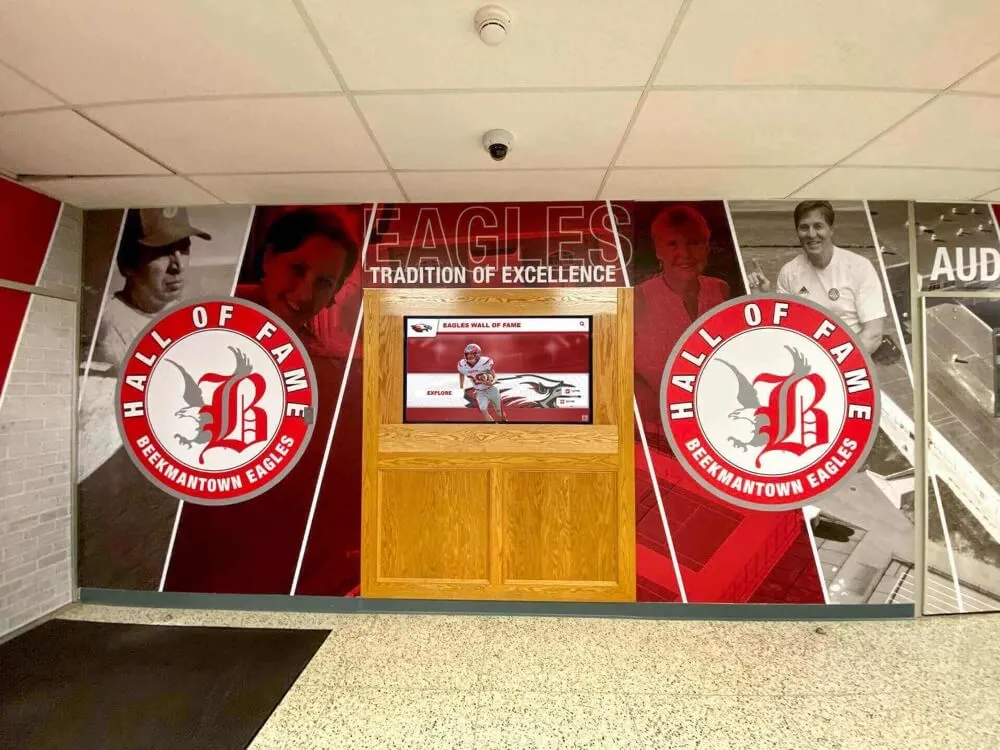
Comprehensive touch board systems celebrate All-Region achievements across all sports and genders with equal visibility and detail
Recognizing Individual Versus Team Sport Excellence
Adapted Recognition for Different Sport Types
All-Region recognition in team sports like football, basketball, or soccer typically identifies individual position excellence within team contexts, requiring profiles that acknowledge both personal achievement and team success environments. Individual sports like track and field, swimming, or wrestling recognize event-specific or weight class excellence where athletes compete more independently, enabling profiles focusing more directly on personal performance and competitive results.
Touch board systems accommodate these differences through flexible profile formats adapting to sport-specific achievement contexts, statistical presentations matching relevant performance metrics for different sports, related content connections linking athletes to relevant team or individual achievements, and multimedia content showcasing sport-specific competitive moments and accomplishments.
This flexibility ensures All-Region recognition feels appropriate and comprehensive regardless of sport structure, competitive format, or achievement measurement approaches.
Motivating Future All-Region Athletes Through Recognition
Beyond celebrating current achievements, effective touch board recognition programs motivate younger athletes to pursue regional excellence through visible examples of what dedicated athletes accomplish and clear pathways from current participation to future distinction.
Creating Aspirational Visibility
Motivation Through Consistent Exposure
When underclassmen encounter All-Region recognition regularly through hallway touch boards, lobby displays, and online access, several powerful motivational dynamics occur. They develop concrete understanding that exceptional achievement is possible and systematically celebrated, gain specific performance targets to pursue rather than abstract excellence goals, see progression pathways from freshman participation to All-Region accomplishment, understand that dedication receives lasting recognition extending beyond single seasons, and connect with program tradition creating responsibility for maintaining competitive standards.
This consistent exposure makes All-Region achievement feel attainable rather than reserved for rare talents, increasing the number of athletes who set regional selection goals and work systematically toward them through dedicated training, skill development, and competitive focus.
Connecting Recognition to Development
Effective touch board programs explicitly connect All-Region recognition to athlete development processes through skill progression content showing how regional honorees built complete athletic capabilities, work ethic narratives emphasizing practice dedication and off-season training enabling achievement, multi-season development showing gradual improvement rather than instant success, leadership examples modeling behaviors contributing to regional selection, and academic success documentation demonstrating eligibility maintenance enabling sustained participation.
This educational dimension helps younger athletes understand concrete steps they can take pursuing similar accomplishments rather than viewing All-Region athletes as naturally gifted performers whose success cannot be replicated through intentional effort and systematic development.
Schools can explore student athlete recognition approaches that connect current students with accomplished alumni creating mentorship pathways supporting athletic development toward regional excellence.
Celebrating Diverse Paths to Regional Recognition
Multiple Achievement Profiles
Touch board recognition should acknowledge that various athlete types earn All-Region honors through different competitive approaches including versatile performers succeeding through diverse skill sets, specialized athletes dominating specific positions or events, leadership-oriented athletes whose intangible contributions elevate team success, consistent performers delivering reliable excellence across entire seasons, and breakthrough athletes making dramatic improvement earning regional recognition.
Highlighting these diverse approaches ensures athletes with different profiles and development trajectories see achievable pathways to All-Region selection rather than believing only certain athlete types can earn regional distinction.
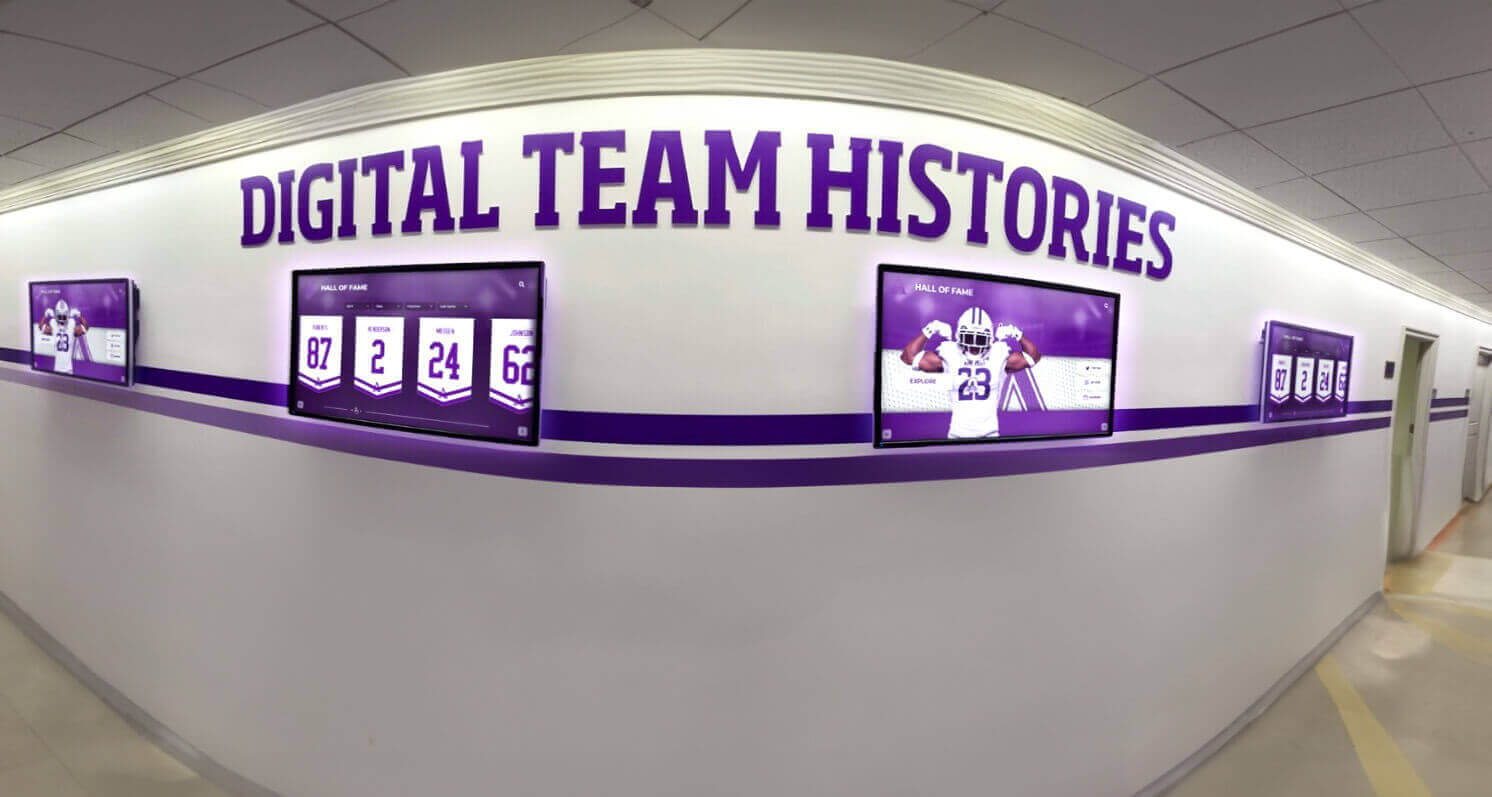
Touch board systems inspire future athletes by showcasing diverse paths to All-Region excellence and regional competitive success
Technical Considerations for All-Region Touch Board Systems
Schools considering touch board displays for All-Region recognition should understand technical requirements and implementation considerations ensuring successful deployment that meets institutional needs while remaining sustainable long-term.
Hardware Selection and Specifications
Display Requirements
All-Region touch board systems typically consist of commercial-grade touchscreen monitors designed for continuous operation in public spaces rather than consumer televisions lacking durability for institutional use. Screen sizes typically range from 43 inches for smaller dedicated displays to 65-75 inches for comprehensive primary recognition installations, with larger displays providing more impressive visual impact in spacious lobbies or athletic facilities.
Commercial displays offer higher brightness for well-lit environments, more durable touch surfaces withstanding heavy use, commercial warranties appropriate for institutional installations, and professional appearance matching educational facility aesthetics.
Computing and Connectivity
Displays connect to computing systems running recognition software, typically through compact, fanless computers requiring minimal maintenance while operating reliably for years. Internet connectivity enables cloud-based content management and remote updates through wired ethernet connections providing maximum reliability or WiFi connectivity offering flexible installation without network cable requirements.
Power requirements typically involve standard electrical outlets, though some installations may require dedicated circuits depending on display size and computing equipment. Professional installers ensure electrical safety and code compliance during implementation.
Software Platforms and Content Management
Intuitive Administration
Recognition software should be intuitive for both visitors exploring displays and administrators managing content without technical expertise. The best systems require no coding knowledge for content updates, allowing athletic staff to add new All-Region athletes, upload photos, enter achievement details, and publish recognition through simple web-based interfaces accessible from any browser.
Cloud-based platforms eliminate software installation requirements, automatic updates ensure systems maintain current features and security, and role-based access controls allow appropriate permissions for different staff members managing various sports or recognition categories.
Solutions like Rocket Alumni Solutions provide comprehensive touch board platforms specifically designed for educational institutions, combining intuitive management with robust functionality supporting All-Region recognition alongside broader athletic, academic, and alumni acknowledgment programs.
Integration Capabilities
Advanced systems offer integration with existing school platforms including website content management systems for coordinated online recognition, student information systems for automatic roster updates, social media platforms for streamlined achievement sharing, and athletic management software for statistical data integration reducing duplicate entry requirements.
Schools should discuss integration requirements during planning phases ensuring chosen touch board systems can connect appropriately with existing infrastructure while remaining accessible even when integration proves unnecessary or impractical.
Installation and Ongoing Support
Professional Implementation
Professional installation ensures touch board displays are properly mounted, safely secured to walls or integrated into custom stands, correctly configured with appropriate settings for public use, and thoroughly tested before official deployment.
Electrical and networking requirements are addressed appropriately ensuring reliable operation, mounting hardware provides secure attachment meeting institutional safety standards, cable management creates clean professional appearances, and placement optimizes visibility while avoiding interference with building circulation or activities.
Sustained Technical Support
Ongoing technical support proves important for addressing occasional issues that arise with any technology system. Rocket Alumni Solutions provides comprehensive support for their touch board platforms ensuring schools can quickly resolve any technical problems through remote diagnostics allowing many issues to be identified and resolved without on-site visits, online documentation and training resources supporting independent troubleshooting, responsive customer service addressing questions and concerns promptly, and regular software updates maintaining security and functionality without requiring manual intervention.
Cloud-based systems allow remote management and support, minimizing disruption and technical burden on school IT staff while ensuring recognition displays remain reliably operational.
Measuring All-Region Recognition Program Success
Regular assessment ensures touch board recognition programs achieve intended goals and justify resource investments through quantifiable outcomes and qualitative community feedback.
Quantitative Success Metrics
Engagement and Visibility Indicators
Digital touch board systems provide valuable analytics revealing program impact through total visitor interactions tracking overall system usage, unique users identifying how many different people engage with recognition, session duration indicating depth of engagement with All-Region content, most-viewed profiles showing which athletes or sports generate greatest interest, and search patterns revealing what information visitors seek most frequently.
These metrics demonstrate recognition program value to administrators while guiding content development priorities and identifying opportunities for enhanced engagement through additional content, improved navigation, or expanded recognition categories.
Program Coverage Metrics
Comprehensive recognition ensures appropriate athlete coverage through percentages of All-Region athletes receiving touch board recognition, timeline analysis showing how quickly new selections receive acknowledgment, historical documentation completeness identifying gaps in archived achievements, and multi-sport representation confirming balanced recognition across athletic programs.
Regular assessment identifies areas requiring attention, such as incomplete historical research, delayed recognition of recent achievements, or unintentional gaps in coverage across different sports or competitive levels.
Qualitative Assessment Approaches
Stakeholder Feedback Collection
Effective assessment includes gathering perspectives from athletes receiving recognition about acknowledgment meaningfulness and personal impact, families appreciating how schools honor athletic achievements, coaches evaluating whether recognition supports program culture and motivation, administrators assessing whether investments produce appropriate institutional benefits, and community members observing how recognition affects school pride and athletic program perception.
This qualitative feedback reveals impacts that quantitative metrics cannot capture while identifying opportunities for recognition program enhancement based on stakeholder experiences and suggestions.
Cultural Impact Indicators
Successful All-Region recognition programs create observable cultural shifts including increased athlete goal-setting around regional selection pursuit, improved athletic program pride and institutional identity, enhanced community engagement with athletic programs, greater prospective family interest in athletic opportunities, and stronger alumni connections through recognition of their own historical achievements.
While difficult to measure precisely, these cultural indicators demonstrate recognition program value extending beyond immediate athlete acknowledgment to broader institutional benefits affecting entire communities.
Schools can examine best ways to increase school pride that include comprehensive athletic recognition as core strategy for building positive institutional culture and community connection.
Conclusion: Honoring Regional Excellence Through Modern Recognition
Earning All-Region recognition represents exceptional athletic achievement deserving acknowledgment matching accomplishment significance. When schools systematically celebrate regional selections through modern touch board displays, thoughtful recognition programs, and sustained institutional commitment, they honor individual excellence while building athletic cultures where regional distinction is pursued, achieved, and preserved within enduring tradition.
The strategies explored in this guide provide concrete frameworks for schools seeking to recognize All-Region athletes effectively through technology eliminating traditional limitations. Touch board systems offer unlimited recognition capacity transcending physical space constraints, rich multimedia profiles transforming lists into comprehensive stories, interactive exploration creating engaging community experiences, real-time updates ensuring timely acknowledgment, and extended web access bringing recognition to families and communities worldwide.
Transform Your All-Region Athletic Recognition
Discover how modern touch board solutions can help you celebrate every All-Region athlete comprehensively while building athletic cultures that inspire continued excellence and honor regional achievement appropriately.
Explore Touch Board SolutionsTraditional recognition methods including brief announcements, physical trophy cases, and award ceremonies serve important purposes but face significant limitations. Announcements provide momentary acknowledgment that quickly fades from institutional memory. Physical displays encounter space constraints that eventually force difficult decisions about which achievements receive prominence. Award ceremonies create meaningful moments but reach only attendees present for specific events.
Touch board technology overcomes these constraints while creating engaging recognition experiences that honor All-Region athletes appropriately. These systems provide permanent, searchable archives preserving every regional selection throughout program history, comprehensive athlete profiles celebrating complete competitive journeys, intuitive interfaces enabling easy exploration by students and community members, simple cloud management allowing instant updates when new athletes earn recognition, and integrated online access extending visibility beyond physical campus to families and alumni worldwide.
Your All-Region athletes demonstrated exceptional dedication to their sports through skill development, consistent performance, and competitive excellence distinguishing them throughout entire regions spanning multiple schools and communities. They deserve recognition proportional to achievement significance—lasting, visible, comprehensive acknowledgment that honors accomplishment while inspiring younger athletes to pursue their own regional excellence.
Ready to transform your All-Region recognition program? Explore comprehensive touch board platforms specifically designed for schools and athletic programs that make celebrating regional distinction as systematic, engaging, and impactful as these exceptional athletes deserve. Modern recognition technology ensures every All-Region athlete receives appropriate honor while building athletic traditions that inspire sustained excellence across entire programs for generations to come.































