High schools across the nation face a persistent challenge: how to meaningfully recognize diverse student achievements when physical trophy cases overflow, wall space diminishes, and traditional plaques fail to engage digital-native students. Static displays that once commanded attention now blend into hallway backgrounds, their fading photographs and outdated formatting unable to compete with the dynamic, interactive experiences students encounter everywhere else in their lives.
Meanwhile, the importance of recognition has never been greater. Research consistently demonstrates that acknowledged students show higher engagement levels, stronger school connection, and improved academic outcomes. Yet many schools struggle to create recognition programs that genuinely resonate with contemporary students while honoring the traditions that alumni remember fondly. The gap between recognition’s proven value and effective implementation continues widening as schools search for solutions bridging historical approaches with modern expectations.
Touch walls for high schools offer transformative solutions to these recognition challenges. These interactive digital displays combine intuitive touchscreen technology with comprehensive content management systems, enabling schools to celebrate unlimited achievements through engaging interfaces that students naturally gravitate toward. Rather than replacing tradition, touch walls enhance it—preserving decades of institutional history while presenting accomplishments through modern platforms that inspire exploration, connection, and pride.
This comprehensive guide explores everything high schools need to know about implementing touch wall recognition systems. From understanding core benefits and planning successful installations through content strategy, student engagement, and measuring impact, you’ll discover proven frameworks for transforming your recognition program into a dynamic centerpiece of school culture that strengthens community pride while inspiring current students through visible evidence of excellence.
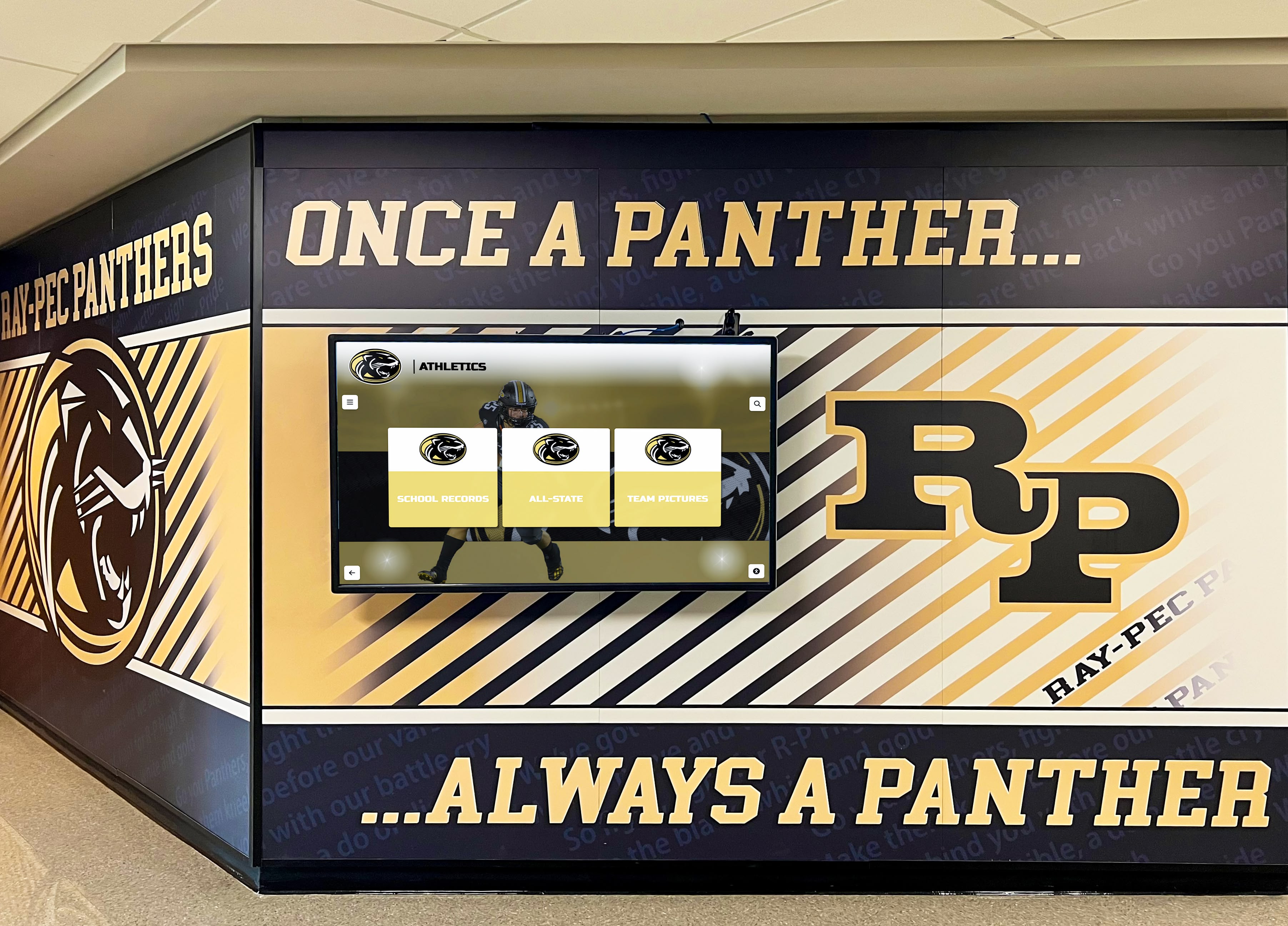
Modern touch walls integrate seamlessly with school environments while transforming recognition into engaging interactive experiences
Understanding Touch Walls: Technology That Transforms High School Recognition
Touch walls represent the evolution of school recognition from passive static displays into dynamic interactive experiences that engage students, honor achievements, and preserve institutional memory through modern technology platforms.
What Is a Touch Wall System?
A touch wall combines commercial-grade touchscreen display hardware with specialized recognition software, creating interactive kiosks where students, staff, alumni, and visitors explore achievements through intuitive touch-based navigation similar to smartphones and tablets. Unlike traditional trophy cases limited by physical space and static presentation, touch walls accommodate virtually unlimited content—from historical achievements spanning decades to current accomplishments added within minutes of occurrence.
The system architecture includes several integrated components working together seamlessly. Large-format touchscreen displays, typically ranging from 43 to 75 inches, provide the physical interface where users interact with content. These commercial-grade screens are specifically designed for continuous operation in high-traffic environments, offering durability and reliability that consumer displays cannot match. Behind the visible screen, dedicated computing hardware runs specialized recognition software connecting to cloud-based content management systems where administrators update information remotely from any internet-connected device.
Content organization follows intuitive structures enabling quick information discovery. Users might filter achievements by sport, academic subject, graduation year, or recognition type. Search functionality enables finding specific individuals within seconds rather than scanning hundreds of physical plaques. Photo galleries, video highlights, biographical information, and achievement details create rich profiles impossible to capture on traditional static displays.
How Touch Walls Differ From Traditional Digital Signage
While both utilize digital screens, touch walls differ fundamentally from standard digital signage in purpose, functionality, and engagement model. Traditional digital signage presents rotating announcements, schedules, and promotional content that viewers watch passively. Content changes automatically on preset schedules without user control or interaction. These systems excel at broadcasting information to audiences but create no opportunity for personalized exploration or deeper engagement.
Touch walls, by contrast, place control directly in users’ hands. Rather than consuming whatever content appears at a given moment, visitors actively explore areas of personal interest. A freshman athlete might search records in their sport, understanding what achievement levels they’re working toward. Alumni returning for homecoming can locate classmates and teammates, reminiscing about shared experiences while introducing families to school history. Parents discover role models in career fields their children are considering, making abstract future possibilities more tangible through concrete local examples.
This interactive model creates dramatically different engagement patterns. According to research on interactive displays in educational settings, visitors spend an average of 6-8 minutes actively exploring touch wall content compared to 30-45 seconds glancing at static displays. The difference stems from personal agency—when people control their exploration path, they invest more time and attention than when passively viewing predetermined content.
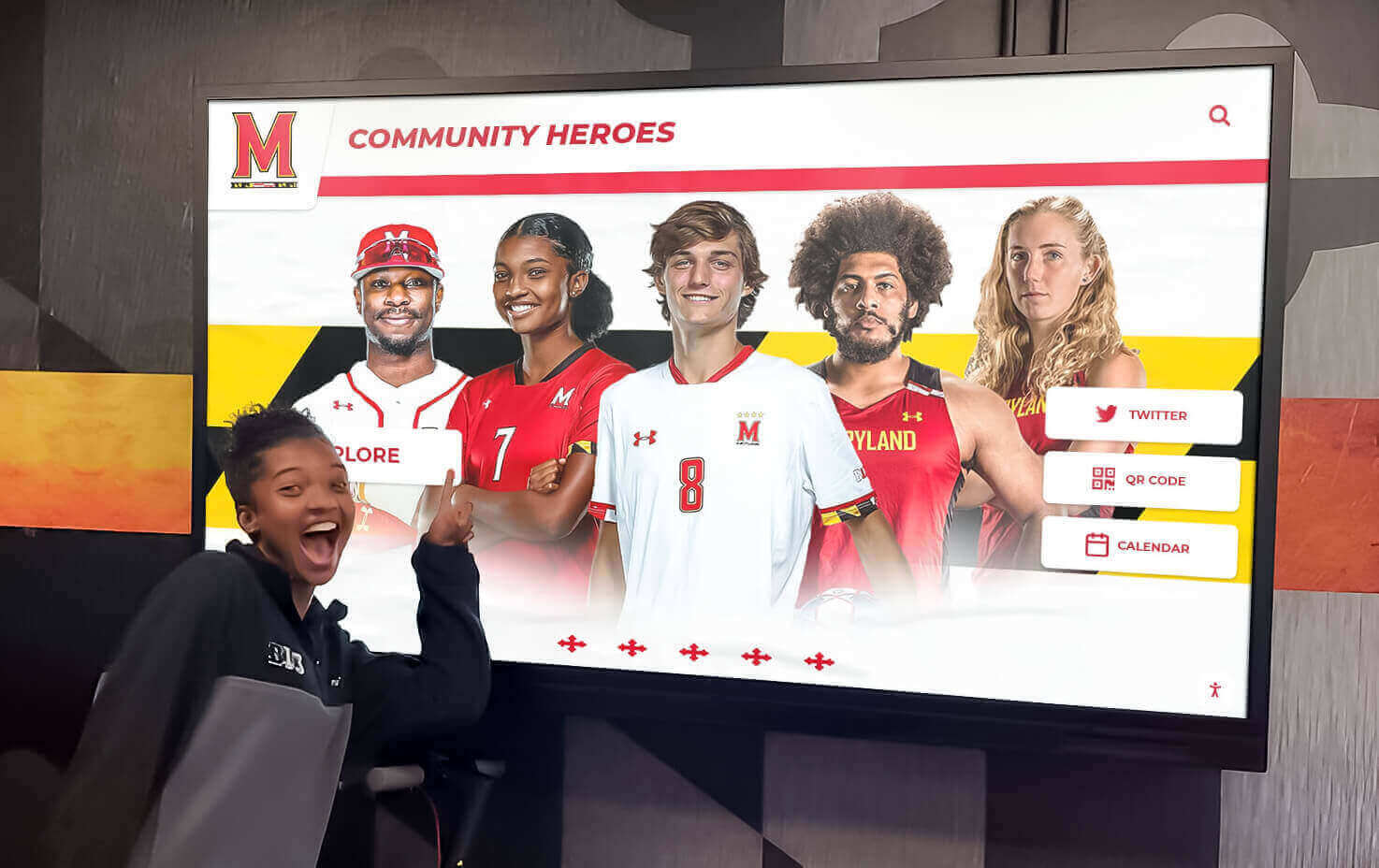
Interactive touch walls invite active exploration rather than passive viewing, dramatically increasing engagement time and impact
Key Components of Effective High School Touch Wall Systems
Successful touch wall implementations require several essential elements working in harmony:
Commercial-Grade Touchscreen Hardware forms the physical foundation. Consumer-grade displays designed for home entertainment fail quickly under continuous school usage patterns. Commercial displays engineered for high-traffic environments offer extended operational lifespans (typically 50,000+ hours), enhanced durability against constant interaction, wider viewing angles ensuring visibility from various positions, and anti-glare coatings maintaining readability in diverse lighting conditions including direct sunlight from hallway windows.
Intuitive User Interface Design determines whether students enthusiastically engage or quickly abandon interaction attempts. Effective interfaces require no instructions or training—visitors should immediately understand how to begin exploring based on familiar smartphone and tablet interaction patterns. Large, clear navigation buttons, logical content organization, responsive touch detection, and visually appealing layouts all contribute to positive user experiences that encourage extended exploration.
Comprehensive Content Management System enables non-technical administrators to maintain current information without requiring IT department involvement for every update. The best systems offer browser-based access from any device, simple form-based content entry requiring no coding knowledge, drag-and-drop media upload for photos and videos, scheduled publishing allowing content to appear automatically on future dates, and role-based permissions enabling different staff members appropriate access levels.
Reliable Network Connectivity ensures systems remain current and functional. Cloud-based architecture means displays automatically receive content updates, software improvements, and security patches without requiring on-site technical intervention. While local content caching enables continued operation during temporary network interruptions, consistent connectivity ensures optimal functionality.
Strategic Physical Installation positions touch walls where they maximize visibility and access while considering practical factors like available electrical power, network connectivity, ADA compliance for accessibility, protection from weather in outdoor or covered entrance locations, and adequate clearance space allowing multiple users to gather without blocking hallway traffic.
The Compelling Benefits of Touch Walls for High Schools
High schools implementing touch walls consistently report transformative impacts across student engagement, school culture, administrative efficiency, and community connection. Understanding these benefits helps administrators build compelling cases for investment while setting appropriate expectations for implementation outcomes.
Unlimited Recognition Capacity That Grows With Your School
Physical space constraints force difficult decisions about whose achievements receive display space and whose accomplishments are relegated to storage. Trophy cases overflow, forcing removal of older awards to accommodate new achievements. Wall space becomes political battleground as different departments compete for limited recognition areas. Over time, space limitations mean that countless deserving students never receive public recognition despite significant accomplishments.
Touch walls eliminate these space-driven limitations entirely. A single 55-inch display can showcase thousands of individual profiles with comprehensive information, photos, videos, and achievement details. Schools can recognize every varsity letter recipient across all sports and all years, honor all academic achievement levels from honor roll through valedictorian, celebrate performing arts accomplishments across theater, music, and visual arts, acknowledge community service leaders and their impact hours, recognize career and technical education certifications and competition placements, and preserve historical achievements dating back to school founding.
This comprehensive recognition capacity creates more inclusive school cultures where diverse excellence forms receive appropriate celebration rather than limiting acknowledgment to only highest-achieving students or most visible activities. When students see that various pathway successes earn recognition—not just star athletes or valedictorians—they feel encouraged pursuing excellence in areas matching their interests and talents.
Engaging Interactive Experiences That Resonate With Digital-Native Students
Today’s high school students have never known life without touchscreen devices. Their default interaction model involves tapping, swiping, pinching, and exploring rather than passively viewing. Touch walls speak this native language, creating recognition experiences that feel natural and engaging rather than outdated and irrelevant.
The interactive model generates genuine curiosity and exploration. Students discover achievements they weren’t specifically seeking but find interesting once encountered. An athlete browsing their team’s records might explore other sports, discovering school history they never knew. Academic achievers might filter by intended college major, finding alumni role models in their career fields. Arts students can explore performance archives, watching video clips from productions decades past and discovering how programs evolved.
This exploratory engagement pattern creates deeper connections than static displays ever achieve. Rather than quickly glancing at a trophy case while passing, students stop and genuinely engage with content—comparing their achievements to historical records, searching for older siblings or relatives, and sharing discoveries with friends. Solutions like Rocket Alumni Solutions provide purpose-built platforms specifically designed for educational recognition, ensuring interfaces align with how students naturally interact with technology.
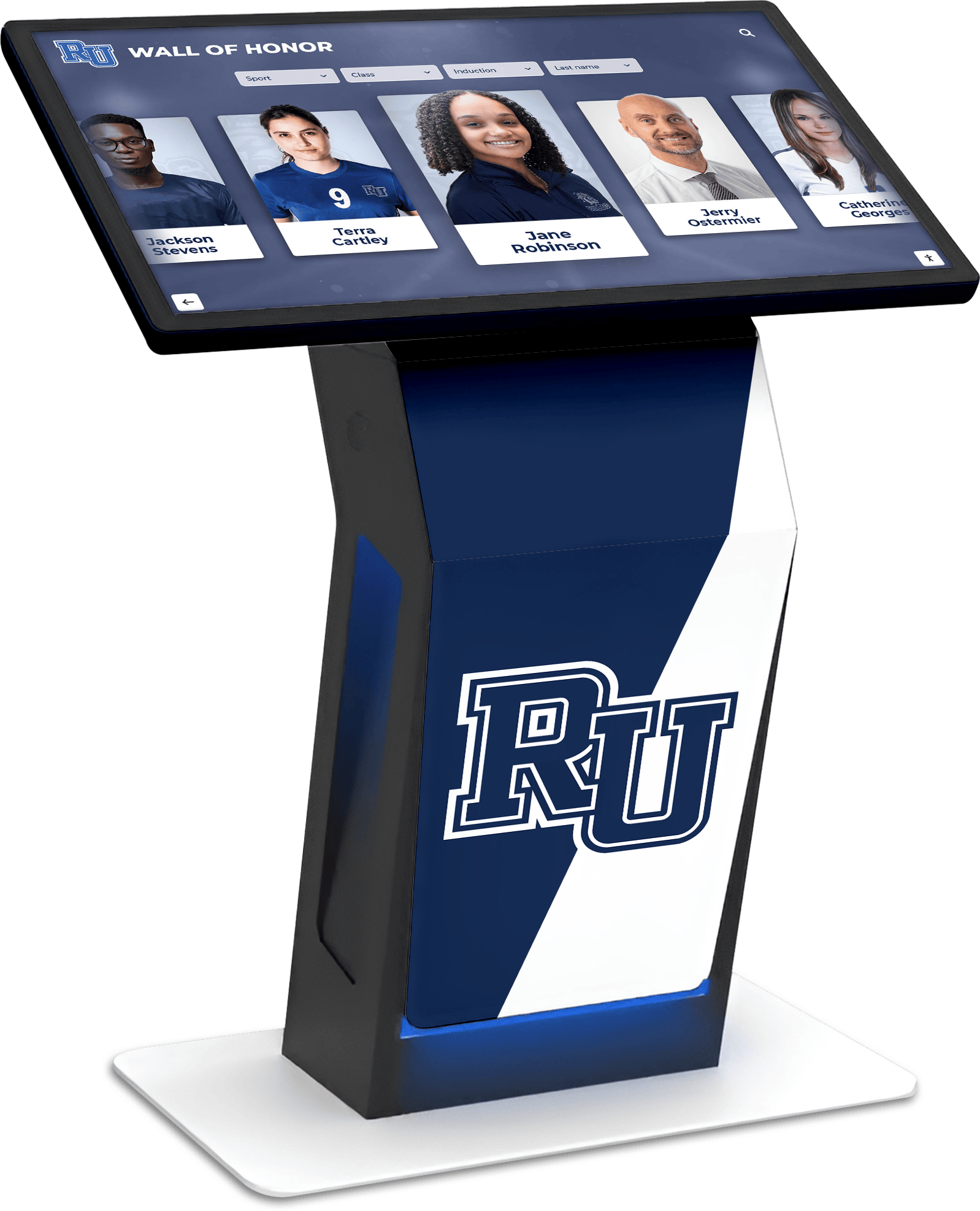
Purpose-built interactive kiosks create intuitive exploration experiences that engage digital-native students through familiar touchscreen interaction
Inspiring Current Students Through Visible Role Models
Recognition serves purposes beyond honoring past achievements—it inspires future excellence by demonstrating what’s possible and making abstract goals more concrete and attainable. When students see detailed profiles of graduates who followed similar paths, attended the same classes, participated in the same activities, and went on to meaningful success, possibilities become real rather than theoretical.
Touch walls enable this inspirational function through rich profile information impossible on static plaques. Beyond names and years, profiles might include biographical background sharing where honorees came from, challenges overcome documenting obstacles faced and how they persevered, achievement details explaining what they accomplished and why it matters, current career information showing professional trajectories after graduation, and advice and reflections offering wisdom for current students following similar paths.
This comprehensive storytelling transforms recognition from simple name listing into genuine inspiration. A first-generation college-bound student might discover alumni who also navigated that journey, learning about resources they utilized and challenges they overcame. Students from underrepresented backgrounds can see concrete evidence that people like them have achieved excellence. Those considering less traditional paths might find role models who pursued similar directions successfully.
Academic recognition programs showcasing diverse achievement forms and pathways help students understand that excellence takes many forms and that success isn’t defined by single narrow criteria. This broader recognition culture supports the development of confident students who pursue their authentic interests rather than conforming to limited definitions of achievement.
Strengthening School Pride and Community Identity
Visible celebration of achievement creates powerful school culture impacts extending far beyond individuals being honored. When hallways showcase rich histories of excellence, institutional pride strengthens. Current students feel part of something larger than themselves—multi-generational communities with established traditions of achievement and continued expectations for excellence.
This collective pride manifests in multiple ways throughout school culture. Students develop stronger school identification and loyalty, viewing their institution as a place where accomplishment matters and where they’re part of ongoing excellence traditions. Staff morale improves as their role in developing successful students receives visible validation through prominent graduate achievement celebration. Alumni connection strengthens as returning graduates see their accomplishments honored and their contributions to school legacy acknowledged appropriately. Community support grows as visible excellence creates positive impressions among parents, local businesses, and taxpayers whose support enables educational programs.
Touch walls contribute to this culture-building by making recognition both more comprehensive and more visible. Unlike stored trophies or archived yearbooks that few ever see, interactive displays in high-traffic hallway locations ensure achievement celebration remains prominent and accessible. The modern, professional presentation demonstrates that schools value excellence enough to invest in quality recognition systems rather than relegating accomplishments to cheaply produced bulletin boards or outdated trophy cases with fading felt backgrounds.
Dramatically Simplified Content Management and Updates
Anyone who has managed traditional recognition displays understands the administrative burden involved. Each new achievement requires ordering engraved plaques with weeks of lead time, physically installing new elements while ensuring proper alignment and spacing, potentially reorganizing existing displays when space constraints require accommodation, and coordinating with multiple vendors for different recognition types.
These processes consume significant administrative time while creating recognition delays—often students graduate before their achievements receive physical display. The labor-intensive nature means updates happen infrequently, with recognition systems perpetually falling behind current reality.
Touch walls transform this experience through intuitive content management systems requiring no technical expertise. Administrators can add new inductees through simple web forms completed in minutes, upload photos or videos directly from computers or phones, schedule content to publish automatically on future dates for event coordination, update existing profiles when new information becomes available, reorganize categories or navigation structures without physical renovation, and manage entire recognition programs from any location with internet access.
This simplified management means recognition stays current rather than perpetually outdated. When a team wins a championship, the achievement can appear on the touch wall within hours rather than waiting months for physical plaque production and installation. State championships displays can be updated immediately following competitions, ensuring celebration happens while excitement remains fresh rather than becoming historical footnote added during future renovation projects.
The time savings prove substantial—schools report 85-90% reductions in administrative hours spent on recognition program maintenance after implementing touch wall systems. This efficiency enables more comprehensive recognition since the administrative burden of acknowledging additional achievements decreases dramatically.

Integrated touch wall systems in strategic locations ensure recognition receives high visibility while simplifying ongoing content management
Preserving Institutional History for Future Generations
High schools lose history constantly. Yearbooks disappear, trophies break or get discarded during renovations, photographs fade, and institutional knowledge vanishes as longtime staff retire. Within decades, detailed understanding of school history becomes difficult to reconstruct as primary sources and living memory fade.
Touch walls create permanent digital preservation of institutional history that persists independent of physical objects. Digitized photographs survive indefinitely without fading or yellowing. Achievement information remains accessible and searchable regardless of physical object condition. Video content captures performances, competitions, and events that would otherwise exist only in aging memory.
This preservation function proves invaluable for schools celebrating milestone anniversaries or conducting historical research. Administrators can quickly locate information about specific years, teams, or achievements without searching through dusty storage rooms or incomplete paper records. Alumni researchers can explore school history from anywhere globally through web-accessible platforms. Students can discover historical context about their programs, understanding how activities and traditions evolved over decades.
Many schools have discovered unexpected benefits from this historical preservation. Finding school sports records becomes straightforward when comprehensive digital archives exist. Historical content creates connection points for alumni engagement, as returning graduates enjoy exploring their era’s achievements and comparing them to contemporary accomplishments. Anniversary celebrations, reunion events, and institutional milestones all benefit from readily accessible historical content that brings school legacy to life.
Expanding Recognition Beyond Campus Through Web Access
Physical displays serve on-campus audiences well but create no engagement opportunities for the 95% of your school community who aren’t physically present on any given day. Alumni live nationwide or globally. Parents visit campus occasionally but aren’t there daily. Community members may never enter school buildings despite supporting institutions through taxes or donations.
Modern touch wall systems extend recognition beyond physical locations through web-based access platforms. The same content displayed on hall of fame touchscreens becomes available through school websites, enabling alumni anywhere worldwide to explore recognition content, search for classmates and teammates, and share achievements through social media. Parents can show extended families their children’s accomplishments without requiring campus visits. Community members can browse school achievements from home, developing positive impressions and stronger institutional connections.
This expanded access dramatically increases recognition reach and impact. While hundreds might view physical displays weekly, thousands can access web-based platforms. Social sharing multiplies visibility as alumni post about their hall of fame inclusion, generating exponentially more exposure than on-campus displays alone provide.
Planning Successful Touch Wall Implementation for Your High School
Thoughtful planning determines whether touch wall installations deliver anticipated benefits or become expensive disappointments. Schools that invest time in strategic preparation, stakeholder engagement, and realistic goal-setting achieve dramatically better outcomes than those rushing implementation without adequate consideration.
Assessing Your Recognition Needs and Goals
Effective planning begins by honestly evaluating your current recognition situation and articulating specific improvement goals that touch wall systems will address.
Current State Assessment examines your existing recognition program comprehensively. What achievements currently receive recognition and what goes unacknowledged despite meriting celebration? Which physical displays exist throughout your building and what conditions are they in? How much wall space and physical capacity remains for growth? How frequently do updates occur and what administrative burden does maintenance require? How do students, staff, and alumni perceive your current recognition efforts?
This assessment often reveals uncomfortable truths. Many schools discover that significant achievement categories receive no recognition due to space constraints. Historical accomplishments from decades past languish in storage because no display capacity exists. Updates happen infrequently because processes prove too time-consuming. Certain programs dominate recognition space while others receive minimal acknowledgment despite comparable excellence.
Goal Articulation defines what successful touch wall implementation would accomplish. Common objectives include creating more inclusive recognition acknowledging diverse achievement forms, dramatically reducing administrative time spent on recognition maintenance, engaging students more effectively through interactive experiences, preserving institutional history for long-term access and research, strengthening alumni connection by making historical achievement visible, and modernizing facilities presentation to reflect contemporary educational environments.
Specific, measurable goals enable objective evaluation. Rather than vague aspirations like “improve recognition,” effective goals might specify “recognize all varsity letter recipients from all sports across all years” or “reduce recognition update time from 40 hours monthly to 4 hours” or “achieve 60% student interaction rate with touch wall within first semester.”
Selecting Optimal Touch Wall Locations
Strategic placement significantly impacts touch wall effectiveness. Poor locations mean systems remain underutilized regardless of content quality, while optimal positioning ensures high visibility and frequent engagement.
High-Traffic Locations maximize viewing opportunities. Main entrance areas where students, staff, and visitors pass multiple times daily provide excellent visibility. Main hallway intersections create natural gathering points where students congregate between classes. Cafeteria entrances or commons areas capture attention during informal social times when students are most receptive to exploration. Athletic facility lobbies serve student-athletes, visiting teams, and game day spectators. School office waiting areas engage parents and visitors during otherwise idle waiting time.
Thematic Alignment matches display locations with content focus. Athletic recognition displays work naturally in gym lobbies or athletic corridors. Academic achievement systems suit library entrances or academic wings. Comprehensive recognition spanning all achievement types fits main entrance locations serving entire school populations.
Practical Requirements must be satisfied regardless of location appeal. Electrical power must be available or easily added without major renovation. Network connectivity—either wired Ethernet or reliable WiFi—enables cloud-based content management. ADA compliance requires appropriate mounting heights, clearance space, and accessibility for visitors with mobility challenges. Security considerations protect valuable equipment from vandalism or theft while maintaining public access. Lighting conditions should avoid direct sunlight creating screen glare while providing adequate ambient light for comfortable viewing.
Many schools implement multiple touch walls serving different purposes or audiences. A main entrance display might showcase comprehensive recognition across all categories, while athletic and academic wings feature more focused content relevant to those areas. This distributed approach creates multiple engagement opportunities while enabling content targeting to specific audiences.
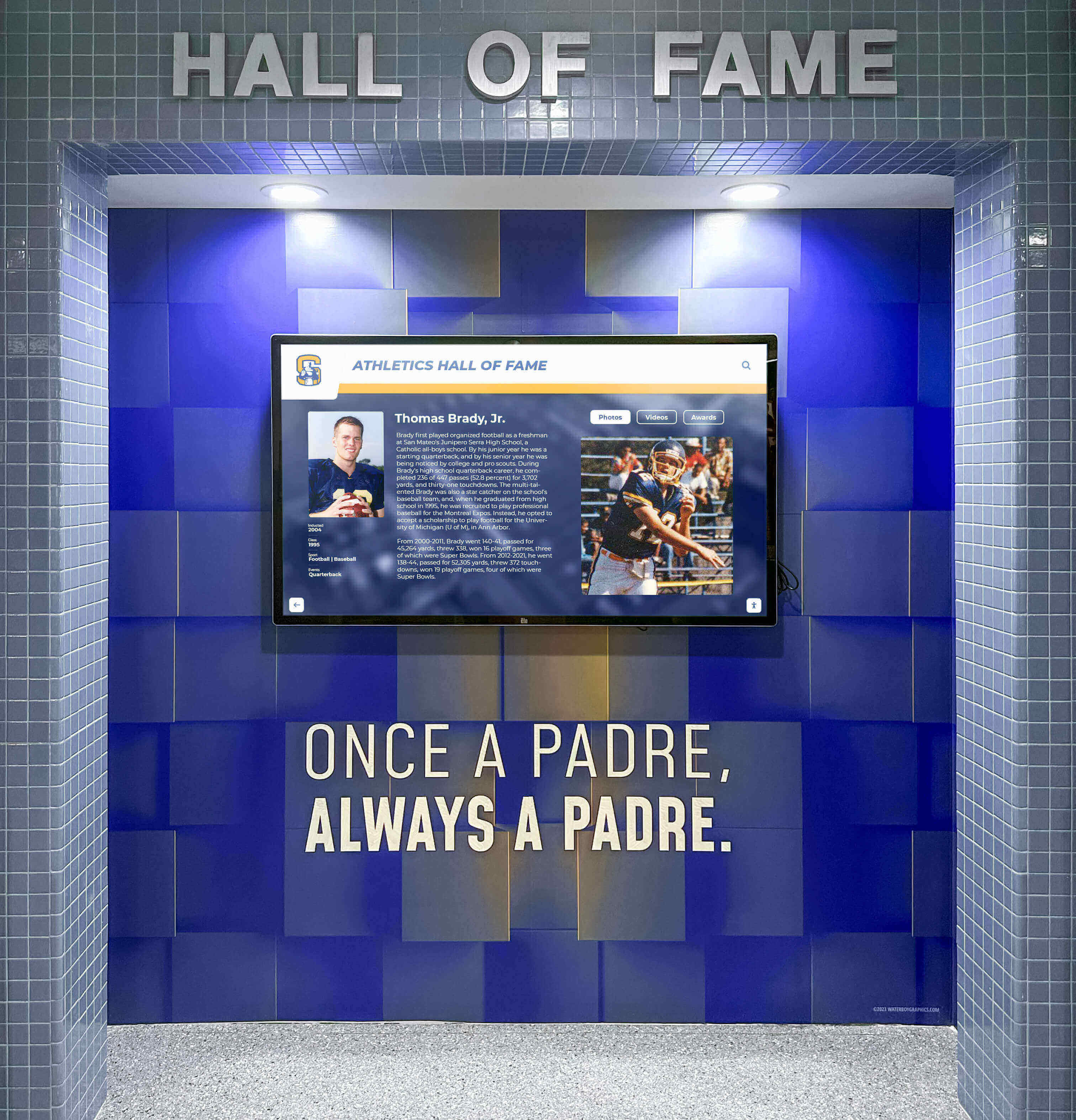
Strategic placement in athletic facilities ensures touch walls reach student-athlete audiences during practices, competitions, and daily activities
Budgeting for Touch Wall Systems
Understanding complete investment requirements prevents mid-implementation budget surprises while enabling realistic financial planning.
Hardware Costs include the touchscreen display itself (typically $2,000-$8,000 depending on size and specifications), mounting hardware or kiosk enclosures ($500-$2,500), dedicated computing hardware if not integrated ($300-$800), and peripheral equipment like speakers or cameras if needed ($200-$600). Complete hardware packages typically range from $4,000-$15,000 per display installation.
Software and Services represent ongoing investments. Recognition platform software licensing ranges from $1,000-$3,000 annually depending on features and school size. Content management system access typically includes unlimited updates, cloud hosting, and technical support. Initial content setup services help schools digitize historical recognition and structure initial information, with costs varying based on content volume (typically $1,500-$5,000 for comprehensive historical digitization).
Installation Expenses include professional mounting and setup ($500-$1,500), network infrastructure improvements if required ($500-$2,000), electrical work for power installation ($300-$1,500), and any surrounding area renovation or enhancement ($1,000-$5,000 for premium installations with complementary wall graphics or environmental improvements).
Total Investment typically ranges from $7,000-$25,000 for single display installations with most schools spending $10,000-$15,000 for quality systems with professional setup. Multiple display implementations see per-unit costs decrease through volume purchasing while total investment scales accordingly.
Financing Options make advanced recognition systems accessible within annual operating budgets. Many schools utilize capital improvement budgets for technology infrastructure. Booster clubs or parent organizations often fund athletic recognition displays. Alumni associations may sponsor recognition systems as legacy gifts. Some vendors offer lease-to-own arrangements distributing costs over 3-5 years rather than requiring full upfront investment.
Choosing the Right Technology Partner
Touch wall success depends significantly on platform selection and vendor partnership quality. While hardware similarities might make systems appear comparable, software capability, vendor support, and long-term partnership quality create dramatically different ownership experiences.
Recognition-Specific Platforms outperform generic digital signage systems adapted for recognition purposes. Purpose-built solutions offer intuitive content structures designed for achievement celebration, searchable databases enabling quick information discovery, profile templates optimized for recognition information, integration capabilities with common school systems, and user interfaces specifically designed for school community interaction patterns.
Content Management Simplicity determines whether non-technical staff can maintain systems independently or require ongoing IT involvement. Evaluate content management systems personally during vendor demonstrations. Can you intuitively understand how to add new inductees? Does photo uploading seem straightforward? Could you comfortably train colleagues on system usage after brief orientation?
Vendor Experience and Support proves critical during implementation and ongoing operation. Established vendors with extensive school installation experience understand educational environments and common challenges. They offer realistic timelines, appropriate school-specific design guidance, and proven implementation processes. Digital recognition displays from experienced vendors typically include comprehensive support packages with implementation training, ongoing technical support, regular system updates and improvements, and customer success resources helping schools maximize platform value.
Long-Term Viability considerations ensure systems remain supported and current across years of use. Vendor stability and longevity indicate likelihood of ongoing support. Regular platform updates demonstrate continued investment in product improvement. Active user communities provide peer learning and idea sharing opportunities. Clear roadmaps for future development show vendor commitment to evolving platforms as technology and needs change.
Creating Compelling Content That Engages Your School Community
Even the most advanced touch wall hardware fails to deliver value without thoughtful content strategy. Engaging, comprehensive, and well-organized recognition information determines whether students enthusiastically explore displays or quickly lose interest after superficial interaction.
Identifying Recognition Categories for Inclusion
Comprehensive recognition acknowledges diverse forms of excellence rather than limiting celebration to traditionally recognized achievement categories.
Athletic Recognition typically includes varsity letter recipients with years and sports, all-conference, all-state, and all-American selections, individual record holders across all sports and events, team championship recognitions at conference, regional, and state levels, coaching tenure and accomplishments, and distinguished alumni athletes with post-graduation achievements. Athletic hall of fame structures provide frameworks for organizing sports recognition comprehensively across multiple decades.
Academic Excellence celebrates intellectual achievement through honor roll and distinguished honor roll recipients, National Honor Society inductees, valedictorians and salutatorians, National Merit Scholars and commended students, AP Scholar recognitions, academic competition placements (quiz bowl, Science Olympiad, DECA, debate, etc.), perfect attendance achievements, and distinguished alumni scholars including advanced degree recipients, published researchers, and notable career accomplishments.
Performing Arts Achievement recognizes creative excellence through all-state music selections (choir, band, orchestra), theater production participants and award recipients, art competition winners and exhibition participants, dance team accomplishments, speech and forensics competitors, creative writing award recipients, and distinguished alumni artists including professional performers, published authors, and arts leaders.
Service and Leadership acknowledges community contribution through student government officers, class officers, service hour leaders, community impact projects, citizenship awards, club leadership positions, and distinguished alumni serving in public service, nonprofit leadership, or humanitarian fields.
Career and Technical Education celebrates practical skill development through industry certification recipients, SkillsUSA or DECA competition placements, internship and apprenticeship participants, career pathway completion recognitions, and distinguished alumni in skilled trades, technical fields, and applied professions.
This comprehensive approach ensures all students see pathways to recognition matching their interests and talents rather than limiting acknowledgment to narrow academic or athletic achievement definitions.
Gathering and Organizing Historical Recognition Data
Most high schools possess decades of achievement information scattered across various sources in different formats. Consolidating this historical content creates comprehensive recognition platforms while preserving institutional memory.
Source Identification locates existing recognition information. Yearbooks remain the richest historical source, documenting participants, award recipients, and achievements across all activities annually. Trophy and plaque inscriptions capture athletic and competitive accomplishments. Archived programs from performances, competitions, and events provide participant information. Athletic record books maintained by coaches contain performance data. Old newspaper clippings preserve local coverage of school achievements. Alumni association records include career accomplishment information.
Digitization Process converts physical artifacts into digital formats. Photo scanning captures images from yearbooks, programs, and print photographs. Data entry transfers text information from plaques, programs, and records into databases. Optical character recognition (OCR) technology can extract text from scanned documents, though manual verification ensures accuracy. Video digitization converts older format recordings (VHS, MiniDV, etc.) into current digital formats for preservation and access.
This digitization work proves labor-intensive but creates permanent preservation while enabling inclusion in touch wall systems. Many schools engage volunteers—retired staff members, alumni, or student service organizations—to assist with historical digitization projects. Some schools digitize content gradually, starting with recent decades and progressively working backward as time and resources permit.
Organization and Verification ensures information accuracy and consistency. Cross-referencing multiple sources confirms questionable information. Graduation year verification prevents common errors. Name standardization maintains consistency (handling nicknames, maiden names, etc.). Category assignment places achievements in appropriate recognition structures. Quality control reviews catch errors before public display.
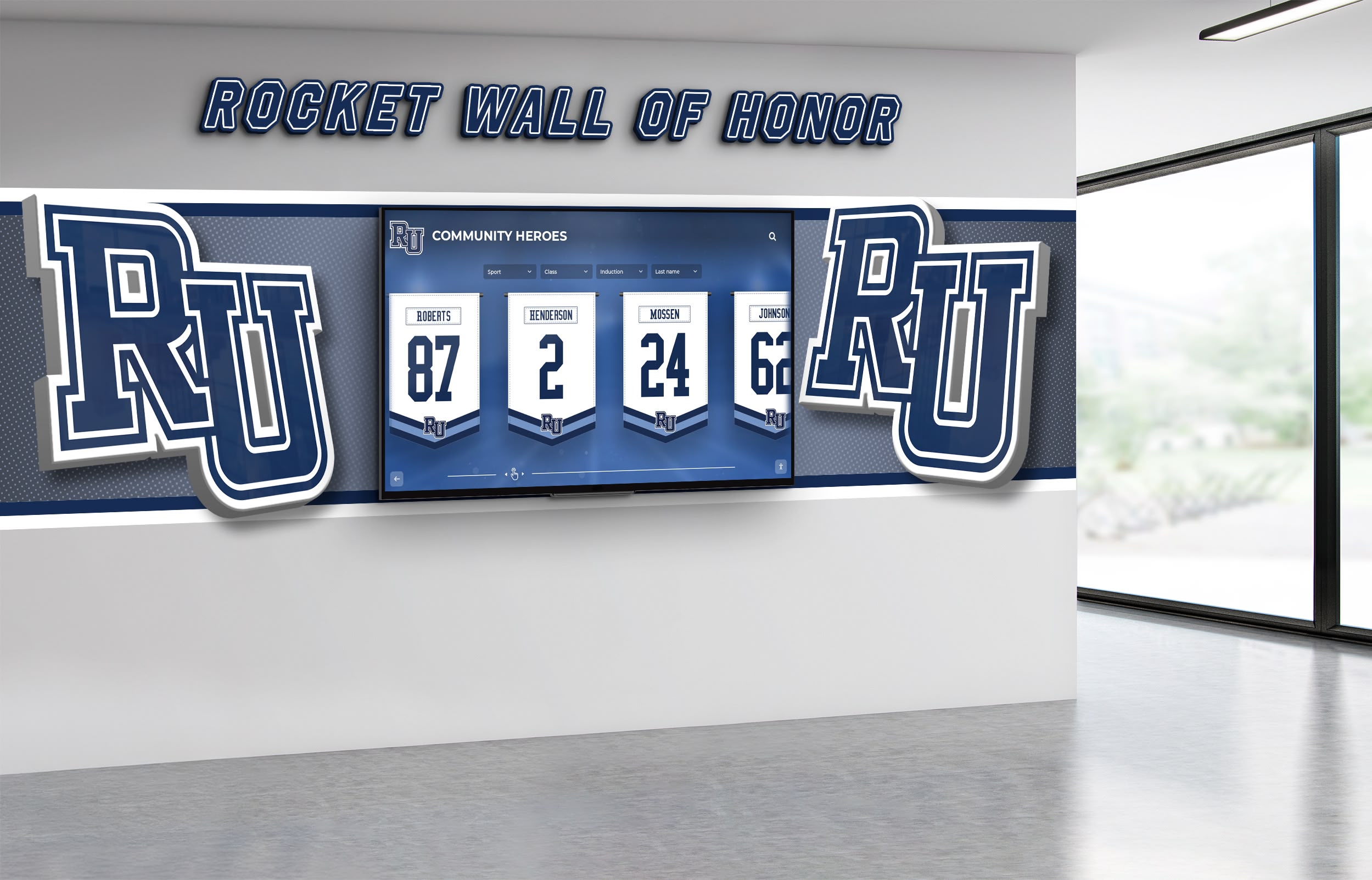
Comprehensive recognition content spanning multiple achievement categories creates inclusive celebration of diverse forms of excellence
Developing Rich Profiles That Tell Compelling Stories
Basic information like names, years, and achievement types provides minimal value. Rich profiles that tell compelling stories create the inspiration and engagement that make touch walls powerful recognition tools.
Biographical Context helps students connect with honorees as real people rather than just names. Where did they grow up and what was their family background? What activities did they participate in during high school? What challenges did they overcome to achieve excellence? What teachers, coaches, or mentors influenced their development? What made their high school experience memorable?
Achievement Details explain significance rather than simply listing accomplishments. For athletes, what made their performance exceptional—was it a record that stood for decades, a championship-clinching play, or consistent excellence across multiple years? For scholars, what did their research or projects accomplish and why did it matter? For artists, what recognition did their work receive and how did it impact audiences?
Post-Graduation Trajectories demonstrate how high school achievement connected to future success. What colleges or universities did alumni attend and what did they study? What careers did they pursue and what positions have they held? What continued accomplishments marked their adult lives? How did high school experiences prepare them for future challenges or opportunities?
Current Connection maintains ongoing relationships with distinguished alumni. Updated career information shows professional progression. Personal reflections from honorees offer wisdom for current students. Contact information or social media connections enable students to reach out for mentorship or advice. Photos showing alumni throughout their lives connect youthful high school images to accomplished adults they became.
Multimedia Enhancement brings profiles to life beyond text and photos. Video clips of athletic highlights, performance excerpts, or acceptance speeches create engaging dynamic content. Audio recordings of musical performances or speeches add another dimension. Photo galleries showing achievement moments, team pictures, or career progression provide visual interest.
This comprehensive storytelling transforms recognition from simple acknowledgment into genuine inspiration that motivates current students while honoring past achievement appropriately.
Establishing Sustainable Content Update Processes
Touch walls deliver maximum value when content remains current rather than becoming outdated shortly after implementation. Sustainable update processes ensure recognition stays fresh without becoming administrative burdens.
Responsible Party Designation assigns clear accountability for different recognition categories. Athletic directors or department staff might manage sports recognition. Academic counselors or department chairs could maintain academic achievement sections. Activities directors manage performing arts, clubs, and student leadership. Alumni relations staff handle distinguished alumni profiles. Clear responsibility prevents important updates from falling through coordination gaps.
Regular Update Schedules create predictable maintenance rhythms. Many schools review and update recognition content quarterly, adding recent achievements while verifying existing information accuracy. Athletic recognition might update at season conclusions. Academic honors could refresh at semester or year end. Some schools conduct comprehensive annual reviews ensuring all categories remain current.
Student Involvement Opportunities can support content management while providing learning experiences. Journalism or media production classes might create profile videos or photo content. Student government could manage peer recognition categories. Computer science classes might assist with technical aspects or usability testing. This involvement creates authentic learning experiences while distributing administrative workload.
Submission and Approval Workflows enable distributed content contribution while maintaining quality control. Online forms allow coaches, teachers, or alumni to submit achievement information or profile updates. Administrative review ensures accuracy and appropriateness before public display. Automated email notifications alert responsible parties when submissions await approval. Version history tracks changes, enabling rollback if needed.
Quality Standards and Guidelines maintain consistent professional presentation. Written standards might specify photo resolution requirements, appropriate biographical information, achievement description formats, tone and language guidelines, and privacy considerations. Templates provide structures ensuring all profiles contain similar core information. Style guides maintain consistent terminology, formatting, and presentation approaches.
Maximizing Student Engagement With Your Touch Wall System
Installation alone doesn’t guarantee engagement. Strategic promotion, thoughtful location, and compelling content all contribute to creating touch wall systems that students enthusiastically interact with rather than ignore.
Creating Buzz Around Your Touch Wall Launch
First impressions significantly impact whether touch walls become integrated into school culture or remain underutilized technology. Thoughtful launch strategies generate awareness and excitement encouraging initial exploration.
Pre-Launch Teasers build anticipation before installation completion. Social media posts might share construction progress photos, offer sneak peeks of content being prepared, post countdowns to launch date, and tease featured profiles or surprising historical discoveries. Morning announcements can preview the upcoming system, explain what touch walls offer, and invite student input on desired content. Hallway signage near installation locations promotes coming attractions while explaining the system’s purpose and capabilities.
Launch Event Ceremonies create memorable public unveilings. Many schools schedule launch ceremonies during homecoming, during hall of fame induction ceremonies, at school board meetings with community attendance, or during special assemblies gathering entire student bodies. Events might include remarks from administrators explaining vision and purpose, demonstrations showcasing system capabilities and engagement opportunities, featured honorees sharing reflections on recognition significance, and student reactions showing authentic peer enthusiasm.
Guided Exploration Opportunities help students discover touch wall capabilities. Teacher-led tours during advisory periods or study halls, student ambassador demonstrations during lunch periods, scavenger hunt activities challenging students to find specific information, and classroom assignment integration requiring touch wall research all expose students to system value while teaching navigation skills.
Media Coverage amplifies launch visibility. Local newspaper features generate community awareness and pride. School communication channels including newsletters, websites, and social platforms reach parent audiences. Student newspaper or broadcast coverage creates peer-to-peer promotion. Professional documentation through photos and video enables ongoing promotion extending beyond launch day.
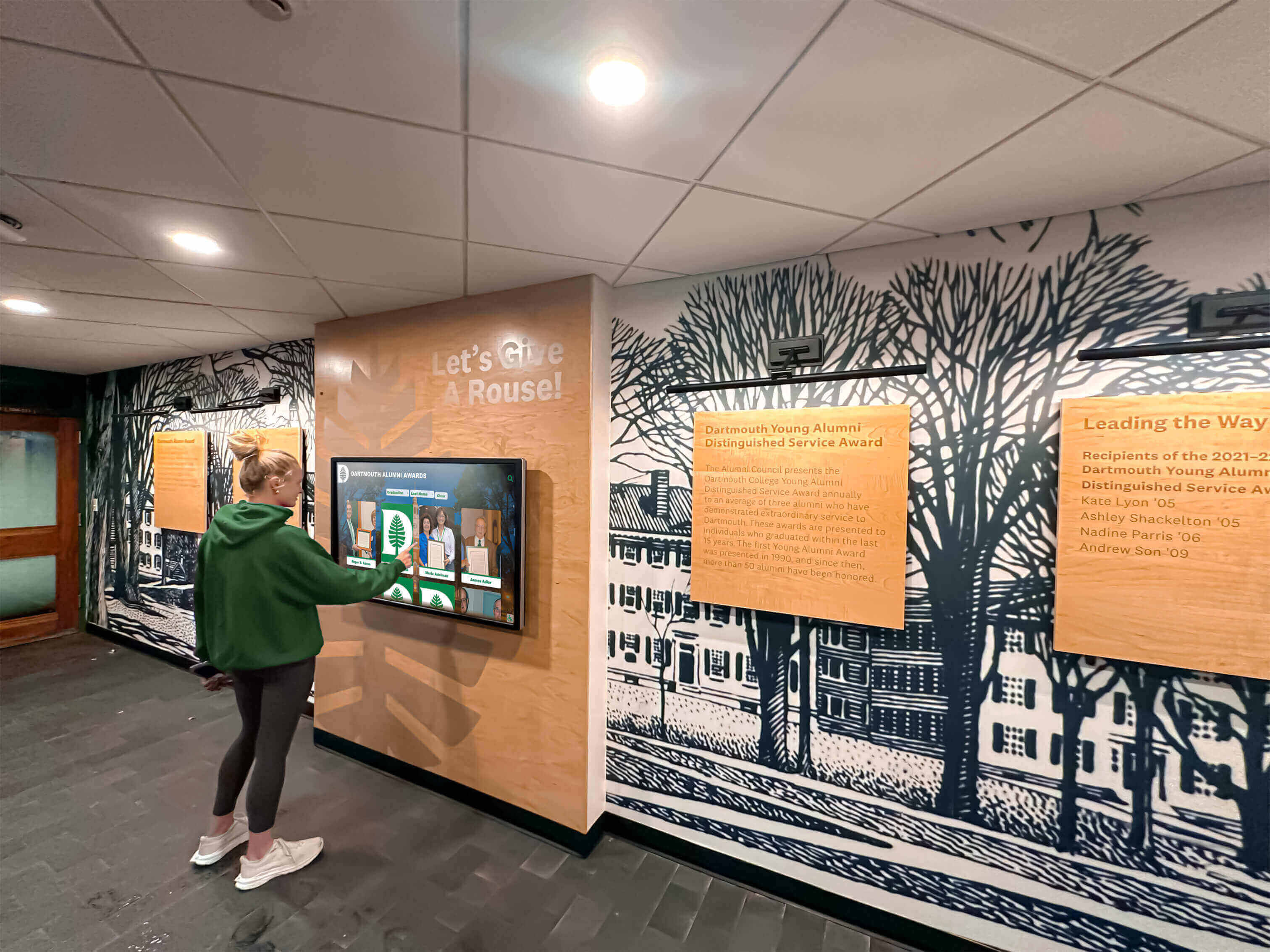
Strategic launch campaigns generate awareness and excitement, encouraging students to explore interactive recognition systems and discover their capabilities
Integrating Touch Walls Into Academic Curriculum
Classroom integration creates structured engagement opportunities while supporting educational objectives across multiple subject areas.
History and Social Studies classes can research institutional history using touch wall archives, compare achievement trends across different decades, interview distinguished alumni as primary source research, analyze how social changes influenced school activities and achievements, and create timeline projects connecting school history to broader historical context.
English and Composition courses might have students write biographical profiles about honorees, create video documentary projects about specific achievements or eras, develop oral history projects interviewing alumni about their experiences, compose personal reflection essays about role models discovered through touch wall exploration, and practice research skills using touch wall content as primary sources.
Mathematics and Statistics classes can analyze athletic performance data and record trends, graph achievement distributions across different categories, calculate statistical probabilities related to various accomplishments, compare historical and contemporary data revealing how standards and participation changed, and create data visualizations representing recognition information in compelling formats.
Career and Technical Education programs might have students conduct career research by identifying alumni in fields of interest, develop informational interview questions for distinguished alumni, create professional portfolios inspired by profile presentations, explore career pathway progression through alumni career trajectories, and analyze employment trends based on alumni career information.
Media and Technology classes could produce profile videos for new inductees, design promotional graphics for touch wall content, conduct usability testing and recommend interface improvements, manage social media campaigns promoting recognition content, and provide technical support for content management and system maintenance.
This curricular integration creates authentic learning experiences while ensuring regular student engagement with recognition content. Students interact with touch walls purposefully rather than occasionally, developing deeper familiarity with achievements while practicing academic skills.
Leveraging Touch Walls for School Events and Traditions
Strategic touch wall utilization during special events maximizes visibility and engagement during moments when school community attention peaks.
Homecoming Celebrations represent ideal touch wall showcase opportunities. Homecoming festivities typically involve alumni returns, creating natural recognition exploration moments as graduates search for their own achievements and those of classmates. Schools might feature decade-specific content aligned with reunion years, spotlight recently inducted hall of fame members, share historical photos from previous homecoming celebrations, display championship teams from various eras, and curate “blast from the past” features highlighting surprising historical discoveries.
Athletic Events leverage touch walls positioned in facility lobbies or concourses. Pre-game arrivals when spectators have time before competition starts create natural browsing opportunities. Halftime intermissions when audiences seek entertainment provide additional engagement windows. Post-game gatherings especially after victories generate positive emotional contexts for achievement celebration. Special content might highlight opponent historical matchup information, feature current team members’ profiles and statistics, display relevant sport records and achievements, and celebrate alumni from current teams.
Open Houses and Prospective Family Visits use touch walls to demonstrate institutional quality and achievement traditions. Parent-teacher conference nights when families visit schools create engagement opportunities. New student orientation sessions introduce incoming students and families to school culture. Recruitment events for athletics, performing arts, or specialized programs showcase relevant achievement categories. Prospective family tours benefit from staff guiding visitors through touch wall exploration demonstrating recognition program breadth and depth.
Academic Awards Ceremonies and student recognition programs become more meaningful when connected to historical achievement context. Touch wall displays positioned in ceremony venues enable honorees to see themselves within broader achievement traditions. Ceremonies might include video content sourced from touch wall archives, references to historical achievement comparisons, and encouragement for honorees to explore alumni pathways in fields they’re pursuing.
Creating Social Media Connections That Extend Engagement
Digital promotion amplifies touch wall impact beyond physical displays while creating shareable content that promotes institutional pride broadly.
Feature Profiles Regularly on school social media accounts. Weekly “Throwback Thursday” posts might spotlight historical achievements with relevant anniversary connections. “Meet the Hall of Famer” series could share detailed profiles of distinguished alumni with biographical information and current updates. “Record Watch” content highlights current athletes approaching historical performance records. “Where Are They Now?” features update alumni careers and accomplishments beyond original induction information.
Student-Generated Content leverages peer influence and authenticity. Student social media ambassadors might create touch wall exploration videos showing peers how to use systems effectively, develop “My Role Model” posts where students share alumni who inspire them, host Instagram story takeovers exploring different recognition categories, and challenge peers to touch wall scavenger hunts with social media proof of completion.
Alumni Engagement Campaigns encourage graduates to share their own recognition content. Hashtag campaigns like #MyTimeAt[SchoolName] invite alumni to post about their high school experiences and achievements. Profile verification campaigns ask alumni to review their information for accuracy and submit updates. Anniversary recognition prompts alumni from specific graduation years to reflect on their experiences and share memories.
Interactive Challenges and Contests generate participation and sharing. “Name That Year” challenges posting historical photos and asking followers to identify when they were taken encourage engagement. “Guess the Record” contests asking followers to estimate various school records before revealing answers create anticipation. “Find Yourself” campaigns challenge alumni to locate their own touch wall profiles and share screenshots.
Event-Based Amplification coordinates social media promotion with physical events. Live-tweeting recognition ceremonies with photos and quotes creates real-time celebration. Instagram stories documenting homecoming alumni exploring touch walls capture authentic engagement. Facebook event pages for reunions or special celebrations include touch wall content encouraging alumni attendance. LinkedIn posts highlighting distinguished alumni achievements reach professional networks while promoting institutional pride.
Measuring Touch Wall Impact and Demonstrating Value
Quantifying touch wall benefits enables demonstrating return on investment while identifying improvement opportunities. Both quantitative metrics and qualitative feedback reveal whether systems deliver anticipated value.
Usage Metrics and Engagement Analytics
Modern touch wall platforms include analytics dashboards tracking detailed usage patterns revealing how students and visitors interact with recognition content.
Session Data measures overall engagement levels. Total session counts reveal how many interactions occur over specific timeframes. Average session duration indicates how long visitors engage with content—longer durations typically suggest deeper engagement and higher value. Sessions per day or week demonstrate usage patterns, with spikes potentially correlating to specific events or promotions. Peak usage times identify when displays receive maximum attention, informing content update scheduling and promotional timing.
Content Interaction Patterns show what recognition categories generate most interest. Popular profiles receiving frequent views indicate compelling content that resonates with audiences. Search terms entered reveal what information visitors actively seek. Navigation pathways show how users move through content structures, identifying intuitive flows versus confusing dead ends. Media engagement tracking measures how often visitors watch videos or view photo galleries versus reading text only.
Demographic Breakdowns when feasible help understand who uses systems and how different audiences interact differently. Student versus adult usage patterns may show students more interested in certain content while alumni focus elsewhere. Grade level differences might reveal younger students exploring broadly while upperclassmen research specific interests. Returning user identification shows whether engagement is one-time curiosity or ongoing interest.
Comparative Analysis places usage in helpful contexts. Comparing touch wall engagement to other digital systems reveals relative interest levels. Period-over-period comparisons show whether usage grows, remains stable, or declines over time. Pre- and post-promotion analysis measures campaign effectiveness at driving traffic.
These quantitative metrics provide objective evidence of engagement levels while identifying specific content or features generating highest interest versus underutilized elements that might benefit from improvement or more prominent placement.
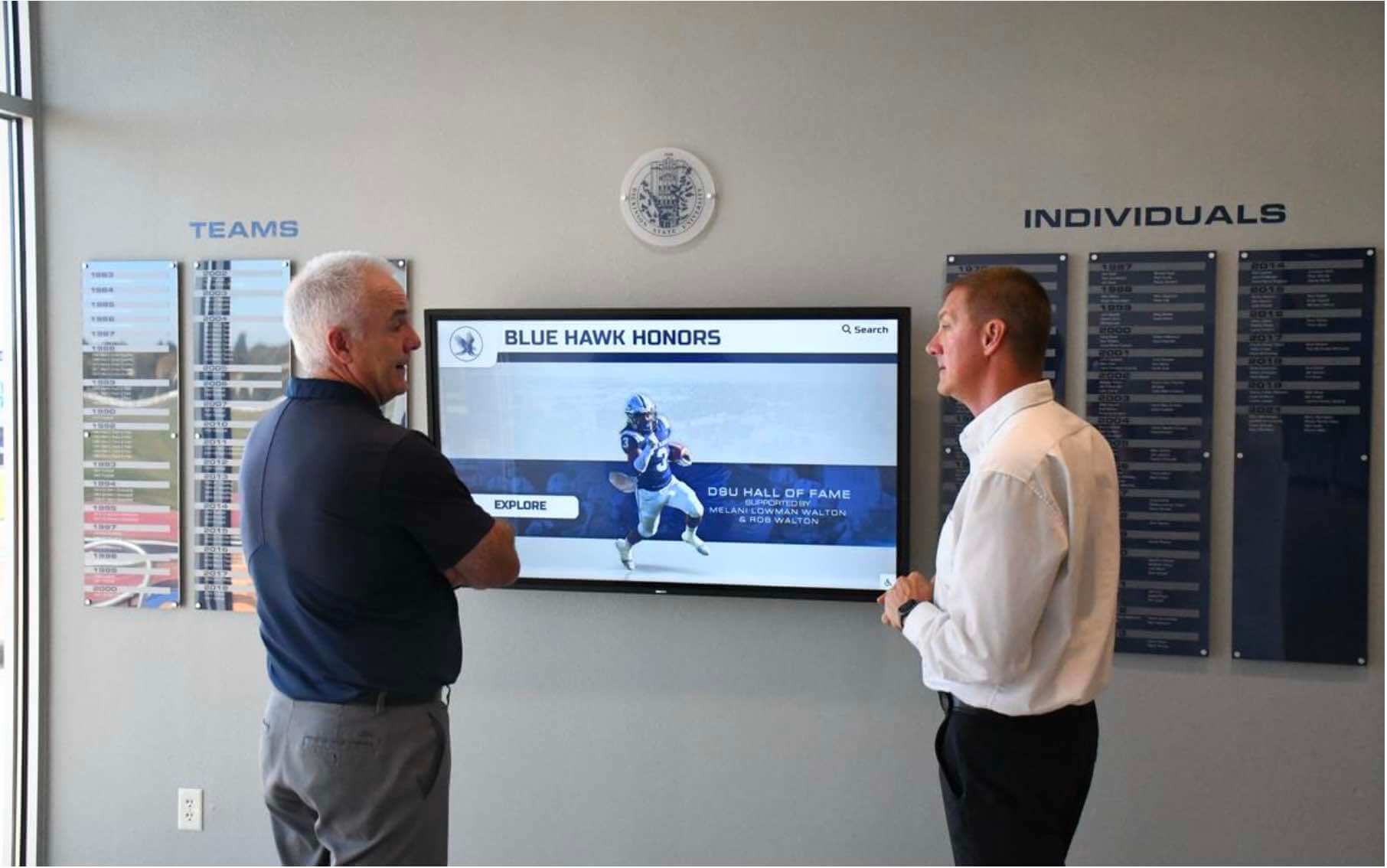
Analytics tracking reveals engagement patterns and popular content, enabling data-driven improvements to recognition programs
Gathering Qualitative Feedback From Stakeholders
While usage numbers measure engagement quantity, qualitative feedback reveals engagement quality and perceived value that numbers alone cannot capture.
Student Surveys can assess recognition program impact on school culture and personal motivation. Questions might explore awareness of touch wall systems and their locations, frequency of interaction and reasons for engaging or not engaging, favorite features or content categories, specific profiles or achievements that inspired them, suggestions for content additions or system improvements, and perceived influence on school pride or personal goals.
Alumni Feedback gathered during reunion events or through online surveys provides valuable perspective. Alumni can evaluate whether recognition programs appropriately honor achievements, assess whether content accuracy needs correction or updating, share reactions to seeing themselves or classmates recognized, indicate likelihood of increased engagement with school after positive recognition experiences, and offer suggestions for historical content gaps or missing information.
Parent and Community Perspectives reveal how recognition systems influence external perceptions. Surveys or focus groups might assess whether touch walls influence positive school impressions, how recognition programs compare to those at other local schools, whether visible achievement celebration makes schools more attractive during enrollment decisions, and perceptions about appropriate use of technology and resource allocation.
Staff Observations from faculty and administrators who witness daily student interactions provide authentic ground-level perspective. Teachers notice whether students reference touch wall content in classes or conversations, observe engagement patterns during passing periods or events, identify which student populations engage most versus least, hear student comments about recognition content, and monitor whether recognition visibility influences student motivation or goal-setting.
Calculating Return on Investment
Administrators and boards appropriately ask whether touch wall investments deliver value justifying costs. Multiple value factors contribute to comprehensive ROI calculations.
Administrative Time Savings represent quantifiable efficiencies. If traditional recognition maintenance consumed 50 administrative hours annually at $35/hour ($1,750 value), and touch walls reduce this to 8 hours annually ($280), the system generates $1,470 annual time savings. Over a 10-year expected lifespan, this totals $14,700 in saved labor costs—potentially exceeding the system’s initial investment.
Physical Space Value reflects saved wall and floor area. If a touch wall replaces 200 square feet of trophy cases and wall plaques, and that institutional space has quantifiable value (through construction costs, opportunity costs for other uses, or aesthetic value), the space efficiency represents meaningful return. Avoiding future physical recognition expansion during renovation projects represents additional savings.
Reduced Material Costs for physical recognition elements accumulate over time. If schools previously spent $2,500 annually on plaques, frames, engraving, and trophy case maintenance, digital recognition eliminates these ongoing expenses. Over ten years, $25,000 in avoided material costs significantly offsets touch wall investment.
Alumni Engagement Value while harder to quantify financially, contributes substantial value. Schools with strong alumni engagement typically see increased volunteerism for mentoring, career panels, and guest speaking; higher philanthropic giving supporting programs and scholarships; stronger applicant pools as alumni children choose to attend; and positive community reputation enhancing overall institutional standing. While attributing specific donation increases directly to touch wall installation proves difficult, comprehensive recognition programs demonstrably strengthen alumni relationships that influence these beneficial outcomes.
Recruitment and Retention Factors include prospective family impressions during school visits, student pride and belonging influencing persistence, and positive differentiation versus competing schools. While these factors resist precise quantification, they represent genuine value in competitive enrollment environments.
Common Touch Wall Implementation Challenges and Solutions
Despite compelling benefits, schools sometimes encounter challenges during touch wall implementation. Anticipating common difficulties and knowing effective solutions enables smoother deployment and better outcomes.
Budget Constraints and Funding Concerns
Challenge: Many schools desire advanced recognition systems but struggle finding adequate funding within tight budgets facing competing priorities.
Solutions: Multiple funding approaches make touch walls financially accessible. Phased Implementation begins with single display in highest-priority location, with future expansion planned as budget permits. This approach distributes costs while demonstrating value that builds support for expansion. Alternative Funding Sources beyond general operating budgets include booster club or parent organization fundraising, alumni association gifts or sponsorships, corporate or local business partnerships, grant applications from education foundations, memorial gifts honoring deceased community members, and capital campaign inclusion for major renovation or construction projects.
Lease-to-Own Arrangements offered by some vendors enable schools to distribute costs over 3-5 years rather than requiring complete upfront investment. Monthly payments of $200-300 fit operating budgets more easily than $12,000 capital expenditures. Value Demonstration through detailed ROI calculations showing administrative time savings, avoided physical recognition material costs, and space efficiency helps budget committees understand that touch walls represent investments rather than pure expenses.
Resistance to Change From Traditional Recognition Advocates
Challenge: Some stakeholders feel strong attachment to traditional trophy cases and physical plaques, viewing touch walls as inappropriate modernization that disrespects history or diminishes achievement significance.
Solutions: Honoring Tradition While Modernizing acknowledges valid concerns while demonstrating how touch walls enhance rather than replace recognition values. Explaining that touch walls preserve traditional recognition content digitally, making it more accessible and permanent rather than discarding it, helps concerned stakeholders understand preservation benefits. Physical Integration Approaches combine touch walls with traditional elements—keeping select historic trophies or plaques displayed alongside touch walls demonstrates respect for tradition while embracing beneficial technology.
Stakeholder Involvement in planning and content development helps resistant individuals feel ownership. Inviting traditional recognition advocates to contribute historical content, verify accuracy, or advise on organization acknowledges their knowledge while demonstrating that their valued contributions remain central despite format changes. Demonstration and Education showing how touch walls work and what capabilities they offer often converts skeptics when they see comprehensive achievement celebration that traditional approaches cannot match.
Start With Addition Rather Than Replacement by installing touch walls in new locations rather than immediately removing existing displays. This additive approach demonstrates value without triggering loss aversion, building support for gradual transition as benefits become evident.
Technical Difficulties and Maintenance Requirements
Challenge: Schools worry about technical complexity, concerned that systems will require extensive IT support or break frequently, creating maintenance burdens.
Solutions: Selecting Reliable, Proven Systems from established vendors dramatically reduces technical issues. Purpose-built recognition platforms engineered for school environments and backed by comprehensive support prove far more reliable than custom-built solutions or adapted general digital signage systems. Cloud-Based Architecture minimizes on-site technical requirements since software updates, security patches, and content management occur remotely without requiring local IT intervention.
Comprehensive Training ensures staff feel confident managing systems independently. Effective vendor implementations include administrator training on content management, basic troubleshooting for common issues, staff training for educators who might integrate systems into curriculum, and student training if students will contribute to content management. Ongoing Support Agreements provide safety nets for issues beyond school capability, including technical support hotlines, remote assistance for troubleshooting, hardware replacement or repair services, and regular system health monitoring.
User-Friendly Design eliminates technical complexity from routine operations. Quality systems enable non-technical administrators to manage all content without coding knowledge or IT backgrounds. When routine operations remain simple and intuitive, technical concerns diminish substantially.
Incomplete or Inaccurate Historical Content
Challenge: Many schools discover that comprehensive historical recognition information doesn’t exist in organized formats, with gaps in achievement records, missing photographs, and questionable information accuracy.
Solutions: Incremental Content Building begins with well-documented recent history before attempting complete historical reconstruction. Schools might populate touch walls with current decade comprehensively while gradually adding historical content as information becomes available. This approach enables system launch without waiting for perfect historical completion that might never occur.
Crowdsourced Research leverages alumni knowledge and resources. Public requests for historical information often yield alumni-provided photos, achievement details, and memories filling documentation gaps. Social media campaigns asking alumni to share information about specific eras tap distributed knowledge that no single person possesses. Alumni reunion planning creates natural opportunities to gather historical information from returning graduates.
Student Research Projects turn historical gaps into learning opportunities. Local history classes might research institutional achievement through newspaper archives, oral history interviews with longtime community members, yearbook analysis projects, or athletic record reconstruction from archived programs and documents. This approach builds content while providing authentic educational experiences.
Accepting Imperfection while maintaining improvement commitment proves psychologically important. Perfect comprehensive historical reconstruction may prove impossible for schools lacking meticulous records. Launching with acknowledged gaps while committing to ongoing improvement as information surfaces enables moving forward rather than remaining paralyzed by incompleteness.
The Future of Touch Walls in High School Recognition
Technology continues evolving, bringing new capabilities that will further transform how schools recognize achievement and engage communities. Understanding emerging trends helps schools plan for long-term evolution rather than implementing systems that become quickly outdated.
Artificial Intelligence and Personalization
Emerging AI capabilities will enable increasingly personalized touch wall experiences. Systems might recognize individual users and present content aligned with their specific interests—showing an athlete records and profiles in their sport, displaying career information relevant to a student’s declared interests, or highlighting achievement categories matching their participation. Natural language interfaces will enable conversational queries like “Show me all state championship teams” or “Find alumni who became engineers” rather than requiring navigation through menu structures.
AI-powered content generation may assist profile creation, automatically drafting biographical narratives from basic data inputs that administrators then refine. Recommendation engines could suggest “You might also be interested in…” connections helping visitors discover related content they wouldn’t independently seek. These personalization capabilities will deepen engagement by making exploration more relevant and intuitive for each individual visitor.
Augmented Reality Integration
Augmented reality (AR) technologies may overlay digital recognition content onto physical environments in innovative ways. Students pointing smartphones at trophy cases might see AR-enhanced information appearing—video highlights playing over championship trophies, 3D athlete models demonstrating record-setting performances, or interactive timelines showing achievement evolution across decades. AR wayfinding could guide visitors to different recognition locations throughout buildings, creating self-guided hall of fame tours.
While full AR implementation remains emerging technology, schools beginning touch wall journeys should consider selecting platforms positioned to incorporate AR capabilities as technology matures and becomes more accessible.
Integration With Digital Credential Systems
As education increasingly adopts digital credential and comprehensive learner record approaches documenting skills and competencies beyond traditional transcripts, recognition systems will likely integrate with these platforms. Touch walls might display not just traditional achievements but comprehensive skill development documentation, certification portfolios, and experiential learning records providing holistic pictures of student growth and accomplishment.
This integration could enable students to see their own developing achievement profiles in real-time rather than waiting for formal recognition events. Parents could access personalized views of their children’s accumulating credentials and accomplishments. Colleges and employers might access verified achievement information directly from recognition systems during admission or hiring processes, adding practical value beyond celebratory purposes.
Expanded Web and Mobile Access
While current touch wall systems often include web-based access, future platforms will likely emphasize mobile-first experiences recognizing that most users engage digital content primarily through smartphones. Dedicated mobile apps might enable push notifications when students receive new recognition, facilitate achievement sharing through social platforms, provide augmented reality features accessible via phone cameras, and enable alumni to maintain and update their profiles conveniently from anywhere.
Progressive web app technologies blur lines between traditional websites and native mobile apps, potentially enabling sophisticated mobile experiences without requiring separate app development and maintenance. Schools implementing touch walls should prioritize vendors demonstrating strong mobile commitment and regular platform evolution.
Conclusion: Transforming High School Recognition Through Interactive Technology
High school recognition programs face a fundamental challenge: honoring achievement meaningfully while engaging digital-native students in environments where tradition and innovation must coexist productively. Touch walls address this challenge by preserving recognition’s core purposes—celebrating accomplishment, inspiring future excellence, building community pride—while delivering experiences that resonate with contemporary expectations for interaction, accessibility, and engagement.
The transformation from static displays to interactive digital recognition represents more than simple technology adoption. It reflects evolving understanding about engagement, learning, and community building in educational contexts. When schools implement touch walls thoughtfully with comprehensive content, strategic placement, and sustained commitment, they create recognition programs that serve multiple constituencies simultaneously—honoring past achievement while inspiring current students, engaging alumni meaningfully while attracting prospective families, and demonstrating institutional values through visible celebration of diverse excellence.
Success requires moving beyond viewing touch walls as merely digital trophy cases. The most effective implementations integrate recognition into broader school culture through curriculum connections, event utilization, social media amplification, and ongoing content enhancement. They balance comprehensive historical preservation with current achievement celebration, ensuring recognition programs honor institutional legacy while remaining relevant to contemporary communities.
As technology continues evolving, recognition capabilities will expand further. Schools beginning touch wall journeys today should select platforms and partners positioned for long-term evolution rather than static solutions that quickly become outdated. Purpose-built recognition systems from experienced vendors offer the best foundation for sustainable programs that grow and improve across years of implementation.
Rocket Alumni Solutions provides comprehensive touch wall platforms specifically designed for educational recognition, serving over 700 schools with interactive displays that celebrate achievement, inspire students, and strengthen community pride. Our cloud-based systems combine intuitive content management with engaging user experiences, enabling schools to honor unlimited achievements through professional displays that students enthusiastically engage with rather than ignore.
Whether you’re frustrated with overcrowded trophy cases, seeking to modernize outdated recognition approaches, or building recognition programs for new facilities, touch walls offer proven solutions that transform how schools celebrate excellence while building the pride and belonging that define exceptional educational communities.
Your school’s achievements deserve recognition that honors accomplishment appropriately while inspiring future excellence. Touch walls provide the platform for creating recognition programs worthy of the students you serve and the tradition you represent.
Ready to Transform Your High School Recognition Program?
Discover how Rocket Alumni Solutions can help you create an engaging touch wall system that celebrates achievement, inspires students, and strengthens school pride for generations to come.
Schedule Your Free Consultation






























