Organizations implementing interactive touchscreen displays face critical software decisions that determine project success, operational sustainability, and user engagement effectiveness. Whether planning digital recognition walls, hall of fame installations, donor recognition displays, or interactive wayfinding systems, selecting appropriate touchscreen software shapes everything from content management simplicity to long-term maintenance requirements and total cost of ownership.
The touchscreen software landscape in 2025 offers organizations unprecedented options ranging from purpose-built recognition platforms to custom development approaches, web-based cloud solutions to native applications, and no-code visual builders to traditional programming frameworks. This diversity creates both opportunities and challenges: while suitable solutions exist for virtually any requirement and budget, identifying optimal matches between organizational needs and software capabilities requires understanding technical architectures, feature capabilities, deployment models, and operational implications.
This comprehensive guide examines touchscreen software considerations for schools, universities, nonprofit organizations, museums, and corporations implementing interactive recognition displays. We explore software architectures, essential features, deployment strategies, content management approaches, and implementation best practices that distinguish successful installations delivering lasting value from projects that struggle with technical limitations, operational complexity, or inadequate functionality.
Organizations investing in touchscreen recognition displays deserve software solutions that simplify content management, engage audiences effectively, scale across multiple installations, and operate reliably throughout multi-year deployment lifecycles without requiring extensive technical expertise or ongoing development investments.
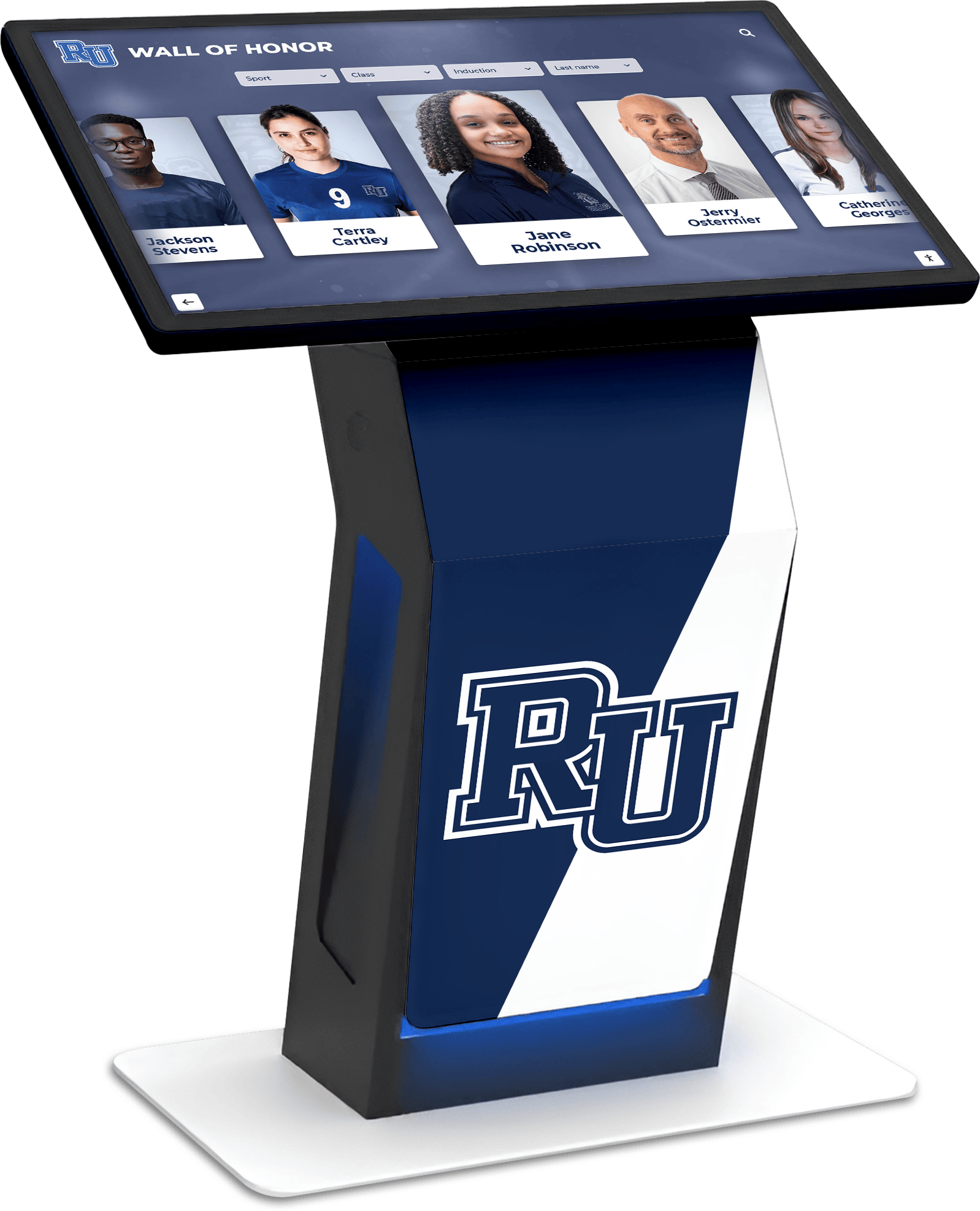
Modern touchscreen software transforms static recognition into engaging interactive experiences
Understanding Touchscreen Software Categories
Before evaluating specific solutions, understanding fundamental software categories prevents confusion and helps organizations identify appropriate options matching requirements and technical capabilities.
Purpose-Built Recognition Platforms
Purpose-built platforms like Rocket Alumni Solutions provide comprehensive software specifically designed for institutional recognition scenarios. These platforms offer cloud-based content management systems, professionally designed templates for common recognition needs, intuitive administrative interfaces requiring minimal training, and features addressing typical challenges schools and organizations encounter regularly.
Key Advantages include elimination of custom development requirements and costs, subscription-based pricing models spreading investments across time, continuous feature enhancements and security updates without additional charges, and best practice implementations informed by hundreds of organizational deployments. Organizations benefit from mature, proven solutions rather than experimental custom development projects.
Ideal For: Schools showcasing athletic achievements and alumni accomplishments, universities implementing digital hall of fame displays across multiple departments, nonprofit organizations recognizing donors and volunteers, and corporations creating employee recognition centers without dedicated software development resources.
Purpose-built platforms prioritize ease of use, enabling subject matter experts to manage content directly without requiring IT mediation for routine updates. This operational model proves essential for organizations where recognition content changes frequently and technical resources remain limited.
Custom Development Approaches
Organizations with unique requirements not addressed by existing platforms may pursue custom touchscreen software development. This approach provides maximum flexibility and feature control but requires substantial upfront investment, ongoing maintenance commitments, and technical expertise throughout application lifecycles.
Development Considerations include choice between web-based versus native applications affecting development costs and deployment flexibility, selection of development frameworks and programming languages, content management system architecture and administrative interface design, and integration requirements with existing institutional systems and databases.
Custom development proves cost-effective only when specific requirements absolutely cannot be met through existing platforms or when organizations possess internal development resources enabling cost-effective implementation and long-term maintenance. Most schools and nonprofits find purpose-built platforms deliver superior value versus custom development investments.
No-Code Visual Development Tools
No-code platforms enable organizations to create interactive touchscreen experiences through visual drag-and-drop interfaces without traditional programming. These tools occupy middle ground between purpose-built platforms and full custom development, offering customization capabilities exceeding standard templates while avoiding programming complexity.
Popular Platforms include Intuiface providing comprehensive interactive experience creation tools, PandaSuite offering multi-platform deployment capabilities, and various digital signage platforms incorporating interactive touchscreen features. These solutions appeal to organizations with specific design requirements and sufficient technical resources to manage visual development processes.
Trade-offs involve greater flexibility than purpose-built platforms at the cost of increased complexity, longer implementation timelines than template-based solutions, and ongoing management requiring visual design expertise rather than simple content updates through administrative dashboards.
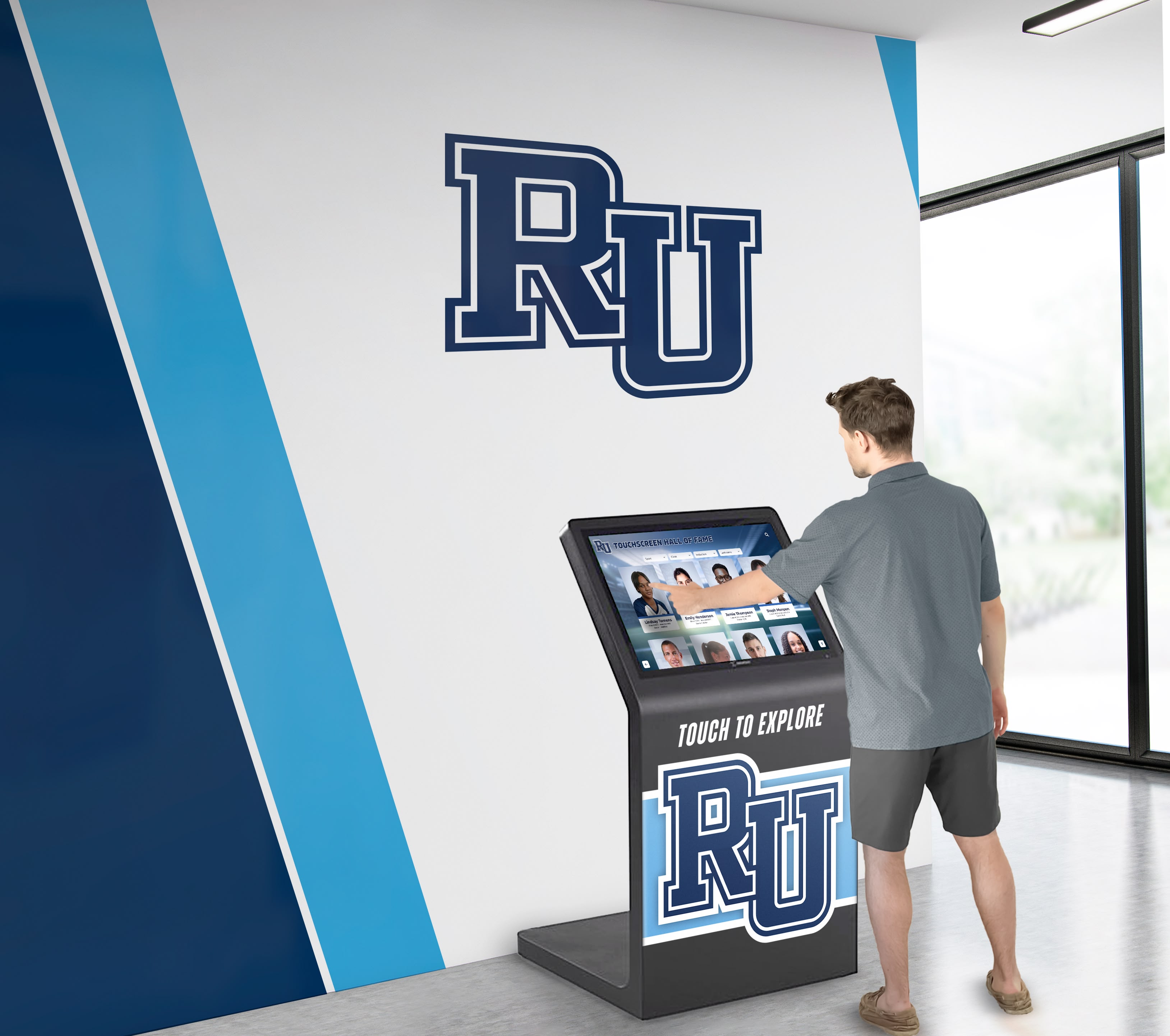
Effective touchscreen software prioritizes intuitive user experiences that engage diverse audiences
Essential Features for Recognition Display Software
Regardless of software category, effective touchscreen recognition displays require specific core capabilities ensuring operational success and user engagement.
Cloud-Based Content Management
Contemporary touchscreen software should provide cloud-based content management enabling administrators to update information remotely from any internet-connected device without accessing physical display hardware. This capability proves invaluable for multi-location deployments, distributed administrative teams, or situations where physical display access presents logistical challenges.
Remote Management Benefits include instant content updates publishing simultaneously across all connected displays, elimination of coordination complexity when managing distributed installations, capability for multiple staff members with appropriate permissions to work concurrently on different content sections, and simplified workflows enabling subject matter experts to update recognition content directly without IT mediation.
Schools updating athletic records, honor roll recipients, or alumni achievements simply log into cloud-based dashboards and publish changes that appear immediately on touchscreen displays in lobbies, athletic facilities, or campus centers. This real-time update capability enables dynamic content strategies impossible with solutions requiring manual updates to individual devices.
Intuitive User Interface Design
The interface visitors interact with determines engagement levels and experience quality. Effective touchscreen software incorporates several critical user experience elements:
Navigation Clarity ensures visitors understand available options and content organization immediately upon approaching displays. Clear visual hierarchies, obvious interactive elements, and logical information architecture prevent confusion while guiding natural exploration patterns.
Touch Target Sizing must accommodate diverse users including those with limited dexterity or accessibility needs. Interactive elements should meet minimum touch target sizes (44x44 pixels minimum, 60x60 pixels recommended) preventing frustration from missed touches.
Visual Design Quality reflects institutional brand standards while maintaining professional appearance appropriate for recognition contexts. Solutions like Rocket Alumni Solutions provide professionally designed templates ensuring polished presentation without requiring graphic design expertise.
Performance Responsiveness determines whether interactions feel immediate and satisfying or sluggish and frustrating. Software architecture significantly impacts responsiveness—web-based solutions must balance performance against broader compatibility, while native applications potentially offer superior speed at cost of platform-specific development.
Comprehensive Search and Filtering

Recognition displays containing extensive content require robust search and filtering capabilities enabling visitors to locate specific individuals, achievements, or time periods efficiently. Without effective search functionality, content-rich displays become overwhelming rather than engaging.
Search Capabilities should support multiple criteria including name-based queries finding specific individuals, year or date range filtering displaying achievements from particular time periods, category or type filtering showing specific award types or achievement categories, and keyword search locating content containing particular terms. Advanced implementations incorporate fuzzy matching accommodating misspellings and partial name entries.
Filter Combinations enable visitors to refine results progressively—showing all basketball achievements, then narrowing to a specific decade, then filtering to championship teams. This progressive refinement approach proves more intuitive than requiring visitors to specify all criteria simultaneously.
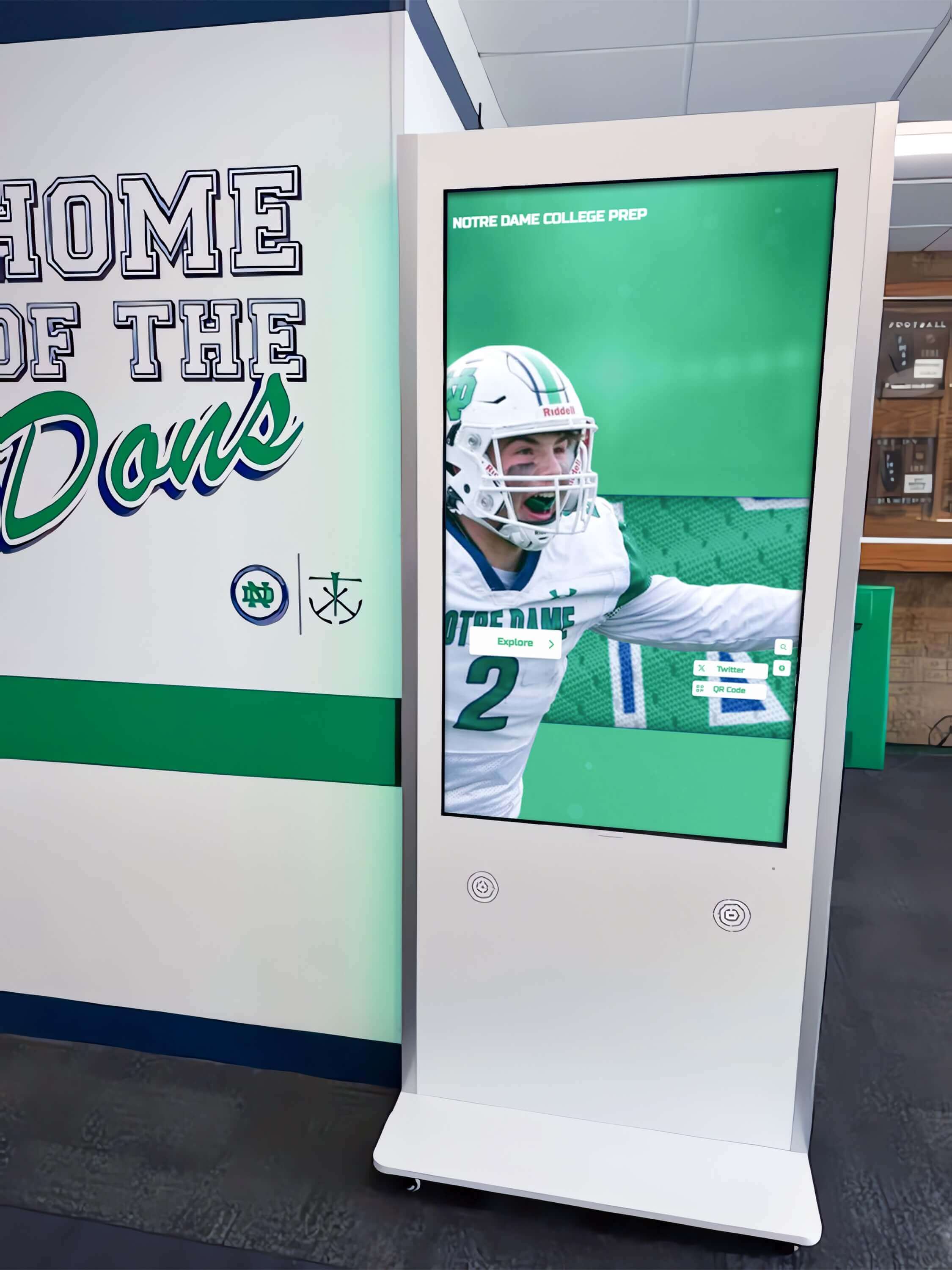
Strategic placement and intuitive navigation encourage sustained visitor engagement
Multimedia Content Support
Modern recognition displays extend beyond static photos and text, incorporating video content, audio elements, and rich media creating more engaging experiences than traditional plaques provide.
Video Integration enables highlight reels showcasing athletic achievements, interview clips with notable alumni, ceremony recordings documenting recognition events, and documentary footage preserving institutional history. Effective software handles video hosting, streaming optimization, and playback controls enabling visitors to explore multimedia content seamlessly.
Photo Galleries display multiple images per individual or achievement, with smooth transitions, zoom capabilities, and high-resolution support ensuring professional presentation quality. Cloud-based platforms should optimize image delivery balancing quality against loading performance.
Document Archives preserve historical records, newspaper clippings, certificates, and other artifacts digitally. Effective software enables visitors to explore archival documents while maintaining readability through zoom and pan capabilities.
Mobile Integration and QR Code Access
Contemporary touchscreen software should extend beyond physical displays, enabling mobile access to recognition content through QR codes or complementary web platforms. This dual-access approach accommodates visitors who prefer exploring content on personal devices and enables engagement continuing beyond physical visits.
QR Code Functionality displays codes that visitors scan with smartphones, accessing recognition content through mobile-optimized interfaces. This capability proves especially valuable when physical touchscreens experience high traffic or when visitors wish to share specific achievements via social channels.
Responsive Web Access ensures recognition content displays properly across devices from large touchscreens to smartphones, with interfaces adapting intelligently to screen dimensions and input methods. Solutions like Rocket Alumni Solutions provide consistent experiences whether content is accessed through dedicated touchscreens or personal mobile devices.
Analytics and Engagement Tracking
Understanding how visitors interact with recognition displays informs content strategy and demonstrates return on investment. Effective software incorporates analytics capabilities tracking engagement metrics without compromising visitor privacy.
Usage Metrics reveal total interactions, average engagement duration, popular content categories, frequent search queries, and peak usage times. These insights help organizations optimize content presentation, identify underutilized content requiring promotion, and justify ongoing investment in interactive recognition systems.
Content Performance tracking identifies which profiles receive most attention, which achievements generate greatest engagement, and which content categories attract sustained exploration versus brief glances. Organizations use these insights to refine content strategies and improve future recognition initiatives.
Detailed analytics reveal content performance and visitor engagement patterns
Cloud-Based vs. On-Premise Software Architectures
Software deployment architecture fundamentally shapes operational characteristics, maintenance requirements, and total cost of ownership for touchscreen recognition displays.
Cloud-Based Platform Advantages
Cloud-based solutions host software and content on remote servers, with touchscreen displays functioning as clients accessing information via internet connections. This architecture offers several compelling operational advantages:
Simplified Maintenance eliminates organizational responsibility for server infrastructure, software updates, security patches, and backup procedures. Platform providers handle technical operations while organizations focus exclusively on content management. Schools lack IT resources to maintain on-premise servers particularly benefit from cloud architectures reducing technical burden.
Multi-Location Consistency becomes straightforward when all displays access centralized cloud-based content. Districts managing touchscreens across multiple campuses ensure identical information appears everywhere simultaneously. Content updates publish once and propagate automatically without coordinating individual display updates.
Accessibility from Anywhere enables authorized administrators to manage content from offices, homes, or remote locations using any internet-connected device. This flexibility proves valuable when urgent updates require immediate attention outside normal business hours or when responsibility for content management distributes across multiple staff members.
Automatic Scaling accommodates growing content libraries and increased display deployments without requiring infrastructure upgrades or capacity planning. Cloud platforms scale resources automatically as organizational needs expand.
Cost Predictability through subscription models spreads expenses across time rather than requiring large upfront capital investments in server infrastructure and software licenses. Organizations budget predictable monthly or annual costs rather than managing depreciation schedules and hardware replacement cycles.
On-Premise Deployment Considerations
On-premise solutions install software on local servers or directly on touchscreen display computers, operating independently of external cloud infrastructure. This architecture appeals to organizations with specific requirements:
Network Independence enables displays functioning without internet connectivity, critical for installations in locations with unreliable network infrastructure or where security policies prohibit cloud connections. Museums, government facilities, or remote campuses may require on-premise architectures for operational reliability.
Data Control maintains all content on institutional infrastructure rather than third-party cloud platforms. Organizations with strict data governance requirements or privacy concerns about cloud storage sometimes mandate on-premise deployment despite operational complexity.
One-Time Licensing potentially reduces long-term costs for organizations maintaining displays for extensive periods. Upfront software licenses and infrastructure investments eventually cost less than ongoing subscriptions, though this calculation requires long deployment timelines and ignores staff time maintaining on-premise systems.
Performance Consistency from local content storage eliminates network latency and bandwidth constraints affecting cloud-based delivery. Large video libraries or high-traffic displays potentially benefit from local storage reducing internet dependency.
Trade-offs include substantially increased technical complexity requiring IT expertise for server management, software updates, and security maintenance. Organizations must budget staff time and expertise maintaining on-premise infrastructure—costs that frequently exceed cloud subscription fees when accounting comprehensively for technical resource requirements.
Touchscreen Software Implementation Best Practices
Successful touchscreen recognition display projects balance software selection with strategic implementation approaches ensuring long-term operational success.
Content Strategy Development
Before deploying software, organizations should develop comprehensive content strategies defining what information to include, how to organize content logically, who manages various content sections, and how frequently updates occur.
Content Scope Decisions require balancing comprehensiveness against manageability. Including extensive historical archives creates rich experiences but demands significant content development effort. Starting with focused scope—recent achievements or specific categories—enables faster deployment while establishing processes for gradual content expansion.
Information Architecture determines how visitors navigate and explore content. Effective structures typically organize recognition by category (athletic achievements, academic honors, community service), time period (decade, year, specific events), and individuals (searchable profiles). Multiple navigation paths accommodate different visitor interests and search patterns.
Administrative Workflows should designate clear responsibility for content creation, review, approval, and publishing. Schools implementing digital recognition displays benefit from workflows enabling athletic directors to update sports achievements, advancement staff to manage donor recognition, and communications teams to coordinate overall presentation quality without workflow bottlenecks.
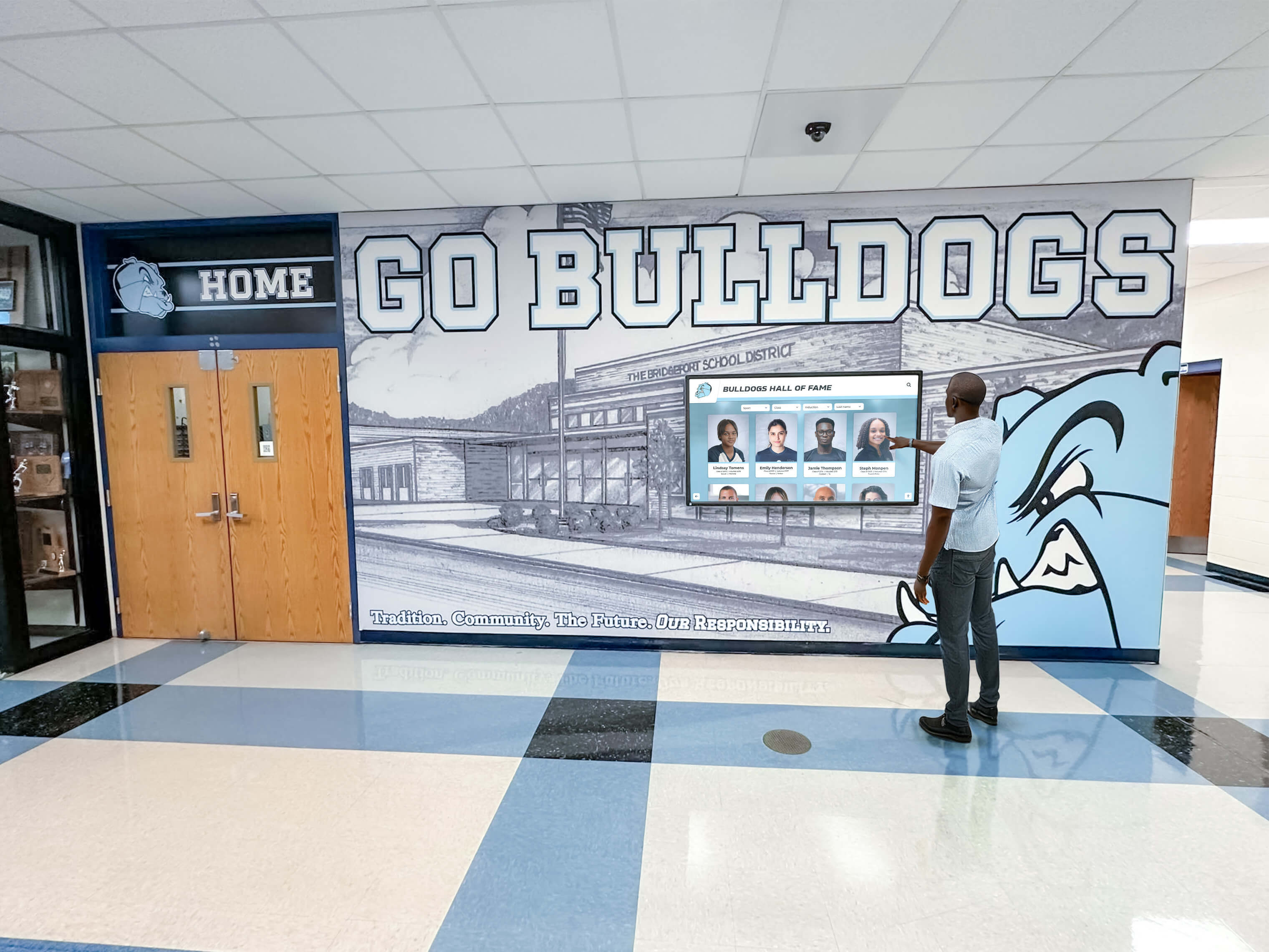
Successful implementations result from thoughtful content strategy and intuitive organization
Hardware Selection Considerations
Touchscreen software capabilities and requirements influence hardware selection decisions. Organizations should evaluate hardware compatibility, performance requirements, and physical installation factors alongside software evaluation.
Display Technology choices include commercial-grade touchscreen monitors designed for continuous operation in public environments, all-in-one touchscreen computers integrating display and computing components in single units, and standard displays with separate computers and overlay touchscreen technology. Commercial-grade equipment provides reliability justifying higher initial costs for long-term public-facing installations.
Touch Technology Types affect user experience and software compatibility. Capacitive touchscreens offer superior responsiveness and multi-touch gesture support but cost more than infrared or resistive alternatives. Software requirements should inform touch technology selection—platforms optimized for single-touch interactions work effectively with more affordable touch technologies, while software requiring advanced gestures necessitates capacitive displays.
Computer Performance requirements vary by software architecture. Web-based platforms typically impose modest hardware demands compared to native applications handling intensive local processing. Organizations should verify hardware specifications meet software minimum requirements with adequate performance margin ensuring responsive experiences as content libraries grow.
Installation Environment considerations include mounting accessibility compliance for ADA standards, ambient lighting conditions affecting screen visibility, physical security requirements protecting equipment from tampering or theft, and network connectivity ensuring reliable internet access for cloud-based solutions.
Training and Documentation
Even intuitive software benefits from structured training ensuring staff members utilize capabilities effectively and follow established workflows.
Administrator Training should cover content creation procedures, publishing workflows and approval processes, software feature utilization maximizing platform capabilities, and troubleshooting common issues before escalating to technical support. Platforms like Rocket Alumni Solutions prioritize administrative simplicity, but formal training accelerates proficiency and prevents workflow inefficiencies.
End-User Instructions through simple signage near physical touchscreens encourage visitor engagement. Brief directional text like “Touch to explore” or “Search by name” reduces hesitation from visitors uncertain about interaction methods. QR codes providing mobile access should include clear instructions maximizing utilization.
Documentation Development captures institutional knowledge about content standards, update procedures, administrative responsibilities, and technical configurations. This documentation proves invaluable during staff transitions preventing knowledge loss when personnel change roles.
Ongoing Maintenance and Content Refreshment
Recognition displays require ongoing attention maintaining content currency, technical performance, and visitor engagement effectiveness.
Regular Content Updates keep displays relevant and interesting. Athletic achievements during championship seasons, annual honor roll recognition, new alumni accomplishments, and updated donor rosters provide reasons for repeat visits. Stale content that rarely changes reduces visitor engagement and display value.
Performance Monitoring through analytics identifies technical issues affecting user experience, content gaps where information remains incomplete, and opportunities for enhanced engagement. Regular review of analytics dashboards informs continuous improvement strategies.
Technical Maintenance includes cleaning touchscreen surfaces maintaining responsiveness, verifying software updates install properly on cloud-based platforms, testing display functionality periodically ensuring reliable operation, and addressing any hardware issues promptly preventing extended downtime.
Evaluating Touchscreen Software Providers
Selecting appropriate software partners significantly impacts project outcomes and long-term satisfaction. Organizations should evaluate providers systematically across multiple criteria.
Industry Experience and Specialization
Providers specializing in recognition displays for schools, universities, and nonprofit organizations understand unique institutional requirements better than generalist software companies. Rocket Alumni Solutions’ focus on educational and nonprofit recognition needs ensures features, workflows, and support resources align with common organizational challenges and use cases.
Relevant Portfolio Review reveals whether providers successfully completed similar projects for comparable organizations. Schools evaluating solutions should examine implementations at peer institutions, reviewing content quality, feature utilization, and deployment scale matching their planned projects.
Vertical Expertise in educational or nonprofit sectors indicates providers understand budget constraints, administrative resource limitations, and seasonal patterns affecting content management workflows. This contextual knowledge distinguishes providers offering relevant guidance from those applying generic approaches regardless of organizational context.
Implementation Support Services
Comprehensive implementation support distinguishes providers offering turnkey solutions from those delivering software platforms requiring extensive organizational effort achieving operational status.
Content Development Assistance helps organizations without graphic design expertise or content creation resources achieve professional presentation quality. Services may include professional photography coordination, content template creation matching institutional branding, historical archive digitization, and multimedia production for video highlights or documentary content.
Technical Configuration Support ensures smooth deployment without requiring institutional IT expertise. Assistance with hardware selection and procurement, software installation and configuration, network connectivity optimization, and integration with existing systems prevents common implementation obstacles delaying project completion.
Training Programs accelerate administrative proficiency through structured onboarding sessions, documented procedures and best practices, ongoing webinar education introducing new features, and responsive support resources addressing questions quickly. Organizations benefit most from platforms prioritizing ease of use like Rocket Alumni Solutions combined with comprehensive training ensuring staff members utilize capabilities effectively.
Ongoing Technical Assistance
Post-implementation support quality determines whether organizations resolve issues quickly or struggle with problems affecting operational reliability and user experience.
Support Channel Availability through multiple methods—phone, email, chat, knowledge base documentation—accommodates different communication preferences and issue urgency levels. Critical technical problems require immediate phone support, while routine questions may be resolved efficiently through documentation or email.
Response Time Commitments establish expectations for support availability and issue resolution timelines. Organizations implementing recognition displays for schools should verify support hours align with institutional schedules and that urgent issues receive prompt attention preventing extended display downtime.
Proactive Monitoring by providers identifying potential issues before they affect operations demonstrates commitment to service quality. Cloud-based platforms enable providers monitoring system health, identifying performance degradation, and resolving problems proactively rather than reactively after organizations report difficulties.
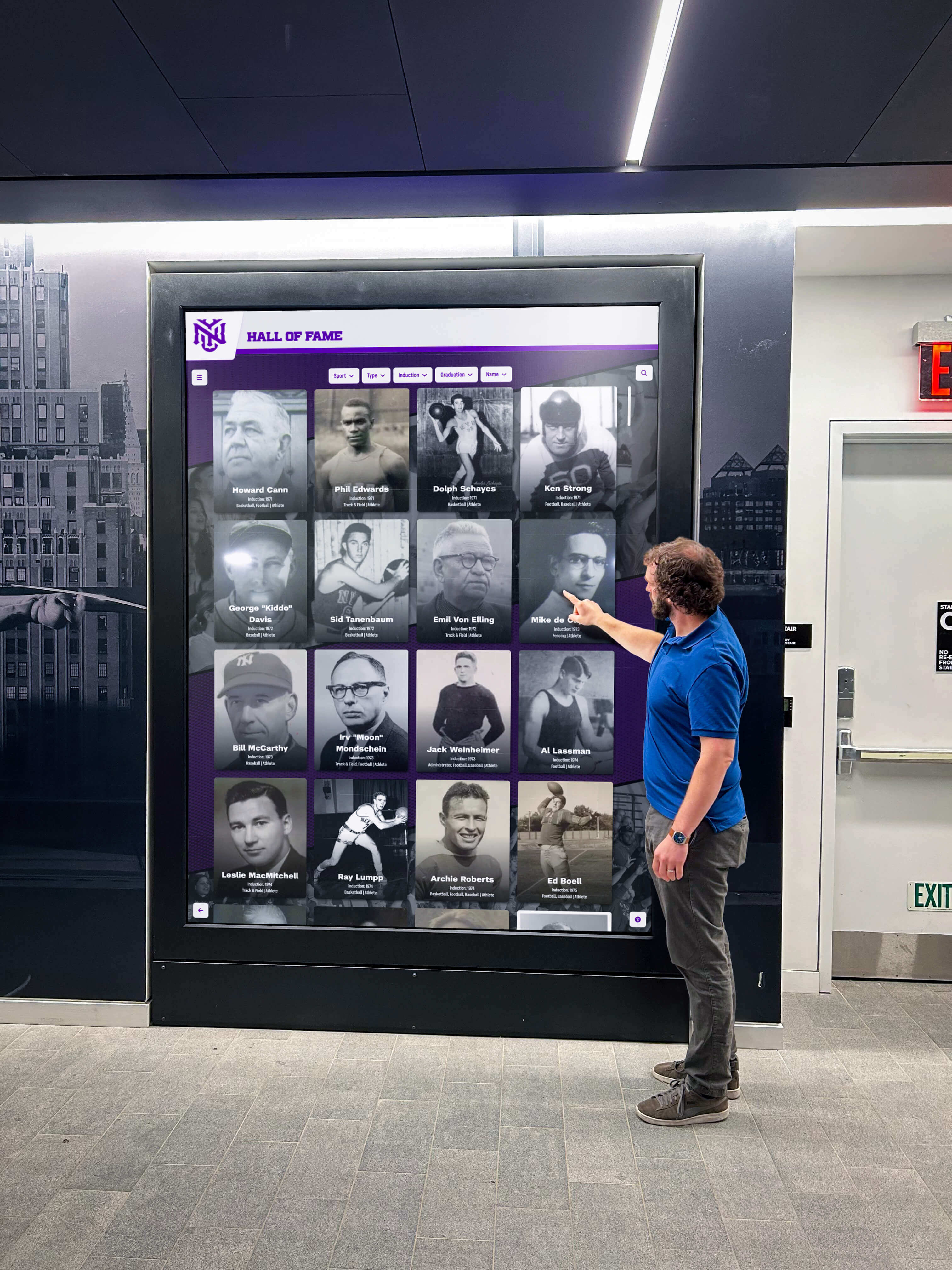
Reliable technical support ensures displays operate consistently, maintaining positive visitor experiences
Rocket Alumni Solutions: Purpose-Built Recognition Platform
Among touchscreen software options, Rocket Alumni Solutions provides comprehensive cloud-based platforms specifically designed for institutional recognition needs. Understanding this purpose-built approach helps organizations evaluate whether specialized platforms better serve their requirements than generalist software or custom development.
Platform Architecture and Capabilities
Rocket Alumni Solutions operates as a fully cloud-based Software-as-a-Service (SaaS) platform eliminating organizational responsibility for server infrastructure, software maintenance, and technical operations. This architecture enables schools, universities, and nonprofit organizations to implement sophisticated interactive recognition displays without internal technical expertise.
Content Management System provides intuitive administrative dashboards enabling subject matter experts to create, update, and publish recognition content directly. Athletic directors update sports achievements, development staff manage donor recognition, and alumni relations teams showcase notable graduates—all without IT mediation or technical barriers preventing efficient workflows.
Template Library includes professionally designed layouts for common recognition scenarios including athletic halls of fame showcasing championship teams and individual achievements, academic honor rolls highlighting scholarly accomplishments, donor recognition walls acknowledging philanthropic support, and historical timeline displays preserving institutional heritage. Templates ensure polished presentation quality while accommodating customization matching specific institutional branding and style preferences.
Multi-Location Support enables organizations managing displays across distributed campuses or facilities to maintain content consistency while accommodating location-specific customization. Districts implementing touchscreen kiosk displays at multiple schools coordinate centrally managed content with building-specific achievements and recognition.
Implementation and Deployment Process
Rocket Alumni Solutions prioritizes streamlined implementation enabling organizations to launch recognition displays efficiently without extended project timelines or complex technical procedures.
Guided Onboarding walks new clients through systematic processes including initial content strategy consultation identifying scope and priorities, template selection and customization matching institutional preferences, content migration importing existing recognition data, and administrator training ensuring proficiency with content management capabilities.
Flexible Hardware Options support various deployment approaches. Organizations may provide their own compatible touchscreen hardware, purchase recommended commercial-grade equipment through Rocket Alumni Solutions, or implement complete turnkey solutions including hardware procurement, installation coordination, and technical configuration. This flexibility accommodates different budget scenarios and institutional capabilities.
Rapid Deployment Timeline enables motivated organizations to launch displays within weeks rather than months typical of custom development projects. Cloud-based architecture eliminates server provisioning and software installation complexity, while template-based approaches avoid extensive design and development cycles.
Ongoing Operation and Support
Post-implementation operation determines long-term success and organizational satisfaction with recognition display investments. Rocket Alumni Solutions emphasizes operational simplicity and comprehensive support resources.
Continuous Platform Enhancements deliver new features, performance improvements, and capability expansions automatically without requiring organizational action or additional charges. Cloud-based architecture enables seamless updates ensuring clients benefit from ongoing innovation without version management complexity.
Comprehensive Support Resources include knowledge base documentation addressing common questions, video tutorials demonstrating platform features and workflows, responsive technical support through multiple channels, and regular webinar training introducing new capabilities and best practices. Organizations implementing recognition displays benefit from these resources throughout deployment lifecycles.
Cost Predictability through subscription pricing enables budget planning without surprise expenses. Organizations pay predictable monthly or annual fees covering software access, content management capabilities, technical support, and ongoing platform enhancements. This model contrasts with custom development approaches involving unpredictable maintenance costs and periodic redevelopment investments as technologies evolve.
Future Trends in Touchscreen Recognition Software
The touchscreen software landscape continues evolving as technologies mature and organizational expectations expand. Understanding emerging trends helps organizations make forward-looking decisions supporting long-term requirements.
Artificial Intelligence Integration
AI capabilities increasingly enhance touchscreen recognition displays through several application areas:
Intelligent Search powered by natural language processing enables conversational queries like “Show me basketball players from the 1990s who scored over 1000 points” versus requiring visitors to navigate multiple filters sequentially. AI interprets intent and delivers relevant results directly.
Content Recommendations suggest related profiles, achievements, or historical content based on current visitor exploration patterns. These recommendations encourage sustained engagement by surfacing connections visitors might otherwise miss.
Automated Content Enhancement through AI-powered photo optimization, automatic tagging and categorization, and quality improvement for historical images maintains professional presentation standards while reducing manual content preparation effort.
Augmented Reality Features
AR capabilities extend recognition displays beyond physical touchscreens, overlaying digital content onto physical environments through smartphone cameras or dedicated AR devices.
Mobile AR Integration enables visitors to point smartphones at recognition walls, triggering additional content, video highlights, or interactive experiences supplementing physical installations. This blended approach combines permanent touchscreen displays with mobile-accessible augmented content.
Virtual Recognition Spaces allow remote audiences to explore recognition content through immersive 3D environments accessible via web browsers or VR headsets. Schools provide prospective students virtual tours including interactive athletic facilities showcasing achievements and institutional pride.
Enhanced Accessibility Features
Growing emphasis on inclusive design drives continued accessibility improvements ensuring recognition displays serve all audiences effectively regardless of abilities.
Voice Navigation enables visitors to interact with displays through spoken commands rather than touch, accommodating users with mobility limitations or visual impairments. Advanced implementations combine voice and touch, enabling multi-modal interaction matching individual preferences.
Adjustable Interfaces automatically adapt text sizing, contrast levels, and navigation patterns based on detected user needs or explicit preference selection. These adaptations ensure content remains accessible across diverse audiences.
Universal Design Principles embedded throughout software development prioritize functionality for users with disabilities rather than treating accessibility as optional feature addition. This approach ensures inclusive experiences from initial design rather than retrofitting accommodations after development completion.
Analytics and Machine Learning
Advanced analytics powered by machine learning reveal deeper insights about visitor engagement and content effectiveness.
Behavioral Pattern Recognition identifies common navigation paths, content exploration sequences, and engagement patterns informing content organization improvements. Organizations optimize information architecture based on actual usage data rather than assumptions about visitor preferences.
Predictive Content Recommendations anticipate organizational recognition needs based on historical patterns. Platforms might suggest creating seasonal recognition displays, highlight approaching significant anniversaries, or recommend content categories gaining engagement traction.
Performance Optimization through automated testing and machine learning identifies interface improvements enhancing engagement. Cloud-based platforms implement improvements systematically across client base rather than requiring individual organizations to conduct usability research independently.
Conclusion: Strategic Software Selection for Recognition Displays
Touchscreen software selection represents one of the most consequential decisions shaping recognition display project outcomes and long-term organizational satisfaction. The choice between purpose-built platforms, custom development, or no-code tools fundamentally affects implementation timelines, operational complexity, total cost of ownership, and capability alignment with institutional needs.
For most schools, universities, nonprofit organizations, and corporations implementing interactive recognition displays, purpose-built platforms like Rocket Alumni Solutions provide optimal combinations of sophisticated functionality, operational simplicity, professional presentation quality, and investment efficiency. These specialized solutions eliminate custom development risks and costs while delivering proven capabilities refined through hundreds of organizational deployments.
Organizations should prioritize cloud-based architectures enabling remote content management, multi-location consistency, and simplified technical operations over on-premise alternatives requiring substantial IT expertise and infrastructure investment. The operational benefits and cost efficiencies of cloud platforms align particularly well with educational and nonprofit resource constraints.
Successful implementations result from systematic evaluation of organizational requirements, technical capabilities, budget realities, and strategic priorities against software architectural characteristics and provider support capabilities. Organizations making informed choices supporting project goals achieve recognition displays delivering lasting value throughout extended deployment lifecycles while engaging audiences effectively and celebrating achievements meaningfully.
Ready to Transform Your Recognition Displays?
Discover how Rocket Alumni Solutions provides comprehensive touchscreen software specifically designed for schools and organizations seeking sophisticated recognition capabilities without custom development complexity and costs.
Schedule Your Free Consultation






























