Every school eventually faces the same challenge: trophy cases reaching capacity as years of athletic victories, academic achievements, and special recognitions accumulate beyond available display space. What begins as a point of pride becomes a source of frustration as administrators realize they must choose between cramming in new awards, removing older trophies, or investing in expensive case expansions that only delay the inevitable next capacity crisis.
Trophy case capacity planning represents far more than simply calculating shelf dimensions and counting trophies. Strategic planning considers growth projections across multiple recognition categories, organization systems that maximize limited space, aesthetic presentation that inspires rather than clutters, accessibility for future additions, and increasingly, modern alternatives that eliminate physical space constraints entirely while dramatically improving recognition effectiveness.
This comprehensive guide explores proven strategies for trophy case capacity planning that serve schools effectively for decades. Whether you’re designing your first trophy case installation, expanding existing displays that have reached capacity, or evaluating modern solutions that fundamentally reimagine recognition approaches, you’ll discover actionable frameworks for making decisions that honor achievements appropriately without creating ongoing space limitations that compromise future recognition.
Understanding trophy case capacity planning requires analyzing both immediate needs and long-term trajectories. Schools that plan strategically avoid the costly cycle of installing cases, filling them within years, adding more cases, and repeating endlessly as achievements continue accumulating faster than physical space can accommodate.
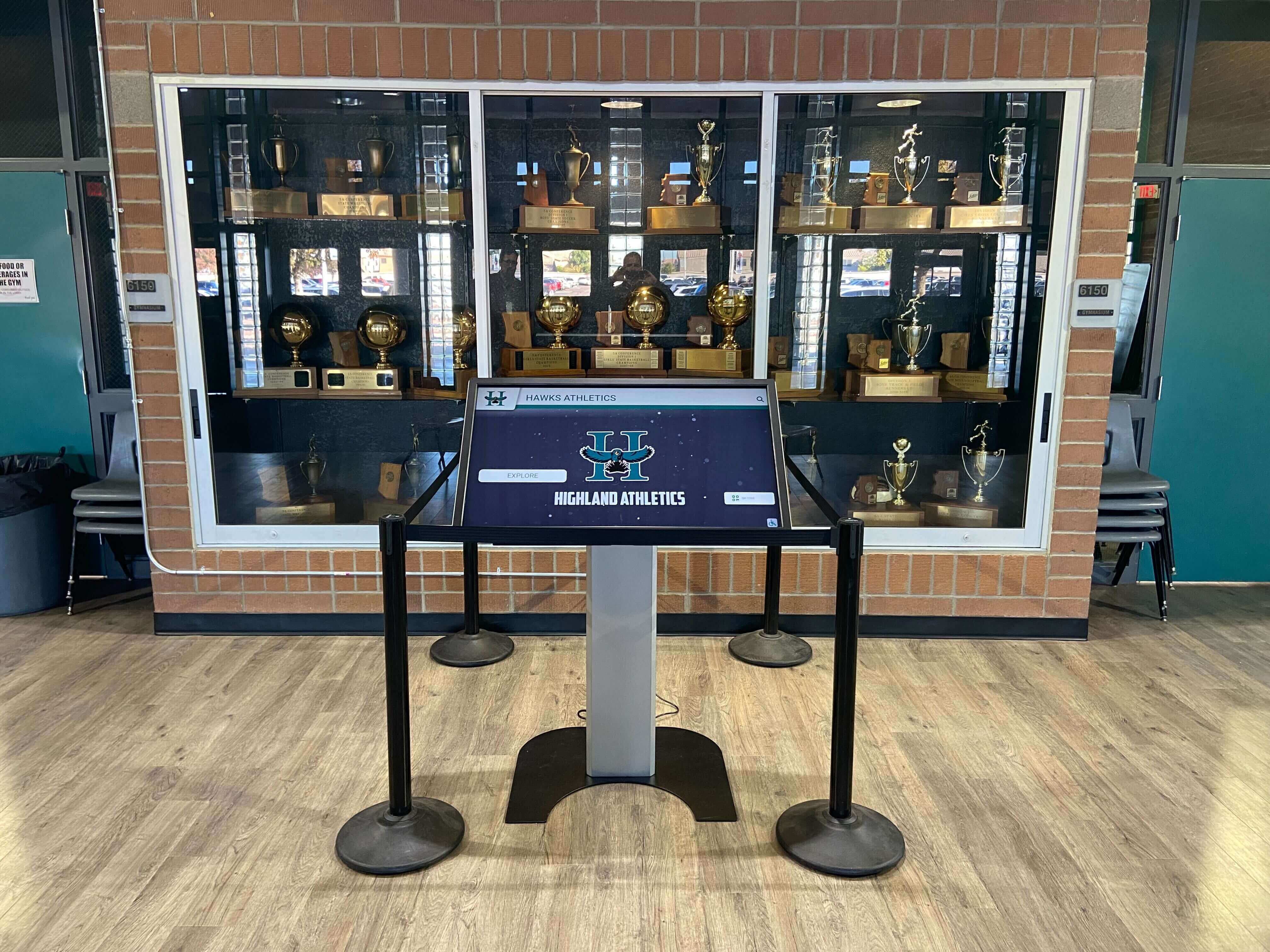
Understanding Trophy Case Capacity: The Mathematics of Physical Recognition
Before exploring solutions, understanding the mathematical realities of trophy case capacity helps frame the challenge clearly and reveals why traditional approaches inevitably reach limitations.
Standard Trophy Case Dimensions and Capacity
Traditional school trophy cases come in various sizes, with common configurations including:
Wall-Mounted Cases:
- Width: 48", 60", 72", or 96"
- Height: 66" or 72"
- Depth: 16" or 20"
- Shelves: 3-5 adjustable
- Typical capacity: 30-50 trophies per case
Freestanding Floor Cases:
- Width: 48", 60", 72", 96", or 120"
- Height: 72" or 78"
- Depth: 20" or 24"
- Shelves: 4-6 adjustable
- Typical capacity: 50-80 trophies per case
Corner and Custom Cases:
- Dimensions vary based on available architectural space
- Often designed to maximize difficult-to-use corner areas
- Capacity depends on specific configurations
Calculating Actual Display Capacity
While manufacturers list case dimensions, actual usable capacity depends on trophy sizes, arrangement patterns, and aesthetic spacing requirements.
Trophy Size Variations:
Trophies come in dramatically different dimensions affecting how many fit comfortably:
- Small participation trophies: 6-8" tall, 3-4" base
- Standard achievement trophies: 12-18" tall, 5-6" base
- Championship trophies: 18-30" tall, 6-10" base
- Oversized special awards: 30"+ tall, 12"+ base
- Plaques: Various sizes typically 8x10" to 12x16"
- Medals and ribbons: Minimal space individually, accumulate significantly
Spacing Considerations:
Professional trophy case design requires adequate spacing:
- Minimum 2-3" between trophies for visibility
- Larger awards need 4-6" clearance to avoid crowding
- Shelf height must accommodate tallest items with 2-3" overhead clearance
- Front-to-back depth allows larger items forward, smaller behind
- Visual balance requires strategic placement, not just maximum cramming
Realistic Capacity Calculation:
For a standard 72"W x 72"H x 20"D wall-mounted case with 4 shelves:
- Shelf space: 72" width x 16" usable depth per shelf
- Top shelf (tallest): 3-4 championship trophies (18-24" spacing each)
- Upper middle shelf: 5-6 medium trophies (12-14" spacing each)
- Lower middle shelf: 6-8 small-medium trophies (9-12" spacing each)
- Bottom shelf: 8-10 small trophies or 4-5 plaques (7-10" spacing each)
- Total realistic capacity: 22-28 items with professional appearance
This realistic calculation reveals that even large trophy cases hold far fewer items than administrators often assume when planning capacity.
The Trophy Accumulation Reality
Understanding acquisition rates helps project when current capacity will be exhausted and future needs will emerge.
Typical School Trophy Accumulation Rates:
Small Schools (100-400 students):
- Athletic trophies: 8-15 per year
- Academic competitions: 5-10 per year
- Arts/music awards: 3-8 per year
- Special recognition: 2-5 per year
- Total: 18-38 trophies annually
Medium Schools (400-1,000 students):
- Athletic trophies: 15-30 per year
- Academic competitions: 10-20 per year
- Arts/music awards: 8-15 per year
- Special recognition: 5-10 per year
- Total: 38-75 trophies annually
Large Schools (1,000+ students):
- Athletic trophies: 30-60 per year
- Academic competitions: 20-40 per year
- Arts/music awards: 15-25 per year
- Special recognition: 10-20 per year
- Total: 75-145 trophies annually
Long-Term Accumulation Projections:
For a medium-sized school earning 50 trophies annually:
- After 5 years: 250 trophies (requires 5-10 large cases)
- After 10 years: 500 trophies (requires 10-20 large cases)
- After 20 years: 1,000 trophies (requires 20-40 large cases)
- After 30 years: 1,500 trophies (requires 30-60 large cases)
These projections reveal the fundamental mismatch between continuous achievement accumulation and finite physical display space—a challenge that traditional solutions cannot ultimately solve regardless of how many cases schools install.
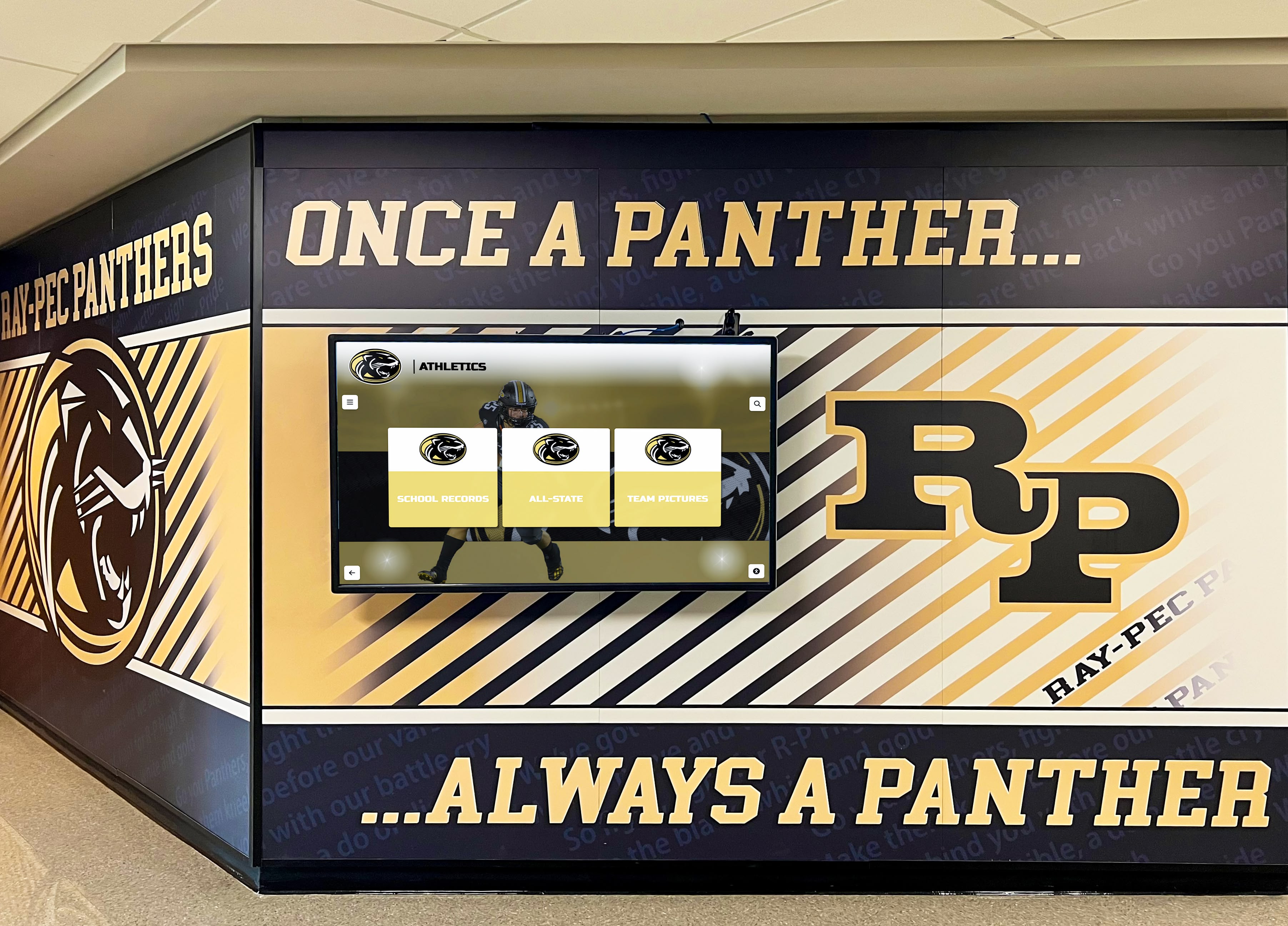
Strategic Capacity Planning: Maximizing Traditional Trophy Case Space
While physical trophy cases have inherent capacity limitations, strategic planning maximizes effectiveness within those constraints and delays capacity exhaustion.
Organization and Categorization Systems
Thoughtful organization systems make trophy cases more navigable while optimizing space utilization.
Recognition Category Separation:
Dedicating specific cases or sections to distinct achievement types creates logical organization:
- Athletic cases: Sport-specific organization (fall sports, winter sports, spring sports)
- Academic cases: Subject areas, competitions, or achievement types
- Arts cases: Music, theater, visual arts, literary achievements
- Special recognition: Community service, leadership, hall of fame
Category separation prevents chaotic mixing while helping viewers locate specific achievements and understand the breadth of excellence your school celebrates.
Chronological Organization:
Time-based arrangement creates natural progression:
- Most recent achievements at eye level or prominent positions
- Historical trophies in less prominent but still accessible locations
- Rotating displays featuring current year prominently
- Archive sections preserving older achievements
Chronological systems acknowledge that recent achievements generate more interest while preserving historical recognition appropriately.
Prominence-Based Display:
Not all trophies deserve equal visibility—strategic placement reflects achievement significance:
- Top tier: State championships, national recognition, first-time achievements
- Second tier: Regional championships, consistent excellence, significant milestones
- Third tier: Conference championships, participation in selective competitions
- Fourth tier: Routine achievements, participation awards, duplicate recognitions
This hierarchy doesn’t diminish any achievement but acknowledges practical reality that prominence should reflect exceptional accomplishment.
Rotation and Archive Strategies
When trophy accumulation exceeds permanent display capacity, rotation systems maintain fresh content while honoring all achievements.
Annual Rotation Programs:
Systematic rotation keeps displays current:
- Feature current year achievements prominently
- Rotate previous 2-5 years through primary display positions
- Move older trophies to secondary display areas or archive storage
- Create special displays for milestone anniversaries (10th, 25th, 50th year celebrations)
Rotation programs require documented procedures ensuring fairness and consistency rather than arbitrary decisions about which achievements remain visible.
Seasonal Displays:
Time displays to relevant periods:
- Fall sports trophies featured August-November
- Winter sports prominence November-March
- Spring sports focus March-June
- Academic year achievements highlighted during school year
- Summer achievements featured when earned
Seasonal relevance creates connections between current activities and historical accomplishments while managing limited space through strategic timing.
Achievement Threshold Policies:
Establish clear criteria for permanent display inclusion:
- Conference championships and higher levels earn permanent display
- Participation awards recognized temporarily (current year only)
- Individual achievement awards featured for athlete’s enrollment period
- Team achievements remain indefinitely
- Special milestones (school records, unprecedented accomplishments) receive permanent priority
Clear policies prevent disputes and ensure limited space showcases most significant achievements while honoring all contributions appropriately.
Space Optimization Techniques
Physical design choices dramatically affect how many trophies cases accommodate while maintaining professional appearance.
Adjustable Shelving Systems:
Flexibility maximizes capacity:
- Shelves repositionable to accommodate varying trophy heights
- Close spacing for small trophies, wider spacing for tall awards
- Removable shelves creating tall display areas when needed
- Modular systems adapting as collections evolve
Fixed shelving wastes space when trophy heights don’t align with shelf spacing—adjustable systems prevent this inefficiency.
Tiered Display Arrangements:
Multi-level presentation increases capacity:
- Small risers or platforms creating front-to-back tiers
- Taller trophies in back, shorter items in front
- Maximizes depth utilization beyond single-layer displays
- Creates visual interest through dimensional variation
Tiered arrangements can increase effective capacity by 30-50% compared to single-layer display approaches.
Efficient Plaque Mounting:
Plaques present distinct spatial challenges:
- Wall-mounted plaque displays separate from trophy cases
- Vertical plaque arrangements utilizing wall height efficiently
- Grid systems with uniform spacing and professional appearance
- Digital recognition displays eliminating physical plaque space constraints
Separating plaques from three-dimensional trophies often improves both space efficiency and aesthetic presentation.
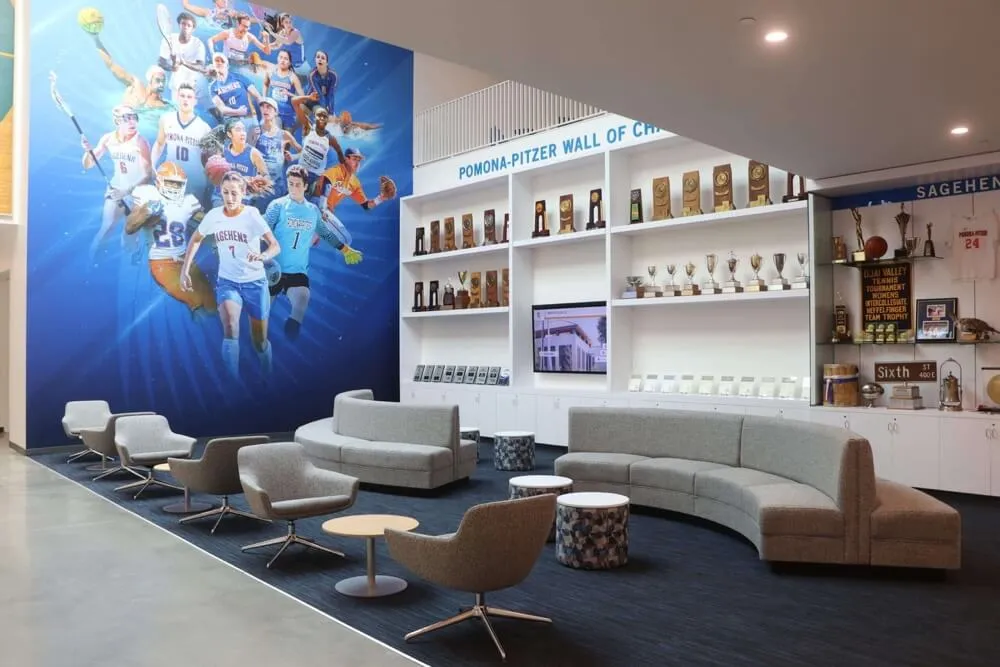
Long-Term Capacity Planning: Projecting and Accommodating Future Growth
Strategic trophy case capacity planning extends beyond current needs to accommodate decades of future achievement accumulation without requiring complete redesigns.
Conducting Comprehensive Capacity Analysis
Systematic analysis reveals realistic trajectories and informs strategic planning.
Historical Achievement Audit:
Document past achievement patterns:
- Count trophies earned in each category for past 5-10 years
- Calculate annual averages and identify trends
- Note program expansions or eliminations affecting future acquisition
- Consider facility improvements or program investments likely to increase success
- Account for enrollment changes affecting participation and achievement volumes
Historical data provides the foundation for realistic future projections rather than guessing.
Current Capacity Assessment:
Evaluate existing display infrastructure:
- Catalog all current trophy cases (dimensions, capacities, conditions)
- Calculate total current capacity with professional spacing
- Determine current utilization percentage
- Identify cases at or near capacity requiring immediate attention
- Note available wall space for potential future case additions
Understanding current status clarifies how urgently capacity expansion is needed.
Future Growth Projections:
Model achievement accumulation scenarios:
- Conservative projection: Historical averages continue unchanged
- Moderate projection: 10-20% growth from program expansion or success improvement
- Aggressive projection: 30-50% growth from major program investments or facility additions
Project each scenario forward 10, 20, and 30 years revealing when current capacity will be exhausted under different circumstances.
Space Availability Analysis:
Determine physical expansion options:
- Available wall space in current trophy case locations
- Alternative locations if primary areas reach maximum capacity
- Architectural constraints (windows, doors, structural elements)
- Budget realities affecting expansion feasibility
- Aesthetic limitations before trophy cases dominate hallways excessively
This analysis reveals whether traditional expansion remains viable or if alternative approaches become necessary.
Designing for Capacity Flexibility
Physical infrastructure decisions either enable or constrain future adaptation—strategic design preserves options.
Modular Case Systems:
Expandable designs accommodate growth:
- Standardized case dimensions allowing matching additions
- Mounting systems accepting additional units
- Aesthetic continuity when adding cases years later
- Manufacturer longevity ensuring future availability
Modular approaches distribute capacity investment over time as needs emerge rather than requiring massive upfront expenditure for capacity that won’t be needed for years.
Reserved Expansion Space:
Allocate wall space for future use:
- Designate specific areas for trophy case expansion
- Protect reserved space from other uses or installations
- Include reserved space in renovation and facility planning
- Maintain aesthetic balance as cases are added incrementally
Reserved space prevents the common problem of discovering all suitable wall space has been allocated to other purposes when trophy case expansion becomes necessary.
Phased Implementation Plans:
Strategic timing optimizes investment:
- Phase 1: Core capacity addressing immediate needs
- Phase 2: Expansion cases installed as current cases near capacity
- Phase 3: Additional capacity based on actual accumulation rates
Phased approaches allow course correction based on actual experience rather than locking in projections that may prove inaccurate.
Alternative Recognition Approaches
When physical space constraints become insurmountable, alternative recognition methods preserve comprehensive achievement celebration without endless case expansion.
Photo Documentation and Digital Archives:
Photography preserves recognition without physical display:
- Professional trophy photography creating detailed records
- Digital archives accessible online to broader audiences
- Searchable databases enabling achievement discovery
- Combination of physical display of most significant trophies with comprehensive digital archive of all achievements
Digital archives enable selective physical display without losing recognition of achievements not currently on display.
Recognition Walls and Murals:
Architectural integration expands recognition capacity:
- Large wall murals celebrating program excellence
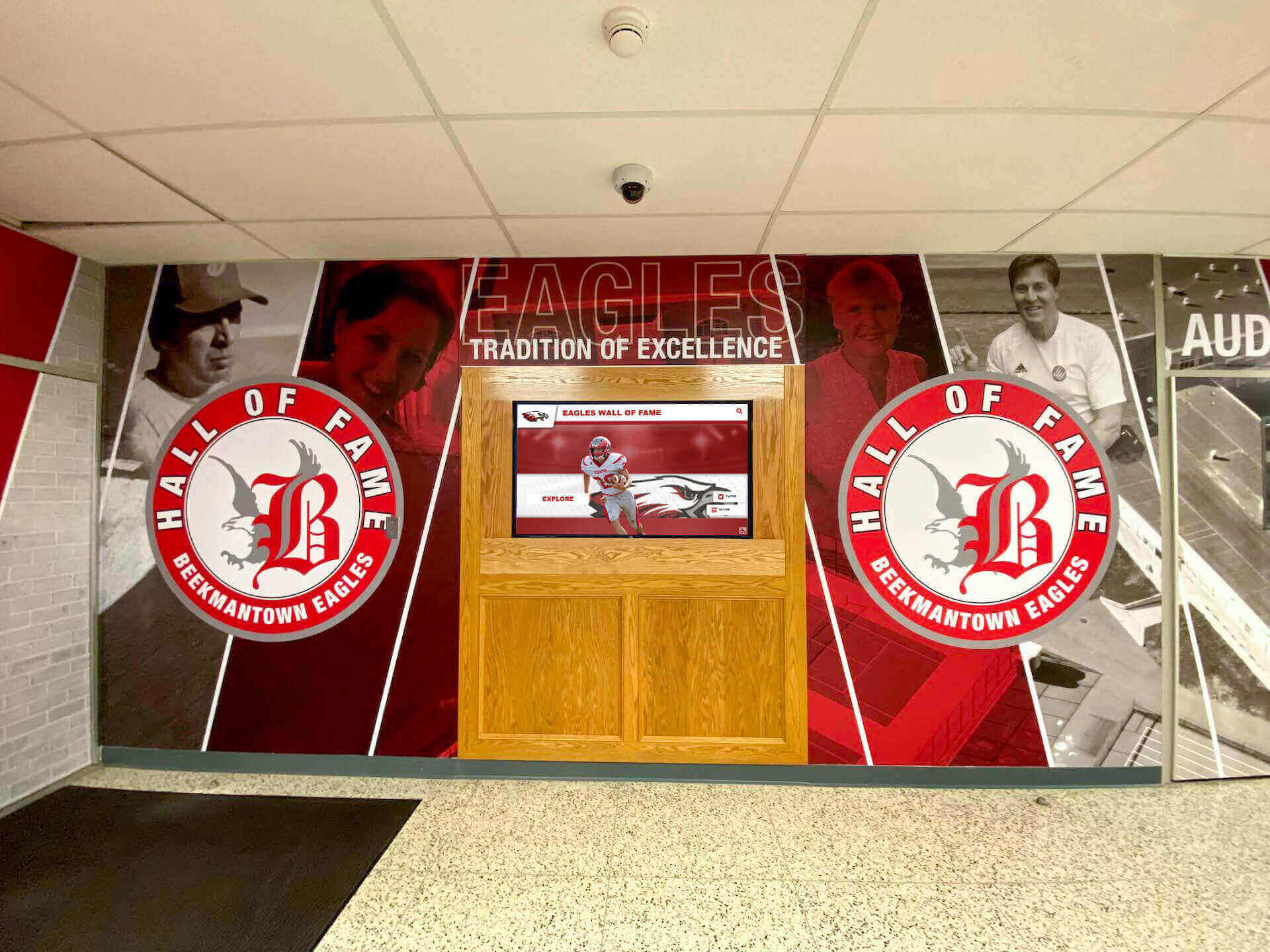
- Integrated digital displays within custom designs
- Engraved or printed recognition requiring minimal depth
- Combining physical trophies with graphic celebration
Athletic recognition programs increasingly incorporate architectural recognition elements that traditional trophy cases cannot provide.
Virtual Recognition Platforms:
Web-based systems extend reach beyond physical limitations:
- Online achievement databases accessible globally
- Mobile applications enabling anywhere access
- Social sharing extending recognition to broader audiences
- Analytics revealing engagement patterns impossible with physical displays
Virtual platforms complement physical recognition while eliminating capacity constraints entirely.
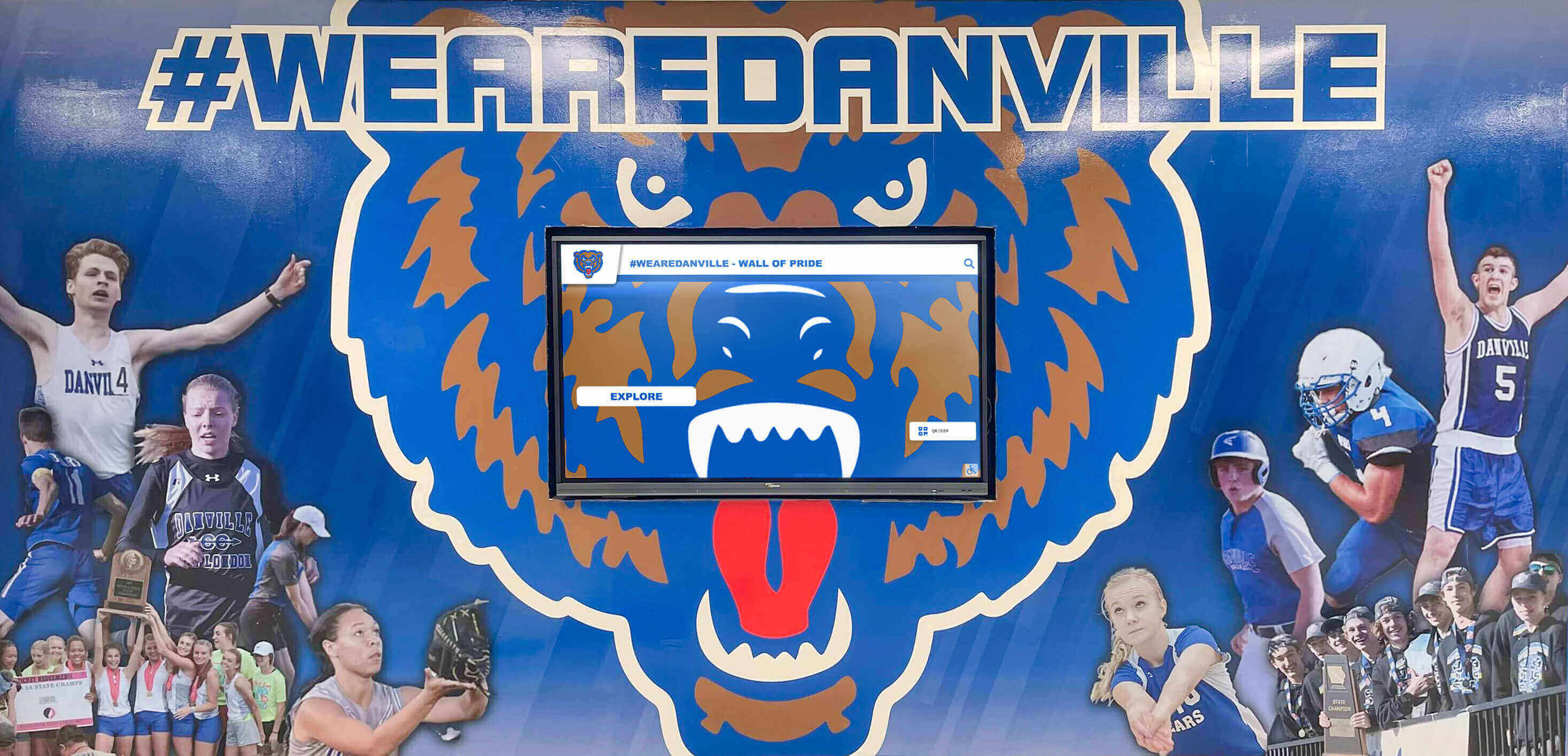
Modern Solutions: Digital Recognition Systems That Eliminate Capacity Constraints
While strategic planning extends traditional trophy case usefulness, digital recognition systems fundamentally solve capacity limitations while delivering superior engagement and recognition effectiveness.
Understanding Digital Recognition Advantages
Modern digital displays address trophy case limitations that physical cases cannot overcome regardless of how carefully schools plan.
Unlimited Content Capacity:
Digital systems accommodate unlimited achievements:
- Single display showcasing hundreds or thousands of trophies
- No physical space constraints limiting what can be recognized
- Comprehensive recognition across all categories and years
- Easy additions requiring no physical changes or space consumption
A 55-inch digital display provides recognition capacity equivalent to 20-30 traditional trophy cases while occupying a fraction of the wall space.
Rich Multimedia Recognition:
Digital platforms deliver detailed information impossible in physical displays:
- High-resolution trophy photography from multiple angles
- Complete achievement details, dates, team rosters, and context
- Video highlights showing actual performances or celebrations
- Athlete or team biographical information creating personal connections
- Statistical achievement documentation
This depth creates engagement that physical trophies alone cannot match—visitors spend 5-7 minutes exploring digital recognition versus 30 seconds glancing at traditional trophy cases.

Searchable and Interactive Discovery:
Digital systems enable active exploration:
- Search functions finding specific trophies, athletes, teams, or years instantly
- Filtering by sport, achievement level, time period, or category
- Related achievement discovery connecting viewers to additional relevant content
- Personal customization allowing visitors to follow interests
Interactivity transforms passive viewing into engaging exploration that builds deeper connections and understanding.
Easy Content Management:
Digital platforms simplify ongoing management:
- Cloud-based updates from any device without physical access
- Batch imports adding multiple achievements efficiently
- Template systems ensuring consistent professional presentation
- No physical rearranging or case reconfiguration required
- Immediate visibility of new content upon publishing
Updates that require hours with physical trophy case rearrangement take minutes through digital content management systems.
Accessibility and Reach:
Digital recognition extends beyond physical location:
- Web accessibility enabling alumni and families to explore achievements remotely
- Mobile access from smartphones and tablets
- Social sharing spreading recognition to broader audiences
- Analytics revealing engagement patterns and popular content
- 24/7 availability versus limited physical viewing hours
Global accessibility creates engagement opportunities impossible with physical trophy cases accessible only to those who visit campuses.
Implementing Digital Recognition Systems
Schools successfully implementing digital trophy displays follow systematic approaches ensuring installations meet goals effectively.
Needs Assessment and Goal Setting:
Clear objectives guide implementation:
- Determining primary purposes (capacity relief, enhanced engagement, modernization)
- Identifying content categories and volumes
- Establishing success metrics
- Budget parameters and funding sources
- Timeline requirements and constraints
Systematic planning prevents disappointments from unclear expectations or misaligned solutions.
Selecting Appropriate Solutions:
Digital recognition platforms vary in capabilities, costs, and complexity—matching solutions to actual needs prevents overpaying for unused features or selecting inadequate systems:
Purpose-Built Recognition Platforms:
Specialized systems designed specifically for achievement recognition like those from Rocket Alumni Solutions provide comprehensive capabilities:
- Intuitive content management requiring no technical expertise
- Recognition-specific templates and organization systems
- Integrated trophy photography and display optimization
- Searchable databases with powerful filtering
- Web and mobile accessibility extending reach
- Analytics revealing engagement patterns
- Professional support and training
Purpose-built platforms deliver superior results for recognition applications compared to generic digital signage adapted for trophy display.
Hardware and Installation:
Professional implementation ensures reliable operation:
- Commercial-grade displays engineered for continuous operation
- Appropriate screen brightness for hallway lighting conditions
- Touchscreen capabilities enabling interactive exploration
- Secure mounting preventing theft or vandalism
- Proper electrical and network infrastructure
- Strategic placement maximizing visibility and engagement
Hardware quality dramatically affects long-term satisfaction and total cost of ownership—commercial specifications prove essential despite higher upfront investment.
Content Migration and Launch:
Systematic content development creates compelling displays:
- Professional trophy photography capturing awards effectively
- Achievement data compilation and verification
- Template application ensuring consistent presentation
- Initial content population before public launch
- Staff training for ongoing management
Launching with comprehensive content demonstrates value immediately rather than gradually building displays over months while visitors see incomplete systems.
Hybrid Approaches: Combining Physical and Digital Recognition
Most schools implement hybrid strategies preserving ceremonial physical trophy display while solving capacity limitations digitally.
Showcase Physical, Comprehensive Digital:
Strategic combination leverages each approach’s strengths:
- Traditional trophy cases displaying most prestigious achievements (state championships, national recognition, first-time accomplishments)
- Digital displays providing comprehensive access to entire trophy collection
- Physical displays remain ceremonial focal points
- Digital systems solve capacity constraints while enabling depth impossible physically
This approach honors tradition while embracing modern capabilities that serve recognition goals more effectively.
Integrated Installation Design:
Professional design creates cohesive environments:
- Digital displays positioned adjacent to traditional trophy cases
- Architectural integration appearing intentional, not retrofitted
- Complementary aesthetics between physical and digital elements
- Signage and messaging explaining how systems work together
- Unified recognition experience rather than disconnected elements
Thoughtful design prevents hybrid approaches from appearing confused or transitional rather than purposeful and permanent.
Budget Considerations: Capacity Investment Analysis
Trophy case capacity planning requires understanding both immediate costs and long-term financial implications of different approaches.
Traditional Trophy Case Cost Analysis
Physical expansion involves multiple expense categories:
Case Purchase and Installation:
- Standard wall-mounted case (72"W x 72"H): $2,500-$5,000
- Large floor case (120"W x 78"H): $4,000-$8,000
- Custom cases matching existing: $5,000-$12,000+
- Installation labor and mounting: $500-$1,500 per case
- Electrical work (if lighting upgrades needed): $400-$2,000
Facility Modifications:
- Wall preparation and reinforcement: $400-$2,000
- Architectural integration work: $1,000-$5,000
- Painting and finishing: $300-$1,200
- Flooring protection or replacement: $500-$2,000
Ongoing Maintenance:
- Annual cleaning and care: $100-$400
- Lock and hardware maintenance: $50-$200 annually
- Lighting replacement: $100-$300 every 2-3 years
- Case repair or refinishing: $500-$2,000 periodically
Total 10-Year Cost (Adding 3 Cases Over Decade):
- Initial installation: $8,000-$18,000
- Additional cases: $7,000-$15,000
- Maintenance and operation: $2,000-$5,000
- Total: $17,000-$38,000
This investment provides limited capacity requiring another expansion cycle within 5-10 years as trophies continue accumulating.
Digital Recognition System Cost Analysis
Digital platforms involve different cost structures:
Initial Implementation:
- Commercial display and hardware: $3,000-$6,000
- Content management platform: $2,000-$5,000 (or annual subscription)
- Installation and setup: $1,000-$3,000
- Initial content migration: $1,500-$4,000
- Training and support: $500-$1,500
- Total initial: $8,000-$19,500
Annual Operating Costs:
- Platform licensing/subscription: $1,200-$3,000
- Content management time (staff): $500-$1,500 (value of time)
- Electricity: $80-$200
- Technical support: $300-$1,000
- Annual total: $2,080-$5,700
Total 10-Year Cost:
- Initial implementation: $8,000-$19,500
- 10 years operation: $20,800-$57,000
- Total: $28,800-$76,500
While digital systems cost more over 10 years than adding a few trophy cases, they provide unlimited capacity, comprehensive recognition, interactive engagement, and accessibility impossible with physical cases—delivering substantially greater value despite higher costs.
Return on Investment Considerations
Comparing options requires analyzing value delivered beyond just initial prices.
Capacity Value:
- Traditional cases: Limited capacity requiring continuous expansion
- Digital systems: Unlimited capacity eliminating future expansion needs
Engagement Value:
- Traditional cases: Passive viewing, seconds of engagement
- Digital systems: Interactive exploration, 5-7 minute average sessions
Recognition Comprehensiveness:
- Traditional cases: Selective display of limited achievements
- Digital systems: Comprehensive recognition of all achievements
Accessibility:
- Traditional cases: Available only to campus visitors
- Digital systems: Global access via web and mobile platforms
Management Efficiency:
- Traditional cases: Labor-intensive physical rearrangement
- Digital systems: Quick, easy digital content management
When considering total value delivered rather than just purchase price, digital recognition systems prove remarkably cost-effective despite higher absolute costs.
Implementation Planning: From Concept to Operational Recognition System
Successful trophy case capacity planning requires systematic implementation ensuring solutions meet needs effectively while avoiding common mistakes that compromise results.
Establishing Project Scope and Objectives
Clear definition guides decision-making throughout planning and implementation.
Goal Documentation:
Explicitly state what you want to achieve:
- Solve current capacity crisis and prevent future constraints
- Improve recognition quality and engagement
- Modernize aging trophy display infrastructure
- Create more comprehensive achievement celebration
- Reduce ongoing management burden
Written goals prevent scope creep while ensuring selected solutions address actual priorities.
Stakeholder Identification:
Recognize everyone affected by trophy display decisions:
- Athletic directors managing sports recognition
- Academic administrators overseeing competition recognition
- Alumni seeking historical achievement information
- Current students inspired by visible achievement
- Families wanting to celebrate student success
- Facilities staff responsible for maintenance
Involving stakeholders early prevents resistance and ensures solutions serve diverse needs effectively.
Budget and Timeline Establishment:
Realistic parameters guide planning:
- Available funding from current budgets or capital campaigns
- Grant opportunities or donor recognition programs that might support projects
- Implementation timeline considering school calendars and facility access
- Phased approaches if immediate comprehensive implementation exceeds resources
Clear financial and schedule parameters prevent planning impractical solutions regardless of how appealing they might be.
Selecting Vendors and Solutions
Vendor capability dramatically affects project success—thorough evaluation prevents disappointing results or problematic implementations.
Vendor Evaluation Criteria:
Assess potential partners systematically:
- Specific experience with educational recognition (not just general A/V or signage)
- References from similar schools with comparable projects
- Demonstrated product quality and reliability
- Training and support availability
- Long-term viability and commitment to recognition market
- Total cost transparency without hidden fees or surprise charges
Proposal Review:
Request comprehensive information enabling informed decisions:
- Detailed scope including all deliverables
- Specific equipment models and specifications
- Content migration assistance included
- Training and documentation provided
- Warranty terms and support arrangements
- Payment schedule tied to milestones
Comparing detailed proposals reveals significant differences hidden by simple price quotes.
Reference Verification:
Contact existing customers directly:
- Satisfaction with implemented solutions
- Vendor responsiveness during and after installation
- Quality of training and documentation
- Ongoing support availability and effectiveness
- Would they select same vendor again?
Reference feedback often reveals insights vendor sales presentations omit.
Professional Installation and Launch
Quality implementation ensures systems operate reliably and effectively from day one.
Pre-Installation Preparation:
Proper groundwork prevents problems:
- Electrical infrastructure verification and upgrades if needed
- Network connectivity testing ensuring adequate performance
- Wall surface preparation for professional mounting
- Content preparation for immediate launch population
- Staff scheduling for training sessions
Addressing infrastructure needs before installation day prevents delays and cost overruns from unexpected issues.
Installation Supervision:
Professional implementation requires oversight:
- Verification of equipment specifications matching proposals
- Mounting security and levelness inspection
- Electrical and network connection testing
- System configuration and functionality verification
- Acceptance testing before final payment
Don’t assume vendor installation quality—verify all critical elements before contractors leave.
Staff Training:
Comprehensive training enables effective ongoing management:
- Multiple staff members trained preventing single-point-of-failure
- Hands-on practice during training sessions
- Documentation and reference materials provided
- Follow-up training opportunities scheduled
- Support contact information for future questions
Training investment pays dividends through confident, effective ongoing system management.
Launch Communication:
Announce new recognition systems effectively:
- Student body messaging during assemblies or announcements
- Alumni communication through newsletters and social media
- Community awareness through local media and school websites
- Grand opening events or celebrations
- Signage explaining new systems and how to use them
Effective communication maximizes engagement and demonstrates value to constituencies whose support justified the investment.

Ongoing Management: Maintaining Effective Recognition Long-Term
Successful trophy case capacity planning extends beyond initial installation to ongoing management ensuring displays remain current, attractive, and effective for years.
Content Management Procedures
Systematic processes keep recognition current and comprehensive.
Achievement Documentation Workflows:
Establish clear procedures for adding new trophies:
- Responsibility assignment (who adds new trophies?)
- Timeline expectations (how quickly after earning?)
- Information requirements (photos, details, dates, participants)
- Quality standards (photo resolution, data completeness)
- Approval processes before publishing
Documented workflows prevent delays or forgotten achievements falling through cracks.
Archive and Rotation Policies:
Manage growing collections systematically:
- Criteria for permanent display versus rotation
- Rotation schedules and procedures
- Physical trophy storage for items not currently displayed
- Digital preservation of all trophies regardless of physical display status
- Special displays for milestone anniversaries or themed collections
Clear policies prevent arbitrary decisions while ensuring fair treatment of all achievements.
Accuracy Verification:
Maintain recognition credibility through quality control:
- Periodic audits verifying displayed information accuracy
- Correction procedures when errors are discovered
- Source documentation for historical achievements
- Stakeholder review before publishing significant additions
- Version control tracking changes over time
Credibility requires accuracy—systematic verification maintains trust in recognition information.
Physical Maintenance
Displays require ongoing care maintaining professional appearance.
Routine Cleaning:
Regular maintenance preserves aesthetics:
- Weekly dusting of trophy cases and displays
- Monthly deep cleaning of glass and surfaces
- Touchscreen cleaning using appropriate products
- Trophy polishing when tarnishing occurs
- Lighting inspection and bulb replacement
Neglected displays appear tired and uncared for—regular maintenance demonstrates that recognition matters.
Preventive Maintenance:
Proactive care prevents problems:
- Quarterly hardware inspection for loose components
- Annual deep maintenance including case hardware lubrication
- Software updates and security patches for digital systems
- Backup procedures ensuring content preservation
- Component replacement before failures occur
Preventive maintenance costs less than emergency repairs while preventing recognition display downtime.
Performance Evaluation
Systematic assessment ensures recognition systems deliver intended value.
Engagement Analytics:
Measure actual usage patterns:
- Visitor interaction counts and frequency
- Average session duration and depth
- Popular content revealing interest patterns
- Search terms indicating what visitors seek
- Web vs. physical display engagement comparison
Analytics reveal whether displays engage audiences effectively or sit largely ignored.
Stakeholder Satisfaction:
Survey key constituencies periodically:
- Student awareness and engagement with recognition displays
- Alumni satisfaction with achievement celebration
- Staff ease of managing recognition systems
- Visitor impressions and experience quality
- Comparative satisfaction before and after implementations
Satisfaction data indicates whether investments deliver expected benefits.
Continuous Improvement:
Use assessment data strategically:
- Content adjustments based on engagement patterns
- Management process refinement reducing staff burden
- Hardware or software updates addressing identified issues
- Communication enhancements increasing awareness
- Success documentation supporting future investments
Assessment without improvement wastes effort—close the feedback loop by acting on insights gathered.
Conclusion: Planning Trophy Case Capacity for Decades of Achievement Celebration
Trophy case capacity planning represents far more than a simple space calculation—it requires strategic thinking about recognition values, growth trajectories, management realities, budget constraints, and increasingly, whether traditional physical approaches remain optimal given modern alternatives that fundamentally solve capacity limitations while delivering superior engagement.
Schools taking capacity planning seriously avoid the frustration of repeatedly running out of space, making difficult decisions about which achievements to remove or de-emphasize, or spending endless resources on case expansion that only delays inevitable capacity exhaustion. Strategic planning accommodates decades of achievement accumulation while ensuring recognition effectiveness that honors accomplishments appropriately and inspires future excellence.
Key Capacity Planning Principles:
- Project realistically: Base capacity planning on actual achievement accumulation rates, not optimistic assumptions
- Plan for growth: Design systems accommodating 20-30 years of additions without requiring complete redesigns
- Prioritize effectively: Not all trophies merit equal prominence—strategic selection maximizes limited space
- Consider alternatives: Traditional trophy cases aren’t the only option—evaluate whether modern solutions better serve recognition goals
- Invest appropriately: Recognition infrastructure deserves proper funding producing quality results lasting decades
- Maintain systematically: Even best installations fail without ongoing content management and physical maintenance
- Measure effectiveness: Assessment reveals whether capacity investments deliver intended engagement and recognition value
Whether you expand traditional trophy cases through thoughtful capacity planning, implement hybrid approaches combining physical and digital recognition, or transition to comprehensive digital systems that eliminate capacity constraints entirely, the goal remains constant—honoring achievements appropriately while inspiring current and future students toward excellence.
Modern digital recognition solutions like those from Rocket Alumni Solutions offer compelling alternatives to endless trophy case expansion cycles. These systems provide unlimited capacity accommodating infinite achievements, rich multimedia recognition creating deeper engagement, interactive exploration enabling personal discovery, global accessibility extending reach beyond physical campuses, and simplified management reducing ongoing staff burden—all while occupying minimal physical space and delivering recognition effectiveness traditional trophy cases simply cannot match.
Your trophy collection represents decades of student dedication, team excellence, and community pride. Strategic capacity planning ensures these achievements receive the recognition they deserve today while accommodating the continued excellence your programs will generate for years to come. Whether through optimized physical displays or modern digital systems that reimagine recognition entirely, thoughtful capacity planning creates solutions serving your school effectively for decades rather than requiring constant expansion and modification as achievements inevitably accumulate beyond any physical case capacity.
Ready to explore how modern recognition systems can solve your trophy case capacity challenges while delivering engagement that static physical displays cannot provide? Contact Rocket Alumni Solutions to discover comprehensive platforms specifically designed for educational recognition, combining unlimited digital capacity with intuitive management, professional design support, and ongoing assistance ensuring long-term success. Your achievements deserve recognition systems that honor them appropriately without artificial capacity constraints limiting how comprehensively you celebrate excellence.































