Shopping for trophy cases represents a significant investment decision that will shape how your school or organization celebrates achievements for decades. The market offers hundreds of options ranging from basic floor-standing units to elaborate custom installations, traditional glass cases to cutting-edge digital recognition systems, and prices spanning $500 budget models to $20,000+ architectural installations. Without clear guidance, administrators often struggle to identify which solutions genuinely meet their needs versus which simply look impressive in vendor catalogs.
This comprehensive buyer’s guide helps schools, universities, athletic programs, and organizations navigate the trophy case market strategically. You’ll learn essential specifications to evaluate, hidden costs that inflate total ownership expenses, installation requirements frequently overlooked during planning, capacity considerations that determine whether cases serve you effectively for five years versus twenty-five, and increasingly, how modern digital alternatives compare to traditional physical cases for schools seeking maximum recognition value from limited budgets.
Whether you’re furnishing a new athletic facility, replacing aging display cases that have reached capacity, or evaluating recognition solutions for the first time, this guide provides the framework for making informed decisions that honor achievements appropriately while delivering lasting value to your institution.
Understanding Trophy Case Categories: What’s Available in the Market
Before evaluating specific products, understanding fundamental trophy case categories helps frame appropriate options for your situation and prevents comparing incompatible solutions.
Traditional Physical Trophy Cases
The market segments physical trophy cases into distinct categories based on installation method, construction, and intended use.
Wall-Mounted Display Cases
Built-in wall cases create permanent architectural installations integrated into facility design. These units typically feature aluminum or hardwood frames, tempered glass panels, adjustable interior shelving, integrated LED lighting systems, and secure locking mechanisms. Standard dimensions range from 48 to 120 inches wide, 66 to 84 inches tall, and 16 to 24 inches deep.
Wall-mounted cases work best for schools with dedicated recognition spaces, adequate wall areas in high-traffic hallways, and long-term commitment to specific display locations. Installation requires professional mounting, potential wall reinforcement, and electrical connections for lighting—factors affecting total project costs beyond case purchase prices.
Freestanding Floor Cases
Floor-standing trophy cases offer portability and flexibility compared to permanent wall installations. These units include glass visibility on multiple sides, wheeled or fixed bases, modular expandability options, and self-contained design requiring no wall mounting or electrical hardwiring.
Common configurations include single-wide units (36-48 inches), double-wide cases (60-96 inches), and tower designs maximizing vertical space. Freestanding cases suit schools needing repositionable displays, rental facilities requiring movable recognition, or situations where wall mounting proves impractical due to architectural constraints.
Corner and Custom Configurations
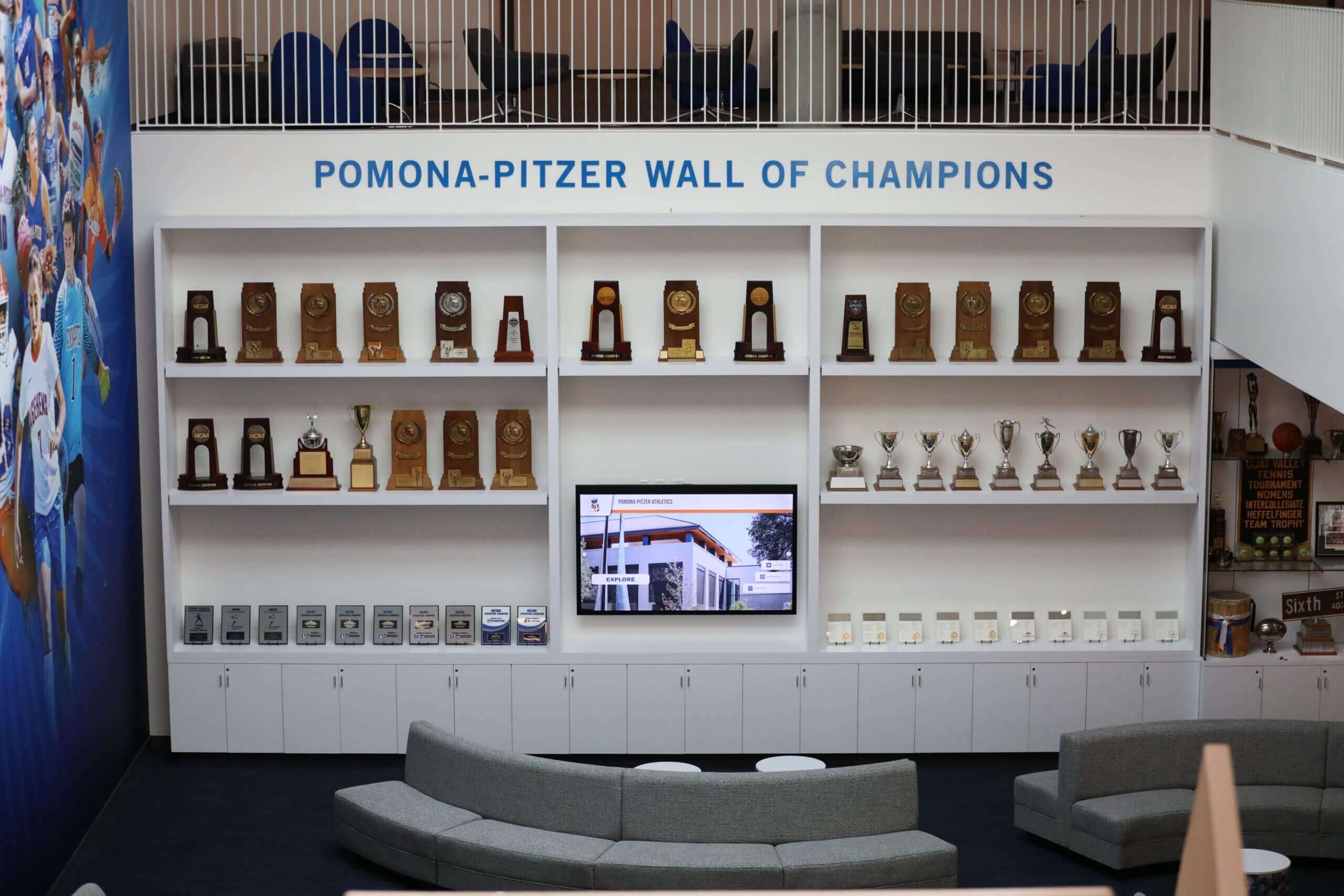
Specialized cases maximize difficult architectural spaces or create signature installations reflecting institutional identity. Corner cases utilize typically wasted 90-degree wall junctions, peninsula displays create focal points in open areas, and custom designs incorporate school colors, mascots, or architectural elements unique to specific facilities.
Custom trophy cases cost 40-150% more than standard units but deliver distinctive recognition environments impossible with off-the-shelf products. Organizations planning major renovations or new construction often integrate custom trophy cases into architectural specifications from project inception.
Modern Digital Recognition Systems
Digital displays represent a fundamentally different approach to achievement recognition, replacing or supplementing physical trophy storage with interactive touchscreen platforms showcasing unlimited content.
Interactive Touchscreen Displays
Purpose-built recognition platforms like those from Rocket Alumni Solutions combine commercial-grade touchscreen hardware with specialized content management software designed specifically for educational recognition. These systems accommodate thousands of trophies, awards, athlete profiles, team photographs, and achievement documentation without physical space limitations.
Digital systems typically involve 43 to 75-inch touchscreen displays, wall-mounted installations similar to flat-panel televisions, cloud-based content management accessible from any device, and web integration extending recognition access beyond physical campus locations. Initial costs range from $8,000 to $25,000 depending on screen size, features, and content migration assistance—comparable to mid-range traditional trophy case installations but delivering unlimited capacity and engagement capabilities physical cases cannot match.
Hybrid Physical-Digital Solutions
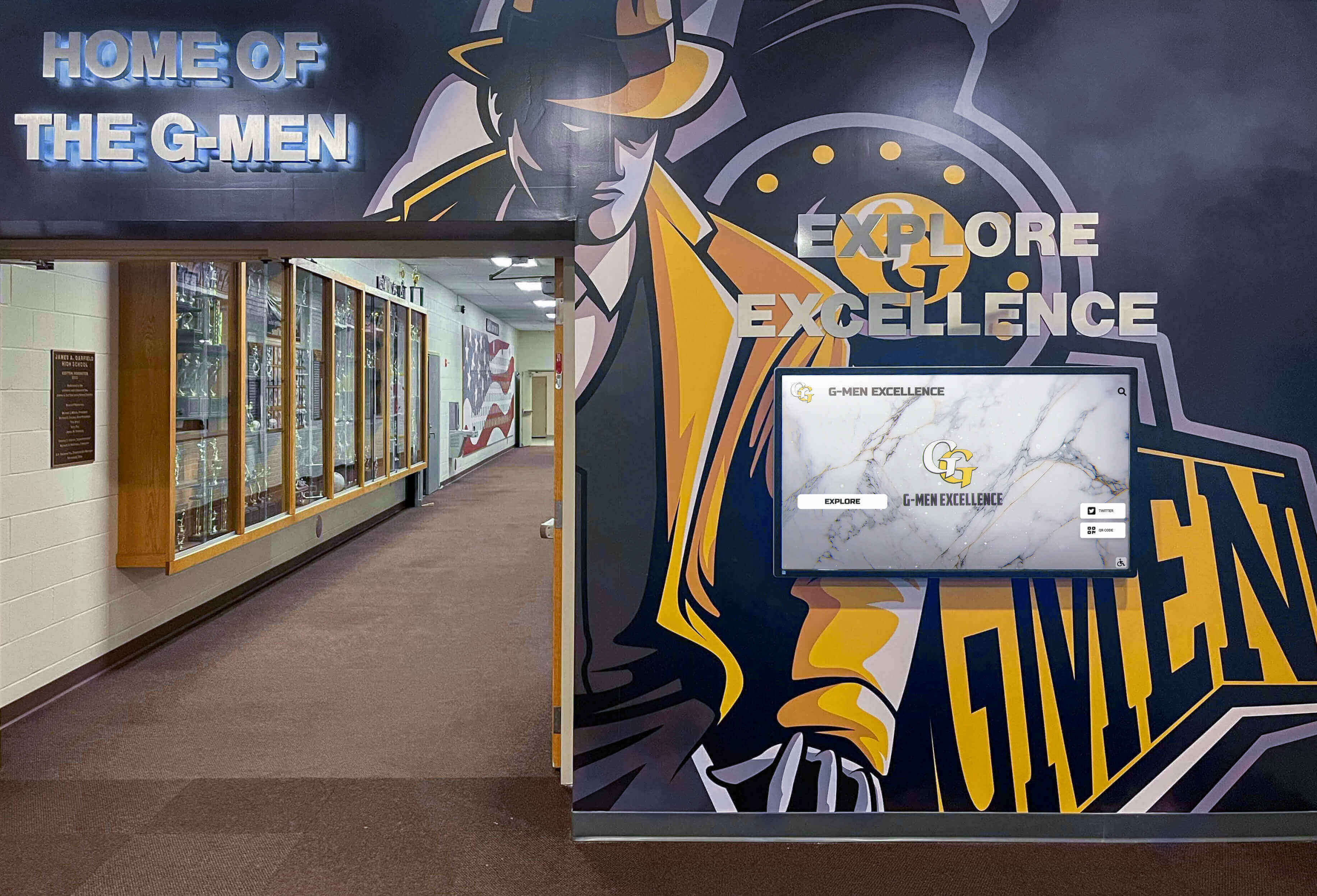
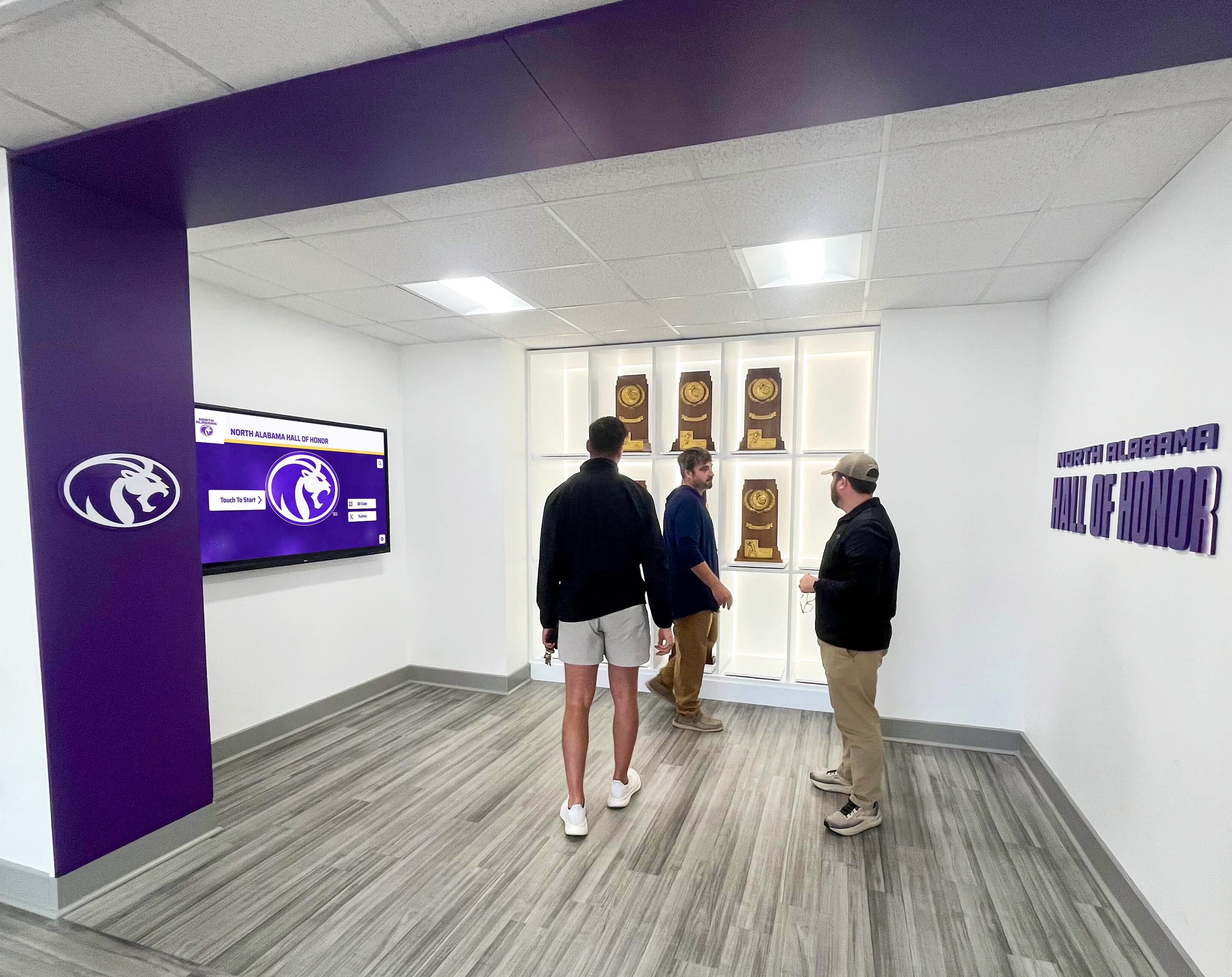
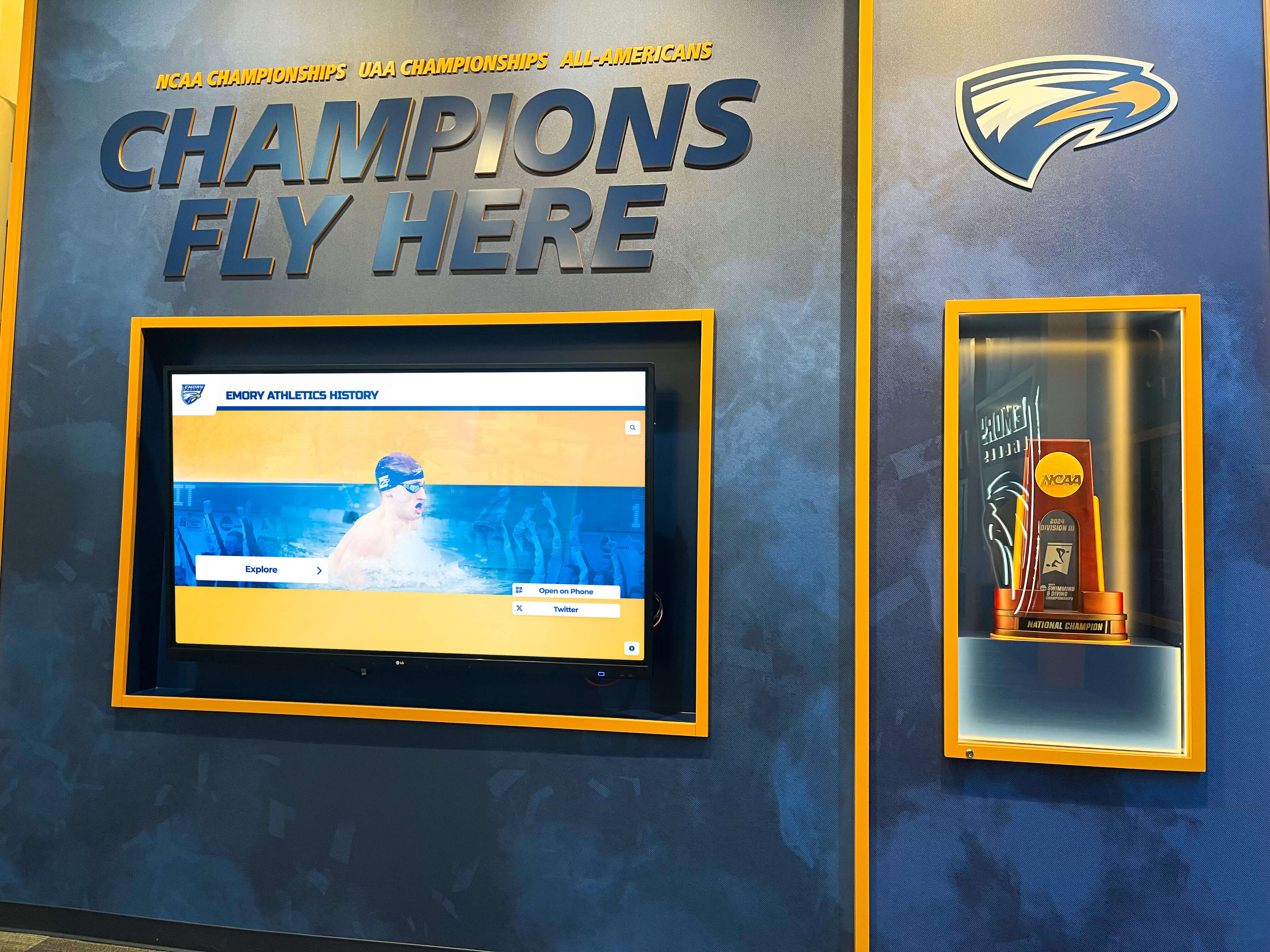
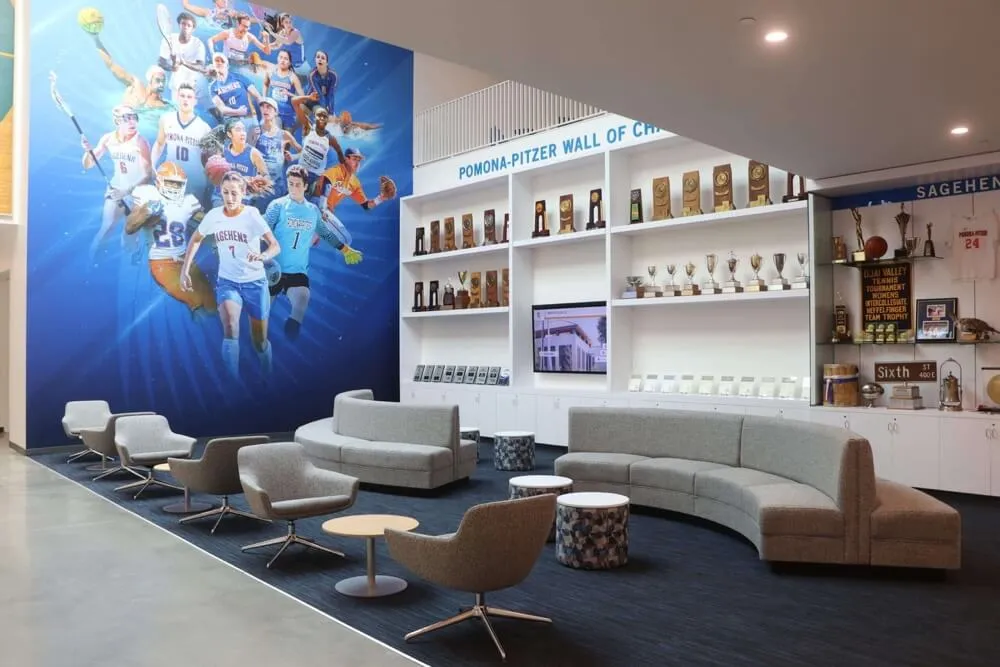
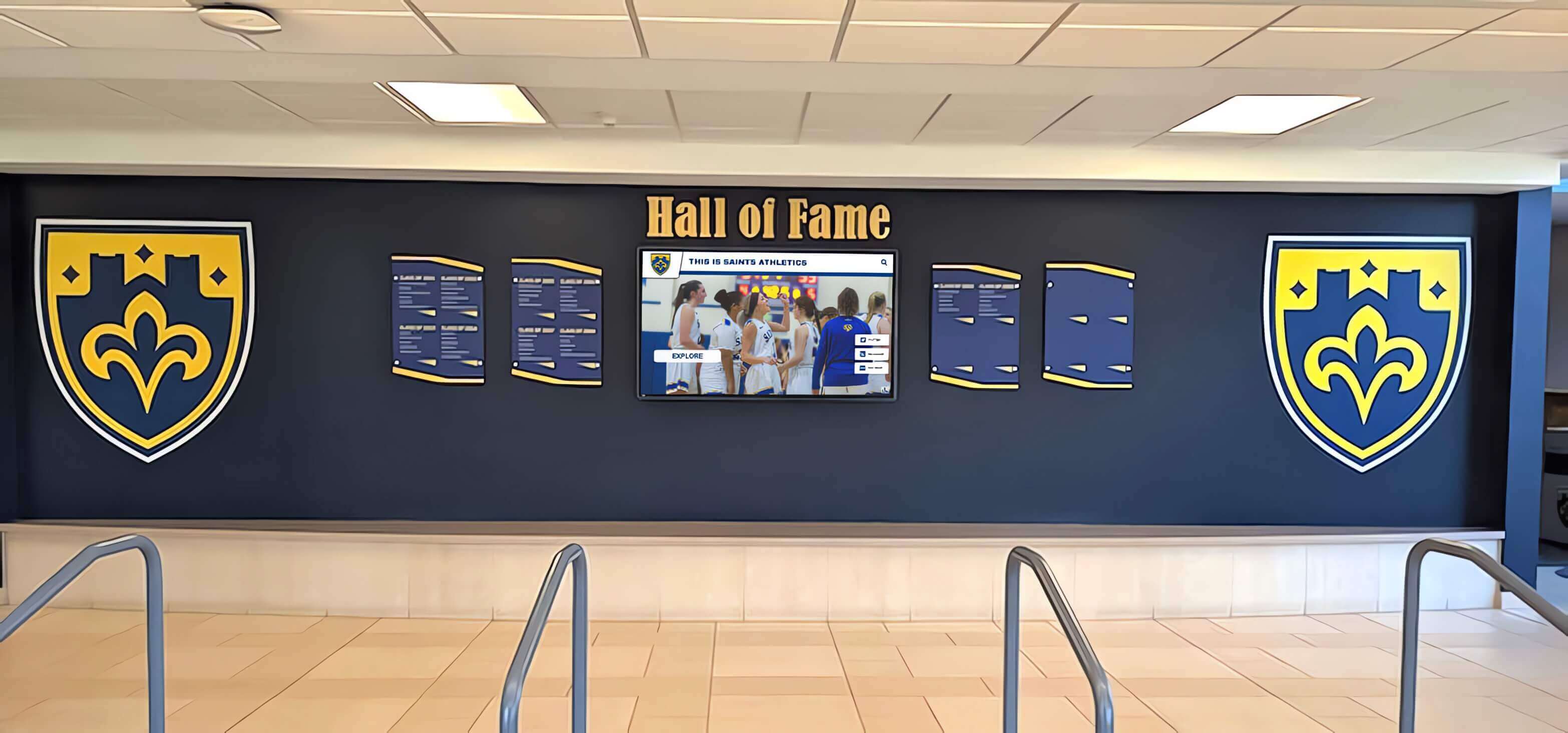
Many schools implement combined approaches maintaining select physical trophy display while transitioning comprehensive recognition to digital platforms. Hybrid installations might feature traditional cases showcasing the most prestigious awards—state championships, national titles, historic first achievements—adjacent to digital displays providing access to complete trophy collections spanning decades.
This approach preserves ceremonial aspects valued by traditionalists while solving practical capacity limitations and improving engagement through rich storytelling capabilities. For institutions exploring digital trophy case options, hybrid strategies offer evolutionary transitions rather than disruptive replacements of existing recognition traditions.
Critical Specifications: Evaluating Trophy Cases Systematically
Effective trophy case evaluation requires understanding key specifications affecting functionality, longevity, and total ownership costs.
Construction Materials and Quality
Material selection dramatically impacts appearance, durability, and maintenance requirements over decades of use.
Frame Materials
Trophy case frames utilize several primary materials with distinct characteristics:
Aluminum frames dominate commercial installations due to corrosion resistance, lightweight construction, powder-coat finish durability, and lower cost compared to hardwood. Quality aluminum cases last 20-30+ years with minimal maintenance. Budget aluminum cases use thinner extrusions (less than 0.125 inches) that dent easily and flex under glass weight, while commercial-grade specifications employ 0.150-0.200 inch extrusions providing superior rigidity.
Hardwood frames deliver premium aesthetics but require higher maintenance preventing moisture damage and finish degradation. Oak, maple, and cherry remain popular species, with stained and sealed finishes protecting wood surfaces. Quality hardwood cases cost 30-60% more than comparable aluminum units but create warm, traditional appearances some schools prefer. Expect 15-25 year functional lifespans before refinishing becomes necessary.
Steel frames appear in economy cases targeting budget-conscious buyers. While structurally sound, steel requires powder coating or paint preventing corrosion. Finish chips expose underlying steel to oxidation, creating rust problems particularly in humid environments. Unless properly maintained, steel cases deteriorate faster than aluminum or hardwood alternatives.
Glass Quality and Safety
Trophy case glazing affects both safety and preservation:
Tempered safety glass meets building codes for institutional installations, shattering into small granules rather than dangerous shards if broken. Standard 1/4-inch tempered glass suits most applications, while high-traffic areas benefit from 3/8-inch thickness providing additional impact resistance. Tempered glass costs 40-70% more than standard annealed glass but prevents liability issues if breakage occurs.
Acrylic glazing offers shatter resistance at lower cost and weight compared to glass but scratches easily during cleaning and yellows over time with UV exposure. Schools with security concerns or installations near playing areas sometimes specify acrylic despite aesthetic compromises, as it withstands impacts that would shatter glass.
UV-filtering glass prevents ultraviolet light damage to ribbons, photographs, and trophy finishes. UV-filtering coatings add 20-40% to glazing costs but prove essential for cases in areas with natural light exposure. Standard glass blocks virtually no UV radiation—within five years, trophy ribbons fade noticeably in unfiltered displays, while UV-protected cases preserve appearance for decades.
Anti-reflective coatings improve visibility by reducing glare from overhead lighting or windows. While adding 25-50% to glass costs, anti-reflective treatments dramatically improve viewing experience in challenging lighting conditions common in school hallways.
Interior Configuration and Capacity
Internal design determines how many trophies cases actually accommodate versus theoretical capacity manufacturers claim.
Adjustable Shelving Systems
Quality trophy cases incorporate fully adjustable shelving accommodating varying trophy heights without wasted space. Shelf standards should appear every 1-2 inches vertically, allowing precise positioning. Commercial-grade shelf clips support 40-60 pounds per shelf, while residential-grade hardware limits loads to 15-25 pounds—a critical distinction when displaying large championship trophies.
Shelf depth varies by case overall depth, typically 14-20 inches in standard installations. Variable-depth shelving within single cases—perhaps 18-inch lower shelves for large trophies and 10-inch upper shelves for smaller awards—maximizes capacity efficiency but adds 15-30% to case costs.
Interior Lighting Design
Professional trophy case lighting dramatically affects display effectiveness:
LED strip lighting dominates modern installations due to energy efficiency, minimal heat generation, and 50,000+ hour lifespans. Quality LED systems produce 400-600 lumens per linear foot with color temperatures around 3000-4000K creating warm, inviting illumination without harsh institutional feel. Budget LED strips produce uneven lighting with visible individual diodes, while commercial-grade diffused strips create smooth, professional illumination.
Track lighting systems offer adjustable directional spotlighting but generate more heat than LED strips and consume significantly more electricity. Track systems work well for highlighting specific premium trophies but prove less effective for general case illumination.
Lighting controls improve functionality and energy efficiency. On/off switches represent minimum requirements, while dimmer controls, motion sensors, and timer systems reduce electricity consumption and extend LED lifespans by preventing unnecessary operation during unoccupied periods.
Security and Access
Trophy case locking mechanisms balance security needs against accessibility for updates and maintenance.
Standard key locks suffice for most school applications but require key management as staff changes over years. Commercial-grade cam locks with restricted keyways prevent unauthorized key duplication—an important consideration for cases housing valuable awards. Budget cases use residential-grade locks that provide minimal security.
Electronic access systems create audit trails documenting who opened cases when, useful for high-value collections or accountability requirements. Electronic locks cost $200-$500 more per case but eliminate key management challenges while preventing unauthorized access more effectively than traditional locks.
Hinged versus sliding doors affect access convenience. Hinged doors provide wide openings simplifying trophy arrangement but require clearance space in front of cases. Sliding glass panels save space but limit access to one case section at a time, complicating maintenance when multiple trophies need attention simultaneously.
Pricing Analysis: Understanding Trophy Case Costs
Trophy case prices vary tremendously based on size, materials, features, and quality levels. Understanding cost drivers helps evaluate whether pricing reflects genuine value or excessive margins.
Entry-Level Trophy Cases ($500-$2,000)
Budget trophy cases target organizations with minimal budgets prioritizing cost above all other considerations.
What You Get:
- Basic aluminum or steel frame construction
- Standard annealed glass (not tempered)
- Fixed or limited-adjustment shelving
- Minimal or no integrated lighting
- Residential-grade locks and hardware
- Freestanding designs requiring no installation
- Limited warranty coverage (typically 1 year)
Appropriate Applications:
Entry-level cases suit temporary displays, low-traffic areas, or situations where trophies themselves hold minimal monetary value. Youth sports organizations, community centers with tight budgets, or temporary recognition during facility renovations represent reasonable uses. These cases prove inadequate for permanent institutional installations in schools where displays should last 15-25+ years.
Long-Term Considerations:
Budget cases often require replacement within 5-10 years as hardware fails, finishes deteriorate, and construction proves inadequate for continuous institutional use. Total cost of ownership frequently exceeds buying quality cases initially when accounting for premature replacement needs.
Mid-Range Trophy Cases ($2,000-$6,000)
Commercial-grade cases at mid-market pricing deliver balance between cost and quality suitable for most school applications.
What You Get:
- Quality aluminum frames with durable powder-coat finishes
- Tempered safety glass meeting institutional building codes
- Fully adjustable interior shelving systems
- Integrated LED lighting with adequate illumination
- Commercial-grade locking mechanisms
- Professional installation (sometimes included, sometimes additional)
- 3-5 year warranties covering defects and hardware failures
Appropriate Applications:
Mid-range cases represent the practical sweet spot for most high schools, community colleges, and athletic programs balancing budget constraints against quality expectations. These cases deliver 20+ year functional lifespans with basic maintenance, making them cost-effective over long ownership periods.
Capacity and Size Options:
Standard configurations include 48-72 inch wall-mounted cases ($2,500-$4,000), 72-96 inch large wall units ($3,500-$5,500), and freestanding floor cases in various sizes ($2,000-$5,000). Multiple cases create comprehensive recognition walls within reasonable budgets.
Premium Trophy Cases ($6,000-$15,000+)
High-end trophy cases incorporate premium materials, custom features, and architectural integration creating signature recognition environments.
What You Get:
- Premium hardwood frames or architectural aluminum with custom finishes
- High-quality tempered glass with UV filtering and anti-reflective coatings
- Advanced lighting systems with controls and customization
- Custom dimensions matching specific architectural requirements
- Enhanced security features including electronic access systems
- Professional design consultation and installation
- Extended warranties (5-10 years) with maintenance support
Appropriate Applications:
Premium cases suit major university athletic facilities, professional sports hall of fame installations, corporate headquarters recognition, and schools where recognition displays serve as architectural focal points justifying higher investment. These installations deliver distinctive aesthetics and functionality impossible with standard products.
Custom Design Elements:
Premium budgets enable integration of school colors, mascot imagery, engraved nameplates, architectural detailing matching facility aesthetics, and unique configurations addressing specific space challenges. Organizations exploring college athletics hall of fame displays often invest at premium levels creating marquee recognition environments reflecting institutional pride.
Digital Recognition Systems ($8,000-$25,000+)
Digital platforms represent different value propositions than traditional cases, requiring distinct evaluation frameworks.
Initial Implementation Costs:
- 43-55 inch commercial touchscreen display: $3,000-$6,000
- 65-75 inch large-format display: $6,000-$12,000
- Content management platform license: $2,000-$5,000 (or annual subscription)
- Professional installation and configuration: $1,000-$3,000
- Content migration and training: $1,500-$4,000
- Total initial investment: $8,000-$25,000+
Ongoing Annual Costs:
- Platform subscription/licensing: $1,200-$3,000
- Content management (staff time): $500-$1,500
- Electricity and maintenance: $300-$800
- Technical support services: $300-$1,000
- Total annual operational costs: $2,300-$6,300
Value Comparison:
While digital systems cost more than adding a few traditional trophy cases, they provide unlimited recognition capacity, comprehensive multimedia storytelling, interactive exploration, global accessibility, and simplified content management. Schools implementing athletic director recognition programs increasingly favor digital solutions despite higher upfront costs due to superior long-term value and engagement effectiveness.
Hidden Costs: Total Ownership Beyond Purchase Price
Trophy case purchase prices represent only partial total costs. Comprehensive budget planning accounts for additional expenses affecting true investment requirements.
Installation and Facility Preparation
Physical trophy cases require professional installation and potential facility modifications:
Wall Mounting Labor
Professional installation ensures cases mount securely and level. Mounting large wall cases typically costs $500-$1,500 per unit depending on wall construction, reinforcement needs, and complexity. DIY installation saves money but risks improper mounting creating safety hazards or code violations.
Electrical Work
Lighted trophy cases require electrical connections unless using battery-powered LED systems. Electrician services to install dedicated circuits or extend existing wiring add $400-$2,000 depending on case distance from existing electrical panels and local code requirements.
Wall Reinforcement
Large trophy cases loaded with awards weigh 400-800+ pounds. Standard drywall on wood or metal studs cannot support this weight safely—wall reinforcement with blocking, structural supports, or mounting to concrete/masonry becomes necessary. Reinforcement work costs $500-$3,000 depending on scope and building construction type.
Facility Modifications
Trophy case installation may require painting, flooring protection or replacement, ceiling modifications for lighting integration, or other finish work adding $500-$3,000 to total project costs. Existing facility conditions significantly affect whether minimal touch-up or substantial renovation becomes necessary.
Ongoing Maintenance and Operation
Long-term ownership involves recurring costs beyond initial purchase and installation.
Cleaning and Maintenance
Trophy case glass requires weekly cleaning in high-traffic areas maintaining professional appearance. Large recognition walls with 4-6 cases require 2-3 hours weekly cleaning time valued at $25-60 depending on whether custodial staff perform work or athletic administrators handle maintenance. Annual cleaning labor costs $1,300-$3,100 for extensive installations.
Lighting Replacement
LED systems last 50,000+ hours (10-15 years continuous operation), but eventual replacement becomes necessary. LED strip replacement costs $100-$300 per case every 10-15 years. Traditional fluorescent or incandescent lighting requires more frequent replacement (every 2-3 years) at similar costs per occurrence—dramatically higher total expense over time.
Lock and Hardware Service
Locks, hinges, and case hardware eventually require service or replacement. Budget $50-$200 annually for hardware maintenance across multiple cases, with periodic lock replacement costing $100-$400 per case every 10-15 years as mechanisms wear or keys become lost requiring re-keying.
Trophy Restoration
Displayed trophies deteriorate over time from dust accumulation, metal tarnishing, and component degradation. Professional trophy cleaning and restoration costs $15-$50 per trophy, with large collections requiring periodic attention. Many schools implementing trophy rotation programs coordinate restoration when moving awards between display and storage.
Capacity Expansion Costs
Trophy collections grow continuously while case capacity remains fixed—eventual expansion becomes necessary for most schools.
Adding Additional Cases
When current cases fill, schools face decisions about expansion. Adding matching cases costs $2,500-$6,000+ per unit including installation. Over 20-30 years, many schools install 2-3 expansion cycles doubling or tripling initial trophy case investments as achievement collections grow beyond original capacity projections.
Alternative Solutions
Some schools reach points where continued physical case expansion becomes impractical due to space limitations or budget constraints. At this stage, transitioning to digital trophy archives provides unlimited capacity without endless case additions, though this involves additional investment in digital infrastructure.
Installation Requirements: Essential Considerations Before Purchasing
Successful trophy case installation requires understanding facility requirements and potential constraints affecting placement and functionality.
Structural Requirements
Trophy cases impose significant loads on walls and floors requiring adequate structural support.
Wall Loading Capacity
A fully loaded 72-inch wall-mounted trophy case weighs 600-1,000 pounds depending on construction materials and trophy collection density. Standard residential construction (1/2-inch drywall on 16-inch-center wood studs) cannot safely support this weight without reinforcement.
Proper mounting requires installing case mounting brackets into solid blocking spanning multiple wall studs, mounting directly to concrete or masonry walls, or reinforcing wall framing with additional structural supports. Failing to address wall loading capacity creates serious safety hazards if cases pull away from walls.
Floor Loading for Freestanding Cases
Large freestanding trophy cases concentrate 400-800 pounds on small footprints. While most institutional floor structures easily support this loading, suspended floors over basements, floors over mechanical spaces, or older buildings may require engineering evaluation confirming adequate capacity before installing heavy freestanding cases.
Electrical Infrastructure
Lighted trophy cases require electrical power supplied through several approaches:
Hardwired Connections
Permanent electrical connections provide clean installations without visible cords but require licensed electrician services installing dedicated circuits or extending existing wiring. Electrical codes typically require switched control allowing lights to be turned off, with switches located near case access points.
Plug-Connected Systems
Some trophy cases use standard electrical cords plugging into nearby outlets. While avoiding hardwiring costs, visible cords create aesthetic compromises and potential safety issues if cords cross walkways creating tripping hazards. Ensure adequate electrical outlets exist within 6 feet of planned case locations before ordering plug-connected cases.
Battery-Powered LED Systems
Battery-powered LED lighting eliminates electrical installation requirements entirely. Quality battery systems operate 6-12 months per battery set, with replacement costs around $20-$40 annually. While convenient for retrofit situations, battery systems require ongoing maintenance that hardwired installations avoid.
Space and Clearance Requirements
Proper trophy case placement requires adequate space for installation, viewing, and accessibility compliance.
Installation Clearance
Wall-mounted cases require temporary clearance for installation crews maneuvering large glass panels and frame sections. Hallway installations work best during summer months or breaks when students aren’t present and temporary hallway closures don’t disrupt school operations. Plan 10-15 feet clear space around installation areas during construction.
Viewing Distance and Accessibility
ADA regulations require minimum 36-inch clear width in hallways for wheelchair access. Protruding trophy cases that reduce hallway width below code minimums create compliance issues. Measure existing hallway widths carefully before specifying case depths, ensuring adequate clearance remains after installation.
Optimal viewing distance for trophy cases is 4-6 feet—closer viewing allows reading plaques and seeing details, while excessive distance makes identifying individual awards difficult. Consider hallway width and typical traffic patterns when positioning cases, placing them where viewers can pause without blocking flow.
Door and Window Proximity
Avoid mounting trophy cases immediately adjacent to doors where opening doors might strike cases or glass panels. Similarly, placement near windows exposes trophies to direct sunlight accelerating deterioration despite UV-filtering glass. Maintain 24+ inch clearances from doors and minimize window proximity when possible.
Traditional Trophy Cases vs. Digital Recognition: Comparative Analysis
Schools shopping for recognition solutions increasingly evaluate digital alternatives alongside traditional physical trophy cases. Understanding comparative strengths and limitations helps determine which approach better serves institutional needs.
Capacity and Scalability
Physical trophy cases have finite capacity determined by interior dimensions and shelf configurations. A large wall case holds 40-60 trophies maximum, requiring additional case purchases as collections grow. Schools earning 30-50 trophies annually fill standard cases within 12-18 months, creating continuous expansion cycles.
Digital recognition systems accommodate unlimited content. Single touchscreen displays showcase hundreds or thousands of trophies, awards, athlete profiles, team photographs, and achievement documentation without physical space constraints. Adding new achievements involves uploading content rather than purchasing additional hardware or modifying facilities. For institutions developing softball awards recognition or other ongoing programs, unlimited capacity prevents recognition limitations as programs grow.
Information Depth and Storytelling
Traditional trophy cases display physical awards with minimal context—perhaps small engraved plaques identifying achievement type, year, and participant names. Viewers see what was won but learn little about circumstances, significance, or individual stories behind achievements.
Digital platforms deliver rich multimedia recognition including high-resolution trophy photography, complete achievement details and historical context, individual athlete or team profiles, season statistics and records, championship game recaps and highlights, video clips showcasing performances, and related achievements creating comprehensive narratives. This depth transforms recognition from simple display to engaging storytelling creating emotional connections impossible with physical trophies alone.
Engagement and Interaction
Physical trophy cases offer passive viewing. Visitors walk past displays, perhaps pausing briefly to look at awards, but interaction remains limited to visual observation from outside locked cases. Average engagement duration is 20-40 seconds as people glance at displays while passing.

Digital touchscreen systems enable active exploration through searchable databases finding specific achievements instantly, filtering by sport, year, achievement type, or individual, related content discovery connecting viewers to additional relevant achievements, detailed information drill-down accessing full stories behind awards, and personal customization following specific interests. Interactive engagement averages 5-8 minutes as visitors actively explore content rather than passively viewing, creating substantially deeper connections and greater recognition impact. Schools implementing lacrosse hall of fame programs and other sport-specific recognition find digital interactivity dramatically increases student engagement with athletic history.
Accessibility and Reach
Traditional trophy cases serve only people physically present at campus locations during facility access hours. Alumni living across the country or internationally cannot view recognition without traveling to campus. Parents unable to attend events miss seeing their students’ achievements displayed.
Digital recognition extends globally through web accessibility enabling anyone anywhere to explore achievements, mobile applications providing smartphone and tablet access, social media integration spreading recognition to broader audiences, QR code connections bridging physical and digital experiences, and 24/7 availability unconstrained by facility hours. This expanded reach creates recognition value for entire communities rather than limiting celebration to campus visitors.
Maintenance and Content Management
Physical trophy case maintenance requires unlocking cases to physically rearrange trophies when adding new awards, periodic glass cleaning maintaining professional appearance, trophy polishing preventing tarnishing, hardware maintenance ensuring locks and hinges function properly, and replacement of damaged or deteriorated awards. Adding new trophies involves coordinating key access, physically accessing cases, rearranging existing awards to create space, cleaning trophies and positioning them properly, and updating associated plaques or labels—a process consuming 30-60 minutes per addition.
Digital content management operates through cloud-based platforms accessible from any computer or mobile device, bulk content imports adding multiple achievements simultaneously, template systems ensuring consistent professional presentation, instant publication making new content immediately visible, and remote updates requiring no physical facility access. Adding new digital achievements takes 5-10 minutes uploading photos and entering information through web forms—an 80% time reduction compared to physical trophy case updates.
Initial Investment and Long-Term Costs
Traditional trophy cases involve lower initial purchase prices ($2,000-$6,000 per case) but ongoing capacity expansion costs as collections grow. Over 20 years, schools typically install 3-5 expansion cycles, totaling $15,000-$35,000 in case purchases and installation plus $3,000-$8,000 in maintenance and operation—total 20-year cost $18,000-$43,000.
Digital recognition systems require higher upfront investment ($8,000-$25,000) but eliminate capacity expansion needs. Twenty-year operational costs include annual platform subscriptions ($24,000-$60,000), electricity and minor maintenance ($6,000-$16,000), content management staff time ($10,000-$30,000)—total 20-year cost $48,000-$131,000.
While digital systems cost more over extended periods, they deliver unlimited capacity, comprehensive recognition, interactive engagement, and global accessibility impossible with physical cases. Organizations evaluating donor wall recognition programs and similar initiatives increasingly conclude that digital platforms provide superior return on investment despite higher absolute costs when considering total value delivered.
Vendor Selection: Choosing Reliable Trophy Case Suppliers
Trophy case quality and installation success depend significantly on vendor selection. Systematic evaluation helps identify reliable suppliers delivering value versus those providing inferior products or problematic service.
Vendor Evaluation Criteria
Assess potential suppliers across multiple dimensions affecting purchase satisfaction.
Industry Experience and Specialization
Trophy case specialists focusing on educational and athletic recognition understand institutional needs better than general furniture or display case vendors adapting products from other markets. Seek suppliers with 10+ years serving schools and athletic programs, demonstrated understanding of educational budgets and procurement processes, and relevant portfolio examples from similar institutions.
Product Quality and Construction Standards
Request detailed specifications documenting frame materials and thickness, glass types and safety ratings, shelving load capacities, locking mechanisms and security features, lighting systems and electrical certifications, and finish durability and warranty coverage. Quality vendors provide comprehensive documentation; evasive responses to specification requests signal potential problems.
Installation Services and Support
Understand what installation services vendors include versus additional charges: professional installation by vendor crews versus customer self-installation, electrical work coordination and contracting, facility modification management, project timeline and completion guarantees, and post-installation support addressing issues or adjustments. Some vendors quote attractive case prices but charge separately for critical installation services, inflating total costs above initially apparent pricing.
References and Track Record
Contact existing customers evaluating vendor performance: satisfaction with product quality and durability, installation professionalism and timeline adherence, responsiveness to questions or problems, warranty support when issues arose, and likelihood of using vendor again for future projects. References provide insights vendor marketing materials omit.
Warranty Coverage and Terms
Warranty protection varies dramatically between suppliers. Quality vendors offer 3-5 year comprehensive warranties covering defects in materials and workmanship, hardware replacement for failed components, finish repairs addressing peeling or deterioration, and glass replacement if manufacturing defects cause breakage. Budget suppliers provide minimal 1-year warranties with extensive exclusions limiting practical coverage.
Procurement Strategies
Strategic purchasing approaches optimize value within budget constraints.
Competitive Bidding
Schools following public procurement requirements often solicit multiple bids comparing vendors systematically. Request detailed written proposals specifying exact products offered (models, dimensions, materials), complete installation services included, project timeline from order to completion, total pricing with itemized costs, and warranty terms and support commitments. Comparing detailed proposals reveals significant differences hidden by simple price quotes.
Volume Discounts and Multi-Phase Projects
Vendors often negotiate pricing for larger orders. Schools planning extensive recognition installations might receive 10-20% discounts ordering multiple cases simultaneously compared to purchasing individually. Alternatively, phased implementation buying initial cases immediately and additional units in future years as budgets allow prevents over-extending current resources while establishing vendor relationships supporting future phases.
Educational Purchasing Cooperatives
Many states operate purchasing cooperatives providing pre-negotiated contracts with vetted suppliers at favorable pricing. Cooperative contracts eliminate independent bidding requirements while delivering competitive pricing through collective purchasing power. Check whether your state or region offers cooperative purchasing options for trophy cases and display equipment.
Alternative Solutions: When Traditional Trophy Cases Don’t Fit Your Needs
Not every recognition challenge requires traditional physical trophy cases. Understanding alternative approaches expands solution options.
Space-Constrained Environments
Schools lacking adequate wall space or hallway clearance for traditional cases explore alternatives maximizing limited areas.
Vertical Recognition Walls
Rather than protruding display cases, wall-mounted plaques, engraved panels, or printed graphics create high-capacity recognition consuming minimal depth. Combined with strategic trophy photography, recognition walls celebrate achievements comprehensively in spaces where traditional cases cannot physically fit. Organizations implementing championship banner programs often integrate trophy recognition into larger athletic celebration environments.
Architectural Integration
New construction or major renovations enable built-in recognition niches, recessed display areas, or custom architectural elements eliminating protruding cases while creating distinctive recognition environments. While requiring design coordination during planning phases, architectural integration delivers results impossible through retrofit case installation in existing facilities.
Digital Displays
Interactive touchscreen systems occupy minimal wall space (similar to flat-panel televisions) while providing unlimited recognition capacity. A 55-inch digital display requires approximately 50 inches horizontal by 30 inches vertical wall area—less than half the space of comparable-capacity traditional trophy case—while showcasing hundreds of awards through searchable digital content.
Budget Limitations
Organizations facing severe budget constraints explore cost-effective recognition approaches delivering meaningful achievement celebration within limited resources.
Selective Physical Display
Rather than attempting to display every trophy earned, feature only the most significant achievements—state championships, national recognition, school records—in limited physical cases while documenting complete collections through photography accessible via school websites or printed programs. This approach honors all achievements while focusing scarce resources on meaningful displays rather than exhaustive case installations.
Rotating Displays
Modest case capacity serves larger collections through systematic rotation. Display current-year achievements prominently, rotate 2-5 year achievements through available space, and store older trophies appropriately while ensuring periodic featured display during anniversary years. Rotation requires more management but maximizes limited case capacity.
Virtual Recognition Platforms
Web-based achievement databases provide comprehensive recognition without physical display infrastructure investment. While lacking tangible presence of trophy cases, virtual platforms offer accessibility advantages reaching students, families, and alumni globally at minimal cost. Many schools implement both modest physical displays and extensive virtual recognition creating comprehensive programs within budget constraints.
Modernization and Enhanced Engagement
Schools with existing traditional trophy cases seeking improved engagement without complete replacement explore enhancement strategies.
Digital Augmentation
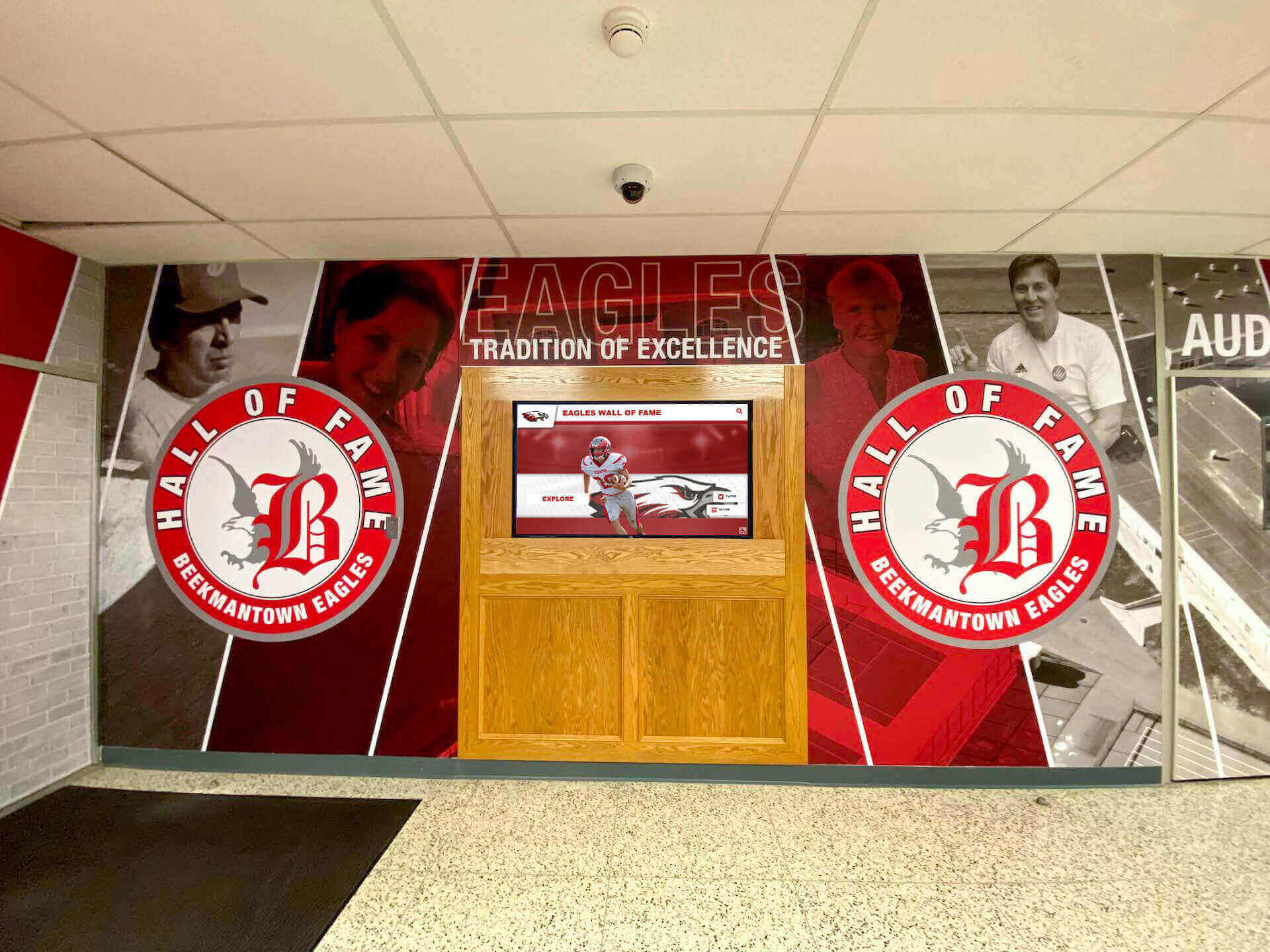
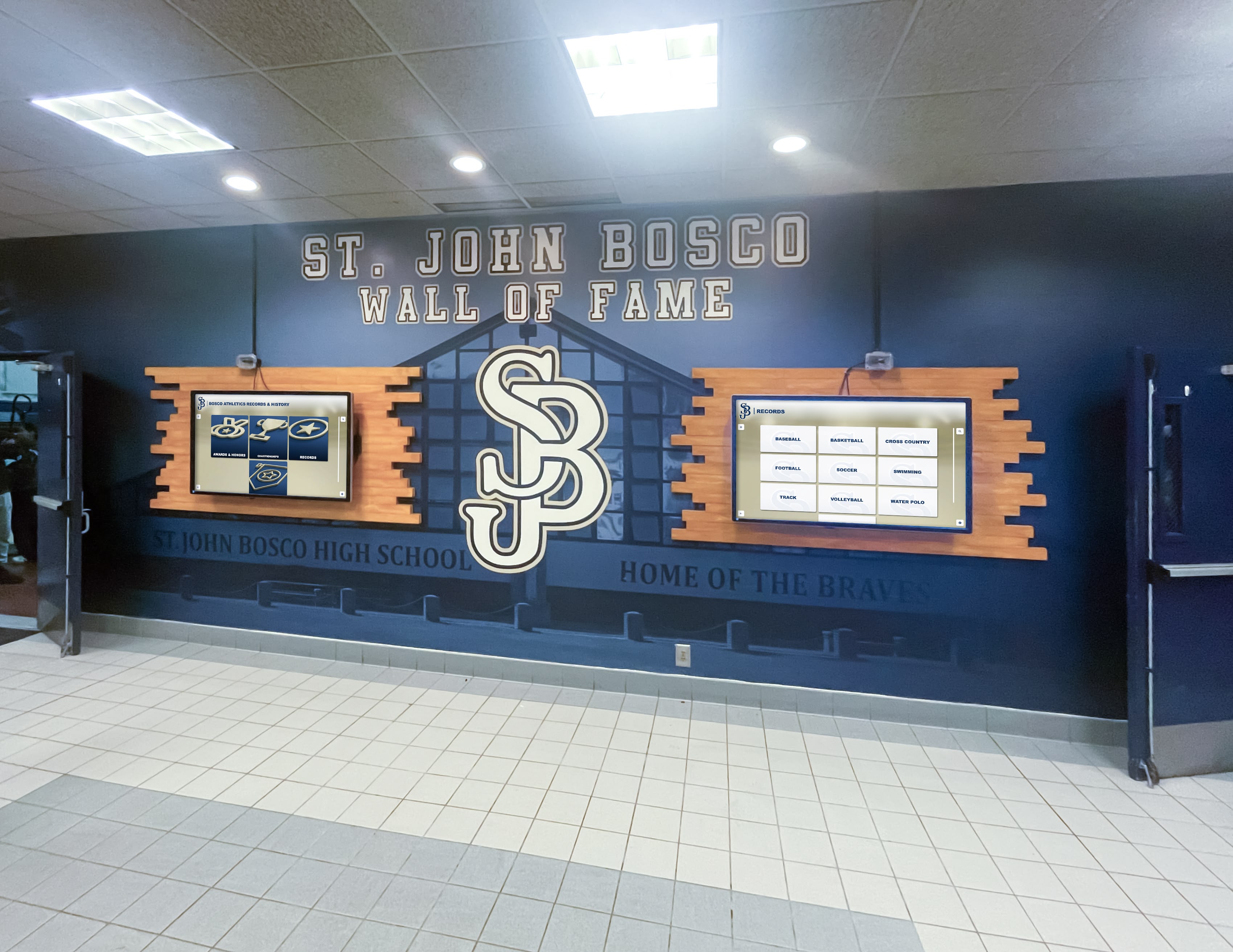
Mount touchscreen displays adjacent to traditional trophy cases providing rich contextual information about displayed awards. Physical trophies answer “what” while digital content explains “who, when, how, and why” through athlete profiles, team rosters, season narratives, and achievement significance. Hybrid approaches preserve existing investments while dramatically improving recognition effectiveness through storytelling capabilities. For institutions exploring alumni networking initiatives, connecting physical displays to rich digital content creates engagement opportunities extending beyond static trophy viewing.
QR Code Connections
Apply QR codes to trophy case glass panels linking to web-based content about displayed awards. Visitors scan codes using smartphones accessing detailed achievement information, video highlights, historical context, and related content enriching recognition without modifying existing cases. QR connections represent low-cost enhancements adding digital depth to traditional displays.
Supplemental Recognition Programs
Traditional trophy cases showcase physical awards while separate programs celebrate achievements in additional formats: social media highlighting recent accomplishments, email newsletters featuring achievement stories, ceremony programs documenting recognition events, and interactive touchscreen kiosks at events providing interactive achievement exploration. Multi-format recognition creates comprehensive programs where trophy cases represent one element within broader celebration ecosystems.
Making Your Trophy Case Decision: Essential Questions to Answer
Effective trophy case purchasing requires answering fundamental questions guiding appropriate solution selection.
Defining Recognition Goals and Priorities
What achievements do you want to celebrate?
Athletic trophies only versus comprehensive recognition including academics, arts, community service, and special honors affects capacity requirements and organization systems. Schools celebrating diverse achievements need flexible display solutions accommodating varied award types and sizes.
Who is your primary audience?
Recognition targeting current students creates different priorities than displays serving returning alumni or community visitors. Student-focused recognition emphasizes current achievements and interactive engagement, while alumni-oriented displays feature historical depth and comprehensive archives.
What does success look like?
Define measurable outcomes: increased school pride evidenced by student surveys, improved alumni engagement reflected in event attendance or donations, enhanced recruitment appeal attracting student-athletes or donors, or simply appropriate honoring of achievements meeting ethical obligations. Clear success definitions guide appropriate investment levels and solution selection.
Assessing Practical Constraints
What space is available?
Measure designated recognition areas carefully, noting available wall space dimensions, hallway widths and clearances, ceiling heights, architectural constraints, and proximity to electrical power and network infrastructure. Space realities constrain solution options regardless of preferences.
What budget is realistic?
Consider both initial capital investment and ongoing operational costs over 10-20 year planning horizons. Trophy case decisions made today affect budgets for decades—ensure total ownership costs align with sustainable resource availability rather than creating future financial burdens.
Who will manage ongoing content updates?
Trophy recognition requires continuous maintenance adding new achievements, maintaining physical displays through cleaning and repairs, updating associated documentation, and managing rotations or archives as collections grow. Ensure adequate staff time and expertise exists supporting selected solutions long-term.
Evaluating Solution Options
Do traditional physical cases meet your needs?
Physical trophy cases work well for schools with adequate space, budgets supporting continuous expansion, collections focused on premium achievements rather than exhaustive documentation, and preferences for traditional tangible recognition over digital alternatives.
Would digital recognition better serve your goals?
Digital platforms excel when space constraints prevent adequate physical display, recognition needs exceed practical physical capacity, comprehensive storytelling matters more than ceremonial trophy presence, global accessibility to distributed communities provides value, or interactive engagement improving connection depth represents priority. Schools implementing digital art gallery programs or similar modern recognition often discover digital approaches deliver superior results despite breaking from traditional methods.
Should you implement hybrid approaches?
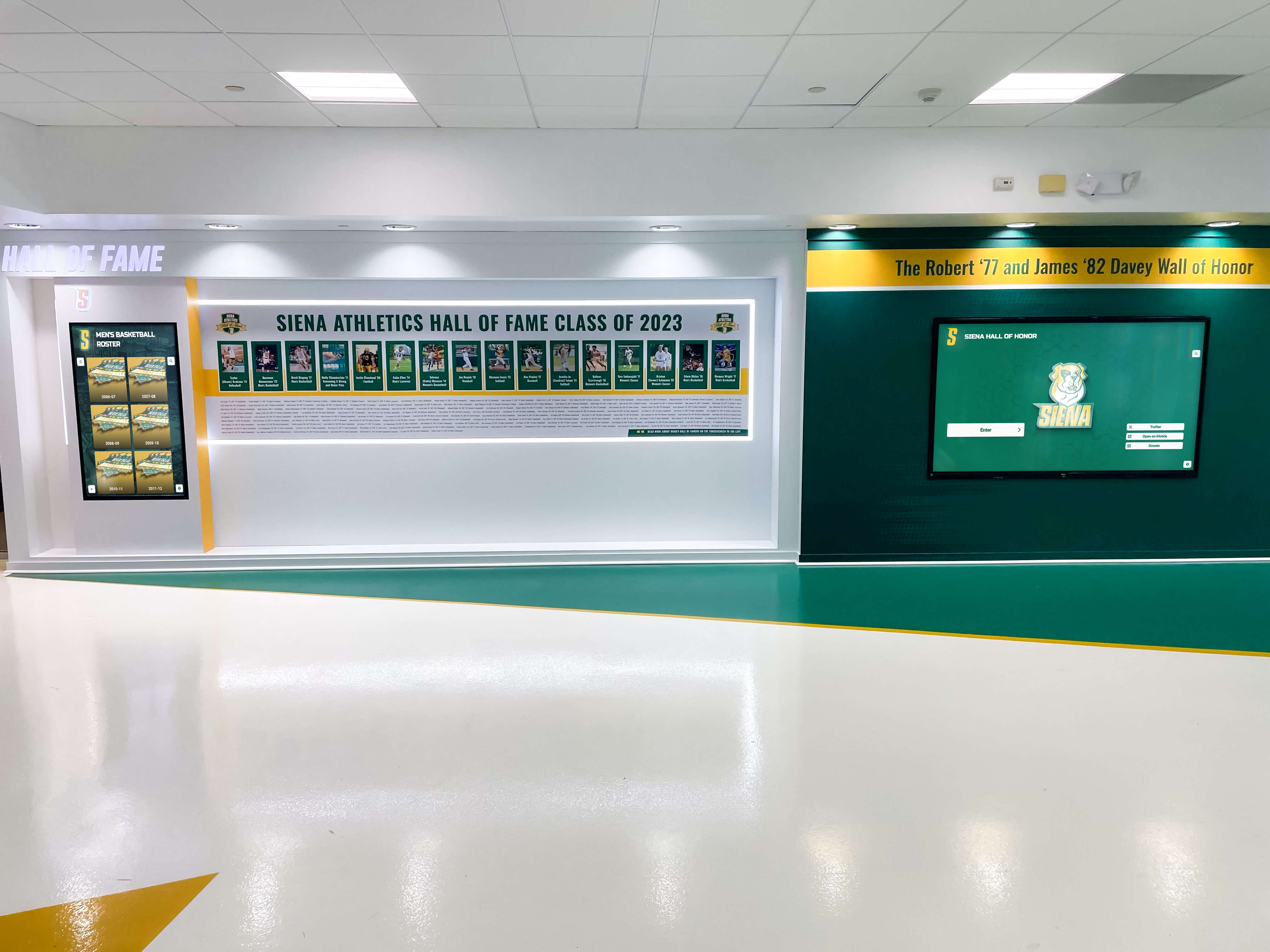
Many schools benefit from combined strategies: selective physical trophy display showcasing most prestigious awards, comprehensive digital recognition presenting complete achievement collections, integrated installations appearing unified rather than disconnected, and evolutionary transitions respecting tradition while embracing modern capabilities. Hybrid approaches often deliver optimal results balancing multiple priorities effectively.
Implementation Planning: From Selection to Successful Installation
Purchasing appropriate trophy cases represents only partial project success—effective implementation ensures installations deliver intended results.
Pre-Installation Preparation
Facility Readiness Assessment
Before ordering trophy cases, verify installation locations meet requirements: adequate wall structural support or reinforcement plans, electrical service availability or installation coordination, hallway clearances meeting accessibility codes, appropriate lighting conditions minimizing UV exposure, and climate control preventing extreme temperature or humidity affecting trophy preservation.
Project Timeline Development
Trophy case projects involve multiple phases requiring coordination: vendor selection and purchasing (2-6 weeks), custom manufacturing for non-stock items (4-12 weeks), installation scheduling during appropriate periods (school breaks preferred), electrical and facility modification work (1-3 weeks), and final installation and configuration (1-2 weeks). Realistic timelines prevent disappointment from delayed availability.
Stakeholder Communication
Inform affected constituencies about recognition projects: students understanding new displays celebrate their achievements, alumni learning about enhanced recognition environments, staff trained on content management responsibilities, and facilities personnel coordinating installation access and support.
Professional Installation Management
Quality Control and Acceptance Testing
Verify installations meet specifications and quality standards: cases properly level and securely mounted, glass installation without cracks or defects, lighting systems operating correctly with appropriate illumination, locking mechanisms functioning properly, and overall appearance meeting expectations. Document any deficiencies requiring correction before final payment.
Content Population
Launch new trophy displays with comprehensive initial content rather than empty cases gradually filling over months. Professional trophy photography, accurate achievement documentation, organized presentation by category or chronology, and complete information ensuring recognition credibility create immediate positive impact demonstrating investment value.
Training and Documentation
Ensure staff managing ongoing recognition receive adequate preparation: content management system training for digital platforms, physical case maintenance procedures and schedules, trophy handling and preservation best practices, key management and security protocols, and vendor contact information for support needs. Written procedures maintain consistency as responsible staff changes over years.
Post-Installation Success Factors
Ongoing Content Management
Recognition effectiveness requires keeping displays current: adding new achievements promptly, maintaining accuracy and completeness, rotating content keeping displays fresh, and addressing any errors or outdated information quickly. Establish clear responsibility assignment preventing recognition from becoming neglected over time.
Performance Evaluation
Assess whether trophy case investments deliver intended value: student and alumni engagement levels, achievement celebration effectiveness, space utilization and capacity adequacy, maintenance burden versus expectations, and overall satisfaction with solutions selected. Evaluation informs future recognition decisions while identifying improvement opportunities.
Long-Term Maintenance Planning
Budget and plan for ongoing needs: routine cleaning and care, periodic hardware service, eventual lighting replacement, case repair or refinishing, and capacity expansion as collections grow. Proactive maintenance extends case lifespans while preventing degradation compromising professional appearance.
Frequently Asked Questions
How much should schools budget for trophy case installations?
Most high schools implementing quality recognition displays budget $8,000-$25,000 for comprehensive installations including 2-4 traditional cases or single digital recognition system. This investment provides 15-25 year functional lifespans when properly maintained. Schools with extensive athletic programs or comprehensive recognition across multiple achievement categories may invest $30,000-$60,000 creating signature recognition environments serving institutional needs for decades. Budget minimum $2,500-$4,000 per quality wall-mounted case or $4,000-$7,000 per large freestanding unit when planning traditional installations. Digital recognition systems start around $8,000 for basic implementations and range to $25,000+ for premium large-format displays with comprehensive content migration assistance.
Do trophy cases need to be tempered glass by building code?
Most educational facilities operate under building codes requiring tempered safety glass in areas where human impact might occur. Institutional trophy cases typically fall under these requirements—tempered glass must meet ANSI Z97.1 or CPSC 16 CFR 1201 safety standards for impact resistance. While technically possible to install non-tempered glass in specific low-risk locations, liability concerns make tempered glass universal best practice for school applications. Verify specific code requirements with your facilities manager or building official, but plan on tempered glass specifications when evaluating trophy case purchases. This adds approximately 40-70% to glazing costs compared to standard annealed glass but prevents serious injury risks if breakage occurs.
Can we install trophy cases ourselves or do we need professional installation?
Small freestanding floor cases weighing under 200 pounds and requiring no wall mounting or electrical work can be assembled by competent maintenance staff following manufacturer instructions. However, wall-mounted cases present significant challenges best addressed by professional installers: proper wall reinforcement ensuring adequate load support, secure mounting preventing cases from pulling away from walls, electrical connections requiring licensed electrician services, and final leveling and alignment creating professional appearance. Professional installation costs $500-$1,500 per wall case but prevents safety hazards, code violations, or poor results from improper installation. Many schools discover attempted self-installation ultimately costs more when correcting problems than simply hiring qualified installers initially. Digital touchscreen installations similarly benefit from professional mounting, electrical work, and network configuration ensuring reliable operation.
How long do trophy cases typically last before needing replacement?
Quality commercial-grade trophy cases properly maintained last 20-30+ years before requiring replacement. Aluminum-frame cases with powder-coat finishes and LED lighting represent longest-lasting options, while hardwood cases may need refinishing every 15-20 years but remain structurally sound. Budget-grade cases often require replacement within 8-12 years as hardware fails and finishes deteriorate. Critical maintenance extending trophy case lifespans includes regular glass cleaning preventing buildup requiring aggressive cleaning that damages glass, hardware lubrication ensuring smooth operation, prompt repair of damaged components preventing deterioration spreading, and climate control preventing extreme temperature or humidity accelerating material degradation. Digital recognition displays involve different replacement cycles—commercial touchscreen hardware lasts 7-10 years continuous operation before requiring replacement, though content management platforms evolve continuously with software updates extending functional lifespans indefinitely.
What’s better for schools with limited space: traditional trophy cases or digital displays?
Digital recognition systems provide dramatically better space efficiency than traditional trophy cases when physical space is constrained. A standard 72-inch wall-mounted trophy case 20 inches deep holds approximately 40-50 trophies while consuming 10 square feet of wall area and protruding significantly into hallways. A 55-inch digital touchscreen occupies approximately 4 square feet of wall space (similar to flat-panel television) while protruding only 3-4 inches, yet provides recognition capacity for hundreds or thousands of achievements through unlimited digital content. Schools with narrow hallways, limited wall availability, or architectural constraints preventing traditional case installation almost universally discover digital platforms deliver superior solutions. Additionally, digital systems eliminate ongoing space consumption as collections grow—traditional cases require continuous expansion purchasing additional units, while digital platforms accommodate infinite achievements without facility modifications. For institutions exploring options like digital yearbook programs or similar modern recognition, digital solutions prove essential when space limitations constrain traditional approaches.
Should we buy trophy cases locally or from online vendors?
This decision involves tradeoffs between price, service, and vendor relationship value. Local trophy case dealers typically charge 10-25% premiums compared to direct-from-manufacturer online purchasing but provide valuable services: in-person consultation and space planning assistance, ability to view physical samples before purchasing, coordination of installation and electrical work, local warranty service and support, and ongoing relationship facilitating future additions. Online vendors offer lower prices but typically provide limited consultation, require purchasing based on photos and specifications rather than physical inspection, may not include installation services, and might complicate warranty support if issues arise. Schools with experienced facilities staff comfortable managing installation coordination often achieve savings through online purchasing. Schools preferring comprehensive service and local support relationships find premium pricing worthwhile. Hybrid approaches—consulting locally to understand requirements, then soliciting competitive online bids alongside local proposals—balance education with competitive pricing.
Discover Modern Recognition Solutions That Eliminate Capacity Constraints
While traditional trophy cases serve recognition needs, Rocket Alumni Solutions offers comprehensive digital recognition platforms that fundamentally solve the limitations of physical displays—unlimited capacity accommodating infinite achievements, rich multimedia storytelling creating deeper engagement, interactive exploration enabling personalized discovery, and global accessibility extending recognition to entire communities.
Our TouchWall systems help schools, universities, and athletic organizations transition from space-constrained trophy cases to modern recognition environments that honor achievements more effectively while dramatically reducing long-term management burden. Whether you're planning new recognition installations, expanding existing displays that have reached capacity, or exploring alternatives to endless trophy case purchasing cycles, we'll help you design solutions delivering superior value and engagement impossible with traditional approaches.
Additional Resources for Recognition Planning
Athletic directors, facilities managers, and school administrators evaluating trophy cases and recognition systems may find these related resources valuable for comprehensive planning:
- Digital Hall of Fame Implementation Guide - Complete framework for transitioning to modern recognition
- School Pride and Recognition Culture - Building comprehensive celebration programs
- Athletic Equity and Recognition - Ensuring fair recognition across programs
- Jersey Retirement Ceremonies - Complementary recognition program planning
- Team Photo Display Strategies - Comprehensive visual recognition approaches
- Digital Trophy Case Installation Guide - Professional implementation planning
- School Recognition Program Development - Solutions for different school sizes
These resources provide frameworks administrators can adapt to specific institutional contexts, creating comprehensive recognition programs that honor achievements effectively while addressing practical space, budget, and maintenance constraints that affect long-term success.































