Universal Dance Association (UDA) National Championships represent the pinnacle of competitive dance for high schools and colleges across the nation. Teams spend countless hours perfecting routines, building team unity, and pursuing excellence in one of the most demanding athletic activities. When teams qualify for or win at UDA Nationals, these accomplishments deserve recognition that matches the dedication, skill, and commitment required to reach this elite competitive level.
Yet many schools struggle to properly honor UDA National Championship achievements. Traditional trophy cases quickly run out of space, static banners fade and become outdated, and framed photos fail to tell the complete story of championship journeys. Physical displays cannot capture the energy, precision, and artistry that define championship performances, nor can they engage younger dancers who need inspiring role models showing what’s possible through dedication and teamwork.
This comprehensive guide explores how UDA National Championship digital displays are revolutionizing dance team recognition, creating dynamic platforms that celebrate competitive excellence while inspiring future generations. Whether your team recently earned its first UDA Nationals bid or you’re honoring decades of competitive success, you’ll discover practical strategies for implementing digital recognition that preserves championship legacies, engages your school community, and motivates current dancers toward their own competitive dreams.
From understanding the unique recognition needs of competitive dance programs through technical implementation and content strategies, we’ll examine how interactive touchscreen displays transform UDA championship recognition from static commemoration into powerful inspirational tools that build program pride and strengthen dance team culture for years to come.
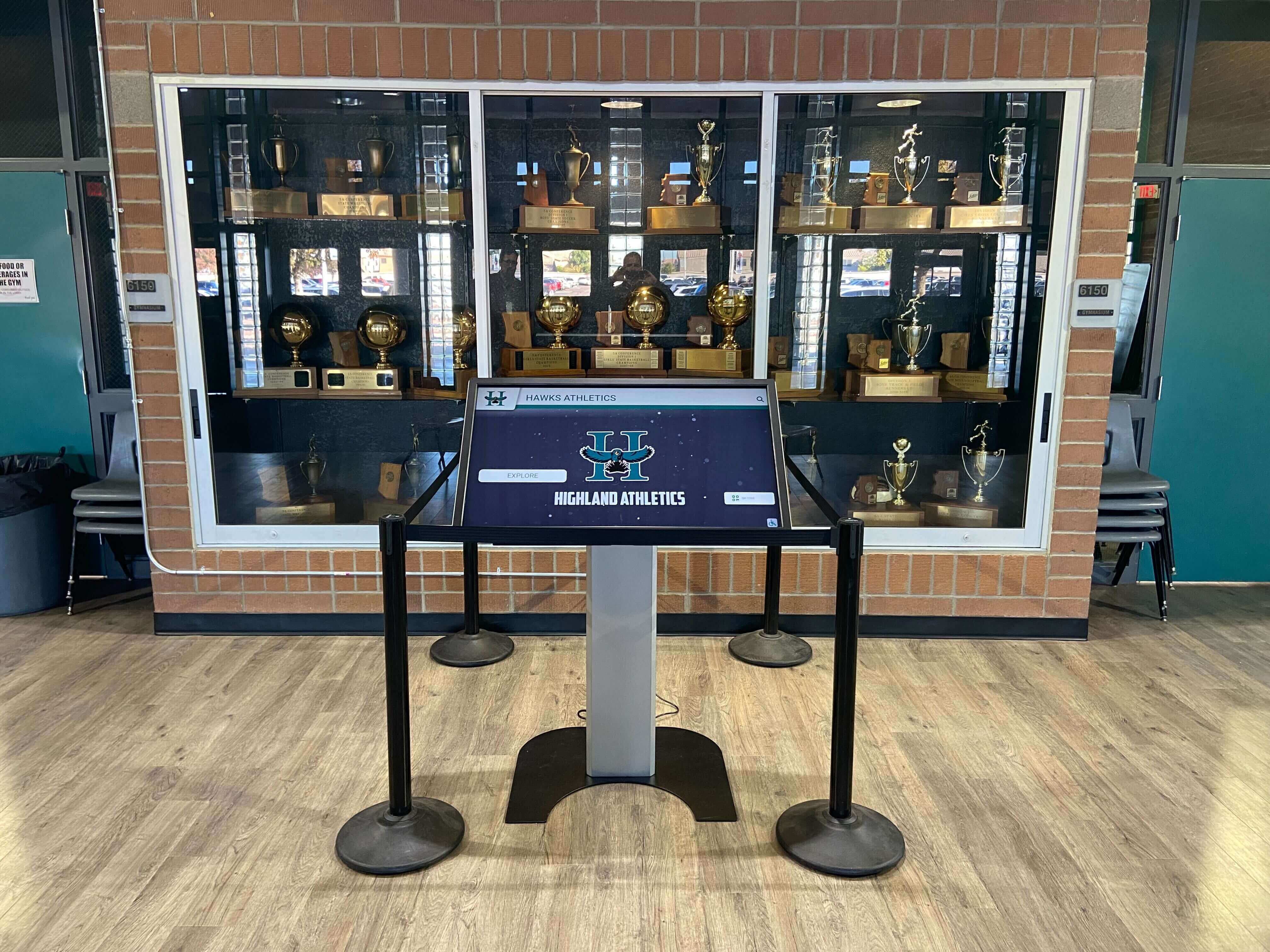
Modern digital displays bring championship recognition into interactive spaces where students naturally gather and explore
Understanding UDA National Championships and Recognition Needs
The Universal Dance Association has been setting the standard for competitive dance excellence since its founding in 1980. UDA Nationals bring together the nation’s top high school and college dance teams to compete in various categories including Pom, Jazz, Hip Hop, and Game Day divisions. The competition takes place annually at the ESPN Wide World of Sports Complex in Orlando, Florida, attracting thousands of dancers and spectators who witness the highest level of technical execution, creativity, and team performance.
Earning a bid to UDA Nationals represents a significant achievement in itself. Teams must demonstrate exceptional skill at regional competitions, often competing against dozens of other programs for limited qualifying spots. Once at Nationals, teams face the nation’s best programs in front of expert judges and massive audiences, with performances live-streamed to fans worldwide through platforms like Varsity TV.
The Journey to UDA Nationals Recognition
UDA championship recognition should honor not just final placements, but the complete journey that makes these achievements meaningful. Championship recognition encompasses several important dimensions that digital displays can capture comprehensively.
Team Preparation and Dedication: Championship teams typically prepare for 6-8 months, with dancers attending practices multiple times weekly, conditioning sessions, choreography refinement, and mental preparation. This commitment deserves recognition alongside competition results, showing younger dancers the dedication required for elite performance.
Choreography and Artistic Excellence: UDA routines blend technical precision with creative expression, incorporating complex formations, synchronized movements, and innovative choreography that sets championship teams apart. Recognition should showcase the artistic elements that make performances memorable, not just scores and placements.
Individual Contributions Within Team Success: While dance is fundamentally a team sport, individual dancers bring unique strengths, leadership, and specialized skills that contribute to collective achievement. Comprehensive recognition honors both team success and individual excellence within championship rosters.
Coaching Excellence and Program Building: Behind every championship team stands dedicated coaching staff who develop technique, build team culture, select music and choreography, and manage the countless details that enable competitive success. Recognition should celebrate coaching contributions alongside dancer achievements.
Competitive Context and Historical Significance: A UDA championship win means different things depending on division size, competitive field strength, and program history. First-time qualifiers achieving breakthrough success deserve recognition framing their accomplishment appropriately, while programs with multiple championships benefit from displays showing competitive evolution across years.
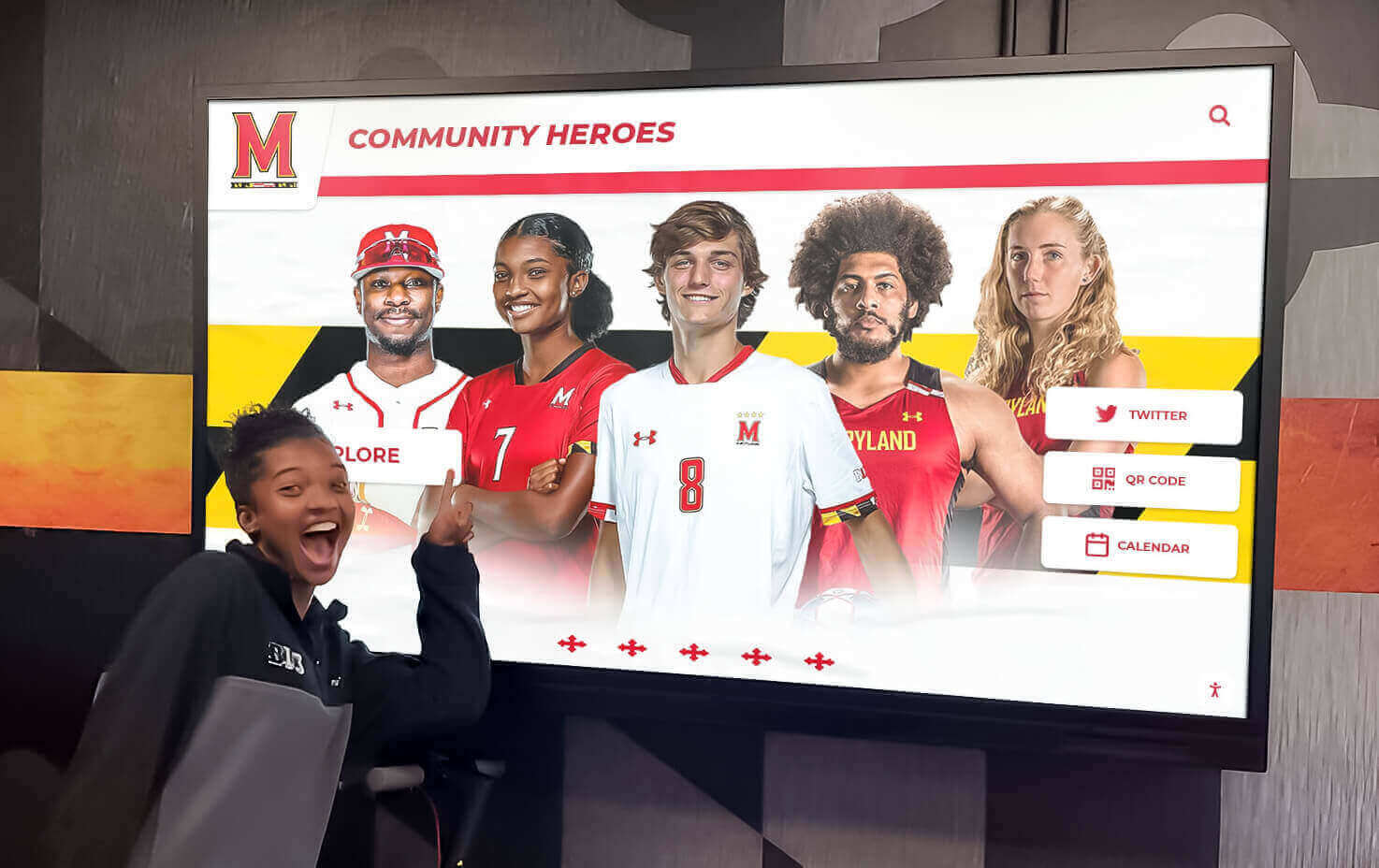
Interactive displays engage students actively, allowing them to explore championship stories that inspire their own competitive journeys
Why Traditional Recognition Methods Fall Short for Championship Dance Teams
Many schools rely on conventional recognition approaches for their UDA championship teams—trophies in display cases, framed photos in hallways, or banners hanging in gymnasiums. While these traditional methods provide basic acknowledgment, they present significant limitations particularly problematic for competitive dance programs where visual storytelling and performance documentation prove essential to meaningful recognition.
Space Limitations and Growth Constraints
Trophy cases occupy valuable wall space and have finite capacity. As dance programs accumulate UDA achievements across multiple years and divisions, physical display space becomes scarce. Schools face difficult decisions about removing older recognition to accommodate current championships, storing previous awards where they’re no longer visible, or simply failing to recognize recent achievements because no display space remains available.
This space constraint becomes particularly challenging for successful programs with multiple championship appearances. A team qualifying for UDA Nationals annually may accumulate a dozen trophies, medals, and awards within just a few years, quickly exhausting available display capacity while newer achievements push older ones out of visibility.
Inability to Capture Performance and Artistry
Traditional static displays fundamentally cannot convey what makes championship dance unique—the movement, music, synchronization, energy, and artistic expression that distinguish winning performances. A trophy or plaque provides no context about the routine that earned it, the performance moment that secured victory, or the creative elements that impressed judges and audiences.
For dance teams where performance is everything, recognition limited to static objects feels incomplete. Dancers, parents, and school communities want to see and remember the actual performances that brought championships home, not just physical symbols representing those achievements.
Limited Storytelling Capability
Static displays convey minimal information—typically just year, division, placement, and perhaps team member names. This limitation prevents schools from telling complete championship stories about what made performances special, challenges overcome during preparation, team dynamics that enabled success, or lasting impact on participants’ lives.
Championship journeys include countless compelling elements that traditional recognition cannot capture: the breakthrough moment when choreography finally clicked, the team bonding that built trust enabling complex lifts and formations, the coach’s strategic decisions that positioned the routine for competitive success, or the senior leadership that mentored younger dancers while pursuing final championship opportunities. Similar to how state championship displays preserve complete competitive journeys, UDA championship recognition must capture both results and the stories behind them.
No Engagement for Younger Dancers
Static displays are purely passive—current dancers and prospective team members can only look at them briefly before moving on. Young dancers need more than glances at trophies to understand what UDA championship success requires and feels like. They need detailed role models, accessible performance examples, and comprehensive stories that help them visualize their own potential championship journeys.
Traditional recognition also quickly becomes invisible to students who pass it daily. A banner hanging in the gym generates initial excitement but fades into background scenery within weeks as students stop noticing it. This invisibility undermines recognition’s inspirational purpose, failing to consistently reinforce excellence standards and competitive possibilities.
No Remote Access for Extended Community
Physical displays benefit only people who visit school facilities—a small fraction of the extended dance team community. Parents at work during school hours, alumni dancers who have graduated and moved away, extended family members living in other states, and prospective families considering program participation have no access to recognition celebrating championship achievements they care about deeply.
This limitation means recognition investment reaches minimal audiences, missing opportunities to build program pride, strengthen alumni connections, and extend championship impact throughout dispersed communities. In an era where people expect digital access regardless of physical location, exclusively physical recognition feels increasingly outdated and unnecessarily limiting.
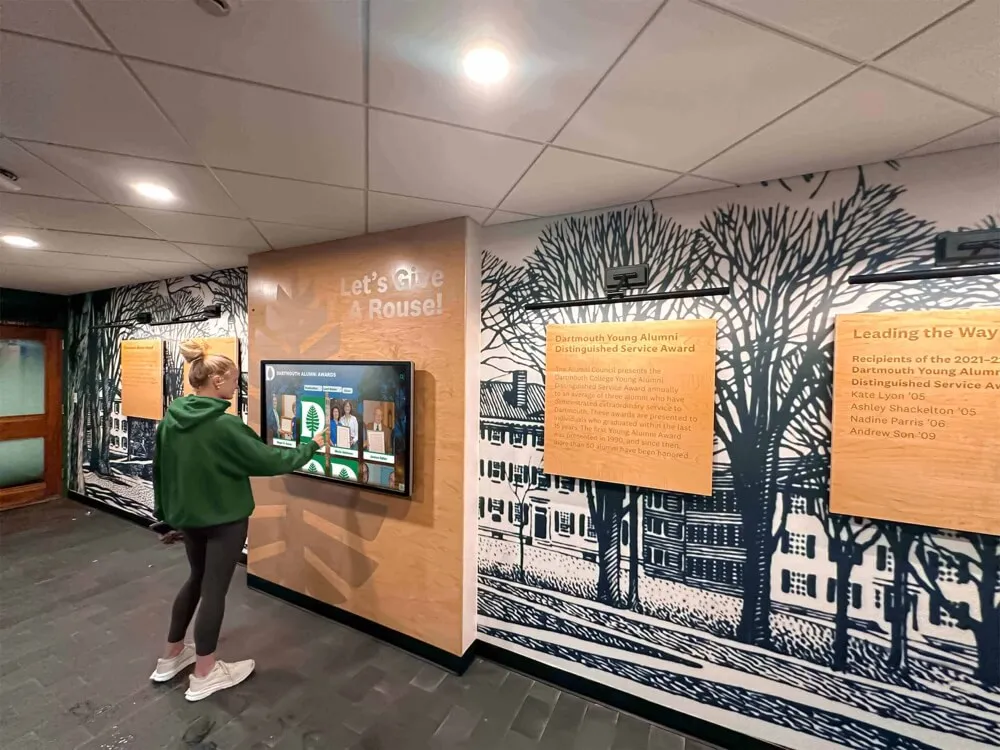
Strategically placed touchscreen displays in high-traffic areas ensure championship recognition remains visible and accessible throughout the school day
How Digital Displays Transform UDA Championship Recognition
Interactive digital display systems address all major limitations of traditional recognition while creating powerful new capabilities that static displays cannot provide. These platforms fundamentally transform championship recognition from basic commemoration into dynamic engagement tools that serve multiple purposes—inspiration, education, recruitment, and community building—simultaneously.
Unlimited Recognition Capacity
Digital displays eliminate physical space constraints entirely. A single touchscreen can showcase unlimited championship teams, individual dancers, performances, and achievements spanning decades of competitive history without requiring additional wall space as recognition grows. Schools can comprehensively honor every UDA Nationals qualifier, finalist, and champion without making difficult decisions about what to exclude or remove when space runs out.
This unlimited capacity enables truly inclusive recognition that honors breakthrough achievements alongside established excellence. First-time qualifiers receive the same display quality and accessibility as multiple-time champions, while every team member gets individual recognition rather than just captains or top performers receiving limited spotlight.
The psychological impact of comprehensive recognition proves significant for program culture. When dancers see that their school values and preserves every championship achievement regardless of final placement or historical distance, it reinforces that competitive excellence matters permanently rather than being celebrated briefly before fading into forgotten history.
Rich Multimedia Storytelling
Digital displays support photos, videos, music clips, performance excerpts, and detailed narratives that bring championships to life far beyond what static displays can communicate. A UDA championship recognition might include complete performance video with judges’ commentary, behind-the-scenes preparation footage showing routine development, individual dancer profiles with photos and accomplishment highlights, coach interviews discussing team dynamics and competitive strategy, score sheets and judges’ feedback providing performance context, and photo galleries documenting the competition experience from travel through awards ceremonies.
This multimedia richness enables schools to tell complete championship stories that capture both competitive results and the journeys that produced them. Recognition can preserve the actual performances that define championships, not just outcomes represented through symbols. Schools implementing interactive touchscreen displays for recognition discover that multimedia content drives significantly higher engagement than traditional static displays.
Performance video proves particularly valuable for dance recognition. Current dancers can study championship routines analyzing technique, formations, transitions, and stylistic elements that contributed to competitive success. This educational dimension transforms recognition from passive commemoration into active learning resource that helps developing dancers understand excellence standards and competitive expectations in concrete, observable terms. Much like digital hall of fame touchscreen displays revolutionize athletic recognition, embedded performance video brings championship moments to life in ways traditional plaques never could.
Performance Video Integration
The ability to embed performance video represents perhaps the most transformative capability of digital championship recognition. Unlike traditional displays that can only reference performances through text descriptions, digital systems can preserve and showcase the actual routines that earned UDA recognition.
Schools might feature complete finals performances alongside preliminary rounds showing competitive progression, side-by-side comparisons of the same routine performed at regionals versus nationals highlighting improvement, slow-motion segments emphasizing technical elements or particularly impressive sequences, multiple camera angles capturing formations from perspectives audiences never see, and archived performances from previous years enabling historical comparison and program evolution documentation.
This video integration serves multiple audiences simultaneously. Current team members study championship performances for technique and inspiration. Prospective dancers considering joining the team see concrete examples of program excellence and competitive style. Parents and community members who couldn’t attend nationals can experience performances they missed. Alumni dancers revisit their own championship moments, reconnecting with experiences that remain meaningful years or decades later.
Many competitive dance programs already film performances for coaching analysis and memory preservation. Digital recognition displays transform these existing video assets into permanent accessible resources rather than files stored on personal devices where only individuals with copies can access them. Centralizing performance video in school-managed recognition systems ensures preservation and accessibility regardless of individual technology changes or data loss.
Interactive Exploration and Discovery
Modern touchscreen interfaces feel immediately familiar to users of all ages who interact with smartphones and tablets daily. Visitors navigate championship recognition through natural gestures—swiping through photos, tapping to play videos, pinching to zoom images, and using search functions to find specific dancers, years, divisions, or competitions.
This interactive exploration creates engagement impossible with static displays. Rather than glancing briefly at trophies before moving on, visitors spend extended time exploring detailed content that interests them specifically. Analytics from schools using touchscreen recognition consistently show average interaction times of 5-7 minutes per session—dramatically longer than seconds spent viewing traditional displays.
The self-directed nature of touchscreen exploration accommodates diverse interests and priorities. Current dancers might focus on recent performances and current team rosters, prospective members explore program history and competitive success, parents search for their own children’s profiles and team photos, alumni browse their graduation years reconnecting with teammates and memories, and coaches reference historical content during team meetings discussing program traditions and competitive standards.
Multiple visitors can engage simultaneously, creating opportunities for conversations, shared memories, and relationship building as people explore content together. Parents and dancers discuss memorable competition moments, alumni connect with current students sharing advice and encouragement, and coaches use displays during facility tours showcasing program excellence to prospective families considering dance team participation.
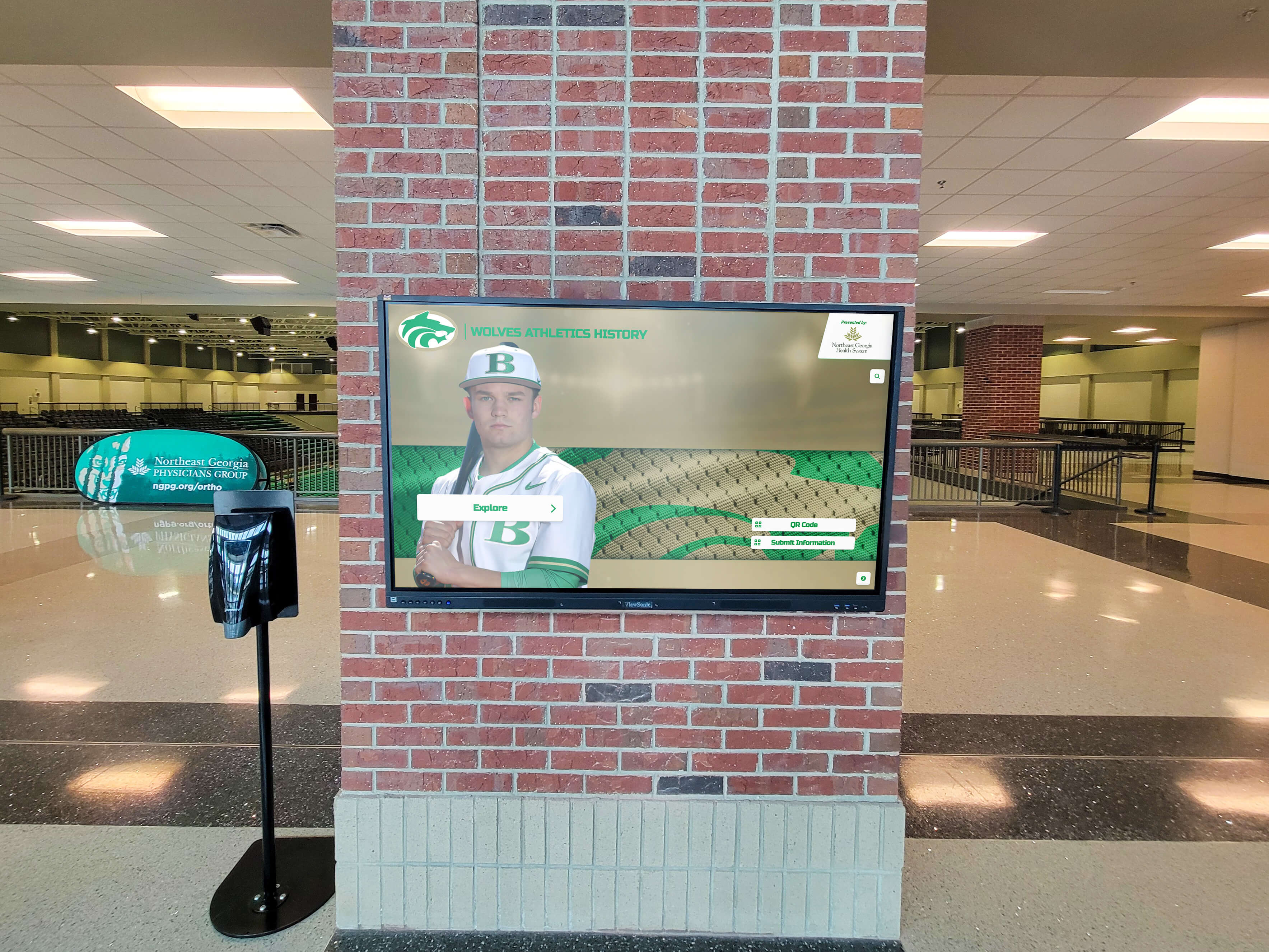
Professional installation in prominent facility locations demonstrates institutional commitment to celebrating competitive excellence
Key Features for Effective UDA Championship Digital Displays
Not all digital recognition systems offer the same capabilities or suit competitive dance program needs equally well. When evaluating touchscreen solutions for UDA championship recognition, schools should prioritize features that support the unique requirements of dance team recognition while ensuring long-term sustainability and growth capacity.
High-Quality Video Playback Capabilities
Given the central importance of performance video for dance recognition, display systems must support high-quality video playback with smooth playback of HD video without buffering or lag, support for multiple video formats and sources, embedded video from YouTube, Vimeo, or direct uploads, volume controls allowing silent looping or audio playback, and fullscreen video options for optimal viewing experiences.
Video quality directly affects how well displays can showcase championship performances. Poor video quality or choppy playback undermines recognition by presenting performances in degraded form that doesn’t represent actual routine quality. Systems should maintain performance video fidelity, preserving the visual clarity and motion smoothness that enable viewers to appreciate technical precision and artistic elements.
Consider display screen quality alongside software capabilities. Higher-resolution displays present video more effectively, particularly for routines involving complex formations or quick transitions where visual detail matters. Screen size also affects video viewing—displays should be large enough that multiple people can watch simultaneously without crowding, typically 42 inches or larger for public installation contexts.
Flexible Content Organization and Navigation
Championship dance programs recognize diverse achievements requiring organizational flexibility. Effective systems should support browsing by competition year, filtering by competition type (UDA Nationals, regionals, other competitions), viewing by division (Pom, Jazz, Hip Hop, Game Day), searching individual dancer names, exploring by coach or choreographer, and accessing content through multiple entry points accommodating varied user intentions.
Navigation should feel intuitive even for first-time users with no instruction. Clear visual hierarchies, familiar interaction patterns borrowed from consumer apps, and logical content groupings enable visitors to find desired information quickly without frustration. Well-designed navigation prevents users from getting lost in large content databases, always providing clear paths back to starting points or alternate exploration directions.
Some programs organize championship content chronologically showing competitive program evolution across years, others prioritize division-based organization highlighting excellence across dance styles, while some feature thematic organization around coaching tenures, facility eras, or significant program milestones. The most flexible systems support multiple organizational schemes simultaneously, enabling visitors to navigate through whichever framework makes most sense for their interests.
Comprehensive Dancer and Team Profiles
Individual dancer profiles form core content for most championship displays, requiring systems that support detailed biographical information including names, graduation years, and academic programs, comprehensive achievement lists with specific competitions, placements, and honors, photo galleries showing performances, team photos, and candid moments, video clips featuring individual dancers in championship performances, quotes or testimonials about dance team experiences and competitive memories, and post-graduation updates for alumni staying connected to programs.
Team profiles similarly need comprehensive support including complete rosters with links to individual dancer profiles, season records and competition results, coaching staff recognition, routine details like music, choreographer credits, and competitive divisions, photo galleries documenting season from auditions through championships, embedded performance videos from all competition levels, and narrative descriptions contextualizing achievements and telling team stories.
Profile quality determines how effectively recognition engages visitors and preserves championship legacies. Rich, detailed profiles with multimedia content create compelling recognition worth exploring repeatedly, while sparse profiles with minimal information fail to differentiate digital recognition from basic trophy case functionality.
Remote Content Management and Updates
Cloud-based content management systems enable authorized staff, coaches, or volunteers to update recognition displays from any internet-connected device without technical expertise or facility access. Essential management features include intuitive web dashboards requiring no special training, drag-and-drop media uploads for photos and videos, scheduled publishing for automatic content releases, bulk editing tools for efficient updates across multiple profiles, role-based permissions controlling who can edit different content areas, and mobile-responsive management interfaces enabling updates from smartphones and tablets.
Management simplicity proves critical for maintaining current, accurate recognition. Dance team staff and coaches have limited time for administrative tasks, making systems requiring technical expertise or complex procedures likely to fall out of date. The easiest systems enable content updates during spare moments from home or office rather than requiring facility visits or coordination with IT staff.
Consider who will manage content when evaluating systems. If coaches will handle updates alongside teaching and choreography responsibilities, prioritize extremely simple interfaces requiring minimal time investment. If schools dedicate administrative staff to recognition management, more sophisticated features become viable. The key involves matching system complexity to realistic available capacity.
Web and Mobile Accessibility
Comprehensive solutions extend beyond physical displays to include responsive web interfaces enabling access from any device anywhere. Web components should mirror touchscreen functionality while optimizing for smaller screens and different interaction methods, providing identical content accessible through browsers, offering social sharing capabilities enabling recognition content sharing through multiple platforms, supporting direct linking to specific profiles or content, and maintaining professional appearance across all device types.
Web accessibility exponentially increases recognition reach and impact. Parents can explore championship recognition from work or home, sharing achievements with extended family through email or social media. Alumni dancers living anywhere globally remain connected to programs through online recognition access. Prospective families considering dance team participation can preview program history and competitive success before campus visits. Colleges recruiting dancers can view performance videos and achievement profiles when evaluating candidates.
Mobile optimization deserves particular attention given smartphone usage dominance, especially among student and parent demographics. Recognition interfaces should work seamlessly on phones with touch-friendly navigation elements, readable text sizing, and efficient data usage preventing excessive cellular data consumption when accessing performance videos.
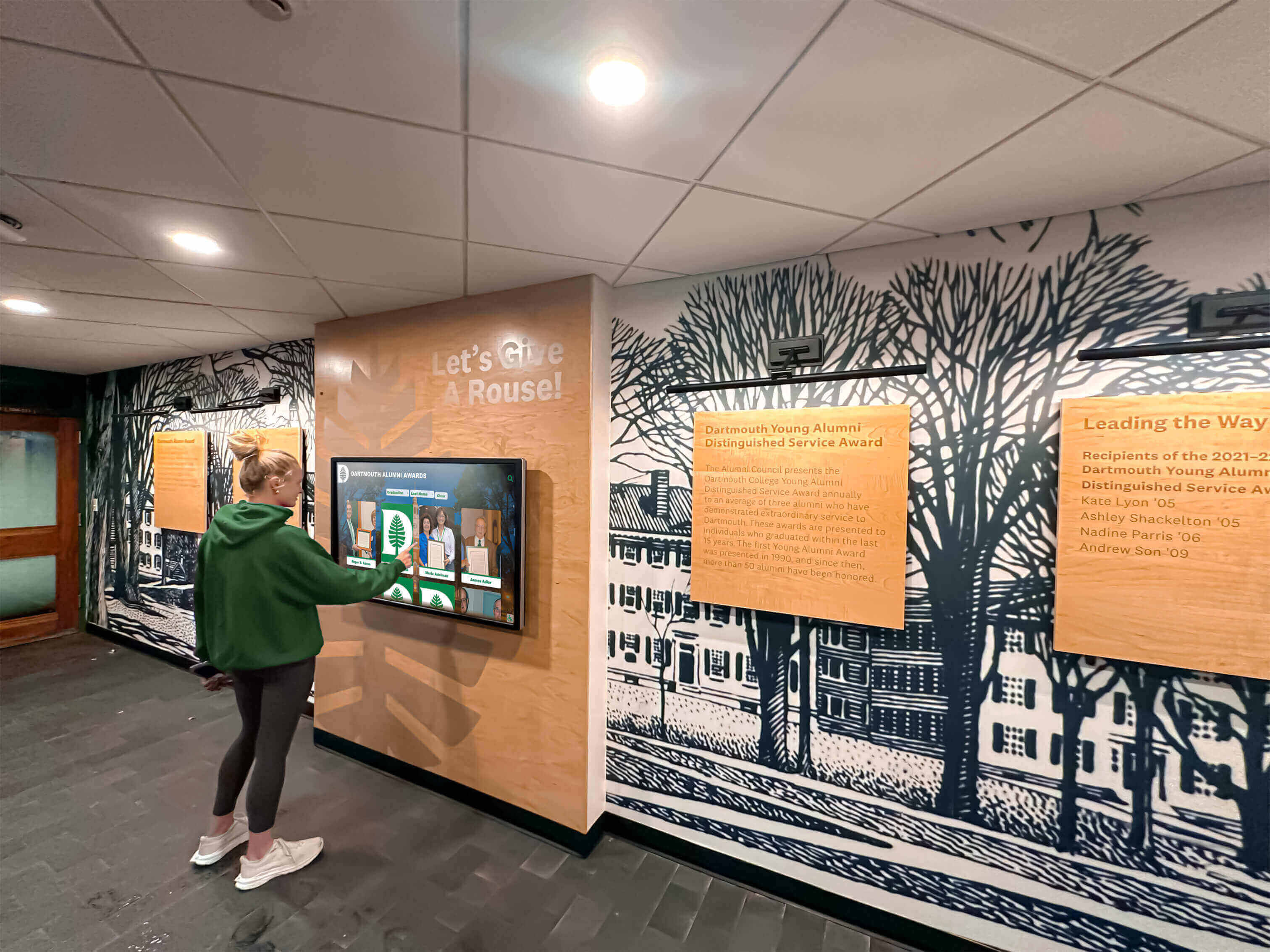
User-friendly interfaces enable students of all technical comfort levels to explore recognition content independently
Planning Your UDA Championship Display Implementation
Successful digital recognition implementation requires thoughtful planning addressing technical, organizational, and programmatic considerations. Schools following systematic planning processes achieve better outcomes while avoiding common pitfalls that undermine system effectiveness or organizational adoption.
Assessing Current Recognition and Program Needs
Begin by thoroughly evaluating existing recognition approaches and identifying specific needs digital systems should address. Useful assessment questions include: What UDA championship achievements currently lack adequate recognition? How much staff or coach time currently goes into maintaining physical displays? What championship content exists in storage or personal collections that cannot currently be shared? How do current dancers, parents, and alumni respond to existing recognition approaches? What specific features would make recognition most valuable for your program? How could improved recognition support recruitment, retention, and team culture goals?
This assessment creates baseline understanding while articulating clear purposes guiding system selection and content strategies. Schools implementing digital recognition to solve specific identified problems achieve greater success than those adopting technology without clear purposes or measurable goals.
Consider conducting surveys or focus groups with key stakeholders—current dancers, parents, alumni, coaches, and administrators—gathering input about recognition priorities and desired features. This inclusive approach builds buy-in while ensuring implementation addresses actual needs rather than assumed preferences.
Determining Budget and Funding Strategies
Digital championship recognition systems represent significant investments requiring careful financial planning. Comprehensive budget considerations include display hardware (touchscreen displays, mounting systems), content management software with annual licensing, professional installation and integration, initial content development and video editing, training and support services, and ongoing maintenance and technology refresh cycles.
Total investment typically ranges from $8,000-$15,000 for basic single-display systems to $25,000-$50,000 for comprehensive multi-screen installations with extensive features. Many schools implement in phases, starting with core displays and expanding as resources permit and value becomes demonstrated.
Funding strategies for championship recognition might include general athletic or activities budget allocations, specific fundraising campaigns focused on recognition, alumni giving campaigns targeting former dancers, booster club or parent organization support, sponsor naming opportunities on displays, and memorial giving opportunities honoring deceased team members or supporters.
Some schools discover that alumni dancers enthusiastically support championship recognition projects, particularly if they’ll be featured in initial content. Targeted outreach to former team members, especially those who competed at UDA Nationals, often yields strong response rates when solicitations clearly explain how recognition will preserve their competitive achievements and inspire current dancers.
Selecting Optimal Display Locations
Strategic placement maximizes visibility and usage while supporting program goals. Ideal locations for championship dance recognition typically include main entrance lobbies where visitors immediately encounter displays, gymnasium or dance studio entrances, athletic hallway corridors connecting various sports facilities, performing arts wings near theater and music programs, and student common areas where dancers and classmates naturally gather.
Consider placement that supports specific program objectives. Displays near building entrances showcase program excellence to all visitors including prospective families touring facilities. Recognition visible from dance studio lobbies gives team members daily inspiration and reinforces competitive standards. Displays in general student traffic areas build school-wide awareness and pride in dance team achievements.
Evaluate technical requirements for each potential location including reliable electrical power, network connectivity for content updates and video streaming, appropriate lighting conditions avoiding screen glare, adequate clearance space for visitor interaction, and secure mounting preventing vandalism or theft.
Some programs install multiple displays in different locations serving varied purposes—one in the dance studio building for team member focus, another in the main school entrance for community visibility, and perhaps a third in the gymnasium emphasizing athletic program breadth. Alumni welcome areas provide excellent locations for championship displays where visitors naturally pause to explore school achievements.
Developing Championship Content Strategy
Before implementation, establish clear content strategy addressing what championship achievements will be recognized (UDA Nationals only, or including regionals and other competitions), how content will be organized (chronologically, by division, by achievement level), what information each recognition profile will include, how performance videos will be sourced, edited, and presented, how often content will be updated and by whom, and processes for gathering new content as achievements occur.
Comprehensive content strategies prevent systems from becoming underutilized or inconsistently maintained. Clear processes ensure new championships get recognized promptly rather than languishing on to-do lists, standards maintain professional appearance, and organizational structures enable visitors to find information intuitively.
Consider appointing a championship recognition coordinator—potentially an assistant coach, team parent, or administrator—with specific responsibility for maintaining current content. Distributing content responsibilities across multiple team members risks important updates falling through gaps as everyone assumes someone else will handle them.
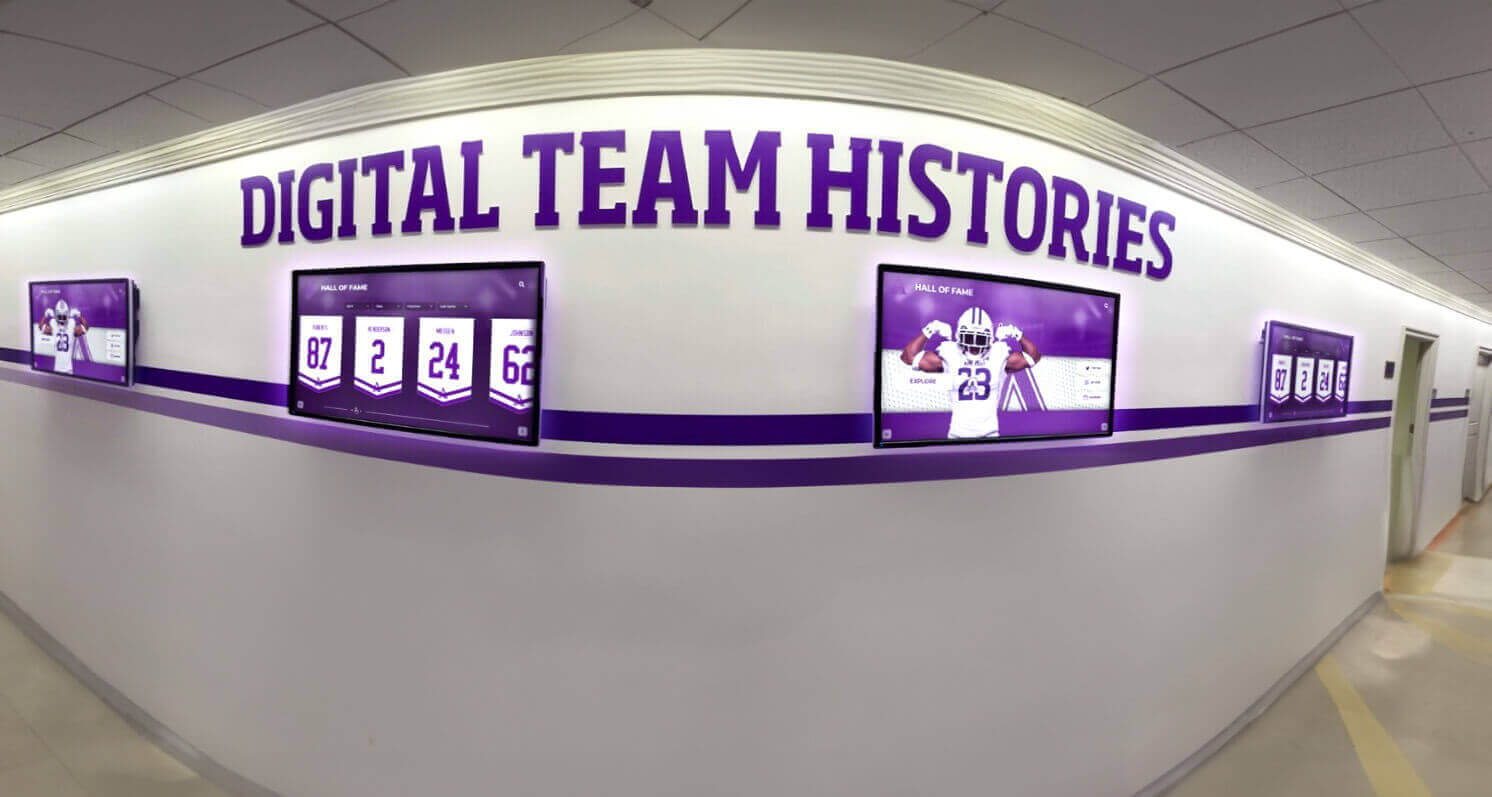
Coordinated displays create comprehensive recognition environments celebrating program history and competitive achievements
Creating Compelling Content for Championship Displays
Effective digital recognition succeeds or fails based primarily on content quality and relevance rather than technology sophistication. Compelling content engages visitors, preserves championship memories accurately, and creates emotional connections that inspire current dancers while honoring past achievements.
Writing Effective Championship Team Profiles
Championship team profiles form the foundation of UDA Nationals recognition, requiring careful attention to both factual accuracy and compelling storytelling. Well-crafted team profiles typically include competition year and specific event dates, division and routine category (Pom, Jazz, Hip Hop, etc.), final placement and competition scores, complete roster with graduation years, coaching staff and choreographer credits, routine details including music selections and thematic elements, competition journey narrative describing the path to nationals, and memorable moments or defining characteristics of the team and performance.
The most compelling profiles move beyond basic statistics to capture what made teams special. Include anecdotes illustrating team dynamics and relationships, quotes from coaches about preparation challenges and breakthrough moments, dancer testimonials about what championships meant personally, context explaining achievement significance within program history, and where appropriate, reunion updates showing lasting friendships formed through competitive experiences.
Write conversationally rather than in formal institutional language. Recognition should feel personal and warm rather than bureaucratic. Imagine addressing team members and their families directly when crafting narratives—what would matter most to them about this championship experience?
Capturing Individual Dancer Recognition
Within team championships, individual dancers deserve recognition celebrating their contributions. Comprehensive dancer profiles include full name with graduation year, years on team and captain/leadership roles, all UDA Nationals appearances with teams and divisions, specialized skills or positions (center, featured dancer, technical specialist), achievement highlights beyond UDA (all-star teams, specialty awards), memorable performance moments or defining characteristics, and post-graduation updates for alumni showing dance’s lasting influence.
Individual recognition proves particularly meaningful for senior dancers completing their competitive careers. Detailed profiles preserving their championship accomplishments, favorite memories, and personal reflections create lasting tributes that dancers and families treasure. Many alumni report that recognition profiles become cherished records they share with their own children years later when explaining their high school or college competitive dance experiences.
Balance individual recognition with team emphasis appropriate for competitive dance culture. While celebrating individual excellence, content should reinforce that championships result from collective effort, mutual support, and team cohesion rather than individual star performances alone.
Preserving Performance Video Effectively
Performance video represents the most valuable content for championship recognition, requiring careful attention to quality, editing, and presentation. Best practices for championship performance video include using highest available quality source footage, editing to include complete performances from start through final formation, adding context screens identifying team, competition, division, and date, incorporating competition audio capturing crowd energy and music quality, including judges’ scores and feedback when available, and providing multiple viewing options (full routine, highlight clips, slow-motion segments).
Consider creating multiple video formats for different purposes. Complete unedited performances serve as official records, shorter highlight reels showcase the most impressive elements for quick viewing, and side-by-side comparison videos show routine evolution from regionals through nationals highlighting improvements and adjustments.
Ensure proper video formatting and compression for smooth web playback without excessive file sizes. Videos should stream reliably even on moderate internet connections, loading quickly without buffering interruptions that disrupt viewing experiences. Many content management systems automatically optimize uploaded videos, but manual editing using appropriate export settings prevents quality loss while controlling file size.
Integrating Historical Championship Context
Comprehensive championship displays should tell broader program stories showing how competitive excellence developed across years and how individual championships fit within larger program narratives. Historical context content might include program founding stories and early competitive history, breakthrough achievements marking program milestones, coaching transitions and different eras of program leadership, facility improvements that enabled enhanced training, competitive philosophy evolution and changing program emphases, and generational stories showing how today’s champions were inspired by yesterday’s.
This historical dimension helps current dancers understand they’re part of continuing traditions rather than isolated annual teams. Seeing how programs built competitive excellence gradually, overcoming setbacks and celebrating breakthroughs, provides realistic models showing that championship success requires sustained effort, learning from losses, and collective program building across multiple seasons and team generations. Programs can learn from successful approaches to developing college history timelines when creating comprehensive championship narratives.
For schools with long competitive dance histories, historical content demonstrates program quality and consistency that shorter-term achievements cannot convey alone. A single championship might represent breakthrough success or fortunate circumstance, but decades of consistent UDA Nationals appearances document sustained excellence and program quality that prospective dancers and their families value when making participation decisions. Just as schools showcase athletic hall of fame achievements, dance programs benefit from comprehensive historical recognition spanning multiple competitive eras.
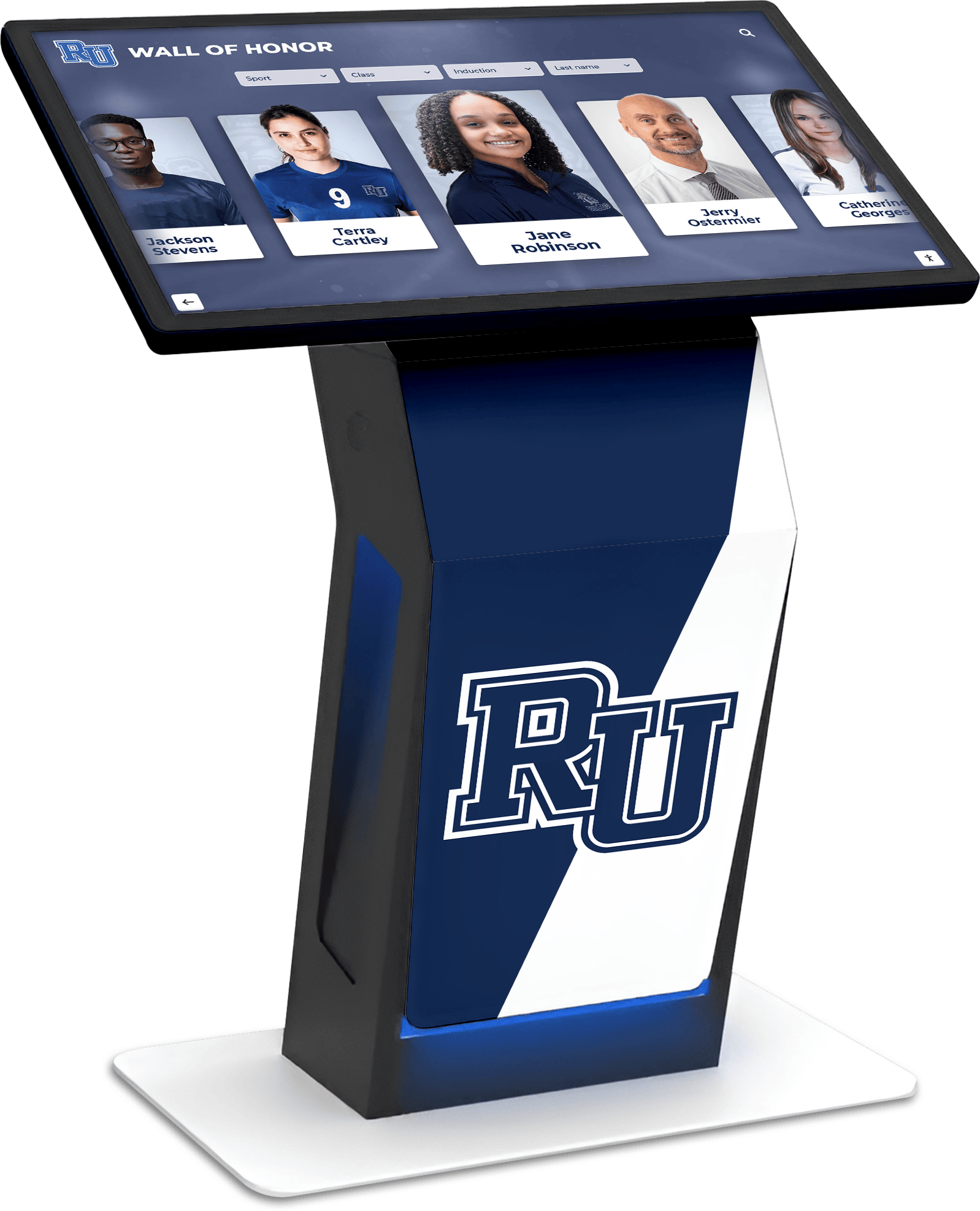
Professional kiosk installations provide durable, attractive housings that protect technology while complementing facility aesthetics
Promoting and Launching Your Championship Display
Even sophisticated recognition systems create minimal impact if dancers, parents, and school communities don’t know they exist or understand how to engage with them. Thoughtful promotion and ceremonial launch strategies maximize awareness while creating enthusiasm that drives usage and appreciation.
Planning a Memorable Launch Event
Create ceremonial unveiling that celebrates the recognition system while honoring championship teams featured in initial content. Effective launch events might include remarks by dance coach and athletic director about competitive excellence and recognition importance, testimonies from featured championship dancers sharing memories and appreciation, live demonstration of display features and video capabilities, reception allowing attendees to explore displays informally with guidance available, and media coverage from local newspapers, school communications, and social media.
Consider timing launch events to coincide with natural recognition occasions like end-of-season banquets, homecoming celebrations, alumni reunion events, or significant school milestones. These connections create narrative coherence while maximizing attendance from people most interested in championship recognition.
Personally invite all dancers and coaches featured in initial content plus their families. Personal invitations demonstrate that these individuals matter to school community while ensuring strong attendance from people with greatest interest in exploring new displays. Their positive responses and social sharing extend launch visibility throughout broader networks.
Creating Promotional Materials and Communications
Develop multi-channel promotion ensuring all relevant audiences learn about championship recognition resources. Communication channels might include school website homepage features with photos and description, social media campaigns showing display highlights and performance video clips, email announcements to current dancers, parents, and alumni, newsletter articles explaining features and encouraging exploration, posters near displays with QR codes linking to web access, video tutorials demonstrating navigation for first-time users, and direct outreach to prospective families during recruitment.
Promotional materials should clearly communicate not just that displays exist, but why they matter and how people benefit from engaging with them. Emphasize discovery opportunities—finding yourself or loved ones featured in championship recognition, exploring complete performance videos, learning program history, and sharing achievements with extended networks.
Create short instructional videos demonstrating basic navigation and search features. Position these prominently on websites and social media. Many people hesitate to interact with unfamiliar technology in public spaces but willingly engage once they understand basic operation.
Integrating Recognition into Team Culture
Maximize championship recognition impact by intentionally incorporating displays into ongoing dance team activities and school culture. Opportunities include featuring new displays during team meetings and practice sessions, using championship performance videos during training for technique analysis, incorporating displays into prospective member recruitment events and tryout orientations, highlighting recognition during school pep rallies and athletic celebrations, and referencing championship traditions during team building and culture development conversations.
These integrations position recognition as living program resources rather than static displays existing separately from daily team activities. When coaches regularly reference championship displays during practice, it signals importance while normalizing engagement that team members then replicate independently.
Encourage current dancers to explore historical championship content, studying performances from previous years to understand program standards, competitive styles, and routine evolution. This creates technical learning opportunities while connecting current dancers to program traditions and the legacy they’re building upon and extending.
Measuring and Communicating Impact
Track metrics demonstrating recognition value supporting continued investment and enhancement. Useful measurements include physical display interaction frequency and session duration, web portal traffic and video views, social media sharing reach and engagement, qualitative feedback from surveys and informal comments, recruitment impact through prospective family responses, and alumni engagement including messages and reunion attendance.
Share impact measurements with athletic directors, administrators, donors, and parent organizations demonstrating that championship recognition delivers value beyond basic commemoration. When stakeholders see evidence of extensive usage, community engagement, and program benefits, they become advocates supporting continued investment and future enhancements.
Consider annual impact reports specifically focused on championship recognition showing content growth, usage statistics, and story examples of meaningful impact. These reports validate investment while building support for future enhancements as programs accumulate additional championships requiring recognition.
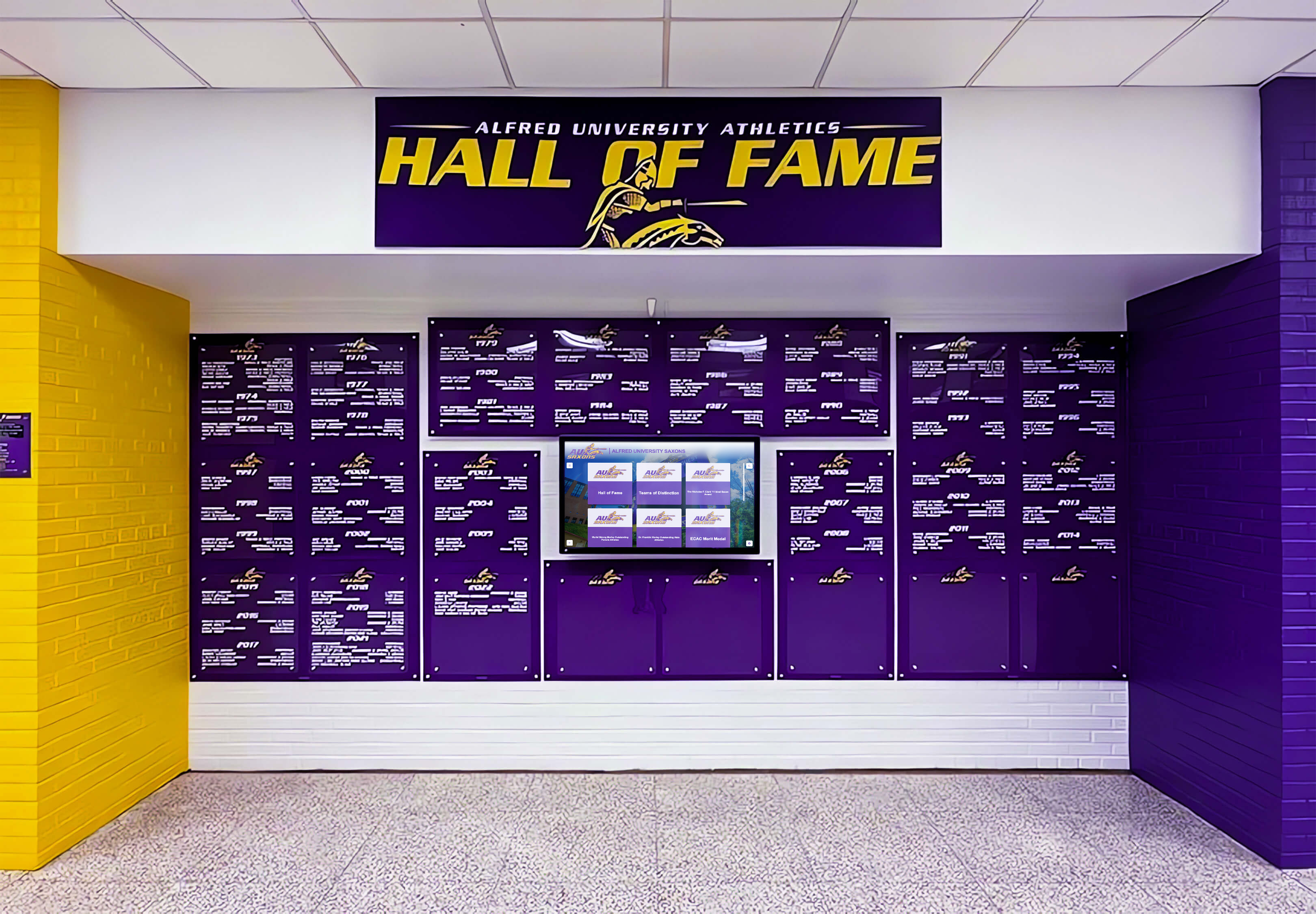
Custom-branded displays reinforcing school colors and identity create cohesive recognition environments that strengthen institutional pride
Connecting Championship Recognition to Broader Program Goals
UDA championship digital displays achieve maximum value when intentionally connected to broader dance program objectives rather than functioning as isolated recognition-only resources. Strategic programs leverage recognition systems for recruitment, retention, culture building, and community engagement purposes that extend far beyond simply honoring past achievements.
Supporting Recruitment and Program Growth
Championship recognition provides compelling evidence of program quality that influences prospective dancers considering team participation. Professional recognition demonstrates institutional commitment to dance team excellence, performance videos showcase program style and competitive level, championship achievements document consistent competitive success, and individual dancer profiles illustrate the complete experience team members can expect.
Families touring school facilities encounter championship displays during visits, gaining immediate impressions about program seriousness and quality. Rather than relying solely on coaches’ verbal descriptions of competitive success, prospective members see concrete video documentation and comprehensive achievement records that validate program excellence claims. Schools can enhance recruitment by integrating championship displays into high school admissions tours, showcasing program excellence to prospective students and families.
Consider creating specific recognition content supporting recruitment including highlight videos showcasing impressive performance moments across multiple years, testimonial videos featuring current dancers discussing team experiences, information about championship qualification processes and competitive preparation, and details about coaching philosophy, training approaches, and team culture.
Strategic schools incorporate championship displays into formal recruitment processes, making display tours standard components of prospective member visits and using web-accessible recognition as resources families can explore when evaluating participation decisions from home.
Building Team Culture and Performance Standards
Championship recognition reinforces program standards and expectations by making excellence visible and specific. Current dancers see concrete examples of championship-level performance through archived videos, understand competitive journey requirements through detailed season narratives, recognize the legacy they’re joining and extending, and feel inspired by role models who faced similar challenges while achieving success.
Coaches can reference championship displays during team meetings and practice sessions, using historical performances as teaching tools for technique instruction, sharing championship team stories illustrating desired culture and values, setting competitive goals framed by program achievement history, and connecting current season aspirations to program traditions and standards.
This integration of recognition into active coaching and team culture development transforms displays from passive commemoration into dynamic resources that serve daily training and development purposes. Rather than recognition existing separately from program activities, it becomes embedded in how teams prepare, learn, and pursue their own competitive excellence.
Strengthening Alumni Connections and Support
Championship recognition keeps alumni dancers connected to programs long after graduation through accessible performance preservation allowing alumni to revisit competitive highlights from anywhere, individual profiles providing lasting recognition of contributions and achievements, reunion opportunities around recognition updates and display events, and networking possibilities connecting alumni across different team generations.
Strong alumni connections benefit programs through multiple pathways. Alumni serve as mentors and role models for current dancers, provide volunteering support for competitions and team activities, contribute financially to program needs and championship travel costs, and promote programs throughout communities enhancing reputation and recruiting. Effective alumni of the month recognition programs can complement championship displays by regularly highlighting accomplished former dancers.
Digital recognition makes maintaining these alumni connections manageable even for busy coaching staff with limited administrative time. Once initial content is created, alumni can access it perpetually without requiring ongoing coach involvement. Web accessibility enables alumni anywhere to engage with recognition regardless of geographic distance from schools.
Consider hosting alumni reunion events centered around championship recognition, inviting former dancers to see themselves featured in displays, share memories with teammates and coaches, and connect with current team members passing the competitive torch.
Demonstrating Program Value to Administrators
Comprehensive championship recognition documents program excellence in ways that support administrative advocacy and resource allocation. Athletic directors and principals weighing budget decisions, facility improvements, or staffing changes can reference recognition displays showing consistent competitive achievement, extensive student participation and engagement, program growth and competitive advancement, and community pride and school identity benefits.
Professional recognition also demonstrates that programs take championship achievements seriously, creating institutional pressure to support continued excellence through appropriate resource allocation. When schools publicly celebrate championship success through significant recognition investments, it becomes harder to subsequently reduce program support or treat competitive dance as lower priority compared to other athletic activities.
Use championship recognition strategically in administrative communications, including display metrics in program reports, featuring championship content in school publications and communications, referencing recognition in facility tour presentations, and incorporating recognition in budget requests and program advocacy.
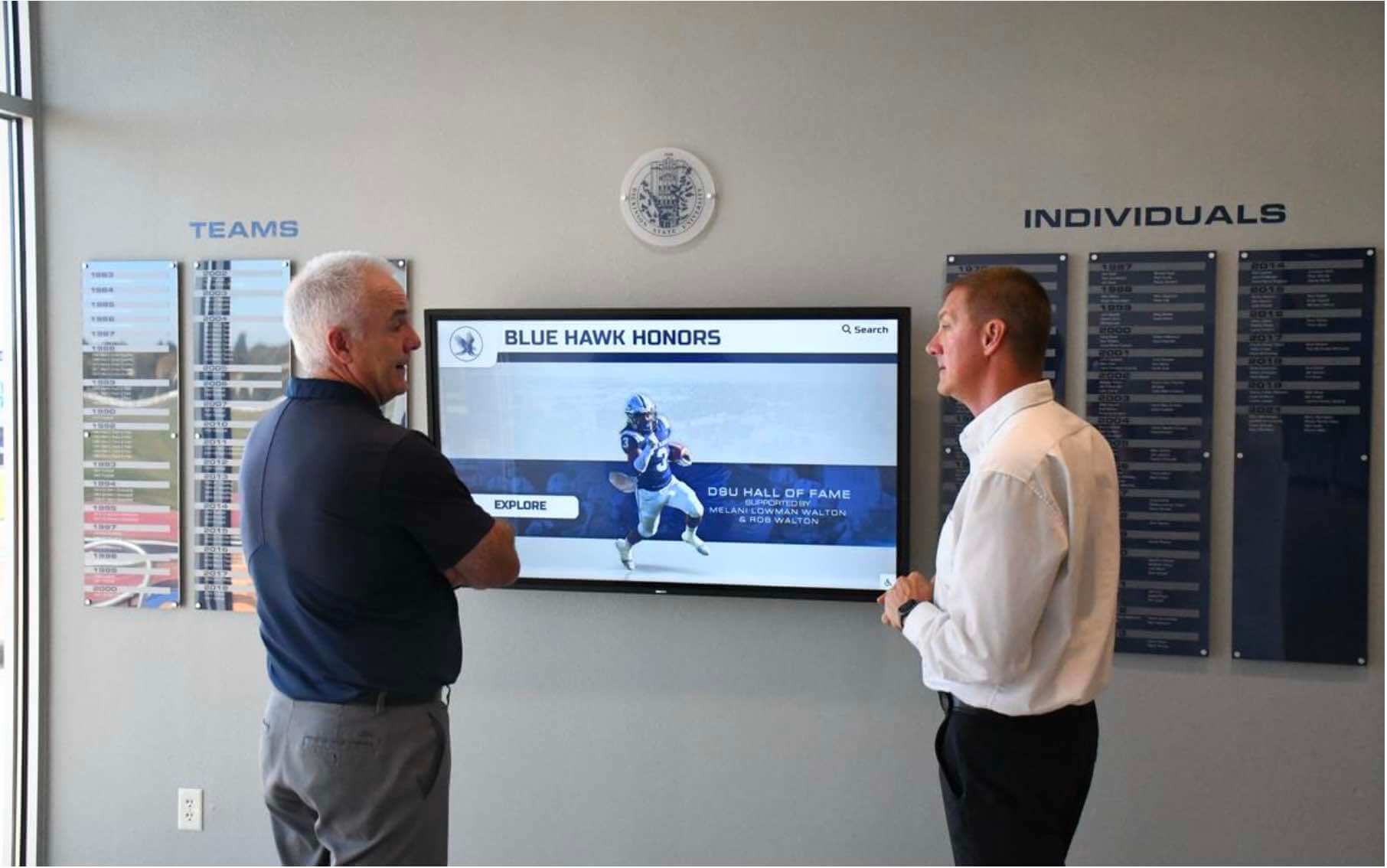
Effective displays create conversation opportunities where alumni, current students, and community members share stories and build connections
Best Practices for Maintaining Championship Recognition
Initial implementation often generates significant energy ensuring displays launch successfully with quality content. However, sustaining that momentum as recognition becomes routine rather than novel proves challenging. Following best practices for ongoing maintenance ensures displays remain valuable resources rather than becoming outdated and neglected.
Establishing Clear Maintenance Responsibilities
Prevent long-term neglect by assigning specific people with explicit responsibility for ongoing content maintenance. Effective approaches include designating a championship recognition coordinator with clear role description, distributing content responsibilities among multiple team members for different areas, building recognition updates into coach or administrator job expectations, engaging parent volunteers with specific content maintenance tasks, or hiring part-time staff specifically for recognition content management.
Maintenance responsibilities should be explicit rather than assumed. When content updates fall to “whoever has time,” they inevitably get deferred as immediate urgent needs take priority over maintaining recognition displays. Formal assignment with accountability mechanisms ensures maintenance occurs consistently regardless of competing demands.
Create specific maintenance schedules identifying when updates should occur. After each competition season, add new championship teams and performance videos. At season conclusions, update individual dancer profiles with final achievements. During summer, conduct comprehensive reviews ensuring all content remains accurate and complete. This calendared approach prevents maintenance from being perpetually postponed.
Developing Sustainable Content Collection Processes
Maintaining current recognition requires systematic processes for gathering photos, videos, achievement information, and other content as events occur. Effective content collection approaches include assigning team photographers for all competitions, establishing video recording responsibilities and equipment checkout procedures, creating online forms where coaches and dancers submit achievement updates, developing season-end documentation requiring teams to compile complete records, and building content submission into competition debriefs and team meetings.
The key involves making content collection habitual and systematic rather than ad hoc. When gathering recognition materials becomes standard practice rather than afterthought, programs accumulate comprehensive documentation enabling rich recognition without struggling to reconstruct information months or years later when memories have faded and materials have been lost.
Consider recruiting parent volunteers as championship documentation coordinators responsible for attending competitions with quality cameras, gathering official results and score sheets, collecting team photos and candid moments, and organizing materials for coach review and recognition upload. This distributed responsibility prevents content collection from becoming additional burden for already-busy coaching staff.
Ensuring Video Quality and Performance Rights
Championship performance videos require attention to both technical quality and legal considerations. Best practices for video content include using high-quality recording equipment producing HD resolution, ensuring stable camera positioning preventing shaky footage, capturing complete performances from start through final formation, recording clear audio of music and crowd reaction, and verifying permission and rights for using competition footage.
Understand competition recording policies before filming. Some competitions restrict videography or require permissions for publishing performance footage. Many competitions now sell official video recordings providing professional multi-camera coverage with excellent quality. While these come with costs, professional video often justifies expense through superior viewing experience compared to amateur single-camera recordings.
If using music with copyrights, understand that publishing performance videos online may require permissions or licenses depending on platform and usage. Many schools use private video hosting or password-protected access limiting audience to school community members, which often falls under fair use provisions. Consult with legal counsel if questions arise about performance rights and video publication.
Planning Technology Refresh and System Upgrades
Digital technology evolves continuously, requiring periodic system upgrades maintaining compatibility, security, and functionality. Develop long-term technology plans addressing display hardware lifespans (typically 5-7 years before replacement), software updates and security patches, content management platform upgrades, network infrastructure improvements, and backup systems preventing data loss.
Budget annually for technology maintenance rather than treating systems as one-time investments requiring no ongoing costs. Setting aside funds for eventual hardware replacement prevents systems from becoming obsolete when displays fail and budgets contain no resources for updates.
Stay informed about content management platform development roadmaps. Sophisticated systems continuously add features and capabilities. Regular software updates ensure schools benefit from improvements while maintaining security against emerging threats. Many providers include automatic updates in licensing agreements, but verify that updates occur regularly rather than assuming systems maintain themselves without attention.
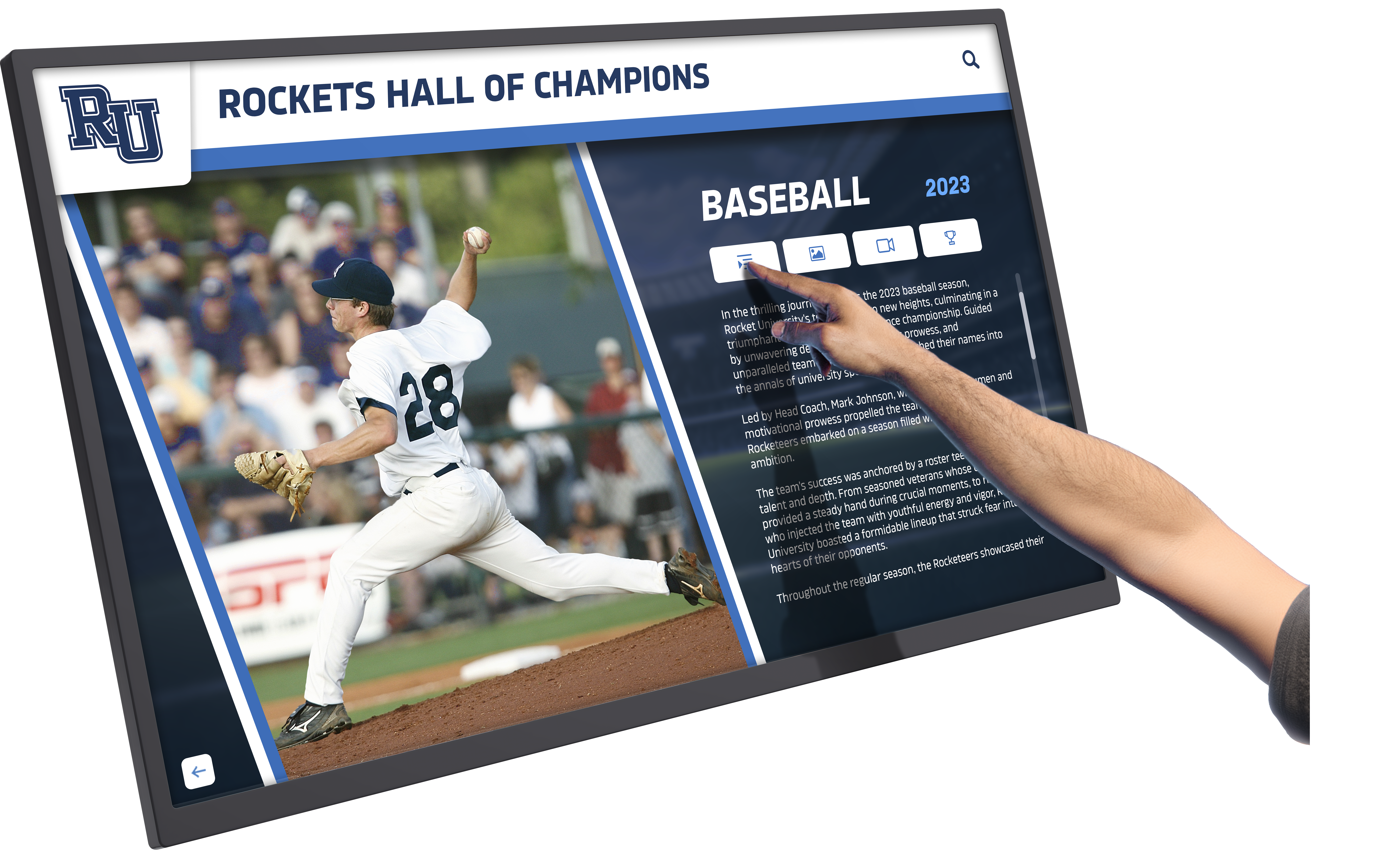
Intuitive touch interfaces enable natural interaction patterns familiar to users from smartphones and tablets
Future Trends in Championship Recognition Technology
Digital championship recognition continues evolving as technology advances create new capabilities enhancing engagement, accessibility, and program impact. Schools implementing recognition systems today should consider emerging trends that may influence future enhancements while ensuring current investments remain relevant and expandable.
Enhanced Video Capabilities and Interactive Features
Advancing video technology will enable increasingly sophisticated championship recognition including 360-degree performance video capturing routines from all angles, augmented reality overlays adding context and information to performance videos, synchronized multi-camera views allowing users to switch perspectives during playback, detailed performance breakdowns with slow-motion analysis of specific techniques, and side-by-side comparison tools showing routine evolution across competitions.
These enhanced video capabilities will make championship recognition even more valuable as teaching and inspiration resources. Dancers will study championship performances with analytical tools previously available only to coaches through specialized software, gaining detailed technical insights that accelerate skill development.
Artificial Intelligence and Automated Enhancement
AI tools will increasingly enable automated content enhancement reducing manual work required for comprehensive recognition. Emerging capabilities include automated video editing creating highlight reels from full performances, intelligent tagging identifying individual dancers in photos and videos, automated caption generation creating video transcriptions and descriptions, content recommendations suggesting related profiles and performances, and quality enhancement improving historical video and photo resolution.
These AI capabilities will make comprehensive recognition more achievable for resource-limited programs by reducing time required for content development and maintenance. However, programs should ensure human oversight remains central to recognition, as AI-generated content may lack personal touches and emotional authenticity that make championship recognition meaningful.
Advanced Analytics and Personalization
Sophisticated recognition platforms will offer increasingly powerful analytics and personalized experiences including user behavior tracking showing which content generates most engagement, predictive recommendations suggesting content users will likely find interesting, personalized recognition feeds based on graduation years or specific interests, engagement metrics demonstrating recognition impact, and conversion tracking showing how recognition influences recruitment and participation.
These analytics enable continuous optimization of recognition content and presentation maximizing program benefits while providing accountability metrics demonstrating value to administrators and stakeholders.
Social Integration and Community Features
Recognition systems will increasingly emphasize community interaction and connection rather than merely displaying content. Emerging social features include commenting and discussion on recognition profiles, alumni networking connecting former teammates across distances, event coordination for reunions and celebrations, and crowdsourced content contribution and memory sharing.
These community features transform recognition from one-directional information provision into dynamic platforms facilitating ongoing relationships among current and former program participants regardless of geographic separation or time since graduation.
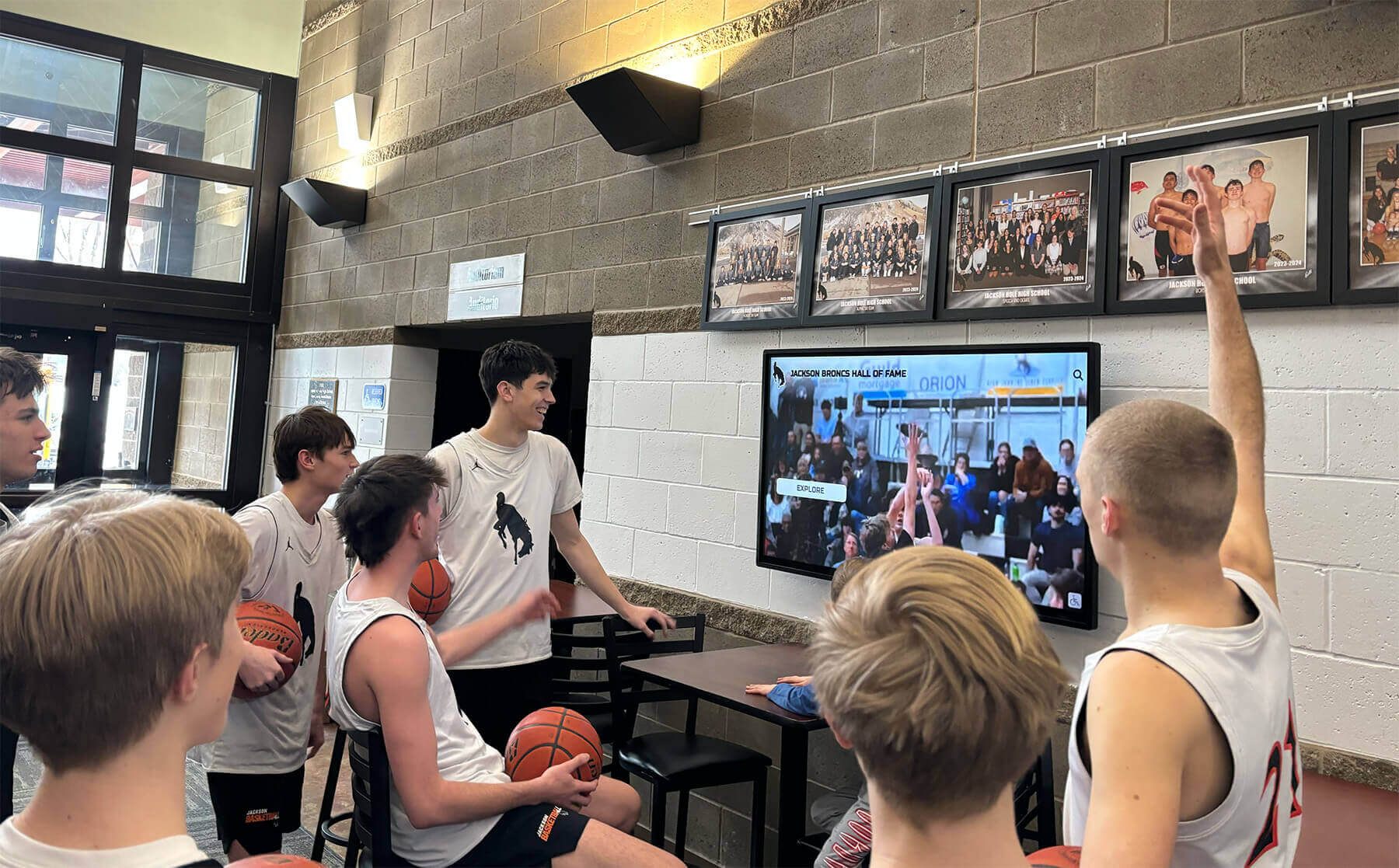
Strategic display placement in athletic facilities connects championship recognition to daily program activities and training environments
Conclusion: Preserving Championship Excellence Through Modern Recognition
UDA National Championship achievements represent pinnacles of competitive dance excellence, earned through dedication, skill development, team cohesion, and countless hours of preparation. These accomplishments deserve recognition approaches that match their significance while serving purposes beyond basic commemoration—inspiration for current dancers, program pride throughout school communities, recruitment advantages attracting talented performers, and historical preservation honoring those who built competitive traditions.
Traditional recognition methods—trophies in cases, framed photos, championship banners—provided reasonable solutions in analog eras but increasingly fall short in digital age where people expect interactive engagement, multimedia richness, remote accessibility, and continuous currency. Physical displays constrain recognition through space limitations, cannot capture performances that define championships, offer minimal storytelling capability, and reach only small fractions of extended program communities deserving to celebrate achievements.
Digital championship recognition systems transform commemoration into dynamic engagement tools that preserve unlimited achievements without space constraints, showcase actual championship performances through embedded video, tell comprehensive stories capturing competitive journeys and team experiences, engage visitors through interactive exploration that creates meaningful connections, and extend recognition access to anyone with internet connection regardless of geographic location.
Successful implementation requires thoughtful planning that addresses technical selection based on program needs, content strategy ensuring recognition serves multiple program purposes, sustainable maintenance approaches preventing long-term neglect, and intentional integration with recruitment, culture building, and community engagement goals. Schools should evaluate systems based on video capabilities and navigation design rather than just hardware specifications, develop comprehensive content strategies before implementation, establish clear maintenance responsibilities with specific accountability, and leverage recognition strategically for program advancement beyond simple achievement commemoration.
The investment in professional UDA championship recognition demonstrates that schools value competitive excellence and the dancers, coaches, and supporters who make championship success possible. This recognition validates years of dedication while inspiring current and future performers toward their own competitive dreams within supportive program cultures that celebrate excellence across generations.
Whether your program earned its first UDA Nationals bid this season or celebrates decades of competitive success, thoughtful recognition through modern digital displays can amplify program impact while building the community pride and competitive culture that distinguish exceptional dance teams. Solutions like Rocket Alumni Solutions provide specialized platforms combining sophisticated technology with intuitive management, enabling programs to maintain professional championship recognition that preserves performance excellence, honors individual and team achievements, and inspires future generations of dancers toward their own championship aspirations.
Your UDA championship achievements deserve recognition that captures the artistry, athleticism, and dedication that make competitive dance extraordinary. Digital display systems provide the capabilities to ensure championship recognition reflects the quality, commitment, and competitive excellence that define your program’s finest achievements.
Ready to Showcase Your UDA Championships?
Discover how Rocket Alumni Solutions can help your dance program create engaging digital displays that preserve championship performances, inspire current dancers, and celebrate competitive excellence for generations to come.
Schedule Your Free Consultation






























