The University of Rhode Island boasts a remarkable legacy of distinguished graduates who have shaped industries, communities, and fields of study across the nation. From groundbreaking scientists and innovative business leaders to acclaimed artists and dedicated public servants, URI alumni demonstrate the transformative power of a Rhode Island education. Yet like many universities with rich histories spanning generations, URI faces an ongoing challenge: how to comprehensively celebrate the breadth and depth of alumni achievement while inspiring current students and strengthening the bonds that keep graduates connected to their alma mater.
Traditional recognition methods—static plaques in administrative buildings, occasional newsletter features, or limited wall space in alumni centers—can only scratch the surface of URI’s distinguished graduate community. These conventional approaches force difficult decisions about which accomplishments merit visibility while leaving countless inspiring stories untold and disconnected from the students who could benefit most from discovering them.
Modern interactive recognition technology offers URI a transformative solution. A dedicated Rocket Alumni Solutions touchscreen display would enable the university to celebrate unlimited notable alumni across all decades, colleges, and achievement categories through an engaging, searchable platform accessible both on campus and online.
This comprehensive exploration examines how URI can leverage interactive touchscreen technology to honor its distinguished graduates appropriately, examining everything from the university’s notable alumni landscape and recognition challenges through implementation strategies and the transformative benefits such systems deliver for students, alumni, and the broader Ram community.
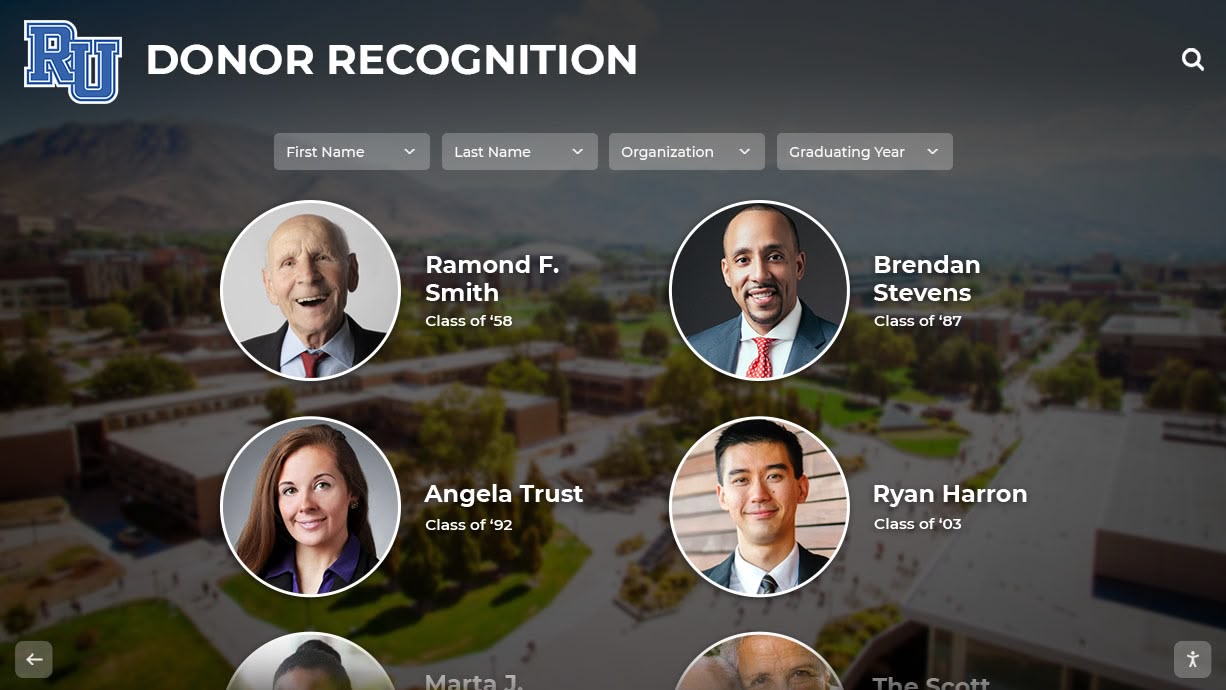
Modern digital recognition displays create engaging environments that celebrate institutional legacy while strengthening alumni connections
The Distinguished Legacy of URI Alumni
Before exploring how interactive technology can enhance alumni recognition, understanding the breadth and diversity of URI’s notable graduates demonstrates both the opportunity and the challenge the university faces in celebrating its distinguished community appropriately.
Remarkable Graduates Across Diverse Fields
The University of Rhode Island’s alumni community includes extraordinary individuals who have achieved distinction in virtually every professional field and area of human endeavor. This diversity reflects URI’s comprehensive academic mission and its success in preparing students for impact across multiple domains.
Business and Entrepreneurship Leadership
URI has produced innovative business leaders who have built companies, transformed industries, and created economic opportunities throughout Rhode Island and beyond. These graduates demonstrate that a URI education provides the foundation for entrepreneurial success and corporate leadership, from local startups serving Providence communities to national corporations impacting the broader economy.
Scientific and Research Excellence
The university’s strong programs in oceanography, pharmacy, engineering, and the sciences have produced researchers and scientists making fundamental contributions to human knowledge. URI graduates work in leading research institutions, pharmaceutical companies, environmental organizations, and academic settings where they advance understanding in their specialized fields.
Arts, Media, and Creative Achievement
Distinguished alumni in journalism, broadcasting, entertainment, and the arts showcase URI’s role in developing creative talent and communicators who inform, inspire, and entertain audiences. These graduates work in major media markets, produce acclaimed creative works, and contribute to cultural life in communities where they live and work.
Education and Academic Contributions
Generations of URI graduates have entered education, becoming teachers, professors, administrators, and educational leaders who shape learning experiences for subsequent generations. Many have returned to higher education, earning advanced degrees and contributing scholarship that advances their disciplines while maintaining connections to their URI roots.
Public Service and Community Leadership
URI alumni serve in elected office, lead nonprofit organizations, work in government agencies, and contribute to public life in countless ways. These graduates translate their URI education into service, working to solve community challenges and improve quality of life for Rhode Islanders and citizens beyond the state.
Athletic Excellence and Competition
The university’s athletic programs have produced accomplished competitors who have excelled at professional, Olympic, and international levels. These athlete alumni inspire current student-athletes while demonstrating the character development, discipline, and excellence that URI athletics cultivate.
This extraordinary diversity creates both opportunity and challenge for recognition. Unlike institutions that can focus recognition primarily on single prominent domains, URI must celebrate achievement comprehensively across all these areas—a task that traditional limited-space recognition approaches struggle to accomplish effectively.
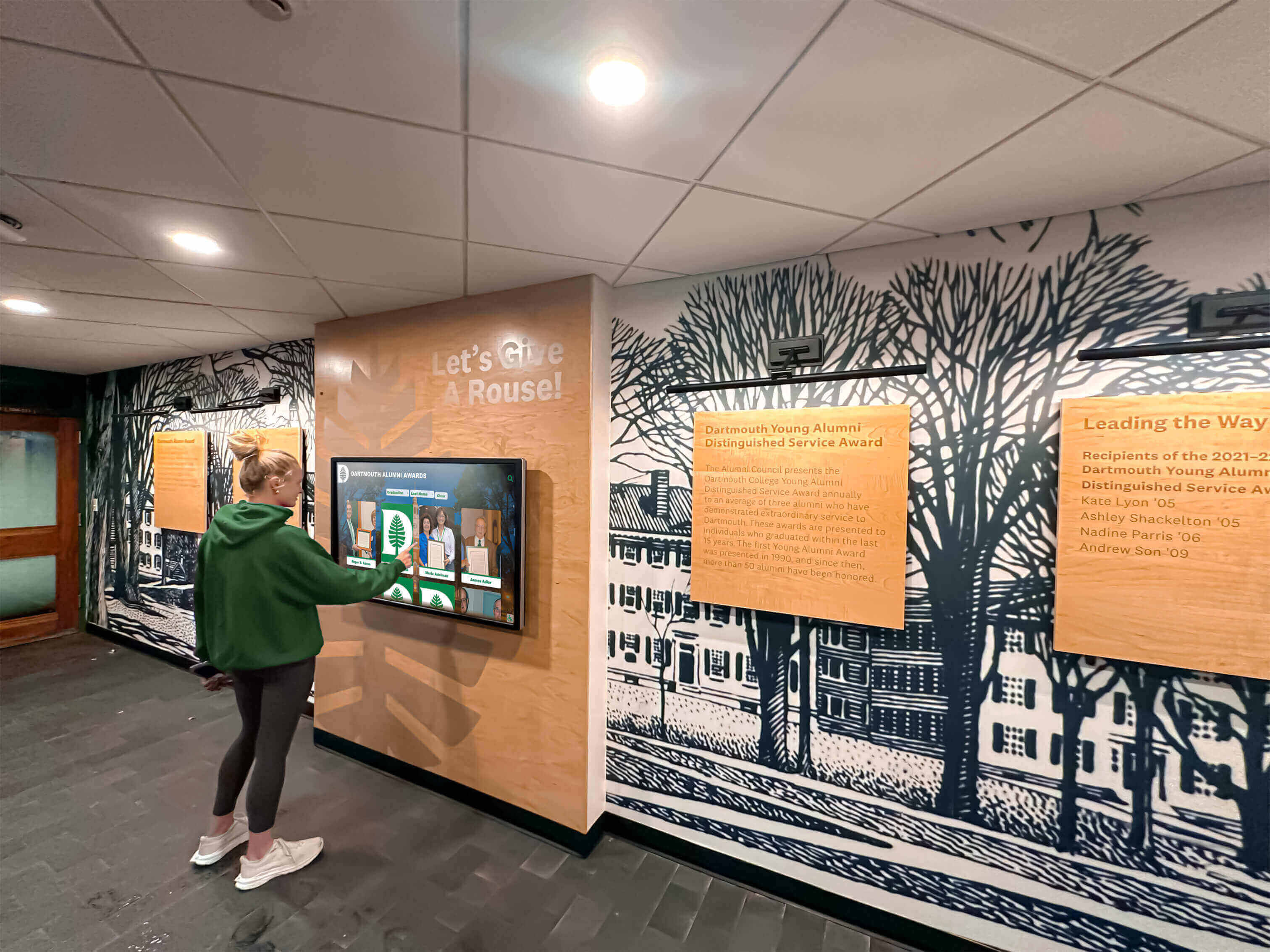
Interactive displays engage current students by showcasing the diverse pathways to success URI graduates have taken
The Recognition Visibility Challenge
Despite URI’s impressive alumni accomplishments, many distinguished graduates remain essentially invisible to current students, prospective families, and even fellow alumni. This visibility gap creates several problems that undermine institutional goals and miss opportunities to leverage alumni success for community benefit.
Limited Physical Recognition Space
URI’s current recognition infrastructure occupies limited physical space in various campus locations. Administrative buildings may feature some notable alumni, alumni association spaces acknowledge certain achievements, and individual colleges recognize distinguished graduates from their programs. Yet the combined capacity of these traditional displays can accommodate only a tiny fraction of deserving recognition.
The mathematics prove unforgiving. A typical wall-mounted recognition display might honor 75-100 individuals maximum when appropriately spaced for visual impact and legibility. Meanwhile, URI has produced thousands of accomplished graduates across its 130+ year history whose achievements merit celebration. Traditional space constraints make comprehensive recognition mathematically impossible, forcing difficult curation decisions that inherently exclude most deserving honorees regardless of their accomplishments’ significance.
Siloed Recognition Approaches
Different colleges, departments, and units within URI may maintain separate recognition systems celebrating graduates from their specific programs. While this decentralized approach ensures some alumni receive acknowledgment, it creates fragmented visibility where students encounter only narrow slices of URI’s complete alumni success story.
A pharmacy student might see distinguished pharmacy graduates but remain unaware of remarkable URI alumni in engineering, business, or the arts who could provide valuable networking connections or career inspiration. An education major encounters education alumni but misses opportunities to discover graduates in other fields who share hometown connections or professional interests that could inform their own career exploration.
Generational and Historical Gaps
Traditional recognition often emphasizes recent high-profile accomplishments while historical achievement fades from institutional memory. Graduates from the 1960s, 70s, or 80s who made significant contributions to their fields and communities risk being overlooked as limited space accommodates more contemporary recognition. This gradual historical erasure diminishes institutional memory and breaks the generational connections that strengthen alumni community across decades.
Discovery and Accessibility Barriers
Even when recognition exists, current students often don’t know where to find it or how to explore alumni accomplishments relevant to their own interests and aspirations. A student interested in marine biology needs to discover URI oceanography alumni, but where do they look? How do they find graduates working in specific career fields or living in particular geographic regions where they hope to build their own careers?
Traditional static displays offer no search, filtering, or discovery capabilities. Students must either stumble across relevant recognition by chance or remain unaware that perfect role models and potential mentors exist within the URI alumni network, invisible simply because existing systems provide no practical discovery pathways.
These recognition challenges represent opportunities where modern technology can transform how URI celebrates its distinguished graduates while serving multiple institutional priorities simultaneously—from student inspiration and alumni engagement through development cultivation and reputation enhancement.
How Interactive Touchscreen Technology Solves URI’s Recognition Challenges
Digital recognition platforms like Rocket Alumni Solutions directly address the limitations that constrain traditional URI alumni recognition while creating entirely new capabilities for celebration, connection, and engagement impossible with static physical displays.
Unlimited Recognition Capacity
The most immediate and transformative benefit interactive touchscreen systems provide is complete elimination of the space constraints that force difficult decisions about whose achievements merit limited recognition opportunities.
Comprehensive Alumni Celebration
A single large-format touchscreen display—typically 55 to 75 inches—can showcase unlimited URI alumni profiles with complete biographical information, professional accomplishments, photos, videos, and detailed achievement documentation. The same physical footprint that might accommodate 50 traditional plaques can present comprehensive recognition for thousands of distinguished graduates across all colleges, decades, and achievement categories.
This unlimited capacity fundamentally changes what URI can accomplish with alumni recognition. Rather than exclusive approaches that honor only the most elite accomplishments while excluding hundreds of deserving graduates due to simple space unavailability, URI can adopt inclusive celebration recognizing everyone whose achievements warrant acknowledgment—from Nobel laureates and corporate CEOs to dedicated educators, community leaders, and graduates making meaningful contributions in less publicly visible but equally important roles.
Multi-College Integration
Digital platforms enable URI to create comprehensive recognition celebrating graduates from all university colleges within a unified system while maintaining appropriate college-specific views and filtering. Pharmacy alumni appear alongside engineering, business, arts and sciences, environment and life sciences, and education graduates—demonstrating the breadth of URI excellence while enabling students to explore achievements most relevant to their own academic paths and career interests.
This integration breaks down the silos that fragment recognition across multiple disconnected college systems, creating comprehensive visibility into URI’s complete alumni success landscape. Students gain appreciation for how their URI education contributes to diverse excellence while discovering unexpected connections between their interests and graduates whose achievements span multiple domains.
Historical Depth and Breadth
Digital systems preserve complete recognition history rather than requiring removal of older honorees to accommodate recent achievements. URI can showcase distinguished graduates from the 1950s, 60s, and 70s alongside contemporary accomplishments, creating living historical archives that connect past traditions to present excellence while demonstrating URI’s sustained impact across generations.
This historical depth proves particularly valuable for alumni engagement where older graduates seek evidence that their cohort remains remembered and valued despite decades since graduation. Comprehensive historical recognition strengthens lifelong connections by demonstrating that URI’s relationship with graduates truly extends throughout their lives rather than fading once more recent classes require attention.
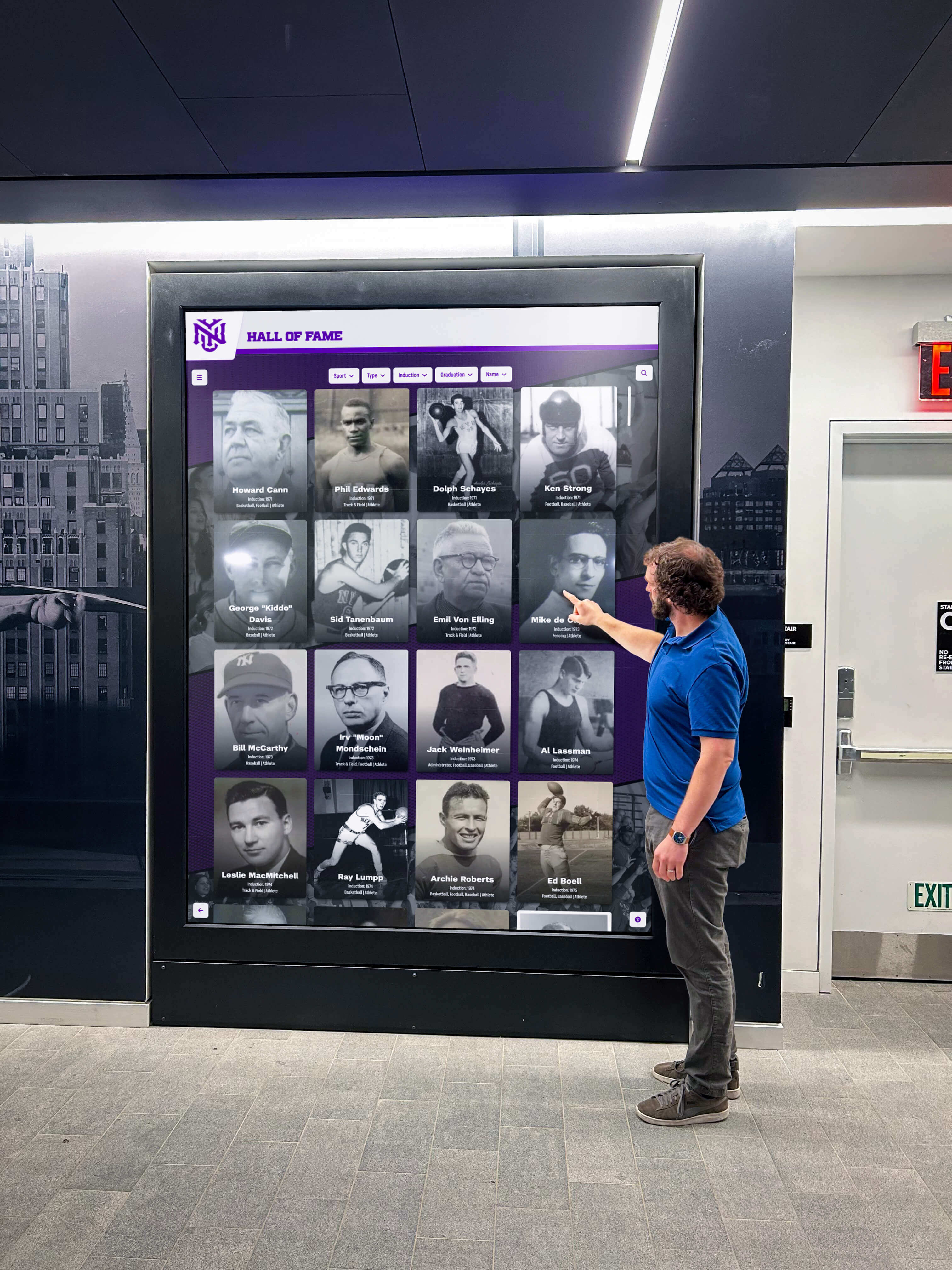
Touchscreen interfaces invite active exploration where visitors search for specific alumni, browse by college or achievement, and discover inspiring success stories
Rich Multimedia Storytelling
Beyond solving capacity constraints, interactive touchscreen platforms enable recognition experiences qualitatively superior to what traditional plaques can deliver through comprehensive multimedia content that brings alumni achievements to life.
Complete Professional Narratives
Digital profiles can include detailed biographical information explaining graduates’ URI experience, their career paths from graduation through current accomplishments, specific achievements and honors received, community service and leadership contributions, and personal reflections about how URI education prepared them for success. This narrative depth transforms simple name recognition into compelling storytelling that honors accomplishments appropriately while creating emotional connections with viewers.
Students reading these complete stories gain understanding about how education translates into career success, what diverse pathways exist within particular fields, what challenges graduates overcame along their journeys, and what lessons and advice accomplished alumni offer those following similar paths. This rich context provides inspiration and practical guidance that simple name-and-date listings can never convey.
Visual and Video Documentation
Interactive systems integrate high-resolution photography showing graduates in their professional environments—scientists in laboratories, business leaders in their operations, artists with their creative works, educators with their students. Multiple photos can document achievement journeys across time, showing progression from URI students through early career stages to ultimate accomplishments.
Video content brings even greater depth. Championship game highlights celebrate athletic achievement. Research presentations demonstrate scientific rigor. Performance videos showcase artistic accomplishment. Personal video interviews capture graduates in their own voices sharing perspectives about what their achievements mean, how URI prepared them for success, and what advice they offer current students considering similar paths.
Solutions like digital storytelling platforms for athletic programs demonstrate how multimedia capabilities transform recognition from simple commemoration into engaging narratives that strengthen emotional connections between institutions, alumni, and current students.
Searchable Databases and Discovery
Perhaps most powerfully for students, interactive platforms enable intuitive search and filtering making relevant alumni discoverable regardless of how many total profiles exist within the system. Students can:
- Search by name when they know specific alumni they want to learn about
- Filter by graduation decade finding alumni from particular eras
- Browse by college or major discovering graduates from their academic programs
- Explore by career field identifying alumni working in industries they’re considering
- Search by geographic location finding URI alumni in cities or regions where they hope to build careers
- View by achievement category celebrating specific types of excellence
These discovery capabilities transform recognition from passive memorial displays into active research tools supporting career exploration, networking preparation, and aspirational goal-setting. Students gain practical benefit from alumni recognition while simultaneously gaining inspiration from the achievements they discover.
Extended Accessibility Through Web Integration
Modern digital recognition platforms extend far beyond physical campus displays to provide comprehensive web accessibility that multiplies recognition reach exponentially while serving alumni populations regardless of where they live.
Global Alumni Access
Web-accessible recognition enables anyone with internet access to explore the same alumni profiles displayed on campus touchscreens from personal devices anywhere in the world. This extended accessibility particularly benefits URI’s geographically dispersed alumni community where graduates have relocated throughout the United States and internationally for career and family reasons.
An alumna in California can explore URI recognition showing current students, discovering how her own accomplishments appear within the broader alumni success landscape. A graduate in Europe can search for former classmates and teammates, reconnecting with URI memories and discovering what fellow alumni have accomplished since graduation. A prospective student researching URI from another state can investigate alumni success as authentic evidence of educational quality and career outcomes.
This anywhere-anytime access means URI recognition created by the university reaches audiences of thousands rather than hundreds who physically visit campus—maximizing return on recognition investment while strengthening widespread community connections.
Social Media Amplification
Digital platforms enable direct sharing of individual alumni profiles to social networks, amplifying recognition reach through participants’ existing relationships and professional networks. Honored alumni can celebrate their URI recognition with friends, family, and colleagues who may never visit campus but can view detailed profiles through shared links.
Students can share inspiring alumni profiles relevant to their own goals with parents and mentors. Alumni relations staff can promote URI excellence through authentic achievement examples rather than generic institutional messaging. Development professionals can share donor recognition with board members and prospective benefactors demonstrating stewardship effectiveness.
According to research on alumni engagement, recognized alumni who can easily share their acknowledgment with personal networks show significantly higher satisfaction and engagement levels compared to those whose recognition remains accessible only through rare campus visits. Digital platforms’ social integration capabilities directly support the relationship strengthening that recognition intends to facilitate.
Search Engine Visibility
Web-accessible recognition creates indexed online presence appearing in search results when people research URI, search for specific alumni, or investigate career fields and professional achievements. This organic visibility benefits recruitment, reputation, and relationship development as prospective students, employers, media, and other external audiences discover authentic URI achievement evidence through independent research rather than only institution-controlled marketing channels.
The interactive touchscreen displays for schools demonstrate comprehensive approaches integrating physical campus recognition with web accessibility, creating complete ecosystems serving diverse stakeholders through appropriate channels aligned with their access preferences and patterns.
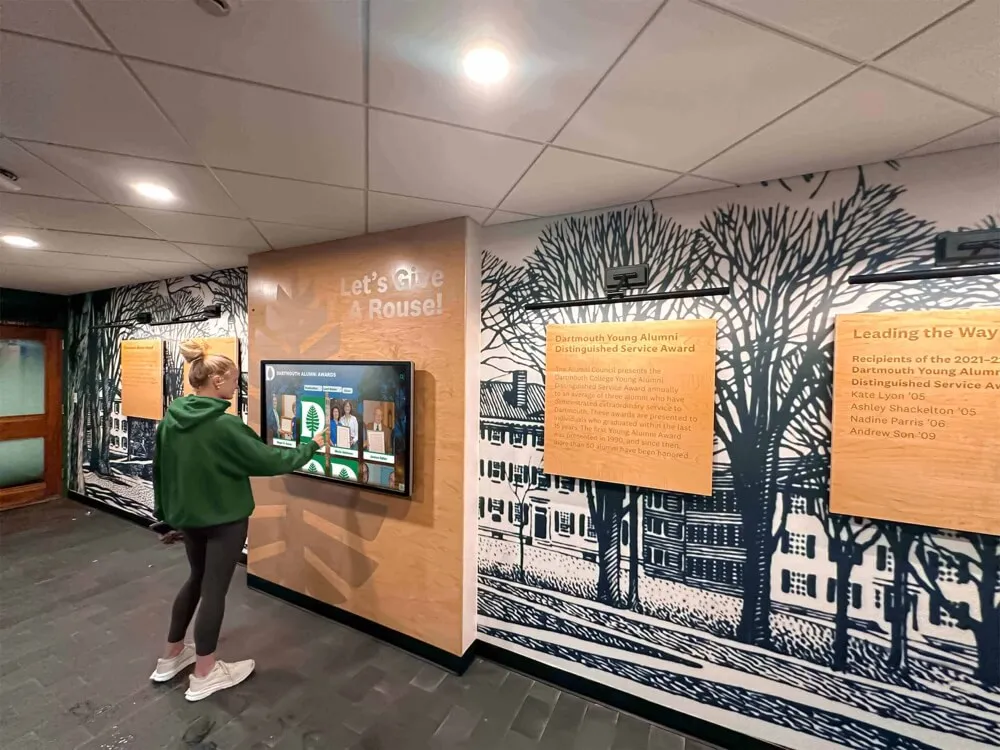
Strategic placement in high-traffic campus corridors ensures maximum visibility while creating welcoming spaces that celebrate institutional pride
Strategic Implementation for URI
Successfully implementing interactive alumni recognition at URI requires thoughtful planning that addresses location strategy, content development, ongoing management, and integration with broader university goals and existing systems.
Optimal Campus Locations
Strategic placement significantly impacts recognition effectiveness and community engagement. URI should consider multiple high-visibility locations reaching diverse audiences throughout typical campus days.
Memorial Union Central Placement
The Memorial Union serves as URI’s campus heart where students naturally gather between classes, during meals, and for student organization activities. A prominently positioned interactive touchscreen in the Memorial Union’s main lobby would ensure maximum student exposure to alumni recognition while creating an engaging focal point in the university’s most heavily trafficked student space.
This central placement particularly benefits current student inspiration—the primary audience who need regular exposure to alumni success for career guidance and motivational benefit. Students passing through the Union multiple times weekly would encounter changing featured content, seasonal highlights, and topical recognition aligned with campus events and academic calendars.
Alumni Center Dedicated Recognition
If URI maintains a dedicated alumni center or space within another facility, interactive recognition naturally complements this environment where returning graduates specifically gather for reunion events, networking programs, and alumni association activities. Alumni center placement ensures that the population most likely to explore content extensively has comfortable access in an environment designed for extended engagement and reflection.
This location particularly supports development and fundraising objectives by creating impressive recognition environments where donor cultivation occurs. Prospective major benefactors touring facilities with advancement staff encounter systematic alumni celebration demonstrating institutional commitment to relationship stewardship—tangible evidence that generous support receives lasting acknowledgment and appropriate gratitude.
College-Specific Installations
Individual URI colleges could implement focused interactive displays celebrating graduates from their specific programs while maintaining connection to the comprehensive university-wide system. The College of Pharmacy might feature pharmacy alumni prominently while enabling discovery of URI graduates from all colleges. The College of Engineering could spotlight engineering achievement while connecting students to the broader Ram network.
This distributed approach maximizes recognition visibility across campus while respecting college identities and enabling targeted content curation matching specific academic community interests. Students encounter recognition in their primary academic buildings where they spend most time, increasing likelihood of regular engagement compared to exclusively centralized approaches.
Ryan Center Athletic Facility
For athletic recognition, the Ryan Center and other competitive venues provide natural placement connecting URI’s distinguished athlete alumni to current student-athletes and fans. Interactive displays showcasing athletic hall of fame achievements create inspiring environments celebrating URI’s competitive excellence while demonstrating to recruits and prospective students the university’s commitment to honoring athletic accomplishment comprehensively.
Athletic facility placement also captures high visitor traffic during games and events when alumni, families, and community members fill venues—extending recognition reach beyond the student and faculty populations to broader constituencies who support URI athletics and take pride in Ram competitive success.
Content Development Strategy
Comprehensive recognition requires systematic content development ensuring quality, completeness, and ongoing currency that maintains engagement value.
Phased Profile Development
Rather than waiting to achieve complete comprehensive recognition before launching, URI should implement phased development starting with manageable initial content while systematically expanding coverage over time.
Phase 1 Foundation (Months 1-3): Develop 100-150 exemplar profiles spanning all URI colleges, multiple decades, and diverse achievement categories. This initial content demonstrates the system’s scope and capabilities while providing sufficient depth for meaningful exploration, creating positive first impressions that encourage adoption.
Phase 2 Historical Expansion (Months 3-9): Systematically add distinguished alumni from historical eras, working backward through decades to preserve institutional memory before it fades. Engage alumni association leadership, college advancement staff, and long-tenured faculty in identifying notable graduates and gathering biographical information, photos, and accomplishment documentation.
Phase 3 Contemporary Achievement (Ongoing): Establish processes adding recent distinguished alumni as achievements emerge—new awards and honors, significant career milestones, notable publications or creative works, leadership appointments, and major philanthropic contributions. Regular additions maintain content currency and give alumni reasons to return exploring what’s new since their last visit.
Quality and Consistency Standards
Professional recognition requires consistent quality across all content regardless of when added or who manages development.
Writing Guidelines: Establish tone, voice, and style standards ensuring all biographical content maintains consistent professionalism while remaining engaging and accessible rather than stiffly formal. Profiles should celebrate accomplishments enthusiastically without hyperbole, provide sufficient context for readers unfamiliar with specialized fields, and include specific details rather than generic descriptions.
Photography Requirements: Set minimum resolution standards (1920x1080 for featured images), composition guidelines ensuring subjects appear professional and approachable, and appropriate contextualization showing graduates in career environments or URI settings. Coordinate professional photography sessions for featured alumni when possible while accepting quality historical photos preserving visual documentation across eras.
Accuracy Verification: Implement review processes ensuring factual accuracy before publication. Cross-reference biographical details with multiple sources, confirm achievement claims through official records or credible documentation, and enable alumni to review and approve their own profiles when feasible. Building reputation for recognition accuracy encourages participation and strengthens credibility.
Inclusive Representation: Ensure recognition reflects URI’s complete alumni diversity across all dimensions—gender, race, ethnicity, socioeconomic background, geographic origin, career path, and achievement type. Avoid recognition that overrepresents certain demographics or career categories while underrepresenting equally accomplished graduates from other groups. Comprehensive approaches demonstrate that URI values all forms of excellence and success.
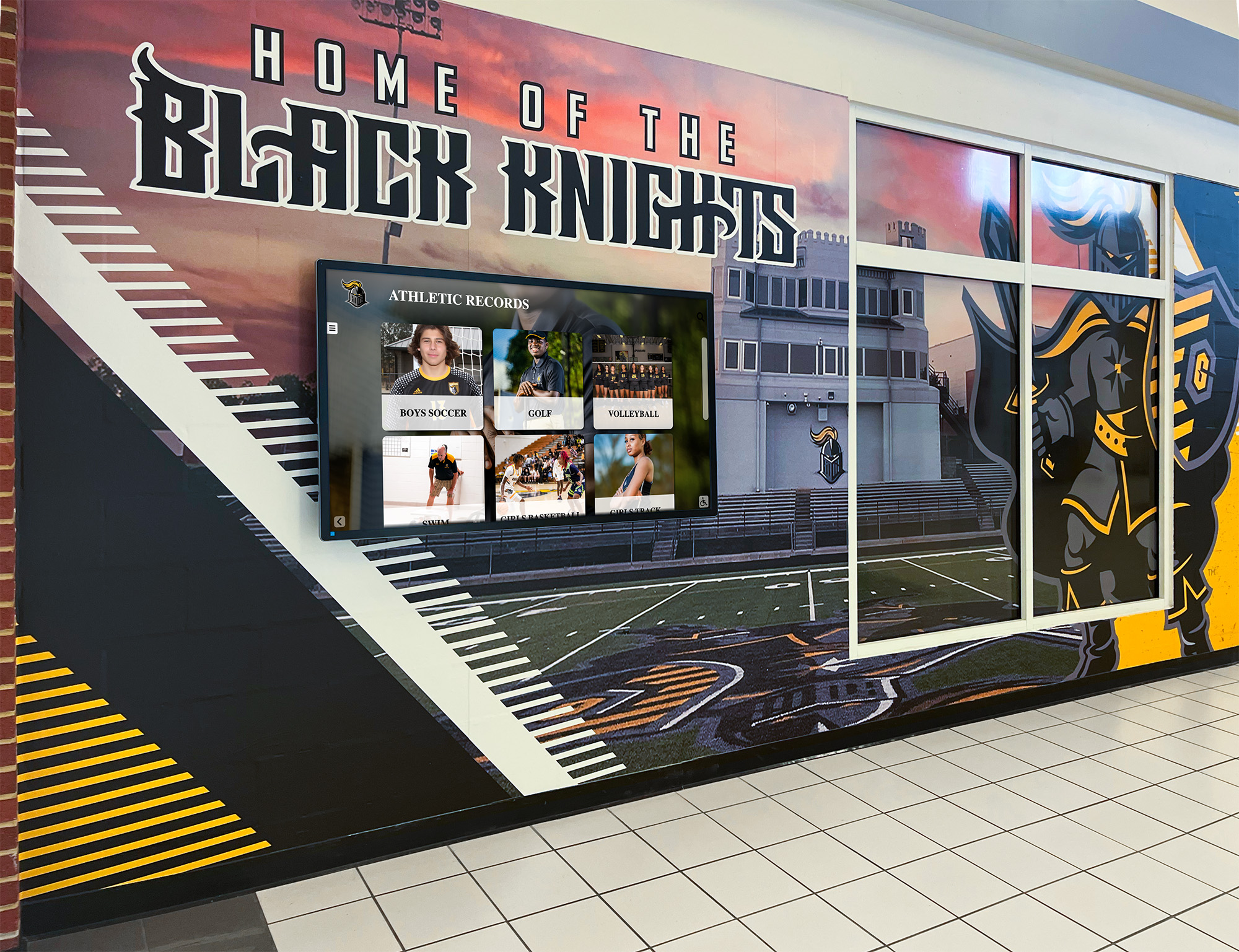
Integrated installations combining digital displays with traditional murals create cohesive recognition environments that celebrate institutional identity
Sustainable Management and Growth
Long-term recognition success requires dedicated staffing, clear processes, and organizational commitment ensuring systems remain current and valuable rather than becoming outdated and neglected.
Staffing and Responsibility Assignment
Designate specific staff with formal responsibility for recognition content management rather than treating it as additional duties anyone handles when convenient. This accountability prevents recognition from being perpetually deferred as competing priorities demand attention.
Alumni relations staff represent natural owners given their relationship focus and alumni network knowledge. Development staff bring donor recognition expertise and cultivation perspectives. College advancement professionals understand program-specific achievements and maintain college-specific alumni connections. IT or communications staff provide technical content management capabilities.
The most effective approaches assign primary coordination responsibility to one role while distributing specific tasks across multiple contributors based on expertise and institutional relationships.
Content Submission Processes
Establish clear procedures enabling various stakeholders to submit new recognition content or updates:
- Alumni self-submission forms where graduates can provide updated career information and recent achievements
- College nomination processes through which deans or department chairs recommend distinguished graduates from their programs
- Development identification where major gift officers suggest donor recognition appropriate for touchscreen inclusion
- Athletics coordination ensuring comprehensive athlete and coach recognition
- Class reunion committees submitting accomplished classmates during reunion planning
- Student research projects incorporating alumni interview and profile development as experiential learning
These distributed submission pathways tap diverse information sources while building broad ownership for recognition program success across multiple university units and alumni constituencies.
Technology Partner Selection
Choosing appropriate technology vendors significantly impacts implementation success and long-term satisfaction. Purpose-built recognition platforms like Rocket Alumni Solutions provide critical advantages over attempting to adapt generic digital signage systems for complex recognition purposes:
- Recognition-Specific Features: Pre-built functionality addressing unique alumni recognition needs including comprehensive profile management, achievement categorization, multimedia organization, robust search and filtering, and web accessibility extensions
- Educational Experience: Specialized understanding of university recognition goals, student engagement patterns, alumni relations priorities, and development integration requirements that generic technology vendors lack
- Implementation Support: White-glove setup assistance ensuring successful launches rather than leaving universities to figure out complex technical and content workflows independently
- Ongoing Training: Continuous education helping staff leverage platform capabilities fully while adapting to personnel transitions that inevitably occur
- Platform Evolution: Regular enhancements driven by education sector feedback ensuring capabilities advance with changing expectations and emerging technologies
These specialized capabilities justify investment in dedicated recognition platforms like those from Rocket Alumni Solutions over generic alternatives requiring extensive customization while delivering inferior user experiences and requiring ongoing technical expertise most universities lack internally.
Transformative Benefits for the URI Community
Beyond solving specific recognition limitations, comprehensive interactive alumni systems deliver wide-ranging benefits across multiple URI constituencies and institutional priorities.
Student Inspiration and Career Development
Current URI students represent the population gaining greatest practical benefit from enhanced alumni recognition when implemented thoughtfully with student needs central to content and design decisions.
Role Model Discovery and Aspiration
Comprehensive alumni recognition enables students to discover graduates whose career paths align with their own interests and aspirations. A marine biology student explores URI oceanography alumni working in research institutions, conservation organizations, and maritime industries—gaining concrete examples of what career success looks like within their chosen field while understanding diverse employment opportunities their education prepares them to pursue.
First-generation college students particularly benefit from discovering URI alumni from similar backgrounds who have achieved remarkable success. Seeing graduates who share hometown origins, family circumstances, or demographic characteristics achieving distinction communicates powerfully that they too can accomplish extraordinary things—combating imposter syndrome and strengthening persistence when academic challenges feel overwhelming.
Networking and Mentorship Foundations
Interactive systems can facilitate alumni-student connections extending beyond simple recognition to active relationship development. Advanced implementations enable students to request informational interviews, submit questions to featured alumni, or signal interest in specific career guidance—transforming passive inspiration into actionable networking that directly supports career development and professional preparation.
Even without direct connection features, recognition provides students valuable networking preparation. Before attending career fairs, alumni events, or professional conferences, students can research URI graduates working in target companies or industries, arriving prepared with informed questions and genuine enthusiasm about potential employer connections to their university community.
Academic Program Marketing
Prospective students and families researching URI as enrollment decision factors increasingly seek authentic evidence of educational quality and career outcomes beyond institutional marketing claims. Comprehensive alumni recognition provides this evidence through hundreds of real examples demonstrating what URI graduates accomplish across diverse fields.
According to enrollment research, prospective students consistently rank “graduate success” among their top institutional selection criteria. Yet most universities struggle to make this abstract concept concrete and credible. Interactive recognition delivers compelling, searchable evidence that prospective families can explore independently, discovering alumni relevant to their specific interests and career goals rather than relying solely on curated examples institutions cherry-pick for recruitment materials.
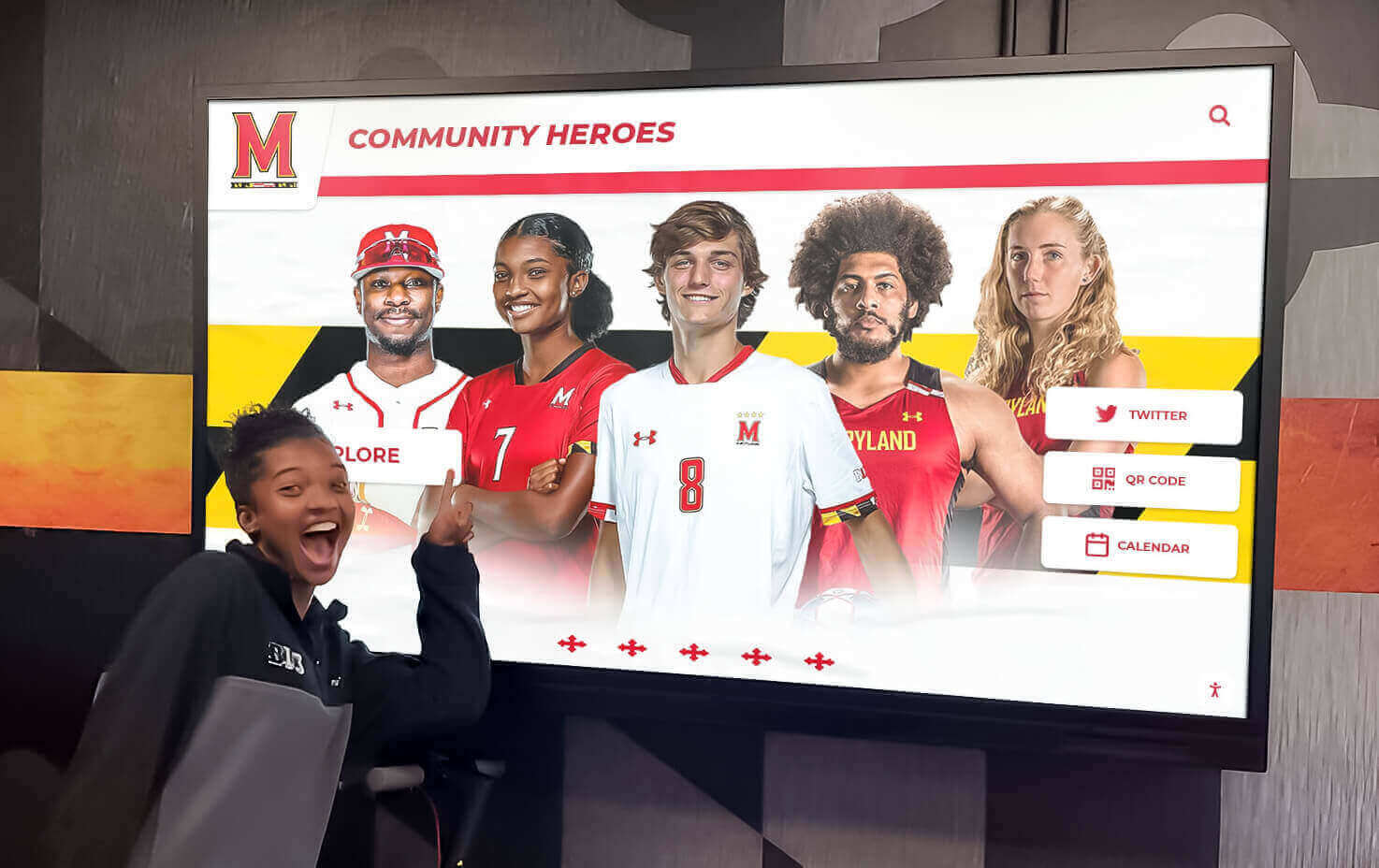
Accessible recognition displays inspire students by demonstrating achievable pathways from URI education to career accomplishment and community leadership
Alumni Engagement and Lifelong Connection
While student benefit provides immediate justification, comprehensive recognition equally serves alumni populations by strengthening the emotional bonds and practical connections that sustain lifelong institutional relationships.
Visibility and Validation
Recognition matters to alumni because it signals that URI continues to value their connection and celebrate their achievements long after graduation. Distinguished graduates who receive appropriate acknowledgment feel that their alma mater pays attention to their careers and takes pride in their accomplishments—validation that strengthens emotional attachment and motivates continued engagement.
This psychological benefit proves particularly significant for alumni whose achievements might not generate widespread public visibility despite representing genuine excellence. The dedicated educator shaping young lives in local schools, the committed social worker serving vulnerable populations, the innovative small business owner creating employment in their community—these graduates make meaningful contributions that deserve celebration even though they don’t generate national headlines. URI recognition affirms that their success matters and their contributions reflect well on the university community.
Reunion and Event Programming
Interactive recognition provides natural focal points for reunion activities and alumni programming. Milestone reunion classes can explore their cohort’s collective achievements, discovering what classmates have accomplished since graduation while reminiscing about shared experiences. Alumni association events can feature recognition exploration combined with informal gathering and networking.
The alumni reunion planning strategies demonstrate how digital recognition systems support comprehensive engagement programming that strengthens community bonds while giving alumni compelling reasons to maintain active connection with their institutions and each other.
Generational Legacy Building
Multi-generational URI families gain special connection opportunities through recognition systems that document family legacy across decades. Parents can explore their own achievements alongside their children currently enrolled or recently graduated. Siblings discover how their individual accomplishments connect to broader family URI traditions. Grandparents share recognition profiles with grandchildren, strengthening family identity rooted in shared educational heritage.
These generational narratives prove particularly valuable for institutional advancement where family giving traditions sustain many universities through sustained philanthropic support across multiple generations maintaining connections through educational experiences, career networking, and shared pride in URI affiliation.
Development and Fundraising Support
Advancement professionals recognize that donor recognition extends far beyond courtesy acknowledgment—it represents strategic infrastructure influencing cultivation effectiveness, gift retention, and philanthropic culture throughout communities.
Stewardship Demonstration
URI alumni considering major philanthropic investments naturally evaluate whether the university demonstrates appropriate stewardship of generous support. Prominent, professionally executed recognition visible to broad audiences provides tangible evidence that URI appropriately acknowledges and appreciates significant contributions—building confidence that future gifts will receive similar respect and visibility.
Interactive systems enable nuanced recognition coordinating alumni achievement celebration with appropriate donor acknowledgment where relevant. Profiles can note that distinguished alumni also serve as benefactors supporting programs, scholarships, or facilities, connecting professional accomplishments to philanthropic leadership in ways that honor both dimensions of their URI contribution.
Cultivation Environment Creation
Development officers conducting facility tours with major gift prospects inevitably highlight impressive spaces demonstrating institutional quality and donor impact. Interactive recognition displays serve this cultivation purpose by showcasing vibrant, engaged alumni communities while demonstrating that URI maintains cutting-edge recognition infrastructure reflecting contemporary expectations and technological sophistication.
Prospects touring campus encounter comprehensive alumni celebration signaling that URI values relationships, maintains strong networks, and sustains connections with distinguished graduates who remain invested in institutional success—all factors influencing philanthropic decision-making for donors evaluating whether their potential support will join a vibrant giving community or represent isolated contributions to institutions lacking robust development cultures.
Class Giving and Reunion Fundraising
Recognition systems can specifically acknowledge reunion class giving and collective philanthropic achievements, creating positive peer pressure encouraging participation. When reunion cohorts see previous classes celebrated for fundraising success or participation rates, it creates motivation to achieve similar recognition through their own reunion giving campaigns.
The visibility of collective achievement proves particularly effective because it focuses on community participation rather than individual wealth, enabling all alumni to contribute meaningfully to goals their class can achieve together regardless of individual capacity limitations that might discourage participation in traditional individually focused campaigns.
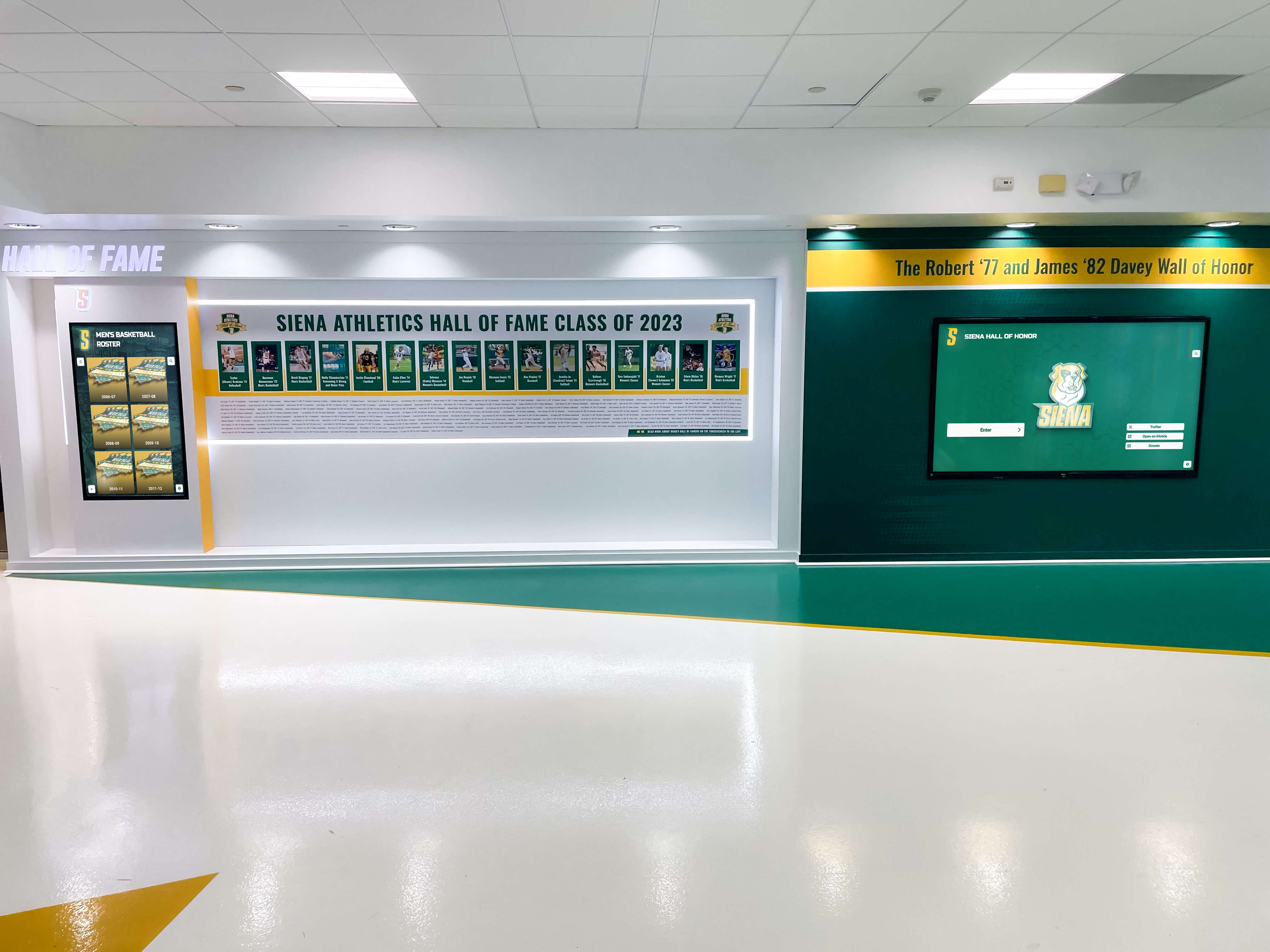
Professional recognition installations demonstrate institutional commitment to excellence while building pride throughout communities
Conclusion: Honoring RAM Legacy Through Modern Recognition
The University of Rhode Island’s distinguished alumni community represents one of the university’s greatest assets—generations of graduates whose accomplishments demonstrate educational impact, create valuable networks, and inspire current students through achievable examples of excellence. Yet traditional recognition limitations prevent URI from celebrating this legacy comprehensively while serving the multiple institutional priorities that effective alumni recognition can advance.
Interactive touchscreen technology like Rocket Alumni Solutions provides transformative capabilities enabling URI to honor unlimited distinguished graduates across all colleges, decades, and achievement categories through engaging experiences that students actively explore rather than passively encounter. From comprehensive multimedia storytelling and intuitive search functionality through web accessibility extending recognition globally and analytics revealing engagement patterns, these purpose-built platforms address every limitation that constrains traditional approaches while creating entirely new possibilities for connection, inspiration, and community building.
The strategic benefits extend across URI’s complete mission. Students gain career inspiration, role model discovery, and networking preparation supporting their professional development and post-graduation success. Alumni experience validation and visibility strengthening emotional bonds that sustain lifelong engagement and philanthropic support. Development professionals gain cultivation tools and stewardship infrastructure advancing fundraising effectiveness. Prospective students and families discover authentic evidence of educational quality informing enrollment decisions. And the broader URI community gains comprehensive celebration of collective achievement that builds pride, strengthens identity, and honors the institutional legacy that generations of Rams have built together.
Implementation requires thoughtful planning addressing location strategy, content development workflows, sustainable management processes, and integration with existing university systems and goals. Yet universities nationwide have successfully navigated these challenges, leveraging specialized recognition platforms and implementation support from vendors like Rocket Alumni Solutions who understand educational recognition needs and provide comprehensive guidance ensuring successful outcomes.
URI’s distinguished alumni deserve recognition systems matching the significance of their achievements while serving current students who will become the next generation of notable graduates carrying forward the RAM tradition of excellence, service, and impact. Interactive touchscreen technology provides the pathway to comprehensive celebration that honors past accomplishment while inspiring future success across all the diverse forms of achievement that define URI’s distinctive educational mission and community character.
Transform URI Alumni Recognition
Discover how Rocket Alumni Solutions can help the University of Rhode Island create comprehensive interactive recognition systems that celebrate every distinguished graduate while inspiring current students, strengthening alumni engagement, and advancing institutional goals.
Schedule Your Free ConsultationWhen URI invests in modern alumni recognition technology, it invests in student success, alumni relationship sustainability, advancement infrastructure, and institutional reputation—returns that far exceed initial technology costs while delivering value that compounds across decades as recognition grows more comprehensive and community connections deepen through systematic celebration of the remarkable individuals who define what it means to be a URI graduate.































