Winter sports halls of fame celebrate the unique dedication, skill, and perseverance required to excel in cold-weather athletics—from alpine skiers racing down mountains to hockey players battling on frozen surfaces, figure skaters performing breathtaking routines to snowboarders defying gravity with aerial tricks. These recognition programs honor athletes, coaches, and pioneers who transformed winter sports while inspiring new generations to pursue excellence on snow and ice.
Whether you’re exploring legendary institutions like the U.S. Ski & Snowboard Hall of Fame or considering how to implement winter sports recognition at your school or organization, this comprehensive guide covers everything from the history of winter sports halls of fame to modern digital recognition solutions that bring cold-weather athletic achievements to life through interactive displays and multimedia storytelling.
Winter sports hold a special place in athletic culture, requiring not only technical skill and physical conditioning but also the courage to compete in challenging environments where cold temperatures, ice, and snow create unique obstacles. Recognizing these achievements through halls of fame preserves winter sports history while motivating current athletes to pursue their own path to excellence.
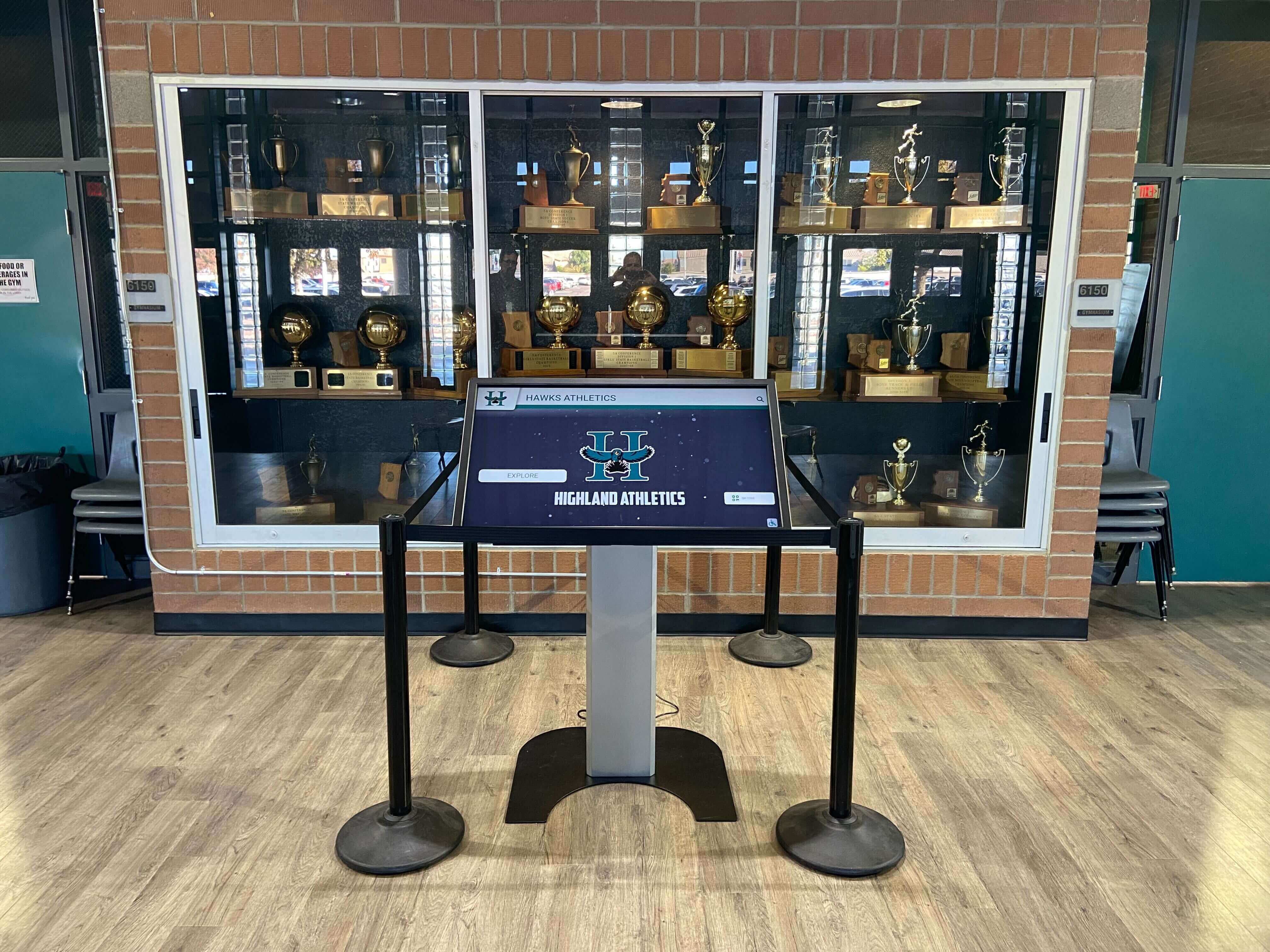
Modern recognition displays celebrate winter sports excellence across all competitive levels
The U.S. Ski & Snowboard Hall of Fame: Honoring Winter Sports Legends
Located in Ishpeming, Michigan—the birthplace of organized skiing in America—the U.S. Ski & Snowboard Hall of Fame stands as the premier national institution recognizing excellence in snow sports.
History and Mission
The U.S. Ski & Snowboard Hall of Fame honors athletes, pioneers, and visionaries who have significantly enriched the global sports of skiing and snowboarding. The institution preserves the heritage of American snow sports while inspiring future generations through comprehensive exhibits, interactive displays, and annual induction ceremonies.
According to official records, the Hall of Fame has inducted hundreds of distinguished individuals who shaped skiing and snowboarding through competitive excellence, coaching innovation, equipment development, resort management, and advocacy for winter sports access and development.
The Class of 2025 Inductees
The Class of 2025, inducted in September 2025, demonstrates the Hall of Fame’s commitment to honoring excellence across all dimensions of winter sports. This distinguished group includes:
Alpine and Nordic Skiing Excellence:
- Lindsey Van: Pioneering American ski jumper who won the sport’s first World Championship in 2009, breaking barriers for women in ski jumping
- Nancy Gustafson: Among the most highly acclaimed Paralympic skiers, earning seven gold and three silver medals in alpine skiing at Paralympic Winter Games from 1988 to 1994
Winter Sports Leadership:
- Raelene Davis: One of the sport’s most impactful marketers responsible for bringing countless skiers and riders into winter sports
- Chris Cushing: Legendary ski area developer with over 200 ski area projects across five continents
- Todd Richards: Snowboarding pioneer who helped establish snowboarding’s credibility and popularity
- Douglas Pringle: Adaptive skiing advocate who expanded winter sports accessibility for athletes with disabilities
The annual induction ceremony takes place in Ishpeming, creating a weekend celebration attracting winter sports legends, industry leaders, and enthusiasts from around the world.
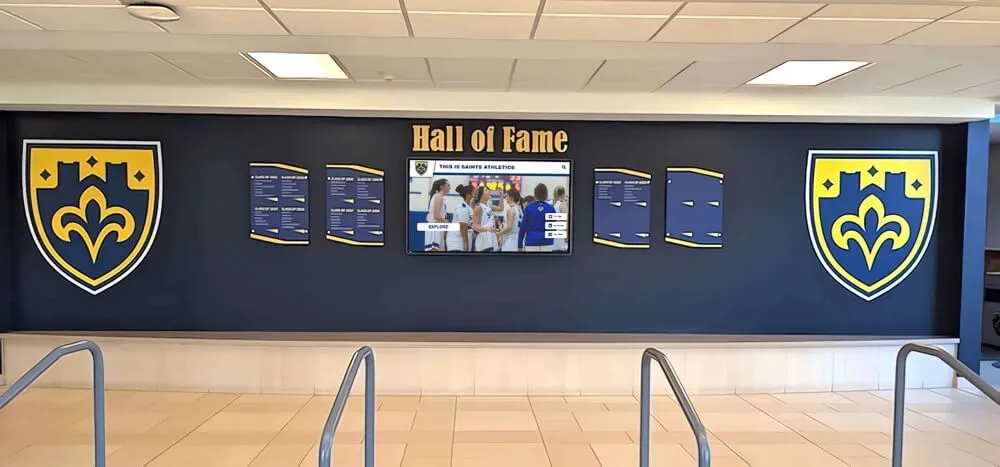
Athletic halls of fame showcase diverse winter and summer sports achievements
Regional and State Winter Sports Halls of Fame
Beyond the national institution, numerous regional and state halls of fame celebrate winter sports excellence within specific communities and geographic areas.
Colorado Ski and Snowboard Hall of Fame
Located in Vail, Colorado since 1992, the Colorado Ski and Snowboard Hall of Fame honors notable figures in Colorado’s rich skiing and snowboarding heritage. Colorado’s mountainous terrain has produced legendary ski resorts, championship athletes, equipment innovations, and a vibrant winter sports culture deserving permanent recognition.
The Colorado Hall recognizes outstanding skiers and snowboarders, influential resort developers and mountain operators, equipment innovators who advanced winter sports technology, coaches who developed championship athletes, and individuals who promoted Colorado as a premier winter destination.
Sun Valley Winter Sports Hall of Fame
The Sun Valley Winter Sports Hall of Fame, housed at the Community Library in Ketchum, Idaho, honors legendary local athletes and visionaries in the Wood River Valley. Sun Valley’s history as one of America’s first destination ski resorts creates a rich legacy of winter sports achievement spanning multiple generations.
Notable Sun Valley Inductees Include:
- Ice Skating Champions: Judy Blumberg (five-time National Dance Champion and two-time Olympic Team Member, U.S. Figure Skating Hall of Famer) and Sonya Dunfield (world champion figure skater)
- Hockey Leaders: John “Cub” Burke (founder of Sun Valley Youth Hockey, recognized for contributions to regional hockey development)
- Skiing Pioneers: Dick Dorworth (U.S. Ski and Snowboard Hall of Fame inductee, class of 2011) and W. Averell Harriman (visionary resort developer, U.S. Ski and Snowboard Hall of Fame inductee, 1969)
Winter Park Sports Hall of Fame
Founded in 1995, the Winter Park Sports Hall of Fame has inducted over 240 outstanding athletes, coaches, and contributors who shaped winter sports in the Winter Park, Colorado area. The Hall recognizes achievements in skiing, snowboarding, and other winter sports while preserving the region’s athletic heritage.
These regional programs serve essential functions by ensuring talented athletes from specific areas receive appropriate recognition, preserving local winter sports history and traditions, creating role models within particular communities, and building regional pride around winter sports achievements.
High School and College Winter Sports Recognition Programs
Educational institutions increasingly recognize the value of celebrating winter sports excellence through dedicated recognition programs that honor athletes, coaches, and teams.
Why Schools Need Winter Sports Recognition
Winter sports programs at high schools and colleges benefit tremendously from formal recognition that honors athletes who excel in cold-weather athletics alongside traditional fall and spring sports.
Motivating Current Athletes:
When current winter sport athletes see previous competitors from their school honored for excellence in skiing, hockey, or skating, achievement becomes tangible and attainable. Recognition displays in athletic facilities create constant reminders that dedication to winter sports earns lasting acknowledgment.
Preserving Winter Sports Heritage:
Schools with winter sports traditions risk losing institutional memory as coaches retire and decades pass. Digital recognition systems preserve complete program histories including championship seasons, record-breaking performances, coaching milestones, and program evolution across generations.
Building School Pride:
Visible celebration of winter sports achievement strengthens school spirit and creates institutional identity. Prospective students and families touring campuses see evidence of winter athletic excellence, while alumni maintain emotional connections to programs that honored their contributions.
Strengthening Community Connections:
In cold-weather regions where winter sports define community identity, school recognition programs celebrate broader cultural traditions. Hockey programs in Minnesota and Michigan, skiing programs in Colorado and Vermont, and ice skating programs in New England all connect schools to regional winter sports heritage.
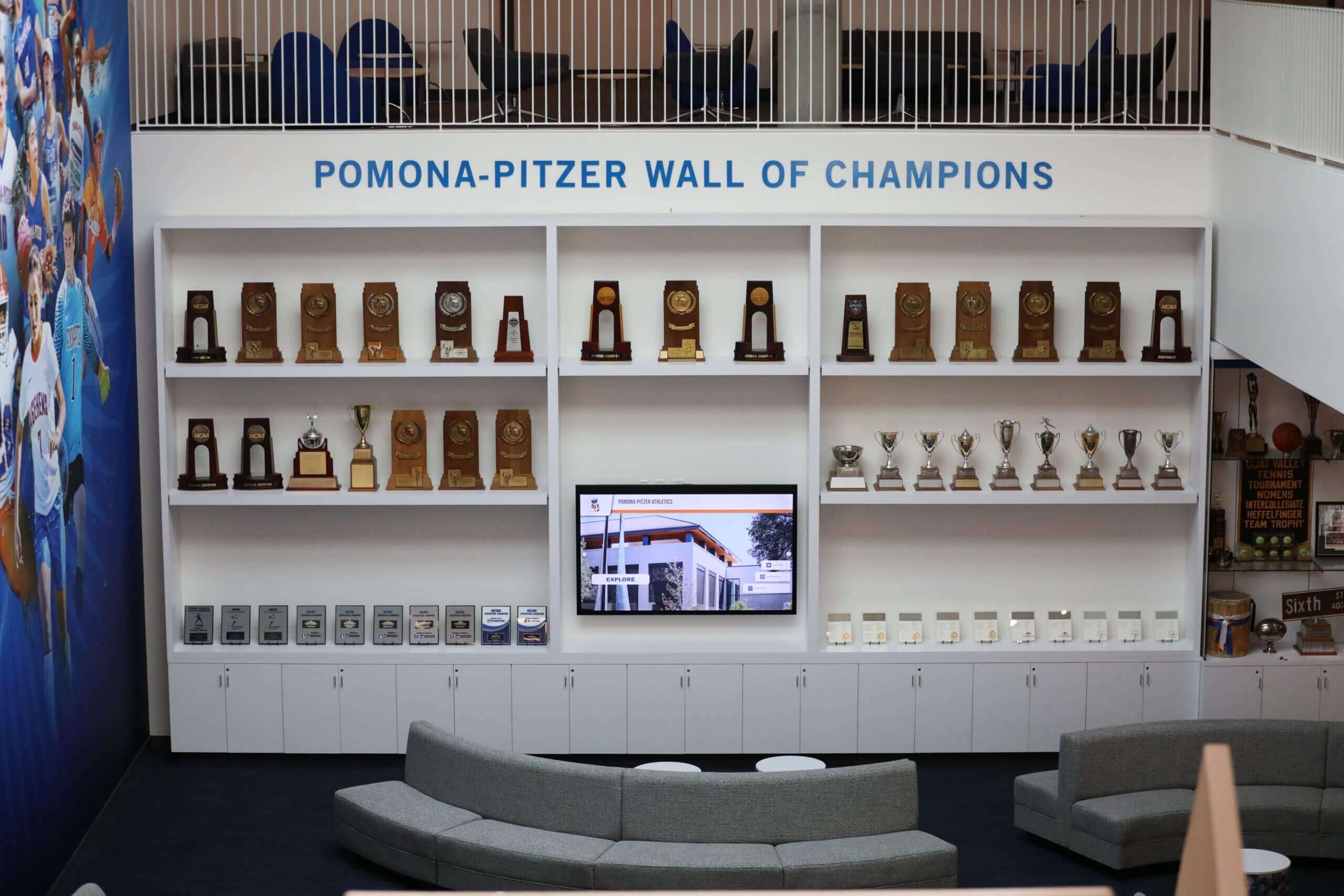
Athletic recognition programs celebrate achievements across all seasons and sports
Winter Sports Recognition Categories
Comprehensive winter sports halls of fame extend beyond individual athletes to honor diverse contributions across multiple dimensions of cold-weather athletics.
Alpine Skiing Recognition
Alpine skiing encompasses multiple disciplines requiring technical precision, fearless speed, and tactical intelligence across varying terrain and conditions.
Recognition Categories Include:
- Slalom and Giant Slalom: Technical events emphasizing precision turns and gate navigation
- Super-G and Downhill: Speed events requiring courage and explosive power on steep terrain
- Combined Events: All-around excellence across multiple alpine disciplines
- Team Championships: Relay and team competitions showcasing collective performance
- Individual State and National Titles: Top finishes at championship competitions
Schools and programs can document fastest course times, championship performances, state qualifier achievements, conference titles, and progression of program records over years.
Nordic Skiing Recognition
Nordic skiing combines endurance, technique, and strategic pacing across cross-country and ski jumping disciplines.
Categories Deserving Recognition:
- Cross-Country Distance Events: 5K, 10K, and longer races testing endurance and technique
- Cross-Country Sprint Events: Shorter high-intensity races emphasizing explosive power
- Ski Jumping: Technical jumping competitions measuring distance and style
- Nordic Combined: Events integrating cross-country and jumping excellence
- Relay Championships: Team competitions building on collective strength
Nordic athletes often exemplify sustained effort and mental toughness, making their recognition particularly meaningful for celebrating dedication and perseverance.
Hockey Excellence
Hockey’s combination of skating skill, tactical awareness, physical toughness, and teamwork creates unique recognition opportunities across multiple positions and contributions.
Hockey Recognition Categories:
- Scoring Leaders: Career and season goal totals, assist records, points championships
- Goaltending Excellence: Save percentage records, shutout achievements, championship performances
- Defensive Achievement: Plus-minus records, blocked shots, defensive awards
- Team Championships: Conference titles, state championships, national tournament appearances
- Sportsmanship and Leadership: Captain selections, sportsmanship awards, team-first contributions
For programs building hockey recognition, comprehensive athletic recognition systems provide frameworks celebrating diverse hockey contributions beyond pure scoring statistics.
Figure Skating and Ice Dancing Recognition
Figure skating combines athletic skill with artistic expression, creating performances requiring strength, flexibility, technical precision, and creative interpretation.
Recognition Opportunities Include:
- Individual Championships: Singles competition success at various competitive levels
- Pairs Excellence: Partnership skating requiring synchronized technical elements
- Ice Dancing Achievement: Rhythm, expression, and partnership in dance disciplines
- Technical Elements: Triple and quadruple jumps, difficult spin combinations
- Artistic Presentation: Performance quality, musical interpretation, creative choreography
Figure skaters often train for years to perfect technical elements while developing artistic expression deserving comprehensive recognition beyond championship results alone.
Snowboarding Recognition
Snowboarding’s evolution from countercultural rebellion to Olympic sport creates recognition opportunities celebrating diverse riding styles and competitive disciplines.
Snowboarding Categories:
- Halfpipe Excellence: Aerial tricks and amplitude in halfpipe competitions
- Slopestyle Achievement: Technical rail and jump combinations on feature-filled courses
- Big Air: Single-trick showcases emphasizing difficulty and execution
- Boardercross/Snowboard Cross: Head-to-head racing through courses with jumps and turns
- Alpine Snowboarding: Racing disciplines emphasizing speed and precision
Snowboarding recognition often celebrates progression and innovation, honoring athletes who pushed boundaries and developed new tricks or techniques.
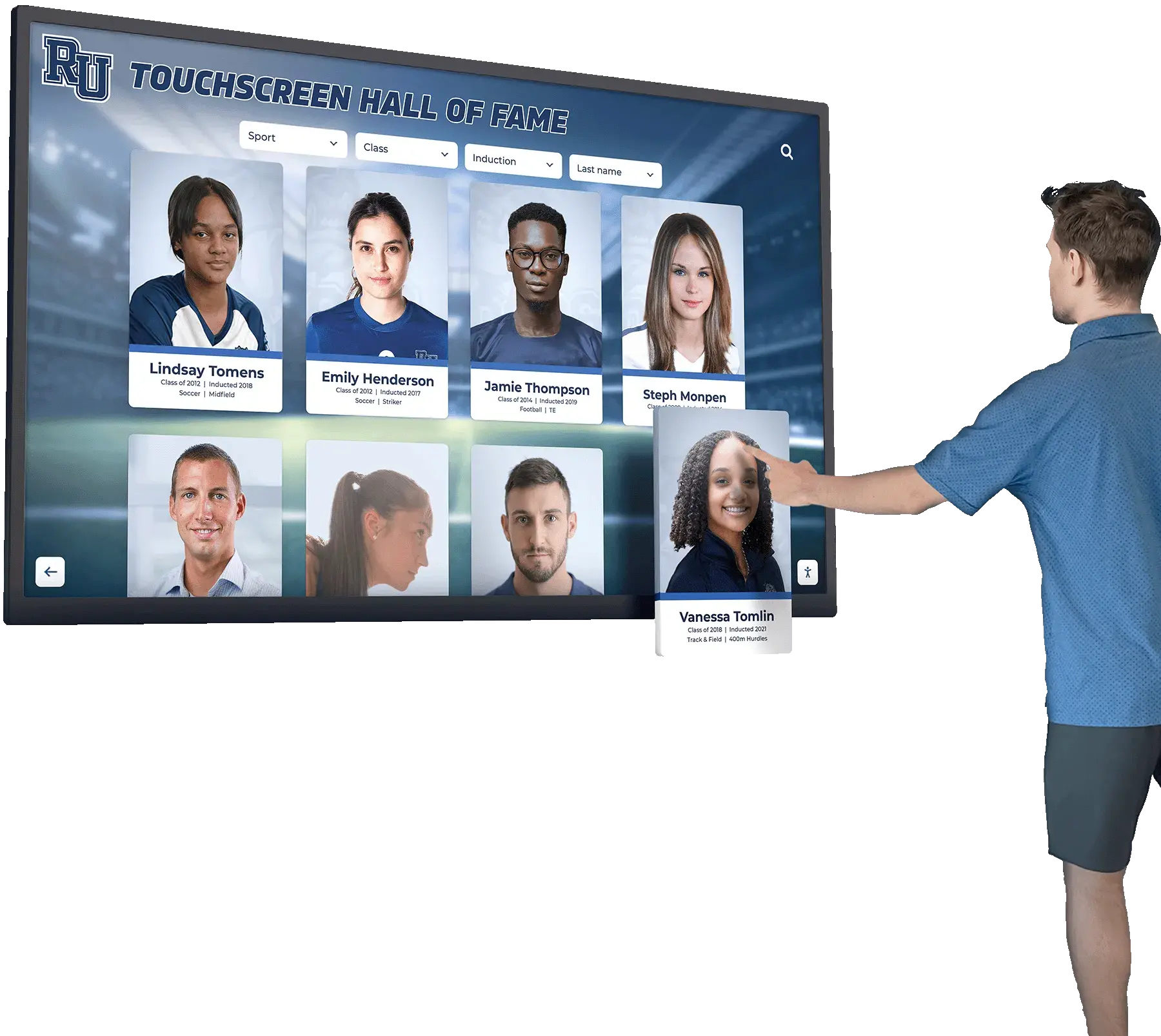
Interactive displays enable visitors to explore winter sports achievements in detail
Modern Digital Recognition Solutions for Winter Sports
Traditional winter sports recognition relied on physical plaques, trophy cases, and banner displays that face inherent limitations including finite space, high ongoing costs, minimal information capacity, and static presentations offering no interactivity.
Digital recognition technology has revolutionized how organizations celebrate winter sports achievement while addressing every limitation of traditional approaches.
Interactive Digital Winter Sports Displays
Digital recognition displays transform winter sports halls of fame from static displays into engaging experiences that honor athletes comprehensively while captivating visitors through interactive exploration.
Unlimited Recognition Capacity:
A single touchscreen display can showcase hundreds or thousands of winter sport athletes, coaches, and teams with detailed profiles for each honoree. Schools never face difficult decisions about removing older recognition to accommodate new champions, and every deserving athlete receives comprehensive acknowledgment regardless of when they competed.
Rich Multimedia Storytelling:
Unlike plaques listing just names and times, digital profiles incorporate high-resolution action photos showing athletes competing on snow and ice, career statistics and achievement documentation, video highlights of memorable races and performances, coach testimonials explaining what made athletes exceptional, personal reflections from competitors about their winter sports journey, and historical context placing achievements within program timelines.
This multimedia approach brings winter sports careers to life in ways that resonate with modern audiences expecting engaging digital content.
Sport-Specific Features:
Purpose-built platforms include winter sports-specific templates optimized for celebrating cold-weather athletics including skiing and snowboarding time trials and competition results, hockey statistics with position-specific metrics, figure skating technical elements and artistic scores, championship team rosters and season documentation, course records and facility-specific achievements, and historical comparisons placing individual achievements in program context.
Easy Real-Time Updates:
Cloud-based content management systems enable athletic directors or coaches to update recognition displays instantly from any internet-connected device. When teams win championships or athletes break records, recognition updates within minutes rather than waiting weeks for physical plaque production.
The Rocket Alumni Solutions Advantage
Schools and organizations implementing winter sports recognition need reliable technology partners providing comprehensive solutions specifically designed for athletic acknowledgment.
Rocket Alumni Solutions offers purpose-built platforms combining powerful features with intuitive operation that makes winter sports recognition straightforward for non-technical staff.
Key Platform Capabilities:
Turnkey Implementation: Complete packages including commercial-grade touchscreen hardware, cloud-based content management software, professional installation and setup service, comprehensive staff training, and ongoing technical support.
Winter Sports Templates: Sport-specific profiles showcasing skiing and snowboarding times and achievements, hockey player statistics and team contributions, figure skating elements and competition results, coaching career summaries, record board formats, and historical timelines.
Intuitive Management: Simple web-based interfaces requiring no coding skills, drag-and-drop photo organization, pre-formatted entry fields, bulk import capabilities for historical data, and mobile access enabling updates from anywhere.
Engagement Analytics: Built-in metrics revealing daily interaction counts, most-viewed athletes and content, search patterns, peak usage times, and visitor navigation paths helping optimize content and demonstrate program value.
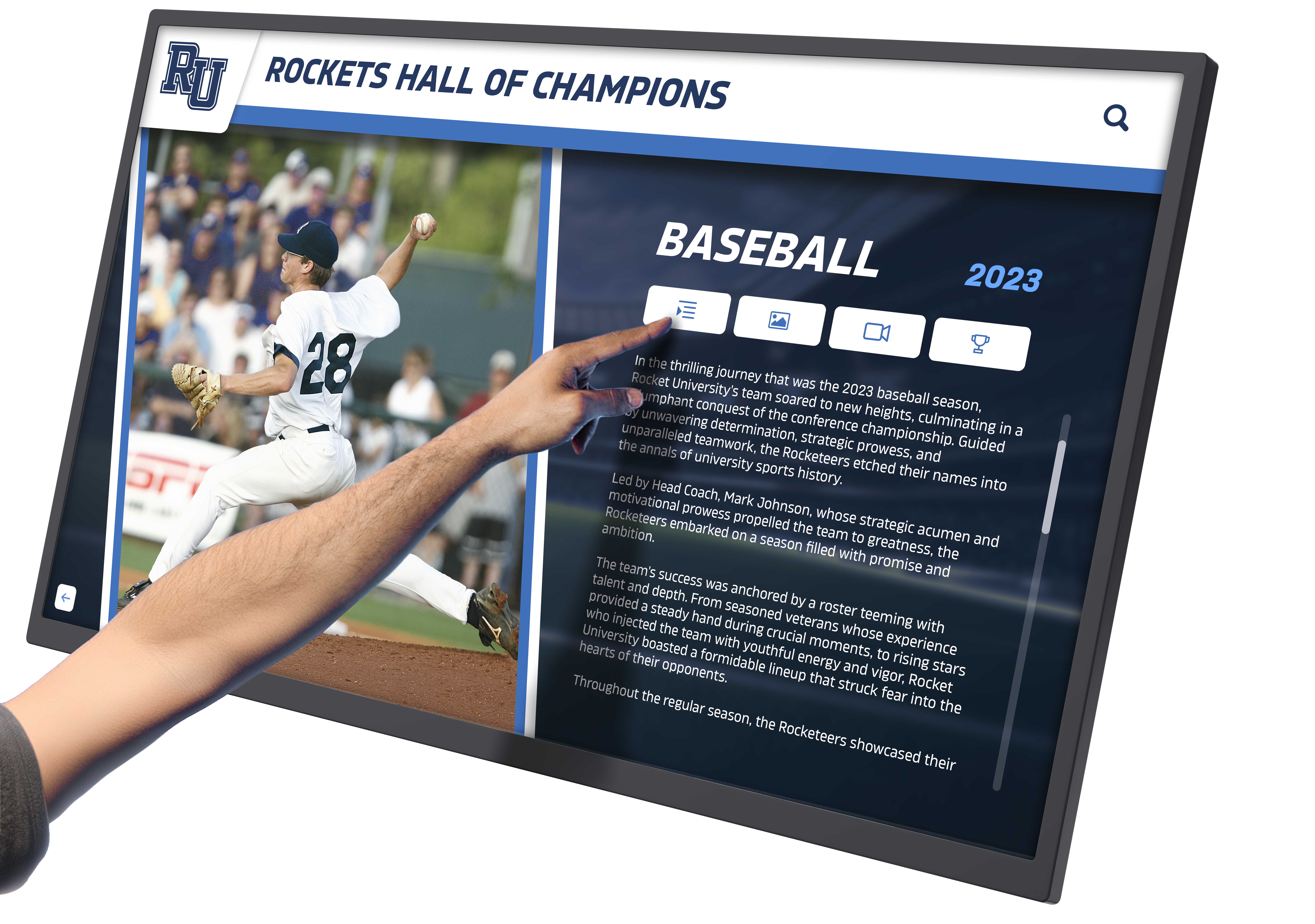
Modern touchscreen displays create engaging recognition experiences for winter sports programs
Creating Compelling Winter Sports Content
Technology provides the platform, but compelling content drives engagement and creates meaningful recognition that honors winter sports excellence appropriately.
Comprehensive Athlete Profiles
Effective winter sports profiles move beyond resume-style fact lists to craft engaging narratives including biographical information about athletic background, statistical achievements documenting competitive career, memorable moments describing signature performances, coach perspectives explaining what made athletes special, post-competition updates about college or career success, and personal reflections about lessons learned through winter sports.
Sport-Specific Profile Elements:
For skiing and snowboarding: Best times on specific courses, championship performances and placements, progression of improvement over seasons, technical skills that defined their style, and memorable race conditions or breakthrough moments.
For hockey: Position and career statistics, memorable goals or game-winning performances, defensive contributions and plus-minus records, leadership roles and team contributions, and playoff or championship achievements.
For figure skating: Technical elements mastered, artistic strengths and performance style, competition highlights and scores, partnership achievements for pairs and ice dancing, and progression from beginner through advanced levels.
Collecting Profile Content
Direct Athlete Outreach: Contact honored athletes requesting biographical information, career statistics documentation, personal photos from competition, video footage if available, and reflections on winter sports experience and impact.
Research and Documentation: For athletes unable to personally contribute, conduct thorough research through yearbooks and media guides, newspaper archives documenting competitions, coaching records and scorebooks, school athletic recognition programs that may include winter sports athletes, and interviews with coaches or teammates.
Video Content for Winter Sports
Video elements significantly enhance winter sports recognition through race and performance highlight compilations, interview footage with athletes reflecting on careers, coach testimonials explaining athlete impact, championship season documentation, and skills demonstrations showing signature techniques or moves.
Video brings winter sports achievement to life in ways that photographs and text alone cannot match, particularly for dynamic sports like skiing, snowboarding, and hockey where motion and speed define excellence.
Winter Sports Induction Ceremonies and Events
Formal induction ceremonies create memorable experiences that honor new members while building traditions strengthening winter sports community connections.
Planning Meaningful Induction Events
Strategic Scheduling:
Coordinate ceremonies with high-visibility occasions including winter sports championship events, homecoming weekends attracting alumni, school athletic banquets celebrating all sports, or dedicated hall of fame induction weekends making recognition the central focus.
Ceremony Elements:
Create programs that appropriately honor winter sports excellence through welcome remarks from athletic directors or school leadership, presentation of each inductee’s biography and achievements, acceptance speeches from new members, unveiling of recognition on digital displays, video tribute presentations, and receptions enabling networking and celebration.
Media and Promotion:
Generate coverage extending recognition visibility through press releases to sports media, social media promotion with photos and video highlights, professional photography and videography, and post-event communications celebrating inductees across multiple channels.

Prominent placement of recognition displays ensures visibility throughout athletic facilities
Best Practices for Winter Sports Recognition Programs
Long-term success requires thoughtful approaches ensuring programs remain vibrant and relevant across years and leadership transitions.
Maintaining Equitable Recognition
Winter sports halls of fame should celebrate diverse excellence including representation across all winter sports offered, different competitive levels from recreational through elite, various achievement types beyond just championships, boys’ and girls’ programs equally, and character and sportsmanship alongside athletic statistics.
Monitor recognition distribution patterns ensuring comprehensive celebration rather than narrow focus on specific sports, genders, or achievement types.
Clear Selection Standards
Published criteria prevent perceptions of favoritism while helping athletes understand recognition pathways including minimum achievement thresholds, statistical benchmarks or honors, character and conduct standards, time since graduation requirements (for alumni recognition), and nomination and review procedures.
Transparent standards maintain program credibility while motivating current athletes to pursue excellence knowing recognition follows genuine achievement.
Documentation and Archives
Preserve complete winter sports recognition history through comprehensive digital archives of all inductees, historical statistics and records documentation, championship team information and rosters, coaching tenure summaries, and program milestone preservation.
Complete archives ensure winter sports history remains accessible to current and future generations rather than fading from institutional memory.
Integration with Comprehensive Athletic Recognition
Connect winter sports recognition to comprehensive school achievement programs ensuring winter athletics receive appropriate emphasis alongside fall and spring sports including football, basketball, baseball, track and field, soccer, and other seasonal sports.
Balanced recognition demonstrates that schools value diverse forms of athletic excellence across all competitive seasons and sports.
Overcoming Winter Sports Recognition Challenges
Institutions implementing winter sports recognition encounter predictable obstacles. Proactive strategies address these challenges effectively.
Geographic and Climate Limitations
Not all schools have access to winter sports facilities or reside in climates supporting snow and ice sports. However, schools can still recognize winter athletic achievement through:
Travel Teams and Clubs: Honor students competing on club teams or traveling squads even when school doesn’t sponsor varsity winter sports programs.
Multi-Sport Athletes: Recognize students excelling in winter sports outside school alongside their in-school athletic achievements.
Facility Partnerships: Acknowledge partnerships with local ski resorts, ice rinks, or winter sports facilities enabling student participation.
Regional Context: Celebrate winter sports achievement appropriate to regional climate and available opportunities rather than comparing to programs in ideal winter sports locations.
Limited Historical Documentation
Many winter sports programs lack comprehensive historical records of past achievements, making retrospective recognition challenging. Solutions include:
Alumni Outreach: Contact former coaches and athletes requesting memories, statistics, and documentation they’ve preserved personally.
Community Research: Engage local newspapers, historical societies, and longtime community members who remember past winter sports achievements.
Phased Implementation: Begin with well-documented recent achievements while conducting ongoing research to add historical recognition over time.
Oral History Projects: Record interviews with longtime coaches, officials, and participants preserving stories that formal documentation may have missed.
Seasonal Recognition Timing
Winter sports seasons often conflict with other school priorities and recognition timing. Effective programs address this through:
Dedicated Winter Recognition: Host winter sports-specific banquets or ceremonies ensuring cold-weather athletes receive focused attention rather than competing with spring sports.
Year-Round Visibility: Use digital displays providing ongoing recognition rather than limiting acknowledgment to immediate post-season periods.
Integration with School Calendar: Connect winter sports recognition with natural calendar touchpoints like winter homecoming, championship celebrations, or school assemblies.

Athletic hallways showcase recognition across all seasons and competitive programs
Measuring Winter Sports Recognition Impact
Effective programs track both quantitative metrics and qualitative impacts demonstrating value while identifying improvement opportunities.
Engagement Metrics
For digital displays, track concrete indicators including daily interaction counts and trends over time, average session duration showing depth of engagement, most-viewed inductees and winter sports content, search query patterns revealing visitor interests, and peak usage times revealing optimal update scheduling.
These metrics demonstrate actual usage justifying program investment while revealing which winter sports content resonates most strongly with visitors.
Community Impact Assessment
Beyond numbers, evaluate broader influence through student-athlete feedback about motivation and inspiration, alumni satisfaction with recognition of their winter sports contributions, coach observations about program culture effects, prospective family responses during recruitment, and community members’ perceptions of winter sports program excellence.
Qualitative feedback reveals whether recognition achieves intended cultural and motivational impacts beyond simple visibility metrics.
Return on Investment
Document program value across multiple dimensions including staff time savings compared to traditional approaches, eliminated costs for ongoing plaque production, enhanced recruitment support through visible tradition, strengthened alumni engagement and giving patterns, and improved school reputation through winter sports excellence celebration.
Comprehensive ROI analysis demonstrates that digital recognition represents sound investment beyond initial costs, particularly for winter sports programs where traditional recognition often receives less emphasis than fall and spring athletics.
Conclusion: Honoring Winter Sports Excellence for Generations
From the U.S. Ski & Snowboard Hall of Fame celebrating skiing and snowboarding legends to high school programs honoring local winter athletic heroes, halls of fame serve essential functions preserving winter sports history, inspiring current and future athletes, building institutional pride, strengthening community connections, and demonstrating that cold-weather athletic excellence receives lasting recognition.
Modern digital recognition technology has transformed what’s possible in celebrating winter sports achievement. Interactive displays provide unlimited capacity for comprehensive recognition, rich multimedia content bringing athletic careers to life, instant updates celebrating achievements in real-time, web accessibility extending recognition worldwide, and engaging experiences that captivate visitors.
Whether honoring Olympic skiers, championship hockey teams, figure skating champions, or snowboarding pioneers, the principles of effective recognition remain constant: clear selection standards ensuring fairness, comprehensive documentation preserving complete stories, engaging presentation formats maximizing impact, and sustained commitment maintaining programs across years.
Schools and organizations implementing winter sports halls of fame benefit from partnerships with experienced providers like Rocket Alumni Solutions offering proven technology, winter sports-specific features, intuitive management, responsive support, and continuous innovation through regular platform improvements.
Celebrate Your Winter Sports Excellence
Discover how Rocket Alumni Solutions can help you create a winter sports hall of fame that honors your program's tradition while inspiring future champions on snow and ice.
Schedule Your Free DemoWinter sports achievement deserves recognition that matches its significance—celebration that’s comprehensive, engaging, permanent, and accessible. The question isn’t whether winter sports halls of fame matter, but whether your program will lead this recognition revolution or continue managing the limitations of traditional approaches.
Ready to honor your winter sports legacy? Explore how modern recognition platforms can transform how you celebrate the athletes, coaches, and teams that built your winter sports tradition and inspire those who will carry it forward into the future.































