Youth football programs shape more than just athletic ability—they build confidence, teach discipline, develop teamwork skills, and create foundational experiences that influence young people throughout their lives. Effective youth football drills provide the structured repetition young athletes need to master fundamental techniques while making practice engaging enough to sustain motivation through the challenging early stages of skill development.
The drills presented in this comprehensive guide address skill progression across multiple development stages, from introductory programs for beginners to competitive preparation for experienced youth players. Whether you’re coaching a first-year flag football team, leading a middle school tackle program, or training competitive youth athletes, you’ll find drill frameworks that build both technical competency and the self-assurance that comes from measurable improvement.
From footwork fundamentals and proper tackling technique to passing accuracy and defensive positioning, these proven youth football drills create practice environments where young athletes develop capabilities systematically while experiencing the success that builds lasting confidence in their abilities.
Youth football coaching requires balancing technical instruction with age-appropriate expectations. Young athletes develop at vastly different rates, both physically and cognitively. Drill selection must account for attention span limitations, varying coordination levels, and the need for frequent positive reinforcement that sustains engagement.
The most effective youth football drills share common characteristics: clear, simple instructions that young athletes can understand immediately; repetition structures that allow multiple practice opportunities in short timeframes; visible progress markers that help athletes recognize their own improvement; and modification options that challenge advanced players while supporting those still developing basic skills.
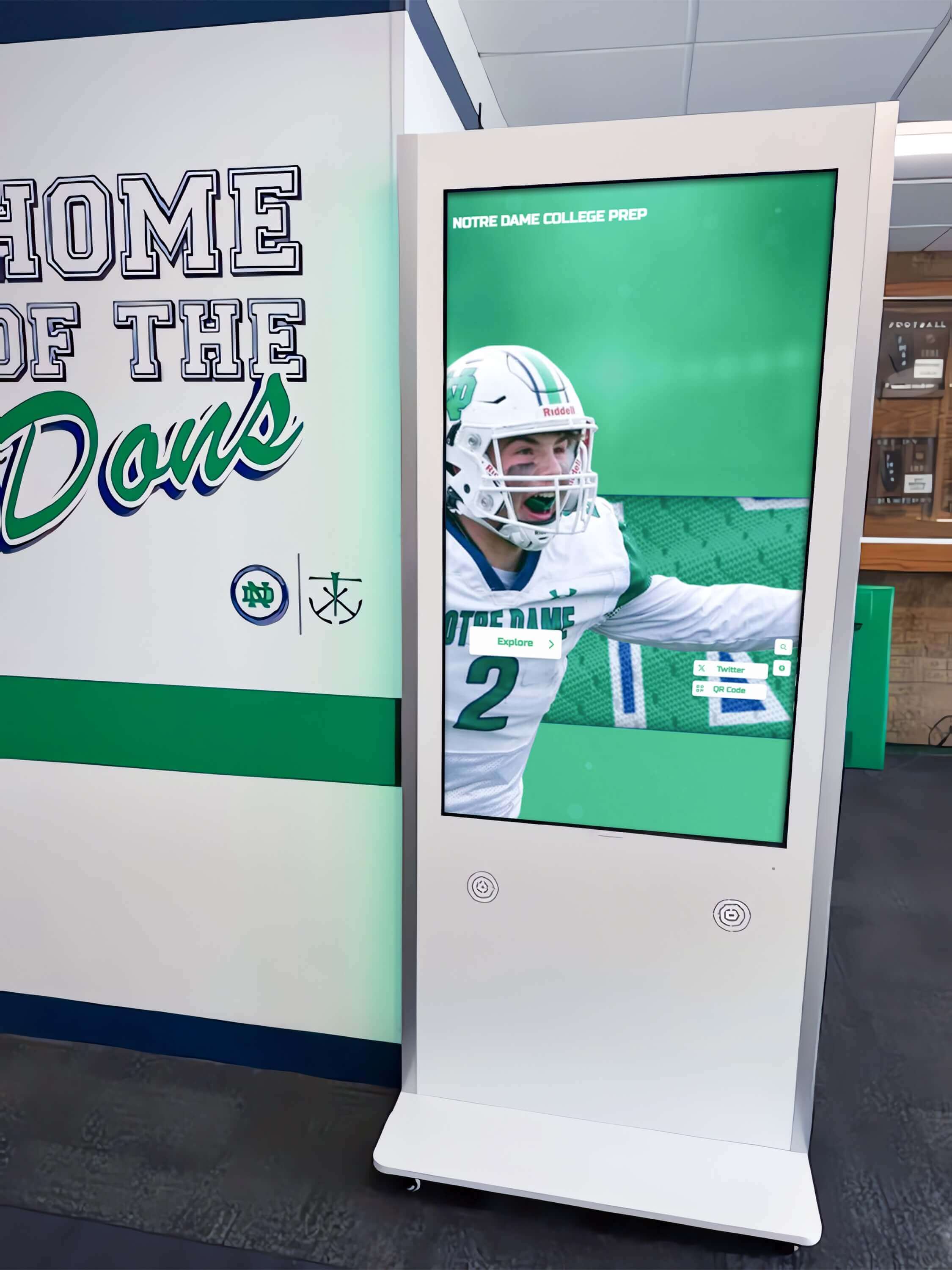
Modern football programs use digital recognition systems to celebrate player development and build motivation through visible achievement tracking
Foundation Drills for Beginning Youth Players
Beginning football players need drills that establish fundamental movement patterns and basic football concepts before progressing to complex techniques or competitive scenarios.
Proper Stance and Start Technique
Three-Point Stance Drill:
Teaching proper stance mechanics creates the foundation for effective blocking, rushing, and explosive starts. Young players often struggle with balance and weight distribution in unfamiliar positions.
Setup: Players line up in rows with sufficient spacing (5-6 feet between athletes). Coach demonstrates proper three-point stance positioning: feet shoulder-width apart, dominant hand down with fingertips touching ground, weight balanced slightly forward on balls of feet, back flat with hips slightly elevated, head up with eyes forward.
Execution: On command, players assume three-point stance and hold position for 10 seconds while coach checks individual form. After hold, players explode forward three steps on second command, maintaining low pad level and forward lean.
Progression: Add football start cadence (“Down, set, hut”) to simulate game conditions. Introduce reaction elements by varying count before “hut” command.
Coaching Points: Watch for common errors including too much weight on down hand (prevents explosive start), hips too high (reduces power), head down (limits vision), and feet too narrow (decreases stability).
Ball Security Fundamentals
Ball Carry Drill:
Fumbles in youth football often result from improper carrying technique rather than defensive pressure. Establishing correct ball security habits early prevents problems that become harder to correct later.
Setup: Each player with a football spreads across the field with adequate spacing. Demonstrate five-point ball security: ball tucked firmly against body, fingers spread across laces, forearm wrapped across front of ball, elbow tight to ribcage, ball tip covered by bicep.
Execution: Players practice transitioning ball between hands while maintaining five-point contact. Coach calls “right” or “left” to signal ball switches. Players jog in place while performing switches, then progress to slow movement forward, lateral, and backward.
Progression: Add defensive pressure by having players run through stationary defenders who attempt to punch ball out (controlled contact focusing on ball security rather than violent contact). Introduce ground drills where players practice securing ball when falling.
Coaching Points: Emphasize that ball security trumps speed—players should complete proper five-point setup before accelerating. Watch for loose ball positioning away from body, which creates fumble vulnerability.
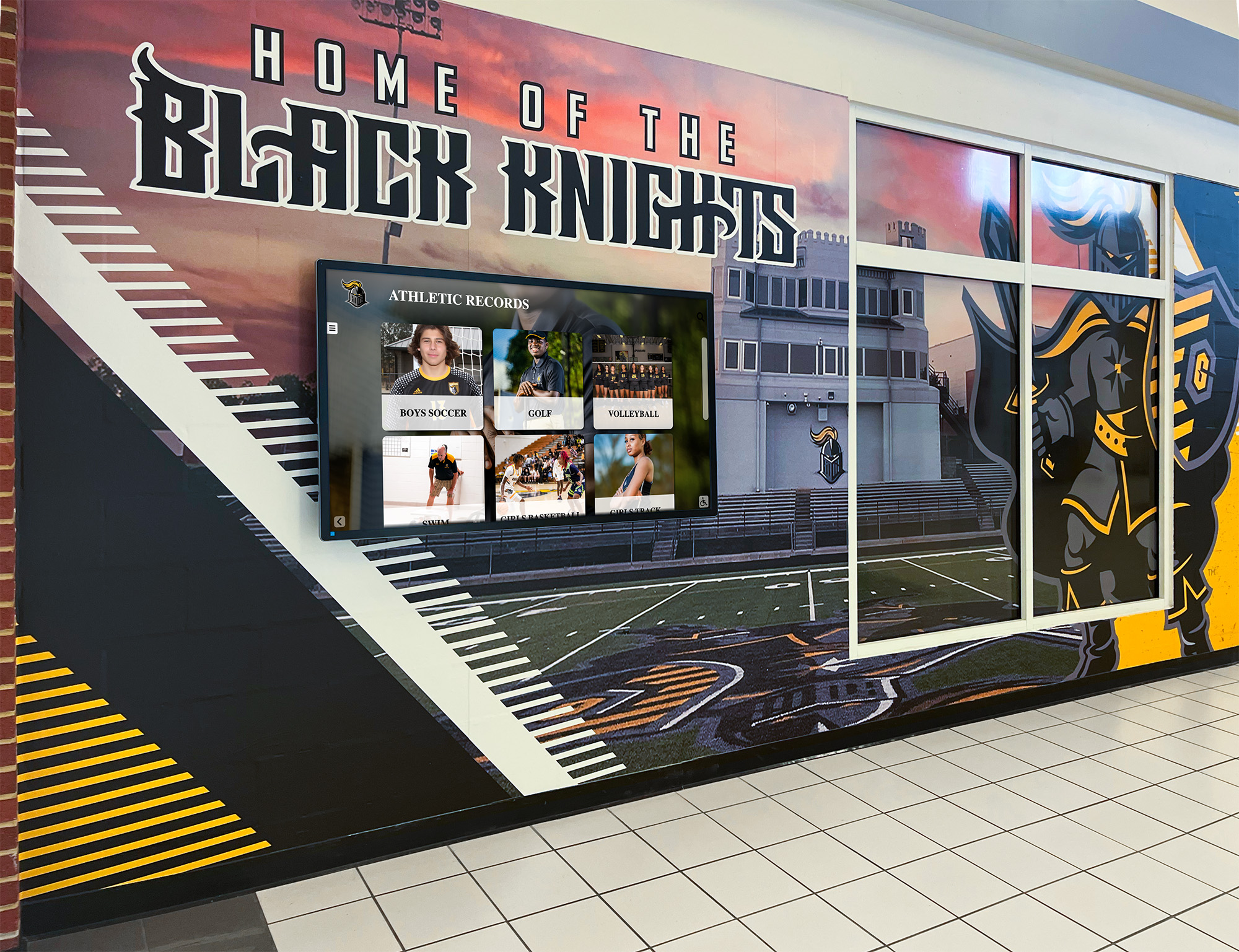
Recognition systems help youth programs celebrate skill development milestones and reinforce positive achievement
Skill Development Drills for Intermediate Players
Once young athletes master basic fundamentals, progression drills develop position-specific skills and introduce competitive elements that prepare players for game situations.
Offensive Skill Drills
Route Running Progression:
Route running requires precise footwork, body control, and spatial awareness that develop through deliberate practice progressions.
Setup: Place cones marking five-yard intervals from scrimmage line to 20 yards downfield. Position additional cones to mark cut points for various routes (slant, out, curl, post).
Execution: Receivers line up at scrimmage line and run designated routes at three-quarter speed, focusing on proper footwork approaching cuts: plant foot positioning, hip rotation, acceleration out of breaks, and maintaining balance through direction changes.
Progression: Increase speed to full tempo. Add quarterback to deliver passes at break points. Introduce defender providing light coverage to simulate game pressure.
Coaching Points: Focus on consistent depth and break points—routes must be run at precise distances to create timing with quarterback. Teach receivers to look for ball over inside shoulder on breaking routes rather than slowing to locate pass.
Pass Protection Drill:
Youth offensive linemen often struggle with pass protection fundamentals because the technique differs significantly from run blocking instincts.
Setup: Linemen position in pass protection stance (two-point stance, slightly narrower than run blocking stance, weight balanced on balls of feet). Defensive players line up in rush positions.
Execution: On snap count, offensive linemen execute kick-step backward (inside foot if protecting inside gap, outside foot for outside protection), establish wide base, punch hands forward with thumbs up and elbows tight, maintain position between rusher and quarterback location.
Progression: Start with controlled tempo focusing on footwork and hand placement. Progress to live rushes at game speed. Add stunt recognition by having defenders cross or loop.
Coaching Points: Emphasize patience—young linemen often lunge at rushers, creating vulnerability to speed moves. Teach “feet before hands” principle where footwork establishes position before engaging with hands.
Defensive Skill Drills
Tackling Progression (Safety-Focused):
Proper tackling technique protects both tackler and ball carrier while maximizing effectiveness. Youth programs must emphasize safe tackling fundamentals that reduce head and neck injury risk.
Setup: Use blocking dummies or tackling dummies for initial progression stages. Position players in tackling stance: feet shoulder-width apart, knees bent, hips low, back straight, head up with eyes on target.
Execution (Progression):
Stage 1 - Form Tackling: Players approach dummy at walking speed and execute tackle form: feet choppy approaching target, wrap arms around dummy with hands clasped behind, drive legs through contact, maintain head position to side (never lower head or lead with crown).
Stage 2 - Angle Tackling: Set up cones forcing players to approach ball carrier at angles rather than head-on. Execute same form tackle while adjusting approach angle.
Stage 3 - Live Tackling: Progress to controlled live tackling with ball carrier at half speed, then three-quarter speed. Tackler executes proper form while ball carrier works on breaking tackles.
Coaching Points: Never compromise head position—head must stay up and to side of ball carrier’s body. Emphasize “eyes through thighs” teaching point where tackler’s eyes stay focused on ball carrier’s hips/thighs (most reliable indicator of direction) rather than watching ball or upper body. Teach players that effective tackling comes from leg drive and proper positioning, not violence of collision.
Many youth programs now track player development milestones including mastery of fundamental techniques, helping athletes visualize their progression. Schools often recognize these achievements through programs like digital recognition displays that celebrate skill development alongside competitive achievements.
Gap Control Drill:
Defensive line success in youth football depends on gap discipline—maintaining assigned responsibility rather than chasing ball carriers out of position.
Setup: Align defensive linemen in base formation against offensive line (can use blocking dummies representing offensive linemen). Assign each defender specific gap responsibility (A-gap between center and guard, B-gap between guard and tackle, C-gap outside tackle).
Execution: On snap, defenders execute assigned technique: engage blocker with proper hand placement, shed block while maintaining gap responsibility, locate ball carrier, pursue to ball carrier without abandoning gap assignment.
Progression: Add running back with multiple play options (inside run, outside run, counter). Defenders must maintain gap discipline regardless of initial flow or misdirection.
Coaching Points: Emphasize that gap responsibility takes priority over tackles—defenders playing proper gap control force ball carriers into teammates. Teach recognition of blocking schemes that indicate gap threats (down blocks suggest outside run, pulling linemen indicate misdirection).
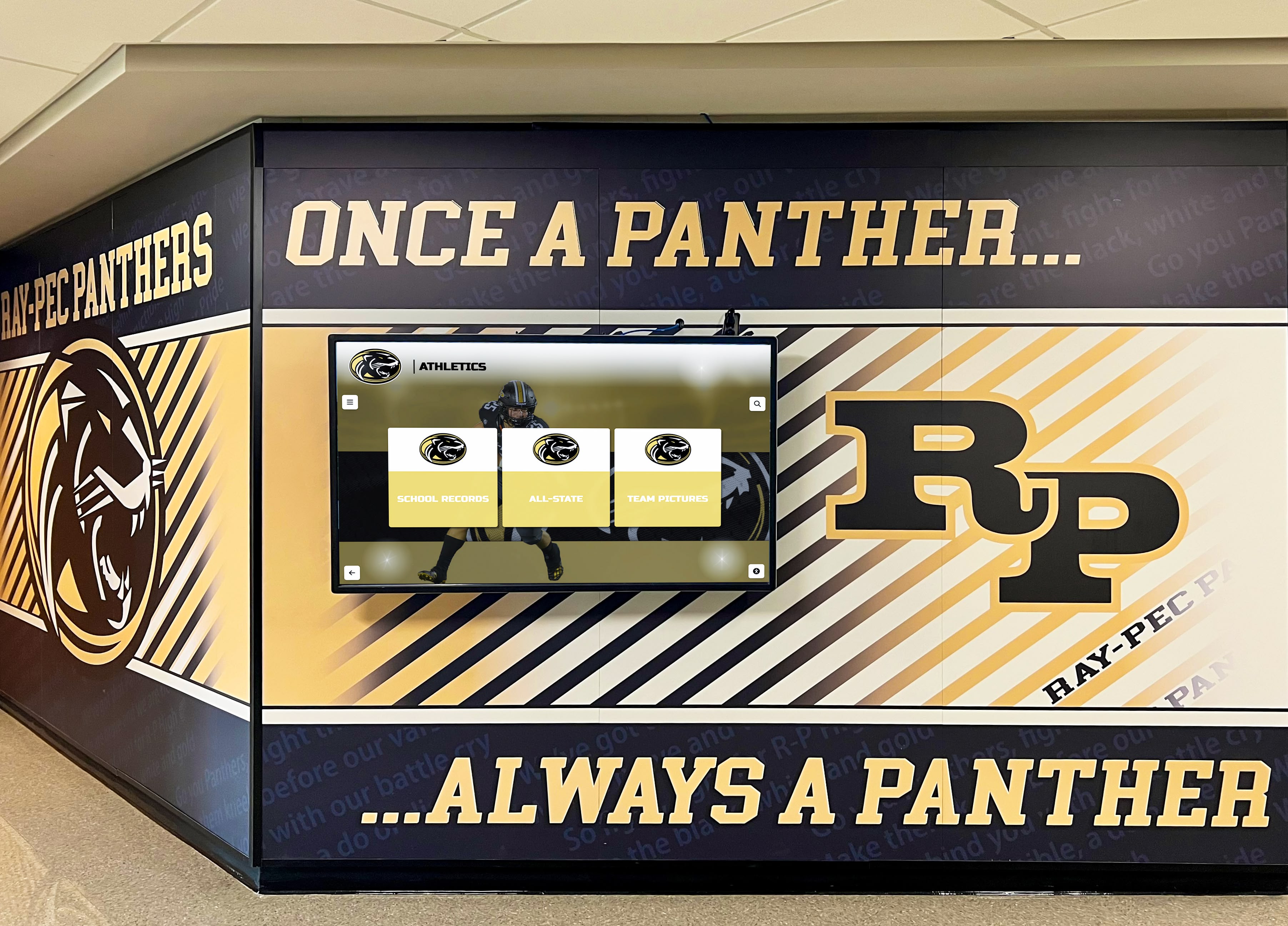
Digital displays showcase football program achievements and motivate young athletes by highlighting player development milestones
Team Development Drills
Football requires coordinated execution across eleven players, making team-focused drills essential for translating individual skills into collective performance.
Offensive Team Drills
Skeleton Drill (Offense):
Skeleton drills isolate offensive passing game execution without the chaos of full-contact situations, allowing focused work on route timing, spacing, and ball distribution.
Setup: Offense runs base personnel (quarterback, receivers, tight end, running back) against defensive backs and linebackers (no defensive line, no offensive line). Mark line of scrimmage and create realistic field positioning.
Execution: Offense runs plays from playbook at specified tempo (typically half speed, three-quarter speed, or full speed depending on practice stage). Quarterback executes reads and progressions, receivers run precise routes, defenders provide coverage without full contact.
Progression: Start with specific play installation focusing on route combinations and timing. Progress to full play calling with audibles and adjustments. Add situational constraints (down and distance, field position, time remaining).
Coaching Points: Emphasize timing between quarterback and receivers—passes should arrive as receivers break from routes. Teach quarterbacks to work through progressions systematically rather than locking onto primary receiver.
Inside Run Drill:
Inside running game success requires synchronized execution between offensive line, running back, and occasionally tight end or fullback.
Setup: Align offensive line, tight end (if applicable), and running back against full defensive front. Define specific plays (inside zone, power, counter, trap).
Execution: Offense executes assigned play with offensive line blocking designated scheme, running back taking proper path and reading blocks, defense working technique and gap responsibility. Begin at walk-through tempo to establish assignments, progress to full speed.
Progression: Add variations including different blocking schemes against same defensive front, same blocking scheme against different defensive alignments, and wrinkles like motion or shifts before snap.
Coaching Points: Watch for combination blocks between linemen—timing of double-team engagement and release to second level determines run success. Running back should read specific linemen to determine cut-back opportunities versus pressing designed hole.
Defensive Team Drills
Pursuit Drill:
Proper pursuit angles and effort separate dominant defenses from average units. Youth players often take inefficient angles or give up on plays away from their position.
Setup: Position ball carrier at various field locations. Defense aligns in base formation. Designate pursuit path rules: defenders pursue at angle toward where ball carrier will be (not where ball carrier currently is), maintain outside leverage if ball carrier is inside position, contain outside shoulder if defender has outside responsibility.
Execution: Ball carrier runs designated path (sweep, cutback, reversal). Entire defense pursues using proper angles while maintaining lane responsibility. Coach tracks whether all eleven defenders arrive at tackle point.
Progression: Add full blocking to create realistic pursuit challenges. Introduce change-of-direction scenarios where ball carrier reverses field.
Coaching Points: Emphasize full-team pursuit—players away from ball must sprint to tackle point even when they won’t make tackle. Develop expectation that multiple defenders arrive at every tackle. Teach depth of pursuit (defenders behind ball carrier’s depth should sprint to cutoff angle in front of ball carrier rather than chasing from behind).
Programs that consistently develop skilled football players often celebrate growth systematically, recognizing achievements at each development stage. Some schools coordinate recognition across multiple sports, as seen in programs supporting various athletic initiatives from golf tournaments to football programs, creating comprehensive athletic recognition systems.
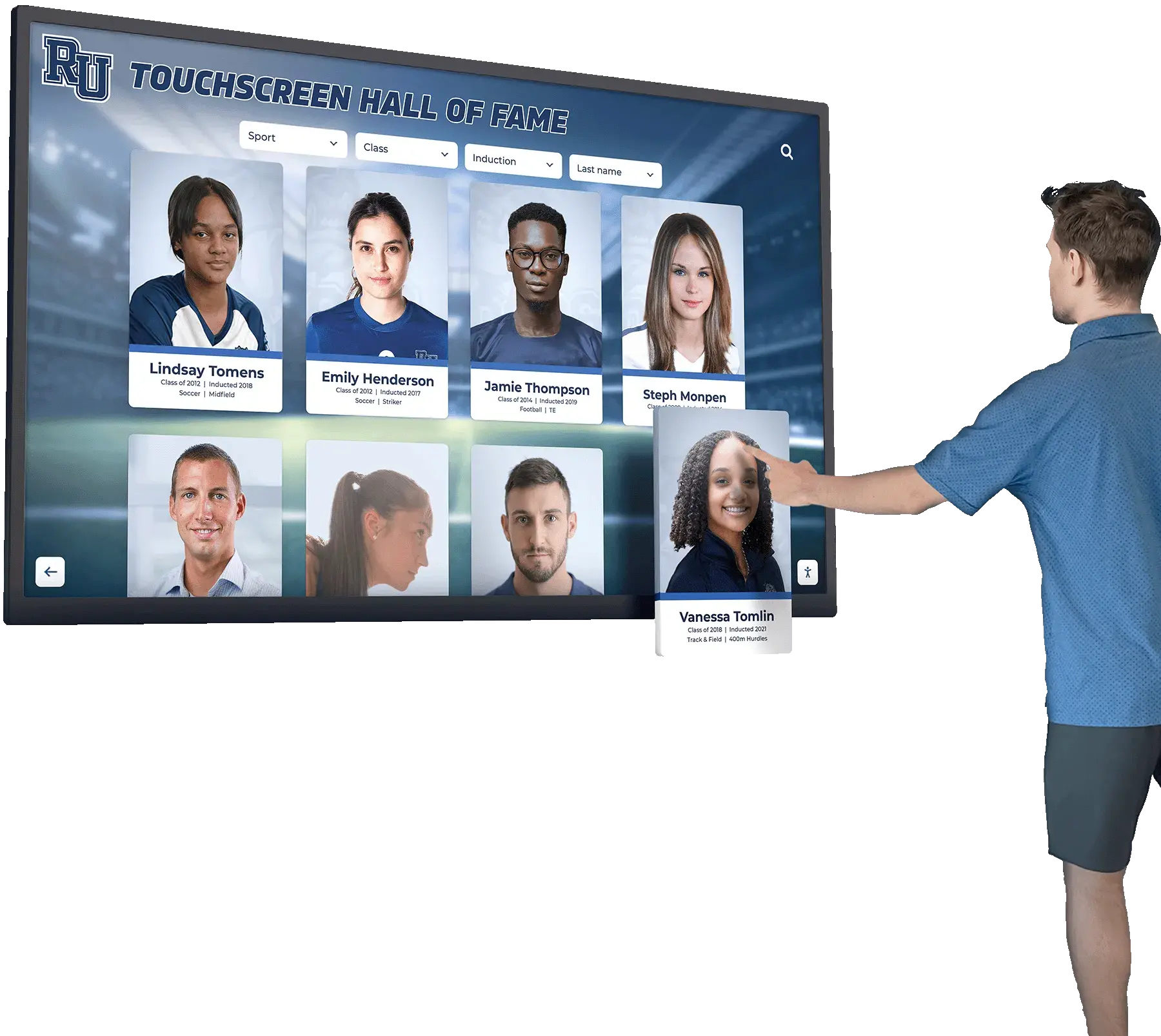
Interactive recognition systems allow programs to showcase player development across entire athletic careers, building long-term program pride
Conditioning Drills That Build Football-Specific Fitness
Football conditioning must develop the specific physical capacities the sport demands: explosive power, change-of-direction ability, repeated sprint capacity, and functional strength.
Agility and Footwork Drills
Ladder Drills:
Agility ladder work develops quick feet, coordination, and body control essential for football movements.
Setup: Place agility ladder flat on ground. Demonstrate various footwork patterns: one foot in each square, two feet in each square, lateral shuffle, ickey shuffle (in-in-out-out pattern), crossover steps.
Execution: Players perform designated pattern through ladder length at controlled speed focusing on clean foot placement. Rest and repeat for 3-5 repetitions of each pattern.
Progression: Increase speed while maintaining proper foot placement. Add football-specific elements like carrying ball through ladder, catching passes at ladder completion, or transitioning from ladder to blocking or tackling movement.
Coaching Points: Prioritize quick ground contact over height—feet should pop off ground rapidly rather than jumping high. Maintain forward body lean and athletic posture throughout drill.
Cone Drills:
Cone-based agility drills develop change-of-direction skills critical for both offensive and defensive success.
Setup: Arrange cones in various patterns: 5-10-5 shuttle (cones at 5 yards in both directions from start), three-cone drill (L-shape with 5-yard spacing), box drill (square with 5-yard sides), W-drill (five cones in W pattern).
Execution: Players execute designated drill pattern at maximum safe speed: proper plant-and-cut technique on direction changes, acceleration out of cuts, maintaining low center of gravity through changes.
Progression: Add football elements like ball carries, catching at specific points, or transitioning to blocking stance after pattern completion.
Coaching Points: Teach proper cutting mechanics: plant outside foot when cutting, drop hips and bend knees on plants, drive off plant foot with opposite arm driving forward, accelerate out of cut before reaching full upright position.
Speed and Power Development
Sprint Technique Progression:
Linear speed development begins with proper running mechanics—many youth athletes run inefficiently, limiting speed potential.
Setup: Mark 10-yard, 20-yard, and 40-yard distances. Begin with static demonstration of proper sprint mechanics: forward lean from ankles (not waist), high knee drive, arms pumping forward and back (not across body), driving off balls of feet, full extension through back leg.
Execution: Athletes execute short sprints (10 yards) focusing on single mechanical element: arm action only, knee drive only, push-off phase only. Progress to full-mechanics sprints at increasing distances.
Progression: Add football starts from three-point stance. Introduce resisted sprints with partner resistance or resistance bands. Progress to competition sprints in pairs or small groups.
Coaching Points: Most youth speed improvement comes from mechanical efficiency rather than pure strength or power development. Focus on relaxed upper body during sprints—tension slows movement. Emphasize acceleration phase (first 10 yards) where games are most often won.
Comprehensive youth sports programs celebrate diverse achievements, recognizing everything from athletic performance to character development. Resources like youth sports awards programs provide frameworks for building recognition systems that honor various accomplishments beyond just scoring statistics.
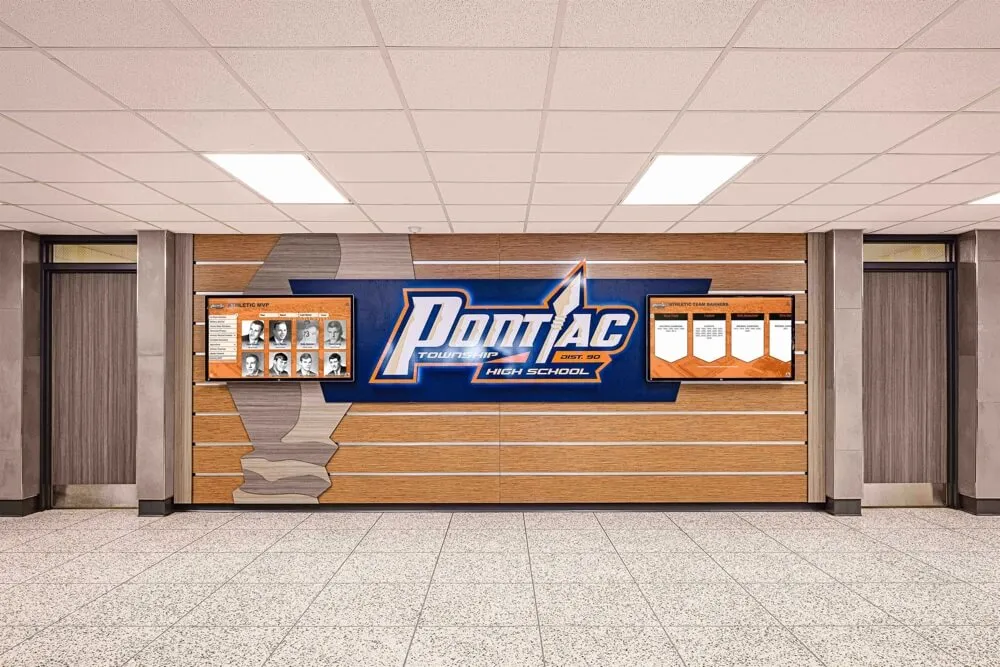
Athletic honor walls create lasting recognition for youth athletes who develop skills through dedicated practice and training
Position-Specific Advanced Drills
As players advance and specialize in specific positions, targeted drills develop the unique skills each position demands.
Quarterback Development Drills
Footwork and Drop Progression:
Quarterback drop mechanics determine timing with receivers and throwing platform stability.
Setup: Mark depth markers for three-step, five-step, and seven-step drops. Quarterback lines up under center or in shotgun based on play design.
Execution: Quarterback executes designated drop: quick three-step for quick game (5-7 yards), five-step for intermediate routes (10-15 yards), seven-step for deep routes (15+ yards). Focus on proper foot placement on final step, hip positioning opening toward target, balanced throwing platform.
Progression: Add progression reads requiring quarterback to move through multiple receiver options based on coverage. Introduce pressure scenarios requiring pocket movement or escape maneuvers.
Coaching Points: Final step should position quarterback in throwing stance with front shoulder pointed toward target. Teach quarterbacks to “pat the ball” (brief pause with ball in throwing position) before delivering pass, creating consistent timing for receivers.
Receiver Development Drills
Ball Tracking and Adjustment:
Elite receivers consistently catch poorly thrown passes by adjusting to ball location rather than expecting perfect delivery.
Setup: Receivers line up at various depths and positions. Quarterback or coach delivers passes at different trajectories and placements: high, low, inside shoulder, outside shoulder, over shoulder on deep routes.
Execution: Receiver tracks ball from release, adjusts hands to ball location (diamond hands for high catches, basket catch for low passes), secures catch before attempting yards after catch, completes catch through ground contact if diving.
Progression: Add defensive pressure requiring receiver to catch in contested situations. Introduce catches at boundary where receiver must toe-tap or maintain legal position while securing ball.
Coaching Points: Teach receivers to “look ball into hands”—watch ball contact hands rather than looking upfield before securing catch. Emphasize that hands should move to ball rather than waiting for ball to reach stationary hand position.
Offensive Line Development Drills
Combination Block Progression:
Combination blocks (double-teams that release to second level) separate good offensive lines from great ones but require precise timing and communication.
Setup: Two offensive linemen align next to each other against defensive lineman and linebacker at second level. Identify combination block type: vertical (double-team to linebacker), slide (inside double-team with playside release), or scoop (backside zone reach).
Execution: Offensive linemen execute coordinated block: initial double-team to control defensive lineman, communication of linebacker flow or blitz, release by designated lineman to second level, continuation by remaining lineman on defensive lineman.
Progression: Add linebacker movement requiring adjustment in timing or target. Introduce different defensive alignments changing blocking angles and release timing.
Coaching Points: Release must occur at precise moment—too early allows defensive lineman to disrupt play, too late leaves linebacker unblocked. Teach verbal or physical communication signaling release timing between blockers.
Defensive Back Development Drills
Press Coverage Technique:
Press coverage (jamming receivers at line of scrimmage) disrupts timing and limits receiver releases but requires technical precision.
Setup: Defensive back aligns in press position (within one yard of line of scrimmage, inside shade of receiver). Receiver runs various release techniques: inside release, outside release, speed release.
Execution: Defensive back mirrors receiver release, delivers hands to receiver’s chest within five yards of scrimmage, redirects receiver’s path, transitions to hip position in coverage phase.
Progression: Add various route types requiring different coverage techniques after jam. Introduce quarterback reading coverage and exploiting technique errors.
Coaching Points: Hands must strike receiver’s chest or inside shoulder—outside arm contact allows receivers to run by defender. Teach defenders to maintain inside leverage position (between receiver and middle of field) throughout coverage phase unless playing specific outside coverage scheme.
Recognition of skill development creates motivation that sustains the demanding practice required for football excellence. Many programs now implement comprehensive recognition systems, with some schools utilizing the same platforms that support booster club fundraising to celebrate athletic achievement.
Building Confidence Through Progressive Skill Development
Technical skill development matters, but youth football coaching must equally prioritize confidence building—the self-assurance that allows young athletes to execute learned skills in competitive situations.
Creating Measurable Progress Markers
Young athletes need visible evidence of improvement. Abstract concepts like “getting better” lack the concreteness that builds confidence. Instead, create specific, measurable markers that demonstrate progress:
Skill Checkpoints: Develop tiered skill assessments for fundamental techniques (stance and start, tackling form, pass catching, blocking technique). Athletes progress through levels—basic competency, intermediate proficiency, advanced mastery—with recognition at each stage.
Drill Performance Metrics: Track quantifiable drill results: cone drill times, pass catching percentages, consecutive tackles with proper form, successful blocks against resistance. Players compete against their own previous performances rather than only comparing to teammates.
Position Mastery Progressions: Create position-specific skill trees showing competencies required for different position levels (developmental, competitive, advanced). Players can visualize their progress toward mastery while identifying specific areas for focused improvement.
Positive Reinforcement Structures
Research consistently demonstrates that positive reinforcement creates more effective learning environments than criticism-focused approaches, particularly for young athletes still developing intrinsic motivation.
Specific Praise: Generic praise (“good job”) provides less value than specific recognition (“excellent job keeping your head up through that tackle” or “perfect route depth on that out-route”). Specific feedback teaches what to repeat while building confidence through recognized competence.
Effort Recognition: Celebrate maximum effort regardless of outcome, particularly during skill development stages. An athlete who executes proper tackling form but misses the tackle receives recognition for technique execution, creating confidence to continue proper technique development.
Peer Recognition: Structure drills that allow teammates to recognize each other’s achievements. “Best effort” or “best technique” acknowledgments from peers often carry more weight than coach recognition alone.
Many youth programs now track player development systematically, even creating permanent recognition for athletes who achieve specific skill milestones. Progressive schools have implemented systems similar to those supporting academic recognition programs, applying the same principles to athletic development.
Managing Challenge Levels
Confidence grows when athletes succeed at appropriately challenging tasks—assignments difficult enough to require genuine effort but achievable with current skill levels.
Drill Modifications for Skill Ranges: Design drills with built-in modifications allowing simultaneous participation across skill ranges. Advanced players face additional constraints (reduced time, increased complexity, added resistance) while developing players work fundamental versions. All athletes participate in the same drill structure without singling out less-developed players.
Progressive Difficulty Structures: Begin practice sessions with drills at comfortable difficulty levels, building confidence through early success. Progress to more challenging drills as practice continues and athletes warm up both physically and mentally.
Individual Goal Setting: Help athletes establish personal, achievable goals for each practice period. Goals might focus on technique improvement, effort standards, or specific skill development areas. Achieving self-selected goals builds confidence more effectively than only pursuing team or coach-imposed standards.
Practice Planning and Structure
Effective youth football drills require thoughtful practice planning that maximizes learning while maintaining engagement through age-appropriate structures.
Practice Session Design
Warm-Up Phase (10-15 minutes): Dynamic movement preparing bodies for practice intensity: jogging, dynamic stretching, movement drills, light skill work. Incorporate footballs early to maximize touches and maintain engagement.
Fundamental Skill Development (20-25 minutes): Position-specific work on technical fundamentals through drill progressions. Maintain high repetition counts with sufficient rest between attempts. Maximize participation by using multiple drill stations with position groups.
Team Installation and Refinement (20-25 minutes): Team-based drills integrating individual skills into coordinated schemes. Progress from walk-through to controlled tempo to full speed as understanding develops.
Competitive/Situational Work (15-20 minutes): Game-like situations allowing skill application in pressure contexts: goal-line situations, two-minute drills, short-yardage scenarios, backed-up situations.
Cool-Down and Reflection (10 minutes): Light activity reducing heart rate, static stretching, team gathering for review of practice themes and recognition of positive contributions.
Maintaining Engagement
Youth attention spans require strategies that maintain focus throughout practice:
Drill Variation: Rotate through different drill types and focuses rather than extended periods on single activities. Twenty minutes of the same drill tests young athletes’ mental endurance.
Competition Elements: Introduce competitive aspects within appropriate contexts: individual skill competitions, position group challenges, team competitions. Competition increases engagement but requires management to prevent excessive pressure.
Clear Success Criteria: Before each drill, explicitly state what success looks like. Ambiguous expectations create frustration while clear criteria allow athletes to self-assess and recognize achievement.
Immediate Feedback: Provide real-time coaching during drills rather than only speaking between repetitions. Athletes make faster connections between technique and results when feedback arrives immediately.
The support infrastructure surrounding youth sports programs significantly impacts player development and long-term engagement. Whether through dedicated coaches, engaged parents, or administrative professionals committed to program excellence, comprehensive support systems create environments where young athletes thrive.
Safety Considerations for Youth Football Training
Youth football safety demands constant attention across equipment, technique instruction, contact management, and environmental factors.
Equipment and Facility Safety
Proper Equipment Fitting: Helmets, shoulder pads, and other protective equipment only function properly when correctly fitted. Conduct fitting checks before each season and periodically throughout as young athletes grow. Replace damaged or worn equipment immediately.
Field Condition Monitoring: Inspect practice and game fields for hazards: holes, uneven surfaces, debris, adequate padding on permanent structures. Environmental conditions including extreme heat, lightning risk, or poor air quality require practice modifications or cancellation.
Emergency Preparation: Maintain emergency action plans including immediate access to communication devices, posted emergency numbers, designated personnel with CPR/first aid certification, and established protocols for various emergency scenarios including heat illness, head injury, and cardiac events.
Contact Management and Concussion Protocols
Progressive Contact Introduction: Limit full-speed contact in practice while maximizing skill development through controlled-contact drills. Research demonstrates that reducing practice contact lowers injury risk without compromising skill development or game performance.
Heads-Up Football Techniques: Emphasize tackling and blocking techniques that eliminate dangerous head-down contact. Never accept, tolerate, or teach techniques involving crown-of-helmet contact.
Concussion Recognition and Response: All coaches must recognize concussion symptoms and follow strict return-to-play protocols. When concussion is suspected, athletes must be immediately removed from participation and may not return until cleared by qualified medical professionals. “Tough it out” attitudes regarding head injuries have no place in youth sports.
Heat and Hydration Safety
Acclimatization Periods: Early-season practices must include progressive acclimatization periods allowing athletes to adapt to heat stress gradually. Follow established guidelines limiting equipment and contact during initial practice days.
Hydration Protocols: Provide scheduled hydration breaks independent of athlete requests for water. Young athletes often don’t recognize dehydration symptoms until already affected. Structure practices allowing frequent hydration opportunities.
Heat Illness Recognition: Monitor for heat illness symptoms including excessive fatigue, confusion, nausea, dizziness, or altered behavior. When heat illness is suspected, immediately remove athlete from activity, begin cooling procedures, and contact medical services if symptoms don’t rapidly improve.
Youth football programs must balance athletic development with comprehensive safety approaches that protect young athletes during critical growth years.
Building a Complete Youth Football Program
Effective youth football extends beyond practice field drills to encompass comprehensive program elements that support player development holistically.
Parent Communication and Involvement
Parents represent essential partners in youth football success. Regular communication regarding practice schedules, game information, player development progress, and program expectations keeps parents informed and engaged.
Structure parent involvement opportunities that add value without creating conflicts: assisting with equipment setup, managing administrative tasks, supporting team events, or participating in fundraising initiatives that expand program resources.
Establish clear communication channels for addressing concerns. Parents should understand how to raise questions about playing time, position assignments, or coaching approaches through appropriate channels rather than confronting coaches during practices or games.
Long-Term Development Philosophy
Youth football programs should emphasize long-term athletic and personal development over short-term competitive success. Research consistently demonstrates that early specialization and win-at-all-costs approaches lead to higher dropout rates, increased injury risk, and diminished long-term outcomes.
Structure programs prioritizing skill development and experience accumulation over winning percentages. Create playing time policies ensuring all athletes receive meaningful participation rather than only playing the most developed players.
Recognize that athletes develop at vastly different rates during youth years. Late bloomers deserve the same development opportunities as early developers. Many athletes who struggled in youth programs become successful high school or college players when given continued development opportunities.
Recognition and Program Culture
Systematic recognition of diverse achievements creates positive program culture while motivating continued participation. Recognize performance achievements, improvement and effort, leadership and character, academic accomplishment, and longevity and commitment.
Modern recognition systems allow programs to celebrate achievements comprehensively. Schools implementing digital recognition displays can showcase current player accomplishments alongside program history, creating connections between current athletes and those who came before while establishing traditions that extend beyond individual seasons.
Recognition systems that honor various accomplishment types—from mastering fundamental techniques to demonstrating exceptional sportsmanship to achieving academic milestones—reinforce program values while ensuring all athletes have opportunities for acknowledgment. Just as programs recognize achievements across different domains, including academic excellence similar to scholarship qualification, athletic recognition should celebrate diverse achievement pathways.
Seasonal Programming and Progression
Youth football programs function most effectively when organized around structured seasonal progressions that build systematically toward competitive readiness while preventing burnout.
Pre-Season Phase (3-4 weeks)
Focus on fundamental skill development, conditioning, and scheme installation without competitive pressure:
Early Pre-Season (Week 1-2): Equipment fitting and safety instruction, fundamental stance and movement drills, conditioning base development, basic offensive and defensive scheme introduction, team-building activities establishing culture and expectations.
Late Pre-Season (Week 3-4): Increased practice tempo and contact levels, refined scheme installation with play variations, position-specific skill development, controlled scrimmages introducing competitive elements, game-situation practice (goal-line, two-minute, etc.).
In-Season Phase
Balance competitive preparation with continued development and player welfare:
Early Season (Games 1-4): Heavy emphasis on scheme execution and assignment certainty, position depth development ensuring backup preparation, film study introducing game-situation learning, maintaining fundamental skill work preventing technique regression.
Mid Season (Games 5-8): Refined game planning based on specific opponents, increased situational preparation for likely game scenarios, reduced practice volume if fatigue indicators emerge, continued developmental opportunities for all roster members.
Late Season (Final Games): Focused preparation prioritizing game-specific needs, reduced practice contact managing accumulated fatigue, emotional preparation for season conclusion, recognition activities honoring senior/graduating athletes.
Post-Season Phase
Structure post-season activities supporting long-term development without extending competitive season inappropriately:
Reflection and Recognition: Team gatherings celebrating season accomplishments, individual recognition through award presentations, feedback collection from players and parents, season highlight compilation and sharing.
Development Planning: Individual skill assessment identifying off-season development priorities, position progression planning for returning players, program evaluation assessing what worked effectively versus areas requiring improvement.
Off-Season Preparation: Conditioning programs maintaining fitness without football-specific contact, skill development opportunities through camps or training programs, multi-sport participation encouraging athletic diversity and preventing burnout.
Youth athletes benefit from seasonal structure that builds toward competition while protecting against the year-round intensity that leads to physical and mental fatigue. Programs should encourage multi-sport participation rather than demanding year-round football commitment from young athletes.
Measuring Program Success
Effective youth football programs establish success metrics extending beyond win-loss records to capture the comprehensive development outcomes that matter most.
Performance Development Metrics
Track individual and team skill progression across fundamental competencies: percentage of players demonstrating proper tackling form, improvement in position-specific skill assessments, team execution percentages for base offensive and defensive schemes, reduction in mental errors and assignment mistakes across season.
These metrics provide objective evidence of program effectiveness in developing player capabilities regardless of competitive outcomes that often depend on factors beyond direct program control.
Participation and Retention Metrics
Monitor program health through participation trends: season-to-season retention rates among returning-eligible players, total program enrollment compared to school population or community size, distribution of participation across experience levels (first-year versus returning), end-of-season feedback indicating player satisfaction and likelihood to return.
High retention rates and growing enrollment typically indicate program success in creating positive experiences that make athletes want to continue participation.
Athlete Progression Outcomes
Track long-term development outcomes for athletes who progress through program: percentage of youth players who continue to high school football, recognition of program alumni in high school or college athletics, feedback from high school coaches regarding preparation level of program graduates.
Programs that develop players effectively should see athletes successfully transition to higher levels when talent and interest align with continued participation.
Character and Community Impact
Measure program impact beyond athletic skill development: academic performance and recognition of participating athletes, community service participation and leadership, sportsmanship recognition from officials and opposing programs, parent and community perception of program values and culture.
Youth football programs should develop responsible community members alongside capable athletes, making these broader impact measures important success indicators.
Programs that excel across these dimensions create sustainable success that extends far beyond any single season’s competitive results, building traditions that serve young athletes and communities for generations.
Comprehensive recognition of these broader achievements requires systems capable of celebrating diverse accomplishments. Whether recognizing dedication similar to what teachers receive through retirement recognition, or tracking participation across programs like junior college athletics, effective recognition systems honor the full spectrum of youth athletic achievement.
Creating Lasting Impact Through Youth Football
Youth football drills form the foundation for athletic development, but their impact extends far beyond technical skill acquisition. The discipline required for deliberate practice, the resilience built through challenging training, the teamwork developed through coordinated execution, and the confidence gained from measurable improvement create formative experiences that influence young people throughout their lives.
Coaches working with youth football players hold tremendous responsibility—shaping not just athletes but developing young people during critical formative years. The most successful youth programs balance competitive preparation with age-appropriate expectations, celebrate diverse achievements alongside performance outcomes, and prioritize long-term development over short-term results.
The drills, progressions, and program structures presented throughout this guide provide frameworks for building youth football programs that develop capable, confident athletes while creating positive experiences that make young people want to continue participation. Implementation requires dedication, patience, and genuine commitment to player welfare—but the rewards of watching young athletes discover their capabilities and develop into successful players and people make the effort worthwhile.
Programs that establish traditions of excellence create lasting legacies that extend across generations. Rocket Alumni Solutions helps schools and youth organizations preserve these legacies through digital recognition systems that celebrate player achievements, honor program traditions, and inspire current athletes by showcasing the excellence of those who came before them. From youth league participants just beginning their football journeys to accomplished athletes whose achievements deserve permanent recognition, comprehensive recognition systems ensure every milestone receives the acknowledgment that motivates continued growth and builds enduring program pride.































