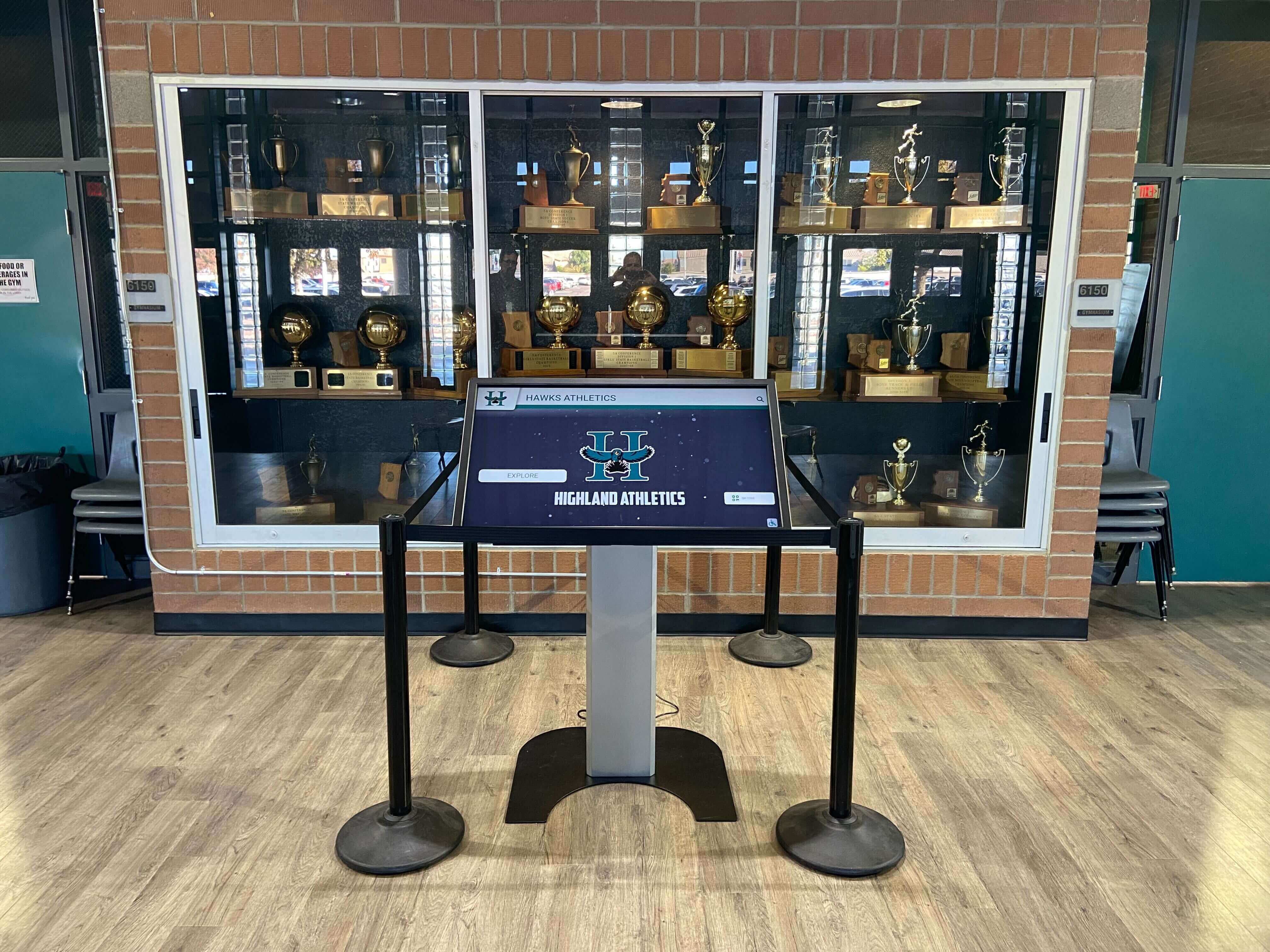
Touchscreen Recognition Display Wireless Site Survey Checklist: Verify Coverage Before Installation
A school orders a touchscreen recognition display for the main lobby, the installer mounts it, IT connects it to the nearest guest Wi-Fi SSID, and it works fine during Tuesday afternoon setup. Then the hall of fame induction ceremony happens on Friday evening. Sixty guests arrive, all their phones associate to the same access point that the display is connected to, and the recognition display stalls mid-presentation while athletic portraits and highlight videos buffer endlessly. The hardware is fine. The CMS is fine. The wireless coverage at that exact location was never verified under realistic event conditions before the mount went into the wall.
Read MoreTouchscreen Recognition Display Network Capacity Planning Checklist for School IT
A touchscreen recognition display in a school lobby runs flawlessly during Tuesday afternoon setup—and then a Friday evening induction ceremony happens. Forty guests crowd the hallway, every phone tries to join the guest Wi-Fi, and the recognition display cycles through spinning-load indicators instead of the athletic portraits and highlight videos that justify its installation. The IT team gets a call mid-ceremony. The display hardware is fine; the network path to the CMS is saturated. Without a written bandwidth assessment and a tested infrastructure plan, every high-attendance event is a potential failure scenario for a display that was working perfectly the day before.
Read More
Touchscreen Recognition Display Data Flow Diagram: Map Content, Accounts, and Devices
When a student athlete’s record is added to your school’s recognition platform, that single entry triggers a chain of events: a content editor saves it in a cloud CMS, the platform validates the account permission, a media file moves from upload storage to a CDN, and seconds later the lobby touchscreen renders a polished profile card. Each handoff is a potential point of failure — or a point where personal data can be exposed without proper controls.
Read More






























