Recognition Display Pixel-Mapping Checklist for Crisp School Graphics and Video
A school’s new 4K recognition display arrives, the hall of fame content is loaded—and the athlete photos look soft, the championship text is slightly blurry, and the historic video frames appear smeared compared to how they look on the editing workstation. The display is on and connected. The resolution reads correctly in Windows. But one thing has gone unchecked: whether the source output and the display panel are operating at a true 1:1 pixel mapping, or whether scaling, overscan, or an intermediate device is silently degrading every image before it reaches the screen.
Read More
Recognition Display Orientation Lock Configuration for School Touchscreens: A Configuration Checklist
Recognition display orientation lock configuration is the process of permanently fixing the screen rotation of a wall-of-fame kiosk, digital trophy case, or awards touchscreen so that the display stays in its intended portrait or landscape layout after every restart, OS update, and power cycle — without requiring a technician to manually correct the rotation.
Read More
Recognition Display SNMP Monitoring for School IT Teams: Uptime, Temperature, and Alerting
Recognition display SNMP monitoring is the practice of querying your hall of fame kiosks, lobby touchscreens, and donor wall displays over the Simple Network Management Protocol — collecting uptime counters, interface statistics, CPU and memory utilization, disk capacity, and hardware temperature — and routing those metrics to a centralized alerting system before a device fails in front of an audience.
Read More
Touchscreen Recognition Display Touch-Latency Test: Measure Response Before Installation Sign-Off
A touchscreen recognition display that passes every network and power test can still fail its audience on the day of a hall of fame induction ceremony — not because the screen is dark or the content is missing, but because it feels sluggish. A visitor taps an athlete’s portrait and waits. They tap again. The panel responds half a second later to the first tap, then immediately to the second, now registering a double action. That half-second gap is touch latency: the time between a finger contacting the screen and the display registering the event in software. In a lobby kiosk or hallway recognition wall, perceived lag at that level is enough to make users stop interacting and walk away.
Read MoreRecognition Display Electrostatic Discharge Protection Checklist for School Installations
A school’s touchscreen recognition display can survive years of daily public interaction—fingerprints, casual bumps, humidity swings—and then fail silently because a technician grabbed the wrong edge of the controller board while swapping a USB cable. Electrostatic discharge is invisible, fast, and cumulative: a single discharge event may not destroy a component outright but can weaken it enough to cause intermittent failures weeks later during a championship ceremony or alumni induction event. In carpeted school hallways where students shuffle past lobby kiosks all day, static voltage buildup is a persistent and underestimated threat.
Read More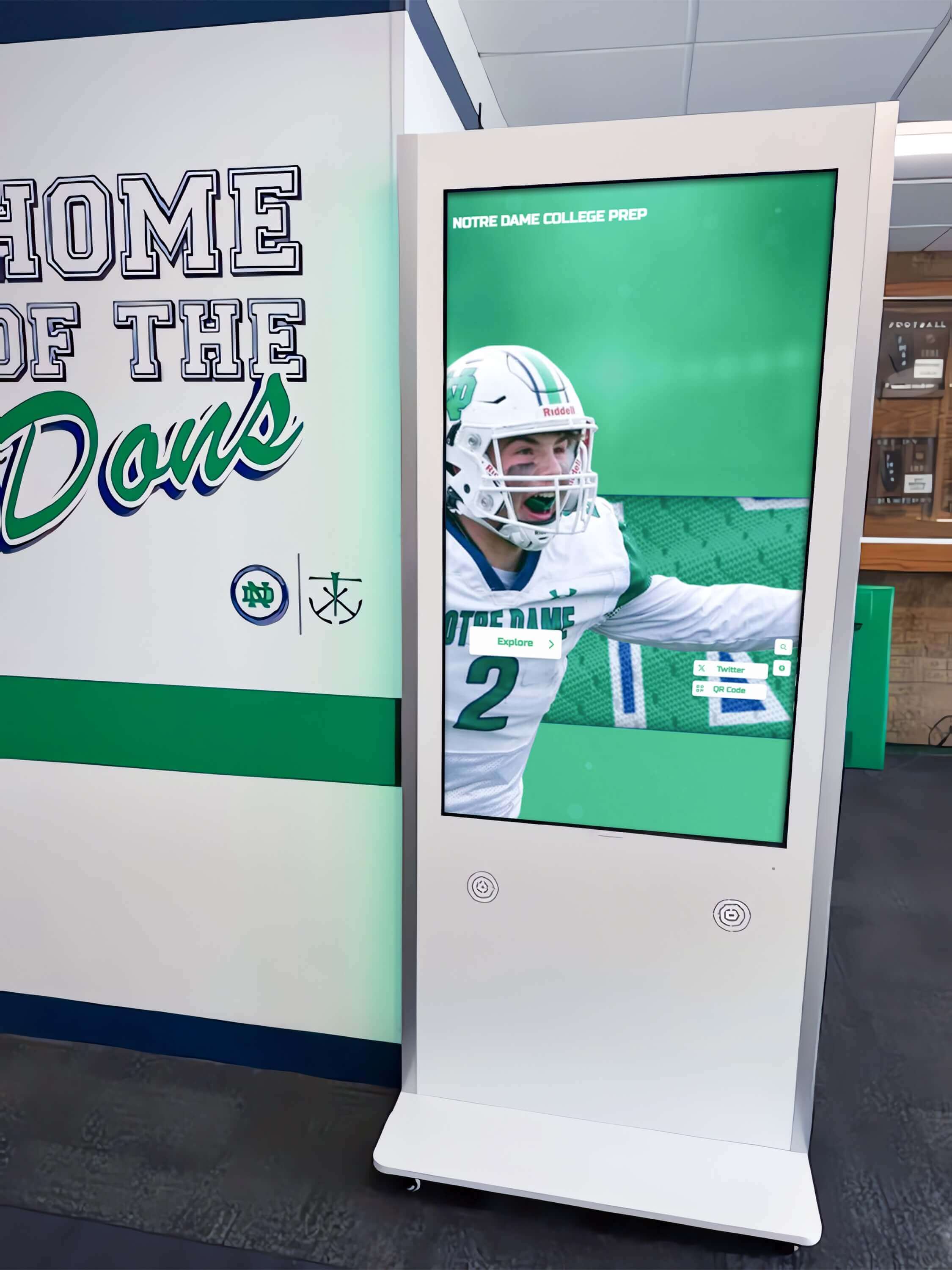
Recognition Display EDID Troubleshooting Checklist for School AV Teams
A school’s touchscreen recognition display is working perfectly on Monday. By Friday—before the athletic banquet—it is showing a scrambled resolution, a black screen, or a “No Signal” message that no cable swap seems to fix. The source device is on. The display is powered. The HDMI cable looks fine. The culprit in most of these cases is not hardware failure: it is an EDID handshake breakdown that happened silently during a routine power cycle, a firmware update, an AV extender restart, or a switch port change.
Read More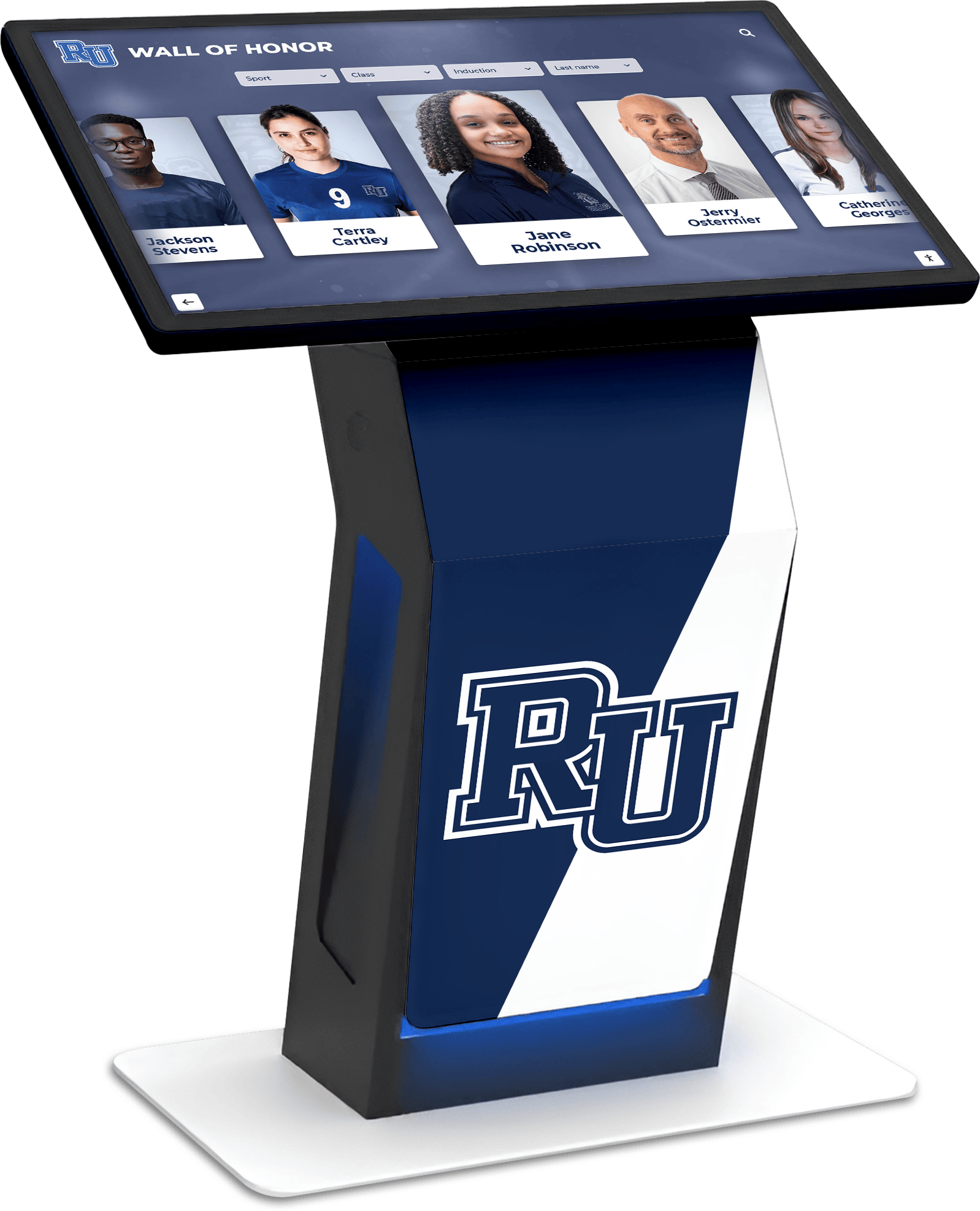
Touchscreen Recognition Display PoE Power Budget Checklist for Schools
A touchscreen recognition display rarely arrives alone. Cameras, occupancy sensors, access-control readers, media players, and wireless access points often travel with it—each one expecting a Power over Ethernet port, each one drawing watts from a switch that has a finite total budget. Schools that skip the PoE power budget calculation discover the problem at the worst possible moment: a camera drops offline the day of a championship ceremony, or a lobby sensor stops responding and the display blanks during an open house. Running the numbers beforehand costs under an hour and prevents all of it.
Read MoreTouchscreen Recognition Display DHCP Reservation Checklist for School Networks
A school’s recognition display reboots during an overnight firmware update and comes back up with a different IP address. Remote monitoring stops alerting. The IT ticket to re-add the display to the remote access tool sits in the queue for three days. A content update scheduled before the athlete-of-the-year ceremony never syncs because the CMS cannot reach the device at its expected address. The kiosk works perfectly in the lobby—it just isn’t reachable from anywhere that matters. The root cause in nearly every case like this is the same: the recognition display was assigned a dynamic lease rather than a DHCP reservation.
Read MoreTouchscreen Recognition Display Wireless Site Survey Checklist: Verify Coverage Before Installation
A school orders a touchscreen recognition display for the main lobby, the installer mounts it, IT connects it to the nearest guest Wi-Fi SSID, and it works fine during Tuesday afternoon setup. Then the hall of fame induction ceremony happens on Friday evening. Sixty guests arrive, all their phones associate to the same access point that the display is connected to, and the recognition display stalls mid-presentation while athletic portraits and highlight videos buffer endlessly. The hardware is fine. The CMS is fine. The wireless coverage at that exact location was never verified under realistic event conditions before the mount went into the wall.
Read MoreTouchscreen Recognition Display Network Capacity Planning Checklist for School IT
A touchscreen recognition display in a school lobby runs flawlessly during Tuesday afternoon setup—and then a Friday evening induction ceremony happens. Forty guests crowd the hallway, every phone tries to join the guest Wi-Fi, and the recognition display cycles through spinning-load indicators instead of the athletic portraits and highlight videos that justify its installation. The IT team gets a call mid-ceremony. The display hardware is fine; the network path to the CMS is saturated. Without a written bandwidth assessment and a tested infrastructure plan, every high-attendance event is a potential failure scenario for a display that was working perfectly the day before.
Read MoreTouchscreen Recognition Display Power Quality Monitoring Log: Track Voltage Events and Uptime
A touchscreen recognition display in a school lobby or trophy hallway runs continuously—through HVAC startup surges, kitchen equipment cycling, voltage dips during peak load periods, and the occasional outage that takes the whole wing dark. Each of these electrical events leaves a mark: an unplanned restart, a corrupted media cache, a content loop that freezes on the wrong frame. Facilities teams get a work order. IT gets a call. The athletic director gets a black screen during a donor tour. Without a record that connects the electrical event to the display’s behavior, every incident looks random and every fix is a guess.
Read MoreTouchscreen Recognition Display DNS Filtering Checklist: Safe Access Without Breaking Content
A school’s DNS filter does exactly what it is supposed to do when it blocks the recognition display’s CMS from loading: it enforces a deny-by-default policy and the display’s cloud platform is not on the allowlist. The result is a touchscreen kiosk in your lobby that shows a blank screen or an error page during an alumni event, an induction ceremony, or a donor tour. For school IT teams rolling out or tightening content filtering across a network that includes public-facing recognition hardware, the gap between a secure filter and a working display is almost always a missing set of documented allowlist entries.
Read MoreTouchscreen Recognition Display USB Device Control Policy for School IT
A touchscreen recognition display in a school trophy case or athletics hallway is a public-facing endpoint. It runs an operating system, connects to the building network, and—unless policy says otherwise—accepts whatever a visitor plugs into any exposed USB port. An open USB port on an unattended kiosk is a physical vulnerability: anyone who walks past can insert a storage device loaded with autorun malware, attempt a live-boot attack from a bootable drive, quietly copy locally cached content, or connect a USB-based hardware implant that persists between reboots. None of these threats require an internet connection or a sophisticated attacker.
Read MoreTouchscreen Recognition Display Endpoint Hardening Checklist for School IT Teams
A touchscreen recognition display in a school lobby is not a desktop computer, a classroom device, or a managed workstation. It sits in a high-traffic corridor, it is connected to the same building network that hosts student records and staff email, and it operates unattended for hours at a time with no IT staff in sight. Default out-of-box settings — open USB ports, broad outbound firewall rules, remote desktop enabled, administrator passwords unchanged from the vendor’s staging configuration — are tuned for rapid deployment, not sustained public operation in an educational environment. The same kiosk that scrolls athlete hall of fame profiles during a Friday playoff game is also an endpoint that can be physically prodded, network-probed, and targeted by opportunistic scripts scanning for open services.
Read MoreTouchscreen Recognition Display Time Synchronization Checklist: Keep Devices, Logs, and Scheduled Content Aligned
A touchscreen recognition display that fires scheduled content at the wrong time during a graduation ceremony, produces audit logs with timestamps that don’t align with your network records, or loses its CMS connection because its internal clock drifted past a certificate validity boundary doesn’t fail quietly — it fails in front of the students, families, donors, and alumni your school most wants to impress. Athletic directors schedule championship highlight reels to loop before home playoff games. Advancement staff activate donor recognition windows to coincide with capital campaign launches. Facilities teams rely on accurate timestamps when reviewing who changed what and when on a public-facing display. IT coordinators cannot diagnose a blank screen caused by clock skew if the device’s logs don’t align with the rest of the network.
Read MoreTouchscreen Recognition Display Data Flow Diagram: Map Content, Accounts, and Devices
When a student athlete’s record is added to your school’s recognition platform, that single entry triggers a chain of events: a content editor saves it in a cloud CMS, the platform validates the account permission, a media file moves from upload storage to a CDN, and seconds later the lobby touchscreen renders a polished profile card. Each handoff is a potential point of failure — or a point where personal data can be exposed without proper controls.
Read More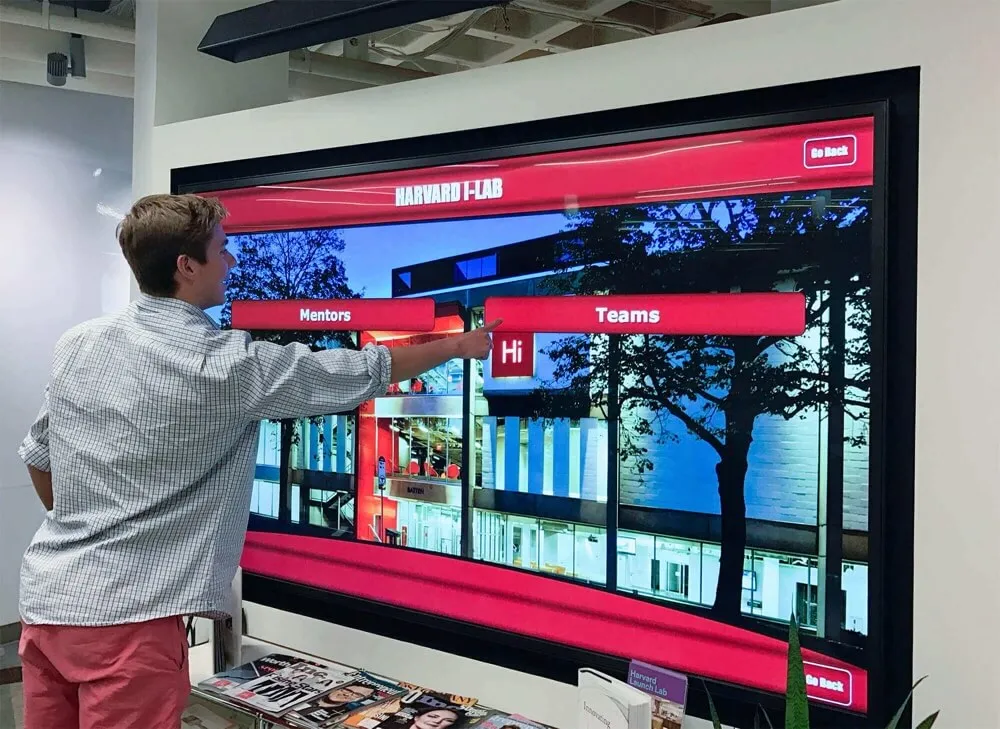
Touchscreen Recognition Display Configuration Baseline Checklist for School IT
A recognition display that ships from a vendor with default administrator credentials, an open remote desktop port, and a publicly routed IP address is not configured for your school’s security posture—it is configured for a warehouse staging bench. Default settings simplify first-time setup; they do not reflect your district’s network segmentation rules, your IT department’s account policies, or your facilities team’s recovery requirements. Without a written document that records every approved setting layer by layer, any technician who touches the display—for a firmware update, a layout change, or a vendor service call—has no reference point for what “correct” looks like. The result is configuration drift: a display whose live settings gradually diverge from what was originally approved, with no record of when, how, or why.
Read MoreTouchscreen Recognition Display Vulnerability Management Policy for Schools
A publicly accessible touchscreen in your school’s lobby or athletic hallway is a network-connected device. It runs an operating system, communicates with a content management platform, and—in many installations—touches your school’s Wi-Fi, VLAN, or data integration layer. When a CVE is published for the OS your display runs, or when a security researcher discloses a vulnerability in a common CMS plugin your recognition platform uses, your district’s exposure doesn’t wait for your next scheduled patch window. Without a formal policy for identifying, classifying, and remediating those vulnerabilities, the gap between disclosure and remediation is measured by luck rather than process.
Read MoreTouchscreen Recognition Display Patch Management Policy: Test, Schedule, and Document Updates
A recognition display that hasn’t been patched in six months is running known vulnerabilities in its operating system, CMS platform, or display firmware. A patch applied without a backup confirmation takes the hall of fame offline during an induction ceremony and leaves no documented restore path. A vendor-pushed update that skips your testing window breaks a custom layout the morning a visiting alumni group arrives. None of these failures requires negligence—they require only the absence of a formal policy that defines how patches are evaluated, scheduled, tested, and documented before they reach the live display.
Read More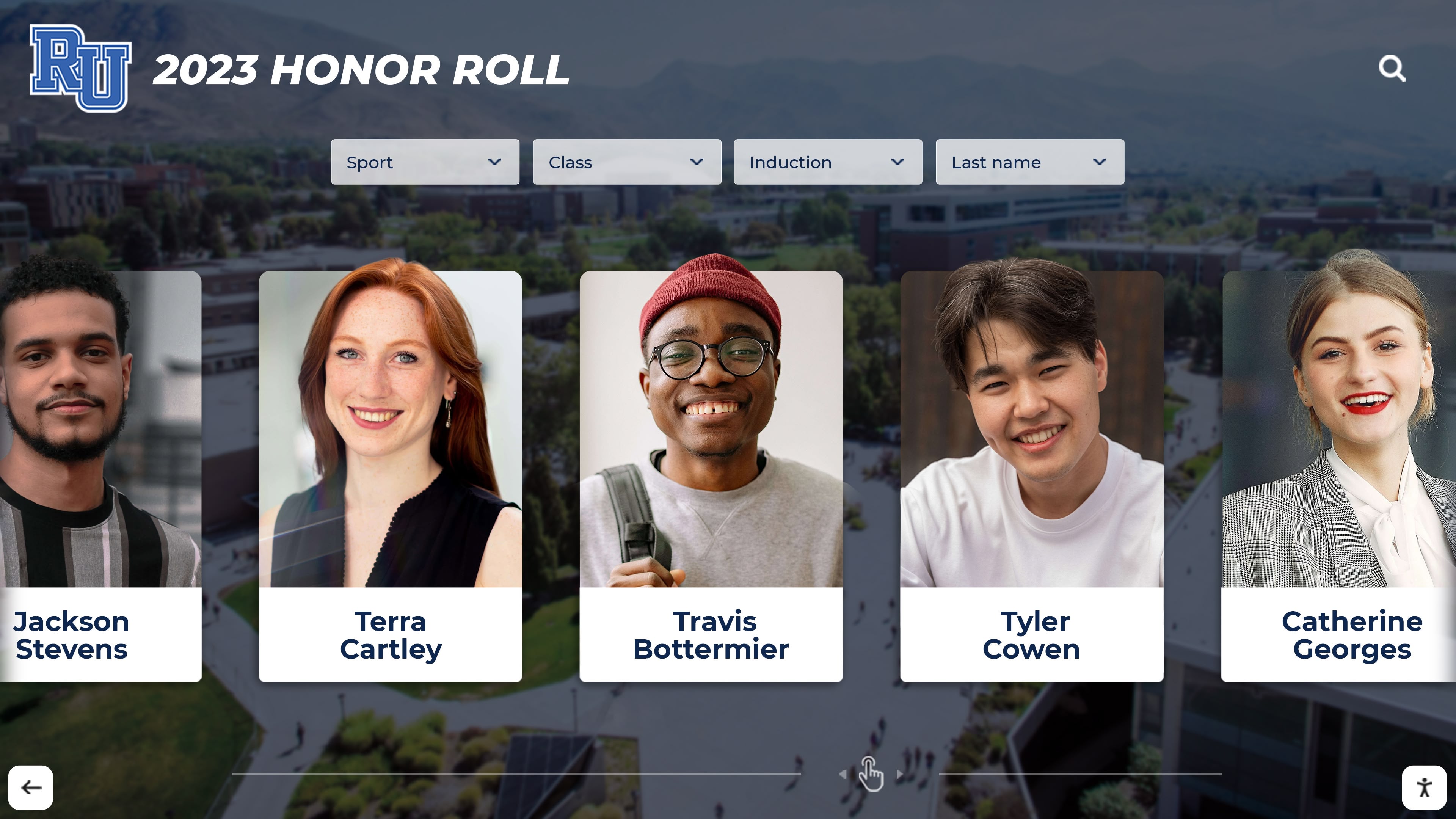
FERPA Compliance for Digital Student Photo Displays: What School IT Leaders Need to Know
School IT leaders face a complex challenge when implementing digital student photo displays: balancing the desire to celebrate student achievements with strict federal privacy protections. The Family Educational Rights and Privacy Act (FERPA) establishes clear boundaries around what student information can be displayed publicly, how consent must be obtained, and what safeguards must be in place—yet many schools inadvertently violate these requirements when deploying digital recognition systems.
Read More






























